Pro-democracy activists gather in force at funeral for Da Torpedo #ศาสตร์เกษตรดินปุ๋ย

#ศาสตร์เกษตรดินปุ๋ย : ขอบคุณแหล่งข้อมูล : หนังสือพิมพ์ The Nation.

https://www.nationthailand.com/news/30387666?utm_source=category&utm_medium=internal_referral

Pro-democracy activists gather in force at funeral for Da Torpedo

May 11. 2020
By The Nation

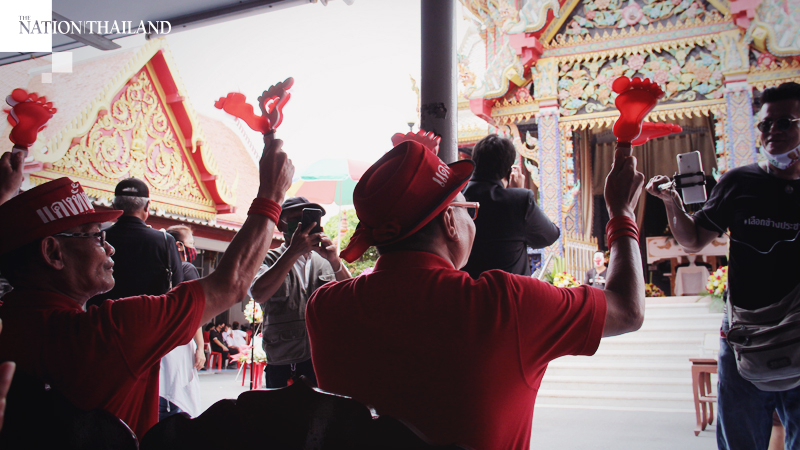
A large crowd of mourners, many dressed in red, paid tribute to Daranee Charnchoengsilpakul on Sunday (May 10) as the pro-democracy fighter better known as Da Torpedo was laid to rest in Bangkok.

Daranee, who was among the earliest and most prominent protesters against the 2006 coup, died of cancer aged 62 on May 7.

Her funeral marked the first large pro-democracy gathering during lockdown. Many mourners dressed in red instead of black to demonstrate their determination to carry forward Da Torpedo’s fight for democracy.

Daranee was a journalist at Phim Thai newspaper and Sky TV before becoming a political activist after a military coup brought down the government of PM Thaksin Shinawatra in 2006.

She was jailed for eight years after being found guilty of lese majesty over a political speech she gave during a protest against the coup. She was finally pardoned and released in 2016.

In jail, she developed cancer that eventually killed her, her family said.

Her funeral was held at Wat Thevasunthorn in Chatuchak district.

Tida Thawornset, a former leader of the red-shirt movement, led the tributes at the cremation ceremony, hailing Daranee for the battle she waged to achieve democratic rights for Thai people.

Tida said Daranee had been the victim of an unfair legal system, adding that people who believed in democracy had to stand up for it, just as “Da” did.

Other key pro-democracy leaders also attended the funeral.

Among them were Major Phuttinat Phahonphonphayuhasena, son of Praya Phahonphonphayuhasena, a leader of the 1932 revolution; Rangsiman Rome, Move Forward Party MP; and political activists Bow Nuttaa Mahattana and Ja New Seritiwat.

As the crowd of mourners swelled beyond expectations, the funeral’s hosts had to ask for cooperation in obeying social distancing rules.

Governments around the world are restricting rights, using the pandemic for cover #ศาสตร์เกษตรดินปุ๋ย

#ศาสตร์เกษตรดินปุ๋ย : ขอบคุณแหล่งข้อมูล : หนังสือพิมพ์ The Nation.

https://www.nationthailand.com/news/30387364?utm_source=category&utm_medium=internal_referral

Governments around the world are restricting rights, using the pandemic for cover

May 06. 2020
Photo credit: PxHere

Photo credit: PxHere
By The Washington Post · Kristin M. Bakke, Neil J. Mitchell, Hannah M. Smidt · WORLD 

GOVERNMENTS-ANALYSIS: Around the world, “coronavirus power grabs” are underway. In Israel, Prime Minister Benjamin Netanyahu has used the exigencies of virus containment to delay his corruption trial and increase surveillance. In the Philippines, President Rodrigo Duterte has assumed emergency powers, and in Hungary, Prime Minister Viktor Orban now has the power to rule by decree indefinitely.

These developments have civil society groups – like community groups, nongovernmental organizations, unions, charitable organizations, faith-based organizations, and foundations – sounding the alarm in the name of democracy. The International Center for Not-for-Profit Law, a nongovernmental organization that works to improve the legal environment for civil society, has launched a covid-19 Civic Freedom Tracker. The concern is that the pandemic serves as an excuse for governments to impose restrictions – many of them long in the making – that they will be hard-pressed to relinquish.

Our new global database of government-imposed restrictions on civil society, focusing on human rights organizations from 1994 to 2016, suggests civil society was already under attack in many countries. The data empirically supports the claims of activists and international organizations (such as the United Nations and the European Union) that have long warned about “shrinking civic space” and the dangers facing human rights defenders.

Our research demonstrates that government restrictions are often subtle, ranging from outright bans to bureaucratic hurdles, and have proved effective at silencing voices that bring international attention to governments’ bad behavior.

How governments are closing civic spaces:


Governments use a range of more or less subtle measures to interfere with civil society and intimidate activists who bring attention to corruption, environmental exploitation and human rights abuses.

Legal restrictions, as well as bans, impede civil society organizations’ activities and funding. In Russia, for instance, a 2012 “foreign agents’ law” requires nongovernmental organizations that engage in “political activities” (as defined by Moscow) and receive foreign funding to register as “foreign agents.” This designation carries negative Soviet-era connotations of espionage and comes with burdensome financial reporting and audit requirements, intended to limit NGOs’ funding opportunities.

One analysis argues that governments often perceive foreign-funded civil society initiatives as benefiting their political opponents. While governments can have realistic concerns about foreign interference in domestic politics, they also might use foreign funding restrictions to undermine political opponents. The baseline legislation is often the 1938 U.S. Foreign Agents Registration Act, which has served to legitimate restrictions on NGOs not only in Russia, but also in Hungary, Israel and Mongolia.

Beyond legislation, governments – both autocracies and democracies – are inventive in finding ways to restrict civil society. They kill activists: Between 2002 and 2017, 1,558 environmental activists lost their lives in 50 countries. Governments also create bureaucratic registration hurdles for organizations and impose travel restrictions on their staff. They censor publications. They threaten activists and subject them to smear campaigns.

Across all regime types, we see an increase in the diversity of restrictions in the period 1994-2016.

Silencing any critics helps governments stay in power:


Why are governments closing civic space? It is a familiar story: Governments seek to stop the flow of inconvenient information about their performance failures and wrongdoings.

Civil society organizations remind governments of their obligations enshrined in international treaties, including environmental and human rights obligations. They sound the alarm as abuses occur, alerting the international community. This pressure presents governments with a choice. They can comply with their treaty obligations, or they can make their failure to do so more difficult to detect.

Rather than give up repression, some governments hide it by silencing their critics. Our research suggests that countries that have ratified human rights treaties impose restrictions on civil society when they have serious repression to hide.

Government targeting of civil society is a somber marker of civil society’s success. If civil society was not exerting pressure, then governments would have little reason to crack down.

But do these restrictions effectively silence criticism? Civil society organizations are remarkably resilient. However, we find that as restrictions accumulate, they reduce the international spotlight on governments’ human rights violations.

International “naming and shaming” campaigns – such as Amnesty International’s individualized letter-writing campaigns to free political prisoners, human rights defenders, journalists and others through its Urgent Actions – depend on information-rich and reliable reports from local activists. While government-imposed restrictions may initially push local civil society organizations to adapt and mobilize, increasing restrictions can block their efforts. In the words of one Chinese NGO worker: “My organization experienced harassment from various government departments … I had to move to an apartment rented under another person’s name, which was discovered by state officials a week later … We had to close the organization’s office in less than one year.”

What’s happening to civil society in lockdown:

Timely and reliable data about the spread and containment of covid-19, and our trust in government figures, is more likely where there is an active civil society and channels of information independent of governments. The covid-19 response in several countries threatens to accelerate the global trend of increased restrictions, whether in democracies or autocracies.

Why would governments restrict civil society during this crisis? One rationale is that governments think they cannot handle the crisis – or fear accountability costs. Alternatively, the crisis might provide governments with cover to try to silence critical voices.

Either way, restrictions on civil society make it harder to monitor the quality of governance more generally. Our studies suggest that governments impose these restrictions to hide policy failures and that restrictions tend to stick – governments have incentives to keep them in place. Civil society may not emerge intact from pandemic lockdowns in some countries. And that may have detrimental consequences for government accountability.

Bakke is professor of political science and international relations at University College London and associate research professor at the Peace Research Institute Oslo. Mitchell is professor of international relations at University College London. Smidt is head of international security, peace and conflict in the Department of Political Science, University of Zurich.
Guidelines on community-level spending to be ready mid-May #ศาสตร์เกษตรดินปุ๋ย

#ศาสตร์เกษตรดินปุ๋ย : ขอบคุณแหล่งข้อมูล : หนังสือพิมพ์ The Nation.

https://www.nationthailand.com/news/30387079?utm_source=category&utm_medium=internal_referral

Guidelines on community-level spending to be ready mid-May

Apr 30. 2020
Somkid Jatusripitak

Somkid Jatusripitak
By THE NATION

The committee supervising government expenditure will come up with guidelines on community-level economic activities within May, Deputy Prime Minister Somkid Jatusripitak said on Thursday (April 30).

He explained that Bt600 billion of the Bt1-trillion loan taken by the Finance Ministry will be used for cash handouts and public health, while the remaining Bt400 billion will be spent on economic recovery measures.

“We need to create jobs that generate income in communities, as many people have already returned to their hometowns,” he said. “Therefore, we have set up this committee to come up with guidelines on how the Bt400 billion budget can be spent to revive the economy.”

He added that the guidelines will focus on developing agriculture, water resources and infrastructure to boost the local economy.

“We will also develop tourist attractions in communities nationwide to attract tourists once the situation returns to normal,” he said. “We will also develop digital platforms and logistics, as well as train personnel at the community level.”

He said he expects the guidelines to be proposed to the Cabinet by mid-May and the projects to start from June.

Ex-intelligence chief rejects Phalang Pracharat reshuffle rumours #ศาสตร์เกษตรดินปุ๋ย

#ศาสตร์เกษตรดินปุ๋ย : ขอบคุณแหล่งข้อมูล : หนังสือพิมพ์ The Nation.

https://www.nationthailand.com/news/30387019?utm_source=category&utm_medium=internal_referral

Ex-intelligence chief rejects Phalang Pracharat reshuffle rumours

Apr 30. 2020
Prawit Wongsuwan, Uttama Savanayana

Prawit Wongsuwan, Uttama Savanayana
By The Nation

General Ganit Chanpreechaya, a former military intelligence chief and a close associate of Deputy Prime Minister Prawit Wongsuwan, said there is no basis behind rumours of an impending reshuffle in the core coalition Phalang Pracharat Party.

He said there is no way that Finance Minister Uttama Savanayana will give up the party’s leadership, though he is very busy handling financial affairs for now.

“General Prawit has not issued any orders to change the leader, because as far as I know, the party needs someone to run it, but Uttama did mention recently that he has no time,” he said, adding that some party members have said they feel they are without a leader.

“I think party members will feel more comfortable if he spent more time with them, though General Prawit, who is not a party leader, is close to them and makes them feel relaxed. He is also very mature and kind, which make him very likeable among the party members.

“This is the topic that has been discussed, not that Uttama must step down as party leader,” he said.

“General Prawit needs to focus on the Covid-19 crisis now. Any discussion about this will only happen in June at the earliest,” Ganit said.

He also insisted that there were no problems between Prawit and Uttama, adding that the deputy PM was very kind to everybody – even bad people.

“He once said we become better if bad guys come to us. I believe these rumours will die out soon,” he said.

House of Representatives gets deep clean as lawmakers mull return to work #ศาสตร์เกษตรดินปุ๋ย

#ศาสตร์เกษตรดินปุ๋ย : ขอบคุณแหล่งข้อมูล : หนังสือพิมพ์ The Nation.

https://www.nationthailand.com/news/30387002?utm_source=category&utm_medium=internal_referral

House of Representatives gets deep clean as lawmakers mull return to work

Apr 29. 2020
Chuan Leekpai

Chuan Leekpai
By The Nation

Measures are being prepared to prevent the spread of Covid-19 in the House of Representatives before lawmakers return to work, House speaker Chuan Leekpai said on Wednesday (April 29).

The building will be sanitised, seats in the meeting chamber will be separated, and every attendee will be screened for symptoms before being allowed to join meetings.

Anyone showing symptoms of Covid-19 will be barred from attending proceedings in the House.

Before the House reconvenes, a discussions will be held on whether it is safe for lawmakers to resume their duties in Parliament for the full 120-day parliamentary session.

Topics of discussion will focus on representatives’ behaviour during debatse.

“We are lucky that no one [in the House] has contracted Covid-19, but every official must remain on their guard,” Chuan said.

Prawit dismisses rumour of Phalang Pracharat leadership bid #ศาสตร์เกษตรดินปุ๋ย

#ศาสตร์เกษตรดินปุ๋ย : ขอบคุณแหล่งข้อมูล : หนังสือพิมพ์ The Nation.

https://www.nationthailand.com/news/30386986?utm_source=category&utm_medium=internal_referral

Prawit dismisses rumour of Phalang Pracharat leadership bid

Apr 29. 2020
 Prawit Wongsuwan

Prawit Wongsuwan
By The Nation

Deputy Prime Minister Prawit Wongsuwan dismissed rumours of a shake-up in Phalang Pracharat on Wednesday (April 29), saying Uttama Savanayana would remain as leader of the government coalition’s main party.

Speculation about a rift and leadership change in Phalang Pracharat have been a hot topic for the past week, with suspicions growing that a Cabinet reshuffle was also on the cards.

However, Gen Prawit poured cold water on the rumours on Wednesday (April 29), saying they were not plausible.

“There is nothing,” he said, after being asked whether the party was discussing changes. When reporters asked if the problems in the party had been solved, he responded that it was all over.

He also denied that someone had wanted him to be the new party leader, adding there would be no reshuffle for Phalang Pracharat.

Somkid dismisses rumours of Uttama being removed as party leader #ศาสตร์เกษตรดินปุ๋ย

#ศาสตร์เกษตรดินปุ๋ย : ขอบคุณแหล่งข้อมูล : หนังสือพิมพ์ The Nation.

https://www.nationthailand.com/news/30386867?utm_source=category&utm_medium=internal_referral

Somkid dismisses rumours of Uttama being removed as party leader

Apr 28. 2020
By The Nation

This is not the time to discuss changes in the ruling Phalang Pracharat Party as all the focus should be on handling the Covid-19 crisis, Deputy Prime Minister Somkid Jatusripitak said.

He also dismissed speculation that Finance Minister Uttama Savanayana may be removed from his post as leader of the ruling party, though he said he could not confirm anything because he is not a member of the party.

“I just want good men to focus on their job, not on gaining power. Everybody should be working hard at this time, instead of speculating on such things,” he said.

Meanwhile, Uttama denied rumours of his resignation, saying his sole focus was helping people pull through this crisis. However, he did admit that the subject was discussed, though he has received no confirmation.

“Nobody has called, but the party’s executives said someone has told them to resign. I am a practical man and can discuss the issue, but at this point, I have to put my duties first. People can be confident that I will do my best to give my fullest support to the Thai public. Our country is my priority, and I don’t care much for the rest.”

Phalang Pracharat Party unity in doubt after reshuffle: source #ศาสตร์เกษตรดินปุ๋ย

#ศาสตร์เกษตรดินปุ๋ย : ขอบคุณแหล่งข้อมูล : หนังสือพิมพ์ The Nation.

https://www.nationthailand.com/news/30386834?utm_source=category&utm_medium=internal_referral

Phalang Pracharat Party unity in doubt after reshuffle: source

Apr 27. 2020
By The Nation

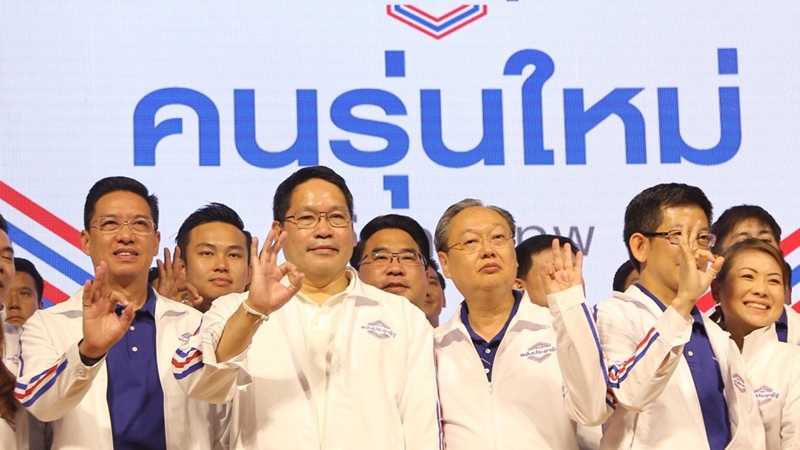
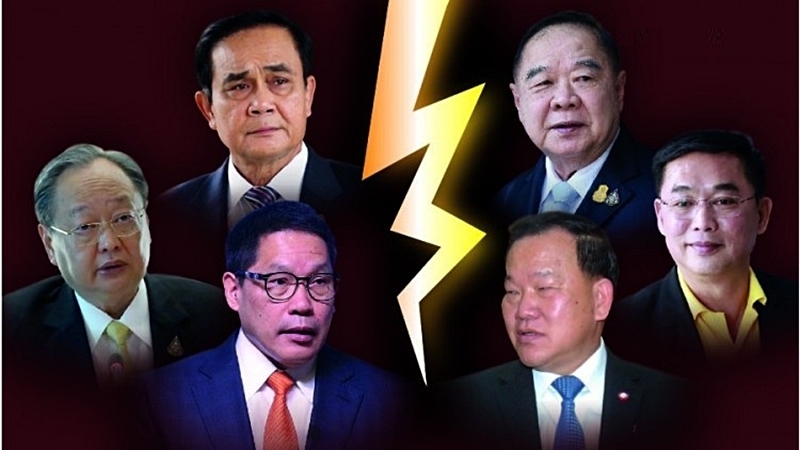
Phalang Pracharat Party unity seems to have been shattered with leader Uttama Savanayana and secretary-general Sontirat Sontijirawong about to be replaced by Deputy Prime Minister Prawit Wongsuwan and Santi Promphat, respectively, according to a party source.

However, Uttama and most of the party executives who have been asked to resign their posts, are refusing to do so, according to a party executive member.

The wholesale changes to the coalition leader’s executive committee would come ahead of an expected Cabinet reshuffle in June. Uttama currently holds the post of finance minister while Sontirat is energy minister.

“A mission to change the leader is plausible since Prawit himself mentioned that Uttama was asked to resign and that he [Prawit] would take the position,” the source said.

Prawit’s right-hand man, identified only as “Big A”, is lobbying half of the executive members to resign, which will eventually lead to the resignation of Uttama, said the source.

A major meeting scheduled for May will see the election of new executive members, the source added.

Prawit is expected to be named the new interior minister, while Santi Promphat is set to take the finance minister’s post. Nataphol Teepsuwan should be the new energy minister and Anucha Nakasai will be the new education minister, the executive member added.

Students expected to continue democracy fight once virus situation abates #ศาสตร์เกษตรดินปุ๋ย

#ศาสตร์เกษตรดินปุ๋ย : ขอบคุณแหล่งข้อมูล : หนังสือพิมพ์ The Nation.

https://www.nationthailand.com/news/30386457?utm_source=category&utm_medium=internal_referral

Students expected to continue democracy fight once virus situation abates

Apr 21. 2020
 Aomtip Kerdplanant, one of the key leaders of the student networks, is determined to carry on the “fight for democracy”.

Aomtip Kerdplanant, one of the key leaders of the student networks, is determined to carry on the “fight for democracy”.
By Wichit Chaitrong
The Nation

Students are expected to resume intense political activities after the Covid-19 situation normalises and the government eases its lockdown restrictions next month.

Before the spread of Covid-19, students in universities across the country and some high schools in Bangkok had organised flash mobs in February and March to express their demand for democracy, rewriting the Constitution and ending the current military-backed coalition government.

Students and pro-democracy groups protest at Kasetsart University on February 29. The protest was a rehearsal for a big rally following the gathering of several flash mobs.

Students and pro-democracy groups protest at Kasetsart University on February 29. The protest was a rehearsal for a big rally following the gathering of several flash mobs.

The advent of coronavirus has disrupted their flash-mob activities.

The government had imposed a State of Emergency and clamped night curfew until April 30, and provinces also imposed a strict lockdown in attempts to contain the spread of the coronavirus.

“The Covid-19 outbreak has not weakened our fight for democracy. The pandemic exposes the weakness of the current political system,” Chulalongkorn University student Teerapat Arunrat said, referring to politics that are “highly influenced by the military”.

“The fight for democracy would be a long haul and the challenge is how we can win permanently,” he said, referring to the victory of the student uprising in 1973, but only to see three years later students being defeated in the October 6, 1976, massacre.

Another Chulalongkorn University student, Aomtip Kerdplanant, said the emergency and curfew has seen some impact on their activities, but they are still “doing their jobs”.

“We have to be creative and take the stage on an online platform,” she said.

Students have accepted social distancing, as it helps to slow the spread of the virus, Aomtip said. However, the government has to take care of people who cannot adhere to social distancing as they have to earn a living, she added.

Aomtip did not agreed with the 10pm to 4am night curfew because it “has created a burden on people”. She also questioned its effectiveness in combating Covid-19.

She said she had earlier joined the flash protests because she could no longer tolerate the “injustice in society, which is largely caused by the military-sponsored Constitution”.

Aomtip also said that the way students organise their movement now is quite different from the past. The current movement adopts networks as a key platform compared to past movements that used a centralised approach.

The network approach gives them more flexibility as they can easily adapt to a fast-changing situation, said Anusorn Tamajai, a student activist before the May uprising in 1992.

Anusorn agreed that the Covid-19 situation exposed the weakness of the military-elected-politician hybrid system. The current Constitution is biased as it has allowed preferred political parties to form a coalition government, leading to weak leadership, he said.

The government has also failed in addressing the economic challenges caused by the pandemic, Anusorn added, in reference to people facing severe hardship stemming from the lockdown and inadequate aid for those affected.

Many critics have pointed to the reputation of the military, which has been shaken since the mass shooting by a soldier in Nakhon Ratchasima, followed by the virus spreading at a boxing stadium run by the Army and louder calls for the military to stop weapon purchases in order to save money for the battle against Covid-19.

The reputation of key institutions, including the Court of Justice, has also been shaken after the Constitutional Court handed down a verdict on February 21 to disband the Future Forward Party. The ruling has been seen as the last straw, triggering flash protests by students nationwide. And Prime Minister Prayut Chan-o-cha has come under attack on social media after he pleaded for help from 20 richest Thais to support the government’s coronavirus fight, leading to a large number of netizens retweeting the hashtag “#beggar government” on Twitter.

Some market analysts have told investors to keep a close eye on politics after the Covid-19 situation normalises and the government eases the lockdown as this could potentially lead to political uncertainty. This comes as many businesses are preparing to reopen on May 1, given a steady decline in new virus cases.

Meanwhile, Gothom Arya, adviser to Mahidol University’s Institute of Human Rights and Peace Studies, said he has witnessed the important role played by local governments and communities in containing the spread of Covid-19, suggesting a decentralised system will be more efficient than a centralised one. Gothom called on the government to resume local government elections, long delayed since the coup in 2014.

Bt1.9tn stimulus should target low-income Thais, say Dems #ศาสตร์เกษตรดินปุ๋ย

#ศาสตร์เกษตรดินปุ๋ย : ขอบคุณแหล่งข้อมูล : หนังสือพิมพ์ The Nation.

https://www.nationthailand.com/news/30386412?utm_source=category&utm_medium=internal_referral

Bt1.9tn stimulus should target low-income Thais, say Dems

Apr 20. 2020
By The Nation

The ruling coalition partner, Democrat Party, believes that the government’s Bt1.9-trillion economic stimulus package does not address the needs of low-income Thais.

Democrat Party MP Thepthai Senapong urged the government to use the money to aid people who have less than Bt100,000 in their bank accounts and have been hit hardest by the Covid-19 pandemic.

He proposed that 10 million farming families should each get handouts of at least Bt10,000 to help them get through the virus crisis.

Thepthai also doubted that the Bt500 billion in soft loans granted by the Bank of Thailand (BOT) as part of the stimulus would go to small businesses. He said the loan measure should be extended to cover all banks so that SMEs could also access the money.

Meanwhile the BOT’s Bt400 billion fund to buy up corporate bonds might only support big companies, he said.

Charnkrij Dejvitak, an assistant to the Prime Minister’s Office and Finance Ministry representative, said the proposal from the Democrat Party would be considered, adding that the government was being cautious about issuing the measures.