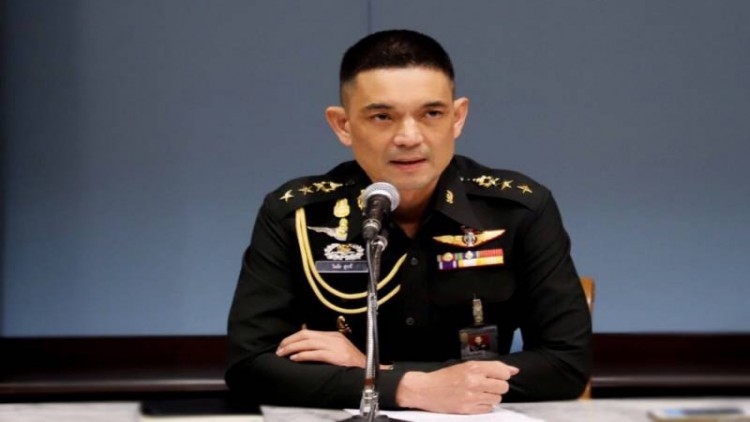
Anutin denies seeking imposition of security act to curb public rallies #ศาสตร์เกษตรดินปุ๋ย

#ศาสตร์เกษตรดินปุ๋ย : ขอบคุณแหล่งข้อมูล : หนังสือพิมพ์ The Nation

https://www.nationthailand.com/news/30383151?utm_source=category&utm_medium=internal_referral

Anutin denies seeking imposition of security act to curb public rallies

Mar 02. 2020
Anutin Charnvirakul

Anutin Charnvirakul
By The Nation

Public Health Minister Anutin Charnvirakul has denied proposing invoking the Internal Security Act to prevent political gatherings to prevent the spread of Covid-19.

He posted on his Facebook account that he had never intended to stop political gatherings, which people use to debate their beliefs and ideas if they did not violate the law because it was not the duty of the Ministry of Public Health.

However, an outbreak of coronavirus could also have a negative effect on the freedom of Thai citizens so the government wanted to limit the infection of the virus, not the freedom of the people, he said.

The Department of Disease Control has also said that gatherings in any form could raise the risk of infection, especially during the outbreak of the hazardous virus.

PM ‘might considering Cabinet reshuffle’ #ศาสตร์เกษตรดินปุ๋ย

#ศาสตร์เกษตรดินปุ๋ย : ขอบคุณแหล่งข้อมูล : หนังสือพิมพ์ The Nation

https://www.nationthailand.com/news/30383149?utm_source=category&utm_medium=internal_referral

PM ‘might considering Cabinet reshuffle’

Mar 02. 2020
Prayut Chan-o-cha

Prayut Chan-o-cha
By The Nation

Prime Minister General Prayut Chan-o-cha might reshuffle a Cabinet in less than a year after taking power, according to sources.

The premier has reportedly already informed the leaders of the coalition partners of the impending changes.

However, the exact date is not known yet, though it is believed that the changes would not affect the stake of the parties in the government and each party would be asked to pick their own nominees.

Energy Minister Sontirat Sontijirawong said that the reports of the change were still unofficial and the premier would be the one to make the final decision.

He also said that the bigger size of the coalition parties might have some influence on the change.

Suwit Mesinsee, Minister of University, Science, Research and Innovations, who it is rumoured would be reshuffled as he does not have the backing of MPs, said that everyone must wait for a statement from the prime minister.

Protests in Phrae over Future Forward MPs joining government-allied party #ศาสตร์เกษตรดินปุ๋ย

#ศาสตร์เกษตรดินปุ๋ย : ขอบคุณแหล่งข้อมูล : หนังสือพิมพ์ The Nation

https://www.nationthailand.com/news/30383144?utm_source=category&utm_medium=internal_referral

Protests in Phrae over Future Forward MPs joining government-allied party

Mar 02. 2020
By The Nation

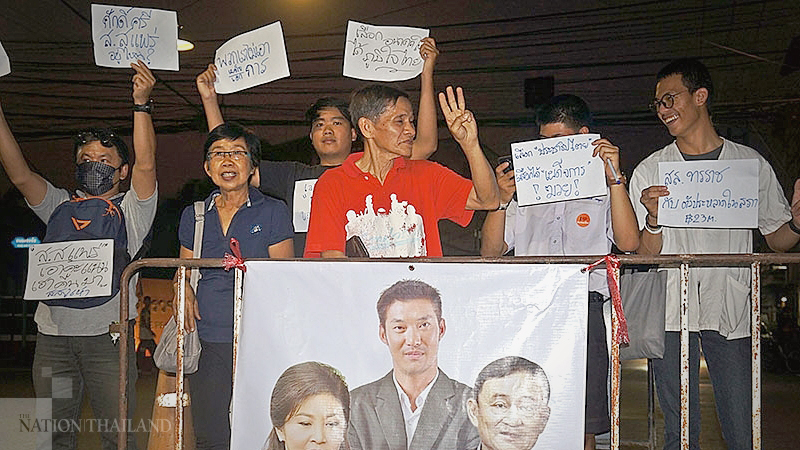
Local in Phrae province are furious after it became known that two former Future Forward Party MPs from the province have reportedly agreed to join Bhumjaithai Party.

Some residents of the province marched on a street in the city on Sunday (March 1), holding signs expressing their disappointment that the MPs they had elected were joining the government side.

Most of the protesters were members of the pro-democracy network in Phrae who had overwhelmingly voted for the now-dissolved Future Forward Party and never expected that the defection would happen.

They said the purpose of the protest was to put pressure on those MPs to explain the reasons why they had decided to join the government. The MPs, however, have not yet responded.

Thanathorn vows to continue fight for democracy outside Parliament #ศาสตร์เกษตรดินปุ๋ย

#ศาสตร์เกษตรดินปุ๋ย : ขอบคุณแหล่งข้อมูล : หนังสือพิมพ์ The Nation

https://www.nationthailand.com/news/30383122?utm_source=category&utm_medium=internal_referral

Thanathorn vows to continue fight for democracy outside Parliament

Mar 01. 2020
Thanathorn Juangroongruangkit

Thanathorn Juangroongruangkit
By The Nation

In a farewell message as leader of the now-dissolved Future Forward Party, posted a message of hope, exhorting the people and elected representatives to stay true to their mission of “fighting the dictatorship and bringing back democracy”.

“I believe we showed people that we made every effort to bravely challenge the injustice as we had promised to do.

“It was my honour to work with every debater who was very professional. The period of six months was so fun and full of challenges.

“Today, I cannot continue my journey with you, but I’ll watch your success from the distance without any interference.

“This is the most exciting political situation. This is the moment of dream and ambition. Today, students and people have sacrificed so much since they must lose a big part of their life, same as the representatives.

“They are ordinary people. They have no status or fame. Some of them argued with their friends. Some fight with their parents. Some have no income. Yet they all stood up for what they believed in.

“Therefore, just the loyalty of Future Forward MPs to the people is not enough. I have to ask my MP  friends to work harder, support the people and fight alongside them.” He told the representatives to not be chained up by their positions and instead use it to serve the people.

Thanathorn said he will work on political campaigns outside the House and fight the coup with the people as hard as he could. He promised to run campaigns for the people and said he hoped that “one day, when you become the government, you will use your power for our people to change Thailand, push a new boundary and make our dream come true”.

He said Thailand needed parties with vision, courage and brains. “To fight the dictatorship and bring back democracy, the representatives are important. It’s a job that no one can do but you (at least this time).

“Don’t give up on the best chance for democracy and changes. History has given it to you and if you don’t fight for it, how could you look in the eyes of our next generation.”

In parting, he urged people to “stay strong in justice and equality and believe in possibilities. The new world is in our hands”.

Thousands rally at Kasetsart University against government, warn bigger protests coming to Bangkok #ศาสตร์เกษตรดินปุ๋ย

#ศาสตร์เกษตรดินปุ๋ย : ขอบคุณแหล่งข้อมูล : หนังสือพิมพ์ The Nation

https://www.nationthailand.com/news/30383095?utm_source=category&utm_medium=internal_referral

Thousands rally at Kasetsart University against government, warn bigger protests coming to Bangkok

Feb 29. 2020
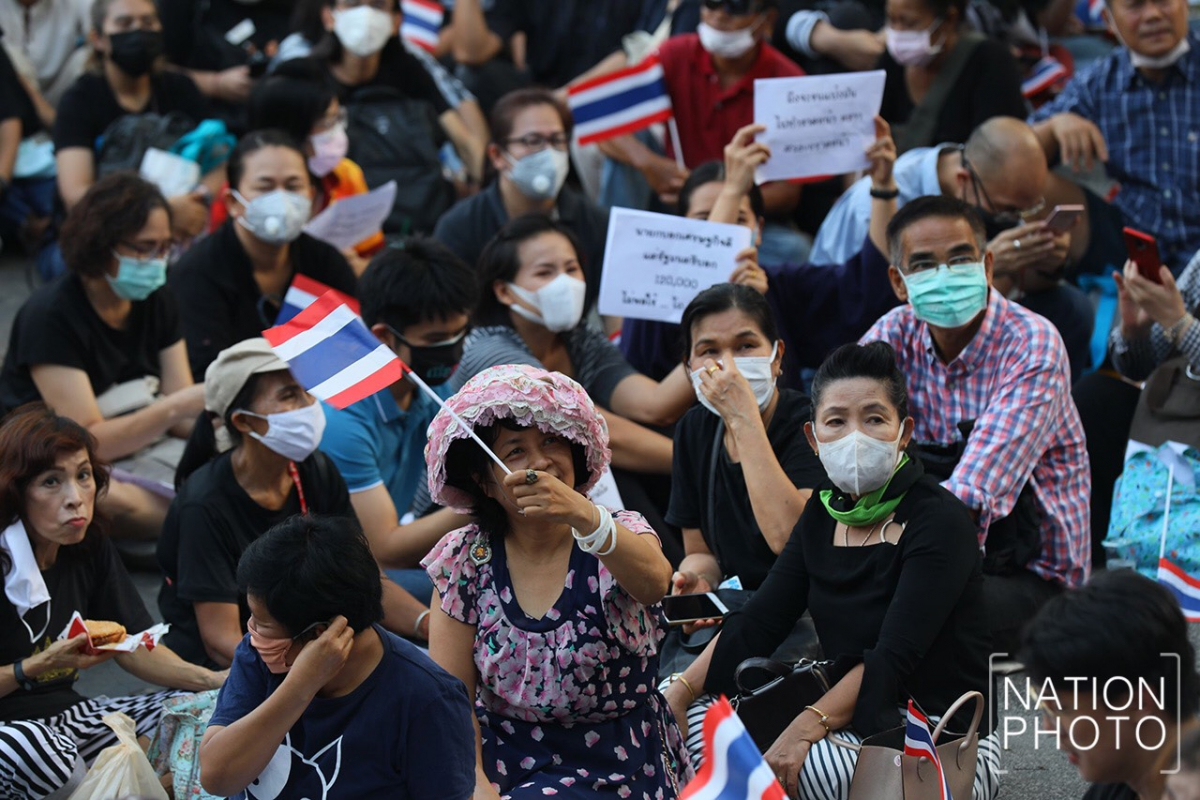
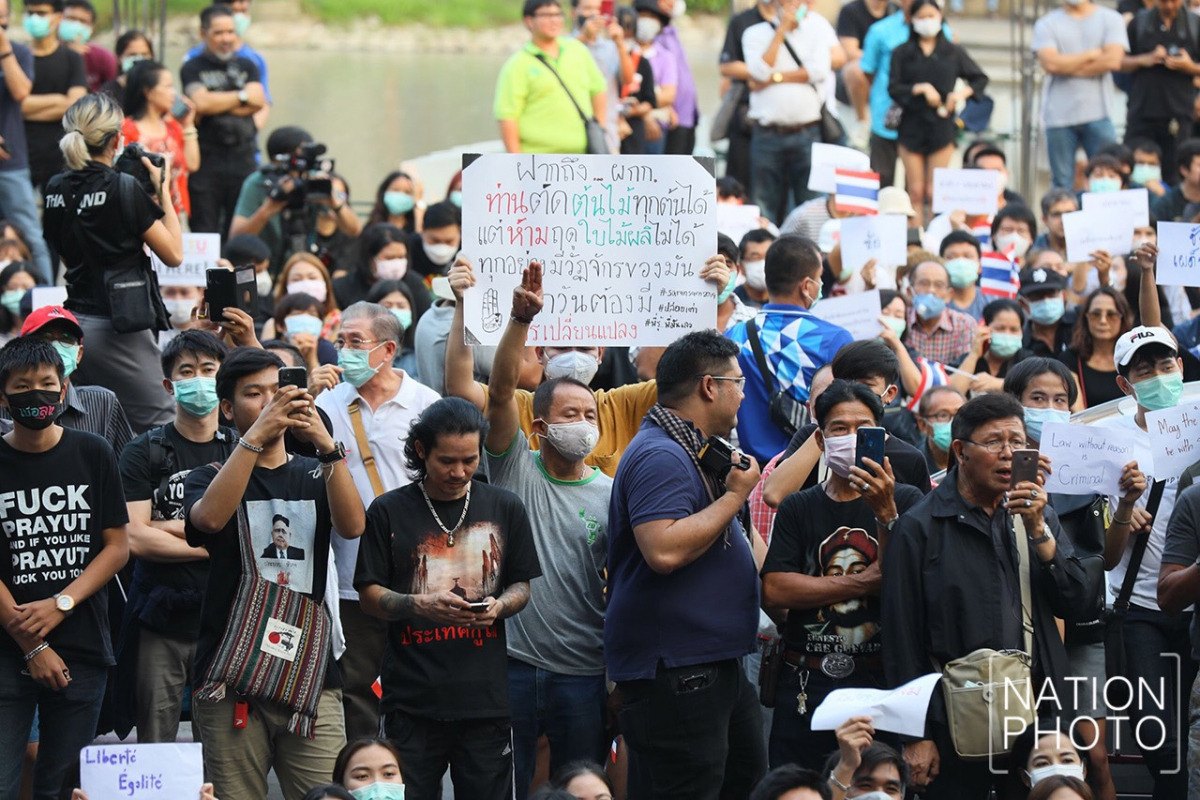
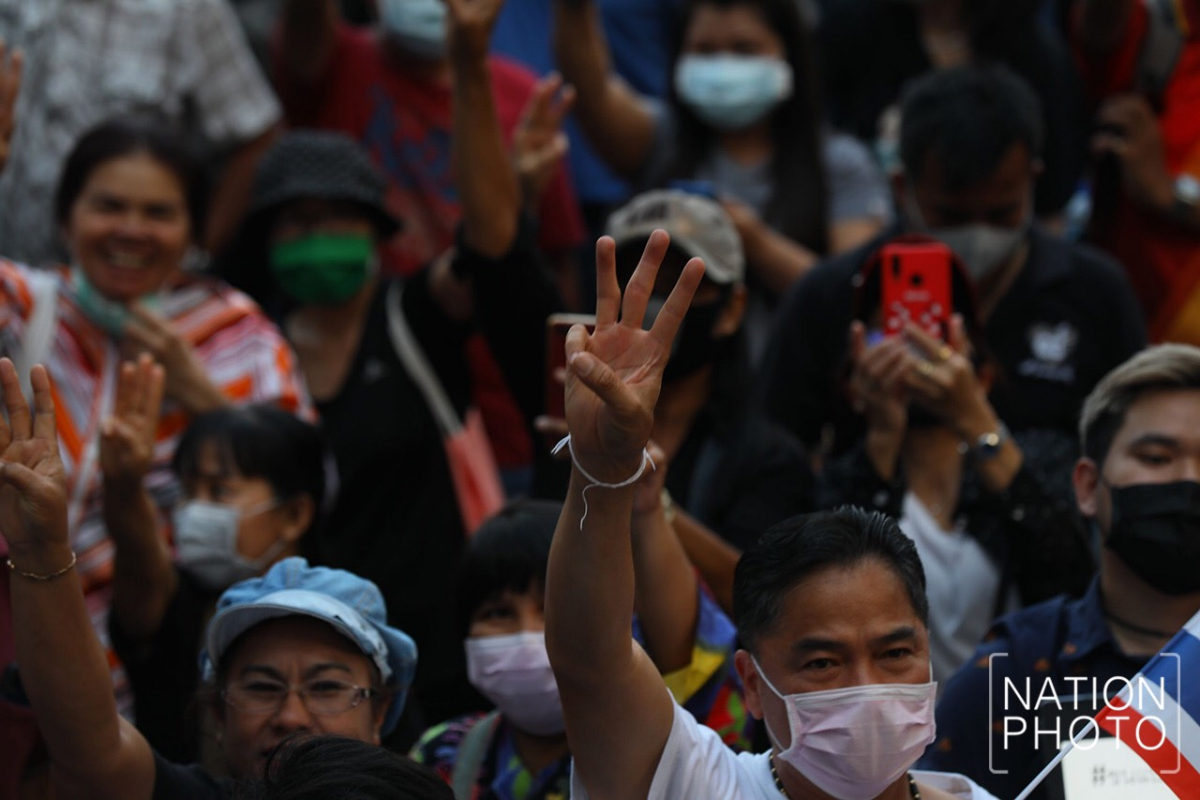
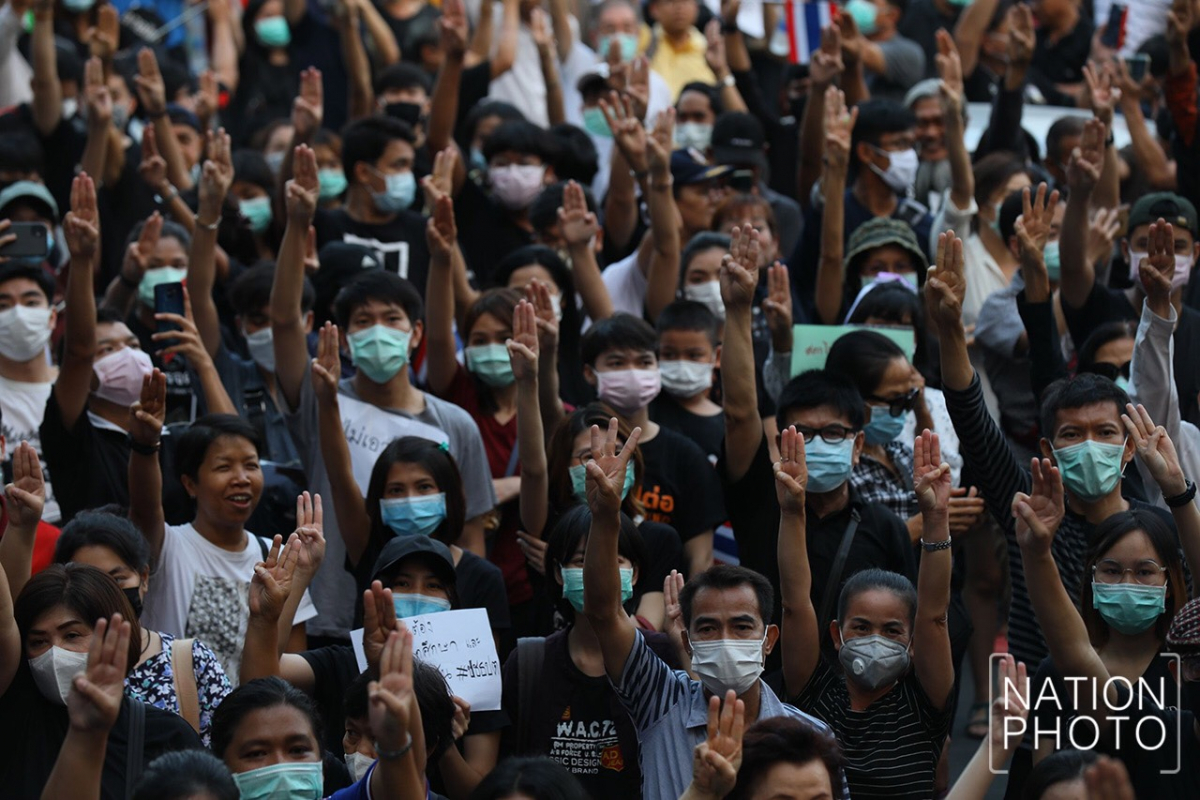
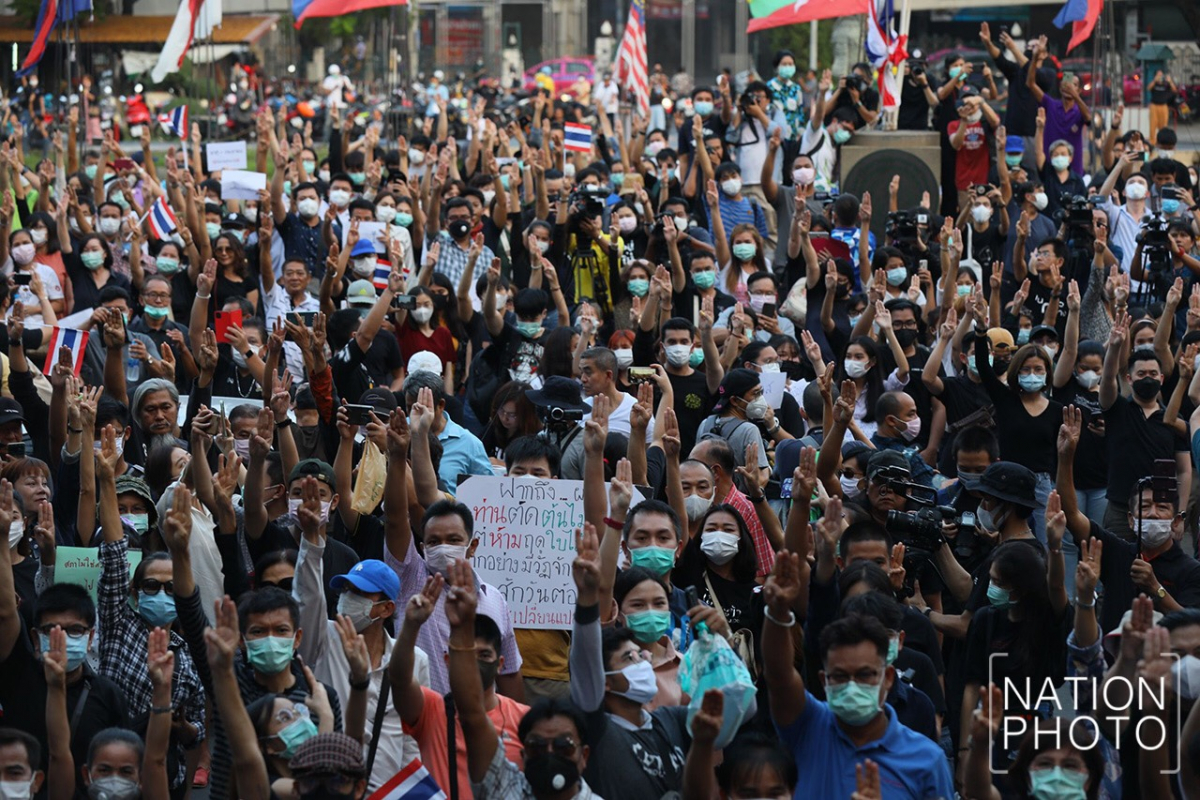
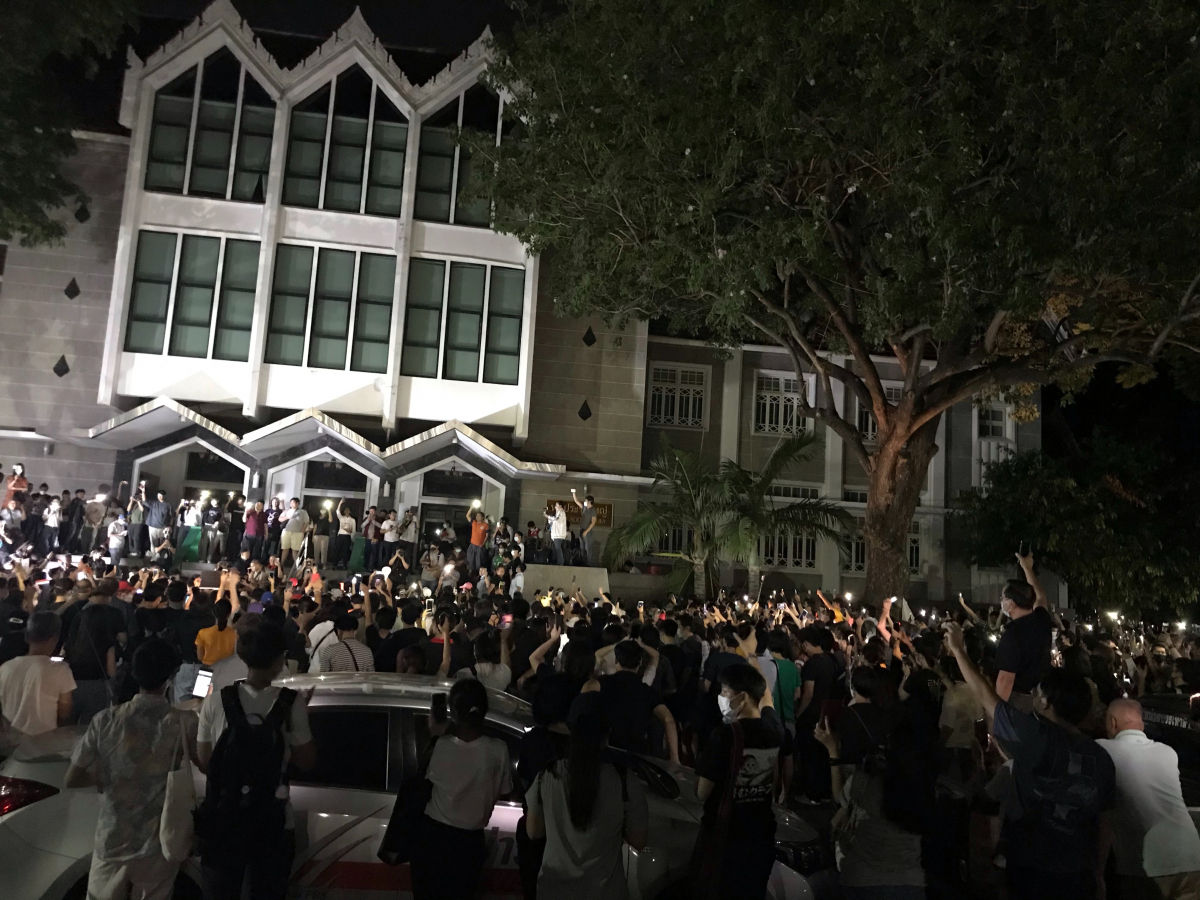
Thousands of students and people attend a political rally at Kasetsart University on Saturday, demanding a rewriting of the Constitution and promising more protests to make their case.

Thousands of students and people attend a political rally at Kasetsart University on Saturday, demanding a rewriting of the Constitution and promising more protests to make their case.
By Wichit Chaitrong
The Nation

Pro-democracy protests are gaining momentum as thousands of students turned out for a rally on Saturday evening, one of the largest since the military toppled the civilian government in a coup in 2014.

Thousands of students and people joined the political protests at Kasetsart University, which ended at around 8pm.

They called it a rehearsal for a bigger rally later in Bangkok to oust the government and they will organise protests again next week.

The student leader representing Kasetsart University said the gathering was the most significant event since the October 14, 1973 uprising against the then-dictatorship government and later key events.

It was also the first gathering in which several university students took part after individual protests organised by some other universities and high schools in the last few days. The students described their move as the last straw following the court ruling to dissolve the Future Forward Party on February 21.

A middle-aged man who joined the protest told The Nation that the students were fighting for their own cause — of restoring democracy. He did not believe that they were being manipulated by opposition politicians.

The students insisted that they could no longer tolerate injustice and argued that law enforcement and courts applied double standards when it came to legal disputes related to political activities. They also demanded a rewriting of the new Constitution.

The student leaders said there was no fairness in the drafting of the charter or the referendum that approved the 2017 Constitution. They also said the general election held in March was rigged.

The dissolution of the Future Forward Party by the Constitutional Court last week became the trigger for their outrage.

The FWP was the third largest political party in Parliament, winning over six million votes in the March election. Its executives will be banned from running in any election for 10 years while the remaining MPs have to seek refuge in other political parties.

The dissolution of the FWP has drawn sharp criticism from local and international communities. The United States, the European Union and Canada raised concerns that the dissolution of the party could effectively disenfranchise the over six million voters.

Prime Minister General Prayut Chan-o-cha dismissed the protests against his rule as a young generation driven by impulse. Other government backers are also toeing Prayut’s line, saying the students are probably manipulated by opposition politicians.

Mike Bloomberg deploys his billions to make a point, from a $1 million couch to a presidential campaign #ศาสตร์เกษตรดินปุ๋ย

#ศาสตร์เกษตรดินปุ๋ย : ขอบคุณแหล่งข้อมูล : หนังสือพิมพ์ The Nation

https://www.nationthailand.com/news/30383047?utm_source=category&utm_medium=internal_referral

Mike Bloomberg deploys his billions to make a point, from a $1 million couch to a presidential campaign

Feb 29. 2020
Democratic presidential candidate Mike Bloomberg waits offstage before speaking to a group of Baptist ministers. The billionaire businessman, who is also a former mayor of New York City, is funding his own campaign. MUST CREDIT: Washington Post photo by Toni L. Sandys

Democratic presidential candidate Mike Bloomberg waits offstage before speaking to a group of Baptist ministers. The billionaire businessman, who is also a former mayor of New York City, is funding his own campaign. MUST CREDIT: Washington Post photo by Toni L. Sandys
By The Washington Post · Sarah Ellison, Roxanne Roberts

NEW YORK – When Mike Bloomberg ran the city of New York, he ate hot dogs on the street, was a regular at Knicks games and rode the subway, as a relatable mayor should.

But his billionaire lifestyle lifted off at helipads around the city, and he sometimes used one on the East River at 34th Street, where Bloomberg piloted his own helicopter out of Manhattan during hours the city declared off-limits.

Irked by the din of the helicopter engine and the odor of its fuel, a disgruntled neighbor recorded Bloomberg’s comings and goings in 2012 and gave the video to a local ABC news station.

The New York press corps pounced. When asked about the illicit weekend travel, Bloomberg said he would no longer use that particular helipad, but his irritation was clear: “Don’t know why it’s such a big deal,” he told reporters. “If that’s the news that’s fit to print in this day and age, it’s a sad day.”

Bloomberg’s wealth is the defining feature of his presidential bid, a massive asset and political target. He had an estimated net worth of $60.5 billion as of Jan. 29, according to Forbes, making him the ninth-richest person in the world and the wealthiest by far to seek the Oval Office. He’s richer than the poorest 125 million Americans combined, a fact Bernie Sanders calls “wrong” and “immoral.”

If the 2020 election is a referendum on how Americans feel about money, Bloomberg is either the ultimate expression of the American Dream or one symbol of a corrupt system. In either case, the way he spends his money is one clue as to the kind of president he would be.

“I can’t speak for all billionaires,” he said during a recent debate. “All I know is, I’ve been very lucky, made a lot of money, and I’m giving it all away to make this country better.”

He’s gifted $10 billion to various philanthropic causes. Apart from that, he’s poured more than $500 million into the presidential race this year. Campaign advisers say Bloomberg will spend “whatever it takes” to defeat President Donald Trump – whoever is the Democratic nominee. At his current spend rate, that could cost him $2 billion or more.

But he hasn’t given it all away.

Over the past 30 years, he’s acquired lavish homes, private jets and a modern-art collection – the life of the One Percent of the One Percent. But the money itself was never the point, according to interviews with Bloomberg’s friends and biographers. They say he uses his fortune to shape the world to his vision.

Doughnuts are set out for Bloomberg supporters during a campaign event. MUST CREDIT: Washington Post photo by Toni L. Sandys

Doughnuts are set out for Bloomberg supporters during a campaign event. MUST CREDIT: Washington Post photo by Toni L. Sandys

Rewind the clock to 1981. That year Bloomberg was forced out of his job as a millionaire partner at the Wall Street firm Salomon Brothers. It was a blow, but softened by a $10 million severance package. On his last day of work, he gave his wife of five years a sable jacket.

“I was worried that Sue might be ashamed of my new, less visible status and concerned I couldn’t support the family,” he wrote in his 1997 autobiography “Bloomberg by Bloomberg.” “A sable jacket seemed to say, ‘No sweat. We can still eat. We’re still players.'”

But in the political realm, his assets were sometimes a liability – and a blind spot. As mayor, he spent many weekends golfing in Bermuda and refused to release his schedule to the media while he was there.

During a devastating blizzard in 2010, his administration’s slow response crippled many snowbound New Yorkers. Bloomberg, who rushed back from the island for the storm, initially dismissed the impact on residents. “The city is going fine,” he told reporters. To prove his point: “Broadway shows were full last night.”

– – –

Bloomberg was 39 years old when he used $4 million of his severance to create the Bloomberg Terminal, a device that gave financial institutions instantaneous analytics. “Nobody in 40 years has come up with anything comparable to what Mike has,” says David Rubenstein, a fellow billionaire and philanthropist.

According to Forbes, Bloomberg currently owns a staggering 88 percent of the privately held business, which had an estimated annual revenue of $10 billion in 2018.

He was and remains an unabashed capitalist, proud of what he built and the country that allowed it to happen. Like most self-made men, he attributes it all to hard work.

The life story the campaign tells about Bloomberg is of a childhood spent in a working-class suburb of Boston, and an education at Johns Hopkins University and Harvard Business School funded by student loans, followed by 15 years on Wall Street. All that all before he had his entrepreneurial idea.

It took Bloomberg, who declined to comment for this story, five years after he founded his own company to make his first major purchase, spending $3.5 million on a townhouse at 17 East 79th Street, steps from Central Park. It was a statement to the world that he’d made it, and it remains his primary residence. The property is now worth at least 10 times the purchase price.

The five-story Beaux-Arts limestone property started with 7,500 square feet. But Bloomberg purchased five of the six apartments in the building next door. He knocked down walls to accommodate his frequent dinner parties, where he presides as an elegant host while serving fried chicken and coleslaw. (“Pretentious in their unpretentiousness.” described New York magazine in 2005.)

Local reporters knew Bloomberg and his longtime partner, Diana Taylor, were A-list clients of decorator Jamie Drake. (The then-mayor chose Drake to redo Gracie Mansion, although he never moved in.) But when the designer posted Bloomberg’s Manhattan and London antique-filled townhouses on his website without identifying the owner, the media got their first look: Old Masters paintings, a $1 million Georgian Chippendale couch, an antique snooker table, and the faux-leopard upholstery. It was opulent, tasteful and a little over the top.

“Michael wants to live large, like a 19th century railroad baron,” then Vanity Fair editor Graydon Carter told the New York Times in 2001. “He sees himself as very much like the Carnegies or Mellons.” And New York A-listers saw him that way, too. Bloomberg was respected and embraced by the moneyed society of New York – unlike Trump, who was dismissed as a nouveau riche tabloid mainstay.
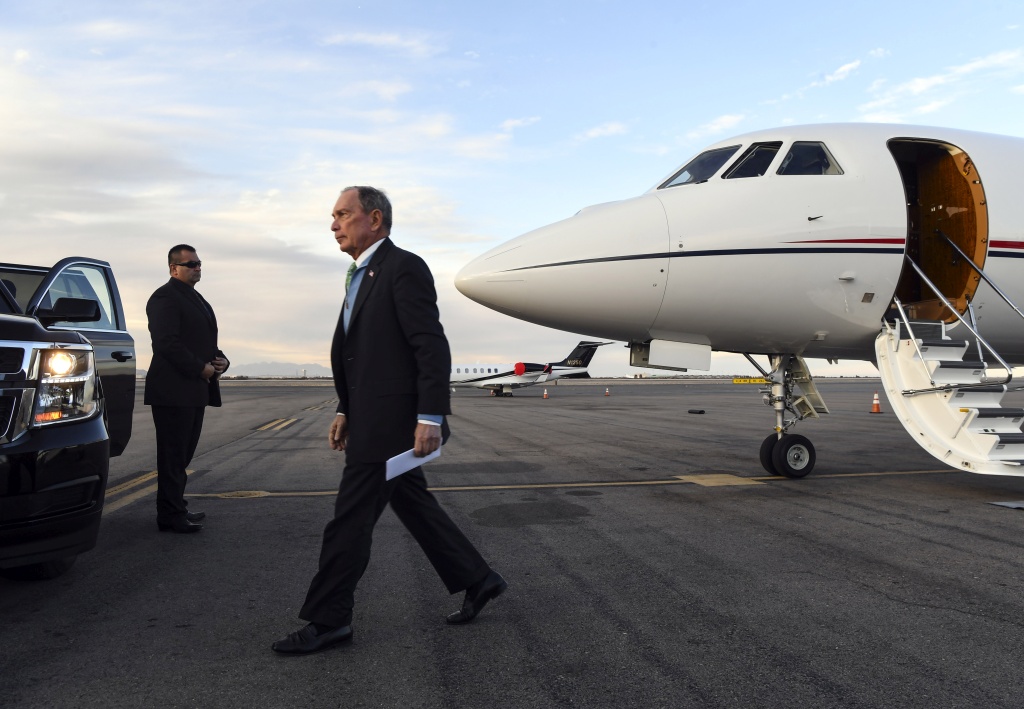
Mike Bloomberg heads to his waiting car after landing in El Paso, Texas. MUST CREDIT: Washington Post photo by Toni L. Sandys

Mike Bloomberg heads to his waiting car after landing in El Paso, Texas. MUST CREDIT: Washington Post photo by Toni L. Sandys

In 2006, Bloomberg chose to locate his primary foundation, Bloomberg Philanthropies, around the corner from his home in two combined buildings worth an estimated $86 million, according to property records. There’s a condo on Park Avenue, three properties in upstate New York and a condo in Vail, according to financial disclosures he filed as mayor. His Ballyshear Estate, a 1913 oceanside mansion in Southampton, sits on 35 acres with a garden designed by Frederick Law Olmsted, who also created Central Park.

At least half of the properties aren’t for his personal use and are primarily for his family members, including his two daughters, Emma and Georgina, and his grandchildren, according to his campaign.

Overseas, the self-professed Anglophile has two homes in London, where he stays when visiting Bloomberg LP’s sizable office in the city: A three-story Victorian on Cadogan Square and an townhouse in Chelsea where author George Eliot once lived. The Cadogan Square property features sweeping staircases, marble columns and paintings by American artists such as Jasper Johns and Andy Warhol. Bloomberg, who calls London his second home, has an active social life in the city and is chairman of the board of trustees for the Serpentine Galleries.

Then there’s the controversial home in Bermuda. He purchased a modest seaside estate in 1998 and replaced it with a $10 million, 6,000 square-foot retreat, with neighbors such as the late businessman Ross Perot and Silvio Berlusconi, the former prime minister of Italy. Bermuda is his favorite place to play golf, which he took up later in life and has obsessively attempted to conquer.

He also owns private jets – notably a Dassault Falcon 900B – and an Agusta SPA A1095 helicopter handpicked by Bloomberg.

“One of his friends said that he saw money as a ticket to the rest of the world,” says Eleanor Randolph, author of “The Many Lives of Michael Bloomberg.” “Not so much things he could buy, but as a source of power.”

– – –

“Philanthropy and public service are my two great loves after my daughters and my company,” he wrote in 1997, a year after he wrote his first multimillion-dollar check to Johns Hopkins University. “There are few people as lucky as I have been. Depending on your perspective, I deserve it or I don’t. No matter which, I have it.”

As a trustee of the university, Bloomberg became taken with the idea of using wealth to save lives. He’s given a total of $3.3 billion to his alma mater, the largest single recipient of his philanthropy.

“I never have met anyone in any profession that got the idea so quickly,” said Al Sommer, then-dean of the university’s School of Public Health. Bloomberg is now one of the most generous philanthropists in America, promoting gun safety, environmental protection, education, women’s rights and health care.

But Bloomberg has said he believes private philanthropy can do only so much. In 2001, when he was 59 years old, he decided to run for mayor.

During that first campaign, reporters questioned the billionaire about why he hadn’t released his tax returns. Bloomberg chafed at the request, as if his considerable wealth could not be compared to that of the other candidates. “They don’t make anything,” he shot back. “They get paid exactly what they – ” and then he stopped himself. “Forget about it. Next question.”

(The question of his tax returns has come up again in his presidential bid; he’s promised to release them within weeks.)

As a lifelong Democrat who registered as a Republican to run for mayor, he spent a record $74 million to win the office in 2001, and even more – $85 million – in 2005 for a second term. He won in a landslide over his Democratic opponent, whose campaign spent only $9.5 million, according to campaign finance records.

The financial crisis of 2008 gave the billionaire a compelling reason to lobby for a another four years, which required the city to change its term-limit laws. By the end of the campaign, he had spent $109 million of his own money. The tab for his three mayoral campaigns was the most any individual personally spent to win elected office.

But he was also giving away billions, some of it anonymously. Bloomberg focused on the city’s infrastructure, public art projects and public health. He banned smoking in New York City bars, unpopular when it happened until it was roundly embraced.

Between 2001 and 2010, he donated nearly $200 million to the Carnegie Corporation, which in turn funded small programs around the city.

“Anyone who received those grants knew they came from Bloomberg,” said Joyce Purnick, author of “Mike Bloomberg: Money, Power, Politics.” Critics accused him of using the philanthropy for his own political ambitions – at that point, a third term as mayor.

After leaving office in 2013, there was talk he might settle into a life of philanthropy, entertaining and golf. Instead, he went back to his company, ousted the CEO and took control again.

“The alternative, in my case, is staying home and talking to Diana about feelings,” he joked at a panel discussion in 2014. “If that doesn’t get you back to work, I don’t know what would.”

For a few years, he kept busy with his business and philanthropy, then was increasingly drawn into politics. He considered but rejected entering the 2016 presidential race, despite entreaties by fellow billionaires such as Rupert Murdoch. But, horrified by the election of Trump, he gave more than $100 million to congressional candidates in the 2018 midterms. When the president pulled the United States out of the Paris climate agreement, Bloomberg pledged to cover the U.S. contribution, which amounted to $4.5 million in 2018 and $5.5 million in 2019.

In early 2019 Bloomberg launched Hawkfish, a digital voter identification and messaging company that he planned to give to whoever became the 2020 Democratic nominee for president. At the time, he was comfortable with the field, and he accepted former vice president Joe Biden as the likely front-runner and even mentioned advisers for his campaign, suggestions that were ignored. But Biden’s lackluster first debate and his poor fundraising worried him, as did Sen. Elizabeth Warren’s position on Medicare-for-all. He worried that the large Democratic field wasn’t embracing policies strategically and that Trump would beat them in key battleground states.

“That alarmed him, and that’s when he decided to enter the race,” said a Bloomberg adviser.

His race is a lot like his life: Sweeping, well-funded, luxurious compared with every other Democratic rival. Entry-level staffers for his campaign are paid $72,000 a year, with three catered meals every day, reports the New York Times. The campaign has issued Apple laptops and new iPhones for the thousands of people hired to work in 125 offices around the country. Even his rallies are extravagant: open bars, groaning buffets and lots of free swag.

Whatever it takes to beat Trump.

“It grates on him that a man not nearly as wealthy, not nearly as smart and not nearly as philanthropic became president of the United States,” explained another friend. “He thinks he’s better than Trump in all those categories – so why shouldn’t he be president?”

That, of course, is the $2 billion question.
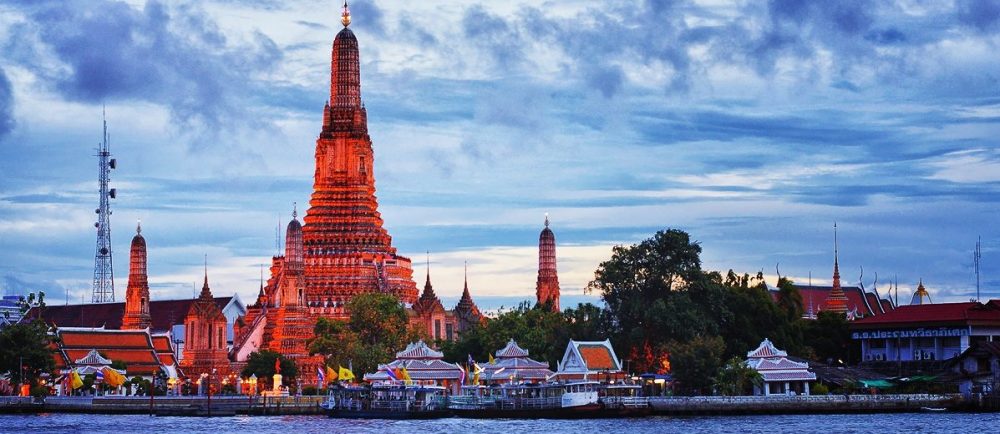
MP stays in pursuit of Prawit and forest foundation #ศาสตร์เกษตรดินปุ๋ย

#ศาสตร์เกษตรดินปุ๋ย : ขอบคุณแหล่งข้อมูล : หนังสือพิมพ์ The Nation

https://www.nationthailand.com/news/30383022?utm_source=category&utm_medium=internal_referral

MP stays in pursuit of Prawit and forest foundation

Feb 28. 2020
By The Nation

Clearly dissatisfied with this week’s parliamentary censure debate, which ended with the premier and other Cabinet members earning votes of confidence by huge margins, Rangsiman Rome, an MP with the now-disbanded Future Forward Party, has launched his own outside the House.

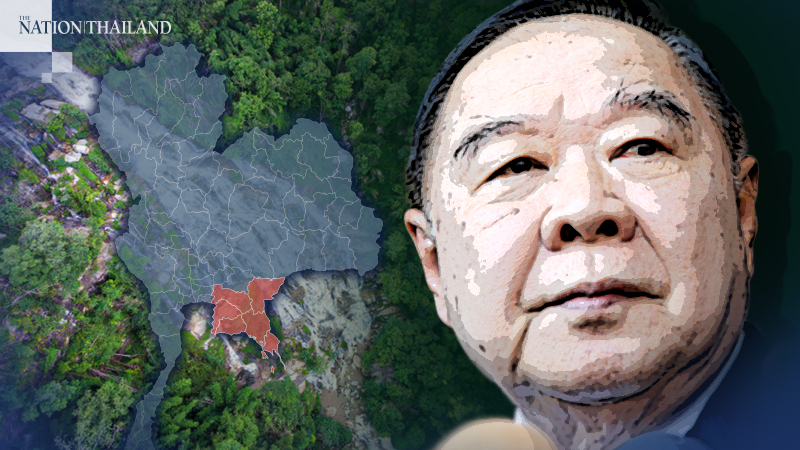
Rangsiman is focusing on Deputy Prime Minister Prawit Wongsuwan’s alleged use of land owned by the Five Provinces Bordering Forest Preservation Foundation as an “operations centre”.

The foundation was established in 2006 to support royal directives to preserve forest and wildlife along a 1.2-million-rai tract on the Cambodian border.

Among the foundation’s original directors were Sonthi Boonyaratglin, the now-retired general who led the 2006 coup, and current Interior Minister Anupong Paochinda.

Rangsiman has pointed out that Anupong, Prawit and another foundation director, Noppadon Intapanya, as well as Sonthi, all held generals’ ranks during the most recent coups.

Noppadon was secretary general of the National Council for Peace and Order established by the military after the 2014 coup.

Rangsiman alleges that the foundation has received financing from both foreign and domestic corporations along with lucrative posts in the private sector for Thai government officials.

Easy win for PM, Cabinet members in voting after censure debate #ศาสตร์เกษตรดินปุ๋ย

#ศาสตร์เกษตรดินปุ๋ย : ขอบคุณแหล่งข้อมูล : หนังสือพิมพ์ The Nation

https://www.nationthailand.com/news/30383014?utm_source=category&utm_medium=internal_referral

Easy win for PM, Cabinet members in voting after censure debate

Feb 28. 2020
Prayut, right and Prawit.

Prayut, right and Prawit.
By THE NATION

Members of the House of Representatives gave overwhelming support to Prime Minister Prayut Chan-o-cha and his Cabinet on Friday (February 28) after a vote of confidence was held on the premier and five ministers following a four-day censure debate from February 24-27.

The voting results were as follow:

Prime Minister and Minister of Defence General Prayut Chan-o-cha: 272 votes for, 49 votes against, two abstained from voting from a total of 323 voters.

Deputy Prime Minister General Prawit Wongsuwan: 277 votes for, 50 votes against, two abstained from voting from a total of 329 voters.

Deputy Prime Minister Wissanu Krea-ngam: 272 votes for, 54 votes against, two abstained from voting from a total of 328 voters.

Interior Minister General Anupong Paochinda: 272 votes for, 54 votes against, two abstained from voting from a total of 328 voters.

Foreign Minister Don Pramudwinai: 272 votes for, 55 votes against, two abstained from voting from a total of 329 voters.

Deputy Minister of Agriculture and Cooperatives Captain Thamanat Prompow: 269 votes for, 55 votes against, seven abstained from voting from a total of 331 voters.

Army clarifies on Ukraine tank purchase after MP raises questions in censure debate #ศาสตร์เกษตรดินปุ๋ย

#ศาสตร์เกษตรดินปุ๋ย : ขอบคุณแหล่งข้อมูล : หนังสือพิมพ์ The Nation

https://www.nationthailand.com/news/30382998?utm_source=category&utm_medium=internal_referral

Army clarifies on Ukraine tank purchase after MP raises questions in censure debate

Feb 28. 2020
By THE NATION

Army spokesman Colonel Winthai Suwaree said on Thursday (February 27) that the Army’s procurement of OPLOT tanks from Ukraine is a government-to-government (G2G) project under which government agencies of both parties have entered into the contract and are responsible as joint operators.

He was replying to a query from Uttaradit MP Saranwut Saranket of Pheu Thai Party, who, during the censure debate this week, questioned discrepancies in the tank’s procurement document in the Royal Thai Army’s documentation system.

“The contract’s MoU [memorandum of understanding] was made and signed by government agencies of both countries,” said Winthai. “On Thailand’s side, apart from Royal Thai Army we also have Ministry of Foreign Affairs and the Office of the Attorney-General sign the MoU as witnesses.”

Winthai further explained that as per the MoU, the tanks are brand new products and must be paid for directly to the Ukrainian government. “We did not pay for them via brokers or middlemen which might have caused the discrepancy in the contract as claimed by the opposition MP,” he said.

Responding to a video clip that Saranwut showed of a tank emitting black smoke when revving up the engine, hinting that the engine had been used for some time and was not brand new. “The tank in the video is not the same as the ones that the Army has purchased,” he clarified.

Come join us, Democrats tell Future Forward #ศาสตร์เกษตรดินปุ๋ย

#ศาสตร์เกษตรดินปุ๋ย : ขอบคุณแหล่งข้อมูล : หนังสือพิมพ์ The Nation

https://www.nationthailand.com/news/30382960?utm_source=category&utm_medium=internal_referral

Come join us, Democrats tell Future Forward

Feb 27. 2020
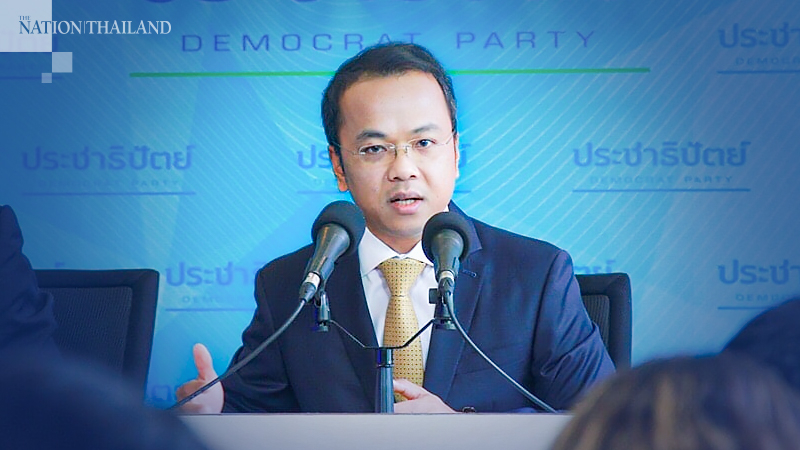
The Democrat Party is ready to welcome former MPs of the disbanded Future Forward Party, its spokesman said on Thursday (February 27).

Ramet Rattanachaweng noted that they are legally obliged to join a new party within 60 days of their party’s resolution and should have no problem finding one that shares the same rights-based ideology as Future Forward.

He said the Democrat Party would welcome any of its MPs whose personal ideology matches its own.

Ramet said it was “repugnant” that some parties are allegedly attempting to lure the Future Forward refugees with money. They should face legal action, he said.

Nor should any MP place money ahead of his political views and yield to the temptation of short-term financial gain, Ramet said.