Charter Court takes up EC petition on dissolving Future Forward Party #ศาสตร์เกษตรดินปุ๋ย

#ศาสตร์เกษตรดินปุ๋ย : ขอบคุณแหล่งข้อมูล : หนังสือพิมพ์ The Nation

https://www.nationthailand.com/news/30381685?utm_source=category&utm_medium=internal_referral

Charter Court takes up EC petition on dissolving Future Forward Party

Feb 06. 2020
Thanathorn Juangroongruangkit

Thanathorn Juangroongruangkit
By The Nation

The Constitutional Court on Wednesday (February 5) announced that the Election Commission’s petition seeking dissolution of the Future Forward Party is heading to the ruling.

The court said there would be no further hearings as the complaints and explanations were solid enough for the judges to consider.

The court has requested testimony letters from 17 witnesses in the accused’s document and an opinion document from the secretary of the EC before February 12 in accordance with Article 27, Section 3 of the Organic Act on Constitutional Court Procedures.

The verdict will be read at 3pm on February 21 at the Constitutional Court.

The EC has accused Future Forward of violating Article 72 of the Political Party Act BE2560, which prohibits political parties from receiving donations of money or assets from any sources which it knows are unlawful or has reasonable doubts of it being unlawful. Future Forward leader Thanathorn Juangroongruangkit had given a loan of Bt191 million to his party.

Article 92(3) of the same act allows the Constitutional Court to consider dissolving any political party that violates Article 72.

Epic breakdown in Iowa casts spotlight on caucus system #ศาสตร์เกษตรดินปุ๋ย

#ศาสตร์เกษตรดินปุ๋ย : ขอบคุณแหล่งข้อมูล : หนังสือพิมพ์ The Nation

https://www.nationthailand.com/news/30381571?utm_source=category&utm_medium=internal_referral

Epic breakdown in Iowa casts spotlight on caucus system

Feb 04. 2020
Supporters of Sen. Elizabeth Warren, D-Mass., decorate Roosevelt High School in Des Moines, Iowa, on Monday, Feb. 3, 2020. MUST CREDIT: Washington Post photo by Melina Mara

Supporters of Sen. Elizabeth Warren, D-Mass., decorate Roosevelt High School in Des Moines, Iowa, on Monday, Feb. 3, 2020. MUST CREDIT: Washington Post photo by Melina Mara
By IOWA-ANALYSIS
The Washington Post · Dan Balz · NATIONAL, POLITICS 

DES MOINES, Iowa – Iowa Democrats spent a year evaluating a record-large field of presidential candidates, all in search of someone they believed could defeat President Trump in November. But on the night they were asked to deliver a definitive result, the precinct caucus system broke down and Iowa’s place in the nominating process became the story.

Hours passed as the Iowa Democratic Party struggled to reconcile conflicting numbers from the roughly 1,700 precincts. Partial numbers from selected caucus sites that were being covered by television networks painted a confusing and sometimes conflicting portrait of what was happening.

Supporters for former South Bend, Indiana, mayor Pete Buttigieg watch caucus results on the campus of Drake University in Des Moines, Iowa, on Monday, Feb. 3, 2020. MUST CREDIT: Washington Post photo by Matt McClain

Supporters for former South Bend, Indiana, mayor Pete Buttigieg watch caucus results on the campus of Drake University in Des Moines, Iowa, on Monday, Feb. 3, 2020. MUST CREDIT: Washington Post photo by Matt McClain

In the absence of results in real time, it was anybody’s guess who was winning. By the time the results are reported, perhaps by sometime on Tuesday, they could be subject to challenge or questions from one or another of the campaigns, and the scene will have shifted to New Hampshire, whose primary will be held on Feb. 11.

The one conclusion from the numbers that were being collected by the media suggested that the eventual winner would receive a lower percentage of the vote than any previous winner since 1972, when the modern caucuses were born. But that could end up being the secondary story. On Monday night, it was all about Iowa and not the candidates.

Iowans have prided themselves on their first-in-the-nation caucuses. Voters in the state have taken their role seriously, and over the years a culture has developed here of citizens who turn out to see and evaluate the candidates firsthand. Democrats often have ended up settling on a candidate who would go on to win the party’s nomination.

But whatever the culture that exists in evaluating candidates, Iowa has also come under strong and recurring criticism for exercising outsize influence on the nominating process. This predominantly white state, where agriculture is a dominant industry, is far from representative of the nation. The absence of a larger minority population, especially for a Democratic Party that has become increasingly diverse in its makeup, rubs raw many non-Iowa Democrats.

Beyond that, the caucus system itself is a target of criticism. Unlike primary elections, in which voters can cast their ballots in secret at any time of the day when the polls are open, the caucus process is far more demanding. Participants must arrive by a fixed time in the evening and be prepared to stay for several hours as the process of alignment and realignment plays out.

The caucuses disenfranchise some voters who, because of working hours or other issues, are not able to be at their precinct sites at the appointed hour. This year, special provisions were made to make it possible for those people to attend satellite caucuses at different hours. Still, the caucuses are cumbersome and to critics unfair as a result.

The caucuses were designed originally as party-building mechanisms, generally used by smaller states. For presidential candidates, they are seen as a test of organizing capability.

Defenders of the caucuses and of Iowa have long said that this is one of the few places where candidates must meet voters face to face, where they must answer questions and listen and perhaps learn about real life.

But even in Iowa there are questions about the prominence the state plays, given its demographics and small size. Now there is a bigger problem, and there is little doubt that it will bring more pressure on Iowa’s leaders to justify the system they have built than ever before.

The irony of what was happening on Monday night was that it was the second time in three days when the expected did not happen. On Saturday night, the Iowa Poll, long considered the most reliable pre-caucus indicator of the standing of the candidates, was pulled just before it was to be released after technical issues threw into doubt the reliability of the findings.

Now the results of the caucuses themselves are being called into question. The campaign of former vice president Joe Biden sent a letter to the Iowa Democratic Party demanding answers and putting the party on notice about the eventual results. People in two campaigns said state party leaders hung up on a conference call when the leaders were pressed about when results would be released.

Around 11:30 p.m., as everyone was still waiting for the first official results, Mandy McClure, a spokeswoman for the Iowa Democratic Party issued a statement. “We found inconsistencies in the reporting of three sets of results,” she said. “In addition to the tech systems being used to tabulate results, we are also using photos of results and a paper trail to validate that all results match and ensure that we have confidence and accuracy in the numbers we report.”

If Monday’s breakdown were an isolated example, that would be one thing. But this is the third time in as many caucus nights when Iowa has struggled to determine the winner of caucuses in real time.

Eight years ago, Mitt Romney was declared the narrow winner over Rick Santorum on the night of the Republican caucuses. But the absence of full results on caucus night left the outcome unresolved. Weeks later, Santorum was declared the official winner, but too late for it to give his campaign the boost he needed.

Four years ago, Hillary Clinton and Bernie Sanders battled throughout a long night of counting. Clinton’s campaign claimed victory without knowing for certain that she had won. In the end, her margin was less than half a percentage point, and the Sanders campaign never truly believed that he had lost.

In the absence of results on Monday, cable television provided reports from individual caucus sites. What the television audience saw was not particularly reassuring, especially to those who have been skeptical of or simply do not understand the caucus process.

Iowans gather in their precincts, break into groups to show support for their candidates, and are counted. When that count is completed, candidates who do not meet a threshold of 15 percent support in the precinct are declared not viable. Supporters of a nonviable candidate are then free to move to support another candidate.

It sounds complicated and looked even more complicated on television. Party officials had prepared what they believed was a system for reporting results that would be easy to use by precinct leaders and protected against possible cyberattack.

But this year also brought changes in reporting the numbers. Historically, the Democrats have reported a single number, something called “state delegate equivalents,” a percentage based on a formula devised by the party. That number, however, doesn’t truly reflect the number of people who show up for each candidate, only the order of finish among the candidate who are viable after realignment.

This year, the state party, in the interest of transparency and pressed by the Democratic National Committee, said it would report two other numbers, including the number of people who supported each candidate at the start of the caucuses. But as Monday turned to Tuesday, the party was left to tally the results with a backup system.

The absence of results created an odd ending to the evening – a series of speeches by the candidates all claiming in one way or another success or victory, and a promise to take the fight on to New Hampshire.

That wasn’t supposed to be the way Monday ended. Iowans were hoping to show the rest of the country how they finally evaluated the candidates. Instead, even if the results are eventually reported, there will be a new and more challenging assessment of the caucus system.

Dan Balz is chief correspondent at The Washington Post. He has served as the paper’s deputy national editor, political editor, White House correspondent and Southwest correspondent.

Ex-New Economic Party leader to depart over ideologies #ศาสตร์เกษตรดินปุ๋ย

#ศาสตร์เกษตรดินปุ๋ย : ขอบคุณแหล่งข้อมูล : หนังสือพิมพ์ The Nation

https://www.nationthailand.com/news/30381509?utm_source=category&utm_medium=internal_referral

Ex-New Economic Party leader to depart over ideologies

Feb 03. 2020
Mingkwan Saegnsuwan

Mingkwan Saegnsuwan
By The Nation

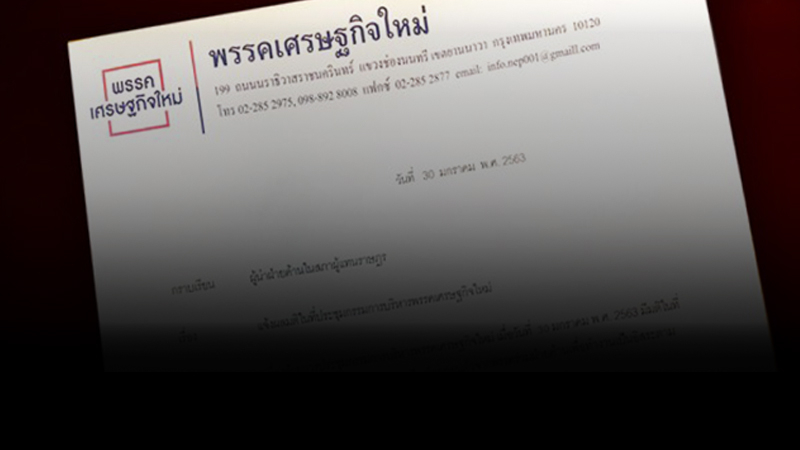
New Economics Party’s MP and former leader Mingkwan Saegnsuwan announced on Monday (February 3) that he would depart the party over a conflict of ideologies.

He said during the election campaign, he made a promise that the New Economics Party would not support the National Council for Peace and Order (NCPO) and people elected the party for that reason.

A member of Parliament, Mingkwan said, does not have to agree with his party’s resolutions and since his ideology differs from that of the party, he has decided to leave.

Furthermore, he explained that he would resign at an appropriate time. After that, he would no longer be able to participate in a censure debate, Mingkwan added.

However, he did not reveal the reason why New Economics Party has shifted to a new direction.

New Economy Party walks away from opposition allies #ศาสตร์เกษตรดินปุ๋ย

#ศาสตร์เกษตรดินปุ๋ย : ขอบคุณแหล่งข้อมูล : หนังสือพิมพ์ The Nation

https://www.nationthailand.com/news/30381359?utm_source=category&utm_medium=internal_referral

New Economy Party walks away from opposition allies

Jan 31. 2020
By THE NATION

The New Economy Party advised fellow members of the House opposition bloc on Friday (January 31) that it would continue in opposition only as an independent force.

It announced that the party’s resolution to that effect had been agreed on Thursday and signed by acting leader Supadit Arkasarerk.

There is speculation that the split resulted from the opposition bloc, while laying strategy for the censure debate, refusing to include Deputy Prime Minister Somkid Jatusripitak among the targets for censure.

Six targets loom large as censure debate begins #ศาสตร์เกษตรดินปุ๋ย

#ศาสตร์เกษตรดินปุ๋ย : ขอบคุณแหล่งข้อมูล : หนังสือพิมพ์ The Nation

https://www.nationthailand.com/news/30381360?utm_source=category&utm_medium=internal_referral

Six targets loom large as censure debate begins

Jan 31. 2020
By THE NATION

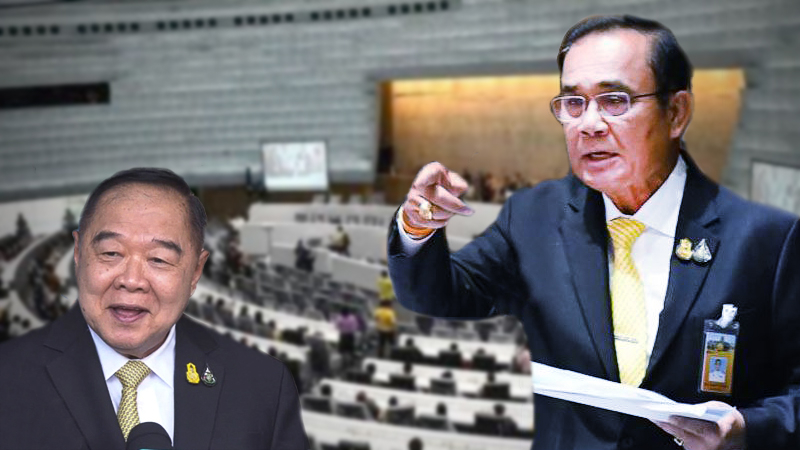
National Assembly president Chuan Leekpai was on Friday (January 31) guiding the first censure debate against the second Prayut Chan-o-cha government.

Scheduled to be grilled by the opposition on their performance of duties:

• Prayut Chan-o-cha, Prime Minister and Minister of Defence

• Prawit Wongsuwan, Deputy Prime Minister

• Wissanu Krea-ngam, Deputy Prime Minister

• Don Pramudwinai, Minister of Foreign Affairs

• Anupong Paochinda, Minister of Interior

• Thamanat Prompow, Deputy Minister of Agriculture and Cooperatives

Phumtham Wechayachai, adviser to the opposition leader, posted on Facebook that Prayut would be the primary target as the person in charge overall and because he had “previously failed in leading the government”.

“Thailand is at risk because of the inefficient administration of the current government,” Phumtham said.

Other ministers would be grilled over perceived corruption, the opposition said, especially Prawit.

Thamanat was bracing for questions about his apparent drug conviction in Australia, about which Teerajchai Phunthumas of the Future Forward Party said there was ample “evidence” to raise the matter for debate.

Prostration before Sereepisuth gets ex-MP forgiveness and blessings #ศาสตร์เกษตรดินปุ๋ย

#ศาสตร์เกษตรดินปุ๋ย : ขอบคุณแหล่งข้อมูล : หนังสือพิมพ์ The Nation

https://www.nationthailand.com/news/30381358?utm_source=category&utm_medium=internal_referral

Prostration before Sereepisuth gets ex-MP forgiveness and blessings

Jan 31. 2020
By The Nation

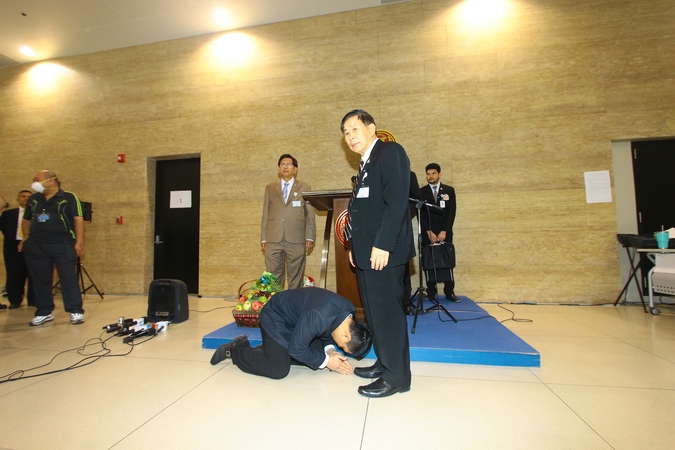
Former member of Parliament Teetash Keitladarom on Friday (January 31) prostrated at the feet of MP Pol General Sereepisuth Temeeyaves to seek forgiveness over his alleged libellous remarks against the Seri Ruam Thai Party leader and withdrawal of a defamation suit.

Teetash sought forgiveness in Parliament during a press conference by Sereepisuth seeking a review by the Constitutional Court of the legitimacy of 2020 budget bill, amid reports of proxy voting.

Teetash, who resigned from the ruling Palang Pracharath Party on January 29, apologised to Sereepisuth for attacking the Seri Ruam Thai leader without having proper facts.

Teetash had attacked Sereepisuth for alleged corruption in the purchase of Tiger-brand motorbikes for police patrols and encroaching on forestland.

Sereepisuth initially declined to accept Teetash’s apology when the ex-MP met him with a bouquet of flowers. He said Teetash must prostrate at his feet for him to accept the apology and drop the lawsuit. Teetash agreed immediately and received blessings from his elder to form a new party.

Teetash said he had resigned from the ruling party because of problems with “high-ranking” members. He said he would form his own political party.

Israel rushes to capitalize on peace plan as Palestinians express anger #ศาสตร์เกษตรดินปุ๋ย

#ศาสตร์เกษตรดินปุ๋ย : ขอบคุณแหล่งข้อมูล : หนังสือพิมพ์ The Nation

https://www.nationthailand.com/news/30381268?utm_source=category&utm_medium=internal_referral

Israel rushes to capitalize on peace plan as Palestinians express anger

Jan 30. 2020
By The Washington Post · Steve Hendrix, Ruth Eglash

JERUSALEM – Israelis and Palestinians awoke Wednesday with the long-contested ground seeming to shift beneath their feet following the much-awaited reveal of the latest, and most unusual, proposal to resolve their five-decade standoff.

As one side of the dispute rejected a White House plan it condemned as hopelessly biased, the other raced to lock down the territorial prizes the plan offered. This ensured that the proffered deal could have permanent consequences even if, as many analysts predict, it will go nowhere during its self-imposed four-year window.

Even before the parties had finished poring over the map that described a possible Palestinian state on 70 percent of the West Bank, Israeli Prime Minister Benjamin Netanyahu made clear he would immediately take steps to annex the other 30 percent, the location of more than 150 Jewish settlements, along with the Jordan Valley.

But on Wednesday morning, Tourism Minister Yariv Levin, who accompanied Netanyahu to Washington, told an Israeli radio station that because of formal procedures, this process could be delayed.

The dizzying pace of events left all sides scrambling to assess what was changing and what remained of the dogged status quo.

The Palestinian leadership united in declaring the plan a nonstarter – “a thousand no’s,” shouted Palestinian Authority President Mahmoud Abbas – although some neighboring Arab states seemed to allow for a few “maybes.”

Groups of protesters turned out only in parts of the West Bank, the Gaza Strip and in nearby Amman, Jordan. There were scenes of isolated rock-throwing and flaming posters of President Trump and Netanyahu, but no reported injuries. More serious clashes occurred in the West Bank Wednesday, according to Israeli media reports, including three protesters wounded by Israeli security forces near Ramallah.

A general strike was called for Wednesday in Gaza, and at midday Wednesday several, but not all, shops were closed. A group of boys, free from school, burned a tire at a corner in Gaza City.

Muhammad al-Burai, an idled teacher, watched them, lamenting all that the proposal would take away from his beleaguered people.

“The plan tells us that there is no Jerusalem, no return of refugees, no control of borders, no airport or seaport, the settlements have become legitimate, the martyrs and the detainees have become criminals, and all this for $50 billion” in promised investment funding, he said. “Is there a sane person who accepts this?”

Israeli settlers were also sorting through the deal’s particulars, with mixed responses. They stood to achieve a long-cherished dream of having their hilltop towns and cities become normalized Israeli communities – patrolled by police instead of soldiers – but many balked at the price: a four-year freeze on building and the prospect of a Palestinian state.

“That’s a big no,” said David Haivri, a longtime resident of Kfar Tapuach, an Orthodox Jewish settlement of 1,500 people north of Jerusalem. “We are a thriving community, and we need to grow. To ask us to not be alive, even for a short period and certainly for four years, we cannot accept that.”

Some settlement movement leaders, many of whom traveled to Washington with Netanyahu, were similarly dismissive. In the hours after plan’s debut, some expressed surprise that the prime minister they considered a key supporter endorsed the concept of their communities existing as islands surrounded by a sovereign Palestine, even one allowed no army or airport.

But others were prepared to weigh the pros and cons of what they recognized as a high-water mark for their movement, which is condemned by much of the international community as illegal.

“If we would have been told 20 years ago that America would come to recognize the settlements, we would have been considered fools” to believe that, said Oded Revivi, an official on the Yesha Council, a settler umbrella group. “The plan poses challenges that are not simple and will require us to think carefully.”

He cited the plan’s recognition of a Palestinian state with sections of East Jerusalem as its capital as examples.

The path to statehood was the most surprising feature of the plan for many of Israel’s most conservative factions, which otherwise delighted in its favorable tilt their way.

Eugene Kontorovich, a legal expert at the Koholet Policy Forum, a leading right-wing think tank in Jerusalem, said many on the right would probably embrace the trade-off as they realized how many safeguards were built into it. The Palestinians could achieve statehood only after meeting a string of prerequisites, from disarming Hamas to recognizing Israel as a Jewish state.

“Unlike other plans, this one builds in criteria the [Palestinian Authority] would have to meet to show it really wants to be a peaceful neighbor,” Kontorovich said. “And if you fail, statehood is taken off the table.”

But others from the right were adamantly opposed to the idea. Defense Minister Naftali Bennett said the right-wing Yamina party he leads, which Netanyahu will need to form a government if he is successful in the March 2 election, will “under no circumstances recognize a Palestinian state in any format.”

Still, Bennet was enthusiastic at the prospect of a quick annexation of the settlements and the Jordan Valley, a move seemingly greenlighted by the American authors of the plan. U.S. Ambassador to Israel David Friedman told reporters Tuesday that annexation would still allow for a Palestinian state.

“If Israelis apply Israeli law to the settlements and territory allocated to Israel under the plan, a significant minority of the West Bank, then we will recognize Israeli sovereignty” over the annexed areas, Friedman said. “And from the Palestinian perspective, they are still in the game.”

Speaking at a conference Wednesday, Bennett said that Israel could not afford to miss “this historic opportunity” to apply Israeli sovereignty to all Israeli settlements and any other areas outlined in Trump’s plan. He said he had already called for the establishment of a team made up of the Israeli military, various government offices and the civil administration overseeing the West Bank to explore ways to implement the process of annexation.

Netanyahu had said he wants his security cabinet to vote on annexation Sunday, but a minister in his government said Wednesday that the process would require legal review first. And U.S. Ambassador to Israel David Friedman told reporters that the peace deal would require Israel to clear the annexation plan with Washington.

For liberal Israelis, any relief that the concept of a two-state solution might endure – with the unexpected endorsement of a future Palestine by both Trump and Netanyahu – was overshadowed by the restrictions the plan would impose.

“The usage of the word ‘state’ in the context of this plan is beyond cynical,” said Hagai El-Ad, executive director of the Israeli human rights group B’Tselem.”This is not a plan for Palestinian rights nor a state, except for the permanent state of apartheid.”

In the West Bank, anger at the plan only grew among Palestinian leaders after the details became clear. Not only were the terms unfavorable, as officials had predicted for the years they boycotted the White House discussion, but the actual details were nearly identical to demands they had heard from Israelis in the past.

“What I heard President Trump read was verbatim, word-for-word, what I have heard from Netanyahu’s negotiators,” said Saeb Erekat, the longtime chief Palestinian negotiator. “This plan was not written in Washington. It was written in the office of the prime minister of Israel.”

In the West Bank, the deal’s promised torrent of money via a $50 billion investment fund was dismissed as both an empty promise and a lowball offer for limited independence on less land than previous peace deals have offered.

“Fifty billion dollars is an insult to every Palestinian,” said Ibrahim Barham, a software developer from Ramallah who was invited to – and declined to attend – a conference organized in Bahrain by the White House last year to promote West Bank investment as part of the peace plan. “Our land is worth trillions. Jerusalem, to us, is worth all the money on the face of the Earth. This has never been about money.”

Some of the Palestinians’ Arab neighbors in the region, however, were not so quick to reject the Trump plan outright. Jordan and Turkey roundly condemned the proposal, and in Lebanon, the Iranian-allied Hezbollah movement vowed to “topple” what it called the “deal of shame.”

But others were more supportive, notably Egypt and the Arab states of the Persian Gulf that have drifted closer to normalized relations with Israel out of shifting strategic interests and years of peace-process stagnation.

Saudi Arabia’s Foriegn Ministry tweeted a thank you for Trump’s efforts “to develop a comprehensive peace plan between the Palestinian and Israeli sides,” and the United Arab Emirates described it as “a serious initiative that addresses many issues raised over the years.”

Oman, Bahrain and the UAE sent representatives to the White House for the plan’s release.

Future Forward approaches court in Thanathorn loan case #ศาสตร์เกษตรดินปุ๋ย

#ศาสตร์เกษตรดินปุ๋ย : ขอบคุณแหล่งข้อมูล : หนังสือพิมพ์ The Nation

https://www.nationthailand.com/news/30381129?utm_source=category&utm_medium=internal_referral

Future Forward approaches court in Thanathorn loan case

Jan 27. 2020
Jaruwan Saranket

Jaruwan Saranket
By The Nation

Jaruwan Saranket, MP and Future Forward Party executive member, filed a letter with the Constitutional Court today (January 27), asking it to extend the period of explanation by 30 days concerning founder Thanathorn Juangroongruangkit’s loan case brought by the Election Commission, which is seeking dissolution of the party.

The MP produced evidence together with witnesses before the court and explained that the extension is required to appeal for investigation documents from the inquiry committee to obtain information that would be used in legal proceedings.

Future Forward has reportedly requested the information from the Election Commission’s secretary three times but has not received any response.

The party therefore appealed to the Office of Official Information on January 22 to get the correct information on the case but is yet to obtain the material.

Constitutional Court ruling sought on passage of FY2020 budget #ศาสตร์เกษตรดินปุ๋ย

#ศาสตร์เกษตรดินปุ๋ย : ขอบคุณแหล่งข้อมูล : หนังสือพิมพ์ The Nation

https://www.nationthailand.com/news/30380959?utm_source=category&utm_medium=internal_referral

Constitutional Court ruling sought on passage of FY2020 budget

Jan 23. 2020
Chuan Leekpai

Chuan Leekpai
By The Nation

President of the National Assembly Chuan Leekpai on Thursday (January 23), submitted a request to the Constitutional Court, seeking its ruling on the verification of the Bt3.2 trillion budget bill for fiscal year 2020 after two Bhumjaithai MPs (Chalong Toedweerapong and Natee Ratchakitprakarn) were accused of casting their vote without being present during the voting process.

If their action was ruled unconstitutional, it will not affect the salary payments of government officials but projects’ funding will be deliberated on a case-by-case basis, said the president.

“I have to admit that this place [parliament house] is not yet ready for MPs who have yet to be allocated their own seats. They are still using the Senate’s Chandra conference room for meetings. If MPs have regular seats, we would know who’s voting. But, it largely depends on the responsibility of each individual,” Chuan said.

Prime Minister Prayut Chan-o-cha was also concerned over delay of the bill’s passage since it would affect the country’s development plan.

Future Forward ready with alternative party if it were to be dissolved #ศาสตร์เกษตรดินปุ๋ย

#ศาสตร์เกษตรดินปุ๋ย : ขอบคุณแหล่งข้อมูล : หนังสือพิมพ์ The Nation

https://www.nationthailand.com/news/30380791?utm_source=category&utm_medium=internal_referral

Future Forward ready with alternative party if it were to be dissolved

Jan 19. 2020
Photo Credit To Future Forward Party's Official Facebook Page

Photo Credit To Future Forward Party’s Official Facebook Page
By The Nation

Future Forward Party (FFW) secretary-general Piyabutr Saengkanokkul on Saturday (January 18) denied the accusation that his party was trying to overthrow the Thai regime. Speaking at a seminar on “Future is Now” held at Thammasat University Rangsit Campus, he emphasised that the party only wished to remedy the situation in Thailand and the ones who are trying to target them with these kinds of accusations were those who had violated the constitution.

He said Future Forward will make all efforts to ensure any dissolution of the party becomes an exercise in futility by launching a new party. They have already requested around 60,000 members of Future Forward to register for the new party. Both Thanathorn and Piyabutr confirmed that they would not give up.

The Constitutional Court will deliver on January 21 at 2pm its verdict on the “Illuminati” case seeking dissolution of Future Forward Party. Illuminati is supposedly a secret anti-monarchy group.

At the seminar, Thanathorn Juangroongruangkit, head of Future Forward, presented a new economic model under civil state policies to fight injustice and “the failure of the Thai nation to build a better society”.

Normally, the government’s projects under civil state policies have led to more monopolies as big capitalists are the ones who shape the policies of Thailand. Dependence on foreign investment in the existing economic model in projects such as the Eastern Economic Corridor, high-speed trains and Thailand Riviera is likely to make Thailand grow without technology development, Thanathorn said.

“Moreover, the power that comes from the authorities not the voice of the people will cause a gap in society. Whether it is an economic gap or a social gap, the development of manpower and technology will meet obstacles that are caused by the economic model.

“We cannot rely on foreign capital which regards Thailand only as a production base,” Thanathorn said. “And the auto electronics industry that we depend on cannot grow any bigger. We need a new supply chain. We want to supply to a new industry.”

He explained that this change needed big government spending and in an industry created by Thais to add value and generate employment, which will balance the economy and raise a sense of responsibility for the next generation.

“Compared with the Bt3.3-trillion budgets, the government can manage with only Bt1.2 trillion. Therefore, we are presenting ‘zero-based budgeting’. The principle behind it is to reconstruct the previous budgets and focus on a certain number of budgets that will solve the country’s issues. The government should not spend only on projects in Bangkok but also distribute to other provinces,” Thanathorn said.