USA Track & Field calls for Tokyo Olympics postponement, joining USA Swimming #ศาสตร์เกษตรดินปุ๋ย

#ศาสตร์เกษตรดินปุ๋ย : ขอบคุณแหล่งข้อมูล : หนังสือพิมพ์ The Nation

https://www.nationthailand.com/sport/30384590?utm_source=category&utm_medium=internal_referral

USA Track & Field calls for Tokyo Olympics postponement, joining USA Swimming

Mar 22. 2020
By The Washington Post · Adam Kilgore 

USA Track & Field called on the United States Olympic and Paralympic Committee to push for postponing the 2020 Tokyo Olympics, adding to the growing momentum to delay the Games. With the request, USATF became the second American sports governing body in two days to pressure Olympic officials into halting the Games amid the global coronavirus pandemic.

In an email dated Friday, which track’s governing body made public Saturday morning, USATF chief executive officer Max Siegel told U.S. Olympic head Sarah Hirshland that USATF is “respectfully requesting” the USOPC to advocate to the International Olympic Committee for the Tokyo Games to be postponed. The U.S. Olympic and Paralymic Committee said Friday it did not have to make a decision now, because the Olympics start in four months

But athletes must follow a strict regimen to prepare for the Games, and leaders in individual sports have expressed concern. Siegel’s email focused on concerns about the welfare of athletes, who have been told by the IOC to continue training as if the Games will go on as scheduled, despite massive health risks and widespread government restrictions.

USATF joined USA Swimming in asking for the postponement, meaning the country’s two biggest sports federations are standing against the IOC’s insistence the Games will go on as scheduled. On Friday, USA Swimming sent a similar memo to the USOPC, and coaches explained that swimmers were unable to find places to train, adding another layer of stress as they cope with how the coronavirus has affected every facet of daily life.

“We acknowledge that there are no perfect answers, and that this is a very complex and difficult decision, but this position at least provides our athletes with the comfort of knowing that they will have adequate time to properly prepare themselves physically, mentally and emotionally to be able to participate in a safe and successful Olympic Games, and that they can shift their focus toward taking care of themselves and their families,” Siegel wrote to Hirshland. “We urge the USOPC, as a leader within the Olympic Movement, to use its voice and speak up for the athletes.”

The USOPC appeared unmoved Friday evening after USA Swimming’s statement was released. In a statement, the USOPC said the IOC believes it is “premature” to make a decision regarding the Tokyo Olympics and that it wanted to “afford them the opportunity” to gather more information before insisting the IOC makes a call.

“We have also heard from athletes that they want . . . to ensure that we aren’t prematurely taking away any athletes’ opportunity to compete in the Olympic and Paralympic Games until we have better clarity,” the USOPC’s statement read.

Olympic hurdler Lolo Jones, who is training in Louisiana, said the USATF’s stance “brings you some sense of peace and relief.” She hopes the pressure will mount on the IOC so athletes can be relieved of stress. She said her races have all been canceled, and she can’t find gyms or college tracks to train at because they have all been closed. Meanwhile, members of her family have lost their jobs and fallen into financial distress.

“Just because we’re Olympians doesn’t mean we’re immune to this disease,” Jones said. “Every time we’re going out in public and trying to find gyms and places to train, I’m like, ‘Really?’ The government is telling us to stay in our house, to self-quarantine, but we can’t because the IOC is being adamant the Olympics are going to go on. Every time I saw a statement from the IOC saying, hey, ‘The Olympics will go on,’ and my world around me is being so ripped up.’ It feels like the house is on fire and the IOC is saying, ‘Don’t worry, it’ll be fine. Stay right inside your house.’ ”

While runners, jumpers and throwers face fewer obstacles in finding open places to train than swimmers, health concerns and restrictions have affected their training as well.

“Everybody in the world is having issues with training facilities,” said one prominent track and field coach, who requested anonymity to speak candidly about a sensitive issue. “All schools and universities are shut down. If that’s the case, most people are out of luck, because almost everybody trains at colleges and universities. You can look at Instagram – [U.S. world champion] Grant Holloway is doing hurdles in a grass field out in front of his house. That’s the case in the whole world.”

– – –

The Washington Post’s Rick Maese contributed to this report.

LPGA postpones US events due to COVID-19 outbreak #ศาสตร์เกษตรดินปุ๋ย

#ศาสตร์เกษตรดินปุ๋ย : ขอบคุณแหล่งข้อมูล : หนังสือพิมพ์ The Nation

https://www.nationthailand.com/sport/30384544?utm_source=category&utm_medium=internal_referral

LPGA postpones US events due to COVID-19 outbreak

Mar 21. 2020
By THE NATION

The LPGA Tour postponed tournaments in the US as it continues to navigate the global Coronavirus pandemic.


After previously announcing the postponement of events through the ANA Inspiration and following broadened directives from the various health organizations, the LPGA Tour informed its players that three additional events on its schedule are now postponed: the LOTTE Championship in Ko Olina, Oahu, Hawaii (April 15-18), the HUGEL-AIR PREMIA LA Open in Los Angeles, Calif. (April 23-26), and the LPGA MEDIHEAL Championship in Daly City, Calif. (April 30-May 3).

The LPGA Tour also announced that its first major of the season, the ANA Inspiration, has been rescheduled for September 10-13 at Mission Hills Country Club in Rancho Mirage, Calif. The Cambia Portland Classic in Portland, Ore., which had previously been scheduled for those dates, will now take place September 17-20.

The LPGA continues to work with its partners on plans to reschedule previously postponed events and will provide further updates once those plans are finalized.

Note: LPGA Commissioner Mike Whan shared the attached letter with LPGA Tour players earlier this morning.

Rolex Women’s World Golf Ranking to be on hold #ศาสตร์เกษตรดินปุ๋ย

#ศาสตร์เกษตรดินปุ๋ย : ขอบคุณแหล่งข้อมูล : หนังสือพิมพ์ The Nation

https://www.nationthailand.com/sport/30384543?utm_source=category&utm_medium=internal_referral

Rolex Women’s World Golf Ranking to be on hold

Mar 21. 2020
By THE NATION

The Official World Golf Ranking (OWGR) and Rolex Women’s World Golf Ranking (WWGR) will be paused until further notice with professional golf currently inactive due to the global threat posed by Coronavirus (COVID-19).

The Governing Boards of the OWGR and WWGR have decided that the rankings will be frozen at Week 11 (the week ending March 15th and 16th 2020) and will continue to monitor the impact of Coronavirus COVID-19.

An announcement about the resumption of each respective ranking will be made in due course.

Paralysis seizes Japan over an impossible Olympics situation #ศาสตร์เกษตรดินปุ๋ย

#ศาสตร์เกษตรดินปุ๋ย : ขอบคุณแหล่งข้อมูล : หนังสือพิมพ์ The Nation

https://www.nationthailand.com/sport/30384532?utm_source=category&utm_medium=internal_referral

Paralysis seizes Japan over an impossible Olympics situation

Mar 20. 2020
A man wearing a protective mask stands in front of Olympic rings in Tokyo on March 11, 2020. MUST CREDIT: Bloomberg photo by Kiyoshi Ota.

A man wearing a protective mask stands in front of Olympic rings in Tokyo on March 11, 2020. MUST CREDIT: Bloomberg photo by Kiyoshi Ota.
By Syndication Washington Post, Bloomberg · Ayai Tomisawa, Yuki Hagiwara · WORLD, SPORTS, ASIA-PACIFIC, OLYMPICS 

A rising chorus by athletes, the public and even President Donald Trump to delay or cancel the 2020 Tokyo Olympics has paralyzed Japan’s politicians and organizers, whose conflicting messages are sowing even more confusion over the fate of the games.

Prime Minister Shinzo Abe has made clear his desire to hold the competition in its “complete form,” without reducing its scale or banning spectators, even as the coronavirus pandemic shuts down economies across the globe. Yet just a day before, his deputy called the games “cursed” and the chief of the local organizing committee disclosed that no plans have been made to ensure the safety of competing athletes.

“Japan’s leaders are trying to avoid a situation where they will be held accountable,” said Kuniyoshi Shirai, a professor of crisis management studies at the Graduate School of Information & Communication. “What they want to do is to be able to say that they followed correct procedures.”

The final decision rests with the International Olympic Committee, which said earlier this week that the games will go ahead as planned in an “unprecedented situation.” Since then, however, the specter of businesses going bankrupt, borders being closed and people’s lives being changed forever has only made it more difficult to hold an opening ceremony on July 24. For many, the angst and parlous communication echoes the stasis that gripped officials when they struggled to come up with confidence-boosting measures to deal with a radiation-leaking nuclear reactor after the massive 2011 Tohoku earthquake.

Thomas Bach, the president of the IOC, told the New York Times on Friday that cancellation wasn’t on the agenda and that it was too early to make a decision on postponing the games. “Of course we are considering different scenarios,” the newspaper quoted him as saying.

For now, officials are moving forward with the usual pre-games events while taking precautions so that large crowds won’t gather and infect each other. Thursday’s Olympic torch handover ceremony in Greece, usually a festive affair, was held without spectators. They have taken similar measures for next week’s start of the relay in Fukushima, which was chosen because it was the site of the nuclear accident and where the government wants to bring attention to revitalization efforts. Tokyo organizers have asked people who feel ill not to watch from roadsides.

They won’t need much encouragement. Earlier this week, 63% of respondents to an Asahi newspaper poll said the Olympics should be postponed, while 9% said the games should be canceled. Only about a quarter said the competition should go ahead.

Sporting events in the U.S., Japan and other countries have been canceled, delayed or held without spectators because of the coronavirus outbreak. Day by day, however, the seriousness of the pandemic is sinking in. The number of deaths in Italy surpassed those in China, with more than 230,000 infected worldwide and 9,800 killed. Markets are gyrating wildly while governments rush to enact stimulus measures.

Conflicting and sometimes tone-deaf communication by Japanese politicians and organizing officials haven’t helped. Taro Aso, the finance minister and deputy prime minister, told Parliament Wednesday that these games are cursed: “It’s a problem that happens every 40 years.” The gaffe-prone politician appeared to be referring to the cancellation of the 1940 Games because of World War Two and the 1980 Moscow boycott. Asked about the risk of the games spreading the illness, it’s “a pretty difficult decision,” he said.

“What they need is efficient and strategic communication,” Shirai said of the messages coming from Japanese officials.

Asked about measures to protect athletes, Toshiro Muto, Tokyo 2020’s chief executive officer, said no plans have yet been made. “The situation changes every minute,” he said. “Until we know in what circumstances the games will be held, I can’t address measures accurately.”

All of this has fueled concerns by the stars of the Olympics – the athletes – who have begun to question the safety and preparedness of the event, the biggest stage in sports. Hayley Wickenheiser, an Olympic hockey player and member of the International Olympic Committee said earlier this week that the insistence on going forward with the games was “insensitive and irresponsible.” U.K. athletes have called for cancellation, as has the head of Spain’s National Olympic committee.

“It doesn’t help athletes set a goal,” said Tsutomu Fuse, a Keio University faculty member and CEO of Sport Psychology Services.

To a certain extent, Japan’s politicians and officials are in the same boat as the fans. The decision whether or not to hold the games will be made by the IOC, which has said it will follow the World Health Organization’s guidance – and a much higher authority, the Group of Seven economies. And if the Olympics are canceled or postponed, the country may pay a high price. Economists said this week that either scenario would force the economy to shrink for a fourth-straight quarter, the longest stretch since the global financial crisis.

If the Olympic flame ends up being extinguished with no games, the irony of the slogan adopted by top-tier Olympic sponsor Toyota will seem bittersweet indeed: “Start Your Impossible.”

Saints Coach Sean Payton says he tested positive for coronavirus #ศาสตร์เกษตรดินปุ๋ย

#ศาสตร์เกษตรดินปุ๋ย : ขอบคุณแหล่งข้อมูล : หนังสือพิมพ์ The Nation

https://www.nationthailand.com/sport/30384489?utm_source=category&utm_medium=internal_referral

Saints Coach Sean Payton says he tested positive for coronavirus

Mar 20. 2020
By The Washington Post · Mark Maske · NATIONAL, SPORTS, FOOTBALL
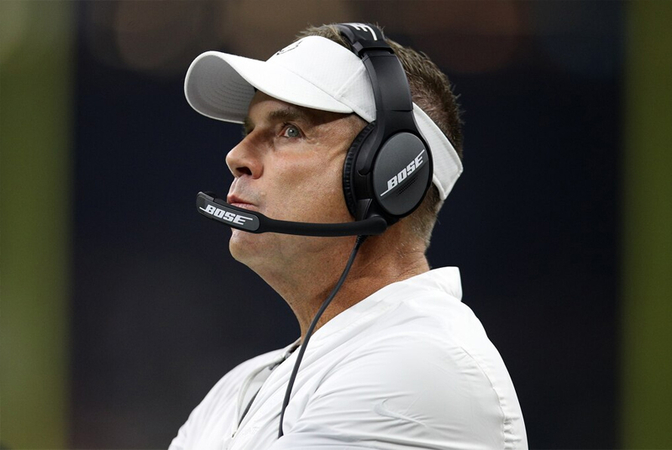
New Orleans Saints Coach Sean Payton tested positive for the novel coronavirus, he announced Thursday.

“Appreciate the well wishes,” Payton wrote on Twitter. “I’m feeling better and fortunate to not have any of the respiratory symptoms. [Four] more days at home.”

Payton’s case makes him the first NFL coach, front-office executive or player known to have tested positive during the global coronavirus pandemic.

“Our primary concern is for Sean’s health and well-being,” NFL Commissioner Roger Goodell said in a written statement. “He did the right thing by seeking medical attention and we wish him a speedy recovery.

“It shouldn’t come as a surprise as this pandemic continues that members of our NFL family will be directly impacted. This news underscores the importance of everyone following the advice from medical and public health experts to protect themselves and others.”

Payton, 56, told ESPN that he was publicizing his case because he wants the public to heed warnings relating to attempting to limit the spread of the virus.

“This is not just about social distancing,” Payton told ESPN. “It’s shutting down here for a week to two weeks. If people understand the curve and understand the bump, we can easily work together as a country to reduce it. Take a minute to understand what the experts are saying. It’s not complicated to do what they’re asking of us. Just that type of small investment by every one of us will have a dramatic impact.

“I was fortunate to be in the minority, without the serious side effects that some have. I’m lucky. Younger people feel like they can handle this, but they can be a carrier to someone who can’t handle it. So we all need to do our part. It’s important for every one of us to do our part.”

The NFL continued to conduct its offseason business this week, with teams making trades and signing free agents while other sports that are in-season have shut down.

Payton told the network he was at home and would remain quarantined there through the weekend. He took the test Monday after not feeling well Sunday, he said, and received the result Thursday.

The Saints were gathering information and did not immediately comment.

Many NFL teams closed their training facilities. Free agents are prohibited from traveling to meet with teams or undergoing physicals, and teams are barred from traveling to meet with players. The league also prohibited teams from allowing their coaches and scouts to travel to college players’ on-campus pro-day workouts for next month’s NFL draft.

The league canceled its annual meeting late this month in Palm Beach, Florida. It postponed teams’ offseason workout programs indefinitely. It canceled the live event in Las Vegas associated with the NFL draft, which will be held as scheduled April 23-25 but will be a TV-only event.

Coaches, general managers and owners are scheduled to meet in May in Marina del Rey, California. Payton is a member of the league’s rulemaking committee, which usually meets during the offseason. Payton participated in the committee’s meetings during last month’s NFL scouting combine.

Payton was in the Saints’ training facility as recently as last Friday, according to NFL Network.

Two Lakers, Celtics’ Marcus Smart are NBA’s latest to test positive for coronavirus #ศาสตร์เกษตรดินปุ๋ย

#ศาสตร์เกษตรดินปุ๋ย : ขอบคุณแหล่งข้อมูล : หนังสือพิมพ์ The Nation

https://www.nationthailand.com/sport/30384487?utm_source=category&utm_medium=internal_referral

Two Lakers, Celtics’ Marcus Smart are NBA’s latest to test positive for coronavirus

Mar 20. 2020
By The Washington Post · Ben Golliver · SPORTS, BASKETBALL
LOS ANGELES – Four NBA teams, including the Los Angeles Lakers and Boston Celtics, announced Thursday that members of their organizations have tested positive for the novel coronavirus, bringing the league’s tally to at least 14 positive tests.

The Lakers, who announced plans to test their players after four Brooklyn Nets players tested positive, had two unidentified players test positive despite being asymptomatic. The Lakers and Nets played each other in Los Angeles on March 10, one night before NBA Commissioner Adam Silver suspended the 2019-20 season after Utah Jazz center Rudy Gobert’s diagnosis.

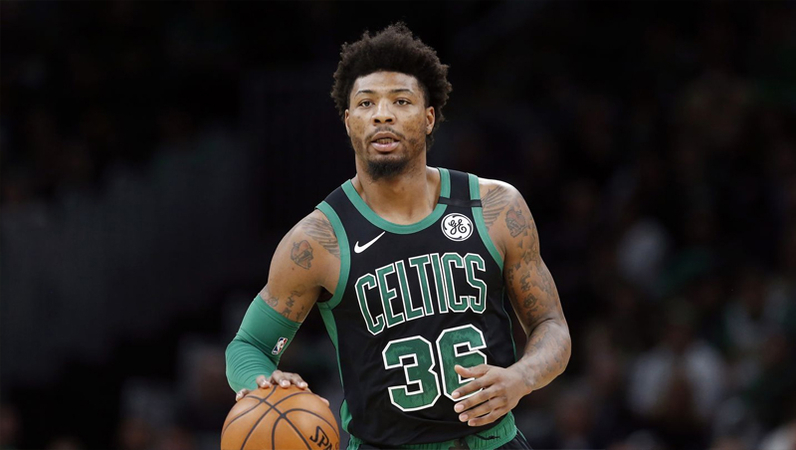
The Celtics announced that one player had tested positive and that he was asymptomatic. Marcus Smart said in a video posted to Twitter shortly thereafter that he had tested positive.

“I was tested [five] days ago and the results came back tonight, which were positive,” Smart, a 26-year-old guard, wrote on Twitter. “I’ve been self quarantined since the test, thank goodness. COVID-19 must be taken w the highest of seriousness. I know it’s a #1 priority for our nations health experts, & we must get more testing ASAP.”

Meanwhile, the Philadelphia 76ers announced that three unidentified members of their organization had tested positive. Their statement did not clarify whether the positive tests were players or other team employees. The Denver Nuggets also announced that one unidentified member of their organization has tested positive.

NBA teams have announced that 10 players have tested positive. The publicly identified players, so far, are Smart, Gobert and Donovan Mitchell (Utah Jazz), Christian Wood (Detroit Pistons) and Kevin Durant (Nets).

The Lakers and Celtics are among at least eight teams that have chosen to test their players for covid-19, the disease caused by the novel coronavirus, despite a nationwide shortage in testing that has led to accusations of preferential treatment for NBA players.

Silver said Wednesday that teams were following the advice of public health professionals in testing their players, defending the practice because players are so-called “super spreaders” because they work in close quarters, travel regularly and are often in large groups in public.

In defending her constituents, National Basketball Players Association Executive Director Michele Roberts blamed testing shortages on the federal government.

“They were responsible for making sure we were protected in that regard and I think they failed,” Roberts told ESPN.

Josh Sharfstein, a public health expert at Johns Hopkins University and FDA official under President Barack Obama, encouraged NBA players to come forward after testing positive in an effort to warn the general public about the coronavirus.

“Rather than get caught up in a back-and-forth over testing, I’ve love to see their stars be used as evangelists to young people about what the real priorities are,” Sharfstein said. “It’s not brave to just say you have COVID-19, you’ve got to spread the message about washing hands, not going out in groups, the core things that slow the spread.”

As sports shut down, gamblers and bookies try (and fail) to find enough games to bet #ศาสตร์เกษตรดินปุ๋ย

#ศาสตร์เกษตรดินปุ๋ย : ขอบคุณแหล่งข้อมูล : หนังสือพิมพ์ The Nation

https://www.nationthailand.com/sport/30384459?utm_source=category&utm_medium=internal_referral

As sports shut down, gamblers and bookies try (and fail) to find enough games to bet

Mar 19. 2020
By The Washington Post · Robert Klemko, Ben Strauss · SPORTS
The headline-thirsty Costa Rican sports-betting website Bovada is known for splashy prop bets, including wagers on that scrambling black cat making a return appearance at a New York Giants game (+800) and Antonio Brown getting arrested in 2020 (+300).

So the company’s latest gambit, which arrived in the inboxes of headline-thirsty sports reporters and editors this week, should come as little surprise: “No sports? Gamblers can now bet on the weather, for real.”

Bovada can’t survive on incoming cold fronts, but their newest prop perfectly underscores the question facing the global sports betting industry, including the fledgling legal markets in many U.S. states: Where will sports betters go with no sports? And how long can sportsbooks survive without them?

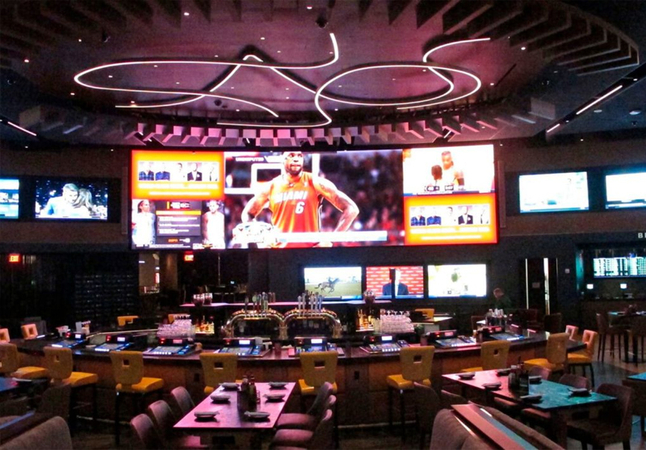
Even before Nevada Gov. Steve Sisolak ordered his state’s casinos closed on Tuesday, physical and online sportsbooks were struggling to find bets to offer, with nearly every major event of the spring canceled or delayed as the world grapples with the spread of the novel coronavirus. At the U.K.-based betting house William Hill, employees have scoured the globe for potential action. “I told a couple of our IT guys to put on fencing suits and we could stream it,” CEO Joe Asher said in an interview. “Obviously I’m kidding, but this is all we’re doing: trying to find content for people to bet on.”

They’ve mostly come up empty. There was UFC last weekend and Mexican soccer and Japanese baseball. A DraftKings spokesperson said wagering on three new offerings – Russian Premier League soccer, Turkey’s Süper Lig and Turkey’s 1. Lig – was up 1,058 percent, 1,338 percent and 2,187 percent respectively last week. Then the Russian league announced it was suspending operations until April 10.

William Hill did about 20 percent of its normal business last Saturday, Asher said. This week’s losses will be even more painful, as it should bring March Madness, followed by the start of baseball, the Masters and high-stakes NBA basketball. Somewhere around four million Americans place legal bets on March Madness in sportsbooks and online, according to research from the American Gaming Association, sending billions of dollars through the regulated gambling industry and billions more through the black market.

“Cancellation of March Madness was a real punch in the gut in our industry,” Asher said, adding that the first three days of the men’s tournament often equal the amount bet on the Super Bowl. “Don’t let anyone tell you we’re close to replacing what we’re losing. It’s not dollar for dollar on darts to basketball. That’s like the difference between the New York Yankees and Little League.”

The wiping out of the sports calendar also comes after states, gambling operators, media companies and sports leagues have spent months racing into sports betting, in the wake of the 2018 Supreme Court ruling that allowed states to legalize it.

Dozens of states have passed laws and invested in sport-betting platforms that will now go largely dark. In January, Penn National, the casino operator, spent a reported $163 million to buy a large stake of Barstool Sports, the sports-media company, with dreams of opening Barstool-branded casinos. Its stock price surged after the purchase but has been pummeled in recent days, along with the rest of the industry. Gaming industry lobbyists are pushing Congress for bailout money.

Chris Grove, a partner at Eilers and Krejcik, a gambling research and consulting firm, said he doesn’t expect states with new industries to close sportsbooks or betting apps, though some could face layoffs.

“Sector-wide in the U.S. you’re probably looking at drop-offs in excess of 75 percent. But the U.S. market is in such an early stage, everyone is still more or less rolling out their sportsbook product,” Grove said. “So this is a disruption of the rollout rather than an interruption of a mature industry.

“I think in states where they have online betting, you’re seeing bettors go to their phones and see no sports happening and switching over to the casino games.”

At least one sliver of the market says it’s benefiting from the hit to traditional bookmakers. Companies like One Up and Players’ Lounge allow users to wager on themselves in games like Madden, NBA 2K and FIFA, with the average entry fee per game hovering around $20 per game. They’ve seen a 40 percent spike in entries, both companies have said.

“Given this very serious crisis, we are a business that can fortunately see some benefit from people staying at home,” said Players’ Lounge CEO Austin Woolridge. “We’re at this intersection of no sports to watch and nothing to bet on and it’s an opportunity to engage in a new format for the first time.”

But video game betting offerings can be intimidating to casual gamers, which makes for a higher barrier for entry than your typical NBA over/under.

“I don’t know that there’s an obvious substitute for sports betting,” Grove said. “Some will find casino games, some will find games that have some element of sports, but it’s not clear to me that there is a product that’s relevant to enough sports bettors to soak up any material amount of that now unmet demand.”

At the sports betting media company Action Network, head of content Chad Millman said he instructed his staff to focus on futures – how the Arizona Cardinals’ trade for wide receiver DeAndre Hopkins impacts Super Bowl odds, for example – but also to pivot to other types of content, like politics.

“We’re in a situation that creates an opportunity for the enforcement agencies for different markets for betting to maybe look at things,” Millman said. “Political betting is done aggressively in Europe. Do different states start to create markets about betting on politics?”

It all depends on just how thirsty bettors and bookies get.

“I don’t think we’re going to get to a place, though, where we’re betting on weather,” Millman said.

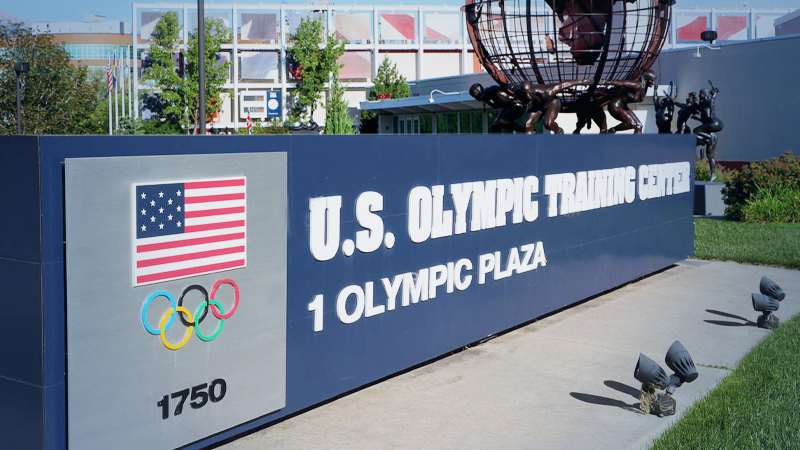
U.S. Olympic training centers close, sending Tokyo hopefuls scrambling #ศาสตร์เกษตรดินปุ๋ย

#ศาสตร์เกษตรดินปุ๋ย : ขอบคุณแหล่งข้อมูล : หนังสือพิมพ์ The Nation

https://www.nationthailand.com/sport/30384360?utm_source=category&utm_medium=internal_referral

U.S. Olympic training centers close, sending Tokyo hopefuls scrambling

Mar 18. 2020
By The Washington Post · Rick Maese · SPORTS, HEALTH, OLYMPICS

Around 200 athletes training for the Tokyo Olympics and Paralympics were sent scrambling for new training facilities Wednesday after two U.S. Olympic training sites were largely shut down in response to escalating concerns surrounding the coronavirus outbreak.

Just two days after the U.S. Olympic and Paralympic Committee announced new measures for its training center in Colorado Springs, the site now has to close altogether in response to a directive from Colorado Gov. Jared Polis, who ordered this week that all gyms, restaurants, bars and many other public places must close to slow the spread of the virus.

Athletes were sent a message via a Team USA communication app Tuesday informing them that the state’s health department had instructed Olympic officials to close their training facilities right away, including the pool, velodrome, gyms and strength and conditioning areas. They won’t reopen for at least 30 days, according to the message.

“This is a fluid situation that the state will continue to monitor,” the athletes were told, “and the duration could be extended.”

The center is the largest training hub for athletes training for the Olympics. Several U.S. Olympic teams use the space on a permanent or regular basis, including boxing, cycling, shooting and wrestling. There were about 200 Olympic and Paralympic athletes training there this week, about 75 percent of whom are considered resident athletes, which means they stay in dorms and train at the site full-time.

Athletes can stay at the training center and access medical and dining services, but all of the training facilities are off-limits.

“Out of training for a month,” gymnast Sam Mikulak, the two-time Olympian and six-time national champion, posted on Instagram. “I know I’m not alone on this, how is everyone else dealing with their Olympic preparation in these times?”

Many other Olympic hopefuls have been displaced this week, including scores of college athletes targeting Tokyo and those who train at universities facilities – gymnasts, swimmers, divers and track and field athletes among them – who also had to find new training accommodations after campuses closed down.

The athletes who choose to leave Colorado Springs could struggle to find new training bases as facilities across the country have been shuttered in recent days, including private gyms, YMCA sites and many facilities with Olympic-size swimming pools.

The Tokyo Games are scheduled to begin July 24. Even as concerns grow that a postponement might have to be considered, the IOC has encouraged athletes to keep training and planning to compete this summer.

“The health and well-being of all those involved in the preparations for the Olympic Games Tokyo 2020 is our No. 1 concern,” IOC President Thomas Bach said in a communique issued Tuesday. “All measures are being taken to safeguard the safety and interests of athletes, coaches and support teams.”

The Olympic training center in Lake Placid, New York, was similarly closed this week. New York’s Olympic Regional Development Authority announced on Sunday all training facilities, in addition to all ski mountains, must suspend operations.

The site is the training base for many athletes who compete in winter sports, including bobsledders, lugers, biathletes and ski jumpers. Their competition seasons had largely wrapped and many had already left the site. Similar to the Colorado facility, the Lake Placid gyms and training centers are closed but athletes who remain still have access to dining and medical services and conditioning.

Cancel the Olympics? Postpone them? Every alternative has problems. #ศาสตร์เกษตรดินปุ๋ย

#ศาสตร์เกษตรดินปุ๋ย : ขอบคุณแหล่งข้อมูล : หนังสือพิมพ์ The Nation

https://www.nationthailand.com/sport/30384293?utm_source=category&utm_medium=internal_referral

Cancel the Olympics? Postpone them? Every alternative has problems.

Mar 18. 2020
File photo

File photo
By The Washington Post · Rick Maese, Simon Denyer · WORLD, SPORTS, OLYMPICS

As novel coronavirus fears have essentially shut down daily life in many areas and forced sports leagues around the globe to cancel play and suspend operations, the International Olympic Committee has been resolute in its insistence that this summer’s Tokyo Olympics will be held on schedule.

But even as IOC President Thomas Bach continues to state his confidence for a July-August schedule, those familiar with the process of planning and staging an Olympic Games say the IOC surely is exploring alternatives – and is likely well-aware that no perfect solutions exist.

A cancellation is the least desirable option, and staging a Summer Games with no spectators seems increasingly impractical. That makes a postponement, by either a few months or even a full year, the most likely scenario if efforts to contain the spread of the coronavirus don’t show signs of progress soon – but even that is rife with complications.

“This is all frightening new territory for the IOC,” said Ed Hula, editor and founder of Around the Rings, who has been covering the Olympic movement and the business of the Games for nearly three decades.

On the same day a top Japanese official tested positive, IOC officials had planned telephone calls with National Olympic Committees and were expected to reaffirm their stance Tuesday. The governing body issued a statement acknowledging the pandemic was “an unprecedented situation for the whole world” but “there is no need for any drastic decisions at this stage; and any speculation at this moment would be counterproductive.”

Prime Minister Shinzo Abe has said the Tokyo Games will proceed as scheduled, and he has no immediate plans to declare a state of emergency. But many in Japan have their doubts. A poll released Monday by Kyodo News found that seven in 10 people there do not expect the Olympics to take place this summer as planned.

On Tuesday, Kozo Tashima, deputy chief of the Japan Olympic Committee and head of the Japan Football Association, said in a statement that he had tested positive for the coronavirus. Tashima had been traveling for business since Feb. 28, to Belfast, Amsterdam and the United States. He returned to Japan on March 8.

Olympic officials and the international sports federations responsible for staging the events in Tokyo have been in constant contact with the World Health Organization.

“It is not the role of WHO to call off or not call off any type of events,” WHO spokesman Tarik Jasarevic said Monday. “As each international mass gathering is different, the factors to consider when determining if the event should be canceled may also differ. Any decision to change a planned international gathering should be based on a careful assessment of the risks and how they can be managed, and the level of event planning.”

While Dick Pound, a longtime IOC member, told the Associated Press last month that a decision probably would have to be made by the end of May, another IOC official said this week there is no deadline facing the organization.

“The IOC didn’t recognize any dates that Dick came up with, and I think Dick backed off that as well,” John Coates, head of the IOC’s coordination commission for the Tokyo Olympics, told the Sydney Morning Herald on Monday. “It’s all proceeding to start on the 24th of July.”

The considerations posed by any changes to the Olympic schedule largely fall into four categories: personnel and staffing; venues; equipment and infrastructure; and contracts and scheduling. Those familiar with the details of staging a Summer Games say all the possibilities present pros and cons, and each likely will cost money that’s not currently budgeted, will prompt major disruptions and surely will upset some athletes, sports, nations, broadcasters and Olympic partners.

– – –

While many leagues and major sporting events halted operations last week, those mostly covered games and tournaments that were scheduled for the next several weeks, the Masters and the NCAA basketball tournaments among the most notable. But other summer events remain scheduled and have made no indications they are close to canceling or suspending plans, including the British Open, Wimbledon and the Tour de France.

The uncertainty surrounding the virus means public health officials can’t predict what the landscape will look like in the warm summer months, which has given event organizers, such as the IOC, trepidation to race into a decision right now.

The chance of an athlete carrying the virus into the Olympic Village or anyone contracting the disease in Tokyo and taking it back home could prove too risky. The health and safety of everyone associated with the Games will be a priority and, like much of the world, Japan has been going to great lengths to slow the spread of the virus.

Neal Pilson, who helped negotiate broadcast rights for three Olympic Games while he was the head of CBS Sports, said the possibility of staging the Tokyo Games without fans or spectators might no longer be viable.

“I think the recent decisions by the NBA, hockey, the NCAA has put an end of that as an option,” he said. “You say, ‘All right, we won’t risk audience, but we will risk the athletes.’ You can’t say we’ll play without an attendance because we don’t want to risk the fans, without saying it’s okay to risk 40-50,000 athletes and technicians and staff. So that’s not going to happen. That option is off the table.”

There have been 1,500 infections so far in Japan, and most schools were shuttered this month in hopes of stopping the spread. Hideomi Nakahara, a visiting professor at the Yamano College of Aesthetics specializing in infectious diseases, said even if the virus seems contained in Japan by May, there are still challenges to staging an Olympics less than three months later.

“This is not a domestic event,” Nakahara said. “Athletes from around the world have got to be able to participate. This is a condition that’s got to be absolutely met. . . . If the contagion was spreading in just one country or two, that might make it feasible. But that’s not the case given what we are seeing today.”

Japan has been banking on a tourist boom to breathe life into its economy, and as many as 2 million visitors were expected for the Games alone. Hotels have invested in renovations and are heavily booked, Japan Airlines had been expected to launch a low-cost subsidiary, Zipair Tokyo, at a cost of around $200 million in May, and Tokyo’s Narita and Haneda airports have invested heavily to boost capacity.

Among spectators, enthusiasm has been without precedent. Japan has sold 4.48 million tickets for the Olympics (not including the Paralympics) to residents of Japan after receiving 80 million requests for tickets from 8.2 million people. That leaves a lot of disappointed taxpayers and voters, and SMBC Nikko securities estimated Japan would lose around $1 billion in ticket sales if spectators were banned.

– – –

In 2013, the city of Tokyo signed an 81-page “Host City Contract” with the IOC and the Japanese Olympic Committee. The contract allows the IOC to cancel for a variety of reasons, including war, boycotts or if “the safety of participants in the Games would be seriously threatened or jeopardized for any reason whatsoever.”

According to the contract, the IOC is required to give at least 60 days’ notice to cancel, and Japan’s Olympics minister, Seiko Hashimoto, told lawmakers in early March the contract gave Japanese organizers leeway to postpone the Tokyo Games but only if they were held by the end of 2020. Anything beyond that probably would require a new or amended “Host City Contract.”

One veteran sports executive who has worked on planning several Olympics said much of the public posturing right now could be related to that contract and all of the insurance implications.

“The game that’s being played out in Tokyo – both on the IOC side and on the Tokyo side – is who’s going to blink first,” said the executive, who still works in many corners of the sprawling Olympics universe and requested anonymity to speak candidly. “This is a game of chicken. It’s a game of chicken because they each probably have different insurers, and Games cancellation insurers, you’ve never really had to pull that rip cord. And in order to pull that rip cord, you’ve got to be able to demonstrate to your insurer that you did everything possible to make sure those Games were to happen.”

Speaking at an investor conference this month, Brian Roberts, the chairman and chief executive of Comcast, NBC’s parent company, said: “We anticipate these kinds of things in big contract language. We try to anticipate for big events what might happen so that we’re protected there, and we also have insurance for any expenses we make. So there should be no losses should there not be an Olympics.”

Feelings might continue to be mixed in some corners until a decision is ultimately made. Munehiko Harada, a professor of sports sciences at Waseda University, said: “If we postpone the Olympics or abandon the Olympic Games we lose so many things, unbelievably many things, including money, effort, jobs. The show must go on.

“Everything is on schedule; it’s impossible to stop at this stage.”

– – –

The most likely scenario also might be the most challenging: Postponing the Games for any amount of time will be costly and complicated.

Staging an Olympics is a mammoth undertaking. These Summer Games were expected to carry a price tag of $12.6 billion – though the Board of Audit, a body established to review government expenditures, estimated Japan actually would spend more than $25 billion related to the Games.

The Olympics encompasses 33 competition venues, 11 of them built for these Games. The IOC and the Tokyo 2020 committee don’t own all of these facilities, typically leasing them for a specific use and time period. Some have other tenants and plans lined up beyond the Games.

The Olympics media operation will be headquartered at the Tokyo Big Sight, which serves as the city’s major convention space. Delaying the Games means an important Tokyo facility would be unavailable indefinitely. The city-owned venue normally hosts 300 exhibitions every year.

At the conclusion of the Games, the Olympic Village is expected to be converted into more than 5,600 condominiums, housing 12,000 people. Real estate companies have listed 940 units for sale thus far and have received more than 2,200 applications, with some apartments already sold, said Mika Kiyomoto, spokeswoman for Mitsui Fudosan, one of 10 developers of the project.

Asked what options buyers who have purchased a property would have in case of a postponement or cancellation of the Games, Kiyomoto declined to comment, citing the confidentiality of individual contracts.

The Tokyo organizing committee also long ago blocked out 45,000 hotel rooms for this summer and might have to scramble to secure similar accommodations for another date. There’s also the matter of all the equipment required to stage an Olympics, enough to build an entire makeshift town all its own.

“A lot of the Games is a rental,” the veteran sports executive said. “You rent it for a period of time that is going on someplace else.”

This includes tents, trailers, generators, buses and many other high-priced items that are supposed to be packaged and shipped elsewhere in August.

There’s also the matter of personnel. The Japanese will rely on some 80,000 volunteers to help stage these Olympics, people who put their jobs on hold and long ago made plans to be available this summer. Similarly, thousands more have been hired or transferred from local governments to help stage the Olympics, a budgeted expense that’s supposed to expire following the conclusion of the Summer Games.

As for the athletes who train for years to peak over a specific three-week period in the summer, any postponement would prompt major adjustments. Hula, a veteran of 12 Olympic Games, points out that a September or October Olympics also would look and feel much different from a midsummer showcase. Cooler weather might be an advantage for spectators and some outdoor sports, but other sports might have a difficult time staging their events. Surfing, for example, as well as golf, tennis, baseball, softball and basketball would have to grapple with less-than-ideal conditions or major scheduling conflicts.

“You’ve got 33 sports to deal with in Tokyo,” Hula said. “They’re all going to have to make adjustments, see who fits and who doesn’t.”

– – –

While the Tokyo 2020 organizing committee could decide the Olympics shouldn’t take place as scheduled, the IOC has the ultimate call on whether to postpone or cancel. It surely will have heavy input from some partners, particularly NBC. The IOC, a nonprofit organization, brought in more than $5 billion during the most recent four-year Olympic cycle, nearly three-quarters of which came from broadcast rights. NBC contributes about half of that, and thus carries a lot of sway.

Postponing by a few months is not an ideal scenario for the network, which has other programming lined up for the fall and wouldn’t be eager to fill the giant hole left on the summer schedule.

“That puts the Olympic Games in direct conflict with NFL,” Pilson said. “NBC has a serious commitment to the NFL on Sunday nights and you have college football on Saturdays, so you’re not going to get the type of ratings that you get during the summer. And it really changes the economics of the deal.

NBC said this month it has sold nearly 90 percent of its advertising inventory, totaling a record $1.25 billion. Pilson explained that, in the event of a postponement, the ad rates NBC sold for the Tokyo Games would not be applicable, and its agreements with the IOC and its advertisers would have to be renegotiated.

“That’s not what they bought,” Pilson said, “so you can’t simply flip the advertisers into a different time of year and not negotiate adjustments with them.”

A spokesman for NBC said Monday, “The safety of our employees is always our top priority, but there is no impact on our preparations at this time.”

While postponing a full year could alter international schedules and Olympic qualifying, it also would stretch some IOC resources, as they would be just a year out from the Beijing Winter Olympics in 2022. And postponing the Tokyo Games two full years would see the Summer Olympics in the same cycle as the Winter Games, which is how the Olympics were held until 1994.

“The IOC’s decision will not be determined by financial interests, because thanks to its risk management policies and insurance, it will in any case be able to continue its operations and accomplish its mission to organize the Olympic Games,” the IOC said in its Tuesday statement

Even if the IOC is weeks from any public announcements about a possible postponement or cancellation, sorting through the logistics will require difficult conversations for all the stakeholders, prioritizing health and safety while wrestling with the realities of economics and scheduling.

“There’s nothing good here,” Pilson said. “You’re talking about a series of bad choices. Which is the least bad?”

Augusta National, home of the Masters, closing down ‘until further notice’ #ศาสตร์เกษตรดินปุ๋ย

#ศาสตร์เกษตรดินปุ๋ย : ขอบคุณแหล่งข้อมูล : หนังสือพิมพ์ The Nation

https://www.nationthailand.com/sport/30384285?utm_source=category&utm_medium=internal_referral

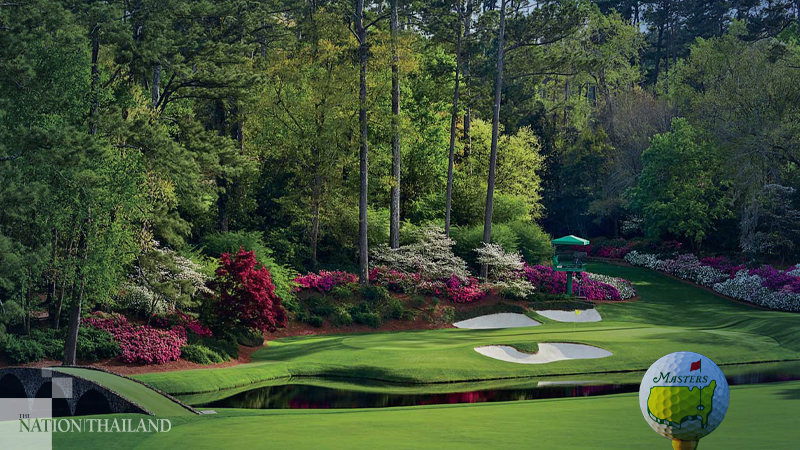
Augusta National, home of the Masters, closing down ‘until further notice’

Mar 17. 2020
By The Washington Post · Cindy Boren · NATIONAL, SPORTS 
The world’s best golfers won’t be coming to Augusta National Golf Club next month for the Masters and soon the club will be closed to its regular members.

By the end of the week, the Georgia club “will be closed until further notice” because “we are now in the midst of a national emergency” from the coronavirus outbreak, Fred Ridley, the club’s chairman, wrote in a letter to members that was obtained by Golf Digest.

The decision comes four days after Ridley announced that the Masters, golf’s first major tournament of the year, would not start on April 9 and offered no timetable for it to be rescheduled.

“Beginning today, we are taking the necessary steps to curtail our operations so, by the end of this week, the Club will be closed until further notice,” Ridley’s letter states. “We intend to maintain our properties with limited personnel on site, and we will support our many other functions by working remotely where possible. But this is about much more than business continuity. This is about our employees, and the foundation of this decision is built-in upon keeping everyone safe while preserving the financial stability of those we care about most.”

The decision to postpone the Masters, coming after the Players Championship was called off Friday morning after one round, was disappointing given how Tiger Woods won his fifth green jacket and 15th overall major last year. Woods, who has played little this year because of his back, thought postponing the tournament was smart.

“There are a lot more important things in life than a golf tournament right now,” he tweeted. “We need to be safe, smart and do what is best for ourselves, our loved ones and our community.”

Augusta National typically closes a few weeks after the Masters and reopens in the fall. Masters officials might have to target September or later for the tournament because there is no hole on the summer golf calendar that isn’t otherwise occupied by an existing PGA Tour event.