Four Thai women were among the 10 people charged in Singapore on Wednesday (August 5) for holding an “unnecessary” gathering and violating social-distancing measures put in place to curb Covid-19 infections.
Singapore media reported that the four Thai women and six Singaporean men were caught partying on June 11.
Their trial is scheduled to start on August 28 and the accused will face six months in prison and/or a fine of S$10,000 (Bt230,000) if found guilty.
As of Wednesday, 908 new Covid-19 cases were confirmed in Singapore, four of which are imported, one is local, while the rest are among foreign workers living in cramped conditions.
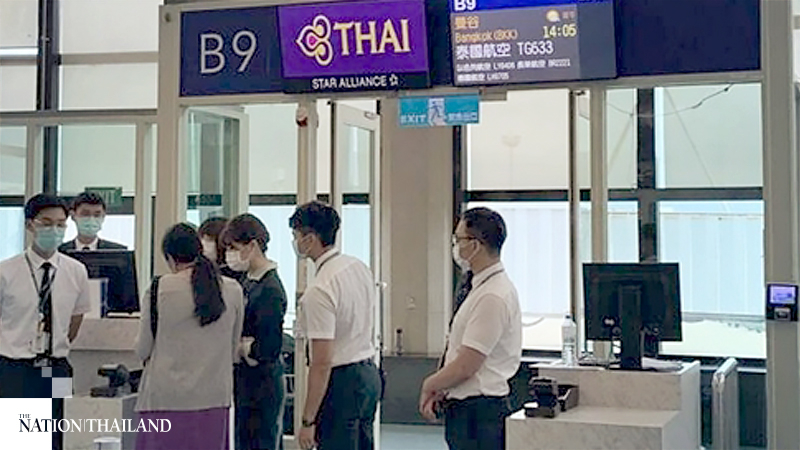
Thai Airways’ special flight TG633 flew out of Taipei Airport just after 2pm on Wednesday (August 5) with 250 Thai nationals who were stranded in Taiwan due to Covid-19 prevention measures.
The flight is scheduled to land just after 4pm, said Squadron Leader Anirut Saengrit, director of Thai Airways’ Operations Control.
The airline collaborated with the Foreign Ministry and Thailand Trade and Economic Office in Taipei to bring back the Thai nationals as well as cargo.
Anirut said the airline was pleased it has the opportunity to help Thais during a crisis.
The two Thai workers in Lebanon who were injured in the August 4 Beirut explosion are in a safe condition, Deputy Labour Minister Theanrat Nawamawat said.
Veerayut Boonrak, who works as a cook at the Japanese restaurant Ginger & Co, sustained injuries from shards of glass and a falling ceiling, while Chanathat Tanyodsak, a jewellery craftsman, suffered wounds on his hands and hurt eardrums.
Both are being treated in hospital, the Thailand Office of Labour Affairs in Saudi Arabia said, adding that since there are still traces of ammonia in the air in Beirut, the government has advised everybody to wear masks.
Meanwhile, Theanrat said there are some 170 Thai nationals working in Lebanon as jewellery craftsmen, masseurs, chefs and cooks, while 17 held posts under the Thai government.
She said the Labour Ministry has called on the Thailand Office of Labour Affairs in Saudi Arabia to closely follow the situation and ensure Thai nationals are looked after.
Bumrungrad Hospital announced that its profit in the second quarter of 2020 decreased by 93.9 per cent to Bt44.42 million, after being hit by a 40 per cent revenue reduction due to the Covid-19 crisis.
Vice chairman Dr Chanvit Tanphiphat announced via the Stock Exchange of Thailand that Bumrungrad saw profit of Bt44.42 million, or Bt0.06 per share, a 93.9 per cent decrease compared to the second quarter in 2019, which saw a Bt724.98 million profit.
Bumrungrad’s total revenue in the second quarter was Bt2.487 billion, decreasing by 42.8 per cent from the same period last year due to the virus crisis. Its net profit margin was 1.8 per cent, falling from 16.7 per cent in 2019.
Revenue earned from Bumrungrad’s hospital business was Bt2.422 billion, a drop of 43.4 per cent. Of this revenue, 51.9 per cent was earned from domestic patients and 48.1 per cent from foreigners.
From January to June 2020, Bumrungrad saw profit of Bt809.62 million, or Bt1.05 per share, falling by 55.2 per cent from the first half of 2019. During the six months, total revenue amounted to Bt6.66 billion, decreasing by 26.6 per cent from Bt9.082 billion earned in 2019.
The net profit margin in the first half of 2020 was 12.2 per cent, from 19.9 per cent in the same period last year.
Bumrungrad’s dividend for the first half of 2020 was Bt1.15 per share.
Its stock price decreased by Bt4.5 to Bt106 in trading this morning (August 6).
Thailand saw two new confirmed Covid-19 cases in state quarantine without any deaths over a 24-hour period, the government’s Centre for Covid-19 Situation Administration, reported today (August 6) – the 73rd day without domestic case since May.
The latest cases are a 42-year-old man and a 62-year-old woman who returned from the United States on July 31 and were found to be positive on August 4 in Chon Buri state quarantine. Both cases were asymptomatic.
There was one previous confirmed case sharing the same flight.
Meanwhile, four patients have recovered and been discharged from hospital in the past 24 hours.
As of today, the number of confirmed cases in the country stands at 3,330 (393 found in state quarantine). Of these, 124 are under treatment, 3,148 have recovered and been discharged and 58 have died.
Globally, the number of confirmed Covid-19 cases increased to 18.9 million, up by 272,000 in a day, with 12.1 million having recovered and 711,000 dying. Thailand’s ranking stayed at 112 for the number of cases worldwide, while the US continued to have the highest number of infections at 4.97 million, followed by Brazil (2.86 million) and India (1.96 million).
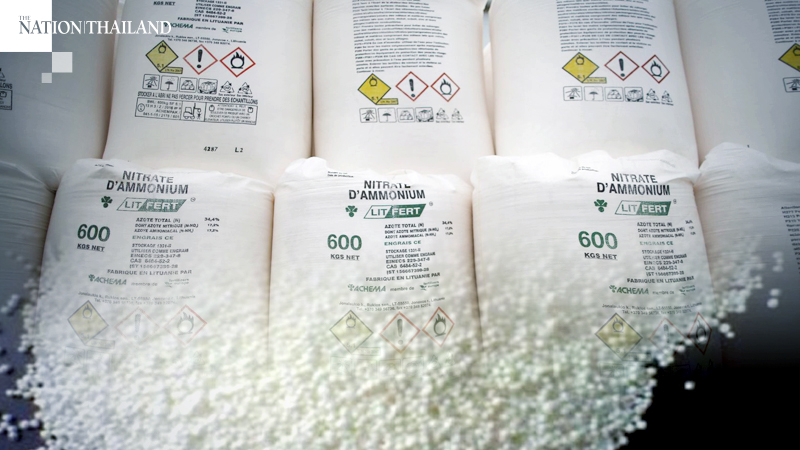
The Bangkok Metropolitan Administration confirmed that no ammonium nitrate has been stored in the city, but admitted that some businesses possess risky chemicals that need to be kept an eye on.
After the massive destruction and deaths caused by the shock chemical explosion in Beirut, many people in Bangkok were concerned whether any similar chemicals were being stored in the Thai capital.
BMA spokesman Pongsakorn Kwanmuang came out yesterday (August 5) to allay any fears and calm people over the particular chemical. He also expressed his condolences to Lebanese over the loss of their loved ones.
Pongsakorn categorically stated that no ammonium nitrate was stored in Bangkok.
However, he said there are around 5,000 businesses that use harmful substances for their operations.
He assured residents that the BMA has been monitoring the chemicals or risky substances and has also provided training and seminars to educate such business operators on safety.
Defence Ministry spokesman Lt-General Kongcheep Tantrawanich also told a press conference yesterday that ammonium nitrate cannot be imported into the country without approval from the ministry.
“Most of the ammonium nitrate in our country is used in the stone mill industry, which must get approval before the chemical is imported and used under certain laws. There are officers who check the amount of chemical that is stored or used. Operators need to report what amount they use each time or how much is left,” Kongcheep said.
By THE NATION The baht opened at 31.03 to the US dollar this morning (August 6), weakening from yesterday’s close of 31.
The Thai currency is expected to move between 30.90 and 31.10, said Jitipol Puksamatanan, head of Markets Strategy at SCB Securities.
Yesterday, the S&P 500 and Stoxx Euro 600 increased by 0.5 and 0.6 per cent respectively, despite economic data showing both positive and negative performance. Also, the US government is tending to use financial policies to support the economy, he said.
According to the US, employment increased by 167,000 positions. Besides, ISM non-manufacturing recovered to 58.1 points from 57.1, showing that the service sector could afford to hire more people.
The positive market situation and recovering bond yields were a signal of the “risk on” state of the market, he said.
However, the dollar failed to strengthen after the US Ten-Year Treasury yield increased to 0.54 per cent.
The strategist also said the dollar’s weakening was clearer after the market believed the US government would implement more financial stimulus policies. The dollar index in this situation decreased by 0.5 per cent, compared to other currencies. The Norwegian krone and Swiss franc were among currencies that strengthened at a high rate.
As for the baht, the currency moved in line with the dollar and the gold price. Moreover, a freezing of the interest rate at 0.5 per cent led to reduced market concern about Thai financial policies, Jitipol said. One point to monitor is US non-farm payrolls, which could weaken the dollar, he added.
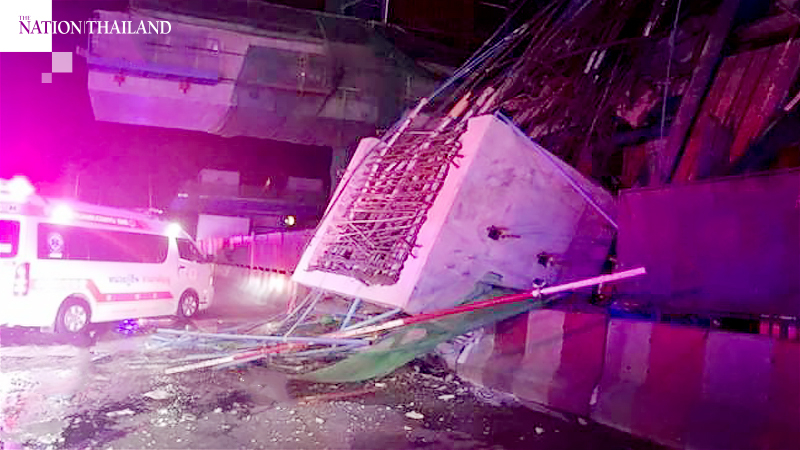
A BTS Pink Line pillar under construction collapsed today (August 6) on Chaengwattana Road in Nonthaburi’s Pak Kret district, injuring five workers.
Pak Kret police and rescue staff rushed to the scene at 2am on being alerted to the collapse. The five injured workers were sent to hospital.
One of the workers named Narongdak Borirak, 29, said he and three others along with a foreman were cementing the pillar when it suddenly collapsed.
The debris has now been cleared.
According to the Mass Rapid Transit Authority of Thailand, an initial inspection showed the pillar collapsed because of the soft soil caused by continuous rain. When the pillar was being cemented, the extra weight made it become more unstable, leading to the collapse.
The Codex Alimentarius Commission has approved several food-related standards that could affect farmers and food manufacturers in Thailand, National Bureau of Agricultural Commodity and Food Standards secretary-general Juadee Pongmaneerat said.
“The Codex meeting [July 13-20] approved Good Hygienic Practices for food manufacturing covering the appropriate use of water and has adjusted the Hazard Analysis and Critical Control Points [HACCP] to improve the validation and verification processes. The bureau therefore revised its agricultural commodity and HACCP standards and to make the necessary adjustments so that they comply with international requirements,” she said.
“Furthermore, Codex is preparing to announce a new standard for food allergen management for food businesses that will require farmers, processing factories, retail shops and restaurants to employ measures to prevent the contamination of food allergens in their products,” Juadee said. “Once this standard is introduced, it will affect several entrepreneurs, so we need to prepare to upgrade our facilities and practices to meet this new standard,” she advised.
Juadee said the Codex meeting also approved the use of Xanthan Gum (INS415) as a food addition at the ratio of 0.19g per 100 ml of product and Pectins (INS440) at the ratio of 0.2g per 100 ml.
“These two additions are thickeners for infant food and medical food. Manufacturers of these products must strictly follow the ratios to avoid violating Codex standards,” she warned.
“The National Bureau of Agricultural Commodities and Food Standards will inform farmers and manufacturers immediately in case the Codex meeting decides to cancel the use of any food additions that have been used in Thailand, to make sure that our manufacturing of food products is not in violation of international standards and that our exports can continue smoothly,” Juadee added.
The Marine Department is preparing to open a shipping route from Prachuap Khiri Khan’s Bangsaphan district to Chon Buri’s Sattahip district as well as other water routes in Bangkok, Pathum Thani and Samut Prakarn as soon as the Covid-19 situation improves further.
Director-general Witthaya Yamuang said a number of private shipping operators have expressed an interest to operate on the Prachuap Khiri Khan-Chon Buri route.
“The route’s opening had been postponed indefinitely due to the Covid-19 lockdown, but we believe that when the situation improves further the route will open for shipping immediately,” he said.
Witthaya also said the department is planning to expand two Chao Phraya shipping routes – from Sathorn Port to Pathum Thani Port and Sathorn to Samut Prakarn.
“Two private companies have expressed an interest to operate on these routes. We expect to open them before the year-end,” he said.
“Furthermore, the Marine Department has been building passenger piers at six sites that connect with new BTS/MRT stations in Bangkok, such as at Pinklao, Sathorn and Bang Pho. We believe these piers will increase the number of people using the Chao Phraya River as transport, which currently averages 40,000 people per day,” Witthaya said.
“The department also has a plan for future routes in southern regions to promote aquatic tourism in Phuket, Phang Nga and Krabi. A feasibility study for these projects should start this year,” he added.

 Theanrat Nawamawat


 Representational Image