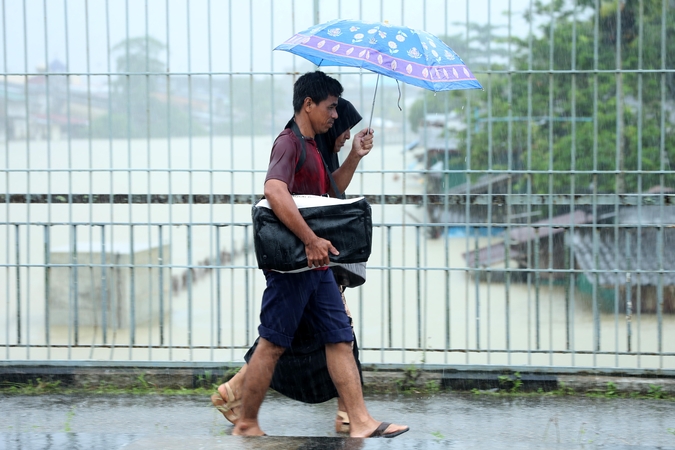
The Thailand Meteorological Department said on Monday (August 3) that a strong southwest monsoon prevails over the Andaman Sea, Thailand, and the Gulf. Isolated heavy to very heavy rains are likely in many areas of the North, the Northeast, the Central, the East and the South.
People in the risky areas should beware of severe conditions and stay tuned for the weather update. Waves in the Andaman Sea could rise up to 2-4 metres and 2-3 metres in the Gulf and above four metres high in thundershower areas. All ships should proceed with caution and keep ashore.
The department also said that the category 2 tropical depression “Sinlaku” over Nan province, with maximum sustained winds of about 50kph, is moving west slowly and is expected to downgrade to the low cell by today.
The weather forecast for the next 24 hours is as follows:
North: Thundershowers in 60 per cent of the areas and isolated heavy to very heavy rains; temperature lows of 24-25 degrees Celsius and highs of 27-30°C.
Northeast: Thundershowers in 70 per cent of the areas and isolated heavy to very heavy rains; temperature lows of 22-24°C and highs of 28-33°C.
Central: Thundershowers in 70 per cent of the areas and isolated heavy rains; temperature lows of 24-26°C, highs of 29-32°C.
East: Thundershowers in 80 per cent of the areas and isolated heavy to very heavy rains; temperature lows of 23-26°C, highs of 28-31°C; waves 2-3 metres high and over three metres during thundershowers.
South (east coast): Thundershowers in 70 per cent of the areas and isolated heavy rains; temperature lows of 23-26°C, highs of 29-33°C; waves 2-3 metres high and over three metres during thundershowers.
South (west coast): Thundershowers in 80 per cent of the areas and isolated heavy to very rains; temperature lows of 22-24°C, highs of 28-32°C; waves 2-4 metres high and over four metres during thundershowers.
Bangkok and surrounding areas: Thundershowers in 70 per cent of the areas; temperature lows of 25-26°C, highs of 30-33°C.
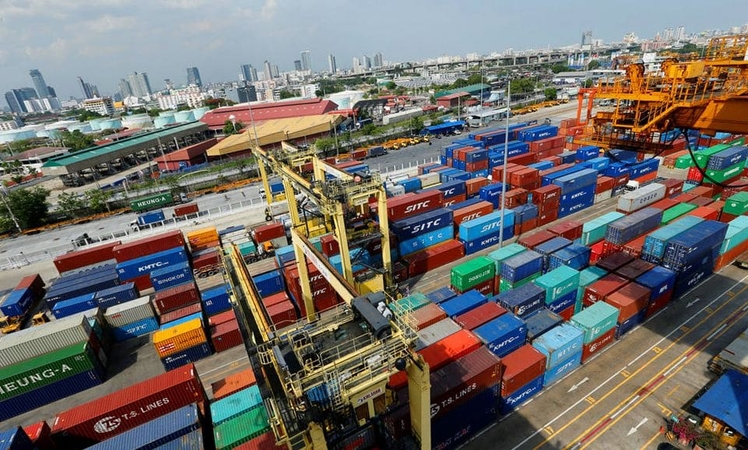
The foreign chambers of commerce in Thailand are hoping that the government’s new economic team will come up with measures to stimulate the economy after the Covid-19 situation improves.
Stanley Kang, chairman of the Joint Foreign Chambers of Commerce in Thailand (JFCCT), the umbrella body for various foreign chambers or business associations operating in Thailand, said he was hopeful the government’s new economic team after the Cabinet reshuffle would be able to improve the country’s economy in the post Covid-19 era.
“The candidate for finance minister that we know of so far is Kasikornbank’s former president Preedee Daochai, who was also the chairman of the Thai Bankers’ Association. Given his extensive experience in banking and finance, he is a highly promising candidate.”
Kang added that the government should give priority to exports and tourism, as these sectors have been severely affected by the Covid-19 outbreak and need immediate recovery.
“Thailand must expand free trade negotiations to find new markets and facilitate foreign partners who wish to invest in Thailand by giving promotional privileges and removing unnecessary limitations,” he added. “Moreover, the new economic team must provide measures that create jobs for people who are unemployed due to the outbreak, as well as aid measures to help small and medium entrepreneurs keep their businesses afloat.”
Sanan Aung-ubonkul, vice president of the Thai Chamber of Commerce, added that as a former banker Preedee should be able to work seamlessly with the newly appointed Bank of Thailand Governor Setthaput Suthiwart-Narueput, who is also economic adviser to Prime Minister Prayut Chan-o-cha.
“The new economic team should therefore be able to revive the country’s economy after Covid-19, a task in which Thailand has a headstart given the fact that the government has efficiently controlled the outbreak,” he said.
“The chamber also expects the candidate for Energy Minister, Supattanapong Punmeechaow, a former director of Global Power Synergy Pcl, to work seamlessly with entrepreneurs in the energy sector as he has extensive experience in the energy field as well,” he added.
The Rayong Provincial Administration Organisation has requested a budget from the Eastern Economic Corridor (EEC) Policy Committee to enhance wastewater treatment in Pluak Daeng district and the province’s pollution control area.
The organisation’s head, Piya Pitutecha, said as the province is one of three provinces where the EEC was located, this project was necessary to prevent environmental impact from the expansion of industrial estates and communities.
“Currently, the water quality in rivers and canals has deteriorated, especially in Pluak Daeng district which is an important water source for consumption,” he said. “If water pollution occurs, it will affect communities in the downstream area.”
He outlined details of the Bt2.309-billion project:
1. Construction of a wastewater treatment system in Pluak Daeng district at a cost of Bt730 million. There are over 55,000 people in the area, producing approximately 4.5 billion cubic metres of wastewater per day.
The project includes the construction of a wastewater treatment system in Map Yang Phon and Pluak Daeng subdistricts at a cost of Bt380 million and Bt350 million respectively, expecting to begin the construction between 2020 and 2021.
2. A project to enhance wastewater treatment system in the province’s pollution control area at a cost of Bt1.579 billion. There are 316,113 people in the area, producing approximately 60 billion cubic metres of wastewater per day.
The project includes the improvement of a wastewater treatment system in Rayong City Municipality and Maptaphut Municipality areas at a cost of Bt804 million and Bt405 million respectively, expecting to begin operation between 2021 and 2022, while the construction of a wastewater treatment system in Ban Chang Municipality area costing Bt370 million is expected to begin construction between 2022 and 2023.
Piya said the province is ready to work on the project because the organisation has already hired advisers to study the feasibility, heard public hearings, and analysed the initial impact on environment.
“If this project is completed, it will benefit over 350,000 people and help improve the province,” he said.
He added that the Wastewater Management Authority would be responsible for the administration during the first year before allowing communities to be responsible for the administration.
Clash of old and new values: Is Thailand heading for a big change?
NationalAug 03. 2020Students organise a flash mob at King Mongkut’s University of Technology North Bangkok on July 30. One protester holds a banner that reads, ‘stop intimidating people’, and wears a face mask that says, ‘dissolve Parliament’.
By Wichit Chaitrong The Nation Analysis
The ongoing youth-led protests has wide implications for the country and it has left many, especially those from the old generation, shocked.
It may have been triggered by politics, but as the pro-democracy protests evolve, it has expanded to also impact the core values of Thai society.
By expressing their opinion about the role of the monarchy, the recent protests have touched on a sensitive issue, which has always been a taboo in Thai society. There may not be a consensus among protesters, but many are using code-language for communication and some are disguising their messages with subtlety on their protest banners, to voice critical views about the monarchy.
Prime Minister Prayut Chan-o-cha and Army chief General Apirat Kongsompong have expressed concern about the dangers of slandering the highest institution.
The military-backed government led by Prayut after the 2014 coup launched 12 core values for Thais, largely instructing people to follow the rule of authority, uphold traditional institutions and what is perceived as Thai culture. Liberals had criticised the 12 values as a tool of the military to brainwash people or an attempt to drag Thai society into the deep past.
Now, the political tide has turned and demonstrated that the military’s attempt to promote their 12 values has failed. Even school children are questioning school discipline on hairstyle, opposing traditional values that pupils must respect teachers. University students have raised questions on how the country is run, opposing the value of showing respect to traditional institutions.
Seeing potential threats to students who are joining the protests, the Thai Academic Network for Civil Rights recently expressed its support for peaceful demonstration and freedom of expression.
The network has urged parents and teachers to support the civil rights of the students.
New values have now obviously taken hold in the minds of the young generation.
Freedom of expression has become a core value that students and pro-democracy groups cherish. Freedom of expression is opposed to the value of blind obedience, which is deep-rooted in the Thai hierarchical social setting.
Tolerance is another value of a democratic system that is hardly found in an authoritarian culture.
The hierarchical system does not tolerate, or has low tolerance, for those who have different opinions or those who raise questions about Thai traditional institutions.
Prayut often bristles when reporters or opposition MPs fire tough questions at him.
Among the general public, especially among the old generation, Thais tend to avoid vigorous face-to-face arguments. They simply stay silent or make jokes about the subject of discussion, as an attempt to avoid confrontation or save face of their friends, seniors or their bosses.
Transparency is needed in a democratic system, but we do not expect it in any system ruled by the military or dictators. It is widely believed that Thais who speak the truth could land themselves in trouble. For example, Army Sergeant Narongchai Intharakawi, a whistle-blower on corruption in the military, is currently being allegedly targeted by Thai authorities. This incident suggests severe flaws in the judicial system which punishes those campaigning for transparency.
Fed up with murky double standards, and nepotism practices of the current government and state agencies, more protesters have joined the youth-led protests.
Accountability is also demanded by protesters. Youth and pro-democracy groups have raised questions on how tax money is spent. In their view, Thai laws and the current political system have obviously been obsolete, allowing those in power to easily abuse their powers. How can people holding high profile positions be held accountable while their freedom of expression is limited by draconian laws? Worse, the judicial system is not on the people’s side, according to pro-democracy groups.
One example of flawed accountability was the high-profile case of how Deputy Prime Minister General Prawit Wongsuwan escaped the luxury watch scandal unscathed, while people questioned the handling of this scandal by the National Anti-Corruption Commission.
Lack of integrity in senior Thai officials is a serious problem plaguing the country. The latest case of the Office of the Attorney-General dropping all charges in the alleged hit-and-run case against Vorayuth Yoovidhya, heir of a Thai super-rich family, reinforces the public grouse of Thai authorities lacking in integrity. There has been a public outcry over the apparent absolution of Vorayuth.
Students and pro-democracy protesters have campaigned for the “Rule of Law ”, against what they blame the current “rule by law”, or by a few persons. They say they are fighting for the sovereignty of the people as rulers of the country against authoritarian rule. A series of actions by key institutions have led to the establishment of the current coalition government after elections in March 2019, which has been viewed by pro-democracy activists as authoritarian engineering.
Equality is one of the key values espoused by the young protesters. The existing political system combined with a hierarchical social setting have been blamed for the widening gap between the rich and the poor. Thailand is among the countries with the highest wealth inequality in the world. Traditional values associated with Buddhism justifies the wide gap between the rich and poor by referring to merit-making in the past life, or “Karma”. In this sense, the old values justify the current economic, political and social setting, which is viewed very differently by the young generation who have blamed it as a corrupt and unjust one.
Reacting to student campaign for a change, royalists organised a protest on July 30, claiming that their action was aimed at protecting the monarchy threatened by student protests. Observers said most of participants in the royalist gathering were senior people, contradicting the organisers’ claim of vocational students rallying.
Where will this clash of values lead the country?
“I think traditionalists or the conservatives have encroached too much on the space of the liberals,” said Gothom Arya, adviser to Mahidol University’s Institute of Human Rights and Peace Studies.
They should step back and open space for everyone, by “rewriting the Constitution”, he suggested.
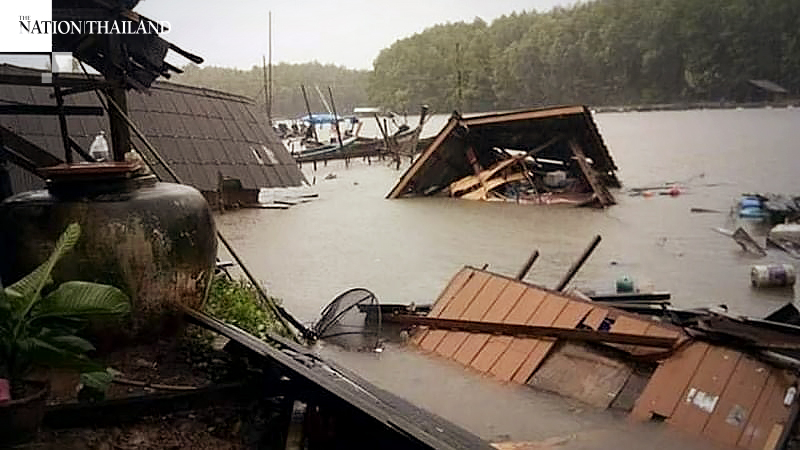
Tropical storm Sinlaku hit the southern region of Thailand hard, damaging more than 1,000 houses in Ranong province’s Pak Nam subdistrict.
The storm landed at 6am on Sunday (August 2) and continued for an hour. Pak Nam is a community located near Andaman Sea, resulting in a severe hit from the storm.
Other residential areas were also affected by the storm, such as Suksamran district where several houses slid into the sea due to the powerful current.
Ranong Governor Chatuphot Piyammaputra visited the damaged areas and ordered the Office for Prevention and Mitigation in the province to rescue the residents of the affected areas.
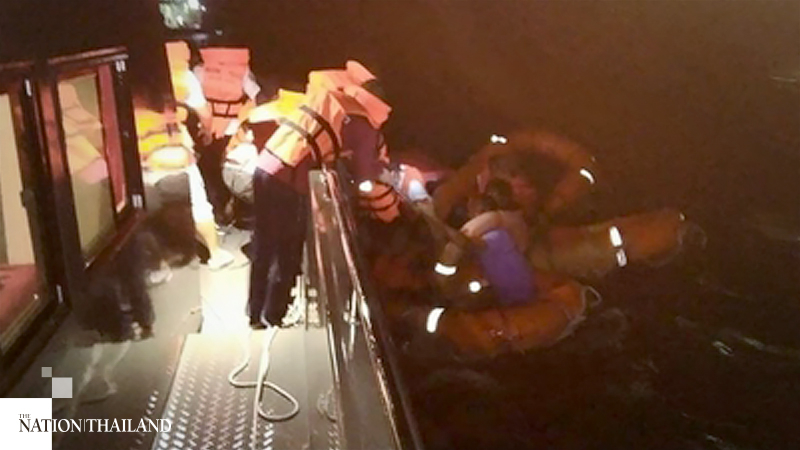
A rescue team on Sunday found two bodies while three people were still missing in the Samui boat accident on Saturday.
Around midday on Sunday, rescue team members found two dead bodies. One was the captain of the boat, found without a life jacket at Mod Dang island approximately 1.8 kilometres from the scene of the accident, and the other was a salesman whose body was found on Koh Tan island, which is adjacent to Mod Dang island.
Earlier in the morning, two people were rescued alive while the team plunged into the waters to find three missing people amid strong winds.
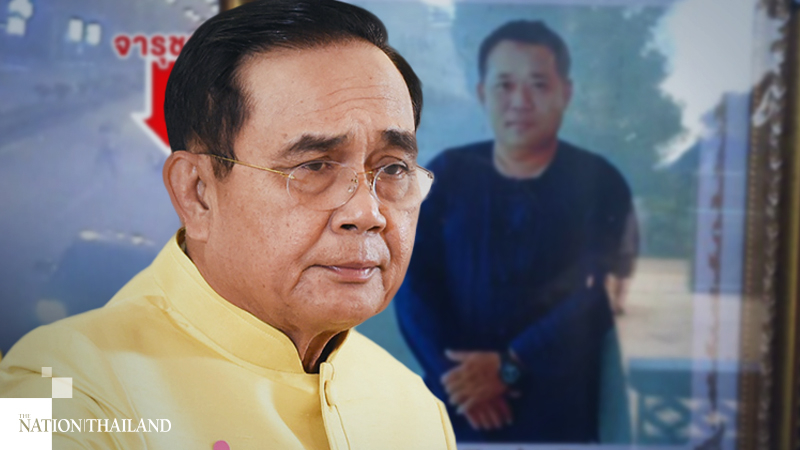
Prime Minister General Prayut Chan-o-cha, has ordered an autopsy after Jaruchat Madthong, a key witness in the high-profile hit-and-run case allegedly involving Vorayuth “Boss” Yoovidhya, was killed in a motorcycle accident, Deputy Government Spokeswoman Traisuree Taisaranakul said on Sunday.
The prime minister has vowed to pursue justice in the case and punish any officer who has committed an offence, Traisuree said.
Saman and Ta Wang-Moon, the adoptive parents of Jaruchat, were contacted by government officials. The couple agreed to release the body for the post-mortem, but requested the completion of religious ceremonies being held on Sunday.
Jaruchat was killed in a motorcycle accident in the early hours of Thursday. Somchai Tavino, 50, who was involved in the fatal crash with Jaruchat, told Chiang Mai police that he did not know the deceased before.
However, police study of CCTV footage showed on Saturday (Aug 1) that the two had met before the bike accident occurred. Police then summoned Somchai to question him again. On being confronted by the evidence, Somchai revealed that they had met at a liquor shop and persuaded each other to continue drinking at another shop, before they rode away on their motorcycles. Somchai claimed that he had misinformed the police initially as he was drunk.
Chiang Rai native Jaruchat was one of two key witnesses in the case against Vorayuth. Jaruchat had testified that the Ferrari was travelling at around 50-60kph when his car crashed into a bike ridden by a policeman, causing his death.
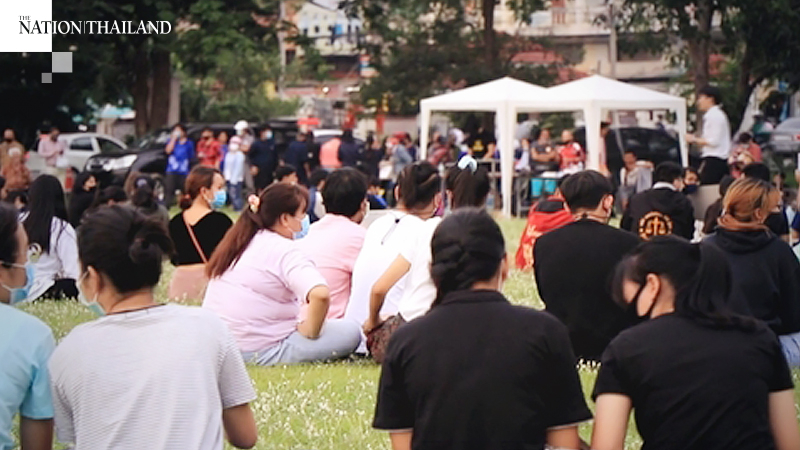
More than 1,000 people, including school and college students, gathered at Naresuan University in Phitsanulok province on Friday (July 31) to protest against the government.
The protest leaders made speeches criticising the failures of the current government in political, social and economic matters, while the others held up signs with messages in their support.
They also slammed the “corrupted justice system” in Thailand, citing the case of Vorayuth “Boss” Yoovidhya, scion of a billionaire family, who was cleared of all charges in an alleged fatal hit-and-run case.
The leaders also raised the issue of the disappearance of Wanchalearm Satsaksit, 37, a pro-democracy activist who went missing from his apartment in Phnom Penh. There has been no progress in the search for the activist.
They switched on flashlights as a symbol to depose the premier and issued three demands: dissolution of Parliament, rewriting the Constitution and stop using government power to intimidate the public.
Police officers were sent to secure the event but it ended without violence around 8pm when the protesters began to disperse
There were five new Covid-19 cases in state quarantine over a 24-hour period, the government’s Centre for Covid-19 Situation Administration (CCSA) announced on Sunday (August 2).
It was the 69th day without domestic cases since May.
All the five new patients were Thai nationals. They included a 21-year-old male student back from Russia who had lost his sense of smell, an asymptomatic 25-year-old man returning from Indonesia, an asymptomatic 31-year-old woman from Bahrain who had been infected with Covid-19 earlier in May, an asymptomatic 37-year-old man from Germany and an asymptomatic 47-year-old woman from Japan
Meanwhile, seven people have fully recovered and been discharged from hospitals
As of Sunday, the total number of confirmed cases in the country since the outbreak stood at 3,317 (380 in state quarantine) — 117 are under treatment, 3,142 have recovered and been discharged, and there have been 58 deaths.
Globally, the total number of confirmed cases crossed 18 million, up by 257,000 on Saturday; 11.3 million have recovered while deaths stood at 688,000. Thailand is now 110th among countries with the most number of cases, while the US has the highest number of cases (4.7 million), followed by Brazil (2.7 million) and India (1.7 million).
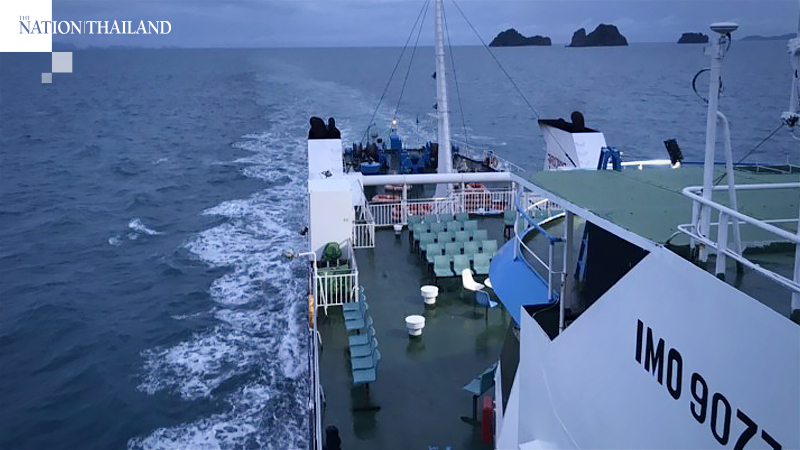
Seven people are missing after a charter boat met with an accident on Saturday at around 9.30pm, about 5 nautical miles from Koh Samui pier following strong winds.
The boat, Racha 4, owned by Raja Ferry company, carried three large trucks, one four-wheeler truck, and had 12 crew members and four passengers. The accident reportedly happened around Koh Si islands and Koh Ha islands.
The company sent Wangthong and R10 rescue boats while coordinating with the water police to help rescue the boat’s crew. Nine people have reportedly been rescued
The company apologised for the accident and said it was now focused on the rescue mission and finding out the cause of the accident.
“We are also worried about the six members of the rescue team. Search will resume on Sunday morning. The company will fully look after all the crew and passengers,” Aphichat Chayaphas, the company president, said.

 Students organise a flash mob at King Mongkut’s University of Technology North Bangkok on July 30. One protester holds a banner that reads, ‘stop intimidating people’, and wears a face mask that says, ‘dissolve Parliament’.