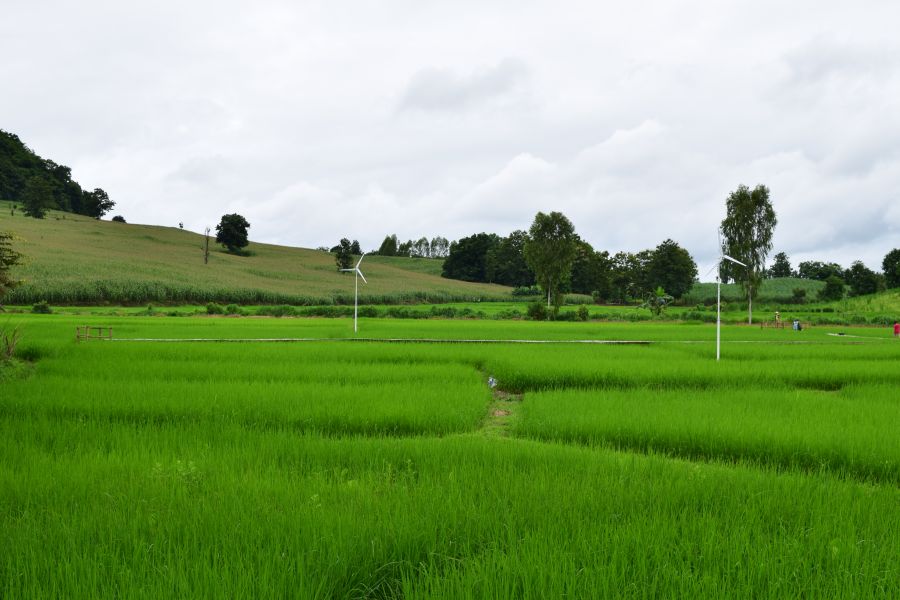
Drought-hit rice farmers in Nakhon Ratchasima province are once again staring at an uncertain future as rainfall in the current season is far short of the normal.
Sanit Chuamun, 47, a rice farmer in Thaluang subdistrict in Phimai district, is worried that shortage of water has started to affect his fragrant rice fields. Sanit owns 17 rai of paddy rice fields. Some of the rice shoots have started to die, he moans.
Although Thailand has entered the annual monsoon season, rains have not been as they were in the past, he said. This is the second year in succession that Phimai district, about 330 kilometres northeast of Bangkok, faces a severe drought, he said.
Reserves in the Phimai dam have also been depleting due to the scanty rain, as a result it could not deliver adequate water to the farmers.
An estimated 20,000 rai of rice fields in the area face the threat of drought.
If there are not adequate rains in the coming one or two weeks, then the rice crop could perish, Sanit said, pleading for government help.
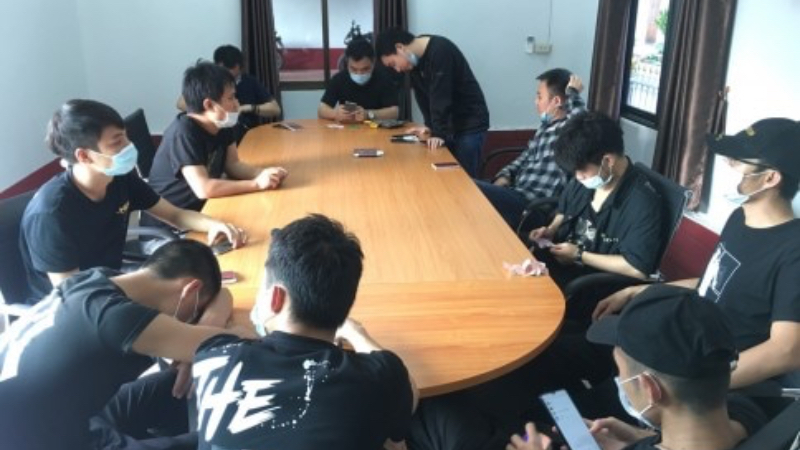
Sixteen Chinese men have been detained for sneaking into the country illegally from Myanmar.
The men allegedly entered Thailand by crossing Moei River in Mae Sot district, Tak province, on Sunday morning (July 12).
At 6.30am, personnel from Mae Sot Police Station found a group of people with wet clothes near the bank of Moei River and went to inspect them. On being questioned it became obvious that they had entered the country without permission.
The visas of some of them had already expired and some reportedly did not even have visas for Thailand. Records showed that they had visas for Cambodia, Vietnam and Myanmar.
They were taken to the police station and charged with illegally entering the Kingdom. Police later found out that they were employees of casinos in Myanmar.
Moei River is a common passage for people who wish to illegally sneak into Thailand. Previously motorboats were used to cross the river but the noise often led to arrests hence some are taking a chance against dangerous currents by trying to swim across.
Three were people were killed and one person seriously injured when a speeding car crashed into an electricity post before dawn on Sunday (July 12) in the Bang Phlat district of Bangkok.
Police suspect a combination of slippery road and speeding caused the accident in which bodies of two of the dead persons as well as the injured person flew out of the car.
Police found the wrecked car’s roof was ripped open and the body of one deceased person stuck in the driving seat. Rescue volunteers had to cut open the metal to take the body out while the bodies of the other two deceased — a man and a women — were found lying far away from the car.
The survivor, a male, who also flew out of the car was lying on the ground unconscious. He is suspected to have had a seizure due to the shock of the incident. He was sent to Vajira Hospital for treatment.
Officers from Bang Phlat Police Station believed the car was going at high speed when it began to lose control due to the wet road surface following rain, resulting in the car hitting an electric post.
Police is collecting footage from surveillance cameras in the area to conclude its investigation.
Prime Minister Prayut Chan-o-cha is pleased with the improvement in Thailand’s ranking from 73rd in 2018 to 57th on the E-government Development Index.
Government Spokesperson Narumon Pinyosinwat said.
The purpose of the index is to evaluate the readiness of the government’s development in the electronic field which reflects its direction in information technology.
The evaluation of 193 countries that are members of the United Nations is based on three factors — online services, telecommunication structures and human capital — and it takes place every two years.
Prayut has expressed his gratitude to the organisations responsible for this progress and believes that it is a result of the government’s country reform plan, Narumon said.
Only one new case of Covid-19 was found over a 24-hour period, the government’s Centre for Covid-19 Situation Administration (CCSA) reported on Sunday (July 12).
The new positive case is a 39-year-old male who had returned from Japan on June 30 and tested positive on July 10 without showing any symptoms.
Meanwhile, two more patients recovered and were discharged from hospitals.
The total number of cases in Thailand since the outbreak has risen to 3,217 — 3,088 patients have recovered and been discharged, 71 patients are undergoing treatment in hospitals, while 58 have died.
Globally, 12.8 million patients were infected since the outbreak, more than 58,000 have severe symptoms, while around 7.4 million have been cured and discharged, but more than 560,000 have died.
The three countries with the highest number of cases are: the US (3.35 million cases), Brazil (1.8 million) and India (850,000). Thailand was 100th among countries with most number of cases.
The Southern Border Province Administrative Centre (SBPAC) on Saturday held a public hearing in Songkhla province on the proposed Chana industrial estate, dubbed a progressive pilot project for the future.
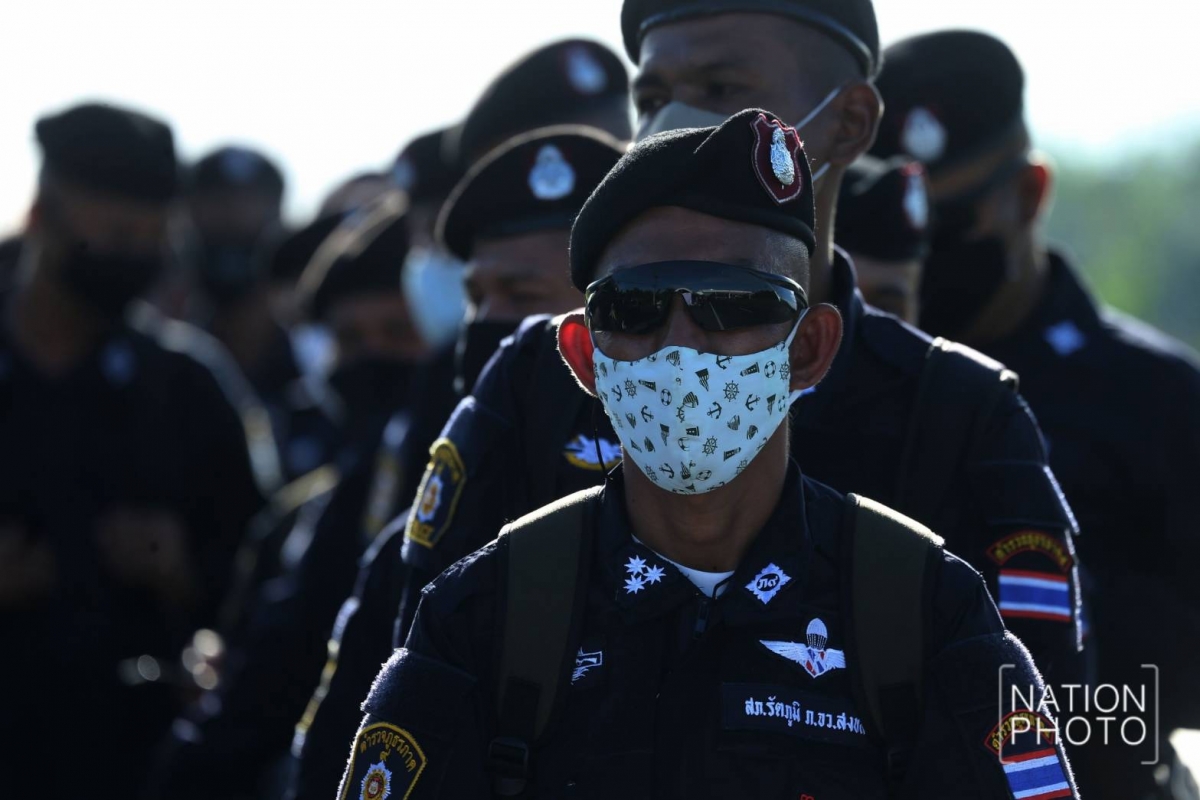
Some 1,000 people living in the project area covering the three subdistricts of Sakom, Taling Chan and Natap attended the hearing at Chanawittaya School. But an estimated equal number of police from the Provincial Police Department Region 9, was deployed around the school. People expressed their opinion, with some backing the industrial estate for the country to develop and create jobs for local people, while some were worried about the environmental impact.
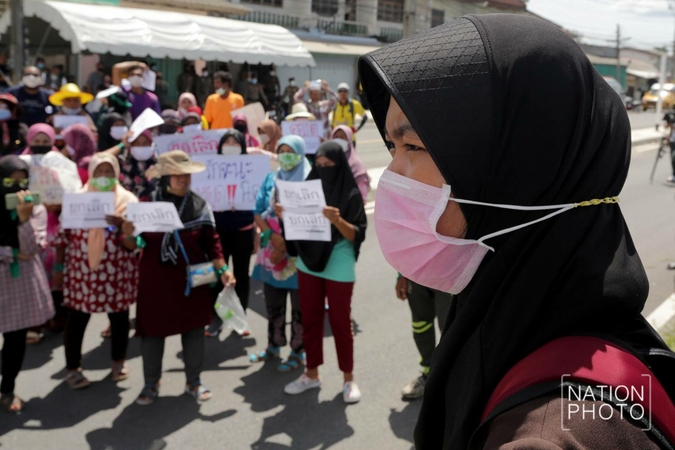
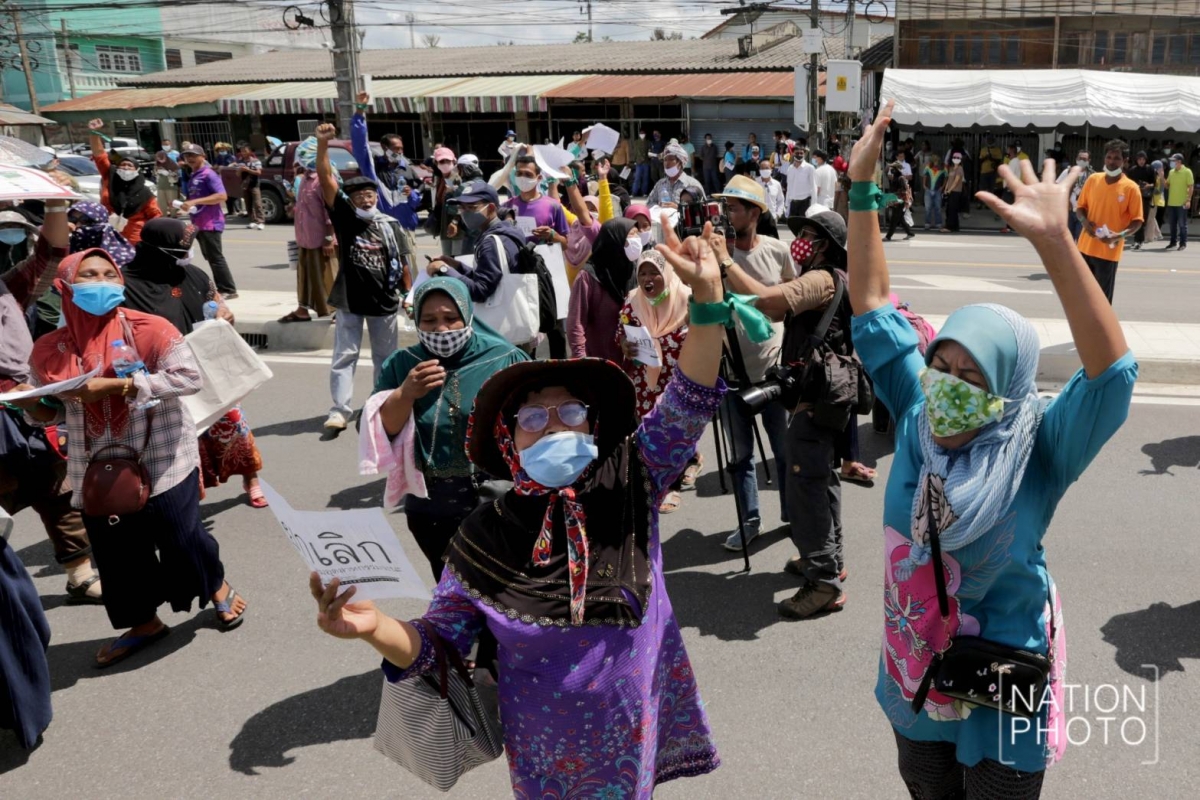
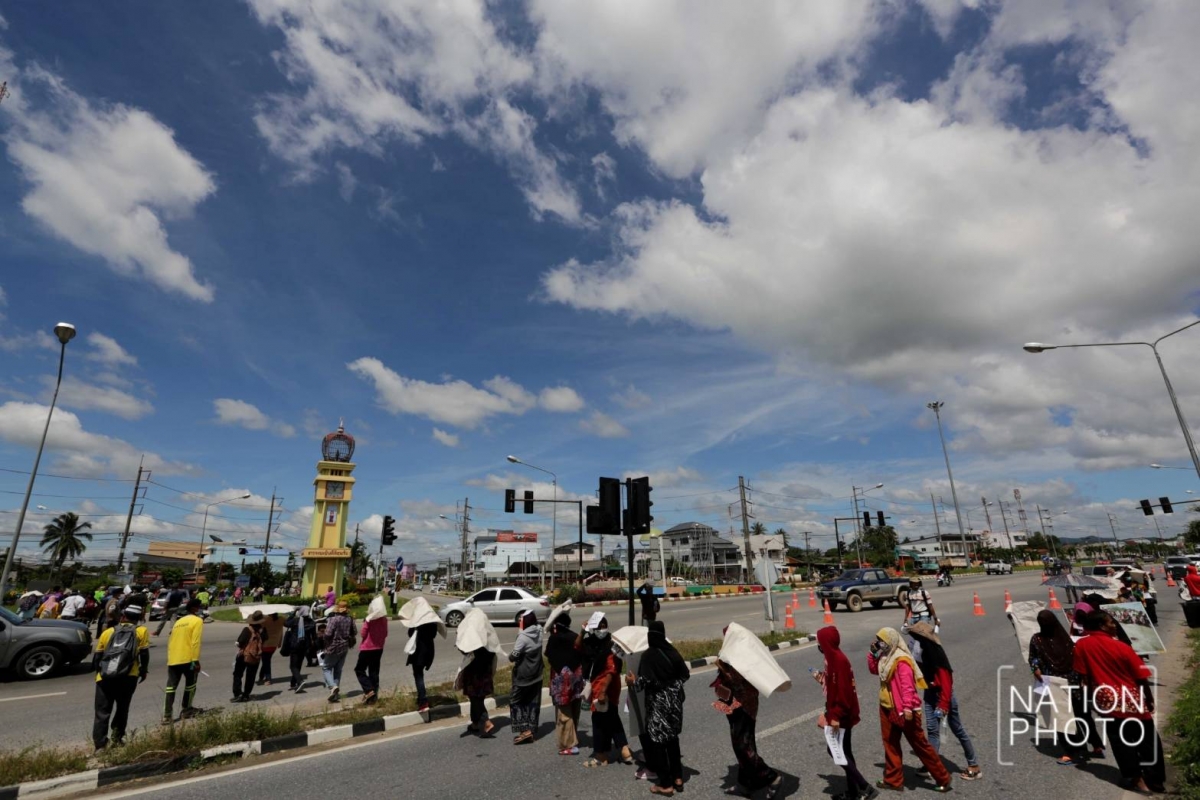
Meanwhile the Chana Rakthin group, which opposes the Chana industrial estate project, and about 300 Chana residents gathered at the dove clock tower led by Caireeya Ramanya. The group read a statement attacking the SBPAC for preventing them from joining the public hearing. They accused the officials of ignoring the voice of the local people, and benefiting capitalists. They vowed to keep up their protest against the project, and keep raising awareness among the local people on the project’s impact on nature. The clock tower is located six kilometres from the school where the hearing was held.
The group said that the Cabinet had approved the project in 2019 without environmental impact assessment or public hearing, which goes against the law. Moreover, they saw the SBPAC’s public hearing on Saturday as just a formality to proceed with the project.
Jul 12. 2020Cloudy sky above Bangkok on Sunday morning.
By The Nation
The Thailand Meteorological Department has forecast less rain on Sunday in the North, the Northeast and the Central regions, while the East and South will see isolated heavy rain.
The southwest monsoon prevailing across the Andaman Sea and Thailand has weakened. Easterly and southeasterly winds blow over the Northeast, the East and the South because of isolated heavy rain in the areas. People in the East and the South should beware of severe conditions, the department said.
The forecast for different parts of the ccountry:
Bangkok and its vicinity: Partly cloudy with isolated thundershowers; minimum temperature 27-28 degrees Celsius, maximum 33-38°C; southwesterly winds at 10-25kph.
North: Cloudy with scattered thundershowers mostly in Mae Hong Son, Chiang Mai, Chiang Rai, Phayao, Tak, Kamphaeng Phet and Phetchabun provinces; minimum temperature 25-27°C, maximum 31-37°C, southwesterly winds at 10-20kph.
Northeast: Partly cloudy with scattered thundershowers mostly in Nong Khai, Bueng Kan, Nakhon Phanom, Chaiyaphum, Nakhon Ratchasima and Buri Ram provinces; minimum temperature 25-27°C, maximum 34-37°C; southwesterly winds at 10-20kph.
Central: Partly cloudy with isolated thundershowers mostly in Ratchaburi, Kanchanaburi, Uthai Thani, Nakhon Pathom and Samut Songkhram provinces; minimum temperature 24-26°C, maximum 35-36°C; southwesterly winds at 10-20kph.
East: Cloudy with scattered thundershowers and isolated heavy rain in Chon Buri, Rayong, Chanthaburi and Trat provinces; minimum temperature 24-27°C, naximum 33-37°C, southwesterly winds 15-30kph; waves about a metre high and 1-2 metres in thundershower areas.
South (east coast): Cloudy with scattered thundershowers and isolated heavy rain in Surat Thani, Nakhon Si Thammarat, Phatthalung, Songkhla, Pattani, Yala and Narathiwat provinces; minimum temperature 23-26°C, maximum 32-36°C; southwesterly winds 10-30kph; waves less than a metre high and 1-2 metres in thundershower areas.
South (west coast): Cloudy with scattered thundershowers and isolated heavy rain in Phang Nga, Phuket, Krabi, Trang and Satun provinces; ninimum temperature 23-25°C, maximum 31-32°C; southwesterly winds at 15-30kph; waves about a metre high and 1-2 metres in thundershowers areas.
Forecast for the next seven days
From July 12-17, the southwest monsoon prevailing across the Andaman Sea and Thailand will strengthen while the easterly and southeasterly winds blow over the Northeast. More rain is likely in Thailand with isolated heavy rain in the Northeast, the East, and the South.
People in the Northeast, the East and the South should beware of severe conditions from July 12-17.
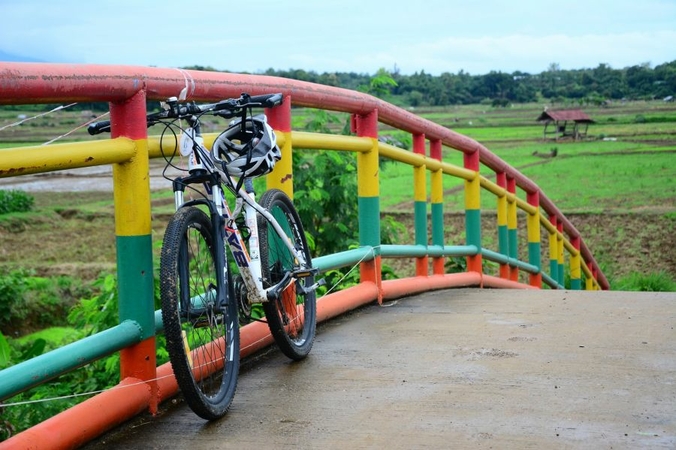
Some people may think the rainy season is not suitable for travelling, but in fact it is a time one can enjoy the wonders of nature when everything outdoors seems to be dyed in green.
The first place to be recommended for travelling in this season is Chiang Klang district in Nan province. In the district, as well as other areas of the province, the farm fields are lush green against the backdrop of the majestic mountains.
One of Chiang Klang’s attraction is the tobacco curing plants, located in the Ban Sop Kon area. The curing factories are old, brick buildings, built in 1950. In the past, tobacco farming was an important part of the farming culture in Nan.
The plants nowadays are used as a tourist attraction, offering a beautiful location for photography and sometimes pre-wedding photography.
Another attraction of the district is “Sanambin Lek” (the iron airport), the old airport constructed in 1963 to transport assault weapons for soldiers for their fight against communists in Thailand.
The officials mentioned that this airport was available for air operations, although it was too old and rusty.
From Nan’s Chiang Klang one moves to another green district, Tak’s Mae Sot, which offers great visuals for tourists.
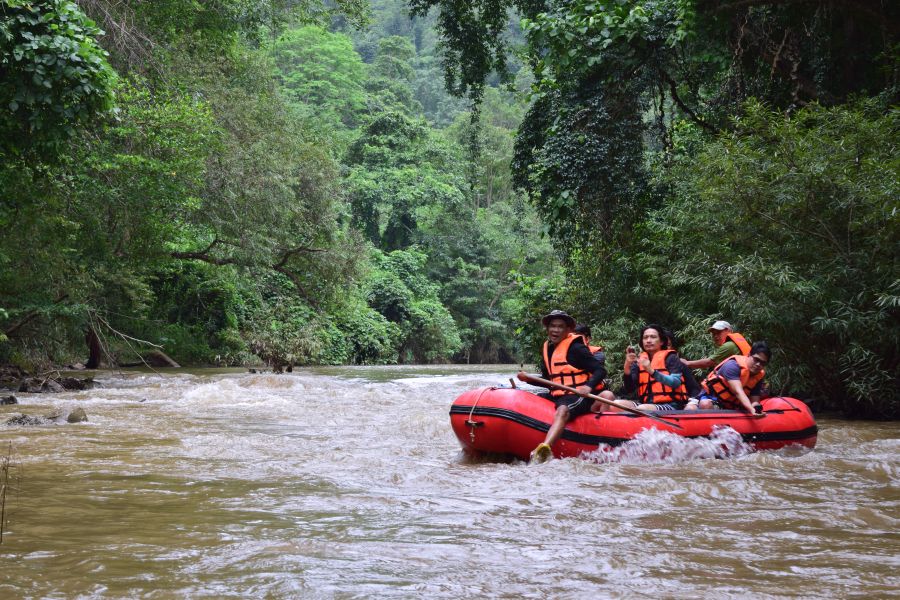
There are nature thrill activities you can engage in, such as rafting and hiking. Juean, or Roger as he is called by foreign tourists, is an old hunter who became a famous local guide working for the ‘Mae La Mao Eco Tour’ agency.
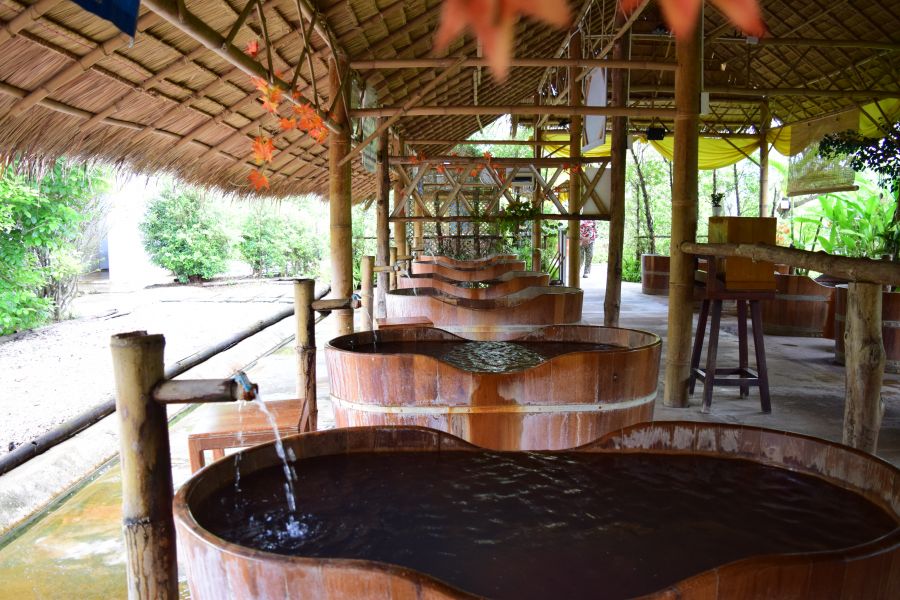
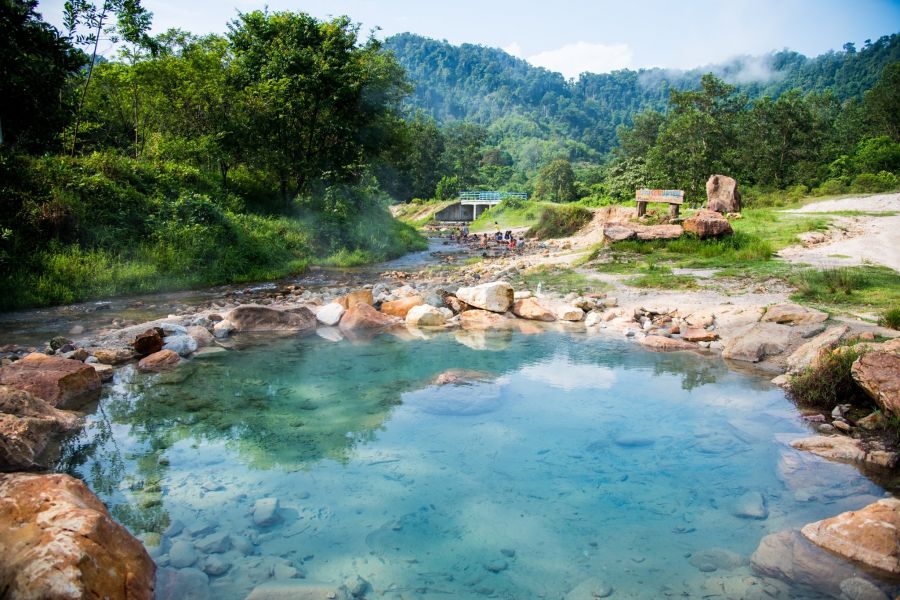
Far from the rafting site, around 100 kilometres away, is the Arokaya Pong Kham Ram (aka Arokaya Onsen Village). The village is famous for its hot spring, which is enriched with calcium and magnesium.
However, visitors are advised not to stay in the hot water for more than 30 minutes, as it would harm their health, and even make them lose consciousness.
In addition to the onsen service is Thai-traditional massage and herbal spa services. The spa also has a café to serve visitors.
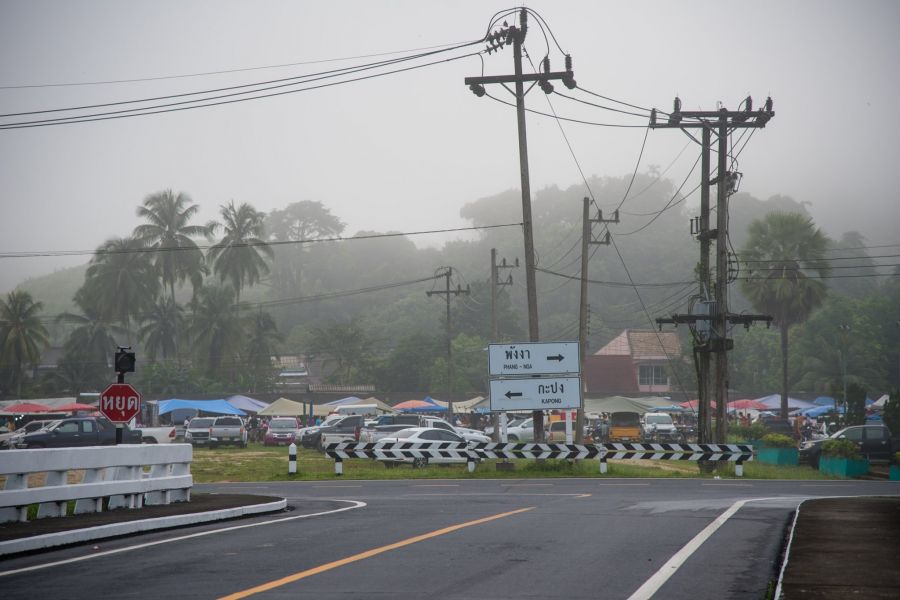
The last recommended area in this green season is Kapong district of Phang-Nga province. This area is full of attractions, erasing the doubts of those who wonder whether there are interesting places in the South for tourism in the rainy season.
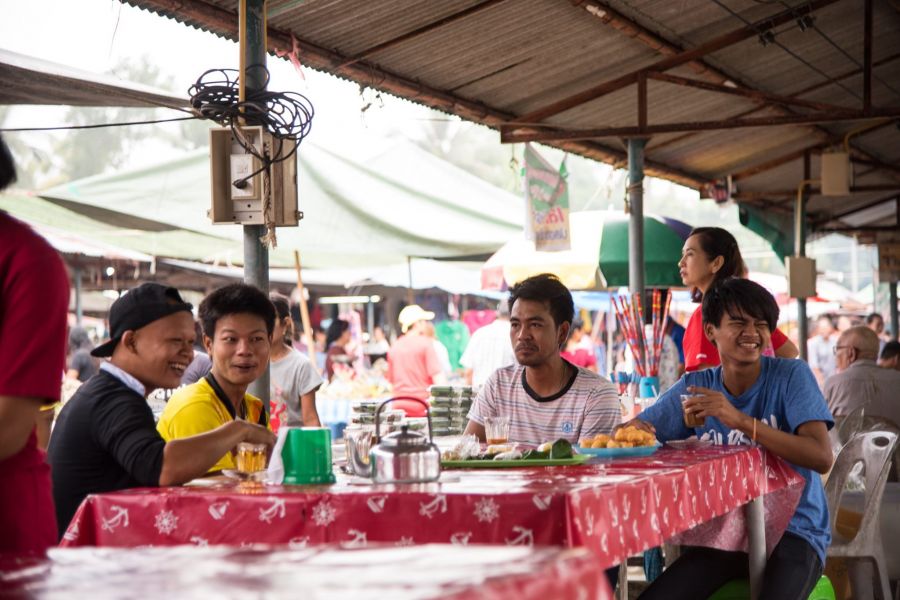
The charm of Kapong is visible in the morning, as fog hangs in the air in the current month. Locals here also start their day early. Their destination on Sundays is the “Pak Tak Flea Market”, which is covered by fog.
Their shopping time continues for a while before they leave the market, while the fog ebbs gradually as more sunlight filters through.
Near the market is Kapong Canal, a natural water canal, flanked by forests and farms. The water of this canal is famous for being very clear while the atmosphere around is very fresh and natural.
The most prominent attraction of Kapong district is “Plai Poo Hot Spring”. This natural spring consists of big and small wells. The cool water stream located nearby differentiates this spring from the others.
The average temperature at the hot spring is around 75 degrees Celsius.
Jul 12. 2020Umurangi Generation. MUST CREDIT: Origame Digital
By The Washington Post · Mikhail Klimentov · ENTERTAINMENT, SPORTS
Even in gaming’s most ambitious storytelling efforts, plot and gameplay often coexist without mixing. Play is interrupted with moments of story, often told via cutscene or in lines of dialogue when breathing room arises.
Then, once the story beat is exhausted, play resumes. We can learn things about characters from play, but in a lot of cases, the repetitive nature of tasks in a game map poorly to human character. Plot often takes a back seat to the foremost aim of many games, which is not to be a vehicle for story but largely just to be fun to sit with. A bad plot can be endured, and even sometimes enjoyed. Bad gameplay is a stone in your shoe – deeply and immediately felt.
What really helps bridge this game-story gap is when a game’s environments do their share of lifting on the storytelling front. Here, “Umurangi Generation” exceeds all expectations.
One of the classic tools in the video game storytelling tool kit is environmental storytelling. This often takes the form of little scenes, dioramas that hint at a deeper world outside of the protagonist’s view. A reliable standard of the genre is the chair with some drinks and light reading scattered around. “Wow,” the player might think. “Before this place was overrun by mutants/irradiated by nuclear fallout/shattered by war, someone sat here and relaxed.” In a zombie or pandemic game, it might be a bit of graffiti, scrawled onto a wall beside a corpse: “Starting to not feel so good. It’s probably nothing. Just going to rest here a while.”
“Umurangi Generation,” a photography game by Origame Digital, is all environmental storytelling. It works like a dream – quite literally. So many games today have made a bizarre trade: By obscuring their mechanics and systems in pursuit of immersion and more closely resembling cinema, they’ve only made more obvious the fundamental game-y-ness of “push the box to reach a ledge” and “kill 40 identical enemies before moving out of this room.”
“Umurangi Generation” has achieved the opposite. It feels a lot like games do. The jump is wobbly and inconsistent. Its visuals and music call back to a different era of game development. Prompts to press certain buttons flash on screen. The game has no apparent cinematic aspirations. And yet, these mechanics are so good at calling the player’s attention to the environment that, much like a dream, you know you’re playing a game and still it feels like you’re inhabiting an inescapably real space.
“Umurangi Generation” is made up of a series of explorable maquettes. Across a handful of levels, you’re tasked with collecting photo bounties: Take a picture of X with lens Y. Completing these assignments gives players more control over their photo editing suite (unlocking sliders like saturation and bloom). There are also timed objectives, which reward the player with new lenses and features like flash. These assignments can feel like pixel hunting at times, but the prompts are mostly meant to inspire. The point isn’t really to just take the bounty pictures; it’s to find other stuff you’d like to take a picture of while searching.
One of the big joys of “Umurangi Generation” is the sensation of seeing a scene in the game, and having the mirage of a perfect picture appear in your mind, if only for a second. It’s impossible (at least for a photographer of my caliber) to visualize and capture it as-imagined, which opens up a second game within the game: one of curation. A no-less-enjoyable part of my “Umurangi” experience was scouring my file folder (the game saves all of your shots) after completing a level and being both repulsed and pleasantly surprised by what I’d created. The game reveals certain things about your aesthetic priorities. I preferred vertical images to horizontal ones, and I leaned toward overexposure and a blue tint in many of my photos, mirroring a sort of mid-2010s Bloomberg Businessweek aesthetic. Some of these pictures were, predictably, duds. Others sang in ways that I hadn’t noticed while setting up the shot.
There’s a lot of snap-worthy material in “Umurangi Generation.” The game is overflowing with stuff that is ostensibly of the “cool future” set: Neon lights, city blocks, sharp angles, punks, dancers, workers in jumpsuits, military personnel, guns, cars, trains, fighter jets, VR, wood pallets and shipping crates, graffiti, kaiju and mechs, bright colors and vortex-like tunnels, skyscrapers, fog, nighttimes and sunsets. But beyond even what happens in the game’s “plot,” closer examination reveals that this future isn’t cool. It sucks!
Throughout the first few chapters, players will notice signs of an implied crisis. The UN has stationed armed personnel throughout Tauranga, New Zealand, where the game is set. A massive concrete wall, erected around the city, looms over the peacekeepers and punks alike. Newspapers litter the environment; The stodgy, institutional ones make reference to warlike pronouncements from political leaders, detached in spirit from the goings-on about town. Meanwhile, street art, local papers and makeshift memorials name the dead. And because you’ve got photo bounties to collect, these details cannot be ignored.
There is a meme I’ve come to love recently about the “cool future.” In it, a dopey face, mouth agape, looks at a futuristic character in a trench coat, sporting a robot arm and pointing a gun in the air. The dopey face’s response to the character it’s looking at is to say “cool future!” Meanwhile, the gun is shooting messages up into the air, in an arc over the dopey head: “Class disparity is bad”; “We should probably stop our hedonistic expansion before it destroys the planet”; “We should improve society somewhat.” These are the intended warnings of the cybernetically enhanced character – and they’re going unheeded.
Another example of this sort of meme has recently cropped up on Twitter: the villain versus the real villain. In this meme, one character is positioned as the villain as described by a media property – they’re the stated chief antagonist. But the real villain is supposed to be a counterintuitive choice; someone whose role we’ve reevaluated over time, or whose mistakes or misdeeds catalyze the bad things that unfold. Chancellor Palpatine may be the villain of the Star Wars prequels, but the real villain, according to one of these memes, might be the Jedi Council, for stirring up latent anger in Anakin Skywalker.
The subtext of these kinds of memes is that media consumers are ignoring the critical parts of the content they enjoy – the stuff that the show or movie or game or book is really saying – in favor of surface level readings. In the mind of the average dullard, the meme says, “Breaking Bad’s” Walter White is the good guy because he’s the protagonist and he’s smart. Likewise, piloting a giant robot would be cool because you’d get to have a big gun or sword.
The reality is probably more banal. People react to media with “cool future!” or fail to discern the real villain because that’s how the text is telling them to react. Often, people who make media don’t know what they’re saying. When it comes to AAA games, many of them are written and created by committee, intentionally or otherwise. There are two ways of looking at games like this: The way they often want to be looked at (“cool future!”) or by scouring the world, as one does the world of “Umurangi Generation,” and attempting to piece together the thinking behind the creation.
In “The Division 2,” a game about restoring order to Washington, D.C., after the world suffers a massive pandemic and subsequent societal breakdown, the world is littered with inoffensive world-building graffiti, stuff like “RIP the system,” “The world is broken,” and “We are not going to take this anymore!” The intended environmental storytelling on the part of the developers is “Wow, Washington D.C. is not looking good!” But the more searching read, inspired by photos of graffiti taken after real protests, which usually feature hyper-specific slogans like “Defund the police,” would be: “I don’t understand what actually happened in this setting because ‘RIP the system’ doesn’t really mean anything.”
One of “Umurangi Generation’s” great qualities is that it is unambiguous in its storytelling, and forces you to confront that story through its key mechanics: exploration and photo-taking. The UN, the big institutional newspapers, the film and advertising industry, they’re all inattentive (at best) or hostile (at worst) to the needs of the people threatened by the game’s big crisis. The point of view is not subtle, but it’s not unsubtle or graceless. It’s realistic, because the world has a point of view. Too many other games ignore this.





 Cloudy sky above Bangkok on Sunday morning.




 Umurangi Generation. MUST CREDIT: Origame Digital

