A whopping Bt1.3 trillion will be spent to build at least 10 transport megaprojects under public-private partnerships, the Transport Ministry announced on Friday (June 26).
The massive budget will be spent on four metropolitan rapid transit routes, valued at Bt259.21 billion, and motorway projects valued at Bt229 billion.
It also covers Eastern Economic Corridor projects such as the U-Tapao Eastern Airport City (Bt290 billion), Laem Chabang Port (Bt30 billion), Map Ta Phut Industrial Port (Bt47 billion) and U-Tapao-Rayong high-speed trains (Bt35 billion).
Among other projects under the budget are new interprovincial railways.
These include routes between Bangkok and Nakhon Ratchasima (Bt229 billion), Khon Kaen and Nong Khai (Bt26 billion), Jira and Ubon Ratchathani (Bt36 billion), Pak Nam Pho and Den Chai (Bt56 billion), and Chumphon and Surat Thani (Bt23 billion).
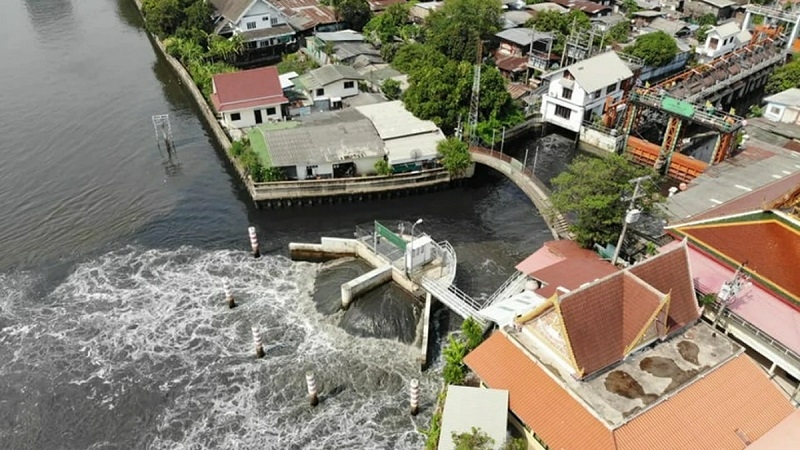
Bangkok’s four giant sewers will be cleared of trash to avoid flooding this rainy season, while city governor Aswin Kwanmuang has ordered the Bangkok Metropolitan Administration to collect garbage across the city, sweep up the dregs and check if all the water pumps are working.
The capital’s giant sewers, which are up to 5 metres wide, run through the canals and are mainly responsible for directing floodwaters from the city to the Chao Phraya River.
Bangkok’s giant sewers run through Khlong Prem Prachakorn, the Makkasan Lake, Khlong Saen Saep up to Khlong Lat Phrao and Khlong Bang Sue.
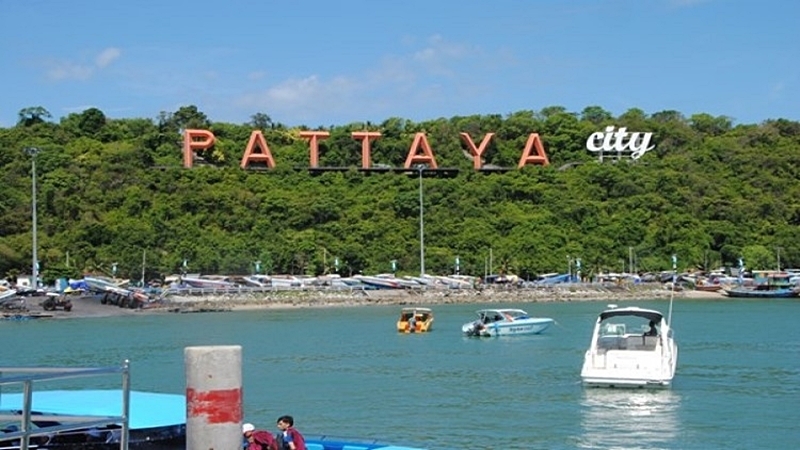
Pattaya has unveiled a five-year roadmap for its technological transformation into a “smart city”, creating a hub for economic, investment, and tourism activity.
The “Neo Pattaya” strategy is designed to create new opportunities for all Pattaya residents, as well as improving its environment and serving its multicultural community.
The city authority is holding public hearings on the scheme to improve digital information and geoinformatics from 2021 to 2025, to boost recovery from the Covid-19 crisis.
Mayor Sontaya Kunplome said Pattaya was progressing towards becoming the economic and investment core of the eastern region, building a smart city to serve tourism, business, and daily living.
He added that the government’s Bt1.5-trillion Eastern Economic Corridor (EEC) infrastructure scheme would boost the annual number of tourists, business and investment visitors to 70 million.
“The digital transformation will help improve government services, reducing educational inequality, and increasing investment opportunities,” he said. “Moreover, the digital system will be applied to the transportation, tourism, medical industry, as well as to town planning.”
The smart city scheme is a collaboration between the Pattaya administration and Burapha University.
“The university’s Faculty of Geoinformatics has forged a strategy to develop worker skills in the business and civil sectors with lifelong learning courses and digital innovations under the smart city and digital government frameworks, including digital platforms, information and communication technologies, and cybersecurity,” he said.
He added that Big Data systems will be used to improve people’s quality of life, including 3D system to boost local people’s incomes, a closed-circuit TV system to ensure public security, and various other innovations to facilitate and enhance local life.
Kitsanai Charoenjit, dean of Burapha University’s Faculty of Geoinformatics, added that Pattaya will build digital offices to reduce paperwork and enable people to contact government and private agencies quickly.
“When people ask for emergency aid after floods, accidents or crimes, officials will send drones to evaluate the situation before deploying rescue teams to the scene,” he said. “Innovations like these will help increase confidence among people who live in Pattaya.”
The Communicative Disease Act may need to be amended to effectively deal with the Covid-19 crisis once the state of emergency has been lifted.
Deputy Prime Minister Wissanu Krea-ngam said on Friday (June 26) that the only way to control the Covid-19 situation after emergency is lifted will be to make the law stronger.
“But I’m not sure if only one law needs to be amended or more,” he said.
Wissanu explained that as things stand, people cannot be ordered to wear face masks under the Communicative Disease Act.
A woman who complained that her father’s Bt2-million house was seized and sold over her unpaid student loan had, in fact, not made repayments as claimed, said the Student Loan Fund (SLF) today.
SLF manager Chai¬narong Katchapanan said the borrower had defied a 2008 court order to pay back the loan, worth Bt17,868, plus interest.
The fund was, therefore, required to conduct a legal investigation at the end of 2018. Early in 2019, the borrower made a partial repayment but failed to contact the fund to suspend the auction of the seized property for another six years, said Chai¬narong.
The Phrae Provincial Legal Execution Office then announced the auction of the seized land and buildings through sale of the mortgage on June 23. A third party won the auction with a bid of Bt30,000.
Chai¬narong said the fund had tried to contact the borrower and the guarantor by letter and phone before the sale went ahead. Eventually it had to proceed according to the law and confiscate the assets before the case expired, to prevent loss to the national budget and taxpayers.
However, the SLF is now coordinating with the property’s buyer in a bid to help the debtor. The buyer is willing to sell the property back to the guarantor at the purchase price, said Chainarong.
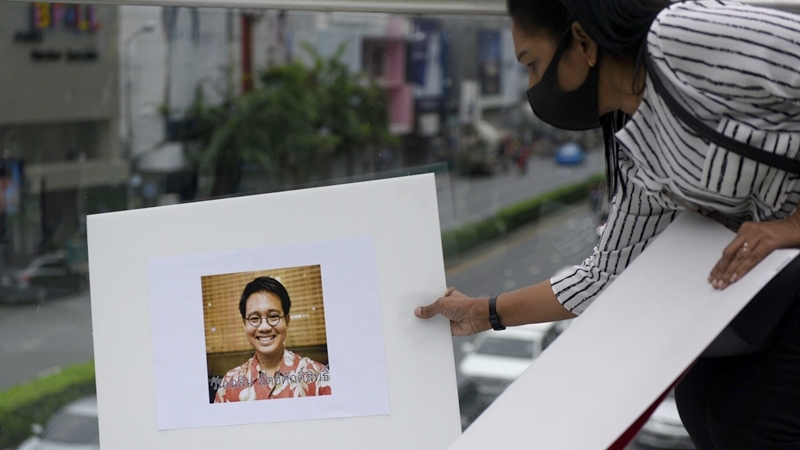
With pressure on the government mounting over the disappearance of political activist Wanchalearm Satsaksit, the Cabinet today approved the draft law on torture and enforced disappearances.
The draft will now be examined by the Juridical Council before being put to the vote in the House of the Representatives.
The new law is designed to meet international legal standards on enforced disappearance, preventing torture and abduction, supporting victims and aiding prosecution.
Currently, Thailand has no law imposing clear punishment, preventive measures and treatment for cases of torture and enforced disappearance.
The draft is intended to curb enforced disappearance committed by state officials, improve the justice system and fortify human rights in the country.
Public meetings to consider the enactment of the draft law will be organised in all five regions of the country and be attended by representatives of the government, civil society, international organisations, academics, and victims of torture and enforced disappearance.
The United Nations has highlighted 86 high-profile cases of enforced disappearances in Thailand. Wanchalearm, who was abducted by unknown assailants in Phnom Penh early this month, is one of at least nine Thai political activists who have disappeared abroad since the 2014 coup. Two later turned up dead in the Mekong River.
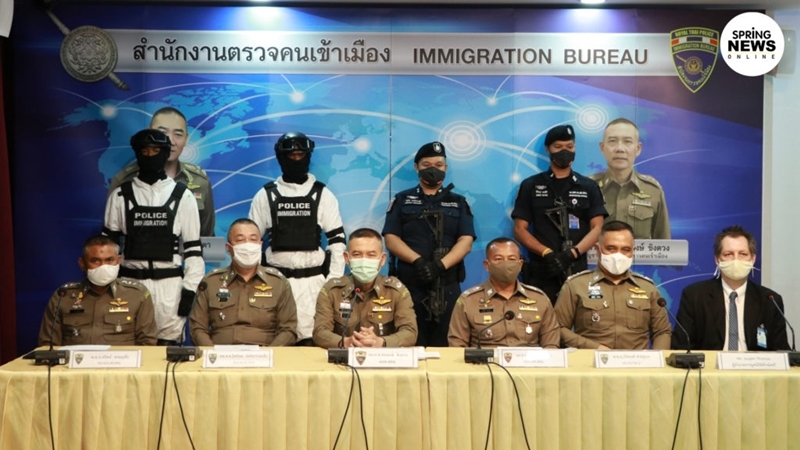
The Immigration Bureau arrested two women on Friday (June 26) for allegedly luring women to go to Dubai for so-called spa jobs before forcing them to become prostitutes.
The case came to light when some of the victims fled and got in touch with the Thai embassy in Abu Dhabi. The French NGO, Alliance Anti Trafic, was notified of the situation and it warned Thai immigration officers.
Investigators found that a woman called Narissaporn, 28, worked as an agent in Thailand, while 25-year-old Aranya was based in the United Arab Emirates. Only first names of the suspects have been released.
Narissaporn was arrested in Songkhla province, while Aranya was nabbed at Suvarnabhumi Airport when she returned to the country due to the Covid-19 pandemic.
With the school semester being delayed and most parents running short on funds, the sale of school supplies this year is expected to drop significantly.
Arnon Chitmeesilp, managing director of school uniform producer, Nomjitt Manufacturing, said he expects up to 30 per cent fewer uniforms will be bought this year because the lockdown has shortened the “back to school” period to two weeks from the normal two months.
“Sales in May this year, which normally accounts for 80 per cent of annual sales, dropped to 10 per cent due to lockdown measures,” he said. “Though the sale of uniforms via online channels rose, revenue was still lower than sale in stores.”
He added that his company will not increase the price of uniforms because many parents are suffering from the impact of the outbreak.
“The drop in purchasing power is forcing parents to only buy what is necessary,” he added. “We sell school uniforms via 200 educational institutes and 400 stores like Tesco Lotus and Big C, 100 retailers and three Nomjitt shops.”
Meanwhile, Jakrapon Chantawimon, the general manager of school-shoe manufacturer Nanyang Marketing, said his company has launched new promotions to deal with negative factors brought on by the outbreak.
“The ‘Nanyang Have Fun’ campaign is promoting slip-on shoes for primary students aged between four and 10,” he said, adding “we expect the sale of school shoes to return to normal once schools reopen”.
He said his company is now also selling shoes online.
“Online sale accounts for 5 per cent, though 75 per cent of total sales still comes from traditional shoe shops and 20 per cent via department stores,” he said.
Meanwhile, an analyst at Kasikorn Research Centre said parents will spend approximately Bt28.26 billion on school supplies, or 0.1 per cent more year on year, because more youngsters are enrolling in school this year.
“However, the growth is small because most parents are watching what they spend on school supplies and tutors, even though some private schools have reduced their fees to relieve parents’ burden,” the analyst said.
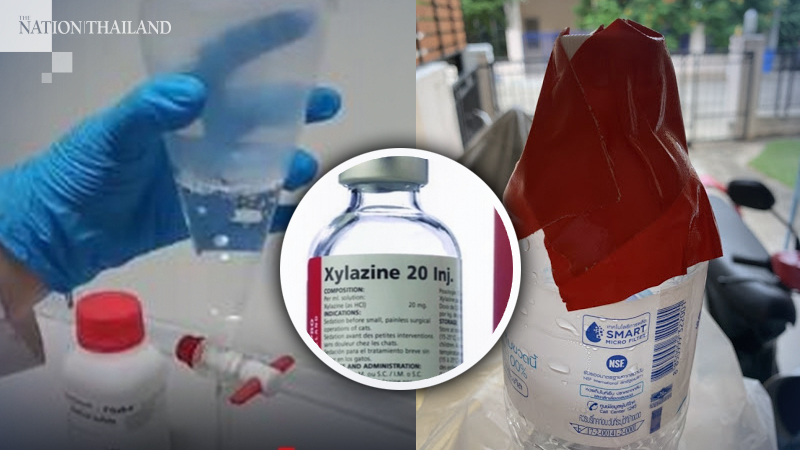
Chemical analysis has confirmed that a runner’s water bottle left on a bench in a park near Nonthaburi City Hall was spiked, likely by using a syringe needle.
Weerachai Phutdhawong, a professor at the Department of Chemistry at Kasetsart University, revealed the test results on Friday (June 25).
The professor tested the 60 millilitres of water left in the bottle using a gas chromatograph mass spectrometer and found it contained xylazine (98 per cent) and methyl paraben, etc. Xylazine is an anaesthesia used by veterinarians for animals such as cattle, which veterinarians prefer to use with cats. In 2013, there was a case of the drug being used by criminals to steal property.
Virot Sibaht, the user of Facebook page ‘Etoriw Sibaht’, had revealed his experience in a post.
He said he suffered from blurred vision, shortness of breath and vomiting after drinking water from the bottle before passing out while hanging out with friends.
He had drunk the “spiked” water after exercising in the morning.The water had a strange taste so he did not finish it, he said, adding that on closer scrutiny, he found a small incision, like by a needle, on the bottle. He then explained his experience on Facebook and warned other runners to be careful.
Prof Weerachai said the victim could have been poisoned by the drink but he escaped as he had consumed only one-third of the bottle.
A needle could have inject the drug into the bottle in 10 seconds, he said.
In 2013, the Food and Drug Administration declared xylazine as a controlled drug. Veterinarians who need to use xylazine must ask for permission first and the general public must not be allowed access, the FDA had said. However, violators can get away easily as there is only a fine for possession, he said. He urged police to repeat the testing he had done at the Department of Medical Sciences to confirm the results.
The victim, Virot, said he was relieved to know the test result as many people claimed he had made up the story. He believed that the thief had possibly set his sights on a smartwatch worth around Bt10,000 that he was wearing. Virot added that henceforth he would not place his water bottle on the bench anymore and would avoid running in that park for a while.
Phitsanulok officials are checking restaurants and nightlife venues to see whether they are ready to reopen when the fifth phase of Covid-19 lockdown easing begins next week.
Governor Pipat Ekpapan instructed Mueang district officials and police to check the venues on Thursday, ahead of July 1, when restrictions on high-risk businesses will be lifted by the Centre for Covid-19 Situation Administration (CCSA).
Businesses set to be reopened include pubs, bars, and entertainment venues.
However, all venues must impose strict disease control measures. These include limiting customer numbers to ensure 4 square metres per customer and placing tables at least two metres apart or separating them by 1.5-metre-high partitions.
Meanwhile customers will not be allowed to share tables with strangers, and staff must wear face masks at all times. Also, venues must be properly ventilated, while heavy-use areas such as toilets must be frequently cleaned, and smoking areas clearly marked.
Under the fifth phase, entertainment venues are banned from launching promotions that may attract crowds, and required to screen each customer, provide hand-sanitising gel, limit customers to five per table, not serve alcoholic beverages in shared containers, and install security cameras whose footage can be checked by authorities for a month after recording. Also banned at the venues are singing and dancing.


 Wissanu Krea-ngam


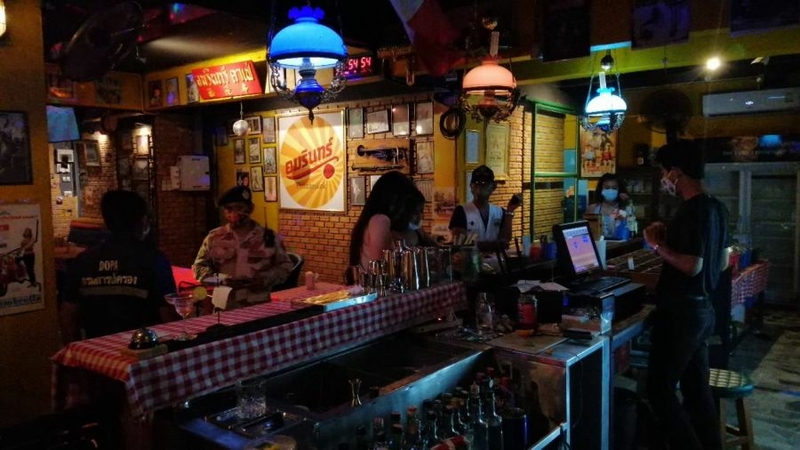
 Governor Pipat Ekpapan instructed Mueang district officials and police to check the venues on Thursday, ahead of July 1, when restrictions on high-risk businesses will be lifted by the Centre for Covid-19 Situation Administration (CCSA).


