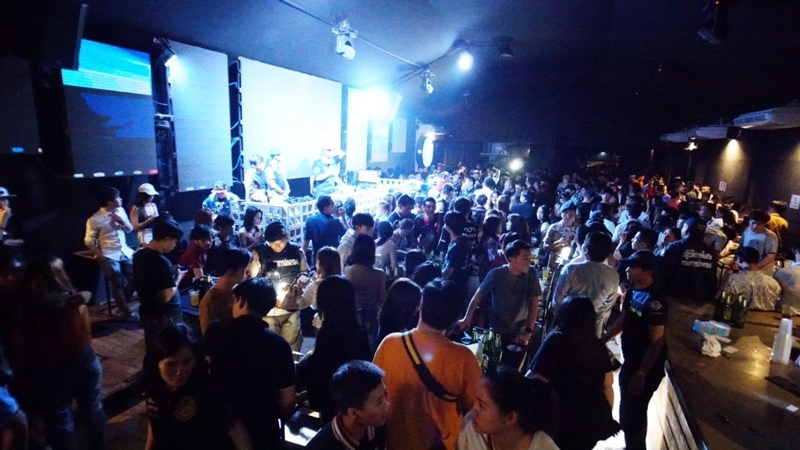
The government has called in nightlife business operators for a discussion today (June 22) on lifting the lockdown on entertainment venues in July.
Deputy Army Chief General Nattapon Nakpanich said Prime Minister Prayut Chan-o-cha was trying to reopen all businesses in the coming month, but public health safety remained a priority as there were concerns about a possible second wave of Covid-19.
The government is expected to hear various opinions at today’s meeting and discuss guidelines for the reopening of the venues.
Sa-nga Ruangwattanakul, the president of Khaosan Road’s businesses, said they were willing to collaborate with the government in order to prevent the coronavirus from spreading, and the businesses already had plans in place to abide by Public Health Ministry measures.
He hoped the lockdown would be lifted soon as many people, including musicians, have been affected by the crisis.
Entertainment venues have also asked the government for financial aid, including a five-year soft loan extension and the axeing of exercise tax until the situation normalises fully.
Bangkok’s Vichaiyut Hospital specialist Dr Manoon Leechawengwongs suggested on Monday (June 22) that the government come out with a graduated driver licensing system to tackle the problem of illegal racing at night instead of taking severe action against the riders.
The doctor said on his Facebook fan page that the prime minister has reportedly ordered the police to deal with teenage racers severely after the curfew was lifted, but he did not agree with the idea.
He said Thailand should impose stricter laws to tackle the night racers instead of imposing a curfew on them.
The US, Canada, Australia, and New Zealand have the graduated driver licensing system.
The doctor explained that the law under this system prohibits teenagers, who have had a driving licence for only one or two years, from riding at night. Statistics in these countries show that most of the accidents at night were caused by teenagers, not adults.
In Thailand, teens aged 15 can get a riding licence, while those 18 and above can obtain a driving licence. However, no law forbids teenagers from riding at night.
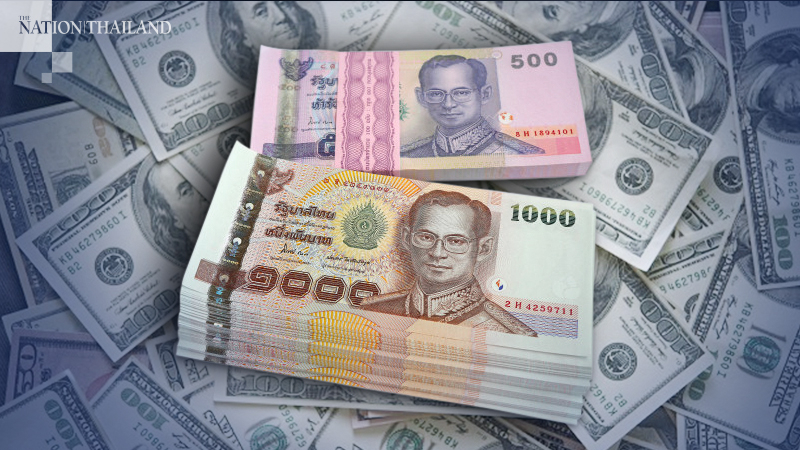
The baht opened at 31.03 to the US dollar this morning (June 22), unchanged from Friday’s close.
The Thai currency is expected to move between 30.93 and 31.13 today and between 30.80 and 31.30 this week, said Jitipol Puksamatanan, head of Markets Strategy at SCB Securities.
He said the baht would be pressured to move in a narrow range due to the present economic situation and the results of the Thai central bank’s monetary policy committee meeting.
Though the dollar has been seen moving in line with the capital market situation, investors would concentrate on Europe and Asia in the middle term because of the political situation and the Covid-19 crisis in the United States, Jitipol said, adding that the baht in the second half of the year would strengthen under this assumption.
He predicted the MPC would freeze the interest rate at 0.50 per cent and will not reduce the rate again this year if the Thai economy recovers in the second half.
US durable goods orders in late May are soon to be announced and is estimated to have increased by 10 per cent, compared to orders in April.
Also, the University of Michigan Consumer Sentiment Index will be announced this Friday (June 26). The index is expected to increase from 78.9 points to 79.2 points from a recovering US economy, Jitipol added.
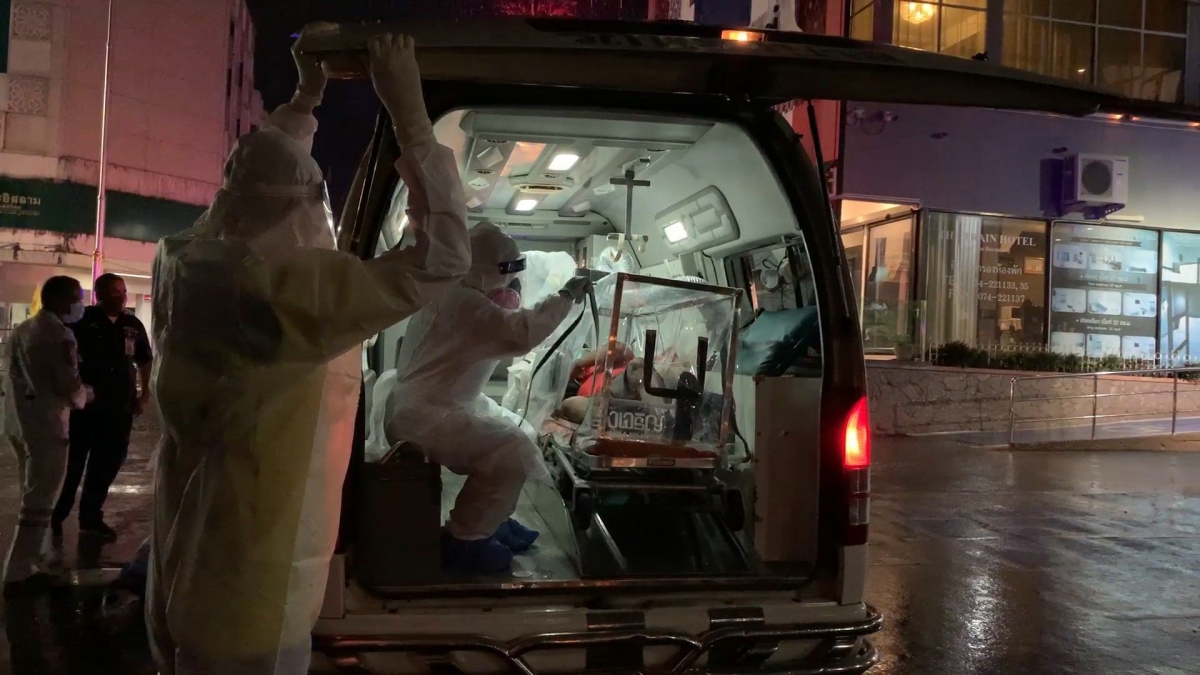
Hat Yai Hospital conducted detailed tests on a middle-age “psychiatric patient” and is keeping him under close observation after he claimed he had Covid-19.
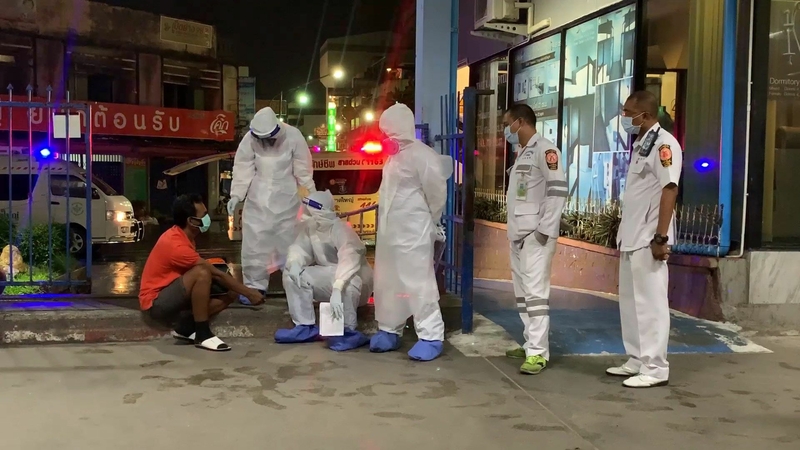
The man had called the Mitrapharb Samakkhi Rescue Foundation yesterday (June 21) at 5.30pm at Hat Yai train station in Songkhla province, saying he needed emergency medical assistance. When rescue staff arrived, he told them he had Covid-19, so they rushed him to Hat Yai Hospital for an examination.
The hospital’s Covid-19 response team put him in quarantine and performed detailed tests. The man, later identified as Anant Na Chatree, 41, also carried a letter saying he was a psychiatric patient at Kuan Niang Hospital in Songkhla in July 2019.
Anant reportedly told hospital staff that he had trouble breathing so he called the rescue foundation. He also told them the doctors at Phun Phin Hospital in Surat Thani said he contracted Coronavirus a few days ago. Hat Yai Hospital staff, believing that the patient might be mistaken as Phun Phin Hospital would never discharge a confirmed Covid-19 case, contacted the hospital and found that he had only received treatment for dizziness and vertigo on June 19 and 20. There was no mention of Covid-19 in the hospital record.
Hat Yai Hospital is now keeping the man under close observation as a precaution.
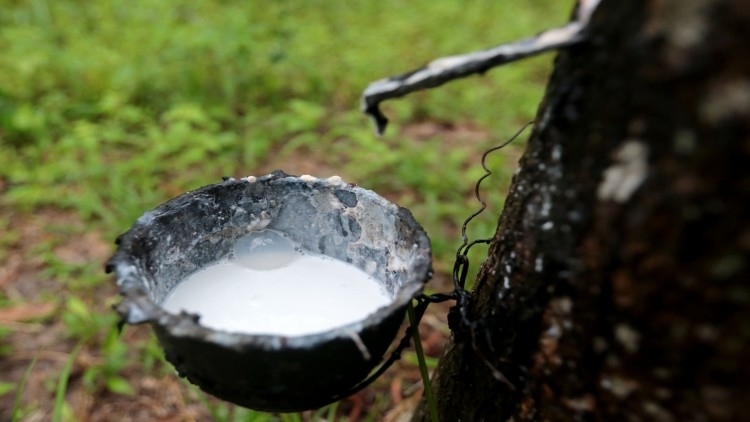
The Rubber Authority of Thailand (RAOT) reported a surge in the latex price due to soaring demand for rubber gloves and condoms.
“The latex price in June is Bt44.52 per kg, an increase of Bt4.34, or 10.89 per cent, compared to the same period last year, and 6.46 per cent from the previous month,” said chairman Praphan Boonyakiat. “The Covid-19 crisis has spurred demand for rubber gloves for medical purposes as well as condoms.
“Many rubber manufacturers in Europe and the United States have expressed an interest in establishing factories in Thailand, as we have kept the outbreak under control. They predict the situation will see sustained demand for medical gloves for at least 3-5 years,” Praphan said. “If the trend continues, it will probably be the first time the price of latex has soared beyond sheet rubber.”
The RAOT reported rubber exports in five months totalled 1,686,992 tonnes, decreasing 3.51 per cent compared to 1,748,405 tonnes during the same period last year. The Coronavirus crisis has forced many countries to go in for a shutdown.
Among importers of Thai rubber, China is the only one that purchased an increased amount of rubber products – at 1,069,889 tonnes – rising 10.03 per cent from last year’s imports of 972,389 tonnes. Exports to the Asian giant alone made up 63.42 per cent of Thailand’s total rubber exports.
In the past five months, Malaysia imported 148,919.4 tonnes, a decrease of 8.8 per cent year-on-year, the United States purchased 77,549.89 tonnes, a 27.8 per cent drop, Japan bought 80,995.73 tonnes, a 13.5 per cent decrease, and South Korea imported 39,064.35 tonnes, a drop of 19.68 per cent.
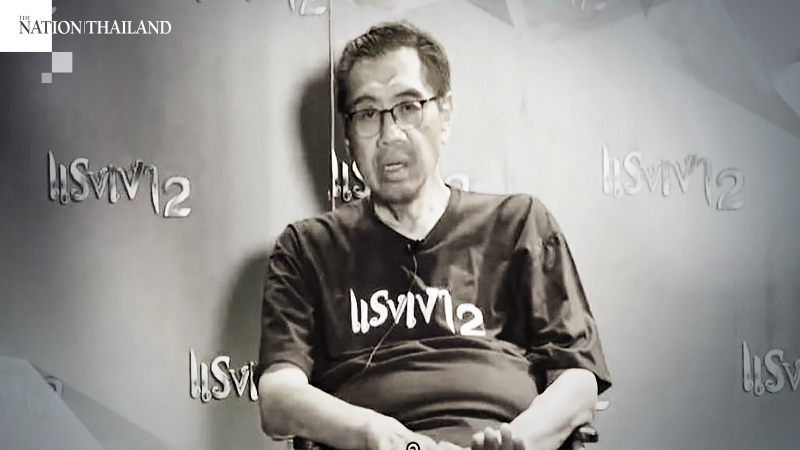
Award-winning TV drama director-writer Chaninthorn Prasertprasart, 59, reportedly shot himself in a suspected suicide.
On being notified of a shooting death on Sunday (June 21) at 8.30pm, Makkasan Station police in Bangkok’s Huay Kwang district rushed to a condominium in Makkasan to find the body of Chaninthorn Prasertprasart on a wheelchair with a bullet wound to his right temple. Officers reportedly found a 9mm gun on the floor and did not find any signs of fighting or ransacking.
An acquaintance of the deceased reportedly told the police that Chaninthorn had been suffering from health problems and this could have been the reason for his “suicide”. Police will talk to witnesses and relatives to find out if it was indeed a suicide.
Chaninthorn had been working for Broadcast Thai Television that produces TV dramas for Channel 3. He was the director of many hit dramas, including “Raeng Ngao”, “Jan Eay Jan Jao”, “Leuamprairak” and “Plerng Boon”, and was also a writer for “Saphai Jao”, “Than Chai Pawornruj” and “Raeng Ngao 2”. He was awarded the Nataraj Award for Best Director for “Raeng Ngao” in 2012, hosted by the Radio-Television Broadcasting Professional Federation.
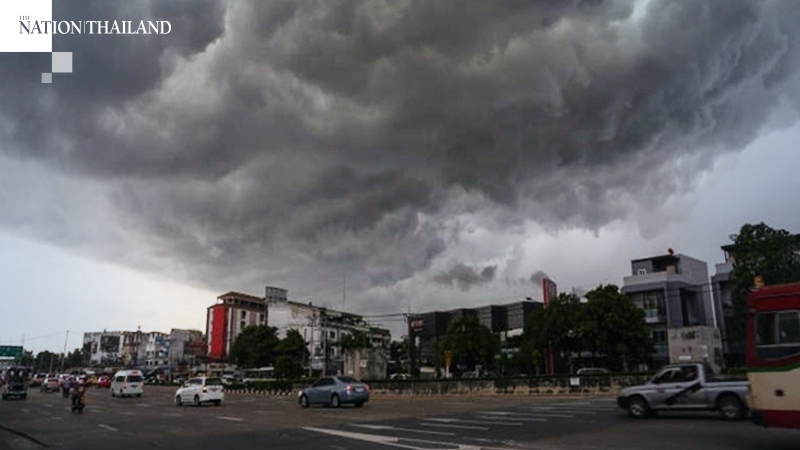
The Meteorological Department today (June 22) forecast rains for upper Thailand, with isolated heavy showers in the East and South. It advised people in these areas to beware of severe conditions.
Here’s the weather forecast for the next 24 hours:
Northern region: Partly cloudy with thundershowers in 30 per cent of the areas; temperature lows of 25-27 degrees and highs of 34-37 degrees Celsius.
Northeastern region: Partly cloudy with thundershowers in 20 per cent of the area; temperature lows of 25-28 degrees and highs of 34-36 degrees Celsius.
Central region: Partly cloudy with thundershowers in 30 per cent of the area; temperature lows of 26-27 degrees, highs of 35-38 degrees Celsius.
Eastern region: Mostly cloudy with thundershowers in 40 per cent of the area and isolated heavy rains; temperature lows of 25-29 degrees, highs of 32-35 degrees Celsius; waves a metre high and 2 metres during thundershowers.
Southern region (east coast): Mostly cloudy with thundershowers in 60 per cent of the area and isolated heavy rains; temperature lows of 24-27 degrees, highs of 33-35 degrees Celsius; waves a metre high and 1-2 metres during thundershowers.
Southern region (west coast): Mostly cloudy with thundershowers in 60 per cent of the area and isolated heavy rains; temperature lows of 24-26 degrees, highs of 31-34 degrees Celsius; waves a metre high and 2 metres during thundershowers.
Bangkok and surrounding areas: Mostly cloudy with thundershowers in 40 per cent of the area; temperature lows of 27-29 degrees, highs of 34-37 degrees Celsius.
The Department of Intellectual Property has eased public concerns about Thailand losing the the right to Compulsory Licensing (CL) of drugs if it joins the Comprehensive and Progressive Agreement for Trans-Pacific Partnership (CPTPP).
“The CPTPP does not prohibit the use of drug CL or has any regulations that will force Thailand to extend the protection period of drug CL or allow the monopoly of drug tests,” the department said.
The drug CL under CPTPP will comply with the regulations of World Trade Organization (WTO) that focuses on the use for non-commercial purposes or to remedy emergency situations such as the Covid-19 outbreak, the department added.
“The Thai government will still be able to manufacture, sell or import drugs at a lower price from other sellers during emergency situations despite the drugs being protected under CL,” it added.
The CPTPP also allows member countries to use their own discretion in considering which situations are emergency as different countries have different priorities in handling problems.
“As for the forced extension of drug CL and monopoly of drug tests, these two issues are not under the scope of the CPTPP although they had been introduced by the United States when forming the Trans-Pacific Partnership, the former version of CPTPP,” said the department.
“When the US left the partnership in 2017, the remaining 11 members decided to revoke the two issues, therefore Thailand will not be forced to extend drug CL or allow the monopoly of drug tests under CPTPP.
“It is unlikely that the two issues will be reintroduced in the future, as it will require unanimous agreement from all member countries, and Thailand will have the right to veto the issue if we join the group,” the department said.
The Department of Highways has reported progress in two motorways’ operations and maintenance projects, between Bang Pa-in and Nakhon Ratchasima and between Bang Yai and Kanchanaburi provinces.
The Ministry of Transport will consider the details within this month, before the operation will be proposed to the Cabinet, Piyapong Jiwattanakulpaisarn, the Inter-City Motorway Division director, said.
He said the department had invited bids from private corporations to operate the projects, and the the BGSR (BTS-GULF-STEC-RATCH) joint venture had emerged winner.
He said that overall there was no delay, but the government will take some time to discuss the bid winner and details of the projects.
Pakpoom Srichamni, president of Sino-Thai Engineering & Construction (STEC), explained that STEC, as a part of BGSR, will be responsible for construction part of the two motorways. He added that the value of the new works this year would reach the targeted Bt40 billion.
STEC plans to bid for other government projects this year, including the construction of the Orange and Purple railway lines and the double-track train between Phrae and Chiang Rai provinces.
Plant breeders want Thailand to join the Comprehensive and Progressive Agreement for Trans-Pacific Partnership (CPTPP) and suggested that the government fund research.
The chief of Plant Variety Protection Office, Thidakoon Saenudom, said in a seminar on the CPTPP that Thailand would take three – five years to consider joining the partnership and the country would be protected by the International Union for the Protection of New Varieties of Plants (UPOV) if it decided to join.
The Thai Plant Varieties Protection Act is similar to UPOV but not that strict but there is an argument that Thai farmers might not be able to collect the plant seeds due to the CPTPP.
UPOV will allow the farmers to do so but they must ask permission from the breed owners in order to receive the protection, she said.
“According to the research, 2,000 farmers found that plant breeds must be changed according to market demand. Therefore, whether farmers can collect the seeds or not should not be a concern since that case will occur only if the plants are not sufficient for the demands. Regarding the seed exchange, it depends on the decision of the government,” she said.
If the government agrees, UPOV will allow farmers to collect the seeds for another year not exceeding three times the bought seeds. So, farmers who do not intend to modify the plants will not be affected.
However, UPOV will also allow foreigners to modify traditional plants of Thailand but they cannot be the breed owners of those plants. Foreign people who want to modify the plants must register and pay annual fees in order to receive protection and Thais can do the same things to the plants from other countries, she said.
“The concern is that UPOV will raise competitiveness. Farmers will be benefited but responsible government organisations are still not ready for the change. Therefore, the government must support it to prepare for the consequences.” Thidakoon said.
Dr Chairerg Sagwansupyakorn, Thai Seed Trade Association (ThaSTA) president, said the government must prioritise the benefits of the country as the sale of protected plant breeds will violate the law and 100-per-cent breed modification was not a monopoly but a stimulus for the competitiveness.
Dr Kanokwan Chodchoey, Asia and Pacific Seed Association executive director, said the private sectors are preparing to propose an amendment to the Act to correspond to UPOV.
Nipon Chiawongrungrueng, an orchid breeder, said plant breeders want approval from UPOV since the orchid modification is heavily necessary for the business.
The Department of Trade Negotiations said Thailand is in the third step of 12 for joining the CPTPP and the House of Representatives will establish a committee to consider the issue.