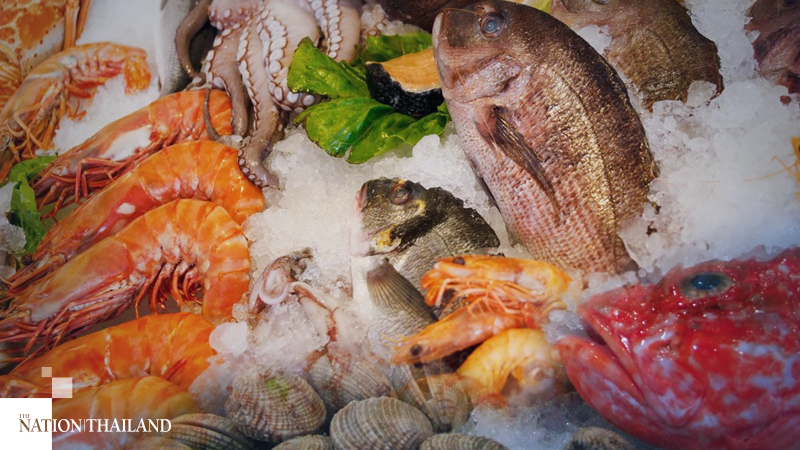
Amid widespread concerns that the second wave of coronavirus outbreak in China could spread to Thailand via imported salmon, the Department of Fisheries has assured that all aquatic animal products sold in Thailand are safe from the virus.
China said on Thursday (June 18) that a new outbreak of the virus had been traced to imported salmon processed at Beijing’s Xinfadi food market. The news rocked confidence in the Thai seafood market, since Thailand imports large shipments of salmon.
However, no raw salmon products are shipped from China to Thailand, said the department director-general Meesak Pakdeekong.
Moreover, he added, the aquatic animal products consumed in Thailand were checked and controlled from those boats in the fishing industry. Also, the aquaculture farms are required to achieve the Good Aquaculture Practices standard.
Meesak also said that fish and other aqua products sold in those fresh markets have always been randomly checked by officials from the ministries of Interior and Public Health.
Under the epidemiological view, he explained that the aquatic animals are cold-blooded creatures, and there is no evidence that fish can carry the Covid-19 virus since their respiratory systems are different from those of mammals.
The World Organisation for Animal Health (Office International des Epizooties, OIE) reported that, apart from human beings, the coronavirus has been found in dogs, cats and bats.
More than 100 teenagers and adults were arrested for alleged involvement in night motorcycle racing on Nonthaburi’s main roads on June 19 and 20.
The arrested persons included riders, passengers, and supporters of the illegal racers. The local police said on Saturday (June 20) that 102 people had been arrested in a collaborative effort between 11 police stations in the province.
The operation was in line with the prime minister’s policy after the curfew was lifted on Monday (June 15).
Police had discussed and planned to tackle the illegal racers and involved persons on Kanchanaphisek, Rattanathibet and Ratchaphruek roads, and highway numbers 345 and 346.
Officials confiscated 97 motorcycles and 21 modified exhaust pipes. The offenders were charged in several cases, inncluding riding without a licen e or a licence plate, using modified vehicles, and causing trouble to others.
The police added that they would extend the crackdown to the racing fanpage on Facebook, as well as those garages that had modified the motorbikes.
One new case of Covid-19 was confirmed over a 24-hour period, the government’s Centre for Covid-19 Situation Administration (CCSA) reported on Saturday (June 20).
The new patient is a returnee from Bahrain in state quarantine.
Thailand has now reached 26 days without a domestic case, the CCSA Facebook page said.
Total cases in Thailand since the outbreak are 3,147 — 3,018 patients have recovered and been discharged, 71 patients are undergoing treatments in hospitals, while 58 have died.
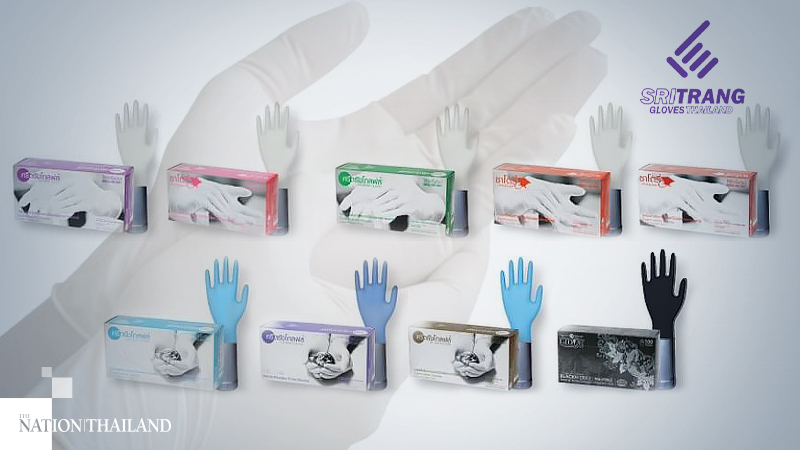
Sri Trang Gloves Thailand (STGT) is set to list on the Stock Exchange of Thailand with an initial public offering scheduled for next month.
Finansa, the financial advisers to STGT, said the interest shown by investors in the IPO had exceeded expectations.
Varah Sucharitakul, Finansa executive director, said that the stock price will be finalised on Monday (June 22), before STGT is listed on the SET next month.
He said that STGT was a strong corporation, which grew at around 10 to 12 per cent per year and the glove industry had gained from the Covid-19 situation.
STGT chief executive officer Jarinya Jirojkul said that the corporation aimed to increase its production, selling channels and manufacturing capacity, in order to grow more.
She said STGT’s production has been increasing consistently since 2017. Total production has doubled from 15 billion pieces a year to 30 billion, with a target to hit 50 billion in 2024 and 100 billion in 2032.
The CEO said that STGT planned to sell its products in underdeveloped countries where the average use of rubber gloves is around 10 pieces per person per year. “In developed countries, the average use is around 100 pieces per person annually,” she added.
The CEO said that STGT would increase productivity by adopting new technologies or machines. Nowadays, STGT can produce 50,000 products per hour, with only three staff.
“We have been growing on average 12.2 per cent annually from 2016 to 2019, and around 8 to 10 per cent in the past 10 years. We estimate that we can grow much more, as the demand for rubber gloves has been rising at a high rate due to the increasing number of elderly people in society, as well as to support medical operations,” she added.
A 33-year-old unemployed music and dance teacher has been arrested on charges of possessing child pornographic material in Chiang Mai province.
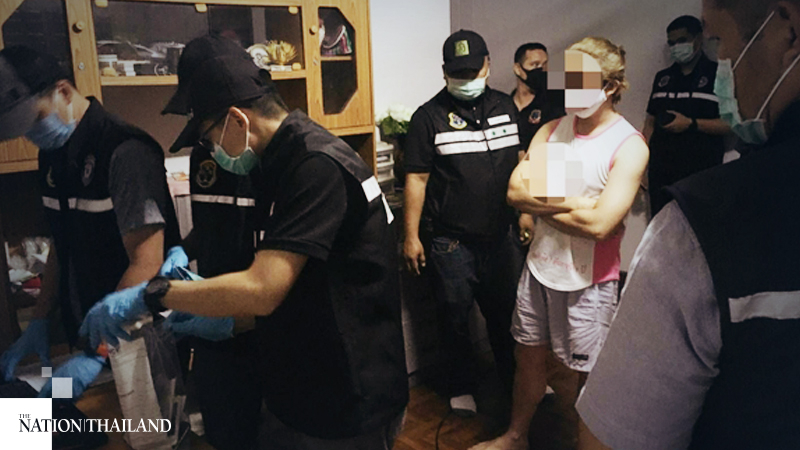
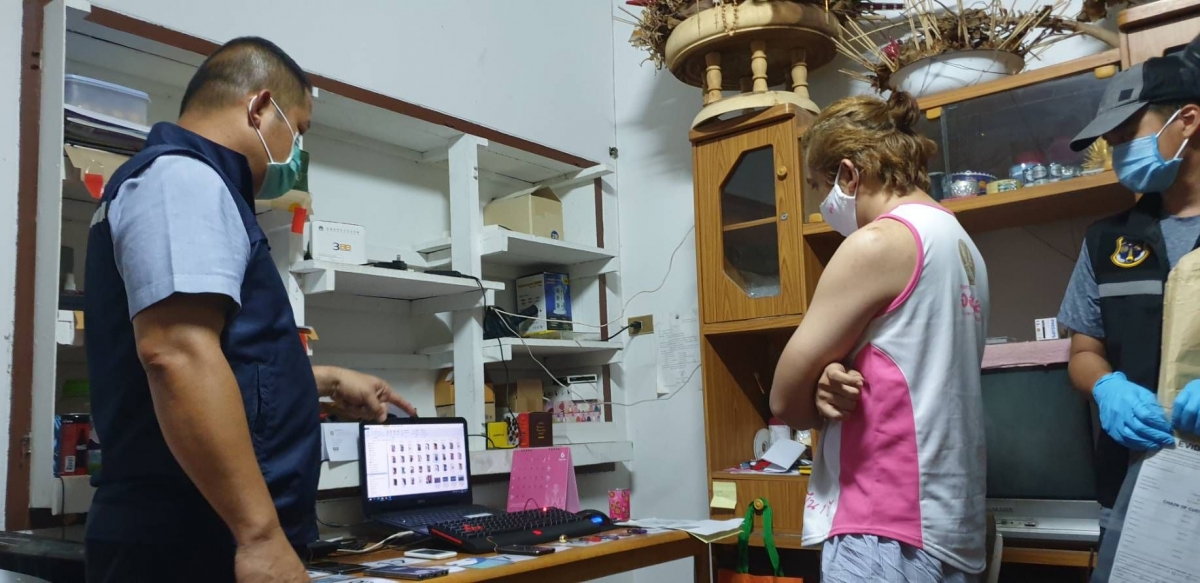
He was arrested after Chiang Mai police joined forces with Thailand Internet Crimes Against Children (TICAC) task force on Friday (June 19) raided a house in Saraphee district after being tipped off about internet activities involving downloads of pornographic materials of children as young as 10 years old.
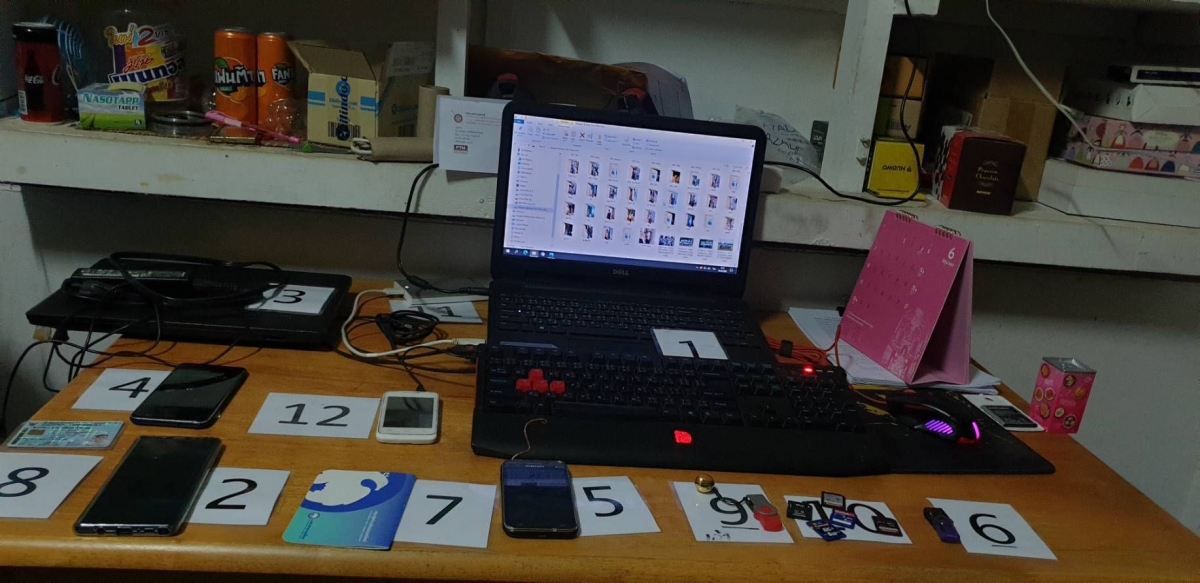
Officials arrested the owner, Chai (last name withheld), after they allegedly found several pornographic images of male and female children in two laptop computers, two mobile telephones and several USB flash drives and SD cards. Chai reportedly admitted that he had downloaded all the materials after joining a group on Line application that must pay for membership before downloading the files.
Investigation also revealed that the suspect used to be a music and dance teacher at a private school in Chiang Mai but was now out of a job after his contract with the school ended.
Chai was charged with possessing child pornographic material, which carries a maximum punishment of five years jail time, or Bt100,000 fine, or both.
Police will also investigate the Line group for possible involvement in human trafficking.
The ICAC task force has launched its “Save Children Operation” during Covid-19 situation when computer-related crimes have spiked. In 56 days of operations in 24 provinces, they have made 47 arrests and helped 100 victims, as well as seized more than 150,000 images of child porn.
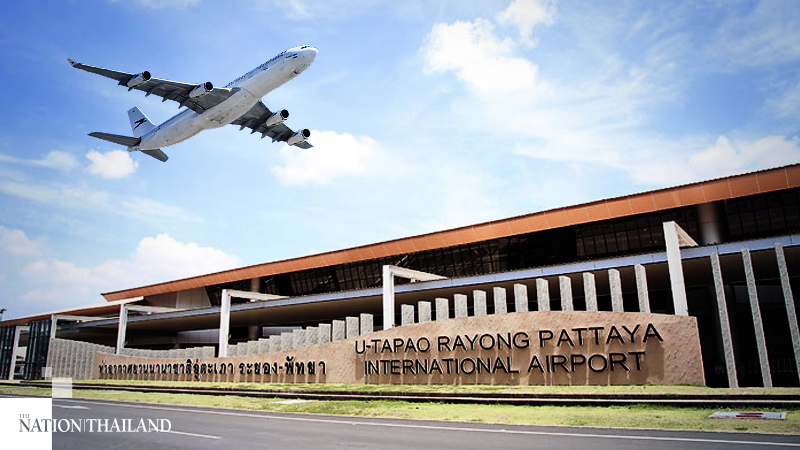
The BBS Joint Venture Group, which won the bid to develop U-Tapao Airport and the adjoining airport city, has set up U-Tapao International Aviation Company Limited (UIAC) to manage the project, Putthiphong Prasatthong-Osot, senior vice president of Bangkok Airways Plc, said.
The company has a registered capital of Bt4.5 billion.
Bangkok Airways is the largest shareholder in the company with a 45 per cent stake while BTS Group Holdings holds 35 per cent and Sino-Thai Engineering and Construction has 20 per cent.
“After the airport and airport city open in 2024, UIAC will increase the registered capital to Bt9 billion,” he added.
BBS has come up with a master plan for the four phases of developing the airport and surrounding areas, which is expected to eventually accommodate 60 million passengers.
Phase 1, which is expected to accommodate 15.9 million passengers, will include the construction of 60 parking bays, high-speed rail and traffic links to the airport, and a 157,000-square-metre terminal building with commercial areas and parking space. This phase is expected to be completed in 2024.
Phase 2 will cover the construction of a 107,000sqm second terminal building, automated people mover (APM) system and 16 additional parking bays. It is expected to be completed in 2030 and can accommodate 30 million passengers annually.
Phase 3 will cover the construction of a 107,000sqm extension part of the second terminal building and APM system, as well as 34 additional parking bays. It is expected to be completed in 2043 and can accommodate 45 million passengers annually.
The last phase will cover the construction of an 82,000sqm extension part of the second terminal building as well as the automatic check-in system and 18 additional parking bays. It is expected to be completed in 2055 and can accommodate 60 million passengers annually.
“The contract has already been signed but construction will not start until the Royal Thai Navy has delivered the lands, which should be done within a year and a half,” said Putthiphong. “BBS will handle the development of the areas for commercial purposes, whereas we may auction or rent some parts to third parties who are interested.”
Meanwhile, Surapong Laoha-Unya, executive director at BTS Group Holdings Plc, said that the investment budget for the first phase is estimated at Bt30 billion while the budget for the whole project is estimated at Bt200 billion, which will come from the joint venture and loans from financial institutions. “We expect construction to start within a year and the project will take around 10 years to break even. Once complete, U-Tapao will be an aviation hub of the Eastern region,” he added.
Pakpoom Srichamni, president and executive director at Sino-Thai Engineering & Construction Pcl, added: “The part where construction could be started immediately after the lands are delivered is the terminal system within the first phase. We are confident that there should be no problem regarding the lands as all lands belong to the Royal Thai Navy and they already have the required infrastructure.”
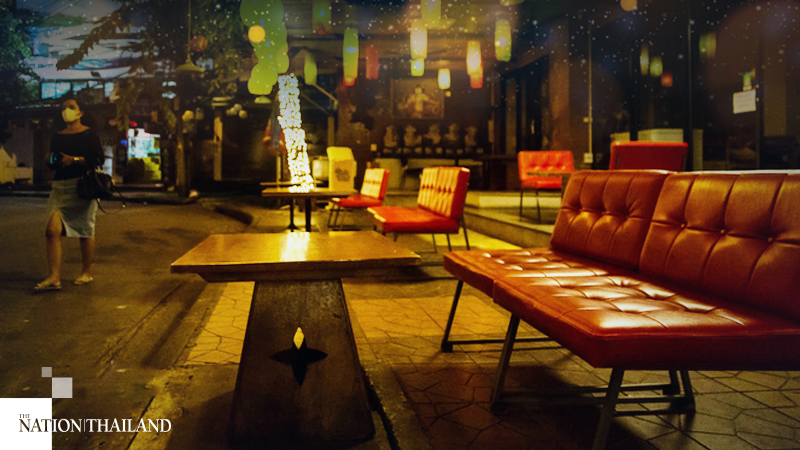
Some shops and venues along Khao San Road have started catering to night visitors again, but far from the bustle of the past the famous road is mostly quiet.
Khao San is set to fully reopen in August, after a clean-up and renovation during the Covid-19 lockdown.
Local authorities are currently selecting vendors for Khaosan Road in preparation for the return of foreign tourists once the flight ban is lifted, Bangkok deputy governor Sakoltee Phattiyakul said on Thursday (June 18).
“In the next phase, we will renovate Rambuttri and Tani roads to beautify the Banglamphu area,” he added. “On roads not frequented by vendors, we will plant more trees to offer shady spots for tourists,” Sakoltee added.
Some venues are not open yet, as operators think it is not worth their expense.
Khao San Road is expected to be energetic and buzzing with backpackers or visitors as in the good old days at the beginning of next year. Related agencies will also organise events to draw more visitors.
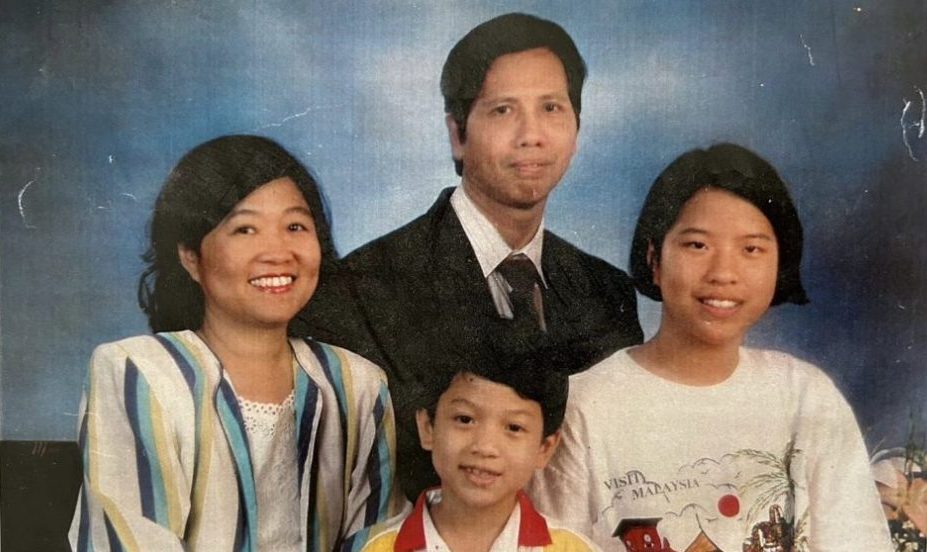
The former director of Khon Kaen Hospital has appealed to the Public Health Minister to take disciplinary action against the ministry’s top official for abuse of power and discrimination in a case involving him allegedly seeking 5 per cent commission from a pharmaceutical firm.
The hospital’s former director, Dr Charnchai Chanvorachaikul, said this week that he had met minister Anutin Charnvirakul, to seek action against permanent secretary Dr Sukhum Kanchanapimai.
During the investigation into the case of the hospital allegedly demanding commission from the firm, Charnchai was transferred to the Public Health Administration Division. Dr Kriangsak Watcharanukulkiat, previously the director of Prapokklao Hospital in Chanthaburi province, was brought in to replace Charnchai as Khon Kaen Hospital director.
Charnchai claimed that the hospital continued to collect commission from the pharmaceutical company from April to October 2018 after he was removed, but Sukhum did not investigate Kriangsak who worked in his place from October 5-24, 2018 in the same way he was placed under scrutiny.
A source from the ministry said that Anutin had received the appeal on Friday (June 19) and had asked the permanent secretary to clarify the matter within 15 days.
On the same day, Anutin also had a meeting with Charnchai. “After the talk with the minister, I am confident that I will be treated fairly,” said Charnchai. “The minister said I won’t be coming back to Khon Kaen Hospital until the investigation is complete. The permanent secretary has appointed Dr Phitakphol Boonyamalik, the ministry’s inspector, to chair the disciplinary committee for this incident and the verdict should come out soon.”
The southwest monsoon prevailing across the Andaman Sea and Thailand has weakened, the Thailand Meteorological Department said on Saturday (June 20).
Heavy rains will continue on the windward side of western Thailand including the Central, the East, and the South’s west coast. People in those risky areas should beware of the severe conditions that may cause flash floods, the department said.
The weather forecast for the next 24 hours is as follows:
Northern region: Mostly cloudy with thundershowers in 40 per cent of the areas; temperature lows of 24-26 degrees Celsius and highs of 31-34°C.
Northeastern region: Mostly cloudy with thundershowers in 30 per cent of the areas; temperature lows of 24-26°C and highs of 33-35°C.
Central region: Mostly cloudy with thundershowers in 30 per cent of the areas and isolated heavy rains; temperature lows of 24-26°C, highs of 34-35°C.
Eastern region: Cloudy with thundershowers in 40 per cent of the areas and isolated heavy rains; temperature lows of 24-27°C, highs of 33-34°C; waves a metre high and rising to two metres during thundershowers.
Southern region (east coast): Mostly cloudy with thundershowers in 40 per cent of the areas; temperature lows of 24-26°C, highs of 33-35°C; waves a metre high and rising 1-2 metres during thundershowers.
Southern region (west coast): Mostly cloudy with thundershowers in 60 per cent of the areas and isolated heavy rains; temperature lows of 24-25°C, highs of 31-34°C; waves a metre high and rising to two metres during thundershowers.
Bangkok and surrounding areas: Mostly cloudy with thundershowers in 30 per cent of the areas; temperature lows of 24-26°C, highs of 34-36°C.
Management of the country’s small water resources is being taken over by local administrative organisations, in a move by the Office of National Water Resource (ONWR) to promote efficiency.
ONWR secretary-general Somkiat Prajamwong explained that almost all of Thailand’s 142,234 small water sources outside irrigation areas (141,330) are still unsupervised, adding that 716 of these are reservoirs and 140,614 are natural water sources.
“Local administrative organisations and local water-related authorities will play an important role in small water source development,” he said. “This development will enable communities to access water sources and solve issues in each locality.”
He added that the National Water Resources Committee has established a subcommittee on driving small water source development.
“This subcommittee will be responsible for planning projects, coordinating with related authorities, monitoring projects, and reporting to the National Water Resources Committee,” he said.
“Meanwhile, we will promote local administrative organisations, especially Subdistrict Administrative Organisations, to work on water source development in each area.”




 Dr Charnchai Chanvorachaikul