Vaccine developed by Thai startup to be tested on humans in September
The government has said that a potential vaccine derived from plant protein, or subunit vaccine, which uses the same technology as Novavax, could be ready for production in a few weeks.
Deputy government spokesperson Ratchada Thanadirek said the factory was ready to produce the vaccine.
The vaccine has been developed by Baiya Phytopharm Co Ltd, a Thai startup company.
A subunit vaccine presents one or more antigens to the immune system without introducing pathogen particles, whole or otherwise.
The research team will send the factory form to the Food and Drug Administration to inspect the factory.
The vaccine is expected to begin production in the next few weeks and will undergo early human testing around September 2021 as planned.
The team will officially seek in August about 100 volunteers who are in good health, aged between 18-55 years and 65-75 years.
Once the vaccine passes the process successfully, it is expected that it can be produced for Thai people to use in the middle of 2022. People will receive two vaccinations, three weeks apart, and it will sell at around THB300-500 per dose.
Ideas on how you can keep your kids busy under lockdown
Covid-related restrictions may be hampering people’s movement, but they shouldn’t block imagination, a Chulalongkorn University lecturer said.
Asst Prof Dr Soontharee Taweetanalarp from Chula’s Faculty of Allied Health Sciences said that though children may be stuck at home with their parents, they can do so much to ensure the youngsters continue developing and growing.
Here are some suggestions on how parents can keep their children up to the age of four engaged:
“Ja-Aey” (Peekaboo) for children under one
Dr Soontharee recommends choosing toys that have interesting shapes, sounds or movements and those that can promote hand-eye coordination. If it is a book, it should be a cardboard picture book that opens easily to help develop fine motor skills. Even without toys, parents can play easy games like Peekaboo.
For children aged nine to 10 months, who have already started standing, parents can use a chair or a stroller as support to help them walk.
Moving along with one to two-year-old toddlers
Dr Soontharee recommends parents encourage their toddlers to exercise to build their muscles and physical strength. They should also help them boost their fine motor skills by getting them to draw or write with their dominant hand, shape playdough or hold a spoon. These activities will help enhance their hand-and-eye coordination, brain function and motor skills.
Playing and activities with family members are essential for toddlers at this age to develop their communication skills. Apart from reading aloud from picture storybooks, singing to rhythmic gestures also contributes to their development.
When children ask questions, parents should seize the opportunity to heighten their curiosity by answering their questions in a fun, engaging storytelling manner.
Energetic activities for two to three-year-olds
Children at this age are very restless. They are confident in their movement because their muscles are strong, and they can balance themselves a lot better. So, their toys should be energy-intensive, such as a tricycle, bicycle, a football for kicking, jump rope or a basketball for throwing.
Besides energetic play, allowing children of this age to draw and write on the wall or on large pieces of paper, and attach stickers at various places is also essential, as their finger and hand muscles require just as much stimulation as their imagination. Beadwork that requires precise eyes and fingers coordination is another great home activity that is suitable for them.
Role-playing for three to four-year-olds
Play-acting is appropriate for this age because it stimulates the child’s imagination through given roles. It can also help them practice their communication skills.
Jigsaw puzzles or Lego is also suitable for this age group because it helps them practice solving immediate problems and stimulates creativity. In addition, activities related to light and shadow, be it sunlight or torchlight, will also help strengthen science-related skills like observation, telling the distance, position of the object and size of the shadows.
Children at this age can do simple household chores and parents can get them involved in water plants, sorting out clothes before washing, hanging them up and putting them away later. Easy baking is also another suitable activity.
Workers looking to return to offices as homeworking fatigue grows: JLL survey
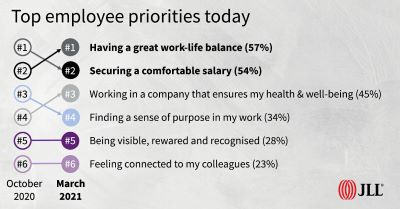
Real estate firm’s survey shows work-life balance is now number one priority for employees
Employees are seeking more balance in their work patterns, with the office re-emerging as the primary place of work post-pandemic, as home-working fatigue grows and productivity levels decline, according to JLL’s latest Worker Preference Barometer out on Tuesday.
A survey of 1,500 respondents across the Asia Pacific reveals that appetite for working in the office post-pandemic has grown to three days a week, compared to only two days in a similar survey JLL conducted last year.
The data indicates that 68 per cent of respondents wish to work in a hybrid model, having the flexibility to switch between the office, home and third-party locations versus 74 per cent in October 2020.
Six out of 10 believe they are more productive in the office than at home compared to 54 per cent a year ago.
“What we’re observing is that people crave the social interaction and professional work environment that the office provides,” JLL Asia Pacific CEO Anthony Couse said.
“One in two employees miss the face-to-face collaboration with colleagues, as well as access to efficient infrastructure, including good internet connectivity, ergonomic workstations and collaboration areas,” he said.
“We’re also seeing that working from home in the long run makes people feel stuck in an endless day of virtual meetings and work, without clear boundaries which enable them to disconnect properly. This has taken a social and mental toll on some,” Couse said.
JLL’s research shows that more than half of respondents feel overwhelmed by a huge mental load and are worried about job security, while the majority of young parents (60 per cent) said they have many responsibilities to cope with and are becoming disenchanted with work.
“Companies have to pay closer attention to the health and well-being of their employees now more than ever. With 90 per cent of the workforce wanting more flexibility in choosing where and when to work, work-life balance is now being ranked as the top priority, ahead of salary, and this should be considered by employers if they want to attract and retain talent,” Couse said.
Human-first offices are the best way to welcome employees back
According to the survey, 92 per cent of employees who are highly satisfied with their office environment strongly miss their offices. However, office satisfaction has also dropped significantly as employees now have renewed expectations of their office environment.
“Apart from work-life balance and salary, the pandemic has driven people to focus on what matters most in their work lives – a desire for spaces that create a strong sense of community and culture,” said Kamya Miglani, director of Work Dynamics Research at JLL Asia Pacific.
The survey reveals that employees are now looking at health and wellness programmes, sustainability, learning and development, and diversity and inclusion initiatives as some of the top factors that will attract them to join or stay with an employer.
“As we start to navigate out of the pandemic, companies have an opportunity to leverage their physical office spaces to become more human-centric in supporting the employees’ diverse, evolving needs and working styles,” Miglani added.
“The office is here to stay,” noted Michael Glancy, country head of JLL in Thailand. “As businesses start to implement their new real estate strategies, Bangkok is in a prime position to lead the new way of working on both the landlord and occupier sides in Southeast Asia,” he said.
“The abundance of high-specification new office supply coming to the market and a growing number of older buildings that will be upgraded to meet more sophisticated needs of occupiers are making it more viable for companies to create a better workplace and an exciting new way of working for their people,” Glancy added.
Thai expert says mixed-jab strategy safe, effective despite WHO warning
Thailand’s new mix-and-match vaccination policy is supported by data from human recipients, a leading Thai virologist said on Tuesday.
On Monday, the National Communicable Disease Committee announced Thailand will use AstraZeneca vaccine as the second dose for people who have received a first dose of Sinovac. The jabs will be spaced 3-4 weeks apart to increase protection against the Delta variant. The new policy will be rolled out first for front-line medical staff, 618 of whom were infected despite receiving two doses of Sinovac.
Professor Yong Poovorawan, Head of the Centre of Excellence in Clinical Virology at Chulalongkorn University, said a first shot of Sinovac followed by a second shot of AstraZeneca was found to offer almost as much protection as two AstraZeneca shots. Data also showed it boosts immunity more quickly as the second jab can be administered sooner, after six weeks rather than 12, he explained. “We can’t wait 12 weeks in this outbreak where the disease is spreading fast,” he said.
Using a dose of inactivated vaccine like Sinovac followed by a vector-virus vaccine like AstraZeneca produced a strong immunity-booster response in 1,200 volunteers, said Yong. No severe adverse effects were reported by the volunteers, whose data was collected via the Mor Prom app.
“In this study, we not only measured immunity but also did an inhibition test [to measure the antibody response to viral infection] and found excellent results, averaging 95 per cent and 99 per cent in multiple cases,” he said.
Yong spoke a day after the World Health Organisation (WHO)’s top scientist, Soumya Swaminathan, called the strategy a “dangerous trend”.
“We are in a bit of a data-free, evidence-free zone as far as mix-and-match,” she said.
Fauci says there should be more coronavirus vaccine mandates at the local level
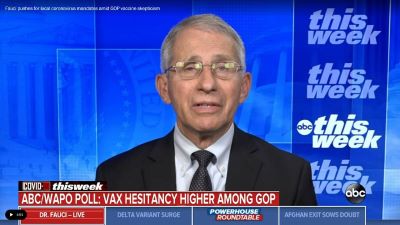
Anthony Fauci, the White Houses chief coronavirus medical adviser, said there should be more coronavirus vaccine requirements at the local level, though he has continued to insist that the federal government will not mandate them.
“Ihave been of this opinion, and I remain of that opinion, that I do believe at the local level, there should be more mandates. There really should be,” Fauci said Sunday on CNN’s “State of the Union,” when host Jake Tapper asked whether he thought it would be a good idea for businesses and schools to require coronavirus vaccinations.
“We’re talking about life-and-death situations,” Fauci added. “We’ve lost 600,000 Americans already, and we’re still losing more people. There have been 4 million deaths worldwide. This is serious business. So I am in favor of that.”
As he has in recent weeks, Fauci, the nation’s top infectious-disease expert, expressed concern about vaccine hesitancy, even as the coronavirus’s more contagious delta variant becomes dominant in the United States. Fauci also alluded to recent polling that shows such vaccine hesitancy has been driven by Republicans, which he suggested Sunday was because of “ideological rigidity.”
“Why are we having red states and places in the South that are very highly ideological in one way not wanting to get vaccinations? Vaccinations have nothing to do with politics,” Fauci said. “It’s a public-health issue. It doesn’t matter who you are. The virus doesn’t know whether you’re a Democrat, a Republican or an independent . . . And yet there is that divide of people wanting to get vaccinated and not wanting to get vaccinated, which is really unfortunate, because it’s losing lives.”
Fauci has in the past pointed to organizations and “local entities” that would probably require proof of vaccination, including cruise lines and universities.
“So, notwithstanding guidelines from the [Centers of Disease Control and Prevention], there is going to be a situation where there are going to be requirements,” he said in a conversation with The Washington Post in May. “It’s not going to be centrally mandated from the federal government, but almost certainly, individual organizations are going to want to require proof of vaccination before they allow people to come into their establishment without having to wear a mask.”
In recent weeks, some GOP governors have been imploring residents anew to get vaccinated, calling it “a race” against the fast-spreading delta variant. One of those governors, Arkansas’s Asa Hutchison, said Sunday that he plans to travel to six cities in the state next week to promote the vaccines, because the uptake rate there remains lower than the national average.
“There shouldn’t be a partisan divide, first of all,” Hutchinson said on ABC News’s “This Week” on Sunday. “In the Southern states and some rural states, you have that more conservative approach, skepticism about government. And we just have to answer it just like we have all through history, that you overcome skepticism and mistrust by truth. You overcome resistance and obstinance with saying it’s important for our community, and it’s important for the health of our state and nation.”
Still, scenes from the Conservative Political Action Conference in Dallas this weekend indicated that overcoming some Republicans’ refusal to get vaccinated may be a tall hurdle. At one CPAC panel Saturday, Alex Berenson, a former New York Times reporter who has been spreading anti-vaccination and other misinformation about covid on Twitter, falsely proclaimed that masks “do nothing, nothing” to prevent the spread of the coronavirus.
He also scoffed onstage at the government “hoping that they could sort of sucker 90% of the population into getting vaccinated.”
“And it isn’t happening, right?” Berenson asked the audience. Many in the crowd cheered in response.
Showed a clip of that exchange Sunday, Fauci said it was “horrifying.”
“I mean, they are cheering about someone saying that it’s a good thing for people not to try and save their lives,” he told Tapper. “I mean, if you just unpack that for a second, Jake, it’s almost frightening to say, ‘Hey, guess what, we don’t want you to do something to save your life.’ Yay! Everybody starts screaming and clapping. I just don’t get that.”
Rep. Adam Kinzinger, R-Ill., also had strong words Sunday for his Republican colleagues who have been sowing fears about the coronavirus vaccines, including Rep. Marjorie Taylor Greene, R-Ga., comparing those going door to door to encourage people to get vaccinated to “medical brown shirts” from the Nazi era.
“It’s insanity. It’s absolute insanity,” Kinzinger said on CNN’s “State of the Union.” “At no point was anybody saying they’re going to break down your door and jam a vaccine in your arm despite your protests.”
Kinzinger called on House Minority Leader Kevin McCarthy, R-Calif., and every other leader in the GOP to “call out these garbage politicians” playing on vaccine fears “for their own selfish gain,” saying such rhetoric would end in Americans dying if it did not stop.
“This plane is going to crash into the ground,” he said. “Listen, if you are a Republican voter, do not listen to people like Marjorie Taylor Greene. The vaccine is safe. Covid is real. Get vaccinated.”
Mixing and matching inactivated and viral-vector vaccines generates higher immunity than two doses of the same vaccine, according to Chulalongkorn University virologist Dr Yong Poovorawan.
“Astudy at [Chula’s] Centre of Excellence in Clinical Virology found that people who received Sinovac vaccine in their first jab and AstraZeneca in their second jab generated immunity eight times higher than those who received two Sinovac jabs … and slightly higher than those who received two AstraZeneca jabs,” Dr Yong explained in a Facebook post on Wednesday.
Thailand is currently using two inactivated vaccines, Sinovac and Sinopharm from China, plus the viral vector AstraZeneca vaccine. The Cabinet on Tuesday approved the purchase of 20 million mRNA vaccine doses from Pfizer, with delivery expected by October this year.
“Also, taking both inactivated and viral vector vaccines will give high immunity within 6-8 weeks compared to 12-14 weeks with two viral vector vaccines,” Yong said.
Results of the centre’s study will be revealed by the end of this month, he added.
Queries about access to mRNA jabs as cases soar in Thailand
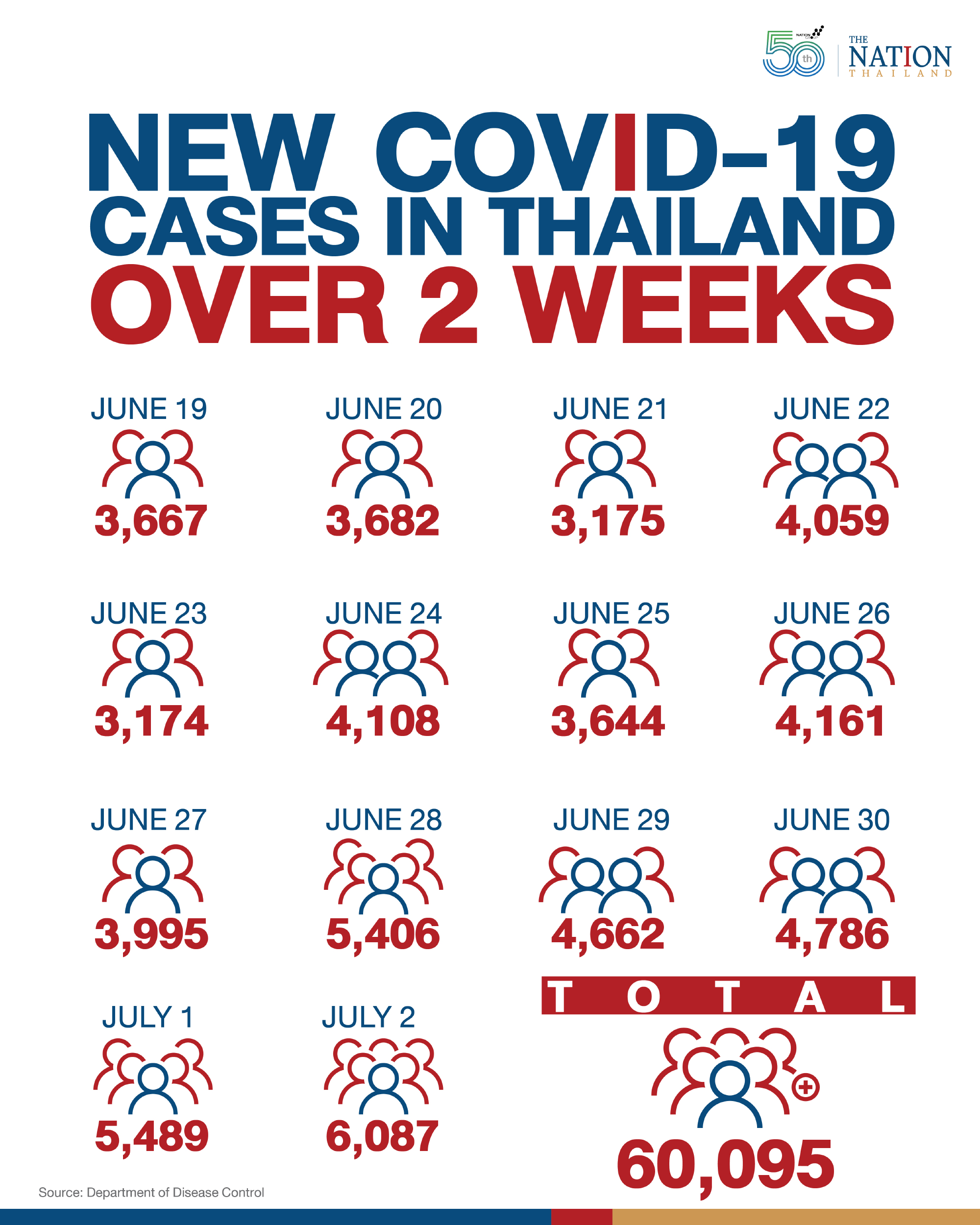
As many as 60,095 Covid-19 cases have been confirmed in Thailand over the past two weeks, a report from the Department of Disease Control said on Friday.
With cases soaring at this rate, experts believe the country may be hit by a fourth wave soon if the Delta variant, which was first detected in India, becomes more prevalent.
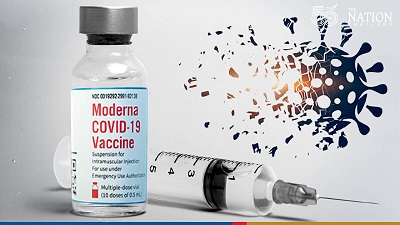
The unprecedented increase in daily numbers has also sparked questions as to when mRNA vaccines that can deal with the different variants, like Moderna, will arrive in Thailand.
Meanwhile, public health agencies are trying to get as many people vaccinated as possible in a bid to contain the spread and build herd immunity.
Queries about access to mRNA jabs as cases soar in Thailand
AstraZeneca provides immunity for at least a year after single dose: UK study
A third dose of the Vaxzevria vaccine, or AstraZeneca, also “results in higher neutralising activity against the Alpha, Beta and Delta variants”
Asub-analysis from the Oxford-led COV001 and COV002 trials with Vaxzevria (or AstraZeneca) has shown induced strong immune responses following either a prolonged second dose interval of up to 45 weeks or after a third booster dose, according to University of Oxford results published on The Lancet website.
In Thailand, the UK and other countries, Vaxzevria is known as AstraZeneca.
“An extended interval between the first and second dose of Vaxzevria of up to 45 weeks resulted in up to an 18-fold increase in antibody response, measured 28 days after the second dose,” a press release said detailing the results.
“With a 45-week interval between the first and second dose, antibody titres were four times higher than with a 12-week interval, showing that a longer interval is not detrimental but can derive stronger immunity.
“In addition, a third dose of Vaxzevria given at least 6 months after a second dose boosted antibody levels six fold and maintained T-cell response. A third dose also resulted in higher neutralising activity against the Alpha, Beta and Delta variants,” the trials reportedly showed.
Both the late second dose and the third dose of Vaxzevria were “less reactogenic” than the first dose.
“This should come as reassuring news to countries with lower supplies of the vaccine, which may be concerned about delays in providing second doses to their populations,” said Prof Sir Andrew J Pollard, chief investigator and director of the Oxford Vaccine Group.
“There is an excellent response to the second dose, even after a 10-month delay from the first,” he added.
“Demonstrating our vaccine generates a robust and durable immune response is important for providing confidence in longer-term protection,” said Sir Mene Pangalos, BioPharmaceuticals R&D executive vice president.
The analysis included volunteers aged 18 to 55 years who were enrolled in the COV001 and COV002 trials and had received either a single dose or two doses of AstraZeneca.
Vaxzevria, formerly AZD1222, was co-invented by the University of Oxford and its spin-out company, Vaccitech. It uses a replication-deficient chimpanzee viral vector based on a weakened version of a common cold virus (adenovirus) that causes infections in chimpanzees and contains the genetic material of the Sars-CoV-2 virus spike protein. After vaccination, the surface spike protein is produced, priming the immune system to attack the Sars-CoV-2 virus if it later infects the body.
The vaccine has been granted a conditional marketing authorisation or emergency use in more than 80 countries across six continents as a two-dose regimen given four to 12 weeks apart for adults aged 18 years and over. More than 600 million doses of AstraZeneca have been supplied to 170 countries worldwide, including more than 100 countries through the Covax Facility.
COV001
COV001 is a single-blinded, randomised, controlled Phase I/II trial to determine safety, immunogenicity and efficacy of the Covid-19 vaccine candidate AZD1222 in up to 1,077 healthy adults in five trial centres in the United Kingdom. Participants aged 18-55 years received either a single dose or two-doses of AZD1222 at 5×10¹⁰ viral particles or a single dose of a meningococcal conjugate vaccine MenACWY as a control vaccine.
Participants had blood samples drawn and clinical assessments for safety as well as immunogenicity at day 0, 28 and will also be followed on day 184 and 364. In addition, participants enrolled in the phase 1 component of the study and in the two dose groups, had visits at 3, 7, 14 and 28 days after each vaccination.
COV002
COV002 is a single-blinded, multi-centre, randomised, controlled Phase II/III trial assessing the safety, efficacy and immunogenicity of AZD1222 in 12,390 participants in the UK. Trial participants were aged 18 years or over, healthy or have medically stable chronic diseases and are at increased risk of being exposed to the Sars-CoV-2 virus. Participants received one or two intramuscular doses of a half dose (~2.5 x10¹⁰ viral particles) or full dose (~5×10¹⁰ viral particles) of AZD1222 or comparator, meningococcal vaccine MenACWY.
Participants had blood samples drawn and clinical assessments for safety as well as immunogenicity at multiple time points up to one year post-vaccination. Suspected cases with compatible symptoms were tested for virological confirmation by Covid-19 PCR test. In addition, weekly swabbing is done for detection of infection and assessment of vaccine efficacy against infection.
Moderna says vaccine works against delta variant, as WHO warns of global spread
The coronavirus vaccine developed by U.S. biotech firm Moderna is effective against the highly contagious delta variant, the company said in a release Tuesday, offering some hope even as the World Health Organization warned that the variant has now spread to at least 96 countries.
Moderna said that blood samples from fully vaccinated individuals produced antibodies against multiple variants and that researchers measured only a “modest reduction in neutralizing titers” against the particularly virulent delta, which was first identified in India.
“As we seek to defeat the pandemic, it is imperative that we are proactive as the virus evolves,” Moderna chief executive Stéphane Bancel said in a statement. “These new data are encouraging and reinforce our belief that the Moderna COVID-19 Vaccine should remain protective against newly detected variants.”
The company, whose vaccine uses messenger RNA technology and requires two doses, submitted the data to the bioRxiv preprint server ahead of peer review. Moderna last month also signed an agreement to provide the United Nations-backed Covax initiative, which seeks the equitable distribution of coronavirus vaccines worldwide, with 500 million doses beginning later this year.
As much of the world still awaits coronavirus vaccine supply, the delta variant is tearing through unvaccinated populations everywhere from Britain to the United States to South Africa.
It has reached 96 countries, the WHO said in a weekly epidemiological update Tuesday, a number it warned was probably an underestimate as most nations lack the genome-sequencing capacity needed to identify virus variants.
According to the WHO, delta is 55 percent more transmissible than the virulent alpha variant first identified in Britain last year, a version that spurred infection waves in multiple countries. Now, the delta variant “is expected to rapidly outcompete other variants and become the dominant variant over the coming months,” the WHO said.
On Wednesday, France’s leading government scientific adviser said in a radio interview that the country was likely to suffer a fourth wave of infections caused by the delta variant, which now accounts for at least 20 percent of new cases there.
But “it will be much more moderate than the previous three waves because the level of vaccinations is different compared to before,” Jean-François Delfraissy told French public radio, according to a Reuters translation of his remarks.
More than 63 percent of adults in France have received at least one dose of a coronavirus vaccine, the French Health Ministry says, with 41 percent fully inoculated.
Some countries with similarly high vaccination rates, including Britain and Israel, are now grappling with new outbreaks of the delta variant but say that widespread immunization has helped mitigate some of the pathogen’s worst effects.
In places such as Africa, however, where about 1 percent of the population is fully vaccinated, the variant is helping give rise to new infections and deaths. According to the WHO, new coronavirus cases in the African region increased by 33 percent over the past week, with covid-19 deaths jumping 42 percent.
In Russia, where vaccine uptake remains stubbornly low, authorities on Wednesday reported a record number of covid-related deaths for the second straight day, following an unprecedented surge in new cases that officials have blamed on the delta variant.
“The Delta variant will continue to complicate timelines for reaching a less disruptive new normal in countries with high vaccination rates as well as those with low rates,” said Scott Rosenstein, special global health adviser at the New York-based political risk firm Eurasia Group.
For lower-income nations with sluggish inoculation campaigns, Rosenstein said in a briefing note, “the risks of overwhelmed healthcare systems are the highest they have been since the beginning of the pandemic.”
Cloth masks will not protect you from Covid, doctor warns
An infectious disease specialist has warned that people should wear surgical masks, as cloth masks offer less protection against Covid-19.
In a Facebook post on Sunday, Dr Thanaphan Phibunbannakit from Bangkok’s Phramongkutklao Hospital urged the government to procure surgical masks to combat the current outbreak. On Tuesday, Thailand logged 4,662 new cases and 36 fatalities.
Dr Thanaphan warned that people waiting for their second jab or an alternative vaccine were at risk of Covid-19 infection. They were also in danger of neglecting basic hygiene practices that protect against the virus, he added.
“We are so worried about vaccine brands or virus mutations that we forget the principle that we will not be infected with Covid-19 if we do not come into contact with it,” he said.
He pointed out that while cloth masks can prevent the spread of Covid-19, they cannot protect wearers from being infected. Cloth masks do not have an aluminium strip to keep the mask tightly fitted, so they can drop down when wearers are talking, he added.
“Therefore, the government must procure surgical masks to give away or sell at cheap prices. Meanwhile, it must publicise how to wear face masks properly,” he said.
He added that a face mask can protect people from all Covid-19 variants, but only if it is worn properly.






 Queries about access to mRNA jabs as cases soar in Thailand

 SootinClaimon.Com