Reopening Thailand to tourists after the arrival of Covid-19 vaccines will only put the country in further danger, Thira Woratanarat, a lecturer from Chulalongkorn University’s Faculty of Medicine, warned in a Facebook post on Wednesday.
He said Covid-19 will continue spreading if the vaccine cannot stop asymptomatic people from transmitting the virus and if people lower their guard.
The lecturer said it was necessary to study asymptomatic infections further as the information available so far is insufficient.
“Things are no safe yet, so people should strictly adhere to preventive measures and monitor their health. See the doctor immediately if you have any symptoms,” Thira said.
Experts from the National Institute of Metrology (Thailand) (NIMT) showed up to check the temperature inside the Department of Disease Control’s warehouse in Nonthaburi on Tuesday.
The warehouse is being prepared to store the first lot of 200,000 doses of Sinovac vaccine, which will arrive in Thailand at 8am on Wednesday.
“The vaccines need to be stored at a temperature of 2 to 8 degrees Celsius,” NIMT said.
NIMT experts used temperature sensors and recorders in line with the World Health Organisation’s measurement procedures.
Chulalongkorn University’s expert virologist Dr Yong Poovorawan on Tuesday explained why the Sinovac Covid-19 vaccine is deemed to only be effective on people aged between 18 and 59.
In a Facebook post, he said information on whether the vaccine is effective on people below 18 and over 60 is insufficient, adding that only 4 per cent of the people participating in clinical trials of the vaccine were above 60.
“As soon as there is sufficient information, Sinovac will be provided to the elderly,” he said.
He added that people above the age of 60 face the risk of severe infection, citing the case of Dr Panya Hanphanitphan, a doctor in Mahasarakham province who succumbed to complications from the virus. Dr Yong added that medical personnel must evaluate the vaccine thoroughly to ensure it delivers maximum benefits to the elderly.
“I believe more information on the vaccine should be available soon, making it possible for everyone to be vaccinated,” he added.
Thailand has bought 2 million doses of the Sinovac vaccine from China and the first lot of 200,000 doses is expected to be delivered on Wednesday.
By Syndication Washington Post, Bloomberg · Naomi Kresge, Jason Gale
The Pfizer Inc. and BioNTech SE coronavirus vaccine appeared to stop the vast majority of recipients in Israel becoming infected, providing the first real-world indication that the immunization will curb transmission of the coronavirus.
The vaccine, which is being rolled out in a national immunization program that began Dec. 20, was 89.4% effective at preventing laboratory-confirmed infections, according to a copy of a draft publication that was posted on Twitter and confirmed by a person familiar with the work. The companies worked with Israel’s Health Ministry on the preliminary observational analysis, which wasn’t peer-reviewed. Some scientists disputed its accuracy.
The results, also reported in Der Spiegel, are the latest in a series of positive data to emerge out of Israel, which has given more coronavirus vaccines per capita than anywhere else in the world. Almost half of the population has had at least one dose of vaccine. Separately, Israeli authorities on Saturday said the Pfizer-BioNTech shot was 99% effective at preventing deaths from the virus.
If confirmed, the early results on lab-tested infections are encouraging because they indicate the vaccine may also prevent asymptomatic carriers from spreading the virus that causes covid-19. That’s not been clear because the clinical trials that tested the safety and efficacy of vaccines focused on the ability to stop symptomatic infections.
“These are the data we need to see to estimate the potential for achieving herd immunity with vaccines,” said Raina MacIntyre, professor of biosecurity at the University of New South Wales in Sydney, in an email Monday. “However, we do need to be able to see the data published in a peer-reviewed journal and to be able to scrutinize the data in detail.”
Pfizer and BioNTech said they are working on a real-world analysis of data from Israel, which will be shared as soon as it’s complete. Spokespeople declined to comment on unpublished data.
The study wasn’t designed to accurately measure a reduction in transmission of SARS-CoV-2 because it used national testing data without accounting for differences in testing rates between vaccinated and unvaccinated people, said Zoe McLaren, an associate professor in the School of Public Policy at the University of Maryland Baltimore County.
“The main result overstates the reduction in transmission from the Pfizer vaccine,” McLaren said in an email.
The study compares the number of reported cases between those who had been fully vaccinated and those who hadn’t been vaccinated, but vaccinated people are less likely to get tested so the data will undercount cases, especially asymptomatic cases, in this group, she said.
“That means that the true reduction in transmission is lower than the estimate of 89.4%,” McLaren said. “How much lower? We need more evidence to know for sure. But I expect that, once we account for the bias, we’ll still find that this vaccine does reduce transmission. And that would be very good news.”
About 80% of SARS-CoV-2 cases in Israel during the time period of the study, from Jan. 17 to Feb. 6, were caused by the more transmissible strain first identified in the U.K. Israel’s vaccination drive began just before the so-called B.1.1.7 variant emerged, fueling infections and leading to a third lockdown on Jan. 8.
Through Feb. 6, about 27% of people aged 15 and older in Israel were fully vaccinated, with the Pfizer-BioNTech shot the only vaccine available in the country at the time. People were considered fully vaccinated and included in the analysis if the data collected were more than seven days after they received their second dose.
Based on SARS-CoV-2’s infectiousness, a vaccine that is 89% effective at preventing infection is likely to be effective at eliminating covid-19 in a population in which high vaccination coverage is achieved, said Helen Petousis-Harris, a vaccinologist at the University of Auckland.
Elimination of covid-19 will depend on potential “reservoirs” of SARS-CoV-2 in animals, genetic changes in the virus that might enable it to escape vaccine-induced immunity, and the ability to stop transmission across the world, said Petousis-Harris, who is co-leader of the Global Vaccine Data Network, a multinational group that collaborates on vaccine safety studies.
WASHINGTON – Airports have taken significant steps to reduce the spread of the novel coronavirus, but challenges remain, including upgrading and enhancing ventilation systems and adjusting operations to accommodate more people safely once demand for air travel returns, Harvard University researchers said.
The report Thursday by a team at the T.H. Chan School of Public Health focused on the curb-to-curb portion of the journey, assessing the risks travelers might face from the time they arrive at the airport until they land at their destination and claim their bags.
It is part of a growing amount of research, some of it funded by the aviation industry, that airlines hope will convince the public that air travel is safe as long as proper precautions are taken.
Federal health officials still continue to urge people to avoid travel. Researchers said even though their report found airports and airlines have taken steps to reduce the risks that someone will catch the coronavirus, there are no guarantees.
“To be clear, we are not saying that it is safe to fly,” said Leonard Marcus, founding co-director of the National Preparedness Leadership Initiative, a joint program of the Harvard T.H. Chan School of Public Health and the Harvard Kennedy School of Government, during a briefing with reporters. “As efforts to overcome the covid-19 crisis continue, there are risks to any activity in public spaces.”
However, he said, for those who do need to travel, measures taken by airports “do significantly reduce the risk of contracting the virus.”
The report is the second of two done as part of the Aviation Public Health Initiative. The first, released last fall, examined the risk of disease transmission aboard aircraft. They are funded by a consortium of aviation groups, led by Airlines for America, an airline trade group. Despite the connection, Marcus said researchers were given “independence in conducting our research and reaching our findings.”
In both, researchers emphasized the importance of wearing masks at all times.
“Given recent reports of SARS-CoV-2 variants, comprehensive compliance with face mask requirements remains a first-order measure to mitigate transmission, even as population vaccinations progress,” the report concluded.
Researchers suggested that airports consider limiting eating and drinking in spaces where large numbers of travelers gather to reduce the chance of infection.
“If passengers unmask to eat and drink in crowded areas, virus-emission rates could increase,” researchers said.
If such a ban is not possible, steps should be taken to improve air circulation, the study said.
As part of their work, the Harvard team surveyed 25 airports of various sizes and performed their own modeling of air quality in those settings, taking into account the most current research on how the virus is transmitted and how it can best be mitigated.
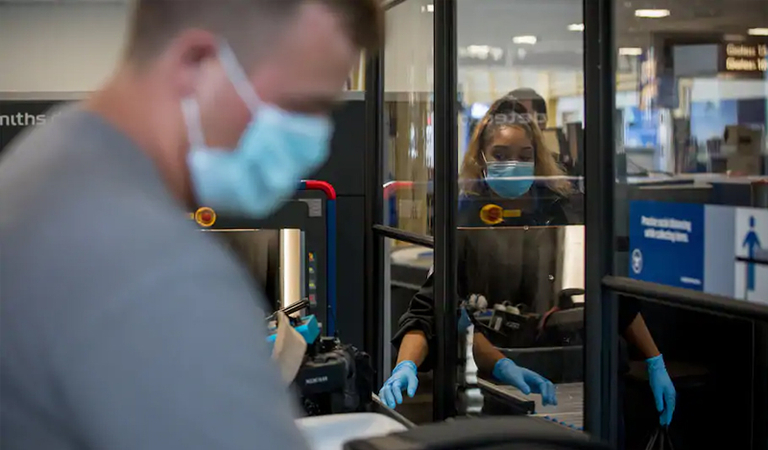
They found airports already have put into place many of the strategies recommended by public health experts, including installing clear barriers to reduce person-to-person contact at ticket counters, retail and restaurant counters and security checkpoints, as well as more frequently cleaning spaces where larger numbers of travelers congregate.
“Airports have made concerted efforts to reduce the risk of covid-19 transmission,” said Wendy Purcell, a research associate in the department of environmental health at the Harvard Chan School.
She cited one airport that estimated it had installed two miles of clear physical barriers, 500 hand sanitizing stations and 5,000 floor decals to remind travelers of the importance of social distancing. Others, in conjunction with airlines, have adopted technology that enables people to check in for a flight, check their luggage and obtain a boarding pass with almost no human contact, she said.
Yet even as airports have taken aggressive steps to keep travelers safe, they are battling a virus that continues to mutate in ways that make it more contagious and possibly more deadly, researchers said.
The study’s release comes as public health officials are weighing additional strategies to combat concerns about new variants that have begun circulating in the United States, including requiring those who fly domestically to be tested before they board their flights. The travel industry strongly opposes any domestic testing requirement.
International travelers already are required to show proof of a negative coronavirus test before they board U.S.-bound flights under a mandate that took effect last month. Those who refuse to be tested or who test positive aren’t permitted to travel.
The Harvard team declined to comment on whether it thought domestic travelers should be tested before boarding flights. But in the report, it cited testing as key strategy for reducing the spread of infection.
“Viral testing is an important public health screening mechanism that can quickly and efficiently identify those with infections and stop them from undergoing activities that could expose others, including potential travel,” the report said.
Another challenge airports face is upgrading their ventilation systems. Unlike airplanes, which are equipped with sophisticated air filtration systems, most airport systems are not. The study recommended that airports work with qualified HVAC engineers to determine how they can augment current systems, particularly in areas where travelers tend to congregate.
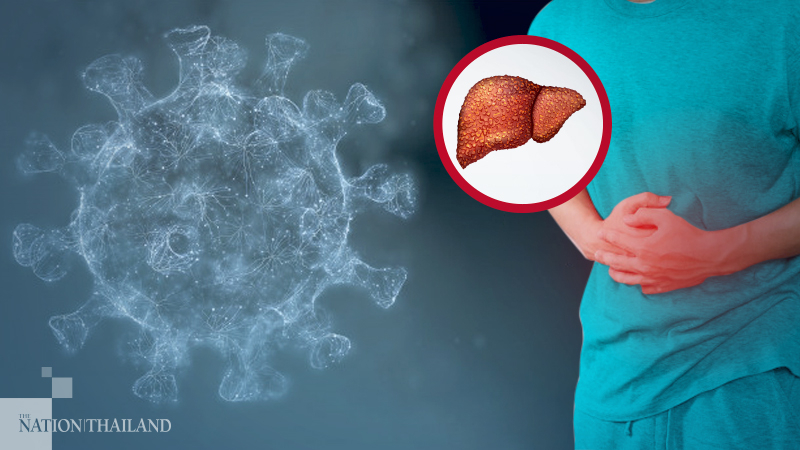
A global survey assessing the impact of Covid-19 on liver cancer has revealed delays in screening, diagnosis and treatment of the disease, with experts issuing stark warnings on liver cancer survival rates.
Thailand has among the highest incidence of liver cancer in the world, attributed to parasites in the popular raw-fish dish of koi pla.
The “Liver Cancer Outcomes in Covid-19 (CERO-19) Survey” led by the Liver Clinic at Hospital Clinic of Barcelona, CIBEREH, and the Ospedale Maggiore Policlinico of Milan included 76 high-volume cancer treatment centres which participated during the first wave of the Covid-19 pandemic, finding that 87 per cent of centres modified clinical practice for liver cancer patients. These centres spanned Europe, North America, South America, Africa, and Asia.
Globally, around 800,000 people are diagnosed with liver cancer every year, accounting for 700,000 deaths.
The findings, presented on Thursday at the European Association for the Study of the Liver (EASL)’s Digital Liver Cancer Summit 2021, revealed a catalogue of interruptions to diagnosis and care. A total of 40.8 per cent of centres said they had changed diagnostic procedures, 80.9 per cent had altered screening programmes, and 39.5 per cent had modified imaging studies.
“The modifications in liver cancer management due to this crisis raise the possibility of more patients being diagnosed with a later stage of cancer,” said Dr Sergio Muñoz-Martínez, lead study author.
Previous studies have shown that poorer outcomes are associated with waiting or delaying treatment by two months.
Thailand needs to do more work if it wants to become a regional leader in personalised healthcare, according to a new study.
The Asia-Pacific Personalised Health Index is a data-driven policy tool created by multinational healthcare giant Roche to measure the readiness of health systems to adopt personalised healthcare – “enabling the right care to be tailored to the right person at the right time”.
The index, which is part of Roche’s FutureProofing Healthcare initiative led by 15 experts across Asia-Pacific, should be of interest to policymakers currently working to transform Thailand into a global medical hub.
Topping the index ranking of 11 countries is Singapore’s health system, which scored highest on 27 indicators of personalised health. Thailand was ranked 7th, ahead of Malaysia, China, India and Indonesia. The index also covers Australia, South Korea, Taiwan and New Zealand.
The company said it uses public data supplemented with input from health authorities to offer a picture of local, national, and regional strengths and needs. The aim, said Roche, was to enable data-driven decision-making for future health systems that are fit for purpose.
Singapore scored top for its high levels of digital maturity, comprehensive national strategies, strong digital infrastructure and innovation capacity. Taiwan (2nd), Japan (3rd) and Australia (4th) also performed well in overall readiness, said Roche. However, Thailand and other lower-scoring territories faced challenges of urban-rural disparities and building digital infrastructure, said the company.
Table: Overall Asia Pacific Personalised Health Index 2020 performance
“Personalised healthcare has the potential to improve the lives of millions of people across Asia-Pacific,” said Jeremy Lim, director of Global Health and associate prof at the National University of Singapore, who helped develop the index.
Hailing the creation of digital health solutions like tele-medicine during the Covid-19 crisis, he said more work was needed across the region to realise these benefits.
“The Personalised Health Index builds a clearer picture of the current readiness of health systems and enables countries to build on their strengths, identify key areas of opportunity for improvement and identify best practice from other countries on individual measures. It helps jump start conversations about what action is needed today to shape resilient, personalised and sustainable health systems that work better for future generations,” said Lim.
A single-shot coronavirus vaccine from pharmaceutical giant Johnson & Johnson was 66% effective at preventing moderate and severe illness in a massive global trial, findings released Friday show. But its performance was stronger in the United States and weaker in South Africa, where a worrisome coronavirus variant now dominates – a complicated result that reflects the evolution of the pandemic.
The results, reported in a news release, put a third vaccine on the horizon in the United States – one with logistical advantages that could simplify distribution and expand access to shots in the United States and worldwide.
Johnson & Johnson is expected to apply for emergency use authorization from the Food and Drug Administration next week. If the review follows the path of two earlier vaccine candidates, the shot could be authorized and available to the public by late February or early March.
The company has a $1.5 billion agreement with the federal government to support vaccine development and deliver 100 million doses to the United States by the end of June. But manufacturing lagged projected milestones earlier this month, and company officials declined to provide additional information on the pace of doses likely to be available month by month.
A communication challenge lies ahead for Johnson & Johnson and public health officials. Though less effective in its 44,000-person trial than 90-percent-plus effective vaccines made by Pfizer-BioNTech and Moderna, the Johnson & Johnson shot was tested at the height of the pandemic, in areas of the world where the virus had changed in ways that can elude parts of the immune response.
The vaccine was 72% effective at protecting against moderate to severe illness in the United States, but it was 66% effective in Latin America and 57% effective in South Africa, where concerning variants have taken root. It was 85% effective overall at preventing severe disease.
In the clinical trial, all cases of covid-related hospitalization and death – the outcomes that most people would like to avoid – were among participants who had received placebo shots.
The logistical advantages of the Johnson & Johnson vaccine should not be underestimated, experts said, particularly at a time when the pursuit of broad immunity to the virus through vaccines has assumed new urgency with the emergence of variants, sparking concerns that mutant viruses might escape vaccines, treatments and naturally acquired immunity.
“Vaccinating fast is going to be the message now, and vaccinating fast to reduce transmission and reduce the chance you have additional mutations,” said Paul Stoffels, chief scientific officer for Johnson & Johnson. “The crisis is now hospitalization and death.”
The one-shot vaccine could be a “game changer,” according to Jonathan Temte, a vaccine expert at the University of Wisconsin School of Medicine and Public Health, because it can be stored for months at refrigerator temperature instead of the ultracold or frozen temperatures that have complicated the rollout of other coronavirus vaccines. The single shot could streamline the vaccination effort, freeing mass vaccination clinics from the need to recall people for boosters and the logistical complications accompanying that.
“Back in July and August, I was hoping we would see a vaccine that was 60% effective – in my mind, that would be great. And now we have had two that have hit the ball out of the park and set expectations spectacularly high, and that’s not fair because we don’t need a home run all the times we’re up to bat,” Temte said. A solution to the pandemic, he said, isn’t a perfectly effective vaccine, but a vaccination campaign that can reach large swaths of the population as quickly as possible – comparing it to a baseball team that wins with steady base hits and bunts, not just home runs.
The FDA said a vaccine must be at least 50% effective to be authorized, a bar the Johnson & Johnson shot appears to have cleared, although the data will undergo careful and more detailed review by career FDA scientists and an outside panel of experts. Safety data will also be carefully reviewed, although the company said the shot had tolerable side effects, including fever and no serious safety concerns. There were no cases of anaphylaxis.
If the Johnson & Johnson shot is authorized, it would diversify the supply beyond two companies, something that many experts have hoped for in case of manufacturing delays or production lines going down because of contamination or other unexpected events. Temte recalled a shortage of the Hib vaccine given to children starting in late 2007, when problems with one manufacturer took production offline for more than a year, leaving the United States reliant on a single company.
Johnson & Johnson will manufacture its vaccine in the Netherlands and through partnerships with firms such as Emergent BioSolutions, a contract development and manufacturing company headquartered in Gaithersburg, Md.
The new vaccine uses a different technology than the two authorized vaccines in the United States, broadening the suite of tools to block the virus. The Johnson & Johnson vaccine employs a harmless cold virus to deliver a gene that carries the blueprint for the spiky protein found on the surface of the coronavirus. The virus infects cells, which then follow the genetic instructions to construct a replica of the coronavirus spike.
In contrast, the Pfizer and Moderna vaccines use a strip of genetic material called messenger RNA to instruct cells to build the spiky protein found on the surface of the coronavirus.
In both cases, the immune system learns to recognize the real virus by mustering an immune response to the spike.
The vaccine technology was able to move quickly into trials because it was preceded by decades of research.
In the early days of gene therapy, scientists hoped to use viruses to deliver good copies of genes that were missing or malfunctioning in people with diseases such as sickle cell anemia or cystic fibrosis. But the harmless cold virus they were experimenting with, an adenovirus, presented a major problem: It triggered an immune response.
Hildegund C.J. Ertl, an immune system expert and vaccine scientist at the Wistar Institute, said that when a scientific colleague working on gene therapy asked for her expertise, she told him, “Forget about gene therapy, what you have is a vaccine.”
Scientists began to explore those cold viruses as a vaccine technology, particularly against HIV. In the early 2000s, when physician-scientist Dan Barouch set up his lab at Beth Israel Deaconess Medical Center in Boston, he aimed to invent an HIV vaccine, immersing himself in a corner of science that he describes as “an esoteric, slightly geeky area of research, that most people didn’t really care about too much.” In 2003, he partnered with a Dutch biotech company called Crucell and for two months lived in the Holiday Inn in Leiden in the Netherlands, learning how to grow and purify adenoviruses.
Barouch’s lab selected one particular adenovirus, Ad26, to deliver the payload of genetic material that he hoped would teach the immune system to block HIV. That HIV vaccine, more than 15 years in the making, is now in clinical trials run by Janssen, a division of Johnson & Johnson that acquired Crucell.
But years of basic scientific work developing an adenovirus into an HIV vaccine, a notoriously difficult virus, built the scaffolding for a rapid response to new threats.
When a mosquito-borne virus caused babies to be born with abnormally small heads in 2015, the adenovirus technology became the framework for a Zika vaccine. That candidate was put back on the shelf as the threat receded, but it helped build confidence that a single shot could provide lasting immune response. Johnson & Johnson leveled the technology against Ebola, and a vaccine was approved by the European Medicines Agency last year.
“What we learned from Zika is we could go quickly, and that a single shot of the vaccine” led to durable immune responses, Barouch said. “That concept weighed heavily on us exactly a year ago in early January 2020, when it was feared that we had a problem with a new coronavirus.”
Barouch’s laboratory gathered at the Museum of Science in Boston on Jan. 10 for their annual retreat. They briefly discussed a mysterious new pneumonia that had sickened a few dozen people in China and killed one, considering whether they might need a vaccine. Later that night, Kathryn Stephenson, a physican-scientist at Beth Israel Deaconess, saw that Chinese scientists had uploaded the genome of the new coronavirus on Twitter and flagged it for Barouch. The team sprang to work, designing a dozen different potential vaccines.
Two weeks later, Barouch talked with Johan Van Hoof, global therapeutic head of vaccines at Janssen, about joining forces. An agreement was finalized in four days, shortcutting a process that Barouch said normally would have taken four months, if not 14 months.
It wasn’t just the academic work that laid the groundwork for rapid development of a coronavirus vaccine. Gert Scheper, compound development team leader for Janssen Vaccines & Prevention, said that as the company worked on the technology over the years, it had begun scaling up manufacturing. That meant work had been done to learn how to grow the virus, not in a 50-liter vat for small clinical trials, but to a more massive 900-liter vat being used to manufacture the coronavirus vaccine.
“We could make use of that know-how,” Scheper said. While he and others at the company have been steadily working on vaccines against HIV, RSV and other diseases, he said the pandemic changed everything.
“Then came covid, and for sure there’s been a clear change in perspective within the company – and all the eyes are on us now,” Scheper said.
Johnson & Johnson has a separate ongoing trial of two doses of the vaccine, because studies have demonstrated that a second dose can boost the immune response even higher.
But much of the debate over the next weeks is likely to be about how to best use a vaccine with a different efficacy profile and easier logistics. Experts warned that clinical trial results can’t be directly compared, because of differences in how the trials are designed and when and where they are conducted. But anticipate that people will anyway.
Some people may want to choose which vaccine they get, asking whether they should wait for a more effective vaccine or skip the two-dose vaccine until a more convenient single shot is available, even as public health officials underscore that getting more people vaccinated with any authorized vaccine is the priority.
Jose Romero, health secretary of Arkansas and chairman of an advisory committee to the Centers for Disease Control and Prevention, said vaccines of different efficacy might end up targeted to different populations. He laid out a hypothetical scenario in which one vaccine was 90% effective and another was 60 to 70%.
“I’d want to use the vaccine with higher efficacy in my most vulnerable population,” Romero said. “I’d think about 60 to 70% efficacy in a younger population where we know that the secondary morbidity and mortality is much lower.”
WASHINGTON – A coronavirus vaccine made by Maryland biotech company Novavax proved effective at stopping infections in global hot spots where concerning variants are dominant, the company announced Thursday. But warning signs lurked amid those findings: The protective effect of the vaccine was substantially muted in South Africa, where a worrisome virus variant is in wide circulation.
The data, presented by company news release, is ominous news for other vaccine developers. They have been scrambling to determine whether current vaccines would remain effective against the variant found in South Africa and are designing new versions in case the virus can break through the protection provided by the shot. The data is the first, highly anticipated evidence of how well a vaccine performs against variants that have drawn global concern.
The company also noted that a third of the participants in its South African trial appeared to have already been infected with the original variant of coronavirus, based on antibodies in their blood when they were vaccinated. Some of those people became infected again, according to the company, suggesting that natural immunity generated by an infection might not fully protect against the new variant.
“The South African variant is looking like it’s going to be a far more complicating factor than we had hoped,” said Peter Jay Hotez, dean for the National School of Tropical Medicine at Baylor College of Medicine. Hotez is developing a different coronavirus vaccine and said his team has designed one against the South African variant.
In a United Kingdom trial, where the B.1.1.7 variant has become dominant, the vaccine was 89% effective, and about half the infections were with the variant.
In a smaller and less definitive South African trial where nearly all the participants who got sick were infected with the variant first identified in that nation, the vaccine was 49% effective. But the company underscored that when looking only at people not infected with HIV, the efficacy was 60%.
“I think the constructs for all current vaccines are similar; thus, I will expect similar results,” said David Ho, a professor of microbiology and immunology at Columbia University.
Laboratory tests had suggested that the immune response elicited by vaccines made by Moderna and Pfizer-BioNTech would be diminished against the variant first identified in South Africa. A 49% effective vaccine against a particularly difficult variant could still hold merit – the Food and Drug Administration had drawn the line for efficacy at 50% – but it clearly speeds up the urgency in developing a vaccine targeting the variant.
“It really signals that we really can’t take it for granted that these vaccines will work as well against all variants and that we need to really have systems in place that allow us to monitor them, just like how we monitor [to make] flu vaccine every year,” said Natalie Dean, an epidemiologist at the University of Florida.
This month, Novavax began developing a new version of its vaccine targeting the variant identified in South Africa and expects to select a design and begin small-scale production within weeks, chief executive Stanley Erck said, with trials to begin in the second half of the year. Novavax is one of the vaccines supported by the American government, including $1.6 billion for clinical development and a prepurchase of 100 million doses. A large phase 3 trial is ongoing in North America.
“The 60% reduced risk against COVID-19 illness in vaccinated individuals in South Africans underscores the value of this vaccine to prevent illness from the highly worrisome variant currently circulating in South Africa, and which is spreading globally,” Shabir Maddi, executive director of the Vaccines and Infectious Diseases Analytics Research Unit at Wits University said in a statement. Maddi is a principal investigator in the Novavax coronavirus vaccine trial in South Africa.
“This is the first COVID-19 vaccine for which we now have objective evidence that it protects against the variant dominating in South Africa,” Maddi said.
Data from a late-stage trial of a Johnson & Johnson vaccine candidate, which was partly conducted in South Africa and Brazil, is expected within days and will provide greater clarity about how the current generation of vaccines perform against variants.
Time to double mask or upgrade masks as coronavirus variants emerge, experts say
Health & BeautyJan 28. 2021Danny Ryan, 27, is pictured wearing two masks on Wednesday near his home in Washington, D.C. Double masks are becoming a real possibility as a new virus variant makes its way from England, South Africa, and Brazil into the U.S. MUST CREDIT: Washington Post photo by Sarah L. Voisin.
By The Washington Post · Fenit Nirappil
Wear your mask is becoming wear your masks.
The discovery of highly contagious coronavirus variants in the United States has public health experts urging Americans to upgrade the simple cloth masks that have become a staple shield during the pandemic.
The change can be as simple as slapping a second mask over the one you already wear, or better yet, donning a fabric mask on top of a surgical mask. Some experts say it’s time to buy the highest-quality KN95 or N95 masks that officials have long discouraged Americans from purchasing to reserve supply for health care workers.
As with other parts of the pandemic response, the U.S. lags behind other parts of the world when it comes to masks. Several Asian countries, including Singapore and South Korea, have mass-produced high quality masks to send directly to residents. In recent weeks, European countries have begun mandating medical grade masks in public settings as the B.1.1.7 strain first identified in the United Kingdom threatens to ravage communities; British scientists estimate it could be as much as 70% more transmissible.
“The existence of more transmissible viruses emphasizes the important of us upping our game and doing not more of the same, but better of the same,” said Tom Frieden, the former director of the Centers for Disease Control and Prevention. Frieden has called for people to wear higher quality masks. “Yes, that is confusing to people, but the key is to share what we know when we know it and be frank about what we don’t know.”
Anthony Fauci, the nation’s top infectious-disease expert, touted double masking during a Monday appearance on the “Today” show, saying two layers “just makes common sense that it likely would be more effective.”
While individual public health officials are calling for new mask habits, the federal government has not.
The CDC has not revised its mask guidance encouraging Americans to choose well-fitting masks with “two or more layers of washable, breathable fabric” and to avoid surgical masks and other face coverings meant for health care workers.
President Joe Biden has embraced masks as a core strategy for ending the pandemic, mandating face coverings on planes, airports and all federal buildings. But he has not called for a medical-grade mask mandate or mass production of high-quality masks.
The CDC and White House did not immediately respond to requests for comment.
Some public health experts said the federal government should have prioritized certifying or manufacturing better masks earlier so Americans don’t have to fend for themselves to avoid counterfeits or upgrade their own.
The Trump administration last March coordinated with underwear makers to send five masks to every household, officials told The Washington Post, but the plans fell apart because of logistical and other concerns, including complaints the mask looked like underwear and jockstraps.
Abraar Karan, a physician at Brigham and Women’s Hospital and Harvard Medical School has, since last spring, called on government and industrial leaders to mass produce comfortable, effective masks. He said the country could have avoided its current situation, where Americans are learning how to better protect themselves largely alone.
“This seems just like the rest of our covid tragedy: We just don’t have answers, we just put out fires constantly and we are asking people to do things on their own,” Karan said. “You’ve always needed better masks. We needed better masks from the start.”
Linsey Marr, a Virginia Tech engineering professor who has researched mask effectiveness, said the public has better tools to reduce viral loads getting into the air and into bodies.
Without a medical-grade face covering, Marr said people can get the best, simplest protection by wearing a cloth mask tightly on top of a surgical mask. They can also make a three-layer mask by cutting a high-efficiency filter, such as a vacuum bag, to place between two tightly-woven fabric masks.
The difference is like getting two recommended doses of coronavirus vaccines instead of one – the additional mask offers more fulsome protection against the virus.
“Those standard cloth masks might be around 50% effective in terms of protecting yourself,” Marr said. “Maybe that was good enough before when combined with distancing and trying to avoid being in crowded indoor spaces.”
Masks are among the simplest tools in the fight against covid-19, the disease caused by coronavirus, but also among the most politically fraught. Some have turned masks into a symbol of government overreach.
Federal officials, including Fauci, were criticized when they urged people to cover their face after initially advising against masks in the early weeks of the pandemic. Many experts said the changing guidance made sense as the shortage of protective equipment for health care workers eased and scientists better understood the spread of the virus – including that it is spread by asymptomatic people. But the initial confusion has been used to cast doubt on the proven efficacy of masking and the broader government response to the pandemic.
“So in other words Fauci and everybody else really has no idea what to do or what is safe,” former Major League Baseball player Jordan Schafer tweeted in response to a news article about the scientist recommending two masks. “Fauci has told us not to wear a mask, to wear one mask, and now to wear two masks. Can we just get transparency please and accurate info.”
Cady Fusté of Seattle started wearing a cloth mask over a surgical mask this month. She made the shift at the advice of her mother’s doctor because of a double lung transplant that makes her mother at higher risk to succumbing to the virus.
“Science evolves. It makes total sense to me,” said Fusté, 35, who works in photo production. “If you think about it, if you can still smell someone’s perfume, it’s probably not that effective to something that’s airborne. A thin layer of cotton is probably not as ideal as a surgical mask.”
Behavioral psychologists say public health authorities must be mindful of backlash as they start to shift mask guidance. When people living through a crisis are confused, they often stick to their habits.
“When you look at leaders and you see mixed messages like the ones you’ve seen in the past, you tend to latch on to the ones that make you feel comfortable,” said David Abrams, a social and behavioral health professor at New York University and former National Institutes of Health official.
Abrams said it is essential to acknowledge that the guidance is changing and to be patient if people do not change their behavior immediately.
“Let’s face it: This is changing very quickly and science is making progress and sometimes we even make mistakes and correct them,” Abrams said. “There’s nothing wrong with that or learning how to do something better. The double masking is a good example of that.”
Linda Aldoory, a public health communications researcher at the University of Maryland College Park, said there may be no swaying people who already lost faith in the government to change their mask behavior, which is why other messengers should be enlisted.
“If we could get every famous influencer and celebrity to wear new masks and wear double masks . . . that might actually be a great way to start a new social norm to getting the kind of masks they want worn,” Aldoory said.
Danny Ryan, a 27-year-old who works in communications in Washington, D.C., said he was swayed to switch to two cloth masks in part after he saw President Joe Biden and Vice President Kamala Harris doubling up in recent weeks. He also reconsidered the protection of a single mask after seeing his breath while waiting outside for a coronavirus test, although experts say that’s not a sign of a malfunctioning mask.
“It just stuck in my head they are wearing two masks, protecting them underneath and maybe more above,” said Ryan, who now keeps extra masks by his door handle. “To be perfectly honest, I just feel safer doing it with updates in the news about the new variants.”

 Thira Woratanarat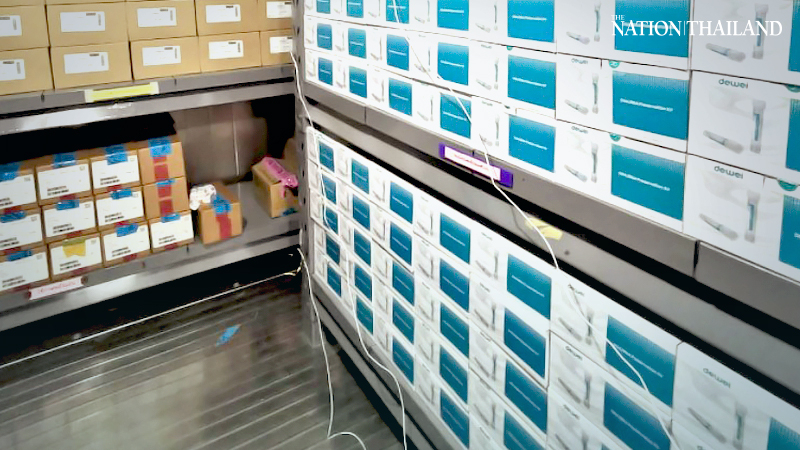


 Dr Yong Poovorawan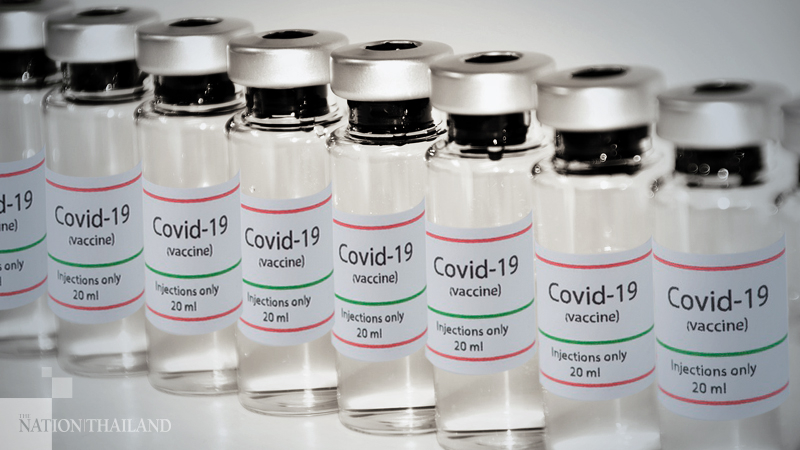



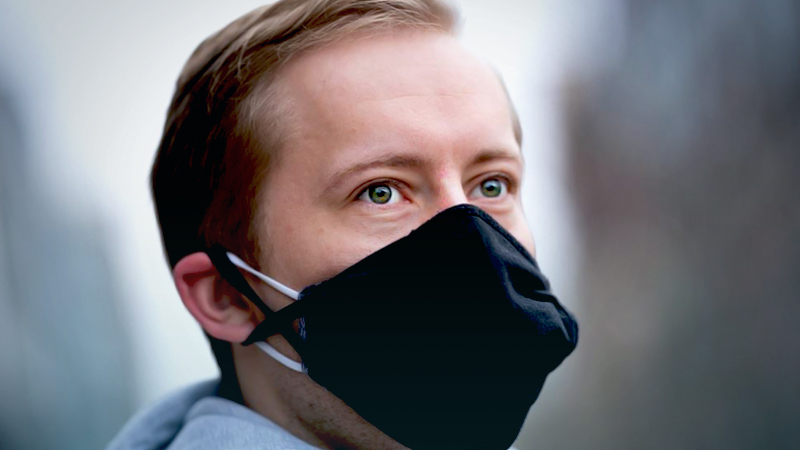 Danny Ryan, 27, is pictured wearing two masks on Wednesday near his home in Washington, D.C. Double masks are becoming a real possibility as a new virus variant makes its way from England, South Africa, and Brazil into the U.S. MUST CREDIT: Washington Post photo by Sarah L. Voisin.
 SootinClaimon.Com