
Britain launches West’s first mass coronavirus vaccination #SootinClaimon.Com

#SootinClaimon.Com : ขอบคุณแหล่งข้อมูล : หนังสือพิมพ์ The Nation.

Britain launches West’s first mass coronavirus vaccination (nationthailand.com)

Britain launches West’s first mass coronavirus vaccination

Health & BeautyDec 09. 2020
By The Washington Post · William Booth, Karla Adam · WORLD, HEALTH, EUROPE

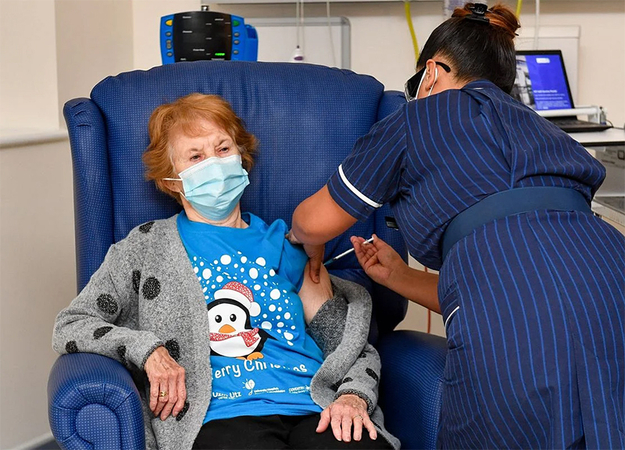
LONDON – It took barely a second. She rolled up her sleeve and Britain’s Margaret Keenan became on Tuesday the first person to receive the Pfizer-BioNTech vaccine shot outside of clinical trials, as the first mass coronavirus immunization campaign in the West began.

The 90-year-old grandmother received her jab, as the Brits would say, at University Hospital in Coventry, England, at 6:31 a.m. local time. The nurse, May Parsons, told her to relax her arm.

“I feel so privileged to be the first,” Keenan said, adding that it meant she could “finally look forward to spending time with my family and friends in the new year after being on my own for most of the year.”

That was one quick shot for Maggie, one giant leap for humankind.

“My advice to anyone offered the vaccine is to take it – if I can have it at 90, then you can have it too,” she said. As she was rolled down the hallway at the hospital, staff members in masks and visors gave her a round of applause.

The former jewelry shop assistant – known to her friends as Maggie – retired just four years ago. She has two children and four grandchildren and spent much of 2020 self-quarantining. Originally from Northern Ireland, she has lived in Coventry for over six decades.

British health officials hailed the first injections as a turning point in the fight against a virus that has infected 67 million people around the globe, killing more than 1.54 million. The vaccine was developed jointly by pharmaceutical giant Pfizer and German biotech firm BioNTech.

“I’m feeling quite emotional, actually, watching those pictures,” British Health Secretary Matt Hancock told Sky News, which broadcast footage of Keenan getting the jab live. “It’s been such a tough year for so many people and finally we have our way through it, our light at the end of the tunnel.”

And the world is watching to see how the country where vaccines were invented three centuries ago rolls out its largest- and speediest-ever health campaign, deploying a revolutionary new vaccine that requires extremely special care and handling.

Thousands of nurses, pharmacists and medical technicians, bolstered by legions of volunteers and members of the British military, will safeguard, transport, unpack and jab millions of doses into the upper arms of a nation grown weary of lockdowns and loneliness, anxiety and sickness.

Very soon, other nations are expected to follow. The United States could grant emergency authorization to the Pfizer-BioNTech vaccine by the end of the week. Europe, by the end of the month.

In its analysis published Tuesday, the U.S. Food and Drug Administration confirmed the safety and efficacy of the Pfizer-BioNTech vaccine. The agency’s briefing documents were published ahead of an advisory committee meeting scheduled for Thursday, when the analysis will be discussed and a vote taken on whether to approve the vaccine.

The ultimate goal is to inoculate enough people to confer individual immunity and eventually stop the virus’s spread. But until more vaccine doses are available and other vaccines are approved, officials in Britain and elsewhere are balancing the need to protect the most vulnerable against the need to slow transmission.

Parsons, the nurse who delivered the vaccine, is originally from the Philippines and has worked for the taxpayer-funded National Health Service for 24 years. She said it was a “huge honor” to “play a part in this historic day.”

“The last few months have been tough for all of us working in the NHS,” she said. Front-line health-care workers such as Parsons had to struggle to fight a mysterious, deadly new virus, sometimes without proper protective gear in the early months.

The second person to be vaccinated at the hospital was 81-year-old William Shakespeare, whose name prompted an inevitable flurry of puns. The Metro newspaper tweeted a picture of him with the caption “The Taming of the Flu.” One person on social media asked if Keenan was patient 1A, then was Shakespeare “Patient 2B or not 2B?” Another chimed in with “The Two Gentlemen of Corona.”

Simon Stevens, chief executive for NHS England, said this would be the “largest vaccination program this country has ever seen.” He cautioned that it was a marathon, not a sprint.

“But if we all stay vigilant in the weeks and months ahead, we will be able to look back at this as a decisive turning point in the battle against the virus,” he said.

Prime Minister Boris Johnson called it “a shot in the arm for an entire nation.” He visited a London hospital Tuesday morning and spoke to waiting patients. He told one that a way to calm nerves about needles was to recite poetry.

“I always try think of something else. Recite some poetry,” he told her.

British officials say they hope to vaccinate “the majority” of especially vulnerable people by the end of February. Priority, though, will go to people over age 80 and to nursing home caregivers.

It will be a while before shots make it to nursing home residents, as the government doesn’t yet have the ability or approval to offer Pfizer injections at those facilities.

Also excluded from the initial round will be most front-line hospital workers. That runs counter to what the United States and most other countries are planning. Although Chris Hopson, chief executive of NHS Providers, said high-risk hospital staff in Britain will be offered “any leftover spare doses” at the end of each day.

Even for Britain’s highest-priority groups, demand could quickly outstrip supply in the early months, public health officials warned.

The country has preordered 40 million doses of the Pfizer product, enough to immunize 20 million people, as two doses are required, three weeks apart. It has also hedged its bets and reserved another 300 million doses of five vaccines in development.

But the Pfizer vaccine is the only one approved so far, and the 800,000 initial doses Britain is set to receive “could be the only batch we receive for some time,” Hopson cautioned last week.

The government says up to 4 million doses of the Pfizer vaccine is coming soon, but exactly how much and when depends on the company’s ability to manufacturing capability at its plant in Belgium.

The vaccine, developed with Pfizer by a husband-and-wife team at the small German company BioNTech, is not like a traditional shot that injects a crippled version of a virus. Instead, it uses a bit of messenger RNA, which encourage the body to produce antibodies to repel the spike protein on the surface of the coronavirus.

The vaccine has shown great promise, demonstrating 95 percent protection in large-scale human trials. It also presents a great challenge. It needs to be stored and shipped at seriously cold, sub-Antarctic temperatures of minus-103 degrees Fahrenheit.

British regulators, in granting emergency approval, said the vaccine cannot be moved more than four times and that the trays of 975 doses packed in dry ice cannot be split apart.

Hopson said the first trays are being delivered from the freezers at National Health Service warehouses to 50 hospitals in England. Similar efforts are underway in Wales, Scotland and Northern Ireland.

NHS officials said primary-care physicians are providing lists of people over 80 who are mobile enough to get to a hospital clinic, and hospital appointment-bookers are calling those people for timed, 15-minute slots. Some afternoon slots will be reserved for nursing home staff members, who are being contacted by their employers.

Vaccination will take place in separate, dedicated clinics at the hospitals, so the elderly and others getting shots do not come in contact with patients who might be infected with the virus.

“The electronic prescribing system will cleverly, automatically book the patient for their three-week-later, second-dose appointment,” Hopson said. “It will also, equally cleverly, automatically send a letter to the patient and their GP with details of that appointment and first dose.”

China is also now rolling out a campaign to inoculate more than a billion people, and it claims it has already injected a million of its citizens with one of its five experimental vaccines.

Russia began a mass program to inject doctors, teachers and social workers in hard-hit Moscow over the weekend. It is not known how effective the experimental Chinese or Russian vaccines are, because the makers there have reported scant data on clinical trials.

Britain was the first country in the West to approve a coronavirus vaccine.

In the United States, the Food and Drug Administration could grant emergency authorization to Pfizer-BioNTech candidate by week’s end and the begin to immediately deliver the drug to the states.

Over the weekend, Moncef Slaoui, the chief science adviser for the White House’s Operation Warp Speed, set out an ambitious goal, saying vaccinations could reach 24 million Americans by mid-January.

Regulators in the European Union are reviewing the safety and efficacy of the Pfizer vaccine and could grant authorization before the end of December.

British medical authorities defended themselves against the accusation that their regulators had acted too quickly.

Anthony S. Fauci, director of the U.S. National Institute of Allergy and Infectious Diseases, initially told Fox News that British regulators had not acted “as carefully” as the FDA, which he called the world’s gold standard for drug review.

He quickly apologized for his remarks, saying he meant to say that British and American regulators do things differently, not better.

June Raine, chief executive of Medicines and Healthcare Products Regulatory Agency, which regulates vaccines in Britain, said she had complete confidence in the Pfizer vaccine.

“The highest standards of scrutiny, of safety and of effectiveness and quality have been met, international standards,” she said.

Raine said the immunization program beginning on Tuesday “will help us turn the corner. There’s really not one of us who hasn’t been affected by this pandemic, and our organization, like every other, has been completely focused on doing our job to be able to help defeat this terrible disease.”

One big question, though, is how many people will be willing to get a shot. More than a third of people in Britain say they are unlikely to accept a vaccine when it’s available, according to an opinion poll published Sunday by the Observer newspaper.
FDA review confirms safety and efficacy of Pfizer coronavirus vaccine #SootinClaimon.Com

#SootinClaimon.Com : ขอบคุณแหล่งข้อมูล : หนังสือพิมพ์ The Nation.

FDA review confirms safety and efficacy of Pfizer coronavirus vaccine (nationthailand.com)

FDA review confirms safety and efficacy of Pfizer coronavirus vaccine

Health & BeautyDec 09. 2020

By The Washington Post · Carolyn Y. Johnson, Laurie McGinley, Chris Alcantara, Aaron Steckelberg

WASHINGTON – A two-shot coronavirus vaccine developed by Pfizer and German firm BioNTech appears to be on the cusp of regulatory clearance, after a 53-page review published Tuesday confirmed that the vaccine appears to meet the standard for emergency use authorization.

The Food and Drug Administration briefing document is the first hint of U.S. regulators’ assessment of the vaccine as the agency’s career scientists approach one of the most momentous decisions in the FDA’s history. It is also the most detailed independent review yet of data that has so far been known only through company news releases.

The FDA’s career scientists undertook their own thorough analysis of the data over the last two weeks and confirmed Pfizer’s assessment that the vaccine regimen was 95% effective at preventing disease in large clinical trial and had tolerable short-term side effects, including sore arms, fatigue, headaches, muscle pain and chills that typically resolved within one to two days. The review also found evidence that the vaccine, which is given in two doses, three weeks apart, began to protect people after the first dose.

The document spells out that the vaccine has cleared the minimum threshold of being at least 50% effective and states that the two months of follow-up on 38,000 participants in the trial provide evidence of “a favorable safety profile, with no specific safety concerns identified that would preclude issuance of an [emergency authorization].”

On Thursday, a group of advisers to the FDA will meet for a full-day public meeting to discuss the data and make recommendations on whether the vaccine merits authorization for immediate use. A decision, informed but not dictated by that debate, is expected to come within days of the meeting. The first doses are expected to be shipped within hours, with a target of 6.4 million doses distributed in the first week.

British regulators cleared the vaccine for use last week and administered the first shots Tuesday to elderly people and nursing home workers, but their review relies more heavily on the company’s data analysis.

The vaccine was tested in about 44,000 people, half of whom received two doses of the real vaccine three weeks apart, and half of whom received shots of saline. People then went about their normal lives and were exposed to the virus in their communities. There were 170 cases of covid-19, the disease caused by the virus, in the study. Only eight of those cases were in the group that received the vaccine, an overwhelming signal of efficacy and well above the minimum threshold the agency laid out this summer.

One of the biggest questions about the coronavirus vaccines is whether they work equally well in all people, particularly those at highest risk of severe illness, including older people, those with underlying medical conditions and minority groups. The vaccine trials sought to recruit diverse populations. The FDA review found that efficacy was similar “across age groups, genders, racial and ethnic groups, and participants with medical comorbidities associated with high risk of severe COVID-19.”

Another major question about the vaccines has been whether they can prevent both mild and the most devastating, severe cases of disease. There were 10 cases of severe illness in the trial, with nine of those in the placebo group.

The Pfizer vaccine is the first of two vaccines to be considered by regulators this month based on a novel technology that uses snippets of genetic material to teach the body’s own cells to build the spiky protein that coronaviruses use to latch onto cells. The immune system, exposed to the spike, can then learn to recognize and block the real virus.

One point of debate among outside advisers to the agency this week could be the length of follow-up on a vaccine technology that has never been used in an approved product. The FDA is asking its committee to vote on whether the vaccine has been demonstrated to be effective in preventing covid-19 in people ages 16 and older.

Pfizer has projected that the United States will receive about half of its global supply through the end of the year – about 25 million doses. Government officials expect about another 20 million doses to be provided by Moderna, which is about a week behind the Pfizer and BioNTech vaccine. Pfizer will deliver the balance of the 100 million doses the United States has purchased in the first few months of next year, enough for 50 million people.

The United States approached Pfizer to buy another 100 million doses this past weekend, but was informed the supply may not be available until late June, The Washington Post reported. That raises questions about whether the U.S. goal to create enough vaccine for the entire population by the summer could slip.

Countdown to America’s first coronavirus vaccine: What to watch this critical week #SootinClaimon.Com

#SootinClaimon.Com : ขอบคุณแหล่งข้อมูล : หนังสือพิมพ์ The Nation.

Countdown to America’s first coronavirus vaccine: What to watch this critical week

Health & BeautyDec 07. 2020

By The Washington Post · Laurie McGinley · NATIONAL, HEALTH, HEALTH-NEWS 

For a nation ravaged by the pandemic, this week marks a pivotal moment – the final push by federal regulators to clear the first experimental coronavirus vaccine for a besieged populace.

If all goes well over the next few days, the Food and Drug Administration could give emergency authorization to the vaccine as early as week’s end, triggering the start of an unprecedented effort to inoculate enough Americans to confer individual immunity and eventually stop the virus’ spread. That next chapter, however, is filled with herculean challenges, including ramping up production to tens of millions of doses, shipping them in specially designed boxes packed with dry ice to keep them ultracold and vaccinating people in every corner of the United States.

“It’s staggering where we find ourselves,” said Robert Wachter, chairman of the department of medicine at the University of California at San Francisco. “And this remarkable week will either put us on a path to getting out of this in six months, or if people lose trust in the process, put us back by months, or a year.”

The regulatory drama kicks off early Tuesday. The Food and Drug Administration tips its hand to the public for the first time about its view of experimental coronavirus vaccine by pharmaceutical giant Pfizer and German biotech BioNTech, when it releases its evaluation of the safety and effectiveness data. That’s in preparation for a meeting two days later of the agency’s vaccine advisory committee – independent experts who will debate that data and whether the FDA should clear the vaccine, a decision many hope will eventually change the course of the crisis.

The agency sees Thursday’s open committee meeting, which includes time for the general public to speak, as a critical part of its effort to be transparent and convince people to take the vaccine. Its commitment to holding a public session is one reason Britain managed to authorize the vaccine before the U.S., angering President Donald Trump.

“We feel it’s our responsibility to make it happen as fast as possible,” said Peter Marks, director of the Center for Biologics Evaluation and Research. But, he added, “We want to show that we really thought this all through carefully.”

If the advisory committee gives the thumbs’ up in a formal vote on Thursday, the FDA is expected to authorize the vaccine within days, clearing the way for its almost-immediate distribution to all 50 states. Operation Warp Speed, the White House-led initiative to develop and distribute vaccines, has said it plans to begin shipping the vaccine within 24 hours of an FDA authorization. But if an unexpected problem should emerge, or the advisory panel raises concerns, the process could be slowed.

Even if all goes as hoped, a new, potentially lifesaving vaccine won’t immediately change the pandemic outlook. Vaccinating most Americans will take several months, even if the vaccine is widely accepted. And, with more than 280,000 dead, even grimmer days lay ahead, with deaths potentially rising to 3,000 or 4,000 a day, experts say.

– – – 

What happens first this week? 

Public health experts hope that documents released by the FDA and Pfizer on Tuesday will provide many more details about the vaccine, as well as the agency’s opinion about it. If there are any surprises that could slow or derail an authorization, they could pop up here.

“For now, all we have is this press release with a big efficacy number,” said Jason Schwartz, assistant professor of health policy and management at the Yale School of Public Health, referring to Pfizer’s press statements that its vaccine is a remarkable 95 percent effective overall and 94 percent in people over 65. It hasn’t released information on other subgroups, and the data has not yet been published in a peer-reviewed journal.

Also Tuesday, the White House is having a “Covid-19 Vaccine Summit” to tout the vaccine development effort, and inviting governors, federal officials, and executives of pharmaceutical companies and drugstore chains. The goal appears to be to give Trump, who called the FDA part of the “deep state” and accused Pfizer of trying to hurt his reelection prospects, a chance to claim credit for the vaccine.

– – – 

Can I watch the advisory committee meeting?

The all-day remote meeting on Thursday will be carried online by the FDA, YouTube and Facebook. University of Michigan epidemiologist Arnold Monto, the temporary chairman of the panel, is shoring up his spotty home WiFi. Meanwhile, teams of FDA staffers are poring over Pfizer data and the quality of the manufacturing process. Manufacturing vaccines can be notoriously difficult, and quality is paramount. In 1955, tainted polio vaccine made by Cutter Laboratories caused five deaths.

The independent panel has a core group of 15 voting members, including all-star experts on immunology, virology and infectious diseases. They include Paul Offit, director of the Vaccine Education Center at the Children’s Hospital of Philadelphia and the co-developer of a rotavirus vaccine. The panel, whose official name is the Vaccine and Related Blood Products Advisory Committee, also includes a consumer representative and a nonvoting member who represents the pharmaceutical industry.

– – – 

What does the FDA want from the meeting? 

Agency officials will be looking for the panel to say the Pfizer safety and efficacy data justifies an emergency use authorization for the vaccine. They are likely to consider a broad “label,” saying the vaccine should be used to prevent covid-19, the disease caused by the coronavirus, in people from ages 16 and up. Pfizer has started to test the shots in children as young as 12, but more data is needed.

Emergency authorizations are temporary approvals used to accelerate the availability of medical products during a public health emergency. They require less data than full approvals. The FDA has said, however, it will apply rigorous criteria because millions of healthy people are expected to receive the vaccine.

Panel members are sure to drill down on the safety data. In a general vaccine meeting on Oct. 22, some members said the FDA’s requirement that vaccine developers provide two months’ follow-up on half the trial participants wasn’t stringent enough.

“How much oxygen do those concerns get at this meeting?” said Schwartz. “If there are serious concerns, that would complicate the effort to assure the public that this process is every bit as rigorous as we would expect this vaccine to be.”

FDA officials and some panel members have said the two months’ standard is appropriate, given that most serious complications occur in the first six weeks after inoculation. Waiting longer can’t be justified, they said, considering the pandemic’s horrific daily toll, now up to a seven-day average of more than 2,000 deaths daily.

– – –

What else will be discussed? 

A critical issue will be the longer-term safety program the FDA and Pfizer have set up to ensure they catch any serious complications caused by the vaccine after it is on the market. “Once you roll something out to hundreds of thousands and millions of people, safety problems can emerge,” said Lawrence Gostin, a public health expert at Georgetown Law School.

The panel also might ask how long the vaccine’s protection will last. The information is important because once people are vaccinated, they are likely to change their behavior – eschewing masks, for example – said Walid Gellad, director of the Center for Pharmaceutical Policy and Prescribing at the University of Pittsburgh. But officials say it’s too soon to know the duration of protection.

The committee also is likely to wrestle with the ethical issue of whether Pfizer should offer the vaccine to people in the placebo group, once the shots are cleared. The company has said that it plans to do so, but the FDA is worried such “unblinding” of the trial will make it difficult to continue to collect long-term data on safety and duration of protection.

Michael Tovar, a participant in the Pfizer trial, predicted a “mass exodus” of enrollees if the placebo group is not offered the vaccine. “For most of us, the possibility of receiving a vaccine early was one of the main reasons for joining the trial,” he said in a comment filed to the public docket on the meeting. “Were it not for the bravery and commitment of trial participants, this historic moment would not be happening.”

But if those participants are not in high-risk priority groups, they might not be able to get the vaccines outside the trial.

– – – 

What’s the most important part of the meeting?

The biggest moment will come at the end of the day – probably 5 p.m. or later – when the panel will vote on questions posed by the FDA. The key one will be on whether to authorize the vaccine.

Does the FDA have to follow the panel’s advice? 

No, the advice isn’t binding. But the FDA often follows the recommendations of its advisers. And in this case, with all the controversy and political wrangling that has surrounded the vaccine, experts say it would be hard for the agency to ignore the committee, which is partly designed to boost public confidence in the shots.

– – –

What happens then?

Marks, of the FDA, said the agency could authorize the Pfizer vaccine “within a week” of a favorable recommendation from the advisory committee. Some think the decision would be even sooner than that.

The following week, the process starts over for Moderna. On Dec. 15, the agency will post its view of the vaccine, in preparation for a Dec. 17 advisory committee.

Space station turns into stem cell lab #SootinClaimon.Com

#SootinClaimon.Com : ขอบคุณแหล่งข้อมูล : หนังสือพิมพ์ The Nation.

Space station turns into stem cell lab (nationthailand.com)

Space station turns into stem cell lab

Health & BeautyDec 06. 2020

By Special To The Washington Post · Payal Dhar · NATIONAL, WORLD, HEALTH, SCIENCE-ENVIRONMENT, HEALTH-FEATURES 

Space is a long way to go to learn about human tissues, yet researchers have their gazes trained at the stars. 

Earlier this year, a team of researchers from the University of Zurich (UZH) sent 250 test tubes of carefully prepped human stem cells to the U.S. National Laboratory on the International Space Station (ISS). They wanted to study how the near-weightless, microgravitational environment of the ISS affects these building-block cells in the hope of understanding some of the secrets of how they grow, divide and form into tissues.

Stem cells are special “generic” cells that have the potential to evolve into specialized ones, such as those that form muscle, blood, brain and other tissues. They can also divide and renew themselves. Researchers say this makes them invaluable as a potential backup resource to repair the body in case of damage from illness or injury. 

Stem-cell-based therapies have begun to be used in cancers, heart conditions, neurological diseases, liver cirrhosis, arthritis and spinal cord injuries. Scientists are even considering stem-cell-based therapies for the treatment of covid-19, and are testing these in the lab.

Human stem cells come from different sources, including embryonic tissue (discarded embryos, cord blood or amniotic fluid) and nonembryonic tissue (present in organs and tissues of human bodies). There are still plenty of unknowns about these cells – such as, how they differentiate into other kinds of cells, or how they divide and repair themselves. 

Scientists hope that studying the properties in low Earth orbit (up to 1,200 miles from the planet’s surface) might help answer some of these questions. This will, in turn, guide researchers working to develop better stem cell therapies and also potentially help them test drugs on human cells without needing to conduct experiments on animals.

“Weightlessness creates a completely different . . . environment that has fundamental effects on biological processes,” says Oliver Ullrich, director of the UZH Space Hub and chair of Anatomy/Gravitational Biology and Cell Biomechanics. “On the ISS, we succeeded in producing significantly larger . . . differentiated tissue from human stem cells [than we could on Earth] . . . We do not know why stem cells differentiate so excellently . . . in weightlessness. Basic research will one day be able to answer this question.”

Until then, he says, the goal is to develop biotechnologies that can help humans on Earth.

Some of the mysteries of stem cells might emerge from another space effort, a collaboration between the University of California at San Diego’s Sanford Stem Cell Clinical Center and Space Tango, a Lexington, Ky.-based engineering company manufacturing specialized automated platforms that allow scientists to carry out health and technology research in space.

In April, NASA awarded a $5 million grant to UCSD and Space Tango to develop a new lab called the Integrated Space Stem Cell Orbital Research (ISSCOR, pronounced “I score”) on ISS, and launch a bunch of stem cell experiments next year. 

Catriona Jamieson, deputy director of the Moores Cancer Center at UCSD, is one of the participants in the collaboration. Her project looks at how cells turn cancerous as they age, the ways cancer begins in people and the breakdown of the human body’s immune system. 

Sometimes, she says, mutations in our bone marrow stem cells give rise to precancerous cells that can lead to leukemia. On Earth, under the protection of the ozone layer that keeps out ultraviolet radiation from the sun, this process of good cells turning cancerous can take decades. In space, on the other side of the ozone layer, blood-forming stem cells are exposed to the sun’s UV radiation, causing them to become precancerous much faster. 

This accelerated time frame allows her team to study how healthy blood cells become malignant without needing to wait for years to replicate the process on Earth.

Cell cultures in a lab on Earth grow in a single layer – think of it as a two-dimensional structure – because gravity causes sedimentation and the culture medium presses down on the cells. As a result, Ullrich says, scientists need a matrix or scaffold to support the growing tissue in three dimensions. 

“In a weightless environment [like space], cells exhibit spatially unrestricted growth and assemble into complex 3-D [structures],” he says. This opens up the possibility of “macro-tissues” – organs – to be generated from these 3-D cell aggregates. Ullrich says.

The UZH test tubes of Ullrich’s experiment returned to Earth at Cape Canaveral, Fla., in April, but covid-19 restrictions on travel prevented the safe, temperature-controlled transport of the samples to Zurich for detailed analysis. Ullrich’s team, however, could confirm from remote, virtual observation that the samples had grown more bone, cartilage and other living tissue than would have been possible in the same amount of time on Earth. Ullrich is cautious with his analysis – “looking good,” is all he’s willing to say for now. 

Another ongoing stem cell experiment in space comes from the lab of Alysson Muotri at UCSD. Muotri’s team works with stem cells that differentiate into brain tissue. “If we understand how microgravity can speed up [cell] maturation, we can understand [its] effect in the brain of the astronauts, but also . . . use that as a model to understand diseases that have long onset, such as Alzheimer’s or dementia,” he says. Apart from the NASA collaboration, Muotri has another stem cell experiment going on at the ISS. The first payload of that went up in late 2019, and he expects to send a follow-up by the end of 2020, before his NASA project early next year.

Room is limited on ISS, so one of the challenges in biomedical space research is keeping the experiments’ physical footprints as small as possible. 

This happens using a specialized “research-in-a-box” module, called CubeLab, where the stem cell experiments are run while in orbit. The CubeLab is small enough “to fit in the trunk of my car,” Jamieson says. Within it, the physical parts of the experiment, as well as the automation and remote monitoring of the system, have to be precisely calibrated. 

Observing and monitoring the experiments from afar is a major challenge, Jamieson adds, because, unlike in a lab on Earth, the scientists cannot pop in and out as needed, and limited adjustments can be done remotely.

“Sometimes microgravity can be a bummer,” Muotri says. 

For instance, gravity on Earth plays a role in keeping electrodes, necessary to record electrical activity, in place in the tissues. “In space, they’re going to be floating,” Muotri says, which means, for accurate readings, scientists and engineers have to figure out ways to keep them attached to the tissues.

Looking ahead, could stem cells altered or grown in space be used in humans to cure ailments or for other reasons? It’s too early to say, but Ullrich believes it may happen one day. 

Scientists hope that these experiments will help develop customized treatments, therapies and even medicines for patients with specific requirements, for whom generic medications and treatments are often not enough. “Transplantation . . . is of course the greatest possible goal,” Ullrich says, “but [these tissues] also serve testing in precision medicine or to replace animal experiments.”

Jamieson adds: “In this unique environment 250 miles above us, [we might be] able to discover truths about biology that we never understood before.” And that could lead to new drugs, new antibodies, new therapies. “I really do think that [space, and the ISSCOR lab in particular] is . . . a great place to do science.”

Coronavirus caseload in Washington region hits single-day record #SootinClaimon.Com

#SootinClaimon.Com : ขอบคุณแหล่งข้อมูล : หนังสือพิมพ์ The Nation.

Coronavirus caseload in Washington region hits single-day record (nationthailand.com)

Coronavirus caseload in Washington region hits single-day record

Health & BeautyDec 05. 2020A nurse looks out the window before starting to take patients for covid-19 antibody testing at a testing site in the summer in the Navy Yard neighborhood. MUST CREDIT: photo for The Washington Post by Amanda Voisard.A nurse looks out the window before starting to take patients for covid-19 antibody testing at a testing site in the summer in the Navy Yard neighborhood. MUST CREDIT: photo for The Washington Post by Amanda Voisard. 

By The Washington Post · Rachel Chason

Washington D.C., Maryland and Virginia reported by far the highest single-day total for new coronavirus cases Friday, with 6,985 new infections.

Before Friday, the record number of new cases in the greater Washington region was 5,522, seen Nov. 25. The number of coronavirus hospitalizations in the area – a metric that lags infections – has also continued to climb.

Maryland also recorded a single-day high Friday of 3,792 new cases, while the test positivity rate reached 8 percent, the state’s highest since June. Republican Gov. Larry Hogan tweeted Friday to urge residents to get tested, avoid gatherings, wear a mask and wash their hands.

“The promise of a vaccine has given us a light at the end of the tunnel, but we still have dark days ahead,” Hogan wrote, adding that the state is also seeing a record number of residents taking coronavirus tests.

There were 2,877 new cases reported Friday in Virginia and 316 new cases in Washington.

Of the three jurisdictions, Washington saw the biggest increase in new cases this week from the week before, reporting 37 percent more cases. Its seven-day average of 220 daily cases on Friday was a record.

The number of hospitalizations in the nation’s capital reached 194, up 30 percent from the week before, with 51 intensive care unit beds occupied. The number of hospitalizations in Maryland ticked up 11 percent from last week and 16 percent in Virginia.

There was one coronavirus-related death reported Friday in Washington. There were 26 new deaths reported in Maryland and 13 in Virginia. The total deaths reported Friday across the three jurisdictions was slightly lower than in recent days.

There have now been a total of 9,643 deaths and 479,051 cases reported since the pandemic began.

Also Friday, the attorneys general of Virginia and Washington D.C. sent a letter asking Congress to ensure everyone living in the United States can obtain a covid-19 vaccine, when it becomes available, at no cost. The letter, signed by a coalition of attorneys general, asks Congress to codify an interim rule providing the vaccine to Medicare recipients at no cost and to properly fund programs for the uninsured so they do not have to pay administrative fees.

“It is so important that every single Virginian and every single American has access to a COVID-19 vaccine once it becomes available,” Virginia Attorney General Mark Herring said in a statement. “Unfortunately, we have seen this virus disproportionately devastate Black, Brown, and lower-income communities and we must make sure these individuals are able to get these potentially life-saving vaccines.”

Pandemic is pushing America’s 911 system to breaking point, ambulance operators say #SootinClaimon.Com

#SootinClaimon.Com : ขอบคุณแหล่งข้อมูล : หนังสือพิมพ์ The Nation.

Pandemic is pushing America’s 911 system to breaking point, ambulance operators say (nationthailand.com)

Pandemic is pushing America’s 911 system to breaking point, ambulance operators say

Health & BeautyDec 04. 2020EMS and firefighters in Washington D.C. prepare for a shift. MUST CREDIT: Washington Post photo by Jahi ChikwendiuEMS and firefighters in Washington D.C. prepare for a shift. MUST CREDIT: Washington Post photo by Jahi Chikwendiu 

By The Washington Post · William Wan

The coronavirus pandemic has pushed America’s 911 system and emergency responders to a “breaking point,” with ambulance workers and their services financially strained.

Ambulance providers from New York to Iowa to Georgia say the situation is increasingly dire. Desperate for a financial infusion to keep such operations afloat, the American Ambulance Association recently begged the Department of Health and Human Services for $2.6 billion in emergency funding.

“The 911 emergency medical system throughout the United States is at a breaking point,” Aarron Reinert, the association’s president, wrote to federal health officials in a Nov. 25 letter obtained by The Washington Post. “Without additional relief, it seems likely to break, even as we enter the third surge.”

The strain could result in longer wait times and some providers going out of business, ambulance operators said.

Ambulance providers are struggling to meet surging demand even while grappling with increased costs of personal protective equipment, overtime, staff shortages as workers fall ill and decreases in the type of emergency calls that are reimbursed.

“There are services going out of business and many right there on the brink,” said Steven Vincent, vice president for Gold Cross EMS, which serves a region of roughly 400,000 people in Augusta, Ga.

While billions have flowed to hospitals and other parts of the health-care system, the nation’s ambulance and emergency responders have received only a tiny fraction of that funding.

Nursing homes and assisted-living facilities received $7.4 billion from a relief fund passed by Congress earlier this year. Rural hospitals and clinics received $11 billion. By comparison, ambulance providers and suppliers received only $350 million, according to the association’s letter.

In interviews, ambulance operators say their workers are exhausted and their managers increasingly struggling to keep operations afloat in the face of a series of financial blows.

Even before the pandemic, the nation’s 911 system was strained. Across the country, 911 calls are answered by a patchwork of nonprofit, for-profit, hospital-affiliated, fire department and municipal-run services.

To make ends meet, some companies – especially smaller ones – relied on fundraisers like pancake breakfasts run by volunteers that are no longer possible amid the pandemic, said Linda Frederiksen, executive director for MEDIC EMS, a nonprofit provider in Davenport, Iowa.

“The system was strained to begin with. Now you’re stretching it even further and the worry is when things start to give,” she said.

As some ambulance services go out of business, others from neighboring counties will have to cover those areas, industry leaders said. To cut costs, some may keep fewer ambulances in the field. Both scenarios would result in longer wait times. Rural areas, which already struggle with wait times and coverage, could be especially hard hit.

“And for some providers, the strain means delaying replacing aging ambulances and equipment,” said Tristan North, senior vice president of government affairs for the American Ambulance Association. “We’re harming our EMS system, not just during covid but for the future.”

Under the quirks of the U.S. health care system, while ambulances respond to all manner of 911 calls, they are often only reimbursed when they transport people to the hospital.

During the pandemic, calls for medical help in many areas have surged, by several hundredfold, in some cases, but those resulting in transport to hospitals have fallen.

As hospitals throughout the country become overwhelmed, many ambulance services have been told to treat patients in place whenever possible and transport only the most acute cases to protect hospital capacity.

In New Rochelle, N.Y., for instance – one of the country’s earliest epicenters for virus – 911 calls for medical help that didn’t result in transport increased from 500 to 6,049 this year. Meanwhile, transport volume declined 25%.

At the same time, operation costs have ballooned. Providers are having to disinfect ambulances after each call and provide testing for their staff. PPE has been expensive and hard to find.

Vincent said the company supplying gloves to his ambulance service in Augusta, Ga., recently informed him it was going to double the price for each case of gloves he orders.

EMTs are often the first health care workers to interact with infectious coronavirus patients. They are the ones who put a mask on patients before they even enter hospitals. And many ambulance workers have been hard hit by the virus.

Vincent said his ambulance service has roughly 85 people working each day. But it has an average of eight to 10 staffers out each week – either because they are sick, or are forced to quarantine because someone in their family is infected.

“There’s been a lot of attention and resources paid to hospitals and nursing homes,” he said. “But for the ambulance workers, there’s a sense we’ve been forgotten.”

Insurer Chubb Life launches family protection programme #SootinClaimon.Com

#SootinClaimon.Com : ขอบคุณแหล่งข้อมูล : หนังสือพิมพ์ The Nation.

Insurer Chubb Life launches family protection programme (nationthailand.com)

Insurer Chubb Life launches family protection programme

Health & BeautyDec 04. 2020Angela HunterAngela Hunter 

By The Nation

In a bid to ease anxiety and financial burden caused by illness, insurance company Chubb Life Thailand has launched the “Family Protector” policy, providing coverage of up to Bt10 million for major surgeries as well as Bt39,000 daily for hospitalisation. The scheme also provides premium discounts for all family members.

Family Protector offers nine choices of coverage, including surgery related to complicated pregnancies and cover for newborns for up to 365 days without extra premium.

According to a 2018 report from the Public Health Ministry, the top five causes of death among Thais are cancer, cerebrovascular disease, chronic lung disease, heart disease and fatal road accidents, with cases of critical illnesses rising every year. Plus, soaring medical costs are a serious concern for most families.

Angela Hunter, country president for Chubb Life Thailand, said: “Chubb Life Thailand’s vision is to help people live their lives with confidence by designing health, protection and financial well-being solutions that meet their specific needs. At Chubb Life, we look at every detail of their lives. Therefore, our health portfolio is expanding to cater to millennial families with more comprehensive protection for each member. With medical costs increasing almost 10 per cent annually, Family Protector is designed to support quality hospitalisation and major surgical operations expenses that young families face. Family Protector has extensive coverage for the needs of most households, including families with children, newlyweds, parents-to-be, or single adults wanting coverage for their parents. A special discount is offered when two family members purchase the product together.”

The Family Protector offers the following benefits:

• Coverage for major surgery including invasive cancer surgery, as well as major surgery on the heart, brain or surgery from accidents, pregnancy complications as well as surgery for congenital abnormalities in newborns, etc.

• Daily hospitalisation compensation of up to Bt19,500 per day.

• Double payout of Bt39,000 for insured persons up to the age of 18.

• Coverage for special treatments like chemotherapy, radiotherapy, targeted therapy, haemodialysis, stroke rehabilitation, as well as hospice care.

• Capped benefit payment with a choice of Bt1 million, Bt5 million or Bt10 million per policy year.

• Special discounts for family members when two people purchase the product together and policies are approved.

• Eligible for personal income tax deduction according to Revenue Department’s regulations.

Read more about the Family Protector policy at www.chubb.com/th-th/personal/family-protector.html

Entertainment venues carry high risk of Covid-19 transmissions: expert virologist #SootinClaimon.Com

#SootinClaimon.Com : ขอบคุณแหล่งข้อมูล : หนังสือพิมพ์ The Nation.

Entertainment venues carry high risk of Covid-19 transmissions: expert virologist (nationthailand.com)

Entertainment venues carry high risk of Covid-19 transmissions: expert virologist

Health & BeautyDec 03. 2020Dr Yong PoovorawanDr Yong Poovorawan 

By The Nation

Entertainment venues carry the risk of Covid-19 transmissions, Dr Yong Poovorawan, an expert virologist at Chulalongkorn University, warned in a Facebook post on Thursday.

He said super-spreader events in entertainment venues had occurred in South Korea, Japan, Western countries and even Thailand.

“Entertainment venues are noisy places with confined spaces, so it is not easy to undertake measures to contain the spread of Covid-19, such as maintaining a distance from others and even wearing a face mask,” he pointed out.

Dr Yong said Thailand took about two months to contain the spread in entertainment venues and a boxing stadium during the Covid-19 outbreak earlier this year.

“Therefore, we would like to ask everyone to be careful so that this does not become an issue again,” he added.

Officials outline plans for coronavirus vaccine distribution in D.C. region #SootinClaimon.Com

#SootinClaimon.Com : ขอบคุณแหล่งข้อมูล : หนังสือพิมพ์ The Nation.

Officials outline plans for coronavirus vaccine distribution in D.C. region (nationthailand.com)

Officials outline plans for coronavirus vaccine distribution in D.C. region

Health & BeautyDec 03. 2020Maryland Gov. Larry Hogan holds a news conference Tuesday on the coronavirus pandemic. State officials on Wednesday discuss plans for distributing a vaccine, saying they will prioritize health-care workers. MUST CREDIT: Washington Post photo by Jonathan NewtonMaryland Gov. Larry Hogan holds a news conference Tuesday on the coronavirus pandemic. State officials on Wednesday discuss plans for distributing a vaccine, saying they will prioritize health-care workers. MUST CREDIT: Washington Post photo by Jonathan Newton 
By The Washington Post · Rebecca Tan, Erin Cox

Officials in the Washington, D.C., region laid out strategies Wednesday for distributing vaccines as coronavirus-related hospitalizations and fatalities continued to climb across the area.

Maryland and Virginia officials said they expect their first shipment of vaccines in mid-December, although members of the general public will likely have to wait until the spring to receive doses.

Maryland Lt. Gov. Boyd Rutherford, R, who spoke at the opening of a Board of Public Works meeting, reiterated that the first vaccinations will go to health-care workers, then employees at nursing homes, where the virus has made a deadly resurgence. He acknowledged that some residents in the state might be skeptical of getting the vaccine, but noted that health-care experts – those who know the most about the disease – will be first in line.

“The hope is that 70 percent of the population will take the vaccine,” he said. “If we can get to that, hopefully we can squash the pandemic.”

According to the federal government, Maryland’s first vaccine shipment will contain 150,000 doses, which will cover half the state’s health-care workers, Gov. Larry Hogan, R, said Tuesday.

Virginia Gov. Ralph Northam, D, echoed similar concerns Wednesday, saying the 70,000 doses his state expects to receive this month will fall short of what is needed for even the highest-priority recipients.

The first in line in Virginia will be health care workers and residents of long-term care facilities, which includes about 500,000 people, Northam said. Essential workers and medically vulnerable individuals are likely to be in the second cohort.

Northam invoked his credentials as a pediatrician to vouch for the safety of the vaccine, but added that until it is readily available to the general public, residents should continue wearing masks and observing physical distancing.

“Be more careful than you think you need to be, especially with the holidays coming up,” he said.

D.C. Health Director LaQuandra Nesbitt said earlier this week the city would receive an estimated 8,000 doses of the vaccine in its first shipment – a 10th of what is needed to vaccinate 80,000 health-care workers in the city. Nesbitt said city officials are petitioning the federal government not to tie D.C.’s share of vaccines to its population since many health-care workers live outside the city and commute in for work.

The seven-day average of new daily infections Wednesday across D.C., Maryland and Virginia was 4,671 – lower than the record high of 4,989 last week, but more than double the peak caseload during the first wave of the virus in the spring.

Local officials, including D.C. Mayor Muriel Bowser, D, have warned that new infections are likely to increase in the coming weeks because of the number of people who traveled or gathered with friends and family over the Thanksgiving holiday.

Coronavirus-related hospitalizations and fatalities, which tend to lag spikes in cases, also are trending upward across the region. Maryland reported 42 deaths Wednesday – the highest number since June – while D.C. and Virginia reported five and 20 deaths, respectively.

In southwest Virginia, where cases have been surging, the Ballad Health hospital system has suspended elective surgeries so it can better handle an influx of patients. Hospitals are not running out of bed space, officials say, but there’s a growing shortage of staff. The state is looking into whether paramedics or members of the state’s Medical Reserve Corps can help, said Daniel Carey, the state’s secretary of Health and Human Resources.

In Montgomery County, Maryland’s most populous jurisdiction, the percentage of hospital beds occupied by coronavirus patients reached 17.7 percent Wednesday, indicating “very high risk” of community transmission, according to the county’s coronavirus website. The suburb has about one-quarter of its hospital beds unfilled, but that could change if smaller jurisdictions in the region start to hit their maximum capacity.

“Filling our hospitals may depend on what happens in other areas,” Montgomery County Executive Marc Elrich, a Democrat, said at a news conference Wednesday. He said the county is still “trending in the wrong direction” but stopped short of issuing more restrictions.

“We’re not an island,” he said, noting that when Montgomery tried to shut down private schools in the fall, state officials intervened, effectively barring them from doing so. “If we do things by ourselves – and we very well might – it won’t be as effective as it should be … I continue to argue for a regional approach.”

In the past week, Montgomery’s test positivity rate increased from 4.7% to 5.6%. Health officials acknowledged the county is experiencing testing delays because of the deluge of people who sought tests before or after Thanksgiving travel. Such delays, they noted, are also happening across the country.

The virus continues to spread disproportionately among people working in-person at jobs deemed essential, county health officer Travis Gayles said. Some of those workers don’t have adequate health insurance to seek care when ill, and others are wary of being tested in fear of having to quarantine, losing their source of income, officials said.

When it comes to vaccine distribution, Elrich said the federal government should ensure those essential workers, including bus drivers and grocery store workers, are prioritized.

Elsewhere in Maryland, Anne Arundel County police are investigating an assault on two retail employees who tried to ask patrons to wear masks.

On Saturday evening, a manager at the Bowl America along Ritchie Highway in Glen Burnie asked several male patrons to leave because they were not wearing face coverings, which are mandatory. After the manager escorted the group of eight men out, police said one of them pushed the worker to the ground and others kicked him. A second employee also was assaulted by the group when he came out to assist the manager, police said.

The manager was taken to a hospital with minor injuries. Officials said they are trying to find the group of men, who fled the scene before police arrived.

Anne Arundel County Executive Steuart Pittman, a Democrat, said the incident made him “just plain angry,” adding that police would do everything to find them.

“No front-line worker in any business in this county should have to endure this kind of assault,” he said.

Fears of coronavirus jump intensify in Thanksgiving’s aftermath #SootinClaimon.Com

#SootinClaimon.Com : ขอบคุณแหล่งข้อมูล : หนังสือพิมพ์ The Nation.

Fears of coronavirus jump intensify in Thanksgiving’s aftermath (nationthailand.com)

Fears of coronavirus jump intensify in Thanksgiving’s aftermath

Health & BeautyNov 29. 2020

By The Washington Post · Sarah Kaplan · NATIONAL, HEALTH, SCIENCE-ENVIRONMENT, HEALTH-NEWS 
At a rural health system in Wisconsin, officials and medical experts began drawing up protocols for the once unthinkable practice of deciding which patients should get care.

The chief quality officer of a major New York hospital network double- and triple-checked his system’s stockpile of emergency equipment, grimly recalling the last time he had to count how many ventilators he had left. In Arizona, a battle-weary doctor watched in horror as people flooded airports and flocked to stores for Black Friday sales, knowing it was only a matter of time before some of them wound up in his emergency room. 

Days after millions of Americans ignored health guidance to avoid travel and large Thanksgiving gatherings, it’s still too soon to tell how many people became infected with the coronavirus over the course of the holiday weekend. But as travelers head home to communities already hit hard by the disease, hospitals and health officials across the country are bracing for what scientist Dave O’Connor called “a surge on top of a surge.”

“It is painful to watch,” said O’Connor, a virologist at the University of Wisconsin at Madison. “Like seeing two trains in the distance and knowing they’re about to crash, but you can’t do anything to stop it.”

“Because of the decisions and rationalizations people made to celebrate,” the scientist added, “we’re in for a very dark December.” 

The holiday, which is typically one of the busiest travel periods of the year, fell at a particularly dire time in the pandemic. Some 4 million Americans have been diagnosed with the coronavirus in November – twice the previous record, which was set last month. More than 2,000 people are dying every day. Despite that, over a million people passed through U.S. airports the day before Thanksgiving – the highest number of travelers seen since the start of the outbreak. 

Many states did not report new case counts over the holiday, and it typically takes about a week for official records to catch up after reporting delays, said Caitlin Rivers, an epidemiologist at the Johns Hopkins Center for Health Security. 

But in two to three weeks, she said, “I fully expect on a national level we will see those trends continue of new highs in case counts and hospitalizations and deaths.”

The nation has already notched several bleak milestones over the holiday weekend. On Thanksgiving Day, hospitalizations in the United States exceeded 90,000 people for the first time. The following day, the country hit 13 million cases. At least nine states have seen 1 in every 1,000 residents die from the coronavirus.

Mark Jarret, the chief quality officer for New York’s Northwell Health system, said he understood that many people are tiring of constant vigilance after nine months of isolation and Zoom gatherings and waving at people from six feet away.

“But we’re so close to getting some control,” he said, noting that federal officials are on the verge of authorizing one or more vaccines against the virus next month. “This is not the time to let up. This is the time to put on the best defense we can to prevent further spread, further death.”

Officials urged people who traveled or spent time with people outside their household to stay at home for 14 days to avoid further spread of the virus. And some jurisdictions are moving toward lockdown measures not seen since the spring. Los Angeles County on Friday issued a three-week “safer at home” order, limiting business capacity and prohibiting gatherings other than religious rervices and protests. 

Meanwhile, the December holidays are looming.

“Hopefully people will try to minimize their risks around Christmas, especially if there’s data that show Thanksgiving was really harmful,” O’Connor said. 

To Cleavon Gilman, a Navy veteran and emergency room doctor in Yuma, Ariz., the wave of holiday travel was “a slap in the face.”

“It’s as if there’s not a pandemic happening,” he said. “We’re in a war right now, and half the country isn’t on board.”

On Friday, members of the University of Arizona coronavirus modeling team issued an urgent warning to state health officials, projecting that the state will exceed ICU capacity by the beginning of December.

“If action is not immediately taken, then it risks a catastrophe on a scale of the worst natural disaster the state has ever experienced,” the team wrote in a letter to Steven Bailey, chief of the Bureau of Public Health Statistics. “It would be akin to facing a major forest fire without evacuation orders.”

Arizona has no statewide mask mandate, and businesses in many parts of the state, including indoor dining at restaurants, remain open.

Gilman said the intensive care unit at his hospital is full, and there’s nowhere to transfer new patients. When he’s home, his mind echoes with the sound of people gasping for breath. He and his colleagues are exhausted, and with cases spiking across the country, he worries there is no way they can handle the surge that will likely follow Thanksgiving celebrations.

In La Crosse, Wis., Gundersen Health System chief executive Scott Rathgaber echoed that fear. “We’ve had to tell our hard-working staff, ‘There’s no one out there to come rescue us,'” he said.

Like many in his college town, Rathgaber is anxious about what will happen when students who spent the holiday with their families return to campus. Though the University of Wisconsin and other schools shifted classes online for the remainder of the semester, he anticipate students who have jobs and apartments in La Crosse will return to town.

“We had trouble the first time the students came back,” Rathgaber said, noting that the start of college classes in September preceded outbreaks in nursing homes and a spike in deaths in La Crosse County. “I will continue to implore, to beg people to take this seriously.”

Gundersen has already more than tripled the size of the covid-19 ward at its main hospital, and even before this week it was almost entirely full. Physicians from the system’s rural clinics have been reassigned to La Crosse to help in the ICU. Staff who were exposed to the virus are being called back before completing their 14-day quarantine. And Rathgaber now attends regular meetings with ethicists and end-of-life caregivers to figure out Gundersen’s triage protocol if the hospital becomes overwhelmed. 

“We’re not at a breaking point, but we are getting there,” Rathgaber said. “I’m concerned about what the next two weeks will bring.”