มาสด้าคอนเฟิร์มปิกอัพ BT-50 PRO เติมดีเซล B20 ได้ #ศาสตร์เกษตรดินปุ๋ย

#ศาสตร์เกษตรดินปุ๋ย : ขอบคุณแหล่งข้อมูล : หนังสือพิมพ์คมชัดลึก

https://www.komchadluek.net/news/lifestyle/419615?utm_source=category&utm_medium=internal_referral&utm_campaign=lifestyle

มาสด้าคอนเฟิร์มปิกอัพ BT-50 PRO เติมดีเซล B20 ได้

28 กุมภาพันธ์ 2563 – 11:40 น.
มาสด้า,รถปิกอัพมาสด้า BT-50 PRO
เปิดอ่าน 239 ครั้ง

มาสด้าคอนเฟิร์มปิกอัพ BT-50 PRO เติมดีเซล B20 ได้ คอลัมน์… ยานยนต์

มาสด้าเสริมทัพปิกอัพพันธุ์แกร่ง BT-50 PRO เพื่อรองรับการใช้น้ำมันดีเซล B20 โดยยังคงความเป็นรถปิกอัพที่ตอบสนองการใช้งานได้ทั้งการเป็นรถยนต์นั่งเพื่อทุกคนในครอบครัว และการบรรทุกที่มีสมรรถนะการขับขี่อันทรงพลัง หวังให้ลูกค้ามาสด้าได้มีส่วนร่วมในการช่วยเหลือเกษตรกรไทยเติมน้ำมันดีเซล B20 ตามนโยบายภาครัฐ

นายชาญชัย ตระการอุดมสุข ประธานบริหาร มาสด้า เซลส์ ประเทศไทย กล่าวว่า จากการที่ภาครัฐมีมาตรการส่งเสริมการใช้น้ำมันดีเซล B20 เพื่อช่วยเหลือเกษตรกรไทย และลดปัญหาฝุ่นละอองขนาดเล็ก พีเอ็ม 2.5 ที่เข้าขั้นวิกฤติในหลายพื้นที่ของประเทศ โดยมีสาเหตุส่วนหนึ่งเกิดจากการเผาไหม้ที่ไม่สมบูรณ์ของรถยนต์ ซึ่งได้รับความร่วมมือจากทุกภาคส่วนทั้งภาครัฐและเอกชนขานรับกับนโยบายนี้ ส่งผลให้ราคาผลปาล์มปรับเพิ่มสูงขึ้น แก้ไขปัญหาปริมาณน้ำมันปาล์มส่วนเกินได้สำเร็จ รวมถึงปัญหาฝุ่นละอองที่ลดระดับความรุนแรงลง ด้วยประเทศไทยเป็นตลาดรถปิกอัพขนาด 1 ตัน อันดับหนึ่งของโลก หากผู้ใช้รถปิกอัพช่วยกันปฏิบัติตามนโยบายภาครัฐ เชื่อว่าจะสามารถแก้ไขปัญหาดังกล่าวได้อย่างรวดเร็วและยั่งยืน อีกทั้งยังช่วยเสริมสร้างความมั่นคงด้านพลังงานเชื้อเพลิงในระยะยาวด้วยการลดปริมาณนำเข้าน้ำมันดิบจากต่างประเทศ ลดภาระที่เกิดจากความผันผวนของราคาน้ำมันโลก

จากเหตุผลข้างต้น มาสด้าในฐานะผู้จำหน่ายรถปิกอัพรุ่น BT-50 PRO ที่ใช้เครื่องยนต์ดีเซล จึงออกประกาศแผนในการศึกษา พัฒนาในทันทีเพื่อดำเนินการอัพเกรดอุปกรณ์ในรถปิกอัพมาสด้าให้สามารถรองรับน้ำมันดีเซล B20 สำหรับลูกค้าที่จองซื้อรถปิกอัพ BT-50 PRO ที่เริ่มผลิตตั้งแต่เดือนมกราคม ปี 2563 สามารถเติมน้ำมันดีเซล B20 ได้โดยไม่ส่งผลกระทบต่อการเครื่องยนต์ สมรรถนะของรถ และอัตราสิ้นเปลืองน้ำมันแต่อย่างใด ซึ่งสามารถช่วยลดภาระค่าใช้จ่ายในส่วนของน้ำมันเชื้อเพลิงไม่ว่าจะเป็นผู้ประกอบการ ประชาชนที่ใช้เป็นยานพาหนะส่วนตัว รวมถึงประชาชนที่ใช้บริการรถสาธารณะด้วยราคาน้ำมันดีเซล B20 ที่ต่ำกว่าน้ำมันดีเซลปกติ อีกทั้งยังช่วยให้ระบบการเผาไหม้ของเครื่องยนต์สะอาดยิ่งขึ้น ตอบรับกับวิสัยทัศน์ Sustainable zoom-zoom 2030 คือ การแก้ปัญหาที่ต้องเผชิญ เพื่อให้โลกของเรายังคงสวยงาม เพื่อผู้คน และสังคมให้น่าอยู่ตลอดไป

 รถปิกอัพมาสด้า BT-50 PRO ถูกพัฒนาขึ้นเพื่อยกระดับด้วยดีไซน์ภายนอกให้ความสปอร์ตหรูหราไปอีกขั้น เน้นเอกลักษณ์การออกแบบเช่นเดียวกับรถยนต์นั่งของมาสด้า เพื่อเพิ่มทางเลือกให้แก่กลุ่มลูกค้าที่ชื่นชอบรถปิกอัพแบบอเนกประสงค์ แต่ให้ความสปอร์ตหรู ช่วงล่างดี ห้องโดยสารกว้าง สามารถตอบสนองไลฟ์สไตล์ที่ทันสมัยของลูกค้าในปัจจุบัน มีคุณสมบัติโดดเด่นกว่ารถปิกอัพทั่วไปที่จำหน่ายในท้องตลาด มีให้เลือกทั้งตัวถังแบบฟรีสไตล์แคบ หรือบานแค็บเปิดได้ FSC และรุ่น 4 ประตู DBL แบบยกสูง Hi-Racer มีให้เลือกทั้งเกียร์ธรรมดาและเกียร์อัตโนมัติ 6 สปีด มาพร้อมเครื่องยนต์ 2.2 ลิตร 150 แรงม้า วางจำหน่ายในราคาเท่าเดิม
# # #
โปรดติดตามความเคลื่อนไหวและกิจกรรมของมาสด้าผ่านทางโซเชียลมีเดีย
เว็บไซต์ http://www.mazda.co.th และ MazdaThailandOfficial Facebook/YouTube/Instagram/LINE

อาวดี้เขย่าตลาดต้นปี เปิดแคมเปญมอเตอร์โชว์แรงสะใจ #ศาสตร์เกษตรดินปุ๋ย

#ศาสตร์เกษตรดินปุ๋ย : ขอบคุณแหล่งข้อมูล : หนังสือพิมพ์คมชัดลึก

https://www.komchadluek.net/news/lifestyle/419187?utm_source=category&utm_medium=internal_referral&utm_campaign=lifestyle

อาวดี้เขย่าตลาดต้นปี เปิดแคมเปญมอเตอร์โชว์แรงสะใจ

26 กุมภาพันธ์ 2563 – 13:58 น.
มอเตอร์โชว์,อาวดี้,กฤษณะกร เศวตนันทน์
เปิดอ่าน 413 ครั้ง

อาวดี้เขย่าตลาดต้นปี เปิดแคมเปญมอเตอร์โชว์แรงสะใจ เริ่มแล้ววันนี้

อัดโปรฯ เด็ดกระชากใจให้ทุกรุ่น ผ่อนสบายๆ เริ่มต้นไม่ถึง 19,000 บาท ไม่มีบอลลูน

พร้อมโปรฯ แจกป้ายทะเบียนสวย เลขตอง หรือรับแลกรถให้มูลค่าเพิ่มสูงสุดถึง 4 แสนบาท*

ที่โชว์รูมอาวดี้ทั่วประเทศ และงานมอเตอร์โชว์ “#ลดโหดเหมือนโกรธใครมา”

อาวดี้ ประเทศไทย อัดแคมเปญมอเตอร์โชว์แรงสะใจ เขย่าตลาดต้นปี เผยทีมขายและทีมการตลาดผนึกกำลังจัดให้ลูกค้าได้คุ้มสุด ได้โปรโมชั่นแรงสุดก่อนใคร ทั้งที่โชว์รูมอาวดี้ ทั่วประเทศ และภายในงานมอเตอร์โชว์ 2020 เริ่มแคมเปญพิเศษนี้ตั้งแต่วันนี้จนถึงวันที่ 5 เมษายน นี้เท่านั้น

นายกฤษณะกร เศวตนันทน์ ประธานเจ้าหน้าที่บริหาร อาวดี้ ประเทศไทย เผยว่า “ตั้งแต่วันที่ 24 กุมภาพันธ์ 2563 เป็นต้นไป อาวดี้ได้จัดแคมเปญมอเตอร์โชว์สุดพิเศษสำหรับลูกค้าที่ซื้อรถยนต์อาวดี้ทุกรุ่น มั่นใจว่าจะดึงดูดใจและสร้างความพึงพอใจให้ลูกค้าที่กำลังจะซื้อรถใหม่ ด้วยข้อเสนอที่ต้องเรียกว่าพิเศษและคุ้มค่ามากที่สุด มั่นใจว่าแคมเปญพิเศษกระตุ้นตลาดที่จะจัดขึ้นเป็นพิเศษในช่วงนี้ ไม่เพียงส่งผลดีต่อภาพรวมของตลาดและเศรษฐกิจ แต่สำหรับผู้บริโภคที่กำลังมีแผนซื้อรถช่วงนี้ถือเป็นช่วงเวลาที่ดีที่สุดช่วงหนึ่งที่จะทำให้ลูกค้าได้รับความคุ้มค่าที่เหนือกว่า”

สำหรับแคมเปญมอเตอร์โชว์ของอาวดี้ในปีนี้ต้องเรียกว่าแรงสุดขีด ภายใต้ธีม “#ลดโหดเหมือนโกรธใครมา” นับเป็นโอกาสพิเศษในการซื้อรถใหม่ ลูกค้าสามารถเลือกแคมเปญที่เหมาะกับความชอบ ไลฟ์สไตล์ และแผนการเงินของตนเองได้ เช่น ลูกค้าที่อยากผ่อนต่อเดือนไม่สูง อาวดี้ก็มีโปรแกรมผ่อนจ่ายแบบสบายกระเป๋า ไม่สร้างภาระมากเกินไป คือ นอกจากจะดาวน์น้อย ผ่อนน้อย ที่สำคัญไม่มีบอลลูน ยังสามารถผ่อนได้สูงสุดถึง 7 ปี อาทิเช่น

Audi A1 ราคาพิเศษสุด 1,999,000 บาท ดาวน์เพียง 600,000 บาท ผ่อนต่อเดือนไม่ถึง 19,000 บาท ไม่มีบอลลูน

Audi Q3 รุ่นใหม่ล่าสุด ดาวน์เพียง 689,700 บาท ผ่อนต่อเดือนเพียง 21,900 บาท ไม่มีบอลลูน

สำหรับลูกค้าที่ใช้บัตรเครดิตในการจองรถภายในช่วงแคมเปญ ลูกค้าจะได้รับพอยต์ 20 เท่าทันที เมื่อจอง 100,000 บาท พร้อมเอาใจลูกค้าที่จอง A8, Q8 และ TTS แจกฟรีป้ายทะเบียนเลขทะเบียนสวยอย่างเลขทะเบียนตอง 8 หรือ ตอง 9 ทันที หรือโปรแกรม Trade-in ที่ให้มูลค่าเพิ่มสูงสุดถึง 400,000 บาท

นอกจากนี้อาวดี้ยังเตรียมเปิดตัวรถยนต์รุ่นใหม่ในราคาพิเศษภายในเดือนมีนาคมนี้ แต่ละรุ่นได้รับการคัดสรรมาเป็นอย่างดีสำหรับตลาดในประเทศไทย อาทิ Q7 ใหม่ และ A6 ซีดาน และที่สำคัญยังมาพร้อมแคมเปญพิเศษสำหรับรถรุ่นใหม่ที่จะเปิดตัว เพื่อให้ลูกค้ารู้สึกถึงความคุ้มค่ามากที่สุด พร้อมให้ลูกค้าสั่งจองได้ที่โชว์รูมอาวดี้ทั่วประเทศ และที่งานบางกอก อินเตอร์เนชั่นแนล มอเตอร์โชว์ 2020

รายละเอียดแคมเปญมอเตอร์โชว์ 2020 แรงสะใจของอาวดี้ เริ่มตั้งแต่วันที่ 24 กุมภาพันธ์ จนถึงวันที่ 5 เมษายน 2563 ที่โชว์รูมอาวดี้ทั่วประเทศ และที่งาน บางกอก อินเตอร์เนชั่นแนล มอเตอร์โชว์ 2020 มีดังนี้

จองอาวดี้วันนี้ผ่านบัตรเครดิตที่ร่วมรายการ รับ Point 20 เท่าทันที
อัตราดอกเบี้ยพิเศษ 1.99% ดาวน์น้อย ผ่อนสบาย นานสูงสุดถึง 7 ปี
ป้ายทะเบียนตอง เลขสวยเมื่อจอง Q8, A8, TTS
โปรแกรม Trade-in แลกรถที่ไหนราคาไม่ดี Audi ให้เพิ่มสูงสุด 400,000 บาท

ลูกค้าอาวดี้ที่จองรถใหม่จะได้รับการดูแลจาก Audi Protection ด้วยการรับประกันรถใหม่ 5 ปี หรือระยะทาง 150,000 กิโลเมตร และการให้บริการช่วยเหลือฉุกเฉิน Roadside Assistance ทั่วประเทศ 24 ชั่วโมง นาน 5 ปี ชมยนตรกรรมนำเข้าใหม่ของอาวดี้ ได้ที่ Audi Centre Thailand 0-2765-8888, Audi New Petchaburi 0-2023-4888, Audi Pattaya 0-3819-7888, Audi Phuket 0-7664-6666 และภายในงาน บางกอก อินเตอร์เนชั่นแนล มอเตอร์โชว์ 2020 ที่อาคารชาเลนเจอร์ เมืองทองธานี
* เงื่อนไขพิเศษเฉพาะรุ่นที่บริษัทฯ กำหนด

“ออลนิว อีซูซุดีแมคซ์ พลานุภาพ…พลิกโลก” #ศาสตร์เกษตรดินปุ๋ย

#ศาสตร์เกษตรดินปุ๋ย : ขอบคุณแหล่งข้อมูล : หนังสือพิมพ์คมชัดลึก

https://www.komchadluek.net/news/lifestyle/418631?utm_source=category&utm_medium=internal_referral&utm_campaign=lifestyle

“ออลนิว อีซูซุดีแมคซ์ พลานุภาพ…พลิกโลก”

24 กุมภาพันธ์ 2563 – 14:20 น.
ออลนิว อีซูซุดีแมคซ์,อีซูซุ
เปิดอ่าน 276 ครั้ง

อีซูซุชวนสื่อขับ “ออลนิว อีซูซุดีแมคซ์ พลานุภาพ…พลิกโลก” ตะลุยเชียงใหม่สู่เชียงดาว

อีซูซุชวนคณะสื่อมวลชน 2 กลุ่ม ร่วมสัมผัสรถปิกอัพรุ่นล่าสุด “ออลนิว อีซูซุดีแมคซ์ พลานุภาพ…พลิกโลก!” ยนตรกรรมที่เหนือกว่าคำว่าปิกอัพ ผลงานความสมบูรณ์แบบล่าสุดจาก DNA แห่งการพัฒนาผลิตภัณฑ์อันยอดเยี่ยมของอีซูซุที่เปิดตัวครั้งแรกในโลกอย่างยิ่งใหญ่ที่ประเทศไทยเมื่อปลายปีที่ผ่านมา พร้อมการเดินทางท่องเที่ยวในรูปแบบที่ท้าทายใน “All-New Isuzu D-Max…Infinite Potential Press Trip” บนเส้นทางจากตัวเมืองเชียงใหม่ สู่ อ.เชียงดาว ระยะทางรวมกว่า 280 กิโลเมตร

คณะสื่อมวลชนกลุ่มที่ 2 เริ่มต้นการเดินทางด้วยการบินจากกรุงเทพฯ สู่เชียงใหม่ โดยแวะเติมพลังด้วยอาหารพื้นเมืองแท้ๆ ที่ร้าน “ลำดีตี้ขัวแดง” และเปลี่ยนมือรับรถปิกอัพ “ออลนิว อีซูซุดีแมคซ์ พลานุภาพ…พลิกโลก!” จากคณะสื่อมวลชนกลุ่มแรก ก่อนเดินทางออกนอกเมืองสัมผัสบรรยากาศป่าเขาสองข้างทาง สู่ “โปงแยง ซิปไลน์ แอนด์ จังเกิล โคลสเตอร์” อ.แม่ริม จ.เชียงใหม่ ศูนย์รวมกิจกรรมแอดเวนเจอร์ที่เหมาะกับผู้ที่ชอบการผจญภัย ตื่นเต้น และท้าทาย เครื่องเล่นที่เป็นซิกเนเจอร์ได้แก่ จังเกิลโคสเตอร์ (Jungle Coaster) เครื่องเล่นคล้ายรถไฟเหาะนั่งได้คันละ 1-2 คน แล่นอยู่บนรางลงจากเขาที่คดเคี้ยวกว่า 800 เมตร ที่ทั้งสนุกและตื่นเต้น สร้างรอยยิ้มไปตามๆ กัน นอกจากนี้ยังมีเครื่องเล่นหลากหลายประเภทให้เลือกเล่นตามความชอบอีกด้วย

ช่วงบ่ายคณะสื่อมวลชนได้ทดลองขับ “ออลนิว อีซูซุดีแมคซ์ พลานุภาพ…พลิกโลก!” บนเส้นทางคดเคี้ยวลัดเลาะโค้งขึ้นเขาตลอดเส้นทาง ทั้งทางชันและแคบเป็นถนนแบบ 2 เลนสวนกัน บางช่วงเป็นทางโค้งแคบติดๆ กันในระยะประชิดอีกด้วย ทุกคนต่างบอกเป็นเสียงเดียวกันว่าเป็นถนนปราบเซียนอย่างแท้จริง แต่อย่างไรก็คุ้มค่ากับจุดหมาย “ไร่ชาลุงเดช” อ.แม่แตง จ.เชียงใหม่ ไร่ชาที่มีการปลูกต้นชาเป็นแนวขั้นบันไดไล่ลงไปตามแนวเขา มีที่นั่งบนบ้านพักที่หันหน้าออกสู่ไร่ชา ให้ชมบรรยากาศพร้อมจิบชาขาวร้อนๆ คู่กับเค้กชาเขียวแบบโฮมเมด สร้างความประทับใจจนไม่อยากจะละสายตา เมื่อได้เวลาเดินทางต่อก่อนที่พระอาทิตย์จะลับขอบฟ้า ด้วยเส้นทางชันลัดเลาะขาลงเขา ซึ่งมีอุปสรรคที่ไม่ต่างจากขาขึ้น แต่ด้วยสมรรถนะอันเหนือชั้นของรถปิกอัพ “ออลนิว อีซูซุดีแมคซ์ พลานุภาพ…พลิกโลก!” ดีไซน์ใหม่หมดในทุกมิติจากภายนอกจรดภายใน พร้อมเครื่องยนต์อีซูซุ 3.0 ดีดีไอ บลูเพาเวอร์ ที่คิดค้น และพัฒนาใหม่ให้เป็นเทคโนโลยีดีเซลที่สมบูรณ์แบบเปี่ยมพลัง และสมรรถนะ ด้วยกำลังสูงสุด 190 แรงม้า แรงบิดสูงสุด 450 นิวตันเมตร และเครื่องยนต์อีซูซุ 1.9 ดีดีไอ บลูเพาเวอร์ เจนทู (Gen 2) ที่ออกตัวเร็วขึ้น เร่งแซงเร็วขึ้น ด้วยกำลังสูงสุด 150 แรงม้า และระบบกันสะเทือนที่พัฒนาขึ้นพร้อมเทคโนโลยีใหม่ ช่วยให้รถมีความนุ่มนวล เกาะถนน ทรงตัวดี เข้าโค้งนิ่ง ทำให้มั่นใจในทุกการขับตลอดเส้นทาง นั่งสบายมากยิ่งขึ้น นอกจากนี้ภายในห้องโดยสารใหม่ยังกว้างขวาง ดีไซน์หรูหรา พร้อมฟังก์ชั่นการใช้งานที่ครบครัน และมีระบบความบันเทิง ISUZU Ultimate Entertainment จึงทำให้คณะสื่อมวลชนขับรถเข้าสู่ที่พักได้อย่างสะดวกสบาย ณ “อาซาเลีย วิลเลจ รีสอร์ท” อ.เชียงดาว จ.เชียงใหม่ ที่พักสุดคูลมีห้องพักแบบเรือนไม้ โอบล้อมด้วยวิวหลักล้านของ “ดอยหลวงเชียงดาว” มีบริการอาหารโฮมเมดที่ปรุงสุกจากผักผลไม้ที่ปลูกในฟาร์มของตัวเอง นับเป็นทริปที่เพอร์เฟกท์ ครบรสทั้งการเดินทางและการท่องเที่ยวในแบบอีซูซุอย่างแท้จริง

ช่วงเช้าวันที่สองก่อนเดินทางกลับกรุงเทพฯ คณะสื่อมวลชนกลุ่มที่ 2 ได้แวะชมความน่ารักของช้าง สัตว์ใหญ่แสนรู้ ณ “ปางช้างเชียงดาว” อ.เชียงดาว จ.เชียงใหม่ ซึ่งเปิดให้นักท่องเที่ยวเข้าชมกิจวัตรประจำวันของช้างและควาญช้าง ตั้งแต่การอาบน้ำช้าง การแสดงลากจูงซุงในรูปแบบต่างๆ ณ ลานแสดงริมลำน้ำปิง ท่ามกลางธรรมชาติและอากาศที่เย็นสบาย ปิดท้ายบันทึกความทรงจำอันแสนประทับใจและสนุกสนานของ “All-New Isuzu D-Max…Infinite Potential Press Trip”

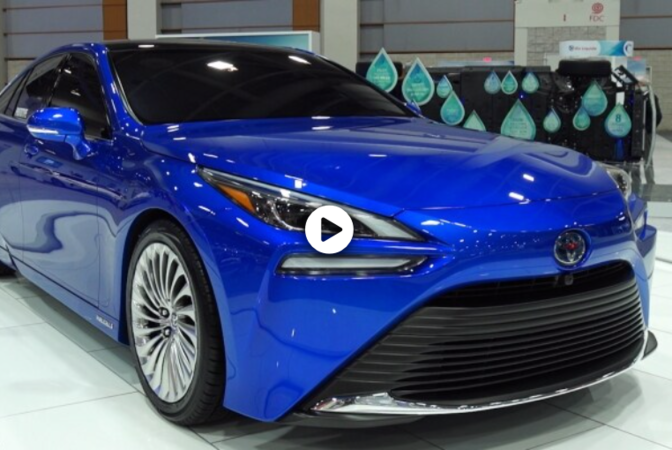
The plug-in electric car is having its moment. But despite false starts, Toyota is still trying to make the fuel cell happen. #ศาสตร์เกษตรดินปุ๋ย

#ศาสตร์เกษตรดินปุ๋ย : ขอบคุณแหล่งข้อมูล : หนังสือพิมพ์ The Nation

https://www.nationthailand.com/auto/30382918?utm_source=category&utm_medium=internal_referral

The plug-in electric car is having its moment. But despite false starts, Toyota is still trying to make the fuel cell happen.

Feb 27. 2020
By The Washington Post · Faiz Siddiqui · BUSINESS, TECHNOLOGY 

SAN FRANCISCO – Many Saturdays, amateur photographer Tadashi Ogitsu treks the roughly 160 miles up to Yosemite National Park to attempt the perfect shot, timing his arrival to the golden hour before sunset. But he wanted an electric vehicle to lessen the environmental impact.

Concerned about charge times and range limitations of the current crop of plug-in vehicles, the 54-year-old settled on a Honda Clarity, a sensible four-door sedan. But it doesn’t run on gasoline. Ogitsu’s car is a hydrogen-fuel-cell vehicle, which allows him make the round trip from the Bay Area and back on a single tank of fuel.

“I wouldn’t have any chance using battery-electric” said Ogitsu, who works as a physicist at the Lawrence Livermore National Laboratory. “There is no flexibility.”

Ogitsu is one of the 8,000 or so early adopters of hydrogen-fuel-cell vehicles in California, guinea pigs in an experiment by automakers, industry boosters and state officials to power an emissions-free driving future by turning to the universe’s most abundant element. The cars have electric motors, but are refueled with hydrogen in a style more like their gasoline-powered counterparts. The hydrogen mixes with oxygen to create electricity inside the fuel cell to power the motor. The only byproduct is water, which spews from the car like emissions from a gasoline car’s tailpipe.

In California, the vehicles typically come with up to $10,000 in tax savings and a $15,000 fuel card, good for about three years of free hydrogen fuel, lessening the blow of a $60,000 pricetag. Compared to typical plug-in cars that travel about 100 to 370 miles on a single charge, hydrogen-fuel-cell vehicles promise 300 to 400 miles per fill-up, similar to the highest-mileage gas-only cars.

But despite those selling points, hydrogen-fueled cars have long lagged behind their battery-electric counterparts in adoption, a gap that they appear increasingly unlikely to overcome. Although Tesla has helped drive widespread consumer adoption, along with easy ways to charge up at home and on the road, hydrogen-fueled vehicles haven’t made it past early buyers. With just 44 public fueling stations in California by January, the fleet has been persistently plagued by sparse coverage; the cars are also more expensive.

A review of U.S. Department of Energy data also showed that outside of California, the build-out of hydrogen refueling infrastructure stagnated over the past decade as electric vehicles rose. While there were 58 public and private hydrogen stations in the country in 2012, the number had grown to only 61 by the end of 2019 – as the share grew more and more concentrated in California, which doubled its network of stations over that time while states such as New York saw their hydrogen pumps close.

“What challenges fuel-cell technology faced 10 years ago have been compounded by the increased adoption of pure electric vehicles over the past 10 years,” said Karl Brauer, an auto industry analyst who is the executive publisher of Autotrader and Kelley Blue Book.

Tesla chief executive Elon Musk has blasted the technology as “mind-bogglingly stupid,” referring to the components as “fool cells.”

Meanwhile, the Golden State has more than half a million plug-in electric vehicles. Tesla’s affordability proposition – an electric car with far better range than competitors at a bargain-luxury price, combined with generous government tax incentives – attracted buyers to the cars. With the growth of those battery cars, fuel cells and their decades of investment risk being left behind, experts say.

Still, Japanese competitors are doubling down in a renewed effort to persuade drivers in California, Hawaii and East Asia to make the jump to hydrogen. Toyota, the world’s most valuable car company, is increasing its production of its Mirai fuel-cell car to 10 times its current output for the 2021 model year, when it introduces a fresh version of the car aimed at aspirational buyers, like Tesla’s Model S did for electric cars nearly a decade ago.

Honda and Hyundai are offering their own fuel-cell models to lure buyers in California, where Toyota first introduced its Mirai in 2015. Following the 2011 Fukushima nuclear disaster, resource-starved Japan began shifting to a cleaner hydrogen economy, and the country’s automakers followed suit by introducing consumer hydrogen cars.

The automakers say the fuel-cell bet represents an investment in democratizing electric vehicles.

“To put it bluntly, it’s too early to [favor] any single technology because people continue to want choice,” said Stephen Ellis, manager of fuel-cell vehicle marketing at Honda’s American division. “One of the things we’re learning is, for example, multiunit dwellings don’t lend themselves to having lots of charging opportunities for all the tenants in the building. That’s one example where fuel cell can work extremely well.”

But with minimal adoption of hydrogen vehicles so far, retailers have struggled to reach economies of scale to lower their prices – despite significant state funding. The vehicles are expensive to produce and dealers must rely on tax incentives and offers of free fuel to persuade buyers to gamble on hydrogen. A report by California says the most common price of hydrogen is $13.99 per kilogram, which translates to about $5.60 per gallon of gasoline, but that National Renewable Energy Laboratory has estimated hydrogen prices could fall to $10 to $8 per kilogram between 2020 and 2025. (According to AAA data as of Tuesday, a gallon of regular gas in California cost about $3.49.)

“I think I would say that fuel cell is probably 10 years behind the battery,” said Tyson Eckerle, a fuel-cell booster who serves as deputy director of zero emission vehicle market development in Democratic California Gov. Gavin Newsom’s Office of Business and Economic Development. “I mean, you’ve seen a proliferation of battery cars and it’s super exciting, right? The challenge will be now bridging [fuel-cell vehicles] from that early adopter into the mass market.”

The biggest challenge to California adoption stems from a lack of fuel, and a related lack of convenience.

For owners, the trouble began with sparse availability of fuel pumps, which are dotted around two major urban centers, Los Angeles and the San Francisco Bay area.

In June, an explosion rocked the facilities at Air Products and Chemicals Inc., which supplies hydrogen to many of the Bay Area’s hydrogen pumps. Because there was no backup plan, the single incident diminished supply to large parts of the state.

That led to a worsening fuel shortage, prompting owners to park their cars and turn to Toyota and Honda for loaners, lest the companies risk the perception of leaving early adopters out to dry.

Erin Fogarty, who leased a Toyota Mirai, was lured to the car by the promise of $15,000 of free fuel. The inability to fill up easily, however, made her experience more of a cautionary tale.

“There’s been many times that I’ve tried to fill up in San Jose; the [fuel] latches are broken or they need repair again,” said Fogarty, who held onto the car despite the challenges. “We’ve missed dance classes and personal training classes and stuff that really costs a lot of money and truly impacts our quality of life.”

Major automakers had to urge early buyers to stick with them through the trouble. Toyota forgave owners’ payments last fall and offered loaners to lessees who couldn’t get around. Jackie Birdsall, a senior engineer with Toyota who is involved in the research and development of fuel-cell vehicles, said that the supply shortage was an “unfortunate experience” and that the company has tried to alleviate the pain.

“California is a very unique use case in that we have the highest number of fuel-cell vehicles for the lowest amount of hydrogen dispensers,” said Birdsall, contrasting the state to Japan and Europe. “We’re really stretching the capabilities of the hydrogen infrastructure, and the entire world is watching California to see how it’s working.”

That’s true in Los Angeles, too, where fuel pumps remain sparse compared to widely available gasoline and electric-vehicle charging infrastructure. Ally Rose said she pulled up to the Woodland Hills fueling station in her 2018 Toyota Mirai one day when the driver of another hydrogen-fuel-cell vehicle abruptly approached from behind and slammed down the fuel lever.

“You’re done,” he said, according to Rose, who said the owner was wary that her car would suck the last drops of hydrogen from the only station for miles.

Amid her chronic inability to fuel, Rose persuaded Toyota to pay for her to rent a car: a Tesla Model 3.

Shane Stephens, founder and chief development officer of FirstElement Fuel, which runs the hydrogen retail network True Zero, said the Santa Clara explosion was a learning experience that resulted in suppliers and retailers putting redundancy in place – building backup plans – so that one incident doesn’t create a network-wide shortage.

California officials are promising to support dozens of new hydrogen fueling stations in the state over the next five years. The goal is to build 1,000 stations by the end of the decade, a network that could provide roughly the coverage of California’s 8,000 or so gas stations. By January, True Zero was operating 20 stations and hoping to expand its network to more than 70 stations over the next five years.

Toyota, meanwhile, is expanding Mirai production from 3,000 to 30,000 for the 2021 model year, aiming it at a more mainstream consumer. Going forward it, will have more of a sports-car feel: a lower, more minimalist profile and slanted roof, along with promised improved performance and handling through a driver-oriented switch from front- to rear-wheel drive.

“We initially launched the vehicle to demonstrate the technology will [work],” said Birdsall, the senior engineer with Toyota. “Now we want a vehicle that really gains mass appeal that people see and they want to drive,” she said, adding that it “is really meant to introduce hydrogen fuel cells in a sexy way to the customer and try to bring them on board.”

But even as some say it’s too soon to make any definitive conclusions about the path forward, automakers and public officials are under increasing pressure to solve hydrogen’s challenges, as early adopters turn in the first leased vehicles in a few years and consider whether to stick with hydrogen-powered cars for the long haul.

The fuel-cell vehicle, with a similar federal rebate and an even higher state rebate, has not taken off over the same period that Tesla gained a foothold on the battery-electric market. Beyond the differing timelines, Eckerle, the government official, thinks the fuel cell essentially democratizes the shift to electrification, which creates inherent challenges.

“I think really it comes down to infrastructure,” he said. “The major difference [is] you can launch a battery-electric car in a market based on single-family homes with garages. . . . But with hydrogen, that’s all public infrastructure. So until you have those stations and critical mass, you can’t really launch a market.”

Deadly Tesla crash tied to technology and human failures, NTSB says #ศาสตร์เกษตรดินปุ๋ย

#ศาสตร์เกษตรดินปุ๋ย : ขอบคุณแหล่งข้อมูล : หนังสือพิมพ์ The Nation

https://www.nationthailand.com/auto/30382861?utm_source=category&utm_medium=internal_referral

Deadly Tesla crash tied to technology and human failures, NTSB says

Feb 26. 2020
File Photo of Tesla/ Syndication Washington Post, Bloomberg

File Photo of Tesla/ Syndication Washington Post, Bloomberg
By The Washington Post · Michael Laris · NATIONAL, BUSINESS, TECHNOLOGY, TRANSPORTATION

Both car and driver contributed to the 2018 crash of a Tesla in California that left a father of two dead, and federal regulators have shown a “lack of leadership” in addressing safety problems with partly automated vehicles, investigators said Tuesday.

The investigation underscored questions about the safety and marketing of Tesla’s “Autopilot” system.

Robert L. Sumwalt III, chairman of the National Transportation Safety Board, pointed to a “lack of system safeguards to prevent foreseeable misuses of technology.”

“Industry keeps implementing technology in such a way that people can get injured or killed,” Sumwalt said. “If you own a car with partial automation, you do not own a self-driving car. Don’t pretend that you do.”

The NTSB also cited “shortfalls” in how the U.S. Department of Transportation has overseen partial automation in cars made by Tesla and other manufacturers. NTSB officials said that although the National Highway Traffic Safety Administration has numerous open investigations into Tesla vehicles, the regulator has been “misguided, because it essentially relies on waiting for problems to occur rather than addressing safety issues proactively.”

NHTSA said it is reviewing the findings and has long recommended that technology developers use “appropriate driver-vehicle interaction strategies in deployed technology” and has offered resources to make it easier for them to do so.

The March 23 crash that killed Walter Huang after he dropped off his son at preschool was just one of 36,560 road deaths in the United States in 2018.

But it drew broad – and, to Tesla, unwelcome – attention to the company and potential problems with the high-end technology that is so central to the Silicon Valley electric car pioneer’s brand. After the crash, Tesla placed blame on Huang, an Apple engineer, saying “the only way for this accident to have occurred is if Mr. Huang was not paying attention to the road.”

But days before Huang’s Tesla drove off Highway 101 and into a barrier in Mountain View, the car’s Autopilot had made a “left steering movement toward” the same area, the NTSB found. Huang caught it in time, investigators said, and he told relatives the same problem had occurred in the same place multiple times before.

Despite that history, Huang was over-reliant on the Autopilot system, the NTSB found, noting that he used his iPhone 8 while behind the wheel and that a strategy game called Three Kingdoms was “active during his commute to work.”

The five-member NTSB board on Tuesday unanimously found the crash was caused by “system limitations” in Tesla’s “Autopilot” feature, “and the driver’s lack of response due to distraction likely from a cellphone game application and overreliance on the Autopilot partial driving automation system.”

The NTSB also said Tesla’s” ineffective monitoring of driver engagement” – it gauges the “torque” a driver puts on the steering wheel as a proxy for whether the person is paying attention while using Autopilot – also contributed to the crash and “facilitated the driver’s complacency.”

And it said Huang likely would not have been killed if California state transportation officials had fixed a crash “attenuator” that was supposed to offer protection when a car hits a highway barrier; it had been hit earlier and not yet fixed.

Tesla’s collision avoidance systems “were not designed to, and did not, detect the crash attenuator,” so there was no warning to Huang as his car headed toward the barrier and there was no automatic emergency braking, the NTSB said.

The car veered off the road “due to limitations of the Tesla Autopilot vision system’s processing software to accurately maintain the appropriate lane of travel,” the NTSB said. And the company did not address an earlier recommendation that it should restrict use of Autopilot to the particular conditions it is designed to handle, investigators said.

Tesla executives did not respond to questions about the technological problems or what had been done to fix them.

The company, in a letter to Sen. Edward J. Markey (D-Mass.) in December, provided data indicating that its customers who use Autopilot are significantly less likely to crash and said “making sure the driver is attentive and able to take over at any time is a cornerstone of our feature development and validation, and something we continue to improve . . .”

In a 2018 statement, Telsa said, “according to the family, Mr. Huang was well aware that Autopilot was not perfect and, specifically, he told them it was not reliable in that exact location, yet he nonetheless engaged Autopilot at that location.”

Huang’s family has sued Tesla, saying that “based on Tesla’s advertising and promotional material” Huang “reasonably believed the 2017 Tesla Model X vehicle was safer than a human-operated vehicle because of Defendant’s claimed technical superiority regarding the vehicle’s autopilot system.”

“The vehicle should not leave a marked travel lane and accelerate, without the input of the operator, in such a way as to cause damage, harm or injury,” according to the lawsuit filed in Santa Clara County Superior Court.

Among its recommendations, the NTSB called on NHTSA to evaluate whether Tesla’s partially automated systems “pose an unreasonable risk to safety” and to use NHTSA’s “applicable enforcement authority to ensure that Tesla Inc. takes corrective action” if they do. It also called on phone and other electronics makers, including Apple, to install a “lockout mechanism” that would disable distracting functions when a car is moving, among other measures.

Tesla executives have bristled at the NTSB scrutiny, which led to an unusual public dust-up and flashes of mutual frustration.

In a rare move, Tesla was removed as a party to the investigation. The NTSB, an independent federal body that investigates airplane, boat and highway crashes, generally brings manufacturers, government officials and others together for the painstaking process of deciphering the probable causes of major crashes. That process can take a year or two, an eternity in the tech world, but the results are widely trusted.

Tesla’s party status was revoked after the automaker released information about the crash. Tesla says it chose to withdraw and accused the NTSB of being “more concerned with press headlines than actually promoting safety.”

At a November hearing on the federal investigation into the fatal crash of a self-driving Uber SUV, Sumwalt pointed to what he called Uber’s openness with investigators, and contrasted it with the approach of Tesla chief executive Elon Musk.

“I did notice when I talked to their CEO he did not hang up on me,” Sumwalt said, referring to Uber.

“We chose to withdraw from the agreement and issued a statement to correct misleading claims that had been made about Autopilot – claims which made it seem as though Autopilot creates safety problems when the opposite is true,” Tesla said in a 2018 statement.

The company also noted that NHTSA, which is part of the U.S. Department of Transportation, regulates automobiles, adding that the company has “a strong and positive relationship” with NHTSA.

“Lot of respect for NTSB, but NHTSA regulates cars, not NTSB, which is an advisory body. Tesla releases critical crash data affecting public safety immediately & always will. To do otherwise would be unsafe,” Musk tweeted in April 2018.

Huang’s crash was not the first time a Tesla driver was killed while using Autopilot, nor would it be the last, and NTSB officials voiced frustration because they said sufficient changes had not been made by the company and others.

In 2016, a speeding Tesla driver in Williston, Fla., crashed into a truck that turned in front of him. At the time, Tesla said “neither Autopilot nor the driver noticed the white side of the tractor-trailer against a brightly lit sky, so the brake was not applied.”

Musk later said that it was “very likely” a new radar-based braking system would have prevented the crash.

In 2017, NHTSA said it found no defects in the Autopilot system in use at the time of that crash. The regulator’s broader federal review of dozens of Autopilot crashes did point to industry-wide challenges.

“Many of the crashes appear to involve driver behavior factors, including traveling too fast for conditions, mode confusion, and distraction,” the investigators wrote. Mode confusion is the idea that it is unclear who is in control, the car or the driver, and occurred “during attempted Autopilot activations” and “after inadvertent overrides.”

In 2019, a driver using Autopilot in Delray Beach, Fla., crashed into a tractor-trailer that emerged from a private driveway and slowed in the middle of a highway, blocking the Tesla’s path, the NTSB said.

Neither the Tesla driver nor the Autopilot system “executed evasive maneuvers,” and the car’s roof sheared off as it went under the truck, according to the NTSB.

Tesla’s followers are trying to piggyback off Elon Musk’s sales wins #ศาสตร์เกษตรดินปุ๋ย

#ศาสตร์เกษตรดินปุ๋ย : ขอบคุณแหล่งข้อมูล : หนังสือพิมพ์ The Nation

https://www.nationthailand.com/auto/30382848?utm_source=category&utm_medium=internal_referral

Tesla’s followers are trying to piggyback off Elon Musk’s sales wins

Feb 26. 2020
By Syndication Washington Post, Bloomberg · Gabrielle Coppola · BUSINESS, US-GLOBAL-MARKETS

Tesla has been a trailblazer for direct-to-consumer sales, but the path for other electric-vehicle startups is still pretty thorny.

Plug-in truck maker Rivian Automotive Inc., which aims to begin selling its R1T pickup and R1S SUV late this year without a franchised dealer network, had hoped to build its first store in Colorado, where Tesla has three. But almost a year after raising the idea with state legislators, it’s still lobbying them — with EV enthusiasts and car dealers lining up to testify for and against.

Rivian will instead open its first showrooms in California, which makes it easier for newcomers than most other states that have tough, decades-old franchise laws designed to protect car dealers.

Tesla has spent years lobbying states to loosen these laws, which ban car manufacturers from owning or operating their own stores. Tesla, which sells cars at fixed prices online, now has showrooms or galleries — spaces to display vehicles without technically selling them — in 28 states. It did that largely by finding loopholes and negotiating deals limited to its own business.

The Model 3 maker reached a settlement last month in the home state of General Motors and Ford Motor when a Michigan court effectively allowed Tesla to bypass laws preventing most auto manufacturers from selling directly to consumers.

To pry open the door further, Rivian is waging a state-by-state campaign on behalf of its operations and those of others to come. The effort is led by Jim Chen, a former Tesla lobbyist who’s now vice president of public policy at the Michigan-based startup.

“These laws were never intended to shut out competition between different brands,” Chen said by phone last month. “A manufacturer should freely be able to choose whether it wants to enter the franchise system or sell directly.”

Dealers, of course, feel differently. They say cars aren’t suited for online-only sales and that franchise laws protect consumers. Tim Jackson, president of the Colorado Automobile Dealers Association and a vocal Tesla critic, helped kill Rivian’s proposal last year, which would have allowed any company solely making EVs to sell them in Colorado without dealers.

“We don’t want to further broaden, or further make accessible the factory-to-consumer direct sales model,” Jackson said in an interview last month. “We prefer, of course, the franchise model.”

Jackson was back at the legislature in Denver on Feb. 18 with a posse of dealers to thwart Rivian’s latest proposal, which would expand the carve-out to any car manufacturer with EVs to sell. The bill has survived in the state senate so far, in part with new language that addresses dealers’ fears by reiterating their exclusive rights to sell existing brands in specific geographic areas.

One might think Colorado, which became the 10th state to adopt California’s electric-vehicle mandate last September, would be relatively friendly territory for Rivian. But even with bipartisan sponsorship and the backing of newly elected Democratic Governor Jared Polis, passage seems far from assured.

With an onslaught of new electric models coming from automakers like Ford and Volkswagen, dealers worry that such exceptions could give all manufacturers free rein to compete directly against them.

Traditional carmakers are already beginning to shake up their retail models to sell EVs. Volkswagen announced Feb. 19 it’s using a new approach in Germany for its ID family of electric cars. Dealers will receive a commission and bonus but will no longer negotiate price or arrange financing or insurance — an important profit source.

Other startups intend to follow Tesla’s lead. California-based Lucid Motors wants to sell its luxury electric sedan, the Air, through its own network of stores.

Rivian, which raised nearly $3 billion last year from investors including Amazon.com and Ford, has also introduced bills in Washington, New York and Pennsylvania. At the same time, it plans to open stores in friendlier states including California, Florida, Massachusetts and Utah, Chen said. The first ones will open around Los Angeles and San Francisco in the next year.

Like Tesla, Rivian will allow people to set up a test drive, configure, order online and take home delivery.

It’s also planning a subscription service that will include finance and insurance, following the lead of Porsche and Volvo Cars, Chief Executive Officer R.J. Scaringe said in an interview last month. Volvo dealers in California last year petitioned state regulators to investigate the company’s Care by Volvo program, arguing it violates franchise laws.

The plan to service cars is still a bit opaque, leaving Rivian open to criticism that it can’t provide adequate maintenance for its vehicles. But Chen told legislators at the hearing in Denver this month that Rivian plans to establish service centers and mobile service teams — like Tesla does — and that it may rely on its strategic investors for help with infrastructure to distribute auto parts.

The automotive arm of privately held Cox Enterprises, which owns a stable of auto businesses including Kelley Blue Book and Manheim auction services, put $350 million into Rivian in September. That’s raised the hackles of some dealers, who share data and buy ads and used cars from Cox.

“We do business with Cox Automotive,” said Thom Buckley, a Colorado dealer who testified at the hearing. “I’m very concerned about doing business with a vendor who will compete with us.”

Nissan warns about future of European plants as Brexit weighs #ศาสตร์เกษตรดินปุ๋ย

#ศาสตร์เกษตรดินปุ๋ย : ขอบคุณแหล่งข้อมูล : หนังสือพิมพ์ The Nation

https://www.nationthailand.com/auto/30382787?utm_source=category&utm_medium=internal_referral

Nissan warns about future of European plants as Brexit weighs

Feb 25. 2020
By Syndication Washington Post, Bloomberg · Tara Patel · BUSINESS, WORLD, US-GLOBAL-MARKETS, ASIA-PACIFIC, EUROPE

Nissan gave the starkest warning yet on the future of the Japanese group’s car factories in western Europe, with a plant in the U.K. threatened by Brexit and another in Spain suffering from a slump in demand.

The Sunderland site in England, which makes models that account for the bulk of European sales, remains under a cloud of uncertainty, Gianluca de Ficchy, chairman of Nissan Europe, said Monday in a press conference near Paris.

Should Britain fail to reach a free-trade agreement with the European Union, a resulting 10% tariff on cars and parts could not only spell the demise of the plant, which sends about three-quarters of its output to the continent, but also of Nissan’s entire European strategy, the executive said.

“We would not be viable,” he said. “We just wouldn’t be able to sell our cars.”

Nissan’s latest warning on Sunderland, the U.K.’s biggest auto plant, comes after Prime Minister Boris Johnson began talks aimed at hammering out a trade deal with the EU before the end of the year. Adding to the pressure on the Asian manufacturer are declining sales and profitability.

Nissan cut its full-year profit outlook this month and scrapped its year-end dividend payout, with the carmaker’s stock down about 21% since the start of 2020. A turnaround plan isn’t due for another three months.

Sunderland makes the Qashqai, the Nissan’s European best-seller, along with the Juke and the electric Leaf. De Ficchy raised the possibility that the models could be made at partner Renault SA’s plants, but such a production upheaval would be costly and take years to put in place at a time when the car market is becoming increasingly competitive and undergoing an technological shift.

Read more: Nissan Warns U.K. Plant Won’t Be Viable If Brexit Triggers Tariffs

“My working hypothesis is to stay in Europe with a factory in England,” de Ficchy said. Nissan nevertheless sees lower European sales in 2020, mostly due to its model range, and last year opted not to make the X-Trail SUV in Britain.

To encourage a revival, Nissan unveiled a new version of its Juke crossover, aimed at the European market, earlier this month. The same platform is being used by Renault to assemble the latest versions of the Clio supermini and Captur crossover, built across the Channel in France.

In Spain, Nissan’s Barcelona plant is experiencing a drop in volumes and “is a subject that we are examining,” de Ficchy said. Nissan has met Spanish unions to explain a need “to review our strategy in Europe including in Barcelona.”

Nissan has already announced it will shed 600 jobs at the plant and any further decisions could be made in a few months, the executive said. The site also makes pickups for Daimler AG and Renault, with the German company recently announcing that it plans to pull production.

The Japanese firm has been mired in near-constant turmoil since the November 2018 arrest of former Chairman Carlos Ghosn on charges of financial misconduct. Hiroto Saikawa, Ghosn’s successor and accuser, was ousted over issues of his own compensation, while efforts are ongoing to improve fraught relations with partner Renault.

By slashing its dividend payout to the lowest level since 2011 and pursuing a plan to cut 12,500 jobs globally, Nissan is trying to free up cash for investment in the next-generation technology needed to stay competitive in electric vehicles and self-driving cars. It has promised a detailed mid-term plan in May, which will be coordinated with one by Renault.

The alliance, which also includes Mitsubishi Motors Corp., agreed last month to coordinate strategies and name leaders for regions and technologies in a move designed to reverse managerial paralysis and a rapid deterioration in profitability over the past year.

Nissan has also made cars for more than a decade at a plant in St. Petersburg to serve the Russian market.

Audi pauses electric-car production as tesla zooms ahead #ศาสตร์เกษตรดินปุ๋ย

#ศาสตร์เกษตรดินปุ๋ย : ขอบคุณแหล่งข้อมูล : หนังสือพิมพ์ The Nation

https://www.nationthailand.com/auto/30382767?utm_source=category&utm_medium=internal_referral

Audi pauses electric-car production as tesla zooms ahead

Feb 24. 2020
By Syndication Washington Post,  Bloomberg · Christoph Rauwald · BUSINESS, US-GLOBAL-MARKETS

Audi halted output of its E-Tron SUV to resolve production issues including battery-supply bottlenecks as it prepares to flank the model with a sportier variant, underscoring the struggles traditional automakers face to boost electric cars and challenge Tesla Inc.

Manufacturing at Audi’s factory in Brussels stopped on Thursday and the plant will remain idle until Tuesday, a company spokeswoman said Monday by phone. Audi sold about 26,400 E-Tron cars last year, she said, declining to comment on estimated deliveries this year.

Audi, Volkswagen AG’s largest profit contributor, had to delay the E-Tron’s market launch after its unveiling in September 2018. Audi recalled its first all-electric model last year over potential fire risk. It plans to add the E-Tron Sportback version — which features a more coupe-like declining roofline — later this year as well as a performance sedan dubbed the E-Tron GT.

Former BMW AG executive Markus Duesmann will take over as chief executive at Audi in April to accelerate restructuring efforts and try to restore the brand’s technological edge. In November, the company mapped out plans to cut roughly 15% of its German workforce by 2025 as part of a broader push to lift earnings by 6 billion euros ($6.5 billion).

The E-Tron production outtage in Brussels was earlier reported by Belgian newspaper L’Echo. LG Chem Ltd. supplies the battery cells for the model.

Europe floors it in the race to dominate car batteries #ศาสตร์เกษตรดินปุ๋ย

#ศาสตร์เกษตรดินปุ๋ย : ขอบคุณแหล่งข้อมูล : หนังสือพิมพ์ The Nation

https://www.nationthailand.com/auto/30382647?utm_source=category&utm_medium=internal_referral

Europe floors it in the race to dominate car batteries

Feb 22. 2020
The Contemporary Amperex Technology factory in Arnstadt, Germany. MUST CREDIT: Bloomberg photo by Krisztian Bocsi.

The Contemporary Amperex Technology factory in Arnstadt, Germany. MUST CREDIT: Bloomberg photo by Krisztian Bocsi.
By Syndication Washington Post, Bloomberg · Laura Millan Lombrana, Chris Reiter, Richard Weiss · BUSINESS, WORLD, US-GLOBAL-MARKETS, EUROPE 

Outside the German town of Arnstadt, workers for China’s Contemporary Amperex Technology Co. Ltd. (CATL) are hustling to build Europe’s biggest electric-car battery plant.

The site, which covers an area equivalent to about 100 football fields, previously housed one of the continent’s largest solar-panel factories. During a visit in October, wooden crates filled with surplus equipment were stacked up outside the metal-clad structure to make way for car-battery-making equipment. Roaring bulldozers swarmed a nearby lot to prep for construction of a new building.

The $2 billion project-one of about a half dozen battery factories under construction in Germany alone-worries European policymakers, who are desperate to ensure their auto industry doesn’t lose competitiveness in the transition to electric vehicles. EV sales in Europe are expected to jump to 7.7 million in 2030 from just under half a million in 2019, according to forecasts from BloombergNEF. Those vehicles will mainly be powered by batteries from Asian manufacturers like CATL, unless European companies fight back and build a local supply chain.

EVs and clean transportation are at the heart of the European Union’s Green Deal, a more than 1 trillion euro ($1.1 trillion) European Commission policy initiative aimed at making the EU carbon neutral by 2050. The plan includes replacing large power plants with smaller, more local, renewable energy sources while eliminating combustion engines in buses, cars, and trucks. After betting on dirty diesel for too long, European politicians and the heads of Volkswagen, Daimler, and BMW are vowing to build a greener supply chain for all of those vehicles.

“If we let China own the battery, then we lose out on the centerpiece of electric cars,” says German Deputy Economy Minister Thomas Bareiss. “I’m not sure that’s the best approach for our auto industry.”

Europe has only a patchwork of small battery players. The biggest chunk of the value of a European-made electric car belongs to Asia-China, Korea, and Japan account for more than 80% of the world’s EV battery production, and companies such as CATL, LG Chem, and Samsung SDI control Europe’s biggest battery factories.

To change that, the European Commission set up the Battery Alliance initiative. In December it approved 3.2 billion euros in aid for projects approved or currently under way at 17 companies, including BASF, BMW, and Fortum. The measure is meant to encourage greater investment in factories by these and other European companies.

National governments are also committing large sums to battery efforts, especially in Germany. In early February its economy minister, Peter Altmaier, announced a 5 billion euro project for battery cells in Germany and France. Altmaier has been a leading proponent of developing a local battery sector. The goal, as he sees it, is to build “the best and most sustainable batteries in Germany and Europe.” There is no other option, he has said, if its carmakers are to succeed.

European players, including Belgian materials technology company Umicore and German chemical company BASF, make battery materials from catalysts to cathodes. But there is little mining of key ingredients like lithium, and no capacity to turn those resources into high quality vehicle batteries. A desire to bring lithium and other materials closer to the production line is partly driving the efforts. “Lithium hydroxide doesn’t travel well,” say Andreas Scherer of AMG Advanced Metallurgical Group. “It doesn’t like to sit in a bag in the belly of a ship for six weeks-that’s bad for quality.”

Stringent environmental rules and community opposition to more mines could slow the momentum. Land owners and environmental groups fear the resulting emissions and pollution. Finland’s Keliber in November postponed its planned initial public offering and the construction of a lithium mine on appeals against its environmental permit.

Some countries are pushing ahead. Support from the European Commission to mine battery metals-and the potential riches-motivated Dietrich Wanke to trade a career in Australian mining for the green hills of the Lavant valley in Wolfsberg, Austria. Wanke is the Chief Executive Officer of European Lithium, a startup mining company that aims to become a supplier of raw material for batteries. It operates from an abandoned test tunnel in Austria, where government geologists looking for uranium in the 1980s found lithium instead.

“We won’t be able to produce the absolute cheapest material. It is clearly a commodity mined in Europe, according to European laws and environmental standards,” Wanke says. “It must be seen as a unique product, contributing to the reduction in carbon dioxide emissions in Europe.”

The Wolfsberg project is traditional hard-rock mining, with the ensuing environmental consequences. Another startup, or junior, miner, Vulcan Energy Resources Ltd., claims it will produce the material with no CO₂ emissions by adding lithium-extraction facilities to existing geothermal power plants feeding on underground reservoirs in southern Germany. The method is similar to what Warren Buffett’s Berkshire Hathaway Inc. is researching in California’s Salton Sea. “By 2028, forecasters see Europe alone needing more lithium than is being produced in the entire world today,” says Vulcan Energy’s managing director, Francis Wedin.

Still, the efforts now could be too little, too late. “European manufacturers have dragged their feet,” says Jose Lazuen, senior automotive practice analyst at Roskill. “Asian producers started taking positions in Europe two or three years ago, because they knew Europeans would need batteries.”

While others are talking, the Chinese are busy building out capacity in Arnstadt for what’s shaping up to be another clean energy fight. The battleground is a former solar panel factory where two previous German owners failed to compete against low-price competition from China. As Germany’s deputy economy minister, Bareiss, says, “It’s about staying in the game and playing a role in a critical technology.”

Daimler warns Germany may get tougher on Mercedes diesel cars #ศาสตร์เกษตรดินปุ๋ย

#ศาสตร์เกษตรดินปุ๋ย : ขอบคุณแหล่งข้อมูล : หนังสือพิมพ์ The Nation

https://www.nationthailand.com/auto/30382599?utm_source=category&utm_medium=internal_referral

Daimler warns Germany may get tougher on Mercedes diesel cars

Feb 22. 2020
By Syndication Washington Post, Bloomberg · Christoph Rauwald, Karin Matussek · BUSINESS, WORLD, US-GLOBAL-MARKETS, EUROPE
Daimler is warning of a further crackdown on Mercedes-Benz diesel vehicles in Germany, after mounting legal and regulatory costs already crimped profits last year.

It is likely the country’s motor industry watchdog, KBA, will rule that other vehicles made by the luxury brand were also “equipped with impermissible defeat devices,” Daimler said Friday in its annual report, referring to banned software designed to bypass emissions tests.

Daimler has temporarily halted delivery and registration of some models, according to the report. The German manufacturer also said that complying with stricter emissions rules in some countries will be difficult.

The carmaker’s comments indicate further difficulties lie ahead on diesel cars. Daimler took a massive earnings hit in 2019 and slashed its payout to investors to the lowest level since the financial crisis, blaming an 870 million euro ($940 million) fine by German prosecutors and costs related to reducing diesel-car emissions. The penalty coincided with record investments to boost the manufacturer’s electric-car lineup and expansion of software operations. Daimler is also putting aside 2 billion euros in restructuring costs.

Chief Executive Officer Ola Kallenius has acknowledged in recent months that meeting Europe’s tougher emission targets will be a challenge in the next two years because consumers may not move away from choosing combustion engines fast enough.

Under the bloc’s rules, carmakers face penalties if the average of the total passenger vehicles they sell exceeds a level of CO2 emissions. Mercedes-Benz, which makes large-cylinder gas and diesel guzzlers in addition to battery-run models, plans to make use of so-called super credit incentives on electric and plug-in hybrid models to lower its average.

Daimler could face a total of more than 1.5 billion euros in fines in 2020 and 2021 for missing European CO2 limits, according to BloombergNEF estimates. To avoid such penalties, electric vehicles sales must account for about 10% of total deliveries in the region by 2021, compared with about 2.8% last year.

The company’s average fleet emission in Europe was 137 grams in 2019, well above the 95 grams per kilometer stipulated by the rules that start taking effect this year and gradually get tougher by the end of 2021.