Auto exporters wish baht could be fortified

ศาสตร์เกษตรดินปุ๋ย : ขอบคุณแหล่งข้อมูล : หนังสือพิมพ์ The Nation

https://www.nationthailand.com/auto/30374336

Auto exporters wish baht could be fortified

Aug 06. 2019
By The Nation
225 Viewed
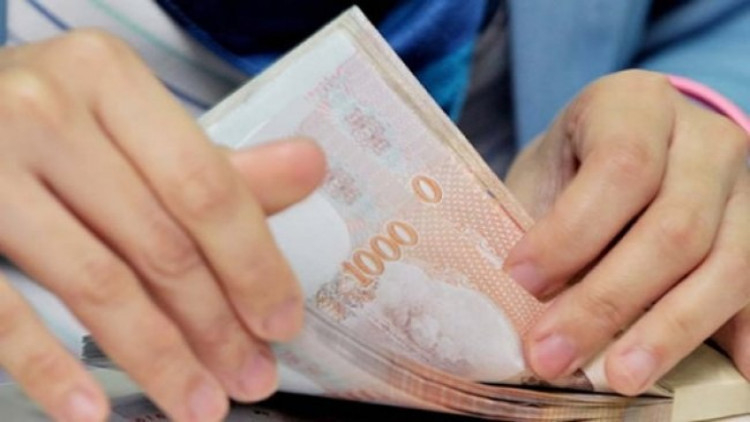
Auto exporters are hurting because of the baht’s appreciation and some are calling for the government to take remedial action.

The baht his a six-year high last month at 30.62 to the dollar and is still fluctuating, raising concern among major auto exporters like Mitsubishi and Toyota.

The two companies export more than 600,000 vehicles combined from Thailand each year.

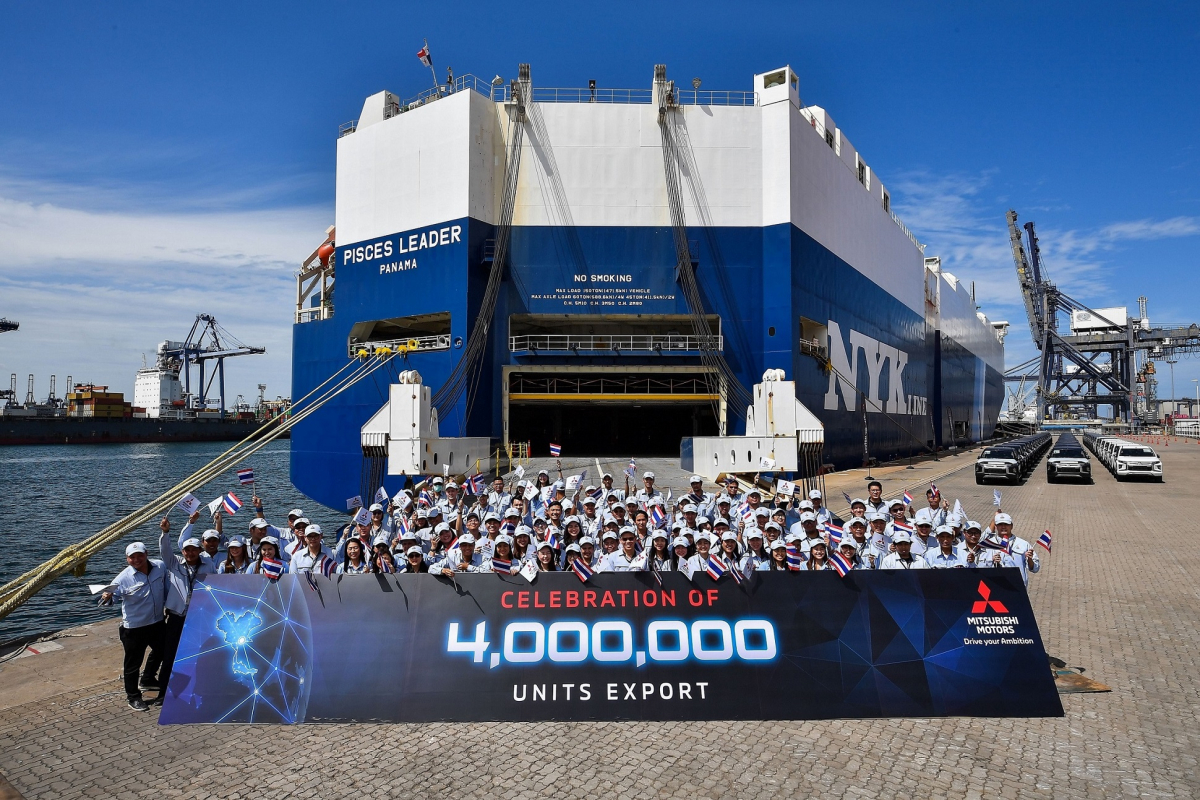
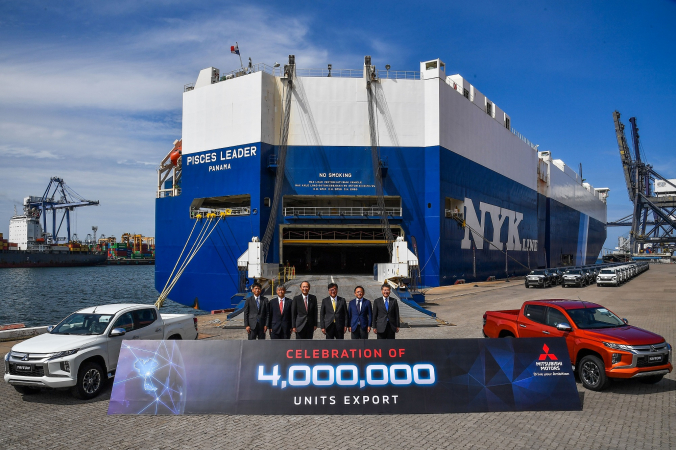
Mitsubishi Motors Corp chairman Osamu Masuko, in Thailand recently to celebrate his company’s four-million-unit export milestone, said it was deeply concerned about the baht’s appreciation.

“If we have a chance to talk with the government, our request would be to help look after the baht’s value and, if possible, we would like it to be 10 per cent lower than at present,” he said, adding that the feeling is shared not just at Mitsubishi but across an industry that depends on exports.

Mitsubishi’s assembly plant at Laem Chabang Port is its largest outside of Japan and employs 7,000 people.

Toyota Motor Thailand Co Ltd president Michinobu Sugata acknowledged that the strong baht had affected the company’s exports.

But he said Toyota – Thailand’s top auto producer – had not adjusted plans or lowered production as a result.

He said Toyota wants to stick to its global plan for 2019, which includes exporting 270,000 units, down 8 per cent from last year due to lower demand in Central America, South America and Oceania.

“The stronger baht is affecting not only Toyota but other industries that depend on exports also,” Sugata said.

“Perhaps our profits will be lower due to an expected decline in domestic sales and exports. We are still holding on to our 577,000-unit production target, which is just 2 per cent lower than last year.”

Mitsubishi roars ahead after hitting series of major road bumps

ศาสตร์เกษตรดินปุ๋ย : ขอบคุณแหล่งข้อมูล : หนังสือพิมพ์ The Nation

https://www.nationthailand.com/auto/30374333

Mitsubishi roars ahead after hitting series of major road bumps

Aug 06. 2019

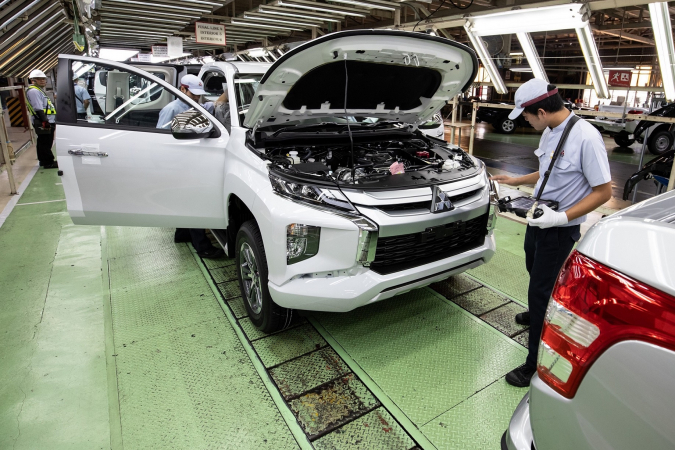
The Triton is assembled at Mitsubishi's Laem Chabang plant in Chon Buri.

The Triton is assembled at Mitsubishi’s Laem Chabang plant in Chon Buri.
By The Nation159 Viewed

After years of turmoil, Mitsubishi is firmly on the road again and is likely to maintain its No 4 position in the Thai automobile market when 2020 dawns.

The Japanese automaker, which suffered heavy decline for several years and was overtaken by smaller brands like Mazda, unleashed a strong performance during the first six months of this year.

Sales rocketed by 10.3 per cent to 45,343 units, the company said in a statement on Tuesday. In comparison, the total market grew by 7.1 per cent at 523,770 units.

Mitsubishi is currently ranked No 4 in Thai auto sales standings – after Toyota (171,502 units), Isuzu (89,177 units) and Honda (64,699 units). It roared past Nissan (34,577 units) by more than 10,000 units, while Mazda (31,931 units) has dropped to No 6 after sales plunged by 24.3 per cent as customers wait for new models such as the next-generation Mazda3 to be launched later this year.

Mitsubishi’s performance has been aided by increasing popularity of its Triton pickup, which accounts for 40 per cent of total Mitsubishi sales in the kingdom. Other models in its line-up include the Mirage and Attrage eco-cars (26 per cent), the Xpander MPV (19 per cent) and the Pajero Sport PPV (15 per cent).

The company had also just celebrated its 4-million-unit export milestone from Thailand last month.

This year Mitsubishi exported a combined total of 177,715 CBU (completely built up) and CKD (completely knocked down) vehicles.

Mitsubishi Motors (Thailand) president and CEO Morikazu Chokki said the outstanding first-half performance was a result of the company’s improved vehicle lineup and network expansion.

The automaker will enhance its line-up in the second half of 2019 to cater efficiently to different customer groups. It recently launched special versions of the Triton as well as the redesigned Pajero Sport, and more will come during the remaining months of 2019.

Apart from its dealer network expansion, a new corporate identity and design will be introduced in more than 65 outlets this year, with the target of upgrading all 240 outlets in the country by 2021.

Mitsubishi will also introduce the M-Drive mobile application, developed to help drivers take care of their vehicles via a fast, accurate and connected platform. It features real-time updates on vehicle status and information on smartphones running Google Android and Apple iOS.

Technology agency links with Mercedes-Benz on electric vehicle batteries

ศาสตร์เกษตรดินปุ๋ย : ขอบคุณแหล่งข้อมูล : หนังสือพิมพ์ The Nation

https://www.nationthailand.com/auto/30374144

Technology agency links with Mercedes-Benz on electric vehicle batteries

Aug 03. 2019
By The Nation

758 Viewed

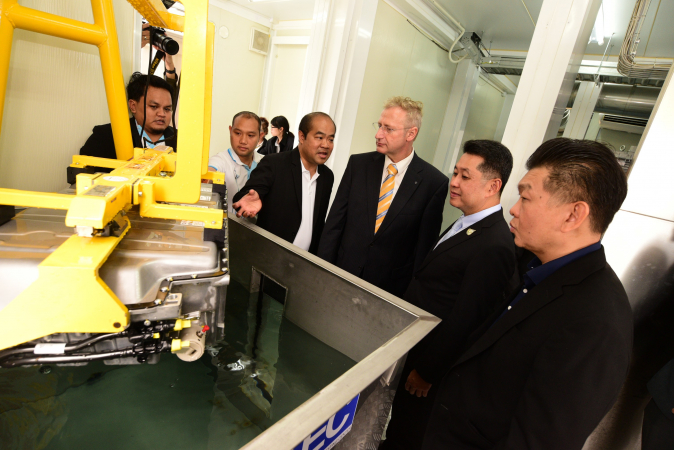
The National Science and Technology Development Agency (NSTDA) has partnered with Mercedes-Benz Manufacturing (Thailand) Ltd to collaborate in research, development and technology transfer to support battery testing for electric vehicles (EVs).

Both said in a joint statement that the NSTDA’s PTEC (Electrical and Electronic Products Testing Centre) is now the first electric vehicle battery testing laboratory in Thailand. Its mission is to help establish the country’s infrastructure to support the automotive industry in the future.

The activities include the establishment of a battery-testing laboratory and autonomous vehicle testing laboratories.

By targeting the use of battery testing lab facilities in Thailand, the organisations aim to develop knowledge and to sharpen skills of testing professionals in the country to meet the policy standard for the modern automotive industry, as well as to develop the production base of EV batteries in Thailand in order to align with international quality standards.

Mitsubishi splashes out Bt7 billion for facility upgrade in preparation for new PHEV

ศาสตร์เกษตรดินปุ๋ย : ขอบคุณแหล่งข้อมูล : หนังสือพิมพ์ The Nation

https://www.nationthailand.com/auto/30374002

Mitsubishi splashes out Bt7 billion for facility upgrade in preparation for new PHEV

Jul 31. 2019
Mitsubishi will produce the Outlander PHEV in Thailand starting in 2020.

Mitsubishi will produce the Outlander PHEV in Thailand starting in 2020.
By The Nation

611 Viewed

Mitsubishi will invest a total of Bt7 billion (Y25 billion) in restructuring its Laem Chabang assembly complex and a new print shop, ahead of the start of production of its first PHEV in Thailand next year.

Mitsubishi Motors Corp chairman Osamu Masuko said the Laem Chabang production facility is Mitsubishi’s largest outside of Japan but no major improvement had taken place in the past 20 years. The company decided to invest Bt7 billion to raise the competitiveness level of the facility.

“Of the investment, Y12 billion was spent on a new paint shop which is now operational. The remaining Y13 billion will go towards modernisation of the production lines, including incorporation of robots to raise efficiency and lower costs,” he said, adding that the final plan will be thrashed out in September.

The Japanese automaker which received the Board of Investment (BoI) approval for investment benefits in March this year, is planning to start production of the Outlander plugin hybrid in the second half of 2020. Annual production is estimated at 3,000 units which will initially go on sale in the Thai market.

Mitsubishi’s auto exports from Thailand reach 4 million

ศาสตร์เกษตรดินปุ๋ย : ขอบคุณแหล่งข้อมูล : หนังสือพิมพ์ The Nation

https://www.nationthailand.com/auto/30373981

Mitsubishi’s auto exports from Thailand reach 4 million

Jul 31. 2019
By The Nation

410 Viewed

After first exporting the Lancer Champ compact car to Canada in 1988, Mitsubishi’s auto exports from Thailand have now reached the 4-million-unit milestone.

Mitsubishi, which has three auto assembly plants in Thailand at the Laem Chabang deepsea port in Chon Buri, along with an engine plant in Sriracha, produced 440,000 vehicles in the Kingdom last year (including knock-down units), with 347,000 of them being exported.

“The Asean region centred on Thailand is one of the important areas for Mitsubishi Motors,” Osamu Masuko, chairman of Mitsubishi Motors Corp (MMC), said at a ceremony held to celebrate the 4-millionth exported vehicle, a Triton pickup bound for Europe.

“In addition to contributing to the region through businesses such as providing products that meet each country’s demands, employment, human resources development, investment as well as local production and export, we have been contributing to local societies through our corporate citizenship activities,” he said. “We will continue to expand our activities in the Asean region to further contribute to solving social issues.”

Morikazu Chokki, president and CEO, Mitsubishi Motors (Thailand) Co Ltd, said: “In line with our global strategy, we will continue to explore and bring new technologies to Thailand’s automotive industry. For customers here in Thailand and more than 120 countries around the world, our products will continue to excite with versatility, driving confidence and functionality.

“We will remain equally committed to Thailand as we move on to achieve bigger milestones together with suppliers, business partners, and our staff.”

Mitsubishi Motors started its operations in Thailand back in 1961 and in 1988 became the first auto maker to export Thai-built vehicles.

Current Mitsubishi exports from Thailand include the Triton pickup truck (70 per cent), Mirage and Attrage subcompact cars (22 per cent), Pajero Sport PPV (5 per cent) and others (3 per cent).

Mitsubishi has also been enjoying strong growth in the domestic market, with sales surging almost 40 per cent to 20,227 vehicles during the first six months of 2019. In June alone, it sold 3,490 vehicles for 32.9 per cent growth.

Chevrolet’s ‘Tech Eyes’ spot the problem faster

ศาสตร์เกษตรดินปุ๋ย : ขอบคุณแหล่งข้อมูล : หนังสือพิมพ์ The Nation

https://www.nationthailand.com/auto/30373908

Chevrolet’s ‘Tech Eyes’ spot the problem faster

Jul 30. 2019
By The Nation

231 Viewed

Chevrolet is utilising online diagnostic technology to solve complex repair problems more effectively.

The automaker said “Tech Eyes” support from engineers at the General Motors Thailand Technical Assistance Centre are helping Chevrolet dealerships countrywide.

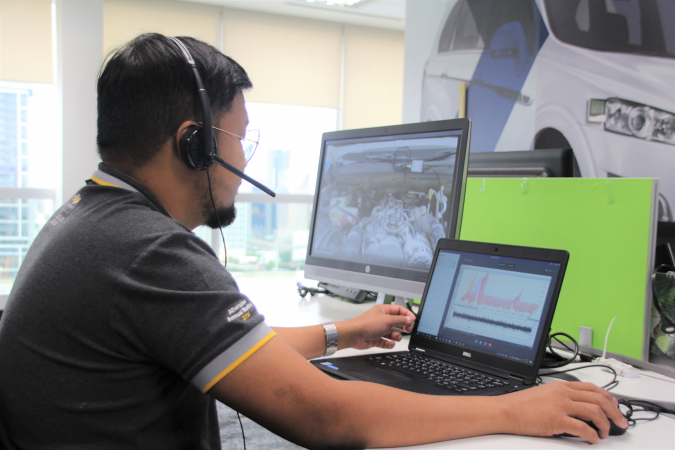
Tech Eyes enables service technicians to teleconference with GM engineers using a wireless headphone/microphone, HD webcam, high-speed Internet and Skype to diagnose and fix issues in real time.

Chevrolet said diagnosis takes a third of the time.

“Tech Eyes is a quicker, more efficient and effective process compared to how it was done in the past, when technicians didn’t have eyes-on support and had to rely on text-based communication in the GM system or phone calls to troubleshoot repair problems,” said Worapan Phunman, aftersales development director at Chevrolet Thailand.

“Tech Eyes enables our technicians to complete repairs faster for our customers’ convenience and satisfaction.”

He said Chevrolet Thailand introduced Tech Eyes last year and is one of the few automotive brands in Thailand to offer such a service.

Chevrolet plans to upgrade Tech Eyes this year with flexible “snake” cameras to reach hard-to-see places in the engine, such as the combustion chamber and oil gallery, as well as the latest noise- and vibration-measurement tools.

The latter will be especially useful during new 4G Wi-Fi-enabled test-drives to help technicians diagnose noise and vibration problems that are easier to detect while driving.

Nice little Leaf blowin’ on the wind

ศาสตร์เกษตรดินปุ๋ย : ขอบคุณแหล่งข้อมูล : หนังสือพิมพ์ The Nation

https://www.nationthailand.com/auto/30373812

Nice little Leaf blowin’ on the wind

Jul 28. 2019
Priced at Bt1.99 million, the Nissan LEAF is the first EV from a major auto maker in Thailand.

Priced at Bt1.99 million, the Nissan LEAF is the first EV from a major auto maker in Thailand.
By Kingsley Wijayasinha
The Nation

555 Viewed

Nissan has big plans for the Leaf, the first electric car offered by a major automobile company in the Thai market.

Nissan reckons that by being the first, it can establish a strong foothold in this market when EVs (electric vehicles) start taking over the world in the foreseeable future.

However, Nissan know the feat won’t easy, since Thai consumers – like most people around the world – remain wary of the technology and the operating range, as well as safety. It will be years before there is a significant level of public acceptance.

To date, almost 100 units of the Leaf have been sold here, which is a great start for Nissan, although well below sales of the recently launched MG ZS EV, which has surpassed 700 units.

Clearly the Bt1.99-million pricing of the Leaf is the culprit here. Priced at just Bt1.19 million, the MG ZS EV is finding purchasers much more easily.

Nevertheless, Nissan says the two EVs are in different segments – and with that big a price difference, they’d better be.

During the past week Nissan went ahead with its marketing drive for the Leaf, staging a driving event for the local media and customers in Bangkok. The goal was to display its sporty performance and its real range in actual Bangkok driving.

The Leaf comes with a 40-kWh lithium battery and a 150-horsepower AC synchronous electric motor, driving the front wheels with 320Nm of torque available from 0rpm.

The second-gen Leaf’s battery pack has been upgraded, offering a 60-per-cent increase in energy density while retaining the same size.

Nissan claims the Leaf can accelerate from 0-100kmh in 7.9 seconds and reach a top speed of 150kmh.

But what everyone really wants to know is how far it can go before the battery’s dead. According to NEDC standard figures, the Leaf can cover 311 kilometres cruising, which means that, in real-world driving (which involves acceleration and deceleration, traffic jams and high speeds on the motorway), you’d go much less than suggested.

While EVs operate efficiently at lower cruising speeds and are able to regenerate electricity in stop-and-go traffic, the battery gets sucked dry with any form of high-speed driving, even for a short period of time. And, unfortunately, the Leaf is no exception.

I took the Leaf from the event headquarters on Rama IX Road to the Riva Floating Café in Nakhon Pathom (pretty nice place with its natural atmosphere, I must say) and back, with speeds varying according to the road type – from stop-and-go on Rama IX to highway speeds on the expressway.

I’d guess that the Leaf can cover 220-250 kilometres on a single charge.

Thanks to the electric motor, there’s as much as 320Nm of torque ready to be served from 0rpm, offering super-quick pedal response and acceleration, from any given speed.

The electricity cost depends on several factors, but Nissan is looking at the Bt200 level per full charge or Bt0.50 per kilometre (compared to Bt1.50 and above for regular cars with internal combustion engines).

And, due to having fewer components than cars with internal combustion engines, the Leaf promises significantly lower maintenance costs, while the battery is made up of small modules that can be replaced individually to help save costs.

Nissan is offering an eight-year/160,000km warranty for the battery and five-year/100,000km warranty for other electrical components in the Leaf.

One of the new features that Nissan is enthusiastic about is the e-Pedal, which goes a step further in harvesting energy from regenerative braking. Lift off the pedal and the car starts to brake (with deceleration rate of up to 0.2g), just like you experience in a golf cart. With the e-Pedal function on, you can practically move and stop the car with just the accelerator pedal.

However, while some might like the convenience (and the added level of energy regeneration), some will not.

“My wife is going to kill me if I put this on while driving in traffic,” said my co-driver as he signalled me to look at his head rocking back and forth while he pressed and eased off the accelerator.

Nissan says it takes 12 hours to fully charge the Leaf with a regular 3.6kWh 3-phase wall outlet via the universal cable, but the time is halved with a 6.6kWh wall box. For quick visits to charging stations, it takes 40 minutes to reach 80 per cent capacity.

The number of charging stations for EVs (as well as PHEVs) is growing in Thailand and it should be easy to plan long-distance trips, especially with smartphone apps (from Nissan as well as charging-station operators).

The Leaf is a five-door hatchback that offers good practicality. The steering is feather-light and, although the suspension provides nice ride comfort at cruising speeds and it feels very stable, the Leaf doesn’t take hard bumps very well, especially those in downtown Bangkok.

While there’s no noise from the motor (a good point for having no engine), you seem to be bothered more by the tyre and wind noise (even with the 0.28 coefficient of aerodynamic drag stated by Nissan), particularly around 120km/h.

The Leaf offered in Thailand is currently available only with a white body and black roof. Nissan says other colours will be considered in the future, along with possibly more features.

It’s a shame that the Pro Pilot autonomous driving and automatic parking functions have not been included in the Leaf’s Thai package. Two reasons – lane markings in Thailand are often unclear, which could cause the system to malfunction, and it’s cheaper without them.

The Leaf is imported and lower specs mean that Nissan can quote lower pricing and minimise the amount of import duty the Leaf has to carry.

It’s a good thing that Nissan has left many of the intelligent safety features untouched. They include Forward Collision Warning and Braking, Moving Object Detection, Drive Attention Alert and Around View Monitor (AVM).

While the exterior design is pretty clean and understated, the cabin design is a small disappointment. The first thing I felt inside the Leaf was that it looks just like a normal car with nothing to impress you with, like the huge displays in the Tesla or even the Toyota Prius hybrid.

The black interior has blue stitching and there’s a tiny, low-res touchscreen on the centre console, plus a multi-information display on the fascia that provides a large amount of information through various screens.

There is Bluetooth, USB input and a 12-volt outlet, just the regular features you’d find in a normal car.

There is good usable space in front as well as visibility, but things aren’t too good at the rear, with little headroom for six-footers and small rear windshield for you to see through while reversing (luckily there’s AVM).

The rear seat backrest is split-foldable and helps to increase the standard 435-litre luggage area further, although you don’t get a totally-flat floor, due to the battery pack.

The Nissan Leaf is a good example of what we can expect from the latest batch of EVs that are appearing in Thailand. But with its rather hefty price and removed features, it’s unlikely to become a household name. Rather. It will be a nice second car for the family that’s eco-friendly and economical.


NISSAN LEAF EV SPECS

Motor: AC synchronous

Battery: Lithium-ion

Battery capacity: 40kWh

Max power: 150ps/3,283-9,795rpm

Max torque: 320Nm/0-3,283rpm

Transmission: 1-speed automatic

0-100kmh: 7.9 secs

Top speed: 150km/h

Cruising range: 311kms (NEDC)

Charging time (normal): 12 hrs (3.6kW), 6 hrs (6.6kW)

Quick charging (alert to 80 per cent): 40 mins

Average fuel economy:

Average CO2: 0g/km

Suspension (f/r): McPherson strut, coil spring/torsion beam/coil spring

Steering: powered rack-and-pinion

Turning circle: 10.8 metres

Brakes (f/r): vented disc/disc

Length: 4,480mm

Width: 1,790mm

Height: 1,540mm

Wheelbase: 2,700mm

Track (f/r): 1,530/1,545mm

Weight: 1,523kgs

Wheels: 17-inch alloys

Tires: 215/50 R17

Fuel tank capacity:

Price: Bt1.99 million

Distributor: Nissan Motor Thailand Co Ltd

Hino starts construction of integrated production hub in Thailand

ศาสตร์เกษตรดินปุ๋ย : ขอบคุณแหล่งข้อมูล : หนังสือพิมพ์ The Nation

https://www.nationthailand.com/auto/30373755

Hino starts construction of integrated production hub in Thailand

Jul 26. 2019
By THE NATION

302 Viewed

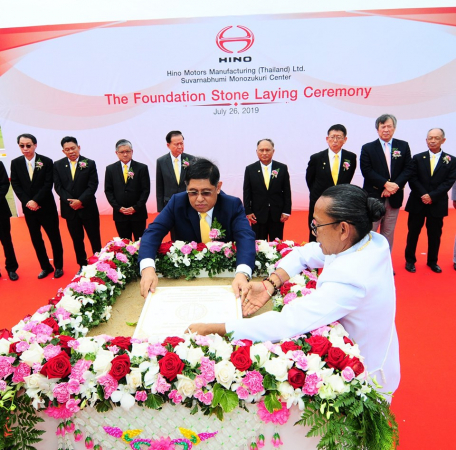
Hino Motors Manufacturing (Thailand) Ltd (HMMT) today (July 26) held a stone-laying ceremony for its manufacturing and development centre at the Asia Industrial Estate Suvarnabhumi in Bang-po district, Samutprakarn province, signifying start of construction with completion scheduled for 2021.

The 400,000-square metre centre will supply trucks and buses to the Asean region.

Apichin Jotikasthira, deputy permanent secretary of the Ministry of Industry, was present as guest of honour at the ceremony. Others included Ninnart Chaithirapinyo, chairman of Toyota Motor Thailand Co Ltd; Makoto Minagawa, senior managing officer, Hino Motor Ltd; Tetsuya Daikoku, managing officer, Mitsui & Co Ltd as well as officials from government agencies.

The Bt3.65-billion centre features facilities for product planning, R&D and manufacturing, integrated with a test course and an operation base.

The project aims to offer Thai and Asean consumers ‘best-fit’ products that exceed their expectations by 2024.

The investment will contribute to the Thai economy in terms of exports, transfer of technology and specialised skills. It will also enhance employment in the areas of research and design, company executives said.

Somchai Pleankaew, president of Hino Motors Manufacturing (Thailand) Ltd, said: “In the next two years, after our first production and development centre in Asean has started operation, Hino will not merely be a domestic manufacturer of trucks and buses, but we will position Thailand as an important development and production base for the Asean region and beyond. The centre will comprise a model factory with the latest technologies, integrated with the development office and a test course. Our goal is to develop and produce the ‘best fit’ products for our customers, both in Thailand and Asean, in a timely manner. The new centre will be a safe and environmentally-friendly workplace for our staffs. Moreover, we will collaborate with Toyota and Hino groups to enhance each company’s competitiveness and further support development of the Thai economy and industries as well as others in the Asean region”.

Overview

Name: Suvarnabhumi Monozukuri Center

Location: Bang Bo, Samutprakarn Province

Site area: 400,000 sqm

Functions: Product planning, development, and production of Hino vehicles

Products: Light- and medium-duty trucks and buses

Operation startup date: 2021

Employees: Approx 1,300 (at start of operation)

Investment: Bt3.65 billion

New Peugeot dealer on hiring spree

ศาสตร์เกษตรดินปุ๋ย : ขอบคุณแหล่งข้อมูล : หนังสือพิมพ์ The Nation

https://www.nationthailand.com/auto/30373745

New Peugeot dealer on hiring spree

Jul 26. 2019
By The Nation

235 Viewed

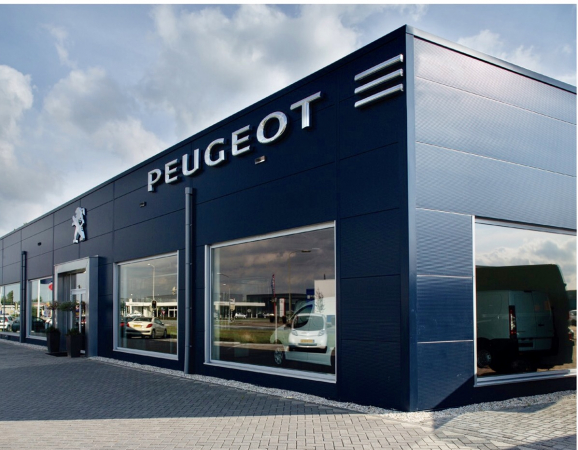
The newly-appointed distributor of Peugeot in Thailand and dealer Lion Automobile are recruiting a large number of employees through ‘walk-in-interview’ at its head office in Ladprao Soi 112, on August 2-3.

Applicants can also send in resumes online at recruit@mgc-asia.com and LINE: hrmgc and call 088-809-9478 and 091-120-0718 for more information.

At the contract-signing earlier this month, Peugeot Thailand CEO Joerg Breuer said the company would launch two new models this year – the 3008 and 5008, and another six models within the next two years. The 3008 and 5008 will be formally introduced at the upcoming BIG Motor Sale 2019, to be held from August 16-25 at the Bangkok International Trade and Exhibition Center (Bitec).

He said Peugeot would build a new dealership network across the country, and was seeking local partners. A prototype showroom and service centre will open in Bangkok in the last quarter of the year, followed by others in Bangkok and upcountry early next year.

Isuzu ready to inspect pickups before B20 biofuel use

ศาสตร์เกษตรดินปุ๋ย : ขอบคุณแหล่งข้อมูล : หนังสือพิมพ์ The Nation

https://www.nationthailand.com/auto/30373742

Isuzu ready to inspect pickups before B20 biofuel use

Jul 26. 2019
Isuzu recommends B20 inspections for D-MAX models from 2012 onwards.

Isuzu recommends B20 inspections for D-MAX models from 2012 onwards.
By The Nation

311 Viewed

Isuzu has invited its customers to bring in their pickups for inspection before using the B20 biofuel, the company announced on Friday (July 26).

Panatda Chennavasin, vice president of Tripetch Isuzu Sales Co Ltd, said the move was aimed at helping promote the government’s initiative to increase B20 usage in small diesel vehicles. Benefits include lower fuel costs as well as lower dependency on fuel imports.

“Isuzu, a leader in diesel technology and biodiesel fuel, gladly supports the Thai government’s initiative which will help farmers suffering from dropping palm oil prices, as well as lower the amount of fuel we need to import,” she said.

Panatda said Isuzu believes promoting B20, which is cheaper than regular diesel, is one of the strategic moves to ensure sustainability for the country in the long run.

Models that Isuzu recommends for inspection are the D-MAX pickup from 2012 to present and all Mu-X models. Customers coming in for a B20 inspection package at Isuzu service centres will enjoy discounts in labour fee and parts. The offer is valid from Friday until December 30.