Leaders in Washington region pledge to increase speed of coronavirus vaccine rollout #SootinClaimon.Com

#SootinClaimon.Com : ขอบคุณแหล่งข้อมูล : หนังสือพิมพ์ The Nation.

Leaders in Washington region pledge to increase speed of coronavirus vaccine rollout

InternationalDec 31. 2020Annapolis designated areas in the city as Annapolis designated areas in the city as “recovery zones” for local retail, restaurant and hotel businesses to reopen and recover after shutting down due to the coronavirus. MUST CREDIT: Washington Post photo by Jonathan Newton Photo by: Jonathan Newton — The Washington Post

By The Washington Post · Meagan Flynn, Rachel Chason, Rebecca Tan 

Vaccine rollout has moved slowly in the Washington region and nationwide as the year comes to a close, though officials stressed Wednesday that they were moving to pick up the pace.

Virginia has distributed more than 285,000 doses of the vaccine to hospitals and long-term care facilities across the state, but as of Wednesday, only 54,295 people had received the shot.

Maryland has administered 36,669 doses of vaccine to health-care workers, first responders and those in long-term care facilities, but that represents less than 15% of the roughly 273,875 vaccine doses Maryland has been allotted.

The pace is similar across the nation: Although Operation Warp Speed, the federal vaccine rollout initiative, expected 20 million people to be inoculated by the end of the year, just 2.1 million people had been vaccinated as of Monday, according to Centers for Disease Control and Prevention figures. Federal officials said Wednesday that 14 million doses have been distributed to states.

President Donald Trump on Wednesday sought to blame states for the lagging rollout, telling them to “get moving!” in a Twitter message. His critics said the administration’s lack of planning was the problem.

“When you don’t make a plan and dismiss states’ need for coordination and strategy, this is what you get: a fouled-up vaccine distribution that’s going so slow it would take years,” Rep. Don Beyer, D-Va., wrote on Twitter.

Health officials in the Washington region addressed questions about the pace of vaccinations Wednesday as they braced for a possible uptick in coronavirus infections after holiday gatherings, even as a mid-December spike in cases has subsided slightly.

Maryland Gov. Larry Hogan, a Republican, said in a Wednesday interview on “CBS This Morning” that the state delivered initial batches of vaccines to every hospital, local health department and nursing home but that “they’re having a little bit of a time getting ramped up.”

He, too, cited a lack of financial support and planning from the federal government. Hogan said that while the state delivered shipments of the vaccines directly to hospitals and nursing homes, the staff at those facilities are developing their own distribution plans.

“It’s a massive undertaking, and they have to organize it in such a way that they can make sure to get the second dose in the couple-week period that is required,” Hogan said, referring to the vaccines’ two-dose regimen. “So it’s not just sticking needles in arms. There’s a lot of moving parts. And I think nobody is quite performing at the top capacity, and we’ve all got to work together to ramp it up.”

Planning has been complicated, in part, by the fact that federal estimates for vaccine allocation provided to states have not been set in stone, said Christy Gray, director of the Virginia Department of Health’s Division of Immunization.

“The actual amount of vaccine received in Virginia is a moving target and is dependent on when and how quickly vaccination doses are manufactured,” Gray said.

The state is expecting to receive an additional shipment of vaccine by Friday to bring its total allocation to 370,000 doses since the rollout began in mid-December. That’s lower than the 480,000 the state was planning to receive, which Gray said was because of a calculation error by Operation Warp Speed. Hogan also said Wednesday that Maryland received fewer vaccine doses than expected.

Erin Beard, a spokeswoman for the Virginia health department, said Operation Warp Speed included some vaccines in its initial estimate that weren’t immediately available for distribution.

Still, she said that despite some kinks to iron out, “54,295 vaccinations in two weeks is no small feat.”

“It is expected to be slower in the beginning, but it will get much quicker as we progress,” Beard said in an email. “The main challenges include delays in reporting data and dealing with new systems and operations, which are to be expected in the beginning of any operation at this scale.”

Residents of long-term care facilities in Virginia began receiving the vaccine Monday, with Walgreens and CVS assisting in the administration. Gov. Ralph Northam, a Democrat, on Wednesday visited Westport Rehabilitation and Nursing Center in Richmond, where nearly 300 residents and staff members were vaccinated.

Northam spokeswoman Alena Yarmosky said the governor is “proud of our progress but certainly knows we have a long way to go.” She added: “He understands this is a complex logistical challenge and he’s looking forward to the [pace] picking up.”

Virginia reported 4,048 new infections and 64 deaths Wednesday – topping Tuesday’s death toll to become the second-highest daily total of the pandemic – with hospitalizations up slightly since last week. Hospitalizations are down slightly in Maryland, which reported 2,628 new infections and 45 deaths Wednesday, while its seven-day average has fallen to 38 cases per 100,000 residents, compared with the Dec. 12 peak of 47 cases.

The District reported 223 new cases and five deaths Wednesday. The city does not have a publicly accessible vaccine dashboard but had administered at least 11,000 doses as of Tuesday, according to The Washington Post’s tracker. It is expected to receive 44,000 doses by next week.

A District Health Department spokeswoman said officials were not available Wednesday to answer questions about vaccine distribution but would have updates Monday.

In Maryland, Anne Arundel County Executive Steuart Pittman, a Democrat, on Wednesday cited stabilizing hospitalizations and case rates as his reason for allowing indoor dining at 25% capacity, reversing a Dec. 10 order that suspended such dining. Restaurants had sued over the order but remained open while a judge considered the case.

Pittman said he was pleased that metrics had slightly improved, crediting residents for responsible social behavior.

“We still expect a challenging surge in covid hospitalizations and a post-holiday case rate increase, but the improved forecast allows us to maintain our current level of restrictions,” he said.

Pittman’s new order requires restaurants to collect information from diners for contact tracing. He described closing indoor dining as “a last resort” but said he would not rule out the possibility of bringing back a ban if metrics show it is necessary.

The restaurants that had sued Pittman agreed to drop their case Wednesday.

Indoor dining is not allowed in Montgomery or Prince George’s counties, or in the city of Baltimore. Judges in those jurisdictions have upheld bans following challenges from the Restaurant Association of Maryland.

Montgomery County held its first vaccination clinic Wednesday for health-care workers and first responders. More than 1,300 people who live or work in the county made appointments to receive doses of the Moderna vaccine, health department spokeswoman Mary Anderson said. She emphasized that the county’s vaccination team is focused on those in the highest-priority groups and urged others to be patient.

Susan Dodge, 65, was among the first to be vaccinated at the White Oak Community Recreation Center. A midwife, she lives in Anne Arundel County and conducts home births in Montgomery, Prince George’s and elsewhere. After a year of worrying about whether she might expose her clients – or their babies – to the virus, getting vaccinated was an overwhelming experience, she said.

“This virus has taken over our lives for nearly a year,” Dodge said as tears welled in her eyes after receiving the shot. “This is a drip of hope.”

The clinic was set up with 15 stations staffed by members of the county’s vaccination team, which includes public health employees, school health nurses and EMTs. As people filed in, many expressed relief.

A volunteer paramedic said his wife would finally have peace of mind when he headed out to answer calls. A hospital worker snapped a selfie for her family.

Isa Brebbia, 22, said some people at the fire department where he works as a paramedic are doubtful of the vaccine. “There’s a lot of skepticism going around,” he said, but he decided it was better to get it, especially because both his parents are doctors.

“For all of our sake,” he said, “this seemed like the safer thing to do.”

– – –

The Washington Post’s Patricia Sullivan contributed to this report.

A Trump-touted covid therapy awaits proof to back up his boasts #SootinClaimon.Com

#SootinClaimon.Com : ขอบคุณแหล่งข้อมูล : หนังสือพิมพ์ The Nation.

A Trump-touted covid therapy awaits proof to back up his boasts

InternationalDec 31. 2020Stephen Hahn, commissioner of food and drugs at the U.S. Food and Drug Administration (FDA), center, speaks during a news conference in the James S. Brady Press Briefing Room at the White House in Washington on Aug. 23, 2020. MUST CREDIT: Bloomberg photo by Stefani Reynolds.Stephen Hahn, commissioner of food and drugs at the U.S. Food and Drug Administration (FDA), center, speaks during a news conference in the James S. Brady Press Briefing Room at the White House in Washington on Aug. 23, 2020. MUST CREDIT: Bloomberg photo by Stefani Reynolds.

By Syndication Washington Post, Bloomberg · Anna Edney

One day before the Republican National Convention kicked off, President Donald Donald Trump and top drug regulator Stephen Hahn held a White House press conference to tout emergency authorization of a promising covid-19 treatment.

Convalescent plasma, a soup of immune factors derived from the blood of recovered covid-19 patients, had shown “an incredible rate of success” and would “save countless lives,” Trump said Aug 23. Yet more than four months later and with more than 330,000 U.S. coronavirus deaths reported since the pandemic began, the jury is still out how much the treatment benefits patients, if at all.

It wasn’t the first or last time that Trump was to promote a therapy for covid-19 based on skimpy data. His faith in since-discredited hydroxychloroquine is well known, and he proclaimed Regeneron Pharmaceuticals Inc.’s antibody cocktail a wonder drug after receiving it to treat his infection in October. Now, as vaccines developed to slow the pandemic begin their roll-out, the saga of convalescent plasma highlights the lack of effective treatments for the killer virus.

As the pandemic consumed thousands of lives around the world, the FDA authorized the use of promising drugs with only early evidence to go on. From Gilead Sciences’s remdesivir to antibody treatments like Regeneron’s, drugs for covid-19 that were cleared to great fanfare have failed to gain backing from top scientists and infectious disease groups.

Convalescent plasma is supported by one of the fuzzier datasets, and just days after Trump’s August victory lap, Food and Drug Administration Commissioner Hahn began walking back remarks that exaggerated its effectiveness. National Institutes of Health advisers who compile covid-19 treatment guidelines said in September that there wasn’t enough evidence convalescent plasma works to recommend its use against the virus.

Data continues to support the FDA’s emergency authorization, Stephanie Caccomo, a spokeswoman, said in an email. The agency in September posted evidence that it said backs the use of convalescent plasma.

While one trial cited by the agency indicated a significant help to patients, others “tended to indicate a modest benefit.” The FDA acknowledged that the studies were less rigorous scientifically than it normally requires to prove efficacy.

The White House didn’t respond to a request for comment.

More than 100,000 people in the U.S. have already been treated with convalescent plasma. That includes a nationwide Mayo Clinic program that infused more than 90,000 people before the FDA’s emergency authorization.

Clinical trials that were supposed to clear up any doubts about the treatment were expected to read out in September or October, just a month or two after the FDA cleared it for emergency use. Those data have yet to appear, but the raging U.S. outbreak should soon serve to enroll more patients in those studies.

Still, the effect is likely to be much more modest than Trump or Hahn originally claimed, experts said.

“It became evident in most people, even when it works, it’s not a Lazarus thing,” said Christopher Austin, director of the NIH’s National Center on Advancing Translational Sciences. “The effect was going to be smaller.”

The center is leading or involved in key clinical trials that will finally offer insight into convalescent plasma’s efficacy more than 100 years after it began being deployed during pandemics. The rationale behind the treatment is that the antibodies people develop after enduring a disease will help newly diagnosed patients recover.

“We do not know whether it works” against covid-19, Austin said. “We all want to know the answer. I want to know the answer more than anybody. We have an obligation to future patients.”

Trials could produce critical data in January or February, Austin said, at least for a potential subset of people who respond to the therapy. Patients who receive convalescent plasma with a high level of antibodies early in their disease course appear to fare better. But whether certain age, race or gender groups are more likely to respond is still unknown.

Andrea Troxel, director of the Division of Biostatistics at New York University School of Medicine, is hoping to soon have answers as well. Troxel is the principal investigator of an effort to combine data from eight trials of convalescent plasma around the world. Among them is an NIH-sponsored trial at NYU Langone Health as well as studies in India, Spain, Belgium, and other countries.

Austin and Troxel are keeping in close touch with the FDA, which could possibly narrow its emergency authorization for the therapy based on what the studies reveal.

When the FDA cleared convalescent plasma over the summer, some researchers were concerned wider use would stymie enrollment in clinical trials. Troxel said this hasn’t been the case for the most part because the Infectious Diseases Society of America advised doctors against using convalescent plasma outside of clinical trials until a benefit was seen.

It’s part of a familiar pattern for covid-19 drugs touted by Trump. For example, the government has distributed hundreds of thousands of antibody therapies from Regeneron and Eli Lilly & Co. to hospitals around the country, but uptake has been minimal. Only 5% to 20% of the antibody treatments were being used, Moncef Slaoui, chief scientific adviser to the Operation Warp Speed drug and vaccine accelerator, said earlier this month.

Like convalescent plasma, antibody therapies are hoped to work best when used early to prevent high-risk patients from worsening. They must be infused typically in a hospital setting, which can be a tough sell for people who don’t feel very ill.

The antibody therapies are basically synthetic versions of convalescent plasma that are more complex and expensive to make. If convalescent plasma does work for some people, Austin said, the relative ease of getting it to patients could make it valuable.

“If you’re a rural hospital in Africa, you can give convalescent plasma,” he said. “You don’t need a supply chain, storage or a pharmacy. Heaven knows we need things like that, and we have areas like that in this country too.”

And drugs with even a potentially modest benefit can be helpful against the virus “both in terms of hospitalization and what we’re learning about its long-term effects,” said Megan Ranney, an emergency physician and associate professor at Brown University. The danger lies in over-promising, she said.

“There is no magic pill that you can take and suddenly avoid all the horrible effects of covid,” Ranney said. Implying otherwise is “dangerous because it gives people a false sense of assurance.”

Was 2020 the worst year ever? Historians weigh in. #SootinClaimon.Com

#SootinClaimon.Com : ขอบคุณแหล่งข้อมูล : หนังสือพิมพ์ The Nation.

Was 2020 the worst year ever? Historians weigh in.

InternationalDec 31. 2020Twenty thousand chairs, each representing 10 deaths from the coronavirus pandemic in the United States, are lined up on the Ellipse south of the White House. MUST CREDIT: Washington Post photo by Katherine Frey.Twenty thousand chairs, each representing 10 deaths from the coronavirus pandemic in the United States, are lined up on the Ellipse south of the White House. MUST CREDIT: Washington Post photo by Katherine Frey.

By The Washington Post · Michael S. Rosenwald

So, just to recap, the following events occurred in 2020:

– The coronavirus pandemic swept the globe, killing more than 1.7 million people (so far), including more than 337,000 (so far) in the United States.

– The president of the United States was tried and acquitted, after being impeached at the end of 2019.

– Protests stemming from several police killings of unarmed Black Americans erupted throughout the country, including just outside the White House, where federal law enforcement officers used tear gas on U.S. citizens.

– Wildfires devastated the U.S. West Coast and Australia.

– The president of the United States contracted the coronavirus and then dismissed it.

– Kobe Bryant and his 13-year-old daughter died in a helicopter crash.

The president of the United States disputed the valid results of a peaceful election. (He lost.)

– Alex Trebek died.

– Prince Harry and Meghan, Duchess of Sussex, broke up with the royal family.

– Murder hornets arrived.

As the year finally, mercifully, comes to a close, the above events – and more – have inspired the Internet’s meme machine to declare that 2020 is the worst year ever.

But it’s not just the Internet meme machine that thinks 2020 was the worst year ever.

Earlier this month, Time magazine ran an extraordinary cover image with a big red X drawn over the number 2020. “THE WORST YEAR EVER,” the cover line read. Time certainly wasn’t alone. A recent headline from the Hill: “Why 2020 really was the worst year ever.” Even the York Daily Record of Pennsylvania wondered: “Was 2020 the worst year ever? With pandemic, social unrest, election chaos, it’s in the running.”

Historians demur.

In a clever bit of marketing, the self-therapy app Bloom recently asked 28 historians from Yale, Oxford, Stanford and other major universities to choose the worst year in history – or, as they put it, the most stressful. British historian Philip Parker led the effort. Following a depressing dive down the rabbit hole of historical misery, Parker compiled a list of the top worst/most stressful years in world, British and U.S. history. Then the historians made their picks.

The worst year in world history wasn’t even a close contest.

It was 1348, the height of the Black Death, during which as many as 200 million people died. That would be like wiping out about 65% of the U.S. population. The Holocaust in 1944 ranked second, followed by 1816, when a volcano eruption in Indonesia blocked out the sun, starving millions. 2020 ranked sixth.

In U.S. history, 2020 was well down the list at No. 8, just behind the 2001 terrorist attacks on Sept. 11, the Cuban missile crisis of 1962, the tumult of 1968’s riots and assassinations, the 1918 flu pandemic, the Trail of Tears of 1838, the 1929 stock market crash marking the beginning of the Great Depression, and at the very, very top, 1862.

That was, most historians say, the grimmest year of the Civil War, when the country’s total collapse seemed imminent.

“It’s a symbol of a time when the nation almost broke apart,” Parker said in an interview, “and that, really, goes to the essence of what it is to be a country and a society. It’s almost like a dagger to the heart of the country.”

In many ways, Parker said, we’re still too close to 2020 to understand what its real ranking will be, seen through the lens of time passed.

“As Chairman Mao is reputed to have said about the French Revolution,” Parker said, “it’s a little too early to say.”

Samsung heir faces nine years in jail as bribery trial wraps #SootinClaimon.Com

#SootinClaimon.Com : ขอบคุณแหล่งข้อมูล : หนังสือพิมพ์ The Nation.

Samsung heir faces nine years in jail as bribery trial wraps

InternationalDec 31. 2020Jay Y. Lee, center, arrives at the Seoul Central District Court in Seoul, South Korea, on Dec. 30, 2020. MUST CREDIT: Bloomberg photo by SeongJoo Cho.Jay Y. Lee, center, arrives at the Seoul Central District Court in Seoul, South Korea, on Dec. 30, 2020. MUST CREDIT: Bloomberg photo by SeongJoo Cho.

By Syndication Washington Post, Bloomberg · Sohee Kim, Heesu Lee, Shinhye Kang

South Korean prosecutors requested a nine-year prison term for Samsung Electronics Co.’s Jay Y. Lee, seeking to put the heir apparent back in jail in a bribery case that rocked the nation and ignited a backlash against its most powerful conglomerates.

Special prosecutors proposed the sentence during a Wednesday hearing at the Seoul High Court, which will make its ruling on the billionaire’s fate Jan. 18. “There’s no denying that it has made a lot of positive impact on our society,” according to a transcript of closing arguments from prosecutors, referring to Samsung. “But just because there’s been an economic contribution, there should be no hesitation in legal enforcement based on the rule of law.”

The 52-year-old billionaire is fighting allegations of graft in a retrial of a case that started four years ago and led to his imprisonment and the ouster of former President Park Geun-hye. The outcome of the case could snarl succession at Samsung, just as Lee is expected to formally take the helm of the mobile and electronics giant after the death of his father in October.

The executive stands accused of making gifts to cement his control over the world’s largest smartphone maker and smooth his ascension. Lee served a year in jail before his release in 2018 after an initial five-year prison term was halved and suspended by an appeals court. But in August, the Supreme Court voided that decision, thrusting the executive back before a judge. Lee faced a tougher sentence this time — a minimum of five years — because the amount of alleged bribery acknowledged by the top court increased.

Yet experts viewed a decreasing chance of imprisonment as the trial drew to a close. Judges at the high court asked Samsung and Lee to impose measures to prevent illegal activity and improve credibility among the group. Lee responded by setting up an independent compliance committee and issuing a personal apology in May over past wrongdoings related to the succession process. He also pledged publicly not to hand down leadership of the Korea’s largest conglomerate to his children. The compliance committee’s activities will be factored into Lee’s eventual sentencing.

“Even though it’s tough and difficult, I’ll walk on the right path,” the billionaire said Wednesday in prepared remarks before the court. “I promise that I’ll create a company with the highest level of transparency and morality.”

“I will make sure, again, my children will not be mentioned in relation to the succession of the company. Samsung will never get into controversy over these related matters,” he added.

The bribery allegations stem from a controversial merger in 2015 between two Samsung units, which helped Lee gain control over the group. Prosecutors argued that Samsung offered horses and financial contributions, via an intermediary, to a confidante of former president Park to try and win the government’s support for the deal.

Lee, who stepped down from an internal director post, remains the tech company’s vice chairman and de facto leader. Although his father and chairman Lee Kun-hee died in October, the Samsung scion has not been immediately crowned his successor. Samsung is likely to hold off on naming Lee to that role at least until the trial is completed.

Separately, Lee is embroiled in another case related to the controversial 2015 merger, with allegations ranging from violation of capital market laws to breach of duty. Prosecutors indicted Lee in September and hearings are set to resume on Jan. 14.

Swedish PM slammed for shopping tour amid latest covid surge #SootinClaimon.Com

#SootinClaimon.Com : ขอบคุณแหล่งข้อมูล : หนังสือพิมพ์ The Nation.

Swedish PM slammed for shopping tour amid latest covid surge

InternationalDec 31. 2020Stefan Lofven, Sweden's prime minister, at a European Union leaders summit in Brussels on Dec. 10, 2020. MUST CREDIT: Bloomberg photo by Geert Vanden Wijngaert.Stefan Lofven, Sweden’s prime minister, at a European Union leaders summit in Brussels on Dec. 10, 2020. MUST CREDIT: Bloomberg photo by Geert Vanden Wijngaert.
By Syndication Washington Post, Bloomberg · Rafaela Lindeberg

A number of the most senior members of Sweden’s government, including the prime minister, have been caught apparently ignoring their own covid guidelines.

Prime Minister Stefan Lofven and Justice Minister Morgan Johansson were among those named in Swedish media this week for seeming to flout restrictions they insist must be followed if the country is to rein in the coronavirus.

Lofven went Christmas shopping in a mall without a face mask after explicitly appealing to Swedes to avoid such excursions ahead of the festive season. His spokesman has acknowledged the trip took place, which he says was “carefully planned” to avoid unnecessary risks.

The development adds a layer of potential embarrassment to Sweden’s handling of the covid crisis. The country initially defended its no-lockdown strategy, before backtracking in recent weeks amid a resurgence of cases that threatens to overwhelm its health-care system. Lofven is now trying to persuade parliament to give him the power to impose a full lockdown.

The government has already seen confidence in its covid strategy sink, with even King Carl XVI Gustaf delivering a rare rebuke for Sweden’s failure to contain the death toll. About 8,500 Swedes have died of covid-19, roughly seven times as many as in neighboring Denmark.

Lofven’s shopping trip lit up Twitter, with several of Sweden’s best known political commentators warning that the incident risks denting his credibility among voters.

“Who should follow the rules if not even the Prime Minister and the Minister of Justice do so?” Dagens Nyheter, Sweden’s biggest morning newspaper, wrote in an editorial published Tuesday evening.

Other government members have also reportedly engaged in conduct that breached covid guidelines, including Sweden’s Finance Minister Magdalena Andersson, Aftonbladet reported on Wednesday. According to the newspaper, she was seen in a ski rental shop in the popular Swedish winter resort of Salen, which is on the list of destinations the National Health Authority has warned against visiting.

With infection rates spreading since the fall, Lofven has had to step up his rhetoric entreating his countrymen to “refrain from staying in indoor environments such as shops, shopping centers.” Last month, he reminded Swedes “how dangerous” such conduct is.

At a briefing this month, Lofven said, “I hope and I think that everyone in Sweden understands the seriousness” of the situation.

A spokesman for Lofven said his Christmas shopping tours included purchases of alcohol and a present for his wife. He also visited a shop that fixes watches and looked for spare parts for his razor. His most recent known shopping trip was on Dec. 23.

Germany’s new virus deaths surpass 1,000 for the first time #SootinClaimon.Com

#SootinClaimon.Com : ขอบคุณแหล่งข้อมูล : หนังสือพิมพ์ The Nation.

Germany’s new virus deaths surpass 1,000 for the first time

InternationalDec 31. 2020

By Syndication Washington Post, Bloomberg · Daniel Schaefer, Raymond Colitt

Germany’s daily coronavirus deaths surpassed 1,000 for the first time since the beginning of the pandemic, underscoring the urgency facing Europe’s leaders to slow the spread and roll out vaccines.

There were 1,122 fatalities in the 24 hours through Wednesday morning, according to data from Johns Hopkins University. Along with the mounting death toll, the number of Covid-19 patients in German intensive care units has risen steadily, prompting warnings that the health-care system could become overburdened.

Germany joined its European Union partners in rolling out vaccinations last weekend, but officials have said it will take months for the program to have a tangible impact on contagion rates. Europe’s largest economy has so far inoculated almost 42,000 people, according to data from the RKI public health institute.

On Tuesday, the EU agreed to trigger an option to buy an extra 100 million doses of the shot developed by Pfizer Inc. and BioNTech SE. Vaccines from other producers will follow once they’ve been approved, European Commission President Ursula von der Leyen said on Twitter.

Europe has become an epicenter of the pandemic, with more than 400,000 coronavirus-related deaths and 16.2 million infections.

The rise in Germany’s fatalities comes as Chancellor Angela Merkel’s government considers extending a hard shutdown that was imposed in December. Schools and non-essential stores remain shuttered until Jan. 10, but senior politicians have urged prolonging at least some of the measures.

Karl Lauterbach, a health expert for the ruling Social Democrats, on Wednesday warned that if the virus numbers aren’t slashed to around 25 per 100,000 people over 7 days, the risks will multiply. The current figure is 141.

If the situation doesn’t improve, “we’ll go from one lockdown to the next and then we have the risk of mutations against which vaccines may not work perfectly,” Lauterbach said on ZDF television.

While some countries in the region are gradually relaxing measures to contain the virus, others are still tightening curbs. Ireland’s government is set to announce new restrictions on Wednesday. Among the measures under consideration are the closure of non-essential retail and the reintroduction of a five-kilometer (three-mile) limit on travel from home. Bars and restaurants have already been shuttered.

Authorities are also grappling with ways to ensure widespread uptake of the Covid-19 vaccine. In Italy, where restrictions were severely tightened for most of the Christmas period, cases and deaths have declined sharply from the highs recorded in November. However, concerns are growing over delays and mishaps in the vaccination campaign.

Around 8,000 people have received the first dose of the Pfizer-BioNTech vaccine so far, and the country is behind schedule in hiring personnel and preparing the logistics for mass inoculation.

France is having even less success in the face of strong anti-vaccination sentiment across the country. Less than 100 people have been given a shot, according to the government. It’s target is to administer 1 million doses by the end of February, Health Minister Olivier Veran said late Tuesday.

On Monday, Spain became the fourth European country to record more than 50,000 coronavirus deaths. An initiative to track people who refuse to get inoculated could help the hard-hit country regain trust in its tourism sector, which was linked to the spread of the coronavirus after rules were relaxed in the summer.

For its part, Germany has recorded just over 32,000 deaths since the start of the pandemic. In the 24 hours through Wednesday morning, the number of infections rose by another 19,466, bringing the total to more than 1.69 million.

Britain grants emergency approval to coronavirus vaccine by Oxford and AstraZeneca #SootinClaimon.Com

#SootinClaimon.Com : ขอบคุณแหล่งข้อมูล : หนังสือพิมพ์ The Nation.

Britain grants emergency approval to coronavirus vaccine by Oxford and AstraZeneca

InternationalDec 31. 2020

By The Washington Post · William Booth, Karla Adam

LONDON – Britain on Wednesday became the first country to grant approval for a homegrown coronavirus vaccine from the University of Oxford and the British-Swedish pharmaceutical firm AstraZeneca, adding a second shot to the fight against a surging outbreak, driven here by a new, highly infectious variant of the virus.

British Health Minister Matt Hancock said clinical trials have proved the new vaccine is safe and effective, but he did not say how effective.

Although Hancock called the Oxford-AstraZeneca vaccine a “game-changer,” Britain’s Medicines and Healthcare products Regulatory Agency (MHRA), which approved the vaccine for distribution, did not immediately present its data.

Researchers from the Oxford-AstraZeneca team earlier this month published interim results from clinical trials that showed their vaccine was 62% effective for volunteers who were given two full doses and 90% effective for a smaller subgroup who received a half dose followed by a full dose.

Doubts have been raised over how robust the half-dose data is. The Oxford scientists said they were studying why the different regimens produced such different results.

Britain badly needs another vaccine to meet its ambitious goal to inoculate most of the country’s population by the spring.

With the virus spreading rapidly, and two-thirds of Britain now in near-lockdown, Hancock said Wednesday that the goal is to inject as many people as possible, as quickly as possible, with the first dose of AstraZeneca vaccine. A second dose will be given later, within three months. The idea is that the first dose provides enough protection to warrant waiting longer than the usual 21 days between shots.

“In the data, the scientists and the regulators have found the immunity comes from around two weeks after the first dose, and then the second dose should be taken up to 12 weeks later to give you that long-term protection,” Hancock said.

“This means we can spend the first three months vaccinating people with the first doses, getting them that immunity, getting people protection quicker than we possibly could have done otherwise,” he said.

Hancock said having two vaccines means the government now has “a very high degree of confidence that we can be out of this by spring.”

Britain earlier this month approved the coronavirus vaccine from pharmaceutical giant Pfizer and the German company BioNTech, becoming the first Western country to authorize mass inoculations.

The United Kingdom has injected some 600,000 people with the Pfizer vaccine, but experts say the government must ramp up quickly, to inoculate 2 million people a week – 10 times the current rate – if it wants to beat back the pandemic quickly.

Britain has ordered 100 million doses of the AstraZeneca vaccine. The company says it can deliver 40 million doses by the end of March, with a million doses arriving almost immediately.

The government plans to start inoculating people with the AstraZeneca vaccine on Monday, with residents of nursing homes, health-care workers and people over 80 at the front of the line. There are plans to deliver the vaccine in mass immunization centers, such as sporting arenas and convention halls.

“Today is an important day for millions of people in the U.K. who will get access to this new vaccine,” said Pascal Soriot, chief executive of AstraZeneca. “It has been shown to be effective, well-tolerated, simple to administer and is supplied by AstraZeneca at no profit.”

Soriot told BBC Radio that his company can deliver 2 million doses a week and that the vaccine produces a “good level of protection” after the first of two doses.

If Britain gives the second dose two to three months after the first, “that enables us to protect many more people,” Soriot said.

He said scientists believe the AstraZeneca vaccine will be effective against the new variant detected in Britain. Clinical trials, however, were carried out before new mutation was established in the population.

Public health officials say there is much to recommend the new vaccine, as it costs as little as $3 a dose, is relatively easy to manufacture at huge scale and does not require special handling or deep freezers to store or transport.

The Pfizer vaccine is 95% effective but requires special handling and must be kept in special freezers and dry ice at extremely low temperatures.

The health secretary conceded that the need to keep the Pfizer-BioNTech vaccine in special freezers has “made it more challenging to get out, especially to some of the smaller care homes, and those limitations aren’t there for this Oxford-AstraZeneca vaccine.”

Prime Minister Boris Johnson said the approval of the new vaccine was “truly fantastic news – and a triumph for British science,” adding that “we will now move to vaccinate as many people as quickly as possible.”

The news comes amid a spike in coronavirus cases driven by the new variant of the virus, which appears to be 50% more transmissible. British hospitals currently have more coronavirus patients than they did when the first wave gripped the country in April.

On Tuesday, Britain recorded more than 53,000 cases – the highest in a single day. Over 40% of the population is living under the highest tier of restrictions, and the government is expected to announce new restrictions later in the day.

Andrew Pollard, director of the Oxford Vaccine Group, told the BBC that the pandemic this year was “like being in a blizzard.”

“We’ve been really struggling uphill through snow drifts with this icy wind in our faces, and I think this morning we do have some respite with this good news and the warmth that that brings,” he said.

Earthquake aftershocks rock Croatia as teams search for survivors #SootinClaimon.Com

#SootinClaimon.Com : ขอบคุณแหล่งข้อมูล : หนังสือพิมพ์ The Nation.

Earthquake aftershocks rock Croatia as teams search for survivors

InternationalDec 31. 2020

By Syndication Washington Post, Bloomberg · Jasmina Kuzmanovic, Jan Bratanic

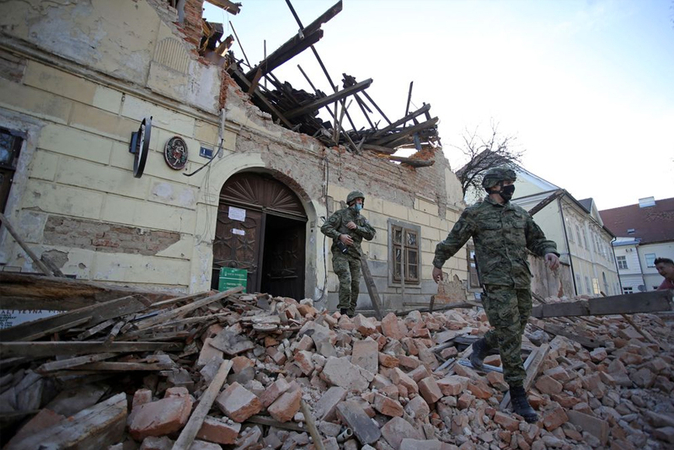
Rescuers raced to search for survivors amid strong aftershocks after Croatia’s worst earthquake in 140 years killed seven people and devastated cities and towns in one of the nation’s poorest regions.

The 6.3-magnitude tremor on Tuesday damaged most of the buildings near its epicenter in Petrinja, a town of 25,000 people, rendering them unusable and their inhabitants homeless, authorities said.

The victims included a 13-year-old girl and a father and son who died together. Twenty-six people were injured, Prime Minister Andrej Plenkovic said.

The temblor, which rattled Europeans as far away as Rome and Vienna, was more powerful than both a 5.2 quake on Monday and a similar-sized tremor that caused $6 billion in damage when it hit the capital of Zagreb in March.

Aftershocks, including two measuring 4.8 and 4.6, hit the area before dawn on Wednesday, according to the European-Mediterranean Seismological Centre.

“This morning we were hit by the third, if not the fourth earthquake,” Petrinja Mayor Darinko Dumbovic said on state TV’s Good Morning show. “Everything that has not yet fallen is falling from the ruins of Petrinja.”

The disaster adds to an already difficult year for the Adriatic European Union member state, which is still busy repairing the 20,000 buildings damaged during the March quake while also tackling one of the bloc’s worst surges in coronavirus cases and a record economic recession.

Plenkovic vowed the government will repair the damage, the extent of which hasn’t been estimated yet. While the government abolished a virus-triggered ban on movement between counties so those whose homes were destroyed could stay with relatives, he urged people to continue following social-distancing guidelines.

“We are appealing to people to stick to epidemiological measures,” Plenkovic told reporters. “We still have a problem with the coronavirus pandemic.”

Authorities evacuated the damaged hospital in the nearby city of Sisak, the region’s largest, taking patients to Zagreb. Buildings were also damaged in the capital, about 50-kilometers away.

Petrinja was demolished in the 1991-1995 war for independence from former Yugoslavia. The damage on Tuesday resulted in collapsed facades and caved-in roofs that resembled the damage from the war, as many citizens spent the night by open fires outside.

The U.S. Geological Survey said the temblor was the nation’s strongest since the advent of modern seismic instrumentation, which began to gain prevalence in the 1880s.

The government set aside an initial 120 million kuna ($19.4 million) in relief funds, Plenkovic said. Both Hungary and Slovenia said they were sending support, while Janez Lenarcic, the EU’s commissioner for disaster relief, will arrive in Croatia on Wednesday. He said the bloc was sending help today including winter tents, electric heaters, sleeping bags, and pre-made housing.

Coronavirus vaccine from China’s Sinopharm is 79% effective, company says #SootinClaimon.Com

#SootinClaimon.Com : ขอบคุณแหล่งข้อมูล : หนังสือพิมพ์ The Nation.

Coronavirus vaccine from China’s Sinopharm is 79% effective, company says

InternationalDec 31. 2020

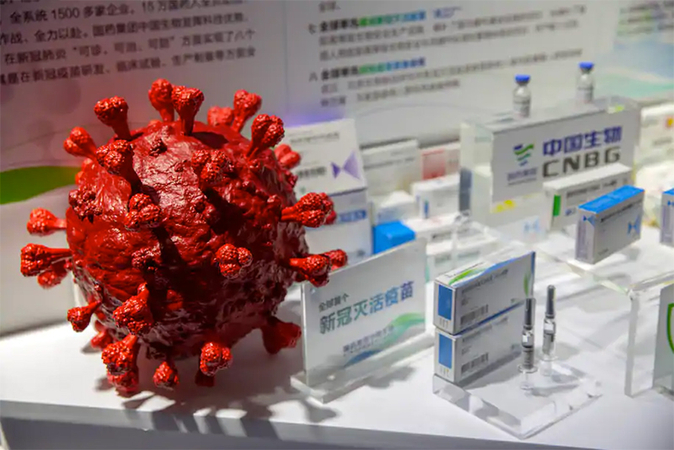
A coronavirus model is displayed next to boxes for vaccines at an exhibit by Chinese pharmaceutical firm Sinopharm in Beijing on Sept. 5. (Mark Schiefelbein/AP)

A coronavirus model is displayed next to boxes for vaccines at an exhibit by Chinese pharmaceutical firm Sinopharm in Beijing on Sept. 5. (Mark Schiefelbein/AP)

By The Washington Post · Lily Kuo

TAIPEI, Taiwan – A coronavirus vaccine developed by Chinese drugmaker Sinopharm is 79.3% effective in protecting people from covid-19, according to interim data released by the company on Wednesday, paving the way for millions of Chinese vaccines to enter the global market.

China National Biotec Group (CNBG), a subsidiary of state-owned Sinopharm, said the results were based on interim analysis from Phase 3 trials. In a brief statement posted on the website of the CNBG unit, Beijing Institute of Biological Products, the company did not give key details, including the sample size tested or number of infections in the trial.

The company said the two-shot vaccine proved “safe” and that those who received it produced a high level of antibodies against the virus.

As coronavirus cases continue to surge globally, a massive emergency vaccination drive is underway with drug developers and governments racing to get their vaccines approved. On Wednesday, the British government said its regulator had approved a vaccine developed by the University of Oxford and AstraZeneca for emergency use.

The Sinopharm vaccine appears to be less effective than those developed by Moderna and Pfizer-BioNTech, which have shown an efficacy rate of 95%. The rate announced by Sinopharm is also lower than the 86% efficacy reported by officials in the United Arab Emirates after clinical trials of the vaccine conducted there.

The development bolsters China’s public health diplomacy drive. China has held up its vaccines as a key part of its partnerships with developing countries, many of which have struggled to buy supplies of other newly released vaccines.

“China’s attention is not on ‘vaccine race,’ let alone so-called ‘vaccine diplomacy,’ but on the common interests of all humanity,” the state-run Global Times said in a Dec. 14 editorial.

The Sinopharm vaccine uses an inactivated version of the virus to trigger an immune response, unlike the mRNA vaccines developed by Pfizer and Moderna that use new technology. It does not need to be frozen, making for easier storage and distribution.

Sinopharm has another vaccine in late-stage trials. Despite the lack of regulatory approval, its vaccines have already been used on hundreds of thousands of Chinese citizens under an emergency use program for high-risk groups since July.

Officials plan to vaccinate 50 million people in the country by the middle of next month, before the Lunar Near Year holiday when hundreds of millions crisscross the country.

Chinese state media reported last week that drug regulators had formally accepted an application from the company for use of its vaccine among the general public. Sinopharm submitted an application for regulatory approval in November.

สรุปเหตุการณ์รอบโลกปี 2020 #SootinClaimon.Com

#SootinClaimon.Com : ขอบคุณแหล่งข้อมูล : หนังสือพิมพ์โพสต์ทูเดย์

https://www.posttoday.com/world/641431

วันที่ 30 ธ.ค. 2563 เวลา 21:00 น.สรุปเหตุการณ์รอบโลกปี 2020สรุปเหตุการณ์สำคัญทั่วโลกตลอดปี 2020 มีอะไรเกิดขึ้นบ้าง?

ก่อนที่จะเตรียมตัวนับถอยหลังเข้าสู่ปี 2021 ในอีกไม่กี่วันข้างหน้า ลองมาย้อนไทม์ไลน์ทบทวนเหตุการณ์ต่างๆ ในปี 2020 ว่าตลอด 1 ปีที่ผ่านมามีเหตุการณ์อะไรที่น่าสนใจบ้าง เพื่อเตรียมเดินหน้าเข้าสู่ปีใหม่

  • ไฟป่าออสเตรเลีย

เปิดตัวปี 2020 มาอย่างร้อนแรงด้วยสถานการณ์ไฟป่าออสเตรเลียที่ลากยาวมาตั้งแต่ปี 2019 ซึ่งเผาไหม้พื้นที่ประมาณ 26 ล้านเอเคอร์ ทำลายอาคารบ้านเรือนกว่า 5 พันแห่ง สัตว์ป่าเสียชีวิตกว่าพันล้านตัว และคร่าชีวิตผู้คนไปถึง 28 ชีวิต โดยหน่วยงานดับเพลิงในพื้นที่ชนบทรัฐนิวเซาท์เวลส์พิจารณาว่าเป็นฤดูไฟป่าที่เลวร้ายที่สุดในความทรงจำเลยทีเดียว

  • ปมขัดแย่งอิหร่าน-สหรัฐ

สหรัฐปฏิบัติการโจมตีทางอากาศปลิดชีพนายพล กอเซม โซเลย์มานี ผู้บัญชาการกองกำลังโกดส์แห่งกองกำลังพิทักษ์ปฏิวัติอิสลามของอิหร่านและมือขวาคนสำคัญของอายะตุลลอฮ์ คอเมเนอี ผู้นำสูงสุดอิหร่าน รวมถึงอะบู มะฮ์ดี อัลมุฮันดิส รองผู้บัญชาการกองกำลังระดมพลประชาชน กองกำลังติดอาวุธอิรักซึ่งมีความใกล้ชิดกับอิหร่าน โดยการปล่อยขีปนาวุธหลายลูกซึ่งสังหารผู้คนไป 10 ราย

  • Black Lives Matter

การประท้วงเพื่อความเท่าเทียมของคนผิวสีที่เกิดขึ้นหลังจอร์จ ฟลอยด์ ชายผิวสีคนหนึ่งถูกตำรวจอเมริกันสังหารอย่างโหดเหี้ยมระหว่างการจับกุม โดยการประท้วงดังกล่าวเริ่มต้นในรัฐมินนิโซตา ก่อนที่จะขายไปทั่วสหรัฐและทั่วโลกในเวลาไม่นาน ซึ่งนำไปสู่เหตุการณ์ปะทะระหว่างกลุ่มผู้ประท้วงและเจ้าหน้าที่ตำรวจหลายครั้ง

  • เหตุระเบิดเบรุต

เหตุการณ์ระเบิดของแอมโมเนียมไนเตรตประมาณ 2,750 ตัน ที่ถูกทิ้งร้างไว้ในท่าเรือเบรุตโดยไม่มีมาตรการด้านความปลอดภัยมานาน 6 ปี ส่งผลให้มีผู้เสียชีวิต 204 คน บาดเจ็บกว่า 7,500 คน และผู้สูญหายอีกจำนวนมาก รวมทั้งยังประชาชนกว่า 300,000 คนต้องกลายเป็นผู้ไร้ที่อยู่อาศัย และเกิดเหตุการณ์ประท้วงรุนแรงจากประชาชนที่ไม่พอใจในความขาดความรับผิดชอบของรัฐบาล ส่งผลให้ท้ายที่สุดคณะรัฐมนตรีพร้อมด้วย ฮัสซัน ดิอับ นายกรัฐมนตรีของเลบานอน ประกาศลาออกจากตำแหน่งเนื่องจากความกดดันที่ทวีความรุนแรงขึ้น

  • กฎหมายความมั่นคงแห่งชาติฮ่องกง

หรือชื่ออย่างเป็นทางการว่า กฎหมายสาธารณรัฐประชาชนจีนว่าด้วยการรักษาความมั่นคงแห่งชาติในเขตปกครองพิเศษฮ่องกง ซึ่งออกแบบมาเพื่อคุ้มครองการแทรกแซงกิจการดินแดนของฮ่องกง และถูกนำมาใช้ดำนเนินคดีกับผู้ประท้วงชาวฮ่องกงอย่างกว้างขวางในเวลาต่อมา นำไปสู่จับกุมผู้ประท้วงหลายคนรวมทั้งโจชัว หว่อง แกนนำเยาวชนชื่อดัง และส่งผลให้ผู้ประท้วงฮ่องกงจำนวนมากต้องขอลี้ภัยไปยังต่างประเทศ

  • สงครามนากอร์โน-คาราบัค

ความขัดแย้งระหว่างอาเซอร์ไบจานและอาร์เมเนียในพื้นที่นากอร์โน-คาราบัค ซึ่งเป็นการต่อสู้ที่รุนแรงที่สุดในรอบหลายปี ซึ่งสร้างความเสียหายเป็นวงกว้าง และคร่าชีวิตผู้คนไปหลายพันคน รวมทั้งส่งผลให้มีผู้อพยพกว่า 7 หมื่นคน โดยล่าสุดทั้งสองได้ร่วมลงนามในความตกลงหยุดยิงที่มีประเทศรัสเซียเป็นคนกลาง

  • โลกมุสลิมต่อต้านฝรั่งเศส

เริ่มต้นมากจากการที่ครูชาวฝรั่งเศสถูกฆ่าตัดคอหลังนำภาพการ์ตูนศาสดามูฮัมหมัดมาประกอบการเรียนการสอน โดยประธานาธิบดีแอมมานูเอล มาครง ของฝรั่งเศสเรียกว่าเป็นการลงมือของกลุ่มก่อการร้ายมุสลิมและจะปราบปรามกลุ่มมุสลิมหัวรุนแรงในฝรั่งเศส ส่งผลให้ประเทศมุสลิมหลายประเทศไม่พอใจและจับมือกันประณามฝรั่งเศสกรณีเหยียดศาสนา ถึงขั้นออกมาตรการคว่ำบาตรฝรั่งเศสและไล่ให้ไปเช็คสุขภาพจิตกันเลยทีเดียว

  • ความตกลงหุ้นส่วนทางเศรษฐกิจระดับภูมิภาค

ประเทศกลุ่มเอเชียแปซิฟิก 15 ประเทศ ประกอบด้วยประเทศอาเซียนทั้ง 10 ประเทศ และจีน ญี่ปุ่น เกาหลีใต้ ออสเตรเลีย และนิวซีแลนด์ ลงนามในความตกลงหุ้นส่วนทางเศรษฐกิจระดับภูมิภาค หรืออาร์เซ็ป (Regional Comprehensive Economic Partnership: RCEP) หลังเจรจายาวนานถึง 8 ปี ซึ่งจะกลายเป็นเขตการค้าเสรีที่ใหญ่ที่สุดในโลก

  • ภารกิจนอกโลก

หลายประเทศมุ่งหน้าปฏิบัติภารกิจนอกโลกชนิดที่ว่าไม่มีใครยอมใคร ไม่ว่าจะเป็นยานอวกาศโอไซริส-เร็กซ์ ของนาซาประสบความสำเร็จในการเก็บตัวอย่างบน “ดาวเคราะห์น้อยเบ็นนู” ซึ่งจะถูกส่งกลับมายังโลกในปี 2023 และนาซายังยืนยันการค้นพบโมเลกุลน้ำบนดวงจันทร์ รวมถึงรวมมือกับ SpaceX ในปฏิบัติการส่งนักบินอวกาศเพื่อไปยังสถานีอวกาศนานาชาติ นอกจากนี้ยังมีประเทศจีนที่สามารถเก็บตัวอย่างดวงจันทร์มาศึกษาได้สำเร็จ รวมทั้งไทยเองที่ทำหลายคนตกตะลึงโดยแง้มว่าจะมีการผลิตยานอวกาศไปโคจรรอบดวงจันทร์ด้วย!

  • เลือกตั้งสหรัฐ 2020

การเลือกตั้งประธานาธิบดีสหรัฐเกิดขึ้นในวันที่ 3 พ.ย. มีผู้เข้าชิงตำแหน่งคือโดนัลด์ ทรัมป์ และโจ ไบเดน ท่ามกลางการประชันกันอย่างดุเดือดด้วยนโยบายคนละขั้ว รวมถึงวาทกรรมเชือดเฉือนกันมากมาย ก่อนที่ทรัมป์จะออกมาประกาศว่าตนและสตรีหมายเลขหนึ่งติดเชื้อไวัสโคโรนาในช่วงไม่กี่วันก่อนการเลือกตั้ง ทำให้คะแนนความเชื่อมั่นลดลงไปอย่างมาก สุดท้ายสหรัฐได้ผู้นำคนใหม่เป็นโจ ไบเดน และมีกำนดเข้ารับตำแหน่งในวันที่ 20 ม.ค. โดยหลายคนจับตามองว่าความสัมพันธ์ระหว่างสหรัฐและจีนจะเป็นอย่างไรต่อไปหลังจากที่ค่อนข้างแย่มากในสมัยประธานาธิบดีทรัมป์ รวมถึงไบเดนจะนำสหรัฐกลับเข้าข้อตกลงปารีสที่ทรัมป์ได้ถอนตัวออกไปหรือไม่

  • COVID-19

เป็นประเด็นเด่นที่สุดของปีนี้เลยก็ว่าได้สำหรับการแพร่ระบาดของไวรัสโคโรนา ซึ่งมีการยืนยันครั้งแรกในเมืองอู่ฮั่น ตั้งแต่เดือนธันวาคมปีที่แล้ว ก่อนที่จะกระจายไปทั่วโลก ส่งผลให้เศรษฐกิจและการท่องเที่ยวซบเซาอย่างมาก โดยหลายประเทศต้องออกมาตรการเพื่อป้องกันและควบคุมโรค เช่น การล็อกดาวน์ ปิดประเทศ การสวมหน้ากากอนามัยตลอดเวลา และการเว้นระยะห่างทางสังคม ทำให้เกิดปรากฏการณ์ที่เรียกว่า “นิวนอร์มอล”

นอกจากนี้ยังทำให้เกิดกระแสต่อต้านอย่างรุนแรงต่อชาติที่มีอัตราการแพร่ระบาดของโรคสูง เช่น การแบนประเทศจีนของนานาประเทศในช่วงต้นปีเนื่องจากเชื่อว่าเป็นจุดเริ่มต้นของไวรัส

ผู้นำประเทศและคนสำคัญหลายคนจากทั่วโลกติดเชื้อกันจำนวนมาก อาทิ เจ้าฟ้าชายชาร์ลส์ เจ้าชายแห่งเวลส์, เจ้าชายวิลเลียม ดยุกแห่งเคมบริดจ์, บอร์ริส จอห์นสัน นายกรัฐมนตรีสหราชอาณาจักร, โดนัลด์ ทรัมป์ ประธานาธิบดีสหรัฐพร้อมด้วยสตรีหมายเลขหนึ่ง และเอมมานูแอล มาครง ประธานาธิบดีฝรั่งเศส

โดยทีมแพทย์และผู้เชี่ยวชาญด้านสาธารณสุขจากทั่วโลกเร่งหาแนวทางการรักษารวมถึงการผลิตวัคซีน โดยขณะนี้หลายประเทศได้อนุมัติใช้วัคซีนในประเทศเรียบร้อยแล้ว

แต่ล่าสุดมีการพบไวรัสโคโรนาสายพันธุ์ใหม่ซึ่งมีประสิทธิภาพในการแพร่ระบาดสูงขึ้นในหลายประเทศทั่วโลก ซึ่งเป็นโจทย์หนักที่ต้องเผชิญกันต่อไปในปี 2021