Thai surfer tackles pollution with environmentally friendly surfskate #SootinClaimon.Com

#SootinClaimon.Com : ขอบคุณแหล่งข้อมูล : หนังสือพิมพ์ The Nation.

https://www.nationthailand.com/lifestyle/30404491

Thai surfer tackles pollution with environmentally friendly surfskate

Arts & CultureApr 04. 2021

By The Nation

A Thai surfer, Tee, has invented Thailand’s first eco-friendly surfskate made from bottle caps.

Amid the Covid-19 crisis, surfskating is currently popular among Bangkokians as they can play it anywhere.

Tee said he was concerned about environmental problems, especially plastic waste as Thailand generated 2 million tonnes of plastic waste each year.

“Pictures of turtles and dugongs eating plastic waste are in my mind until now,” Tee said.

He explained that he had made a colourful board by melting bottle caps inside the oven at a temperature of approximately 200 degrees Celsius, pouring plastic on a plywood mould and pressing it with a metal sheet.

He added that he had found a way from the internet of recycling plastic caps, but it took about four months before he could achieve success.

“I polished the board to the least possible extent because this process would generate plastic dust which would be harmful to humans and other creatures,” Tee said.

He added that everyone could solve problems related to the environment even if it were just a small project.

“I’m just playing a small part in helping solve environmental problems,” Tee added.

To the teacher, with gratitude #SootinClaimon.Com

#SootinClaimon.Com : ขอบคุณแหล่งข้อมูล : หนังสือพิมพ์ The Nation.

https://www.nationthailand.com/lifestyle/30404488

To the teacher, with gratitude

Arts & CultureApr 03. 2021

By The Nation

The Wai Khru ceremony is a Thai ritual in which students pay respects to teachers, express their gratitude and formalise the student-teacher relationship.

The annual ceremony features Baci, a Thai traditional tray decorated with flowers in a lotus shape, to be used as an offering to parents and teachers.

For students, Baci is a reminder that they must perform good deeds and avoid doing bad deeds like a lotus that rises from underwater to the top.

Kazuo Ishiguro’s 2021 novel is about a domestic aide robot #SootinClaimon.Com

#SootinClaimon.Com : ขอบคุณแหล่งข้อมูล : หนังสือพิมพ์ The Nation.

https://www.nationthailand.com/lifestyle/30403946

Kazuo Ishiguro’s 2021 novel is about a domestic aide robot

Arts & CultureMar 21. 2021

By Island

We are hearing and seeing more about robots in the house helping with chores. And really it frightens me. I am glad Sri Lanka is backward in harnessing Artificial Intelligence to have robotic domestic aides.

Kazuo Ishiguro’s new book, Klara and the Sun’ his first since the Nobel Prize in Literature awarded him in 2017 “for works that uncovered the abyss beneath our illusory sense of connection in the world”, is set in a near-future America, “where the social divisions of the present have only widened and liberal-humanist values appear to be in terminal retreat,” with the robot Klara- Artificial Friend – giving his/her opinions. “The book addresses itself to an urgent but neglected set of questions arising from a paradigm shift in human self-conception. If it one day becomes possible to replicate consciousness in a machine, will it still make sense to speak of an irreducible self, or will our ideas about our own exceptionalism go the way of the transistor radio?” Artificial Friend Klara is a sort of mechanical governess bought by a young teenager Josie, suffering from an obscure illness “At first, Josie’s family is unsure how to relate to Klara: She seems to them something in between an au pair and a household appliance. Ishiguro wrings plenty of pathos from these conflicting attitudes.”

Another facet of the story, as Ishiguro sees it, is the rise of ever more sophisticated technology and the widespread adoption of artificial intelligence creating a permanently jobless class, which in turn has led to mass unrest and top-down repression.

I read and quote from a very long critique titled Kazuo Ishiguro Sees What the Future Is Doing to Us by Giles Harvey writing in the New York Review of Books. He sums up his assessment of Ishiguro thus: “With his new novel, the Nobel Prize-winner reaffirms himself as our most profound observer of human fragility in the technological era.”

1989 Novel

I was delighted with the article as I had read ‘The Remains of the Day’ (1989), saw the film, and later read ‘Never Let Me Go’ (2005) and found him to be an excellent writer in English. As you know, ‘Remains….’ is the narration of his life story by a faithful English butler, and was awarded the 1989 Booker Prize. James Stevens, the stiff and starchy butler, devotedly serves his lord and master who is a Nazi sympathizer in between the two world wars. He serves without a thought for himself and not permitting the slightest desire to interfere with his daily routines though he is attracted by another of the ‘downstairs staff.’ He realizes his folly too late when he leaves service and drives to seek Miss Sally. She is married by then.

The film

You would think that that sort of story would not make a viewer-drawing film, but it did in the hands of director James Ivory, producer Ismail Merchant, and screen writer Ruth Prawer Jhabwalla, the very successful trio. The film was nominated for eight Academy Awards in 1994, for Best Film, Best Actor (Anthony Hopkins), Best Actress (Emma Thompson), Best Screen Play, Best Director and Best Production, among others. The cast included Hugh Grant and Christopher Reeves.

2005 Novel

My reaction to reading “Never Let Me Go’ was strange to say the least. At the start I thought I was reading an account of a school story which would develop to include love and other happenings. Just kept getting a cold feeling as I read about Kathy, her friend Ruth and the third of a triangle of sorts – Tommy, living normal lives in Hailsham, a progressive boarding school. Then came clammy fear when I realized they were cloned human beings – named ‘donors’ and worse, were to donate 

their organs to real humans who would be saved but the clones would be ‘complete’ – die in their thirties. The process of donating starts after graduation. Kathy knows what’s coming, and yet she tells her story, and seems to accept her fate, without self-pity or alarm, as though state-sanctioned organ theft were just another one of life’s minor irritations. Ishiguro exposes the defects of our current liberal order, and the selective blindness of its beneficiaries. His comments are relevant to workers who give of their service and even life while the beneficiaries are rich, powerful and of course utterly inconsiderate and unfeeling. Here I thought of our women slaving in the Middle East while the politicos especially back home benefit from their earnings. During the Covid pandemic, these stranded workers were the last to be repatriated and at their cost, after many complaints by thinking members of the public.

Ishiguro said:

“Love and friendship may not survive death, but they grow stronger and deeper right up until the end” This is the moral center of the novel.

The film directed by Mark Romanek in 2010 starred Carey Mulligan, Keira Knightly and Andrew Garfield. Frankly, I would not want to see it. Donors and transplants are all too common now, but this novel, termed a dystopian tragedy. would be hard for me to watch.

Ishiguro’s life

He is a British novelist, screenwriter and short story writer and is one of the most celebrated current ‘men of letters’. Born November 8, 1954 in Nagasaki, to a traditional three generational Japanese family, with Nagasaki developed but standing as a symbol of human destruction. To watch his favorite program, “The Lone Ranger,” Ishiguro had to go to his friend’s next door.

Ishiguro’s father, Shizuo, was an oceanographer whose work on storm surges caught the interest of the British government. In 1960, he moved his young family to Guildford to take up a short-term research job. Like Nagasaki, Guildford was a place of long-established custom. Everyone was white, and yet the new arrivals were warmly received. Ishiguro picked up the language quickly, and learned to turn his foreignness to his advantage, putting it about, for instance, that he was an expert in judo. He also started going to church, where he became the head choir boy. His family believed it was important to respect local ways, however odd they might appear. His father’s employment was extended. Growing up between two cultures, Ish, as everyone now called him, acclimatised himself effortlessly. His mother, Shizuko, schoolteacher, maintained close contact with family back home. To be Japanese was for the growing boy a private source of confidence, but he was firmly rooted in England. It was a relief, when, in the late 1960s, his parents decided to stay for good.

He was a good student and experimented in life. Before studying English and philosophy at the University of Kent, Ishiguro hitchhiked around America and held a series of jobs in England, including grouse beater for the Queen Mother at Balmoral Castle in Scotland. After graduating, he took a job in an organization in West London that helped homeless people find housing. While there, he met Lorna MacDougall, a social worker from Glasgow, whom he married in 1986. She is Ishiguro’s first and most important reader, and her comments can be unsparing. In 1979, he studied creative writing at the University of East Anglia.

In his late teens and early 20s, when he was trying to make it as a singer-songwriter, Ishiguro had shoulder-length hair and went around in torn jeans and colorful shirts. In late October 1983, young writer Ishiguro, who’d recently published his first novel, joined a quarter million people in central London to protest against thermonuclear weapons.

Ishiguro’s first novel – 1982 – when he was 27, ‘A Pale View of Hills,’ written while at the University of East Anglia, is largely set in a Japan of the mind, an imaginary counterfeit of the place and was acclaimed. The following spring, Granta magazine named him on its list of Best Young British Novelists along with Salman Rushdie, Martin Amis and Ian McEwan. He decided to quit his job and devote himself full time to writing. He named Charlotte Brontë as the novelist who influenced him most.

He is meticulous in his writing, spending years mulling over a story. Then he draws detailed blueprints for the entire novel, First, he writes very quickly without revisions. He drafts a chapter in longhand; reads it through, dividing the text into numbered sections. On a new sheet of paper he now produces a sort of map of what he has just written, summarizing in short bullet points each of the numbered sections from the draft. Working from this sheet, he then produces a flow chart, which in turn serves as the basis for a second, more painstaking and deliberate draft. When this is finished to his satisfaction he finally types it up. Then he moves on to the next chapter and the process starts again.

By his own admitting he is not obsessive about his writing. ‘Klara and the Sun’ is only his eighth novel. When he does want to, he is capable of going flat out. He produced a first draft of ‘The Remains of the Day’ in a four-week crash, writing from morning till night, stopping only for meals.

“He’s very at peace with himself,” Robert McCrum, a longtime friend and former editor, said. “There’s no darkness in him. Or if there is, I haven’t seen it.”

NOTE: a text formatting issue caused the omission of many words in one paragraph in Nan’s last week’s article; Nan apologizes to her readers for the garbled text.”

Mahidol University ranked in world’s top 100 for performing arts #SootinClaimon.Com

#SootinClaimon.Com : ขอบคุณแหล่งข้อมูล : หนังสือพิมพ์ The Nation.

https://www.nationthailand.com/lifestyle/30403718

Mahidol University ranked in world’s top 100 for performing arts

Arts & CultureMar 15. 2021

By THE NATION

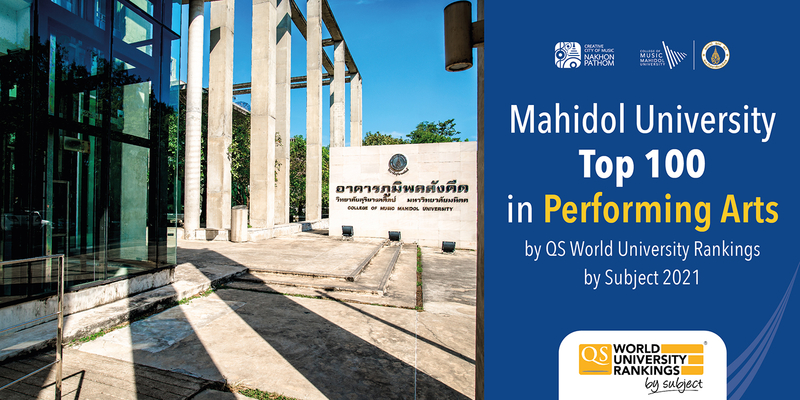
Mahidol University has skyrocketed into the world’s top 100 universities in the field of performing arts. The 2021 QS World University Rankings by Subject also showed Mahidol retains its place as Thailand’s top medical university, ranked among the top 150 in the world.

“The results show our Performing Arts ranking has entered the top 100 for the first time, thanks to our internationally recognised College of Music, said Mahidol University president, Professor Banchong Mahaisavariya.

Meanwhile, Mahidol was ranked 142nd in the world for Life Sciences & Medicine.

These results reaffirmed the incredible strengths of Mahidol University in the fields of Health Science & Medicine and Science & Technology, said university officials.

Being ranked in the top 100 for performing arts confirms the dedication and commitment to quality of teachers, students and research, said Narong Prangcharoen, Dean of Mahidol’s College of Music.

“This achievement is our pride and a major step that reinforces the mission of the college to be a leading music institution in Southeast Asia,” said Narong.

The QS World University Rankings by Subject ranks the world’s top universities in 51 subjects.

The annual rankings are based on academic reputation, employer reputation, and impact of research.

Sea of light #SootinClaimon.Com

#SootinClaimon.Com : ขอบคุณแหล่งข้อมูล : หนังสือพิมพ์ The Nation.

Sea of light

Arts & CultureJan 24. 2021

By Lee Ji-yoon
Korea Herald

The Mapo Oil Depot, located near the World Cup Park in Mapo, western Seoul, was once a level-one security facility that was off limits to the public for almost 40 years. The facility has recently been refurbished as a cultural space for citizens.

A lantern exhibition, titled “Sea of Light,” is currently running at the once abandoned oil tank, offering a cultural experience for those who are feeling exhausted amid the prolonged coronavirus pandemic. 

The exhibition hall features a range of sea creatures, including a large turtle and a sea lion swimming through a school of tiny sardines. They are all lanterns made of hanji, or mulberry paper. 

Going up the stairs amid a school of fish swirling around, there are more illuminated sculptures like cats and pigeons playing on the grass. A giant rainbow-colored whale, a symbol of dreams, swims high in the sky. You can also take a rest on a cute glowing tree stump.

The exhibition runs through Feb. 21 and admission is free.

More information can be found at the website parks.seoul.go.kr/template/sub/culturetank.do

Photos by Park Hyun-koo

Written by Lee Ji-yoon

Remembering meditation master Luangphor Viriyang Sirintharo #SootinClaimon.Com

#SootinClaimon.Com : ขอบคุณแหล่งข้อมูล : หนังสือพิมพ์ The Nation.

Remembering meditation master Luangphor Viriyang Sirintharo

Arts & CultureJan 03. 2021A photo of Luangphor Viriyang Sirintharo. The message on the board pays tribute to him with the words 'we miss venerable Luangphor Viriyang Sirintharo'.
Credit: Wat Dhammamongkol. A photo of Luangphor Viriyang Sirintharo. The message on the board pays tribute to him with the words ‘we miss venerable Luangphor Viriyang Sirintharo’. Credit: Wat Dhammamongkol.

By Wichit Chaitrong
The Nation

The passing of mindfulness meditation master Luangphor Viriyang Sirintharo in December is a great loss to thousands of his students and followers.

Buddhists pay tribute to Luangphor Viriyang Sirintharo on December 23 at Wat Dhammamongkol in Bangkok.

Buddhists pay tribute to Luangphor Viriyang Sirintharo on December 23 at Wat Dhammamongkol in Bangkok.

While the pain of being unable to meet him in person any longer is immense, he has left behind priceless treasures to enrich the minds of his followers and meditation enthusiasts.

A large number of people have paid personal tributes to the master whose title is Somdet Phra Yanawachirodom, as his body lies in repose at the Wat Dhammamongkol Temple in Bangkok, where he was lord abbot. He passed away on December 22 due to natural causes at the age of 100 years and 11 months.

The steady stream of visitors coming to pay their final respects are a testament to how much he is revered and loved by so many people.

Luangphor Viriyang devoted his life to monkhood and teaching mindfulness meditation. 

Born on January 7, 1920 in Saraburi province, he entered  monastic life when he was 16 years old. He was trained by the late Ajahn Mun Bhuridatta Mahathera (1870-1949), who was among the pioneers of the Thai Forest Tradition, a lineage of Theravada Buddhist monasticism. Ajahn Mun was a highly revered master of insight meditation, or Vipassana.

In early 1960, Luangphor Viriyang founded Wat Dhammamongkol and in the early 1990s, he introduced his meditation teaching in Canada and later the United States.

Laungphor Viriyang created many meditation training courses, ranging from basic to advanced ones.

I personally took three courses — a one-day and three-day course, and a six-month course for training meditation instructors.

I was impressed with the simplicity, flexibility and usefulness of the way his Willpower Institute Meditation Centres led practitioners into the mysteries of the human mind.

On my first day of practising sitting meditation at the temple, I saw a beautiful red light in front of me, like light reflecting from a red ruby.

I did not see that sparkling red light again. Meditation practitioners have long been told not to be obsessed with such mystical experiences.

Luangphor said anyone can taste happiness when his or her mind is calm while practising single-pointed meditation, a technique that involves focusing our mind on a particular spot on our body, such as the tip of the nose. Practitioners usually feel bodily sensations, deep relaxation or feel like they are levitating when they achieve calmness of mind.

However after many months of practice, the bodily sensations and the feeling of levitation may be absent. Many practitioners start to worry that their progress has been stalled, or, even worse, they are overcome by a feeling of failure.

Laungphor comes to the rescue of these practitioners by explaining with an analogy. He says the progress beyond the initial feeling of elation is similar to that of a wealthy person who is thrilled and excited when he makes his first million baht, but as he becomes richer, and makes more and more money, is no longer as excited.

“Don’t worry, and continue your practice,” he would say encouragingly.

Even experienced practitioners, who may have great days when they achieve calmness, can have bad days when they are unable to calm their monkey minds, Luangphor Viriyang would say.

As a monk, he personified  humility. When someone would ask him about mindfulness meditation taught by other monks or other people, he replied that he did not criticise other monks’ teaching methods.

He was also secular and never had a negative attitude towards other religions. He is one of the pioneers among Thai monks in introducing meditation practice in Canada. A few people in Canada joined the first course, but the numbers jumped sharply when local media reported that an old lady who could not walk before attending the meditation, could stand and walk again. 

He was also one of the pioneering Thai monks who  introduced mindfulness meditation practices to the masses.

“In the past, I taught it to monks, but when they leave monkhood the knowledge of meditation practices imparted to them is also gone. So, I decided to create a course for the lay person,” he told his disciples, while recounting his experience as a teacher. 

Starting from the margins of society, mindfulness meditation now has become a mainstream practice worldwide. Luangphor Viriyang is one of the pioneers in making extraordinary efforts and devoting his life to make it happen and it has benefited huge numbers of people.

Although the beloved monk has left his physical body, he will remain a master through his insightful teachings.

Warin Lab all set to kick off trash-to-art exhibition #SootinClaimon.Com

#SootinClaimon.Com : ขอบคุณแหล่งข้อมูล : หนังสือพิมพ์ The Nation.

Warin Lab all set to kick off trash-to-art exhibition (nationthailand.com)

Warin Lab all set to kick off trash-to-art exhibition

Arts & CultureDec 23. 2020

By The Nation

Warin Lab Contemporary is opening its first exhibition “Overflow – From Trash to Art” at its newly renovated art space in a 100-year-old residence-turned-art-space in the culturally rich area of Charoenkrung Road Soi 36, it announced in a press release.

With its focus on the environment in 2021, the exhibition reflects on waste accumulation while introducing the idea of continual use of the same resources.

Based on the notion of a circular economy, Overflow points out that the same product can be used longer through recycling, upcycling, repairing and refurbishment in order to create a closed-loop system by minimising the use of new resources.

Artist Wishulada Panthanuvong has created a site-specific installation made primarily from consumer waste. The entire exhibition room from wall to floor is covered with water bottle plastic caps, aluminium drink cans, wrappers of snacks and household products and various types of aluminium and plastic waste.

“The artist places grandiose articles, all of which are made of waste materials, such as a functional sofa, table, ceiling lamps and hanging sculptures inside the space with the intention that viewers can have a pleasant time in this invented living room,” the press statement said.

“Overflow – From Trash to Art creates a paradoxical condition where people can have a pleasant time in a room filled with trash.

From the outset, the installation provokes the feeling of inundation from the mountains of waste we collectively create on a daily basis. On a more profound level, it instigates a regenerative approach to repurpose waste materials instead of abandoning them,” it said.

As part of the exhibition, Warin Lab Contemporary is engaging with the local community around Charoenkrung Soi 36 and Wat Muang Kae to separate, collect and hand in their garbage as art materials. The art space also involves the community’s assistance in creating five ceiling lamps from the collected materials. Once the lamps are turned upside down, they will become usable colour-coded garbage bins for the community’s waste management initiative.

Apart from community’s involvement, Warin Lab Contemporary is also soliciting trash donations from corporations, which encourage their employees to separate, collect and contribute reusable garbage from their office and home to the art installation. Corporations which have donated trash for the exhibition include Bangkok Glass, Central Pattana, Chevron (Thailand), Makao Restaurant, Siam Cement, Siam Commercial Bank, Michelin ROH and Omise.

Wishulada has also received trash donated from the public through her online outreach.

Overflow – From Trash to Art will be open to the public from January 23 to March 21, 2021.

The exhibition will also offer an educational workshop on February 6, run by Wishulada, to create a functional item from upcycling daily waste.

In addition, an artist’s talk with TV presenter-cum-activist Wannasingh Prasertkul will take place on February 20. Those interested can visit Warin Lab’s Instagram account or Facebook page to get more information and book a seat for the workshop and the talk.

Japan’s kabuki culture on screen at Iconsiam next week #SootinClaimon.Com

#SootinClaimon.Com : ขอบคุณแหล่งข้อมูล : หนังสือพิมพ์ The Nation.

Japan’s kabuki culture on screen at Iconsiam next week (nationthailand.com)

Japan’s kabuki culture on screen at Iconsiam next week

Arts & CultureDec 14. 2020

By The NationBangkok film and theatre fans are being treated to a rare double bill of Japanese classics next week, courtesy of the Japan Foundation.

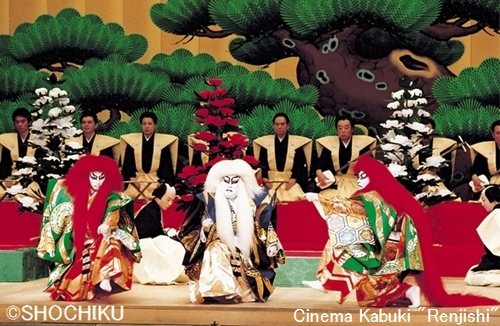
“Renjishi” and “Rakuda” starring the legendary kabuki actor Nakamura Kanzaburo will be screened at Iconsiam as part of an evening of classical Japanese drama.

With gorgeous costumes, stunning makeup, and powerful dramas, kabuki is appreciated as the ultimate theatrical artform in Japan. Live productions are now being filmed with the highest resolution cameras for screening in cinemas on state-of-the-art 4K digital projection systems with 6-channel surround sound.

The kabuki evening begins at 7pm with a live performance on the koto, a traditional Japanese string instrument. The double bill of “Renjishi” and “Rakuda” will be screened from 7.30pm.

Entry is free via registration at https://bit.ly/3a0Uj0D but tickets must be collected at Icon Cineconic from 6pm-6.50pm on the day of the performance.

The event takes place at Icon Cineconic on the 6th floor of Iconsiam on Wednesday, December 23.

Light up your home with these illuminating tips #SootinClaimon.Com

#SootinClaimon.Com : ขอบคุณแหล่งข้อมูล : หนังสือพิมพ์ The Nation.

Light up your home with these illuminating tips (nationthailand.com)

Light up your home with these illuminating tips

Arts & CultureDec 07. 2020Colter Zimmer, 13, puts up Christmas lights with his mom, Julie Zimmer, at their home in Crofton, Md., on Nov. 22. MUST CREDIT: Photo for The Washington Post by Evelyn HocksteinColter Zimmer, 13, puts up Christmas lights with his mom, Julie Zimmer, at their home in Crofton, Md., on Nov. 22. MUST CREDIT: Photo for The Washington Post by Evelyn Hockstein 

By Special To The Washington Post · Laura Daily · FEATURES, HOMEGARDEN 

What’s Christmas without holiday lights? For starters . . . no worries that a hot bulb will melt your favorite plastic Snoopy ornament, or fears that adding one more string of lights will plunge your den into darkness. And maybe your heart won’t skip a beat when you receive your December utility bill.

Yes, they have a reputation for being a hassle. But holiday lights have changed. Thanks to LED technology, the nightmares of Christmases past have largely been resolved. Even Clark Griswold would approve of the more reliable, energy-efficient options available these days. 

As a consumer expert, I know how to find a great deal, but I haven’t untangled a string of lights in years – since I moved to the city from a larger home in the mountains. So I asked several experts for their advice on light features, safety, storage and more. Here are our illuminating tips.

– Make a plan. It doesn’t have to be elaborate. Mike and Jenn Onstott, whose spectacularly lit Commerce City, Colo., home attracts thousands of spectators annually, suggest asking yourself: Do I want lights everywhere or in a few select spots? A classic look or more modern? Showy or subdued? Take some measurements. Remember: A 10-foot rail may need 16 feet of lights if you plan to wrap it tightly so the lights are close together. Choose a theme or color scheme.

Frank Skinner, director of marketing for online retailer Christmas Lights, Etc, says: “If you know you like Christmas and will be decorating for years to come, build up a collection. Initially, you might buy clear lights and then add colors in subsequent years. You aren’t locked in, because you can mix and match and rearrange strings.” 

– Choose your bulb. With their soft, warm glow, traditional incandescent lights evoke cozy memories for many. But the more vibrant LEDs have come a long way. LEDs use far less electricity, stay cool to the touch, last longer and come in a wide variety of shapes, sizes, lens styles, colors and finishes. 

Over the past six years, the Onstotts have converted 90% of their 27,000 lights to LED, mostly to save on electricity, reserving the remaining incandescent lights for special displays. 

Whether you opt for incandescent or LED, experts agree it’s best not to mix the two in one display. Not only will the lights visually clash, but you may also experience power issues.

– Decide how much you want to spend. Would you rather save money now or over time? A box of 50 mini-incandescent lights can cost as little as $3 in a big-box store, whereas a 50-count string of LED lights may start at $10. Outdoor-specific or commercial-grade lights will cost more. Although incandescent lights are less expensive, they use significantly more electricity and typically last one to three seasons. Though pricier, LED lights are energy-efficient, allowing you to plug more lights in to one outlet. And although most LED light manufacturers say they will last up to five seasons, Skinner says test sets lit 24/7 at his company offices are still burning bright after seven years. 

– Buy with confidence. Take note if lights are rated “indoor” or “indoor/outdoor.” The latter are usually more durable. Depending on your local climate, you may want to buy commercial-grade lights that hold up to extreme heat or cold. If you are especially picky, check a sample light string if the lights are on display in the store. Major brands, such as Wintergreen or Kringle Traditions, that supply detailed specifications (such as wire style, color or plug) to manufacturers will stamp their name on the tube near the plug. That’s a clue that the product is of a higher quality.

– Try outside-the-box tricks. Substitute icicle lights (normally used outside) for traditional strings if you want a well-lit indoor tree, suggests Albie Mushaney, host of the HGTV holiday special “You’ll be Home for Christmas.” Instead of wrapping your tree 20 times, you may only need two strands and three to four wraps to achieve the same amount of coverage and light.

Jenn Onstott says to look for lights with faceted bulbs and add reflective ornaments to your tree, so you don’t need as many lights. If you have children or pets, consider erecting and decorating some sort of barricade around your lit tree. Incandescent lights do get hot to the touch, and pets that chew may find light strings tempting. The Onstotts use a baby gate. Mushaney, who has two Great Danes, built a small picket fence.

– Know your power. I’ve said it before, but it bears repeating: The biggest difference between LED and incandescent lights is the amount of electricity used. For example, Mike Onstott redid a reindeer display at his home. The original, with 300 incandescent lights, used 122 watts; the new version, with 360 LED lights, uses three watts. “When you’re not pulling as much power, you can put up more lights without short-circuiting your home,” Jenn Onstott says. You need to determine not only what outlets are available, but also what else in your home – lamps, electronics, appliances – is being powered by that circuit. A kilowatt meter ($20 to $30) easily monitors an outlet’s power usage, so you don’t overload it and trip the breaker. 

– Minimize hazards. Remember: Water and electricity do not mix. For outdoor displays, buy lights with a “sealed connection.” That means the base of each bulb has an acrylic seal to permanently affix it to the wire, keeping moisture out. To avoid standing water (or snow), Mike Onstott recommends using stakes to keep plugs above the ground. He also wraps any electrical connections in plastic bags secured by a rubber band.

And Skinner says you shouldn’t use a staple gun to hang lights. “You risk nicking or ripping off the wire coating, causing a potential electrical short.” Instead, use inexpensive clips to attach lights to your roof or gutters. As a timesaver, in lieu of clips, Mushaney rims his house and windows with small screw-in hooks and leaves them up year-round. 

– Take the easy route. Sure, you could invest the time, money and effort in hand-wrapping lights around the trunks of outdoor trees or artfully decorating bushes, but you don’t have to. Manufacturers have developed reasonably priced trunk-wrap lights (essentially lights woven into netting with loop clasps) that expand and stretch around a tree trunk. Net lights can be easily draped over bushes and hedges. So he doesn’t have to run out nightly, Mushaney uses a solar switch on a timer. At sunset, his outdoor lights automatically turn on, then turn off a few hours later.

– Store lights properly. Everyone has their own preferred method for keeping their lights organized when they aren’t in use. Skinner says to simply wrap lights in a circular pattern or roll them into a ball. Then store them in a box. The Onstotts suggest looping them, but instead of using the “palm and elbow” technique commonly used to store extension cords, start by dangling the strand and make decent-size loops, as if you were spooling a cord onto a vacuum cleaner without a hook at the bottom. Use Velcro or zip ties to keep cords together. Sort lights into plastic bins, and label either by location or specific tree. Mushaney hangs outdoor lights over chairs to dry, then puts lights in plastic grocery bags – one strand per bag – with the plug hanging out. Bags go into storage tubs labeled “inside” or “outside.”

– Take advantage of post-Christmas sales. Although retailers run sales in November and December, to get the best deals, shop right after Christmas. You can often find lights and other decorations discounted by as much as 75 percent to 90 percent. Mushaney says he sets the following year’s theme based on what he scores at a discount.

– Look into recycling options. Christmas lights are made from copper, glass and plastic – valuable materials that can actually be recycled and reclaimed. Contact your city’s municipal solid waste office. Many will recycle the lights if you bring them in. They may even run collection days for old lights or point you to a drop-off spot. If you live in Maryland, Pennsylvania, Virginia or the District, you can drop off your lights at any Mom’s Organic Market.

– Get online help. You’ll find all sorts of guides for holiday lighting on topics including artfully wrapping tree trunks, safely hanging lights on gutters or calculating wattage. Christmas Lights, Etc has a collection of lighting and decorating resources on its website, christmaslightsetc.com. Serious decorators should check out the Planet Christmas Forum (planetchristmas.com) or search for fellow holiday light enthusiasts in Facebook groups.

– Make memories. No matter the design, Christmas lights brighten the holidays, and they may spread joy far beyond your front yard. “I grew up poor, and my family had to find ways to entertain us kids, so we drove around looking at holiday lights on houses,” Mushaney says. “That created wonderful memories I’ll always remember. Now, maybe my house will be one that families drive by and build memories, too.” 

When a Baltimore museum tried to raise money by selling three pricey artworks, it backfired stupendously #SootinClaimon.Com

#SootinClaimon.Com : ขอบคุณแหล่งข้อมูล : หนังสือพิมพ์ The Nation.

When a Baltimore museum tried to raise money by selling three pricey artworks, it backfired stupendously (nationthailand.com)

When a Baltimore museum tried to raise money by selling three pricey artworks, it backfired stupendously

Arts & CultureDec 06. 2020“The Last Supper” (1986) by Andy Warhol, a work in the collection of the Baltimore Museum of Art that was slated to be deaccessioned. MUST CREDIT: Baltimore Museum of Art 

By The Washington Post · Sebastian Smee, Peggy McGlone · ENTERTAINMENT, MUSEUMS 

In early October, Baltimore Museum of Art director Christopher Bedford announced a bold plan to raise $65 million for diversity and equity efforts by selling three paintings – including a gigantic Andy Warhol take on Leonardo’s “The Last Supper” – from the museum’s collection.

Framed as a response to the summer-long Black Lives Matter protests, Bedford’s idea was approved by the museum’s board of trustees. Sotheby’s was tapped to handle a private sale of the Warhol and to auction works by Brice Marden (“3”) and Clyfford Still (“1957-G”) on Oct. 28.

But the masterpieces didn’t make it to the auction block. With hours to spare, the BMA rescinded the entire plan, capitulating to a firestorm of criticism that had sparked internal board squabbles and resignations and the withdrawal of tens of millions of dollars in promised gifts and art work. The dramatic turnaround sent shock waves through the field and highlighted the fraught nature of “deaccessions,” the term for selling works from a museum collection.

The still-reverberating controversy didn’t just leave Bedford licking his wounds and the BMA with a crisis of governance. It has left American museums in the dark about how to interpret the rules around selling art from their collections – an increasingly tempting option in an era that combines acute budget shortfalls with a booming art market.

All around the country, museums reeling from dried-up revenue streams are considering their options. Publicly held paintings by Jackson Pollock, Claude Monet, Gustave Courbet and Lucas Cranach the Elder have been sold into private ownership in recent months. The number of museums attempting deaccessions in coming months is likely to double, according to Nina del Rio, who handles museum relations for Sotheby’s.

Deacessioning is common practice in art museums, which may need to prune their collections for any number of reasons, including to get rid of duplicates, damaged works or works that simply don’t fit with the rest of the collection.

Guidelines put in place by the Association of Art Museum Directors stated that the funds raised by selling a work should be used only for acquiring new art. The policy was intended to prevent museums – which are nonprofit organizations with favorable tax status – from treating their collections as assets to be monetized. Museums that failed to abide by this policy were reprimanded, shamed and ostracized.

But the AAMD decided to loosen these restrictions in April, just as the pandemic was surging. Recognizing the financial crisis ahead, the membership organization tweaked its deaccessioning policy to allow museums some flexibility for up to two years in the way they use the funds from these sales.

The newly loosened guidelines granted museums more leeway. But how much leeway?

Bedford knew his proposal could get him in trouble. A well-dressed, smooth-talking Englishman in his early 40s, he has led the BMA since 2016. In 2018, he successfully sold seven works from the collection – including another Warhol, a Robert Rauschenberg and a Franz Kline – and used the $16.2 million from the sales to buy works by women and Black artists.

This second sale was supposed to fund a plan for racial equity that went beyond diversifying the collection. Over the summer, art world activists around the country had accused the (mostly white and male) leaders of America’s art museums of exploiting their lower-paid and more diverse staff. Bedford wanted the BMA – the premier art museum in a city that is 65 percent Black – to be seen as a leader in these issues of improving staff equity and community-building, which were separate from the goal of diversifying the collection. And he wanted the whole museum field to take notice.

He was also testing the limits of the AAMD’s new guidelines, which were intended to be a lifeline for financially fragile museums trying to survive pandemic-related closures and the economy’s downturn.

Bedford had made it clear that the BMA is not in financial distress, but he still believed he could take advantage of the revised guidelines, and his belief appeared confirmed when he shrewdly lined up AAMD executive director Christine Anagnos’s support before going public. (Bedford and Anagnos declined to be interviewed.)

Yet if Bedford thought this support would inoculate him from criticism, he was wrong. 

“If you start monetizing the value of the art on the walls, it raises a whole host of problems and leads to a slippery slope,” Laurence Eisenstein, a leading critic, said. “Next time the state or city are thinking about giving money to the museum, it leads to people asking questions like ‘Why don’t you sell some works?'”

The opposition to Bedford’s plan started with a small group of Baltimore art lovers who focused their objections on the choice of works. On the day of the announcement, retired BMA curator Brenda Richardson, who had acquired Warhol’s “The Last Supper” for the museum, told The Washington Post that she was “horrified” by the move to sell it.

Kristen Hileman, another former curator who had helped shape and then defend the 2018 deaccessions, also criticized the new plan. The Warhol anchored the museum’s generous holdings by that artist, she argued, and the paintings by Still and Marden were the only ones by those artists in the collection. Furthermore, as she pointed out, Marden is still alive. Selling works by living artists is widely considered bad museum practice because it signals to the market a lack of faith in the artists that can adversely affect their careers. 

Several prominent art critics also weighed in, including the Los Angeles Times’s Christopher Knight, who excoriated Bedford, implying his motives were cynical. The “sleaze,” he wrote, was “almost too hard to wrap your head around.” And, breaking with convention, Arnold Lehman, BMA director for 18 years until 1997, called the plan “a devastating mistake for (the museum’s) present and its future.”

The value and significance of the works made the proposed sale egregious, Lehman said. “Something that you deaccession that’s worth $100,000, people don’t look. When something is $20 million they start looking,” he said in an interview with The Post after the sale was blocked. Bedford’s plan, he said, “took the deaccession issue and pushed it to an extreme. If you listen to the Constitution it says you can have and bear arms. They are talking about muskets, not AK-47s. This is above and beyond.”

Eisenstein, a lawyer and former BMA trustee, articulated the breadth of the criticisms in an Oct. 12 letter to Maryland government officials that asked them to halt the sale. The letter, charging the museum with “irregularities and potential conflicts of interest in the sales,” was signed by almost 200 community members, including five former board chairs, former board members, donors and docents.

For three weeks after the Baltimore plan was announced, the museum maintained a united front in public. Behind the scenes, however, a frantic game of telephone was unfolding as critics reached out to their networks and urged leaders in the field to keep the pressure on. Less than a week before the auction, that unity began to crumble. The outside criticism turned to internal squabbling and then outright mutiny.

On Oct. 22, artist Adam Pendleton, whom Bedford had invited onto the board, quietly resigned his position. The next afternoon, Amy Sherald – who shot to international prominence after her portrait of Michelle Obama was unveiled at the National Portrait Gallery in 2018 – followed suit. Neither artist offered an explanation, but both seemed to be done with a controversy they hadn’t invited. 

Former trustee John Waters, the artist and film director who was about to give the bulk of his personal collection to the museum, privately shared his opposition to the sale, although he went ahead with his bequest. Caplan, a former board chair and an art collector, revoked her promise to donate a significant part of her collection.

The inner turmoil went public when former chairman Charles Newhall III publicly confirmed that he and former chairman Stiles Colwill had rescinded $50 million in promised gifts in protest. (Newhall’s public identification of Colwill was a surprise to his former fundraising co-chair, who had thought his $20 million promised gift would remain anonymous.)

Trouble was also brewing on another front. A powerful group of current and former museum directors was calling and exchanging emails, sharing misgivings about the AAMD’s new guidelines, which they viewed as setting a dangerous precedent. Like a panel of soccer referees disputing a new interpretation of “handball,” they discussed whether Anagnos had erred – had, in effect, gone rogue – when she voiced her support for the BMA plan.

They were surprised that Bedford was trying to exploit the loosened restrictions designed to help cash-strapped museums. If the sale went ahead, they feared, the whole philanthropic model sustaining America’s great art museums could collapse. If you could raise $65 million simply by selling three paintings, how could you ever ask anyone for a donation again?

“I don’t think most directors rush to deaccession works of considerable importance,” said Maxwell Anderson, a past president of AAMD and former director of museums in New York, Indianapolis and Dallas. “I am of a sense, as most of my colleagues are, that fundraising is how you go about these issues. It’s not by the monetization of the collection.”

Anderson and his colleagues were relieved when AAMD president Brent Benjamin wrote a letter to the organization’s members on Oct. 27. Intended as a private memo, the letter clarified the limited scope of the April rule changes, emphasizing their two-year window. (Bedford’s plan technically broke with this by proposing that the funds set up endowments in perpetuity.) While Benjamin did not name the BMA, his rejection of deaccessions intended to fund “long-term needs – or ambitious goals” was viewed by critics as a repudiation. He declined to be interviewed.

That same afternoon – the day before the auction – six BMA trustees, including Caplan, sought an emergency meeting of the board. Their emailed letter to board chairwoman Clair Zamoiski Segal, obtained by The Post, voiced concern that when voting to approve the sales, they “may not have had a full set of information regarding the importance and heritage of these works nor a full understanding of the process by which the sales by Sotheby’s were arranged. Moreover,” they wrote,”the refined guidance from the AAMD demands our immediate consideration.”

Bedford replied within hours, repeating that the AAMD had confirmed that “the BMA’s plans are in compliance” but agreeing to a meeting the next day. An hour later, the museum issued a statement that emphasized the AAMD had not retracted its original support and that the sale would proceed.

“What’s it going to take?” Colwill said heremembered thinking that night, when the BMA again refused to relent.

The next morning, Lehman called his colleague, Anderson, to commiserate over what seemed to be the inevitable loss of the three paintings. The conversation prompted Anderson to ask, “Why don’t we get the old gang together, the past presidents who sat in that chair, to restate what didn’t seem controversial to us?” Using an AAMD email list, Andersoncut and pasted a 60-word letter signed by him and Lehman and addressed to the board chair, Segal, asking her to reconsider the sale.

He sent the draft letter to a dozen past presidents and within a few hours, everyone he wrote to responded and signed it.

“It was inspiring,” he said. “It just proves that most directors are deeply concerned about the hemorrhaging of professional standards.”

The letter hit Segal’s inbox minutes before the executive committee meeting. By the time the full board met later that afternoon – just hours before the auction would hammer its first sale – the board revoked the plan. The paintings would remain in Baltimore.

The larger issues around deaccessioning – the when, why and how it should be done going forward – remain unresolved. But there’s one thing the Baltimore episode made clear: even the most noble of causes, including paying the mostly minority guards a living wage and improving access for the community, can’t be funded by monetizing the collection.

“There was nothing that they wanted to do that wasn’t terrific, forward-thinking, informed. In a majority minority city, you have to look at your audience. You have to want that audience to feel good and welcome,” Lehman, the former director, said. “They own that building.”

But what they also own, it seems, are the paintings inside that building.