Arts & CultureSep 20. 2020Participants look at the works on display at the Zaha Museum in Seoul during 2019 Korea Art Week.
By Song Seung-hyun Korea Herald
The Ministry of Culture, Sports and Tourism of South Korea will hold 2020 Korea Art Week from Thursday to Oct. 11
.The upcoming sixth Korea Art Week, organized by the Korea Arts Management Service, will look at the role of art in everyday life and at the power of art in the coronavirus pandemic era. The theme is “Your Life Is Art.”
Over 300 art museums and art event organizers have contributed to this year’s art week, which will be held in 30 cities throughout the country, making it possible for people in underserved areas to enjoy diverse arts experiences.
A total of 27 art tour routes have been planned for the week. Due to the ongoing spread of COVID-19, walking tours led by art professionals will be limited to 10 people per group. The tours are open to all, and reservations can be made on the 2020 Korea Art Week website, artweek.kr.
Tour participants will be required to strictly follow the government’s social distancing guidelines. For those who cannot join the walking tours, the Korea Arts Management Service has created six videos about the routes.
In response to the COVID-19 situation, the organizer has also prepared online programs such as a virtual reality art museum tour with audio guidance and a web platform where art can be purchased and auctioned.
The VR service is provided in conjunction with immersive online art-viewing platform operator Easel. The organizer said it will also provide this service in English to promote the artworks overseas.
The organizer also said prints would be this year’s focus. It will send out 250 print art kits to those who signed up to participate last week. This year’s art week will also support exhibitions and online and on-site events held by the Korea Print Photography Promotion Association.
Arts & CultureSep 13. 2020An exhibition marking the 600th anniversary of the completion of the construction of the Forbidden City opens in Beijing on Thursday. [Photo by Jiang Dong/China Daily]
By China Daily
Times change, but some cultural legacies can be everlasting.
A special exhibition has been set up at the entrance of the Palace Museum in Beijing, also known as the Forbidden City, for visitors to review the remarkable development of this architectural wonder.
The exhibition, Everlasting Splendor: Six Centuries at the Forbidden City, opened in the Meridian Gate Galleries on Thursday and will continue through Nov 15. It marks the 600th anniversary of the completion of the construction of the compound, China’s imperial palace from 1420 to 1911.
Twenty-four emperors lived in the Forbidden City during the Ming (1368-1644) and Qing (1644-1911) dynasties. Within its 720,000-square-meter area, there are 1,050 ancient buildings.
Over 400 cultural relics are displayed at the exhibition, which reflect the history of the Forbidden City’s construction, the development of its layout, and how it has been protected and renovated in the past decades.
“Palatial constructions were the most splendid chapter in the history of ancient Chinese architecture,” Wang Xudong, director of the Palace Museum, said on Thursday. “They always reflected the highest-level craftsmanship of their respective time.
“The Forbidden City, the world’s largest remaining palace complex, is the pinnacle of ancient Chinese urban construction and architecture,” he said.
He explained that the Forbidden City highlights the importance of rituals and the harmony between humans and heaven.
Wang said it also reflected how different cultures come together. For example, the Qing emperors, who were from the Manchu ethnic group, introduced elements of their ethnic culture to the Forbidden City. Some buildings also have a combination of Chinese and Western fine arts.
“So, the Forbidden City is also an example showing the inclusiveness of Chinese civilization,” Wang said.
The exhibition also reflects important events in the Forbidden City’s 600-year history, with exhibits including items used in its construction and historical documents.
Zhao Peng, director of the department of architectural heritage at the Palace Museum, said: “The exhibition in the Meridian Gate Galleries is only a prelude. We want to usher visitors into a journey through time and space.”
He said that the curators have identified nine key areas as “checkpoints”, where visitors can get more information by scanning QR codes.
In 1406, Zhu Di, the third emperor of the Ming Dynasty, decided to move the national capital from Nanjing, capital of today’s Jiangsu province, to Beijing. After a decade of preparation, construction of the Forbidden City took place from 1417 to 1420 in the heart of Beijing.
Although the layout of some parts has changed, with the renovation and rebuilding of palaces, its basic structure remains the same.
The Palace Museum was established in 1925. In 1987, the Forbidden City became a UNESCO World Heritage Site. The museum houses 1.86 million cultural relics and received over 19 million visitors in 2019.
“The Palace Museum has made many achievements in recent years in terms of exhibitions, the renovation of ancient architecture, academic studies, digitization and many other fields,” Hu Heping, minister of culture and tourism, said at Thursday’s opening ceremony. “These achievements have rejuvenated the old Forbidden City.”
“A duty to human civilization has been fulfilled as the Forbidden City has been well preserved,” Hu said. “But it needs our further efforts to tell its good stories and better display its cultural legacies at home and abroad.”
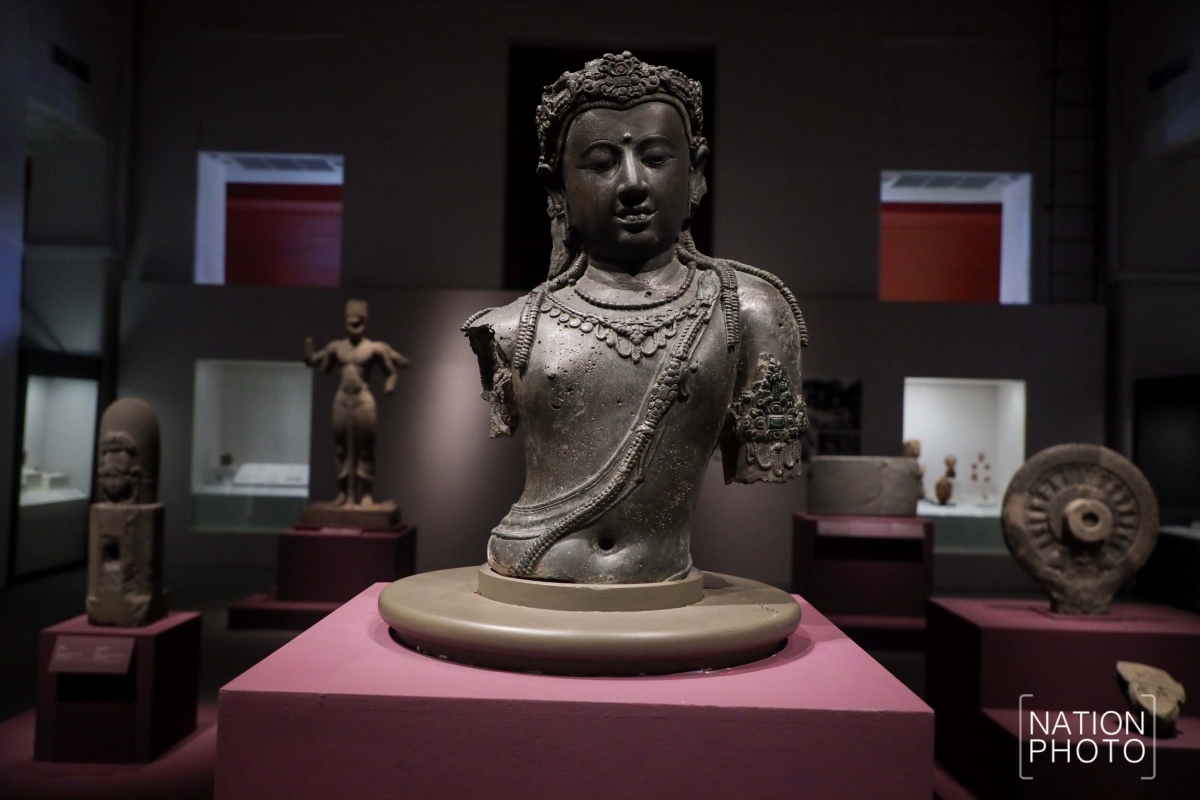
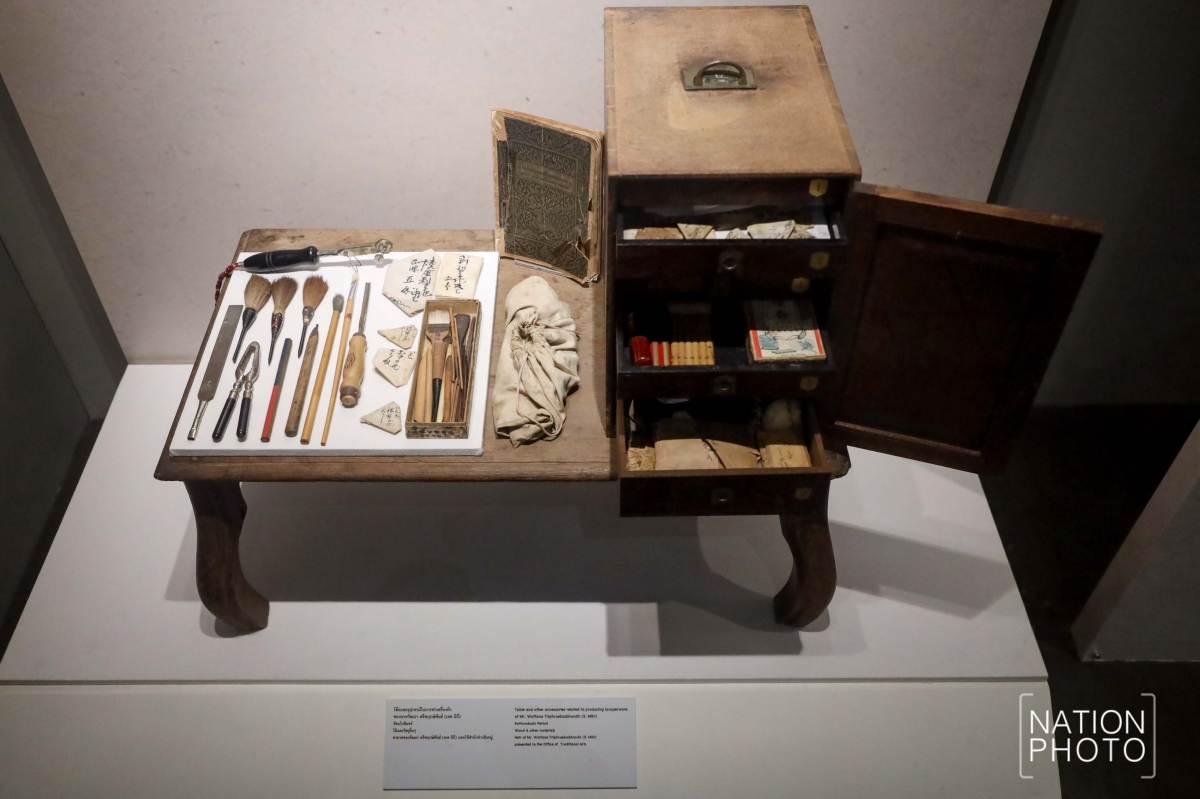
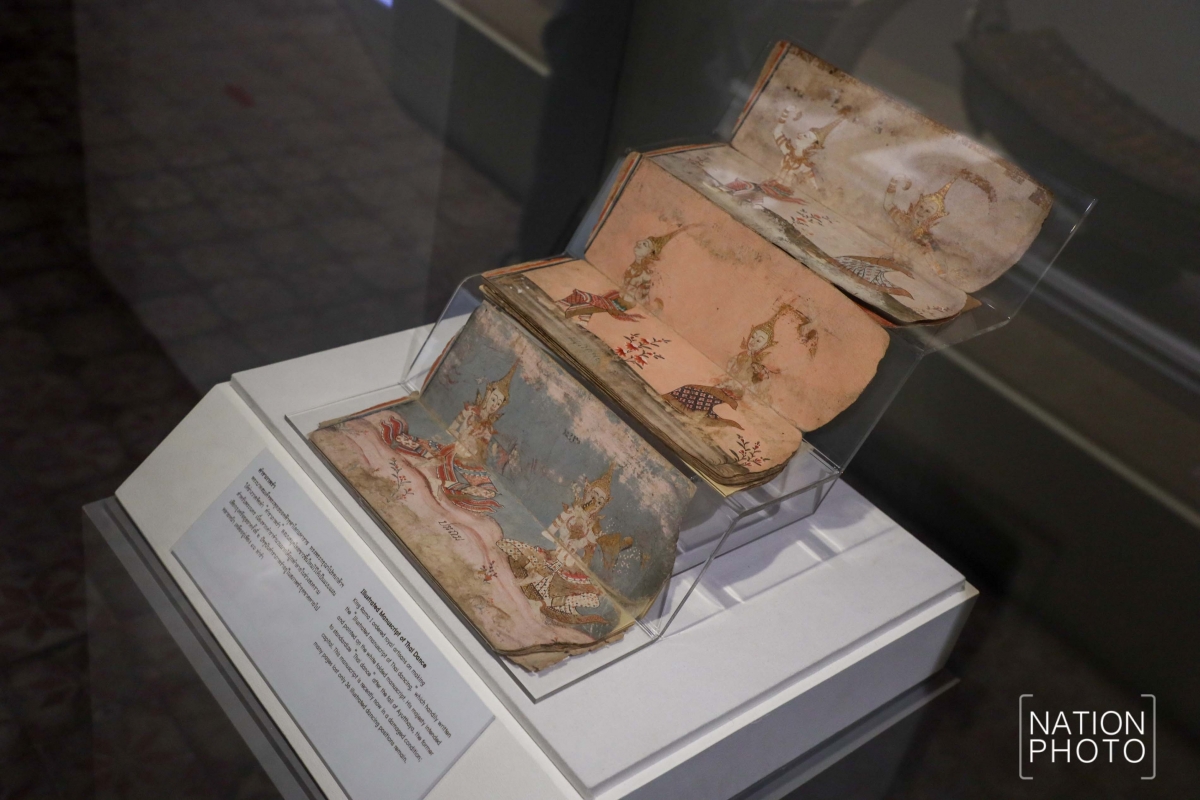
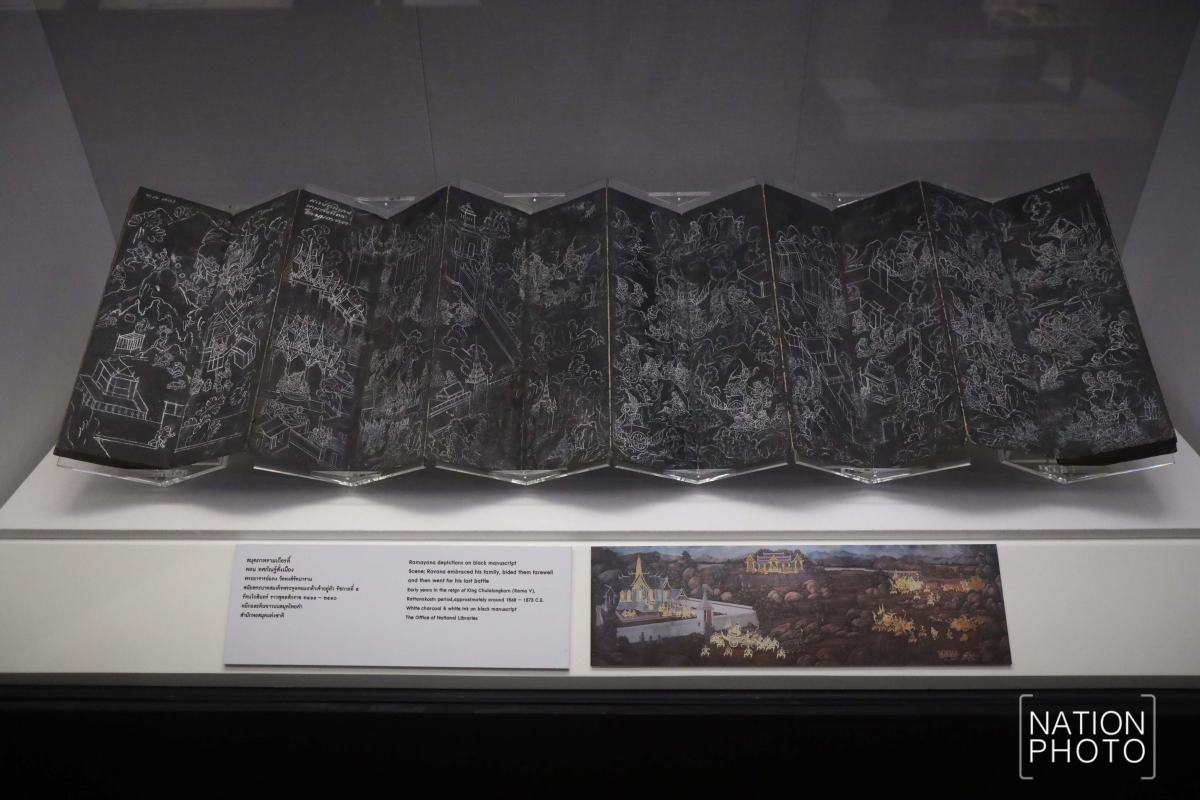
The Fine Arts Department has organised a special exhibition on the occasion of Thai Heritage Conservation Day 2020 entitled “The Renaissance from the Message of HRH”.
The United Nations Educational, Scientific and Cultural Organization, in 1962, praised the Father of Thai history, His late Royal Highness, Prince Damrong Rajanubhab, as an important person of the world. He is the first Thai person to be honoured. The next year, HRH Prince Narisara Nuvadtivongs, the great architect of Siam, was also honoured. Both are considered as playing an important role in laying the essential foundation for education and the arts, making history, archaeology and art of Siam widely learned in education systems since the King Rama V period.
The special exhibition consists of over 300 antiques and multimedia under various subheads. The two continued to exchange letters discussing matters in the field of science. The handwritten letters contain commentary and exposition on various matters.
The exhibition at the Sivamok Phiman Throne Hall, Bangkok National Museum is open from 9am to 4pm (closed on Monday and Tuesday and on public holidays). The exhibition, which opened on August 19, can be viewed until November 19. Entrance fee is Bt30.
Arts & CultureSep 09. 2020James Seet – Sabi no.14, 2020, Ceramics, 31 x 17 x 29 cm
By The Nation
Celebrated Asian ceramic artist James Seet has been rewarded with a solo exhibition in Kuala Lumpur after his work caught the eye of London’s famed Saatchi Gallery.
Seet has soaked in traditional Japanese aesthetics to create new ceramic works on show from September 17 to October 3 at Richard Koh Fine Art in his home country’s capital.
In Wobbly Sabi, Seet draws inspiration from Japan’s wabi-sabi, a worldview inspired by Zen Buddhism and centred on the acceptance of transience and imperfection. The works in the show exude roughness, simplicity and modesty, but most importantly show clay as a revelatory medium of contemplation for the artist.
James Seet – Sabi no.7, 2020, Ceramics, 23 x 35 x 23 cm
“I worked with it up to a point and then, let go, inviting it to shape itself to reveal a far more compelling aesthetic truth than I ever could,” says Seet.
Rather than striving for perfection, Seet allows the natural forces of gravity and time to shape and complete the works.
Seet, 50, has represented Malaysia in various ceramic festivals, international conferences and exhibitions including the 2nd South East Asia Ceramic Conference, in China in 2012. His works feature in several international collections, including the ceramic museum in A’lcora, Spain and Shaw International Centre for Contemporary Ceramics Canada.
James Seet – Sabi no.13, 2020, Ceramics, 27 x 13 x 25 cm
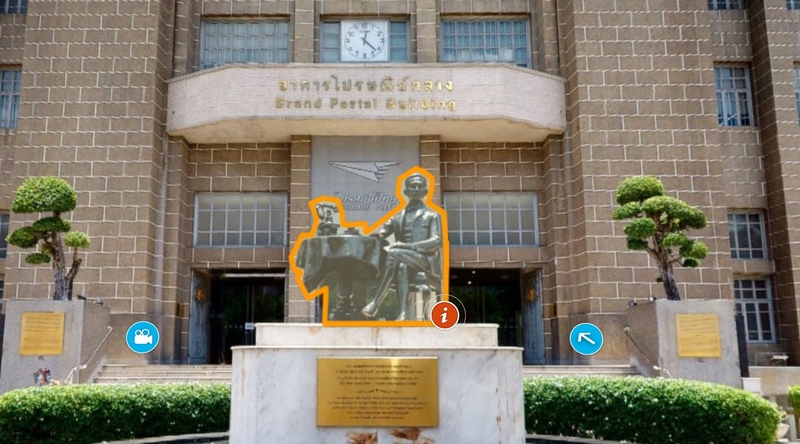
Thailand Post is taking visitors on a virtual tour of 80 years of its history through its “Bang Rak Grand postal building” exhibition.
Held under the concept of “Klang Nitat Post Office” (Post office in the sense of exhibition), the virtual display invites the public to experience the “history and atmosphere” of the Grand Postal Building, where one of the largest collections of Thai art is shown, from the basement up to the rooftop, with unique highlights on each floor, including the “excellent sculpture” of Silpa Bhirasri, father of contemporary Thai art, and works by his students.
The Siam Post exhibition corner features a gallery of important events, a mini theatre built since the beginning of the Central Post Office, and the Lord Garuda sculpture, which grandly adorns the top of the building.
Visit the 24-hour www.vrthailandpost.com website (now only available in Thai language) on any type of online device and be treated to 360-degree views of virtual locations and 3D animation with information that cannot be found anywhere else.
There is also a live broadcast of the tour by honorary guide “Warrior Munmanus”, a collage artist who is passionate about reinterpreting history through art, as well as fun activities. You can win prizes by answering questions today (August 27) at 8 pm on the Thailand Post and Thai Stamp museum Facebook pages.
Mahler to bring light after Covid darkness at Thailand Cultural Centre
Arts & CultureAug 14. 2020Somtow Sucharitkul, founder of Siam Sinfonietta
By The Nation
Siam Sinfonietta will perform Gustav Mahler’s Symphony No 7 “Song of the Night”, conducted by Somtow Sucharitkul, live on August 19 at 8pm at the Thailand Cultural Centre.
This year is the orchestra’s 10th anniversary and Siam Sinfonietta had initially scheduled a special reunion of musicians from all 10 seasons, playing the largest of symphonies, Mahler’s No 3, when the Covid-19 outbreak began.
Now, on August 19, the long-awaited reunion will finally happen with a few adjustments for the pandemic.
The current season’s members of the Siam Sinfonietta will join with alumni from all the previous seasons to perform Mahler’s monumental seventh symphony, the “Song of the Night”, an odyssey through terror and nightmare towards a brilliant cascade of light and hope – perhaps fitting for our current circumstances.
Somtow Sucharitkul, founder of Siam Sinfonietta and artistic director of Opera Siam said: “It’s an astonishing work and even more astonishingly, I can’t find any instance of a youth orchestra having done it before. The first and fourth are done by youth orchestras frequently, the fifth from time to time, the ninth by a select few. No 7 is a tough nut to crack. It might be the first time a youth orchestra has tackled this one.”
But after 10 years, Siam Sinfonietta is not really just “any” youth orchestra.
In 2012, in their second year of existence, Somtow took the orchestra to Vienna to compete in a competition in which, in the symphony orchestra category, every face except Siam Sinfonietta was Caucasian. They had the audacity to perform an unfinished movement by Mahler which Somtow had reconstructed from Mahler’s pencil sketch — so Siam Sinfonietta was doing a kind of premiere of an Austrian composer, in Austria, with an all-Austrian judging panel. It was a recipe for hubris.
The judges said nothing when the other orchestras played, but when we played, the foreman of the jury felt impelled to speak. He said to the whole audience, “We have heard the message of the young people of Thailand — we have heard it loud and clear.”
The Sinfonietta won first prize, beating out European, Australian and American symphony orchestras. The jury later told Somtow it was unanimous and unquestioned.
Siam Sinfonietta repeated its prize-winning streak, winning gold awards, top places, in Disney Hall in California, three times in Carnegie, having a concert broadcast in Slovakia, receiving two awards in Prague, and many times playing Mahler — to standing ovations in Berlin, Munich, and Dresden.
In the August 19 concert, the audience will hear not only the best young students, but also the alumni – some of the best players from all Thailand’s orchestras.
Those holding tickets for the 10th anniversary concert originally scheduled for March can contact LINE @operasiam for information on how to use your existing reservation. The concert will be livestreamed at https://www.facebook.com/SiamSinfonietta/ and broadcast later on the Opera Siam website.
Tickets for the concert cost Bt100 for socially distanced seats at Ticket Melon (www.ticketmelon.com/operasiam/mahler-7). A VIP seating area is available for those who give Bt1,000 to the cause.
Arts & CultureAug 02. 2020Cambodian makeup artist Apple (left) with Charli Hueston as the ‘Apsara Robot’. Courtesy of Dillon Morningstar
By Phnom Penh Post
Using paint, airbrushes and a variety of other tools of the trade, Cambodian makeup artist Dou Poth Molita spends her workdays transforming movie actors into imaginary creatures.
The work is intensely precise and the results look incredibly life-like.
The Los Angeles-based Poth Molita, who prefers to be known as Apple, has 35 film credits to her name on IMBD, a reflection of the time she spent dedicated to the craft once she realised it was her calling.
Movie makeup involving special effects is not a widely known skill in Cambodia and Apple is hoping to change that by sharing her technical skills in her homeland.
“I enjoy spending my nights, sitting for one to five hours just doing makeup and painting myself. To me, it’s like taking a trip and going on an adventure. It’s relaxing and almost like meditation. I also love mixing the beauty looks with gore and scary makeup.
“I wake up every day excited to find new makeup inspiration. The process of having the picture in my head, starting to do it and finally seeing the result of my work is the greatest feeling I’ve had,” Apple says.
Apple grew up in Stung Treng province and became interested in makeup during her senior year studying for a Bachelor’s degree in education at the Pannasastra University of Cambodia.
The self-taught makeup artist dropped out of school and decided to chase after her dream of doing special-effects makeup for a living.
One of her friends is a movie producer and after noticing her talent, asked Apple to be the makeup artist for his film. She took the job and her first official film credit became Run, an amateur zombie movie shot in Cambodia.
“Back then I knew nothing about makeup or film. I just happily accepted [the offer], the 28-year-old Apple says.
“In 2012, I created a formal page to post a bunch of photos from my makeup practice on myself, and I received lots of compliment from my foreign and Khmer friends,” she says.
She started to get noticed and soon received offers to apply makeup on more movie sets.
Sensing an opportunity, Apple established Apple Makeup Gallery in 2016 to introduce special-effects makeup to aspiring like-minded young Cambodians.
“What started mostly as a personal challenge for myself eventually got so much attention from teenagers in Cambodia.
“I developed my creativity and learned to interact with a wide variety of people while working with film crews and clients. I believe in being open to taking risks and trying new techniques,” Apple says.
Her English proficiency also played a role in advancing her career. She was able to communicate and make friends with filmmakers who would later include her in their movie projects.
During her time in the industry, she’s worked at fashion photoshoots, movie sets and training workshops.
But her passion is for special-effects makeup techniques often used in horror movies and creative fashion shoots.
Her work took her to photoshoots across Asia and in 2016, she worked on Angelina Jolie’s Golden Globe-nominated movie, First They Killed My Father.
The film is based on the true story of Cambodian-American Loung Ung, a young girl who is forced from her home in Phnom Penh during the Khmer Rouge takeover and separated from her family. It was filmed in Siem Reap, Battambang and Phnom Penh.
Model Sidney Rubinoe posing in her Mother Earth costume and makeup. Courtesy of Dillon Morningstar
“In the film, I worked closely with the department head of makeup. He kept encouraging me to go to America or England to study. He said I was so talented. In the end, I got a scholarship to study in the US at a cinema makeup school in 2017 and graduated in 2018,” she says.
In the US, Apple took courses on special effects and creature design. She dramatically developed her skills and gained entry into Hollywood after she volunteered for jobs.
For the first couple of months, it was hard to get by, but as more people saw her work, they were mesmerised and captivated by her creativity and professionalism.
“Now I have people calling and emailing me every day,” she tells The Post.
“I have done 10 to 15 films in America such as Judgement Call, Airport Security Squad, Lisa and Liza, Harana, The Wall and many more,” she says.
Apple says she had to be cautious while working with people because they were strict and highly demanding.
“You need to reach their standard. Only you can have your work promoted. If you want to be an international makeup artist, you need to be open to whatever is new to you. Never stop learning. Keep developing yourself,” she says.
Her work is influenced by nature, Khmer architecture, culture and everything around her. She’s also inspired by sea and jungle creatures and wants to raise environmental awareness, especially for endangered species in Cambodia.
“In my makeup art, I use hand painting. Sometimes I use airbrushes, but I combine other materials as well. It can be a sponge, paper, fake flowers or spray paint. It used to take me a very long time to finish one but if I do it with professional people, I go as fast as possible and it takes four hours maximum for the basic creatures.” she says.
For one of her actresses-turned-creatures, Apple created a Mother Earth character using leaves, branches and earth-toned makeup to complete her vision. The final look blends nature and animal, with the actresses’ arms turning into branches and her fingers into twigs.
Apple says she is motivated to share her talent with others.
“After Covid-19 ends, I’m planning to go back and open a school in Cambodia. I hope to create a bridge between the two countries by bringing people from Hollywood to teach there and inviting Cambodians to the US if they want to learn.
“Hard work pays off. Your dream is always worth fighting for,” she says.
An interactive virtual exhibition that reflects the diversity of Himalayan culture
Arts & CultureJul 26. 2020Photo: Screengrab via Matterport
By Kathmandu Post‘
Prayer Flags: Art from the Himalayas’ showcases the diverse cultures of the people living in the mountains, which much of mainstream media fails to represent, and that is refreshing.
When travel restrictions across the world were announced, artists were concerned about how they would pursue their art. Because while art can be undertaken as just a medium of expression, where artists channelise their creativity, at the end of the day, artists need an audience.
But with the number of Covid-19 cases rising every day, and governments extending the shutdown of public spaces, it’s not possible for art enthusiasts to visit art galleries. To fill that void and to keep the Nepali art sector thriving, many art galleries have switched to virtual art exhibitions, among which Windhorse gallery’s ‘Prayer Flags: Art from the Himalayas’ is one.
Located near Bhanimandal, Jawlakhel, the gallery had started the exhibition—its first—physically on February 29. However, because the fear of Covid-19 spread soon after the opening and the lockdown was also brought into effect, many could not witness the works of the 13 artists that were at display. So, on June 23, following the footsteps of other galleries, the Windhorse gallery started a virtual tour of the exhibition, which reflects the diversity and the changing culture and identities of the people living in the Himalayas.
On the ground floor of the one-storey gallery is Pasang Hyolmo’s series ‘The Work of a Himalayan Painter’, which personally stood out the most in the exhibition. An experienced thangka painter, Hyolmo uses his masterful skill of intricate detailing in his artworks and that is vividly seen in the two artworks present in the exhibition.
In one of his works, titled ‘The Work of a Himalayan Painter III’, he uses acrylic on cement to reflect the spiritual elements of his culture that have influenced him. Juxtaposed in a red background, a chakra (wheel) is placed in the middle of the artwork. In Buddhism, the chakra holds a deep and spiritual meaning, and are considered to be energy centers of the body that have psychic and spiritual power to make people move towards the path of bliss and attain Buddhahood. Likewise, they are also considered to be a meeting point between the physical and metaphysical realities of the human world, making his intention of devoting the artwork to highlight the chakra a transcendental one.
Next to his artworks is Gyatso Chuteng’s ‘Kora’, which also pays respect to the tradition of circumambulating around the religious stupa, Boudhanath, that has served as a monument of bond between the Himalayan people from all across the globe. Using Tibetan incense sticks as well as acrylic paint on a wooden panel, Chuteng recreates the circular motion of Kora, depicting a significant tradition of Himalayan culture to the public.
Similarly, like the works of Chuteng, the theme of the artworks of Dawa Thulong also is a depiction of the ancient heritages of the Himalayan culture, that very few people know about.
In ‘Vajrasattva’, he draws the bodhisattva, Vajrasattva, standing in a lotus, with a vajra in one hand which symbolises compassion and a bell in another which symbolises wisdom. As a deity, Vajrasattva is considered as the almighty purifier, and Thulong’s generous use of the colour white serves that purpose, of emitting a certain angelic radiance. As the composition is inspired from the 500-year old mural of Champa Gumba of Mustang, the iconography also serves as a sacred art form that preserves as well as promotes hundreds of years of art and traditions of the Himalayan culture.
His other artwork ‘Detail of Torana’ equally has historical and religious significance. Painting with the help of mineral paints on canvas, he depicts the intricate details of Torana, the decorated frames which can be seen at the entrance of shrines. The painting, which is inspired by the murals of Thubchen monastery in Upper Mustang, depicts the mythical Kirtimukh, a fierce-looking, monster-like creature fighting with two serpents that are in semi-human forms.
But the exhibition is not only filled with traditional art forms, which can be overwhelming, perhaps even tedious, for those who aren’t acquainted with the knowledge of the religious traditions of the Himalayan culture. There are equally evocative and engaging artworks, where the artists have expressed their personal experiences and feelings about their identity and culture.
Photo: Screengrab via Matterport
One such artist with such works is Sonam Dolma. In her two digital paintings, she has depicted her experiences of having an identity crisis as she feels divided between the current realities and the traditional cultures which she has inherited from her ancestors.
Titled ‘World ain’t Goody Goody’, one of her works depicts a woman wearing makeup that is reminiscent of Joker, a pop-culture comic character of DC comics. Along with similar makeup, the woman is shown to be wearing parts of Joker’s costume as well, paired with the traditional dress, bakhu. By juxtaposing two culturally different costumes, Dolma has merged pop culture with her ancestral culture to reflect how both have shaped her, leading her to have an identity crisis, as she doesn’t have a sense of belonging to one particular culture.
Likewise, her other painting ‘Jhutok’ also features a woman adorned in traditional jewellery as well as having tattoos all over her hand, which reflects her theme of representing the identity crisis shared by most of the new generations of people from the Himalayan culture.
Tenzin Gyurmey’s ‘USA Tsampa’ is another evocative and personal work based on the underlying theme of the migration of the Tibetan people, who had to leave their homelands. In a woven sack by using acrylic paints, he juxtaposes 59 identical unicorns which serves as a metaphor to denote both the physical and emotional journey his parents undertook when they were forced to leave their homes and settle in a foreign country.
Along with the unicorns, the work features human figures as well. In tales, unicorns are enchanting creatures known for their strength, but Gyurmey shows the opposite: in the painting, it’s the humans who are supporting the strong unicorns. By changing the power dichotomy, Gyurmey reflects the endurance and strength of people, like his parents, who continue on their paths even when faced with adversities.
In the background of the sack, the words ‘USA’ also appears, which according to the artist reflects the journey of his parents as Tibetan refugees in Himachal who were provided with rice sacks by the American government.
The fine curation is what makes this exhibition important and special. As a new art gallery, holding its first-ever exhibition, the curators deserve applause for bringing such diverse artworks reflecting Himalayan culture from 13 different artists from all over the world. The beauty of the exhibition is that it features all kinds of works, be it the ones that depict the personal journeys of the people from the Himalayan culture or the artworks that represent old traditions, allowing viewers to get a peek into both the past and the present.
Likewise, seeing an entire exhibition dedicated to depicting the cultures of the Himalayan people, which much of mainstream media fails to represent, is refreshing. The artworks of Himalayan culture are often viewed as something that only has ornamental purpose because people fail to acknowledge their cultural values and significance. But by providing such works with distinct space, the gallery sheds light to the fact that art thrives in all cultures and deserves appreciation.
The use of technology for the virtual exhibition is equally admirable as the gallery has tried to make the experience immersive and engaging for the viewers, as it has taken care of even the smallest of details, like providing information about the artist and artworks, just a click away. However, the information in some artworks is so direct that it hinders and undermines the audience’s process of interacting and interpreting artworks.
Nevertheless, for their first-ever exhibition, the effort the gallery has put in to give artists a platform to reflect different cultures is a feat in itself. The move also raises expectations for the gallery: to be an alternative space that provides room for diverse artworks to grow.
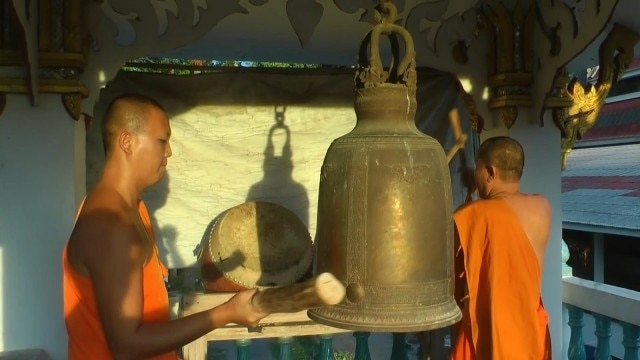
Monks at Phichit province’s Wat Rong Chang temple have decided to bring back the ancient tradition of beating drums and bells to mark time during Buddhist Lent.
At Wat Rong Chang, drums and bells can be heard at twilight as a symbolic call on monks and farmers to return home.
In ancient times, temples rang bells and beat drums to mark time during Lent, as well as to announce a disaster, such as fire, robbery, a monk’s death or to announce that a monk has committed a serious offence. Temples also beat drums during an eclipse to reportedly drive away the mythical god Rahu, who apparently swallowed the sun or moon. The rhythm at which drums were beaten and bells run were different for each incident.
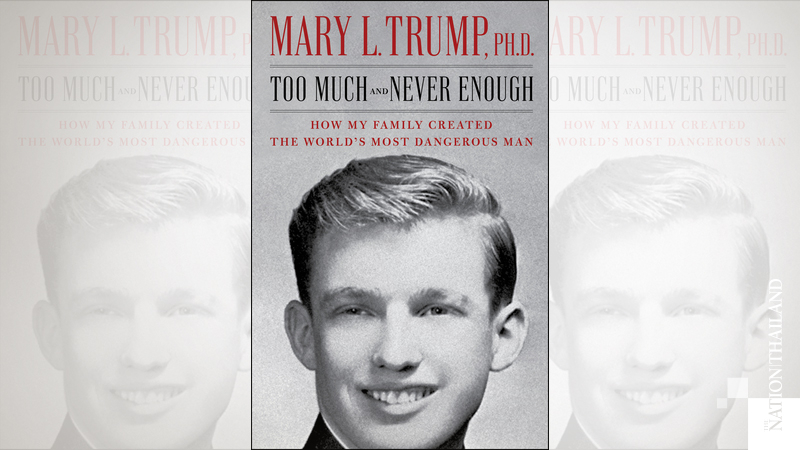
“Too Much and Never Enough: How My Family Created the World’s Most Dangerous Man” by Mary L. Trump, Donald Trump’s niece. MUST CREDIT: Simon & Schuster
By The Washington Post · Shayna Jacobs · NATIONAL, POLITICS, COURTSLAW
NEW YORK – A state court on Monday issued an eleventh-hour ruling affirming Simon & Schuster’s right to publish a new book by President Donald Trump’s niece, issuing a decision that prioritizes the First Amendment over a dated confidentiality agreement among members of the Trump family.
The book by Mary Trump – “Too Much and Never Enough: How My Family Created the World’s Most Dangerous Man” – is slated for release Tuesday. Some copies already have been distributed, and it’s already considered a best seller.
“The court got it right in rejecting the Trump family’s effort to squelch Mary Trump’s core political speech on important issues of public concern,” her lawyer Theodore Boutrous said in a statement. “The First Amendment forbids prior restraints because they are intolerable infringements on the right to participate in democracy.”
Mary Trump, 55, was sued by her uncle Robert Trump, the president’s brother, in an effort to block publication. He had accused her of violating a confidentiality agreement in an inheritance case that was settled two decades ago.
An attorney for Robert Trump did not immediately respond to a request for comment. He could attempt to seek monetary damages from his niece, but it is unclear whether he intends to do so.
In Dutchess County, N.Y., Justice Hal Greenwald said that Simon & Schuster had no obligations under the family’s nondisclosure agreement and that constitutional law “trumps contracts.”
The agreement was signed as the family settled the estate of Donald Trump’s father, Fred Trump. Attorneys for Mary Trump had argued that it was meant to keep details of the settlement private and does not bar Mary Trump from telling her famous family’s story outside of that. They had said, too, that the book’s content was vital to the country’s democratic process, saying in court filings that “the speech at issue concerns vital political discourse directly relating to an ongoing national election.”
The book has struck a nerve for the president and his family. Mary Trump is the daughter of Fred Trump Jr., the president’s brother, who died in 1981 when she was 16 years old. A clinical psychologist, she has said she employed her professional training in analyzing the president and the “toxic” environment in which he was raised.
In his ruling, Greenwald reasoned that Mary Trump, under her contract with Simon & Schuster, had no ability to halt publication, saying it would have been “moot” to order her to stop publication of a book that “has been published and distributed in great quantities” already.
The judge refused to apply a broad view of the estate settlement, saying “what was confidential was the financial aspect.”
“The parties agreed to keep the settlement under seal. That’s it,” Greenwald wrote of the deal that was executed at a time when “the Trump family were New York based real estate developers and not much else.”
The Trumps “were not elected officials or TV personalities,” Greenwald said in the ruling. “The issues that were the subject of the Agreement were intra family issues, not of worldwide concern, or even national interest.”
Greenwald suggested that the case to stop publication was also weak because it was brought by Robert Trump, even though the book focuses largely on the president.
In a statement, Simon & Schuster said that, “The unfettered right to publish is a sacred American freedom and a founding principle of our republic, and we applaud the Court for affirming well-established precedents against prior restraint and pre-publication injunctions.” Mary Trump’s book, the publisher added, is “a work of great significance, with very real implications for our national discourse.”
The book, an advance copy of which was obtained by The Washington Post, depicts Fred Jr.’s death as a defining moment for the president, who was said to have dealt with his brother harshly as he pushed him into the family real estate business. Fred Jr. was preoccupied with pursuing aviation as his family, including the future president, pressured him to focus on the family business.
Mary Trump labels the president a “sociopath” in the book, citing his efforts to win over his difficult father. The memoir paints the family patriarch as a malignant figure who largely created and shaped the future president. Both men’s business reputations have been questioned extensively, dogged by a number of cheating accusations spanning decades.
 Participants look at the works on display at the Zaha Museum in Seoul during 2019 Korea Art Week.
 ![An exhibition marking the 600th anniversary of the completion of the construction of the Forbidden City opens in Beijing on Thursday. [Photo by Jiang Dong/China Daily]](https://media.nationthailand.com/images/news/2020/09/13/30394470/800_3f2f5e0446945cf.jpeg?v=1599977852) An exhibition marking the 600th anniversary of the completion of the construction of the Forbidden City opens in Beijing on Thursday. [Photo by Jiang Dong/China Daily]
An exhibition marking the 600th anniversary of the completion of the construction of the Forbidden City opens in Beijing on Thursday. [Photo by Jiang Dong/China Daily] 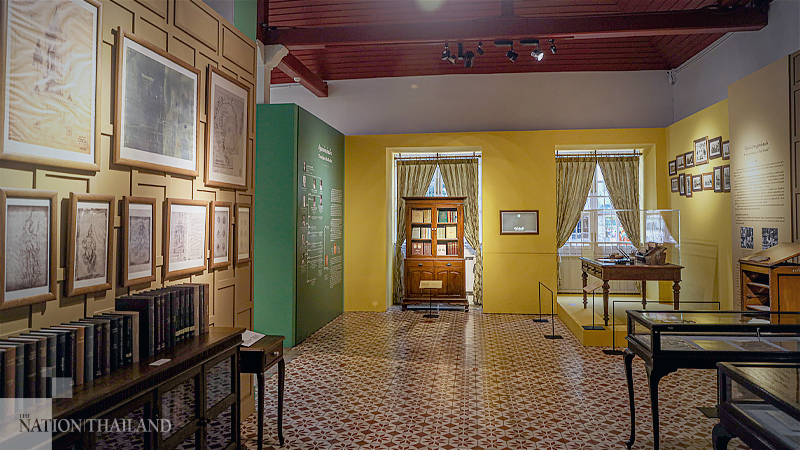
 James Seet – Sabi no.14, 2020, Ceramics, 31 x 17 x 29 cm

 Somtow Sucharitkul, founder of Siam Sinfonietta

 Cambodian makeup artist Apple (left) with Charli Hueston as the ‘Apsara Robot’. Courtesy of Dillon Morningstar
 Photo: Screengrab via Matterport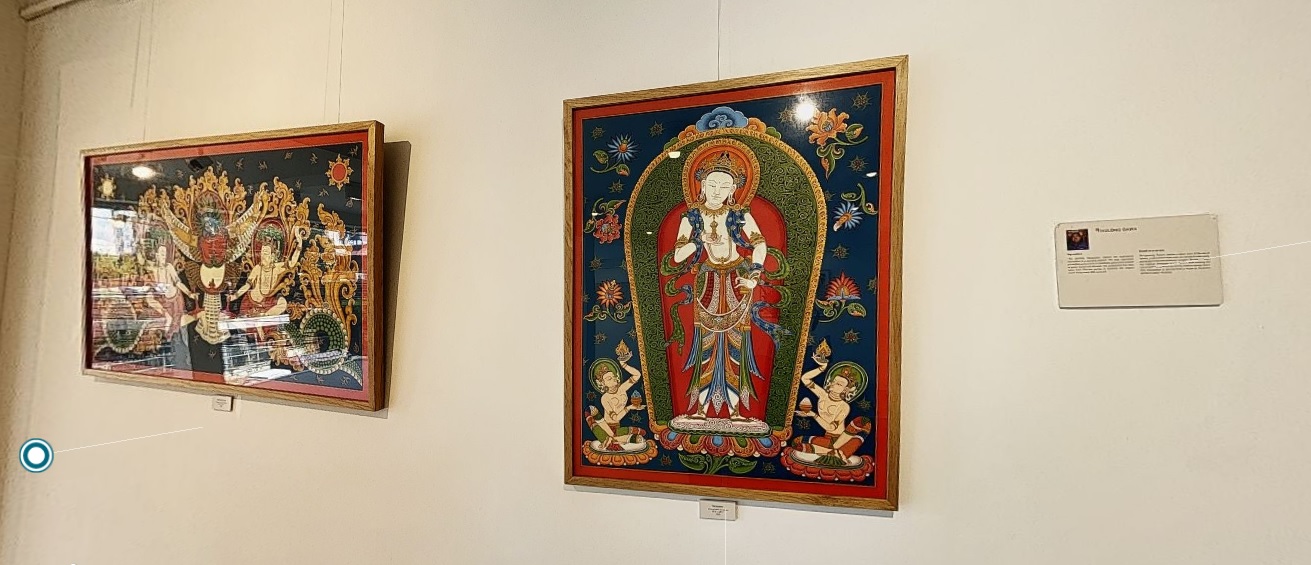
.jpg)
.jpg)
 SootinClaimon.Com