Exhibition revives old memories of New World #ศาสตร์เกษตรดินปุ๋ย

#ศาสตร์เกษตรดินปุ๋ย : ขอบคุณแหล่งข้อมูล : หนังสือพิมพ์ The Nation.

Exhibition revives old memories of New World

Arts & Culture

Jun 18. 2020

By The Nation

Once a landmark in Bangkok’s Bang Lamphu district, the New World department store is being resurrected for an exhibition entitled “Arch SU Fest: 2020 — New World x Old Town”, which opened on June 13. The nine-day exhibition ends on Sunday (June 21).

The exhibition tells the story of the mall and Lamphun district itself, once crowded with various products especially clothes. However, this area died out along with the mall. The exhibition showcases the products that were once popular and simulate the shops and history of the abandoned mall.

The New World mall, which opened in 1983, and was once bustling with shoppers, had to be shut down due to the top floor of the building collapsing. Floors 5 -11 were demolished following a court order.

After closing down in 2004, New World inadvertently converted from a mall into a public fish pond in the city, also known as Wang Matcha, as the top structure was open after the collapse Rains caused waterlogging and it became a breeding ground for mosquitoes. The villagers, therefore, released fish into the water to eat the mosquitoes. The place acquired a reputation as an aquarium, visited even by tourists before the building was ordered to be closed in 2014 and all the fish removed.

The exhibition is a collaboration between the mall owner and the Faculty of Architecture Silpakorn University.

Prof Supitcha Tovivich, an expert in community design and development through participation and urban development, said that the intention is to project the life of the mall “which lives on in the memories of some Lamphun people through past stories and connecting that with the present, along with the exhibition of the redevelopment of this building by the third and fourth year students of the Faculty of Architecture and Fine Arts.

There is an exhibition that tells the story through objects that represent memories. In the area of ​​Bang Lamphu, there is a zone called Lighting Installation that tells the past and connects it to the future of Bang Lamphu. There is also an exhibition that tells stories of important people in the area.

“I would like to open an area that can be used like a community centre. I would like people in the district to share their memories with outsiders. We want outsiders to know and see it as the people in the area,” said the professor.

What to do when the Confederate statues come down? Leave the pedestals empty #ศาสตร์เกษตรดินปุ๋ย

#ศาสตร์เกษตรดินปุ๋ย : ขอบคุณแหล่งข้อมูล : หนังสือพิมพ์ The Nation.

What to do when the Confederate statues come down? Leave the pedestals empty

Arts & Culture

Jun 17. 2020The statue of Jefferson Davis in Richmond was defaced before being toppled to the ground. MUST CREDIT: Washington Post photo by John McDonnellThe statue of Jefferson Davis in Richmond was defaced before being toppled to the ground. MUST CREDIT: Washington Post photo by John McDonnell

By The Washington Post · Philip Kennicott · FEATURES, ESSAYS

As the United States grappled with the death toll of World War I, there was debate over how to memorialize the more than 50,000 soldiers lost in battle. Should we build yet more memorials of stone and bronze, or redirect the requisite funds and emotional energy into something more useful, such as building a school or hospital or public library? https://www.washingtonpost.com/video/c/embed/f4bbd1c4-ac57-4838-bb7b-ca3675b2307e?ptvads=block&playthrough=false

This debate, between traditional memorials, which conveyed a basic message of honor, and “living” memorials, which served a social need, was effectively won by the industry that was most vested in the outcome – the companies that designed, built and installed monuments and memorials. It was a booming trade in the first decades of the 20th century, when municipalities were also buying and erecting Civil War memorials, many of them dedicated to racist men who fought their own country to preserve the evil of slavery. 

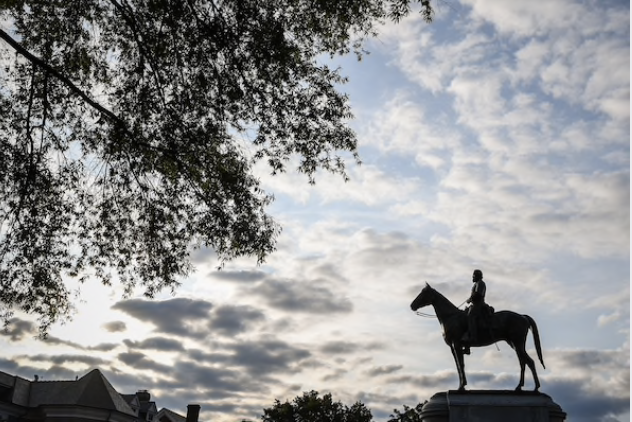
A statue of Gen. Stonewall Jackson on Monument Avenue in Richmond, one of the many Confederate memorials in that city. MUST CREDIT: Washington Post photo by Salwan Georges

A statue of Gen. Stonewall Jackson on Monument Avenue in Richmond, one of the many Confederate memorials in that city. MUST CREDIT: Washington Post photo by Salwan Georges

Now that protests over the death of George Floyd and police brutality against African Americans have built momentum to finally take down Confederate statues, it’s worth thinking anew about the value of living memorials, and why so little of our mad fetish for public memorialization has been devoted to them. Could we rethink not just the whom and what we seek to venerate, but also evolve beyond the need for traditional memorials and monuments altogether?

It’s particularly important now, because one essential idea that helps keep these sinister monuments to men like Robert E. Lee and Stonewall Jackson in the public square is the fear that, somehow, we can’t live without them. Even people who might not particularly admire Confederate leaders, who might agree that it is beyond bizarre that the United States has named so many of its military bases for men who took up arms against their own people, feel a horror vacui, an anxiety about the possible vacuum in public space if the plinths and pedestals are emptied, and our parks denuded of their visual focal points. 

That fear is particularly keen in places where the impulse to memorialization was most intense, in architectural and design projects such as Richmond’s Monument Avenue, which includes memorials to Lee, Jackson, the Confederate general J.E.B. Stuart and Confederate President Jefferson Davis. Virginia Gov. Ralph Northam, a Democrat, has called for the removal of the Lee statue, while protesters tore down the statue of Davis – who argued vehemently and often that African Americans were an inferior race “fitted expressly for servitude” – from the base of a giant column topped by an allegorical figure representing vindication, the essence of the Lost Cause apologia for Southern bigotry. 

Monument Avenue is the most extensive and elaborate fusion of Lost Cause racism and urban design in the United States. The project took decades to build, beginning with the Lee memorial in 1890 and continuing through the height of Jim Crow-era white panic; it was still being amended with the addition of a statue to African American tennis great Arthur Ashe in 1996, a welcome but vastly insufficient symbolic gesture toward recasting the avenue’s legacy of hate. The beauty of the divided street, its gracious width, its trees and its accompanying domestic architecture – including many grand homes built in the implicitly racist neocolonial style rooted in a fantasy of an ideal antebellum America – makes its larger message all the more pernicious. Its appeal as a place to live, to stroll, to gather gives its Confederate memorials special power, casting shadows literally and figuratively over the city. 

These memorials rise above the generally banal and often shoddy Confederate memorials in other cities, not as art, but as something like luxury designer goods realized on an urban scale: The materials are of a high quality, the workmanship skilled, the details well-executed. That, too, makes them all the more effective as communicators of an ugly message.

In Richmond – as well as in cities around the world wrestling with legacies of racism, the slave trade, colonialism and the intellectual nexus that wove all three together into a coherent system of exploitation – there have been proposals to replace these statues. A July 2018 report, commissioned by Richmond Mayor Levar Stoney, called in particular for the possible replacement of the Davis monument, as “the most unabashedly Lost Cause” in its design and message. 

Late last year, the Virginia Museum of Fine Arts installed a statue by artist Kehinde Wiley called “Rumors of War,” depicting a young African American man riding a horse, cast in bronze and set on a grand plinth. Its position outside the museum, near Monument Avenue, and its close but ironic fidelity to the style and materials of traditional heroic statuary, seems to offer a simple solution to the horror of emptiness that slows the removal of Confederate symbolism: Simply replace old symbols with new ones.

It’s an appealing idea, and one might replace Jeff Davis with Frederick Douglass and leave the allegorical figure of vindication right where she is, surveying the state’s capital from high atop her commanding pillar. Other ideas have been floated for how to deal with empty plinths, including using them as an invitation for temporary art exhibitions, as happens on London’s “fourth plinth,” a vacant stone platform in Trafalgar Square that has, since 1999, been used to display works by contemporary artists. 

But it’s also worth considering an idea that is widely repellent to conventional civic thinking in the United States – that we resist the urge to memorialize and move on from what historian Jay Winter called “the memory boom” of the 20th century. As Winter has argued, we may be good at remembering things at the local and intimate level, but very few of our efforts at something like a national or collective memory have yielded anything authentic or meaningful. So why do we keep trying, especially when so much of what constitutes our putative public memory is toxic confabulation?

Why, especially when we have within our history a still viable remnant of the “living memorial” tradition, which is essentially an argument not for memory, but for action, for making and doing things rather than pretending that we have some kind of sacred, collective power of reminiscence? The Kennedy Center, in Washington, D.C., is the most prominent living memorial in the nation’s capital, extending the 35th president’s legacy on a daily basis, in performative and participatory ways. 

Vibrant democracies must be ever alert to history, always seeking to revise it closer to the demonstrable truth of the past. But the belief that we need heroes and “great men” (and it’s almost always men, especially men who distinguished themselves in the military and political arenas) is not working very well for us. We might try to experiment with living without the symbolic representation of a fictive past and focus our energies on making things new.

It is already happening. The nationwide protests over police brutality, full of improvised and individual expressions of anger, might be considered living memorials to Floyd, who died in police custody in Minneapolis on May 25. The impromptu and collective cheering for hospital staff and first responders in New York is a living monument to people whose heroic behavior is happening in real time, every day. The handmade signs affixed to a temporary fence near the White House, after the Trump administration used violence and co-opted the military to clear Lafayette Square, are a more vital response to authoritarian intimidation than any statue could ever express. 

All of these recall an idea that was more vigorous in the early days of the republic than it is now – that old-style monuments and memorials are best left to countries that aren’t free, to monarchs and potentates. Democracies honor their leaders by perpetuating their ideals, not by erecting statues.

It won’t be easy. In the early 1840s, Ralph Waldo Emerson argued in his essay “The Poet” that everything is symbolic, even nature is symbolic, and that the United States needed poets who could undertake the elaboration and explication of new symbols. It seems we cannot exist without them: “We are symbols, and inhabit symbols,” he wrote. Even today, it’s a reflexive response of pundits, critics and television philosophers to claim that democracies, in particular, need collective symbols to unify them, as if we are children who need inspiring bedtime stories. 

Yet, if you were to poll Americans about their symbols, there would likely be little if any consensus about them, with even great figures, like Abraham Lincoln, meaning different things to different people. And even though Lincoln has been revered by many Americans for much of the past century and a half, this reverence has been accompanied only sporadically by authentic action to achieve the legacy his memory seemed to promise. 

It may be possible to work our way to new and better symbols, painfully and contentiously, but perhaps we don’t need them. Empty space is open space, vacant plinths can mean anything, which empowers those who contemplate them. Let’s shed the whole carapace of national symbolism, including the flag and the anthem, which are like catnip to demagogues, and get on with the real work of democracy, the work that is already happening in our streets, work that goes forward without leaders, work that embodies the core but latent idealism of the republic better than any monument, even our best ones. 

Glenstone, which opened as a connoisseur’s delight, is reopening as an oasis for everyone #ศาสตร์เกษตรดินปุ๋ย

#ศาสตร์เกษตรดินปุ๋ย : ขอบคุณแหล่งข้อมูล : หนังสือพิมพ์ The Nation.

https://www.nationthailand.com/lifestyle/30389130?utm_source=category&utm_medium=internal_referral

Glenstone, which opened as a connoisseur’s delight, is reopening as an oasis for everyone

Jun 06. 2020
Visitors look at

Visitors look at “Split-Rocker” by Jeff Koons at Glenstone. MUST CREDIT: Washington Post photo by Michael S. Williamson
By The Washington Post · Philip Kennicott · ENTERTAINMENT, MUSEUMS 

POTOMAC, Md. – I broke the rules at Glenstone, the contemporary art museum in Potomac, only moments after passing the pale-gray wooden walls of the entry pavilion.

The staff who greeted me a few minutes earlier had laid out the dos and don’ts of how we were to behave upon entering the grounds of one of the first major art museums in the region to begin a partial reopening. Always wear a mask. Keep social distance. Stay on paths. No touching allowed.

Arrival Hall at Glenstone, which opened its gardens and grounds to a limited public audience in Potomac, Md., on June 4. Visitors were asked to pay attention to social distancing rules and wear masks. MUST CREDIT: Washington Post photo by Michael S. Williamson

Arrival Hall at Glenstone, which opened its gardens and grounds to a limited public audience in Potomac, Md., on June 4. Visitors were asked to pay attention to social distancing rules and wear masks. MUST CREDIT: Washington Post photo by Michael S. Williamson

But, no sooner had I reached the open meadows that are the overture to this carefully curated 300-acre landscape than my right hand brushed against the tall grass bending over the gravel path. Reflexively, I pulled off a few dried seeds and rubbed them between my fingers.

During the coming weeks and months, as museums begin to reopen around the country, there will be a lot of new rules, and a lot of reprogramming our expectations and behavior. Glenstone has been a work in progress since it opened to the public in 2006, as a small gallery on the grounds of the home of museum founders Mitch and Emily Rales. A year and a half ago, the museum took a giant leap to world prominence when it unveiled a 204,000-square-foot building called the Pavilions, designed by Thomas Phifer, to display the Rales’s vast and deep collection of modern and contemporary art. And then the coronavirus hit, and Glenstone, like almost every venue, was off limits.

The facility, which uses an online reservation system, reopened this week as “an outdoor experience.” The museum buildings are still closed, as are the entry pavilion, cafe and restrooms, so the museum is suggesting visitors read its guidelines and be prepared. “They should check the weather before they come, wear sunscreen and bug spray, bring their own water, and carry their trash out with them,” said Emily Grebenstein, communications manager for Glenstone.

The outdoor sculpture collection, however, is mostly accessible, the grounds are lush, and on Thursday morning the scattered couples, friends and family groups that scored one of the 210 daily online reservations were giddy about the experience.

Thais Austin, 59, a real estate agent who was among the first visitors, said that in the old days, before the coronavirus, she had her cellphone programmed to alert her if there was an art exhibition open near any property she was visiting as part of her job. She said she “used to go to everything.”

“I really miss my museums in D.C.,” she said. “It has been heartbreaking to me. I jumped on this within five minutes of getting their email about reopening because I knew that it would be booked out. We need some joy right now.”

Austin was visiting with a friend, Melanie Edwards, 40, who lives in the same condo building in Chinatown. Edwards, a musician, was celebrating having recently received an arts grant from the District of Columbia, which will help her get through what has become a devastating and extended period of unemployment. “This is the third and a half month in and it’s just dire straits, and I don’t know when I’ll go back to the performing world.”

The two women expressed a sentiment echoed by others: disappointment that more of Glenstone wasn’t open, but excitement at having the place mostly to themselves.

Tom May, 70, a retired tutor at St. John’s College in Annapolis, came with his wife, Pam, his son and his son’s fiancee. As the midday temperatures began creeping toward the 90-degree mark, he stood next to a 2001 Richard Serra sculpture, a canted and interlocking spiral of oxidized metal plates called “Sylvester.” This was his third visit to the venue.

“I was really just so delighted by it,” he said, remembering his first encounter with the Serra. He was even more impressed on Thursday. “It’s a different time of day,” he explained, as the sun cast bright, blade-like shadows on the ground between the steel panels.

He mentioned George Floyd, who died while in police custody more than a week ago, and the anger that still seethes in America today. “There is this very strong sense that we are not there yet,” he said, and added that the crisis is raising new expectations, which is a good and necessary thing. “Coming here in the presence of both nature and art recontextualizes what those possibilities might be.”

The Serra sculpture is so large, it beckons you in, to walk the spiraling path between its ominously tall and heavy walls, until you reach the center point, where everything but the sky disappears. It’s a narrow passage, however, and that requires visitors to be conscious of each other’s presence, and safety. It became a one-way street on Thursday, and those who wanted to enter had to listen for voices inside and wait until others exited before heading in.

I carried my grass seeds with me past the Serra, down the path into the woods below, to see my favorite work, Andy Goldsworthy’s 2007 “Clay Houses,” which were closed. On my way back, I again passed the Pavilions where, if you stood on tiptoe, you could see that there were waterflowers in bloom in the aquatic courtyard below. But there was no access to the courtyard, and so no one was sitting on the bench that juts out into the pond, a popular spot that is so detached from the ordinary world, so lost in its own perfect little vision of water and sky, that two’s a crowd.

Behind me, on a perfectly flat swath of ground, was Michael Heizer’s “Compression Line,” an elongated metal box set deep into the earth such that its walls are forced together in the center. When I first passed it on the way in, its “compression” seemed a perfect metaphor for social tension, for the confinement of the past months, for the strained-to-breaking nerves of a society on edge. But now it had lost its metaphorical specificity, and seemed to be what it was when I first encountered it a few years ago: a compelling visual object, suggestive of a multiplicity of things and feelings, but not a dirge crafted for any one moment plucked from the timeline of history.

I dropped my grass seeds somewhere along the way, and didn’t pluck any more. The experience seemed distinct and different from a visit to a museum, and not just because the museum buildings were closed.

Nor did it seem like a visit to a park, or a stroll through nature. There were squirrels in the woodlands, multiple wildflowers in bloom and fallen blossoms from the tulip poplars. But the scattered presence of people in a public landscape was more significant than anything else, people who were extravagantly friendly in their socially distanced greetings, people who clearly took pleasure in each other’s presence, always at least six feet apart. Even the masks they were wearing were festive, and eyes sparkled above them.

Glenstone has, and will always have, the Glenstone problem, which is that it is a fantasy place, created by two extraordinarily rich people, so that others may contemplate a form of human endeavor – contemporary art – that is sometimes blindingly prophetic and revelatory, and very often silly to the point of being an inexcusable waste of resources, financial, cultural and intellectual. Glenstone, like contemporary art, is always perched on the precipice of being ridiculous.

On Thursday, however, it was an oasis where life felt fragile and deliberate, and everyone there was glad to be there.

“I thought that this would be, and it is, therapeutic,” said May. “Not to forget, but to heighten and re-energize what it is that we should be doing and thinking and feeling.”

So art is what it always was, only more so: a privilege, a pleasure and a problem. There’s no indulging it that doesn’t leave you struggling with a paradox: It is not sufficient, in itself, to make the world a better place, yet the world would be far worse without it.


Book World: Steven Johnson recounts the tale of pirate Henry Every, who terrorized the Indian Ocean #ศาสตร์เกษตรดินปุ๋ย

#ศาสตร์เกษตรดินปุ๋ย : ขอบคุณแหล่งข้อมูล : หนังสือพิมพ์ The Nation.

https://www.nationthailand.com/lifestyle/30388763?utm_source=category&utm_medium=internal_referral

Book World: Steven Johnson recounts the tale of pirate Henry Every, who terrorized the Indian Ocean

May 30. 2020
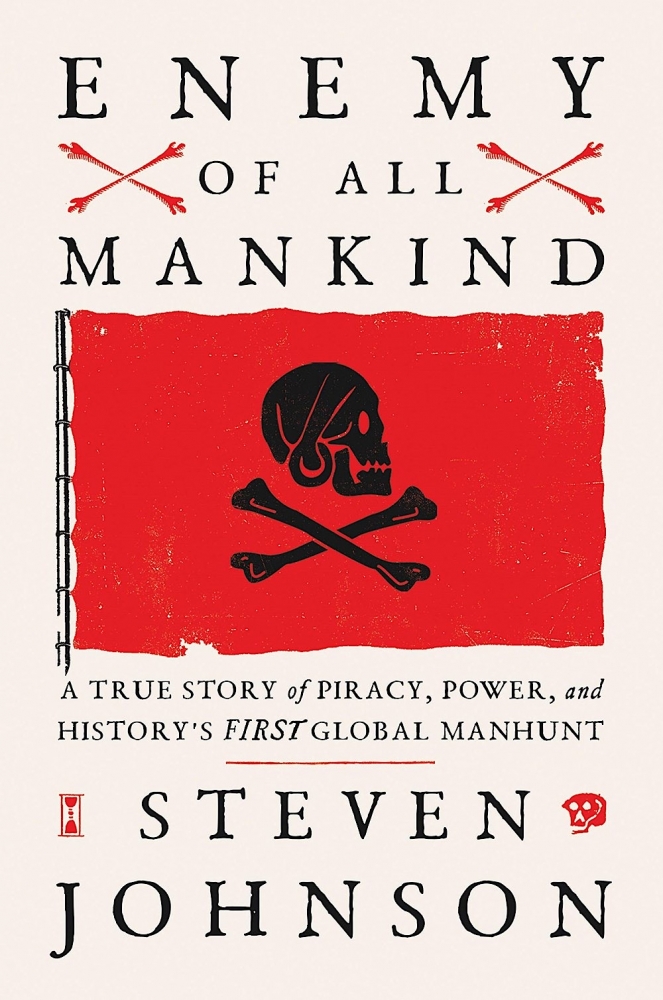
Enemy of all Mankind Photo by: Riverhead - handout

Enemy of all Mankind Photo by: Riverhead – handout
By Special To The Washington Post · James Hill · ENTERTAINMENT, BOOKWORLD

Enemy of All Mankind By Steven Johnson Riverhead. 286 pp. $28

Henry Every’s birth and death attracted little notice. He was born perhaps as Henry Avery on the southwest coast of England. He may have been press-ganged into the Royal Navy. And his death went unrecorded.

But his was hardly a small life. As Steven Johnson notes in his page-turner of a book, “Enemy of All Mankind,” Every was at one time the most hunted man on Earth. He and his band of pirates brought terror to the Indian Ocean, upsetting Britain’s dance with the Mughal Empire, most notably one Abu Muzaffar Muhiuddin Muhammad Aurangzeb Alamgir, or Aurangzeb for short, also known as the Universe Conqueror.

“As improbable as it might have seemed at the time,” Johnson notes, “a series of events would eventually draw mighty Aurangzeb and Henry Every into violent conflict with each other.”

Those events began in a port in Spain, when Every engineered a mutiny that saw a fast ship, the Charles II, overtaken and sailed out to sea as the Fancy under Every’s command. Every pointed the Fancy in the direction of Africa and then stopped at the Cape Verde islands, where he raided three British ships for their provisions and added nine more men to his motley crew.

On his way to becoming a most notorious pirate captain, deemed an enemy of all mankind (the term comes from Latin, “hostis human generis,” or “enemies of all mankind”), Every rounded the Cape of Good Hope for Madagascar. “Famously friendly to pirates,” Johnson writes, “the island served as a launching pad for voyages into the Indian Ocean, where buccaneers could prey on treasure ships making pilgrimages to Mecca.” Every carried on, his sights set on the treasures of a five-century-old Mughal dynasty.

Every got gobs of plunder, but he also wrought unimaginable chaos. The Fancy, with Every now in command of ships that had joined with him, caught up with the Ganj-i-Sawai, nicknamed the Gunsway, which was returning from the hajj with more than 1,000 passengers on board. “Of course,” the author notes, “transporting all that wealth to a city thousands of miles away in a foreign nation made the ship supremely vulnerable.”

The fate of the Gunsway is clouded by legend.Is it true that Every ended up with an Indian princess, perhaps the granddaughter of Aurangzeb? Possibly.

But what happened aboard the Gunsway is not in dispute. As Johnson recounts, Every’s cohorts engaged in mass sexual assault. “Every’s men were rapists of the worst order,” the author notes.

A teenage sailor later testified in a court back in England that Every himself never went aboard the Gunsway. But, if true, he still was not without blame. “Against extraordinary odds, Henry Every had made his fortune,” Johnson writes. “But he must have realized, listening to the screams echoing across the water from the Gunsway, that his men’s actions had now made him something else: the world’s most wanted man.” But, as Johnson reports, Every simply “snuck back into the shadows.”

He might have stayed there, except that an amazing amount of literature exists concerning his exploits and the few years he spent on the lam. And we can thank Johnson for combing the archives, describing in vivid detail the life of pirates that we thought we knew – most likely through motion pictures – when in truth we didn’t.

Johnson writes, “Hollywood representations of pirates and privateers tend to focus on the battle scenes, with cannonballs firing and elaborate sword fights on deck, but the reality of life at sea during this period was that you were more likely to die from the ‘bloody flux’ – as dysentery was called back then – than you were to be struck down in armed conflict.”

Surprisingly, pirates at the time did have a method for sharing the loot and a form of self-government that almost seems constitutional. But they existed in appallingly cramped quarters, were always on the run from the law and were fewer in number than we have been led to believe. Yet what an illusion they created, both now and then. Blame it on the media. “All these attractions . . . were to a certain extent amplified by one of the new inventions of the seventeenth century: the popular press,” as Johnson writes.

“Enemy of all Mankind” covers lots of territory, including the beginnings of the British Empire, and it’s a good read, made all the better by Johnson’s clever storytelling and an unforgettable pirate named Henry Every.

Book World: The American ideology, on the left and the right, that props up inequality #ศาสตร์เกษตรดินปุ๋ย

#ศาสตร์เกษตรดินปุ๋ย : ขอบคุณแหล่งข้อมูล : หนังสือพิมพ์ The Nation.

https://www.nationthailand.com/lifestyle/30388349?utm_source=category&utm_medium=internal_referral

Book World: The American ideology, on the left and the right, that props up inequality

May 23. 2020
Capital and Ideology
Photo by: Belknap/Harvard — handout

Capital and Ideology Photo by: Belknap/Harvard — handout
By Special To The Washington Post · James Kwak · ENTERTAINMENT, BOOKWORLD

Capital and Ideology By Thomas Piketty Belknap/Harvard. 1,093 pp. $39.95 —

The Democratic Party is the most important political party in the world today. It is the only organization in a position to defend what was once the world’s flagship democracy and economic power from a president who has re-engineered his own party to justify racism, misogyny and xenophobia. Yet the party of the donkey is hardly up to the task. Over the past decade, as Republicans have further embraced an ideology of resentment unmoored by facts, Democrats have lost hundreds of seats in state legislatures, 22 seats in the House of Representatives and control of the Senate – while losing the White House to the most toxic candidate in history.

In his new book, “Capital and Ideology,” economist Thomas Piketty explains why. The Democratic Party – like left-leaning parties throughout the world – failed to come up with a compelling response to the global conservative resurgence of the 1980s. Like New Labour in Britain and the Socialist Party in France, it abandoned the working-class voters who were once its base: “Improving the lot of the disadvantaged ceased to be its main focus. Instead, it turned its attention primarily to serving the interests of the winners in the educational competition.” By 2016, according to the post-election surveys that Piketty analyzes in depth and across several countries, the Democrats were the party of not just the highly educated but even the highly paid.

The Western world stands at a crossroads. For most of the past century, politics in prosperous democracies was primarily oriented by the division between rich and poor. Today, that axis is being overshadowed by clashes over national or ethnic identity, between anti-immigrant nativists and pro-immigrant cosmopolitans. Examining the data over several countries and decades, Piketty identifies the turn toward identitarian politics as a direct consequence of the left-wing parties’ conversion to market capitalism: “The disadvantaged classes felt abandoned by the social-democratic parties (in the broadest sense) and this sense of abandonment provided fertile ground for anti-immigrant rhetoric and nativist ideologies to take root.”

But the future is not preordained. Piketty’s earlier blockbuster, “Capital in the Twenty-First Century,” was best known for its claim that r > g: that the rate of return on investments (r), in most periods of history, is higher than the rate of economic growth (g), and the very rich will become inexorably richer – as has indeed been occurring for most of our lifetimes. One of the most trenchant critiques of that book was that r > g is not an ineluctable law of nature but a result of specific economic and political institutions. Change the institutions, and the course of history changes.

“Capital and Ideology” is Piketty’s response. The book is both a history of the world and a theory of history. Every society is unequal, and therefore constitutes an “inequality regime” maintained not solely by force but also by ideology: “Each inequality regime is associated with a corresponding theory of justice. Inequalities need to be justified; they must rest on a plausible, coherent vision of an ideal social and political organization.” Most of the book is a history of how those ideologies have helped bolster social structures characterized by extreme inequality, from feudal and slave societies through colonial regimes to the hypercapitalist world of today.

Where Marx consigned ideology to the “superstructure” of a system driven by economic class conflict, Piketty claims for it a central role. At key points in history when one regime breaks down, he argues, what comes next depends on the ability of different political actors to formulate a new vision of how society should be organized.

Therein lies today’s challenge. After the widespread dislocation caused by the financial crisis of 2008, and with increasing awareness of the scale of global inequality (thanks largely to Piketty and his collaborators), the prevailing economic orthodoxy – that market competition is the source of all good things, and public policy must be restricted to making markets work better – rings hollow to many people left on the wrong side of the income distribution. The bleakly unequal impact of the coronavirus pandemic on rich and poor may reinforce that discontent.

In short, the time is ripe for a new vision of society. After his earlier book’s seemingly pessimistic message – that wealth naturally tends to concentrate – the Piketty of “Capital and Ideology” proclaims himself an optimist. To overcome both extreme inequality and virulent nationalism, he calls for a “social-federalist” ideology combining economic justice and cross-border cooperation, and for an economic order that embraces the ideas of equal investment in each young person’s education, worker participation in management, a safety net guaranteeing everyone’s basic needs and circulation of capital through progressive taxation.

But who will champion this cause? In the United States and elsewhere, the onetime parties of the left responded to the conservative revolution with a chorus of “me, too.” Since the rise of the New Democrats in the early 1990s, the Democratic establishment has sworn its fealty to market competition, the private sector, small government, fiscal austerity and financial deregulation. Beginning with Bill “The era of big government is over” Clinton, party leaders actively repudiated what they saw as an embarrassing legacy of industrial unions, welfare programs and redistribution. Having repeated for decades that public policy must bow to the iron laws of economics, the Democrats “remain unable even today to perceive alternatives to the situation they themselves created.”

The result is that economic elites in the United States have their choice of two party ideologies: one favoring educational achievement and rationality, the other entrepreneurialism and wealth. Both assume the primacy of competitive markets and justify their outcomes as the natural workings of a meritocratic system. Compared with earlier belief systems that conferred advantages based on birth or race, this shared ideology of meritocracy has the distinct advantage of justifying inequality as a pure product of natural (market) forces operating on a presumed starting point (however fictional) of equal opportunity.

But, as Piketty writes, “if redistribution between the rich and the poor is ruled out . . . then it is all but inevitable that political conflict will focus on the one area in which nation-states are still free to act, namely, defining and controlling their borders.” And so, in the United States, a pro-market party that claims to defend rural, white, Christian America faces off against a pro-market party that embraces the image of a diverse, cosmopolitan, urban America. To the half of the population that has known only stagnant incomes and increasing economic insecurity, one party offers modestly beneficial economic policies bestowed by a technocratic elite; the other promises to restore their faded glory by winning trade wars and expelling immigrants.

In Piketty’s story, now is the time to build a new coalition on the basis of a new ideology. In the United States, he nods approvingly at proposals by figures such as Bernie Sanders and Elizabeth Warren to increase taxes on the rich, implement a wealth tax and establish Medicare-for-all. Since the publication of the book, however, the Democratic primary electorate rejected its progressive wing, betting that Barack Obama’s vice president, Joe Biden – a man who promised wealthy campaign donors that “nothing would fundamentally change” – stands a better chance of defeating President Trump than a full-throated call for economic justice.

Perhaps. But as long as the Democratic Party muddles along with the same old ideology of market-driven growth and supposed equality of opportunity, our political system will remain defined by two parties dominated by competing segments of the economic elite. The regime of inequality under which we live will not fall until one of those parties decides to stand up for economic justice and the 99%, not hypercapitalism and the 1%. And you can bet it won’t be the Republican one.

Kwak is a professor at the University of Connecticut School of Law and the chair of the Southern Center for Human Rights. His most recent books are “Take Back Our Party: Restoring the Democratic Legacy” and “Economism: Bad Economics and the Rise of Inequality.”

Author Information:

James Kwak is a professor at the University of Connecticut School of Law and the chair of the board of the Southern Center for Human Rights. His most recent book is “Take Back Our Party: Restoring the Democratic Legacy.”

Book World: President Macron’s mission: Rescue France and unite Europe #ศาสตร์เกษตรดินปุ๋ย

#ศาสตร์เกษตรดินปุ๋ย : ขอบคุณแหล่งข้อมูล : หนังสือพิมพ์ The Nation.

https://www.nationthailand.com/lifestyle/30388347?utm_source=category&utm_medium=internal_referral

Book World: President Macron’s mission: Rescue France and unite Europe

May 23. 2020
The Last President of Europe
Photo by: PublicAffairs — handout

The Last President of Europe Photo by: PublicAffairs — handout
By Special To The Washington Post · Benjamin Haddad · ENTERTAINMENT, BOOKWORLD 

The Last President of Europe By William Drozdiak PublicAffairs. 242 pp. $28 —

The coronavirus crisis is challenging the European Union to the core. Reports of belated cooperation to counter the pandemic and regional divisions in tackling the economic fallout have dominated the narrative.The announcementMonday of a Franco-German agreement on a proposed 500 billion-euro recovery fund was rightly hailed as a “historic step” toward a stronger European response. But the deeper vulnerabilities underscored in these past months will remain. After a decade of crises, the E.U. seems like it will emerge from this moment more vulnerable, and the risk of a new upsurge in euroskepticism, especially in hard-hit countries like Italy, is high.

Some new books will be rendered instantly obsolete by the pandemic, others only more relevant to understanding the world to come. William Drozdiak’s “The Last President of Europe: Emmanuel Macron’s Race to Revive France and Save the World” belongs in the latter category. Drozdiak outlines the urgency of the French president’s vision for a united and sovereign Europe and the high obstacles it faces. The pandemic places greater importance on both the vision and the hurdles.

Drozdiak chronicles the first three years of Macron’s activities on the domestic and international fronts. His portrait is aided by interviews with the main protagonists, including Macron himself. The French president seeks the twin objectives of modernizing France’s economy and enhancing the European project. “He ran for the presidency convinced that he could restore his nation’s grandeur only as part of a larger crusade to fortify Europe as a global power that could compete on the same level as the United States, China, and Russia,” Drozdiak writes.

But Macron is no naive Euro enthusiast, animated by the postmodern lure of open borders and post-national identities. His presidency is increasingly hawkish on immigration. His rhetoric is haunted by a quasi-apocalyptic fear that “Europe could disappear,” as he tells the author, in a world defined by an intensifying power competition between the United States and China. The Europe that Macron promotes is one based on realism and sovereignty: asserting power on the world stage, defending its interests, investing in strong borders and defense. Instead of merely opposing populists by emphasizing openness and tolerance, Macron seeks to capture the demand for protection and reshape it. “Sovereignty and protection from the shocks of the modern world could be achieved only by European countries working together, not as divided and isolated nation-states.”

Macron has outlined this vision inspeeches and letters, most notably his 2017 Sorbonne speech on European sovereignty. In the address, Macron proposed a more integrated and robust euro zone, which would have better prepared Europe to withstand the pandemic shock. Since then, the French president has advocated for a global response to the coronavirus, having convened the Group of Seven early on, and stepped up calls for European solidarity in the face of the health and economic crisis. Aligned with southern Europe, Paris has pushed for the adoption of “coronabonds,” euro-backed assets that would allow for common borrowing. In speech after speech, Macron has said that the pandemic reveals a new world and should open debates about European sovereignty in the medical supply chain, food security, digital privacy and military strategy.

But long-standing challenges persist. Macron’s European partners – first and foremost Germany’s prudent chancellor, Angela Merkel – are reluctant to embrace Paris’s ambitions: “Macron was hoping that Merkel shared his sense of urgency about the need to get Europe moving again. . . . [He] also wanted to persuade Germany to reconsider its dogmatic views about austerity and balanced budgets and consider more innovative ways to spur growth across Europe.”Merkel’s agreement to the recovery fund spurred new momentum in the Franco-German partnership and hope for increased boldness in her last term. But it should not prevent Paris strategists from investing in new partnerships in the E.U., especially with Spain or Italy, which have emerged as strong voices for European cooperation in this crisis.

While it is a foreign policy book, “The Last President of Europe” also outlines Macron’s domestic reforms: bringing much-needed flexibility to the famously rigid labor market, overhauling pensions, promoting entrepreneurship and modernizing the education system. But decades of political paralysis left strong inequalities and resistance to change among large chunks of the French electorate, embodied by the violent Yellow Jackets movement, “a troubling malaise in French society that had been festering for years,” Drozdiak writes. The underperforming French economy had burdened Macron’s predecessors on the international stage.

The task is greater today. At home, national leaders will have to answer for the economic costs of the measures to contain the pandemic, and France will suffer after seeing the first positive effects of reforms on unemployment numbers last year. On the international stage, leaders will have to reconcile the demand for greater protection and sovereignty with the urgent need to strengthen global cooperation and revamp multilateralism. Macron’s France will be ready to offer solutions, but it will need partners abroad and support at home.

Macron’s vision of Europe makes some Americans uncomfortable. Would this “sovereign” and “autonomous” Europe hedge between the United States and its competitors? Would it seek to drive the United States out of Europe? It’s time to forgo such fears and support a more ambitious European agenda. Concerns about burden-sharing will only increase in the post-pandemic world. As countries on both sides of the Atlantic face an unprecedented economic crisis and the United States shifts its foreign policy priorities toward Asia (a trend that started under the previous administration), a united and resilient Europe, capable of defending its own security, is in the interest of the United States, even if that means occasional disagreements. A strong E.U. would be the best asset for the United States in its rivalry with China. It’s time for American strategists to look to Paris.

Haddad is the director of the Future Europe Initiative at the Atlantic Council in Washington. He was the Washington representative of Macron’s movement En Marche in 2017.

Book World: The man who made Indian classical music mainstream #ศาสตร์เกษตรดินปุ๋ย

#ศาสตร์เกษตรดินปุ๋ย : ขอบคุณแหล่งข้อมูล : หนังสือพิมพ์ The Nation.

https://www.nationthailand.com/lifestyle/30387926?utm_source=category&utm_medium=internal_referral

Book World: The man who made Indian classical music mainstream

May 15. 2020
Indian Sun: The Life and Music of Ravi Shankar
(Photo by: Hachette — handout)

Indian Sun: The Life and Music of Ravi Shankar (Photo by: Hachette — handout)
By Special To The Washington Post · Bilal Qureshi

Indian Sun: The Life and Music of Ravi Shankar

By Oliver Craske

Hachette. 658 pp. $32

The shorthand summary of musician Ravi Shankar’s biography is that he brought Indian classical music into the very mainstream of Western pop culture in the 1960s. Ragas, the ancient and complex system of melodies performed for moods and times of day, became the soundtrack of the Summer of Love, the heady summer of 1967 when a freewheeling generation descended on San Francisco and unleashed a movement in politics and culture. The Beatles, the Doors, Jimi Hendrix and the Rolling Stones were among Shankar’s many devotees. With his electric performances and sage-like persona, he introduced audiences worldwide to the beauty and possibility of Indian music.

By the time I had anything resembling a musical consciousness, Shankar had long moved on from pop festivals into formal concert halls. I achieved a dream of seeing him perform live in London in 2002 – his exalted reputation as the global torchbearer of Indian music matched by the grandeur in Covent Garden. He was enshrined in the highest echelon of classical musicians, far beyond the rambunctious, hippie aromatics of the 1960s. In the concert film of his last recorded performance just shy of age 92, he had a long white beard perfectly suited to his prophetic reputation and ethereal music.

Oliver Craske’s extraordinary biography “Indian Sun” grounds Shankar’s life on a more earthly plane. This is not a hagiographic portrait of a spiritual icon but a remarkably human life story, defined by familial failures, seething rivalries, physical frailty and relentless ambition. For anyone who has been moved by a Shankar recording, this is a portrait of the man behind the music and the unchartered waters of Shankar’s quest to save Indian classical music from extinction. With his elegant writing and extensive research, Craske manages to shatter Shankar’s cliche Eastern sage persona and rebuild his reputation as one of the giants of world music. “Indian Sun” transcends its subject by becoming something larger than a narrow timeline of an undeniably large life. In using Shankar as an axis, Craske has written a broader cultural history of music and hyphenated artists in the 20th century – a measured rumination on the possibilities and the price of artistic ambition. “Emerging at a time of flux for India and its arts, he bridged the old and the new,” Craske writes. “More than anyone else, he was responsible for establishing standards and practices for Indian classical music, and for creating a mass market for it – first in India, and then worldwide.”

Shankar began touring European stages with his brother Uday Shankar’s dance troupe in the 1930s. He was exposed at a very young age to international audiences and to the possibilities for Indian music beyond its borders. With the sun setting on the British Empire, India would become an independent democracy and its indigenous classical art forms, which had relied for generations on royal patronage, were facing a precarious future. Indian classical music is an oral tradition handed down personally from teacher to student, and Shankar studied with one of the great maestros of the sitar, Allauddin Khan. By the time of his pop culture breakthrough at the 1967 Monterey Pop Festival, filmed by D.A. Pennebaker in his iconic concert film “Monterey Pop” there was an almost perfect alignment of his prodigious musical gifts with an unprecedented moment in American politics and culture. He was the musician to meet the moment.

Indian Sun: The Life and Music of Ravi Shankar (Photo by: Hachette — handout)

Indian Sun: The Life and Music of Ravi Shankar (Photo by: Hachette — handout)

“There was a heady sense of a new age embodied by a mixture of rock music, mind-expanding drugs, communal living, free love, civil rights campaigns, Vietnam war protests and a revolt against authority.” In the ’60s, Shankar’s music became synonymous with the ecstatic, elevated and spiritual consciousness his audiences were seeking. At its peak, sitar strings could be heard streaming from East Village apartments; Shankar had been Billboard’s artist of the year and he’d shared concert billing with George Harrison, his friend and student. Shankar was grateful for the opportunity to bring Indian Ragas to audiences that could sustain his beloved art form but he also began to suspect the drug-infused fandom of some of his global listeners. Long before the contemporary language of appropriation and cultural erasure, Shankar complained about the lazy kitsch surrounding his persona and Indian spirituality. Instead of engaging in retaliatory backlash, however, he moved on from the “sitar explosion” by demanding rigor and regard from his listeners for what he considered sacred music. He shifted his focus to classical stages and experiments with deeply respected musicians such as Yehudi Menuhin and Philip Glass, and conductor Zubin Mehta.

For new generations of artists, Craske’s biography offers a kind of road map for those interested in drawing from other cultures but also for artists of minority backgrounds searching, at times meandering, through mainstream majorities that may not understand or see them. But as the book reveals, there were always critics and questions at home in India about Shankar’s ambitions and modification to the traditional style of performing. The extraordinary Vilayat Khan, his often rival sitar player, looked down on his experimentations. As Craske writes, following his first successful tours through Europe and the United States, Shankar felt frustrated by his return trips to less attentive Indian audiences and hostile contemporaries. That criticism produced tensions in his life as he sought ways to remain rooted in both India and elsewhere. But straddling geographies and his own duality became a part of his life. “He knew he meant different things to different people,” Craske writes. “Here an insider, there an outsider; here a purist, there a pioneer. A musical piece that was considered in the West to represent ancient tradition might be deemed as innovative or controversial in India. He was certainly intrigued by cross-cultural juxtapositions, which constituted much of his daily life.”

His virtuosity and his warm persona eventually won him the kind of admiration and adoration both at home in India and abroad that no other classical musician had experienced.

But Shankar’s creative ambition came at a personal cost. “The restlessness that had driven him to supreme heights of artistry and sensual experience had also left him lonely and unhappy,” Craske observes. “He had no partner; he had an awkward relationship with his son, and he was largely a stranger to his two daughters, neither of whom he publicly acknowledged. As it transpired, he would live for another twenty-six years, and there was so much more to come in this long final act.” In 1989, he finally found a sense of home with his second marriage, to Sukanya Shankar, who remained his companion and caregiver until his death in 2012. He began training and eventually touring with their daughter, the musician Anoushka Shankar. In his final decade, he also reconciled with his other daughter, the singer Norah Jones. The two sisters and musicians were slated to perform together for the first time this month in a tribute concert to mark their father’s centenary.

“Indian Sun” was published to coincide with Shankar’s birthday, and although those tribute concerts planned for the occasion are indefinitely postponed because of the coronavirus pandemic, Craske’s biography is a celebration easily experienced in the confines of home. With its annotated notes and its descriptions of specific recordings, Shankar’s music still holds the power to both electrify and soothe as it once did in the 1960s. Accompanied by easily assembled playlists from Shankar’s extraordinary back catalogue, this is a beautiful book, as resplendent as its subject’s music and life.

Qureshi is a culture writer and radio journalist whose work has appeared in The Washington Post, the New York Times and Newsweek, and on NPR.

Book World: Natalie Wood’s daughter opens up about the life and death of her famous mother #ศาสตร์เกษตรดินปุ๋ย

#ศาสตร์เกษตรดินปุ๋ย : ขอบคุณแหล่งข้อมูล : หนังสือพิมพ์ The Nation.

https://www.nationthailand.com/lifestyle/30387361?utm_source=category&utm_medium=internal_referral

Book World: Natalie Wood’s daughter opens up about the life and death of her famous mother

May 06. 2020
More than Love
Photo by: Scribner — handout

More than Love Photo by: Scribner — handout
By The Washington Post · Louis Bayard · ENTERTAINMENT, BOOKWORLD 

More Than Love By Natasha Gregson Wagner Scribner. 304 pp. $28

As a child, Natasha Gregson Wagner followed a succession of good-luck rituals every time her mother left the house. “I couldn’t go to sleep until all twenty or thirty of my stuffed animals were lined up in a row on my brass bed, my Barbies perfectly positioned in their Barbie Dream-House. As soon as I finished brushing my teeth and turned the bathroom lights off, I had to switch on my swan night-light. I prayed every night, ‘Now I lay me down to sleep,’ including a special prayer to God to please keep my mom safe,” she writes in her new memoir, “More Than Love.”

The mom, of course, was Natalie Wood, and the book, released in conjunction with a family-approved HBO documentary – and just in time for Mother’s Day – is at once a poignant look at a complicated relationship, a knowledgeable exercise in brand management, and a tantalizing foray into “What if?”

For it was 11-year-old Natasha who, in November 1981, begged her mother not to take that ill-fated boat trip to Catalina Island. We all know what happened: In the middle of the night, Wood tumbled to her death from the yacht she shared with husband Robert Wagner. According to the official explanation, she slipped and drowned while trying to reach the boat’s dinghy.

The case was closed, but the rumors were already in full churn. Why would a woman so fearful of open water leave the safety of her bed? Had she been having an affair with actor Christopher Walken, the only other passenger? Had her husband exploded in a jealous rage? Was Wood’s death a tragic accident or – cue the strangled whisper of your favorite true-crime announcer – foul play?

We speculated at the time – some of us still do – but relatively few of us gave a thought to the girl she left at home, the one whose superstitious rituals had failed to accomplish their purpose. “Losing my mother was the defining moment of my life,” she writes now. “No other event would ever again so sharply etch its mark upon my soul, or so completely color the way I navigate the world, or leave my heart quite as broken.”

To an outsider, Gregson Wagner’s childhood would have looked like a cocoon of Beverly Hills privilege. Fireplaces in every room. Towering piles of presents for birthdays. (When she turned 13, she got an Arabian horse.) There was a housekeeper and a driver and a handyman and two cooks. Ruth Gordon for a godmother, Elia Kazan hanging out by the pool, Laurence Olivier stopping by for dinner. And, this being Hollywood, a slew of recombinant DNA. Wood and Wagner married young, divorced, had children with other spouses, then remarried. Natasha’s biological father was British agent-producer Richard Gregson, but her daddy of the heart was stepfather Wagner, and her surrounding family was an “alphabet soup” of step- and half-relations.

How differently her mother came up in the world. The adored daughter of penniless Russian immigrants, she discovered at a very young age a talent for playing make-believe on camera and, urged on by her fiercely ambitious mother, took on such eye-catching juvenile parts as the Santa skeptic in “Miracle on 34th Street” before transitioning to adult roles with “Rebel Without a Cause” (still, in my mind, her best performance). Over the next quarter of a century, she worked hard and steadily. She had to. From middle school onward, she was her family’s sole breadwinner.

That pressure, as biographers like Gavin Lambert have already charted, left its own cracks in Wood’s psyche. On at least one occasion, she attempted suicide, and she sometimes drank more than her tiny frame could absorb. (Alcohol was reportedly one of the factors in her death.) She was gone from home as many nights as she was there, but as her daughter remembers it: “My mother was my mirror. When I saw myself reflected in her, it was a self that was bigger and better and brighter.”

Gregson Wagner is frank in discussing her own grief-tinctured coming-of-age struggles, including an ill-advised first marriage to a philandering screenwriter. She also devotes a modicum of space to her “deliberately low-profile” acting career, which flourished in 1990s indie flicks like “Two Girls and a Guy” and “Another Day in Paradise.” That career seems to have given way now to parenting her own daughter and to curating her mother’s legacy – a gig that, between the 2016 coffee-table photo album (“Natalie Wood: Reflections on a Legendary Life”) the gardenia fragrance named Natalie, and the HBO documentary, is starting to look like a full-time job.

Understandably, then, our author is quick to douse the conspiracy embers that still swirl around her mother’s death (many of them fanned by Wood’s sister, Lana). “The circumstances of exactly how Natalie Wood ended up in the water will never be clearly established because she was alone when she died. And so I focus on the things I do know, that as certain as I am that the earth is round, my father [i.e., Wagner] would never have harmed my mother or failed to save her if he knew she was in danger.”

Give all due credit to the author’s sincerity and loyalty, but don’t ignore the imperatives of image control. And marvel that, four decades after Wood’s death, her brand is still selling, and she herself is still hard at work.

Book World: Jennifer Weiner’s ‘Big Summer’ is a breezy romp through online influencer culture #ศาสตร์เกษตรดินปุ๋ย

#ศาสตร์เกษตรดินปุ๋ย : ขอบคุณแหล่งข้อมูล : หนังสือพิมพ์ The Nation.

https://www.nationthailand.com/lifestyle/30387357?utm_source=category&utm_medium=internal_referral

Book World: Jennifer Weiner’s ‘Big Summer’ is a breezy romp through online influencer culture

May 06. 2020
Big Summer
Photo by: Atria — handout

Big Summer Photo by: Atria — handout
By The Washington Post · Angela Haupt · ENTERTAINMENT, BOOKWORLD

Big Summer By Jennifer Weiner Atria. 368 pp. $28

The cover of Jennifer Weiner’s new novel, “Big Summer,” is already lovely: splashes of turquoise, purple and cornflower blue. But imagine how much more it would pop with an Instagram filter like Mayfair or Lo-Fi, the blue becoming more electric, the purple as juicy as a ripe berry.

That would be but a mirage. As Weiner gracefully reminds, we’re all less shiny than our sepia-tinted selfies.

In “Big Summer,” Daphne Berg, a not-so-influential plus-size influencer, reconnects with her estranged former best friend, Drue Lathrop Cavanaugh. If you scrolled past Drue on Instagram, you’d be dazzled: good looks, expensive clothes, seductive smile. But lies of omission are standard operating procedure online – and it’s easy to gloss over imperfections, especially the invisible kind that fester inside.

The novel, Weiner’s 14th, was originally set to publish on May 19, but when the coronavirus pandemic hit, Simon & Schuster bumped up the release by two weeks. The sooner readers had this dose of summer fun in their hands, the better – and it delivers. Weiner takes a breezy romp through online influencer culture, leveling an “I see you” gaze at the Instagram fake-it-till-you-make-it crowd. It’s deliciously fun: frothy entertainment with surprising depth.

Years ago, Drue – a familiar high school mean girl – humiliated Daphne at a bar, tricking her into a setup with a man who could barely disguise his disgust. After summoning a rare shot of courage, Daphne stood up for herself and delivered an Oscar-worthy tell-off that would later go viral. Then she fled the scene, as Drue screeched, “You’re a fat little nobody. … You’re lucky I ever even talked to you!”

That night, Daphne “decided to stop being a girl on a diet and just start being a girl.” First, though, she’d drop “a hundred and seventeen useless pounds” by vowing to never see Drue Lathrop Cavanaugh again. Six years later, Daphne has evolved into a #fiercefatgirl: a 20-something Instagram influencer who’s cultivated a following through body acceptance hashtags like #mybodyisnotanapology.

Weiner gets readers invested in the pair’s relationship – which is magnetic but unhealthy – through revealing flashbacks. When Drue reenters the picture, begging forgiveness and claiming she’s changed, it’s with a big ask: She’s getting married and needs a bridal party, which is what happens when you make a hobby out of hurting people. Will Daphne be her maid of honor?

Soon, the pair is in picturesque Cape Cod for the society wedding of the summer. Drue is marrying Stuart Lowe, who starred in “All the Single Ladies” – a hilarious spoof of “The Bachelor.” The couple outdid themselves soliciting sponsors that wanted to pay to be featured on wedding-related social media posts (hashtagged #drueandstu). At the rehearsal dinner on the beach, for example, guests could recline on a king-size bed outfitted with selfie sticks – and hashtags for the mattress company and linen supplier.

From there, the plot careens into slightly over-the-top whodunit territory, with a splash of steamy romance.

Weiner’s appraisal of Instagram culture, and our fixation with likes and followers, will resonate. Even as Daphne enjoys the perks of influencer status – clothing from hip brands, a community of women who make her feel seen – she’s alert to its pitfalls. “In space, nobody could hear you scream; on the Internet, nobody could tell if you were lying,” she muses, adding that her confidence and self-love weren’t totally faked for Instagram – just “considerably amplified.” “Even if things don’t get better, you can always make them look good on the Internet,” she counsels a young friend, which is as 2020 as advice gets.

Of course, Weiner isn’t the first to be inspired by our collective fixation with social media. But she stands out as implicitly getting it. Female friendships have always been complicated, in ways echoed and exacerbated by online pressures. When your 60,000 Instagram followers think you’re the luckiest girl in the world, that’s what you channel, on the Internet and off. When you nurture a certain persona and broadcast it to a rapt audience, it sticks. Glide a thumb over a photo; apply a filter; become untouchable. It breeds an insidious cycle of envy, comparison and impossible standards.

Even with a side of romance and mystery, this is a story about friendship – and the damage we do when we’re not authentic with ourselves and each other. “Big Summer” is big fun, and then some. It’s empowering and surprising – a reminder to put down the phone and enjoy each moment for what it is, rather than what it could look like on Instagram.

And that’s a big old no-filter take.

Book World: Dead for three decades, Andy Warhol is still enjoying his 15 minutes of fame #ศาสตร์เกษตรดินปุ๋ย

#ศาสตร์เกษตรดินปุ๋ย : ขอบคุณแหล่งข้อมูล : หนังสือพิมพ์ The Nation.

https://www.nationthailand.com/lifestyle/30386326?utm_source=category&utm_medium=internal_referral

Book World: Dead for three decades, Andy Warhol is still enjoying his 15 minutes of fame

Apr 18. 2020
Warhol
(Photo by: Ecco — handout)

Warhol (Photo by: Ecco — handout)
By Special To The Washington Post · Paul Alexander

Warhol

By Blake Gopnik

Ecco. 976 pp. $45

“It’s looking more and more like Warhol has overtaken Picasso as the most important and influential artist of the twentieth century.” That’s the assessment of Blake Gopnik, a journalist and former art critic for The Washington Post, in “Warhol,” his impressive, sweeping biography of the artist.

Andy Warhol may have ended Abstract Expressionism when he launched Pop Art in the early 1960s, but, like Picasso, he also became a cultural figure. In his career, Warhol had a lasting effect on advertising, fashion, music, film, television and photography, all while achieving a level of renown far surpassing the 15 minutes of fame he predicted everyone would have. In “Warhol,” Gopnik chronicles the full scope of this career.

He was born Andrew Warhola in Pittsburgh in 1928, one of three sons of Slavic immigrants Andrej, a laborer, and Julia, a housekeeper. He was a frail boy after a bout of St. Vitus’ Dance, a neurological disorder, so he became a creature of his imagination, devouring novels and magazines and dreaming of Hollywood.

A gift for art landed him at Carnegie Institute of Technology. He nearly flunked out after his first year but won a reprieve: “I created a big scene and cried.”

After college, ambition drove him to New York. Tina Fredericks at Glamour magazine gave him his break, an opportunity he did not squander. Gigs at companies like Noonday Press, Bonwit Teller and I. Miller (for which he produced shoe drawings celebrated in the advertising industry) made him “piles of money,” Gopnik notes. He got his own place, eventually purchasing a Lexington Avenue townhouse.

As his commercial art business flourished, Warhol took up fine art, experimenting with the concrete image and the silk-screening process. Among his initial attempts was a series of paintings of Campbell’s Soup cans, which Henry Geldzahler, the art curator, called “the Nude Descending a Staircase of the Pop movement.” When Dennis Hopper, the actor and photographer, first saw one, he immediately understood the potential: “I started jumping up and down, saying, ‘That’s it! that’s it!'” he said. “That’s a return to reality.” Pop Art was born.

A Stable Gallery show featuring silk-screens of Marilyn Monroe, Elvis Presley and Troy Donohue “established Warhol,” Gopnik argues, “as a true rival of all the greats who had come before.”

“Death and Disaster,” a masterwork, was followed by “Flowers” (paintings) and “Brillo Boxes” (sculpture), all produced in a new studio space, known as the Factory, the walls of which were covered in aluminum foil by Billy Name, the first of many Warhol acolytes.

Then, in 1965, Warhol announced his “retirement” from art to focus on movies. He had shot experimental films already, including “Sleep,” “Kiss” and “Empire,” an eight-hour black-and-white shot of the Empire State Building. Now he made “Poor Little Rich Girl” with Edie Sedgwick, his first “superstar.” Others followed: Brigid Berlin, Paul America and Viva, among others, appearing in films like “My Hustler,” “The Nude Restaurant” and the cult classic “The Chelsea Girls.”

Warhol managed the Velvet Underground, pairing the group with Nico to make a landmark rock album. He pioneered performance art with the Exploding Plastic Inevitable multimedia event. Then, on June 3, 1968, he was shot by Valerie Solanas, a radical feminist and Factory hanger-on, in the throes of a psychotic breakdown. Gopnik’s account of the attempted murder is gripping: “The slug pierced Andy Warhol’s right side just under his arm and he began to bleed out.” Warhol flatlined at Columbus Hospital before doctors revived him.

He was never the same. “Andy died when Valerie Solanas shot him,” Gopnik quotes Taylor Mead, a Warhol superstar, as saying. “He’s just somebody to have at your dinner table now. Charming, but he’s the ghost of a genius.” Maybe, but during the 1970s – under the guidance of Fred Hughes, who ended up managing Warhol’s business life for more than 25 years – he built an empire.

Warhol made movies including “Flesh,” “Blue Movie” and “Lonesome Cowboys.” He returned to art, producing a series of paintings of the Chinese Communist Party chairman, Mao Zedong, and the masterwork “Shadows.” He also turned portraiture into a lucrative enterprise, starting with Happy Rockefeller and proceeding to an array of figures like Halston and Liza Minnelli. He founded Interview Magazine and bought a Montauk, N.Y., estate and a Rolls-Royce.

He also enjoyed his most successful personal relationship. Just before the shooting, he had hired Jed Johnson as an assistant; after the shooting, the two moved in together. “Over the next dozen years,” Gopnik writes, Johnson “came to fill the traditional role of devoted young spouse.” He decorated Warhol’s new townhouse on East 66th Street. Their eventual breakup left Warhol devastated, though few knew it. He was loath to express emotion. After his mother died in 1972, he neither attended her funeral nor announced her death. Anyone inquiring about her was told that she was shopping at Bloomingdale’s.

The 1980s were also productive – more art, collaborations with Jean-Michel Basquiat, ventures into television, a new Factory – until he went to the hospital for gallbladder surgery and died of complications Feb. 22, 1987.

“The critical skepticism that Warhol lived with has evaporated in the years since his death,” Gopnik concludes. That clarity has afforded observers the chance to appraise Warhol objectively. He was America’s Picasso.

Alexander has published eight books, including “Death and Disaster: The Rise of the Warhol Empire and the Race for Andy’s Millions.” He teaches at Fordham University and Hunter College.