No Songkran buzz in Hat Yai #ศาสตร์เกษตรดินปุ๋ย

#ศาสตร์เกษตรดินปุ๋ย : ขอบคุณแหล่งข้อมูล : หนังสือพิมพ์ The Nation.

https://www.nationthailand.com/lifestyle/30385907?utm_source=category&utm_medium=internal_referral

No Songkran buzz in Hat Yai

Apr 13. 2020
By The Nation
Photo Credit: Nation Photo by Charoon Thongnual

Sanehanusorn Road, a business area in the centre of Songkhla’s Hat Yai Municipality, was quiet and devoid of life on Monday (April 13) in comparison to Songkran festivities in previous years.

Normally, this road is the venue of the Hatyai Midnight Songkran celebration – a famous street party that tourists from neighbouring countries regularly show up to attend. This event also generates a lot of income for the province.

On the first day of Songkran this year, however, only employees from Lee Gardens Plaza Hotel Hat Yai and taxi drivers could seen carrying food to deliver to medical personnel working on saving lives.

The atmosphere in Wat Mahattamangkalaram or Wat Hat Yai Nai was no livelier. There was just a fire truck standing watch and a large bowl of blessed water that the devout could help themselves to.

Meanwhile, vendors selling flowers, garlands and scented water said that though sales had dropped greatly this year, people were still making small purchases for rituals at home.

In cities across the world, an unprecedented Easter, lonelier and live-streamed #ศาสตร์เกษตรดินปุ๋ย

#ศาสตร์เกษตรดินปุ๋ย : ขอบคุณแหล่งข้อมูล : หนังสือพิมพ์ The Nation.

https://www.nationthailand.com/lifestyle/30385844?utm_source=category&utm_medium=internal_referral

In cities across the world, an unprecedented Easter, lonelier and live-streamed

Apr 12. 2020
Sharon Glasgow, left, worships with others during a drive-in style Easter church service at the Glasgow Farm in Fredericksburg, Virginia. The farm, which is usually a wedding venue, has been holding the drive-in church services due to the guidelines on gathering in groups because of the coronavirus. MUST CREDIT: Washington Post photo by Matt McClain

Sharon Glasgow, left, worships with others during a drive-in style Easter church service at the Glasgow Farm in Fredericksburg, Virginia. The farm, which is usually a wedding venue, has been holding the drive-in church services due to the guidelines on gathering in groups because of the coronavirus. MUST CREDIT: Washington Post photo by Matt McClain
By The Washington Post · No Author · WORLD, RELIGION

ROME – It was a day of live-streamed Masses, of empty pews, of interrupted family rituals. Easter ceremonies went on, but they looked as they never have before, with coronavirus restrictions leading to the ban in many countries of large-scale gatherings, including at churches.

Some Christians around the world attended drive-in services. But for others, it was a day spent at home, praying behind closed doors, following Mass on television or on their computer. Governments have pleaded with people to stay indoors, stepping up enforcement over the holiday weekend.

“For many,” Pope Francis said, “this is an Easter of solitude lived amid the sorrow and hardship that the pandemic is causing.”

A sign indicating how people in their vehicles can listen to a drive-in style Easter church service is seen as worship band member, Michael Bass, is reflected in a mirror at the Glasgow Farm in Fredericksburg, Virginia, on Sunday, April 12, 2020. MUST CREDIT: Washington Post photo by Matt McClain

A sign indicating how people in their vehicles can listen to a drive-in style Easter church service is seen as worship band member, Michael Bass, is reflected in a mirror at the Glasgow Farm in Fredericksburg, Virginia, on Sunday, April 12, 2020. MUST CREDIT: Washington Post photo by Matt McClain

As in so many places, Easter in the Vatican was stripped down, more somber, with Francis speaking in a gaping and mostly-vacant St. Peter’s Basilica as church bells clanged across Rome. Gone were the usual markers of Easter in the city-state – the banners, the live bands, the tens of thousands of pilgrims, the rows of flowers that almost make St. Peter’s look like a garden.

Francis spoke this year in front of only a few dozen people, delivering an Urbi et Orbi – a special papal address – devoted to the pandemic. He talked about how the virus has “deprived” people of closeness, and said that “millions of lives” have suddenly changed. He spoke about the pandemic in geopolitical terms, praying for the end of hostilities and calling for political solidarity, especially in Europe. And, sounding a theme common throughout his papacy, he emphasized the vulnerability of the poor, the homeless, migrants and refugees, and “those living on the peripheries.”

“Let us ensure that they do not lack basic necessities – all the more difficult to find now that many businesses are closed – such as medicine and especially the possibility of adequate health care,” Francis said.

By Chico Harlan

– – –

– Jerusalem

The Easter dawn climbed the ancient stone walls of the Old City on Sunday as it has for two millennia; it was greeted with the iron peal of church bells as it has been for hundreds of years. But in a city that revers the unchanging return of ritual, almost nothing else was normal on this holiest of Christian holidays.

Richard Hislop holds his daughter Clara Hislop during a drive-in Easter church service at the Glasgow Farm in Fredericksburg, Virginia, on Sunday, April 12, 2020. MUST CREDIT: Washington Post photo by Matt McClain Photo by: Matt McClain — The Washington Post

Richard Hislop holds his daughter Clara Hislop during a drive-in Easter church service at the Glasgow Farm in Fredericksburg, Virginia, on Sunday, April 12, 2020. MUST CREDIT: Washington Post photo by Matt McClain Photo by: Matt McClain — The Washington Post

Where the murmur of prayers and hymns of joy would normally fill the narrow lanes, nothing could be heard but the coo of doves. The clinking steps of five armed Israeli police officers patrolling the Via Delarosa took the place of thousands of pilgrims who would normally ply the route of Jesus’s final Earthly walk on this weekend.

For some, the unprecedented quiet brought an unexpected blessing: a chance to strip the day to its spiritual core.

“There are less distractions,” said Peter Stavropoulos, a Greek Orthodox priest, only his eyes visible between his black face mask and his black kamilavka (head gear). “We are able to concentrate on our prayers.”

Signs in Hebrew, Greek and Arabic led almost no one to the Church of the Holy Sepulchre, built on the spot where Jesus was crucified, buried and resurrected, according to tradition. Easter morning is normally a time of mass congregation here, with believers from around the globe overflowing the cavernous gloom and filling the sunny plaza outside.

On this Easter, the plaza was all but empty. The towering wooden doors locked to a world frozen in quiet chaos.

Adeeb Joudeh, the latest of the Muslim family that has held the keys to the church for more than 800 years, said he unlocked the doors just after sunrise, not to admit the usual multitudes but just the Archbishop of the Latin Patriarchate and two priests, locking them in. Their unpeopled mass was live-streamed to the shut-in faithful.

“There has never been a holy day as sad,” Joudeh said.

And yet.

A lone worshiper stood at the closed doors, draped in a cloak, a palm frond in her hand, forehead resting on the wood, praying or perhaps feeling the vibrations of the organ just audible from the unreachable reverence within. She stood in for the millions who were remotely seeking solace on this most unsettled of Easters, and her presence alone seemed to fill an empty place with holiness.

By Steve Hendrix

– – –

– Seoul

Scores of policemen and public officials surrounded the Sarang Jeil Church in Seoul on Easter Sunday. Angry members of the megachurch loudly accused the police of “offense against religious worship,” and shouted slogans saying, “we will hold Easter Sunday services.”

The 5,000-strong megachurch led by populist pastor Jun Kwang-hoon faces an assembly ban for violating mask requirements and social distancing rules, yet in the end, police stood aside as Easter services were held.

Since coronavirus clusters emerged from churches in the city, the Seoul government has enforced controls on Sunday services and warned of penalties for noncompliance. Last weekend, city officials found some 1,914 churches holding in-person worships, of which 18 violated the health rules.

Christianity is the biggest religion in South Korea, with followers making up nearly 30 percent of the population. There are more than 6,000 churches in the capital city alone.

“Come what may, the Korean church cannot stop the worship but we turn to video services in face of the infectious disease,” the United Christian Churches of Korea chairman Kim Tae-young said in an Easter video message. Thousands of churches across the country, however, are still expected to hold Easter services in-person, even while others look alternatives like online sermons or drive-in services.

Nearly half of South Korea’s 10,512 virus cases are traced to Shincheonji Church of Jesus, which is not part of the umbrella group and considered a cult by mainstream Christian churches. The church’s messianic leader Lee Man-hee said all gatherings have been suspended since the outbreak, and publicly apologized for the church’s role in the national “calamity.”

“Many churches cut back on services and followers celebrated the resurrection of Jesus Christ at their homes,” said President Moon Jae-in. He expressed gratitude to the Korean church for the cooperation in his Easter message on Sunday.

– By Min Joo Kim

– – –

– Rome

Father Giulio Dellavite, 48, was one of the lucky few allowed into Bergamo’s main cathedral Sunday for Easter Mass. But this year, before leaving for church, he needed to sign government-mandated form, explaining his reasons for being on the road. He felt he needed to wear a mask and gloves. Then, after Mass, he planned to return to his residence for lunch with the other clerics – “the ones who are still here,” he said.

Perhaps no Catholic diocese in the world has been harder-hit by the virus than the one in Bergamo, Italy, where more than 20 priests have died in recent weeks, and where Easter has become as much a remembrance as a celebration.

One of the priests who died had lived in Dellavite’s residence, and three others are still in quarantine. For Easter lunch, the remaining clerics planed to gather in a large dining room.

“One person at each table,” Dellavite said. “respecting the rules that the government gave us.”

One of those priests is 97 years old.

“(He) saw the wars, how history changed in Italy, and he said that this is the first time in his entire life that he cannot celebrate the Mass,” Dellavite said.

The outbreak in Italy, which has killed more than 19,000 people, has upended the lives of priests, putting them on the front lines of grief and mourning – and sometimes exposing them to the virus as well. One of the priests Dellavite knew well was Father Fausto Resmini, 67, a prison chaplain who also helped people reintegrate into the community after their release. Resmini died in late March of the virus. In normal times, he would have received a large funeral – but those gatherings, too, are banned.

Dellavite said that in recent weeks he has spoken with so many people who have lost loved ones, grieving without the rituals they are used to, and the emotion of that loss will spill into Easter. He called it a “real Easter,” with all the extraneous pomp stripped away.

“After all this pain,” he said, “people need life.”

– By Chico Harlan and Claudia Cavaliere

– – –

– Nairobi

The Archbishop of Nyeri looked out on the flock that had gathered in the cavernous hall of downtown Nairobi’s Holy Family Basilica for Easter Mass.

Before him were 13 cameramen, two print journalists, a security guard, a quartet of choir singers, and another quartet – four talkative black birds, darting between the nooks of the cathedral’s soaring ceiling, making the only noise to interrupt Anthony Muheria’s echoing sermon.

There wasn’t a rustle of feet, nor a murmur of amens, nor an errant cellphone jangle. But Archbishop Muheria was speaking directly to Kenya’s Catholic faithful, in a way. He made sure to thank God for live-streaming.

“Coronavirus is not a joke,” he told his homebound parishioners, as cable networks and radio stations beamed the words to high-rise apartments, picturesque villages and crowded slums. “This is a life and death affair. If you cannot hug your loved ones to wish a happy Easter, send a text message hug.”

These days, Muheria absolves confessions through WhatsApp. When you call his phone, a ring-back tone plays gospel music. Instead of the collective solace of singing hymns together, filling the air of churches and nearly lifting the faithful off their feet, Kenyans Sunday sat in their rooms and sang by themselves.

While the coronavirus hasn’t devastated Kenya, it has prompted stringent and painful containment measures. Masks must be worn in public. Travel is largely banned. A dusk-to-dawn curfew is in effect. Police have enforced it brutally, killing and injuring dozens. A day before Easter, the government banned all unauthorized aid-giving after a stampede for food in a slum killed two.

Muheria used his pulpit to decry these injustices.

“Death for us in Kenya is almost a business. We thrive in calamity, but not in life,” he said. “What has hardened the hearts of us Kenyans that we cannot cry for our brothers and our sisters? As Jesus said, you must give half your meal portion to the poor – and not for the camera’s sake, for God’s! Can we learn to love each other again this Easter?”

– By Max Bearak

– – –

– London

On a normal Easter Sunday, Justin Welby presides at the Canterbury Cathedral in Kent, a soaring, sublime edifice, a thousand-year-old World Heritage Site, dating to the 11th century and the Norman Conquest.

On this Sunday, the Archbishop of Canterbury, leader of the Church of England, led services from his kitchen table in his London flat, via YouTube.

His wife Caroline serving beside him, you could see the couple’s cupboards and countertops.

The prerecorded video was basic cable, nothing fancy, but heartfelt. Welby fingered a match from a box and lit the Easter candle, a symbol of Christ’s resurrection, and he said the old words, “Alpha and Omega, all time belongs to him, and all ages …”

In his sermon, the archbishop spoke of suffering and death and light. He prayed for the prime minister and all others in hospital, and those who cared for the sick and grieved for the dead.

“Even in the dark days of this Easter we can feed on hope. We can dream of what our country and our world will look like after the pandemic,” Welby said.

“Once this epidemic is conquered here and elsewhere, we cannot be content to go back to what was before as if all was normal,” he said. “There needs to be a resurrection of our common life, a new normal, something that links to the old, but is different and more beautiful.”

In the chat scrolling alongside the streaming video, participants posted greetings of “Happy Easter!” with smiley-face emojis from all across Britain, and Japan, Australia, America. From Suffolk a viewer wrote: “Thankful for giving peace in this crazy time.”

– By William Booth

– – –

– Rio de Janeiro

In the favela of Rio das Pedras, in a small one-bedroom home, a mother nursing her two-month-old son turned on the television. She didn’t know what to expect. This was her first televised Easter.

What Gloria Ribeiro, 40, saw surprised her. Father Marcelo Rossi, one of Brazil’s most popular priests, was administering Mass before hundreds of empty seats. Each chair bore the image of a family who couldn’t come to the service. Only four people appeared to be in attendance – two priests and two musicians. Their voices echoed through the Mother of God Sanctuary, a massive auditorium in São Paulo.

Across Brazil, a deeply Christian nation with more Catholics than any other, Easter service is now a streamed event. Most services have been canceled out of fear of spreading the novel coronavirus – and over the protestations of President Jair Bolsonaro. The former army officer, one of few world leaders still dubious of a virus he’s called a “little cold,” has specifically criticized the closing of churches. Late last month, he tried to reopen “people’s last refuge,” but was blocked by the courts.

So on Sunday morning, Brazilians like Ribeiro, who hasn’t left her house in 40 days, were turning on the television.

“I always go to church, but this year, we have to stay at home,” she said. “It is very scary and there is so much fear.”

On the screen, she saw Rossi was doing what he could to calm those anxieties.

“Are you scared?” he asked. “Are you fearful? Can we have some happiness?”

After watching the service, which barely mentioned the coronavirus – but whose shadow was felt throughout – Ribeiro said she did feel a bit better. She’d been praying things would soon return to normal. She just had to have faith.

“The words of God,” she said. “Everything will be good for our lives.”

– By Terrence McCoy
Q&A: Ways to remain kind and courteous in this period of social distancing #ศาสตร์เกษตรดินปุ๋ย

#ศาสตร์เกษตรดินปุ๋ย : ขอบคุณแหล่งข้อมูล : หนังสือพิมพ์ The Nation.

https://www.nationthailand.com/lifestyle/30385808?utm_source=category&utm_medium=internal_referral

Q&A: Ways to remain kind and courteous in this period of social distancing

Apr 12. 2020
Photo:Pikisuperstar

Photo:Pikisuperstar
By The Washington Post · Jura Koncius · FEATURES 

Social distancing has created situations for which there is no previously established code of behavior.

In just weeks, basic human gestures, such as offering a handshake or petting a dog you encounter on your walk, have become no-nos.

Thomas Farley, known as Mister Manners, is a New York City-based expert on modern-day etiquette who is addressing some of the complicated issues raised by the anxiety and fear inherent in today’s new world.

He recently answered questions in a live Q&A about manners in the age of the coronavirus. Here is an edited excerpt. As Farley said in the chat: “We’ll get better at this. . . . It’s just going to take some time . . . and patience!”

Q: If someone approaches you and reaches out their hand, what do you say/do so that you don’t hurt their feelings?

A: I would have thought we were beyond this dilemma by now, though it was a scenario I encountered a lot in the early days (pre-distancing). If someone puts out their hand now, I would smile and use any one of the safer alternatives to a handshake. I think my favorite is the “namaste bow.” Either way, no one should have hurt feelings for not having a handshake returned in the age of the coronavirus. These are extraordinary times, and they call for extraordinary measures.

Q: I walk my dog in my suburban neighborhood. My dog is very friendly and has been routinely petted by neighbors we encounter, especially the kids and the older adults. I am concerned; this is not a good idea, but I don’t want to offend these people, either. What is an appropriate way to advise them that right now we are skipping having other people in close, cuddly contact with our dog?

A: This is a time for all of us to be understanding and respectful of social distancing guidelines. I know how challenging that can be, particularly with a dog who hasn’t heard a peep about the coronavirus. It may be that choosing to walk the dog at different times of the day (when fewer people are out and about) or in a different area (where there are fewer walkers) might help. But if a passerby fails to respect the recommended distance, I would not demur from letting the person know – in as nice a manner as possible – that you are distancing, and request that they say hello from an appropriate number of feet away. As you say your goodbyes, you can say that you look forward to meeting them on the street after all this is over, at which time they will be more than welcome to pet your canine companion once again.

Q: In the grocery, I stand back and wait while others make their selections, then I step forward when there’s adequate room. Immediately, another woman moves right next to me at the shelf. How do we best ask others to give us our safe distance while holding our ground? If I keep moving away, I’ll never get the shopping done.

A: I know what you mean. This seems to be a particular issue for me in the yogurt aisle, as other shoppers spend what I’d classify as an interminable amount of time examining labels, as if it was the first time in their lives they had ever seen yogurt!

In your case, you are considerately waiting while others blithely stride up and take your spot without acknowledging your patient presence. Giving them a very generous benefit of the doubt, it may be that they simply do not realize you are waiting. Have you tried using your grocery cart as a buffer, hemming yourself in to a safe zone so no one else can approach while you are making your selection? If that is not practical, if you see someone striding up to the shelf with their eyes on the prize, I would nicely nip that in the bud and say something along the lines of, “Good morning. I believe I’m next for this shelf, but I’ll be done in just a moment.

Q: Should you admonish your friends and relatives who continue to go to multiple groceries looking for all of their favorite items in this crisis? Experts tell us to not go if possible, and if you must go, just go once a week to one store.

A: Admonish is a strong word, and yet, these are frightening times. There is little you can do to stop those who insist on going about their lives as normal – even in these far-from-normal times.

It may also be that they are going to the grocery store multiple times per week because they feel there is no other option. For example, I live in New York City, and with our kitchens often being quite small, there is no room for a week’s (or two) worth of groceries.

If you are healthy and able, and these are elderly individuals who live relatively close to you, perhaps you could offer to do some shopping for them? If they are also healthy and able, perhaps you could set up a “shopping pool,” where you each take a week to purchase enough groceries for yourself and the other person.

Regardless, do stay safe, wearing a mask while you are out shopping. And don’t forget to thank the cashiers and other employees at the grocery stores, who are literally ensuring that we all have food to eat at this time.

Q: How should I deal with millennials who admonish some of us boomers who were not so quick to appreciate the impact of this pandemic?

A: For people who were naysayers but who now are believers, I would have the integrity to admit that they underestimated the scope of what this would become. With that said, an “OK boomer” taunt does nothing to help the situation, and no one – millennial or otherwise – should be using the scourge of this pandemic as an opportunity to score debate points. We are all in this together, and we’re learning and adapting together, too. There is nothing to be gained by gloating about how right you were.

Q. I am tipping people who bring takeout and groceries to my door. Is it rude to leave a tip in an envelope on the porch? I don’t really want to be in contact with them to hand them a bill, but I also don’t want to be rude.

A: I think there are a few ways you can address the issue. The first is to inquire when placing your order whether you can leave a tip in advance on your credit card. Many companies and restaurants have established “contactless delivery” as a means of safeguarding the health of their customers and their employees, providing an easy solution for the dilemma you pose. For establishments that do not offer an option to pay a tip in advance, I would use a clean envelope for the cash, and include a thank-you message on the envelope itself. Something along the lines of: “Thank you for doing the work you do. It is so appreciated – especially at this time.”

Tape the envelope to the door, clearly marked for them. I assure you, far from thinking you are rude, they will very much appreciate the gesture.

This is also a time to be extra generous with our tips – providing, of course, that your own financial means still allow.

Q. For delivery people, such as UPS and FedEx drivers, besides a big thank-you note on my porch, can/should we tip them?

A: As a matter of practice, UPS and FedEx drivers do not get tipped. The same goes for your letter carrier. Only at the holidays would you consider a tip for a regular delivery person. During these unusual times, for a small package or envelope, a tip is still not expected. With that being said, if the driver is bringing your new treadmill up four flights of stairs, I would definitely tip.

Q. Will extra tipping be necessary or expected once we are safely able to visit our usual service providers, hair stylists, manicurists or trainers?

A: Consider the amount of money we are all saving while not having our roots touched up, our abs pushed to the limit or our nails looking terrific. Conversely, think about the massive amount of income those same providers are losing during this time. So yes, absolutely. If you are financially able, be extra generous when you get to see them again after a long time away.

Q: Is there any etiquette as to how to participate in Zoom without being rude? People talk all at the same time.

A: This is a widespread issue, particularly as we are all learning best practices for videoconferencing. Among the ways to avoid the “everyone talking at once” phenomenon:

– Designate one person to be the host of the call.

– All microphones should by default be muted until the time has come for questions or input.

– Use the “raise hand” feature when people want to talk. Or, if the group is less formal, consider a signal that you have something to say – whether an actual raised hand on camera or a homemade sign that says, “I have something to say.”

– Make sure everyone is on “gallery view,” so all participants can see others and not have to scroll down a line to see every participant. This should also help prevent crosstalk.

Q: I have worn my fabric mask once so far, for my weekly trip to the market. I felt so awkward. I was smiling under my mask, thanking people, but they can’t see my face. Do we just try to use our words more? Any tips?

A: I would learn how to “smize,” or smile with your eyes. Supermodel Tyra Banks is the master of this, and you can find her how-to videos online. In the interim, keep smiling – with your eyes and mouth. We need more friendly faces at this time!

Book World: Ten books to read in April #ศาสตร์เกษตรดินปุ๋ย

#ศาสตร์เกษตรดินปุ๋ย : ขอบคุณแหล่งข้อมูล : หนังสือพิมพ์ The Nation.

https://www.nationthailand.com/lifestyle/30385449?utm_source=category&utm_medium=internal_referral

Book World: Ten books to read in April

Apr 05. 2020
Best books to read in April
Photo by: BallantineVikingLittleBrown — handout
File Size: 0.18 Mb

Best books to read in April Photo by: BallantineVikingLittleBrown — handout File Size: 0.18 Mb
By Special To The Washington Post · Bethanne Patrick · ENTERTAINMENT, BOOKWORLD

We’re living through strange times, and if the latest stay-at-home directives don’t convince you of that, how about this: People are reading more than usual. They’re buying more books than usual. Even if you can’t browse your favorite local bookstore, consider supporting them by shopping online for gift certificates while you purchase a few of these titles in digital form.

“Afterlife: A Novel,” by Julia Alvarez (April 7)

A new short, lyric novel from the author of “How the Garcia Girls Lost Their Accents” and “In the Time of the Butterflies”? Yes, please, and thank you. Alvarez has her protagonist Antonia (who resembles her creator in age, background and temperament) face several dilemmas at once, including widowhood, a mentally ill sister and an unexpected, pregnant houseguest. You can read it in one afternoon.

“The Poets & Writers Complete Guide to Being a Writer” by Mary Gannon and Kevin Larimer (April 7)

Maybe this is the moment to finally write that novel you’ve always wanted to publish. In that case, Gannon and Larimer, both of whom work full time in the writing and publishing industries, impart what a sustainable writing career entails: networks and skills, not necessarily a swank study. The fact that this is such a lively, informative read means you can trust their expertise.

“A Hundred Suns: A Novel,” by Karin Tanabe (April 7)

If you’re looking for a transporting historical novel, Tanabe’s smart thriller set in 1933 Indochina fits the bill. When an American woman arrives in Saigon, she knows her French husband, heir to the Michelin rubber fortune, plays an important role in the colonial capital. However, she has no idea how corrupt colonial lives can be and discovers she may be a pawn in a friend’s hands.

“How Much of These Hills Is Gold: A Novel,” by C Pam Zhang (April 7)

Speaking of transporting historical novels, Zhang’s triumph of a debut is a saga about an Asian American family set during our nation’s gold rush. Siblings Lucy and Sam, whose Ma is gone, embark on a journey to bury their father; along the way, they encounter Western archetypes, both human and bestial, but these figures hold none of the romance and simplicity that they do in movies or on television.

“What Is the Grass: Walt Whitman in My Life,” by Mark Doty (April 14)

Many readers understand how a powerful literary voice can change your life. Not many readers can articulate why the way this National Book Award-winning poet does in his new hybrid memoir about Walt Whitman’s influence on Doty’s life and work. Through close readings of Whitman’s poetry, the author delves into his subject’s obsessions and epiphanies.

“The Address Book: What Street Addresses Reveal about Identity, Race, Wealth, and Power,” by Deirdre Mask (April 14)

We can’t deny it: From Park Avenue to Nob Hill to Peachtree, every city has its “wealthy neighborhood,” every enclave its “best street.” The opposite is also true – “the wrong side of the tracks,” “the slums.” Mask, a Harvard-educated attorney, takes what might seem like a slim idea – street addresses – and turns it into a radical treatise on class divisions in a nation that too often insists none exist.

“This Is Big: How the Founder of Weight Watchers Changed the World – And Me,” by Marisa Meltzer (April 14)

Jean Nidetch may be one of the most famous people you’ve never heard of, and that’s because the founder of Weight Watchers didn’t want to be identified with her groundbreaking program, fearing she would be branded as fat. Meltzer looks at her own pursuit of weight loss and uses it to illuminate our culture’s relentless focus on thinness.

“The Book of Longings: A Novel,” by Sue Monk Kidd (April 21)

Another for fans of historical novels, particularly of, say, “The Red Tent,” or, more recently, “Naamah.” Kidd turns to Jesus of Nazareth and his disciples, focusing on a young Jewish woman named Ana and her views of the new Christian movement. While the sentences “I am Ana. I was the wife of Jesus” might shock some readers, Kidd uses her unexpected narrator to reveal new perspectives on an endlessly parsed era.

“Strange Situation: A Mother’s Journey into the Science of Attachment,” by Bethany Saltman (April 21)

When the author gave birth to her daughter, she loved her but didn’t bond with her, leading her to wonder: Why does love between parent and child exist? Can it be lessened? Strengthened? In a beautiful but also research-driven book, one woman learns that neither she nor her ability to love is broken. Instead, our assumptions about maternal love need to change.

“Take Me Apart: A Novel,” by Sara Sligar (April 28)

When a famed photographer dies, leaving behind a vast archive of images, letters and diaries, her son, Theo, hires Kate Aitken to sift through the materials. Kate becomes obsessed with the photographer, even while her attraction to Theo grows. This dark, thoughtful thriller will provide plenty of distraction right now.

David Driskell, advocate for African American art, dies at 88 of coronavirus #ศาสตร์เกษตรดินปุ๋ย

#ศาสตร์เกษตรดินปุ๋ย : ขอบคุณแหล่งข้อมูล : หนังสือพิมพ์ The Nation.

https://www.nationthailand.com/lifestyle/30385393?utm_source=category&utm_medium=internal_referral

David Driskell, advocate for African American art, dies at 88 of coronavirus

Apr 04. 2020
David C. Driskell at home with some of his artwork in 2002. MUST CREDIT: Washington Post photo by Lucian Perkins

David C. Driskell at home with some of his artwork in 2002. MUST CREDIT: Washington Post photo by Lucian Perkins
By The Washington Post · Bart Barnes · NATIONAL, OBITUARIES

David C. Driskell, an artist, art historian, art collector, art teacher, author and curator who became a primary sponsor and advocate for the role of African American art in the national culture, died April 1 at a hospital in Washington, D.C. He was 88.

The cause was complications from the novel coronavirus, said Rodney Moore, his nephew and arts manager.

As an artist, Driskell was best known for a 1956 painting, “Behold Thy Son,” a graphic representation of the mutilated corpse of Emmett Till, a black 14-year-old lynched in Mississippi the year before for allegedly flirting with a white woman.

Driskell served on the art faculties of several historically black colleges but was best known for his affiliation with the University of Maryland from 1977 to 1998. The university’s Center for the Study of the Visual Arts and Culture of African Americans and the African Diaspora, founded in 2001, was named in his honor.

In addition, Driskell wrote several books on African American art and became an artistic adviser to television star Bill Cosby and his wife, Camille, recommending hundreds of pieces by black artists for their private collection. When Bill Cosby phoned him, he initially thought it was a prank. “I thought my brother-in-law was playing a trick on me,” he told a Smithsonian Institution interviewer. “We would call back and forth and pretend we were celebrities, imitating different people’s voices from time to time.”

In 1976 he curated “Two Centuries of Black American Art” at the Los Angeles County Museum of Art – an exhibition of more than 200 works by 63 artists that Thelma Golden, a New York curator, later described to The Washington Post as “a watershed in both its scholarly approach and popularity.”

Yet the exposition was not universally acclaimed when it reached New York’s Brooklyn Museum in 1977, and New York Times art critic Hilton Kramer wrote that the show was more “social history” than art, that some of its art was “mediocre” and through important commissions came across as scattershot. Defending the exhibit on national television, Driskell criticized Kramer and told NBC anchorman Tom Brokaw that all art is a form of social history.

Driskell was said to have amassed one of the most comprehensive private collections in the country of mostly African American and African art. But his holdings also included a Rembrandt etching that Driskell said he found in Denmark and bought for $10, and a Matisse linocut he acquired at an Alexandria, Virginia, flea market for $3.

His own paintings include landscapes, images of chairs and themes from the Bible. He designed stained glass windows for Peoples Congregational Church in Washington, which he attended. For a chapel at the historically black Talladega College in Alabama, he also designed stained-glass windows.

His work “Behold Thy Son” is on display at the Smithsonian Institution’s National Museum of African American History and Culture. It’s described in the museum’s catalogue as a “modern-day Pietà … depicting the Virgin Mary cradling the dead body of Christ following his crucifixion. … Driskell’s powerful tribute to this tragic event is a testament to a mother’s loss of her son.”

David Clyde Driskell was born in Eatonton, Georgia, on June 7, 1931, and grew up in the Appalachian community of Hollis, North Carolina, in a stone house that was accessible only by a dirt road. He was the youngest of four children and the only boy.

His father was a blacksmith who also made furniture and served as pastor of two Baptist churches. His mother wove baskets from bulrushes and pine needles and made quilts.

As a boy, he ducked household chores and excelled in school. “I guess I was the only kid who showed any interest in art when I was in grade school, which was a one-room segregated schoolhouse,” he told the Baltimore Sun. “So my teachers prevailed on me to do everything that looked like it was art.”

Driskell was the first in his family to go to college. But he didn’t know that to go to college he had to apply. He just showed up one day at Howard University and talked his way in.

He courted a fellow student, Thelma Deloatch, by taking her to church services and movies. They married in 1952. In addition to his wife, survivors include two daughters, Daviryne McNeill and Daphne Cole, all of Hyattsville, Maryland; five grandchildren; and four great-grandchildren.

Driskell said he was on a pathway to becoming a history teacher before an encounter at Howard with painter Howard Porter, who become his mentor and persuaded Driskell to switch his major. He graduated in 1955, taught art at Talladega College in Alabama (where he painted “Behold Thy Son”), then returned to the Washington area and received a master’s degree in fine arts at Catholic University in 1962.

He taught at Howard and then at Fisk University in Tennessee from 1966 to 1977, a period when he curated and wrote catalogues on 40 exhibits, including the work of such artists as Aaron Douglas, Jacob Lawrence, Palmer Hayden and Alma Thomas.

In Hyattsville, Driskell lived in an old Victorian-style house with a historic-landmark plaque. “Students regularly crowd into the house to soak up its warmth and eat his gumbo or his wife Thelma’s sweet potato pie,” according a 1998 Washington Post profile.

“This is a man who doesn’t need to thunder,” the article continued. “His speaking style combines the cadence of a minister, the restraint of a gentleman, the erudition of a scholar and the irreverence of an artist. … He is of that generation of Southern black men and women who got where they were going through gentle but persistent nudging.”

Outside his house was a yard replete with flowers, vegetables, vines and trees, including a leafless bottle tree surrounded by bottles of soda and milk of magnesia.

Sometimes Dr. Driskell would tell guests that the tree was a “spirit catcher” intended to honor his parents.

“Art was always functional for African people,” he told The Post. “If there is anything different for us, it’s how we deal with the arts and deal with history.”

Edinburgh Fringe festival becomes latest event hit by virus #ศาสตร์เกษตรดินปุ๋ย

#ศาสตร์เกษตรดินปุ๋ย : ขอบคุณแหล่งข้อมูล : หนังสือพิมพ์ The Nation.

https://www.nationthailand.com/lifestyle/30385237?utm_source=category&utm_medium=internal_referral

Edinburgh Fringe festival becomes latest event hit by virus

Apr 02. 2020
A 2007 file photo from the Edinburgh Festival Fringe. MUST CREDIT: Bloomberg photo by Mike Wilkinson.

A 2007 file photo from the Edinburgh Festival Fringe. MUST CREDIT: Bloomberg photo by Mike Wilkinson.
By Syndication The Washington Post, Bloomberg · Rodney Jefferson

The Edinburgh Fringe, which bills itself as the world’s largest arts festival, became the latest event to be canceled because of the coronavirus pandemic.

Organizers said in a statement on their website that the gala, due to be held on Aug. 7-31, would not be held. They earlier had postponed the publication of the schedule until July in the hope the situation would improve. Refunds will be offered to participants who had registered.

“Today’s decision that the Fringe will not go ahead as planned was not taken lightly,” Chief Executive Shona McCarthy said in a statement on Wednesday. “However, in light of present circumstances it was unavoidable.”

Together with an international arts festival and a book event the Fringe attracts tens of thousands of people to Scotland’s capital, packing everywhere from spare rooms to hotels and restaurants. With its mix of cabaret, dance, comedy and street performers, the Fringe is an annual platform that’s launched the careers of many artists. It started in 1947.

Economically, the last official estimate suggested the festivals were worth more than 300 million pounds ($348 million), though a report by the Centre for Economics and Business Research last year said it was more like three times that when income multipliers are taken into account.

Scottish First Minister Nicola Sturgeon said there were 2,310 confirmed Covid-19 cases in Scotland, up from 1,993 a day earlier, with 76 fatalities so far, up from 60 on Tuesday.

Canceling the Edinburgh festivals “is a heartbreaking decision, but the right one,” Sturgeon told the Scottish Parliament in Edinburgh. “We will work with the organisers to ensure the festivals return even stronger next year.”

In the city that never sleeps, a nightmare for the arts #ศาสตร์เกษตรดินปุ๋ย

#ศาสตร์เกษตรดินปุ๋ย : ขอบคุณแหล่งข้อมูล : หนังสือพิมพ์ The Nation.

https://www.nationthailand.com/lifestyle/30385231?utm_source=category&utm_medium=internal_referral

In the city that never sleeps, a nightmare for the arts

Apr 01. 2020
The empty streets of Broadway: no tourists, no shows. MUST CREDIT: Photo by Jeenah Moon for The Washington Post.

The empty streets of Broadway: no tourists, no shows. MUST CREDIT: Photo by Jeenah Moon for The Washington Post.
By The Washington Post · Peter Marks, Geoff Edgers ·

NEW YORK – Every weekday at 3 p.m., leaders from across one of the world’s great cities for the arts join a conference call to talk about an ever-expanding catastrophe. Made up of organizations as grand as Carnegie Hall and as small as Queens Theatre, the Cultural Institutions Group discusses everything from staff furloughs to now-vacant spaces that could be lent to hospitals overburdened by the novel coronavirus.

As the covid-19 disease has escalated, turning New York into a crisis epicenter, the resolve of a multibillion-dollar arts community has intensified to try to temper panic and pool advice. And what was once a routine monthly call among 34 arts and cultural organizations that receive significant money from the city has ballooned into a daily emergency call-in with as many as 170 anxious arts administrators and advocates.

It’s just one measure of the war-room response to the most serious threat to music, theater and art in New York since – well, no one seems to know what in history compares to this shutdown and its open-ended timeline. Barely three weeks into the closing of every major arts venue in this city of 8.6 million, not to mention across the nation and around the world, the arts world is looking at a likely months-long shutdown with no clear sense of when it will end.

“I spend my days basically on the phone and on my computer, having video conferences and talking to the board and keeping them informed and raising money and talking to artists,” says Peter Gelb, general manager of the now-shuttered Metropolitan Opera. “We’re dealing with the past, present and future all at once.”

One can almost feel the city reeling from the blow of great institutions gone dark. Home to storied names in every field – Lincoln Center, the Metropolitan Museum of Art, Radio City Music Hall, the Museum of Modern Art – as well as countless artists of every stripe, New York lives on, and for, the arts. Its citizens take a fierce – yes, even provincial pride – in its reputation as the cosmopolitan standard-bearer for culture. To have that endangered is to put a target on the very identity of the city itself. A city in which Broadway attendance surpasses all of its professional sports teams combined.

It’s impossible at this juncture to quantify the damage to an industry that generates tens of billions of dollars in revenue. The short- and medium-term prognosis for public gatherings – the veritable circulatory system of live performance – is so uncertain that arts organizations are scrambling to figure out what to salvage and what to abandon. They are compelled to game out multiple survival strategies that change with each update from the Centers for Disease Control and Prevention. New York state and city officials, scrambling for hospital beds and supplies, are only now beginning to consider the fate of the arts industry. So far there have been modest first attempts at a rescue: A group of private philanthropies, for instance, has collaborated on a $75 million Covid-19 Response and Impact Fund for New York arts groups.

No one is suggesting that the toll of the disease on the sick is not paramount, and many in the arts stress their grasp of the suffering of others. Indeed, art is often where the public turns for a psychic acknowledgment of pain.

“The grief on the national level hasn’t even started yet,” says Erik Jensen, who with his wife, Jessica Blank, created the documentary play “Coal Country,” about 29 workers killed in a 2010 West Virginia coal mine explosion; its Public Theater run was cut short by the outbreak. “What we experienced sharing those stories, and the fact that it matches up with the grief I see coming, breaks my heart.”

The play’s shutdown was in other ways a punch to the gut for Jensen, who lives in Brooklyn with Blank and their young daughter. “It caught me by surprise, my life changed,” he says. “I lost my job in 12 hours.”

The prospect of protracted physical distancing only deepens anxieties in the arts sector. In a widely shared hour-long video last week, for instance, David Price, a pulmonary specialist at Manhattan’s Weill Cornell Medical Center, posited that “social distancing will be for months to potentially a year” (emphasis added). As Glenn D. Lowry, director of the Museum of Modern Art, put it in a statement: “You have to assume it will be a long time, years not months, before we return to levels of operation approximating where we were just a couple of weeks ago.”

Few cities in the world have as intense a concern as New York when admission revenue for cultural events drops to zero. Broadway, for example, is both a local and international draw for the city, as tourists flock to long-running hits such as “The Phantom of the Opera” and phenomena like “Hamilton.”

Now, Broadway’s 41 theaters are closed, their annual June awards ceremony, the Tonys, postponed indefinitely, and the satellite orbits of hundreds of off-Broadway and off-off-Broadway companies have stopped, too. Broadway sells $2 billion in tickets annually, and its total economic impact on the city is close to $14 billion a year, according to Charlotte St. Martin, president of the Broadway League, a trade group for producers and theater owners. It accounts, too, for 87,000 jobs, the league says, and generates upward of $575 million in tax revenue.

That’s all in limbo now. In the vast nonprofit sector, too, devastation is everywhere. New York City Ballet, venerable keeper of the flame of George Balanchine and Jerome Robbins, has canceled its spring season and spring gala, and projects an $8 million hit. Gelb estimates losses for the Met Opera at $60 million; New York Philharmonic’s president and chief executive, Deborah Borda, puts the acclaimed orchestra’s losses at $10 million.

“We’ve canceled the rest of our season; we’ve canceled our European tour; we’ve lost all the sponsorships that were associated with that,” Borda says. “Our 2021 season, which was selling like gangbusters, we were bringing in close to $1 million a week – that has basically frozen. Nothing is happening.”

Small and medium-size companies are gasping for breath as well. The Brooklyn-based Mark Morris Dance Group, with a $9 million budget, of which $7 million is payroll, has had to cancel performances and community classes.

“We have no income streams now,” says Executive Director Nancy Umanoff. “If this situation goes to the end of July, we’re looking at a $1.8 million hit to the organization.”

Like Umanoff, Jeremy Blocker, managing director of off-Broadway’s New York Theatre Workshop, is trying to keep staff members paid: In recent days, the company that birthed “Rent” has received no-strings donations to help pay salaries.

Artists may be more mentally equipped for the rocky times than, say, the average office worker as employment in the arts is permanently temporary. But the self-isolating aspect of combating the virus carries special hardships for them as well. Kate Shindle, president of Actors’ Equity Association, the union representing 51,000 performers and stage managers, says the confining of “driven, competitive, creative people” to their homes may be “even more difficult than for people who work more 9-to-5 jobs.”

Add to this the stress of projects cut down, suddenly, in their prime – from Broadway musicals to gallery exhibitions – and you sense an entire field being shaken to its core. “Most people will have a hiatus and know that they have a job to go back to,” Shindle says. “For folks who work in the theater, to say nothing of people who make their living in [special] event work, the light at the end of the tunnel is dimmer.”

In pursuits so accustomed to competing for eyes and dollars, one bright spot has been the circling of intellectual wagons in the interest of mutual support. New York-based foundations and charities, including the Actors Fund, are building campaigns, and connection-forging entities such as the Cultural Institutions Group are rallying the sector with ideas and a collective sense of mission.

“It’s incredible to feel like you’re part of a community and to have that we’re-in-this-together spirit,” says Taryn Sacramone, executive director of the Queens Theatre and acting chairwoman of the Cultural Institutions Group.

The group has served as a lifeline to smaller institutions that are grappling not just with this crisis, but also with how to prepare for the day when covid-19 recedes and audiences can return with confidence to museums and theaters. Some vast organizations, such as the Met Opera, have in the interim furloughed their orchestras. But at the Louis Armstrong House Museum in the Corona neighborhood of Queens, with a comparatively small $1.7 million budget, acting director Jeff Rosenstock has only five full-time staffers, whom he says he can’t let go.

His visitor services manager, Adriana Filstrup, is the one who calls the plumber when there’s a leak. She trains volunteer tour guides and supervises two college students there on fellowships. To navigate the logistics of payroll for employees like Filstrup, amid the mind-boggling complexities of health coverage and stimulus packages, Rosenstock turns to the brain trust on those working conference calls.

“People are sharing their funding sources, opportunities, everything,” he says. “Nobody’s holding their cards.”

The cards don’t yet reveal when art will begin in earnest again. People like Stephen Burdman, artistic director of New York Classical Theatre, are still holding out hope for the summer, when his troupe is scheduled to bring a compact “King Lear” to five city parks and other outdoor spaces. It’s still on the calendar to tour the boroughs from June to August, but Burdman says he’s prepared to push the run back a bit. If . . .

If, if, if. Yet along with all the anxiety, you hear in New York artmakers’ voices a restatement of faith in eternal artistic values – of renewal and rebirth.

“The arts are such a human need,” says Henry Timms, president and chief executive of Lincoln Center for the Performing Arts. “They help us find ourselves, and they help us find other people.”

People like the ones Andrew Freiser, co-owner of a contemporary art gallery in Chelsea, is thinking of these days. “This is a time when, if you have signed on to supporting a career, if you have an interest in helping a young artist develop, this is a time to step up,” he says.

To ensure that New York stays New York – that Shakespeare’s plays can still take their bows in Central Park, jazz combos can improvise in Columbus Circle and modern dance companies can experiment in Brooklyn – the arts community has no other choice.

“To some people it’s unthinkable that it could fail,” says the Met’s Gelb. “I have to make sure that doesn’t happen.”

Melbourne-based vies for Asia’s top contemporary art prize #ศาสตร์เกษตรดินปุ๋ย

#ศาสตร์เกษตรดินปุ๋ย : ขอบคุณแหล่งข้อมูล : หนังสือพิมพ์ The Nation.

https://www.nationthailand.com/lifestyle/30385225?utm_source=category&utm_medium=internal_referral

Melbourne-based vies for Asia’s top contemporary art prize

Apr 01. 2020
Caspian Palms, Almagul Menlibayeva (Finalist, The 2020 Sovereign Asian Art Prize)

Caspian Palms, Almagul Menlibayeva (Finalist, The 2020 Sovereign Asian Art Prize)
By The Nation

Chiang Mai university’s fine arts lecturer has made the shortlist for the 2020 edition of Asia’s most prestigious contemporary arts prize

Rushdi Anwar - Placeless Burden; Towards Uncertainty

Rushdi Anwar – Placeless Burden; Towards Uncertainty

Rushdi Anwar faces fierce competition after 30 of the region’s brightest creatives were announced yesterday as finalists for this year’s Sovereign Asian Art Prize. At stake is the US$30,000 grand prize, which acts as a springboard to help artists go on to achieve record prices as well as gain invaluable exposure to wider audiences.

Rushdi was shortlisted for his photographic meditation on war and suffering in the Middle East and Kurdistan, where he originally hails from. His image of a woman in black flowing abeya carrying a child-size cardboard box to a cemetery will be judged alongside 30 other works, ranging from installations to paintings to mixed media collages.

In addition to the grand prize, finalists will compete for a Public Vote prize of $1,000.

The finalists hail from 18 countries and territories across Asia-Pacific, of which Hong Kong has the strongest representation with four artists, followed by South Korea and Indonesia with three each.

Amritah Sen - Myths from Modern Bengal (a set of five Book Art)

Amritah Sen – Myths from Modern Bengal (a set of five Book Art)

This year saw a record 600 entries from 30 countries and regions.

The 31 finalists were shortlisted by a panel of five world-class art specialists –museum director David Elliott, Financial Times arts editor of Jan Dalley, art historian Jiyoon Lee, artist and professor Miao Xiaochun, and contemporary Chinese artist Zhou Li.

Chair judge David Elliott commented on this year’s shortlist:

The shortlisted artworks are offered for sale through auction by Christie’s Hong Kong, with selected works available to purchase online and at the exhibition. Proceeds will be split evenly between the artists and SAF, where they will be used to fund charitable programmes for disadvantaged children.


Alex Seton - Oilstone

Alex Seton – Oilstone

Said Howard Bilton, founder and chairman of SAF:

“This group of artworks may be the strongest we have ever had. We ask nominators to send us the very best mid-career artists working in their country today, this guarantees artwork of extraordinary quality and means that instead of asking for donations, we can give our supporters an opportunity to buy investment-quality art. Most of the funds raised from the sale of these artworks will be applied locally towards our Make It Better (MIB) programme – an initiative that supports children from low-income backgrounds and with special educational needs in Hong Kong.”

The Prize will be supported by a programme of events taking place in May this year, including an exhibition, an art forum and live auction. For now, the public can view the artworks and vote for their favourite online at SovereignArtFoundation.com.

Brazen van Gogh theft raises alarms about crimes of opportunism during the coronavirus crisis #ศาสตร์เกษตรดินปุ๋ย

#ศาสตร์เกษตรดินปุ๋ย : ขอบคุณแหล่งข้อมูล : หนังสือพิมพ์ The Nation.

https://www.nationthailand.com/lifestyle/30385167?utm_source=category&utm_medium=internal_referral

Brazen van Gogh theft raises alarms about crimes of opportunism during the coronavirus crisis

Mar 31. 2020
By The Washington Post · Sebastian Smee

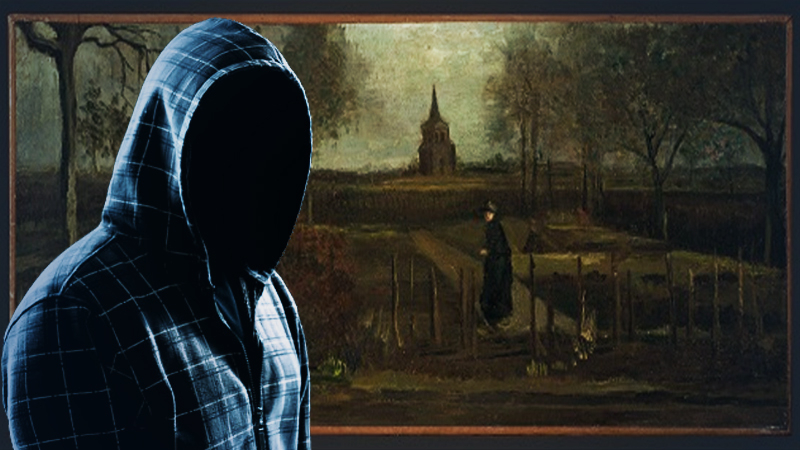
Holding valuable artworks can be a liability for public museums, especially in times of crisis. The risks have been brought home by the overnight theft of a painting by Vincent van Gogh, “The Parsonage Garden at Nuenen in Spring 1884,” from the Singer Laren museum, a small museum east of Amsterdam.

On Monday, van Gogh’s birthday, thieves broke into the museum, which has been closed because of the coronavirus, at around 3:15 a.m. They smashed a glass door at the entrance and, although an alarm was triggered, made off with the painting before police arrived.

Museum directors and security guards around the world will have taken note. During the coronavirus crisis, many museums find themselves custodians not only of their own collections but also valuable works from other collections, public and private, that have been lent for temporary exhibitions and are now stranded away from their owners as museums close and travel restrictions take hold.

Lack of crowds and security potentially compromised by staffing issues during the virus outbreak may present an invitation to opportunistic thieves. Upheaval during the second Iraq War led to brazen, large-scale looting of the Baghdad Museum. But art thieves do not require upheaval as drastic as war to sniff out opportunity.

Austerity measures in Greece after its financial collapse in 2009 led to a 30 percent increase in the illegal trade of classical antiquities, as fewer people were employed to protect museums and archaeological sites. Quiet streets and institutional disarray may prove just as tempting.

Van Gogh’s painting does not belong to the Singer Laren museum. The museum had borrowed it from the Groninger Museum in the Netherlands for a temporary exhibition. It was the only van Gogh in the collection of the Groninger Museum.

Jan Rudolph de Lorm, director of the Singer Laren, said during a news conference that he was “shocked and unbelievably pissed off” by the theft.

The Singer Laren shows the art of American artist William Henry Singer and his wife, Anna. Singer was the son of a steel baron of the same name who sold his company, Pittsburgh Bessemer Steel Co., to Andrew Carnegie. Against his family’s wishes, the younger Singer went to Paris and then to Laren, an artists colony in the Netherlands, to pursue his art. His widow opened the museum, which also has a concert hall, in 1956. The museum also exhibits work by a Dutch school of artists affiliated with the Laren artists colony.

Van Gogh painted “The Parsonage Garden at Nuenen in Spring 1884” between 1883 and 1885 during a stay in Nuenen, in the Netherlands, where his father was the village pastor. It depicts the village church, which the artist could see from his house, across an expanse of garden and fields.

It is not the first painting by van Gogh from this period to have been stolen in recent years. The Dutch artist’s “Congregation Leaving the Reformed Church in Nuenen” was stolen twice, first in 1991 and then, after its prompt recovery, in 2002, both times from the Van Gogh Museum in Amsterdam. It was recovered the second time 14 years after the theft, when Dutch and Italian authorities traced it and another van Gogh, “View of the Sea at Schveningen,” to a town outside Naples, then known as a stronghold of the Camorra, an archipelago of crime gangs involved in drug trafficking.

The thieves in 2002 entered the Van Gogh Museum through the roof. The theft from the much smaller Singer Laren appears to have been cruder, with thieves breaking in on the ground level.

Coronavirus is a killer, but this artist won’t reduce it to a cartoon villain #ศาสตร์เกษตรดินปุ๋ย

#ศาสตร์เกษตรดินปุ๋ย : ขอบคุณแหล่งข้อมูล : หนังสือพิมพ์ The Nation.

https://www.nationthailand.com/lifestyle/30384773?utm_source=category&utm_medium=internal_referral

Coronavirus is a killer, but this artist won’t reduce it to a cartoon villain

Mar 25. 2020
In David Goodsell's painting, the virus is seen in cross section. MUST CREDIT: David S. Goodsell/RCSB Protein Data Bank/ doi: 10.2210/rcsb_pdb/goodsell-gallery-019

In David Goodsell’s painting, the virus is seen in cross section. MUST CREDIT: David S. Goodsell/RCSB Protein Data Bank/ doi: 10.2210/rcsb_pdb/goodsell-gallery-019
By The Washington Post · Philip Kennicott · ENTERTAINMENT

For weeks, we have seen the same image of the coronavirus, a gray sphere studded with red spikes that looks like a forest of surrealist trees growing on a dead planet. The rendering was created by the Centers for Disease Control and Prevention and can be downloaded from its Public Health Image Library. The spikes, which can also be seen when the virus is looked at with an electron microscope, are what gives the virus its characteristic corona.

But there’s a key difference between the CDC’s computer-graphics image and a coronavirus seen by the electron microscope, which renders it as a gray blob with imperfectly spherical form and a dark shadow around the characteristic crown-shaped spiky covering. The vivid red, which makes the digitized virus look so threatening, isn’t there in real life.

As David Goodsell, a professor of computational biology at the Scripps Research Institute and research professor at Rutgers University, explains, the virus is smaller than the wavelength of light, so it doesn’t actually have color. The CDC’s image, he says, is scrupulously faithful to what we know now about the virus’ structure, but the red-and-gray color scheme is artistic license.

Goodsell, 58, is also an artist whose work focuses on making images of living cells at the molecular level, and he has produced his own watercolor of the coronavirus, with his own invented color scheme. In Goodsell’s painting, the virus is seen in cross section, not in the round as in the CDC image, and the colors resemble the vibrant, jazzed-up earthiness of Arts and Crafts-style wallpaper that was fashionable in Victorian homes of the late 19th century. In Goodsell’s painting, the characteristic spikes are bright pink, the core of the virus, know as the nucleocapsid, is lavender, and the whole is rendered in a floral sea of green, orange and brown mucous.

His image is strikingly beautiful, whimsical and orderly, and it isn’t hard to imagine it as a record cover for a hippie rock band of the 1960s. After releasing his image on Twitter in February, he has thought a lot about the idea of beauty, and the scientific rendering of something that much of the world now finds uniquely terrifying.

“I am completely struggling with this,” he says. “When I did this painting, I didn’t think about it. I did it in a color scheme I’ve used throughout my illustrations, to separate the different functional parts of the image.” His goal was to render, as accurately as possible, all the known details about the structure of the virus, using a visual scheme that draws on the simplifying line and distillation of cartoon graphics for greater intellectual clarity.

“I have used this non-photo-realistic style for years and years,” he said. “It makes pictures more appealing and easier to understand. People use cartoons all the time to simplify things, stripping away extraneous details. On the CDC image, each of the spikes has a whole lot of detail. I try to use a more cartoony outline.”

The CDC image of the virus has become a placeholder of sorts, a stand-in for what we cannot see, the “invisible enemy,” as President Donald Trump has described it. Unlike images of sick people or hospital wards or doctors in full protective gear, it is seemingly dispassionate. It contains no particular human misery, it invades no one’s privacy, it comes with none of the political baggage of a visual reference to China or our health-care system. And it does the daily work of reinforcing our collective belief in the germ theory of disease, the idea that microscopic pathogens are responsible for our illnesses, not miasmas of bad air, or bolts of divine wrath.

But no image is ever entirely neutral, and the difference between Goodsell’s painting and the CDC’s rendering speaks volumes about how we think about pathogens. The CDC vision is otherworldly, a death star floating in deep space, with curious stars glimmering in the distance. The red spikes give it an ominously sticky quality, as if it is some alien, manufactured burr picked up on a stroll through a blasted, dystopian landscape. Part of the CDC’s mission is to promote “healthy and safe behaviors,” and the color scheme chosen clearly emphasizes the threat this virus poses to those who refuse to, or cannot, socially distance themselves.

Goodsell, by contrast, depicts the virus interacting with the human body, in its natural context. Although seemingly more stylized, it is more emotionally neutral than the CDC image. The color scheme, beautiful in itself, makes no comment on the virus’s relation to human beings. It is presented as a naturally occurring phenomenon, morally and emotionally indifferent. And its beauty – the complexity and recurring pattern of its parts – places it in a realm independent of human wants, needs or fears. His virus simply exists, as all other things exist.

And paradoxically, his colorful, more cartoonlike rendering isn’t just neutral about the moral purpose of a virus – it has none. It is connected to an essential idea about beauty. In the 18th century, the philosopher Immanuel Kant wrestled with how to distinguish aesthetic judgments about beautiful things from the feelings aroused by things that are merely pleasurable. And his solution was to suggest that judgments about beauty must be “disinterested,” that is, unrelated to our desires. They aren’t about grasping or craving, but inspire a free play of the mind, whence their pleasure.

Goodsell’s image, which is aesthetically pleasing, renders the virus in an even more disinterested way, as completely disconnected from our tendency to anthropomorphize viral threats with the rhetoric of war. And thus it removes the virus from its political context. By rendering it truthfully, yet also as beautiful in itself and without reference to human fears, he puts the virus exactly where it needs to be: a thing apart, to be studied, anatomized and understood.

“My experience is that scientists keep these aspects separate,” he says when asked about the bellicose metaphors of political rhetoric, and the way he and his colleagues think about the virus as an object of study. “They are very much focused on their scientific topic, as opposed to thinking about the larger relationship to humanity, except when we go to get funding.”

The benefit of that is obvious. “You have to focus on what you are doing.”