The biggest art show of the year has been thrown into darkness #ศาสตร์เกษตรดินปุ๋ย

#ศาสตร์เกษตรดินปุ๋ย : ขอบคุณแหล่งข้อมูล : หนังสือพิมพ์ The Nation.

https://www.nationthailand.com/lifestyle/30384705?utm_source=category&utm_medium=internal_referral

The biggest art show of the year has been thrown into darkness

Mar 24. 2020
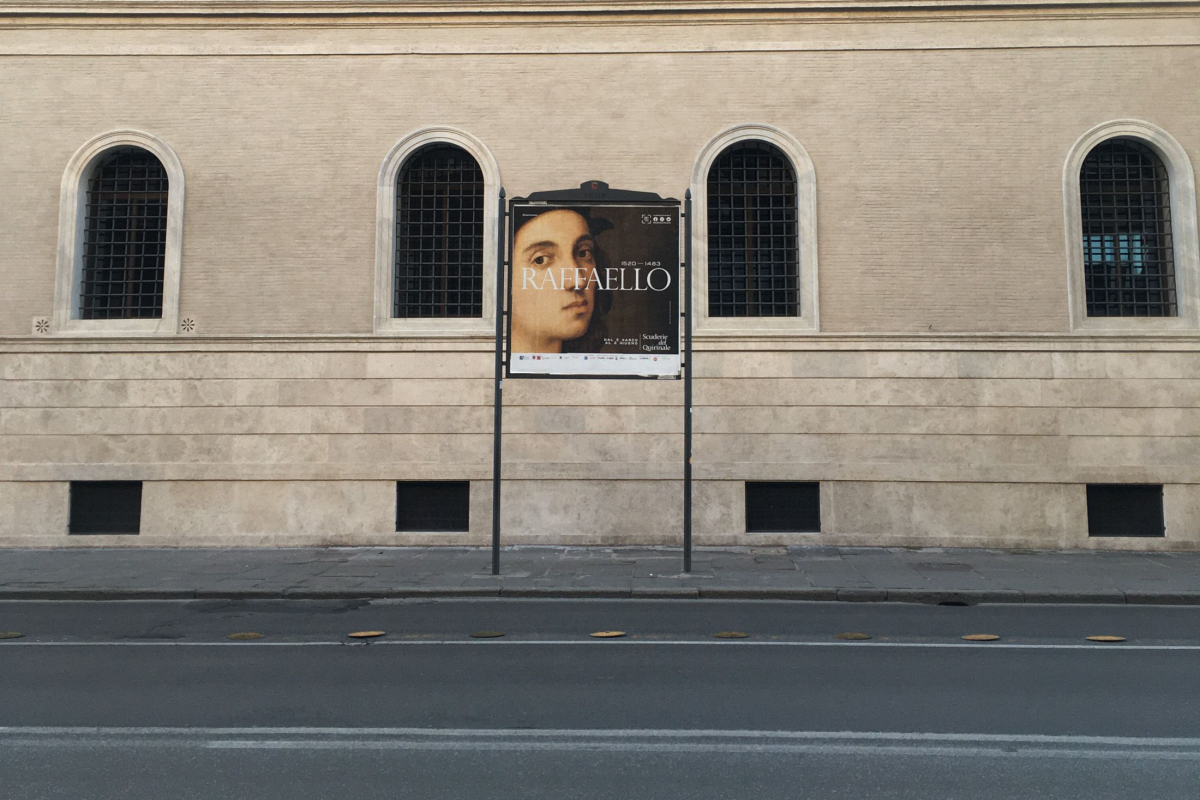
Currently, the only visible part of the Raphael show is advertisements. MUST CREDIT: Bloomberg photo by Vernon Silver.

Currently, the only visible part of the Raphael show is advertisements. MUST CREDIT: Bloomberg photo by Vernon Silver.
By Syndication The Washington Post, Bloomberg · James Tarmy, Vernon Silver ·

It was supposed to be the biggest show of the year. More than 70,000 people bought tickets to the Scuderie del Quirinale Museum’s Raphael show, which was to celebrate the 500-year centennial of the artist’s death with more than 200 works of art.

People around the world booked bucket-list trips to see the exhibition. The museum advertised heavily – billboards and banners and posters went up around the city- and when it opened on March 5, the international press reviewed it breathlessly.

Now the galleries of the Scuderie are silent and dark, says Mario De Simoni, the president of Ales SpA, the organization that runs the museum, in a statement provided to Bloomberg.

The show, once a triumphant celebration of one of the world’s most famous artists, has become downright funereal. “The windows are completely closed. The lights are out, and most of the delicate works are covered with black fabric,” says De Simoni.

The museum spent more than three years organizing the exhibition, often making unprecedented loan agreements in order to put dozens of Raphael’s paintings together for the first time.

A forsaken Roman street features a Raphael billboard. MUST CREDIT: Bloomberg photo by Vernon Silver.

A forsaken Roman street features a Raphael billboard. MUST CREDIT: Bloomberg photo by Vernon Silver.

Normally, museums are loathe to loan paintings and drawings by Raphael for fear they will be damaged in transit; when a single painting by the artist travels, it’s newsworthy. In 2006, for instance, when the Metropolitan Museum of Art in New York reassembled the seven panels of an altarpiece painted by Raphael and disassembled in the 17th century, the museum turned the occasion into a three-month-long, stand-alone exhibition. A further example was provided by the 12 tapestries Raphael created for the Sistine Chapel; in February, the series was put on view in the chapel for the first time since the 1500s – in an exhibition that lasted only a week.

The Scuderie’s show, in other words, is without precedent. The exhibition contains more than 100 of Raphael’s paintings and drawings, many loaned by the Uffizi Galleries in Florence. One, a portrait of Pope Leo X from about 1517 was so delicate -and deemed so precious – that its trip from Florence to Rome caused the entirety of the Uffizi’s scientific advisory committee to quit in protest. “It’s a matter of principle,” the members said in a statement.

Complicating matters is the fact that many of the loans come with time limitations, meaning that the Scuderie will need to renegotiate with all of the lending organizations if it wishes to extend the show after the exhibition’s formal closing date early in June. Those institutions include the British Museum and the Royal Collection in London, the Prado in Spain, the Albertina in Vienna, and the National Gallery of Art in Washington.

“We have contracts through June 2,” De Simoni says. “But if we can’t reopen, it won’t be necessary” to renegotiate.

All Rome has currently come to a standstill. Residents are fined for leaving home without pressing need (and paperwork to back it up). Citizens even need proper papers to go for a jog. The Scuderie is no exception amid this indefinite stasis.

For organizers, the biggest question is how to resolve the 70,000 tickets that already sold. “The museum is managing what to do with the existing ticket sales, De Simoni says. “It all depends on the decrees and laws to resolve it.”

One thing he does know is that the exhibition, long-expected to be a blockbuster of unprecedented proportions, is hemorrhaging money. “At the moment, it’s a loss,” he says. “The museum can host at least 3,000 people a day. It’s a big exhibit, and now we’re closed.”

Take a break from Covid-19 with Thai classics on YouTube #ศาสตร์เกษตรดินปุ๋ย

#ศาสตร์เกษตรดินปุ๋ย : ขอบคุณแหล่งข้อมูล : หนังสือพิมพ์ The Nation.

https://www.nationthailand.com/lifestyle/30384657?utm_source=category&utm_medium=internal_referral

Take a break from Covid-19 with Thai classics on YouTube

Mar 23. 2020
Thai Film Archive, an agency responsible for preserving Thai film heritage, has been closed until March 31 after the Bangkok authority announced many public places would temporarily close.

However, the Thai Film Archive uploads classic Thai films on YouTube for people who have to stay home.

The playlist features “Santi-Vina” (1954), the first Thai movie filmed in 35mm with colour and sound (and English subtitles); “Muay Thai” (1963), which records the teachings of Bua Wad-im, a Korat-style Thai boxer; “Prai Takian” (1940), a ghost comedy movie; or “Fai Yen” (Cold Fire), a 1965 anti-Communist propaganda film sponsored by the US.

All movies uploaded will stay permanently on YouTube.

Online art auction raises funds to fight COVID-19 #ศาสตร์เกษตรดินปุ๋ย

#ศาสตร์เกษตรดินปุ๋ย : ขอบคุณแหล่งข้อมูล : หนังสือพิมพ์ The Nation.

https://www.nationthailand.com/lifestyle/30384646?utm_source=category&utm_medium=internal_referral

Online art auction raises funds to fight COVID-19

Mar 23. 2020
An oil-on canvas painting measuring 60cm by 120cm by Đặng Đình Ngỡ

An oil-on canvas painting measuring 60cm by 120cm by Đặng Đình Ngỡ
By Viet Nam News

HÀ NỘI — Some 100 paintings will be auctioned online at the Viet Art Exchange Facebook from March 23 to 25 to raise funds for the fight against the COVID-19 pandemic.

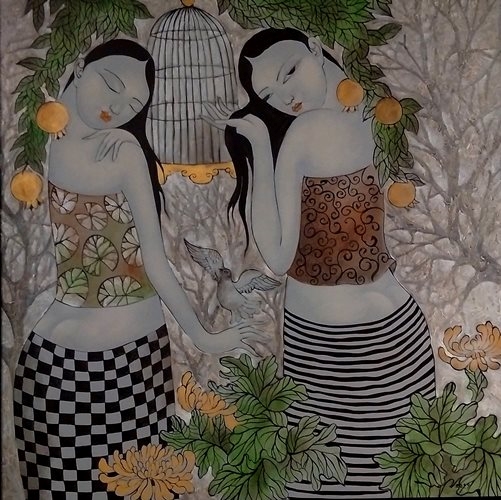
The paintings are by 60 Vietnamese and Singaporean artists including Đặng Đình Ngỡ, Trần Thiệu Nam and Gloria Keh. The paintings are in various media, such as oil-on canvas, lacquer, watercolour and acrylic depicting different themes.

A lacquer painting measuring 100cm by 100cm by Trần Thiệu Nam.

A lacquer painting measuring 100cm by 100cm by Trần Thiệu Nam.

“The paintings are not only beautiful, but they also convey a message of kindness and national solidarity,” said Irish Pham, representative of the Viet Art Exchange.

“The artists from every part of the country wish to help fighting COVID-19. They want to make their contribution to the national fight against the epidemic.”

Fifty per cent of the proceeds will go to the Việt Nam Fatherland Front Central Committee and the artists will take the rest.

A acrylic painting measuring 45cm by 45cm by Gloria Keh.

A acrylic painting measuring 45cm by 45cm by Gloria Keh.

“My sincere thanks to the organisiers for this wonderful opportunity,” Keh wrote on her Facebook page. “It is an honour to have my painting included in this auction. And for such a noble cause.”

Artist Minh Vũ has an acrylic painting measuring 40cm by 60cm at the auction. The painting features a field of lavender under a stormy sky.


“I hope the auction will be successful,” said Vũ. “It will raise funds to support activities od the community against COVID-19,” he said.

An acrylic painting measuring 40cm by 60cm by Minh Vũ.

An acrylic painting measuring 40cm by 60cm by Minh Vũ.


An acrylic painting measuring 80cm by 80cm by Nguyễn Đức Huy. Photos courtesy of Viet Art Exchange

An acrylic painting measuring 80cm by 80cm by Nguyễn Đức Huy. Photos courtesy of Viet Art Exchange

Bidders can make a fair offer based on the starting price below the painting. If they don’t want to bid publicity they can message Iris Pham privately.

Payment will be carried out within a day. The artists will be responsible for transporting paintings to the customers if the auction is successful. If they are not in Việt Nam they will take the painting by themselves. — VNS

Brigitte Steinmann: ‘Studying culture helps to understand the aesthetic feeling of a society’ #ศาสตร์เกษตรดินปุ๋ย

#ศาสตร์เกษตรดินปุ๋ย : ขอบคุณแหล่งข้อมูล : หนังสือพิมพ์ The Nation

https://www.nationthailand.com/lifestyle/30384585?utm_source=category&utm_medium=internal_referral

Brigitte Steinmann: ‘Studying culture helps to understand the aesthetic feeling of a society’

Mar 21. 2020
Sanjog Manandhar/TKP

Sanjog Manandhar/TKP
By Srizu Bajracharya
The Kathmandu Post

Anthropologist and researcher Steinmann talks about her research works in Nepal, her love for reading and her interest to study societies.

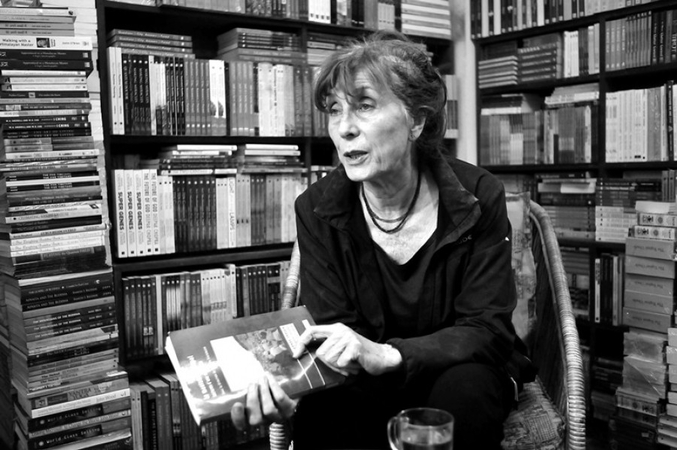
Thamel is quieter than its usual self when Brigitte Steinmann, a French anthropologist and professor, arrives in Jyatha. Steinmann was visiting Nepal Tribhuvan University’s Anthropology Colloquium Series, organised by the Central Department of Anthropology, and for the launch of her new soon-to-be-released book Exorcising Ancestors, Conquering Heaven: Himalayan Rituals in Context.

It’s clear by the name of the book that this isn’t the 69-year-old’s first visit to Nepal. Ever since her first visit in 1980, she has been visiting at least twice a year. Steinmann’s research on Nepal has highlighted the Tamang culture and lifestyle, and brought the dynamics of class divisions to the fore. Steinmann has also documented political events that brought change in the country since the 1990s. In an interview with the Post’s Srizu Bajracharya, Steinmann talks about her research in Nepal, her love for reading and her interest in studying societies. Excerpts:

What brought you to Nepal in the 1980s? Why was Nepal your first choice for your study?

I came for a scientific programme organised by the Centre National de la Recherche Scientifique France. This programme intended to describe the lifestyle of the Nepali people of the time, in the agricultural villages for my PhD research. CNRS was interested in understanding how people could survive with such low income. The programme put together geographers, economists, agronomists and anthropologists. My field research area was Temal, Kavrepalanchok.

Initially, I was engaged in the mixed programme. But, as an anthropologist, I started to discover that there were very different types of people living together like the Magi, Tamang, and Brahmin. And so, I was interested in finding out about the Tamangs.

When did you learn the Nepali language? Is it a language you have grown used to because of your research works?

I learnt the language in 1978, before coming; first in the French School of Oriental Studies, and second, with the Tamang people. When I came in 1980, I could speak in Nepali, but when I went to Kavrepalanchok, the place where I was conducting my research, I realised what I learnt was not the Nepali language that people used there. Most of the people were Tamang, and they spoke in the Tamang language, a Tibeto-Burman language which was an unwritten language at the time. So, it added to the difficulty to adapt.

What did you observe during your time here in the 80s?

At the time, an irrigation project had just reached the area, and it was creating conflict between caste groups. They were discussing where to put the water tank. This was during the Panchayat period, and it was interesting to understand how people were clinging to a political party, what their sense of politics was and what it meant for them. Many Tamang people were involved in trekking, and that was taking them everywhere in Nepal. But the Tamang people also had a different idea of Nepal; they called Kathmandu Yambu, which means Nepal in the Tamang language. For me, that was interesting because we were already in Nepal, and I wanted to understand what made them see things that way.

What I liked was that people shared everything, and were able to accept a foreigner with great heart and interest. Their conflicts were limited to the use of water at the village spring. For example, the Brahmins and the Tamangs would take turns to use the spring water. Life was very simple although it was very hard.

How did your interest in ethnographic research develop?

Initially, I studied philosophy, Latin, Greek, science and literature in France. And then I turned to ethnology in the 70s; it was just after the civil unrest of May ‘68. In 1968 we had a revolution that arose through questions related to the changing and transforming of times and mores. There were many demonstrations, and I was starting to get interested in ethnology. A new department had just begun in science universities. And I came to understand that ‘ethnology’ was a kind of scientific way to learn about societies.

I was initially interested in philosophy, but I always knew I was interested in learning about the ways of living in society, moreover different societies to mine. I also loved travelling and knew about Nepal from before because of its ties with Tibet. I heard about Tibet from my grandfather because he was friends with Alexandra David-Néel, one of the first women who were able to enter the city of Lhasa in 1905. I was also interested in Nepal because of mountaineering, something I did in the Alps and later in Lhotse and Kanchenjunga in the 80s.

Why study Asian cultures, specifically?

In philosophy, we study philosophical systems, ideas, history of concepts. Initially, anthropology was for me a part of the philosophical system of Kant (a german philosopher). But I wanted to experience non-western societies. My first choice was Amazonia, Brazil; I was v attracted by the population living in the forest. I didn’t imagine that I could do some ethnology in Nepal. Because in France, ethnology and anthropology studies were developed in Africa, as there were French colonies in Africa, I was not attracted to French post-colonial societies.

At the time, I would have preferred to go to Tibet, but it was not possible because Tibet was still locked down. Fortunately, I heard about CNRS’s programme in Nepal and joined.

What is your role as an anthropologist?

The role of an anthropologist is to be with people. Through anthropology, you can study social organisation, kinship systems, religion. Above all, you learn about the real meaning of ‘being a stranger’ in the world.

Here in Nepal, I started to try to describe the economic system of the time, despite the term’s irrelevance to the mode of production of resources by the people. They were producing everything from the start to finish, and money was of no use; everything was hand made. Everything was transparent and we could understand their infrastructure easily; houses were made with earth and wood; complex rituals presided over the construction.

As an anthropologist, I tried to document how they were organising their world or how they explained the ways they were creating their world. I was also very interested in learning about their religion, and I began to understand locally the differences they made between Hinduism and Buddhism. The Magars were mainly Hindus and Tamangs Buddhists. But society was complex, especially the Tamangs: they had Tibetan script, but they spoke in Tamang language, and I wanted to find out about the interconnection between them.

As an anthropologist, I wanted to study the communities in Tibet too. In 1981, I travelled to the north-eastern border of Kanchenjunga area with someone from the village where I was staying. We reached Walungchung Gola, an isolated big Tibetan-style village with a huge Gompa. That was my first experience living with a Tibetan society. So, I did one of my studies here.

Why do you think cultural studies are necessary?

I won’t speak in terms of culture, as it is a kind of ‘void’, or too global notion. Culture is everywhere. But, intrinsically, studying the particular culture of a society helps to understand what I would term as ‘the aesthetic feeling’ of being part of an organisation. It also gives a ‘philosophical sense’ to the notion of society. And so, I have seen and experienced different modes of people’s lives.

The 80s also gave me the happiest feelings of my life, just being there with the community gave me a lot of opportunities to learn. There was a lot of complexity at the time as people didn’t accept me so easily as I was an outsider. They always wanted to give me a place among them. There was much to observe.

Book World: In Maisy Card’s ‘These Ghosts Are Family,’ resentments are passed down from one generation to the next #ศาสตร์เกษตรดินปุ๋ย

#ศาสตร์เกษตรดินปุ๋ย : ขอบคุณแหล่งข้อมูล : หนังสือพิมพ์ The Nation

https://www.nationthailand.com/lifestyle/30384058?utm_source=category&utm_medium=internal_referral

Book World: In Maisy Card’s ‘These Ghosts Are Family,’ resentments are passed down from one generation to the next

Mar 14. 2020
These Ghosts are Family
Photo by: Simon and Schuster — handout

These Ghosts are Family Photo by: Simon and Schuster — handout
By Special To The Washington Post · Martha Anne Toll · ENTERTAINMENT, BOOKWORLD 

These Ghosts Are Family By Maisy Card Simon & Schuster. 288 pp. $26 —

Is the natural trajectory of families toward entropy? What happens to gnawing family mysteries that travel down generations? Maisy Card raises a constellation of such questions in her debut novel, “These Ghosts Are Family.” To her credit, she doesn’t pretend she can answer them. Nor does she tidy the lives of her characters. Card, who works as a public librarian, delivers a novel overflowing with unadulterated humanity.

“Let’s say that you are a sixty-nine-year-old Jamaican man . . .who once faked your own death.” With this tantalizing opening, Card introduces Abel Paisley, whose forebears, offspring and relations people the novel. Relationships are sufficiently complex that Card gives readers a family tree for reference.

Card is a natural storyteller. Whole family histories are compressed into two pages, stories building upon stories like strata of earth. We travel between Jamaica and New York haunted by ghosts, cruel white overseers, family members with addictions and the weight of an ancestry tormented by white exploitation. Card probes racism’s cancerous impact as internalized by black Jamaicans, while whites in Jamaica and America abuse their privilege. But not every story is a symbol of that oppression. We also get to know Abel’s ex-wife Vera, for example; how intimidating he found her; and her secret, volatile relationship with her “yard boy” Bernard.

Abel’s family history unfurls out of order but with an arc that holds it all together. Card links family members and seemingly unrelated stories, leaving gaps for speculation. Whose memory is accurate? Whose judgment is reliable? Daughters resent mothers, mothers resent lovers, lovers are let down and forgotten. Whole histories are obliterated: Debbie, a white researcher investigating her forebear’s history of raping slaves, discards his narrative into a Jamaican river in horror. In this novel, no one escapes generational trauma.

Card writes in first, second and third person, and presents one story through a journal. She has a marvelous ear for dialect. Because stories unfold quickly through a range of narrators, it’s not always clear who’s speaking. Nevertheless, the result is a rich stew, teeming with grudges, humor, doubt, loss and love.

At the beginning of the book, Card discusses her own family background. She describes the havoc wreaked by a grandfather who sired children in and out of marriages, the resulting resentments rippling over generations. It is a quibble to say her note might better have come as an afterword. For no explanation is needed; this book is a powerful statement of the impacts of what came before.

When one of Abel’s abandoned children confronts him with his neglect, “she didn’t know what to feel toward him.” That sentiment is emblematic. It’s not that characters don’t feel, it’s that they feel a confusing mélange of emotions that can’t be reconciled. It is a measure of Card’s skill that we come to know these characters in three dimensions, even as they struggle to know themselves.

Book World: ‘The Mirror and the Light’ is a masterful finale to Hilary Mantel’s Cromwell trilogy #ศาสตร์เกษตรดินปุ๋ย

#ศาสตร์เกษตรดินปุ๋ย : ขอบคุณแหล่งข้อมูล : หนังสือพิมพ์ The Nation

https://www.nationthailand.com/lifestyle/30383967?utm_source=category&utm_medium=internal_referral

Book World: ‘The Mirror and the Light’ is a masterful finale to Hilary Mantel’s Cromwell trilogy

Mar 12. 2020
The Mirror and the Light
/Photo by: Henry Holt — handout

The Mirror and the Light /Photo by: Henry Holt — handout
By Special To The Washington Post · Wendy Smith 

The Mirror and the Light

By Hilary Mantel

Henry Holt. 757 pp. $30

The past catches up with Thomas Cromwell in the searing finale of Hilary Mantel’s magnificent trilogy. The dead have been slowly gathering around him since his mentor, Cardinal Wolsey, died in 2009’s “Wolf Hall.” Their voices grew insistent in “Bring up the Bodies,” when the moral consequences of Cromwell’s allegiance to King Henry VIII became apparent as he railroaded Anne Boleyn and five personal enemies to execution so that Henry could marry Jane Seymour. In “The Mirror and the Light,” as Cromwell grapples with aristocratic foes who want to send him to the same fate, his own inner voices clamor for attention. His thoughts turn increasingly to the miserable childhood he has sought to leave behind and to his happy years in Antwerp and Florence, where he discovered a new world that offered a blacksmith’s son from Putney the chance to get ahead on the basis of brains and ferocious ambition. In May 1536, as Cromwell walks away from Anne Boleyn’s headless body, Mantel sets him on a collision course with the limits to those ambitions.

Back home after the execution, Cromwell scornfully dismisses the aristocrats who helped him get rid of Anne and who now expect his help in restoring Henry’s castoff daughter Mary to favor and the royal succession. “Papists every one,” Cromwell sneers, “who live on fantasies of the past.” Now that he has done Henry’s dirty work, he expects to sweep these old families from power and make rapid progress toward his primary goals: a reformed, Protestant church with an English-language Bible and a more egalitarian society that affords the common people better lives.

Not so fast, warns Thomas Wriothesley, one of the upwardly striving young men Cromwell nurtures as a protege. “People have been talking,” Wriothesley reports. “They say, look at what Cromwell has wreaked, in two years, on Wolsey’s enemies. … They ask, who was the greatest of the cardinal’s enemies? They answer, the king. So, they ask – when chance serves, what revenge will Thomas Cromwell seek on his sovereign?”

Cromwell, a master of intrigue, must surely know such murmurings are likely to have reached the king. Granted, Henry quickly makes him Keeper of the Privy Seal and continues to elevate his status, all the way to Lord Chamberlain. But there are ominous signs that the king’s support is shakier than it seems, and Cromwell does not always read Henry as well as he thinks. In “Wolf Hall,” Mantel invited her readers to enjoy watching Cromwell outsmart everyone else; in “Bring up the Bodies” she made us wince as he applied his intelligence to murderous ends. In “The Mirror and the Light,” she builds suspense by turning us into alarmed onlookers who want desperately to seize him by the shoulders and cry, “Don’t you see what’s happening?”

Cromwell is still a nimble operator, and Mantel provides many scenes – a few too many, in the novel’s overstuffed middle section – of the elaborate maneuvering that also enlivened her first two Booker Prize-winning volumes. (Eustace Chapuys, suave ambassador of Emperor Charles V, is Cromwell’s favorite sparring partner, the prole-hating Duke of Norfolk the most odious.) He remains shrewd about laying economic foundations for the lasting change he seeks. Dissolving the monasteries and leasing their land to wealthy laypeople, he knows, will cement the Reformation: “Prayers may be rewritten, but not leases.” But the dissolution of the monasteries sparks a popular rebellion that further shakes Henry’s faith in Cromwell and shows that the common people he wants to help do not necessarily share his religious views. They also reject Cromwell’s proposed registry of births, marriages and deaths: He believes it will dignify ordinary folk by enabling them to trace their lineage as the nobility does; they regard it as a ploy to collect taxes.

“Can you make a new England?” Cromwell asks himself. “You can write new texts and destroy the old ones … but what was written before keeps showing through, inscribed on the rocks and carried on floodwater, surfacing from deep cold wells.” He ponders the intransigence of the past in December 1539, when it appears he has consolidated his hold on power with the arrival of a Protestant bride for Henry in the wake of Jane Seymour’s death in childbirth. Instead, Anne of Cleves’s instinctive recoil at the sight of the overweight, aging king (a nice feminist twist on the traditional story that Henry found her unattractive) initiates the final stages of Cromwell’s downfall.

Arrested in June 1540, Cromwell stoically accepts he has been defeated by the shady tactics he employed to remove obstacles from Henry’s path: “It seems there is no mercy in this world, but a kind of haphazard justice: men pay for crimes, but not necessarily their own.” Cromwell has always known that “the wolf that lives in man” lives in him too. He is not surprised Wriothesley betrays him, and he instructs his son Gregory and nephew Richard to save themselves by disowning him. Mantel closes with a beautiful, chilling stream-of-consciousness monologue that shows Cromwell liberated at last from his lifelong striving.

As always, Mantel is clear-eyed yet compassionate in depicting her coldly calculating, covertly idealistic protagonist and the equally complex people he encounters in his rise and fall from power. Dense with resonant metaphors and alive with discomfiting ideas, “The Mirror and the Light” provides a fittingly Shakespearean resolution to Mantel’s magisterial work.

Smith is the author of “Real Life Drama: The Group Theatre and America, 1931-1940.”

Show must go on, even if it’s online #ศาสตร์เกษตรดินปุ๋ย

#ศาสตร์เกษตรดินปุ๋ย : ขอบคุณแหล่งข้อมูล : หนังสือพิมพ์ The Nation

https://www.nationthailand.com/lifestyle/30383881?utm_source=category&utm_medium=internal_referral

Show must go on, even if it’s online

Mar 11. 2020
Screenshot of 2019 Arko Selection’s play “Matryoshka,” streamed on Naver TV (Arko)

Screenshot of 2019 Arko Selection’s play “Matryoshka,” streamed on Naver TV (Arko)
By Im Eun-byel
The Korea Herald

Productions reach out to audience via online platforms amid COVID-19

While coronavirus cases continue to climb around the world, the performing arts scene in Korea is turning to a different stage: online platforms.

According to the Korea Performing Arts Box Office Information System, managed by the Korea Arts Management Service affiliated with the Culture Ministry, performing arts theaters’ ticket sales in February recorded 20.9 billion won ($18.6 million), nearly down to half of the previous month’s 40.3 billion won.

Since mid-February — when Korea saw the beginning of an unprecedented national health crisis — theaters across the nation have shut their doors, canceling shows and programs, to prevent mass contamination.

National theaters have been closed since Feb. 23, when the virus alert level was raised to “red,” the highest level, and the Seoul Arts Center and the Sejong Center for the Performing Arts — two major performing art theaters in Korea — canceled most of their programs.

To cope with the crisis, some performing arts productions have been streaming shows through YouTube Live or other streaming platforms, performing in front of cameras, rather than patrons in seats in person.

“K-Arts Online Hope Concert,” hosted by Korea National University of Arts, one of the most prestigious arts schools in Korea, is one such example that offers the audience at home a chance to enjoy stage art.

Artists play in front of empty theater, while the shows are streamed live.

A total of 30 artists — students or graduates of the school — each create a video five to 10 minutes long, released through the school’s website or its channels on Naver TV or YouTube.

The performances range from classical music and traditional Korean music to dance. Since Monday, two videos have been released each day, and that will continue until the end of March. Along with the shows, the university will release a daily short film created by alumni.

Another highlight is the “Sturm und Drang” series, seven-part piano recitals commemorating the 250th anniversary of Beethoven’s birth.

The first recital by four students from the university, playing the first four piano sonatas by Beethoven, will be streamed via the platforms on March 27.

The 2019 Arko Selection, a performing arts program funded by the Art Council Korea, is also looking for ways to meet with the audiences via online.

It livestreamed dance shows “Swan Lake: The Wall” and “Hit and Run” on Feb. 28 and March 6, respectively, on Naver TV. Another play, “La Rempailleuse” (“The Chair-Mender”), originally scheduled to run from March 7-15 but rescheduled to run from Thursday to Saturday at the Arko Arts Theater, will have Thursday’s opening show livestreamed on Naver TV.

Musical “Marie Curie” (LIVE Corporation)

Meanwhile, a recorded clip of musical “Marie Curie” streamed on Naver TV on March 2, marking more than 210,000 views, an impressive number for an online stream of a performing arts production. The 150-minute musical staged at the Chungmu Arts Center reported a sudden increase in ticket sales after the livestreamed event.

By Im Eun-byel (silverstar@heraldcorp.com)

Thai artist Samak’s ethnographic work on display at exhibition in Singapore #ศาสตร์เกษตรดินปุ๋ย

#ศาสตร์เกษตรดินปุ๋ย : ขอบคุณแหล่งข้อมูล : หนังสือพิมพ์ The Nation

https://www.nationthailand.com/lifestyle/30383756?utm_source=category&utm_medium=internal_referral


Thai artist Samak’s ethnographic work on display at exhibition in Singapore

Mar 10. 2020
Borders re/make Bodies: Chiang Mai Ethnography - Conceptualising Borders / Bodies No. 1: Samak Kosem

Borders re/make Bodies: Chiang Mai Ethnography – Conceptualising Borders / Bodies No. 1: Samak Kosem
By The Nation

Ethnographic materials used by Thai artist Samak Kosem in his work, “Borders re/make Bodies: Chiang Mai Ethnography”, will be on display at Richard Koh Fine Art on Malan Road in Singapore.

The curated exhibition by Loredana Pazzini-Paracciani will also feature works by Khin Thethtar Latt (Nora), Pao Houa Her, Nguyễn Văn Đủ.

“Phantoms and Aliens — The Invisible Other” (Chapter 3) is scheduled to run from March 6-28

“The intention of the exhibition is to examine what history teaches us concerning migration and displacement within the specificity of present-day Southeast Asia, where borders are crossed and ‘newcomers’ are forged every day in hope of a better life or to secure social identity,” Pazzini-Paracciani said. “In this context, this exhibition is but a humble contribution to the ongoing discourse on marginalisation in the region, to convey, through contemporary art, the voices and concerns of those displaced individuals as they carry their invisible lives across the physical border which separates them from the land they call home.”

Pao Houa Her left Laos with her family when she was a small child. After a short period at a refugee camp in Thailand, she relocated with her family to Minnesota, USA, where she grew up and where a large Hmong community resided as a consequence of the Vietnam War.


My Grandmother’s Favourite Grandchild - Pao Sao : Pao Houa Her

My Grandmother’s Favourite Grandchild – Pao Sao : Pao Houa Her

In her intimate photography series “My Grandmother’s Favourite Grandchild”, Pao tells the story of love and attachment experienced by herself and her cousins within their matriarchal family. For this series, Pao was inspired by a photograph of her cousin Pao Sao, which her grandmother carried with her at all times. Portrayed in the typical fashion of Hmong calendars, Pao Sao’s image represented the standard of love her grandmother felt for the only grandchild who did not make it to America — a poignant reminder of the longing and belonging to the motherland that they had long left behind.


Pot Pagoda KTHL 01: Khin Thethtar Latt (Nora)

Pot Pagoda KTHL 01: Khin Thethtar Latt (Nora)

The work “Pot Pagoda” by Khin Thethtar Latt takes its inspiration from the village Mrauk Oo, one of the villages in Rakhine state, where the ongoing conflict between the Burmese army and the Rakhine ethnic minority has forced the population to precarious living conditions. During the dry season, the Rakhine community has no choice but to collect water using old pots from the few operating wells a distance away from their villages. In the installation “Pot Pagoda”, the artist gathers several old pots once used to collect water, into a pagoda shape. Once assembled, these ordinary vessels become a site of worship — a shrine — where an alternative life from daily hardship and discrimination may be invoked.

Cow blood, salt, alum, Daler-Rowney perfix colorless fixative & gel golden on linen: Nguyễn Văn Đủ

Cow blood, salt, alum, Daler-Rowney perfix colorless fixative & gel golden on linen: Nguyễn Văn Đủ

The “Slaughterhouse” series of paintings by Nguyễn Văn Đủ also portrays and alludes to crucial moments of routine violence, specifically to the daily butchering of cattle. Chancing upon a slaughterhouse in Ho Chi Minh City, Đủ was engrossed by the mechanical violence enacted by common individuals against vulnerable beings. Through a seemingly performative ritual of sacrifice, the cattle are killed by the butcher’s skilful gestures in unceasing repetition. The cyclical nature of this action embeds the blood that smears the slaughterhouse into current history. Echoing the Paleolithic cave paintings or 17th-century England, during which oxen blood was used to make red and burgundy pigments, the artist employs a mixture of oxen blood and paint on his canvases as a homage and gesture of embracing the most vulnerable.

Complementing the exhibition through the intersection between art and anthropology is the installation, “Borders re/make Bodies: Chiang Mai Ethnography” (2017–ongoing), by Thai Samak Kosem. Extending from his current doctoral research, Samak’s ethnographic materials focus on assumptions about masculinity and gender perceptions of male migrants and transborder individuals through the critical framework of body politics. Spanning from video to field notes, photography and text, “Borders re/make Bodies” considers the interface between queerness and migration specifically to the northern city of Chiang Mai, located a few hundred kilometres from the border with Myanmar. As part of his ongoing anthropological research, Samak has interviewed and interacted with migrant communities of diverse Burmese ethnic minorities, predominantly Shan, to understand their place in mainstream society both as illegal migrants and as sex workers.

Look up! Airports offer compelling art for busy travelers #ศาสตร์เกษตรดินปุ๋ย

#ศาสตร์เกษตรดินปุ๋ย : ขอบคุณแหล่งข้อมูล : หนังสือพิมพ์ The Nation

https://www.nationthailand.com/lifestyle/30383597?utm_source=category&utm_medium=internal_referral

Look up! Airports offer compelling art for busy travelers

Mar 08. 2020
Rock Martizez's

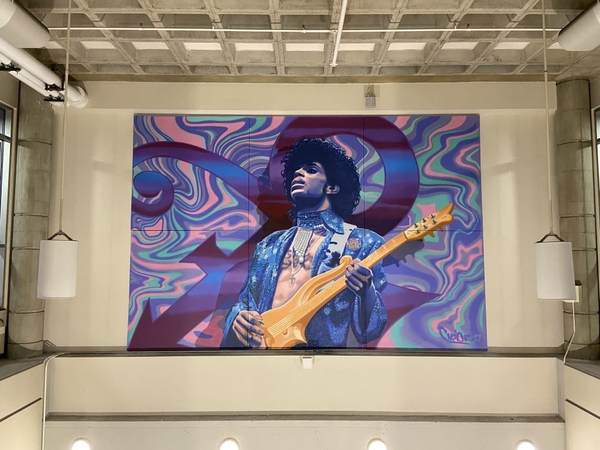
Rock Martizez’s “I Would Die 4 U” mural at the Minneapolis-St. Paul International Airport. MUST CREDIT: Courtesy of Rock Martinez
By Special To The Washington Post · Erika Mailman

It can be unsettling to arrive at Denver International Airport, where a giant wildly bucking royal-blue horse glares at you with glowing red eyes while you drive up to the terminal. The statue, Luis Jiménez’s “Blue Mustang,” makes for an unforgettable vision – exactly what we look for when we travel.

Thankfully, other airport animals adopt a more friendly demeanor. In Sacramento, a giant red rabbit dives into a suitcase, filling the three-story atrium as visitors traverse linked escalators alongside its 56-foot-long body. Artist Lawrence Argent installed “Leap” in 2011.

And in Las Vegas, four outsize denizens called “Desert Wildlife” – a rattlesnake, tortoise, horned lizard and jack rabbit, crafted by David L. Phelps – invite travelers to climb on them. Their surfaces are cracked like hard-baked desert soil, an effect created by glass-fiber-reinforced concrete. Once, a scorpion also prowled the floor of McCarran International’s then-new Gate D terminal, but it was “retired,” says Phelps, 63, who lives in Oklahoma City.

Phelps speaks eloquently about the value of art in everyday spaces. “Airports are so generic,” he says. “If you were blindfolded and dropped into one, you’d have no idea where you were. The art, if it’s good, gives an individuality to the airport.” He adds: “There’s a real select minority of people that are aware of art and go to museums. This exposes more people to it. The media tends to focus on Jeff Koons and people who turn into stars. For the rest of us, art is like a religion, like a pursuit for beauty … which is kind of rare in our society.”

“Blue Mustang,” a 32-foot sculpture by Luis Jiménez, at Denver International Airport. MUST CREDIT: Denver International Airport

Not surprisingly, a lot of airport art involves ceiling installations, to fill the vast spaces in terminals without impeding fast-moving travelers. Alice Aycock’s “The Game of Flyers Part Two” in Washington Dulles International Airport suspends aluminum, fiber optics, LED lights and neon high above people’s heads in an attention-grabbing asymmetrical spread reminiscent of flight, perfect for the snaking security line beneath it.

Chicago O’Hare’s “Sky’s the Limit” by Michael Hayden perks up the weary traveler. It consists of a 745-foot tunnel lit by a mile of neon tubes, amplified by enough mirrors to make the sculpture feel much larger, as passengers use moving walkways through its eerie bowels.

Similarly, in Atlanta’s Hartsfield-Jackson International Airport, a 450-foot ceiling installation called “Flight Paths” casts a murky, rave-like atmosphere over an otherwise utilitarian hallway of moving sidewalks. Created by Steve Waldeck, it is meant to illustrate sunlight filtering through a forest’s canopy of heavy leaves.

At Philadelphia International Airport, a cunning bird formation (made of over 6,750 cast pewter models of various species, divided into six adjacent suspended installations) mimics first a flying goose, then a vintage DC-3 plane. The configurations are riveting. The artists, Ralph Helmick and Stuart Schechter, installed “Impulse” in 2003. The two had previously banded together for 2001’s “Rara Avis” at Chicago Midway – where what appears at first glance to be a giant red cardinal turns out to be made of 1,800 pewter aircraft figures – and later finished a trilogy with 2005’s “Landing” at Seattle-Tacoma International Airport. This piece employs a kindred concept, with birds on wires forming a pointillist snow goose. The goose lands in the rain – intimated by acrylic spheres – with a reflection on the water formed by individual cast metal salmon.

Janet Echelman’s “Every Beating Second,” a 2011 ceiling installation at San Francisco International Airport, harks to two quintessential San Francisco icons: a beat poem by Allen Ginsberg in its title and the Summer of Love in its color choices. Consisting of three pendulous forms made of netting (Echelman’s oeuvre is inspired by watching net makers on a beach in India years ago), the shapes subtly move with air currents in the terminal.

Artist Janet Echelman’s sculpture “Every Beating Second,” commissioned for San Francisco International Airport. MUST CREDIT: Studio Echelman

Echelman, 54, wanted natural sunlight to be one of the piece’s elements, so she cut holes in the roof of the corridor after studying the beam structure. (The Boston artist admits it was “not easy” to convince airport authorities to agree to this.) “I have learned to work with infrastructure,” she says.

That light casts shadows on the terrazzo floor below, but in a nod to what might be, she has manually created much larger, colored shadows, “which would only exist if the entire roof were removed. My piece swoops down from an unseen sky.”

The San Francisco Arts Commission commissioned the work and provided Echelman with a written brief outlining its goals, including a “Zone of Recomposure following security check.” Echelman says dryly that she found that an “intriguing challenge as an artist.”

Much of her other work can be found outdoors in cities around the world, tethered and nonchalant against wind and vagaries of weather, just as nets are supposed to be. So “Every Beating Second” gets a little boost, with “computer-programmed airflow” listed as one of its materials. “It’s important to have art meet us where we spend our lives,” she says. “Art can enrich the quality of every moment, so why wouldn’t we enrich the immense amount of time we spend waiting for flights?”

In turn, she recommends Nick Cave’s “Palimpsest,” a large-scale hanging tapestry made of beadwork at the Tampa International Airport’s rental car center. At 45 by 70 feet and an inch thick, the piece consists of jewelry-size beads (Echelman wonders how much it must weigh). It took workers 10 months to create the work according to Cave’s design.

Anyone still pining for Prince – and who isn’t? – can see a Paisley Park-size mural of him at the Minneapolis-St. Paul International Airport. The 16-by-24-foot aerosol-on-canvas mural by Rock Martinez, “I Would Die 4 U,” moved to the airport in January from its previous displays in two museums since its 2017 creation. This beautifully trippy painting of the singer with a paisleyesque background is located near the Terminal 1 pop-up shop selling all things Prince-related and will remain until January 2021.

The mural’s genesis is fascinating. Martinez, 39, had been painting a street mural in 2016 in Minneapolis, where he lives half the year (the other half he’s in Tucson). He says: “I had heard Prince was sick and on an ER flight to Chicago. I thought, ‘Wouldn’t it be cool to do a get-well card for him?’ So I went around the corner and started doing a portrait of him.” Someone drove past in a car and shouted, “Hey, write ‘Rest in peace!’ on it.” Martinez’s tribute instantly became a memorial.

Intent on his work, he didn’t realize a crowd had gathered behind him watching. The next day, his painting was on the front page of the Minneapolis Star Tribune, and soon thereafter the Weisman Art Museum in the city commissioned him to create a piece for its show on Prince.

The concept was for Martinez to paint inside as performance art, but “spray paint is volatile, with you breathing it in. You can’t paint in a museum,” he says. For protection, Martinez wears a respirator mask in enclosed spaces, which wouldn’t be available to the museum patrons.

Instead, he worked with the piece’s six 8-by-8-foot canvas panels in a warehouse that didn’t permit all of them to fit on the wall at the same time. “I’d put the top three panels at ground level to paint. It was more or less fingers crossed that everything would line up,” he says. It wasn’t until the piece was installed at the Weisman that he finally saw all six components together.

During the work’s installation at the airport in January, Martinez watched people stop and engage with it – and with him, not knowing he was the artist. “Art brings people together,” he says. “You’re talking to someone who might not otherwise be talking to you – all because of this piece that wasn’t there yesterday.”

Many airports host rotating exhibitions, such as Portland International Airport and Dallas Love Field. With some luck and the resolve to spend your layover in motion, you can take in soul-adjusting pieces at almost any stop you might find yourself.

Five myths about Jane Austen #ศาสตร์เกษตรดินปุ๋ย

#ศาสตร์เกษตรดินปุ๋ย : ขอบคุณแหล่งข้อมูล : หนังสือพิมพ์ The Nation

https://www.nationthailand.com/lifestyle/30383598?utm_source=category&utm_medium=internal_referral

Five myths about Jane Austen

Mar 08. 2020
Anya Taylor-Joy stars as Emma Woodhouse in director Autumn de Wilde's

Anya Taylor-Joy stars as Emma Woodhouse in director Autumn de Wilde’s “Emma.” MUST CREDIT: Focus Features
By Special To The Washington Post · Devoney Looser

Five myths about Jane AustenIt is a truth universally acknowledged that somewhere a new novel, biography, play, series or film inspired by Jane Austen (1775-1817) must be in want of readers and viewers. Thanks to the PBS Masterpiece series “Sanditon” and Autumn de Wilde’s new film, “Emma,” Austen is again proving a hot screen commodity.

Yet the author best known for “Pride and Prejudice” (1813) and “Sense and Sensibility” (1811) has had her share of troubles, too. She might also be said to prompt fables and fabrication, lore and lies, and misconceptions and mendacity. Some myths about her have circulated for more than a century.

– Myth No. 1: Jane Austen was a secluded, boring homebody.

The myth of her sheltered existence originated with her brother Henry’s short biographical notice, published as a preface to the first edition of “Northanger Abbey”and “Persuasion” (1818). There Henry describes his late sister as having lived “not by any means a life of event.” Today, it has become a trope. “Jane Austen lived a quiet and obscure life,” declares the Catholic Weekly, in an argument that’s also found a comfortable lodging in outlets like the New York Times and the Atlantic. The word “quiet” is so regularly used to describe Austen’s upbringing that it’s eerie.

But things happened to her! For one thing, she had seven siblings. Her father ran a small boarding school for boys out of the family’s home. How quiet a girlhood could that have been? Then she lived for several years in the resort town of Bath, the Regency-era young person’s equivalent of Cancun. She visited London and frequented its rowdy theaters, where vendors sold audience members rotten fruit specifically for the purpose of hurling it at the actors.

Her family had colorful characters. Her aunt was arrested, tried and acquitted of a shoplifting charge, creating a scandal. Her flirtatious cousin Eliza, whose first husband was guillotined in the French Revolution, afterward married Jane’s biographer-brother, Henry. He became a failed banker whose losses cost his relatives tens of thousands of pounds. He lost some of Jane’s money, too.

– Myth No. 2: There is no sex in Austen’s work.

Henry Austen’s biographical notice claims that Jane was “fearful of giving offense to God.” Novelist Charlotte Brontë cemented Henry’s prim and proper vision, complaining in 1850 that “the Passions are perfectly unknown” to the late Austen. (It may be an unfair charge from an author who transforms attempted bigamists into heroes and makes lovers out of violent boors, but I digress.) That opinion persists to this day, with the Guardian speculating that Austen is a model of “sexless greatness” whose own chastity gave us her “wonderful novels.”

No matter how you define passion, you’ll find plenty of illicit sex in Austen’s fiction, including seductions, adultery, out-of-wedlock pregnancy and prostitution. “Pride and Prejudice” includes a flirt who runs off with a rake who’s later bribed into marrying her. “Sense and Sensibility” describes a young woman who is seduced, abandoned and pregnant and whose mother had been an abused wife, a kept mistress, and then sunk deeper still. And obviously, any author who could create a Mr. Darcy – a man who “drew the attention of the room” by his fine, tall person and handsome features, and who’s been interpreted as a tasty dish by almost a century of actors, from Colin Keith-Johnston to Colin Firth – must understand the power of sex appeal. Critic Jillian Heydt-Stevenson’s book lays bare Austen’s bawdy humor, such as Mary Crawford’s joke in “Mansfield Park” about Rears and Vices, which may refer to types of admirals but which she protests is not a pun. Even Austen’s private letters include some choice moments. She once humorously boasted of having been able to spot an adulteress across the room at a ball, even before the woman was pointed out to her.

– Myth No. 3: Austen approved of slavery and colonialism.

Did Austen’s novels have “racist subtext,” as a Salon headline claims? Was she proslavery and an apologist for colonialism, as the cultural critic Edward Said famously argued? These claims often come down to what she leaves unsaid, as it does for Said who argues that her characters’ pointed silences when colonialism comes up point to the author’s elitist neglect. Austen certainly benefited from the cultural and economic privileges of her race and class, so it’s complicated.

But if the alt-right has found things to appreciate in Austen, it’s not because her fiction touts exclusion and racial hatred. Anti-slavery commentary appears in “Emma,” when elegant Jane Fairfax decries the dehumanizing slave trade and governess trade, comparing the sale of human flesh to that of human intellect. It’s also been argued that the title of “Mansfield Park” intentionally echoes the name of Lord Mansfield, the judge whose 1772 ruling said chattel slavery was unsupported by English common law. (Britain outlawed the slave trade in 1807, though slavery in its colonies continued until 1833.)

Austen herself isn’t known to have had direct ties to the abolition movement, but her naval brother Francis expressed abolitionist views. In 1807, he wrote in his journal, “Slavery however much it may be modified is still slavery, and it is much to be regretted that any trace of it should be found to exist in countries dependent on England, or colonized by her subjects.” The Austen family probably shared his opinion.

– Myth No. 4: Austen’s work wasn’t noticed before she died.

Austen’s “books were not known during her own lifetime,” according to the Independent. And Country Living tells its readers that “no one knew she wrote her books until after her death.”

This myth mistakes anonymous publication for total obscurity and turns moderate popular and critical success into literary disregard. Austen published “Sense and Sensibility” (1811) with the anonymous credit “By a Lady.” She published her next books “by the author of ‘Sense and Sensibility’ ” and “by the author of ‘Pride and Prejudice.’ ” It allowed readers to follow her from one work to the next. Her novels went into multiple editions and attracted positive reviews.

The most famous was of “Emma,” in the prestigious Quarterly Review. The anonymous reviewer, best-selling novelist Sir Walter Scott, claimed that the book’s author was “already known to the public by the two novels announced in her title-page,” “Pride and Prejudice &c. &c.” He declares that the author of “Emma” creates sketches of “spirit and originality” about common occurrences. “In this class,” he says, “she stands almost alone.”

Scott may not yet have known this admired author’s name, but others got wind of it. By 1815, the Prince Regent, a fan of her novels, knew Austen’s name with sufficient certainty that he invited (read: commanded) her to dedicate her next book to him.

– Myth No. 5: Austen-inspired fan fiction emerged in the 20th century.

Works of JAFF (Jane Austen fan fiction) – or Austenesque fiction, as some call it – have exploded in the past decade, and not just ones that involve zombies. From “Spank Me, Mr. Darcy” (2013) to “Sense and Sensibility and Sea Monsters” (2009) to “Emma, Mr. Knightley, and Chili-slaw Dogs” (2013), there seems to be an Austen-inspired story to suit every taste. The Guardian claims that Sybil Brinton’s 1913 “Old Friends and New Fancies,” which imagines Elizabeth Darcy, Elinor Ferrars and Anne Wentworth as chums, was the first work of Austen-inspired fan fiction. That claim has been repeated by the Atlantic and many others over the years.

But Austen-inspired fan fiction dates back a century earlier. A piece of real-person fiction, using Austen as a character, appeared in the Lady’s Magazine in 1823. It imagines Austen as a ghost, says she had a nose that expressed her genius and describes what she wore in life. Perhaps this piece of fiction was so long overlooked because critics wrongly believed that Austen was unread in the 1820s.

The notion that Austen was a little-known or unknown author, who first experienced mass popularity and attracted fans in 1870, then recaptured the popular imagination in 1995, just isn’t true. The time is right for the heart-rending, oft-repeated mythical story of Austen’s having died unrecognized, and then going so long without fans, to reach its “finis.”

– – –

Looser, Foundation Professor of English at Arizona State University, is the author of “The Making of Jane Austen” and the editor of “The Daily Jane Austen: A Year of Quotes.”