It was at the Paris Opéra that Degas found the whole world – and his own tormented self #ศาสตร์เกษตรดินปุ๋ย

#ศาสตร์เกษตรดินปุ๋ย : ขอบคุณแหล่งข้อมูล : หนังสือพิมพ์ The Nation

https://www.nationthailand.com/lifestyle/30383575?utm_source=category&utm_medium=internal_referral

It was at the Paris Opéra that Degas found the whole world – and his own tormented self

Mar 07. 2020
Edgar Degas' 1867-1868 portrait of Eugénie Fiocre, a principal dancer with the Paris Opéra Ballet. MUST CREDIT: Brooklyn Museum

Edgar Degas’ 1867-1868 portrait of Eugénie Fiocre, a principal dancer with the Paris Opéra Ballet. MUST CREDIT: Brooklyn Museum
By The Washington Post · Philip Kennicott

WASHINGTON – In 19th-century France, the Paris Opéra was a machine. It was there that narrative and music, art and design, science and technology were transformed into cultural spectacle. Those spectacles had enormous influence on public and private life, as much, perhaps, as Hollywood does today.

So, on one level, it’s no surprise that an artist such as Edgar Degas would turn his attention to the ballet and opera, painting musicians and dancers, in rehearsal and performance, and sometimes offering glimpses of people like him, passionate audience members watching from gilded boxes. But an exhibition first seen in Paris last fall, “Degas at the Opéra,” and now restaged at the National Gallery of Art, raises a deeper question: Why are these works so strange?

Why, for example, does Degas’ 1867-1868 portrait of Eugénie Fiocre, a principal dancer with the ballet, show the young woman caught between a landscape and a stage set, with what seems a real horse drinking from a real pool beside her, and her ballet slippers cast off? Has she danced off the stage into reality? Or has the painter’s imagination done what so many minds do in the theater – fleshed out the illusion into something that seems as or more real than anything outside?

And why, in one of the painter’s most acclaimed paintings, “The Ballet From ‘Robert le Diable,’ ” is the orchestra arranged so oddly, with an audience member prominent in the front, looking not at the ghostly nuns dancing onstage, but sharply off to the left? And why are so many of these paintings, especially of the young women of the corps de ballet, arranged like elongated landscapes, often with a sharp diagonal running through them, as if the painter sees the world aslant through thin, rectangular glasses?
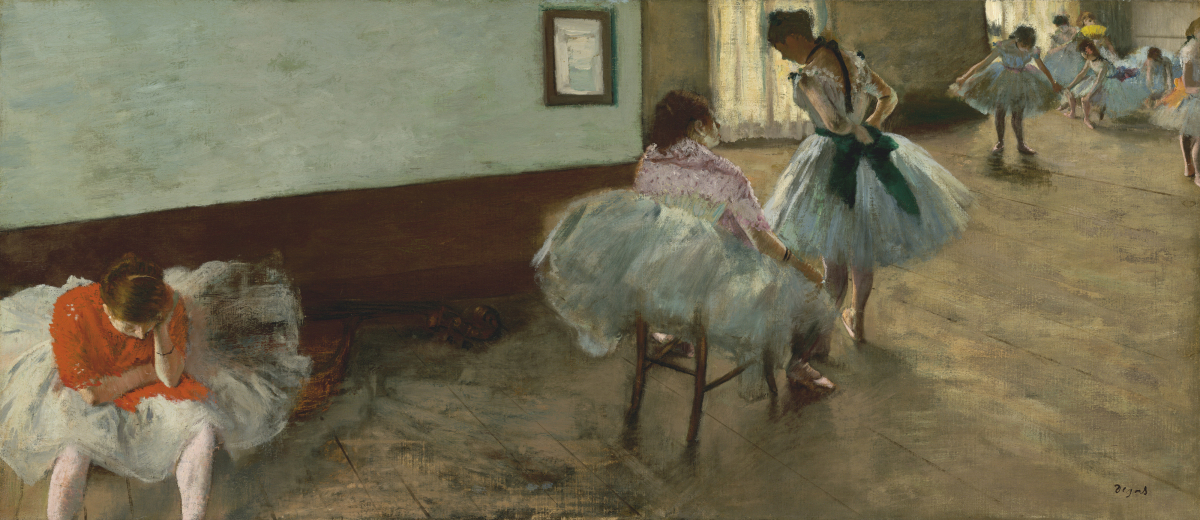
Edgar Degas’ “The Dance Lesson” (c. 1879). MUST CREDIT: National Gallery of Art

“Degas and the Opéra” includes about 100 works, including many of the artist’s most essential images inspired by the Paris Opéra, which included both opera and ballet among its offerings. This iteration of the exhibition, which opened at the Musee D’Orsay, is smaller but more easily navigated: In Paris, huge crowds and a complicated gallery arrangement made it seem episodic. Curated in Washington by the National Gallery’s Kimberly A. Jones, the show follows both the rough chronology of Degas’ decades-long fascination with the Opéra, from his early portrait of Fiocre to works he called “orgies of color,” made late in life. These orgies – vibrant pastels, some quite large – included the stunning “Dancer With Bouquets,” in which two bouquets cast at her feet look like red eyes, staring up the underside of her tutu.

The exhibition also covers the basic typology of Degas’ theatrical paintings, from those inspired by particular works, including Giacomo Meyerbeer’s early grand opera “Robert le Diable,” to paintings of imagined dance rehearsals, the rectangular “elongated paintings” and images he painted on fans. A final gallery devotes necessary space to the life of the dancers, many of whom were impoverished young women exploited by wealthy older men given predatory access behind the scenes. The National Gallery’s beloved “Little Dancer Aged Fourteen,” a wax sculpture of a performer named Marie van Goethem (whose life was memorialized in a 2014 musical), stands near the end of the show, her defiant three-dimensionality giving voice to the anonymous two-dimensional dancers seen in paintings earlier in the exhibition.

Some of these works have become so familiar that they have been reclassified in the public imagination, now seen as pretty rather than strange. But if you look at them long enough, their strangeness begins to overwhelm their prettiness, as in that late pastel of a dancer with those two red bouquets, which seem less like tributes thrown by passionate fans and more like menacing eyes. In other images, bodies are truncated, just legs showing beneath the partially raised theater curtain, or fused together, as in drawings in which dancers seem to be sharing or missing legs.

Degas’ fascination with ballet was in part a fascination with the contorted body, with legs akimbo, feet going in opposite directions and knees splayed wide. Poses that are dynamically beautiful in ballet often seem bizarre when frozen in a photograph or painting, and Degas was clearly drawn to the visual possibilities of taking them out of context. The familiar and the defamiliarized is a recurring theme, and one essentially derived from theater, a safe space where we expect to see strange and alien things.

Degas may also have turned to the theater to refresh other genera, including history painting and landscape. The theater, especially the technologically sophisticated Paris Opéra, offered aspects of both – heightened moments of great dramatic conflict and sumptuous visions of landscape in its backdrops and stage effects. By painting the theater, Degas could rejuvenate both history painting, which he had aspired to master as a young painter, and landscape, which he was fashionable enough to hold in slight disdain.

These are mostly formal questions, about visual choices and Degas’ relationship to painting. A group of works, disparate in form and materials, suggests a deeper psychological drama. In several images, including paintings, etchings and pastels, we see the distinctively curved scroll top of the string bass protruding disruptively into the image. This was a common sight for those sitting in the orchestra level of the Salle Le Peletier, the opera house that preceded the Palais Garnier and the site of many of Degas’ theater paintings, even though it had burned years earlier.

But the string bass is also the lowest of the orchestra’s stringed instruments, and bears aural associations of masculinity. So its intrusion into the world of women dancing or singing is an imposition of men into a female spectacle. These wooden scroll tops are seen at an angle, which is how they would be seen in real life, but that angle exactly mimics the odd angle at which Degas sometimes painted male patrons of the Opéra, ominous figures in black that lean unnaturally to one side.

During the nascent years of grand opera in Paris, the German philosopher Arthur Schopenhauer published and expanded a book called “The World as Will and Representation,” which may help explain Degas’ ambition in these strange works. Schopenhauer used the tonal range of music as a metaphor for the entirety of existence. The lowest notes represent the “crudest mass” of inorganic nature, while melodies above spoke of the “intellectually enlightened will.” Thus, the scrolls of the lowest instruments intrude into the realm of ideas, articulated nature and women, too.

If there’s some confusion in these overlapping ideas and metaphors (high and low, inorganic and organic, male and female), it’s a confusion that may have been deeply felt by Degas. In 1856, when he was about 22, Degas recorded in a notebook a troubling and enigmatic episode in which he loved a woman, she rebuffed him and he responded in a way that suggests he did something “shameful” to a “defenseless girl.” In images he made later in life, the string bass is on the ground, with a ballerina stepping on it, which would never happen, but is a striking intimation of either Degas’ guilt or a woman’s revenge.

So all of these must be true: that Degas was, like the men of his circle, a voyeur who made women into objects; that he may have felt shame, too, about his relationship to women; that he found in the theater a metaphor for the whole realm of existence, including the relation between the sexes; that he knew this metaphor was deeply problematic even though he found it beautiful; and that painting the opera and ballet enabled him to represent this foment and confusion without resolving it.

Yes, the Paris Opéra was a machine, but for Degas it was also a mirror – on nature and himself.

– – –

“Degas at the Opéra”

Through July 5 at the National Gallery of Art, Washington, D.C. nga.gov.

Ernesto Cardenal, Nicaraguan poet, priest and revolutionary, dies at 95 #ศาสตร์เกษตรดินปุ๋ย

#ศาสตร์เกษตรดินปุ๋ย : ขอบคุณแหล่งข้อมูล : หนังสือพิมพ์ The Nation

https://www.nationthailand.com/lifestyle/30383242?utm_source=category&utm_medium=internal_referral

Ernesto Cardenal, Nicaraguan poet, priest and revolutionary, dies at 95

Mar 03. 2020
By The Washington Post · Harrison Smith · NATIONAL, WORLD, OBITUARIES, RELIGION, THE-AMERICAS

Father Ernesto Cardenal, a Nicaraguan poet, priest and political revolutionary who wielded his pen as a weapon against two autocratic regimes — the Somoza family dynasty and the left-wing Sandinista party that took its place — died March 1 in Managua, Nicaragua’s capital. He was 95.

His personal assistant, Luz Marina Acosta, confirmed the death to The Associated Press. Cardenal had recently been hospitalized for respiratory problems. In a sign of his renown in Nicaragua, the government of Sandinista leader Daniel Ortega ordered three days of national mourning, despite having persecuted Cardenal after he resigned from the Sandinista National Liberation Front (FSLN) in the early 1990s.

For many Nicaraguans, Cardenal was revered as a literary beacon and a moral authority, a Catholic priest who drew on Marx as well as the Gospels to champion social justice in his ministry and writings.

One of Latin America’s most acclaimed poets, he wrote verses that offered a cosmic fusion of spirituality, politics, science and history, while appearing at frequent lectures and readings that made him a kind of international ambassador for Nicaragua.

Cardenal drew few boundaries between his callings. The son of a wealthy Nicaraguan family, he fought with a revolutionary group in his late 20s, then emerged as a leading proponent of liberation theology, which emphasizes Jesus’ message to the poor and oppressed.

With a thick beard and signature black beret, he celebrated Mass with Sandinista revolutionaries in the jungle, later joining Ortega when those forces marched into Managua in 1979 and toppled the Somoza family, whose rule had lasted more than 40 years.

Declaring that “the triumph of the revolution is the triumph of poetry,” he went on to work for nearly a decade as Nicaragua’s minister of culture, angering the Vatican with his mix of politics and religion while aiming to teach tens of thousands of Nicaraguans how to read and write.

Cardenal traced his religious convictions to the years he spent at a Trappist monastery in Kentucky, where he befriended Thomas Merton, a distinguished writer and priest. He later completed his religious training in Mexico, Colombia and Nicaragua, where he was ordained in 1965 and settled on the Solentiname Islands in Lake Nicaragua.

He had originally intended to establish a parish church. Cardenal, a sculptor as well as a writer, instead presided over a sprawling art colony, turning Solentiname into a haven for painters and spiritual seekers alike. On Sundays, he led the islanders in discussions of Christianity, eventually recording their conversations and adapting the dialogues into a multivolume work, “The Gospel in Solentiname” (1975), considered a touchstone of liberation theology.

“As the peasants of Solentiname got deeper and deeper into the Gospel,” Cardenal wrote in the book, “they could not help but feel united to their brother and sister peasants who were suffering persecution and terror. . . . For this solidarity to be real they had to lay security, and life, on the line.”

Some of the islanders joined the Sandinistas, organizing in a 1977 raid against Anastasio Somoza Debayle’s forces with the blessing of Cardenal. The government responded by destroying the Solentiname chapel and other buildings, and Cardenal was labeled the “No. 1 enemy of the people.”

He later served in the Sandinista cabinet alongside his brother, education minister and fellow Catholic priest Fernando Cardenal, who died in 2016. Both men defied Pope John Paul II’s order to quit their government jobs and focus on their ministries, and during a 1983 visit to Managua the pope publicly reprimanded Cardenal, reportedly telling him to “straighten out your position with the church.”

The next year, Cardenal was suspended from the priesthood, setting off a break with the church that was repaired only last year, when he was absolved by Pope Francis. By then, Cardenal had become an outspoken critic of Ortega, whose party had stifled a rebellion from a CIA-backed army known as the Contras and was accused of rampant corruption and human rights abuses.

His split from the Sandinistas was “perhaps his most important political legacy,” said Manuel Orozco, a Nicaragua scholar with the Inter-American Dialogue in Washington. The party had “refused to recognize the atrocities committed in the 1980s,” Orozco said in an email, and transformed “into a typical Latin American clientelistic and populist party.” After Ortega returned to power in 2007, he added, Cardenal “was politically persecuted by the government, publicly attacked by the regime and even legally prosecuted on false charges.”

“It was a beautiful revolution. But what happened is that it was betrayed,” Cardenal told the Agence France-Presse in 2015, recalling his turn away from the Sandinistas. “There is now the family dictatorship of Daniel Ortega. That’s not what we fought for.”

Ernesto Cardenal Martínez was born in Granada, on the shores of Lake Nicaragua, on Jan. 20, 1925. After graduating from a Jesuit high school, he studied literature at the National Autonomous University of Mexico and at Columbia University in Manhattan, where he immersed himself in American poetry.

“From Ezra Pound, William Carlos Williams and Marianne Moore he borrowed the belief that poetry is a public language of precise documentary facts that he called ‘exteriorismo,’ ” said Northwestern professor Harris Feinsod, author of “The Poetry of the Americas: From Good Neighbors to Countercultures.”

“At the same time, from Latin American poets like Rubén Darío and Pablo Neruda, he took the belief that poetry could be a vehicle for Latin American nations to craft independent political visions,” Feinsod added by email. Poems such as “Zero Hour” and “With Walker in Nicaragua” recalled the history of U.S. imperialism through figures such as Sam Zemurray, the head of United Fruit Company, and William Walker, who conquered Nicaragua in the mid-1850s.

Cardenal also spoke out against the Somoza regime in his verse, skirting government censorship by publishing outside the country as an “Anonymous Nicaraguan.” His later works increasingly incorporated scientific themes, notably in “Cosmic Canticle” (1989), a 500-page poem that drew on the theories of physicists such as Richard Feynman and Stephen Hawking.

“Science brings me close to God because it describes the universe and creation, and that brings me close to the creator,” he told The New York Times in 2015. “For me this is a prayer.”

Cardenal leaves no immediate survivors, according to local news reports. In recent years he led a Granada cultural center, the Casa de los Tres Mundos, and received literary honors including Chile’s Pablo Neruda Ibero-American Poetry Award and Spain’s Reina Sofia poetry prize.

In interviews, Cardenal declared that Jesus had led him to Marx, once calling himself “a revolutionary for the sake of His kingdom.”

“The Bible is full of revolutions,” he said at a public reading in 2014. “The prophets are people with a message of revolution. Jesus of Nazareth takes the revolutionary message of the prophets. And we also will continue trying to change the world and make revolution. Those revolutions failed, but others will come.”

Book World: Coronavirus feels like something out of a sci-fi novel. Here’s how writers have imagined similar scenarios. #ศาสตร์เกษตรดินปุ๋ย

#ศาสตร์เกษตรดินปุ๋ย : ขอบคุณแหล่งข้อมูล : หนังสือพิมพ์ The Nation

https://www.nationthailand.com/lifestyle/30383230?utm_source=category&utm_medium=internal_referral

Book World: Coronavirus feels like something out of a sci-fi novel. Here’s how writers have imagined similar scenarios.

Mar 03. 2020
Sci Fi books to read in the time of the coronavirus
Photo by: DoubledayBantam — handout

Sci Fi books to read in the time of the coronavirus Photo by: DoubledayBantam — handout
By Special To The Washington Post · Silvia Moreno-Garcia, and Lavie Tidhar

The coronavirus outbreak feels like something out of a science fiction — or horror — novel.

Indeed, novelists have been imagining scenarios like this for centuries. It was none other than the godmother of goth, Mary Shelley, who wrote one of the first plague novels. In “The Last Man” (1826), Shelley envisions a post-apocalyptic Earth ravaged by plague at the end of the 21st century. American survivors invade Europe, and humanity all but goes extinct. In the end, the “last man” is seen floating away from Britain in a small boat.

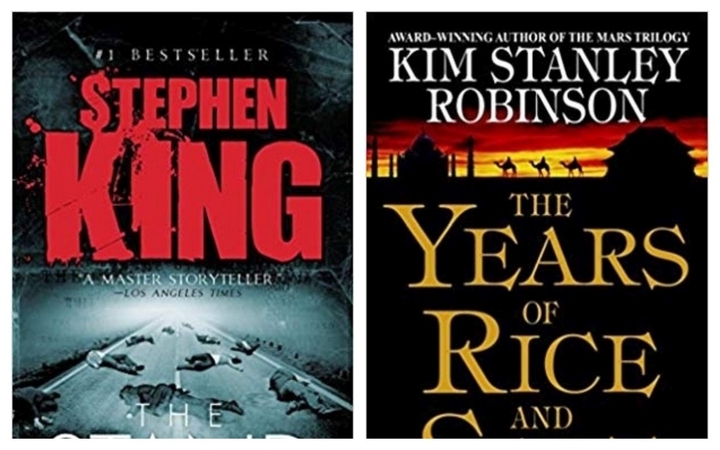
Pandemic novels, like pandemics, come and go in waves. The 60s had Michael Crichton’s “The Andromeda Strain.” The 70s saw the mega-success of Stephen King’s “The Stand.” Robin Cook gave us “Outbreak” in the 80s. By the 2000s, Max Brooks’s “World War Z” and related “The Zombie Survival Guide” were deemed so plausible for emergency scenarios that Brooks now consults for the military. And in 2014, Emily St. John Mandel’s “Station Eleven,” about a deadly plague called the “Georgia Flu,” dominated award lists and won widespread recognition.

With the coronavirus on everyone’s minds, reading books about epidemics can either be a frightening turnoff or a fascinating “what if” thought experiment. For readers in the latter category, let’s talk about books you might dare to consider.

Silvia: Although zombies are by now synonymous with pandemic, there are a number of novels that avoid this popular infection trope. Paul Tremblay’s “Survivor Song” is out in July, and it’s about a rabies-like virus with a short incubation period. When I talked to him at the Boskone convention, he told me his sister, a nurse, had helped him shape his ideas around how health services in Massachusetts might deal with such a scenario. Paul has been crowned “horror’s newest big thing,” so you might want to check him out if you haven’t yet.

One of the best not-a-zombie pandemic books was “Pontypool Changes Everything.” They say every Canadian novel is about either the weather or the harsh landscape, and this sparse book delivers both in spades, along with a virus that is transmitted via language and causes people to become cannibals. Yes, it’s social satire and political commentary but also just a heck of a concept.

Lavie: I loved “Pontypool,” the film adaptation of the novel. A language virus of course pops up earlier in Neal Stephenson’s “Snow Crash,” the book that effectively ends the Cyberpunk era. But the two novels couldn’t be any more different. One novel I’d mention is Kim Stanley Robinson’s epic “The Years of Rice and Salt.” It takes the Black Death in the 14th century as its start, but imagines it has killed nearly everyone in Europe. How, then, does world history turn out different? Told over the intervening centuries, through a series of reincarnated characters, it imagines a Chinese Empire on the one hand, an Islamic world on the other, and an alliance of India and Native American nations all struggling for dominance. It’s an enchanting, immersive book.

Silvia: I read “Snow Crash” as a teen and also loved Richard Matheson’s “I Am Legend” (the lone dude trying to survive against the band of mutants each night!). I imagine younger folks today might turn to “Wilder Girls” by Rory Power — about teenagers quarantined at an isolated boarding school — rather than Matheson, for their horror kicks.

Lavie: My favorite plagues tend to be science fictional. Alastair Reynolds has a couple of great digital ones — the possibly-alien “melding plague” that takes down “Chasm City” in the eponymous novel, and the “nanocaust” that wipes out all human records in “Century Rain.” Both are great noir-infused SF novels that couldn’t be more different from each other.

They also raise an important point for the future of humanity: As we replicate the language of viruses, infections and rapid wide-scale distribution into our digital systems, are we becoming vulnerable to a new form of pandemic? And as we become ever more integrated with our own digital machines, do we place ourselves ever more at risk? Imagine when not only people, but houses, cars and even nuclear reactors can fall prey to malicious infection. It might sound like science fiction, but if you weren’t worried enough, at least one military-grade computer worm, Stuxnet, hit Iran’s nuclear program computers back in 2010. Fiction might be struggling to keep up.

Silvia: One of the most chilling science fictional plague books is “Clay’s Ark” by Octavia Butler. Although technically part of a series, it can be read on its own. The story follows a family abducted by a group of people infected with an alien microbe that radically alters humans and pushes them to reproduce and spread their infection. The book starts like “Mad Max” and turns into “Species.” Be warned: it comes with all the thorny issues of coercion that Butler liked exploring. Not a light read, but definitely a frightful one.

Moreno-Garcia is the author of the novels “Gods of Jade and Shadow,” “Signal to Noise,” and most recently, “Untamed Shore.” Tidhar is the author of several novels, including “The Violent Century,” “A Man Lies Dreaming,” “Central Station” and “Unholy Land.”

Lisel Mueller, Pulitzer-winning poet who channeled history into verse, dies at 96 #ศาสตร์เกษตรดินปุ๋ย

#ศาสตร์เกษตรดินปุ๋ย : ขอบคุณแหล่งข้อมูล : หนังสือพิมพ์ The Nation

https://www.nationthailand.com/lifestyle/30382737?utm_source=category&utm_medium=internal_referral

Lisel Mueller, Pulitzer-winning poet who channeled history into verse, dies at 96

Feb 24. 2020
By The Washington Post · Harrison Smith · NATIONAL, BOOKWORLD, OBITUARIES

Lisel Mueller, who fled Hitler’s Germany as a teenager and became a Pulitzer Prize-winning poet in the United States, drawing on her family history for lyrical works about love, art, nature and loss – acknowledging pain even as she looked outward with joy – died Feb. 21 at a retirement community in Chicago. She was 96.

The cause was complications of pneumonia, said her daughter Jenny Mueller.

After immigrating to the United States at age 15, Mueller spent some eight decades in the Midwest, where she lived for many years in a rural stretch of Chicago’s North Shore suburbs. Awakened in the morning by the moos of Holstein cows from a neighboring farm, she set to work from her second-floor study writing free-verse poetry that often reflected the beauty of the natural world, and what she called “the indifference of nature” in the face of human suffering.

Her poetry career began relatively late, with the publication of her first collection, “Dependencies” (1965), when she was 41. She had effectively come to the United States as a political refugee – her father, a teacher and outspoken leftist, lost his job after criticizing Hitler – and began writing poetry in her second language after her mother died in 1953.

“I sat on a gray stone bench/ringed with the ingenue faces/of pink and white impatiens/and placed my grief/in the mouth of language,/the only thing that would grieve with me,” she recalled in “When I Am Asked,” from her Pulitzer-winning book, “Alive Together: New and Selected Poems” (1996).

The collection was praised by the Pulitzer jury as “a testament to the miraculous power of language to interpret and transform our world” and “a testament that invites readers to share her vision of experiences we all have in common: sorrow, tenderness, desire, the revelations of art, and mortality – ‘the hard, dry smack of death against the glass.’ ”

Mueller won a slew of top honors in her field, including the National Book Award for her 1980 collection, “The Need to Hold Still,” and the 2002 Ruth Lilly Poetry Prize for lifetime achievement. She also lectured and taught at schools including Elmhurst College, Goddard College and the University of Chicago, before a 1985 glaucoma diagnosis curtailed her public appearances and forced her to write with a large felt-tipped pen to see her words.

A onetime graduate student in comparative literature, she filled her work with references to mythology, folklore and fairy tales; allusions to artists such as Claude Monet, Mary Shelley and Anton Webern; and Romantic imagery of hawthorns, aspens and the birds outside her window. The result was a fusion of past and present, in which a dark history seemed to peer out from everyday dramas or idyllic scenes from nature.

In some poems, her subjects seemed altogether oblivious, or incapable of imagining the potential for violence – as in “Happy and Unhappy Families II,” which reflected on the ancient Greek story of Electra. “In the play, we know what must happen/long before it happens,/and we call it tragedy./Here at home, this winter,/we have no name for it.”

“The message is obvious,” Mueller once told the Chicago Tribune. “My family went through terrible times. In Europe no one has had a private life not affected by history. I’m constantly aware of how privileged we (Americans) are.”

In an interview, Poetry magazine editor Don Share said Mueller was “everything a poet could aspire to be: She hit all the right notes, and did so with grace, heart and wit. American poetry today focuses on such matters as privilege, the drama of everyday life, nature and also war, and she helped create the language in which we write and think about these important subjects.”

Above all, he added, Mueller was a great storyteller. “As she once wrote, ‘ . . . the story of our life/becomes our life,’ and poetry became hers.”

Mueller was born Elisabeth Annelore Neumann in Hamburg on Feb. 8, 1924. She later recalled living in a world that “had a soft voice and no claws,” before learning “the burden of secrets” amid Hitler’s rise, which forced her family to flee the country.

Her father came to the United States in 1937 and settled in Indiana, where he taught French and German at Evansville College, now the University of Evansville. Mueller joined him two years later, along with her mother and younger sister, and struggled to assimilate at a time when German immigrants were often treated with suspicion.

The poetry of Carl Sandburg helped ease the transition – “Literal yet evocative, I found it as exotic as the night train on which someone softly says, ‘Omaha,’ ” she later wrote – and so did the work of John Keats, whom she began reading while an undergraduate at Evansville.

She married a classmate, Paul Mueller, in 1943. After receiving a bachelor’s degree in sociology the next year, Mueller and her husband did graduate work at Indiana University. He became an editor for Commerce Clearing House, a legal publisher, and Mueller worked as a social worker and librarian while writing on the side, reviewing poetry for the Chicago Daily News before focusing on her own work, even as she raised two daughters in Lake Forest, Illinois.

Her poetry collections included “The Private Life” (1976), which won the Lamont Poetry Prize (now the James Laughlin Award) for best second book; “Second Language” (1986); and “Waving from Shore” (1989). She also translated German works by Marie Luise Kaschnitz and Hugo von Hofmannsthal, whose play “The Salzburg Great Theatre of the World” she helped translate for a production at the Goodman Theatre in Chicago.

Paul Mueller died in 2001, after a 57-year marriage that Mueller evoked in her poem “Alive Together,” which began: “Speaking of marvels,/I am alive/together with you, when I might have been/alive with anyone under the sun/ . . . the odds against us are endless,/our chances of being alive together/statistically nonexistent;/still we have made it.”

In addition to her daughter Jenny of St. Louis, survivors include another daughter, Lucy Mueller of Chicago; and a granddaughter.

“Poetry, for me, is the answer to how does one stay sane when private lives are being ransacked by public events,” Mueller told the Tribune after winning the Pulitzer. “It’s something that hangs over your head all the time. Luckily, I’ve had a sane and sanguine private life after coming here; we’ve lived in this house for 39 years. I suppose that’s how I come to grips with it by writing, trying to give voice to the unspeakable, to give music to terror.”

Chapter 1 of The Invisible Other to be held at Richard Koh Projects in Bangkok #ศาสตร์เกษตรดินปุ๋ย

#ศาสตร์เกษตรดินปุ๋ย : ขอบคุณแหล่งข้อมูล : หนังสือพิมพ์ The Nation

https://www.nationthailand.com/lifestyle/30382727?utm_source=category&utm_medium=internal_referral

Chapter 1 of The Invisible Other to be held at Richard Koh Projects in Bangkok

Feb 24. 2020
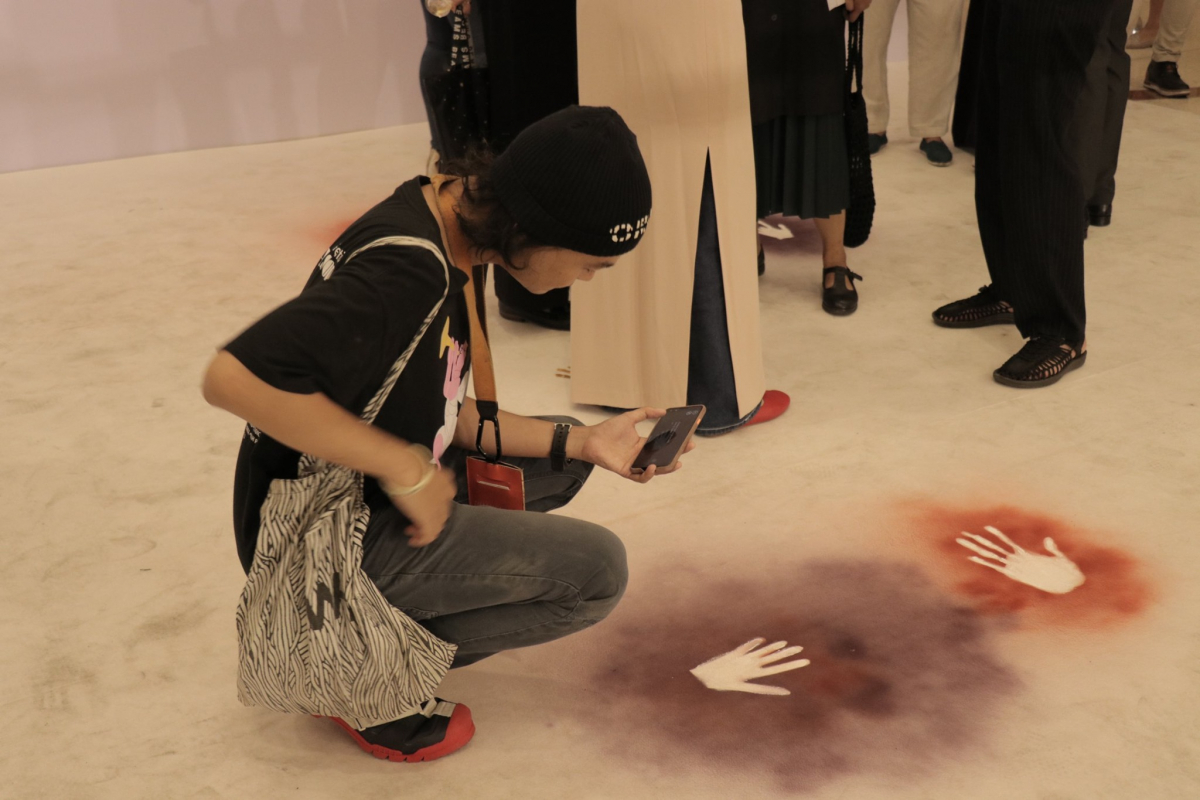
Lost Motherland (White Blood)

Lost Motherland (White Blood)
By The Nation

Richard Koh Projects is pleased to announce a curated exhibition by Loredana Pazzini-Paracciani with works by Ampannee Satoh at its premises in Bangkok.

From pervasive beliefs and superstitions in Southeast Asia about otherworldly beings, phantoms and aliens, The Invisible Other exhibition broadens the perception of phantom as invisible spirit to explore another, the subtler dimension of invisibility, that is, social invisibility originated in discrimination and alienation. Featuring works that span documentary photography and oral history, to painting, mixed-media and video installations, the overarching focus of the exhibition is to consider the invisible other in society: the people, or communities that live on the margins because of ethnic, gender, religious or cultural differences. These individuals are but phantoms, alienated from the wider society – they are invisible, yet, they exist.

Lost Motherland

Lost Motherland

By migrating from the inside out in the attempt to map alienation from multiple angles, the exhibition is devised as a trilogy unfolding across Richard Koh’s three galleries located in Bangkok, Kuala Lumpur and Singapore. Taking the form of a chapter at each location, the three chapters combined are intended as interconnected chambers to share knowledge in relation to specific concerns of life at the periphery.

For the Bangkok chapter, Satoh presents the video installation Without Lightness, part of her larger series Lost Motherland. The artist shot Without Lightness while onboard a fisherman’s boat on a routine fishing trip at night, along the shores of Pattani, where many Rohingya seek refuge from war-torn Myanmar. The act of sailing out and sailing in Pattani’s harbour resonates with the forced boat journey many refugees embarked on leaving their country or entering the new harbour searching for refuge.

Phantoms and Aliens | The Invisible Other (Chapter 1) is scheduled to run from 28 February – 28 March 2020 at Richard Koh Projects, Unit A, 3rd Floor, N22 Art Warehouse in Bangkok.

Lost Matherland (Without Lightness)

Lost Matherland (Without Lightness)

For the next events, Chapter 2 held at Kuala Lumpur, Malaysia, during March 3- 21 and Chapter 3 held in Gillman Barracks, Singapore, during March 6-28.

More information on http://rkfineart.com/

Book World: Why astrologers were the original data scientists #ศาสตร์เกษตรดินปุ๋ย

#ศาสตร์เกษตรดินปุ๋ย : ขอบคุณแหล่งข้อมูล : หนังสือพิมพ์ The Nation

https://www.nationthailand.com/lifestyle/30382651?utm_source=category&utm_medium=internal_referral

Book World: Why astrologers were the original data scientists

Feb 22. 2020
A Scheme of Heaven
Photo by: Norton — HANDOUT

A Scheme of Heaven Photo by: Norton — HANDOUT
By Special To The Washington Post · Katie Hafner

“A Scheme of Heaven: The History of Astrology and the Search for Our Destiny in Data” By Alexander Boxer Norton. 319 pp. $28.95 —

As befits a book about astrology, Alexander Boxer’s “A Scheme of Heaven: The History of Astrology and the Search for Our Destiny in Data” starts with a horoscope: “Today you find yourself presented with a mysterious opportunity. Take it, even if you’re not sure it was really meant for you.”

In other words, suspend your skepticism about astrology long enough to hear what this author has to say in his sprightly, if occasionally heavy-going, defense of celestial divination.

Boxer is a data scientist with a Ph.D. in physics, as well as degrees in the history of science and classics. When it comes to astrology, he is surprisingly open-minded, a rare stance for a scientist. In fact, he writes, astrology’s status as pseudoscience “makes it all the more delicious to think about.”

Astrology combines two powerful human tendencies: First, we are creatures of pattern-matching habit, seeking connections in everything. Second, we possess an irrepressible fascination with self. This combination leads us to find patterns among the stars, imbue these patterns with meaning and then apply this meaning to our own destinies.

Boxer sees in astrology “an undeniable power … to reveal the surprising ways in which everything, and all of us, are connected to each other across time and space.” Point well taken. The notion of time and space is important because with each passing second the position of the stars changes in relation to us, and from the astrologer’s perspective where our stars happen to be at any point in time will affect our individual fates.

For centuries, Boxer writes, the fields of astronomy and astrology were so tightly intertwined that neither could be fully untangled from the other. It was astrology, he points out, that became the ancient world’s main motivation for improving the accuracy of planetary observations.

Yet over time the fields – and public and professional perceptions of them – diverged. How astrology came to be viewed as belonging in the realm of the superstitious and scientifically ignorant isn’t clear, and Boxer doesn’t address that evolution. Instead, he views the field of astrology through a thoroughly modern lens, that of today’s omnipresent efforts to divine patterns in big data sets. His message is this: If you believe that big data can offer a useful window into the world, do so with the knowledge that others got there first, and very long ago. His implication is a call for humility. To believe anything else is hubris.

Astrology is composed of a few basic pieces: seven planets, 12 signs of the Zodiac and 12 houses of heaven. Together, however, these elements can be combined in an almost infinite number of ways. “The chance that any one celestial configuration will occur is fantastically unlikely,” Boxer writes, “and yet the heavens are graced by one of these fantastically unlikely configurations at every instant in time including right now.”

Enter the juxtaposition of our 21st-century thinking about big data, which seems new but was already the rage in the ancient world. Astrology, Boxer posits, was that era’s “most ambitious applied mathematics problem,” made especially intriguing because of the one basic feature that sets astrology apart: its intimate connection with the passage of time. Astrology’s deep reliance on time “allows it to mirror the ups and downs of our lives in an eerily convincing way.”

Various ancient objects point to humans’ early interest in the movement of the sky. Stonehenge, which dates to around 3000 B.C., may have been built to align with sunrise on the summer solstice. The Egyptian pyramids are an early expression of the human regard for the stars. The oldest known personal horoscope, written in Babylon (near modern Baghdad), dates to 410 B.C., Boxer tells us.

One of Boxer’s most intriguing examinations is of a piece of history that would have benefited from some astrological forecasting: the assassination of Julius Caesar. It is one of the few pivotal events in ancient history that can be precisely date, time and location-stamped: March 15, 44 B.C., at 12:55 p.m. at roughly the intersection of Via di Torre Argentina and Via dei Barbieri in the Rome of today.

In considering Caesar’s death, Boxer gins up a beautifully rendered schematic – or “scheme of heaven,” as he calls it – for that fateful blink of an eye. He shows that Venus, the ancestral goddess of the Julian clan, was almost completely obscured, as Jupiter sank mournfully below the western horizon. Bad omens both. But at the time, ancient Romans tended to rely more on signs contained in the flights of birds and the livers of sheep than celestial alignment.

By contrast, one scant generation of Roman emperors later, the importance of astrology had grown so quickly that Augustus had his Zodiac sign, Capricorn, stamped onto silver coins bearing his imperial image. Astrology became a crucial component of that empire’s intelligence apparatus and would remain part of the public’s consciousness for centuries to come.

Boxer’s tone is lighthearted throughout, his writing lean and smart. Yet he doesn’t shy away from complexity. As a matter of fact, he serves up plenty of it. As the book moves along, the content grows increasingly matted with data analysis and algorithmic musings that could leave many readers behind. This reviewer, for example, got hopelessly lost in the thicket of Z-codes (Boxer’s nickname for calculations used to determine an individual’s astrological uniqueness) soon after the author introduced the concept on Page 141. This befuddlement occurred, for Z-code purposes, at 11:46 a.m. on Jan. 21, 2020, in the San Francisco neighborhood of Noe Valley.

But the intellectual heavy lifting shouldn’t be a deterrent. There’s enough in “A Scheme of Heaven” to satisfy the curious layperson and the data geek alike. The chart of Jupiter-Saturn conjunctions vis-a-vis presidential peril alone is worth the price of this book. And with his lovely prose, Boxer makes it relatively easy to navigate – if not celestially then literarily – around the difficult bits. A journey through Boxer’s own scheme of heaven is one well worth taking.

‘Whose reality is it?’ Jirawut’s new exhibition asks #ศาสตร์เกษตรดินปุ๋ย

#ศาสตร์เกษตรดินปุ๋ย : ขอบคุณแหล่งข้อมูล : หนังสือพิมพ์ The Nation

https://www.nationthailand.com/lifestyle/30382417?utm_source=category&utm_medium=internal_referral

‘Whose reality is it?’ Jirawut’s new exhibition asks

Feb 19. 2020
By The Nation

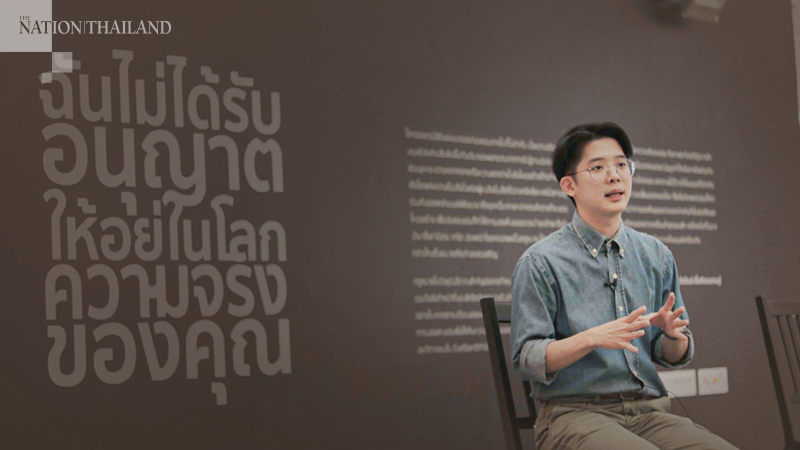
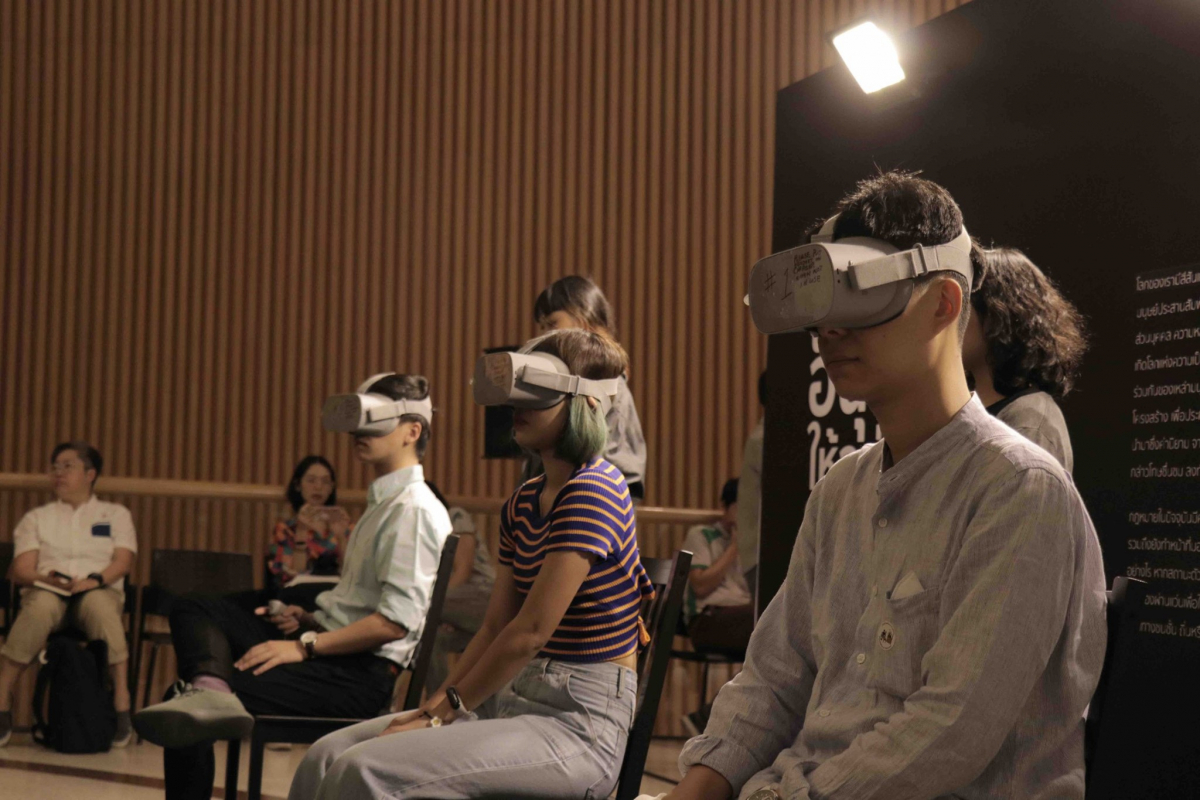
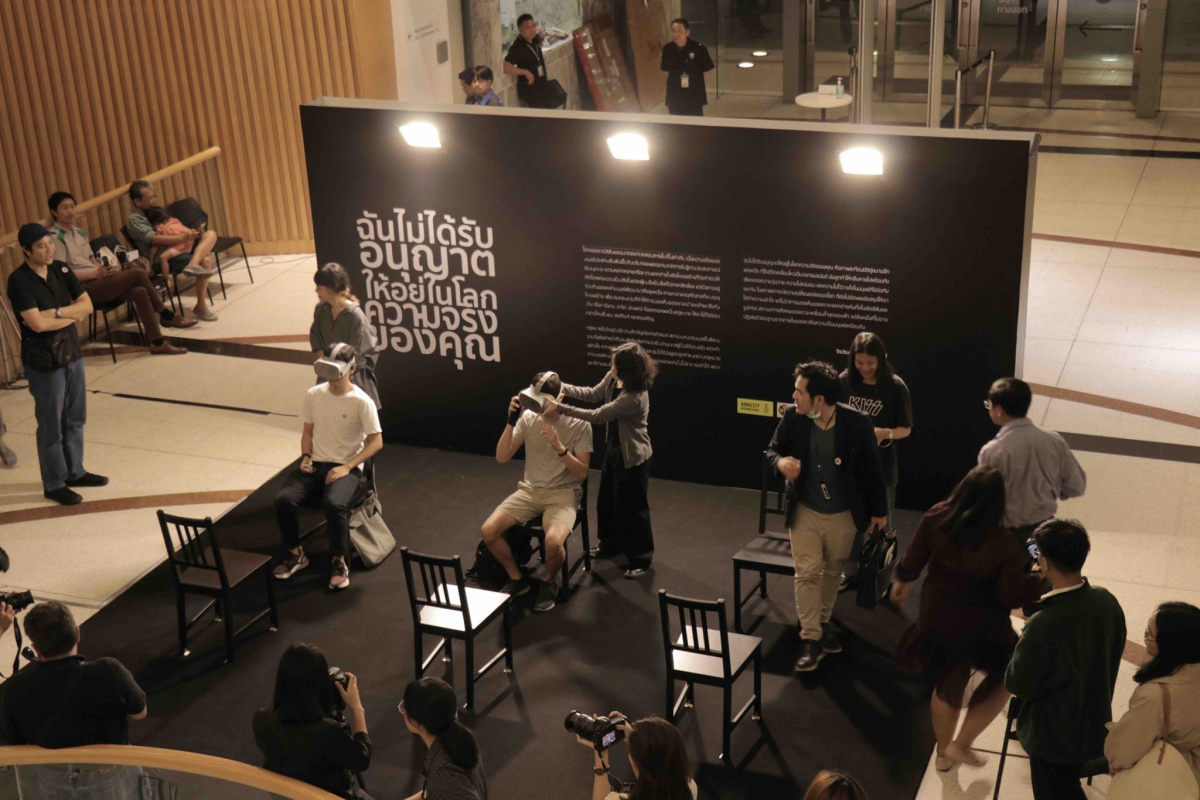
Filmmaker-video artist Jirawut Ueasungkomsate deploys virtual-reality and augmented-reality technology to examine the situation of urban refugees in Thailand, especially in Bangkok, in the exhibition “I am not allowed to live in your reality”, which continues until March 1 at the Bangkok Art and Culture Centre, daily except Monday from 10am to 9pm.

Jirawut says some 6,500 “refugees” live in Thailand’s urban areas, a tiny fraction of the urban population, but they endure sadness and pain, their tragic stories largely hidden from the general public.

They face a high risk of arrest because of their unsettled legal status and the attitude of some law enforcers, he says. Ours is a society in which ignorance can foster hatred of “otherness” and turn ambiguity into prejudice.

He feels it is essential to think about their predicament and discuss an empathetic response, especially amid global shifts for populations under threat.

Jirawut seeks to explore the concepts of existence and non-existence, of the visible and the invisible. What does it take to acknowledge the existence of another human being – an interpretation of the law, a certain race attitude, the human connection?

Jirawut was born in Bangkok in 1986 and has a master’s degree in experimental film from England’s Kingston University. He obtained his BA in archaeology and anthropology at Silpakorn University as well as a BTEC HNC in fine arts from Kensington and Chelsea College.

His work has been exhibited in Britain, Japan and Thailand, including “This is not a Political Act”, seen at the WTF Bar and Gallery in Bangkok in 2016.

Jirawut is a lecturer in documentary and media production at

Book World: Five new thrillers and mysteries to help escape reality – or see it in another light #ศาสตร์เกษตรดินปุ๋ย

#ศาสตร์เกษตรดินปุ๋ย : ขอบคุณแหล่งข้อมูล : หนังสือพิมพ์ The Nation

https://www.nationthailand.com/lifestyle/30382348?utm_source=category&utm_medium=internal_referral

Book World: Five new thrillers and mysteries to help escape reality – or see it in another light

Feb 18. 2020
Trouble Is What I Do
Photo by: Mulholland — HANDOUT

Trouble Is What I Do Photo by: Mulholland — HANDOUT
By Special To The Washington Post · Richard Lipez · ENTERTAINMENT, BOOKWORLD

Thriller roundup — As the winter chill sets in, it’s a perfect time to cozy up with books that will give you a whole other kind of shiver. Here are five of the best new and upcoming thrillers and mysteries that deliver action, suspense and intrigue – all the way to that very last twist.

Westwind

By Ian Rankin (Little, Brown)

This techno-action-thriller with its ripped-from-today’s headlines plot was actually first released in Britain back in 1990. An early effort by the author of the esteemed Inspector Rebus mysteries, “Westwind” is about a total withdrawal of U.S. troops from Europe and the United Kingdom, and “how the USA is going to pull up its drawbridge and let everyone outside the moat rot.” A secret counterplot to the ensuing “complete chaos” is uncovered by British communications-satellite techy Martin Hepton after a U.S. space shuttle crashes and burns. Deadly perfidy is everywhere, while Russia is “just sitting back and enjoying the bloody show.” Uncanny.

The Burn

By Kathleen Kent (Mulholland)

This deeply satisfying follow-up to last year’s Edgar-nominated “The Dime” has Dallas Police narcotics detective Betty Rhyzyk messed up with PTSD, the result of her captivity and grotesque torture in the series debut. Her fed-up girlfriend, Jackie, tells her to move out. Betty’s cranky supervisor grounds her, too, but that’s no obstacle for this obsessive, borderline unstable, fascinating, Brooklyn-born seeker of truth as she tangles with the Sinaloan drug cartel and the gnawing likelihood that a fellow police officer is bent. Raymond Chandler praised Dashiell Hammett for taking crime fiction out of the drawing rooms and into the streets. With Betty Rhyzyk, Kathleen Kent brings those mean streets to life as excitingly as anybody has in years.

Trouble Is What I Do

By Walter Mosley (Mulholland, available Feb. 25)

Walter Mosley’s sixth Leonid McGill P.I. novel is so short, it almost seems like a throwaway. It’s not. This gifted raconteur of the African American experience has produced an absorbing noir beauty of a tale about a 94-year-old Mississippi blues man, aptly named Philip “Catfish” Worry, bent on a good deed that could get him killed. He hires McGill to inform the daughter of a billionaire white racist that the bigot is actually Catfish’s offspring from a long-ago affair. Part of McGill’s fee will be a bottle of 147-year-old bourbon that “was so smooth that I imagined a green snake slithering across an emerald lawn” – a fitting description for the entire novel.

The Last Passenger: A Charles Lenox Mystery

By Charles Finch (Minotaur)

No mystery writer except perhaps Anne Perry is as successful as Charles Finch at evoking the atmosphere of Victorian London – and not just the physical fragrances and stenches but the sociopolitical ones, too. In this 13th Charles Lenox mystery, the dapper, inquisitive young amateur investigator assists Scotland Yard in its inquiries into an unidentified man who turns up dead on a train in Paddington Station. Peculiarly, the labels have been snipped out of his jacket and trousers. It’s 1855, and social conflicts in both England and the United States soon emerge as disturbing factors in the crime. It’s a dandy plot, and it unfolds with Finch’s signature drollery. A visiting American detective tells Lenox he only eats brown bread and milk. Lenox’s pal Lady Jane Grey asks, “Is he four?”


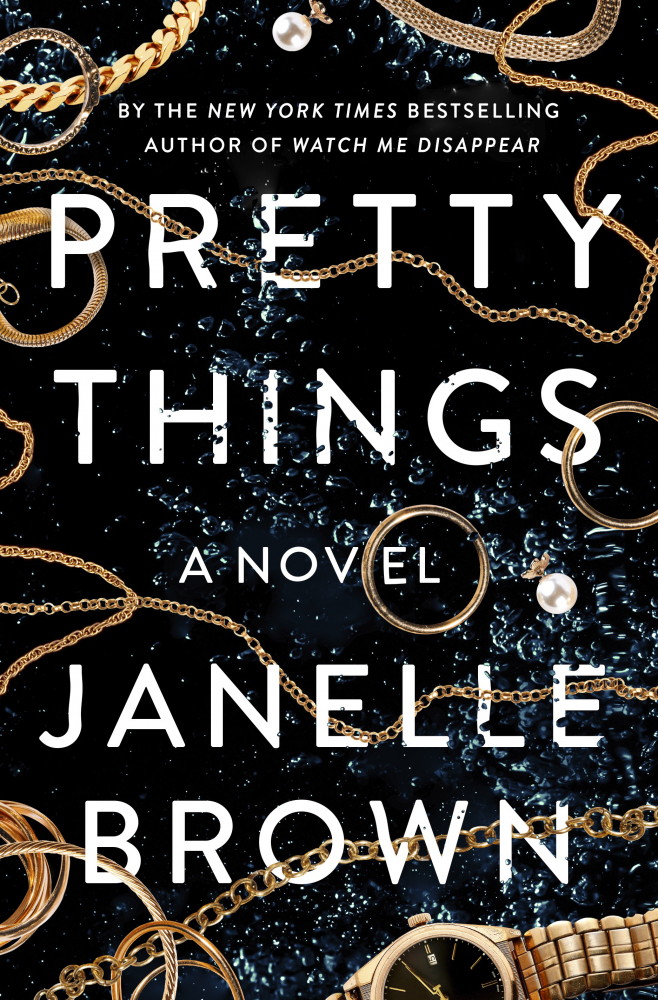
Pretty Things Photo by: Random House — HANDOUT

Pretty Things Photo by: Random House — HANDOUT

Pretty Things

By Janelle Brown (Random House, available April 21)

It’s “Dynasty” meets Patricia Highsmith in Janelle Brown’s crazy-family potboiler. If this turbulent saga about a mother-daughter-con man grifter team preying on the least nice people in the economic one percent were a Netflix series, viewers would spend a lot of time yelling at the screen: “Don’t believe him! Can’t you see he’s a manipulative jerk?” Rich, emotionally unstable Vanessa Liebling has a huge following as an “Instagram fashion influencer.” Nina Ross was an art history major who took up the only vocation her education apparently prepared her for: theft. Duplicity abounds when two messed-up clans collide, and Brown’s final multiple twists are doozies.

Lipez writes the Don Strachey PI novels under the name Richard Stevenson. “Killer Reunion” is the latest.

Book World: Gish Jen’s ‘The Resisters’ reminds us of the importance of standing up for what’s right #ศาสตร์เกษตรดินปุ๋ย

#ศาสตร์เกษตรดินปุ๋ย : ขอบคุณแหล่งข้อมูล : หนังสือพิมพ์ The Nation

https://www.nationthailand.com/lifestyle/30382344?utm_source=category&utm_medium=internal_referral

Book World: Gish Jen’s ‘The Resisters’ reminds us of the importance of standing up for what’s right

Feb 18. 2020
The Resisters
Photo by: Knopf — HANDOUT

The Resisters Photo by: Knopf — HANDOUT
By The Washington Post · Diana Abu-Jaber · ENTERTAINMENT, BOOKWORLD 

‘The Resisters” By Gish Jen Knopf. 320 pp. $26.95. —

There’s a darkness to dystopia: it’s embedded in the very word- the opposite of a utopia, a world gone wrong. The magic of Gish Jen’s latest novel, “The Resisters,” is that, amid a dark and cautionary tale, there’s a story also filled with electricity and humor – and baseball. At its heart, the novel is about the act of resistance and its attendant forces of courage and hope.

Set in AutoAmerica – in a future world of surveillance and melted polar caps – people are divided into two categories. The Netted have angel-fair skin and live and work in protected areas on higher ground, while the marginalized, multiracial Surplus live on houseboats or swamplands; their only employment is to “consume.” Our narrator, Grant, a former college professor, describes himself as “coppertoned,” and his wife, Eleanor, a lawyer and activist, is “spy-eyed.” These young parents are increasingly impressed when their young daughter Gwen begins to fling her stuffed animals with surprising force and accuracy across the house. “They shot out,” Grant says, “never so much as grazing the doorframe.”

As she grows older, Gwen becomes an extraordinary pitcher. Her best friend, Ondi, is also a talented player; together, they’re important members of a scrappy team called the Lookouts, part of the Underground Baseball League that Eleanor and Grant helped organize. Surplus teams can play only on toxic, contaminated land. To play on safer, unsanctioned ground, the Lookouts must hack their tracking microchips to evade detection by government drones.

In many ways, this book is about feistiness and not buckling under cruel and unjust bureaucracies. Grant and Eleanor are thoughtful mavericks, working to subvert a soulless system while trying to raise a fierce and powerful daughter. These characters wrestle with conundrums that will feel urgent to many readers, such as how to teach children to be fearless yet not reckless, to be responsible yet independent, to stand up for what’s right without becoming imprisoned or imperiled along the way.

These dilemmas impact Gwen directly, because the sport that has given her so much joy and freedom also brings her trouble. Ondi is a strong player but not as magically gifted as Gwen. Ondi’s subordinate position sets in motion a series of events fueled by both loyalty and jealousy that will test the limits of their friendship and their faith in themselves.

Gwen is eventually recruited to play for Net University – to join, in effect, the privileged Netted world. This invitation, of course, poses serious ethical questions in that it requires turning her back on her Surplus community, yet it offers a life-changing transformation not only to Gwen but to her parents, as well. Eleanor, an attorney for the Surplus, was once arrested and tortured for her activism, and her family has remained under constant scrutiny. When a government agent – who appears in the guise of a kindly old lady – starts to pay visits to the family, a sense of foreboding closes in around them.

“The Resisters” is in many ways an extended study on the dangers of willed ignorance and inaction. The story feels only a few clicks removed from our current situation: Climate change has resulted in a partial water-world, and Alexa is now self-aware, offering advice not only on the weather but also on issues of propriety, relationships and moral quandaries. Many readers will recognize with a shudder their own lives in this potential world to come.

Written in Jen’s clear, assured style and delivered from Grant’s slyly ironic perspective, “The Resisters” will captivate readers. Rippling with action, suspense and lovingly detailed baseball play-by-plays, there’s a sense throughout the book of both celebration and danger. There are a few plot point workarounds to maintain Grant’s first-person perspective – including an overly convenient listening device. But the story retains its intimacy and human generosity, even as it’s told against a backdrop of dreadful things to come. This novel’s great gift to readers is its rich and multifaceted characters. Through them, we learn both the cost and the necessity of standing up and speaking out.

Abu-Jaber is the author of “Birds of Paradise” and “Origin.” Her most recent book is the culinary memoir “Life Without a Recipe.”

Gallery 36 to hold ‘Jardin Botanique’ exhibition of artist Fuanglada #ศาสตร์เกษตรดินปุ๋ย

#ศาสตร์เกษตรดินปุ๋ย : ขอบคุณแหล่งข้อมูล : หนังสือพิมพ์ The Nation

https://www.nationthailand.com/lifestyle/30382233?utm_source=category&utm_medium=internal_referral

Gallery 36 to hold ‘Jardin Botanique’ exhibition of artist Fuanglada

Feb 16. 2020
By The Nation

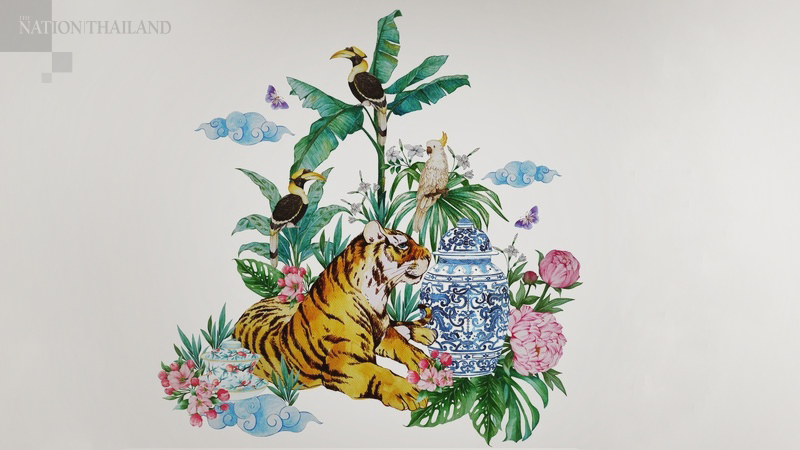
The Gallery 36 at Pullman Bangkok Hotel G is hosting “Jardin Botanique”, a solo exhibition by textile designer and watercolour artist, Fuanglada Verdillon.

Fuanglada studied Fine Art at the Faculty of Fine Arts, Surat Thani Vocational College, before going on to graduate in Fashion and Textile Design at Rajamangala University of Technology, Phra Nakhon. She worked in the textile industry, from clothing to fashion design and carpet design.

In 2014, Fuanglada decided to make her dreams a reality. To live and share her passion for exquisite textiles, she started painting elements and creating designs for her brand JANFIVE Studio. Today, the young and successful Thai designer creates bags, scarfs and paintings that sell worldwide. In her Bangkok studio, she produces designs inspired by travels around the world.

At The Gallery 36, her exhibition will take visitors on an artist’s journey through nature and culture of five sources of inspiration; the charm of Ming pottery; the colours of Tunisia; the energy of Sicilia; the deep blues of the Andaman Sea; and the memory of tropical rainforests.

“Jardin Botanique” will premier 24 of her original first edition paintings and prints on silk and canvas.

The preview day for “Jardin Botanique” by Fuanglada Verdillon will be held on Saturday (February 15) from 5pm to 8pm at The Gallery on the 36th floor of Pullman Bangkok Hotel G.

The exhibition will continue until April 30, 2020. Entry is free