King Salman bin Abdulaziz has directed the Saudi government to invest $1 billion in Pakistan as a confirmation of the kingdom’s “support for the Pakistani economy and the Pakistani people”, a report from the Saudi Press Agency (SPA) said on Thursday.
The message about the king’s directive was relayed during a phone call between Saudi Foreign Minister Prince Faisal bin Farhan al Saud and Foreign Minister Bilawal Bhutto Zardari. Bilawal tweeted earlier on Friday about the interaction and welcomed the investment commitment. He said he had briefed his Saudi counterpart on the flood situation in Pakistan.
The SPA report said that the two leaders also discussed “strong Saudi-Pakistani relations and ways to boost them, as well as regional and international issues of common interest”.
Earlier this week, State Bank of Pakistan’s acting governor, Murtaza Syed, had announced $4 billion in financing for Pakistan from friendly countries.
“Pakistan will get $2 billion from Qatar, $1 billion from Saudi Arabia under the umbrella of deferred oil facility, and $1 billion investments from the UAE in various sectors,” he had said.
Pakistan’s gross financing needs would be around $30 billion for fiscal 2023, including the amount required for cash against documents for international transactions and debt repayments.
He added that the available financing against this requirement is estimated at $37 billion for fiscal 2023. The amount increased after Pakistan secured $4 billion financing from friendly countries.
Dawn
Asia News Network
Asia News Network: The Nation (Thailand), The Korea Herald, The Straits Times (Singapore), China Daily, Jakarta Post, The Star and Sin Chew Daily (Malaysia), The Statesman (India), Philippine Daily Inquirer, Yomiuri Shimbun and The Japan News, Gogo Mongolia, Dawn (Pakistan), The Island (Sri Lanka), Kuensel (Bhutan), Kathmandu Post (Nepal), Daily Star (Bangladesh), Eleven Media (Myanmar), The Phnom Penh Post and Rasmei Kampuchea (Cambodia), The Borneo Bulletin (Brunei), Vietnam News, and Vientiane Times (Laos).
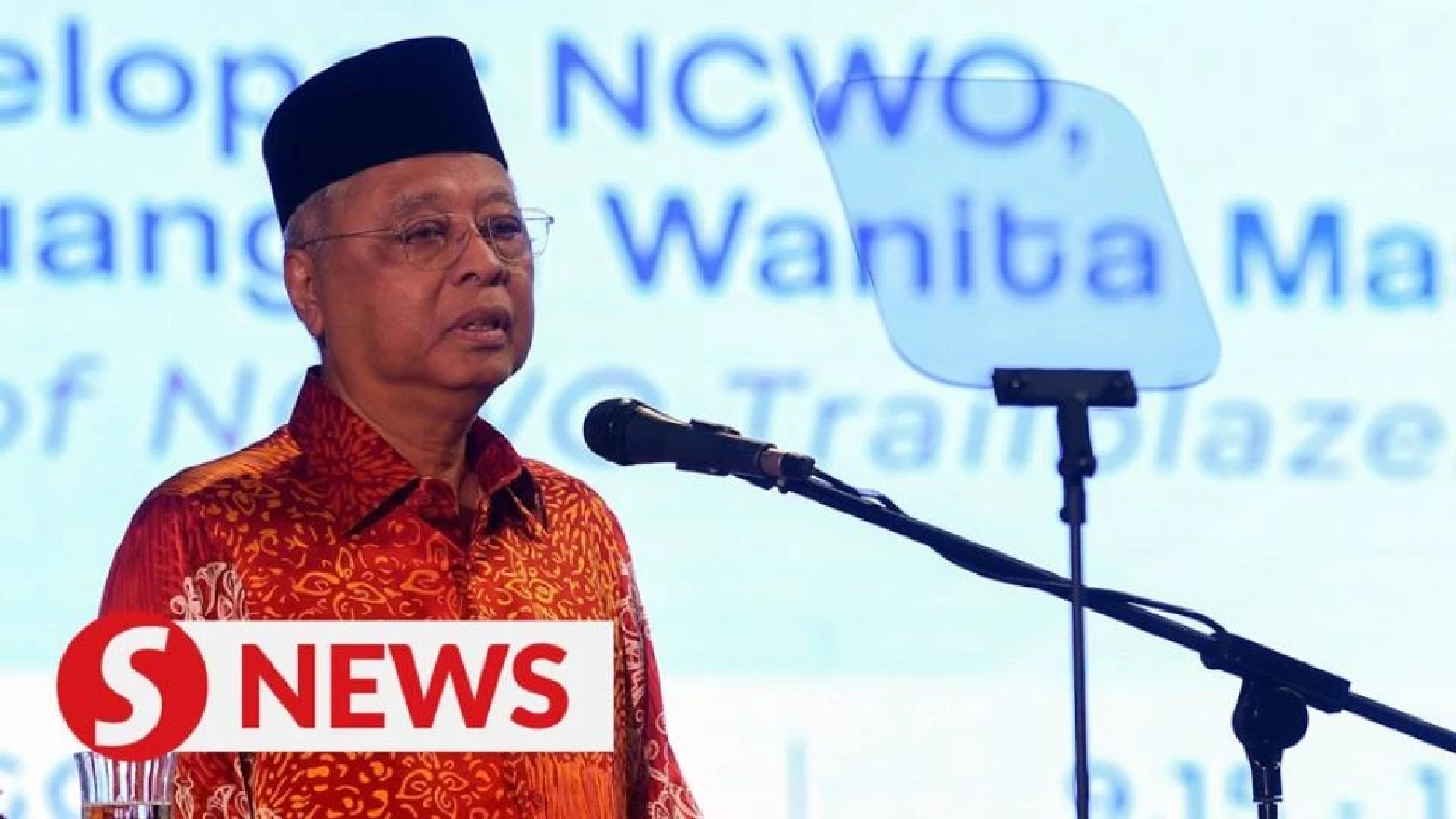
An action plan to address underage marriage is in the works, with policies and legislation also being formulated to make them more gender-sensitive, says the Prime Minister.
Ismail Sabri Yaakob said all states should address child marriage issues, pointing out that Kedah had already gotten the ball rolling.
“I hope this will be followed by other states to ensure that the problem of underage marriage can be resolved,” he said at the 60th National Women’s Day Celebration held here yesterday.
Gracing the event was Raja Permaisuri Agong Tunku Hajah Azizah Aminah Maimunah Iskandariah.
On July 18, the Kedah State Assembly passed the amendment to the Islamic Family Law Enactment Bill 2022 on the age limit for marriage and polygamy law.
Among others, the amendment raised the age of marriage for women from 16 years to 18. Punishment was also introduced for polygamy without prior permission from the court.
Ismail Sabri said the Federal Government would do its part by continuing to improve legislation and spearheading more gender-sensitive programmes.
He said these included the review and renewal of the National Women’s Policy and the drafting of gender-sensitive bills.
“For example, the Anti-Sexual Harassment Bill 2021 was passed with a majority in the Dewan Rakyat on July 20 and the Dewan Negara on Aug 11.
“The anti-stalking Bill was also tabled for first reading in the Dewan Rakyat on Aug 4,” the Prime Minister said.
Ismail Sabri added that to address issues related to female participation in the labour force, gender would be mainstreamed in the planning and implementation of the government’s policies as well as initiatives.
He said this would be done through the introduction of a Gender Focal Point and a Gender Focal Team at every ministry, as approved by the government.
“Malaysia is currently facing a challenge because while females comprise 47.7% of the total population, only 55.1% within this populace was in the labour market as of 2021.
“This rate is lower compared with Singapore’s 69.7% and Thailand’s 66.8%,” he said.
While the enrolment rate of women at all education levels was high, the same was not reflected in the labour market, Ismail Sabri added.
He also said the Finance Ministry and women-related NGOs had been entrusted with the responsibility of preparing a gender-responsive Budget for the B40 group starting next year.
He said the budget initiative, which would be based on gender-disaggregated data, would identify the target groups and distribute the allocations according to the needs of the recipients.
The Star
Asia News Network
Asia News Network: The Nation (Thailand), The Korea Herald, The Straits Times (Singapore), China Daily, Jakarta Post, The Star and Sin Chew Daily (Malaysia), The Statesman (India), Philippine Daily Inquirer, Yomiuri Shimbun and The Japan News, Gogo Mongolia, Dawn (Pakistan), The Island (Sri Lanka), Kuensel (Bhutan), Kathmandu Post (Nepal), Daily Star (Bangladesh), Eleven Media (Myanmar), The Phnom Penh Post and Rasmei Kampuchea (Cambodia), The Borneo Bulletin (Brunei), Vietnam News, and Vientiane Times (Laos).
South Korea’s resort island of Jeju will launch air routes for Urban Air Mobility (UAM) and drone taxis dedicated to tourists in the island by 2025, as the first municipality in the country to do so.
Aimed at offering quick and accessible air mobility in the near future, the routes will connect the island’s popular tourist spots through the coast with quick and accessible air mobility in the near future, an executive who devised the idea told The Korea Herald on Thursday.
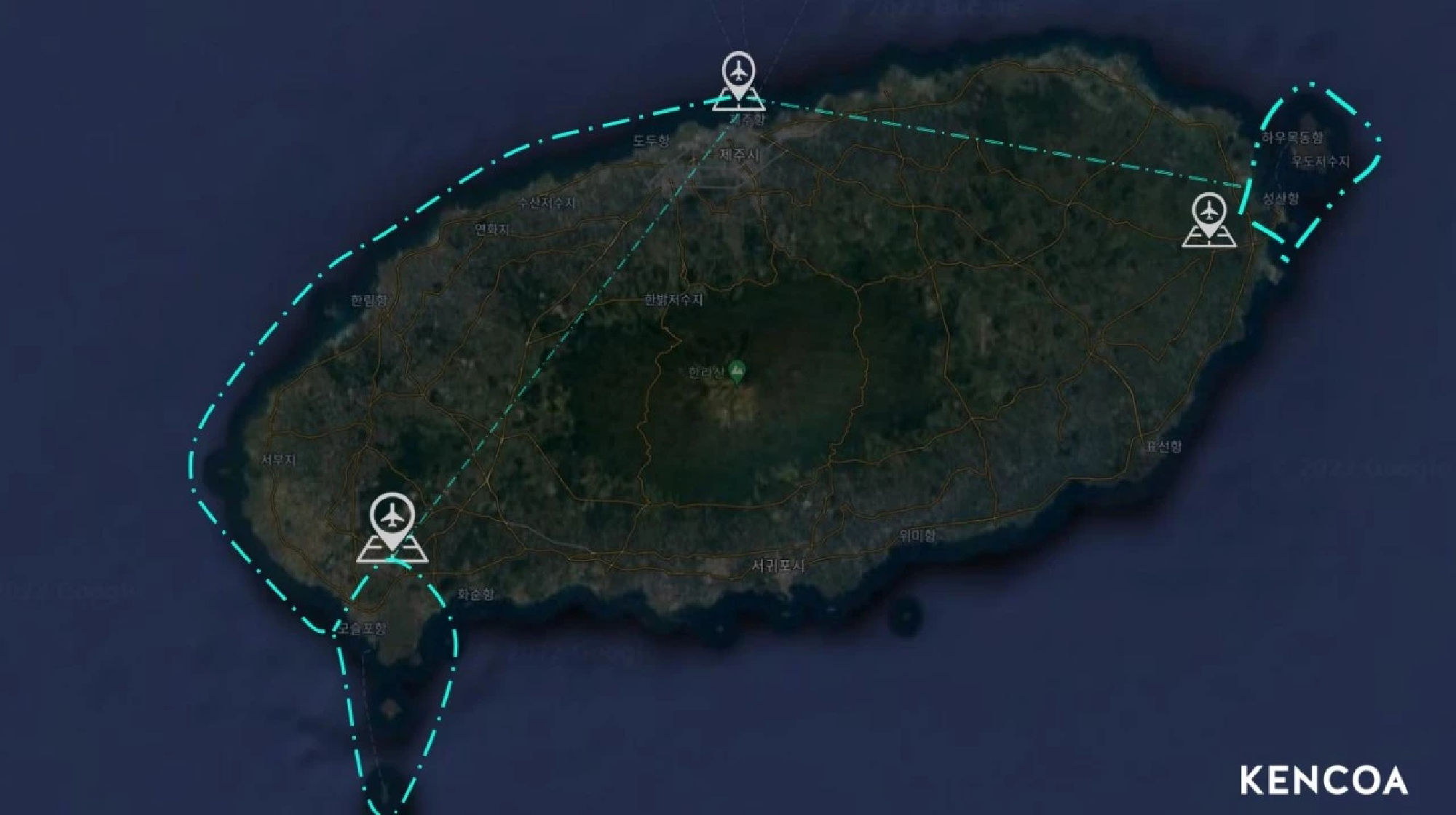
Jeju Island, together with South Korean aviation company Kencoa Aerospace and the Jeju Free International City Development Center (JDC), has devised three types of UAM routes on the island.
The first route connects Jeju International Airport to the island’s southern Mosupo area, which then links Moseulpo to further down to Gapado and Marado. The third route moves along the east coast near Seongsan Ilchulbong, a popular site also known as Sunrise Peak.
“This would allow tourists to hop on the electric vertical take-off and landing (eVTOL) aircraft at Jeju airport to directly land at tourist spots and transfer to drone taxis nearby. The time frame would be around 2025,” said Kencoa Aerospace Executive Chung Chan-young.
Jeju Special Self-Governing Province also plans to set up a Vertiport –- a helipad-like area that can be on land, water or a structure on which eVTOLs can take off and land — at large-scale hotels where many visitors stay.
Jeju’s idea of deploying UAM as tourist transportation is highly feasible and can happen early, Chung said, citing Seoul City’s plan to “test” a UAM route that connects Gimpo International Airport to central Yongsan-gu, Seoul.
The plan, however, has hit a snag as the presidential office was relocated to Yongsan-gu in May.
“Flying a UAM aircraft through the coast in the island faces less trouble compared to running an air taxi in Seoul, where flying drones or aircraft in areas like Yongsan is heavily restricted by government regulations,” said Chung.
According to the Transport Ministry, major districts in Seoul and the entire airspace along the Han River are no-fly zones.
“Jeju works as a perfect test bed and the best location to leverage UAM for the area’s advantages. Examining geographical features through the coastline is less complicated, and establishing a Vertiport on the sea can also work,” Chung added.
Meanwhile, the Transport Ministry has submitted its draft of a bill that would set up requirements and regulations for UAM, The Korea Herald learned through interviews. It is the first of its kind in the world, according to sources. If approved by the National Assembly, South Korea would become the first country to have regulations dedicated to UAM, the sources added.
The special law is expected to separate UAM from the legal boundary of the current aviation law. Flying cars would be advised not to fly within the altitude of helicopters, which is at around 450 meters above ground. The rule for UAM could range between 300 to 600 meters above land.
Under the government’s plan to commercialize UAM in central cities by 2025, the Transport Ministry kicked off a K-UAM Grand Challenge in February to coordinate all of South Korea’s UAM-related activities as part of its focus to enable emerging aviation markets.
Major firms like SK Telecom, Hyundai Motor Group and Hanwha Systems have formed consortiums to participate in the government-led evaluation and demonstration test, which will take place in Goheung, South Jeolla Province from next year.
Kim Da-sol The Korea Herald Asia News Network
Asia News Network: The Nation (Thailand), The Korea Herald, The Straits Times (Singapore), China Daily, The Jakarta Post, The Star and Sin Chew Daily (Malaysia), The Statesman (India), Philippine Daily Inquirer, Yomiuri Shimbun and The Japan News, Gogo Mongolia, Dawn (Pakistan), The Island (Sri Lanka), Kuensel (Bhutan), Kathmandu Post (Nepal), Daily Star (Bangladesh), Eleven Media (Myanmar), The Phnom Penh Post and Rasmei Kampuchea (Cambodia), The Borneo Bulletin (Brunei), Vietnam News, and Vientiane Times (Laos).
Amid soaring food costs, prices of ramen, Koreans’ most favoured instant food and a common low-cost meal option, are set to increase next month, in another blow to customers already grappling with persistent inflation. Koreans consumed the most instant noodles per capita in the world in 2020.
Nongshim, a leading South Korean ramen maker, said Wednesday that it was raising prices for instant noodles and snacks, effective Sept. 15, by an average of 11.3 per cent and 5.7 per cent, respectively — an avoidable surge prompted by soaring global wheat prices, according to the company.
“We had tried to offset the price hike, removing redundancies in our operations, but that’s clearly not enough,” a Nongshim official said, referring to an operating loss of 3 billion won ($2.2 million) in the second quarter for the home market alone, excluding overseas profit.
It was the first time the ramen maker, which gets about 80 per cent of its revenue from instant noodles, has suffered a loss since the same period in 1998. Set up in 1965, Nongshim is a key subsidiary of Nongshim Group, whose business ranges from processing agricultural products to building industrial machines. Assets held by the group came to 5.05 trillion won last year.
Raising noodle prices was needed right away instead of delaying until next month after the Chuseok holiday, but stretching household budgets just before when they need a break the most was worrisome, the company said.
Consumer prices still show few signs of fading, with the latest annual inflation reading in July standing at an almost 24-year high of 6.3 per cent, as soaring food and gasoline prices strain households and businesses alike.
According to a Bank of Korea survey Tuesday, consumers revised down their forecast this month for where inflation will be in one year to 4.3 per cent, from 4.7 per cent in July, which was an all-time monthly high.
But consumers still expect an interest rate hike in as early as six months, the survey found, and the government has not changed its forecast that inflation will peak in the late third or early fourth quarter.
“We could see signs of a price slowdown, soon after the holiday,” Finance Minister Choo Kyung-ho said this week, noting uncertainties like Russia’s war in Ukraine prevent him from being more certain about the price trajectory. The four-day Chuseok thanksgiving holiday starts Sept. 9.
But right now, consumers looking to prepare food for the holiday should be ready to spend more, said Korea Price Information, a local research group. A four-people household would have to pay 9.7 per cent more at marketplaces and 6.4 per cent more at supermarkets on average, the group said Wednesday.
Recent torrential rain that flooded Seoul and left eight dead has sent prices higher, the group added.
The government is currently offering discount coupons to accelerate consumer spending on agricultural and farm products, as part of broader efforts meant to revive demand and ease supply pressures.
“We will absolutely bring down food prices,” President Yoon Suk-yeol said at a weekly meeting on the economy, held two weeks ago at a local grocery store in Seoul. Yoon launched the meeting in early July to solidify his commitment to creating a robust economy for ordinary Koreans.
Choi Si-young
The Korea Herald
Asia News Network: The Nation (Thailand), The Korea Herald, The Straits Times (Singapore), China Daily, Jakarta Post, The Star and Sin Chew Daily (Malaysia), The Statesman (India), Philippine Daily Inquirer, Yomiuri Shimbun and The Japan News, Gogo Mongolia, Dawn (Pakistan), The Island (Sri Lanka), Kuensel (Bhutan), Kathmandu Post (Nepal), Daily Star (Bangladesh), Eleven Media (Myanmar), The Phnom Penh Post and Rasmei Kampuchea (Cambodia), The Borneo Bulletin (Brunei), Vietnam News, and Vientiane Times (Laos).
The Economy, Trade and Industry Ministry plans to bring seven additional nuclear reactors back online in summer next year and later as part of efforts to ensure stable electricity supply, informed sources said Wednesday.
The ministry aims to have a total of 17 nuclear reactors online, including 10 reactors that have already been approved to operate, to better prepare for possible electricity supply shortages, the sources said.
The seven additional reactors are the No. 6 and No. 7 reactors at Tokyo Electric Power Company Holdings Inc.’s Kashiwazaki-Kariwa plant, the No. 2 reactor at Tohoku Electric Power Co.’s Onagawa plant, the No. 1 and No. 2 reactors at Kansai Electric Power Co.’s Takahama plant, the No. 2 reactor at Chugoku Electric Power Co.’s Shimane plant and the No. 2 reactor at Japan Atomic Power Co.’s Tokai No. 2 plant.
Of them, the Onagawa, Takahama and Shimane reactors have already been given local approval to go back online.
They will be able to resume operations once work to improve safety measures is complete.
The government plans to lead efforts to win local approval for the restart of the Kashiwazaki-Kariwa and Tokai reactors.
The Japan News
Asia News Network
Asia News Network: The Nation (Thailand), The Korea Herald, The Straits Times (Singapore), China Daily, Jakarta Post, The Star and Sin Chew Daily (Malaysia), The Statesman (India), Philippine Daily Inquirer, Yomiuri Shimbun and The Japan News, Gogo Mongolia, Dawn (Pakistan), The Island (Sri Lanka), Kuensel (Bhutan), Kathmandu Post (Nepal), Daily Star (Bangladesh), Eleven Media (Myanmar), The Phnom Penh Post and Rasmei Kampuchea (Cambodia), The Borneo Bulletin (Brunei), Vietnam News, and Vientiane Times (Laos).
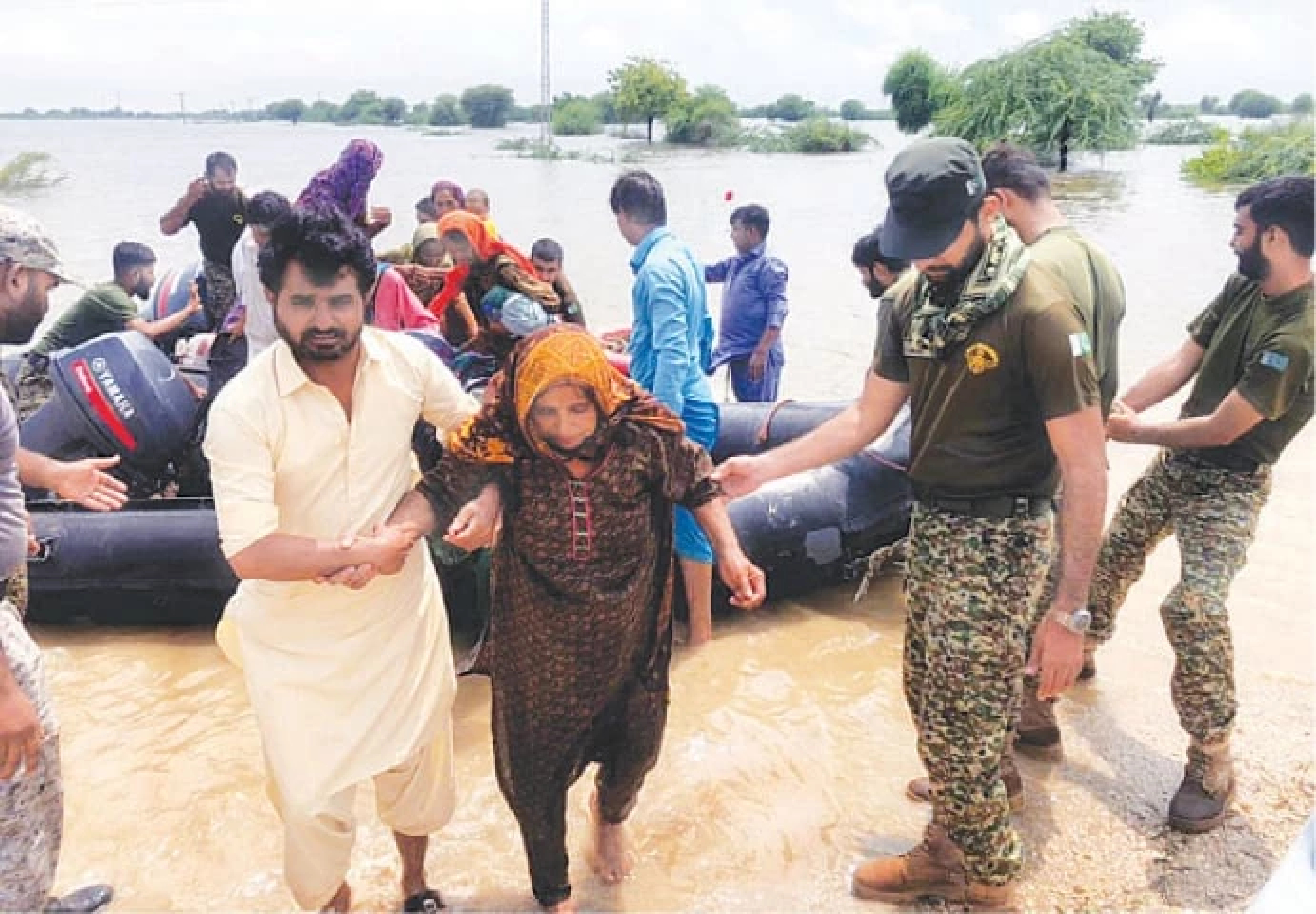
As massive floods across Pakistan have claimed at least 830 lives since July, the government on Tuesday decided to launch an international appeal seeking funds for relief and rehabilitation of flood-hit people and restoration of damaged infrastructure.
The decision was taken during an urgent briefing on the flood emergency by the country’s National Disaster Management Authority (NDMA).
In addition to looking outward for assistance to mitigate the devastation caused by abnormal monsoon downpours, Prime Minister Shehbaz Sharif appealed to the nation to extend help to the flood-stricken people as the government required hundreds of billions to rehabilitate flood victims.
“The current relief operation needs Rs80 billion [13.26 billion baht] and hundreds of billions of rupees are also required to overcome the losses as well as for rehabilitation of the victims,” the prime minister said in a video message.
Sharing details about the relief announced by the government, the premier said the government was distributing Rs37.2 billion as cash relief, whereas funds to the tune of Rs5 billion had “immediately” been released to the NDMA to accelerate the rescue efforts.
PM Sharif said Rs25,000 cash assistance was being paid to the flood victims. Similarly, the government would also provide compensation of Rs1 million to the families of the deceased, along with additional support for the injured and damages caused to the houses, he added.
Appeal for funds
During the NDMA meeting, planning minister Ahsan Iqbal asked the governments of Balochistan and Sindh – the two worst-hit provinces – to formally requisition the military for help in dealing with the disastrous floods.
Speaking at the meeting, Climate Change Minister Sherry Rehman called for immediate humanitarian and rescue efforts in the wake of devastating floods as she admitted Pakistan was not able to cope with the situation on its own.
“Right now we are in the seventh spell of a torrential monsoon that has left thousands homeless, 830 dead and 1,348 injured. From Balochistan, the monsoon system has moved to Sindh, where 30 districts are under water. The magnitude of it can be accessed from the fact that it has rained more than 395 per cent in Sindh and 379 per cent in Balochistan above the average rainfall.”
The senator compared the current calamity with the super floods in 2010 that had wreaked havoc in Pakistan and said at least 30 districts of Sindh, almost the entire Balochistan, and south Punjab were facing an unprecedented humanitarian disaster. “People are adrift, livestock and crops are damaged. It is a humanitarian disaster of unprecedented monsoon proportions,” she said.
“The Indus is in high floods, where the flow of over 600,000 cusecs is expected to cross the Guddu and then Sukkur barrages on August 23 and 24, which will bring all the area along the Indus under water, displacing thousands of families.”
At least 216 lives have been lost, an estimated 1,500,000 mud houses have been damaged and crops cultivated on 1,989,868 acres have been completely destroyed in Sindh, the senator added.
EU aid
Meanwhile, the European Union agreed to provide Rs76 million for crucial humanitarian assistance which will focus on addressing the urgent needs of those most affected in some of the hardest-hit districts of Jhal Magsi and Lasbela.
“The devastating floods have left a trail of destruction in Pakistan, causing many to suffer the loss of their homes, livelihoods, and belongings,” said Taheeni Thammannagoda, who oversees EU humanitarian programmes in Pakistan.
“The EU funding will help get vital assistance to the most vulnerable people to support them during this hard time,” a press release by the EU mission in Islamabad added.
Dawn
Asia News Network
Asia News Network: The Nation (Thailand), The Korea Herald, The Straits Times (Singapore), China Daily, Jakarta Post, The Star and Sin Chew Daily (Malaysia), The Statesman (India), Philippine Daily Inquirer, Yomiuri Shimbun and The Japan News, Gogo Mongolia, Dawn (Pakistan), The Island (Sri Lanka), Kuensel (Bhutan), Kathmandu Post (Nepal), Daily Star (Bangladesh), Eleven Media (Myanmar), The Phnom Penh Post and Rasmei Kampuchea (Cambodia), The Borneo Bulletin (Brunei), Vietnam News, and Vientiane Times (Laos).
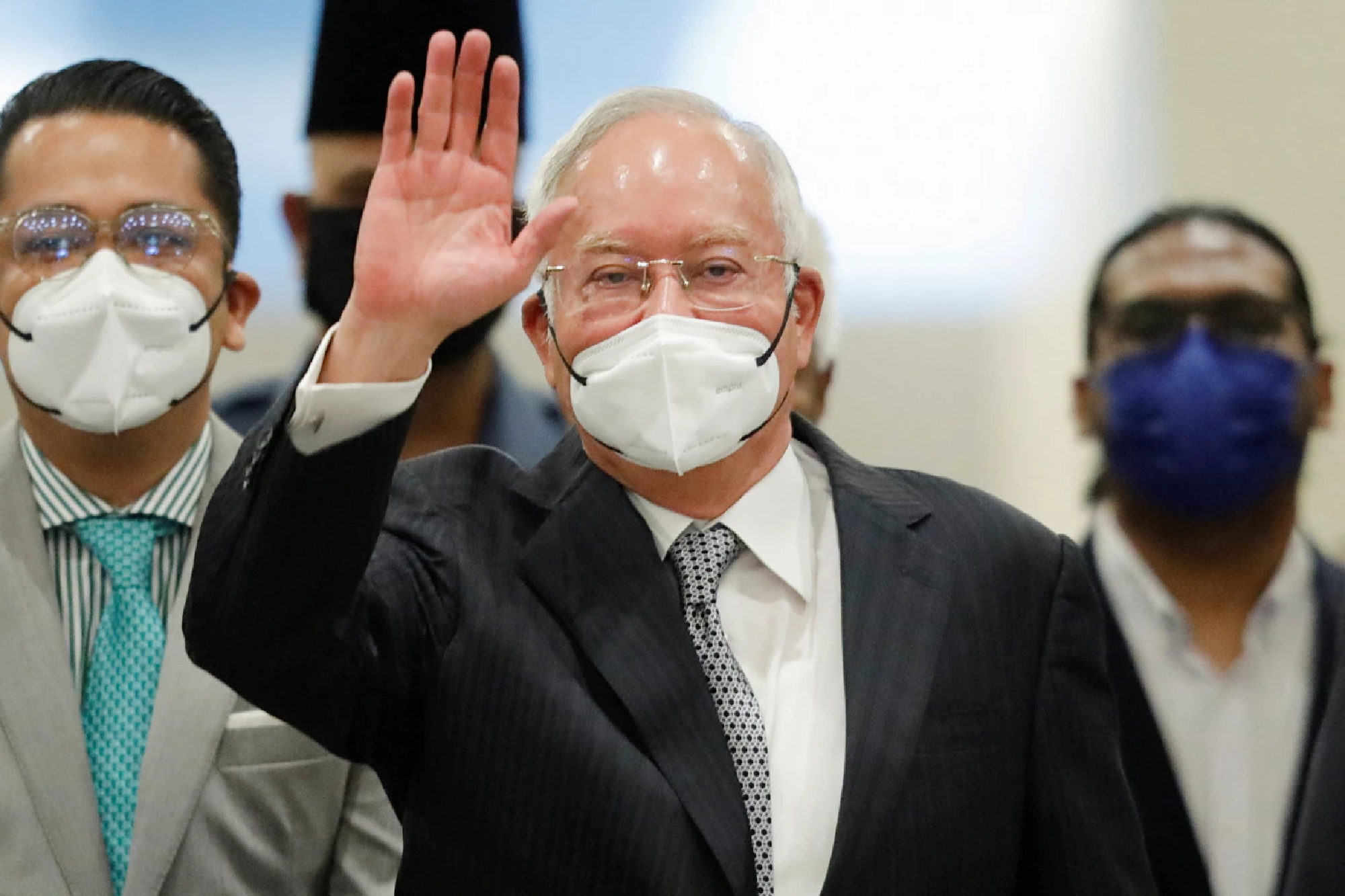
Former Malaysian prime minister Najib Razak has penned a “farewell” note to his family, saying he chose public service 46 years ago which took him away from his family.
“My years have gone by dedicated to people, public service, politics, a sacrifice I chose and I made, a journey which was joyous but unfortunately I overlooked and could not always be there for you,” said Najib in a Facebook post on Tuesday.
“All these challenges which bore fruit brought a smile to my face, while some did not, but it was all a big sacrifice with years and time passing by.”
He said he held steadfast to the teachings of Islam and the “journey was destined by God and was waiting for justice and judgement in the court of end times”.
“Hopefully God protects and blesses our family with health, longevity and eternal peace,” he added.
On Tuesday, Najib became the first former prime minister in the country’s history to be sent to prison after the Federal Court dismissed his final appeal.
On July 28, 2020, the Kuala Lumpur High Court sentenced Najib to 12 years in jail and fined him MR210 million (1.69 billion baht) after he was found guilty of seven charges of criminal breach of trust, money laundering and abuse of position in a MR42 million SRC International case.
The Star
Asia News Network
Asia News Network: The Nation (Thailand), The Korea Herald, The Straits Times (Singapore), China Daily, Jakarta Post, The Star and Sin Chew Daily (Malaysia), The Statesman (India), Philippine Daily Inquirer, Yomiuri Shimbun and The Japan News, Gogo Mongolia, Dawn (Pakistan), The Island (Sri Lanka), Kuensel (Bhutan), Kathmandu Post (Nepal), Daily Star (Bangladesh), Eleven Media (Myanmar), The Phnom Penh Post and Rasmei Kampuchea (Cambodia), The Borneo Bulletin (Brunei), Vietnam News, and Vientiane Times (Laos).
Intense heat waves have hit many parts of the world, including the United States, many European countries, East and Central Africa, India, Pakistan, Chile, the Republic of Korea and southern China.
Very high temperatures combined with rain shortfall have caused severe droughts, lowered water levels in rivers and reservoirs, and hastened the melting of glaciers in many parts of the world, which could seriously affect global grain output and, along with the lingering COVID-19 pandemic, the Russia-Ukraine conflict, and high global inflation and economic downturn, exacerbate food security risks.
According to the UN Food and Agriculture Organization’s Crop Prospects and Food Situation, issued last month, precipitation in Somalia, northern and eastern Kenya and southern Ethiopia was unusually low from March to May, leading to crop failure. As a result, cereal production in Somalia is expected to be 40-60 per cent below average.
In pastoral areas, dry weather has been hampering the regeneration of pastures and the replenishment of the underground water table, severely affecting herds and causing widespread livestock deaths. In fact, Ethiopia has lost about 2.5 million animals, Somalia 3 million and Kenya more than 1.5 million, and the figures are expected to increase in the coming months
Worse, by the end of June, the number of food-insecure people in Kenya, Somalia and southern Ethiopia had reached 16.5 million, up 80 per cent year-on-year.
But Africa is not the lone victim of the high temperatures and heat waves. Extreme heat and widespread droughts have seriously affected agricultural production in the European Union, according to the US Department of Agriculture. In the 2022-23 market year, corn production in the EU is expected to decline by 15.5 per cent to 60 million tons — 10 per cent below the past five years’ annual average. And the wheat output of 132.1 million tons is expected to be 4.5 per cent lower year-on-year.
Wheat output in India and Pakistan, too, is likely to decline — by 6 per cent and 3.9 per cent, respectively — while corn output could fall by 4.6 per cent and 6.3 per cent.
As such, food prices are expected to rise further in the fall, exacerbating the cost-of-living crisis.
As for China, the summer grain harvest this year was 147 million metric tons, up 1 per cent year-on-year. But the July-September period is critical for fall grain output, and the eastern, southern and southwestern parts of the country have been experiencing unusually high temperatures since July, a trend that meteorologists say is likely to continue.
According to the Ministry of Water Resources, drought has affected 32.99 million mu (2.2 million hectares) of arable land, 2.46 million people, and 350,000 farm animals in nine provinces, including Anhui, Jiangxi, Hubei, Hunan and Sichuan provinces, and Chongqing municipality. To deal with the situation, the Ministry of Agriculture and Rural Affairs has dispatched provincial liaison groups and scientific and technological experts to key fall grain-producing areas, especially those severely affected.
Also, on Aug. 11, the State Flood Control and Drought Relief Headquarters launched a four-level emergency response mechanism to better manage drought-resistant water sources, implement emergency water supply measures, and ensure water supply for irrigation, in order to minimize the effects of the dry weather on agriculture. Also, the central finance and disaster relief authorities have released about 500 million yuan to support drought relief work.
However, high temperatures are not exceptional this year. As a matter of fact, extreme heat could become the new normal, with more frequent, longer-lasting heat waves. The UN Intergovernmental Panel on Climate Change has warned that if global temperatures rise by 1.5 degrees Celsius, heat waves will increase, and summers will be longer and winters shorter. And if global temperatures were to rise by 2 C, extreme heat could cause serious health issues both for humans, agriculture and livestock.
Besides, studies show that adapting to and fighting climate change is becoming increasingly costly, with Africa facing the biggest threat to food security.
So China, while intensifying efforts to cope with extreme heat and ensure a bumper grain harvest in the fall, should play a bigger role in global food security governance and strengthen cooperation with the international community to minimize the negative impacts on global food security.
First, there is an urgent need for the international community to provide assistance where needed including supplying food to the affected regions in Africa, establishing social safety nets, and safeguarding the livelihoods of poor families, given the funding gap in the World Food Programme this year — the WFP needs $22.2 billion to help 152 million people in need but is facing a fund shortage.
Second, the Chinese authorities should strengthen research and development and increase investment in green technologies, and climate-resistant crops and strengthen management. Chinese scientists have already developed new strains of heat-resistant and higher yield rice, The high-temperature resistance genes are already conserved in other major crops, such as wheat, corn, soybean and vegetables, and are valuable resources for breeding high heat stress-tolerant crops to reduce crop losses caused by rising temperature.
Third, infrastructure construction should be expedited to improve “drought irrigation and flood drainage” during extreme weather events, so crop output is not affected.
Fourth, the authorities also need to take measures to improve the agriculture and food production systems in order to reduce greenhouse gas (GHG) emissions, because the global agriculture and agri-food sector account for a third of the total GHG emissions.
Fifth, agricultural insurance and green finance should be used to strengthen climate risk management and safeguard agriculture. For example, China’s central financial agricultural insurance premium subsidy of 33.3 billion yuan ($4.8 billion) in 2021 helped protect farmers against natural disasters, allowing them to be better cope with climate risks.
Fan Shenggen and Zhang Yumei
China Daily
Asia News Network
Fan Shenggen is the dean of, and Zhang Yumei is a professor at the Academy of Global Food Economics and Policy, China Agricultural University.
The views don’t necessarily reflect those of China Daily.
Asia News Network: The Nation (Thailand), The Korea Herald, The Straits Times (Singapore), China Daily, Jakarta Post, The Star and Sin Chew Daily (Malaysia), The Statesman (India), Philippine Daily Inquirer, Yomiuri Shimbun and The Japan News, Gogo Mongolia, Dawn (Pakistan), The Island (Sri Lanka), Kuensel (Bhutan), Kathmandu Post (Nepal), Daily Star (Bangladesh), Eleven Media (Myanmar), The Phnom Penh Post and Rasmei Kampuchea (Cambodia), The Borneo Bulletin (Brunei), Vietnam News, and Vientiane Times (Laos).
A Delhi-based startup has invented an anti-pollution helmet with a bluetooth-enabled app to enable local bikers cope with low air quality, especially in the winter months.
The helmet titled Puros, developed by Shellios Technolabs, is integrated with air-purifying accessories that include patented innovations of the startup — a brushless DC blower fan, high-efficiency particulate air filter membrane, electronic circuit, and micro-USB charging port integrated into the helmet.
The purifying system at the back of the helmet picks up all particulate matter coming from outside and cleans the air before it reaches the biker.
The startup received seed funding from the Department of Science and Technology and was incubated at Science and Technology Entrepreneur Park Noida.
They have signed commercialisation deals with leading original equipment manufacturers (OEMs) for the helmet. The product, at Technology Readiness Level (TRL) level 9, has been granted utility patent and is now being sold in all parts of the country for Rs 4,500 (around 2,200 baht).
The end-users of the product include individual riders all over India. Shellios has partnered with Royal Enfield Motorcycles for the next version to commercialise the product.
The founders of Shellios Technolabs hit upon the idea on realising the challenges faced by bikers during the air-quality crisis that Delhi faces in the winter months.
“We were disturbed by the health impacts of the air quality on the people, especially the millions of two-wheeler riders who were having prolonged daily exposures and that too, to a double whammy of particulate matter and vehicular emissions in the air that they breathe,” said Amit Pathak, one of the founders.
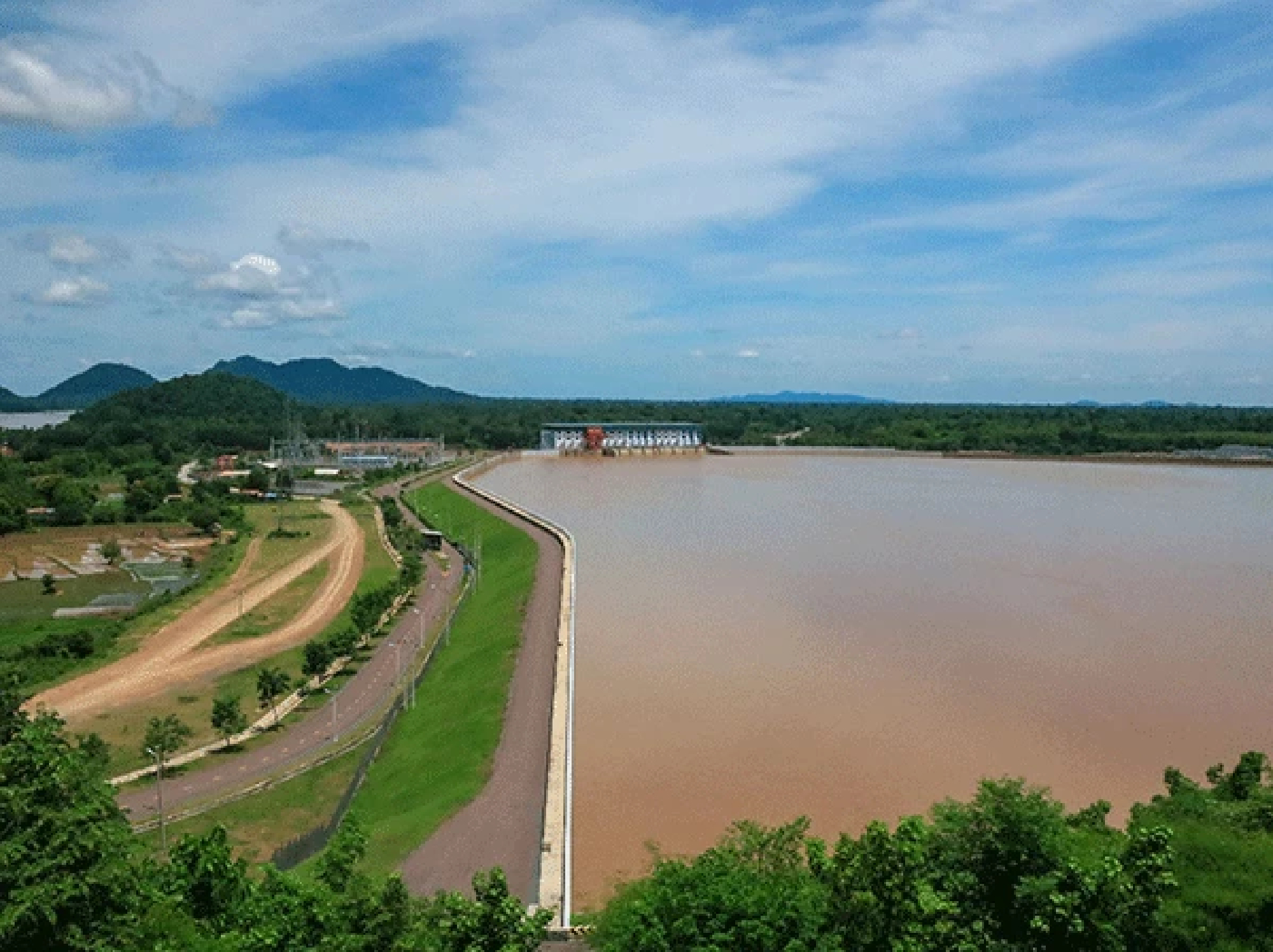
Two hydropower projects along Southeast Asia’s most important river have had a measurable, but moderate, impact on water flow, sediment and fisheries, according to preliminary findings of a report by the Mekong River Commission (MRC) released last week.
With roughly one year of monitoring data, the MRC says it’s still very early in the process to draw any conclusions. A multinational team of investigators for the MRC-Joint Environmental Monitoring (JEM) is testing protocols that measure five key indicators of the river’s health, namely hydrology, sediment, water quality, aquatic ecology, and fisheries.
By testing this at two relatively new hydropower projects – the Don Sahong and Xayaboury – the MRC aims to create monitoring methods and standards that all hydropower operators on the Mekong mainstream will follow in the future.
Among its most significant findings, the monitoring teams observed that the overall river flow patterns did not change much.
The MRC stated that the river’s ecological health was “good” at upstream dam sites, “moderate” within the dam impoundment sites, and “moderate” downstream of both dams. Water quality remains “within human health thresholds”.
Once water passes through the dams, “there is little evidence of change in downstream water quality.”
The monitors also detected some daily water level fluctuation downstream of the Xayaboury project in Laos – which could affect the ecosystem. However, this didn’t occur downstream of the Don Sahong dam.
Finally, the team observed some changes in fish diversity upstream of Xayaboury, with some stability from 2017 to 2019 and a reduction in 2020. Downstream of the reservoir, diversity remains high.
On the other hand, fish catch seems stable, with a high value reported in 2017, lower in 2018-2019 and higher again in 2020.
Around Don Sahong, though, monitors observed puzzling findings, with a fish catch decline in northern Cambodia, but an increase immediately downstream of the dam.
“We must understand the scope of our challenges and identify the most effective methodology to measure it,” said the MRC Secretariat CEO Dr Anoulak Kittikhoun.
“While this report sheds some light on the impact of hydropower, it’s too early to attribute every impact to the dams. Climate change and other developments are also factors.”
Overall, this Joint Environmental Monitoring report is part of a broader effort by the MRC – which represents Cambodia, Laos, Thailand and Vietnam – to strike a balance between the economic and societal benefits of hydropower.
For this JEM pilot project, a diverse team of monitors tested their protocols for about one year, after Covid 19 caused significant delays.
Their report will likely become a foundation for both future policies and monitoring activities. As the report itself states, their findings can shape future hydropower projects “siting and design, prediction of changes relating to the project operation, and development, application and evaluation of mitigation and management measures”.
It can also provide a “basis for constructive discussions” between riverine communities and MRC members.
Vientiane Times
Asia News Network
Asia News Network: The Nation (Thailand), The Korea Herald, The Straits Times (Singapore), China Daily, Jakarta Post, The Star and Sin Chew Daily (Malaysia), The Statesman (India), Philippine Daily Inquirer, Yomiuri Shimbun and The Japan News, Gogo Mongolia, Dawn (Pakistan), The Island (Sri Lanka), Kuensel (Bhutan), Kathmandu Post (Nepal), Daily Star (Bangladesh), Eleven Media (Myanmar), The Phnom Penh Post and Rasmei Kampuchea (Cambodia), The Borneo Bulletin (Brunei), Vietnam News, and Vientiane Times (Laos).





 SootinClaimon.Com