Ridding Bangkok’s pollution for good

ศาสตร์เกษตรดินปุ๋ย : ขอบคุณแหล่งข้อมูล : หนังสือพิมพ์ The Nation

http://www.nationmultimedia.com/detail/Economy/30364758
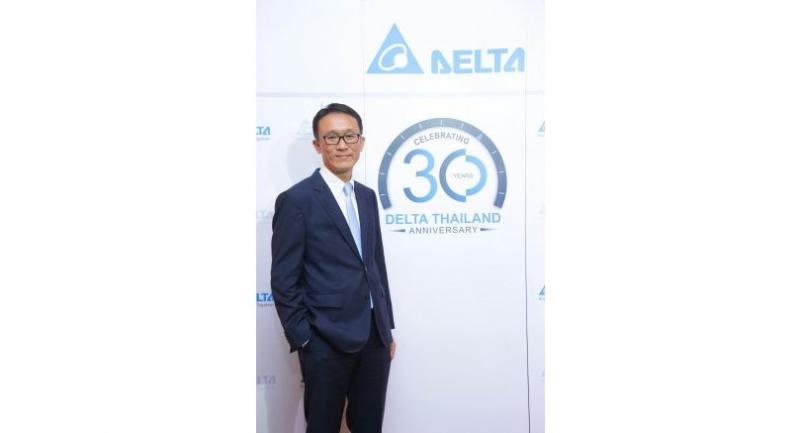
Curtis Ku
Curtis Ku

Ridding Bangkok’s pollution for good

Economy February 26, 2019 01:00

By CURTIS KU
SPECIAL TO THE NATION

WHILE BANGKOK was in the throes of its latest air pollution crisis, it seemed any idea, no matter how far-fetched, was worth considering to ease discomfort and protect the public. Given the serious health risks posed by inhaling PM2.5 particles, who can blame the authorities for seeking quick fixes to clear the smog that only gets thicker every year?

And now that Bangkok’s air is more breathable, largely thanks to shifting winds, it’s worth looking past these short-term solutions to examine both the roots of the problem and how decision makers can help improve our city’s air quality over the long term.

I believe the memory of Bangkok’s smog crisis remains fresh enough – or foul enough – that everyone will respond positively towards efforts to counter future calamities. With that in mind, we can draw on the success of others who have faced similar challenges.

China’s example

China’s ongoing battle with air pollution is a good example because the scale and severity of its problem was beyond that of nearly any other country, necessitating a similarly large-scale response. During the “airpocalypse” in the winter of 2013, the air quality index (AQI) in several Chinese cities was regularly in the danger zone, with Beijing at hazardous levels of up to 500, due to a decades-long policy of “grow first, clean up later”.

Following public outcry, international concern and mounting evidence that pollution was hindering economic growth, the Chinese government declared a “war on pollution”. This began with a series of initiatives that targeted the causes of pollution, including lax regulations for factories and construction sites and the high numbers of private cars on city streets.

To cut emissions, the Chinese government cracked down on “dirty” vehicles and replaced old buses and police cars with electric models while expanding public transit networks. They also installed sensors all around the country to monitor levels of pollutants so that citizens could keep track and report offenders.

As a result, many of China’s major cities have seen marked huge drops in pollutants in just a few years, including a 40 per cent decrease in Beijing. China now produces nearly half of the world’s electric vehicles (EV), with sales increasing due to a mix of enforced standards, subsidies for manufacturers, and consumer incentives such as removing the licence-plate fee for new EVs, which can cost nearly Bt500,000 in Shanghai.

The struggle for blue skies in China is far from over, but the country has made a promising start that others can learn from, including Thailand.

The Road to Transformation

Much of the challenge of fighting pollution is simply recognising the unique problems that we face here. While North European countries like Norway may have gone further, I’ve used China’s example to show that sufficient will is able to overcome even the most immense obstacles.

Like Beijing, vehicle exhaust is the largest contributor to Bangkok’s pollution. This is partly due to the city’s heavy traffic congestion, which forces drivers to spend time idling and emitting exhaust. It’s also due to the high prevalence of large diesel vehicles driving through the city centre, which cause further traffic problems and emits even more pollutants than petrol vehicles.

Widespread adoption of EVs has the potential to make a big difference, but everyone needs to help make the shift to green transportation happen. If Thailand is to meet its goal of 1.2 million electric vehicles on the road by 2036, it may require both Chinese-style subsidies for manufacturers (which will help lower prices) and European-style credit or tax breaks for consumers on both EV purchases and trade-ins of internal combustion engines vehicles. While this may have high up-front costs, it can improve the quality of life for Thais and cement the Thai auto industry’s growth as a regional hub.

All of those EVs will also require more supporting infrastructure. The network of public EV charging stations in Thailand is growing, but we will need many more to support nationwide electrification. To help us get there, businesses that install EV chargers, for customers or employees, need to be supported through incentives such as tax credits.

While electrification will provide cleaner transportation, ideally much of the power generation should be sustainable. Thailand’s plentiful sunshine makes solar power an attractive renewable energy source. Various smart city projects throughout the country are generating and using renewable energy, but the authorities can take the next steps to create incentives to encourage selling to the grid and among “prosumers” (P2P).

Towards a cleaner Thailand

Thailand has a lot to gain from cleaning up. Healthy people work better, live longer, and require less care. Air quality can make a huge impression on visitors to a country that depends on its tourism industry for up to 20 per cent of GDP.

Delta Thailand has staked the future of our business on Thailand’s sustainable development. We’ve designed and built ultra-efficient EV charging solutions that make EVs a convenient and affordable method of transportation.

And we hope to work with Thailand’s decision makers to build nationwide public charging networks-as we have in India and Europe.

Like Delta, many factories in Thailand are using rooftop solar power to cut polluting emissions and boost energy savings. Delta’s solar power solutions are powering green factories and can combine with our energy storage to offer flexible grid support. And I believe the public is ready to embrace our indoor air quality solutions that enrich the lives of people around the world with clean air ventilation and PM2.5 filtration for homes.

But we need support from decision makers to accelerate change. And so I hope that we will see Thai authorities using the recent pollution crisis as a learning opportunity as they consider the future of Thailand – and proactively choose innovative sustainable solutions that can clear up Bangkok’s air for good.

Curtis Ku leads the renewable energy and energy storage solutions and EV charging solutions businesses at Delta Electronics Thailand. Delta has installed EV charging stations in various locations in Thailand and plans to rapidly expand its charging network across the country.

Nanotec joins Japan partners for advanced cancer research

ศาสตร์เกษตรดินปุ๋ย : ขอบคุณแหล่งข้อมูล : หนังสือพิมพ์ The Nation

http://www.nationmultimedia.com/detail/Economy/30364759

Wannee Chinsirikul, Nanotec’s executive director under the National Science and Technology Development Agency (NSTDA)

Nanotec joins Japan partners for advanced cancer research

Economy February 26, 2019 01:00

By The Nation

An agreement between the National Nanotechnology Centre (Nanotec), University of Tokyo and iCONM (Innovation Centre of NanoMedicine) will see increased use of nanomedicine technology for cancer therapy, as well as enhancing the expertise of a Thai research team for nanomaterial development in a close collaboration with Japan Bridgestone Corporation.

Wannee Chinsirikul, Nanotec’s executive director under the National Science and Technology Development Agency (NSTDA), said the Thai researcher team discussed ongoing collaboration to develop innovative precision nanomedicine for cancer therapy, in a meeting with researchers from iCONM and University of Tokyo. Nanomedicine-based cancer therapy is one part of a policy for creating a smart health social platform.

The meeting discussed related leading-edge science and technology, with a focus on the developments related to terminating cancer cells by use of a drug delivery system that uses nanoparticles to store the drug. By this means, the treatment precisely attacks the cancer cells, with highly positive results and fewer side effects for patients.

“We have agreed to exchange researchers from both institutes to boost cooperation on health and medicine development,” Wannee said. “Progress was made after the Thai Minister of Science and Technology made a visit to iCONM last year.” The bilateral collaboration on nanotechnology development will be very useful for medical science in Thailand, she added.

Moreover, Nanotec’s executives, researchers and private companies met with Japan Bridgestone Cooperation company. They focused on nanomaterial development to improve services for various industry sectors and on increasing product value, together with environmental protection from recycling technology.

“Nanocoating is one example that could be applied for solar cells, as well as other products. It is also useful for soft robotic research and development, especially the development of polymer and rubber for increasing a robot’s flexibility. That technology could be further developed for artificial organs in the future,” she added.

Other research by Carbano regarding adjusting the structure of radioactive materials to bring them in line with industry’s requirements, is done based on nanotechnology.

The Nanotec team was led by Professor Dr Pairash Thajchayapong, chairman of Nanotec executive board, last month attended the 1st University of Tokyo-iCONM-Nanotec Joint Research Meeting on Precision Nanomedicine hosted by the University of Tokyo and the Innovation Centre of NanoMedicine (iCONM).

2019: the year of choices for Asean bond markets

ศาสตร์เกษตรดินปุ๋ย : ขอบคุณแหล่งข้อมูล : หนังสือพิมพ์ The Nation

http://www.nationmultimedia.com/detail/Economy/30364760

Aaron Gwak, head of capital markets/Asean for Standard Chartered Bank

2019: the year of choices for Asean bond markets

Economy February 26, 2019 01:00

By SPECIAL TO THE NATION

IF JANUARY developments are any to go by, 2019 looks to be a year of heightened volatility with risk themes across rates, trade and general economic growth continuing to ebb and flow in the global financial markets. But rather than playing it safe, the availability of choices will be the bond market’s new best friend in this fluid environment.

For Asean bond markets to stand out, there needs to be both an availability of varied bond deals for investors and a wider access to debt financing options for issuers. The year ahead will show us how a greater abundance of choices can benefit portfolios and balance sheets.

Intra-Asean issuances and regional bond deals denominated in the G3 currencies (US dollars, euros and yen) are expected to feature strongly. In 2018, G3 bond deals as a proportion of overall bond funding in the region rose to 37 per cent from 27 per cent in 2013. Having a balanced mix of access to both local- and foreign-currency bonds allows borrowers to reach a bigger group of institutional and retail investors.

In turn, more consistent debt offerings by established private companies and larger state-owned enterprises in Asean could build a virtuous cycle that leads to the region’s bonds being top of mind for investors. The wider selection, be it in sectors, yields, ratings, or currency exposure, is set to further deepen the liquidity pool of investors by attracting greater interest from home-grown pension funds, insurers and asset managers.

As the region’s growth outlook remains robust, supported by domestic consumption, retail investors will also become a fast-growing group in the bond market. Take for example Vietnam, where greater prosperity runs through every aspect of the economy. The development of its retail bond market could become a strong force to be reckoned with for neighbouring countries such as the Philippines and Singapore. Still, we expect a strong repeat of retail demand in these markets. In Singapore, there was a significant retail play last year with high quality issues such as those by Astrea IV and Temasek. Bond issues by Philippine banks, with their strong name recognition and credit profile, have also been highly sought after by retail investors.

A reliable and stable benchmark in government bonds will also spur more transparency in credit pricing. Government bonds form an important benchmark in many Asean local-currency markets, where issuers price at a spread over the respective government yields.

To ensure that government bonds are an effective benchmark for credit products, the various initiatives by local regulators have an important role to play in creating diverse products and hedging instruments to further instil stability in local-currency government bonds.

In 2019, regional economic development and global initiatives will bode well for the development of Asean’s bond markets. Investors can expect new names from within Asean or the international scene. Last year, Standard Chartered successfully brought Laos’ power operator EDL-Generation to Thailand. Such cross-market flows will become a bigger theme this year.

New firsts could also dominate the markets. The International Finance Corporation (IFC) made its debut in the onshore Philippine bond market by issuing peso-denominated green bonds in June 2018. As sustainable development becomes more embedded in government policies and corporate practices, expect to see more of such interest in the region.

Furthermore, with China’s bond markets opening up further, there will be more choices coming out by way of Panda bonds. The Philippine government’s landmark Panda bond transaction last year could see other followers from the region.

Choices will be the theme for Asean bond markets in 2019. But choices are only as good as the quality of the options and investors’ ability to discern among them. Standard Chartered, one of the leading foreign banks in the Asean bond market, and other financial institutions must continue to add value by bringing regional and international best practices into the region. Only then can our funding pool grow deeper and more liquid. And now the choice is for you to take.

AARON GWAK is head of capital markets/Asean for Standard Chartered Bank.

61% of Thai economy to be ‘digitalised’ by 2022: IDC

ศาสตร์เกษตรดินปุ๋ย : ขอบคุณแหล่งข้อมูล : หนังสือพิมพ์ The Nation

http://www.nationmultimedia.com/detail/Economy/30364741

x

61% of Thai economy to be ‘digitalised’ by 2022: IDC

Economy February 25, 2019 19:01

By The Nation

IDC on Monday unveiled its top predictions for Thailand’s information-technology industry for this year and beyond, predicting that by 2022 more than 61 per cent of the country’s gross domestic product will be digitalised.

By that time, growth in every industry will be driven by digitally enhanced offerings, operations and relationships, driving US$72 billion (Bt2.25 trillion) in IT-related spending from 2019 through 2022, the Thai arm of the US-based market-intelligence company said.

IDC believes the digitalised economy will lead to more intense competition, especially when digital disruptors are heavily penetrating the local market.

Therefore, it urges business leaders to embrace emerging technologies in order to gain opportunities with the rise of the new digital-transformation economy.

Local organisations should move towards becoming digitally determined entities, which are organisations that demonstrate the ability to visualise how the markets and customers will change and reinvent themselves to better respond to the needs of these future stakeholders through new and emerging technologies, capabilities and business models.

“The race to reinvent is inevitable, and we foresee a steady growth in adoption of emerging technologies in the country, mainly because Thailand is working to improve economic growth by shifting its economy from an industry-driven country to one that is driven by high-tech innovations,” said Anchalee Sudechawongsakul, software market analyst for IDC Thailand.

“Innovation will continue to disrupt every industry and business leader should focus on technologies that enable business outcomes. This is the right time to realise that enabling the digital industry will drive other industries to grow as well,” the analyst added.

PLENTY OF FACTORS TO ENABLE SET GAIN GROUND

ศาสตร์เกษตรดินปุ๋ย : ขอบคุณแหล่งข้อมูล : หนังสือพิมพ์ The Nation

http://www.nationmultimedia.com/detail/Economy/30364673

x

PLENTY OF FACTORS TO ENABLE SET GAIN GROUND

Economy February 25, 2019 01:00

We remain positive on the Thai stock market, targeting the SET Index at 1,750 points due to consistent economic recovery, improved domestic demand and easing macroeconomic pressure including the US yield curve, progress in the US-China trade negotiations and rise in crude prices.

The SET Index is currently not expensive with average market price to earnings ratio in 2019 and 2020, based on Bloomberg consensus, at 14.7 and 13.5 times. We believe the SET Index has risen from its bottom of 1,570 points and investors who bought at that level have received risk compensation.

We expect the SET Index to be relatively steady until the result announcement period passes. Net profit combined for the fourth quarter of 2018 decreased to Bt62.5 billion, down 29 per cent year on year, and by 32 per cent quarter on quarter, about 11 and 18 per cent respectively.

So far, about 85 listed companies have yet to announce their 4Q18 results. If more listed companies announced lower-than-expected net profit, the SET Index may not rise following its regional peers in light of the global situation.

The other risk to earnings results is the new accounting standard conditioning the period of payment to retired people – rising from 300 days to 400 days for those with working period equal or over 20 years. We expect this matter to impact listed companies at the level of 5 per cent if they had allowance provision of 30 per cent in Q418. The effect may be less if a company chose to deduct that part from the shareholders’ equities, as it will not affect its profit/loss reporting.

The major risks are a Fed with a hawkish view, failure in US-China trade talks and local unrest after the election even though the possibilities are low. – Passakorn Linmaneechote, deputy managing director/Research, Kasikorn Securities

UPSIDE LIKELY FOR BOURSE

Last week, listed companies accounting for about 65 per cent of total market capitalisation announced their 4Q18 earnings results, totalling Bt122 billion.

However, when all listed firms have announced their results, combined net profit may come lower than expected at Bt250 billion to Bt260 billion due mainly to stock losses as a result of drops in the prices of commodities, particularly oil-related items.

The market earnings per share (EPS) could slide to Bt103-Bt105, compared to an earlier estimate at Bt108.6. Meanwhile, signs for downward revision of the 2019 EPS target have not appeared. This year’s market EPS growth is forecast at 6.9-8.9 per cent to Bt112.2.

Foreign investors remain positive on the Thai bourse, as more capital has moved from safe-haven assets to risky assets amid signs of a return of foreign investment to the Asian stock markets. In light of lower-than-normal foreign holding of Thai stocks and the upcoming Thai election, there’s a chance for foreign capital, the most important drive, to flow into the Thai stock market. Externally, situations remain positive, especially the US-China trade talks.

The SET Index is estimated to see more upside than downside. It’s a good time to accumulate stocks. We pick stocks with high dividend yield such as LH, BBL, MAJOR, THANI and TTW. – Therdsak Thaveeteeratham, executive vice president / Research, Asia Plus Securities

Mega-projects to hike public debt

ศาสตร์เกษตรดินปุ๋ย : ขอบคุณแหล่งข้อมูล : หนังสือพิมพ์ The Nation

http://www.nationmultimedia.com/detail/Economy/30364679

Credit: EEC Office
Credit: EEC Office

Mega-projects to hike public debt

Economy February 25, 2019 01:00

By WICHIT CHAITRONG
THE NATION

2,342 Viewed

RISING government spending on mega-projects, which are deemed crucial to economic growth, will further increase the country’s public debt, economists said with some asking the military to be more efficient in its spending.

Continuous public funding of infrastructure projects – including the Eastern Economic Corridor(EEC), new roads and double-track rail systems nationwide – would entail an expansion of annual budget deficits in the medium term, said Pisit Puapan, senior economist on macroeconomic policy at the Fiscal Policy Office under the Finance Ministry. He was speaking at a seminar hosted by Kasikornbank last week.

Public debt is forecast to reach almost 49 per cent of gross domestic product (GDP) in 2023, up from the current level of 42 per cent, he said.

The country has long run fiscal deficits as government revenues have failed to meet investment demand, social welfare payouts and other expenditure.

For fiscal year 2020, starting from October 1, the government plans to spend a total of Bt3.2 trillion, compared to Bt3 trillion this year.

The government is expected to post a budget deficit of Bt450 billion, the same amount as the current fiscal year.

Investment will rise in order to make up for decades of under-spending since the 1997 Asian financial crisis, he said.

Public investment is forecast at Bt691.2 billion for fiscal year 2020, up from Bt660.3 billion in 2019.

However, Pisit was not concerned about the government’s fiscal policy and expected the next administration to continue the uptrend in investment despite the risk of higher public debt.

The Finance Ministry plans to cap public debt at below 60 per cent of GDP, a level considered prudential and safe.

Pisit refused to comment on Pheu Thai Party’s proposal to cut the military budget by 10 per cent, in order to prioritise government spending and provide more funding to startups and young entrepreneurs.

The proposal recently sparked heated debates among the public while drawing anger from the military top brass.

In a separate interview, Somchai Jitsuchon, research director at the Thailand Development Research Institute, said the next parliament should set up an independent panel on defence spending and military reform.

“It should hire credible individuals or a reputable international organisation to evaluate the professional capabilities of the Thai military,” he told The Nation.

Somjai Phagaphasvivat, a political scientist at Thammasat University, agreed with the need for a military reform, saying “it should be more accountable in spending and defence of the country”.

Somjai told The Nation he did not know the appropriate budget allocation for the military but stressed the need for reform given the changes in the global equilibrium.

“Although Thailand does not face any threat of war, it still requires a strong military to maintain the country’s bargaining power on the global stage”, he explained.

With regard to the proposals of some candidates for the upcoming election to cancel the annual military conscription, Somjai said recruitment of soldiers should be on a voluntary basis.

Meanwhile, Pisit of the Fiscal Policy Office said the economy faced the challenge of a global economic slowdown and its negative impact on Thai exports. The Finance Ministry forecast economic growth of 4 per cent this year, slipping from 4.1 per cent in 2018.

Kobsidthi Silpachai, the head of market and economic research at Kasikornbank, said at the same seminar that the baht would remain strong due largely to the country’s high current account surplus and under-investment.

However, he warned about the high level of Thai household debt – currently standing at Bt12.6 trillion or 206 per cent of their combined net annual income.

The country is fast approaching an ageing society and workers have limited time for higher incomes, he said.

Feet get retro

ศาสตร์เกษตรดินปุ๋ย : ขอบคุณแหล่งข้อมูล : หนังสือพิมพ์ The Nation

http://www.nationmultimedia.com/detail/shopping/30364787

Feet get retro

shopping February 26, 2019 12:10

By The Nation

adidas Originals’ women’s-exclusive Sleek silhouette steps out in four unique constructions, transforming the nostalgic design with a range of adjustments including zips, velcro, lace closures and even a mid-cut variation.

Built around the classic design and inspired by adidas’ extensive archive of tennis models, each shoe features a soft leather upper with perforated 3-stripe mark and a trefoil logo window, finished with stitched details and a rubber sole.

An original iteration offered in Pink/Red features a classic lace closure; a White/Yellow colorway switches out the laces for two large velcro straps; the White/Pink adidas Sleek Mid W edition extends the original silhouette into a mid-cut version with a contrast heel panel; and the adidas Sleek Z model features a zipper closure, rendered in a clean Pastel Blue colorway. The result is a four-model release that offers the versatile aesthetic of the Sleek silhouette in a variety of stylistic adjustments.

adidas Originals Sleek W series will be available from February 28 and adidas Originals Sleek Z will be released on March 28.

Find out more at http://www.Facebook.com/adidasTH

Pack up your troubles

ศาสตร์เกษตรดินปุ๋ย : ขอบคุณแหล่งข้อมูล : หนังสือพิมพ์ The Nation

http://www.nationmultimedia.com/detail/shopping/30364601

  • Witney backpack with blue palm print, 15,500
  • Black Rivas backpack, Bt17,900

Pack up your troubles

shopping February 23, 2019 01:00

By The Nation Weekend

Tumi keeps you organised on the road with its Voyageur line of bags and backpacks

TUMI COMBINES all elements of summer in its stylish collection of Voyageur bags and accessories made from versatile and lightweight nylon, perfect for urban women.

Purposeful and practical, the Witney backpack adds a fun element to the signature assortment such as a spacious interior that fits your cell phone, wallet and keys, while the exterior pockets, including a quick-access phone pocket, keep your daily essentials close at hand.

Witney Sunset backpack, Bt12,900

The Rivas backpack is back with an updated design and customised Personalisation Kits. This bag packs plenty of style and stuff with its softly structures design, featuring a multitude of organisational pockets, including a padded one for your laptop. It also has a handy side zipper to access the main compartment without opening the top.

Small yet roomy enough for workday and weekend essentials, the sleek Dori backpack comes with multiple pockets for ease, convenience, and total versatility like a separate 12-inch laptop compartment.

Dori backpack in African floral motif, Bt12,900

The key seasonal colours include ultramarine with silver hardware and sunset with gold hardware. An Africa Floral print evokes the continent’s abundant botany.

The Voyageur novelty assortment has been enhanced with a blue jacquard Shadow Palm print accented with chain and stud detailing, and Black Leather with gold hardware.

Bethany ultramarine backpack, Bt13,900

Tumi has branches at CentralWorld, Siam Paragon, Siam Discovery, Central Chidlom and Central Phuket Floresta.

Find out more at http://www.Tumi.co.th.

Pruksa reports Bt51.1-bn record sales

ศาสตร์เกษตรดินปุ๋ย : ขอบคุณแหล่งข้อมูล : หนังสือพิมพ์ The Nation

http://www.nationmultimedia.com/detail/Real_Estate/30364567

x

Pruksa reports Bt51.1-bn record sales

Real Estate February 22, 2019 14:22

By The Nation

Real estate giant Pruksa Holding registered record sales of Bt51.1 billion last year, while earnings reached Bt44.9 billion and profits were Bt6 billion, the company said in a press release on Friday

Supatra Paopiamsap, vice president at Pruksa Holding, said sales in 2018 were highest since the company was found 25 years ago.

“Last year total sales grew by 7.5 per cent, earnings grew by 2.2 per cent and profits grew by 10.4 per cent,” she said.

The company has a sales target of Bt54 billion this year, an increase of 5.7 per cent. The earnings target is Bt47 billion, an increase of 4.7 per cent. Supatra said growth would come from 55 new projects worth Bt68.1 billion to be opened in 2019.

Developer readies Bt5.19 bn for 10 residential

ศาสตร์เกษตรดินปุ๋ย : ขอบคุณแหล่งข้อมูล : หนังสือพิมพ์ The Nation

http://www.nationmultimedia.com/detail/Real_Estate/30364528

x

Developer readies Bt5.19 bn for 10 residential

Real Estate February 22, 2019 01:00

By The Nation

Listed property firm Chewathai Plc has set aside an investment budget of Bt5.19 billion for 10 residential projects worth Bt14.15 billion this year, the company’s managing director Boon Choon Kiat said yesterday.

Up to Bt3.26 billion will be used to acquire land with the balance of Bt1.93 billion on construction, he said.

The company expects its total revenue to reach Bt2.88 billion this year, or up 7.8 per cent from its total revenue of Bt2.67 billion in last year.

The company currently has a backlog (units already sold, waiting to be transferred to customers) worth Bt585 million, he said.