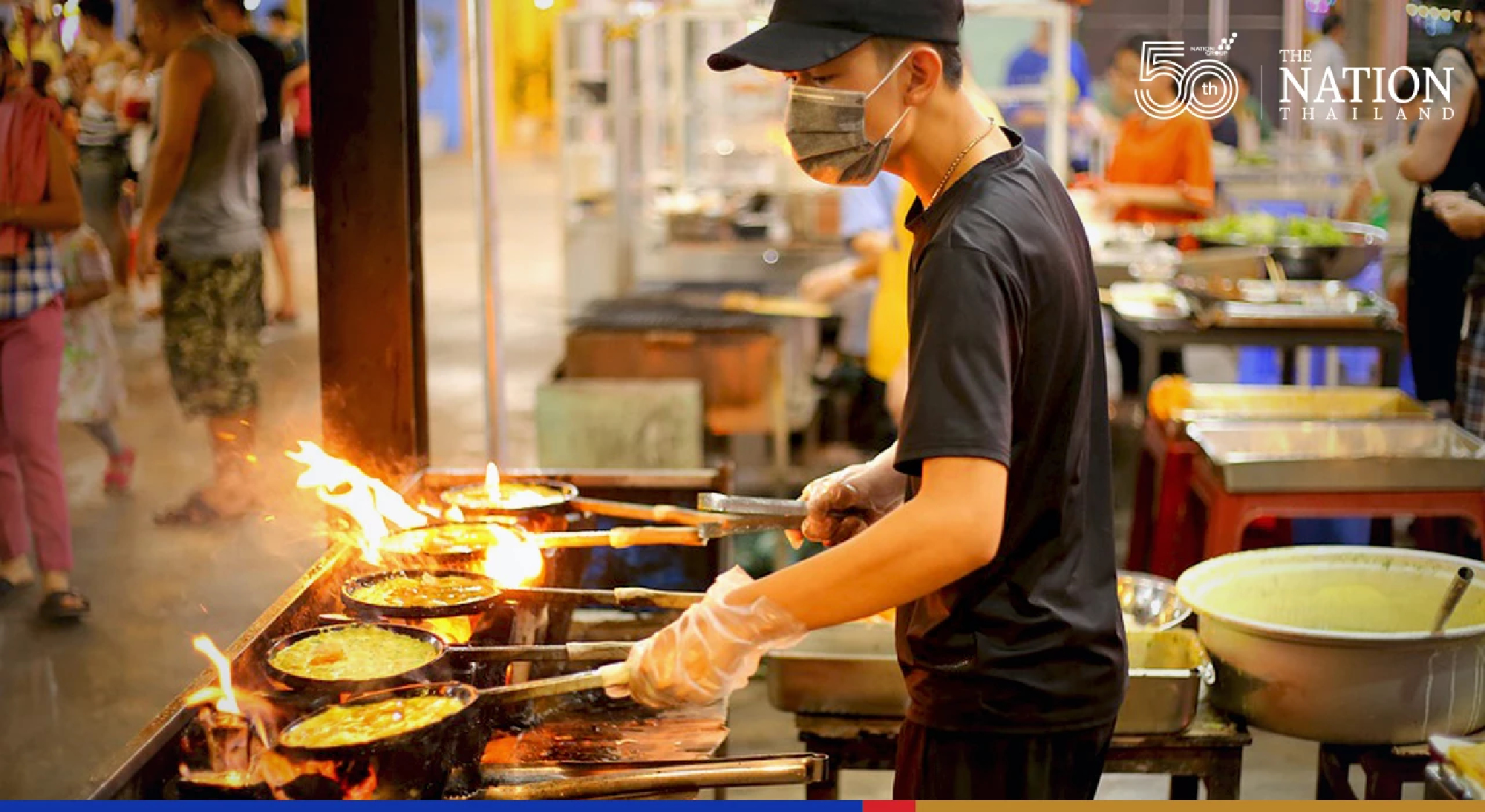
The price of cooking gas (LPG) will jump after March 31 when the government freeze expires, the Energy Ministry said on Monday.
Ministry permanent secretary Kulit Sombatsiri said the price of a 15-kilogram cylinder would be allowed to rise gradually from the current 318 baht to 333 baht and then 363 baht.
He added that low-income households would receive extra LPG subsidy via the state welfare card, with payments raised from 45 baht every three months to 100 baht. About 13.5 million households are registered for this scheme.
The Finance Ministry will fund 45 baht of the payment, with the remaining 55 baht sourced elsewhere.
The ministry is unlikely to provide subsidies for LPG use in vehicles.
Kulit said that every 1 baht increase in the LPG price would reduce the burden on the Oil Fund by about 9 million baht per day, or about 270-280 million baht per month.
The Committee on Energy Policy Administration has frozen the cooking gas price for the past two years to help people affected by Covid-19. Subsidising the price freeze has cost 23.56 billion baht.
The Public Debt Management Office reported on Monday that as of December 30, 2021, Thailand’s public debt stood at 9.644 trillion baht or 59.57 per cent of the country’s GDP.
The office reported on its website that public debt had risen by 20 billion baht in December compared to November, though the public debt-to-GDP ratio fell from 59.58 per cent to 59.57 per cent against the previous month. Thailand’s GDP expanded after the easing of Covid-19 restrictions, the office said.
Meanwhile, in the first three months of the 2022 fiscal year (October-December 2021) the government borrowed 5.874 trillion baht to service its public debt.
The office said the government had borrowed 873.17 billion baht under the 2020 Covid-19 situation decree that set the loan ceiling at 1 trillion baht for economic rehabilitation measures.
The government borrowed another 273.17 billion baht under the 2021 Covid-19 situation decree that set a loan ceiling of 500 billion baht within 2022.
The Monetary Policy Committee, chaired by Prime Minister Prayut Chan-o-cha, resolved in September last year to raise the public debt-to-GDP ratio from 60 per cent to 70 per cent.
At the end of the 2021 fiscal year (September 30), the Cabinet was informed that Thailand’s public debt stood at 9.34 trillion baht.
The Thai economy is likely to be severely affected by the ongoing tensions between Nato and Russia, Thai economists said on Monday.
US President Joe Biden has sent a signal to the North Atlantic Treaty Organization to accept Ukraine as a new member and the US has deployed over 3,000 troops in Poland and Germany.
Although the confrontation in eastern Europe is unlikely to develop into a full-scale war between Nato and Russia, the ongoing tension does not bode well for the global economy, which is still recovering from the impact of Covid-19, according to senior Thai economists.
Assoc Prof Dr Somchai Pakapatwiwat warned that if Russian President Vladimir Putin went ahead with his threat of strong retaliation in the event of Ukraine joining the Nato alliance, the global economy would be severely affected.
He said if Russia invaded Ukraine, as it has threatened it would, the United States and Nato nations would slap an economic boycott on Russia, causing a chain reaction in the global economy, pulling Thailand down as well, pointing to Thailand’s financial and trade ties with Russia.
The club of economic analysts of the Thai Bankers’ Association said Thailand’s economy could be affected in either of two scenarios.
In the first scenario, Russia invades Ukraine and retaliates against Nato member states by cutting off its gas supply to Europe — 46 per cent of European gas needs are imported from Russia.
Such a situation would lead to a spike in the prices of natural gas, coal and oil both in Europe and globally. Many businesses in Europe would have to close because of lack of energy.
The club also sees the prices of precious minerals, such as palladium, platinum, aluminium, copper, nickel and iron rising sharply in that scenario.
The club said the Thai economy would be affected by rising oil prices, that would add financial burden to the fund to control diesel oil price. Thai businesses that have to import goods which require precious minerals would see costs shoot up.
Thailand imports Bt152 billion worth of goods that use precious minerals as raw materials each year, and Bt7.7 billion worth of such goods are imported from Russia.
In the second scenario, Nato and the US retaliate against Russia by suspending all kinds of transactions with it. They would stop providing credits and loans to Russian banks as well as remove Russian banks from the international transaction alliance or SWIFT code.
This would cause very high inflation in Russia and the Russian rouble would be greatly depreciated. The situation would affect stock and bond markets and global gross domestic product would contract by 5 per cent.
Thai-Russian bilateral trade totalling Bt88 billion — Bt56 billion of imports from Russia and Bt32 billion exports — would be affected, they said.
The club added that the export and import of vehicles, rubber products, machines, vegetables and fruit, and electric appliances would be affected. Fewer tourists from Russia would visit Thailand because of the economic slump in their country, the club added.
Cross-border trade in 2021 expanded 30 per cent compared to the previous year, the Commerce Ministry reported last week, while setting a target of 5-7 per cent growth for 2022.
“The total trade of 1.71 trillion baht in 2021 represented a rise of 30.03 per cent, with exports rising 34.6 per cent to 1.03 trillion baht and imports up by 23.7 per cent to 684 billion baht,” said Commerce Minister Jurin Laksanawisit.
“The cross-border trade in 2021 has overwhelmingly exceeded the ministry’s target of 6 per cent expansion by five times,” he pointed out.
“This year we estimate the trade volume will continue to grow within the range of 5 to 7 per cent year on year. Exports are expected to amount to 1.08 trillion to 1.1 trillion baht,” Jurin said.
He said the factors that would contribute to an expansion in cross-border trade in 2022 include the continued recovery of global and regional economies from the impact of Covid-19, the weakening baht that would increase product price competitiveness, and the use of the newly opened China-Laos railway that would greatly help in transportation of farm products from Thailand to Vientiane and Chongqing – two of the biggest markets for agricultural products.
When divided by countries, the values of cross border trade with foreign neighbors are as follow:
Laos recorded 417.73 billion baht trade volume in 2021, increasing 39.31 per cent year on year
Malaysia recorded 346.6 billion baht, increasing 42.6 per cent
Myanmar recorded 122.08 billion baht, increasing 109.24 per cent
Cambodia recorded 144.9 billion baht, increasing 16.63 per cent
China recorded 194.82 billion baht, increasing 59.71 per cent
Singapore recorded 53.85 billion baht, increasing 51.49 per cent
Vietnam recorded 46.3 billion baht, increasing 5.03 per cent
“To further facilitate cross-border trade, the ministry will continue to work with government agencies and the private sector, both domestic and overseas, to locate potential buyers in new markets,” Jurin said.
“Furthermore, this year we expect to reopen more border checkpoints that had been shut to prevent Covid-19 from spreading.”
Of the 97 checkpoints that Thailand shares with Malaysia, Myanmar, Laos and Cambodia, only 48 are now open for cross-border trade. Jurin said he planned to reopen at least 12 more this year; four checkpoints are in Nong Khai, two in Chiang Rai, while Loei, Nakhon Phanom, Mukdahan, Ubon Ratchathani, Trat and Sa Kaeo have one checkpoint each.
“The ministry will continue to closely monitor the two risk factors that could hinder the expansion of cross-border trading: one is the situation now that the more transmissible Omicron is a major variant found in Thailand and neighbouring countries, and the other is the economic/political situation in Myanmar, especially the import control policy that aims to reduce the country’s deficit balance,” Jurin added.
The baht opened at 33 to the US dollar on Monday, unchanged from Friday’s closing rate.
The Thai currency is expected to move between 32.95 and 33.10 during the day and between 32.80 and 33.20 during the week, Krungthai Bank market strategist Poon Panichpibool predicted.
Poon said the baht is likely to move according to the market’s investment and may strengthen to the key support level of 32.80 to 32.90 if the market is in a risk-on state.
However, Poon said the baht will not go past the support level until basic factors in the country have recovered.
Moreover, foreign investors are waiting to sell the currency after it strengthens, while exporters are selling at the key resistance level of 33.20 to 33.30.
Meanwhile, the dollar may strengthen if the currency market is heavily volatile. The market is worried that the US Federal Reserve will raise the interest rate too much if the inflation numbers are higher than expected.
Former Bank of Thailand director Anusorn Thammajai on Sunday warned Thailand’s growing army of cryptocurrency investors that the digital assets could crash again in March.
Anusorn predicted another cryptocurrency crisis would hit next month as central banks move to taper quantitative easing and raise interest rates.
Last month, the price of cryptocurrencies plunged more than 40 per cent as investors fled to less volatile assets.
An eye-watering $1.35 trillion (44.5 trillion baht) has been wiped off the value of digital coins since November last year, according to CoinMarketCap.
“A cryptocurrency bubble will emerge at the end of March when liquidity in the financial market drops due to moves by central banks to taper quantitative easing and raise interest rates,” Anusorn said.
He warned investors who hold risky assets to pay extra careful attention in the second quarter this year.
He added that while cryptocurrency is helping to create a financial ecosystem in the digital economy, it also poses risks to financial and economic systems.
In a bid to promote Chanthaburi as the “City of Gems”, the Gem and Jewellery Institute of Thailand (GIT) held the International Chanthaburi Gems & Jewellery Festival from February 3 to 7.
Commerce Minister Jurin Laksanawisit, who presided over the opening, said his ministry has set up a Gems Road in the province to shed light on its history of gems production and trade.
“We expect this event to promote Thailand as a world-class gems and jewellery production and trade centre,” he said.
Meanwhile, GIT chairperson Nuntawan Sakuntanak said the festival will help stimulate the local market and become a key platform for gems and jewellery businesses to present their products and find local and foreign buyers.
She added that GIT in cooperation with the Department of International Trade Promotion had held an online business-matching event to pair up 102 gems and jewellery businesses with customers in 16 countries.
Provincial governor Sutee Thongyam also believes the fair will stimulate Chanthaburi’s gems and jewellery sector, especially during the high tourism season.
“We expect tourists during the Chinese New Year period as well as people visiting Khao Khitchakut to worship at Buddha’s footprint to attend the event, which will stimulate the economy,” he said.
According to Jurin, Thailand’s revenue from the gems and jewellery industry last year came up to 200 billion baht, 80 per cent of which came from exports.
He said the gems and jewellery sector is important to the country’s grassroots economy as 90 per cent of the industry are micro, small and medium enterprises, resulting in the employment of up to 1 million people nationwide.
Huawei launched the “Seeds for the Future” programme in Thailand for the first time in 2008. More than 215 universities students have participated in this programme after over 13 years.
Education has become more personalised and hybrid in the past decade. With new digital models emerging, intelligence and the cloud are increasingly critical, supported by fresh innovations in Information and Communications Technology (ICT) that are transforming the education industry.
According to a survey on Thailand’s digital life in 2020 and 2021, Thai people’s use of e-commerce has increased from 37 per cent to 76 per cent, and the ratio of people who work remotely has risen from 17 per cent to 30 per cent.
At the same time, the cloud adoption rate by corporates has rapidly increased from 26 per cent to 70 per cent. By 2030, digital economy is estimated to account for 30 per cent of overall GDP.
The fundamental role of digital education has been highlighted during the pandemic. There is no doubt that Covid-19 has impacted every field and the effects are certainly being felt in education.
In fact, over the last year or so, about 1.5 billion students — 90 per cent of all primary, secondary, and university level students worldwide — have been unable to attend their schools or campuses for at least some period. The urgent need for more equal, accessible, and advanced education resources has now become a global concern.
As Thailand is making strides to become the Asean digital hub, this period of disruption has been transformative as education providers have hurried to adopt smart technologies to ensure education continuity for all.
Supot Teachavorasinskun, dean of Engineering Faculty at Chulalongkorn University, emphasised at “Huawei Cloud and Connect 2022” (HCC), “Nowadays, the physical and the cyber world are integrated. We have to work with Huawei and other partners to integrate the digital world into every knowledge aspect for the lecturers and students. This is unavoidable.”
This trend was echoed by Kamol Keatruangkamala, executive vice president for information technology at King Mongkut’s Institute of Technology Ladkrabang. During the HCC event, he stressed that “Covid has accelerated the transformation. If we still think in the same way, in 10 years we won’t be able to maintain the university. So we have to disrupt ourselves with innovative technologies from leading companies like Huawei.”
Higher education in Thailand has become more popular while ICT investment has also increased significantly.
Huawei launched the “Seeds for the Future” programme in Thailand for the first time in 2008. More than 215 universities students have participated in this programme after over 13 years. In 2019, Huawei Asean Academy (Thailand) was established to further support the visionary Thailand 4.0 strategy which so far has provided upskilling and reskilling training to over 41,000 local ICT professionals and over 1,300 SMEs.
Huawei has also provided a number of joint solutions, such as smart campus, smart classroom, and online education solutions for more than 10 educational institutions and universities including top ranking universities in Thailand, such as Chiang Mai University, King Mongkut’s University of Technology Thonburi (KMUTT), King Mongkut’s Institute of Technology Ladkrabang (KMITL) and Srinakharinwirot University (SWU). These solutions have ensured that learning never ceases even during the pandemic.
In February 2019, the SWU campus network upgrade was completed. Huawei provided high-bandwidth and low-latency campus networks to improve the wireless network coverage and security, promoting infrastructure-based digital development, and setting a benchmark for campuses.
At the HCC event, Prasert Kanthamanon, senior vice president for Administrative Affairs and Chief Information Officer, KMUTT shared their collaboration with Huawei to make “KMUTT4Life” a reality.
According to Prasert, KMUTT will build a living lab to support endless learning for everyone. Sanya Setpityakul, chief information officer and assistant vice president of Dhurakij Pundit University, added that by Huawei’s expertise it builds a platform to maintain education in the video conference classroom.
Huawei said that it believes the key to a digital and sustainable future lies in a thriving talent foundation. Huawei Thailand’s CEO Abel Deng emphasised that by promoting proactive collaboration with educational institutions, Huawei advocates an ICT talent ecosystem that will benefit Thailand 4.0.
Pattanasak Mongkolwat, the dean of ICT at Mahidol University, expressed appreciation for this strategy. “Huawei has added practical ICT knowledge and practices to our ICT faculty expertise. I believe this will enhance our students’ ability to work and excel in the real world scenarios.”
For the first time since mid-2015, Facebook co-founder Mark Zuckerberg fell off the list of the world’s top 10 richest people when the shares of Meta plunged to a record-breaking low on Thursday.
The plunge swept away nearly US$30 billion from the 37-year-old’s net worth, bringing it down to $84.3 billion. He owns about 13 per cent of Meta.
This wiping away of $29.8 billion in a single day comes only second to the $35-billion hit Elon Musk took in November when he tweeted that he was selling 10 per cent of his stake in Tesla. According to Bloomberg, Musk lost another $25.8 billion last week.
Meta’s stock dropped when the company warned of weaker-than-expected revenue growth in the next quarter and that Apple’s recent privacy changes would cost it $10 billion, CNBC said.
The 26 per cent drop was Meta’s biggest single-day plunge and wiped more than $200 billion off its market cap which was also a record.
SiteMinder, an open-source hotel reservation software provider, recently published a list of 12 hotel booking websites that earned the most last year.
The top earners in 2021 were:
Booking.com
Agoda
Hotel websites (direct reservation)
Expedia Group
Hotelbeds
Traveloka
Trip.com
Global Distribution Systems
Mr & Mrs Smith
WebBeds – Destinations of the World
WebBeds – Sunhotels
DidaTravel
SiteMinder said the hotel booking trend in Thailand was moving in the same direction as globally. Hotels have generally been using online strategies and combining new and old methods to reach customers and earn more revenue.
These strategies focus on creating a balance between direct and indirect revenue, with direct reservation coming in third for two consecutive years as hotels invest in metasearch engines and convenient payment systems. Reservations directly with hotels has earned the highest revenue in 12 countries.
There were 29 new hotels on the list this year, reflecting hotels shift in focus when it comes to attracting new customers.
James Bishop, senior director of Global Ecosystem at SiteMinder, said hotels are adapting to the change in consumer behaviour and are happy to mix new methods with old guidelines.
Bradley Haines, regional vice president of Asia-Pacific at SiteMinder, added that the hotel environment has developed continuously. It is a good thing that business operators in Thailand have adopted new measures to attract both direct and indirect bookings.
“We saw a growing success of direct reservation, regional reservation platforms, and business-to-business room platforms last year. We also saw Mr & Mrs Smith rise to ninth place from 12th in 2020. This reflects the endeavour of local businesses to attract travellers with high-purchasing power and longer stays,” Haines said.
He added that operators must always analyse and evaluate online business strategies because the market is changing.