Five non-Asean members – China, South Korea, Japan, New Zealand and Australia – will do away with import tariffs on some products from Thailand and other Asean countries once the Regional Comprehensive Economic Partnership (RCEP) comes into effect on January 1, Department of Trade Negotiations director-general Auramon Supthaweethum said on Tuesday.
The RCEP is a free-trade agreement (FTA) among 15 Asia-Pacific countries – Thailand, Australia, Brunei, Cambodia, China, Indonesia, Japan, Laos, Malaysia, Myanmar, New Zealand, the Philippines, Singapore, South Korea and Vietnam.
It will be Thailand’s 14th FTA with other countries.
With 15 members and a market of 2.3 billion people, or 30 per cent of the global population, the RCEP is seen as the largest current FTA. Member states account for a whopping 33.6 per cent, or a third, of the world’s GDP and a third of global trade.
RCEP members to eliminate import tariffs on a host of Thailand-made goods
Auramon said Thailand, too, would eliminate import tariffs on more than 29,000 products for RCEP members.
She explained that Thailand would receive import tariff exemptions from five non-Asean countries as follows:
RCEP members to eliminate import tariffs on a host of Thailand-made goods
> China: 67.3 per cent of all products will be exempted from import duties, such as industrial products, optical components, wood, telephone components, computer parts, electrical components, petroleum products and polypropylene beads.
> South Korea: 61.5 per cent of all products will be exempted from import duties, such as petroleum products, washing machines, refrigerators, motorcycle components, photography equipment, signal transmission equipment, audio recording equipment parts, fuses, electric transformers, cotton and synthetic fabrics and sugar.
RCEP members to eliminate import tariffs on a host of Thailand-made goods
> Japan: 73 per cent of all products will be exempted from import duties, such as telephones, computer components, integrated circuits, printers, air-conditioners, cameras, video recorders, signal transmission equipment, aluminium doors and windows, electric wires, smoked rubber sheets and pet food.
> New Zealand: 64.6 per cent of all products will be exempted from import duties, such as car wheels, canned tuna, pet food, petroleum products, shampoo, vulcanised rubber, clothes and accessories, internal combustion engine parts, accumulators, wires, cables and wooden chairs.
RCEP members to eliminate import tariffs on a host of Thailand-made goods
> Australia: 75.3 per cent of all products will be exempted from import duties, such as air-conditioner components, canned tuna, refrigerators, washing machines, precious-metal accessories, car wheels, plastic bags, flavoured food, optical equipment, cosmetics, soaps, shampoos and juices.
The Cabinet on Tuesday approved an amendment to a Finance Ministry regulation relating to the foreign currency-exchange business under the Exchange Control Act.
“The amendment aims to increase the efficiency of the foreign currency-exchange business and convenience for customers,” said deputy government spokesperson Ratchada Thanadirek She said it would cover six aspects:
1. Licensed foreign currency-exchange businesses will be allowed to exchange currencies in other forms apart from banknotes, such as credit or debit cards issued by foreign banks. This means foreigners can now purchase the baht using their credit or debit cards.
2. New foreign currency-exchange business operators can register with the Bank of Thailand. In the past they had to obtain a licence issued only by the finance minister.
3. The obtained licence can now be shared between the head office and other branches of the business, while in the past businesses having several branches had to apply for a licence for each branch on a one-to-one licensing basis.
4. The business will be allowed to use revenue from foreign currency exchange for purposes other than selling to or depositing with a commercial bank, such as settling trade debts or selling to a third party.
5. Applicants seeking a licence for a treasury centre business must be a juristic person, while existing businesses registered by an individual will be able to use their licence for three years from the date this ministerial regulation takes effect.
6. Directors and major shareholders of foreign currency-exchange businesses must never have been jailed or sentenced to a jail term in offences relating to foreign currency exchange. This is to ensure the regulation complies with international anti-money laundering standards.
The baht opened at 33.14 to the US dollar on Wednesday, weakening from Tuesday’s closing rate of 33.11.
The Thai currency is likely to move between 33.00 and 33.20 to the greenback during the day, Krungthai Bank market strategist Poon Panichpibool predicted.
Poon said that the baht might fluctuate as foreign investors decreased their possession of baht while the moving average convergence divergence signalled that the baht is weakening.
Meanwhile, the gold price that was decreasing and dropped to the key support level of 1,780 to 1,800 dollars per ounce affected the baht heavily. Some investors are buying on dips caused the baht to weaken.
However, the baht will not weaken much because exporters are selling the dollar which caused the key support level of baht to be from 33.20 to 33.30 to the dollar.
The price of gold rose by THB50 in morning trade on Wednesday.
AGold Traders Association report at 9.28am said the buying price of a gold bar was THB28,150 per baht weight and selling price THB28,250, while the buying and selling price of gold ornaments is THB27,636.68 and THB28,750, respectively.
At close on Tuesday, the buying price of a gold bar was THB28,100 per baht weight and selling price THB28,200, while gold ornaments were THB27,591.20 and THB28,700, respectively.
The spot gold price on Wednesday morning hovered around US$1,793 (THB59,680) per ounce after Comex gold at close on Tuesday dropped continuously by $22.5, broke down psychologically significant level around $1,800, to $1,783.8 per ounce due to pressure from the rise in US government bond yields, including concerns that Jerome Powell’s second term as Federal Reserve Chair (Fed) will make the Fed likely to raise interest rates next year.
Krungsri Securities forecast the Stock Exchange of Thailand (SET) Index on Wednesday (November 24) would fluctuate between 1,635-1,655 points.
It said the index gained positive sentiment from rising oil price on the expectation that Opec+ would suspend its oil output hike plan to deal with several countries’ move to release their oil reserves.
“However, uncertainty over fresh Covid-19 wave in Europe, the fall in US Purchasing Managers Index and inflation crisis would cause fund flow volatility, resulting in pressure on index,” Krungsri Securities said.
It also recommended buying of the following companies’ shares as an investment strategy:
▪︎ HANA, KCE, TU, ASIAN, NER, EPG and XO, which benefit from the weakening baht.
▪︎ BBL, TTB, KTB, KBANK and BLA, which would benefit from the rising interest rate.
▪︎ BGRIM, GPSC and GULF, which will benefit from rising electricity tariff rate between January and April next year.
As of 10.20am, the SET Index rose by 7.15 points or 0.43 per cent to 1,653.57, witnessing a high of 1,655.49 and a low of 1,649.92 in opening trade.
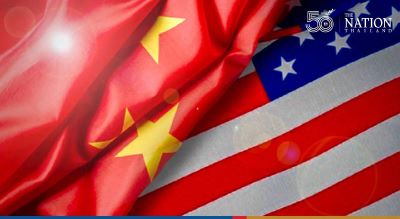
China pulled back on its already halting progress toward meeting its U.S. trade deal targets, slowing purchases of all types of goods covered by the agreement despite calls from the Biden administration for Beijing to adhere to its commitments.
China bought $9.5 billion worth of manufactured, agricultural and energy goods in October, bringing the total purchases to $210.4 billion since the trade deal was signed in January 2020, according to Bloomberg analysis of official Chinese data. Last month’s procurement was the slowest pace in a year, with China now having reached only 56% of the two-year target of $378.4 billion.
U.S. officials have recently increased their calls for China to abide by the agreement, though it’s unknown what steps it would take in response to Beijing failing to meet its goals. The trade targets expire at the end of next month, although it includes a sentence that both sides expect the increase in purchases to continue in “2022 through 2025.”
U.S. Commerce Secretary Gina Raimondo said in September that China isn’t abiding by its commitments and pointed to Beijing preventing the purchase of “tens of billions of dollars” of Boeing planes. U.S. Trade Representative Katherine Tai said last month that the administration would work to enforce China’s commitments in the trade deal.
Tai acknowledged earlier this month that China’s performance “hasn’t been perfect” and officials are working on their next steps.
“So what do we do about it? That’s the million-dollar question,” she said, adding “it’s something we’re working on.”
Tai also said the U.S. is raising concerns with Beijing that go beyond its promised purchases, including about China’s state-centered industrial policies, leaving the future of the trade deal unclear.
A summit last week between Presidents Joe Biden and Xi Jinping didn’t provide much clarity on trade either. U.S. officials said the topic of trade and restrictions on technology exports didn’t dominate the conversation. China reiterated calls for the White House to avoid both “over-stretching” the concept of national security in business dealings and politicizing trade issues.
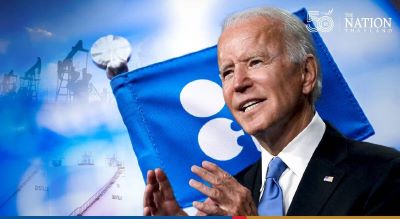
The U.S. will release 50 million barrels of crude from its strategic reserves in concert with China, Japan, India, South Korea and the U.K. — an unprecedented, coordinated attempt by the worlds largest oil consumers to tame prices that risks a backlash by OPEC+.
But the oil market was initially underwhelmed by the details of the package — much of the oil will need to be returned to the stockpile by the refiners who buy it, and international contributions were smaller than many expected. After an initial dip in prices, oil gained more than a $1 a barrel.
The response of OPEC+ will be key to the eventual success or failure of the plan. Officials from the Saudi-led group, which meets to set policy next week, have warned they’re likely to respond by canceling plans to boost their own production, negating the addition of stockpiled oil onto the market.
At stake is the price of the world’s most important commodity as President Joe Biden contends with the strongest inflation in more than a decade, a surge that’s hitting his approval ratings and risks undermining the post-Covid economic recovery. The administration said on Tuesday it had other tools at it’s disposal to bring down energy prices if need be.
Of the 50 million barrels , 32 million will be issued from the U.S. Strategic Petroleum Reserve as an exchange over the next several months, while 18 million will come from an accelerated release from previously authorized sales, the White House said in a statement Tuesday. It represents one of the biggest drawdowns ever from the reserve, surpassing U.S. interventions amid Libyan unrest in 2011 and Operation Desert Storm in 1991.
A senior administration official told reporters Tuesday that barrels would begin moving as soon as mid-to-late December.
West Texas Intermediate futures rose $1.01 to $77.76 a barrel at 9:22 a.m. in New York as the volume of crude released was less than the market expected. Oil prices have fallen sharply in the week since the President Biden’s administration began discussing a release of crude from the reserve.
Biden’s decision to collectively discharge stockpiled crude after OPEC+ countries rebuffed calls to significantly boost production marks a diplomatic win for the U.S. and a challenge to the grip that Saudi Arabia, Russia and other OPEC+ producers have on the market.
“The market focus has shifted from the release to how OPEC+ will respond to what the White House is calling a ‘message to the Saudis’,” said Bob McNally, president of consultant Rapidan Energy Group and a former White House official under President George W. Bush. “If it comes to a test of wills and capabilities between a handful of strategic oil reserve holders led by the U.S. and OPEC+, the market would probably bet on the latter prevailing.”
Under the plan, the U.S. will conduct the exchanges over several months, with oil companies taking possession of the crude now and then returning supplies to the reserve later, when prices have eased.
Senior administration officials said the two-pronged oil release plan, the result of months of discussion and diplomacy, is tailored to the current market conditions, with oil prices that are high now expected to dip in coming months.
The administration can also make adjustments to the exchanges in coming months as it deals with a dynamic oil market, the administration official said.
The administration has worked to identify the best tools for addressing the current dynamic, one of the officials said. It has so far rebuffed calls from members of Biden’s own party to clamp down on exports of U.S. oil, amid warnings that could backfire by actually discouraging domestic production.
Biden, who is scheduled to deliver remarks on the economy and consumer prices later Tuesday, has been seeking the joint release for weeks, including during a virtual summit with Chinese President Xi Jinping. Ultimately, China was among the countries that agreed to the move. Previous global efforts to tap stockpiles — such as the 2011 release of 60 million barrels in the wake of unrest and supply disruptions in Libya — were coordinated by the International Energy Agency.
“Tapping the SPR will provide much-needed temporary relief at the pump and will signal to OPEC that they cannot recklessly manipulate supply to artificially inflate gas prices,” Senate Majority Leader Chuck Schumer said in a statement.
Asian countries joined the U.S. releasing oil, sending a political signal of support, but one with little oil market value as the quantities involved were small, disappointing traders.
India said it will release 5 million barrels, according to a statement. China didn’t disclose its contribution, but one Western official familiar with the matter said it would be relatively small, in the 7 million-to-15 million barrels range. South Korea said it will decide on details such as volume and timing after discussing with partner countries but indicated it could be about 3.5 million barrels. Japan indicated it would release 5 million barrels or less. The U.K. contribution is expected to be even smaller, the same official said.
“This is a hugely political move, and the Asian countries are adding only small, largely symbolic amounts,” said Amrita Sen, co-founder of consultant Energy Aspects Ltd. in London.
Biden has been under increasing pressure to stem rising energy prices that threaten to undermine the economic recovery from the pandemic. OPEC+ earlier snubbed his request for a large production increase and instead raised output by just 400,000 barrels per day for December.
The national average price for a gallon of regular unleaded gasoline has been hovering around a seven-year high and was $3.403 as of Nov. 22, according to auto club AAA.
Rising motor fuel prices pose a political risk to any U.S. president. But Biden has added reason to worry, as high energy costs and rising inflation could hamper both the economic rebound from the pandemic and his ability to enact major social-spending legislation.
Business groups and Republican lawmakers said they opposed the move. Christopher Guith, senior vice president of the Chamber of Commerce’s Global Energy Institute, argued the reserve should only be tapped for true supply disruptions and said the Biden administration instead should focus on encouraging domestic oil production.
“America’s real strategic petroleum reserve is in places like the Permian Basin and the Gulf of Mexico,” Guith said in an emailed statement. “Instead of ineffectual Band-Aids, the White House should focus on policies that will encourage domestic production of oil and natural gas.”
The U.S. Strategic Petroleum Reserve, the world’s largest government stockpile, was established after the Arab oil embargo in the 1970s and has been tapped in response to Operation Desert Storm in 1991, Hurricane Katrina in 2005 and Libyan supply disruptions in 2011. It also has been used to bring down domestic gasoline prices, such as by President Bill Clinton weeks before the 2000 election, as well as to fund unrelated domestic legislation.
The reserve stood at 606.1 million barrels as of Nov. 12, enough to replace more than half a year’s worth of U.S. crude net imports. Current inventory is about 85% of its maximum authorized storage capacity, after withdrawals.
The Energy Department is already obligated by law to sell 260 million barrels of oil from the reserve by fiscal year 2027. Additional releases now could slightly lower prices, analysts say, though the effects would be temporary and could be muted by market expectations of a sale the Biden administration has spent weeks telegraphing.
The maximum draw-down capability is 4.4 million barrels a day, according to the Energy Department’s website, and it generally takes 13 days for oil from the reserve to reach the open market after a presidential decision. But the mere announcement that the reserve is being tapped could have an immediate, if short-lived, effect on oil prices.
The idea of wielding U.S. emergency oil stockpiles to blunt prices divides members of Biden’s own political party. House Majority Leader Steny Hoyer, a Democrat from Maryland, said Nov. 16 he was not in favor of the move and noted the SPR is meant to protect the U.S. from Middle East supply crunches.
U.S. refiners are currently exporting the most gasoline since 2018, before the pandemic started.
Under a 1975 law that established the reserve, a president can order a full draw down in the event of a “severe energy supply interruption” that threatens national security or the economy. A limited drawdown (up to 30 million barrels) can be ordered in the event of “a domestic or international energy supply shortage of significant scope or duration.”
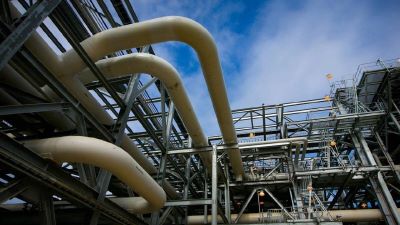
A $12 billion liquefied natural gas investment approved in Australia leads a wave of projects betting demand will rise as the world shuns more polluting alternatives like coal.
The development of the Scarborough field, Pluto onshore processing facility and a 430-kilometer (267-mile) subsea pipeline led by Woodside Petroleum Ltd. will supply as much as 8 million tons annually for at least 20 years, with first cargoes expected from 2026.
It’s a project that cuts straight to a key debate in the energy transition: the role of natural gas as nations aim to both curb greenhouse gas emissions and avoid supply crunches that triggered recent power shortages in Asia and record prices in Europe.
“One of the quickest ways for nations to reduce their emissions is to switch their energy system from coal to gas-fired,” Woodside’s Chief Executive Officer Meg O’Neill said Tuesday in an interview with Bloomberg Television. “We think the market for LNG will be very robust for decades into the future.”
Climate campaigners estimate the project’s direct carbon dioxide emissions will be about 4.4 million tons a year and that figure swells to 56 million tons if the burning of the gas by consumers, or so-called scope 3 environmental impacts, are included, the Australia Institute think tank said in a June report.
“Gas is still needed,” and particularly in industrializing nations, said Henning Gloystein, global director of energy and natural resources at Eurasia Group. Yet sanctioning new spending on the fuel will also stoke debate over net zero commitments. “Investing into the future extraction of hydrocarbons certainly locks in future emissions,” he said.
Woodside, which aims to sell a stake in Scarborough and retain about a 50% interest, advanced 3.5% in Sydney trading Tuesday, as BHP Group gained 4%.
Australia’s LNG boom in the past decade saw companies from Chevron Corp. to Royal Dutch Shell pump about $200 billion into mega-projects that transformed the nation into a key exporter. Now there’s a rising challenge in the seaborne market from Qatar and the U.S.
Emerging projects include Cheniere Energy Inc.’s Stage 3 expansion of its Corpus Christi export plant in Texas, Venture Global LNG’s Plaquemines project in Louisiana, Qatar’s North Field South development and Novatek’s Arctic LNG-1 in Russia, according to Wood Mackenzie senior analyst Daniel Toleman.
“Woodside is not the only LNG player looking to take advantage of rising prices and strong demand,” Toleman said. “Over the next 12 months we expect several low-cost projects to move toward sanction.”
The outlook for natural gas will depend on how quickly national climate pledges are put into action. Consumption of natural gas would be about 25% higher by 2050 based on a continuation of existing policies, while demand would peak in 2025 and slowly decline if nations follow through on their promised commitments, according to the International Energy Agency.
Key LNG consumers including Japan and South Korea have already flagged they’ll need to curb imports in the decades ahead to meet targets to zero out emissions.
“Woodside is aggressively progressing the Scarborough project even while major trading partners such as Japan and Korea are taking active steps to decrease LNG demand, effectively ignoring stranded asset risk,” said Dan Gocher, a director at the Australasian Centre for Corporate Responsibility, a shareholder activist group.
BHP and Global Infrastructure Partners LP, which this month agreed to buy a 49% stake in the Pluto Train 2 part of the development, are backing the view that gas demand will remain firm as the world decarbonizes.
In a sharply criticized plan on how it’ll achieve net zero emissions, Australia’s government also endorsed that outlook, forecasting the nation’s earnings from gas exports will rise 13% by 2050. The new Woodside project is likely to continue into the 2050s and add at least A$125 billion ($90 billion) to gross domestic product, Australia’s Resources Minister Keith Pitt said Tuesday in a statement.
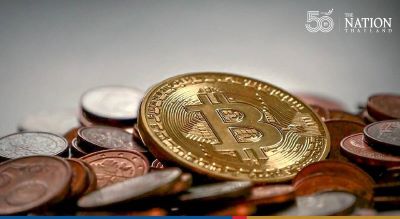
Plans for a $1 billion bitcoin bond in El Salvador sent the nations dollar-denominated bonds to an all-time low.
El Salvador’s dollar denominated notes due in 2050 slumped to 63.4 cents on the U.S. dollar on Tuesday, the lowest on record. The Central American country’s debt has been among the world’s worst performers so far this week as investors consider whether President Nayib Bukele’s plan to sell sovereign bitcoin bonds closes the door on a deal with the International Monetary Fund.
El Salvador’s progress with the IMF has soured since May, when Bukele’s party took over the assembly and fired five top judges and the attorney general. His policies, including the adoption of Bitcoin as legal tender, have been repeatedly criticized by the multilateral lender.
“This announcement cements the ‘anything-but-the-IMF’ path,” said Nathalie Marshik, a Stifel Nicolaus & Co. managing director. Bonds are falling “as the market reassesses possible recovery value lower on unpredictability of policies.”
The nation’s debt is trading in distressed territory, with investors now demanding 1,202 basis points in extra yield to hold El Salvador’s dollar bonds over U.S. Treasurys, according to JPMorgan Chase data. While the plan to sell new, tokenized bonds could offer the government some breathing room, it also adds to uncertainties and potential risks.
For Siobhan Morden, head of Latin America fixed income strategy at Amherst Pierpont Securities, the announcement of the bitcoin bond is a sign that the nation is doubling down on its own funding and growth.
“Innovative financing is not in itself a solution,” she wrote in a note Monday.
The nation’s next big payment to external creditors isn’t due until January 2023. The $1 billion in the tokenized bonds could give the government a respite, as talks with the IMF for a $1.3 billion loan were downgraded to an annual Article IV review that concluded before the offering was announced Nov. 20. The team will look into analyzing developments in the coming months, IMF mission chief for El Salvador Alina Carare said through a spokesperson in response to written questions on Monday.
“Given bitcoin’s high price volatility, its use as a legal tender entails significant risks to consumer protection, financial integrity, and financial stability,” according to the IMF’s statement on the 2021 Article IV Mission, which was published Monday. “Its use also gives rise to fiscal contingent liabilities.”
Bukele tweeted in response to the IMF’s statement, saying that while the government doesn’t agree with some of the points made in the review, like on bitcoin’s adoption, the organization’s analysis of the country is “interesting,” pointing to growth forecasts and his government’s handling of Covid, among other things.
The proposed 10-year tokenized bitcoin bond is expected to pay 6.5% annually, with an added dividend of 50% of any bitcoin gains once El Salvador has recouped its original investment, according to Blockstream Corp. Chief Strategy Officer Samson Mow, who announced the plan on stage with Bukele during a bitcoin conference. Those dividends will either be paid in dollars or the cryptocurrency Tether, a so-called stablecoin meant to be a dollar proxy, he said.
As soon as legislation is in place allowing the new bond, the nation will release a prospectus, Mow said. For now, the biggest challenge is how little is known.
For the bitcoin crowd, it may be a more risk-averse bet, said Carlos de Sousa, a portfolio manager at Vontobel Asset Management in Zurich. The 50% dividend the bond plans to pay if the price of the crypto currency rises may look appealing if investors aren’t penalized for any bitcoin weakening — but it’s too soon to know without a prospectus, he said.
“If you have too much money on bitcoin and you’d like to de-risk, this instrument, conditional that you can only share gains and not losses, gives you a 25% upside but no bitcoin downside, of course, at the cost of El Salvador’s default risk,” he said. “But since it’s for retail investors, maybe the sovereign default risk is not something they’re focused on.”
There’s a chance the bond may even win over pockets of investment on Wall Street.
“Institutional investors tend to overlook certain risks as long as they meet their goals for returns,” said Luis Gonzali, co-head of investments at Franklin Templeton Mexico. “‘I can’t buy bitcoin, but I can buy junk.’ It’s a way to get around mandates in their funds. Technically, you’re not buying bitcoin, just junk.”
The note would mark a new way for governments to borrow externally and could bring more retail investors into the emerging-market debt space.
“The money will come in,” Mow said during an interview on Bloomberg Television Monday, when asked whether institutional investors will be prohibited from buying the securities. Mow said he has already talked to a potential buyer who wanted to purchase as much as $20 million of the issue.
For many, the 6.5% coupon wouldn’t be enough to compensate for the risks associated with El Salvador, assuming the bonds price at or near par, said Jared Lou, a money manager at William Blair in New York.
“It seems like a desperation move, showing Bukele is moving away from Western institutions,” said Lou. The existing bonds will continue to make new lows, but “the market is a bit broken now.”
U.S. shares rose on back of gains in cyclicals, while the technology sector extended losses as rising Treasury yields damped the outlook for growth stocks.
The S&P 500 ended the day higher, after swinging between gains and losses in the last hour of trading. Energy and financial stocks led the advance. The tech-heavy Nasdaq 100 slid, building on Monday’s last-hour selloff. The Treasury curve steepened, with the 10-year yield rising to near a one-month high. A currency crisis deepened in Turkey, with the lira weakening past 13 per U.S. dollar. Zoom Video Communications Inc. tumbled on signs of slowing growth.
Traders pruned bets for a dovish-for-longer Federal Reserve after Jerome Powell was selected for a second term. The chair himself sought to strike a balance in his policy approach, saying the central bank would use tools at its disposal to support the economy as well as to prevent inflation from becoming entrenched.
“Looking at the market today, obviously things that are sensitive to rates” are moving, Jerry Braakman, chief investment officer of First American Trust in Santa Ana, California, said by phone. “Tech is showing a little bit of weakness, financials are showing strength. That’s reflective of that move in the yield curve.”
Despite recent declines, U.S. stocks have been trading near records, giving rise to concerns about valuations as investors weigh prospects for growth amid rising inflation and a persistent pandemic.
“The market is still overbought and needs to digest some of the recent gains,” Sam Stovall, chief investment strategist at CFRA Research, said by phone.
The dollar traded at its highest level since September 2020. The Japanese yen fell past 115 per dollar for the first time since 2017.
Fed Bank of Atlanta President Raphael Bostic said Monday the U.S. central bank may need to speed up the removal of monetary stimulus and allow for an earlier-than-planned increase in interest rates.
Turkey’s lira sank the most in the world, reaching yet another record low, after President Recep Tayyip Erdogan defended his pursuit of lower interest rates to boost economic growth and job creation. His unorthodox view that higher rates fuel inflation has sent the currency down for nine successive years, spurring a 43% plunge in 2021 alone.
Zoom Video dropped as analysts including from Citigroup Inc. said slowing incremental growth and the lowest new-customer additions in three years were concerning. Urban Outfitters Inc. is down 9.4% as supply-chain disruptions and pressure from higher costs weighed on third-quarter results.
Oil climbed as a landmark plan from consumer countries to tap their strategic oil reserves was less severe than markets expected. While the headline size of the U.S. release is large, a significant chunk of the crude will be borrowed — to be returned later — leaving traders expecting tighter balances down the line. The U.S. will release 50 million barrels of crude from its strategic reserves in concert with China, Japan, India and South Korea and the U.K.
Here are some key events this week:
– Reserve Bank of New Zealand rate decision Wednesday
– U.S. FOMC minutes, consumer income, wholesale inventories, new home sales, GDP, initial jobless claims, U.S. durable goods, University of Michigan consumer sentiment. All Wednesday
– Bank of Korea policy decision Thursday
– U.S. Thanksgiving Day: U.S. equity, bond markets closed Thursday
– Bank of England Governor Andrew Bailey speaks with Mohamed El Erian at a Cambridge Union event. Thursday
Some of the main moves in markets:
– – –
– The S&P 500 rose 0.2% as of 4 p.m. New York time
– The Nasdaq 100 fell 0.5%
– The Dow Jones industrial average rose 0.5%
– The MSCI World index fell 0.2%
– – –
– The Bloomberg Dollar Spot index was little changed
– The euro rose 0.1% to $1.1249
– The British pound fell 0.1% to $1.3380
– The Japanese yen fell 0.2% to 115.15 per dollar
– – –
– The yield on 10-year Treasuries advanced six basis points to 1.68%
– Germany’s 10-year yield advanced eight basis points to -0.22%
– Britain’s 10-year yield advanced six basis points to 1.00%
– – –
– West Texas Intermediate crude rose 2.6% to $78.74 a barrel

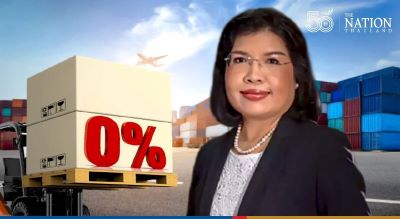
 RCEP members to eliminate import tariffs on a host of Thailand-made goods
 RCEP members to eliminate import tariffs on a host of Thailand-made goods
 RCEP members to eliminate import tariffs on a host of Thailand-made goods
 RCEP members to eliminate import tariffs on a host of Thailand-made goods