Gold dives as Fed signal on rates leads to mass sell-offs
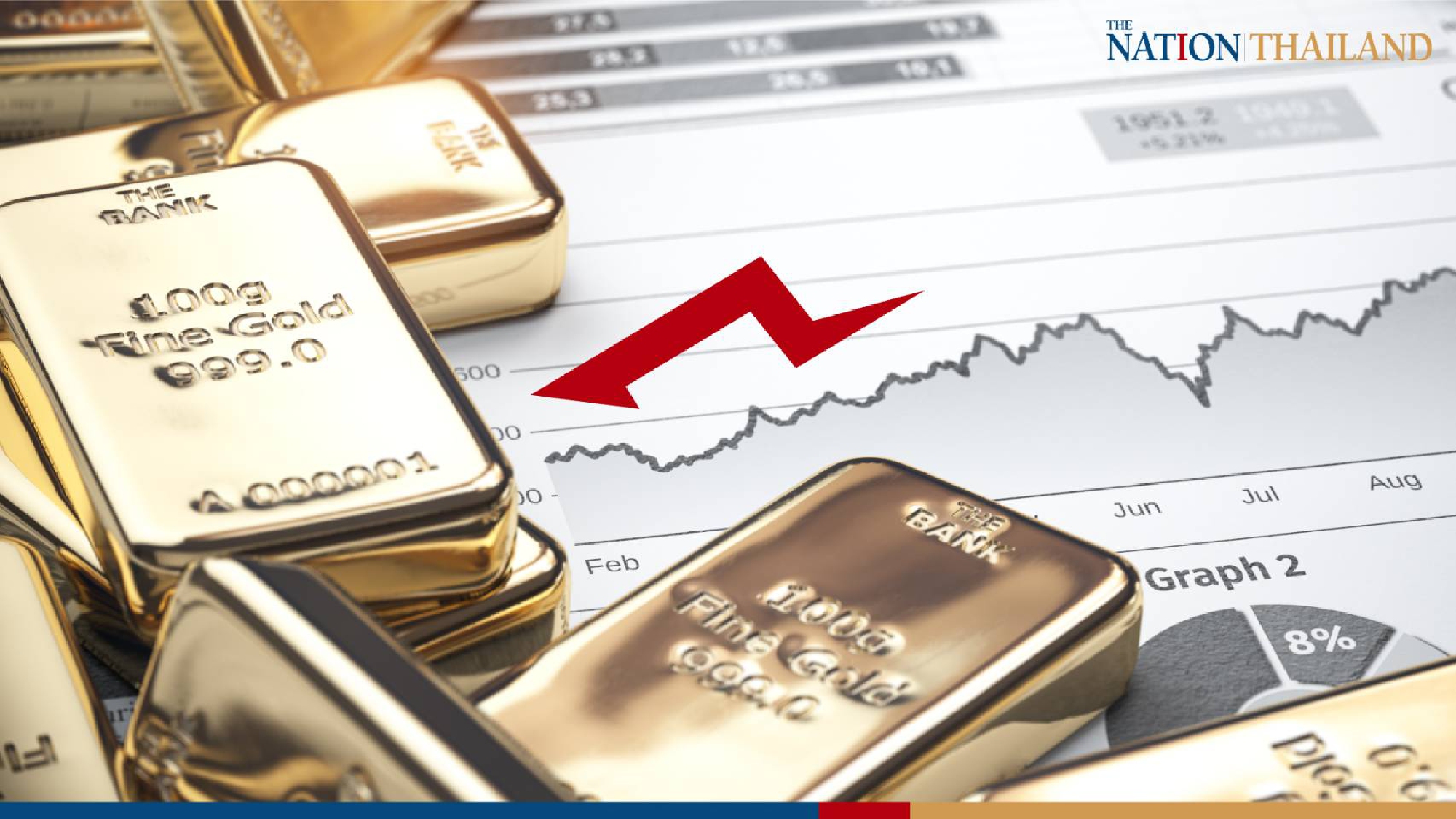
The price of gold slumped by THB350 per baht weight in morning trade on Thursday due to mass sell-offs of the precious metal after the US Federal Reserve began discussions on asset tapering and announced that two interest rate hikes are expected by the end of 2023.
AGold Traders Association report at 9.32am showed the buying price of a gold bar at THB27,000 per baht weight and selling price at THB27,100, while gold ornaments cost THB26,514.84 and THB27,600, respectively.
At close on Wednesday, the buying price of a gold bar was THB27,350 per baht weight and selling price THB27,450, while gold ornaments cost THB26,863.52 and THB27,950, respectively.
The spot gold price on Thursday was US$1,825 (THB57,132) per ounce after the Comex gold price on Wednesday rose by $5 to $1,861.40 per ounce.
The Hong Kong gold price on Thursday dropped by HK$400 to $16,820 (THB67,822) per tael, the Chinese Gold and Silver Exchange Society reported.
Fed holds rates at zero; projects two hikes by end of 2023
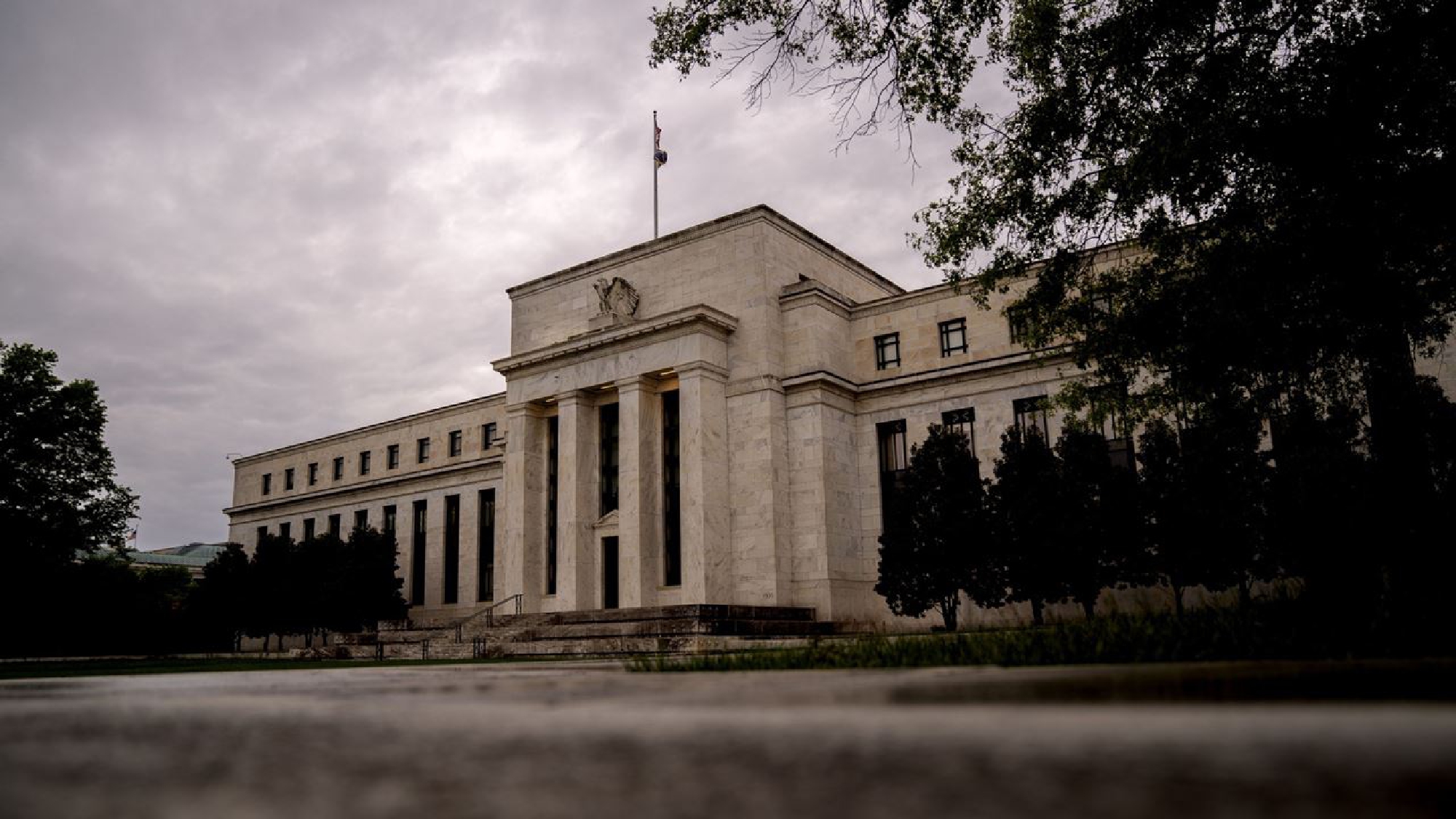
Federal Reserve officials held interest rates near zero but signaled they expect two increases by the end of 2023, pulling forward the date of liftoff as the economy recovers.
“Progress on vaccinations has reduced the spread of covid-19 in the United States,” the Federal Open Market Committee said in a statement released Wednesday following the conclusion of its two-day policy meeting. “Amid this progress and strong policy support, indicators of economic activity and employment have strengthened.”
The central bank held the target range for its benchmark policy rate unchanged at zero to 0.25% — where it’s been since March 2020 — and pledged to continue asset purchases at a $120 billion monthly pace until “substantial further progress” had been made on employment and inflation.
The quarterly projections showed 13 of 18 officials favored at least one rate increase by the end of 2023, versus seven in March. Eleven officials saw at least two hikes by the end of that year. In addition, seven of them saw a move as early as 2022, up from four.
The FOMC vote was unanimous.
The U.S. economic recovery is gathering strength as business restrictions lift and social activity increases across the country. Robust demand from consumers and businesses alike has outstripped capacity, leading to bottlenecks in the supply chain, longer lead times and higher prices. At the same time, employment growth has disappointed over the past couple of months.
Fed officials have said such “fits and starts” are to be expected given the unprecedented nature of the pandemic and expressed optimism about the outlook for the second half of the year as more Americans get vaccinated.
Labor Department reports on employment published since the last gathering of the U.S. central bank’s policy-setting Federal Open Market Committee in late April have disappointed relative to forecasters’ expectations. The U.S. unemployment rate was still elevated at 5.8% in May, with total employment still millions of jobs below pre-pandemic levels.
Consumer-price pressures, on the other hand, have proven hotter than expected. Labor Department figures showed a 0.8% jump in prices in April and a 0.6% rise in May, marking the two biggest monthly increases since 2009.
Published : June 17, 2021
By : Syndication Washington Post, Bloomberg · Matthew Boesler
Markets wrap: Yields jump, stocks fall after Fed boosts outlook
Bond yields jumped and stocks fell for a second day after Federal Reserve officials signaled theyll begin dialing back the stimulus that has fueled the recovery from the pandemic.
Stocks closed off the lows of the day after Federal Reserve Board Chairman Jerome Powell downplayed the risk of an immediate rate increase. The S&P 500 index had initially tumbled when policymakers disclosed that they expect two interest rate increases by the end of 2023. The dollar strengthened versus major peers. Yields on benchmark 10-year Treasury notes rose from an almost three-month low, while five- and seven-year notes fell more as the market repriced the timing of rate increases.
Crude oil edged lower after earlier rising as much as 1.2% in New York as the strengthening dollar reduced the appeal of commodities priced in the currency.
“First blush is obviously a hawkish read,” said Michael Contopoulos, Richard Bernstein Advisors LLC’s director of fixed income and portfolio manager. “This supports the reflation, higher rates theme and likely adds more fuel to the taper talk fire for Jackson Hole or September FOMC at the latest.”
The central bank held the target range for its benchmark policy rate unchanged at zero to 0.25% – where it’s been since March 2020 – and pledged to continue asset purchases at a $120 billion monthly pace until “substantial further progress” had been made on employment and inflation.
The quarterly projections showed 13 of 18 officials favored at least one rate increase by the end of 2023, versus seven in March. Eleven officials saw at least two hikes by the end of that year. In addition, seven of them saw a move as early as 2022, up from four.
“The number of people who moved forward into 2023 is somewhat surprising,” said Brent Schutte, chief investment strategist at Northwestern Mutual Wealth Management Co.
In a press conference after the rate decision announcement, Powell appeared to throw some cold water on the market’s initial reaction to the dot plot revision — by going to some lengths to explain that the central bank isn’t really thinking about rate increases right now.
“The Fed didn’t rock the boat,” said Ryan Detrick, chief market strategist at LPL Financial. “They increased their inflation outlook and upped GDP forecasts, everyone expected that. Yes, the first hike will now be in 2023, but again, this shouldn’t have been a surprise to anyone.”
Here are some key events to watch this week:
– U.S. Treasury Secretary Janet Yellen testifies before a House panel Thursday on the federal budget
– Rate decisions come from Switzerland and Norway on Thursday
– The Bank of Japan’s monetary policy decision is on Friday
These are some of the main moves in markets:
ADVERTISEMENT
– – –
– The S&P 500 fell 0.5%, more than any closing loss since May 18 as of 4:02 p.m. New York time
– The Nasdaq 100 fell 0.3% to the lowest since June 10
– The Dow Jones Industrial Average fell 0.8%, more than any closing loss since May 18
– The MSCI World index fell 0.6% at 4:02 p.m. New York time, the most since June 3
– – –
– The Bloomberg Dollar Spot Index rose 0.8%, more than any closing gain in about a year
– The euro slipped 1%, more than any closing loss in about 15 months
– The British pound slipped 0.6%, more than any closing loss since May 12
– The Japanese yen slipped 0.5%, more than any closing loss since June 3
– – –
– The yield on 10-year Treasuries advanced eight basis points, more than any closing gain since March 12
– Germany’s 10-year yield declined two basis points to -0.25%
– Britain’s 10-year yield declined two basis points to 0.74%
– – –
– West Texas Intermediate crude fell 0.4% to $71.84 a barrel
– Gold futures fell 1.4%, falling for the fourth straight day, the longest losing streak since April 30
Published : June 17, 2021
By : Syndication Washington Post, Bloomberg · Katie Greifeld, Kamaron Leach
Rice Association pleads for govt intervention as price withers
The price of rice continues to tumble in Thailand, as domestic consumption drops due to Covid-19 restrictions and the ban on foreign travellers, the Thai Rice Mill Association said on Wednesday.
In the international market, Indian rice is selling for about $50 per tonne less than Thai rice after a bumper crop on the subcontinent, according to association president Rangsan Sabaimuang.
Thai rice is also facing a sharp rise in shipping costs – though its price is still lower than Vietnamese rice, he added.
Rangsan urged the government to find a quick solution to the dropping rice price, noting it would hit the finances of Thai farmers when they harvest their crops in 2-3 months
SET up slightly as investors await US Fed announcement
The Stock Exchange of Thailand (SET) Index closed at 1,624.79 on Wednesday, up 2.48 points or 0.15 per cent. Transactions totalled THB90.47 billion with an index high of 1,631.23 and a low of 1,619.23.
In the morning session, Krungsri Securities expected today’s index to fluctuate between 1,615 and 1,635 points amid hopes of a Thai economic recovery after mass vaccinations commenced last week, and the rising oil price.
It forecast the index could also be pressured as investors monitor a key US Federal Reserve meeting on Wednesday amid uncertainty over rising inflation.
The 10 stocks with the highest trade value today were PTT, KTC, GUNKUL, PTTEP, KBANK, INTUCH, SCGP, IVL, PTTGC and OR.
Other Asian indices were on the fall except in South Korea:
ADVERTISEMENT
Japan’s Nikkei Index closed at 29,291.01, down 150.29 points or 0.51 per cent.
China’s Shanghai SE Composite Index closed at 3,518.33, down 38.23 points or 1.07 per cent, while the Shenzhen SE Component Index closed at 14,295.93, down 377.41 points or 2.57 per cent.
Hong Kong’s Hang Seng Index closed at 28,436.84, down 201.69 points or 0.70 per cent.
South Korea’s KOSPI closed at 3,278.68, up 20.05 points or 0.62 per cent.
Taiwan’s TAIEX closed at 17,307.86, down 63.43 points or 0.37 per cent.
Govt vows to offer relief measures for household debts
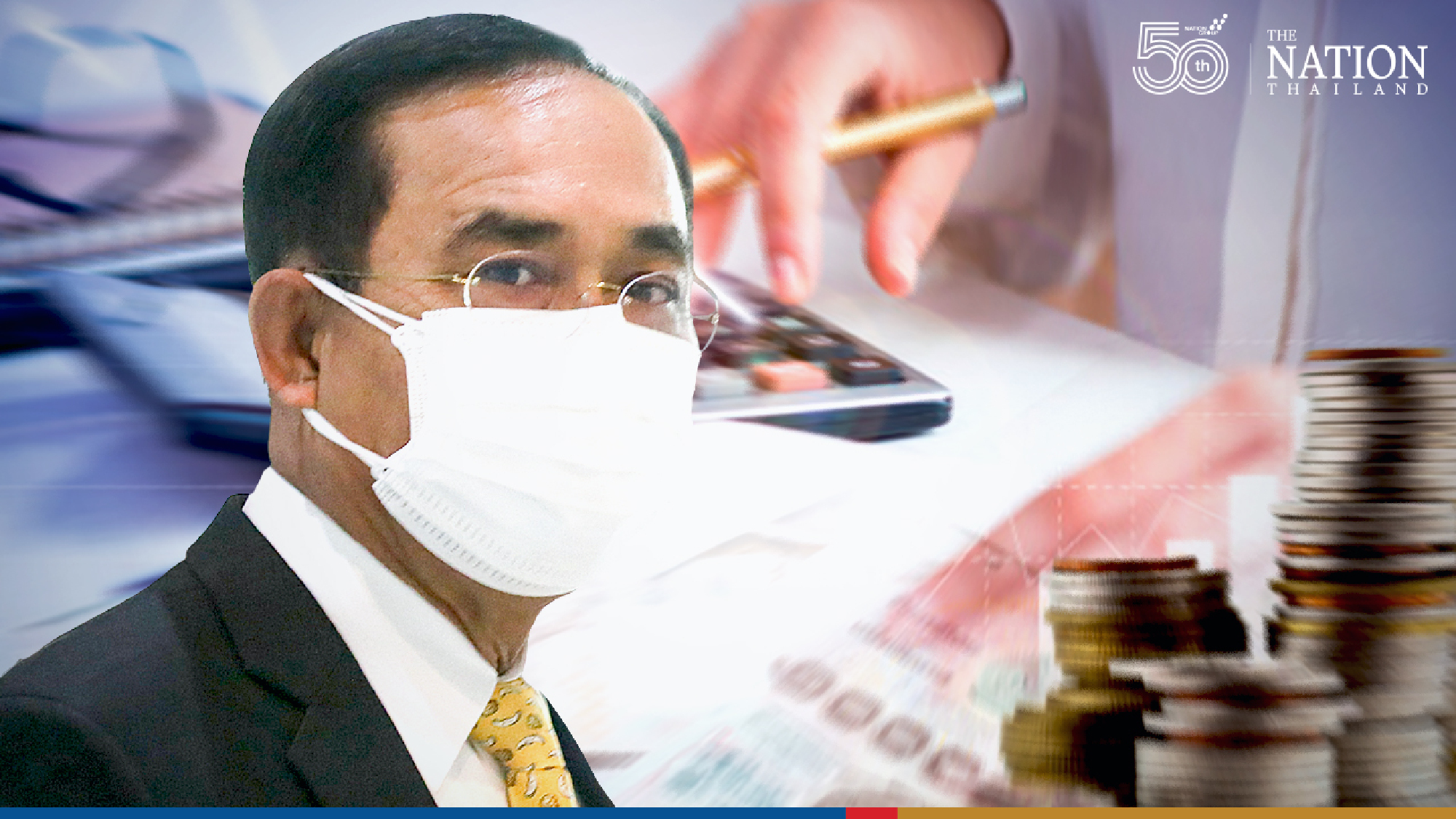
In a bid to ease the burden on people, Prime Minister Prayut Chan-o-cha urged the Cabinet on Tuesday to come up with measures to ease debt problems both in the short and long term.
He said many borrowers need help such as students, guarantors, teachers, government officials with car and motorcycle loans, credit cards and personal loans, etc.
Prayut said short-term measures to be launched within six months will include a reduction in interest burden and debt restructuring. The Bank of Thailand will also be asked to review the interest ceiling and come up with guidelines.
“We will also consider mediating to stop legal action against borrowers, will launch soft loans to help small and medium-sized enterprises and increase the number of pawnshops to take care of low-income people,” he said.
In the long term, he said, the government will reduce the interest rate, launch measures to reduce taxes on households and public transport, as well as set up agencies to solve issues related to granting loans..
He added that the Cabinet has, so far, agreed to cut down social security contributions to 60 per cent for six months in a bid to ease people’s burden and boost purchasing power.
“This will not affect their benefits after retirement,” he added.
Household debts in Thailand stood at 14 trillion baht in 2020.
SET up slightly, expected to fluctuate amid mass vaccinations, rising oil price
The Stock Exchange of Thailand (SET) Index rose by 0.83 points or 0.05 per cent to 1,623.14 on Wednesday morning. The volume of transactions was THB3.41 billion with an index high of 1,623.46 and a low of 1,621.68.
The SET Index closed at 1,622.31 on Tuesday, down 10.75 points or 0.66 per cent. Transactions totalled THB90.03 billion with an index high of 1,636.10 and a low of 1,618.60.
Krungsri Securities expected the index to fluctuate between 1,615 and 1,635 points amid hopes of a Thai economic recovery after mass vaccinations commenced last week, and the rising oil price.
It predicted the index could be pressured as investors monitor a key US Federal Reserve meeting on Wednesday and uncertainty over rising inflation.
It recommended investors buy:
▪︎ PTT, PTTEP, Top, IVL, Banpu, PSL and TTA, which would benefit from a global economic recovery.
▪︎ BCH, CHG, BDMS, Mint, Centel, ERW, AOT, CPAll, HMPro, CPN, CRC, AAV, Amata and WHA, which would benefit from the country reopening.
▪︎ KCE, IRPC, STA and STGT, expected to be listed on the SET50 Index in mid-June.
▪︎ AAV, BLA, Ichi, PSL, PTL, Singer, Stark, STGT and Synex, expected to be listed on the SET100 Index in mid-June.
Baht likely ‘to weaken’ amid vaccine distribution hassles
The baht opened at 31.16 to the US dollar on Wednesday, weakening slightly from 31.15 at close on Tuesday.
The Thai currency is likely to move between 31.10 and 31.20 during the day, Krungthai Bank market strategist Poon Panichpibool said.
He said the baht would move “sideways” while markets were awaiting the outcome of the US Federal Reserve meeting.
Poon also said the baht would weaken from stock sales by foreign investors after seeing problems with vaccine procurement and distribution in Thailand.
The baht will not weaken sharply as exporters aimed to sell their dollar holdings when the Thai currency touched 31.20 to 31.30 per US dollar, he added.
The price of gold dropped by THB100 per baht weight in morning trade on Wednesday due to a rising US bond yield. Meanwhile, investors delayed immediate stock and gold purchases as they awaited results of a US Federal Reserve meeting on Tuesday and Wednesday.
AGold Traders Association report at 9.27am showed the buying price of a gold bar at THB27,300 per baht weight and selling price at THB27,400, while gold ornaments cost THB26,802.88 and THB27,900, respectively.
At close on Tuesday, the buying price of a gold bar was THB27,400 per baht weight and selling price THB27,500, while gold ornaments cost THB26,909 and THB28,000, respectively.
The spot gold price on Wednesday was US$1,855 (THB57,827) per ounce after the Comex gold price on Tuesday dropped by $9.50 to $1,856.40 per ounce.
The Hong Kong gold price on Wednesday fell by HK$60 to $17,180 (THB69,004) per tael, the Chinese Gold and Silver Exchange Society reported.
Fed poised to crawl onto knife edge to rein in record largesse
The Federal Reserve is inching toward the start of a long road to normalizing its relationship with the rest of Washington and Wall Street.
After spending the past 15 months providing unprecedented help to the federal government and investors via trillions of dollars of bond purchases, it could start preliminary discussions about scaling back that support at a pivotal two-day policy meeting that kicks off on Tuesday.
Even so, actual steps in that direction by Chair Jerome Powell and his colleagues are likely still months off.
Weaning Wall Street and Washington off the Fed’s extraordinary largesse won’t be easy. Since Covid-19 struck the U.S. in March 2020, the central bank has brought more than $2.5 trillion of U.S. Treasury debt, effectively covering more than half of the federal government’s red ink over that time.
That buying — together with about $870 billion in purchases of mortgage-backed securities — has flooded the financial markets with liquidity, contributing to a doubling of the stock market from its pandemic low.
“It will be like crawling along a knife-edge ridge,” former Bank of England policy maker Charles Goodhart said of the task facing the Fed. “If you do too little you’ll find inflation will just go on accelerating. If you do too much you get into a financial crisis and a recession.”
Fed officials have said they want to see “substantial further progress” toward their goals of maximum employment and average 2% inflation before reducing current asset purchases of $120 billion per month. None are suggesting that they’re close to achieving that, though some have pressed for discussions to begin on a plan for tapering that buying.
As Powell has pointed out more than once, payrolls are still substantially below where they were pre-pandemic — some 7.6 million jobs short, according to the May employment report. And while inflation recently has proven surprisingly rapid — consumer prices climbed 5% in May from a year earlier — Powell and other Fed officials have argued that the rise is mostly transitory, the result of temporary bottlenecks as the economy reopens and low readings a year ago when it shut down.
“Why would the Fed try to fix bottleneck-driven inflation by signaling earlier rate hikes and hitting demand?” Julia Coronado, president of MacroPolicy Perspectives, asked in a June 14 tweet.
Instead, after years of falling short of their inflation goal, policymakers will “err on the side of patience” in scaling back stimulus, said former Fed official David Wilcox, who is now at the Peterson Institute for International Economics.
Powell’s past and potential future also argue for patience. As a Fed governor in 2013, he was among those pushing then-Chairman Ben Bernanke to roll back quantitative easing, only to see the financial markets throw a “taper tantrum” at the mere suggestion such a policy shift was coming.
With his own term as Fed chair up next February, Powell has an extra incentive to avoid a repeat of such turbulence.
“While the Fed is an independent institution, its leadership, up for reappointment next year, could not totally ignore the dim view the administration and Democratic Congress would take toward a shift to a more pre-emptive policy stance,” Deutsche Bank chief economist David Folkerts-Landau and colleagues wrote in a June 7 report.
Some three-quarters of economists surveyed by Bloomberg last week said they expect the Fed to announce between August and year-end that it will begin paring its purchases, with one-third forecasting it won’t fire the starting gun until December.
It’s not just the timing of the taper that’s up for discussion. So too are its composition and pace.
The Fed has faced criticism from within and outside the organization for continuing to buy $40 billion of mortgage-backed securities per month while house prices are surging. Vice Chair Randal Quarles said last month that the Fed would “certainly” look at that issue in the context of its taper discussions.
The last time the Fed wound up a quantitative easing program, in 2014, it shrank its asset purchases at a steady pace.
“Investors may be lulled into a false sense of security by that experience,” former Fed official William English told a June 8 Deutsche Bank webinar. Given all the uncertainty surrounding the post pandemic economy, “it’s not necessarily going to be the case that the Fed is going to taper in steady steps.”
Much may depend on the financial markets. American Enterprise Institute resident fellow Desmond Lachman said the ultra-easy monetary policy being pursued by the Fed and other major central banks has led to an “everything asset price bubble,” with stock, credit and housing markets all frothy.
“The chance of the bubble bursting is all the greater if the Fed is behind the curve,” he said.
English, who is now at the Yale School of Management, said it’s going to be politically hard for the Fed to wind up its asset purchases and increase interest rates because that will boost the government’s borrowing costs.
ADVERTISEMENT
“The Fed is going to come under a lot of criticism for raising rates and making budget choices for the Congress considerably tougher,” he said, adding, “At some level, the Fed needs to both normalize policy but also normalize its relationship with the government.”
Published : June 16, 2021
By : Syndication Washington Post, Bloomberg · Rich Miller