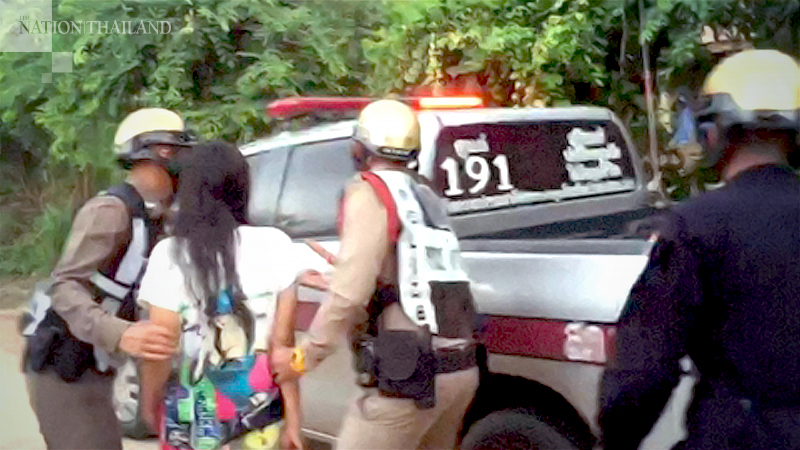
Police say an alcoholic woman in Surin beat her 77-year-old father to death for intervening in a fight between her and her husband.
Bunmee Thongmak, 42, was arrested on Wednesday after getting into a fight with her husband while drunk and then attacking her father with a club.
Thongruai Thongmak, 77, reportedly pleaded with his daughter to stop the beating before he lost consciousness. Bunmee’s mother Bunrod, 75, tried to halt the attack but was beaten and fled to get help.
She said the violence began when her daughter got into a fight with her drinking pal Kanya Chueasingha, 50.
Police have charged Bunmee with intentional murder and deadly physical assault. They said she flew into a deadly rage when her father warned her about her drinking.
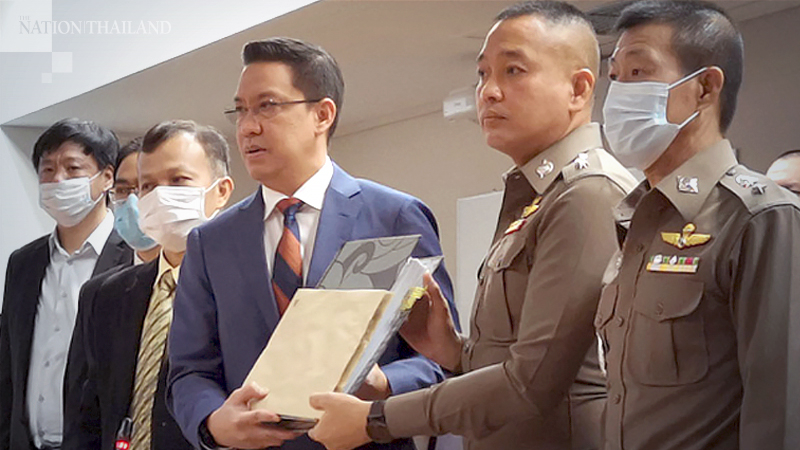
Digital Economy and Society Minister Buddhipongse Punnakanta reported 982 instances of lese majeste to police at 11am on Thursday (September 24).
In the police report, he accused netizens of spreading messages attacking the very existence of the Thai Royal Family during the anti-establishment protest on September 19-20.
He said the ministry has also applied for a warrant to ensure Facebook, YouTube and Twitter block information that violates Article 27 of the Computer Crime Act. So far, Thai netizens have posted 661 questionable links on Facebook, 289 on YouTube, 69 on Twitter and five on other websites.
Article 27 decrees that anyone failing to comply with the court order pursuant to Article 21 (action taken against ‘undesirable’ posts, comment or programs) shall be punished with a fine of no more than Bt200,000 and a daily fine of Bt5,000 until the court order has been fully complied with.
This is the first time that the ministry is using Article 27 against netizens and to take legal action against the social media companies as the crimes have taken place in Thailand.
Meanwhile, Puttipong said five posts on September 19, two on Facebook and three on Instagram, had violated Article 14, which penalises posters of content that may cause damage to the public, national security or creates public panic.
The police will prosecute the violators under Article 20, which will result in the penalty of a Bt200,000 fine per post.
By The Nation Photo Credit: Nation Photo by Tatchadon Panyaphanitkul
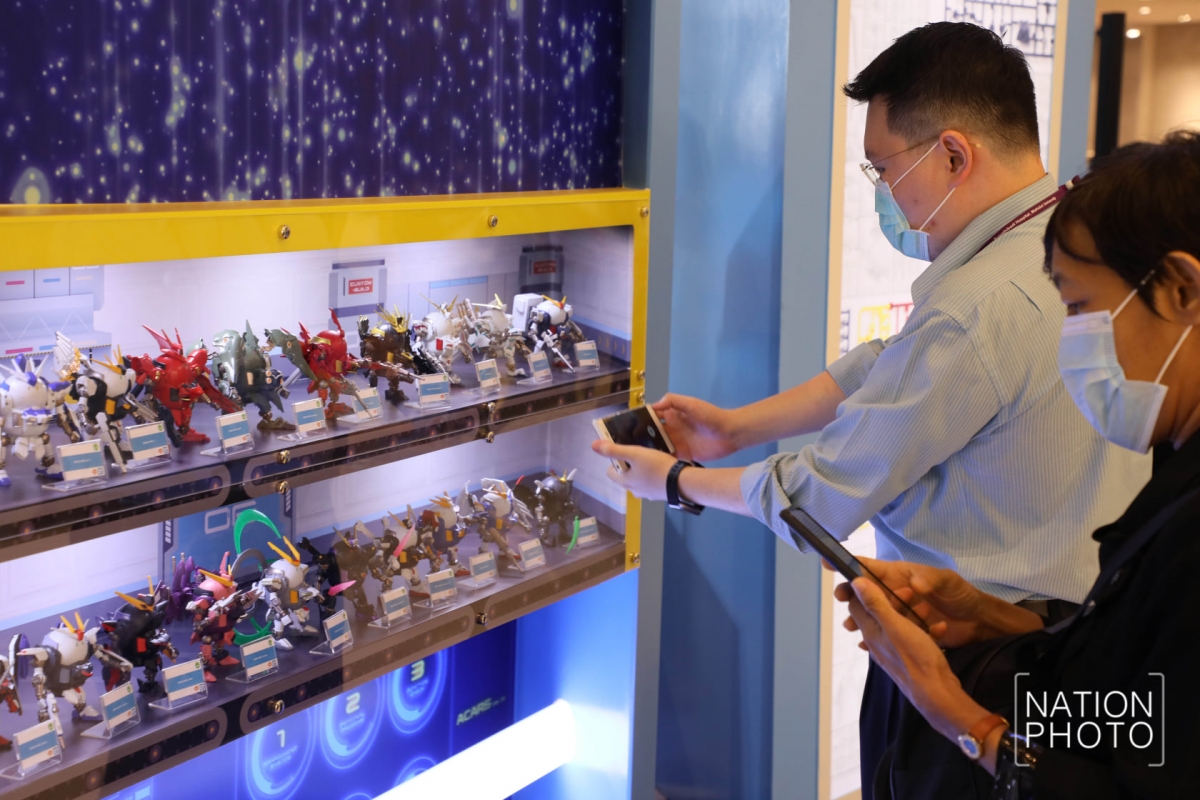
A giant bust of a RX-78-2 Gundam model greeted fans of Japan’s fictional multiverse at the Bandai Spirits Hobby Exhibition 2020 at Bangkok’s Siam Paragon mall yesterday (September 23).
Large toy and model distributor Dreamtoy in Thailand teamed up with Siam Paragon to hold the exhibition marking the 40th anniversary of “Gunpla” – plastic Gundam models which have gained a huge following worldwide, including in Thailand.
The exhibition features a 3×3-metre bust model of fictional manned robot RX-78-2 Gundam and a variety of model kits on display inside showcases.
Gunpla products will be offered at special prices, while limited items such as the RG 1/144 RX-78-2 Gundam Mechanical Clear Ver, MG 1/100 Justice Gundam (clear colour) and Haropla Black Tri-Haro (clear colour) are being sold exclusively at the exhibition, which is on until October 4.
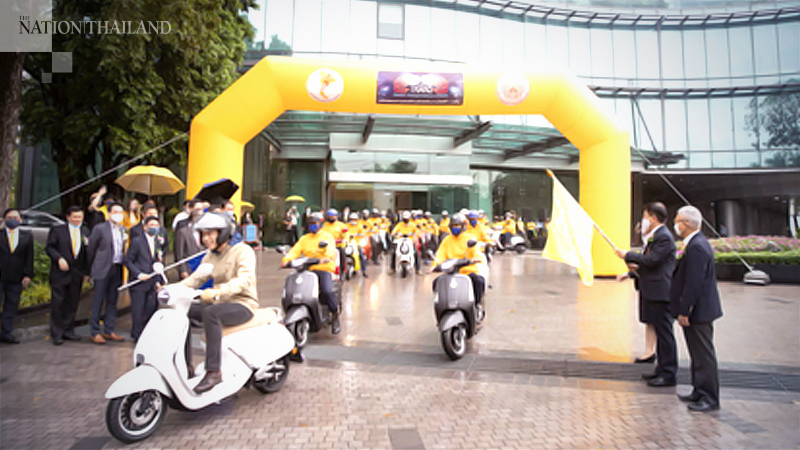
At the opening ceremony of “E Trans E” (Electric Transportation of Egat) on Tuesday (September 22), Kulit Sombatsiri, permanent secretary for the Energy Ministry, said the ministry has been pushing for a wider use of electric vehicles in a bid to reduce pollution.
The event was held at the Egat learning centre in Nonthaburi province.
Kulit said Energy Minister Supattanapong Punmeechaow has also instructed the Energy Policy and Planning Office (EPPO) and Energy Regulatory Commission (ERC) to come up with a new tariff structure for personal consumption and transport.
The use of all kinds of electric vehicles, ranging from electric trains, buses and boats to electric cars and motorbikes, will grow rapidly in the near future.
“There should be a separate system to charge for electricity used in the public transport system. If there is a wider usage of electric vehicles, then the rate should be lower. And if the demand rises, we will have to come up with a forecast of demand for electricity as part of the National Power Development Plan to support it,” he said.
Meanwhile, ERC is testing an innovative system for calculating the tariff structure for electricity.
Separately, Egat will set up a power source to feed charging stations for the public transport system. The charging stations will be installed in PTT petrol stations.
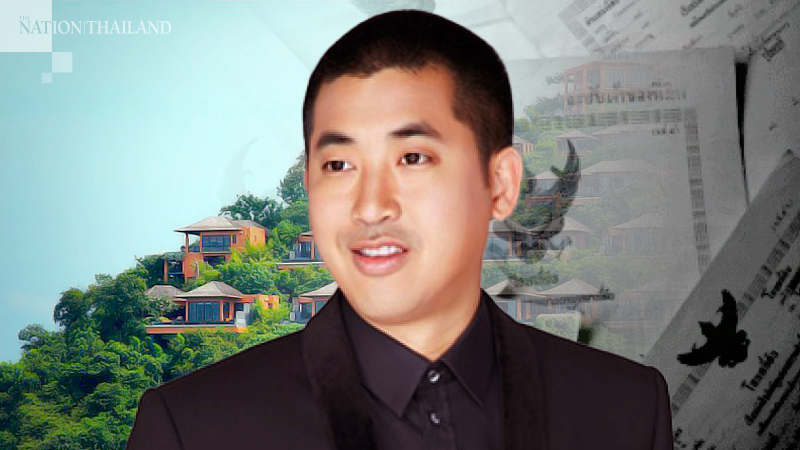
The Phuket Land Office clarified on Thursday (September 24) that the 56 rai the luxury hotel Sri Panwa stands on is not owned by the state.
The provincial land office started investigating the hotel’s title deeds after netizens asked if it had been legally built on a hill in Phuket’s Wichit subdistrict and demanded all documents on rights and construction be closely inspected.
Netizens turned against the hotel after a senior manager criticised the student-led pro-democracy rally on September 19 and 20.
The Phuket Land Office said the hotel has the correct documents and does not occupy any state land.
Meanwhile, the hotel’s owner, Charn Issara Development, has been monitoring comments and is getting ready to file defamation lawsuits.
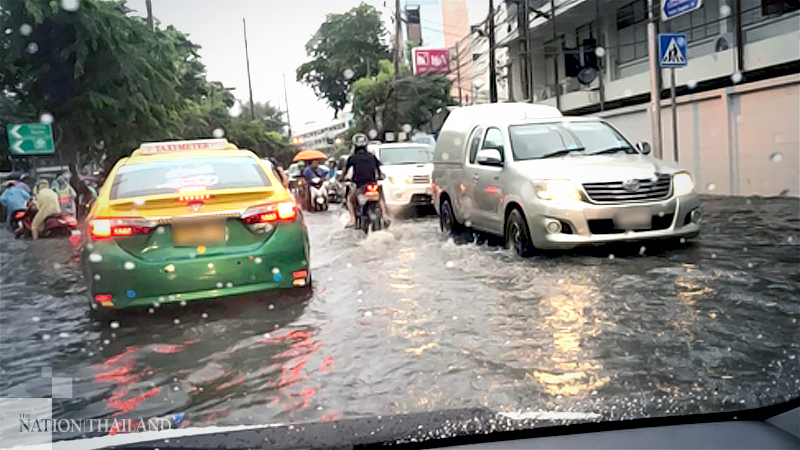
Several Bangkok districts were swamped by flood water after heavy rains hammered 60 per cent of the capital on Wednesday (September 23).
Bangkok faced a southwest wind with a speed of 10-25 kilometres per hour around 3.20pm together with light rain yesterday, resulting in 21mm of rainfall.
But only 40 minutes later, the intensity of the rain increased in Bang Na, Prawet, Saphan Sung, Bang Kapi, Wang Thonglang, Lat Phrao, Bang Khen, Huay Kwang, Din Daeng, Dusit and Bang Sue districts, resulting in the highest quantity of rainfall at 74mm.
Bangkok residents snapped pictures and recorded video of flood waters that “took over” the city, showing how the rain has seriously affected the metropolitan area.
A video even showed flood waters around the MCOT junction in Huai Kwang generating a wave that swept away several vehicles parked on the street.
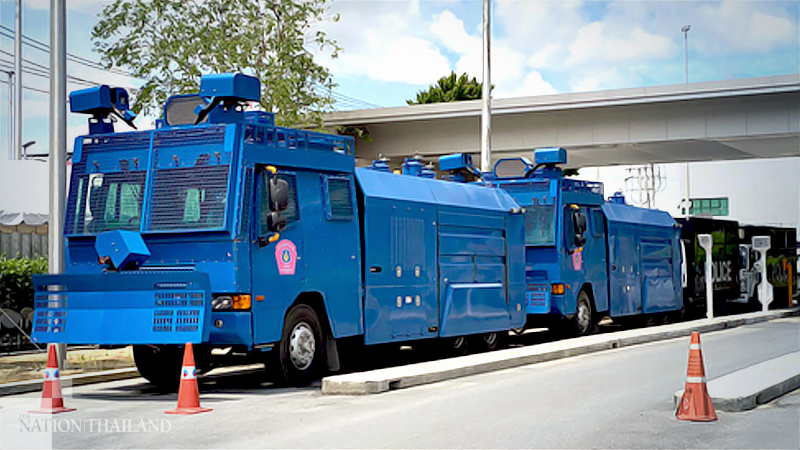
A team of police officers and two water cannon trucks have been made ready to control protesters who will march to Parliament at 4pm on Thursday (September 24).
At 11am, reporters at the Kiak Kai intersection said some people had arrived at the protesters’ assembly point and were waiting to witness the result of the debate on charter amendments.
Meanwhile, police blocked both sides of Sam Sen Road to prevent crowds from rushing into the area and has stationed two water cannon trucks to control crowds, and two prison vans to pick up protesters who violate the law.
The situation early in the afternoon was peaceful, though more anti-government protesters are expected to start gathering from 4am and will be there until 10pm.
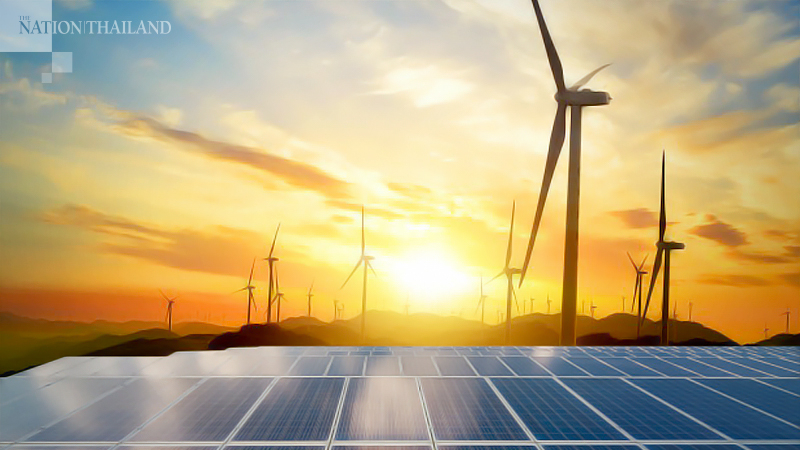
Thailand’s energy policy has failed to develop solar and wind energy, making Vietnam a hub for foreign investment, employment and production, with these helping reduce the impact on that country’s economy from the Covid-19 crisis, Greenpeace Southeast Asia said in its Southeast Asia Power Sector Scorecard report.
“It is still a myth [here] that renewable energy is a supplement to coal power generation,” said Chariya Senpong, head of the Greenpeace Thailand Energy Transition Campaign.
“Thailand’s power development plan supports both fossil fuels and renewable energy, but when considering the budget, we can see where the money goes,” she said.
The energy sector assessment uses the UN International Panel on Climate Change’s projection of greenhouse gas reductions to limit the rise in global temperatures to no more than 1.5 degrees Celsius, and compares renewable energy schemes according to plans under the best circumstances in Thailand, Vietnam, Indonesia, Philippines, Malaysia, Cambodia and Myanmar.
Indicators of energy transition could be assessed from the divestment of fossil fuels, solar and wind market development, various support policies, and energy price management.
Chariya said Vietnam has made the greatest progress in the development of solar and wind energy. “Feed-in-tariffs” have increased Vietnam’s solar power generation capacity from 134 megawatts in 2018 to 5,500 MW by the end of 2019, with some projects seeing no fossil fuel costs. Therefore, that country is not affected by the fluctuation of fossil fuel prices that are impacting many countries in this Covid-19 situation, she added.
The results of this study also show solar power generates three times as many jobs as coal across the value chain.
An analysis of the Thai energy market reveals that the country’s energy policy actually hinders new investment in renewable energy, she said.
In 2015 and 2016, the government postponed solar and wind farm projects to generate electricity. The immediate policy change reduced the motivation of project developers and investors. As a result, the Thai energy market does not attract foreign investors, while the renewable energy policy, including measures to promote electricity purchase from renewable energy, auction of community power plant projects, pricing mechanisms and quotas are also inconsistent and not transparent.
The “baseload is one of the myths” the Electricity Generating Authority uses as an excuse for systematic investment in coal and natural gas, Chariya claimed. Analyses show that Thailand’s major power plants are “overflowing”.
Thailand has high long-term goals but no short-term steps to achieve renewable-energy goals, she said. It needs to increase its renewable energy target to 50 per cent by 2030, just like Vietnam.
“Now in 2020, we shouldn’t have any more excuses for no new power purchase agreements or no supporting policy for solar and wind power,” Chariya concluded.
The Centre for Covid-19 Situation Administration today (September 24) reported two cases in state quarantine over a 24-hour period.
The two latest cases are asymptomatic.
One is a 38-year-old businessman, who returned from the United States on September 10 and went into state quarantine in Bangkok. He was found positive on September 23.
The other is a 54-year-old female teacher, who came home from the US on September 17 and also went into state quarantine in Bangkok. He tested positive on September 21.
Meanwhile, eight patients have recovered and been discharged from hospital.
The number of confirmed cases in Thailand has now increased to 3,516 (578 in state quarantine). Of these, 104 are in hospital and 3,353 have recovered and been discharged. The death toll remains unchanged at 59.
Thailand ranks a safe 136th for most cases in the world.
According to Worldometer, as of 10am, the number of confirmed global cases has passed 32 million (increasing by 315,717 in 24 hours). Of these, 23.67 million have recovered, 62,377 are in severe condition and 981,958 have died.
The US has the most number of Covid-19 cases, with 7.13 million, followed by India (5.73 million), Brazil (4.62 million), Russia (1.12 million) and Colombia (784,268).
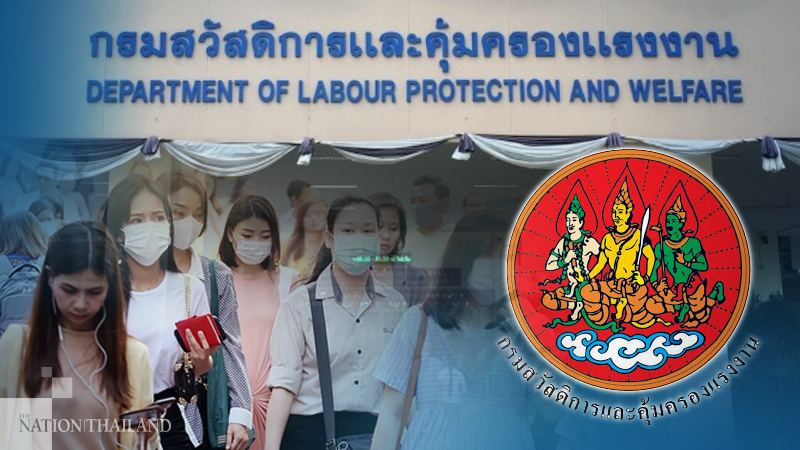
The Department of Labour Protection and Welfare has launched a new ad-hoc centre to track job losses, hoping to serve as an intermediary to help employers and workers gain access to legal rights.
Covid-19 has affected businesses both in terms of increasing costs and unemployment.
According to the department, 1,425 establishments have laid off 22,634 workers from October 2019 to September 2020.
Labour Ministry director-general Apinya Sujarittanan said yesterday (September 23) that the ministry had helped employees receive their rights worth Bt377 million during the period.
For better and quicker help, the ministry has launched its Prevention and Problem Solving on Termination of Employment Operation Centre (PSTC) to specifically monitor the situation, provide advice to both employers and employees, and coordinate with government agencies and the private sector so employees can exercise their rights.