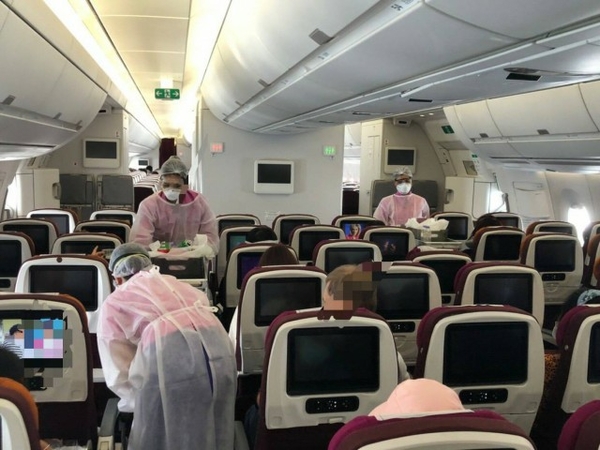
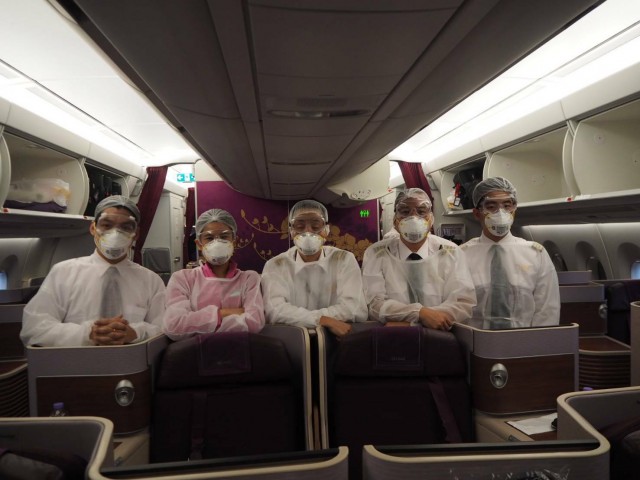
Thai Airways International (THAI), in cooperation with the Foreign Ministry, brought back 491 Thai nationals stranded in some European countries and Australia on September 14.
Thais who had registered with the Royal Thai Embassy in Copenhagen, London and Canberra and the consulate-general in Sydney were eligible to take these special flights, Sqn Leader Anirut Sangrit, vice president of the airline’s flight operations department, said.
THAI Flight TG951 brought back 77 Thais from Nordic countries on September 14 – the fifth flight from Copenhagen to repatriate Thais.
THAI Flight TG917 brought home 248 Thais from the United Kingdom and Ireland on September 14 – the eighth flight organised to repatriate Thais from London.
And THAI Flight TG476 brought back 166 Thais from Sydney, Australia, on September 14 – the ninth flight which has repatriated Thais from Sydney.
The airline also delivered cargo on these round-trip flights.
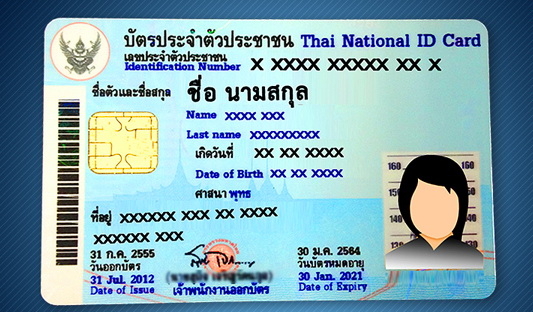
The government will waive the fee for making a new identification card for people who have been affected by Covid-19 or natural disasters, the Royal Gazette announced on its website yesterday (September 15).
The announcement, which was signed by Interior Minister General Anupong Paochinda, stipulated that the ministry decided to waive the fee to help alleviate the financial burden of those affected by natural disasters in many parts of the country and Covid-19, which has wreaked economic havoc.
The areas and period of fee waving will be announced by the Department of Provincial Administration director-general.
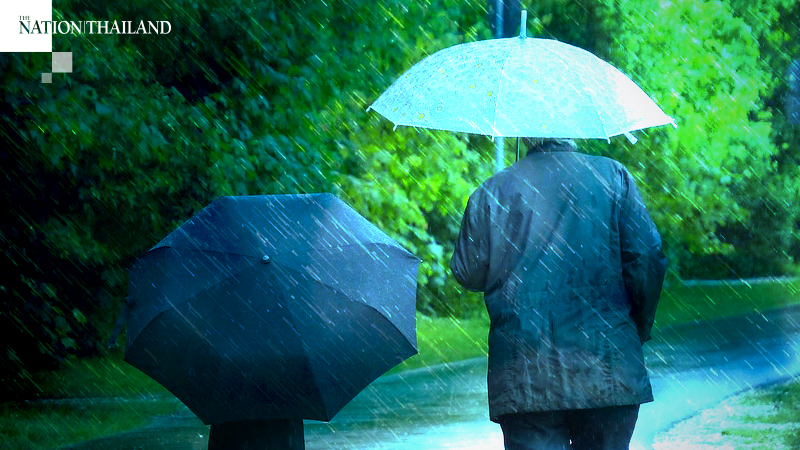
Thundershowers will continue across many parts of the country with isolated heavy rains in the East and the South, The Meteorological Department forecast today (September 16), as the monsoon trough lies across the Central and the lower Northeast regions while the southwest monsoon prevails over the Andaman Sea, Thailand and the Gulf of Thailand.
The department also said a category 2 tropical depression over the South China Sea tends to intensify into category 3, and from September 18-20 it will make landfall over Vietnam and move into Thailand’s upper Northeast and North. The southwest monsoon would intensify with more showers and some torrential rain in the Northeast, the North, the Central region, the East and the South, it added.
Here’s the weather forecast for the next 24 hours:
North: Mostly cloudy with thundershowers in 60 per cent of the area; temperature lows of 24-25 degrees Celsius and highs of 33-36°C.
Northeast: Mostly cloudy with thundershowers in 40 per cent of the area; temperature lows of 23-25°C and highs of 34-35°C.
Central: Mostly cloudy with thundershowers in 40 per cent of the area; temperature lows of 24-26°C, highs of 34-36°C.
East: Mostly cloudy with thundershowers in 60 per cent of the area and isolated heavy rain; temperature lows of 24-26°C, highs of 31-34°C; waves a metre high and 1-2 metres during thundershowers.
South (east coast): Cloudy with thundershowers in 60 per cent of the area and isolated heavy rain; temperature lows of 23-26°C, highs of 32-35°C; waves a metre high and 1-2 metres during thundershowers.
South (west coast): Cloudy with thundershowers in 60 per cent of the area and isolated heavy rain; temperature lows of 23-25°C, highs of 30-32°C; waves 1-2 metres high and over 2 metres during thundershowers.
Bangkok and surrounding areas: Mostly cloudy with thundershowers in 60 per cent of the area; temperature lows of 24-25°C, highs of 33-35°C.
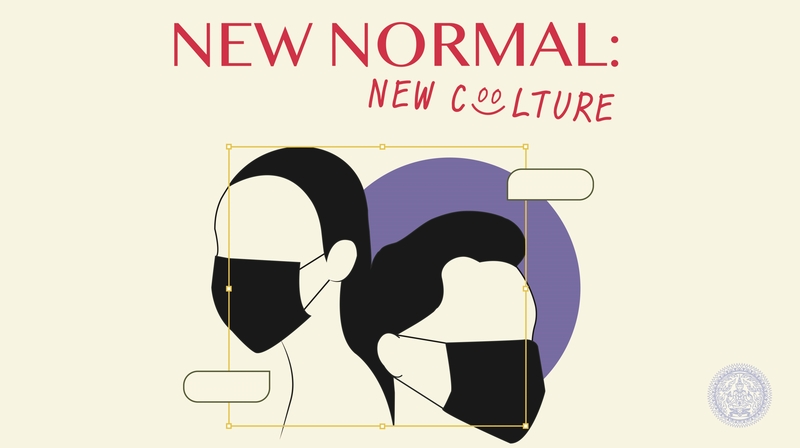
Covid-19’s impact on Thailand’s arts and culture scene was laid bare on Tuesday at a Bangkok event titled “New Normal: New Coolture”, organised by the Foreign Ministry.
Speakers including art academics and magazine editors revealed how museums, fashion, film and media had adapted and even thrived in the “new normal” since the pandemic arrived.
First up was arts-and-culture professor Tongthong Chandrangsu, who explained that Thai museums had followed the global trend by shifting online with virtual exhibitions to beat the lockdown.
Tongthong Chandrangsu (center)
Tongthong predicted this would be a “new normal” for exhibiting art treasures and antiques, though admitted he himself preferred strolling real-life galleries.
Meanwhile, knowing that publishers could no longer afford to put out his books, he decided to self-publish his latest effort via social media. This would be another new “coolture” in the post-Covid era, he added.
Vogue Thailand’s editor Kullawit Laosuksri noted the virus had taken a severe toll on fashion, killing off many shows this year.
Kullawit Laosuksri
New York fashion week, which usually sets global trends for the year ahead, was a pale imitation of previous editions with attendances decimated by the fear of infection.
However, Thailand’s own fashion leader had adapted by reaching more readers through digital channels while also promoting home-grown Thai silk to the international market via designer Diane von Furstenberg, a Vogue partner.
Yongyoot Thongkongtoon, director of film studio GDH 559, said the virus had wreaked havoc on both filmmaking and release dates, but Thailand had suffered less than other countries.
He cited the Disney animated blockbuster “Mulan”, which was released via streaming in the US, where cinemas remain closed as the pandemic rages. In Thailand, China and other countries where Covid has been contained, viewers were able to watch the movie on the big screen as intended.
Yongyoot Thongkongtoon
Meanwhile the growing trend for streaming was helping to spread Thai “coolture” to an international audience via Netflix shows made by local directors, actors and crews, Yongyoot said. Filmmaking is now up and running again after the lockdown limited crews to five members, with global demand for Thai content growing fast.
Last to speak was Zcongklod Bangyikhan, editor of popular online magazine The Cloud.
Covid-19 had not affected his business much, since it was able to release content as normal online, he said.
Zcongklod Bangyikhan
However, the virus crisis had inspired people to focus on their homes with new hobbies such as house plants – which had inspired The Cloud’s latest workshop.
Zcongklod explained that the magazine collaborated with professional horticulturists to hold classes in Nakhon Pathom and Nonthaburi. Despite the cost – Bt7,500 for four classes – the course was sold out in a few hours – another example of how the post-Covid “coolture” is creating new business opportunities for culture-related enterprises.
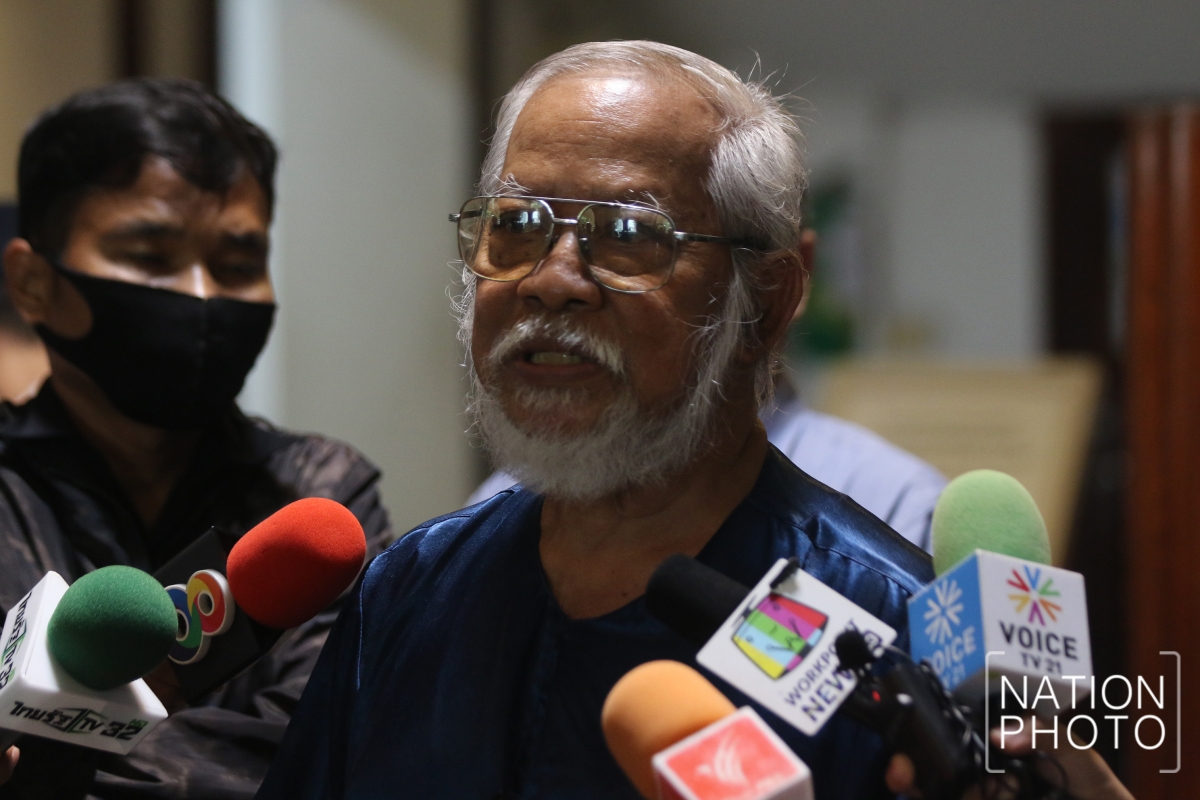
National artist for literature, Suchart Sawasdsri, led other writers and artists to hand a letter over to the Thammasat University’s dean asking him to reconsider the ban on an anti-government protest scheduled for September 19.
The artists said they supported the student-led pro-democracy movement and wanted the university to allow the protest to be held at the Tha Phra Chan campus.Meanwhile, former university vice rector Kaewsan Atibodhi has collected close to 3,000 signatures to oppose the protest.Last week, Thammasat University issued a statement prohibiting the September 19 rally at its Tha Phra Chan campus citing safety and other concerns.
The Cabinet on Tuesday (September 15) resolved to set aside Bt6.17 billion to solve flooding and drought problems in the country, the government’s deputy spokesperson Rachada Dhnadirek said.
The funds will be split between the Office of the Natural Water Resources (ONWR), the Department of Disaster Prevention and Mitigation and the Royal Irrigation Department.
ONWR will be granted Bt5.08 billion for its projects to deal with flooding and boost water capacity. The Natural Resources and Environment, Agriculture and Cooperatives as well as Interior ministries are overseeing ONWR’s projects, such as boosting the potential of water diversion systems and 142 water sources, increasing 63 irrigation water sources and setting up 65 aquifers.
The Department of Disaster Prevention and Mitigation will be granted Bt810 million to install 18 water pumps that will be capable of pumping at least 35,000 litres per minute.
The Royal Irrigation Department will be given Bt284.86 million to procure new machines to deal with flooding.
The Cabinet on Tuesday gave the green light to extending the service life of taxis from nine years to 12 years, in a move to reduce financial burdens for cabbies during the Covid-19 crisis.
Ministers also approved scrapping a measure for mandatory installation of GPS in taxis, meaning cabbies will be able to use their smartphones to track their vehicles travel data history.
Both measures were among six demands made the professional association of taxi drivers at a rally in front of Government House last Wednesday.
The Association of Public Taxi Motorists also wants the government to scrap a draft bill allowing private vehicles to be used for ride-hailing services, to control the price of taxi fuel, to cap interest on taxi-related loans, and to reduce taxi insurance.
Government employees have been handed an additional two days of subsidised travel under the “We travel together” tourism stimulus scheme. The measure was proposed by the Tourism and Sports Ministry and approved by the Cabinet on Tuesday.
Thai citizens who sign up for the scheme get 40 per cent off the price of 10 nights’ accommodation and Bt2,000 towards airline tickets, plus Bt600 and Bt900 daily spending money on weekdays and weekends respectively.
The additional two days of subsidised holiday is available to civil servants, government employees, and state enterprise workers.
The move comes after the Tourism Authority of Thailand said more should be done to stimulate domestic tourism as only 17.5 per cent of 5.05 million registrants had booked holidays under the scheme as of September 5.
“We Travel Together” is part of domestic tourism stimulus packages worth Bt22.4 billion designed to keep Thai tourism afloat until the return of international visitors. However, the scheme has received a weak response since launching on July 18.
By The NationThai anti-drugs police contacted Australian authorities on Tuesday after almost 1 tonne of liquid methamphetamine was found hidden inside cans of Thai coconut milk shipped to Sydney.
Narcotics Suppression Bureau chief Pol Lt Gen Chinnapat Sarasin said his officers have asked for more information after the Australian Border Force seized more than 600 litres of meth on Friday.
The meth was exported in August and Thai police are now hunting for the culprit who arranged the shipment in Thailand. Chinnapat said investigators were working on the theory that the drug consignment was sent through a private parcel company by boat.
They also want to know whether the meth was transformed into liquid form before it was shipped, since Thailand has previously only witnessed the drug in crystal form.
The discovery of the liquid meth shipment comes after Bangkok police last month nabbed a man preparing to deliver heroin hidden in engine parts to Taiwan.
The Cabinet has approved a proposal of issuing long-stay visas for foreigners visiting Thailand.
Deputy government spokesperson Traisuree Taisaranakul said on Tuesday (September 15) that the Cabinet has agreed to allow foreigners to live in Thailand for up to nine months per trip, provided they can prove they have spent 14 days in quarantine.
The first visit will allow 90 days of stay, which can then be extended twice totalling nine months.
This measure will start from next month, and up to 1,200 tourists per month will be granted this extended visa.
Qualifications for the visa will be based on:
• Tourist’s compliance with measures put in place to curb the spread of Covid-19 and agreement to spend 14 days in an alternative local state quarantine site;
• Evidence of long-term residence in Thailand such as hotel reservation, rental contract in traveller’s name or that of family members residing in Thailand or title deed of a purchased unit.
This special tourist visa will cost Bt2,000 per 90-day extension and will be available until September 2021.
The deputy spokesperson added that this visa will be applicable to visitors from countries that have been able to control the Covid-19 outbreak. Related state agencies will draw up the final regulations and the Interior Ministry will announce official details soon.



 Photos by Korbphuk Phromrekha
 The artists said they supported the student-led pro-democracy movement and wanted the university to allow the protest to be held at the Tha Phra Chan campus.
 Meanwhile, former university vice rector Kaewsan Atibodhi has collected close to 3,000 signatures to oppose the protest.
 Last week, Thammasat University issued a statement prohibiting the September 19 rally at its Tha Phra Chan campus citing safety and other concerns.

 Rachada Dhnadirek