#ศาสตร์เกษตรดินปุ๋ย : ขอบคุณแหล่งข้อมูล : หนังสือพิมพ์ The Nation
https://www.nationthailand.com/sport/30379052?utm_source=category&utm_medium=internal_referral
Marquez wins the BMW M Award for seventh time

395 Viewed
|
|


|

#ศาสตร์เกษตรดินปุ๋ย : ขอบคุณแหล่งข้อมูล : หนังสือพิมพ์ The Nation
https://www.nationthailand.com/sport/30379052?utm_source=category&utm_medium=internal_referral
395 Viewed
|
|
|
#ศาสตร์เกษตรดินปุ๋ย : ขอบคุณแหล่งข้อมูล : หนังสือพิมพ์ The Nation
https://www.nationthailand.com/sport/30379042?utm_source=category&utm_medium=internal_referral

637 Viewed
Roberts, an Australian businessman and a veteran in the Asian yachting circuit, finished first in the two races held on Tuesday on his boat Team Hollywood, a big improvement on his second and third place finishes on the first day of racing.
Very little separated the five boats contesting the class on Tuesday, but as the wind picked up speed to 10-12 knots with gusts up to 19 knots as the boats made their way around some islands off Phuket in the final race of the day, tactics were the key.
First day leader WindSikher, raced by Nick Burns and Sarab Singh, came second overall after Tuesday’s two races, where they finished with two third places.
However, Thai-registered boat THA 72, with former world Optimist champion and two-time Asian Games gold medalist Noppakao Poonpat at the helm, ended the day in third place with two second-place finishes on Tuesday.
With so little separating the five boats in the leading class, Noppakao’s experience may prove to be the edge the Thai boat needs by the time the last races are held on Saturday.
“Thank you to the Whitcraft family for giving me the opportunity to sail on their boat,” she said. “I think we did very well today, and I feel happy about that. I think we will keep improving every day.”
In the IRC 1 class, Russian helmsman Alexey Mashkin steered MegaZip to a third and first place on Tuesday for the provisional overall lead. Australian Larry Dean on Fujin was second overall, with fellow Aussie Craig Nicholls on Aquarii in third place.
Despite being one of the smallest boats in the IRC 2 class, Morten Jakobsen steered his Thai-registered boat Over Here into first place overall after a first and third place in Tuesday’s two races.
China’s Shen Sheng was second overall aboard Kata Rocks BigBoys Sailing Team, while the Royal Thai Naval Academy finished third. Experienced sailor Veerasit Puangnak was at the helm of the Royal Thai Navy boat, which this year was crewed by cadet sailors, who are expected to improve with every outing. Their first place in the final race of the day showed how quickly the cadets are learning the ropes.
Hong Kong-based sailors did well in the Premier class, with Geoff Hill sailing Antipodes into provisional first place overall with a first and second placing. Thailand’s Inthinai Yingsiri was second overall aboard Pine-Pacific, while Hong Kong’s Michael Brinkers sailed Bella Uno into third overall.
In the Multihull Racing class, Australian Dan Fidock leads on Fugazi with two first places on Tuesday, followed by Germany’s Gaetan Verhegge on Team Red Blood and Great Britain’s Dan Moore on Frankenstein.
Britain’s John Newnham leads the Firefly 850 Sports class on Twin Sharks, followed by the Thai-registered Voodoo with Hans Rahmann at the helm and Neil Aye from Great Britain on Mamba in third place.
The waters off Phuket are set to become even more crowded on Wednesday when 24 one-metre radio-controlled boats start four days of racing for the first time with the Phuket King’s Cup Regatta, as well as 120 young sailors, who will be contesting the International Dinghy Fleet.
An international field will pilot the radio-controlled boats, with competitors from Thailand, Malaysia, Singapore, Australia and China.
With regatta organisers keen to promote sailing among the country’s youth, the comprehensive classes which start on Wednesday off Kata Beach will involve 120 young competitors who will contest the Optimist Boys and Girls, Laser 4.7 (Mixed), Laser Standard, Laser Radial and 420 classes.
The Phuket King’s Cup Regatta is organised by the Phuket King’s Cup Regatta Organising Committee under the auspices of the Royal Varuna Yacht Club, in conjunction with the Yacht Racing Association of Thailand, the Royal Thai Navy and the Province of Phuket.
There will be five days of racing for keelboats and multihulls, with a reserve day on Thursday, December 5. For the International Dinghy classes and the IOMC class, four consecutive days of racing will start from Wednesday.
#ศาสตร์เกษตรดินปุ๋ย : ขอบคุณแหล่งข้อมูล : หนังสือพิมพ์ The Nation
https://www.nationthailand.com/sport/30379028?utm_source=category&utm_medium=internal_referral

1,208 Viewed

Spearheaded by former world champion Ratchanok Intanon, Thailand have dominated the women’s title for the four successive time. It marked their seventh victory after their previous triumphs in 1965, 1971, 2005, 2011, 2015 and 2017 (no team competition in 2013).
The defending champion got off to a great start when former world No 1 Ratchanok overcame a second game lapse to beat rising Indonesian star Gregoria Tunjung 21-13 12-21 21-14. Tunjung suffered a leg injury while running down a shot from the Thai and had to be carried off the court.
Indonesia struck back in the second rubber when Ni Ketut Istarani and Apriyani Rahayu beat Rawinda Prajongjai and Puttita Supajirakul 21-17 21-18 in the women’s doubles.

However, 2017 women’s singles champion Busanan Ongbamrungphan put Thailand upfront again with an easy win over the error-prone Fitriani Fritiani 21-8 21-10. The Chulalongkorn Univeristy graduate exacted sweet revenge over the diminutive rival who beat her in the January’s Thailand Masters final.
 Phataimas and Chayanit
Thailand sealed the deal in the fourth rubber when Chayanit Chaladchalam and Phataimas Muenwong ousted Siti Fadia Ramadhanti and Ribka Sugiarto 21-8 21-17.
However, both Ratchanok and Busanan will skip the individual competition which begins later this week. Both are committed to the BWF World Tour Finals due in Guangzhou next week.
#ศาสตร์เกษตรดินปุ๋ย : ขอบคุณแหล่งข้อมูล : หนังสือพิมพ์ The Nation
https://www.nationthailand.com/sport/30379027?utm_source=category&utm_medium=internal_referral

913 Viewed
With Scott Hend opting not to tee up at the AfrAsia Bank Mauritius Open this week, the 23-year-old Thai has secured his prime position atop the money list as he cannot be caught by his closest challenger.
Two wins at the SMBC Singapore Open and Kolon Korea Open along with seven other top-10s on the Asian Tour have earned the prodigious talent the divine right to become the fourth Thai after Thongchai Jaidee (2001, 2004, 2009), Thaworn Wiratchant (2005, 2012) and Kiradech Aphibarnrat (2013) to be crowned Asia’s number one.
“I’m really honoured to join the likes of Thongchai, Thaworn and Kiradech as the next player from Thailand to win the Asian Tour Order of Merit. It’s an exclusive group of champions which I’m so proud to be in.
“While it’s not a perfect season this year as there are times which I thought I could play even better, overall, it has been a very good one where I took advantage of my opportunities and made the best of them,” said Jazz, who has risen to a career- high of 52nd on the Official World Golf Rankings this year.
Jazz has been one of the revelations this season with wins at the Singapore Open in January, where he beat a field which included Sergio Garcia and Paul Casey, and Korea Open in June.
“The win in Singapore was certainly the highlight of the year for me because I won early in the season and that victory broke me into the world’s top 100 then. It opened doors for me and I took advantage of them,” said Jazz, who also won the second edition of the Panasonic Swing series and enjoyed a standout season in Japan with six top-10 finishes in the Land of the rising sun.
In May, Jazz came to global prominence at the PGA Championship where he entered the final round in joint second place before closing with a 77 to settle for tied-14 finish, which was the best-ever result achieved by a Thai player at the PGA Championship.
“Playing in the PGA Championship was not only an unique experience but also a memorable one.
“Playing in front of the large crowds and against the best players in the world is something I’ll never forget,” said Jazz, who went on to make his second consecutive appearance at The 148th Open in July.
Jazz first played his way into the history books of the Asian Tour in 2010 when he became the youngest ever player to make the halfway cut at the 2010 Asian Tour International in Bangkok at the age of 14 years and 71 days.
But his path towards greatness was not littered without road bumps, struggles and setbacks.
He lost his Asian Tour card for the first time in his career in 2016 but bounced back quickly the following year with his Asian Tour breakthrough victory at the Bashundhara Bangladesh Open.
“Those experiences moulded me into a better player. I spent two weeks in the monastery where I found peace and slowly played my way back. That breakthrough in Bangladesh brought back the self-belief that I can actually play good golf and win tournaments,” said Jazz.
Jazz then saw his fortune soared with another win on home soil at the Queen’s Cup in 2018 followed by another two victories at the National Opens of Singapore and Korea this year.
The benchmark for the Thai has now been raised event higher as he sets out to sing another winning tune in 2020.
“I just want to get even better and not rest on my laurels. I want to compete in more Majors and make big moves on the world rankings,” said Jazz.
#ศาสตร์เกษตรดินปุ๋ย : ขอบคุณแหล่งข้อมูล : หนังสือพิมพ์ The Nation
https://www.nationthailand.com/property/30379018?utm_source=category&utm_medium=internal_referral

905 Viewed
Across all regions, private equity funds emerged as the dominant buyer, accounting for 20-50 per cent of annual resort transaction volume in each market.
In the Asia Pacific series of JLL’s Global Resort Report, Phuket was one of the three hotel investment markets in the region to be highlighted.
The island saw a total of Bt4.85 billion of resorts sold between 2014 and the first half of 2019, with half of these resorts achieving a transacted price at above Bt950 million.
According to JLL’s report, investment activity over the period was dominated by foreign investors whose acquisitions accounted for 79 per cent of the total investment volume, with the largest inbound capital coming from Singapore (58 per cent).
Findings from JLL also show that developers were the most acquisitive group, accounting for more than 65 per cent of total transaction volume on the island, followed by hotel operators at 20 per cent.
Strong growth in tourism has contributed greatly to Phuket’s appeal as a hospitality investment destination.
Total overnight visitors to the island have grown steadily over the past decade (2008 to 2018), with international and domestic visitation registering a Compound Annual Growth Rate of 10.9 per cent and 9.9 per cent, respectively. International overnight visitors accounted for 72.7 per cent of total arrivals.
“In 2019, the number of international visitors to Phuket is likely to taper off slightly due primarily to surging Thai Baht and unfavourable global economic conditions. However, investors have continued to show keen interest in acquiring quality resort assets in Phuket as they remain confident in the long term outlook for the tourism market of one of the world’s most popular holiday destinations,” noted Pitinut Pupatwibul, senior vice president – Strategic Advisory for JLL’s Hotels and Hospitality Group
“In addition, increased air connectivity, lower barriers of entry through visa fee waivers and limited future supply are expected to bode well for Phuket’s resort segment in the medium to long term,” she adds.
JLL’s Global Resort Report covers resort assets that are managed to meet industry standards by international or local resort/hotel operators, and excludes condotels.
According to JLL’s Hotels and Hospitality Group, the total stock of resorts in Phuket stood at 14,300 rooms at the end of June 2019. An estimated 540 resort rooms are planned for completion between the second half of 2019 and the end of 2021, accounting for less than 4 per cent of the existing stock.
Global perspectives
“Over the past five years, resorts have been star performers,” says Lauro Ferroni, Global Head of JLL Hotels & Hospitality Research. “Given many consumers’ propensity for experiences over material goods, we anticipate continued investment activity in this sector globally.”
According to JLL’s Global Resort Report, international tourist arrivals are anticipated to reach 2.2. billion in 2019, with a continued growth trajectory throughout the next decade, which will benefit resorts globally.
#ศาสตร์เกษตรดินปุ๋ย : ขอบคุณแหล่งข้อมูล : หนังสือพิมพ์ The Nation
https://www.nationthailand.com/business/30379053?utm_source=category&utm_medium=internal_referral

472 Viewed
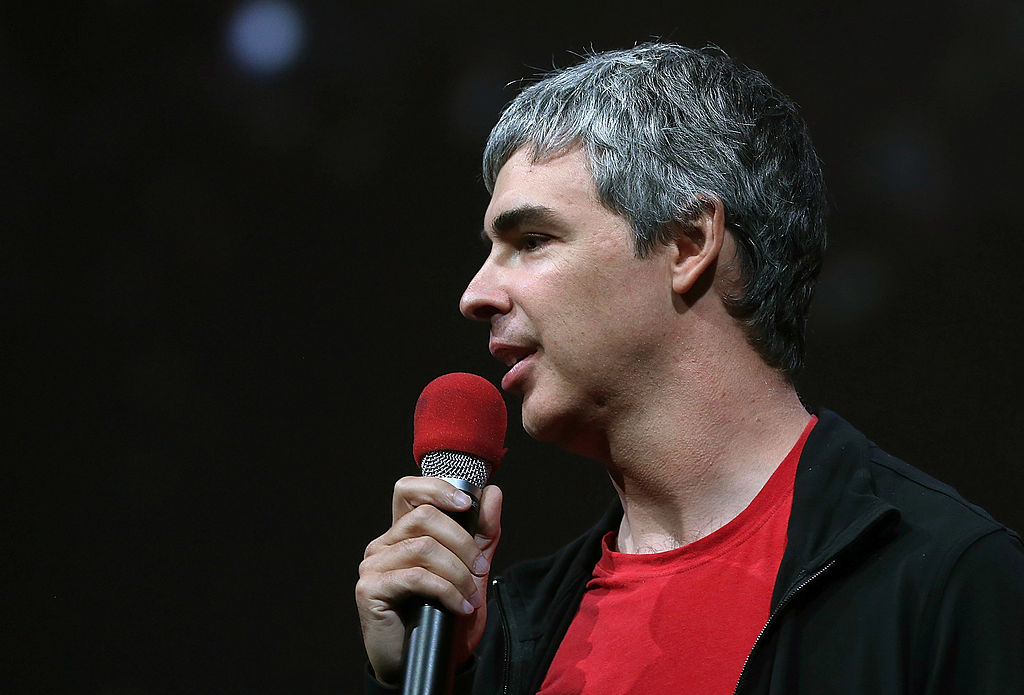
Page and co-founder Sergey Brin will no longer be involved in day-to-day operations of Alphabet, the parent company, according to an announcement Tuesday, though they will keep their board seats. Brin was president of Alphabet.
It marks the first time Page won’t have oversight of at least some of the company’s operations. Page has turned over the CEO role once before, in 2001, to Eric Schmidt, but Page took on a product role. He took over Google again 10 years later when Schmidt stepped down.
“We are deeply committed to Google and Alphabet for the long term, and will remain actively involved as board members, shareholders and co-founders,” Page and Brin wrote in the announcement. “We plan to continue talking with Sundar regularly, especially on topics we’re passionate about.”
Pichai inherits sole responsibility for a company buffeted by antitrust investigations and the ire of President Donald Trump. Pichai had already become the public face for the company in recent years, meeting with the president, testifying in Congress and leading Google’s annual developer conference and quarterly investor calls.
Under Pichai, Google has been trying to become more buttoned up, amid a series of leaks to the media and worker pushback. Pichai often spoke at Google’s weekly all-hands meetings, acknowledging in October that the company was struggling with transparency and with how to deal with internal debate over controversial topics, according to a recording of the meeting obtained by The Washington Post.
In their letter Tuesday, the co-founders seemed to acknowledge the challenges Pichai faces, writing that he will be “accountable” for Google going forward and that they would act more as “proud parents” of the company.
Unlike his Silicon Valley peers at Apple and Facebook, Page has remained largely out of the public in recent years. He stopped attending the company’s weekly all-hands confab and skipped the annual shareholder meeting. One shareholder even confronted board members in June over Page’s disappearing act only to be told that he simply couldn’t make it.
He even scaled back the annual Halloween celebration at his home, replacing prior years’ elaborate displays and full-sized candy with mini-size treats and modest Christmas lights.
In 2013, Page acknowledged a health condition that affected his vocal cords and a chronic inflammation of his thyroid. On quarterly earnings conference calls, Page’s voice had sounded raspy.
But Page was active behind the scenes, signing off on millions of dollars in payouts to former officials who were accused of inappropriate relationships while working at Google. Last month, the company’s board hired a law firm and formed a special subcommittee to investigate complaints of sexual misconduct among senior executives. Alphabet is facing lawsuits alleging it failed shareholders by approving lucrative exit packages for executives despite credible claims of misconduct.
Brin and Page hold a majority of the company’s voting stock, meaning major board decisions still need their stamp of approval.
Page has been CEO of Alphabet since the holding company was formed in 2015 and Pichai was named
Google CEO. Alphabet oversees other divisions including X, from which experimental projects emerge, and several investment arms. Page also has outside interests, such as his flying car startup Kitty Hawk.
Founded by Brin and Page in a garage near Stanford University in 1998, Google has since ballooned to a $900 billion company that has taken aim at nearly corner of consumer life, from retail sales to autonomous cars to home automation to city planning. It has the world’s most used browser, Chrome, and the most ubiquitous mobile phone software, Android.
But the lifeblood of the firm remains advertising, which accounts for about 85% of sales. The company’s stranglehold on digital ad sales is likely central to antitrust investigations underway at the Justice Department and from nearly every state attorney general in the country.
Despite regulatory concerns over its reach, Alphabet announced nearly $5 billion in acquisitions in recent months, including fitness tracker Fitbit and data analysis firm Looker. The transactions drew sharp criticism from some lawmakers, and the U.K.’s competition watchdog launched a probe into the Looker deal.
More recently, employees have been protesting Google’s workplace conditions and the aims of the company, which include contracts with government agencies and a clandestine attempt to make software available in China, where the company is largely banned.
Four engineers were fired last month for what Google said were violations of its policies on accessing confidential internal files and calendars. But the engineers said it likely had more to do with their activism, which included creating petitions and discussing the possible formation of a union. Google has denied those claims.
Pichai, whom colleagues describe as deliberate and even-keeled, has been at Google since 2004. His work helped grow Android operating software and the Chrome browser before he ascended to the top Google job as part of the company’s restructuring.
“I want to be clear that this transition won’t affect the Alphabet structure or the work we do day to day,” Pichai wrote in a companywide email Tuesday.
Last month, Pichai halted the weekly all-hands meetings, known as TGIF, weeks after the leaked meeting, saying he would no longer field questions about cultural or personnel matters.
#ศาสตร์เกษตรดินปุ๋ย : ขอบคุณแหล่งข้อมูล : หนังสือพิมพ์ The Nation
https://www.nationthailand.com/business/30379039?utm_source=category&utm_medium=internal_referral

909 Viewed
Of the three new properties, the first is located at Design Village community mall on Phutthamonthon Sai 2. Costing Bt70 million in investment, it will open on December 9 with a forecast revenue of Bt300 million a year.
The second, costing Bt60 million, is located at People Park Onuch community mall. It will open its doors on December 19 with an estimated sales revenue of Bt200 million a year.
The third outlet, and the first Gourmet Thai stand-alone supermarket branch to have commenced operation, is located at I’m Chinatown community mall. Costing Bt10 million in investment, it opened on November 29 and expected Bt50 million in annual sales.
In addition to the new openings this year, The Mall Group’s Home Fresh Mart supermarkets at Ramkhamhaeng and Thapra branches will be upgraded to Gourmet Market in 2020 after renovation.
Chairat expected the combined sales of Gourmet Market and Home Fresh Mart to exceed Bt12 billion this year, up from Bt11.8 billion last year.
#ศาสตร์เกษตรดินปุ๋ย : ขอบคุณแหล่งข้อมูล : หนังสือพิมพ์ The Nation
https://www.nationthailand.com/business/30379030?utm_source=category&utm_medium=internal_referral

992 Viewed
This will enable the sellers to access financing at their fingertips, with instant approval, minimal documentation required and zero fees.
Customers can get loans within a minute.
KBank aims to lend Bt1 billion under this type of loan by the end of 2020.
Lazada Thailand deputy CEO Jack Zhang said technology can be leveraged to unlock more growth opportunities for financial institutions and small businesses.
“With this new lending model that removes the tedious manual process of assessing and validating information, a seller can apply and get cash instantly for a loan on his phone. With the partnership, we look forward to enabling more inclusive financial services for the many small businesses and sellers on our platform, as part of our mission to make it easy to conduct business anywhere.”
KBank senior executive vice president Wirawat Panthawangkun said that amid the present e-commerce craze in Thailand, online trading has seen brisk sales. As this channel continues to surge in popularity among traders, newcomers have recently jumped onto the bandwagon.
However, access to funding sources is among their top pain points due to hindrances such as insufficient documents and collateral to support loan applications and having no bank account.
Under the “Better Together” collaboration between KBank and Lazada, sellers on the platform are able to gain access to low-interest loans without the need to provide collateral or documentation and no fees.
The loan limit of Bt600,000 ensures that Lazada’s merchants have enough working capital for their business needs.
#ศาสตร์เกษตรดินปุ๋ย : ขอบคุณแหล่งข้อมูล : หนังสือพิมพ์ The Nation
https://www.nationthailand.com/business/30379020?utm_source=category&utm_medium=internal_referral

2,357 Viewed
The agreement aims to maximise customer services and the sharing of infrastructure nationwide and will enhance both providers’ services, leading to additional revenue.
The move is also aimed at maintaining existing subscribers and widening the subscriber base with more extensive services, benefiting both consumers and the telecom industry.
Dtac currently has 20.4 million mobile phone subscribers and more than 400 customer service points. It provides third and fourth generation mobile services (3G/4G) and is preparing to usher in the 5G era.
TTTBB has a solid foundation with quality fixed broadband and a variety of services, covering a wide range of segments, such as retail customers and corporate clients, and boasts 3 million subscribers with more than 500 stores nationwide.
The partnership is expected to maximize customer value and serve the digital lifestyle.
The MoU covers a partnership on promotion and marketing, leveraging multiple services, namelu mobile broadband, Wi-Fi, over-the-top service and content distribution. Customers will also be able to subscribe and purchase products and services from both companies. Further business collaborations will also be explored in the future.
Jas has informed the Stock Exchange of Thailand that the collaboration will not only enhance its new business opportunities and additional sources of revenue, but also enable TTTBB to maintain existing subscribers and further expand new customer bases.
#ศาสตร์เกษตรดินปุ๋ย : ขอบคุณแหล่งข้อมูล : หนังสือพิมพ์ The Nation
https://www.nationthailand.com/business/30379055?utm_source=category&utm_medium=internal_referral

434 Viewed
Whether it’s Iran, China, Japan, Russia or the Taliban – Trump claims there’s a mad rush by foreign friends and foes alike to sit at the table with him and negotiate under his terms. He has repeated the same boastful talking point even as he’s struggled to finalize major deals.
“Let me tell you, the China trade deal is dependent on one thing, do I want to make it?,” Trump said Tuesday during a summit of the North Atlantic Treaty Organization alliance in London. The Chinese, he added, “want to make a deal now.”
Minutes later, Trump said that Saudi Arabia was “very happy” to agree to pay the United States for military protection and that Russia “very badly” wanted to strike an arms control agreement.
“Russia wants to make a deal as recently as like two weeks ago,” he said.
But as Trump campaigns for his reelection, he has abandoned more deals than he has struck, and his boasts about eager negotiating partners could face scrutiny from voters who expected more results from the self-described master dealmaker, said Barbara Perry, a presidential historian at the University of Virginia’s Miller Center of Public Affairs
“Three years into his term, are there going to be people who say ‘He promised me X, and I didn’t get it, and now I’m not voting him’?” she said. “It’s certainly a high-wire act.”
In some cases, other countries have flatly contradicted Trump or expressed surprise about his assertions, indicating that some of his claims of favorable negotiating conditions are more wishful thinking than reality.
During a Thanksgiving Day visit to troops in Afghanistan, Trump said that the Taliban “wants to make a deal” and that “tremendous progress” had been made.
“They didn’t want to do a cease-fire, but now they do want to do a cease-fire,” Trump said of the militants.
But the next day, neither the Taliban nor the government of Afghan President Ashraf Ghani indicated that a cease-fire was even under discussion.
More than 100 times over the past two years, Trump has claimed that China was anxious to end the trade war by capitulating to his demands. In one case this summer, he claimed that he had received high-level phone calls from Chinese officials pining for a deal – something that China immediately denied.
“China is dying to make a deal with me,” Trump told reporters on July 30.
Months earlier, China was also desperate to strike a deal – at least in Trump’s telling.
“China wants to make a deal very badly,” Trump said on Nov. 20, 2018. “They might not say that to you, but they want to make it very badly.”
But Trump has not secured such a deal, and the trade war has only escalated with both sides imposing tariffs on imported goods. Trump has repeatedly hailed some intermediate steps, including Chinese pledges to purchase American agriculture, while the broader negotiations have failed to sustain momentum.
On Tuesday, Trump indicated the long-awaited deal with China may not happen for another year, but said he’s fine with that despite his boasts about Beijing’s desperation to get a deal done.
“I have no deadline,” he told reporters. “In some ways, I think it’s better to wait until after the election, if you want to know the truth.”
While Trump previously has pointed to his “great friendship” with Chinese President Xi Jinping as a reason for optimism about a trade agreement, on Tuesday he said the relationship has soured.
“I don’t think he likes me so much anymore,” Trump told reporters.
The shift from ambitious claims about soon-to-be-announced deals to more realistic assessments about their slim prospects has become a familiar one in the Trump administration.
The president has claimed that the Palestinians want to make a deal with Israel; that Iran was eager to meet with him to renegotiate the nuclear agreement he abandoned; that North Korea’s Kim Jong Un wanted to abandon his nuclear program; and that Japan was ready to capitulate to his demands to avoid car tariffs.
But deals with all of those actors have been elusive and in some cases, Trump has lost ground after touting progress.
“We’re getting close. And they want to make a deal,” Trump said in August when asked about France’s digital services tax. “And we’ll see if we can make a deal. We’re getting close.”
On Tuesday, Trump said he would slap tariffs on French wine and other products as a retaliation for the digital services tax, which hits American technology companies. Trump’s administration said Monday that the French tax should be met with tariffs on $2.4 billion in imports, a significant escalation that indicated a deal with France had become unlikely.
In his 1987 book “The Art of the Deal,” Trump encouraged aspiring dealmakers to “use your leverage,” advocating a high-pressure approach to forcing a competitor’s hand. Trump’s continues to embrace the themes of his book as he tries to strike deals from the White House, Perry said.
Trump often credits himself with creating favorable negotiating conditions, claiming that he has forced other countries to the table by pressuring them with drastic moves.
Trump said Russia wanted to strike an arms deal only because he had pulled out of the existing treaty. He said China wanted to make a deal because his tariff campaign had tanked its economy. He said the Palestinians would be eager to negotiate a peace deal with Israel because he had moved the U.S. Embassy to Jerusalem, taking that contentious issue off the table. He claimed the Taliban was ready to strike a cease-fire only because he increased military pressure on the militants after a potential agreement fell through in September.
“Everybody wants to make a deal,” Trump told WITN-TV in Greenville, North Carolina, in July.
There’s little proof any of that has actually worked to secure the deals that Trump seeks. In many cases, his moves have angered the other party or pushed it to consider new alternatives.
Trump has repeatedly highlighted the victories from his unorthodox negotiating strategy, including Mexico’s willingness to deploy troops to stop migrants from crossing the border and the U.S.-Mexico-Canada trade agreement that’s pending before Congress.
And Trump’s showmanship has worked with his core supporters, who continue to believe in his dealmaking abilities, said Perry.
“As he sees the clock running out on the final year of his term, now he will turn to the next argument,” she said. “Which is: ‘Well, I haven’t gotten the best deal that I wanted. . . so of course you need to reelect me to make sure that great deal that I assured you would happen, will happen.'”


