Foreign tourism agencies turn to China’s biggest social platform WeChat to reach Chinese tourists

ศาสตร์เกษตรดินปุ๋ย : ขอบคุณแหล่งข้อมูล : หนังสือพิมพ์ The Nation

https://www.nationthailand.com/news/30378842?utm_source=category&utm_medium=internal_referral

Foreign tourism agencies turn to China’s biggest social platform WeChat to reach Chinese tourists

Nov 28. 2019
Last year, 149 million tourists travelled overseas, almost 15 per cent higher than the year before.ST PHOTO: LIM YAOHUI

Last year, 149 million tourists travelled overseas, almost 15 per cent higher than the year before.ST PHOTO: LIM YAOHUI
By Danson Cheong
The Straits Times/Asia News Network

183 Viewed

BEIJING – Tourism agencies are turning to China’s most popular social media app, WeChat, to try to get a bigger piece of the country’s growing outbound tourism market.

The social messaging app launched an industry alliance on Tuesday (Nov 26) with some 30 foreign tourism agencies, including the Singapore Tourism Board (STB), to encourage greater use of its in-app tools to reach Chinese visitors.

The numbers of Chinese tourists are rising steadily as China develops. Last year, 149 million tourists travelled overseas, almost 15 per cent higher than the year before.

These tourists also spent more than US$130 billion (S$177.6 billion) overseas, leading some tourism experts to label Chinese visitors “walking wallets”.

Thailand is the top foreign destination for Chinese tourists, while Singapore ranks seventh.

Dr Zhang Yang from the China Tourism Academy noted the outbound tourism market has seen double-digit growth for the past 15 years.

But the market is also changing as the Chinese become more well-travelled. Where they once travelled in tour groups, now more Chinese tourists travel independently to “experience the local lifestyle”, she said.

“When people travel abroad, now they find information on social platforms including WeChat. In the past, they travelled with travel agencies, but now they like to plan their trips themselves,” said Dr Zhang.

The WeChat app has more than 1.1 billion monthly active users, who use it for everything from paying bills, booking train and plane tickets to researching attractions.

It also allows for mini programs, which are sub-applications within WeChat, that can be customised for various purposes – buying coupons, travel insurance, or serving as travel guides.

It is the latest move from a Chinese company to make things easier for tourists, both local and foreign, after e-payment giants Alipay and WeChat Pay said this month they planned to open up their e-payment services to foreigners visiting China.

WeChat pointed out on Tuesday that the STB was the first foreign tourism agency that launched its own WeChat mini program for Chinese visitors to Singapore in 2017.

It has two WeChat accounts and three mini-programs catering to different types of visitors.

STB’s Northern China area director Nicky Seet said at Tuesday’s launch in Beijing that agencies need to continually review and expand the way they communicate with visitors.

“We need to be focused about our messaging and be smart about what we say to them,” she said.

In 2018, more than 3.4 million visitors from China were recorded in Singapore, a 6 per cent increase from 2017. They were also the top spenders in Singapore in 2018, contributing more than $3.9 billion in tourism receipts.

While experts say they see great potential in the Chinese tourist market, issues ranging from the language barrier and lack of information about destinations remain common problems Chinese tourists face.

Germany National Tourist Board director of China Li Zhaohui said there was a dearth of professional Chinese-speaking guides in Germany and Europe.

“We hope that through modern technology we can solve part of this problem, for example, our mini program could have audio guides and translation functions,” said Ms Li.

Internet controls in China also mean that it can be difficult to look for information about foreign destinations within state-sanctioned cyberspace.

Mr Eddie Yang, Asia director of the Netherlands Board of Tourism and Conventions, said that aside from famous attractions, information about spots off the beaten track is very limited on Chinese platforms.

“Information on these ‘hidden treasures’ can be very difficult to find for the Chinese, we are still working hard to make these available through the WeChat platform,” he said.

Unmanned sales of duty-free goods planned in Japan

ศาสตร์เกษตรดินปุ๋ย : ขอบคุณแหล่งข้อมูล : หนังสือพิมพ์ The Nation

https://www.nationthailand.com/news/30378841?utm_source=category&utm_medium=internal_referral

Unmanned sales of duty-free goods planned in Japan

Nov 28. 2019
By The Japan News/ANN

173 Viewed

TOKYO – The government and ruling parties plan to realise unmanned sales in duty-free stores for inbound foreign tourists, by revising the consumption tax law and other related laws and ordinances.

The government and ruling parties plan to realize unmanned sales in duty-free stores (see below) for inbound foreign tourists, by revising the consumption tax law and other related laws and ordinances.

They aim to include the plan in the ruling coalition’s tax system revision outline for fiscal 2020, which is scheduled to be compiled in December.

If realized, it is expected to promote duty-free sales in rural areas where business operators struggle with labor shortages, as well as to increase spending by inbound tourists.

Duty-free goods can be sold under permissions granted from tax offices on conditions such as positioning personnel at the stores.

Store clerks confirm shoppers’ identities by checking their passports, and make certificates documenting their purchases.

In the planned revision, the government and ruling parties aim to exempt the condition of having in-store personnel, provided that the stores are equipped with devices which have certain functions for the identification process.

In particular, the devices would include liquid-crystal display screens that can respond in various languages, data readers for passports, registers with cameras for facial recognition and other equipment.

The government and ruling parties plan to install the devices in commercial facilities, airports and other places that are frequented by inbound foreign tourists. In stores equipped with these devices, brand goods, cosmetics, clothes and character goods will be sold, among other things.

To realize the plan, the consumption tax law and other laws and regulations need to be revised.

Thus, the Finance Ministry and the Japan Tourism Agency are discussing the details.

The government aims to make all sales procedures of duty-free goods computerized in October 2021. It is possible that unmanned sales at duty-free shop will begin at that time.

When sales procedures for duty-free goods are computerized, such data as information on passports, purchased goods and names of the stores will be automatically transmitted to customs offices.

The scheme will eliminate time-consuming procedures in which store clerks have to make documents and foreign tourists have to submit the documents to customs offices.

The government regards the promotion of tourism as an important field in its economic growth strategies and has been relaxing criteria in issuing visas.

By increasing inbound foreign tourism, the government aims to boost domestic consumption. According to the Japan National Tourism Organization, the number of foreign tourists to Japan in 2018 reached 31.19 million, the highest number over six consecutive years.

There were about 50,000 duty-free stores nationwide as of April.

Though the number has increased about 10-fold from five years ago, about 60 percent of the stores are in Tokyo, Osaka and other large cities.

If the unmanned store scheme is realized, it is expected that sales of duty-free goods will expand in rural areas where it is difficult for business operators to secure workers who can handle services in foreign languages.

Also for inbound foreign tourists, convenience in purchasing duty-free goods will be enhanced.

■ Duty-free stores

These stores sell specific kinds of goods for which overseas residents, mainly foreign tourists, are exempt from the consumption tax under permissions granted from tax offices. Many of the stores are located in large commercial facilities in big cities. The consumption tax is imposed on consumer activities inside the nation. Thus, goods to carry back to customers’ home countries are regarded as exports and are exempted from the tax in principle. The range of duty-free goods is wide and includes home electric appliances, cosmetics, clothing, folk arts, foods and drinks. Duty-free stores in departure areas of airports are not regarded as being located inside Japan, and liquor and tobacco taxes are also exempted. All people who are departing for overseas can make purchases at duty-free stores.

Will be difficult to run Air India if we don’t sell it: Aviation Minister

ศาสตร์เกษตรดินปุ๋ย : ขอบคุณแหล่งข้อมูล : หนังสือพิมพ์ The Nation

https://www.nationthailand.com/news/30378840?utm_source=category&utm_medium=internal_referral

Will be difficult to run Air India if we don’t sell it: Aviation Minister

Nov 28. 2019
By The Statesman/Asia News Network

188 Viewed

Puri, while addressing the house, however, said that a favourable deal would be ensured for all the employees.

Civil Aviation Minister, Hardeep Singh Puri on Wednesday, said that the national carrier Air India will have to close down if it is not privatised.

“If we don’t privatise Air India, where will we get the money from to operate it? Right now, Air India is a first class asset & we will get bidders if we sell it. And if we take ideological positions then it will be difficult to run it,” the minister said in the Rajya Sabha.

As per the reports, Air India management and the employee unions have sent several proposals to the ministry ahead of the stake sale process. These proposals primarily include medical benefits to the current and retired employees, arrears of pilots, and others.

Puri, while addressing the house, however, said that a favourable deal would be ensured for all the employees.

“I will go to that extent and say that,” the Minister said replying to a question in the Upper House of the parliament.

The government is readying the bid document for selling off its entire stake in the national carrier and has set March 31 as deadline for completing the disinvestment process. In earlier attempt, the Modi government had in May, 2018 invited the expression of interest (EoI) to sell 76 per cent of its stake but not a single private party showed interest in the first stage of bidding.

The top aviation ministry officials and Air India Chief Ashwani Lohani are currently meeting the potential investors before launching the bid process.

Hardeep Puri had last week said that the Group of Ministers (GoM) on Air India had earlier met and taken some decisions.

Asked by a member in the Rajya Sabha if pilots had been leaving the airline in the wake of privatization, the Minister replied in negative.

Air India has stayed afloat on government support. The UPA-II government had cleared a financial package of over Rs 30,000 crore to ensure the public sector carrier survived.

(With input from agencies)

Trump signs legislation designed to support pro-democracy protesters in Hong Kong

ศาสตร์เกษตรดินปุ๋ย : ขอบคุณแหล่งข้อมูล : หนังสือพิมพ์ The Nation

https://www.nationthailand.com/news/30378835?utm_source=category&utm_medium=internal_referral

Trump signs legislation designed to support pro-democracy protesters in Hong Kong

Nov 28. 2019
File photo: pro-democracy voters celebrate election result in Hong Kong./GettyImages

File photo: pro-democracy voters celebrate election result in Hong Kong./GettyImages
By The Washington Post · Anne Gearan, David J. Lynch

329 Viewed

WASHINGTON – President Donald Trump on Wednesday signed legislation designed to support pro-democracy protesters in Hong Kong after previously suggesting he might veto the measure – despite its near-unanimous support in the House and Senate – to pave the way for a trade deal with China.

The legislation authorizes sanctions on Chinese and Hong Kong officials involved in human rights abuses and requires the State Department to perform an annual review of the special trade status that Washington grants Hong Kong.

China opposes the bill, but it has widespread support in Congress.

The House passed the Hong Kong Human Rights and Democracy Act by a vote of 417 to 1 on Nov. 20. The lone holdout was Rep. Thomas Massie, R-Ky. That vote came one day after the Senate had approved the measure unanimously.

Trump’s decision to sign the bill puts an end to what could have been a politically uncomfortable veto showdown with members of his own party. While Trump has expressed ambivalence about how aggressively the United States should support the protesters while his administration is negotiating a trade agreement with Beijing, Republican lawmakers have been far more outspoken.

“I signed these bills out of respect for President Xi, China, and the people of Hong Kong,” Trump said in a statement. “They are being enacted in the hope that Leaders and Representatives of China and Hong Kong will be able to amicably settle their differences leading to long term peace and prosperity for all.”

Trump was asked Tuesday what message he had for Hong Kongers who voted for democracy parties in local elections over the weekend.

“Well, we’re with them,” Trump replied. He did not address the Hong Kong legislation.

“I have a very good relationship, as you know, with President Xi. We’re in the final throes of a very important deal – I guess you could say, one of the most important deals in trade ever. It’s going very well,” Trump said. “But at the same time, we want to see it go well in Hong Kong, and I think it will. I think that President Xi can make that happen. And I know him, and I know he’d like to make it happen.”

Pro-democracy candidates won overwhelming victories in Hong Kong’s district council elections, which also saw record turnout.

The legislation led to a diplomatic incident Monday, when China’s Foreign Ministry summoned U.S. Ambassador Terry Branstad to lodge a protest over American “meddling” in China’s internal affairs. China has warned that it would retaliate if Trump signed the bill.

Branstad in turn told Chinese officials that Washington remains concerned about Hong Kong and opposes intimidation tactics by the authorities.

Trump says he’s asked Xi not to use the military to quell the protests.

In recent comments, Trump has suggested that he is being cautious in his approach to Hong Kong because of the sensitivity of trade talks. He has also alleged – without providing evidence – that he has personally saved the lives of thousands of people by warning Chinese leader Xi Jinping that more deaths in Hong Kong would scuttle the trade negotiations.

Trump had hoped to secure a major trade deal with China earlier this year, but the talks have faltered multiple times. He is now trying to secure a partial trade deal with China, an agreement he has referred to as “Phase One” and which would include large purchases of U.S. farm products by Beijing. But even nailing down that agreement has proved difficult.

Black Friday shopping chill points to wider fears of slower consumer spending

ศาสตร์เกษตรดินปุ๋ย : ขอบคุณแหล่งข้อมูล : หนังสือพิมพ์ The Nation

https://www.nationthailand.com/news/30378832?utm_source=category&utm_medium=internal_referral

Black Friday shopping chill points to wider fears of slower consumer spending

Nov 28. 2019
By The Washington Post · Tory Newmyer

600 Viewed

Retailers are bracing for a dark day this Black Friday, as shoppers continue drifting online for purchases, or worse, sitting on their wallets amid fears the economy is slowing.

Nerves among national names such as Macy’s and J.C. Penney in part reflect longstanding trends pushing potential customers out of brick-and-mortar stores. “For the first time, the majority of U.S. consumers – 54% – say they will do most of their holiday shopping online, according to data from PricewaterhouseCoopers, a professional services firm,” The Washington Post reports..

And only 36% of shoppers plan to shop on Friday, down from 51% in 2016, a PwC report finds. “Retailers have been touting bargains for weeks. With more shopping moving online, it has only become easier to compare prices, and so the lure of doorbuster deals is losing its grip on shoppers,” CNBC’s Lauren Thomas writes. “That only means more bad news for a group of retailers that has long been dependent on the shopping holiday to push them ‘into the black,’ or toward profitability: America’s department stores.”

But consumer confidence has also taken a hit in recent months, a potentially troubling indicator for an economy that has relied on that spending as other categories of economic activity have stumbled. The Conference Board just reported that its measure of consumer confidence fell in November for the fourth month in a row. Lynne Franco, the private research group’s senior director of economic indicators, chalked up the slump to fears of a softening labor market. “Growth in early 2020 is likely to remain at around 2%,” she told the Wall Street Journal. “Overall, confidence levels are still high and should support solid spending during this holiday season.”

Some other economists agree the reading offers little reason for gloom. “Despite the moderate pullback over the past several months, the consumer confidence reading remains high,” the team at Oxford Economics writes in a note. “A still-strong labor market and near-record highs in equity prices will continue to support consumers’ attitudes and should make for a joyful holiday shopping season.”

But there are other warning signs about consumer activity. Ian Shepherdson of Pantheon Macroeconomics points to delinquency rates on auto loans that are sharply rising. “Anything other than a clear rebound in auto buying intentions in November would be a worrying sign, especially given that sales in October were soft,” he writes. “November’s results depend on the Black Friday weekend, but we are a bit trepidatious at this point.”

World on course for more than 3 degree spike: UN report

ศาสตร์เกษตรดินปุ๋ย : ขอบคุณแหล่งข้อมูล : หนังสือพิมพ์ The Nation

https://www.nationthailand.com/news/30378812?utm_source=category&utm_medium=internal_referral

World on course for more than 3 degree spike: UN report

Nov 27. 2019
By The Nation262 Viewed

Even if countries meet commitments made under the 2015 Paris Agreement, the world is heading for a 3.2 degrees celsius global temperature rise over pre-industrial levels, leading to even wider-ranging and more destructive climate impacts, warns a report from the UN Environment Programme, released on Tuesday (November 26).

The annual Emissions Gap Report, which compares where greenhouse gas emissions are heading, versus where they need to be, shows that emissions need to fall by 7.6 per cent each year over the next decade, if the world is to get back on track towards the goal of limiting temperature rises to close to 1.5 degrees Celsius.

If the world warms by more than 1.5 degrees, we will see more frequent, and intense, climate impacts – as the Intergovernmental Panel on Climate Change (IPCC) has demonstrated in several hard-hitting reports – such as the heatwaves and storms witnessed in recent years.

“Our collective failure to act early and hard on climate change means we now must deliver deep cuts to emissions”, said Inger Andersen, UNEP’s Executive Director.

In December 2020, countries are expected to significantly step up their climate commitments at the UN Climate Conference – COP26 – due to be held in Glasgow, Scotland.

However, the urgency of the situation means, said Anderson, that they cannot wait another year: “they – and every city, region, business and individual – need to act now”.

“We need quick wins to reduce emissions as much as possible in 2020, then stronger Nationally Determined Contributions to kick-start the major transformations of economies and societies. We need to catch up on the years in which we procrastinated”, she added. “If we don’t do this, the 1.5°C goal will be out of reach before 2030”.

Developed countries, the biggest emitters, must take the lead

The UNEP report calls on all countries to reduce their emissions, and substantially increase their “Nationally Determined Contributions” (the commitments made under the Paris Agreement) in 2020, and put into place the policies to implement them.

The lead, however, must be taken by the world’s most developed economies (the G20), which contribute some 78 per cent of all emissions: currently, only five of these countries have committed to a long-term zero emissions target.

Solutions exist

The study points out that it is possible to reach the 1.5 degree goal by 2030; the technology exists, and there is increased understanding of the additional benefits of climate action, in terms of health and the economy. Many governments, cities, businesses and investors are engaged in ambitious initiatives to lower emissions.

Developing countries, which suffer disproportionately from climate change, can learn from successful efforts in developed countries, says UNEP, and they can even leapfrog them, adopting cleaner technologies at a faster rate.

The UNEP chief said that despite the figures, it was possible to avert disaster: “Because of climate procrastination which we have essentially had during these (past) 10 years, we are looking at a 7.6 per cent reduction every year” in emissions. “Is that possible? Absolutely. Will it take political will? Yes. Will we need to have the private sector lean in? Yes. But the science tells us that we can do this”.

House Democrats accelerate impeachment inquiry

ศาสตร์เกษตรดินปุ๋ย : ขอบคุณแหล่งข้อมูล : หนังสือพิมพ์ The Nation

https://www.nationthailand.com/news/30378807?utm_source=category&utm_medium=internal_referral

House Democrats accelerate impeachment inquiry

Nov 27. 2019

File photo : President Trump

File photo : President Trump
By The Washington Post · Erica Werner, Felicia Sonmez217 Viewed
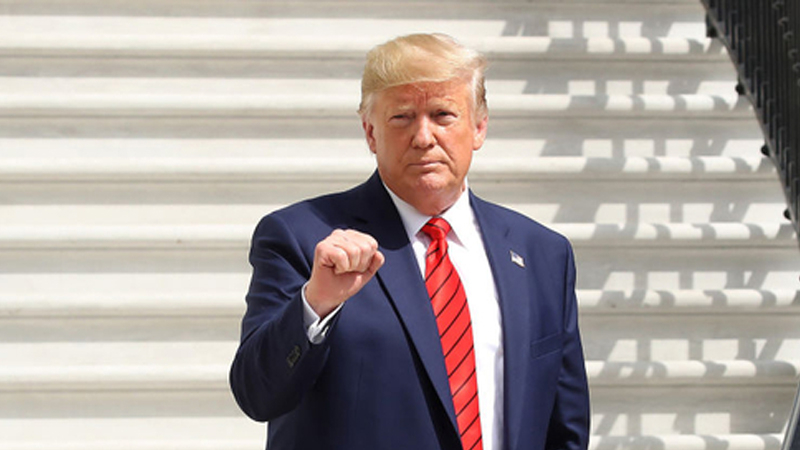
WASHINGTON – House Democrats on Tuesday took steps forward in their impeachment inquiry of President Donald Trump, with the judiciary panel scheduling its first hearing and the budget panel releasing a report alleging the White House broke the law by withholding money from Ukraine.

The moves show how the impeachment process is quickly advancing beyond the hearings held by the House intelligence committee this month to the proceedings that could lead to a formal vote on impeachment.

The House Judiciary Committee hearing on Dec. 4 is a crucial step in this process, as that panel has the power to draft the impeachment articles against Trump.

House Democrats have launched an impeachment inquiry into Trump, alleging that he withheld security funding for Ukraine and a White House meeting until that nation’s new leader, Volodymyr Zelensky, agreed to launch investigations into Trump’s political opponents.

A series of current and former government officials have testified that they were alarmed about the White House’s decision to withhold the money, with some saying they were fearful Trump was trying to pressure the Ukrainian government for his own political gain. Trump has denied wrongdoing and decried the investigation.

In announcing the Dec. 4 hearing, House Judiciary Committee Chairman Jarrold Nadler, D-N.Y., sent a 13-page letter to Trump and asked whether he or his lawyer planned to attend and question witnesses.

“We expect to discuss the constitutional framework through which the House may analyze the evidence gathered in the present inquiry,” Nadler wrote. “We will also discuss whether your alleged actions warrant the House’s exercising its authority to adopt articles of impeachment.”

Nadler asked Trump to notify the committee by Dec. 1 if he planned to participate in any way. Last week, Trump has said he would seriously consider responding to written questions as part of the inquiry, but he hasn’t mentioned the idea since.

Trump on Tuesday gave mixed signals about whether the White House might participate with the process. In a string of Twitter posts, Trump wrote “I would actually like people to testify” but suggested he wasn’t allowing his top current and former aides to testify because it would set a dangerous precedent for future presidents.

“It is a Democrat Scam that is going nowhere but, future Presidents should in no way be compromised,” he wrote. “What has happened to me should never happen to another President!”

Democrats have tried to establish a timeline of events that show the Ukraine aid money was withheld around the same time Trump was ratcheting up pressure on Zelensky to investigate the Bidens. The House Budget Committee on Tuesday issued a report that it said was based on documents it obtained by the White House’s Office of Management and Budget.

The House Budget Committee’s report alleged that OMB engaged in a “pattern of abuse” of its authority and the law in holding up the security assistance to Ukraine. The Post has reported that a confidential White House review of the decision to block the aid turned up hundreds of documents that reveal extensive efforts to generate an after-the-fact justification for the decision. Officials also debated internally whether blocking the money was even legal.

In findings based on the documents turned over by OMB, the Democratic-led House Budget Committee cites unusual steps the agency took over the summer as it moved to hold up nearly $400 million in State Department and Pentagon funds for Ukraine that had already been approved by Congress.

The committee said that OMB put a political appointee in charge of signing off on spending, a step that was typically handled by career staff.

It also said OMB’s actions limited agencies’ ability to spend congressionally approved funds by the end of the fiscal year.

The latter move would be a violation of the Impoundment Control Act of 1974, which was passed in response to actions by President Richard Nixon and limits the ability of the executive branch to delay or cancel funds approved by Congress, the Budget Committee said.

In addition, the new report confirms a timeline of events related to the Ukraine aid decisions. It says, for example, that on July 18, OMB notified an interagency working group about a plan to withhold Ukraine funds.

One week later, on the morning of July 25, Trump and Zelensky spoke by phone, and Trump mentioned the possibility of Zelensky working with the U.S. government on an investigation into Biden and his son Hunter Biden, according to a transcript released by the White House. Later that day, at 6:44 p.m., according to the Budget Committee summary, an OMB career official signed a document formally withholding $250 million in Pentagon funds for Ukraine.

After this point, political appointees took over the process of approving these funds. The frozen aid was not released until Sept. 12, after House lawmakers were notified of a whistleblower report regarding the Trump-Zelensky call.

The committee’s report also said that OMB released only a portion of the documents it sought in a detailed request to the agency two months ago from House Budget Chairman John Yarmuth, D-Ky., and House Appropriations Chairwoman Nita Lowey, D-N.Y.

“After careful review of the materials provided to the committees, the Chairs have become more concerned that the apportionment process has been abused to undermine Congress’s constitutional power of the purse,” the committee report says. “The timeline of actions taken by OMB (as seen in the provided apportionments, which are legally binding documents) suggest a pattern of abuse of the apportionment process, OMB’s authority, and current law.”

The “apportionments” are the documents that OMB must sign off on in order for the U.S. Treasury to release or hold up funds.

OMB declined to provide an on-the-record response to the committee’s findings.

The House of Representatives is controlled by Democrats, and they could impeach Trump with a majority vote. That action is equivalent to indicting the president for a crime. The process would then move to the Senate, which is controlled by Republicans, and they would then hold a trial on the House’s charges. Removing the president from office would require the approval of two-thirds of senators, a threshold few think is likely to be met.

—

Video Embed Code

Video: President Trump took part in the Thanksgiving tradition on Nov. 26 of pardoning turkeys, joking that the birds had received subpoenas from the House Intelligence Committee.(The Washington Post)

Video: President Trump took part in the Thanksgiving tradition on Nov. 26 of pardoning turkeys, joking that the birds had received subpoenas from the House Intelligence Committee.(The Washington Post)

https://www.washingtonpost.com/video/c/embed/8e314990-af3f-4272-adbd-c851aa967f32

A 17-year-old posted to TikTok about China’s detention camps. Her account was suspended

ศาสตร์เกษตรดินปุ๋ย : ขอบคุณแหล่งข้อมูล : หนังสือพิมพ์ The Nation

https://www.nationthailand.com/news/30378806?utm_source=category&utm_medium=internal_referral

A 17-year-old posted to TikTok about China’s detention camps. Her account was suspended

Nov 27. 2019
By The Washington Post · Drew Harwell, Tony Romm

409 Viewed

Feroza Aziz started her TikTok video like a typical makeup tutorial, telling viewers she would show them how to get long eyelashes. Then the 17-year-old stopped abruptly, calling instead on viewers to start researching the harrowing conditions facing Muslims in China’s detention camps.

The surprising bit of modern satire quickly went viral on TikTok, the short-video app and global phenomenon owned by a Beijing-based tech firm. But in the hours afterward, Aziz’s TikTok profile was suspended. By Tuesday, she told The Washington Post, she remained unable to access her account.

The videos, and Aziz’s suspension, have quickly touched off a public debate about one of the world’s fastest-growing social apps, including over its approach to political issues and its support of free speech in countries outside China, where its parent company ByteDance is headquartered.

The episode has highlighted a signature challenge facing TikTok: Famous for its lighthearted memes and singalong videos, the app increasingly finds itself facing scrutiny due to its close ties to a Chinese conglomerate that must adhere to the country’s strict censorship rules.

TikTok has said it makes decisions about the content it surfaces and suppresses for U.S. users independent from the Chinese government. But its past practices and limited transparency have fueled deep skepticism among lawmakers, tech experts and some of its users.

The popularity of Aziz’s videos shows how TikTok has increasingly become a new home for discussion of politics and current events among young viewers on the Web. But the suspension has fueled concerns over how TikTok will respond to a growing level of acrimonious debate and discussion of issues critical of the Chinese government.

TikTok has said its audience prefers to use the video app for entertainment, not political debates, and that its executives have pushed to preserve the app as a refuge for positivity online. To abide by that mandate, former employees told The Post they were instructed to follow guidelines set by Chinese moderators and remove social or political content that would have been easily accepted elsewhere around the Web.

TikTok representatives said Tuesday that Aziz’s account was not suspended because of her criticism of China and that the company “does not moderate content due to political sensitivities.” Instead, they said she had broken the rules by registering a new account: A previous account of hers had been banned, they said, because she had posted a video referencing Osama bin Laden that had violated rules about promoting terrorist content.

Aziz, who said she is a high school junior in New Jersey, told The Post she never got any explanation about TikTok’s penalties on her account. The video TikTok referred to, she said, was an obvious bit of dark humor, and involved her singing in front of a series of a men that she suggested were attractive. A copy she shared with The Post shows bin Laden’s face appearing, for less than a second, as the surprise punchline.

“As Muslims, we’re ridiculed every day, so that was me making a joke to cope with the racism we face on a daily basis,” she said. “I’ve been told to go marry a terrorist, go marry bin Laden, so I thought: ‘Let me make a joke about this. We shouldn’t let these things get to us.'”

She said she found it “scary” that she was blocked for making what seemed to her like a harmless joke. And she said she felt it was “very suspicious” that her account was suspended only after she posted viral videos criticizing the home country of TikTok’s parent company.

Eric Han, the head of TikTok’s U.S. Trust and Safety team, said in a statement to The Post that Aziz’s account was banned after the bin Laden post earlier this month. The app’s community guidelines, he said, strictly prohibit any videos that “promote and support” terrorist organizations.

Aziz’s lash-curling videos, which reference the camps in China’s Xinjiang region, can still be viewed on TikTok, where they have attracted more than 500,000 views. “TikTok does not moderate content due to political sensitivities and did not do so in this case,” Han said. Reviews of video for moderation can be triggered by several factors, Han said, including if a video passes certain “virality benchmarks.”

Aziz said late Tuesday she could not access the account, and that TikTok has provided her no information about whether she can use the service again. When TikTok users have videos removed for violating guidelines, Han said, they are not told the specific reason but can appeal the removal. “Her previous account was banned, so we wouldn’t have had communication with her on that account,” he added.

Aziz’s other videos on TikTok resemble many of the unrestrained, boundary-pushing parodies that often go viral on the Web. In other videos, she jokes about marrying her cousin, living with a strict Muslim mother, and being profiled online as a terrorist. In one video criticizing TikTok as “racist,” she said she posts “relatable Muslim content, things that Muslims can laugh at.”

Kate Klonick, an assistant professor at St John’s University School of Law who studies social media and free speech, said the incident illustrate the dangers when tech giants aren’t transparent about their practices – and aren’t regulated to be more forthcoming.

“It’s completely at the whim of these giant tech companies [as to] what they decide to tell us, and we have no way to fact check their account of things,” she said. “There’s no outside mechanism of enforcement.”

In doing so, though, Klonick said the struggle for an app such as TikTok is striking the right balance in what she described as the “paradox of content moderation.”

“We want to be protected from certain kinds of content . . . like terrorists using Osama bin Laden’s face to propagandize radical Islam,” she said. “But at the same time it’s critical to have access to that kind of bad content in order to critique it, or make fun of it, or tear it down, or use it to build culture.”

TikTok’s practices and its Chinese origins have raised alarms in Washington, where lawmakers and regulators fear Beijing’s heavy digital hand might affect Americans’ speech online and leave their personal data at risk.

Members of Congress led by Sen. Josh Hawley, a Missouri Republican, sought to grill top TikTok executives at a congressional hearing earlier this month, though the social-media app declined to appear, further stoking lawmakers’ ire.

TikTok, which traces its origins to ByteDance’s purchase of the karaoke app Musical.ly in 2017, also faces an investigation by an arm of the U.S. government that reviews such mergers for potential national security concerns.

Federal lawmakers had encouraged such a probe, and they’ve asked U.S. intelligence officials to open an additional investigation to determine if the Chinese government might be able to force TikTok to turn over American users’ data. TikTok has said that it stores such information in Virginia and Singapore.

Aziz said she used the makeup routine as a way to get the attention of viewers who might otherwise ignore the news. But she said she worries about how TikTok’s rules could influence the kinds of information young viewers see online.

The suspension, she said, is “just another reason for me to speak louder.”

For China’s delivery drivers, big risks and bigger pressures to keep the nation fed

ศาสตร์เกษตรดินปุ๋ย : ขอบคุณแหล่งข้อมูล : หนังสือพิมพ์ The Nation

https://www.nationthailand.com/news/30378802?utm_source=category&utm_medium=internal_referral

For China’s delivery drivers, big risks and bigger pressures to keep the nation fed

Nov 27. 2019
As lunch time comes close, delivery men gather outside a food court waiting for orders in Beijing. MUST CREDIT: Photo for The Washington Post by Yan Cong
Photo by: Yan Cong — For The Washington Post

As lunch time comes close, delivery men gather outside a food court waiting for orders in Beijing. MUST CREDIT: Photo for The Washington Post by Yan Cong Photo by: Yan Cong — For The Washington Post
By The Washington Post · Gerry Shih

345 Viewed

BEIJING – Zhang Pei dragged on a cigarette and pulled up his pant leg: four fresh scratches, some swelling around a sprained ankle. As far as occupational injuries go, his recent spill was nothing unusual for his line of work.
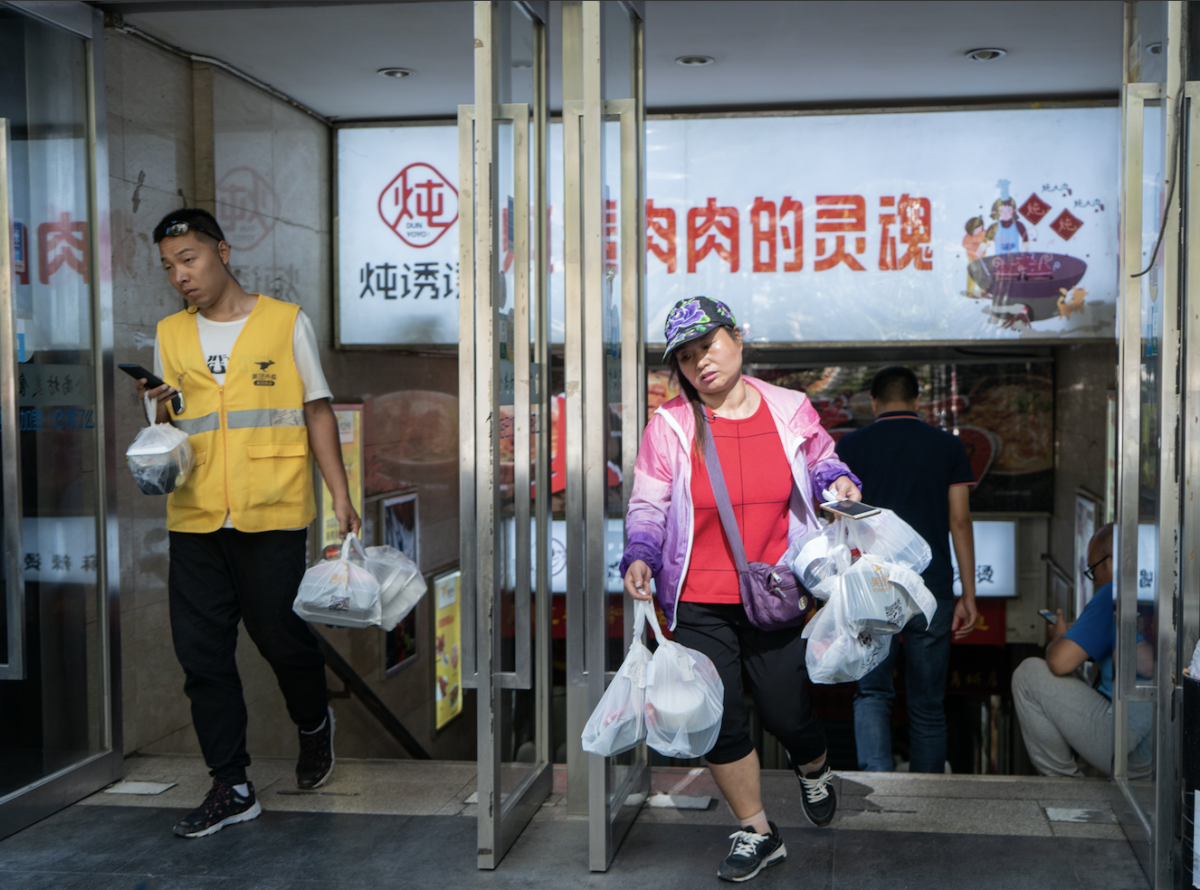
Two delivery people walk out from a food court with their hands full of packed lunch, in Beijing. MUST CREDIT: Photo for The Washington Post by Yan Cong Photo by: Yan Cong — For The Washington Post

Two delivery people walk out from a food court with their hands full of packed lunch, in Beijing. MUST CREDIT: Photo for The Washington Post by Yan Cong Photo by: Yan Cong — For The Washington Post

Zhang, 27, is among an estimated 3 million “waimai xiaoge” – food-delivery lads or boys – who buzz through China’s streets every day on scooters. They dodge pedestrians. They thread through traffic. One-way signs? They are for others.

And many have the scars, scrapes, scabs – or worse – as evidence of the risks.

Comprehensive official data is unavailable, but police in Shanghai say a delivery boy is seriously injured once every 60 hours on average. In Shenzhen, just north of Hong Kong, the food delivery boys account for 12% of traffic crashes. In Nanjing, northeast of Shanghai, about three delivery boys are injured every day on average.

In the past 18 months, local media in the country chronicled 13 deaths and published 125 accounts of serious crashes. The news reports offer a tiny – but telling – glimpse into the chaos: stories of riders who die in late-night hit-and-runs, of head-on collisions into trucks, of electrocutions during rainstorms.

“My wife begs me to do something different, less dangerous,” Zhang said, grinning. “But the money is good.”

That’s because China is becoming a delivery nation.

– – –

Some 400 million people use smartphones to order piping hot meals to their doorstep – up to several times a day.

It’s part of a lifestyle revolution in China as its growing middle class reshapes the country, a high-tech network made possible by low-tech, low-cost labor.

It’s also a system of frenetic workloads during meal hours and through bad weather, of unforgiving dispatch algorithms and unruly traffic, close calls and sometimes fatal crashes.

And at a time when governments worldwide are grappling with the regulations – and implications – of delivery apps such as Uber Eats or Deliveroo, China’s $36 billion food-delivery industry offers a vision of the gig economy taken to a chaotic extreme. Even authorities are taking notice of the grueling and dangerous conditions.

“It’s necessary to fundamentally change the takeout platforms’ logic of [valuing] ‘speed only’ for ‘profit only,’ ” the ruling Communist Party’s official mouthpiece, the People’s Daily, said in a 2017 editorial. “Can these platforms have more humane algorithms and let the delivery boys have more time on the road? Can users be more empathetic and understanding?”

Perched outside a shopping street frequented by Russian traders, Zhang acknowledged the dangers that come with his job. But it was a decent living for a seventh-grade dropout from the countryside outside Handan – a bleak central China steel town perhaps best known for coming in dead last in nationwide air-quality rankings.

Zhang works 14 hours a day, six days a week, running orders for the giant company Meituan-Dianping. Zhang says he averages about $1.10 per delivery and $1,000 a month. If he works extra hours, particularly during freezing winter months, Zhang can haul in $1,500 a month, more than what some software coders can make.

As soon as Zhang turns on the Meituan app around 7 a.m., the automated dispatch system starts flashing jobs on his screen based on his position, chiming: “You have unconfirmed deliveries. Please respond as soon as possible.”

The pressure to accept multiple orders is high, Zhang said, because riders who decline jobs are punished by Meituan’s algorithm. The highest-earning riders, called “Happy Runners,” must accept 99% of orders they’re assigned.

– – –

As orders peak that day about 11:20 a.m. – white-collar workers in Beijing typically sit in large groups for lunch at noon, sharp – Zhang is often juggling more than 10 orders at the same time, ferrying in his scooter’s insulated box a smorgasbord of Shanxi noodles, Starbucks lattes, dumplings and dim sum.

Zhang coolly plunges along streets against the flow of traffic, blows through intersections, ducks into high-rises and sprints up stairwells to drop off meals with minutes, sometimes seconds, of his allotted time left to spare.

The time crunch is made worse because the software doesn’t calculate road closures and traffic controls that crop up overnight. Yet riders get penalized for late deliveries, and if a customer files a complaint on Meituan’s app, they could be fined their entire day’s earnings or booted off the platform altogether.

“Know your terrain, constantly calculate in your brain, and move with precision,” Zhang said.

Since he started working at 15, he’s sewn jackets, welded steel on construction sites and assembled basketball backboards on a Guangdong factory line.

“But that was all physical energy,” he said. “Delivery exhausts your mental energy. There is nothing quite as stressful.”

As accidents involving delivery riders became widespread in recent years, the two large food-ordering platforms that dominate the Chinese market – Meituan and Eleme – have tweaked their dispatch algorithms to be less demanding, riders said. On rainy days, for instance, they can be late a few minutes without penalty.

Chinese police say reckless delivery boys are also to blame and have proposed measures such as installing tracking chips to punish bad driving.

One of Zhang’s Meituan co-workers, who spoke on the condition that he be identified only by his surname, Li, said he rides against the flow of traffic and blows through red lights on a near-daily basis. Police fine him often but do not pose much of a deterrent: Most traffic tickets are paid off for about $3.

“Who wants to run red lights and break traffic rules if the time pressure isn’t so hard?” Li said. “I do it because otherwise the customer would file a complaint, and I’d be banned from delivering.”

– – –

A Meituan spokeswoman said the company requires mandatory road-safety training at the time of hire for its 2.7 million delivery workers and regularly offers refresher courses. The company declined to comment further.

In the past two years, delivery drivers in a handful of cities, including Shanghai, have managed to form unions and campaign for better labor conditions – moves that required a level of tacit support from the Chinese government.

Labor researchers say authorities should be more proactive.

Cheng Xusen, chair of the e-business department at the University of International Business and Economics in Beijing, said Meituan and Eleme outsource delivery to hundreds of small companies with different levels of training and job protections. Most drivers work without contracts, leading to problems such as inadequate injury compensation.

“It’s the regulator’s job to close that loophole,” Cheng said. “At the end of the day, the government needs to do more to ensure workers’ legal rights.”

But for many workers such as Zhang who have held other menial jobs across China, delivering food in the big city still appeals with its good pay and sense of freedom.

Zhang can take off every Sunday to do laundry and relax in the 50-square-foot room he shares in far east Beijing with a delivery boy who brought him into the business four years ago.

During midafternoon down times, he’s glued to his phone chatting with his friend Chen, a co-worker who crashed into a guardrail and tore a knee ligament while rushing a lunch delivery this summer. Chen has been recovering at home in Inner Mongolia on a diet of porridge and dried dates – he’s eager to get straight back to work.

On most weeks, Zhang calls home to his wife and two sons three or four times. After he fell off his scooter in August, Zhang took the 4 1/2-hour bus ride back to his village, where his young family lives in the two-bedroom apartment he bought for about $27,000 with his earnings.

As Zhang rested his leg, his wife asked whether he might finally decide to find a different job.

He gave the answer he gives every year, he said: “Maybe next year.”

TURKEY-PARDON-ANALYSIS : Trump keeps tradition of pardoning turkey

ศาสตร์เกษตรดินปุ๋ย : ขอบคุณแหล่งข้อมูล : หนังสือพิมพ์ The Nation

https://www.nationthailand.com/news/30378801?utm_source=category&utm_medium=internal_referral

TURKEY-PARDON-ANALYSIS : Trump keeps tradition of pardoning turkey

Nov 27. 2019
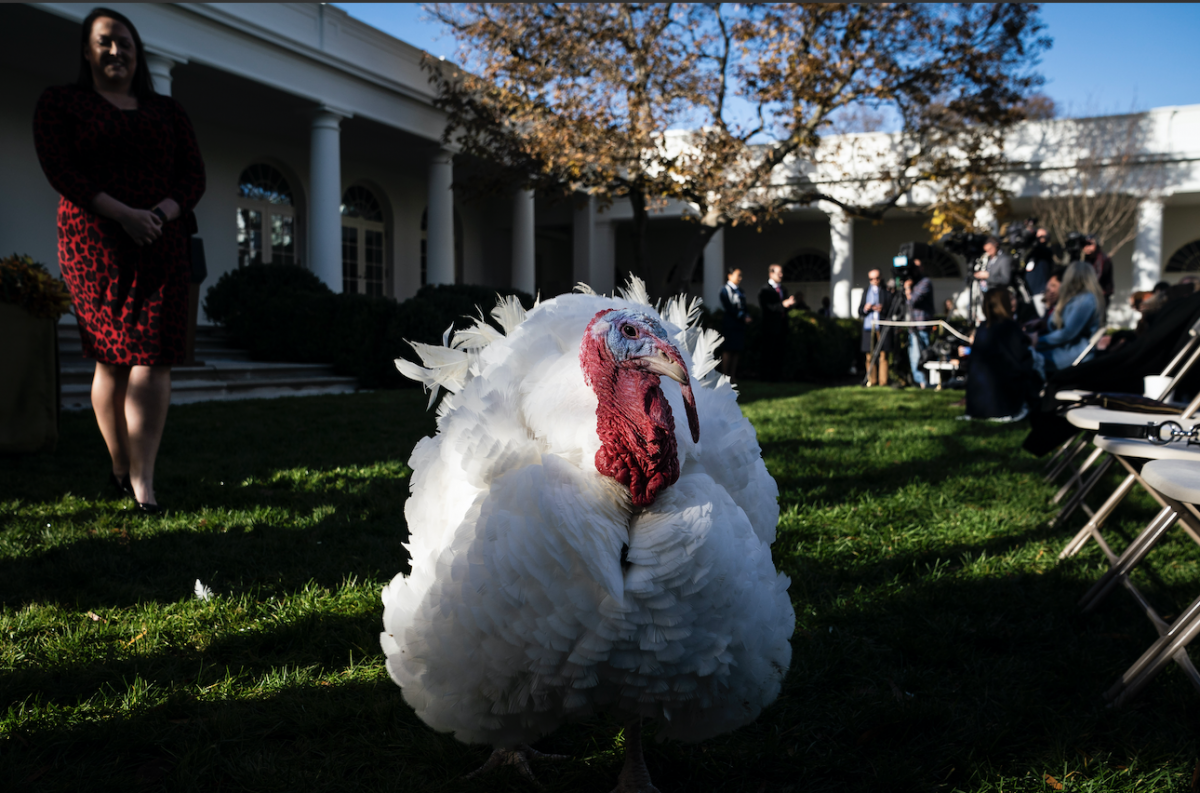
President Trump, with first lady Melania Trump, pardons Butter in the Rose Garden at the White House Tuesday. MUST CREDIT: Washington Post photo by Jabin Botsford
Photo by: Jabin Botsford — The Washington Post

President Trump, with first lady Melania Trump, pardons Butter in the Rose Garden at the White House Tuesday. MUST CREDIT: Washington Post photo by Jabin Botsford Photo by: Jabin Botsford — The Washington Post
By The Washington Post · Avi Selk

303 Viewed

In the White House Rose Garden on Tuesday, President Donald Trump pretended to issue a “full presidential pardon” to a turkey named Butter, a strange, farcical annual tradition that is nevertheless one of the few norms of government Trump has not yet done away with or rebranded in his own image.

Butter sits on the lawn of the Rose Garden waiting to be pardoned. MUST CREDIT: Washington Post photo by Jabin Botsford Photo by: Jabin Botsford — The Washington Post

Butter sits on the lawn of the Rose Garden waiting to be pardoned. MUST CREDIT: Washington Post photo by Jabin Botsford Photo by: Jabin Botsford — The Washington Post

The ceremony started 20 minutes late, during which time the assembled guests – Tiffany Trump sat in the front row near Rep. Mark Meadows, R-N.C. – stared at an empty and turkeyless lectern, reflecting on the meaning of Thanksgiving in President Donald Trump’s Washington.

Perhaps they were reflecting. Almost certainly, they were listening to a Facebook Live streamer named David Harris Jr., who had been admitted to the press area and kept shouting “Trump 2020!” into his phone screen, interspersed with exclamatory updates on his viewer count: “I got 2,000 people on here,” he yelled. “Twenty-nine hundred! . . . Forty-two hundred! . . . We’re about to break 5,000! Are you kidding me?? Trump 2020!” A little girl five rows up kept turning around to frown at him.

Finally, Butter was led into the courtyard – a white, 47-pound chonk of a bird raised in North Carolina, named by schoolchildren, selected for the presidential honor by his handlers at the National Turkey Federation, and lodged the previous night at a luxury hotel with his “alternate” turkey, Bread.

Harris and the rest of the crowd fell silent while Butter waddled around in front of the podium, going “bock bock bock” and nipping at his handler’s suit pants.

Then out came the president – the one who campaigned on upending Washington and who has in three short years abolished presidential traditions from holding regular news briefings to releasing his tax returns.

But for this most unnecessary (and often maligned) tradition, Trump stuck to the script. He effusively praised “the beautiful feathered friend, the noble turkey” set before him. He read some predictable political jokes about Butter and Bread off a teleprompter: “They’ve already received subpoenas to appear in Adam Schiff’s basement on Saturday.”

“I wish you a lot of luck,” Trump told Butter, who had been hoisted onto a platform so that Trump could lean over him and solemnly announce, as all presidents since George H.W. Bush have done, and as Trump has done twice before on the week of Thanksgiving: “I hereby grant you a full and complete pardon.”

The crowd clapped; Trump and his wife, Melania, walked back into the White House; and the general lack of order that characterizes his Washington reasserted itself.

“Will you pardon Roger Stone?” someone shouted from the press area, referring to the former Trump adviser who last week became latest presidential associate to be convicted in federal court.

“Trump 2020!” Harris told his phone.

“You blocked my shot the entire time!” a photographer screamed at a reporter before storming out of the Rose Garden, preceded by a turkey and a president.