The price of gold rose by Bt100 per baht weight in morning trade on Thursday after falling by Bt50 per baht weight at close on Wednesday, the Gold Traders Association reported.
As of 9.30am, the buying price of a gold bar was Bt26,750 per baht weight and selling price Bt26,850, while gold ornaments cost Bt26,272.28 and Bt27,350, respectively.
At close on Wednesday, the buying price of a gold bar was Bt26,650 per baht weight and selling price Bt26,750, while gold ornaments cost Bt26,166.16 and Bt27,250, respectively.
The spot gold price moved to US$1,878 (Bt56,716) per ounce in the morning, while the Comex (Commodity Exchange) gold price to be delivered in February next year rose by $7.80 to $1,878.10 per ounce on Wednesday due to a weakening dollar and a decline in US economic data.
The Hong Kong gold price meanwhile rose by HK$40 to $17,310 (Bt67,413) per tael, the Chinese Gold and Silver Exchange Society reported.
The Stock Exchange of Thailand (SET) Index rose by 1.91 points, or 0.13 per cent, to 1,417.93 in the morning session on Thursday.
An analyst at Krungsri Securities expected the day’s index to fluctuate between 1,410 and 1,430 points amid hopes over an European Union-Britain trade deal, a US economic stimulus package and the rising oil price.
“However, we advise investors to keep an eye on the Centre for Covid-19 Situation Administration’s meeting today because the index would come under pressure if the centre imposes lockdown measures to contain the spread of Covid-19,” he said.
He recommended investors buy:
> Defensive stocks, such as Intuch and Advanc.
> TQM, BLA, STGT, AJ, PTL, Synex and Com7, which stand to benefit from the Covid-19 situation.
> PTTEP, PTTGC, Top and IVL, which benefit from a rising oil price, while their fourth-quarter performance is expected to improve.
The SET Index closed at 1,416.02 on Wednesday, down 8.37 points or 0.59 per cent. Total transactions amounted to Bt89.55 billion, with an index high of 1,440.52 points and a low of 1,414.21.
By Syndication Washington Post, Bloomberg · Kamaron Leach
U.S. stocks rose for the first time in four days as investors looked past President Donald Trump’s demand for changes to pandemic relief legislation. The pound gained as an outline of the post-Brexit trade deal was reached.
The S&P 500 was led higher by the energy and financial sectors, while real estate and technology shares underperformed. The Nasdaq Composite and Russell 2000 indexes set record highs. Trump is demanding that lawmakers increase the stimulus checks due to go out to most Americans to $2,000 from $600 in the same week that Congress passed the $900 billion bipartisan package.
“By and large the market has continually seemed to focus on the more positive bull cases around each macro event and last night’s political drama is no exception,” said Chris Larkin, managing director of E*Trade Financial’s trading and investing product. “We’re seeing the market choosing to see the cup half full, as it shrugs off the possibility of the stimulus bill failing, and instead viewing it as a catalyst for larger stimulus cash in the pockets of consumers.”
The dollar stayed lower after initial jobless claims came in better than expected. Personal income for November fell by 1.1%. Treasury yields rose.
European stocks rose as trade and transport links between the U.K. and its neighbors reopened and Brexit negotiators put the finishing touches to an accord, said officials, who spoke on the condition of anonymity. Travel firms and automakers led gains, with Daimler AG rising on a report the German carmaker is considering an initial public offering of its truck unit.
Investors are looking past the president’s comments to the promise of pandemic relief that will come sooner or later. House Speaker Nancy Pelosi, D-Calif., seized on Trump’s call for larger individual checks and said the House would try to pass this additional measure during a pro forma session on Thursday.
“He’s historically, as I believe, negotiating as he always does,” said Todd Morgan, Chairman and founding member of Bel Air Investment Advisers. “You have to look beyond the next few weeks with this president because I think good things are going to come straight ahead.”
Elsewhere, crude oil reversed an earlier decline. Gold snapped a three-day slide.
Here are the main moves in markets:
Stocks
The S&P 500 Index increased 0.1% to 3,690.01 as of 4:07 p.m. EST.
The Dow Jones industrial average advanced 0.4% to 30,129.83.
The Nasdaq Composite Index declined 0.3% to 12,771.11, the largest decrease in two weeks.
The Stoxx Europe 600 Index jumped 1.1% to 395.49.
The MSCI All-Country World Index climbed 0.4% to 636.07.
Currencies
The Bloomberg Dollar Spot Index fell 0.4% to 1,127.31, the biggest fall in more than a week.
The euro gained 0.2% to $1.2191.
The British pound surged 1% to $1.3498, the biggest jump in almost seven weeks.
The Japanese yen strengthened 0.1% to 103.53 per dollar.
Bonds
The yield on 10-year Treasuries increased three basis points to 0.94%, the biggest increase in almost three weeks.
Germany’s 10-year yield climbed five basis points to -0.55%, hitting the highest in three weeks with the first advance in a week and the largest surge in more than six weeks.
Britain’s 10-year yield jumped 10 basis points to 0.286%, the biggest surge in about nine months.
Commodities
West Texas Intermediate crude gained 2.2% to $48.04 a barrel, the largest rise in almost two weeks.
It has good bones, as the real estate agents would say. Sleeps six, or more. Upgraded bathroom. Gym. Indoor garden. Parking for as many as eight visitor vehicles. And you can’t beat the location – 240 miles high with superb views of Earth: Truly all the best low Earth orbit has to offer!
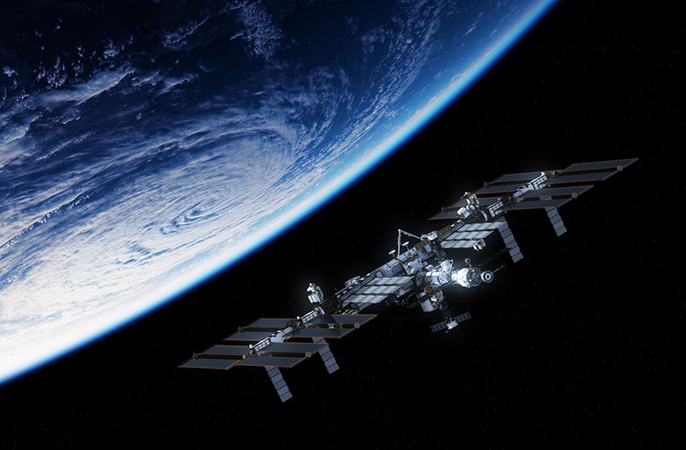
But after hosting a rotating cast of astronauts for more than 20 years straight, the International Space Station is showing its age – it sprung another tiny leak last month – and NASA is already shopping for a new spread for its astronauts.
The space agency is confident Congress and its international partners will agree to extend the station’s life beyond 2024, when it is currently set to expire. On Friday, the Senate passed a NASA authorization bill that would extend it to 2030. But space is harsh, the station is aging and at some point it will have to come down.
What comes next, though, isn’t certain.
Under President Donald Trump, NASA has been scrambling to return astronauts to the moon under an accelerated timeline. But the first big test the incoming Biden administration will face in space could very well be the future of the space station. If it’s retired without a backup, NASA would face an “existential challenge,” as one top space agency official put it, with no place for its astronauts to go.
There are several companies working to develop a commercial space station, looking at a range of options that vary: a modern version of the ISS, a station with modules that inflate like balloons, and one that would refurbish discarded rocket stages that are floating around in orbit.
But while those options show promise, they are still unproven and years from hitting the market.
As a result, NASA has been increasingly concerned it could have a gap in low Earth orbit that would be even more consequential than the ignominious period after the space shuttle fleet was retired that left the space agency with no way to launch its astronauts to space from U.S. soil. Instead, NASA was forced to rely on the Russians for rides to space, at a price that grew to as much as $90 million a seat, before Elon Musk’s SpaceX restored human spaceflight for NASA earlier this year.
Even if the station is extended, NASA needs to be working now on its replacement, officials said. It took years to get the ISS up and running. The concept was born in 1984, when President Ronald Reagan announced the United States would put a station, eventually dubbed Freedom, in orbit. But after different administrations and design changes, the first segments weren’t launched until 1998. Since then, NASA has invested more than $100 billion in the facility, which receives more than $3 billion annually from NASA.
Privately run stations would also need time to build their business cases, signing foreign governments as tenants, working with companies and universities that want to do research in space, and wealthy tourists who would pay millions of dollars to visit.
While NASA and the private sector work toward developing commercial habitats, China is building its own space station that it hopes to launch within a couple of years and is recruiting countries around the world as partners. The United States would not be one of them, however, since NASA is effectively barred by law from partnering with China in space.
“I think it would be a tragedy if, after all of this time and all of this effort, we were to abandon low Earth orbit and cede that territory,” NASA administrator Jim Bridenstine told a Senate panel earlier this year.
The ISS still does have some good years left, officials said. “We’re good from an engineering standpoint,” Joel Montalbano, NASA’s space station program manager, said in an interview. “We’re cleared through 2028.”
Boeing, which is paid $225 million per year as the prime contractor supporting space station operations, said it could stay in orbit for even longer.
“The ISS is incredibly healthy, with life capability well beyond 2030,” said John Mulholland, Boeing’s ISS program manager. He said the U.S. and Russia recently completed a life extension study “and all the hardware has been cleared to a minimum of 2030. That’s a real testament to the design and the maintenance that’s been done on it.”
Recently, the station got new lithium-ion batteries that “are less than half the size of the original batteries and produce twice the power,” Mulholland said. The power upgrade also doubled the speed at which the station’s crew can send data from science experiments back to Earth.
Over the years, the station’s water recovery system has improved to the point where today, 95% of the water used for drinking and cooking is recycled, Montalbano said. The communications systems have also been upgraded, as have life support systems like carbon dioxide removal.
Still, like a house that needs repairs, things break. Since a leaky roof could have dire consequences in space, and no plumbers or electricians are going to make a house call, astronauts are trained to repair the toilet or plug leaks. But even a tiny leak hissing air into the vacuum of space is a threat, and astronauts spent weeks recently searching for one in the Russian segment of the station before patching it. It was tiny: “Think of the size of two grains of salt is what we had to find,” Montalbano said.
The Senate’s vote Friday gave a significant boost toward extending the station, though not as of yet, the money required to do so. Many in the space industry think the extension would be supported by the Biden administration and the House, where a bill that would extend it to 2028 has been introduced. It’s unclear, though, whether Russia would want to continue, and getting the station’s other partners on board would take time.
After the Commerce Department targeted Russian firms because of ties with the country’s military, the head of the Russian space agency earlier this month lashed out and said the move would threaten relations between the U.S. and Russia in space: “These sanctions are harmful, because they will create additional obstacles and irritations in such an important cooperation between Russians and Americans in space, in particular, on the ISS,” Dmitry Rogozin wrote on Twitter.
Wary of a gap, Bridenstine has increasingly been sounding the alarm, urging Congress to fully fund its requests to build a commercial presence in Earth orbit that would include private stations.
Last year, NASA requested $150 million as part of its plan, but Congress granted just a tenth of that. For the fiscal 2021 budget, NASA requested the same amount but will receive just $17 billion, sparking a new round of warnings: “ISS won’t last forever & incentivizing the private sector to begin follow-on capabilities are needed now,” said Lori Garver, who served as NASA deputy administrator in the Obama administration. “This concept isn’t hard, have we learned nothing in the last 10 years?”
“It’s critically important for the United States to have access to low Earth orbit with humans so they can live and work and do science and discovery in the microgravity of space,” Bridenstine said in an interview. “That should be a national priority. There is a reality that we all have to accept, which is at some point in the future we have to focus on what comes after the ISS.”
Some have been critical of the Trump administration for not doing more to prevent a gap. While the White House has been focused on returning astronauts to the moon, the future of the space station has received relatively little attention, said Jeffrey Manber, the CEO of NanoRacks, which is seeking to build its own small space stations.
“What troubles me is this administration is walking out the door having done very little to prevent a space station gap,” he said.
After the space shuttle, NASA decided it did not need to own and operate its own rockets and spacecraft but could instead rely on the private sector to ferry its astronauts to space. In 2014, NASA awarded contracts to SpaceX and Boeing to develop spacecraft to fly astronauts. It took six years for SpaceX to have its first flight with humans. Boeing has yet to fly its first crewed mission.
Developing a private space station could take just as long, industry officials said, which is why NASA and the private sector need to get moving now.
“It’s very apparent to everybody that when the ISS comes to the end of its life, we’re not going to replace it with another $100 billion station,” Bridenstine said. “The transition needs to be to commercial space stations. Not just one, but multiple.”
There are several companies NASA is hoping will help it continue the U.S.’s presence in low Earth orbit.
Axiom Space, a Houston-based company, is working toward building a commercial space station that would be a modern version of the ISS with some key upgrades.
“When you look at the shell you go, ‘Wow, that looks just like the same old space station.’ But after that, pretty much everything will be dramatically different,” said Mike Suffredini, Axiom’s president and CEO.
The ISS has some key components located on the outside of its station, meaning astronauts have to perform risky spacewalks to, say, swap out batteries. On the Axiom station, those would all be located inside. It would also have “the largest window observatory ever constructed for space,” and an interior designed by French architect Philippe Starck.
The company has a contract with NASA to attach at least one privately developed module to the ISS by 2024, which could potentially allow the crew capacity on the station to grow.
Suffredini, who previously served as the ISS program manager for NASA, said he is not concerned about a gap. Rather, he said, he’s more concerned about ensuring a transition from a government station to a commercial one that gives his potential customers confidence.
“I’m more concerned that we drive ourselves to keep ISS on orbit too long,” he said. “The negative impact is investors start to worry about is ISS ever going to leave?”
The Sierra Nevada Corp. also is working to build a commercial station. But instead of a station with metal structures, it would be made of a Kevlar-like material that would inflate, making it easier to get more space station volume into orbit with fewer rocket launches.
The company says it could get its first modules into space within five or six years and is confident that there will be enough demand to make it financially feasible.
“We’re looking forward at the projected market out there, and it just looks incredibly bright,” said Janet Kavandi, a former astronaut who serves as the company’s senior vice president for space systems. “There’s so much interest in space right now, in the commercialization of space and the potential out there for everything from manufacturing to tourism to research laboratories to observatories.”
NanoRacks is also interested in developing commercial stations. But instead of launching them from Earth, the company wants to take discarded rocket stages that are already in orbit and transform them into stations designed for research.
“We need to make the investment now to understand how we can develop cost-efficient free fliers and, just as important, to continue to grow the market for customers,” Manber said.
Blue Origin, Jeff Bezos’s space company, is also interested in building habitats, and recently posted a job opening for an “Orbital Habitat Formulation Lead.” (Bezos owns The Washington Post.)
“To develop Blue Origin’s vision of millions of people living and working in space, humanity will require places for them to live and work: space destination systems in which value-creating economic activity can occur,” it read. The space station in low Earth orbit (LEO) would go beyond the International Space Station to support “a robust LEO economy” and be “fundamentally different from the ‘exploration’ habitats designed for small, professional trained crews in deep space.”
This is the craziest, creepiest year that I can remember, both in the financial markets and in the real world, in my half-century-plus of writing about business.
In the markets, covid-19 touched off a panic that in late March left the S&P 500 down 31% for the year, until the Federal Reserve and Congress rode to the rescue by throwing money at markets, people and businesses.
Since its March bottom, the S&P – the most important single stock market indicator, to which trillions of investment dollars are indexed – had risen 65% when last I looked, and it was up about 14% for the year.
This has happened even though the economy still looks crummy and even though our country is racked by dangerous divisiveness, making our differences during the Vietnam War look like a walk in the park.
On that less-than-cheerful note, welcome to my annual year-end column, in which I tell you the things that I got wrong, and a few things that I got right, and try to add some perspective to what’s going on.
I spent a lot of time this year writing about the stock market, which has been endlessly interesting and occasionally terrifying. I also wrote quite a bit about Social Security, which President Donald Trump seemed intent on undermining by cutting or eliminating payroll taxes for no reason that made any sense to me.
Fortunately, his proposals got almost no traction. We still need to worry about Social Security’s deteriorating finances, but with Trump about to hit the road, we no longer have to worry about him getting his Trumpublicans to change Social Security into just another government spending program that would be vulnerable to serious cuts.
My biggest mistake this year was writing this in February: “I’ll bet you that by the time this is finished, the coronavirus – serious as it is, especially if you or your loved ones are exposed to it in any way – will be a lot less serious than doomsayers are now predicting.”
Oops. I soon changed my tune. Reading that column as part of my annual self-review was painful, because I had totally forgotten writing it. You can see why I didn’t want to remember it.
I wrote several times about how the Fed’s ultralow interest rates cause problems for pension funds and for people who’ve saved all their lives and would like to get safe, substantial interest income during their golden years.
Forcing people of modest means to depend on the stock market for income to pay bills after they stop working is madness. It subjects them to financial and psychological stress – especially in a year like this one, in which the market has lurched so wildly.
I also wrote quite a bit about the difference between the booming stock market and the less-than-booming economy, which has become a popular topic lately.
I’m not anti-Wall Street. I think it’s fine for investors to make money. But the disparity between people (including me) who own a lot of stock and are profiting from the market’s rise and the millions of people who have lost their jobs, own little or no stock and are facing economic disaster really bothers and scares me.
It should bother – and scare – all of us, because the last thing our country needs is more divisiveness. If people in need don’t get a lot more help than currently contemplated in the new stimulus package, it bodes ill for the future. And it will bode ill for future stock prices, as well.
One of my worries about the stock market is that more than half the S&P 500’s gain this year has come from just three stocks: Apple, Amazon and Microsoft. What goes up big can also come down big, as Tesla shareholders may find out if, as I and others suspect, the huge boost the electric-car company got from its inclusion in the S&P wears off.
When I wrote about Ted Aronson of AJO Investments closing his $10 billion fund because he felt that value investing didn’t work anymore, he and I both wondered whether his Oct. 15 closure announcement would mark the end of Growth stocks’ years-long advantage over Value stocks.
Guess what? Since Aronson’s announcement, the S&P Value index is up 8%, with S&P Growth up just 5%. It’s too early to tell whether this is a trend or just a blip. Maybe next year we’ll find out.
Maybe we’ll also find out if today’s stock market – with initial public offerings surging in value the day they’re sold, brokerage houses promoting programs to let people buy partial shares of companies and day-trading by amateur stock speculators (whom I won’t call investors) becoming trendy – is in some sort of bubble. Would that I knew.
To depart from what I normally write, a word about masks and social distancing. I wish that supporters of masking and distancing had calmly and politely explained from the outset that masking is the same as requiring all drivers to go in the same direction on one-way streets – that it’s a question of public safety for yourself and other people, not an infringement on your freedoms.
Sure, Trump ridiculing mask-wearing and other safety measures was a huge problem. But supporters of masking and distancing could have done better at talking to people rather than talking down to them. There’s still time to do that. And there’s still time to regain some civility in our public life once Trump leaves the White House.
A final word: Let’s hope that by the time I write my 2021 year-end column, today’s traumas and troubles will be history, not current events. A happy, healthy, peaceful and prosperous new year to you and yours.
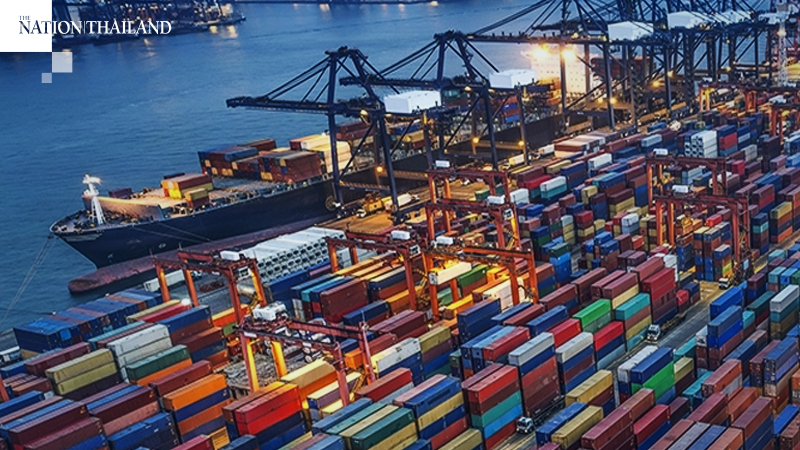
Thai exports next year are expected to grow 4 per cent to US$238.477 billion, driven by demand for health products, farm produce, and products related to Covid-19 prevention and work-from-home measures, said Pimchanok Vonkorpon, director-general of the Trade Policy and Strategy Office (TPSO).
She added that while many countries were suffering a second-phase outbreak, their governments were expected to impose only partial lockdowns.
Thai exports in November contracted 3.65 per cent to $18.932 billion, better than the projected $18.5 billion due to the global economic recovery.
Imports in November fell 0.99 per cent to $18.880 billion.
Thai exports in the first 11 months declined 6.92 per cent to $211.385 billion, while imports shrank 13.74 per cent to $187.872 billion.
She added that if exports reach $18.5 billion this month, total exports in 2020 will drop less than 7 per cent from last year to $229.03 billion.
Cabinet to consider Bt3 trillion budget proposal next month
EconDec 24. 2020Prime Minister Prayut Chan-o-cha (Photo credit: Thai government)
By The Nation
In a meeting on Wednesday, key economic state agencies approved Bt3.11 trillion for the 2022 fiscal budget with a budget deficit of Bt700 billion, Budget Bureau director Dechapiwat na Songkhla said.
The 2022 budget plan will be submitted to the Cabinet on January 5, he added.
The state agencies attending the meeting were the National Economic and Social Development Council, Bank of Thailand, the Finance Ministry and the Budget Bureau. The meeting was chaired by Prime Minister Prayut Chan-o-cha.
The 2022 budget is 5.66 per cent or Bt186 billion less than that of the 2021 fiscal year.
The meeting based the budget on the assumption that Thailand will experience an economic growth of 3.5 per cent in 2022. The repayment of debt principal in 2022 is Bt100 billion, up by Bt1 billion from the Bt99 billion allocated in 2021.
The Bank of Thailand has relaxed conditions attached to its Bt500-billion soft loan package, making it easier for individuals and companies to access credit.
The relaxation follows a surge of Covid-19 cases in Thailand as well as other countries around the world. Some countries have also been hit by a new mutation of the virus, signalling a severe and lingering pandemic that will affect trade, exports, tourism and the overall Thai economy, said the central bank.
In response, it has narrowed the definition of a “business group” for loan applicants, meaning more people can apply for the loans.
Under the new rules, a “business group” covers only the borrower and his/her spouse, making other family members eligible for the loans. For corporates, a business group now covers the company and its subsidiary but opens up loan access for linked companies.
The new rules also allow borrowers to take two loans, when previously they were limited to one. However, the total amount loaned must not exceed 20 per cent of their outstanding debt as of December 31, 2019. Commercial banks will grant borrowers a 6-month grace period on interest payments. Banks will be compensated for loans that turn bad after the two-year repayment period. Compensation will be based on the loan quality.
The new rules will come into force in January, the central bank said.
The Thai economy is recovering but downside risks and uncertainties remain high in the period ahead, says the Bank of Thailand.
The recovery would depend on the new Covid-19 outbreak and containment measures, as well as revival of the foreign tourist trade after global Covid-19 vaccination, BOT assistant governor Titanun Mallikamas said on Wednesday.
The central bank upgraded its economic projection for this year to 6.6 per cent contraction, from the 7.8 per cent contraction predicted in September.
However it downgraded its forecast for next year from 3.6 per cent to 3.2 per cent growth, due to the smaller number of tourist arrivals than projected, he said.
The impact of a prolonged Covid-19 outbreak abroad coupled with the fresh outbreak in Thailand would delay recovery of tourism, he added.
The central bank predicted 6.7 million visitors to Thailand this year, down from 39.7 million in 2019. It forecast just 5.5 million tourist arrivals next year, revising downwards its September projection of 9 million. The smaller projection is due to new surges of Covid infections in many countries. Tourism should recover significantly in 2022, assuming wider coverage of vaccination, said the bank. Revival of the tourism sector as a key engine of the Thai economy should drive growth to 4.8 per cent in 2022.
Domestic demand, especially in private consumption, has improved due partly to fiscal stimulus measures and the recovery of economic activities following relaxation of containment measures, the bank said. It expects private consumption to fall 1.4 per cent this year from 2019, then rebound to 2.8 per cent and 3 per cent in 2021 and 2022 respectively.
Continuity of government measures and policy coordination among government agencies would be critical to support the economic recovery. Fiscal measures must also continue to sustain the economy, said Titanun. In particular, the government should expedite budget disbursement under the recovery plan, he added.
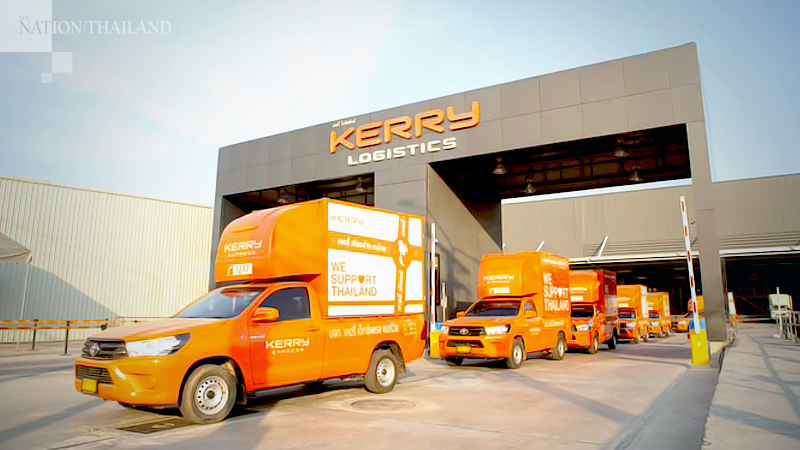
Brokerage firms expect the price of Kerry Express (KEX) shares to rise from their initial public offering (IPO) price of Bt28.
However, a source from the capital market disagrees, saying the KEX shares will not exceed their initial offering price anytime soon, citing uncertainty over the Covid-19 outbreak, large market capitalisation and the small number of IPO shares.
The source added that the KEX IPO price is high compared to its price-to-earnings in the previous four quarters, at 33 times, even if its delivery business is in line with the new economy.
“KEX must rely on rapid growth in the next phase because the company has to compete with others in the same industry,” said the source, adding that KEX sales in the past nine months this year rose by only 0.2 per cent year on year.
SCB Securities director Veena Lertnimitr said the Covid-19 outbreak had boosted online sales but reduced people’s purchasing power at the same time. However, she expects Thailand’s leading parcel delivery brand to escape the virus fallout being felt by other companies.
“We believe investors will assess risks and choose stocks that can escape the Covid-19 impact,” she said. “Also, KEX shares will gain positive sentiment from increasing stock demand because only a small number were allocated.”



 Prime Minister Prayut Chan-o-cha (Photo credit: Thai government)