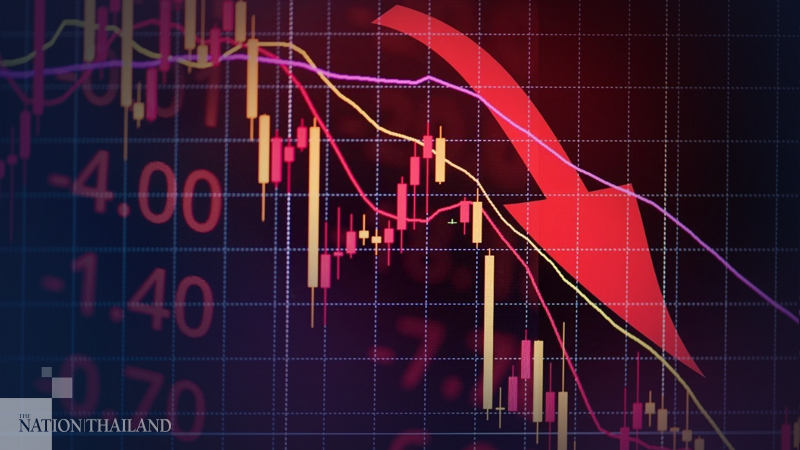
The Stock Exchange of Thailand (SET) Index closed at 1,416.02 on Wednesday, down 8.37 points or 0.59 per cent. Total transactions amounted to Bt89.55 billion with an index high of 1,440.52 and a low of 1,414.21.
In the morning session, an analyst at Krungsri Securities expected the day’s index to fluctuate between 1,415 and 1,435 points amid an influx of foreign funds.
“However, uncertainty over the [highly infectious] coronavirus mutant in Britain and fears of a new Covid-19 wave in Thailand would pressure the index,” he predicted.
The 10 stocks with the highest trade value today were PTT, DELTA, CPF, BANPU, CPALL, KBANK, STGT, ADVANC, SCB and AOT.
As of 4.30pm, the price of oil dropped by US$0.08 or 0.17 per cent to $46.94 per barrel, while gold rose by $5.10 or 0.27 per cent, to $1,875.40 per ounce.
Other Asian indices were on the rise:
Japan’s Nikkei Index closed at 26,524.79, up 88.40 points or 0.33 per cent.
China’s Shang Hai SE Composite Index closed at 3,382.32, up 25.54 points or 0.76 per cent, while Shenzhen SE Component Index closed at 14,015.02, up 132.72 points or 0.96 per cent.
Hong Kong’s Hang Seng Index closed at 26,343.10, up 223.85 points or 0.86 per cent.
South Korea’s KOSPI Index closed at 2,759.82, up 26.14 points or 0.96 per cent.
Taiwan’s TAIEX Index closed at 14,223.09, up 45.63 points or 0.32 per cent.
Bank of Thailand keeps interest rate at 0.5%, downgrades 2021 GDP outlook
EconDec 23. 2020Titanun Mallikamas, secretary of the Monetary Policy Committee (MPC)
By The Nation
The Bank of Thailand (BOT) kept its benchmark interest rate unchanged for the fifth straight time on Wednesday, but downgraded its outlook for the economy next year after a fresh Covid-19 outbreak.
The unanimous vote to maintain the policy rate at 0.5 per cent was taken to preserve its limited policy space to support economic recovery that remained “highly uncertain”, said Titanun Mallikamas, secretary of the Monetary Policy Committee (MPC) after Wednesday’s meeting.
Most economists had expected the policy rate to remain unchanged following three rate cuts earlier this year.
The bank also projected the Thai economy would contract 6.6 per cent in 2020, upgrading its previous forecast of 7-per-cent contraction due to improvements in private consumption and exports.
However, the BOT cut its 2021 growth outlook from 3.6 per cent to 3.2 per cent. The move follows an outbreak of more than 1,000 Covid-19 cases at the weekend. The bank forecasts 4.8 per cent growth in 2022.
It said the economic recovery remained highly uncertain and would depend in the short term on effective containment of the latest virus outbreak.
Recovery in the longer term would rest on revival of the foreign tourist trade, Covid-19 vaccination, and the labour market, where unemployment and underemployment remained high, it added.
The financial system remained sound while vulnerabilities among households and SMEs remained, said the bank. It also voiced concern that uneven recoveries across sectors would affect sustainability of economic growth.
Headline inflation was projected to return to the target in the middle of 2021.
The bank said it would consider additional measures to rein in the baht, which has been rising rapidly against the dollar to the dismay of Thai exporters.
Monetary policy must remain accommodative, said the BOT.
In deliberating monetary policy going forward, the bank said it would monitor government recovery measures and also risks such as the fresh virus outbreak.
The “Khon La Khrueng” (Let’s Go Halves) subsidised shopping scheme is gaining popularity among people, so much so that the government has decided to launch the second phase to meet the demands of more people. From 10 million, the scheme is being expanded to cover 15 million people.
However, there are some negative views about the scheme, such as loopholes which facilitate corruption.
Even though it cannot be denied that various schemes tend to be misused, but thanks to technology, the government has been able to check damage and arrest participants who violate the scheme’s regulations as soon as possible.
Prime Minister Prayut Chan-o-cha had instructed the Finance Ministry to work on his policy to relieve the people’s sufferings from the Covid-19 impact, especially of low-income people.
As a result, the Finance Ministry launched three measures to help the people:
1. Low-income people: The government paid an extra Bt500 to 14 million state welfare cardholders for six months.
2. Moderate-income people: The government launched the “Let’s Go Halves” scheme to reduce the cost of living for 15 million participants and boosted approximately 1 million retailers’ incomes.
3. High-income people: The government launched the “Shop Dee Mee Kuen” (Shop and Payback) scheme, which enables people to deduct tax from buying goods.
Apart from reducing the cost of living, the scheme helps stimulate spending to boost the economy and enables people to spend via the electronic payment system as well.
The ultraroyalist Thai Pakdee group submitted a letter to Education Minister Nataphol Teepsuwan on Wednesday, asking him to launch five measures to promote protection of national institutions.
The group’s leader, Warong Dechgitvigrom, said the move aimed to prevent politicians and activist networks from using teachers and students as tools to encroach on the “three pillars” of nation, religion and the monarchy.
The proposals follow months of anti-establishment protests by school and university students, who are calling for the removal of PM Prayut Chan-o-cha, a democratic Constitution and reform of the monarchy. Critics allege the student protests are being funded by politicians, but there is no credible evidence for this.
Thai Pakdee proposed the following five measures:
▪︎ Educational executives should protect their places of learning and should not allow politicians or activist networks to use them to encroach on the institutions.
▪︎ Teachers and related staff should protect the institutions and not support those who seek to undermine them.
▪︎ The Education Ministry should improve the curriculum to promote pride in being Thai.
▪︎ The ministry should organise activities to create awareness of the importance of national institutions among teachers, students and related staff in places of learning.
▪︎ Educational institute executives must take responsibility for any activities held under their jurisdiction that encroach on national institutions.
Nataphol said the ministry would consider Thai Pakdee’s proposals, and confirmed he planned to improve learning programmes to raise awareness of pride in being Thai.
“As long as I am education minister, the identity of Thailand will not disappear,” he said.
By Syndication Washington Post, Bloomberg · Jessica Summers, Sheela Tobben
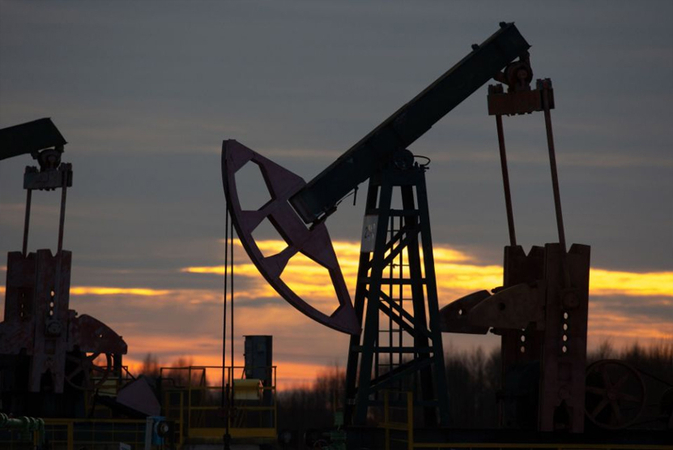
Oil rallied along with equity markets as a decline in U.S. crude inventories injected optimism into a market that’s reeling from the resurgence of the pandemic.
Futures in New York climbed as much as 3.2% on Wednesday. Stocks rose as investors shrugged off the latest tension over a U.S. pandemic relief package, while the U.K. and European Union reached the outline of a post-Brexit trade agreement. The dollar also weakened, boosting the appeal of commodities priced in the currency.
Meanwhile, a government report showed American crude stockpiles fell to the lowest level since late November and exports rose for a second straight week.
“The sentiment in the crude market has switched from a sell all strength to buy the dip,” said Rebecca Babin, a senior equity trader at CIBC Private Wealth Management. “The dollar and shift towards bidding for risky assets such as in the equity markets continue to be the main driver of trading action.”
Crude’s rally follows a rough start to the week. Futures declined Monday and Tuesday on concerns that the new coronavirus mutation — which is possibly already in the U.S., Germany, France and Switzerland — will cause widespread movement restrictions that would weigh on energy demand. South Korea and the Philippines already moved to temporarily suspend U.K. flights, while Japan is strengthening entry regulations for people traveling from Britain.
Brexit negotiators are now working to finalize the wording of their deal with the EU after almost ten months of often fraught deliberations.
West Texas Intermediate for February delivery rose $1.14 to $48.16 a barrel at 12:24 p.m. on the New York Mercantile Exchange. Brent for February settlement added $1.17 to $51.25 on the ICE Futures Europe exchange.
The Energy Information Administration report showed that the U.S. crude inventory decline was largely due to a decrease in West Coast supplies, limiting the impact on prices. The region is sometimes ignored by traders because its distribution system is isolated from the rest of the country.
“The draw in crude was small, but traders and producers have been more opportunistic. That would explain the increase in exports,” said Quinn Kiley, a portfolio manager at Tortoise, a firm that manages roughly $8 billion in energy-related assets.
Investors are also focused on the likelihood President Donald Trump will sign a coronavirus relief package into law by Dec. 28. Speaker Nancy Pelosi said the House plans to proceed Thursday with a bill to replace the $600 stimulus checks in this week’s proposal with the $2,000 payments Trump asked for.
Cash piles, vaccines force economists to rethink Canada outlook
InternationalDec 24. 2020Healthcare workers wait in line outside a Toronto vaccination clinic on Dec. 15, 2020. MUST CREDIT: Bloomberg photo by Cole Burston.
By Syndication Washington Post, Bloomberg · Erik Hertzberg, Shelly Hagan
Even as Canadian policymakers ramp up covid-19 restrictions, economists are becoming more optimistic about the country’s outlook.
Strong fiscal support, the start of vaccinations and a growing pile of savings in consumers’ accounts have caused forecasters to revise their views of Canada’s recovery. Economists surveyed by Bloomberg this month see output expanding by an average 5.4% annualized in the final three quarters of 2021, much higher than the 3.8% forecast in November.
Eric Lascelles, chief economist at RBC Global Asset Management, said in a report to investors last week he’s among those raising growth forecasts, citing “our belief that vaccines will prove a game-changer, and expectations that government stimulus will remain substantially in place.”
Canada has proved itself a fiscal champion during the pandemic, with the most generous emergency response in the Group of Seven, according to International Monetary Fund data. The longer-term implications of such massive deficit spending are unclear, but it has left the country well-positioned for a strong 2021 rebound, mostly on the potential upside from consumption when vaccines roll out and restrictions lift.
“In the case of a permanent reopening starting toward the end of the second half of 2021, the elevated household savings rate could unleash major pent-up demand, especially on the services side of the economy,” Dominique Lapointe, an economist at Laurentian Bank Securities, said by email.
Generous government support and limited spending options have been a boon to Canadians’ personal checking accounts, which have swelled over the past year by C$103 billion ($80 billion), or 34%, the most in more than three decades, according to Bloomberg calculations based on Bank of Canada data.
“People in many cases were getting more support than they needed in the early going and so they saved that,” Lascelles said by phone. “As the fiscal support starts to fade or as they lose eligibility for certain programs, we will start to see them tapping that.”
Still, the virus is hampering the near-term outlook, with new cases of coronavirus in Canada surpassing 6,600 a day on average — more than triple what was seen during the first wave in April and May. Ontario, the most-populous province, said Monday it will enter a new lockdown the day after Christmas, the latest in a series of tighter measures across the country.
But Prime Minister Justin Trudeau’s government is pushing to inoculate as many Canadians as possible before the end of the year, securing more than 400,000 early doses of two Covid-19 vaccines. That’s boosted consumer confidence, which has climbed back to where it was in mid-March when restrictions were first imposed.
Economists in the latest Bloomberg survey lifted their 2021 and 2022 full-year growth forecast to an average of 4%, from 3.9% in November.
Canada’s output gap will close around the middle of 2022, with inflation returning to the 2% target in the third or fourth quarter of that year, “even without incorporating much of a vaccine lift,” according to projections by Bank of Nova Scotia economist Derek Holt.
While he acknowledges wide ranges are still possible, Holt expects such a scenario would prompt the Bank of Canada to shut down its quantitative easing program by late 2021 or early 2022 and begin tapering before that.
“That makes the assumption they’ll prepare markets over time and still speak to bidirectional flexibility as they taper, but that they won’t just go cold turkey,” he said by email.
‘Trickle-down’ tax cuts make the rich richer but are of no value to overall economy, study finds
InternationalDec 24. 2020President Trump holds a news conference after signing the Tax Cuts and Jobs Act into law on Dec, 22, 2017. MUST CREDIT: Washington Post photo by Jabin Botsford.
By The Washington Post · Christopher Ingraham
President Donald Trump sold his 2017 tax cuts as “rocket fuel” for the economy, arguing that freeing up money for the wealthy would allow them to hire more workers, pay better wages and invest more. The tax savings, in other words, would trickle down from the rich to everyone else.
But, just as many economists predicted, slashing individual, corporate and estate tax rates was mostly a windfall for big corporations and wealthy Americans. The Tax Cuts and Jobs Act didn’t pay for itself, failed to stimulate long-term growth and didn’t lead to sustained business investments.
According to one of the most comprehensive studies to date on tax cuts for the rich, this should come as no surprise. David Hope and Julian Limberg of the London School of Economics examined five decades of tax cuts in 18 wealthy nations and found they consistently benefited the wealthy but had no meaningful effect on either unemployment or economic growth.
The researchers started by constructing a composite measure of “tax cuts on the rich” encompassing a variety of taxes, including the top tax rate on personal income, the estate tax and the tax on capital gains. Because these taxes are levied predominantly on the wealthiest members of society, the wealthy stand to gain the most when they’re cut.
While previous studies on the effects of taxing the rich have tended to focus on just one type of tax, “our measure combines all of these important taxes on the rich into one indicator,” Hope and Limberg wrote in an email. “This provides a more complete picture of taxes on the rich, but it also allows for comparisons across countries and over time.”
Using this measure, they set out to identify “major” tax cuts on the rich in 18 wealthy nations from 1965 to 2015. In the United States, that included the Reagan tax cuts of 1981 and 1986, which dramatically reduced the top income tax rate from 70 percent down to 28 percent after fully taking effect.
They then traced what happened to those nations’ economies in the five years after the cuts were implemented. They focused particularly on income inequality, economic growth as measured by gross domestic product, and the unemployment rate. They aggregated those trends across countries to capture the broadest possible picture of the tax cuts’ effects.
First, the tax cuts succeeded at putting more money in the pockets of the rich: the share of national income flowing to the top 1% increased by about 0.8 percentage points (for comparison, in the U.S. the bottom 10% of earners capture only 1.8% of the country’s income).
But they had no effect on either economic growth or employment; though those quantities fluctuated slightly following the major tax cuts studied, the effect was statistically indistinguishable from zero. The “rocket fuel” so often promised by supporters of these tax cuts? It fizzles out time and time again.
“In the last decade, especially with the pioneering work of Thomas Piketty and his co-authors, there has been a growing consensus that tax cuts for the rich lead to higher income inequality,” Hope and Limberg wrote via email. Piketty, a French economist, wrote “Capital in the Twenty-First Century,” an influential book on the growth of inequality in rich nations.
Given the evidence, why are such targeted tax cuts perennially popular among policymakers, especially Republicans? The authors point to one major reason: the power of wealthy individuals and corporations to set policy agendas through lobbying and campaign contributions.
“There is a large political science literature on the power of rich voters and organised business interests to shape public policies in their favour,” the authors write.
Hope and Limberg say their findings offer one clear pathway for policymakers looking to dig their way out of the financial hole created by the coronavirus crisis: Make the rich pay for it.
Though the pandemic cost tens of millions of Americans their jobs and sent the U.S. economy into a tailspin, many at the top of the income distribution have seen their wealth skyrocket. The nation’s 651 billionaires saw their net worth spike by more than $1 trillion during the first nine months of the pandemic according to Americans for Tax Fairness, a progressive group advocating for higher taxes on the wealthy.
“We would argue that governments should not be unduly concerned that taxing the rich will harm their economies when deciding how to pay for the costs of COVID-19,” they wrote via email.
Given the historically low tax burdens currently enjoyed by America’s wealthy, their ability to pay for higher taxes has probably never been better.
By Syndication Washington Post, Bloomberg · Alaric Nightingale, Jeffrey Bair, Christian Wienberg
A great global restock is at hand, filling ships, trucks and trains, and also firing oil demand.
During the depths of China’s coronavirus crisis at the start of the year, shipping behemoth A.P. Moeller-Maersk reported an unprecedented number of canceled sailings as the Asian country all but shut itself off from the world. Since then, the company’s shares have surged to the brink of a record in Copenhagen. In the U.S., BNSF Railway Co., the freight giant owned by Warren Buffett, is riding a boom that’s pushed the number of carloads and containers it hauls up year-on-year in recent weeks.
A shift in consumer behavior, particularly in western countries, has driven oil prices above $50 a barrel in the past few weeks. People have been diverting expenditure previously earmarked for now-unattainable things — like holidays and meals in restaurants — toward purchasing physical goods. And that’s only the start of it: stores, warehouses and industries have undertaken a huge inventory restocking phase. As more boxloads of stuff get moved across the planet, so demand for fuel to power ships, trucks and freight trains has soared.
“This is the perfect storm for global container flows,” said Lars Mikael Jensen, head of network at Maersk, which marshals a fleet of almost 700 ships. “The current restocking in the U.S. and Europe raises demand, whilst global measures to contain the pandemic cause severe strain across the supply chain from lack of vessels, containers and trucking capacity.”
While beneficial to oil prices and freight haulers, the boom is straining important transportation infrastructure. Bottlenecks are worsening at ports around the world, contorting supply chains for everything from car parts to cosmetics. The recent closing of freight deliveries from France into the U.K. serves as a reminder that things could become even more snarled — but also that the full economic and trade impacts of the coronavirus remain far from certain.
Los Angeles is emblematic of the turnaround in activity. Together with Long Beach, L.A. is a corridor for the import of goods from Asia into the U.S. Earlier this year, thousands of empty containers were sitting at the dock in Los Angeles, a symptom of both trade tensions with China, and Covid. Today, imported goods are now flooding in.
“Right now, what we are grappling with is a change in buying habits,” said Gene Seroka, executive director of the Port of Los Angeles. “Where we were once buying mainly services, now you and I have turned back to buying products and those warehouses need to be restocked. Folks have been ordering so much for delivery, we can’t process it fast enough.”
Exports from China are surging, pushing the country’s trade surplus to a record. The nation’s companies shipped $268 billion of goods in November, a 21% increase year-on-year.
In India, the lifting of lockdown restrictions and a full resumption of intra-state vehicle movement led to a boost in road transport fuel consumption in October, with diesel demand growing more than 7% year-on-year, according to Senthil Kumaran, head of South Asia oil at industry consultant FGE.
Shipping rates are going crazy. Moving a 40-foot steel box by sea from Shanghai to the European trade hub of Rotterdam costs about $6,500 per container, the most for the time of year since at least 2011, according to data from Drewry.
The trends matter for the oil market because trucking accounts for about 16% of global oil consumption and almost half of all diesel demand, according to 2019 data from the International Energy Agency.
The rebound in activity, combined with the onset of Northern Hemisphere winter, has been lifting a previously disastrous market for the fuel for about two months.
Back in September, the so-called crack spread — diesel’s premium to crude — plunged as low as $2 a barrel in Europe.
As well as stuttering demand, a key cause of the diesel-market weakness was a collapse in global aviation. Oil refineries responded to that slump by diverting output of jet fuel into making diesel instead, boosting output when consumption was weak. In addition, because people were often staying off public transport to avoid catching the virus, refineries needed to keep high output levels to service gasoline demand — further swelling diesel supply at a time when it wasn’t needed.
Those dynamics have turned. Last week, the crack spread rallied to $6.28 a barrel. That’s at a time when the underlying price of crude oil has also rallied strongly.
In the U.S., freight by truck is the primary influencer of diesel and viewed as a sign of the health of the wider economy. Interstate miles covered by trucks are up above 9% over last year, while traffic for all vehicles is down more than 10%, federal Department of Transportation statistics show.
A proxy for demand in U.S. is how much of a petroleum product oil refineries supply. And in the week to Dec. 11, they supplied 4 million barrels a day of distillate fuel oil, the category that includes diesel. Back in May, that figure slumped to 2.7 million a day, the lowest in decades, Energy Information Administration data show. Stockpiles remain high but are far less bloated than they were earlier this year.
The pull on diesel can be seen in excess demand for deliveries this year. Data from consultant Freight Waves show that 26% of requests for freight hauling are being turned down this quarter, double the rejection rate from a year ago.
While trucking may be the mainstay of diesel demand, one of the largest U.S. buyers of the fuel — after the Navy — is Buffett’s BNSF Railway. It too reports surging activity.
“We have seen a strong recovery in intermodal volumes as an increase in e-commerce sales drives demand for parcel and truckload intermodal shipments on our network,” said Tom G. Williams, BNSF group vice president consumer products. “As cities and states began reopening, intermodal demand was further supported by recovering brick-and-mortar retailers.”
Current volumes at some of BNSF’s intermodal facilities are as much as 20% higher than they were at this time last year, and the company is continuing to work with its customers to meet a “consistent surge” in demand while replenishing inventories that have been low since the onset of the pandemic, he said.
Over in Europe, the continent’s biggest owner of trucks reports the same dynamics, filling the company’s fleet and boosting usage of diesel.
“There is definitely a new consumer pattern,” said Kristian Kaas Mortensen, an executive at Girteka Logistics, a Vilnius, Lithuania-based owner of more than 7,500 trucks. “Because we can’t give it face-to-face we are shipping it.”
Girteka is so busy that it’s giving overflow business to other trucking companies. It anticipates the busiest year-end in its history.
In Germany, miles driven by large trucks have been steadily rising since September and are currently their highest in a month, according to the nation’s statistics office. Polish heavy traffic in the week to Dec. 20 is about 20% higher than the equivalent year ago. It was a similar picture in the U.K. prior to the country’s most recent set of lockdown rules.
But it’s a surge that’s global and may well be without precedent, according to Gebr. Weiss, a 500-year-old firm that lays claim to being the world’s oldest logistics company.
“Looking back at our history, you could say we’ve weathered a few challenges: a war, a revolution or two but still, in all my years in logistics I’ve never had a year like this,” said Gebr. Weiss board member Lothar Thoma. “Covid choked up, disrupted transport arteries on a global scale, messed the cycles of goods-in, goods-out, be it air, sea, rail or road.”
U.S. new-home sales unexpectedly tumble to lowest since June
InternationalDec 24. 2020A worker stands inside the garage of a new home under construction by Pardee Construction in the Pacific Highlands Ranch master planned community in San Diego on Aug. 31, 2020. MUST CREDIT: Bloomberg photo by Bing Guan.
By Syndication Washington Post, Bloomberg · Olivia Rockeman
New-home sales in the U.S. tumbled to a five-month low, suggesting red-hot demand is cooling amid resurgent covid-19 cases and other signs of a slowing economy.
Purchases of new single-family houses decreased 11% to a 841,000 annualized pace in November from a downwardly revised 945,000 rate in the prior month, government data showed Wednesday. The median projection in a Bloomberg survey of economists called for 995,000. The median selling price rose 2.2% from a year earlier to $335,300.
The data dim housing’s status a bit as a bright spot in an otherwise shaky economy, and the drop in sales may reflect a lack of available inventory as builders struggle to meet demand fueled by ultra-low mortgage rates. Affordability could also be playing a role, though a new $900 billion stimulus package, approved by Congress on Monday, may boost family finances and keep demand robust.
Shares of U.S. homebuilding companies fell after the report.
A report Tuesday showed that sales of previously owned homes also fell in November, as surging prices and a record-low supply constrain demand.
Wednesday’s report showed the number of properties sold for which construction hadn’t yet started decreased to a four-month low of 288,000 in November, while the number of homes for sale edged up to 286,000.
At the current sales pace, it would take 4.1 months to exhaust the supply, the highest since June.
The drop in sales was concentrated in the West and Midwest regions. The 59,000 pace in the Midwest was the smallest since early 2016, while the South and West each recorded their lowest totals since June.
The new-home sales report, released jointly by the Census Bureau and Department of Housing and Urban Development, tends to be volatile from month to month, often with significant revisions.
Vaccines arm hotels, airlines with new power to jack up prices
InternationalDec 24. 2020A traveler wearing a protective mask walks with luggage to the United Airlines check-in counter at San Francisco International Airport in San Francisco, on Dec. 21, 2020. MUST CREDIT: Bloomberg photo by David Paul Morris.
By Syndication Washington Post, Bloomberg · Justin Bachman, Mary Schlangenstein, Patrick Clark
The arrival of a coronavirus vaccine has the U.S. travel industry preparing for a rebound in demand following a historically terrible year. After months of deep discounts — with hotels offering lavish perks and airlines dangling fares such as $21 from New York to Florida — prices are set to make up at least part of the ground they lost.
Trip providers have slashed capacity, so any gains in bookings will tend to boost rates. And as vaccines take hold, they’re poised to unleash a torrent of pent-up vacation demand as people emerge from months of being cooped up at home. That’s leading to optimism within the industry for an upswing in the spring and summer, even as rates remain depressed and a recovery in business travel is a long way off.
“No one’s getting ready to pop open a bottle of champagne yet,” travel consultant Henry Harteveldt said of airlines and hotel groups he has polled. “But there is hope right now that summer 2021 will come in and be certainly not only much stronger than this year, but at or above 50% of where we were in 2019.”
Already, some affluent travelers have begun making reservations for blow-out vacations, said Jack Ezon, a managing partner of Embark Beyond, a travel agency catering to the super-rich. Clients have flooded the company with requests for big parties in Europe and the Caribbean, with some budgets topping $1 million.
“Anything on the Mediterranean is bumping,” he said. “Space is already tight and it would be wise to have something in your pocket by the end of January so you don’t get shut out.”
While it may soon be too late to score a luxurious suite on, say, Italy’s Amalfi Coast, prices for other types of travel have yet to reflect a potential surge in demand.
The pandemic has caused would-be vacationers to wait much closer to their travel dates before booking plane tickets or hotels, giving those businesses less visibility into their ability to boost rates. Any recovery in demand will need to be sustained before airlines consider raising prices, said Lacey Alicie, director of data analytics at Ailevon Pacific Aviation Consulting and a former revenue executive at American Airlines.
There are other reasons a recovery may not be swift. The depth of this year’s collapse has been unprecedented and risks abound, from vaccine distribution bottlenecks to virus mutations. And any rebound will only come after a brutal winter as covid-19 continues to tear through the country. Early 2021 will bring “really rough months,” Southwest Airlines Chief Executive Officer Gary Kelly said recently.
“We expect next summer to be a lot better than this year but not normal,” Andrew Nocella, chief commercial officer for United Airlines, said in an interview. “We think 2022 is probably the bigger year.”
The $900 billion relief bill Congress passed on Dec. 21 is slated to provide new funding to loan programs that have helped hotel owners stay afloat, but the industry remains in a precarious situation. STR, a lodging data firm, predicts that room rates will remain below 2019 levels until some time in 2023, with urban markets from New York to San Francisco taking longer to rebound.
“Our property owners, these people are struggling, a lot of folks are focused on needing cash,” said Michael Deitemeyer, CEO of Aimbridge Hospitality, the world’s largest third-party manager of hotels.
Still, vaccines are offering hope that Americans will rediscover their wanderlust and cast off the limitations of video chats and telephone calls. On the day that Pfizer Inc.’s shot was approved for use in the U.S., hotel bookings jumped to the largest daily number since the pandemic began in March, according to RateGain, which powers bookings for major hotel and online travel information providers.
United predicted Dec. 11 that third-quarter bookings would be only 40% below 2019 levels compared with 70% now. Delta Air Lines sees “a level of optimism” from the vaccines, said Joe Esposito, vice president for network planning.
“Six months, even three months ago, we didn’t know where the end was,” Esposito said. “Now we can at least see that in spring and summer there’s going to be pent-up demand for people to travel and get out because everybody has lost a year.”
While it likely will be well into 2021 before shots are available to every adolescent and adult in the U.S., travel may rebound sooner once more vulnerable older people are vaccinated. With aging parents or grandparents inoculated, younger relatives may decide it’s safe to visit even if they haven’t been vaccinated themselves, said Savanthi Syth, an airline analyst at Raymond James Financial.
The recovery will be driven by leisure travelers, who generally pay lower rates than corporate road warriors or conference goers. But airlines, in particular, have become leaner companies, with the six largest U.S. carriers shedding nearly 84,000 jobs since January. The cuts mean fewer flights — and fares that are likely to be higher than in 2020 as vacationers gradually trickle back into airports.
It’s a similar story for cruise lines, most of which plan to resume operations in March, but with occupancies down as much as 50% on some itineraries. Cruise Lines International Association said the pandemic had cost the industry nearly 164,000 “direct and indirect” U.S. jobs and $8.6 billion in lost wages.
Cruise companies are planning a staggered return to the seas. Carnival Corp., the world’s largest cruise company, is removing 18 ships from its fleet, permanently cutting capacity by 12%.
“We’re going to have limited capacity with pent-up demand,” Carnival CEO Arnold Donald said on the company’s most recent earnings conference call. “And I don’t think demand is going to be a big issue in the short term.”
When a travel executive feels more optimistic, it’s probably time to consider buying before the deals wane.

 Titanun Mallikamas, secretary of the Monetary Policy Committee (MPC)

 Healthcare workers wait in line outside a Toronto vaccination clinic on Dec. 15, 2020. MUST CREDIT: Bloomberg photo by Cole Burston.
  President Trump holds a news conference after signing the Tax Cuts and Jobs Act into law on Dec, 22, 2017. MUST CREDIT: Washington Post photo by Jabin Botsford.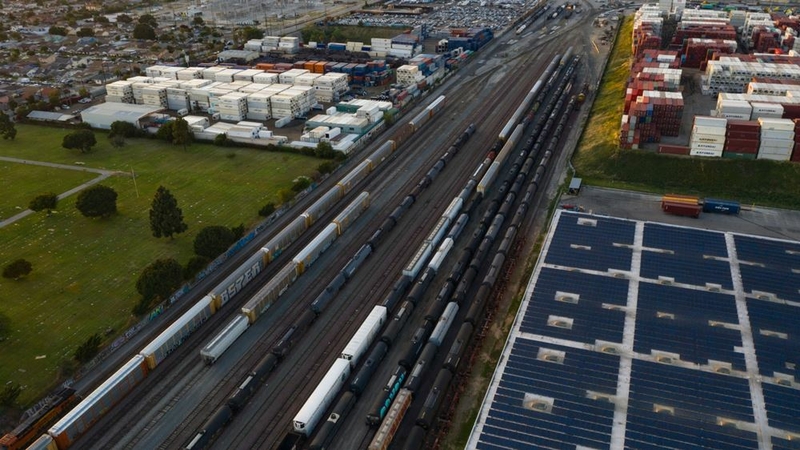
 A worker stands inside the garage of a new home under construction by Pardee Construction in the Pacific Highlands Ranch master planned community in San Diego on Aug. 31, 2020. MUST CREDIT: Bloomberg photo by Bing Guan.
  A traveler wearing a protective mask walks with luggage to the United Airlines check-in counter at San Francisco International Airport in San Francisco, on Dec. 21, 2020. MUST CREDIT: Bloomberg photo by David Paul Morris.
