Jobless claims, spending show U.S. economy limping into year-end
InternationalDec 24. 2020Construction workers install frames for windows and doors in a home being built in Bloomfield Hills, Mich., on May 7, 2020. MUST CREDIT: Bloomberg photo by Emily Elconin.
By Syndication Washington Post, Bloomberg · Katia Dmitrieva
U.S. consumer spending and incomes fell more than forecast in November and filings for unemployment benefits remained at elevated levels last week, the latest signs that the autumn’s surge in coronavirus cases is sapping the economic recovery.
Initial jobless claims in regular state programs dropped by 89,000 to 803,000 in the week ended Dec. 19, according to the Labor Department Wednesday, compared with the median projection of economists for 880,000. On an unadjusted basis, claims fell by about 73,000.
A separate Commerce Department report showed consumer spending, which accounts for a majority of the economy, dropped 0.4% last month — the first decline since April. Personal income decreased 1.1%, reflecting the winding down of several pandemic aid programs.
The data show a U.S. economy limping into year end and suggest many Americans will struggle in coming months as coronavirus cases surge across the nation. More businesses also face closure or layoffs amid colder weather and less foot traffic.
Vaccine distribution offers hope on the horizon, and the fiscal stimulus package approved by Congress this week should offer some relief, though President Donald Trump’s remarks late Tuesday put the fate of the deal in question.
“The economy is still pretty soft,” said Scott Brown, chief economist at Raymond James Financial Inc. “The level of jobless claims suggests there’s still labor-market weakness,” while on spending, “you see the pandemic’s impact on the season: There’s less seasonal shopping than usual, there’s less seasonal travel.”
U.S. stocks edged higher as investors appeared ready to look past the president’s comments to the promise of pandemic relief that will come sooner or later. Yields on 10-year Treasuries rose, while the dollar fell.
The Labor Department figures showed continuing claims, which roughly approximate the pool of total state benefit recipients, decreased by 170,000 to 5.34 million in the week ended Dec. 12. This figure doesn’t include the millions on federal pandemic aid programs, which are set to be extended under the new fiscal stimulus package.
Even with the drop in initial jobless claims, the level remains almost quadruple what it was before the pandemic, and the four-week average edged up to a two-month high. California and New York made up most of the drop on an unadjusted basis.
More than half of states reported a decline in initial claims, while Illinois, Virginia and Pennsylvania experienced an increase in claims last week.
The decline in spending, which exceeded estimates in Bloomberg’s survey of economists, followed a downwardly revised 0.3% increase in October. Spending on goods fell 1%, driven by clothing, footwear and new motor vehicles. Services outlays slipped on decreases for food services and accommodations.
“We are losing momentum at a critical time,” Diane Swonk, chief economist at Grant Thornton in Chicago, said on Bloomberg Television. “Consumer spending is pulling back or slowing down at a time when we should be ramping up, and that’s because of the surge in Covid cases.”
Also Wednesday, data showed orders for U.S. durable goods rose in November by more than forecast. But a proxy measure for business investment — non-defense capital goods orders excluding aircraft — increased by 0.4%, less than the 0.6% estimate, following an upwardly revised 1.6% advance in October.
The weekly jobless claims report is usually released on Thursday, but was moved up because the federal government will be closed Dec. 24.
NEW DELHI – As coronavirus cases spread around the world earlier this year, Binish Desai found himself increasingly nervous. It wasn’t only the pandemic that worried him, but the waste it was generating.
Masks and protective gear were being used a single time and then discarded by the tons, eventually destined for landfills or bodies of water.
“I have eco-anxiety,” said Desai, 27, who describes himself as an environmental activist and innovator in western India. When he sees waste, he said, he automatically begins thinking about ways to use it.
By September, he had come up with a solution: Take the used protective gear and mold it into bricks for buildings. He said he already has made more than 40,000 such bricks for projects including homes and factories, and is gearing up to produce 15,000 a day.
Desai’s recycling effort is one small step toward addressing a global environmental hazard. To fight the virus, countries around the world have increased production of personal protective equipment, or PPE. Such gear is often made of polypropylene plastic, a synthetic resin that can take hundreds of years to degrade.
Exactly how much waste the pandemic is creating worldwide is not clear, but experts say it is significant. One study estimated – on the basis of a projection for Italy – that the world could be using up to 129 billion face masks a month.
India, home to more than 1.3 billion people, has mandated the use of masks in public and has manufactured tens of millions of protective suits since the start of the pandemic. Nearly 20,000 tons of coronavirus-related biomedical waste were generated between June and September, according to figures from India’s environmental watchdog.
A recent report from the United Nations Environmental Program estimated that developing countries are generating about five pounds of covid-related health-care waste per hospital bed each day. In Wuhan, the original epicenter of the pandemic, the daily medical waste increased sixfold at the height of the outbreak.
In the United Kingdom, health authorities distributed more than 2.3 billion PPE items for use by health and social services in England from February to July of this year – almost as many as in all of 2019.
Experts say the sudden surge in the consumption of single-use PPE has reversed years of efforts to battle the scourge of nondegradable solid waste.
The increase is a matter of “enormous concern that is polluting our planet,” said Jodi Sherman, a professor at the Yale School of Public Health who studies the environmental impacts of health care systems.
Kumar Raja Vanapalli, an expert on plastic waste management at the Indian Institute of Technology in Kharagpur, said that although some used PPE will end up in landfills, others could end up in oceans where “they may affect marine life and even break into microplastics” that ultimately “end up in food streams and come back to us.”
Several innovators are working on ways to recycle the waste, whether in the form of liquid biofuel or through new products such as Desai’s bricks.
Desai, who grew up in the city of Valsad in the state of Gujarat, claims to be a kind of recycling prodigy. He became interested in the field as a child and said he founded his own company at the age of 16. Later he went on to study biotechnology. He said he has turned coffee grounds into bowls and plates, fabric lint into soundproofing panels and textile waste into furniture. Before the pandemic, he said, his firm was mainly making eco-friendly bricks composed of industrial paper sludge.
His latest innovation, he said, adds biomedical waste to the mix – 52%, to be precise. To obtain the waste, he installed bins outside shops and apartment buildings in which people could discard their used items.
First, the PPE material from body coverings, masks and head caps is isolated for three days. Then the fabric is sanitized and shredded before being sanitized again. Next it is mixed with 47% paper sludge and a binding agent and pressed by hand into various molds. Each brick weighs around 3 pounds and costs about 4 cents, Desai said.
One of his clients is Chirag Naik, the owner of a local packaging factory. Naik ordered 5,000 of Desai’s PPE bricks to construct an expansion of his facility starting next month.
“There are always questions that come initially, such as viability, safety and strength,” said Naik, 48. But once those questions were addressed, Naik said, his excitement grew. “When sustainability is the need of the hour, I personally believe that such innovations need to become mainstream.”
Desai, meanwhile, said he is only getting started. He is eager to collaborate with governments to convert biomedical waste into the large-scale production of bricks that could be used in road construction and other infrastructure projects.
The sooner that happens, “the faster we will be able to get rid” of PPE waste, he said. “We need to start taking it very seriously.”
By The Washington Post · Paul Schemm, Siobhán O’Grady
Britain has found two cases of a coronavirus variant linked to South Africa, Health Secretary Matt Hancock said Wednesday, both of which are tied to contact with recent arrivals from that country.
Hancock announced new restrictions on visitors from South Africa and called on anyone who has recently been to that country or been in contact with a recent arrival from there to self-isolate immediately, describing the measures as temporary while officials seek to better understand the variant.
“This virus is highly concerning because it is yet more transmissible and appears to have mutated further than the new variant that’s been discovered in the U.K.,” he said at a news conference.
South African officials announced last week that their scientists had detected a new variant that appeared to be fueling a rapid rise in infections there.
The appearance of the South African variant in Britain comes as its officials are already grappling with a worsening coronavirus outbreak linked to a different variant recently discovered in England.
Experts have cautioned that both variants need additional study as scientists seek to better understand the mutations and what effect – if any – they will have on vaccines.
British authorities are tightening restrictions in response to the increase in cases. By Dec. 26, about 24 million people will face Britain’s toughest coronavirus rules, under which all nonessential businesses are required to close.
Many countries in Europe and elsewhere closed their borders to British travelers in recent days to try to limit the spread of the variant discovered in England. Some also placed restrictions on people traveling from South Africa.
France banned freight across the English Channel, one of Europe’s busiest travel corridors, for 48 hours. On Wednesday, ferry passengers began to trickle back into France from Britain, after a late-night agreement between the countries to allow some people back into France, provided they could show negative coronavirus test results.
It will take days, however, to move the thousands of freight trucks stranded on the British side of the English Channel as all the drivers are tested.
British Home Secretary Priti Patel tweeted Wednesday that mass testing has begun and that the “priority is to get lorries moving.”
Housing Secretary Robert Jenrick estimated that at least 4,000 trucks were parked around the Kent region and said the military would manage testing sites, including one at Manston airport, where many of the trucks are located.
Patel urged people to avoid traveling to Kent because of major congestion, saying that an increase in travelers “will slow things down.”
TV footage showed angry truck drivers scuffling with police and honking their horns in protest after being stranded for days, often far from even the most basic sanitation facilities. Many face the prospect of missing Christmas with their families.
In interviews with local television, truckers picketing the port town of Dover said there was no movement, no apparent testing and no hygiene facilities for them.
“What we’ve got this morning is very, very angry truckers in Dover,” Rod McKenzie of the Road Haulage Association told the BBC. “They’re tired, frustrated, desperately want to get home for Christmas.”
Kent police tweeted Wednesday that they have responded to “disturbances in Dover and Manston this morning involving individuals hoping to cross the Channel” and made one arrest.
In his morning television appearances, Jenrick said there were no shortages of food at supermarkets and urged everyone to avoid panic-buying. Many locations have reported empty supermarket shelves.
Britain’s main supermarket chains, Tesco and Sainsbury’s, however, warned Monday that some fresh food could run out if freight did not start moving soon. Late Tuesday, Tesco announced the rationing of certain products in an email to customers, including toilet paper, rice, soap and eggs, to ensure there would be enough for everyone.
Britain’s newspapers, meanwhile, were filled with images of thousands of trucks lined up in Manston.
Concern over the new variants comes as Britain is attempting to negotiate the terms of its future relations with the European Union and as much of the country is enduring a harsh new lockdown coinciding with the Christmas holiday season.
As many European countries rushed to impose new rules on travelers from Britain, the European Commission on Tuesday urged European Union member states to coordinate their response and lift bans on flights, trains and freight, citing “the need to ensure essential travel and avoid supply chain disruptions.”
Some countries chose to maintain or expand their prohibitions anyway, while others eased their restrictions but requested polymerase chain reaction, or PCR, coronavirus tests for new arrivals.
India has suspended flights from Britain until the end of the year. Meanwhile, it plans to track down all passengers who arrived from Britain in the past month. Officials across India have been asked to track and monitor the health of the passengers for the next two weeks.
About a dozen passengers from Britain have tested positive for the coronavirus on arrival in four Indian cities in recent days, according to local media reports. Their samples are being examined for the variant detected in England, and they are being kept in quarantine pending the results.
By Syndication Washington Post, Bloomberg · Patrick Gillespie, Jorgelina do Rosario
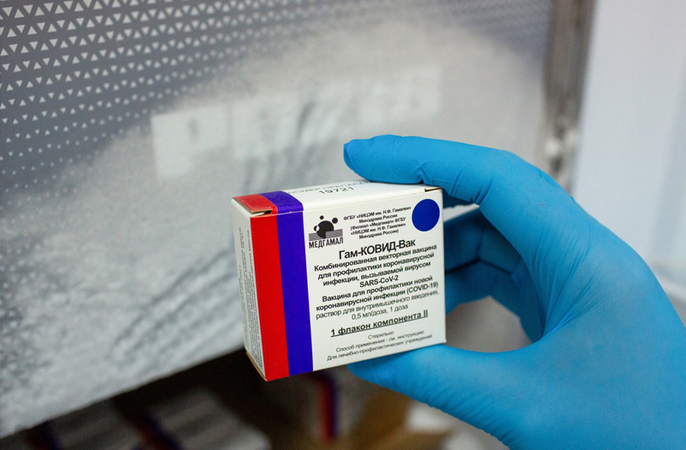
Argentina approved the emergency use of Russia’s Sputnik V vaccine to combat the spread of covid-19, becoming the first nation outside the former Soviet Union to authorize the shot.
The government decision on Wednesday came as an Aerolineas Argentinas plane awaits a cargo of vaccines to be loaded in Moscow before returning to Buenos Aires.
President Alberto Fernandez said earlier this month he hoped to vaccinate 300,000 Argentines before the end of the year, and 10 million citizens in the first two months of 2021 using the so-called Sputnik V shot. Fernandez, 61, said he would take the vaccine himself, though final results of trials involving adults over 60 years old still haven’t been released.
“It’s very important that Argentina starts to vaccinate as soon as possible,” Carla Vizzotti, the country’s secretary for health access, said in a radio interview Wednesday. The vaccine “is a fundamental tool to minimize the impact.”
With a population of 45 million people, Argentina ranks 11th worldwide in total cases with 1.6 million infections and more than 42,000 have died from the virus. After weeks of cases in decline, Argentina’s Covid curve has begun to rise again amid more international travel and holiday gatherings.
Until Wednesday, only Russia and Belarus had approved use of the Sputnik vaccine. It will be produced by Russia’s partners in India, China, South Korea and other countries, according to an emailed statement from the Russian Direct Investment Fund, which backs the vaccine. Anmat’s decision to approve the vaccine based on Russia’s clinical trials is “a high recognition of Russian regulatory standards,” said Kirill Dmitriev, head of RDIF.
Health Minister Gines Gonzalez Garcia recently criticized Pfizer Inc., which rolled out the first vaccine for use, for seeking what he called “unacceptable conditions” in negotiations. However, Argentina’s pharmaceutical regulator Anmat approved use of the Pfizer-BioNTech vaccine on Tuesday, even though no formal agreement has been announced.
Brexit negotiators reach outline of historic trade accord
InternationalDec 24. 2020A British flag flies above European Union flags during an anti-Brexit protest in London on July 24, 2019. MUST CREDIT: Bloomberg photo by Chris Ratcliffe.
By Syndication Washington Post, Bloomberg · Ian Wishart, Nikos Chrysoloras
U.K. and European Union negotiators have reached the outline of a post-Brexit trade agreement, and are now working to finalize the wording of the deal after almost 10 months of often fraught deliberations.
The accord still needs to be approved by British Prime Minister Boris Johnson and the EU, according to officials with knowledge of the matter. That means the deal could still fall apart, and any announcement could be some hours away, they said.
The pound soared, advancing by as much as 1.6% to $1.3571, for its biggest intraday gain in more than a week. The yield on 10-year U.K. government bonds was poised for the biggest gain since March.
Johnson and European Commission President Ursula von der Leyen intervened personally in recent days, holding several phone conversations in a last-ditch bid to reach an agreement before the U.K. leaves the single market at the end of the month.
If they can pull off an accord, it would draw a line under almost five years of often tempestuous negotiations since the U.K. voted to withdraw from the EU in 2016 and lay the foundations for Britain to trade and collaborate with the bloc going forward. Hundreds of trucks backed up around the southern English port of Dover earlier this week had offered a sobering reminder of the potential consequences of ending Britain’s transition period on Dec. 31 without a deal.
Negotiations resumed early on Wednesday in the commission’s Berlaymont headquarters in Brussels, with discussions focused on what access EU boats will have to British waters, and what rights the EU will have to impose retaliatory tariffs should the U.K. limit that access in the future.
Both sides have made an agreement on fishing a precondition for any wider deal over their future relationship, even if the 650 million euros ($790 million) of fish European boats catch in U.K. waters each year is a fraction of the 512 billion euros of goods traded annually between Britain and the EU.
Michel Barnier, the bloc’s chief negotiator, told a meeting of ambassadors from the 27 EU member states Tuesday that there had been progress in the talks, and a deal could be signed before Christmas — if the British are prepared to compromise further on fishing, according to diplomats briefed on the discussions. The talks could continue beyond Christmas, or fail completely, he told the private meeting.
Senior EU officials said the decision lies with Johnson, while people familiar with the British side said the onus was on the Europeans to move.
Diplomats in the EU’s working group have discussed how a potential agreement could be put into effect by Jan. 1 even though there isn’t enough time for formal ratification by the EU Parliament. While such procedural preparations aren’t in themselves proof a deal has been reached, they signal that the bloc is preparing for one.
If an agreement is struck, the commission will publish the draft unofficial text and send it to member states and the European Parliament, according to a diplomat briefed on the preparations. EU government envoys in Brussels will have two days to discuss and approve the draft, according to the plan. Then a written procedure for the signing of the free trade agreement will follow, so that it can be published in the official journal of the European Union by Dec. 31.
Trump’s last-minute tantrum throws pandemic relief effort into chaos
InternationalDec 24. 2020President Trump and first lady Melania Trump depart the White House on Wednesday afternoon, Dec. 23, 2020. MUST CREDIT: Washington Post photo by Toni L. Sandys
By The Washington Post · Seung Min Kim, Josh Dawsey, Mike DeBonis
WASHINGTON – President Donald Trump’s last-minute move to reject a sweeping coronavirus relief package is escalating confusion and panic among Republicans while setting the stage for an uncomfortable confrontation Thursday that could lead GOP lawmakers to object to their own president’s demand for larger stimulus checks for Americans.
The chaos is unfolding against the backdrop of another threatened government shutdown, with funding set to lapse starting Tuesday unless a spending bill to keep federal operations running is signed into law along with the virus aid bill. While the president hasn’t explicitly threatened a veto, his defiance of a deal negotiated by his own administration could spark a standoff that could conceivably last until Joe Biden is inaugurated Jan. 20.
The continued mayhem Wednesday threw into doubt how quickly help would get in the hands of millions of Americans struggling under the economic weight of the pandemic, including the direct payments that had become one of the most visible provisions of the relief package. In a video that caught lawmakers by surprise, Trump decried some items as too costly while advocating larger, $2,000 stimulus checks for individuals rather than the current $600 level.
The fight also handed Democrats in two vital Senate races in Georgia a fresh political weapon against their GOP opponents, with Trump undercutting Sens. David Perdue, R-Ga., and Kelly Loeffler, R-Ga., as they took a victory lap over securing the $600 checks.
House Speaker Nancy Pelosi, D-Calif., announced Wednesday that Democrats would seek to pass a bill at a short Thursday House session that would provide $2,000 checks, though the measure could easily be blocked by Republicans.
“As I’ve said from the start, the Senate should have acted on this months ago and support for Georgians should have been far greater,” said Democrat Raphael Warnock, who is challenging Loeffler in Georgia. “Donald Trump is right: Congress should swiftly increase direct payments to $2,000. Once and for all, Sen. Loeffler should do what’s best for Georgia instead of focusing on what she can do for herself.”
At the same time, Trump is facing pressure from the right to veto the massive package for reasons of cost. Russ Vought, the director of the Office of Management and Budget, wants the president to veto the measure, as do a drumbeat of conservative radio hosts and advocacy groups.
“The process was the worst I’ve ever seen, on any bill in Congress, and we’re already looking at $1.8 trillion annual deficit – and that’s before this,” said Jason Pye, vice president of legislative affairs for the conservative organization FreedomWorks.
Trump could veto the coronavirus relief and spending bill by doing nothing – the bill has yet to be transmitted to Trump, meaning the 10-day veto window will expire after the current Congress adjourns on Jan. 3. Unemployment insurance benefits are also set to expire for 12 million Americans on Saturday.
But multiple congressional aides said their real deadline of concern was Monday at midnight, when a temporary government funding bill expires.
If the standoff is not resolved by then, the aides said, an extended government shutdown could potentially continue until Biden’s inauguration. While Democrats are happy to increase the size of the stimulus checks, they said, they will not be willing to pursue a wholesale renegotiation of the relief bill or the $1.4 trillion spending bill for fiscal 2021, which were negotiated separately and then joined for passage.
Instead, they are likely to simply insist Trump sign the bill that was already passed.
The feuding over the fate of direly needed virus aid is just one chapter of a broader war that a furious Trump has waged against Congress and even members of his own party since losing to President-elect Joe Biden on Nov. 3. Trump vetoed a popular defense policy bill earlier Wednesday and continued to rage against lawmakers who weren’t joining his efforts to overturn the outcome of the election.
As Trump left Washington on Wednesday to spend the holidays in Palm Beach, Fla., White House aides were receiving an avalanche of angry messages from GOP lawmakers and consultants, who said they felt abandoned by Trump after administration officials said he supported the bill and asked them to vote for it.
Many of the concerns focused on what the fallout could be for the Georgia Senate races, two people with knowledge of the messages said, who like others requested anonymity to discuss internal communications. For the president’s part, he has been complaining to advisers that Republican lawmakers such as Senate Majority Leader Mitch McConnell, R-Ky., are not doing enough to help him in his bid to overturn his election loss.
On the spending legislation, Trump is displeased with Treasury Secretary Steven Mnuchin, his chief emissary to congressional leaders, and does not even want to speak to him about the issue, according to a senior administration official. Mnuchin – who first came up with the $600 figure for the checks – called GOP lawmakers in recent days and asked them to support the bill because the president supported it.
Among those blindsided were McConnell and House Minority Leader Kevin McCarthy, R-Calif., who were not told in advance of the Tuesday night video in which Trump outlined his complaints over the package, and they called staffers to ask what was going on, according to three people familiar with the matter.
On a conference call with House GOP lawmakers Wednesday afternoon, McCarthy said Trump is undecided on a veto and urged them to support the changes he wanted, according to three Republicans with knowledge of the conversation. McCarthy also said Republicans are exploring options for offering a unanimous consent request of their own that Democrats would have to oppose.
McConnell – who has been on the outs with Trump since publicly acknowledging Biden as the president-elect – does not plan to speak Trump about it, with one adviser to the majority leader saying he “does not think it would be helpful.”
Legislative affairs staffers and others involved in the negotiations had no idea Trump was taping the video and apologized to the surprised lawmakers, officials said. He taped it around noon on Tuesday, even as other staffers continued to tell reporters and lawmakers that Trump was going to sign the bill.
The script decrying the bill was not written by people involved in the negotiations, and some aides have been trying to decipher where it came from. Several aides hoped Trump would still sign the bill, noting he did not explicitly say he would veto it.
“Only Trump could take a final big win for his administration and in a fit of illogical madness disown any credit he’ll ever get for it,” said one senior GOP official. “To the extent that Trump’s bizarre ramblings contribute to any negative feelings for Republicans, Perdue and Loeffler are the ones who will ultimately pay the price.”
During his time in office, Trump has regularly had outbursts over legislation that advisers previously signaled he would endorse, prompting scrambles to coax him into ultimately signing a bill. But in the last throes of his presidency, many of the guardrails around Trump have been removed through departures – leaving the tempestuous president to his own devices.
White House staff secretary Derek Lyons would usually coordinate the process for a video like the one that upended the relief package by circulating scripts for approval. But Lyons’s last day was Friday, and White House Chief of Staff Mark Meadows told staff not to circulate the script for the relief bill video, according to aides.
As for Meadows himself, he is not in Washington and left town before Trump posted the video on Twitter. The chief of staff, who told aides to keep the video closely held, had been one of the main forces within the administration arguing against the $2,000 stimulus checks that the president is now pushing, making the case that enlarging the payments could blow up the entire negotiations, according to people familiar with the issue.
Others close to Trump – his presidential campaign manager, Bill Stepien; Republican National Committee Chairwoman Ronna McDaniel; and senior adviser and son-in-law Jared Kushner – are also missing in action.
In addition to playing up the issue in Georgia, congressional Democrats are seeking to capitalize on the chasm between Trump and virtually the rest of the Republican Party on direct payments in other ways.
In the House, Pelosi’s plan to seek approval for $2,000 checks would require the assent of every House member – and in a letter to Democratic members Wednesday, Pelosi put the onus on McCarthy to allow the measure to move forward to the Senate.
“Mr. President, sign the bill to keep government open!” Pelosi tweeted Wednesday. “Urge McConnell and McCarthy to agree with the Democratic unanimous consent request for $2,000 direct payments! This can be done by noon on Christmas Eve!”
What remained unclear Wednesday was whether Democrats would force a confrontation on the House floor, prompting a Republican to publicly object on camera to bigger checks.
Under long-standing House practice, such live unanimous consent requests are not in order unless they have been pre-cleared by each party’s leadership. But that policy is established at the speaker’s discretion, and Pelosi could change it to allow for a televised spectacle Thursday morning.
If the unanimous consent gambit fails Thursday, House Democrats are discussing moving to hold a vote on it Monday when members are scheduled to be in Washington for a vote on overriding Trump’s Pentagon bill veto. Two Democratic aides described the discussions.
Underscoring the bizarre circumstances, Pelosi’s letter to Democratic lawmakers began with the words: “Just when you think you have seen it all.”
“The entire country knows that it is urgent for the President to sign this bill,” Pelosi wrote, “both to provide the coronavirus relief and to keep government open.”
U.S., Pfizer reach deal expanding American vaccine supply
InternationalDec 24. 2020A hospital pharmacist prepares a syringe with the Pfizer vaccine at the Virginia Hospital Center in Arlington on Dec. 16. MUST CREDIT: Washington Post photo by John McDonnell.
By The Washington Post · Isaac Stanley-Becker, Amy Goldstein
WASHINGTON – The Trump administration and Pfizer on Wednesday said they had reached an agreement supplying the United States with an additional 100 million doses of the coronavirus vaccine made by the pharmaceutical giant and the German company BioNTech by the end of July.
The deal doubles the total number of doses the government has on order from Pfizer – enough to immunize 100 million people with a two-dose regimen. The government will pay $1.95 billion for the additional doses and has agreed to help Pfizer obtain the ingredients needed to make the vaccine, part of an effort to boost manufacturing of a product that embodies hope for reviving the economy and ending the pandemic.
The additional doses are unlikely to mean an expansion of early access to the shots, which are being rationed for health-care workers and long-term care residents and staff, as the coronavirus strains the country’s medical system. But the added supply averts the possibility of a devastating shortfall in the spring and summer, right as the government was anticipating being able to make immunization available to wider segments of the public.
Though it does not accelerate when most Americans will be able to receive shots, Wednesday’s announcement increases by one-third the amount of vaccine available by mid-2021. Pfizer and the biotechnology company Moderna, which have received federal authorization to distribute coronavirus vaccines on an emergency basis, have now promised, between them, to provide the government with 400 million doses. The shots will be free to anyone who receives them.
“With these 100 million additional doses, the United States will be able to protect more individuals and hopefully end this devastating pandemic more quickly,” Albert Bourla, Pfizer’s chief executive, said Wednesday.
According to data maintained by the Centers for Disease Control and Prevention, more than 1 millionvaccine doses had been administered in the United States by Wednesday. Nearly 10 million doses had been distributed, mainly to large hospital systems equipped to rapidly inoculate large numbers of ICU nurses, respiratory therapists, service workers and others battling an intensifying surge of covid-19 infections.
As of Wednesday afternoon, the virus has infected 18.3 million people in the United States and killed nearly 324,000.
Adding to the unease in the midst of a burst of Christmas-related travel was the spread in Britain of new variants of the coronavirus. Britain’s top health official announced Wednesday that two cases of a new coronavirus variant were found in the country. Health Secretary Matt Hancock said the new variant spreads more readily and was first detected last week by scientists in South Africa. The variant comes on top of a different permutation of the virus that has been triggering a rapid rise of cases in Britain and prompted travel restrictions, which have stymied the movement of cargo and passengers between that country and Europe.
Britain and France reached an agreement that would allow some passengers and all freight into France, as long as drivers provided negative test results for the virus. The military was managing testing sites where thousands of trucks have been stranded on the British side of the English Channel.
Britain, earlier this month, was the first country to begin administering doses of the Pfizer-BioNTech vaccine, while European drug authorities on Monday authorized its use.
In the United States, the first vaccines are being given as the country faces a rapid surge in infections and deaths and some hospitals are exceeding their capacities. Over the past week, an average of 2,666 Americans died each day of coronavirus – a record. Nearly 118,000 patients were hospitalized with covid-19, in another all-time high for the country.
Between the products from Pfizer and Moderna, federal officials say they anticipate being able to deliver at least a first shot of the two-dose regimens to 100 million Americans by the end of February. Pfizer and Moderna have both promised that half of their doses will be available to the government for distribution by April 1.
The leaders of Operation Warp Speed, the Trump administration’s initiative to speed the development of vaccines and therapeutics, have stressed that other promising vaccine candidates will soon supplement this supply. Some of those additional candidates, which include single-dose regimens easier to store and administer, are in late-stage clinical trials, while others have yet to begin them.
The agreement reached Wednesday with Pfizer also includes options for the government to purchase an additional 400 million doses of the vaccine.
As part of the agreement, the government has agreed to use the Defense Production Act, a Korean War-era law allowing the designation of certain supplies as essential in wartime or other national emergencies, to help the pharmaceutical giant accelerate production.
The Trump administration has used the law on occasion, including to increase production of masks and ventilators. But the administration has drawn criticism, including from public health experts, for not using the law more broadly or consistently for the production of personal protective equipment that has remained in short supply or to increase the availability of tests earlier this year.
President-elect Joe Biden has called on the Trump administration to purchase more vaccine and to make greater use of the Defense Production Act for the raw materials needed by pharmaceutical companies and other pandemic-fighting purposes.
Pfizer has been stressing for several months its eagerness for the administration to help it gain vaccine-making supplies through this law, said people familiar with the negotiations, because some of the materials it needed had been snapped up by companies given priority under Operation Warp Speed.
Pfizer was the only company that did not take government money for research and development of a vaccine, which meant U.S. officials have had less insight into aspects of its manufacturing process, federal officials have said, and less certainty about where the company’s doses would be sold. Pfizer, for its part, had indicated to the government that it would be able to provide 70 million doses in the second quarter and an additional 30 million in the third quarter – but that it might be able to get to 100 million doses more quickly if it received help gaining access to certain raw materials.
Under Wednesday’s agreement, Pfizer is adhering to its original time frame even with government help, pledging to provide 70 million additional doses by June 30 and the other 30 million by the end of July.
The administration had earlier turned down entreaties to lock down more of the supply, causing Pfizer to commit hundreds of millions of doses to other countries. When administration officials recently returned to the drugmaker seeking to buy another 100 million doses, the question of support under the Defense Product Act became central to negotiations.
For vaccine developers, priority under the Defense Production Act means assistance in obtaining raw materials and producing supplies such as glass vials and syringes, as well as “specialty tooling and staff” to enhance plants and production lines, said Michael Pratt, a spokesman for Operation Warp Speed. The law is only invoked for contracts delivering supplies domestically, said an administration official familiar with its usage. Members of the Trump administration have complained this fall of lacking “visibility” into Pfizer’s manufacturing process.
“It does make sense that with earlier Warp Speed contracts, the companies would have worked out with the government what raw materials they needed and how priority through the DPA could help,” said Jerry McGinn, executive director of George Mason University’s Center for Government Contracting. “It doesn’t sound unreasonable for Pfizer, when doing another contract with the government for delivery, to fold that issue in. It probably gave the government some leverage.”
With a sharply limited supply of shots for the next few months, states have been prioritizing health-care workers and the residents and staff of long-term care facilities, with other front-line workers and people aged 75 and older expected to gain access in the next phase. In one bright spot for hospitals receiving the initial shipments of the Pfizer-BioNTech vaccine last week, some health-care providers discovered they could get as many as seven doses out of vials they were told contained only five doses of the precious vaccine.
The Food and Drug Administration is planning to reissue the emergency use authorization soon for the vaccine to make clear that six doses can be extracted from a vial, according to people familiar with the matter who spoke on the condition of anonymity because they were not authorized to share details publicly. The extra dose can be acquired by using a kind of syringe, called a low dead space syringe, which cuts medication waste.
Even in parts of the country with the most dire need, however, gaps are already emerging in access to the shots. Because of the size of each batch, and the ultracold storage requirements in the case of the Pfizer-BioNTech vaccine, states are turning to large hospital systems to inoculate their own staff. Other providers, said Gustavo Friederichsen, chief executive of the Los Angeles County Medical Association, are asking: “Where do I fit in this plan?”
InternationalDec 24. 2020Election workers sort through ballots during a recount of Milwaukee County’s results at the Wisconsin Center on Nov. 20. MUST CREDIT: photo for The Washington Post by Taylor Glascock.
By The Washington Post · Rosalind S. Helderman, Jon Swaine, Michelle Ye Hee Lee
In Pittsburgh, the local police department this year received 10 complaints of possible fraudulent voting in the November election. Eight of those cases have already been closed without charges or findings of wrongdoing.
Wisconsin officials have charged one woman with voter fraud – a resident of suburban Milwaukee accused of attempting to cast a ballot in the name of her partner, who died in July.
In Michigan, two people have been charged with fraud, both accused of forging the names of their own daughters to obtain or cast a ballot.
After an intense hunt by President Donald Trump’s allies to surface voting irregularities in this year’s election, law enforcement agencies in six key swing states targeted by the president have found just a modest number of complaints that have merited investigation, according to cases tracked by state officials.
So far, only a handful of cases have resulted in actual criminal charges alleging wrongdoing – some of them against Republican voters aiming to help Trump, according to officials, including a man charged Monday with trying to cast a ballot in Pennsylvania for the president in the name of his deceased mother.
The tiny number of incidents further undercut Trump’s barrage of false allegations that there was widespread manipulation of the vote – claims that continue to be echoed by many Republican officials, including some who acknowledge President-elect Joe Biden’s victory, but assert that fraud was prevalent.
White House Chief of Staff Mark Meadows on Monday wrote in a tweet that there was “mounting evidence of voter fraud” and members of Congress were preparing to “fight back” against it.
In fact, such allegations have been rejected by dozens of judges across the country, a number of whom noted in their decisions that Trump and his allies failed to put forward evidence to support such claims.
The minimal number of criminal investigations that have so far come out of the November vote further reinforce the absence of sweeping vote fraud schemes.
Officials note that the full picture is not yet known – as is routine, many states conduct exhaustive audits in the months after an election, which sometimes identify cases of double voting or ballots cast by ineligible voters.
Still, they said such cases in the past have been sporadic and in such small numbers that they have not come close to altering the results – and they see no indications that this year’s election will be any different.
The potential cases of fraud under investigation this year do not support the wild claims by Trump and his allies, who have spun tales of shadowy conspiracies involving thousands of shifted votes, vulnerable voting machines and foreign interference, but failed to produce firsthand evidence or even to name the individuals they believe pulled off such audacious schemes.
Instead, the alleged voter fraud cases, mostly spotted by astute local election officials, were identified as a result of the kinds of safeguards in place in states and counties across the nation specifically designed to catch problems.
Most of those so far charged with illegally voting in the presidential race sought to cast one or two additional ballots and appear to have been driven less by a desire to actually swing the election than to cut corners on behalf of a friend or relative or, even, merely to test the system – an illegal act that had been encouraged before Election Day by Trump himself.
In Pennsylvania, where Biden won by more than 80,500 votes, three voters have been charged with voting illegally this year- all Republicans.
Police have alleged that Ralph H. Thurman, 71, voted in Chester County on Election Day – then returned to his polling place wearing sunglasses and attempted to cast a second ballot in the name of his son. He faces four charges, including repeat voting, a felony.
In Wilkes-Barre, Robert R. Lynn, 67, has been charged with requesting an absentee ballot in the name of his mother, who died in 2015, and then attempting to vote in her name by forging her signature. He is charged with forgery and interference with an election, both felonies.
Jeff Oster, a lawyer for Thurman, said in an email that he was “a war hero, philanthropist, family man, and one of the most kind-hearted, honest people that anyone could know – a long-standing pillar of the community.”
Oster said Thurman, who uses a hearing aid, “merely misheard and/or otherwise relied upon what the mask-wearing poll worker told him through a thick plexiglass barrier in a large, noisy gymnasium where voter check-in was taking place.”
“I can firmly state that Mr. Thurman did not break the law on November 3, 2020,” he added.
A lawyer for Lynn did not respond to a request for comment.
Pennsylvania Democratic Lt. Gov. John Fetterman said the two cases were “out of a Benny Hill skit,” referring to the slapstick comedian.
“It perfectly illustrates how rare and difficult it is to commit voter fraud,” he said in an interview.
Fetterman cited the cases in response to a call-out on Twitter by his Texas counterpart, Republican Lt. Gov. Dan Patrick, who offered a $1 million reward for anyone who brought forward a valid complaint of fraud, part of an effort by GOP officials to put a spotlight on alleged irregularities.
Fetterman requested that his reward money be paid in gift cards to Sheetz gas stations. Patrick, he said, has so far “stiffed” him on the offer.
Sherry Sylvester, a spokeswoman for Patrick, said the offer was for tips that lead to an arrest and conviction. “Fetterman should actually read Lt. Governor Patrick’s offer before calling reporters,” she said in a statement.
A third case in Pennsylvania surfaced Monday, when the district attorney of Delaware County, outside Philadelphia, announced a 70-year-old man had been charged with requesting and casting a ballot in the name of his mother, who died in 2008. In a statement, District Attorney Jack Stollsteimer said the man has admitted voting in his mother’s name – for Trump.
Officials in Pennsylvania’s two largest cities, Philadelphia and Pittsburgh – where Trump’s team alleged without evidence that widespread corruption tipped the state to Biden – said that no one has been charged with voter fraud in connection to this year’s election.
In Allegheny County, home to Pittsburgh, Police Superintendent Coleman McDonough said in an email that of the 10 cases his office reviewed, one remains open and a second was referred to another county for further review.
The other eight, all now closed, included “alleged ‘suspicious’ interactions between election workers that were found to be normal elections processes,” misunderstandings of election law, and allegations based on Facebook posts which “were found to be fake,”he said.
The situation is similar in Nevada, another state where Trump and his backers claimed that the election results were distorted by a virtual kitchen sink of fraudulent behavior, including ballot-box stuffing, illegal out-of-state voting and double voting.
But officials in Clark County, the state’s most populous, said a week after Election Day that they had referred just three cases to the secretary of state for investigation.
In one case, it appeared a woman had used her deceased father’s absentee ballot instead of her own, Clark County spokesman Dan Kulin said. In another, a deceased woman’s ballot was cast with a signature that matched hers, suggesting someone had forged it.
And in a third, a woman named Jill Stokke claimed someone had stolen her vote by forging her signature on a mail ballot.
Republicans featured Jill Stokke as a star plaintiff in one of their unsuccessful lawsuits over ballot-counting in Clark County. But it turned out that Stokke had been offered a chance to vote with a new ballot if she signed a statement swearing that the mail-ballot signature was not hers. She refused to do so.
A spokeswoman for Secretary of State Barbara Cegavske declined to comment on the three cases last week, as did a spokesman for Attorney General Aaron Ford, who also declined to comment on the existence of or status of ongoing investigations.
This month, Cegavske published a fact sheet that said although her office is “pursuing action in a number of isolated cases,” she has not been presented with evidence of widespread fraud.
One man in Nevada is scheduled to go on trial in February for allegedly voting twice – in the 2016 election.
In Michigan, a spokesman for the attorney general’s office said there are fewer than a dozen ongoing investigations involving allegations of voter fraud or misinformation that are still being reviewed.
Two people have been charged in the state with voter fraud: a 57-year-old woman accused of forging the name of her daughter on an application to request a ballot and a 47-year old man charged with forging his daughter’s signature on a ballot itself.
Election officials said developing genuine fraud cases takes time and noted that states have established protocols to flag potential problems.
In Wisconsin, for instance, careful audits will be conducted early next year, comparing lists of everyone who voted to lists of felons who were ineligible to work and consulting lists maintained by a consortium of 30 states and the District to ensure no one voted in Wisconsin who also cast a ballot in another state.
A similar audit following the 2018 general election found 14 possible instances of people who had improperly voted twice or who voted despite being ineligible to do so – out of a total of more than 2.65 million ballots cast.
“There’s no reason to believe this year will be any different than the past,” Wisconsin Attorney General Josh Kaul said in an interview. “We have a lot of safeguards in the system.”
So far, Kaul said he was aware of only one voter fraud investigation in Wisconsin. In that case, court records show, a city clerk in the town of Cedarburg called the police after her staff tried to process an absentee ballot that had been cast in the name of a woman who had died in July.
According to court records, Christine Daikawa, 48, the woman’s partner, has been charged with election fraud and making a false statement to get a ballot, accused of casting the ballot on her deceased partner’s behalf. She has pleaded not guilty.
Her attorney, Michael F. Hart, declined to comment on Daikawa’s case, but said based on his experience working election-related cases that such instances are rare.
“The idea that there’s a whole swath of people on either side of the aisle who are trying to alter the outcome of an election by systematic fraud, is, in my experience, laughable and not accurate,” he said.
Despite claims from Trump allies that the increased use of mail-in balloting due to the coronavirus pandemic would lead to more fraud, a Washington Post analysis of data collected by the consortium, the nonprofit Electronic Registration Information Center (ERIC), found that in 2016 and 2018, three states that conduct their elections entirely by mail had small numbers of potential fraud.
The analysis found that officials had identified just 372 possible cases of double voting or voting on behalf of deceased people out of about 14.6 million votes cast by mail in the 2016 and 2018 general elections in Colorado, Oregon and Washington, where all voters proactively receive ballots in the mail for every election.
Local officials have complained that they have fielded more false complaints of fraud that must be chased down as a result of the rhetoric from the president and his supporters. Trump’s claims encouraged people to report routine procedures they simply did not understand as possible problems, contributing to an atmosphere of suspicion, they said.
An official in the office of Arizona’s Republican attorney general said a state tip line was flooded with about 2,000 complaints in the days after the vote – but 1,100 were quickly found to be made by people expressing a general fear there might have been problems with votes cast using Sharpie pens, a rumor that spread online and has been debunked. The official said the state continues to review several hundred complaints related to the election.
“A lot of people don’t understand the process. They’re looking at things that are perfectly normal,” Gabriel Sterling, Georgia’s voting system implementation manager, said in an interview.
State officials in Georgia had initially said they were probing 250 complaints of possible voting problems, but have since revised that figure downward, since it included issues related to the primary. Sterling said that as of mid-December, the secretary of state’s 23 investigators were examining around 150 complaints related to the November vote in a state where Biden beat Trump by nearly 12,000 votes.
The claims under investigation span a wide range of issues, Sterling said, including allegations of illegal campaigning outside the polling place, miscellaneous issues with the printing of ballots, alleged voter registration fraud, identity theft, compliance issues with American Disability Act requirements, complaints about poll watchers, alleged theft of absentee ballots, issues with poll pads and allegations of vote buying.
There was no evidence of widespread illegal activity, he said.
“We can tell by the nature and volume of what we’re looking at that there is not a systemic, widespread, conspiratorial thing that will flip 12,000 ballots potentially right now,” Sterling said, referring to Biden’s margin in victory in Georgia. “All the procedures were followed.”
“Overall,” he said, “the guardrails that are there stop a lot of this stuff.”
U.K. border reopening hit by backlogs and trucker frustration
InternationalDec 24. 2020Trucks and vehicles in stationary traffic on the access road towards the Port of Dover Ltd. in Dover, England, on Dec. 23, 2020. MUST CREDIT: Bloomberg photo by Chris Ratcliffe.
By Syndication Washington Post, Bloomberg · Lizzy Burden, Deirdre Hipwell
Vital trade and travel links between the U.K. and continental Europe slowly reopened after France eased border restrictions, but huge backlogs that could take days to clear led to tensions at Britain’s busiest port.
Near Dover, police clashed with some truckers angry that they’ve been waiting since Saturday and are trying to get home for Christmas. Many are lined up for coronavirus tests that they need for passage into France.
France cut off shipments from the port in southeast England on Sunday because of concern over a faster-spreading variant of Covid-19 that prompted the U.K. government to lock down London and surrounding areas. That heightened a sense of economic isolation in the U.K. as the high-stakes political drama of Brexit edged closer to its end-of-year deadline.
As port officials and ferry companies worked to get things moving on Wednesday, frustrated truckers demanded updates. Next to the protests, Polish driver Arturro Bojdal said he’d been stuck two miles from Dover since midnight on Sunday. He picked up his load in Southampton to deliver it in the Czech Republic.
“First they said testing would start yesterday, then today. The police told us tests got stuck on the motorway,” he said. “There’s been free food — a cheeseburger with salad yesterday — but the toilets are full. They have no water. I’ve been sleeping in my cab with another driver. I just want to get home for Christmas.”
Almost 3,000 trucks have been stuck in southeast England, lined up on the side of the highway and the tarmac of a local airport — a logjam that threatened the supply of some fresh food items in British supermarkets.
While U.K. food and retail groups welcomed the decision to reopen Channel crossings, there was also a warning that some foods could remain in short supply. Drivers need to get tested and it will take time to clear the thousands of trucks backed up on roads leading to Dover. The Food and Drink Federation said it could be the New Year before normal operations resume.
“It is essential that lorries get moving,” said Andrew Opie, Director of Food & Sustainability at the British Retail Consortium. “Until the backlog is cleared and supply chains return to normal, we anticipate issues with the availability of some fresh goods.”
Given the backlog, the government is advising truckers not already in the port area to wait until the congestion is cleared.
Speaking on Sky News, U.K. Communities Secretary Robert Jenrick said there were supply-chain issues, but “no material shortage of food” and people shouldn’t panic buy.
Along with France, more than 40 countries restricted travel from the U.K. because of the new coronavirus variant. On Wednesday, the Nikkei reported that Japan will suspend all foreign arrivals from the U.K. while the Philippines will halt all flights from Dec. 24 to Dec. 31. India, Hong Kong and Singapore have implemented similar measures.
The limited reopening of the U.K.-France border followed 48 hours of cross-Channel political bartering just as negotiations with the EU over a post-Brexit trade deal intensified. With less than 10 days to go before the U.K.’s transition period with the bloc ends, the upheaval gave a sampling of the potential pain Britain could face at its borders in 2021.
The British military and National Health Service will establish multiple testing sites in Kent, the county where Dover is located, Sky News reported. The new travel restrictions requiring a negative virus result will apply until at least Jan. 6, the French government said.
For trucks stuck now, food lobby groups said priority must be given to perishable loads like seafood and other fresh foods. But given the scale of the logistical operation, port officials said that might not be possible, and the priority was just to get ferries loaded and clear the trucks.
“During the course of 2019 we had a number of periods when we were facing a no-deal exit,” said Doug Bannister, chief executive of the Port of Dover. “We’ve been working on our plans but this is a rather unprecedented situation that’s evolved. We hope to get traffic moving at a good clip during the course of today.”
Biden castigates Trump over recent cyberattack on U.S. government
InternationalDec 23. 2020President-elect Joe Biden speaks at a news conference about his administration’s transition and the holidays at the Queen Theater in Wilmington, Del., on Tuesday, Dec. 22, 2020. MUST CREDIT: Photo by Sarah Silbiger for The Washington Post
By The Washington Post · Lisa Rein, Felicia Sonmez
WILMINGTON, Del. – President-elect Joe Biden unleashed a broadside Tuesday against President Donald Trump’s stewardship of national security, accusing his administration of opening the door to a far-reaching cybersecurity attack that has penetrated the networks of key federal agencies and U.S. companies.
“This attack happened on Donald Trump’s watch – when he wasn’t watching,” Biden said during a year-end news conference. He blamed the outgoing president for “failing to prioritize cybersecurity” by thinning out senior cybersecurity positions and for what he called an “irrational downplaying of the seriousness of this attack.”
“The attackers succeeded in catching the federal government off-guard and unprepared,” Biden said, calling on Trump to publicly identify the perpetrator and confirm the conclusions of his own secretary of state, who has said Russian government hackers are to blame.
The drubbing was among Biden’s strongest attacks against Trump on a policy matter since the November election and stood in contrast to the tone of unity the president-elect has tried to project, even as Trump refuses to concede.
Biden has focused criticism on the president’s unwillingness to accept his election loss. Tuesday’s comments, by comparison, amounted to a direct charge that Trump was derelict in carrying out his duty to protect the nation.
At the same time, Biden went out of his way Tuesday to praise Republicans on Capitol Hill, seizing on a $900 billion coronavirus relief package passed Monday by large bipartisan margins. Biden called the legislation a “down payment” on a more ambitious relief package he will propose early next year in hopes Congress would approve it through the kind of dealmaking he was known for during his long Senate career.
Biden said his plan would include more money to help first responders and health-care workers, expand coronavirus testing and provide a new round of stimulus checks to struggling Americans.
The session with reporters provided a glimpse of a soon-to-be president who is likely to handle the press in a far more traditional way than his predecessor. Tuesday’s sober, generally courteous questions and answers marked a notable departure from Trump’s colorful and frequently hostile exchanges with reporters.
In excoriating Trump while praising other Republicans, Biden signaled that he was looking beyond the president and toward the start of his own term, when he will face pressure to produce results and could be helped by even modest cooperation from GOP lawmakers.
Biden predicted that Trump’s departure, along with Americans’ desperate need for help during the pandemic, will ease cooperation.
That does not mean he’s predicting a honeymoon period, he said. “I don’t think it’s a honeymoon at all. I think it’s a nightmare that everybody’s going through, and they all say it’s got to end. It’s not a honeymoon. They’re not doing me a favor,” Biden said. “I think there’s been a dawning here. And look, you have a different team in town. You have a different team in town. I’m not going to villainize the opposition, but I’m going to stand and say this is what we got to do.”
He offered no such conciliatory words when it came to Trump, who continues strategizing on ways to overturn the results of the election. “His failure will land on my doorstep,” Biden said of the cybersecurity breach.
Trump has argued that the danger from the breach is being significantly exaggerated.
“The Cyber Hack is far greater in the Fake News Media than in actuality,” Trump tweeted on Saturday, despite a federal alert in recent days that called the widespread cyberespionage campaign “a grave risk to” government agencies and the private sector.
He added, “I have been fully briefed and everything is well under control.”
On Tuesday, Biden said he has seen “no evidence” that the damage from the hack of federal computer systems is under control, and he noted that Trump “hasn’t even identified who’s responsible yet.”
Top administration officials including Secretary of State Mike Pompeo and Attorney General William Barr have cited Russia as the likely culprit, but Trump has shied away from that conclusion, suggesting on Twitter that the true culprit “may be China (it may!).”
Biden dismissed such rhetoric. The president “still has a responsibility as president to defend American interests for the next four weeks,” the president-elect said. “But rest assured that even if he does not take it seriously, I will.”
Trump’s aversion to calling out the Kremlin for its malign activities in cyberspace and his deference to Russian President Vladimir Putin has been a pattern of his presidency.
Biden said planning for the attacks began as early as last year. Several federal agencies, including the Treasury, Commerce, Energy, State and Homeland Security departments and the National Nuclear Security Administration, have said they were targets.
Adding that the cyberattack was “carefully planned and carefully orchestrated,” Biden said that when the culprit is clearly identified, “they can be assured that we will respond, and probably respond in kind. There’s many options which I will not discuss now.”
Some members of Congress have described Russia’s actions as an “act of war.” But Biden declined to go that far Tuesday, describing the hacking only as “a grave risk.”
Also Tuesday, Biden continued to fill out his White House team, announcing Bruce Reed, a longtime Democratic operative and strategist, as his deputy chief of staff, serving under Ronald Klain. Left-leaning activists, concerned about Reed’s centrist approach, had urged Biden not to put Reed on the White House staff.
But in choosing Reed, Biden continued his pattern of naming people he has worked with and trusts. Biden also announced that Gautam Raghavan, a favorite of many on the left, will be deputy director of the Office of Presidential Personnel, a possible effort to soften activists’ disappointment with the Reed pick.
Raghavan has, among other things, been a top aide to Rep. Pramila Jayapal, D-Wash., chair of the Congressional Progressive Caucus.
Biden was asked at Tuesday’s news conference why he had not yet named his pick for attorney general, one of the highest-profile remaining vacancies on his senior team. Both Barr and Jeff Sessions, Trump’s first attorney general, regularly found themselves under pressure from Trump and facing accusations of politicizing the Justice Department.
“We’re looking for a team who will instill the greatest confidence in the professionals at DOJ to know once again that there is no politics,” Biden said.
He made reference to the unusual nature of his Cabinet search process, especially the close attention being paid to diversity both by the transition team and outside groups.
“As you know, there’s been a great debate about in every single appointment, whether or not people think there are enough African Americans, enough Hispanics, enough Asian Pacific Americans, enough people who are new and young,” Biden said. “So we’re just working through it. It’s not by design. There’s not an obvious choice in my mind.”

 Construction workers install frames for windows and doors in a home being built in Bloomfield Hills, Mich., on May 7, 2020. MUST CREDIT: Bloomberg photo by Emily Elconin.

 A British flag flies above European Union flags during an anti-Brexit protest in London on July 24, 2019. MUST CREDIT: Bloomberg photo by Chris Ratcliffe.
  President Trump and first lady Melania Trump depart the White House on Wednesday afternoon, Dec. 23, 2020. MUST CREDIT: Washington Post photo by Toni L. Sandys
  A hospital pharmacist prepares a syringe with the Pfizer vaccine at the Virginia Hospital Center in Arlington on Dec. 16. MUST CREDIT: Washington Post photo by John McDonnell.
  Election workers sort through ballots during a recount of Milwaukee County’s results at the Wisconsin Center on Nov. 20. MUST CREDIT: photo for The Washington Post by Taylor Glascock.
  Trucks and vehicles in stationary traffic on the access road towards the Port of Dover Ltd. in Dover, England, on Dec. 23, 2020. MUST CREDIT: Bloomberg photo by Chris Ratcliffe.
  President-elect Joe Biden speaks at a news conference about his administration’s transition and the holidays at the Queen Theater in Wilmington, Del., on Tuesday, Dec. 22, 2020. MUST CREDIT: Photo by Sarah Silbiger for The Washington Post
