France to allow limited reopening of border, but it may take days to clear out thousands of trucks stranded in U.K. amid coronavirus mutation fears #SootinClaimon.Com

#SootinClaimon.Com : ขอบคุณแหล่งข้อมูล : หนังสือพิมพ์ The Nation.

France to allow limited reopening of border, but it may take days to clear out thousands of trucks stranded in U.K. amid coronavirus mutation fears (nationthailand.com)

France to allow limited reopening of border, but it may take days to clear out thousands of trucks stranded in U.K. amid coronavirus mutation fears

InternationalDec 23. 2020

British Prime Minister Boris Johnson scrambled to get a ban lifted on freight traveling from Britain to France on Dec. 22. (Reuters)

British Prime Minister Boris Johnson scrambled to get a ban lifted on freight traveling from Britain to France on Dec. 22. (Reuters)

By The Washington Post · William Booth, Rick Noack, Quentin Ariès

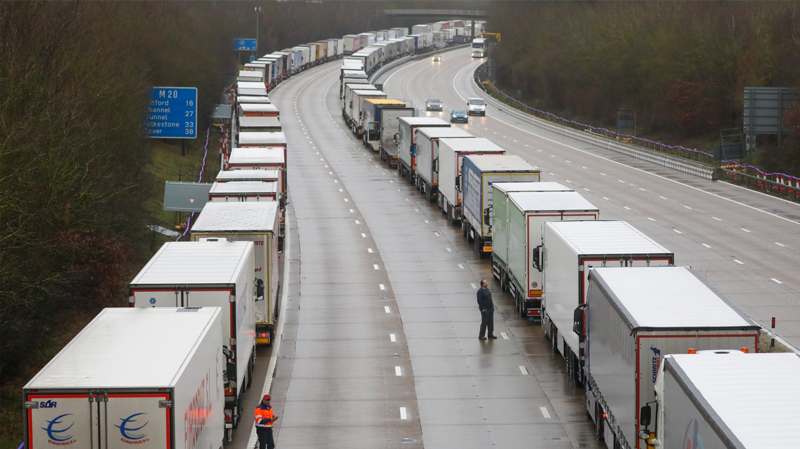
LONDON – France agreed Tuesday to reopen its borders to travelers from Britain and get trade flowing again, but it may take days to clear out the thousands of cargo trucks snarled while a travel ban was in place, prompted by fears of a fast-spreading coronavirus mutation in England.

More than 50 countries have enacted restrictions on arrivals from Britain, disrupting passenger air service between the United Kingdom and the rest of the world. But France’s ban was particularly disruptive, halting transit along one of the most crucial trade routes in Europe.

The French government on Tuesday announced a reopening, starting on Wednesday, for E.U. citizens and residents if they provide a negative coronavirus test from the previous 72 hours. Truck drivers of all nationalities will be permitted entry, as long as they, too, can provide evidence of a test if asked.

After France and Britain haggled into the night over what sort of test would be acceptable, the two sides agreed to allow lateral flow tests, which provide results in about 30 minutes, along with the longer turnaround PCR tests.

British Transport Secretary Grant Shapps said stranded truck drivers would start getting coronavirus tests on Wednesday, Reuters reported, so they could start to cross over to France.

“We’ll be making sure that tomorrow we’re out there, providing tests,” Shapps said, according to Reuters. “This will take two or three days for things to be cleared.”

The leader of Kent County Council in southeast England told the BBC on Tuesday that 3,000 trucks were waiting to cross the English Channel. On Monday, British government officials claimed there were only 170.

Drivers honked their horns in frustration, as some prepared to sleep for a third night in their cabs.

Prime Minister Boris Johnson has promised his country that a newly sovereign, free-trading, swashbuckling “Global Britain” will soar after Brexit, coming in less than 9 days.

But with no free trade deal signed between Britain and the European Union, and the gateway to continental Europe blocked this week, Britons found themselves more isolated than ever.

Added to the sense of loneliness, after saying that it would be “inhumane” to cancel Christmas gatherings of friends and family, Johnson felt compelled to do just that on Sunday, based on advice from his public health advisers, who see cases of the coronavirus soaring here.

More than 18 million Britons are now in “Tier 4” lockdown, with all nonessential shops, pubs, restaurants, gyms, hair salons, theaters and toy stores closed.

Anthony Fauci, America’s top infectious-disease official, told the BBC on Tuesday he thought a total U.S. ban on arrivals from Britain “might be a bit of an overreaction.”

The European Commission on Tuesday sought to promote a more coordinated approach after different levels of restrictions were announced haphazardly over the previous days.

It urged all 27 member states to end bans on flights and trains from Britain and to reopen freight routes. “All nonessential travel to and from the UK should be discouraged,” the E.U.’s executive arm said, but “flight and train bans should be discontinued given the need to ensure essential travel and avoid supply chain disruptions,” including the delivery of coronavirus vaccines.

Despite the commission’s recommendation, several countries continued to head into the opposite direction on Tuesday. Hungary banned passenger planes from the U.K. until early February, while Germany and Ireland extended their entry restrictions.

The Netherlands announced that its ban on travelers from Britain and South Africa would be replaced by a requirement to show evidence of a recent negative PCR test. The Dutch government also urged passengers to quarantine for 10 days after arrival.

The tussle over travel and trade came as scientists in Britain and around the world scrambled to assess the impact of the new mutation of coronavirus, first spotted in England.

Sharon Peacock, the director of the U.K. consortium tracking mutations of the virus, said Tuesday, “we have no evidence that the vaccine is in any way compromised by this new variant.”

Judith Breuer, professor of virology at University College London, said the observed rise in the prevalance of the variant strongly suggests the new mutation is driving increased transmission.

Breuer said that in coming weeks, researchers will be able to see if the greater spread of the variant leads to more serious illness, an observation that might be captured by a spike in hospitalization and death. So far, she said, there has been no evidence to show the mutation is more deadly.

The developer of the Pfizer-BioNTech vaccine said Tuesday that his company’s inoculation is likely to be effective against the new variant identified in Britain, but that a new version of his vaccine could be developed within six weeks if necessary.

From a technical perspective, tweaking the vaccine would simply be a matter of replacing one mutation with another while the “messenger” molecule remained the same.

Whether regulators would be willing to quickly approve a slightly modified version of the vaccine that has been cleared for distribution in the United States, Britain and European Union is another story, BioNTech chief executive Ugur Sahin told reporters at a news conference.

“The likelihood that our vaccine will work is relatively high,” Sahin said, noting that 99 percent of proteins found in the new mutation are the same as in other strains.

The French travel restrictions imposed Sunday night, with an initial 48-hour timeframe, did not ban freight coming into Britain, but flows in that direction were nevertheless hampered, as few companies appeared willing to risk sending their drivers over only to get stuck in the U.K. for Christmas.

Even after France agreed to reopen its borders, it remained to be seen whether the new testing requirements would deter truckers carrying goods destined for British shores.

Isolated Britain seeks to reopen trade routes after days of chaos #SootinClaimon.Com

#SootinClaimon.Com : ขอบคุณแหล่งข้อมูล : หนังสือพิมพ์ The Nation.

Isolated Britain seeks to reopen trade routes after days of chaos (nationthailand.com)

Isolated Britain seeks to reopen trade routes after days of chaos

InternationalDec 23. 2020Trucks parked near the Port of Dover in Dover, England, on Dec. 22, 2020. MUST CREDIT: Bloomberg photo by Luke MacGregorTrucks parked near the Port of Dover in Dover, England, on Dec. 22, 2020. MUST CREDIT: Bloomberg photo by Luke MacGregor 

By Syndication Washington Post, Bloomberg · Alex Morales, Kitty Donaldson, Lizzy Burden

British Prime Minister Boris Johnson’s government is trying desperately to reopen trade routes to France after a day of cross-Channel political bartering failed to end the chaos at the U.K.’s busiest port.

France shut down freight traffic from Dover in southeast England at midnight on Sunday because of fear over a faster-spreading mutant strain of covid-19 that forced the U.K. government to impose a strict lockdown on London and surrounding areas. Spain and Portugal, meanwhile, are among more than 40 countries restricting flights and effectively isolating the U.K.

Johnson said on Monday he’d spoken with French President Emmanuel Macron and Transport Secretary Grant Shapps also held talks with his counterpart, but an agreement expected “within hours” didn’t materialize. At least 1,500 trucks bound for the continent are stuck.

“We’re considering everything,” Home Secretary Priti Patel said on Sky News on Tuesday. “We speak to our colleagues constantly in France on a range of issues. We’re working to get a resolution.”

The standoff comes as Brexit talks with the European Union intensify over fish, a politically sensitive issue over which France is playing hardball. The EU rejected the U.K.’s latest concessions on quotas, two officials said on Tuesday.

Meanwhile, the pressure is mounting to end the turmoil at the border turmoil that is threatening Christmas food supplies during the busy festive period.

Officials are at odds over the type of test to use, two people familiar with the talks said. The French side is pushing for hauliers to take PCR tests, which give a result in between 24 and 48 hours, while the U.K. prefers lateral tests that are less accurate but take only about 15 minutes -and would ease the long line a lot faster Richard Ballantyne, who heads the British Ports Association, is hopeful there could be an exemption for freight drivers that would be combined with testing for covid-19 at the border.

The search for a solution to keep goods flowing in and out of Britain comes after another taxing weekend for the U.K. at the end of a tumultuous year. A spike in coronavirus infections forced Johnson to backtrack on allowing people to spend the festive period together, while talks with the EU on a post-Brexit trade deal entered a critical phase.

The trade upheaval just 10 days before Britain’s post-Brexit transition period is due to end gave the country a foretaste of what could ensue. Without an accord, the U.K. will default to trading with the EU on World Trade Organization terms, with the imposition of costly tariffs and quotas, and the threat of more tailbacks at ports as haulers cope with new bureaucracy.

The economy is already buckling again, with London, the most critical dynamo for growth, in lockdown. Bloomberg Economics revised its outlook on Monday to predict another recession at the start of 2021. The pound plunged against the dollar, marking its worst day since the coronavirus hit markets in March.

Outside Dover, trucks lined up on the M20 highway as an emergency plan was triggered with drivers unable to board ferries. The Department for Transport also prepared to open Manston airport in Kent, which is being overhauled to accommodate as many as 4,000 vehicles as part of Britain’s planning for a no-deal outcome from the EU trade talks.

Johnson sought to downplay the crisis, stressing the closure only applies to “a very small percentage” of food entering the U.K. “The vast majority of food, medicines and other supplies are coming and going as normal,” he said. “The government has been preparing for a long time for exactly this kind of event.”

The U.K. this month became the first Western country to authorize a coronavirus vaccine. Johnson’s spokesman, Jamie Davies, told reporters that the program would be unaffected because the nation already has the majority of this year’s supply from Pfizer Inc.

Shapps earlier said the border snarl only affects about 20% of incoming trade, and that haulers are accustomed to disruption across the Dover-Calais strait because of the weather and strikes.

Nevertheless, the latest challenge is exposing Britain’s trade vulnerabilities just as a 4 1/2-year odyssey to leave the EU moves from political rhetoric to economic reality. Container ports and ferry terminals were already congested because of stockpiling ahead of the Dec. 31 deadline marking a final break from the European single market.

Business groups facing catastrophic losses urged the government to act soon, with the 18,000-member Logistics UK calling for rapid coronavirus testing of truckers departing the country as the quickest way of protecting supply chains. Meanwhile, there were long queues at some supermarkets in London, with fresh produce fast disappearing from shelves.

French Transport Minister Jean-Baptiste Djebbari said European nations are working on “a solid health protocol” to be implemented “in the coming hours.”

But a meeting of the EU’s crisis response experts in Brussels on Monday ended without a decision on how to proceed, according to an EU official, who spoke on condition of an anonymity. Some members of the group called for an urgent discussion at political level to resolve the issue.

Here’s the best and worst of 2020 politics #SootinClaimon.Com

#SootinClaimon.Com : ขอบคุณแหล่งข้อมูล : หนังสือพิมพ์ The Nation.

Here’s the best and worst of 2020 politics (nationthailand.com)

Here’s the best and worst of 2020 politics

InternationalDec 23. 2020Tabe Mase gives President-elect Joe Biden his first dose of the coronavirus vaccine on Monday, Dec. 21, 2020. MUST CREDIT: Washington Post photo by Jonathan NewtonTabe Mase gives President-elect Joe Biden his first dose of the coronavirus vaccine on Monday, Dec. 21, 2020. MUST CREDIT: Washington Post photo by Jonathan Newton 

By The Washington Post · David Weigel

Outside Georgia – and apparently the Oval Office – the political year is over. Here are the highlights.

– – –

Campaign of the Year: Joe Biden for president

No way around it. If you were reading The Washington Post one year ago, you knew about Joe Biden’s weakness in New Hampshire and Iowa, the worries Democrats had about nominating an “old White guy,” and the grass-roots organizers who’d lapped the former vice president on the ground. In mid-February, Biden was in the weakest position of any perceived front-runner since Howard Dean; by mid-March, he was about to wrap up the nomination faster than any Democrat since John Kerry.

But Kerry lost the presidency and Biden won it, in part by mastering what failed candidates had never figured out. He was fast to respond to a charge of impropriety, which faded quickly as an issue, unlike the attacks on Kerry’s service in Vietnam. He invited allies of Sen. Bernie Sanders, I-Vt., to help shape the party’s platform, which kept the left inside the Democratic tent with only minimal risk. He had one consistent message, and his convention had a single goal, which it achieved: make voters comfortable about Biden becoming president and handling everything from civil unrest to mass vaccination. Biden benefited from Democratic unity, and the intensity with which his base focused on defeating President Donald Trump. But other candidates have had that, and lost – and never took the risk of pausing in-person campaigning for months while their opponent continued it.

– – –

Campaign of the Year (nonpresidential): Mike Garcia for Congress

First-time candidate Mike Garcia started his campaign last year as a long-shot challenger to Rep. Katie Hill, D-Calif. When she resigned under pressure from a sex scandal, Garcia still had to beat the district’s former Republican congressman, win the first special election of the pandemic era and hold the district as Biden carried it in November. He pulled it off – the last part of it by just a few hundred votes.

Runner-up: Susan Collins for Senate

Unlike Garcia, Sen. Susan Collins, R-Maine, entered her toughest race with universal name recognition, and with most voters having supported her in the past. But Collins had a target on her back since her 2018 vote to confirm Brett Kavanaugh to the Supreme Court, she faced an opponent with bottomless resources and the blessing of national Democrats, and she trailed in every poll.

– – –

State Party of the Year: The Democratic Party of Wisconsin

First there was the primary, bundled with a state Supreme Court race that Ben Wikler’s Democrats could not afford to lose. Then came the campaign, with Democrats simultaneously battling in court to expand voters’ options and run an absentee chase program big enough to endure pandemic conditions. The Democratic National Convention was downgraded from a Milwaukee-based coronation to a virtual telethon, and a police shooting in Kenosha, followed by street protests, became a pivotal moment in the campaign, with Republicans seeing a way to win back suburban voters. But Wisconsin Democrats held on to enough voters to win, protected one of the last House Democrats whose district was carried by Trump, then survived a wave of lawsuits designed to overturn the election – by a single vote, thanks to winning that court race.

Runner-up: The Florida GOP

The math looked bad for Republicans this summer, with the president losing steam with older White voters. Chairman Joe Gruters forged ahead, building on the party’s Latino turnout efforts, reinforcing its grass-roots canvassing operation and focusing on turning out hundreds of thousands of voters who liked the president but had skipped the last election. It worked brilliantly, with the party gaining ground at every level, even in the sorts of places that trended hard toward Democrats in other states.

– – –

Pollster of the Year: Ann Selzer

Who doesn’t love a comeback story? Selzer’s year began with a debacle, when a blunder on one call sheet led to the cancellation of her final poll before the Iowa caucuses. It ended not just with a triumph but with a repeat of one of her greatest triumphs – a pre-election poll that showed Trump and the rest of the Republican ticket rebounding in Iowa. Selzer’s final 2016 poll captured the trend that swung the election in the Midwest, and her final 2020 poll portrayed what even Republicans doubted – after flirting with Democrats all year, rural White voters without college degrees were sticking with Trump. That kept Iowa red, and it made the Midwest much closer than many other pollsters expected. Again.

Runner-up: SurveyUSA

“America’s neighborhood pollster” takes an approach usually frowned upon, relying on automated callers rather than humans to conduct interviews. This year, amid speculation that many Trump voters did not want to admit who they supported, this worked out well: SurveyUSA was one of the few pollsters to show Biden with a margin-of-error lead in Georgia, and revealed that the president’s push for Minnesota was being stymied. In a bad year for the industry, that stood out as perceptive.

– – –

Ad of the Year (30 Seconds): “Defend”

The later, celebrity-voiced ads got more attention and had snappier production values. But Biden’s most distinctive and effective ad had almost no production at all, cutting together snippets of the section of his Democratic National Convention speech dealing with the coronavirus. There was no musical soundtrack, which helped the ad stand out, and the focus on Biden’s words helped counteract a problem: voters who thought he was too old and doddering to be president.

Runner-up: “Latinos por Trump”

A theme song so catchy it rewires your brain, clips of the president awkwardly dancing, and visions of the “good life” if the president gets a second term. The Trump campaign so frequently resorted to negativity that it sometimes drowned out its intended pre-pandemic message: Aren’t things basically great?

– – –

Ad of the Year (Short Film): ‘Ed Markey, The Green New Dealmaker’

The left had a strong year in primaries, ousting three incumbent House Democrats and replacing them with grass-roots activists, but its biggest coup was helping the 74-year-old Sen. Ed Markey of Massachusetts fend off Democratic Rep. Joe Kennedy. With this online spot, Markey pitched himself as a master legislator who could literally save life on Earth, and got into Kennedy’s head with one line: “It’s time to ask what your country can do for you.”

Runner-up: ‘Texas Reloaded: Greatest Joint Campaign Ad in History’

Is it cheating when the title of an ad informs you that it’s going to be the best? Rep. Dan Crenshaw of Texas, who gained unexpected celebrity after a “Saturday Night Live” joke about his war injury, leaned hard into his image for what became the first in a series of ads portraying Republicans as members of an elite strike force. Most of them won, and the ads captured the ethos of post-Trump GOP politics: Look cool, talk confident and own the libs.

– – –

Worst Ad of the Year: ‘Break In’

After the election, Democratic leaders and liberal pundits blamed some of their down-ballot disappointments on “Defund the police,” a slogan coined by Black Lives Matter activists and immediately weaponized by Republicans. Yet the initial Republican advertising on the slogan was so ham-handed that it fell flat; in Pennsylvania, it was in rotation with an ad blaming Biden for high incarceration rates, clashing directly with its message. The Trump campaign’s cartoonish view of the suburbs, and Biden, was costly, even if similar messaging worked against less well-defined opponents.

Runner-up (tie): ‘Bounty’

The Lincoln Project, a coalition of Republicans who devoted themselves to defeating Trump, made some of the year’s buzziest ads, born to be viral. They were also frequently ineffective. This ad dramatizes a story that Trump critics could not believe was not bigger news: Russia paying bounties to Taliban fighters who killed Americans. The combination of its heavy-handed presentation and its focus on an issue that was not connecting with voters exemplified a mistake that Biden, mostly, did not make: chasing the worst story of the day about Trump instead of making a pitch for himself.

‘Sex Changes for Kids’

The conservative American Principles Project had a theory: Democrats had given conservatives a potent culture-war issue by embracing transgender rights. Claiming that its ads had moved votes in Kentucky’s 2019 race for governor (which Republicans narrowly lost), it re-upped spots about the threat of “boys” playing “girls’ sports,” and used a Biden answer on trans acceptance to claim, incorrectly, that he’d fund “sex changes for kids.” In every swing state where the ads ran, Trump lost.

– – –

Book of the Year: Rick Perlstein, ‘Reaganland’

Since 2001, when he told the story of Barry Goldwater’s failed revolution in “Before the Storm,” Perlstein has emerged from the archives every few years with a monolith-size history of American conservatism. His timing has never been better. “Reaganland” covers the months from Jimmy Carter’s election to Ronald Reagan’s first victory, explaining the collapse of liberalism along the way. A consistent theme is how the political analysts of the day were too slow to understand what was changing, then too hasty to explain why or write it off. When Perlstein writes about conservatives stopping legislation to end the electoral college, or Democrats panicking and endorsing an anti-tax measure because it has surged in the polls, you can see one version of the future as well as the past.

Runner-up: Gabriel Pogrund and Patrick Maguire, ‘Left Out’

How can a study of the Labour Party in the United Kingdom help you understand American politics in 2020? Because the American left took inspiration from the U.K. left, viewing Jeremy Corbyn’s takeover of Labour as what could have happened had Sanders won the Democratic nomination in 2016 – promoting a real working-class agenda and bringing disaffected voters back to the polls. Pogrund and Maguire start with Labour’s unexpectedly strong 2017 election performance and end with its 2019 landslide defeat.

– – –

Podcast of the Year: ‘QAnon Anonymous’

More than any modern election, this one took place in two realities: the one we live in, and the one drawn up by conspiracy theorists. Understanding the motivations and arcana of this alternate reality was essential to understanding what was happening, and sometimes what was motivating the president. This podcast, hosted by three investigative reporters who often cannot believe what they’re hearing, was incredibly informative and frequently hilarious.

Runner-up: ‘Bad Faith’

Briahna Joy Gray was the host of Sanders’s campaign podcast. Virgil Texas was (and still is) the elections expert on the left-wing show “Chapo Trap House.” When Sanders’s primary campaign was over, they teamed up for a panel show that tackled news, policy, and political strategy from a perspective that rarely is reflected in big media, with top-tier guests (Noam Chomksy, Michael Moore, Ice Cube). If infighting on the right was a major story of the Trump years, the battle inside the left is going to be a defining one in the Biden years, and “Bad Faith” is right in the middle of it.

– – –

Movie of the Year: ‘Feels Good Man’

The story of Matt Furie, a low-key cartoonist whose frog creation Pepe was appropriated by white supremacists, is also an alternate history of the past five years. The Trump era is willed into existence by “meme magic.” The rise of the alt-right is halted by a copyright lawsuit. Matt Braynard, whose Voter Integrity Fund is trying to compile enough fraud allegations to overturn the election, shows up as a meme guru who thinks Furie should be grateful that his character was adopted by the MAGA movement. Everything makes more sense when viewed through the eyes of a guy who wanted no part of this.

Runner-up: ‘Boys State’

The immersive journey inside the storied good-government program for high schoolers focuses on the conservative-leaning version that is run in Texas. Take away billions of dollars in campaign spending – and actual, lived experience – and you start to ask how many of our political problems are inherent, not forced upon us. One scene got richer after the election: The teen boys talk themselves out of passing silly resolutions during a meeting in the same room that Texas’s electors for Trump would occupy when they voted to deny the election results in swing states.

– – –

Twitter Account of the Year: @PopulismUpdates

It’s anonymous, and a lot of its coverage focuses on news outside the United States, but no account is better at capturing the degree to which voters are throwing off the old political order. In an interview, the account’s owner suggested that “parties and figures that employ creativity will be the most successful,” especially the ones who tap into “insurgent networks who simply know how to pose a more persuasive or exciting or motivating vision of the future than others.” That was a very useful lens through which to view our election.

Runner-up: @MattGertz

The Media Matters researcher was essential reading during the entire Trump era, for one reason: He watched the same conservative media as the president, and could trace nearly everything Trump talked about to a segment that put him on to it. As we march toward the first-ever case of an incumbent president demanding a congressional challenge to his defeat in the electoral college, all of it is foretold in Gertz’s tweets.

U.S. consumer confidence unexpectedly drops to 4-month low #SootinClaimon.Com

#SootinClaimon.Com : ขอบคุณแหล่งข้อมูล : หนังสือพิมพ์ The Nation.

U.S. consumer confidence unexpectedly drops to 4-month low (nationthailand.com)

U.S. consumer confidence unexpectedly drops to 4-month low

InternationalDec 23. 2020

By Syndication Washington Post, Bloomberg · Julia Fanzeres

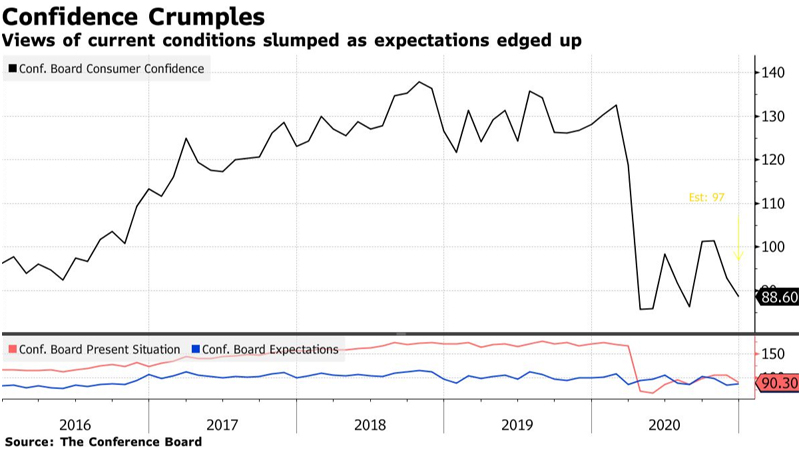
U.S. consumer confidence unexpectedly fell in December to a four-month low amid surging covid-19 cases that are spurring more states to tighten restrictions on businesses and travel.

The Conference Board index decreased to 88.6 from a downwardly revised 92.9 reading in November, according to a report from the group Tuesday. That was below all estimates in a Bloomberg survey of economists that had called for 97. The gauge of expectations rose while a measure of sentiment about current conditions fell.

The unexpectedly downbeat reading amid record virus cases and deaths comes just as the potential for new vaccines drew greater focus, and may prove to be short-lived as federal-aid plans include individual stimulus payments that are imminent. Confidence is well below pre-pandemic levels despite making some gains in recent months. The cutoff date for the preliminary results was Dec. 14.

“Consumers’ assessment of current conditions deteriorated sharply in December, as the resurgence of covid-19 remains a drag on confidence,” Lynn Franco, senior director of economic indicators at the Conference Board, said in the statement.

The reading contrasts with another key measure of the country’s outlook. The University of Michigan’s gauge of U.S. consumer sentiment unexpectedly increased in early December to the second-highest level since March. However, the Bloomberg Consumer Comfort Index has fallen for four straight weeks after rebounding since May.

The share of survey respondents who said they expected their incomes to increase edged up to 16.8 from 16, the board said.

U.S. existing-home sales decline for 1st time in 6 months #SootinClaimon.Com

#SootinClaimon.Com : ขอบคุณแหล่งข้อมูล : หนังสือพิมพ์ The Nation.

U.S. existing-home sales decline for 1st time in 6 months (nationthailand.com)

U.S. existing-home sales decline for 1st time in 6 months

InternationalDec 23. 2020

By Syndication Washington Post, Bloomberg · Olivia Rockeman

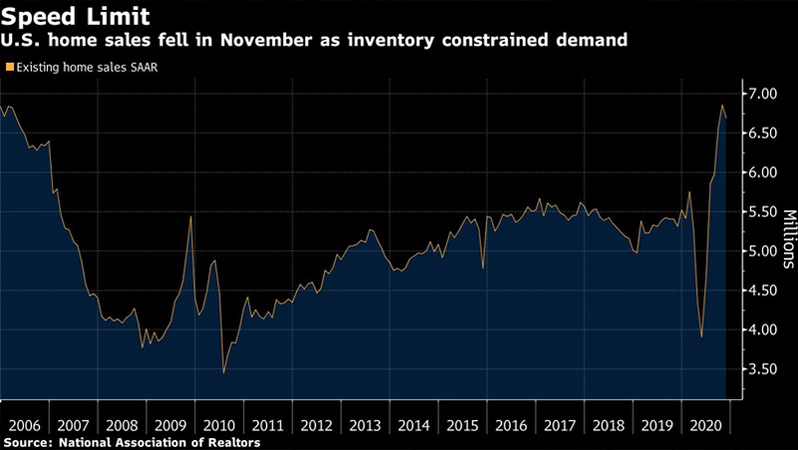
Sales of previously owned U.S. homes fell in November for the first time in six months, suggesting that surging prices and a record-low supply are constraining red-hot demand.

Contract closings decreased 2.5% from the prior month’s almost 15-year high to an annualized 6.69 million rate, according to National Association of Realtors data released Tuesday. That was up 25.8% from a year earlier and compared with economists’ forecasts for 6.7 million.

The median selling price jumped 14.6% from a year earlier on an unadjusted basis to $310,800, the fourth straight month of double-digit increases.

The decline signals that strong demand is running up against constraints, with few available properties and weaker affordability likely keeping some buyers out of the market. Still, home sales remain brisk, well above pre-pandemic levels and near the highest since 2005, with demand skewed toward more-expensive houses.

The new fiscal stimulus package, approved by Congress on Monday, could prop up household incomes and keep the purchasing spree going into the first quarter of next year.

“Housing affordability, which had greatly benefited from falling mortgage rates, are now being challenged due to record-high home prices,” Lawrence Yun, NAR’s chief economist, said in a statement. “That could place strain on some potential consumers, particularly first-time buyers.”

Several data points illustrated how historically tight the market is.

Available inventory declined 22% from a year earlier to 1.28 million units, the lowest in data back to 1982, the NAR said. Properties remained on the market for 21 days in November, unchanged from the prior month and matching a record low. It would take 2.3 months to sell all the homes on the market at the current pace, the lowest on record.

The NAR’s report showed purchases of existing homes fell in three of four regions; they were unchanged in the West.

Existing-home sales account for about 90% of U.S. housing and are calculated when a contract closes. A separate report last week showed strength in new home construction, which increased to a nine-month high.

Bottlenecks wear down world economy’s fleet of container ships #SootinClaimon.Com

#SootinClaimon.Com : ขอบคุณแหล่งข้อมูล : หนังสือพิมพ์ The Nation.

Bottlenecks wear down world economy’s fleet of container ships (nationthailand.com)

Bottlenecks wear down world economy’s fleet of container ships

InternationalDec 23. 2020Gantry cranes sit idle at a Hanjin Shipping Co. container terminal in Long Beach, California. Photographer: Tim Rue/BloombergGantry cranes sit idle at a Hanjin Shipping Co. container terminal in Long Beach, California. Photographer: Tim Rue/Bloomberg 
By Syndication Washington Post, Bloomberg · Brendan Murray

Container shipping, the backbone of the global trading system, is showing signs of fatigue as the pandemic descends into its darkest days.

Carriers reaping the biggest profits in at least a decade are struggling to operate reliably as bottlenecks worsen around ports from southern England to Shanghai, contorting supply chains for everything from car parts to cosmetics and medical equipment.

Just 50.1% of container vessels arrived on time in November, down from 80% a year earlier and the lowest level in records dating to 2011, according to a service reliability index compiled by Copenhagen-based Sea-Intelligence. From Asia to North America, on-time arrivals dropped below 30%, less than half the long-run average globally.

Delays can add costs, induce operational headaches and restrain revenue for the shippers of cargo — companies like Costco Wholesale Corp. The Issaquah, Wash.-based chain of 803 warehouse-size stores on four continents expects the situation involving container shortages and late deliveries to persist for a few more months.

“There are instances of 50% or 100% or even more sales increases of an item, and if we could procure more we’d have even higher sales,” Richard Galanti, Costco’s chief financial officer, said on a conference call earlier this month. “We’re managing through it, and expect relief not until March or so of 2021.”

Slowly clogging up since September, the main artery for trade between China and the U.S. is still choked. Anchored off the coast of California over the weekend were almost 20 container ships waiting to offload at Los Angeles and Long Beach, up from about a dozen at the end of November. The Port of L.A. expects to handle 152,000 inbound containers this week — a 94% increase from the same week a year ago.

Weston LaBar, the CEO of the Harbor Trucking Association in Long Beach, last month expected container volume through the L.A. ports would stabilize by mid-February, when Chinese factories typically shut down for Lunar New Year. “Now we’re hearing already about a lot of bookings through June and July,” he said.

Alan Murphy, CEO of analysis and data provider Sea-Intelligence, cautions that the current imbalances in containers are concentrated in North America and says the strength of demand probably won’t be sustained if coronavirus vaccines enable U.S. consumers to quickly shift spending back to services like travel and hospitality.

The shipping disruptions should calm down in the first half of 2021, Murphy says, but don’t expect the container liners to make their overcapacity mistakes of the past, which included underbidding in freight rate contracts to below break-even levels.

“The game has changed fundamentally — not because of coronavirus but because of how the carriers responded,” he said, referring to a sharp reduction in sailings in the pandemic’s early months. “They are now capable of tailoring their supply to the available demand at a tactical level that they’ve never been able to do before.”

That’s what worries freight forwarders and other shippers, and the concerns extend beyond the troubles in the Pacific. The European Shippers’ Council, a Brussels-based group representing cargo owners, is crying foul about “degraded services” and surcharges, and wants the European Commission to look into the market dynamics.

The main sticking point: Spot rates to transport goods, which typically fade in the final weeks of the year, are still soaring despite the service disruptions. The rate to ship a container of goods from China to Europe jumped 17% last week, tripling from a year ago to more than $4,400, according to Hong Kong-based Freightos, an online shipping marketplace.

“Of course we want the shipping lines to be healthy,” said Jordi Espin, the council’s policy manager for maritime transport. “However, to make these kinds of profits when we’re in pandemic rescue mode, we don’t think it’s fair.”

Rolf Habben Jansen, CEO of German container line Hapag-Lloyd AG, said in a Bloomberg Television interview on Tuesday that he expects freight rates will remain strong at least for the first quarter. While he expected some easing of the market going into the second quarter, he said visibility that far out is low.

Shippers and container liners are always sparring over prices and reliability. But the pandemic has spotlighted the upper hand the liners now have after a decade of consolidating and forming alliances among themselves, said Olaf Merk, head of ports and shipping at the Paris-based Organization for Economic Cooperation and Development’s International Transport Forum.

“That is something that the competition authorities will have to look at, I think, and some are also doing it now,” Merk said, referring to the U.S. Federal Maritime Commission’s investigation into the carriers’ role in American port congestion. “The situation in which we are now gives a lot of possibilities to the carriers to coordinate capacity and that of course increases the risks for shippers.”

The world’s top container line, Copenhagen-based A.P. Moller-Maersk A/S, this month called the challenges “the most dramatic stress test of the past 75 years.” Other industry representatives say there are multiple reasons on land why the system is straining, like trucker shortages, surging e-commerce purchases or Brexit stockpiling.

Stuffed with 20%-30% more cargo than it’s used to handling, the pipeline is bound to face some snarls.

“Even with this covid cargo crunch that we’re now in the middle of, things continue to move,” said John Butler, president of the World Shipping Council in Washington, which counts the big liner companies among its members. “When you so significantly overload the system, it doesn’t immediately snap back.”

Butler dismissed the notion that the industry lacks competitiveness, calling it “cutthroat frankly.”

Meanwhile, shares of Maersk are flirting with an all-time high and the industry more broadly banked profits of $5.1 billion in the third quarter, a fourfold increase from a year earlier. With a solid fourth quarter, the cumulative red ink of the past five years will become net profitability, according to figures compiled by John McCown, a container-industry veteran and founder of Blue Alpha Capital.

He said the pandemic gave the container carriers a lesson about how to hold firm on capacity as they shift into a longer-term period of slower demand growth.

“It’s been a major learning experience about having more control over their destiny,” McCown said. “But it’s not been without its struggles.”

Among the turmoil of 2020: overworked mariners and cyberattacks. But one of the more remarkable events happened on Nov. 30, when the Japanese-flagged ONE Apus hit rough seas sailing from China to the U.S., sending more than 1,800 containers overboard.

The ship and crew returned safely to Kobe, Japan, but the incident probably doused some shipper’s hopes of ending a turbulent year with a bang: 54 containers that plunged into the water were filled with fireworks.

U.S. adds over 100 Chinese, Russian companies to military list #SootinClaimon.Com

#SootinClaimon.Com : ขอบคุณแหล่งข้อมูล : หนังสือพิมพ์ The Nation.

U.S. adds over 100 Chinese, Russian companies to military list (nationthailand.com)

U.S. adds over 100 Chinese, Russian companies to military list

InternationalDec 23. 2020

By Syndication Washington Post, Bloomberg · Nick Wadhams

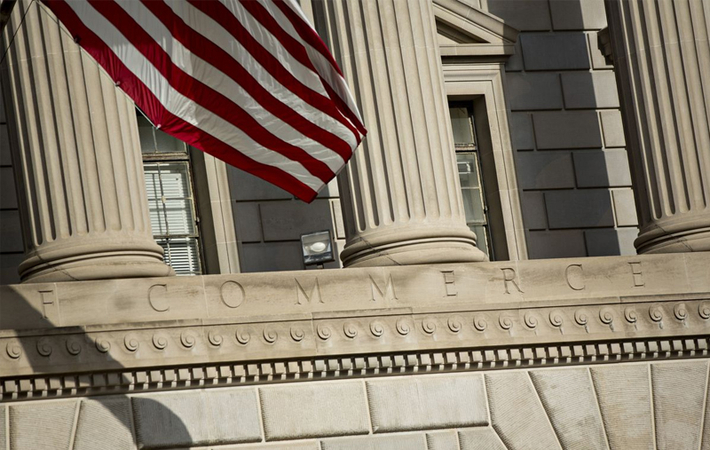
The U.S. Commerce Department added more than 100 Chinese and Russian companies to a new list of firms it says have links to their nations’ militaries, a move that will sharply curtail certain types of exports.

The list of 58 Chinese and 45 Russia companies means anyone seeking to sell items that could eventually be used for military purposes to those firms will need a license, the Commerce Department said in a statement on Monday.

Among the biggest names were seven subsidiaries of Aviation Industry Corp. of China Ltd. and Russia’s Foreign Intelligence Service, or SVR, which has been implicated in a recent cyber-attack on U.S. federal agencies and companies.

“The Department recognizes the importance of leveraging its partnerships with U.S. and global companies to combat efforts by China and Russia to divert U.S. technology for their destabilizing military programs,” Commerce Secretary Wilbur Ross said in the statement.

The move comes amid a continuing erosion of U.S.-China ties during the U.S. presidential transition, as President Donald Trump ratchets up actions targeting Beijing over issues from its tightening control over Hong Kong and treatment of Muslim minorities to exports of 5G technology.

That push has included putting greater scrutiny on companies that the U.S. says are are owned or controlled by China’s military. Earlier this year, the administration listed 31 Chinese companies for being tied to the People’s Liberation Army. Those companies included Huawei Technologies Co. and Hangzhou Hikvision Digital Technology Co., as well as a number of state-run enterprises.

Google helps birth two social media unicorns in rapid succession #SootinClaimon.Com

#SootinClaimon.Com : ขอบคุณแหล่งข้อมูล : หนังสือพิมพ์ The Nation.

Google helps birth two social media unicorns in rapid succession (nationthailand.com)

Google helps birth two social media unicorns in rapid succession

InternationalDec 23. 2020A man wearing a protective mask looks at a smartphone while leaning against a mural at Khan Market in New Delhi on Dec. 16, 2020. MUST CREDIT: Bloomberg photo by T. Narayan.A man wearing a protective mask looks at a smartphone while leaning against a mural at Khan Market in New Delhi on Dec. 16, 2020. MUST CREDIT: Bloomberg photo by T. Narayan. 
By Syndication Washington Post, Bloomberg · Saritha Rai

Google investments helped create India’s two youngest technology unicorns: a pair of startups that feed personalized news and entertainment to the world’s fastest-growing smartphone population.

Glance, which feeds news and sports scores to phone-lock screens , is said to have reached a valuation of more than $1 billion after completing a funding round led by Google. And VerSe Innovation, the studio behind the popular Dailyhunt news site and TikTok-like Josh app, said it passed that threshold after winning more than $100 million from Alphabet Inc.’s search giant and Microsoft Corp.

Google and its American internet peers are steadily amping up their investment in India, latching onto the only other country with a billion-plus population after getting shut out of China. From Amazon.com to Facebook, they’re hoping to get in on the ground floor of what they envision as a smartphone and online commerce boom that could eventually create a market to rival the world’s No. 2 economy.

The online search leader has struck an alliance with Mukesh Ambani’s Reliance Industries to invest $4.5 billion and cooperate on technology initiatives including the development of affordable mobile phones. But they’re also teaming with smaller outfits to target more local audiences.

“In the last two years alone, 100 million new internet users have come online from rural India,” Google Vice President Caesar Sengupta wrote in a blog post Tuesday, announcing its investment in VerSe. “But many of these internet users continue to have trouble finding content to read or services they can use confidently, in their own language.”

Of the two, Bangalore-headquartered Glance Digital Experience is the more nascent outfit. It’s the second unicorn to emerge from the group that created InMobi, a cloud marketing platform that became India’s earliest tech startup to reach the milestone. That group was founded by 43-year-old Naveen Tewari, alumnus of the prestigious Indian Institute of Technology and the holder of an MBA from Harvard Business School. On Tuesday, his 18-month-old firm announced it had scored $145 of investment from Google and billionaire Peter Thiel’s Mithril Capital.

Glance currently has 115 million daily active users who average 25 minutes on the app each day. The app operates only in the Android ecosystem and has partnered with leading device makers including Samsung Electronics Co., Xiaomi Corp., Oppo and Vivo.

By partnering with Google, the company plans to take its product to the rest of Asia and launch in the U.S. — where it will team up with carriers — and South America in 2021, Tewari said. Glance is currently focused on acquiring users and has just begun experimenting with advertising-based monetization models, according to Tewari.

Google also joined Microsoft and Alphawave in a financing round for VerSe, whose Dailyhunt is already a landing spot for more than 300 million users in a choice of 14 local languages. Sofina Group and Lupa Systems also took part.

Goldman Sachs and Sequoia Capital India are among VerSe’s other investors. VerSe says it plans to scale up Josh, broaden its content creator ecosystem and develop artificial intelligence and machine-learning technology to help it capture an ever wider audience. It will also explore potential moves beyond its home borders in other international markets that exhibit a need for vernacular content.

Josh is tailored to its home nation and available in a variety of local languages, touting it’s “Made in India” at a time when its rival TikTok and dozens of other China-made apps have been banned over privacy and national security concerns. The app has quickly accrued an audience of 77 million monthly active users and now accounts for over 1.5 billion video plays per day, according to a company statement.

Tucked into Congress’ massive stimulus bill: tens of billions in special interest tax giveaways #SootinClaimon.Com

#SootinClaimon.Com : ขอบคุณแหล่งข้อมูล : หนังสือพิมพ์ The Nation.

Tucked into Congress’ massive stimulus bill: tens of billions in special interest tax giveaways (nationthailand.com)

Tucked into Congress’ massive stimulus bill: tens of billions in special interest tax giveaways

InternationalDec 23. 2020

By The Washington Post · Yeganeh Torbati

WASHINGTON – Congress on Monday unveiled a 5,593-page spending bill and then voted on it several hours later, with lawmakers claiming urgent action was needed to rescue an ailing economy ravaged by the coronavirus pandemic.

But tucked in the bill was over $110 billion in tax breaks that strayed far from the way the bill was marketed to many Americans. These giveaways include big tax cuts for liquor producers, the motorsports entertainment sector and manufacturers of electric motorcycles.

These measures, added onto the broader spending bill, are known as “tax extenders” – tax breaks targeted at specific, sometimes niche industries. And routinely extending these “temporary” measures has become something of a year-end tradition, despite loud complaints from some lawmakers who allege the votes largely benefit special-interest groups who stand to gain financially from the outcome.

These tax extenders are designed to be temporary but are frequently renewed, often at the urging of industry lobbyists, and done so during late-night votes at the end of the year. (The Senate vote Monday took place shortly before midnight.) The Joint Committee on Taxation estimated the extenders benefiting industry and special interests included in the stimulus bill would cost over $110 billion over 10 years.

Tax experts and good governance advocates have criticized such short-term tax relief extensions, arguing they hide the true cost of the cuts and advantage industries with the most well-connected lobbyists.

“They are a gravy train for members and lobbyists, who repeat the same exercise every year or two,” Howard Gleckman, a tax policy expert at the Urban Institute, said in an email. “The lobbyists get to keep billing hours. The members get campaign money from the same people. Many of these are classic special interest tax breaks that do not benefit the overall economy in any way.”

The federal government collected $3.4 trillion in taxes in the 12 months that ended Sept. 30, but it typically allows more than $1.5 trillion in annual tax breaks, according to the Committee for a Responsible Federal Budget. Some of these are locked into the tax code. Others, however, were initially designed to last only a year or two but continue winning extension after extension because of intense lobbying.

President-elect Joe Biden has been critical of the plethora of tax giveaways, but he will find that both Democrats and Republicans have been steadfast in their supportive of certain tax breaks. And to win passage each year, the tax breaks are bundled together into one package for votes to draw maximum support.

The enormous new bill packages together emergency economic relief, government funding and tax cuts. The economic relief component of the bill is worth around $900 billion. The legislation included a slew of provisions that had nothing to do with coronavirus relief or funding the government, including many of the tax extenders.

One measure, for instance, makes permanent a cut in excise taxes for producers of beer, wine and distilled spirits, which first became law in 2017 as part of the Republican-led tax cut package. The cuts were due to expire without congressional action, and the alcohol industry had pushed hard for their renewal, arguing that their businesses had been decimated by the pandemic. The industry has supporters among both Democrats and Republicans in Congress, who in turn pushed their leaders to include a bill making the cuts permanent “in the next appropriate legislative package.”

Anheuser-Busch, the Distilled Spirits Council, Bacardi North America and the Brewers Association all lobbied Congress in recent months on the excise tax issue, lobbying records show.

“I wrote this law for one purpose: to help small brewers and wineries and everybody in this space because the rules, the regulations, and the taxes were practically from Prohibition,” Sen. Ron Wyden, D-Ore., said in an interview.

The excise tax cut has won praise in some corners. An analysis by the Progressive Policy Institute published last month argued that the cut helped fuel an expansion in brewery employment, a rare bright spot amid overall U.S. manufacturing decline.

Another extension, of a tax credit aimed at helping the wind industry, sparked impassioned speeches Monday night as the Senate debated the bill. Sen. John Hoeven, R-N.D., introduced an amendment to strip the credit from the bill and was backed by Republican colleagues Kevin Cramer of North Dakota and James Lankford of Oklahoma. They argued that the credits benefit a mature industry that doesn’t need the extra help, and that its benefits and harms had not been fully debated by lawmakers.

Lankford said the wind production tax credit was a “zombie” that legislators had agreed years ago should be ended, only for it to be resurrected by lobbyists. Cramer called the credit a “market-destroying atrocity,” and called for an end to all tax extenders.

“Let them all expire,” Cramer said. “K Street wouldn’t like it, but it would be one less section in this giant package,” he said, referring to lobbyists.

The American Wind Energy Association, the trade group for the wind industry, pushed back on the criticism.

“We are surprised that wind energy was singled out amid a federal tax landscape that currently includes support for all types of energy sources,” said Bree Raum, the trade group’s vice president of federal affairs. “Wind energy provides significant economic benefits to America’s heartland, with states like North Dakota and Oklahoma generating over a quarter of their electricity from this clean energy resource.”

Hoeven’s amendment was ultimately not approved.

Another extension benefits the motorsports entertainment industry, such as NASCAR, by allowing for the faster write-down of costs related to their complexes. That provision, which has appeared in prior legislation going back to 2004, helps those companies lower their overall tax bills and has now been extended until 2025.

A spokesman for NASCAR, which has lobbied Congress on the extension, did not respond to a request for comment.

Another extender grants a tax credit to buyers of “two-wheeled plug-in electric vehicles” – that is, electric motorcycles. That credit is worth 10% of the cost of the motorcycle, up to $2,500. Manufacturers of the bikes, such as Energica and Zero, advertise the tax credit on their websites.

EU refuses Johnson’s latest Brexit concession #SootinClaimon.Com

#SootinClaimon.Com : ขอบคุณแหล่งข้อมูล : หนังสือพิมพ์ The Nation.

EU refuses Johnson’s latest Brexit concession (nationthailand.com)

EU refuses Johnson’s latest Brexit concession

InternationalDec 23. 2020Fishermen sort crates of freshly caught fish on board a fishing boat moored at the harbor in Sete, France, on Dec. 1, 2020. The European Union has rebuffed British Prime Minister Boris Johnson's latest concessions on fishing rights, dealing a setback to efforts to secure a post-Brexit trade deal. MUST CREDIT: Bloomberg photo by Balint PornecziFishermen sort crates of freshly caught fish on board a fishing boat moored at the harbor in Sete, France, on Dec. 1, 2020. The European Union has rebuffed British Prime Minister Boris Johnson’s latest concessions on fishing rights, dealing a setback to efforts to secure a post-Brexit trade deal. MUST CREDIT: Bloomberg photo by Balint Porneczi 

By Syndication Washington Post, Bloomberg · Ian Wishart

The European Union rebuffed Prime Minister Boris Johnson’s latest concessions on fishing rights, dealing a setback to efforts to secure a post-Brexit trade deal.

Johnson spoke with Commission President Ursula von der Leyen twice by phone on Monday to try to break the deadlocked negotiations. The U.K. made an offer that would see value of the fish EU boats catch in British waters shrink by 30%, a substantially smaller drop than the 60% it was demanding last week.

The bloc, however, refused to accept a reduction of more than 25%, saying even that was hard for countries like France and Denmark to accept, according to officials with knowledge of the discussions.

With only nine days left before the U.K. leaves the single market and customs union — with or without an agreement — there are few signs a deal is within reach. Without an agreement on how much fish EU boats will be allowed to catch in British waters, the wider accord risks collapse.

But it’s not as simple as just the raw numbers, which is why, as the two sides continue to talks, a compromise still isn’t out of the question.

Alongside the percentage value of catch, the two sides are haggling over how long a period of time fishermen will be given to adjust to the rules. The U.K. has demanded the EU accept a five-year transition period after previously suggesting three years. The bloc had initially called for 10 years, and has now offered seven.

The EU wants to be able to impose tariffs on the U.K. if, in future, the government restricts access to its waters. In its latest compromise offer, the U.K. said it would accept tariffs on fisheries but not in other areas, such as on energy, as demanded by the bloc.

The European Commission is consulting member states on the British offer, and Michel Barnier, the bloc’s chief negotiator, is scheduled to brief their 27 ambassadors at about 4 p.m. in Brussels on Tuesday. It’s possible a compromise can still be reached, officials added.

While the issue is financially insignificant — the two sides are haggling over roughly $40 million (33 million euros) of fish annually — the British see control of their fishing waters, previously under the jurisdiction of the EU, as a key element of the sovereignty that it is regaining with Brexit. For its part, the EU doesn’t want to give access to its single market without maintaining fishing rights in return.

Speaking at a news conference in London on Monday, Johnson said he spoke to French President Emmanuel Macron, but discussed the coronavirus crisis rather than Brexit.

“It’s vital that everybody understands that the U.K. has got to be able to control its own laws completely and we’ve also got to be able to control our own fisheries,” Johnson said. He reiterated that even if the U.K. failed to get a deal, trading with the EU on terms set by the World Trade Organization would be “more than satisfactory.”