BioNTech to boost vaccine capacity, sees shot beating new strain #SootinClaimon.Com

#SootinClaimon.Com : ขอบคุณแหล่งข้อมูล : หนังสือพิมพ์ The Nation.

BioNTech to boost vaccine capacity, sees shot beating new strain (nationthailand.com)

BioNTech to boost vaccine capacity, sees shot beating new strain

InternationalDec 23. 2020The Pfizer-BioNTech coronavirus vaccine. MUST CREDIT: Bloomberg photo by Kobi WolfThe Pfizer-BioNTech coronavirus vaccine. MUST CREDIT: Bloomberg photo by Kobi Wolf 

By Syndication Washington Post, Bloomberg · Naomi Kresge

Pfizer Inc. partner BioNTech SE is pursuing all its options to make more coronavirus vaccine doses than the 1.3 billion the companies have promised to produce next year, according to the German firm’s chief executive officer.

The companies will probably know by January or February whether and how many additional doses can be produced, Ugur Sahin said late Monday in an interview. “I am confident that we will be able to increase our network capacity, but we don’t have numbers yet.”

Sahin also said the vaccine will probably work against the new SARS-CoV-2 strain that has emerged in the U.K. Lab tests of the vaccine’s performance have already been done against 20 mutant versions; the same tests will now be run against the new U.K. version, and should take about two weeks, he said.

Efficacy results of more than 90% and approvals around the world have set off a race between countries for additional supplies of the precious shots, with the U.S. seeking to exercise an option for a hundred million. Most of the doses anticipated for next year — enough to immunize 650 million people — have already been spoken for.

More than 2 million people in six countries have already gotten their first shot of the standard two-dose regimen, according to data collected by Bloomberg.

BioNTech is seeking more of the raw materials it needs for its mRNA vaccine, more clean rooms and more cooperation partners, Sahin said. The company also needs additional space to formulate the shots, put them into containers and prepare them for shipping, he said. Pfizer is producing vaccine at three sites in the U.S. and one in Europe, while BioNTech has two manufacturing sites in Germany.

The vaccine’s EU approval and an inoculation campaign set to start there on Dec. 27 promise to further draw on stocks. By the end of 2020, BioNTech expects to ship 12.5 million doses to the EU and 20 million to the U.S., the company said in a news conference on Tuesday. The partners have already begun shipping shots to the U.K., where Health Secretary Matt Hancock on Monday tweeted that some 500,000 people had gotten their first dose.

If the vaccine turns out to be ineffective against the mutant strain circulating in the U.K., BioNTech could, in theory, produce a new coronavirus vaccine t.o fight the variant within six weeks, Sahin said at the Tuesday briefing. How fast the new inoculation could get to patients would depend on the speed of regulatory review.

But so far, Sahin sees no reason to doubt that the existing shot will be effective. Most vaccines target the spike protein, which allows the virus to enter cells.

“This virus has multiple mutations, but as far as we know, 99% of the spike protein is not mutated,” he said late Monday. “Let’s do the experiment and get the result. That’s always the best answer, but I would emphasize just to stay calm.”

U.S. economic rebound is patchwork of virus risk and rules #SootinClaimon.Com

#SootinClaimon.Com : ขอบคุณแหล่งข้อมูล : หนังสือพิมพ์ The Nation.

U.S. economic rebound is patchwork of virus risk and rules (nationthailand.com)

U.S. economic rebound is patchwork of virus risk and rules

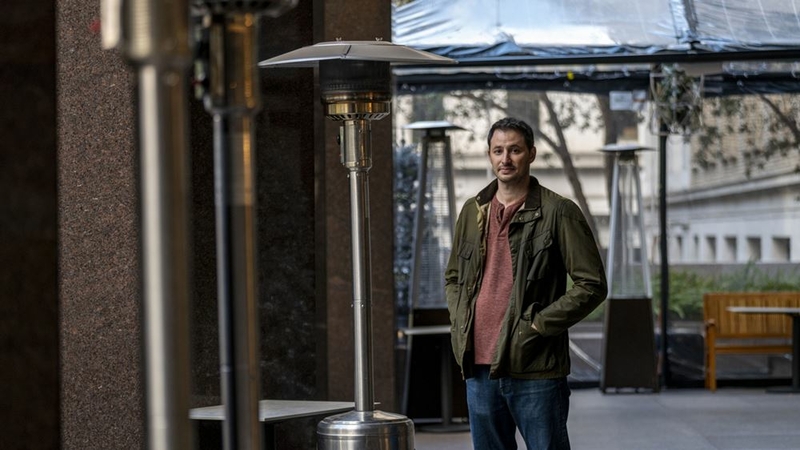
InternationalDec 23. 2020Ryan Cole spent thousands outfitting his San Francisco restaurant's patio with a roof and heaters, but outdoor dining was closed this month and he furloughed all 35 of his workers. Ryan Cole spent thousands outfitting his San Francisco restaurant’s patio with a roof and heaters, but outdoor dining was closed this month and he furloughed all 35 of his workers. “People are just exhausted by the back-and-forth change,” says Cole, photographed Dec. 17, 2020, at The Vault restaurant. MUST CREDIT: Bloomberg photo by David Paul Morris 

By Syndication Washington Post, Bloomberg · Reade Pickert, Olivia Rockeman, Alex Tanzi

The U.S. economy has splintered along state and city lines, with the speed of the rebound largely dependent on the magnitude of local business restrictions to combat an unending surge in covid-19 cases.

California and Illinois, where some of the strictest measures have been imposed, saw jumps in state unemployment filings this month that helped push the weekly U.S. total to a three-month high. Both states also had November unemployment rates above the national level of 6.7%.

In Florida, where many businesses are permitted to operate at full capacity, state jobless filings have hit the lowest since March and the November jobless rate was below the national average, even with tourism employment still depressed.

And even with a new $900 billion stimulus package approved by Congress late on Monday — extending and boosting relief for unemployed Americans — the road to recovery will continue to be uneven in different regions.

Recent data make clear there’s a trade-off between jobs and business restrictions. The economic reality for workers and firms in a place where business is generally open is vastly different from those living where things are mostly closed.

Yet higher mobility also comes with potentially devastating health consequences. Nationwide, more than 300,000 people have died of covid-19, and the recent acceleration in infections and deaths is showing little sign of abating.

A major problem is that lockdown measures are often reactive — implemented when the virus is already out of control — rather than proactive, said Joshua Barocas, an infectious-disease physician at Boston Medical Center. For workers who have managed to keep their jobs, many are faced with choosing their health or their paychecks, he said.

“Me beating the drum of ‘Stay home, stay home, stay home,’ does nothing,” Barocas said. “It is a combination of proactive restrictions, coupled with support — for both individuals and businesses — and creative solutions to sort of reduce the overall probability of transmission.”

The situation has been particularly frustrating to restaurant owners, at least those managing to stay in business after many closed permanently and laid off workers during the pandemic.

In San Francisco, Ryan Cole spent thousands of dollars outfitting his restaurant’s patio with a roof and heaters in the hopes that The Vault Garden could attract enough guests to cover the bills. Earlier this month, outdoor dining was shuttered and Cole furloughed all 35 of his workers.

“People are just exhausted by the back-and-forth change,” he said.

Across the country, in Jacksonville, Fla., Sam and Kiley Efron’s restaurant, Taverna, remains open in part because local authorities allow alfresco dining. They’ve spaced tables six feet apart and reduced indoor seating by half. Sales are down about 30%, but it’s enough to cover expenses, including paychecks for about 50 employees.

“I’ve talked to friends in other states. I am really grateful to be living in Florida right now,” Sam Efron said.

The tougher restrictions are frustrating restaurateurs like Cole, especially when data suggest other measures may be helpful. A study by researchers at the Federal Reserve Bank of Boston found mask mandates are effective in reducing at least half of the increase in covid-19 cases and deaths stemming from increased mobility.

In Duval County, where Jacksonville is located, businesses and schools are largely open, though there is a local mask order. Adjusted for population, Duval’s daily new cases surpassed San Francisco’s in the last few weeks.

Yet Los Angeles County, which had tougher business restrictions during that period, has had a worse surge in infections since mid-November.

New York has seen mixed messages. Statewide contact-tracing data in New York state showed nearly three-fourths of all cases emerged from household and social gatherings in recent months, while just 1.4% stemmed from restaurants and bars.

In New York City, though, Mayor Bill de Blasio has warned of a potential new shutdown of nonessential businesses after the holidays, amid a jump in cases.

Even after vaccines are widely available, regions where lockdown measures have generally been stricter — especially those that depend on hospitality and tourism — are likely to have a more difficult time recovering because many businesses have closed for good.

Los Angeles, New York City and Chicago, where shutdown measures have been strict, have the greatest number of permanent business closures among all U.S. metro areas, according to a September report from Yelp Inc.

In the year through October, the economies of states with more restrictive measures, like California and New York, have fared worse than those with looser rules, like Florida, Georgia and Texas. That’s according to a coincident index — or proxy measure of state economic growth — produced by the Federal Reserve Bank of Philadelphia.

State-by-state unemployment rates illustrate the economic divide, though the correlation with covid-19 caseloads is less clear.

The jobless rate is below the national average in Tennessee and Oklahoma, where business activity has resumed at least somewhat — but it’s been accompanied by some of the sharpest increases in new cases over the past two weeks, according to Johns Hopkins data. In Vermont and Nebraska, which have the lowest state jobless rates, cases have been on a downward path.

The concentration of industries also plays a role. The jobless rate remains above 10% in Hawaii and Nevada, both hospitality-dependent economies suffering from declines in tourism. Hawaii has imposed and enforced strict measures on travelers to the state and a new statewide “pause” in Nevada went into effect Nov. 24.

“The way that we do business has to change with covid, but where I think the frustration really kicks in is the unwillingness to build some flexibility in the rules,” said Mark Vitner, a senior economist at Wells Fargo & Co. “Really what we should be doing is trying to find ways that we can do as much business as we can possibly do safely.”

Jobless aid, checks, PPP: Adding up $900 billion in virus relief #SootinClaimon.Com

#SootinClaimon.Com : ขอบคุณแหล่งข้อมูล : หนังสือพิมพ์ The Nation.

Jobless aid, checks, PPP: Adding up $900 billion in virus relief (nationthailand.com)

Jobless aid, checks, PPP: Adding up $900 billion in virus relief

InternationalDec 23. 2020Capitol Police vehicles sit outside the U.S. Capitol Building in Washington, D.C., on Dec. 20, 2020. MUST CREDIT: Bloomberg photo by Ting ShenCapitol Police vehicles sit outside the U.S. Capitol Building in Washington, D.C., on Dec. 20, 2020. MUST CREDIT: Bloomberg photo by Ting Shen 

By Syndication Washington Post, Bloomberg · Laura Litvan, Erik Wasson, Laura Davison

The $900 billion in pandemic relief that passed the House and Senate late Monday is aimed squarely at shoring up the U.S. economic recovery into the early spring as battered industries and workers face months of continuing struggle.

The funds were combined with $1.4 trillion to fund regular government operations for the rest of the fiscal year, in massive legislation that runs 5,593 pages. It includes other tax, energy and national-security provisions that lawmakers agreed to pass before the end of the year.

The pandemic relief package includes help for small businesses and the jobless along with direct payments to most Americans. It also provides funding for vaccine distribution, food assistance, tax breaks and money for education and child care.

The provisions aimed at the fallout from the coronavirus represent the second-largest economic rescue package in American history, behind the $1.8 trillion virus relief package that was signed into law just nine months ago. It surpasses the $787 billion stimulus passed in response to the financial crisis in 2009.

Together with the omnibus spending bill, the total package is worth more than $2.3 trillion. The legislation also included a number of tax benefits, some unrelated to the covid-19 crisis.

Here are some highlights of specific provisions:

– Direct Payments

The bill provides $600 in one-time direct payments to individuals and $600 per child. The payments get phased out for individuals making more than $75,000 or couples making $150,000. Treasury Secretary Steven Mnuchin said the Internal Revenue Service would begin processing payments as soon as next week. The IRS already had set up a system to distribute $1,200 payments in the stimulus bill passed in March.

Several senators, including Josh Hawley, R-Mo., and Bernie Sanders, I-Vt., said they wanted larger stimulus payments, but they agreed not to object to a final deal with the smaller amount. Progressive Democrats in the House have started calling these “survival checks.”

– Jobless Benefits

Federal unemployment insurance benefits will be extended for 10 weeks through mid-March, with a $300 supplement payment each week, similar to the extra $600 supplement that expired at the end of July.

It includes people receiving state unemployment benefits as well as those receiving Pandemic Unemployment Assistance, a program that provided jobless benefits to those not traditionally eligible, like gig workers and the self-employed. Without congressional action, the program was on track to expire at year-end, which would have caused millions of Americans to lose their jobless benefits.

Pandemic Emergency Unemployment Compensation, which provided up to 13 additional weeks of jobless benefits to those who had exhausted their regular state benefits, was extended as well.

Unlike stimulus payments and forgiven PPP loans, which aren’t subject to federal taxes, unemployment insurance recipients must pay income taxes on their jobless benefits. Many states don’t automatically withhold taxes when they distribute those payments, so recipients will owe those taxes when they file their tax returns next spring.

– Companies, Airlines

The aid package includes $284 billion for the Paycheck Protection Program that was created in the Cares Act. That program’s loans to firms with fewer than 500 employees can be fully forgiven if companies keep people on their payroll.

The legislation clarifies that business owners can write off expenses paid for with forgiven PPP loans, giving small companies a tax break that could amount to more than $100 billion. The legislation would override an IRS decision that said business couldn’t claim deductions on costs, such as rent and wages, paid for with tax-free PPP money.

It also includes $15 billion to reinstate payroll reimbursements to airlines, which expired two months ago, as well as $1 billion for airline contractors.

– Tax Breaks

The legislation includes a priority for President Donald Trump: an expansion of the business-meals deduction. Economists have said the change would do little immediately to help struggling restaurants.

It also includes a renewal of the employee retention tax credit for businesses that keeps workers on their payrolls. The break gives companies an additional incentive to keep people employed as many firms still face revenue downturns but have run out of PPP money or never qualified for it.

The package makes changes to the earned income tax credit and the child tax credit to make it available to people who lost wages or jobs during the pandemic, as well as an expanded Low Income Housing Tax Credit to boost construction of housing for low-wage families.

The legislation would make permanent an excise tax break for beer brewers, wine makers and distillers. In addition, other expiring tax credits, including some for mortgage interest premiums and tax credits to help businesses in low-income communities.

– Housing, Education and More

The measure contains $25 billion for emergency rental assistance, and it extends the Cares Act’s eviction moratorium until Jan. 31.

It also calls for $7 billion in spending on broadband internet, including $3.2 billion to help poor households pay for the service and $1.9 billion to boost security by removing gear from equipment providers such as Huawei Technologies Co.

Other key funding provisions include funds for virus testing, tracing and vaccine development and distribution. It also has $82 billion for education funding, as well as $10 billion to support child-care providers, $15 billion for entertainment venues and $13 billion for nutrition assistance. The bill would convert a $10 billion loan for the U.S. Postal Service to a grant.

– Non-pandemic Measures

The legislation includes $1.4 trillion in regular appropriations to keep the government operating through the end of fiscal 2021 on Sept. 30. A last-minute deal kept $12.5 billion for Veterans Affairs health funding under the total spending budget cap.

Lawmakers settled on nearly $1.4 billion for border-wall construction and related spending, short of Trump’s request for nearly $2 billion. His $5 billion ask for fiscal 2019 led to the longest shutdown in the country’s history, but he hasn’t had a standoff with lawmakers over wall funding since he circumvented Congress by using military funds to build additional fencing.

The spending package also includes the long-standing Hyde amendment, which bars federal funds for most abortions, and the Helms amendment, which bars the use of foreign assistance funds for abortions. Congressional Democrats have said they want to remove the Hyde amendment from spending bills starting in fiscal 2022, when a Democrat will be in the White House. President-elect Joe Biden has said he also opposes the Hyde amendment.

There are a number of so-called “riders” that aren’t related to the pandemic or the 12 appropriations bills that make up the spending omnibus. These include everything from a bill creating Smithsonian museums dedicated to women’s history and the American Latino to technical corrections to the U.S.-Mexico-Canada trade agreement.

One of those riders is the long-discussed legislation to protect patients with health insurance from “surprise” medical bills in most emergency situations, including air ambulance rides. Patients also wouldn’t have to pay bills received more than 90 days after a visit, and health plans and providers would have to provide patients with more information on their networks and costs.

The final legislation also calls for the U.S. to join other nations in phasing out hydrofluorocarbons used in air conditioning and refrigeration systems. While hydrofluorocarbons aren’t nearly as bad for the ozone layer as chlorofluorocarbons, the chemical they were designed to replace, they still have hundreds to thousands of times the heat-trapping power of carbon dioxide.

The bill includes a reauthorization of the Water Resources Development Act that deals with water-related infrastructure. It also extends tax credits for renewable energy projects, including wind and solar production.

The bill reforms the way the Federal Aviation Administration certifies aircraft, a move prompted by the failures of the Boeing 737 Max plane.

The legislation would allow the secretaries of Homeland Security and Labor to increase the number of H-2B visas for workers in meatpacking, landscaping and construction.

The catchall bill alters pipeline safety regulations, reforms the federal student aid application, institutes regulations for horse racing and resolves terrorism claims against Sudan, among hundreds of smaller provisions tucked inside.

It would also give civilian federal workers a 1% raise, as well as a 3% raise for the military, but no pay increase for the lawmakers who will be voting on the final bill.

New Covid-19 wave will cost economy Bt45 billion in one month: Kasikorn Research #SootinClaimon.Com

#SootinClaimon.Com : ขอบคุณแหล่งข้อมูล : หนังสือพิมพ์ The Nation.

New Covid-19 wave will cost economy Bt45 billion in one month: Kasikorn Research (nationthailand.com)

New Covid-19 wave will cost economy Bt45 billion in one month: Kasikorn Research

NationalDec 23. 2020

By THE NATION

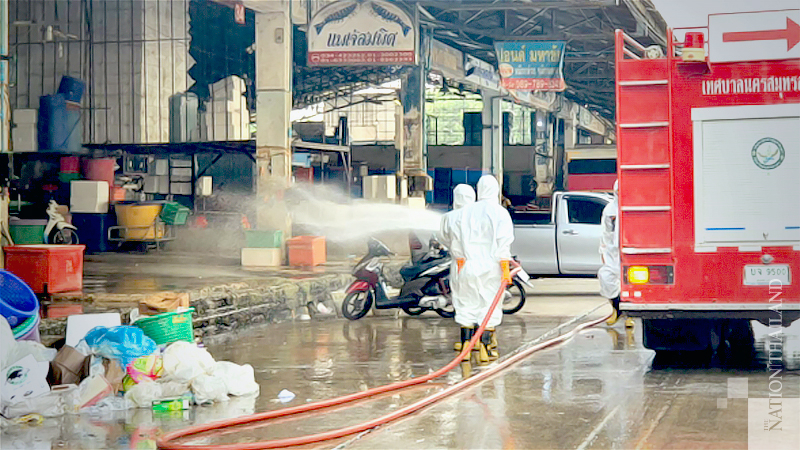
The new wave of Covid-19 in Samut Sakhon province that has led to a lockdown from December 19 to January 3 will cost the economy at least Bt45 billion in one month, Kasikorn Research Centre said on Wednesday.

“The damages can be categorised in three parts. The first is approximately Bt13-billion damage to the fishery and seafood industry as Samut Sakhon is responsible for the production of 40 per cent of the country’s seafood,” the centre said.

“The second is the damage due to a cancellation of New Year activities in Samut Sakhon and nearby provinces, including Bangkok. It is estimated that people in these areas would have spent around Bt15 billion on New Year parties, dining out and gifts,” it said.

“Lastly is the damage to domestic tourism, estimated at Bt17 billion, or about 30 per cent of total tourism income in one month. This estimation is under the assumption that intra-provincial travel is still allowed,” it added.

Meanwhile, Thanawat Polwichai, an adviser at the University of the Thai Chamber of Commerce’s Centre for Economic and Business Forecasting, said the outbreak in Samut Sakhon will affect the province’s economy to the tune of around Bt1 billion per day, as 70 per cent of its industry relies on seafood products while seafood markets are now being shut down to curb the outbreak.

“Ultimately, the provincial lockdown will affect the whole Thai economy – at Bt45 billion to Bt46 billion per month, or 0.2 to 0.3 per cent of the country’s GDP,” he said.

“However, if there is a countrywide lockdown similar to early this year, the GDP would take a hit by at least 12 per cent,” he said.

Despite the new outbreak, the centre is still sticking by its estimation of 2020 GDP at 6.3 per cent contraction and an expansion of 2.8 per cent next year.

Samut Sakhon Governor Veerasak Vichitsangsri said on Tuesday that the number of infected people in the province had risen to 1,063.

Baht weakens as market watches result of MPC meeting today #SootinClaimon.Com

#SootinClaimon.Com : ขอบคุณแหล่งข้อมูล : หนังสือพิมพ์ The Nation.

Baht weakens as market watches result of MPC meeting today (nationthailand.com)

Baht weakens as market watches result of MPC meeting today

NationalDec 23. 2020

By THE NATION

The baht opened at 30.23 to the US dollar on Wednesday, weakening from 30.20 at close on Tuesday.

The Thai currency is likely to move between 30.10 and 30.30 on Wednesday, predicted Jitipol Puksamatanan, senior director of the chief investment office at SCB Securities.

On Tuesday night, some global financial markets fluctuated from good news of a new US stimulus package as well as the Covid-19 situation around the world.

The S&P 500 Index decreased by 0.2 per cent, while the price of WTI crude oil fell by 2.2 per cent. The Nasdaq Index rose by 0.5 per cent.

Meanwhile, the dollar strengthened by 0.5 per cent, the third consecutive day, amid demand for safe haven assets. The gold price decreased by 0.8 per cent.

The US Conference Board Consumer Confidence Index announced a drop to 88.6 points, from the 97 points observers expected earlier. The US Ten-Year Treasury yield decreased by 2 basis points to 0.92 per cent.

In Thailand, Jitipol said the baht would move in a narrow range before the Monetary Policy Committee makes known the results of a key meeting this afternoon.

PM opens Chao Phraya electric ferry route #SootinClaimon.Com

#SootinClaimon.Com : ขอบคุณแหล่งข้อมูล : หนังสือพิมพ์ The Nation.

PM opens Chao Phraya electric ferry route (nationthailand.com)

PM opens Chao Phraya electric ferry route

NationalDec 23. 2020

By THE NATION

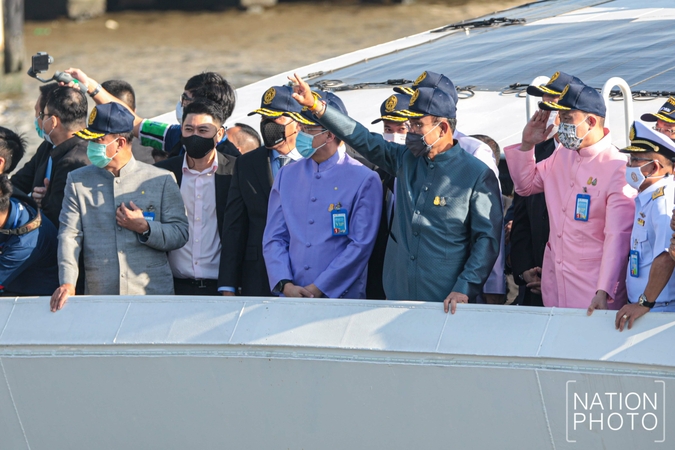
Prime Minister Prayut Chan-o-cha on Tuesday presided over the opening ceremony of the “Mine (Mission no emission) Smart Ferry” project, which features an electric ferry route in the Chao Phraya River and Thailand’s first smart pier at CAT Tower Pier in Bangkok’s Bangrak district, government spokesman Anucha Burapachaisri said.

Prayut was accompanied by other Cabinet members, including Interior Minister Anupong Paochinda, Transport Minister Saksyam Chidchob and Digital Economy and Society Minister Buddhipongse Punnakanta.

“During his speech, the PM said this project is part of the government’s 20-year plan to build transport infrastructure nationwide and promote the use of electric vehicles, which will help reduce air pollution, especially the PM2.5 problem, in metropolitan areas,” Aucha said.

“The prime minister is also concerned about people’s health in this present Covid-19 situation and has urged everyone to wear face masks and take care of their health,” he said.

The premier and other ministers then boarded an electric ferry from CAT Tower Pier to Memorial Bridge Pier to witness the demonstration of the smart pier system.

“The Rama V-to-Sathorn electric ferry route will be open to the public free of charge from December 23 to February 14,” Anucha added.

Two test positive in Kamphaeng Phet after visiting Samut Sakhon #SootinClaimon.Com

#SootinClaimon.Com : ขอบคุณแหล่งข้อมูล : หนังสือพิมพ์ The Nation.

Two test positive in Kamphaeng Phet after visiting Samut Sakhon (nationthailand.com)

Two test positive in Kamphaeng Phet after visiting Samut Sakhon

NationalDec 23. 2020

By THE NATION

Two people in Kamphaeng Phet province have tested positive for Covid-19 after travelling to Samut Sakhon, a hotspot of current infections, governor Chaowalit Saeng-uthai said on Tuesday.

“One patient is a 43-year-old male, a resident of Khlong Khlung district,” he said. “He works as a truck driver delivering seafood between Samut Sakhon markets and Talad Thai and normally has two Myanmar workers on board with him.”

Chaowalit said the patient had travelled to Samut Sakhon from December 6 to 19 and was tested on December 21 following Public Health Ministry recommendations.

“The test came back positive on December 22 even though the man did not have any symptoms, so he was placed in isolation at Khlong Khlung Hospital,” Chaowalit said.

The other patient is also a 43-year-old male, from Khanuworaluckburi district. He went to Thalay Thai market in Samut Sakhon between December 4 and 18 and was tested on December 21 at Khanuworaluckburi Hospital. He was found positive but showed no symptoms and was placed in isolation at the hospital.

“Officials have traced and tested 17 persons who came into close contact with the two patients, five test results have come back negative while the rest are still awaiting their results,” Chaowalit added.

Cool to cold weather in Upper Thailand with light fog in the morning #SootinClaimon.Com

#SootinClaimon.Com : ขอบคุณแหล่งข้อมูล : หนังสือพิมพ์ The Nation.

Cool to cold weather in Upper Thailand with light fog in the morning (nationthailand.com)

Cool to cold weather in Upper Thailand with light fog in the morning

NationalDec 23. 2020

By THE NATION

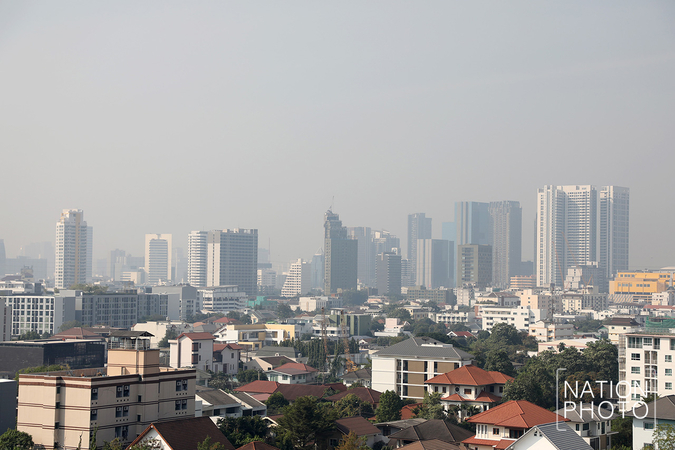
The Meteorological Department said on Wednesday that a strong high-pressure system from China covering upper Thailand is weakening, resulting in cool to cold weather with light fog in the morning. Mountaintops will remain cold to very cold, with frost in some places.

Meanwhile, the moderate northeast monsoon prevails over the Gulf and the South. Waves are likely to be 2 metres high in the Gulf and above 3 metres in areas experiencing thundershowers, the department said, advising all ships to proceed with caution.

The department also said an active low pressure system over the lower South China Sea is expected to move to the Gulf during December 24 and 25. More rain and isolated heavy to very heavy showers will be likely in Chumphon, Surat Thani, Nakhon Si Thammarat, Phatthalung, Songkhla, Pattani, Yala, Narathiwat, Ranong and Phang Nga. People in the South should beware of severe conditions that may cause flash floods, it added.

Here’s the weather forecast for the next 24 hours:

North: Cold to cool weather with light fog in the morning; temperature lows of 10-16 degrees and highs of 24-30 degrees Celsius. Temperature on hilltops is likely to drop to 3-10 degrees, with frost in some areas.

Northeast: Cold to cool weather with light fog in the morning; temperature lows of 10-16 degrees and highs of 24-26 degrees Celsius. Temperature on hilltops is likely to drop to 3-10 degrees, with frost in some areas.

Central: Cool weather with light fog in the morning; temperature lows of 16-20 degrees, highs of 27-30 degrees.

East: Cool weather with light fog in the morning; temperature lows of 16-21 degrees, highs of 29-31 degrees; waves 2 metres high and over 2 metres offshore.

South (east coast): Partly cloudy with thundershowers in 20 per cent of the area; temperature lows of 21-25 degrees, highs of 29-33 degrees Celsius; waves 2 metres high and 3 metres during thundershowers.

South (west coast): Partly cloudy with thundershowers in 10 per cent of the area; temperature lows of 21-25 degrees, highs of 30-33 degrees; waves 2 metres high and over 2 metres during thundershowers.

Bangkok and surrounding areas: Cool weather with light fog in the morning; temperature lows of 20-22 degrees, highs of 28-31 degrees Celsius.

SET rebounds from Covid shock #SootinClaimon.Com

#SootinClaimon.Com : ขอบคุณแหล่งข้อมูล : หนังสือพิมพ์ The Nation.

SET rebounds from Covid shock (nationthailand.com)

SET rebounds from Covid shock

EconDec 22. 2020

By The Nation

The Stock Exchange of Thailand (SET) Index closed at 1,424.39 on Tuesday, up 22.61 points or 1.61 per cent. Total transactions amounted to Bt87.82 billion with an index high of 1,428.11 and a low of 1,388.23.

The SET closed in positive territory after investors bought back shares following the sharp fall of more than 5 per cent during Monday trading.

In the morning session on Tuesday, an analyst at Krungsri Securities expected the day’s index to fall to 1,390 points as fresh Covid-19 outbreaks in Thailand and Britain spur negative sentiment for the economy and investor confidence.

“The index will also be under pressure from the falling oil price,” he said.

The 10 stocks with the highest trade value today were PTT, KBANK, BANPU, ADVANC, CPALL, IVL, PTTEP, BBL, CPF and IRPC.

As of 4.30pm, the price of oil dropped by US$0.96 or 2.00 per cent to $47.01 per barrel, while gold dropped by $5.00 or 0.27 per cent, to $1,877.80 per ounce.

Other Asian indices were mixed:

Japan’s Nikkei Index closed at 26,436.39, down 278.03 points or 1.04 per cent.

China’s Shang Hai SE Composite Index closed at 3,356.78, down 63.79 points or 1.86 per cent, while Shenzhen SE Component Index closed at 13,882.30, down 252.55 points or 1.79 per cent.

Hong Kong’s Hang Seng Index closed at 26,119.25, down 187.43 points or 0.71 per cent.

South Korea’s KOSPI Index closed at 2,733.68, down 44.97 points or 1.62 per cent.

Taiwan’s TAIEX Index closed at 14,177.46, down 207.50 points or 1.44 per cent.

Singapore’s Straits Times Index closed at 2,823.79, down 22.73 points or 0.80 per cent.

Vietnam’s Ho Chi Minh Stock Index closed at 1,083.45, up 2.37 points or 0.22 per cent.

Stock picks for investors amid the Covid-19 crisis #SootinClaimon.Com

#SootinClaimon.Com : ขอบคุณแหล่งข้อมูล : หนังสือพิมพ์ The Nation.

Stock picks for investors amid the Covid-19 crisis (nationthailand.com)

Stock picks for investors amid the Covid-19 crisis

EconDec 22. 2020

By The Nation

Brokerage firms have recommended select stocks for investment amid the new Covid-19 wave.

Yuanta Securities strategist Natapon Khamthakrue advised buying construction company shares, such as Sino-Thai Engineering and Construction (STEC) and CH-Karnchang (CK) as they have limited downside and benefit from the government’s move to stimulate domestic investment.

“Also, we advise buying telecommunication and energy shares, which have been able to escape the Covid-19 impact, such as Advanced Info Services [ADVANC], PTT and PTT Global Chemical [PTTGC],” he said.

He added that bank shares, such as Kasikornbank (KBANK) would benefit from positive news of a Covid-19 vaccine next year.

Kasikorn Securities senior vice president Sorrabhol Virameteekul expected the new Covid-19 wave to cause uncertainty among investors in the short term as the government would be able to contain the spread within two months.

He advised buying non-bank and logistics stocks which are able to escape the Covid-19 impact, such as AEON Thana Sinsap (AEONTS), JMT Network Services (JMT), Srisawad Corporation (SAWAD), Precious Shipping (PSL) and RCL.

“Also, we advise buying Bangkok Expressway and Metro [BEM], which has limited downside and benefits from positive news of a Covid-19 vaccine,” he said.

Bualuang Securities director of individual customer research, Wikij Tirawannarat, advised buying shares with growth potential at cheap price, such as Bangkok Commercial Asset Management (BAM), JMT, Chayo Group (CHAYO), Carabao Group (CBG) and Eastern Commercial Leasing (ECL).

Globlex Securities analyst Nuttawut Wongyaowarak advised buying shares which benefit from the Covid-19 outbreak, such as Sri Trang Gloves (STGT) and TQM Corporation (TQM).