SNB defies U.S. criticism to renew currency intervention vow
InternationalDec 18. 2020A Swiss national flag flies in front of the Swiss National Bank in Bern, Switzerland, on June 18, 2020. MUST CREDIT: Bloomberg photo by Stefan Wermuth.
By Syndication Washington Post, Bloomberg · Catherine Bosley
The Swiss National Bank renewed its pledge to use currency interventions to counter upward pressure on the franc just a day after being censured by the U.S. for the practice.
SNB officials led by President Thomas Jordan called the franc “highly valued,” sticking with a key phrase they use to signal they remain on alert. They also kept their policy rate and deposit rate at -0.75%, a move expected by economists, citing a bleak outlook for inflation.
Given the domestic bond market is small and illiquid, the strategy of negative interest rates plus interventions is “the most effective that we have,” Jordan told Bloomberg in an interview.
The central bank said the coronavirus is “continuing to have a strong adverse effect on the economy.” Consumer prices have been falling for months, and a pickup is likely to be slow: the SNB forecasts that inflation will be stuck around zero over the next two years.
The U.S. Treasury Department designated Switzerland a currency manipulator on Wednesday after the SNB’s interventions surged to 90 billion francs ($102 billion) in the first six months of this year. It had to step up the action to counter a rush of investors into the perceived safety of the Swiss currency amid the pandemic.
While the exchange rate has eased somewhat in recent months, in part thanks to the European Union’s historic spending package, it’s still pushing down on inflation by making imports cheaper.
The currency was at 1.08207 per euro at 2:07 p.m. in Zurich, down slightly on the day.
In its updated forecasts, the central bank sees the economy growing 2.5%-3% next year. Output shrank by the most in decades this year as shops and businesses were shut to stem the spread of the virus, though the slump was mild compared with many other European countries.
The government is poised to intensify social distancing restrictions because of the second wave, which would drag on the recovery. The SNB said economic momentum will remain weak into early 2021.
Aluminum surges as buyers worry U.S. may reapply Rusal sanctions
InternationalDec 18. 2020Bound aluminium ingots sit in the casting shop at the Casting And Mechanical Plant SKAD Ltd. in Divnogorsk, Russia, on Nov. 29, 2019. MUST CREDIT: Bloomberg photo by Andrey Rudakov.
By Syndication Washington Post, Bloomberg · Joe Deaux, Mark Burton, Yvonne Yue Li, Yuliya Fedorinova
Aluminum surged to the highest in more than two years on speculation that the U.S. could reapply sanctions on one of the world’s largest producers, after a report that European officials told the U.S. that Oleg Deripaska has retained significant day-to-day influence over United Co. Rusal International.
Renewed U.S. sanctions on Rusal could crimp global supplies of the metal. Aluminum surged in April 2018 when the government first announced that it was sanctioning Russian individuals and firms, including Rusal, to retaliate against Moscow for meddling in the 2016 U.S. presidential election. The action caused concern that supply would be severely limited, and sent buyers scrambling to obtain metal in any form that they could get their hands on.
“Aluminium has not been loved like the other metals in recent months,” Michael Cuoco, head of hedge-fund sales for metals and bulks at StoneX, said by email. “But if something like this is even percolating in the background, just rewind the tape to 2018, when the mighty metal rallied from $1,980 to $2,718.”
An assessment sent to U.S. officials earlier this year concluded that Deripaska continued to exert control over Rusal, despite significantly reducing his ownership stake almost two years ago as part of an agreement with the U.S. to lift sanctions on the producer.
Russia’s primary aluminum output accounts for about 6% of global supply, with Rusal being the top supplier in Europe and among the top five in the U.S., according to Harbor Intelligence. Aluminum for delivery in three months rose 1.6% to $2,068 a metric ton in London, after earlier touching $2,096 a ton, the highest since October 2018.
“If this leads to a repeat of what happened in 2018, there’ll be a huge impact on the aluminum market, with possible more sanctions on Rusal likely tightening the market and a boost to aluminum premium,” said Wenyu Yao, senior commodities strategist at ING Bank.
After sanctions were lifted, Deripaska’s stake in En+ that controls Rusal declined to about 45% in En+. Rusal shares fell as much as 10% and traded down 5% at 5:43 p.m. in Moscow.
After the sanctions announcement in 2018, Rusal wanted to secure its survival with a plan to reduce Deripaska’s influence at the company. The plan, known as the Barker Plan, named for En+ Group Chairman Greg Barker, would cut Deripaska’s shareholding to below 50% in En+ and appoint a majority of independent directors.
“This case is political and hard to say if the letter may lead to sanctions,” Kirill Chuyko, chief of research at BCS Global Markets said by phone. “There is no signs that Deripaska affects management’s decisions in Rusal or En+, but he is still the largest shareholder and probably tracks what is going on in the company.”
Rusal and En+ operational management was kept nearly unchanged when the company emerged from the sanctions as Treasury only demanded the board to be formed from independent directors and for Deripaska to relinquish control, which was done, Chuyko said.
By The Washington Post · Mike DeBonis, Jeff Stein, Seung Min Kim
WASHINGTON – White House officials and congressional leaders are trying to address a number of lingering policy disagreements as they race to finalize an approximately $900 billion coronavirus relief package, with growing signs that the talks will drag into the weekend.
Among the most vexing issues is whether to curb the powers of the Federal Reserve and how to structure a new round of stimulus checks. Lawmakers are also clashing over aid for theaters and music venues, and relief for cities and states. They have fought over many of these issues since May, and they were trying to resolve them all at once on Thursday, creating a chaotic scene with numerous lawmakers unsure about the latest state of play.
Negotiators were hoping to resolve all of their differences and pass matching bills through the House and the Senate by Friday night to marry the stimulus bill with a government funding package. But the prospects of this all happening appeared to slip away late Thursday. If they do not pass at least a stop-gap spending bill by Friday night, the government will shut down Saturday.
“We need to complete this work and complete it right away,” Senate Majority Leader Mitch McConnell, R-Ky., said late Thursday. “The Senate’s not going anywhere until we have covid relief out the door. . . . In the meantime, we’re going to stay productive.”
Congressional leaders have cited significant progress in recent days as talks accelerated. While several difficult sticking points remain, aides are expressing optimism that no new problems would prevent an agreement.
The stimulus package under discussion would include $600 stimulus checks for millions of Americans, 10 weeks of jobless aid, $330 billion in small business assistance, money for vaccine distribution, and funding for a range of other programs. Sen. John Thune, R-S.D., said that lawmakers are still reviewing how to design eligibility for the stimulus checks and that disagreements over this issue remains “one of the biggest challenges.”
Many other issues remain unresolved. Republicans were still demanding limits to emergency lending programs of the Federal Reserve and the Treasury Department. Democrats believe these restrictions, pushed primarily by Sen. Pat Toomey, R-Pa., would constrain the ability of the incoming Biden administration to stabilize the economy during a downturn.
Toomey on Thursday told reporters the issue was a “bright red line” for him in negotiations. Sen. John Barasso, R-Wyo., the third highest-ranking Republican senator, also called language on the Fed facilities “critically important” for GOP lawmakers. Lawmakers on Thursday were consulting with Federal Reserve Chairman Jerome Powell about the impact of the Toomey push.
Democratic lawmakers, meanwhile, are seeking to include funding for the Federal Emergency Management Agency to give to states and cities in emergencies. Republicans are wary that measure could amount to a form of aid for states and cities and have pushed back against it. Republican lawmakers agreed to drop their demands for a sweeping coronavirus liability shield in exchange for Democrats agreeing to abandon their push for hundreds of billions in state and local aid, but the dispute about the FEMA money remains unresolved. Democrats say the measure would only cost about $1 billion.
Similarly, Democratic lawmakers are seeking to delay the Dec. 31 deadline that states and cities have to spend unused federal assistance before that funding expires and has to be returned. Republicans have been resistant to that change as well, aides said.
Democrats have insisted on an extension of a federal eviction moratorium that is set to expire by the end of the year. Senate Banking Chair Mike Crapo, R-Idaho, told reporters Thursday that he was seeking additional rental assistance to “avoid the need” for extending the moratorium. A one-month extension in the moratorium was included in the bipartisan compromise introduced by centrist lawmakers earlier this month.
“The question is whether there is one needed … if we get an adequate rental assistance program,” Crapo said.
Senate Minority Leader Charles Schumer, D-N.Y., is also pushing a $17 billion plan called “Save Our Stages” to devote federal assistance to venues shut down by the pandemic and at risk of permanent closure. Some senior Republicans view the request as excessive and think some of the funding would be better spent on restaurants and additional Paycheck Protection Program assistance, according to aides familiar with internal discussions. Schumer has pushed for funding for restaurants and a second round of PPP as well.
The “Save Our Stages” measure has some Republican support, including from Sen. John Cornyn, R-Texas, who co-authored a $10 billion aid bill earlier this year. Cornyn told reporters Thursday that lawmakers are trying to reach an agreement on a funding formula for the provision and the eligibility criteria for the pool of money, citing the needs of zoos, community theaters, museums and other groups.
“I think the Federal Reserve authority there’s a really strong interest in making sure . . . that door is is shut. And that’s a big priority for a lot of our members. ‘Save Our Stages’ I know is in play,” Thune, told reporters on Thursday.
The scramble for a deal comes amid numerous signs the economy is deteriorating again. Jobless claims have risen in recent weeks as a surge in new coronavirus cases has led to new restrictions on commerce. The pace of hiring has also slowed, and retail sales came in weaker than expected in November, an ominous sign during the holidays.
Pelosi and Schumer spoke with Treasury Secretary Steven Mnuchin at 10:30 p.m. Wednesday and agreed to trade offers and resume conversations Thursday morning, a Pelosi spokesman said on Twitter.
“Everyone wants to see this get done, and soon,” Schumer said in a floor speech. “None of the remaining hurdles cannot be overcome.”
One central unresolved matter surrounds a Republican desire to tighten restrictions on the Federal Reserve’s ability to exercise its emergency lending authority amid the pandemic. Treasury Secretary Steven Mnuchin in November moved to wind down several emergency credit facilities totaling $500 billion that were authorized by the Cares Act passed in March. But several Republicans – led by Toomey, the incoming GOP leader of the Senate Banking Committee – want firmer limitations on the Fed’s own statutory powers to intervene under “unusual and exigent circumstances.”
Toomey included language in a GOP-drafted coronavirus aid proposal that was blocked by Senate Democrats in September that would affirmatively prevent the Fed from pursuing any further lending past early January for facilities funded by the Cares Act. Republicans are pushing to include similar language in the pending bill, but Democrats are fiercely resisting the move – believing it will hamstring Biden and his nominee for treasury secretary, former Fed chair Janet Yellen, as they seek to guide the economic recovery.
“It’s no surprise that Republicans are drawing a line in the sand over their ability to sabotage the economy, and tie the Biden administration’s hands,” Sen. Ron Wyden, D-Ore., the ranking Democrat on the Senate Finance Committee, said in a statement. Sen Jon Tester, D-Mont., also criticized the timing of the change as “pretty obviously suspect.”
The various lending facilities include funds meant to ensure liquidity in various commercial credit markets, as well as vehicles to back Main Street loans for small businesses and to buy up municipal bond obligations from states and certain large cities and counties – freeing up their balances sheets amid fiscal distress. The latter program, which held $1.45 billion in bonds at the end of November, is of special note because federal aid to states and cities has become politically treacherous on Capitol Hill, and many Republicans have pointedly opposed any aid that could be construed as helping to bail jurisdictions out of fiscal distress that predated the pandemic.
The legislation taking shape is expected to devote about $330 billion for small-business relief, including $257 billion for another round of Paycheck Protection Program funding, aides said. Under the plans being considered, firms would likely be required to show declines in revenue of as great as 25 percent to qualify for the assistance, according to two people briefed on discussions. The measure would also have aid directly targeted for the restaurant industry, which is bracing for a severe downturn amid the closure of winter dining due to the surging pandemic.
Congressional leaders have also said they would provide about $300 a week in additional federal unemployment benefits. Those benefits would last for 10 weeks, rather than the 16 weeks called for in the bipartisan plan released by House and Senate lawmakers earlier this week.
Cutting six weeks off the unemployment program was expected to save negotiators about $40 billion.
Base unemployment benefits and a federal unemployment program created in March for gig workers and independent contractors, among others ineligible for traditional unemployment, are also expected to be extended for 10 weeks, people briefed on the talks said. The legislation would not retroactively cover unemployment benefits after the $600 per week benefit approved by Congress expired this summer.
Republicans are also seeking to require beneficiaries from the federal unemployment benefit to receive at least $100 per week in state unemployment benefits, but Democratic aides have rejected that proposal, according to one person briefed on internal discussions. The White House had a similar provision in the unilateral action it took over the summer to extend federal unemployment benefits. Republicans say the measure is necessary to prevent fraud in the unemployment system, while Democrats contend it cruelly cuts the lowest-earners out of government assistance.
The bill is expected to include a second round of stimulus payments, but at $600 per person rather than the $1,200 per person approved in March. The legislation is likely to provide both $600 per adult and $600 per child. Eligibility will be based on the same income threshold as in the Cares Act, which gave full payments to those who had earned less than $75,000 in the previous year. Payments are smaller for those earning over that amount before disappearing entirely for those earning more than $99,000.
Thune suggested to reporters on Thursday that lawmakers were considering lowering that threshold to keep the cost of the provision down. Sen. Bernie Sanders, I-Vt., who along with Sen. Josh Hawley, R-Mo., has pushed for a second round of stimulus checks, told reporters he opposes lowering the income cap.
There are expected to be two other significant policy changes to how the stimulus checks are disbursed. Adults who are claimed as dependents would be eligible for checks, unlike the previous round of payments. And the final measure is likely to be similar to Florida Republican Sen. Marco Rubio’s legislation to give stimulus payments to U.S. citizens and their children even if they are married to noncitizens. Aides said discussions were fluid and policies had not been finalized.
Thune suggested Wednesday that lawmakers may seek to prevent people on unemployment benefits from also receiving $600 stimulus payments, although he appeared to back off that proposal on Thursday. Aides said that suggestion has been rejected by congressional Democrats and was unlikely to be incorporated in a final agreement.
Biden’s Cabinet picks start to move through confirmation process
InternationalDec 18. 2020The American flag flies next to the dome of the U.S. Capitol Jan. 15, 2017. MUST CREDIT: Bloomberg photo by Andrew Harrer.
By Syndication Washington Post, Bloomberg · Steven T. Dennis, Daniel Flatley, Jennifer Epstein
President-elect Joe Biden’s Cabinet picks are beginning to work through the confirmation process in the Republican-controlled Senate as transition officials and Democrats press to avoid delays in putting key people in place amid the pandemic.
Despite the still simmering rancor of the election and President Donald Trump’s refusal so far to recognize the outcome, some Senate committees are moving ahead on vetting nominees, potentially leading to some being confirmed on Inauguration Day or shortly afterward.
The Senate Finance Committee sent questionnaires Tuesday to Janet Yellen, the former Federal Reserve chair whom Biden has chosen to be Treasury secretary, and Xavier Becerra, the California attorney general tapped to run the Department of Health and Human Services, said Ashley Schapitl, a spokeswoman for Ron Wyden of Oregon, the top Democrat on the Finance Committee.
The Senate Foreign Relations Committee has sent its list of questions to secretary of state nominee Antony Blinken, with the potential for a hearing before the inauguration on Jan. 20, according to a person familiar.
The process has been eased by the vote Monday of the Electoral College affirming Biden’s victory and by Senate Majority Leader Mitch McConnell on Tuesday acknowledging Biden as the president-elect and speaking to him by phone.
“Leaders from both parties have now recognized that President-elect Joe Biden will be sworn-in on Jan. 20th,” said Andrew Bates, a spokesman for the transition team. “And the American people rightfully expect that the Senate will confirm his tested, deeply qualified, history-making Cabinet nominees as swiftly as possible to ensure that our nation is fully equipped to overcome the unprecedented coronavirus crisis, put Americans back to work, and protect our national security.”
That doesn’t mean Biden’s nominees will have an easy road ahead. Republicans have raised concerns about several of them, including Neera Tanden, the head of the Center for American Progress, to lead the Office of Management and Budget, as well as Becerra, a former senior House Democrat.
John Barrasso of Wyoming, the No. 3 Senate Republican, warned in a recent Wall Street Journal op-ed that Democrats had “hamstrung” Trump’s administration when he first took office and that would have consequences.
“Don’t expect Senate Republicans to forget how the Democrats treated Mr. Trump’s nominees,” he wrote. Republicans would “treat mainstream nominees fairly.” But “those who are out of the mainstream will face a gauntlet, not a garden party.”
The other question mark is control of the Senate, which won’t be decided until a Jan. 5 runoff for Georgia’s two seats in the chamber. Unless Democrats can pull off a double win, Republicans will remain in charge and set the pace of confirmations.
Biden’s transition team and allies including Wyden and Senate Democratic Leader Chuck Schumer have been pushing hard for Republicans to follow precedent with hearings before Inauguration Day and swift confirmations, arguing that delays would hamper Biden’s efforts to bolster a still struggling economy, stem the spread of covid-19 and vaccinate the public.
Without his own Cabinet officials in place, Biden would have to deal with Trump-era holdovers or career officials in acting capacity.
A transition official said the president-elect’s team has been engaging with staff and lawmakers and his nominees have had dozens of meetings with members of Congress.
Schumer has been pressing McConnell to begin hearings on Biden’s cabinet choices shortly after the Georgia runoffs, which would put them on a timetable roughly afforded past presidents, including Trump.
McConnell declined to comment Tuesday when asked about the timing of confirmations, saying he is focused on wrapping up work with Trump first.
“The future will take care of itself,” he told reporters.
Paul Light, a professor of public service at New York University and non-resident senior fellow at the Brookings Institution, said some of Biden’s choices could be in for a difficult time. The confirmation process could be used by Republicans to show the GOP they are still in the fight.
“Republicans who are sitting out there looking for revenge or looking to inflict some pain, the nomination process is a wonderful playground for inflicting pain,” he said.
Trump may also be a factor, Light added.
“He’s still fighting the fight,” he said. “He hasn’t gotten around to being a force in the confirmation process but I suspect he’ll be happy to participate in that process and tweet from the sidelines.”
Typically, the Senate’s top leaders hash out an agreement at the start of the Congress in early January addressing such issues as the number of senators from each party on each committee.
That’s been followed by confirmation hearings before the inauguration, especially for major posts like state, Treasury and defense.
This was true for the last four presidents, who announced a total of 115 nominees for Senate-confirmed positions before taking office and had 71 receive pre-inauguration hearings, according to the Center for Presidential Transition. Of those, 49 were Cabinet-level nominees.Only two of Trump’s nominees were confirmed on Inauguration Day: Defense Secretary Jim Mattis and Homeland Security Secretary John Kelly. For a variety of reasons, including lengthy vetting procedures for nominees with complex financial holdings and opposition from individual senators, Trump had the fewest nominees confirmed on Inauguration Day out of the last four presidents. And it took the Senate much longer, on average, to confirm his initial slate of nominees.
Some, such as Michael Pompeo for CIA director and Nikki Haley as United Nations ambassador, were confirmed shortly after Inauguration Day.
Saudi economy contracts for fifth straight quarter amid oil cuts
InternationalDec 18. 2020Men and women shop at the Al Yasmin mall in Jeddah, Saudi Arabia, on Aug. 6, 2017. MUST CREDIT: Bloomberg photo by Tasneem Alsultan.
By Syndication Washington Post, Bloomberg · Vivian Nereim
Saudi Arabia’s economy contracted for a fifth straight quarter as the kingdom curtailed crude production to fulfill its commitments to OPEC, though the non-oil sector — the engine of job creation — showed signs of improvement.
Gross domestic product shrunk 4.6% in the third quarter compared to the same period of last year, according to the statistics authority. In line with most other nations, that was an improvement from a 7% contraction between April and June as the worst effects of the coronavirus pandemic wore off.
The oil economy fell 8.2% — the biggest drop since at least the start of 2011, when Bloomberg began compiling such data — as OPEC curbed output to prop up prices. Brent crude has risen to about $51 a barrel since the cuts started, but the global benchmark is still down 22% this year.
The non-oil sector lost less steam. It declined by 2.1%, compared to 8.2% in the second quarter, as the government eased virus restrictions and businesses gradually reopened.
The overall figure was slightly worse than an estimated contraction of 4.2% released by the statistics body last month, which didn’t include a breakdown by sector.
The world’s largest oil exporter is facing a dual crisis this year as the pandemic and lower energy prices strain its finances and the private sector.
The kingdom pumped an average of 8.8 million barrels a day between July and September, down from 9.3 million in the previous quarter and 9.4 million a year earlier. While OPEC+ — an alliance between the Organization of Petroleum Exporting Countries and others such as Russia — started its cuts in May, Saudi Arabia’s second-quarter production numbers were skewed by its record output in April during a brief price war.
The improved non-oil performance reflects a partial return to normalcy for businesses in the Arab world’s biggest economy. Officials haven’t imposed any new restrictions since May, and the country — which has had more confirmed cases of the virus than anywhere in the Middle East aside from Iran and Iraq — has so far avoided another wave of infections.
Many restaurants, malls and gyms are bustling again and the government is preparing to start vaccinations this week.
Still, economists have said austerity measures including spending cuts and a tripling of value-added tax will continue to weigh on growth.
Finance Minister Mohammed Al-Jadaan said on Tuesday that the government is prioritizing fiscal discipline, with the budget deficit expected to narrow to 4.9% of GDP next year from 12% in 2020.
He stressed that government-controlled funds could spend money on behalf of the state. Officials have lent heavily on the sovereign wealth fund, known as the Public Investment Fund, to invest domestically.
The government projects an overall economic contraction of 3.7% this year and growth of 3.2% in 2021.
EU said to expedite covid vaccine for pre-Christmas rollout
InternationalDec 18. 2020Syringes for the Pfizer-BioNTech covid-19 vaccine at the University Of Louisville Hospital in Louisville, Ky., on Dec. 14, 2020. MUST CREDIT: Bloomberg photo by Scotty Perry.
By Syndication Washington Post, Bloomberg · Alberto Nardelli, Naomi Kresge, Jonathan Stearns
European authorities are pushing for a compressed approval timeline for the covid-19 vaccine from Pfizer and BioNTech, according to people familiar with the plan, which could enable a rollout on the continent before Christmas.
Should the vaccine win the backing of a key drugs oversight committee on Monday, the European Commission is planning for a sign-off as soon as the same day, two people said. That would enable shipping the first shots to vaccine centers as early as Wednesday, one of the people said.
The EU is pushing for speed after member countries’ leaders have struggled to explain to residents why they’re still waiting for shots already being rolled out in the U.S. and U.K. — a particular sore spot given that the Pfizer-BioNTech vaccine was pioneered in Germany. On Wednesday, the European drugs agency said the key advisory committee meeting, originally planned for as late as Dec. 29, would take place Monday.
Approval will depend on the timing of the European Medicines Agency’s announcement and the need for the assessment to be seen as independent from political interference, an EU official said. Still, the best-case scenario would compress three levels of EU bureaucracy into as little as a single day: review by the EMA’s drugs panel, EMA acceptance of the panel’s recommendation and finally the Commission’s seal of approval.
Vaccinations across the EU could begin Dec. 27, according to German Health Minister Jens Spahn.
“Our employees will be working over Christmas,” BioNTech Chief Executive Officer Ugur Sahin said during a conference call with German Chancellor Angela Merkel. “If we get approval from European authorities, we can begin deliveries of our vaccine soon. We’re optimistic that we can have a normal life again already by next winter.”
The first batches of vaccine can only be shipped after the Commission’s sign-off. The Commission signaled it would give the official go-ahead for the distribution of the Pfizer-BioNTech vaccine no later than Dec. 23.
“As soon as EMA has adopted a positive recommendation, the commission will take a decision authorizing the vaccine on the market within two days,” Stefan de Keersmaecker, health-policy spokesman at the Commission, the EU’s executive arm in Brussels, said on Wednesday. An EMA spokeswoman declined to comment further.
Unlike the U.S. and U.K., which conducted emergency authorizations, the EMA is reviewing the vaccine for a conditional marketing authorization. That process requires a higher evidence level, the EU commission’s directorate-general for health said this week.
Debate over the timing of the approval was long and at times heated during an EU summit last week, with several leaders demanding to know why the approval process was taking so much time compared to the U.K., according to three EU officials familiar with the discussion. One of the explanations given was that several national experts had been slow in getting back to the EMA, the officials said. No specific countries were named.
The European process means shipping millions of doses throughout the continent, where countries are making their own distribution plans. The EU has ordered up to 300 million vaccine doses on behalf of member states. It has also inked supply agreements with other front-runners including Moderna Inc., whose shot will be reviewed by a U.S. regulatory panel Thursday.
U.S. jobless claims unexpectedly jump to highest in three months
InternationalDec 18. 2020An employee wearing a protective mask assembles oil separators and condensers for ultra low temperature (ULT) freezers at the So-Low Environmental Equipment Co. manufacturing facility in Cincinnati on Dec. 9, 2020. MUST CREDIT: Bloomberg photo by Ty Wright.
By Syndication Washington Post, Bloomberg · Reade Pickert
Applications for U.S. state unemployment benefits unexpectedly jumped to the highest level in three months, suggesting the labor market’s recovery is faltering amid the surge in covid-19 cases and widening business restrictions.
Initial jobless claims in regular state programs rose by 23,000 to 885,000 in the week ended Dec. 12, Labor Department data showed Thursday. On an unadjusted basis, the figure fell by about 21,000.
Continuing claims for state programs declined by 273,000 to 5.51 million in the week ended Dec. 5. That figure roughly approximates the number of people receiving state unemployment benefits, but doesn’t include the millions of people who have already exhausted those benefits or are receiving assistance through federal pandemic jobless aid programs.
A Bloomberg survey of economists had called for 818,000 initial state claims and 5.7 million continuing claims on an adjusted basis.
The increase in initial claims reflects rising filings in California and Illinois, two states where governments have imposed particularly restrictive lockdowns in the wake of the latest covid-19 surge. That, paired with cooler weather, has led to additional job losses and growing risks for the economy in the months before widespread vaccine distribution.
With the outlook shaky, U.S. lawmakers are working out final details of a new relief package that would extend pandemic jobless aid, while the Federal Reserve on Wednesday pledged to maintain its massive bond purchases until employment and inflation make “substantial further progress.”
U.S. stock futures pared gains following the report, while 10-year Treasury yields fell.
The latest initial claims data also coincide with the reference period for the December jobs report, adding to signs that the month could show a weakening labor market after payrolls increased by 245,000 in November, less than half the October gain.
On top of regular state claims, about 455,000 initial claims for Pandemic Unemployment Assistance were filed last week. The program, which provides jobless benefits to those not typically eligible like the self-employed and gig workers, is set to expire later this month without congressional action. There were 9.24 million continued weeks claimed for PUA in the week ended Nov. 28, up about 689,000 from the prior week.
In the same week, there were 4.8 million continuing claims for Pandemic Emergency Unemployment Compensation, the federal program that provides up to 13 additional weeks of benefits to those who have exhausted their regular state benefits. That program is also set to expire.
While the labor market is struggling, housing remains a bright spot in the economy amid ultra-low interest rates and demand for more space. A separate government report on Thursday showed new home construction rose more than forecast to a nine-month high in November.
German coronavirus cases jump by most since outbreak began
InternationalDec 18. 2020The empty lanes of Otto-Braun-Strasse during the first day of a national lockdown in Berlin on Dec. 16, 2020. MUST CREDIT: Bloomberg photo by Liesa Johannssen-Koppitz.
By Syndication Washington Post, Bloomberg · Andrew Blackman
Germany recorded the most new coronavirus cases since the start of the pandemic, one day after the government imposed a hard lockdown on Europe’s biggest economy.
Infections surged by 45,113 in the 24 hours through Thursday morning, according to data from Johns Hopkins University. That easily exceeded the previous high of 32,734 recorded last week and brought the total to 1.42 million. Daily virus-related fatalities amounted to 729, after hitting a record 910 on Wednesday.
Chancellor Angela Merkel hinted this week that stringent restrictions, which are set to run until Jan. 10, will remain in place longer. Merkel told her parliamentary caucus that Germany faces a new peak of infections next month and predicted that the first two months of 2021 will be particularly tough, according to a participant in the virtual meeting Tuesday.
A strict lockdown began on Wednesday, with non-essential stores closed, employers urged to shutter workplaces and parents encouraged to keep children away from school.
Germany’s seven-day incidence rate has risen sharply in the past few weeks and currently is at a near-record of 179 per 100,000 inhabitants, according to the RKI public health institute. Officials have said the rate needs to come down to 50 and stay there to allow effective contact tracing.
The government is targeting so-called herd immunity, which means most people are resistant to the disease. To achieve that, at least 60% to 70% of the population will need to be vaccinated, Research Minister Anja Karliczek said in an interview with ZDF television on Thursday.
“Any vaccine needs to be safe and effective, that’s clear,” she said, adding that the government wants to avoid undermining confidence by rushing the approval process.
European authorities are pushing for a compressed approval timeline for the Covid-19 vaccine from Pfizer Inc. and BioNTech SE, according to people familiar with the plan. That could enable a rollout on the continent before Christmas.
The EU is pushing for speed after member countries’ leaders have struggled to explain to residents why they’re still waiting for shots already being rolled out in the U.S. and U.K. — a particular sore spot given that the Pfizer-BioNTech vaccine was pioneered in Germany.
Merkel is due to holds a video conference with executives from Mainz-based BioNTech later on Thursday. Health Minister Jens Spahn on Wednesday told state counterparts that the first patients in Germany are likely to get the vaccine on Dec. 27.
By The Washington Post · James McAuley, Michael Birnbaum
PARIS – French President Emmanuel Macron has tested positive for the coronavirus, the country’s presidential palace announced Thursday.
He was administered a test after he began to show symptoms associated with covid-19, the disease caused by the virus. The 42-year-old president will now isolate for the next seven days but will continue his work, the statement added. A spokeswoman for the palace told Reuters that all of the president’s upcoming trips – including a visit to Lebanon that was scheduled for next week – have been canceled.
Macron is the latest world leader to test positive for the virus, including President Donald Trump, Britain’s Boris Johnson and Brazil’s Jair Bolsonaro. All have recovered.
The French president’s itinerary in the last week has seen him interact with multiple heads of state, at least one of whom, Spanish Prime Minister Pedro Sánchez, is now self-isolating after dining with Macron on Monday at the Élysée Palace in Paris. French Prime Minister Jean Castex, who has also been in contact with Macron, said he would also be self-isolating, Agence France-Presse reported.
But Macron also met in person with the leaders of 24 E.U. countries on Thursday and Friday last week at a summit in Brussels. (Two leaders were absent: Croatia’s was sick with covid-19, and Estonia’s was quarantining.) Ahead of the summit, some diplomats were concerned about the health risks of an in-person meeting. An E.U. spokesman didn’t immediately respond to a question about whether the leaders who were present would now quarantine.
French authorities have informed the European Union that they believe Macron was a contagion risk starting Monday evening, meaning that the leaders who attended last week’s summit are not considered contacts, an E.U. official said, speaking on condition of anonymity to candidly discuss the health situation.
The official said that sanitary measures were taken at the summit and that no other participant has tested positive. It was not immediately clear why France believes Macron was contagious starting Monday evening.
In any case, not all European leaders appeared to trust the Élysée’s assurances that Macron was not contagious last week. Belgian Prime Minister Alexander de Croo said he was being tested for covid-19 and would quarantine until he receives the result, after sitting in a room with Macron – along with most of the rest of Europe’s leaders – for almost 24 hours straight starting the afternoon of Dec. 10.
This week, in addition to Sánchez, Macron has also met with European Council President Charles Michel on Monday and with Portuguese Prime Minister António Costa on Tuesday.
On Wednesday, the day before his diagnosis, Macron also met with all of his government ministers, although it was not immediately clear whether this meeting took place in person and, if so, whether all participants wore masks. The Élysée Palace did not immediately respond to questions about the details of that meeting.
Michel will quarantine “as a matter of precaution,” his spokesman said, after the Monday meeting with Macron. He tested negative on Tuesday and “is not considered to be a close contact,” his spokesman, Barend Leyts, wrote on Twitter.
French first lady Brigitte Macron is likewise self-isolating but currently has no symptoms, according to a statement from her office to AFP. She had tested negative for the coronavirus as recently as Tuesday, her office said, in advance to a visit to a pediatric ward at a Paris hospital.
In late October, a surge of infections prompted Macron to issue another national lockdown, the country’s second since the pandemic began. While nonessential shops began reopening late last month, bars and restaurants must stay closed into January and an evening curfew has remained in place.
Macron said that exceptions would be granted for Christmas Eve so that people could “share these moments together among family.”
While the number of new infections showed some improvement after the nearly month-long lockdown, hospitals appear to be more saturated than they were during a first wave in the spring.
Vaccination in France is set to begin in late December or early January and would not be mandatory, Macron has said.
Macron’s positive diagnosis raised immediate questions about the handling of Brexit negotiations, which need to be concluded within days if there is any chance of Britain and the European Union ratifying a trade deal by Dec. 31, the day London will sever its final ties with the bloc. Leaders had previously floated the possibility of an additional in-person summit in the next two weeks to finalize a deal.
European policymakers have complained that negotiations about thorny issues are nearly impossible when they are conducted virtually, as has mostly been the case since March.
Macron has been one of the most stubborn European leaders during Brexit talks, and his sign-off is crucial to any Brexit deal.
The Élysée did not provide details on the specifics of Macron’s condition, but a spokesperson said that he would still preside over a Thursday meeting on development via videoconference from isolation.
By Syndication Washington Post, Bloomberg · Arys Aditya, Grace Sihombing
Indonesia has decided to offer free Covid-19 vaccines to people after considering the state budget, said President Joko Widodo.
Jokowi, as he’s commonly known, has ordered the finance minister to reallocate spending from other matters to fund the free vaccines, he said in a cabinet secretariat statement. He will also be the first to be inoculated as a way to show people that the shots are safe.
“So there is no longer any reason for people not to get it,” he said.
The government is still studying how much the program will cost and which of the vaccines ordered by the country, which include China’s Sinovac Biotech, Novavax and AstraZeneca, would be covered. A shipment of 1.2 million doses from Sinovac arrived in Jakarta this month and is being evaluated by the local drug regulator before the government can start what’s set to be Southeast Asia’s earliest vaccination program.
“This is still being reviewed, with the calculation to be updated based on the newest and dynamic development from the health ministry,” said Askolani, finance ministry’s director-general of state budget.
The country that’s home to the world’s fourth-largest population previously laid out a plan to pay for nearly 74 million doses through its national health coverage, while the rest of its 270 million people would have to shoulder the cost themselves. The expense is a key concern for Indonesians, with only one-third of those who want to be vaccinated against the virus saying they would be willing to pay for the shots, according to a government survey in September.
“The vaccines will be made free so we can reach herd immunity as part of efforts to accelerate the handling of Covid-19 and see the pandemic end sooner,” said Wiku Adisasmito, a spokesman for the government’s coronavirus task force.

 A Swiss national flag flies in front of the Swiss National Bank in Bern, Switzerland, on June 18, 2020. MUST CREDIT: Bloomberg photo by Stefan Wermuth.
  Bound aluminium ingots sit in the casting shop at the Casting And Mechanical Plant SKAD Ltd. in Divnogorsk, Russia, on Nov. 29, 2019. MUST CREDIT: Bloomberg photo by Andrey Rudakov.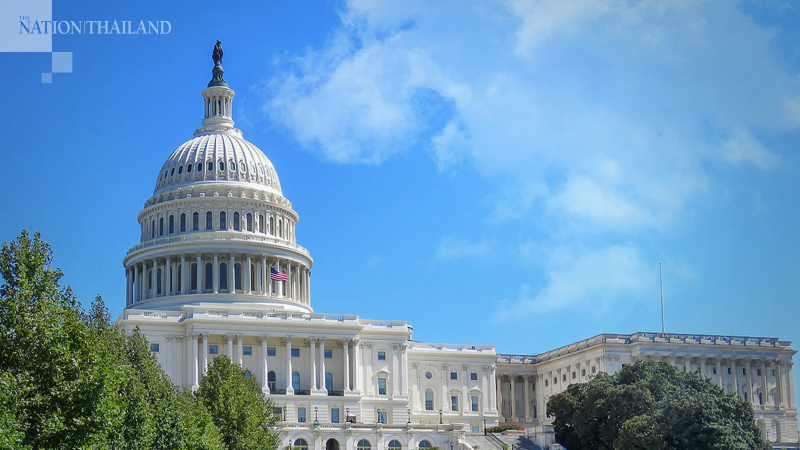
 The American flag flies next to the dome of the U.S. Capitol Jan. 15, 2017. MUST CREDIT: Bloomberg photo by Andrew Harrer.
  Men and women shop at the Al Yasmin mall in Jeddah, Saudi Arabia, on Aug. 6, 2017. MUST CREDIT: Bloomberg photo by Tasneem Alsultan.
  Syringes for the Pfizer-BioNTech covid-19 vaccine at the University Of Louisville Hospital in Louisville, Ky., on Dec. 14, 2020. MUST CREDIT: Bloomberg photo by Scotty Perry.
  An employee wearing a protective mask assembles oil separators and condensers for ultra low temperature (ULT) freezers at the So-Low Environmental Equipment Co. manufacturing facility in Cincinnati on Dec. 9, 2020. MUST CREDIT: Bloomberg photo by Ty Wright.
  The empty lanes of Otto-Braun-Strasse during the first day of a national lockdown in Berlin on Dec. 16, 2020. MUST CREDIT: Bloomberg photo by Liesa Johannssen-Koppitz.