While the number of Omicron cases is expected to rise in the United States, the most recent data show that more than 99 percent of coronavirus samples that have been genetically sequenced showed the Delta variant, and it is too early to know whether Omicron will become dominant against Delta or not.
The Omicron variant of COVID-19 has spread to at least 19 U.S. states, seemingly less severe than Delta, and it will take more time to get a fuller picture of it, top U.S. health officials said on Tuesday.
“It’s too early to be able to determine the precise severity of disease but inklings that we are getting, and we must remember these are still in the form of anecdotal … but it appears that with the cases that are seen, we are not seeing a very severe profile of disease,” said Anthony Fauci, chief medical advisor to the U.S. president, during a White House briefing.
“In fact, it might be and I underscore might be, less severe as shown by the ratio of hospitalizations per number of new cases,” added the top infectious doctor.
Photo taken on May 19, 2021 shows Rochelle Walensky, director of the U.S. Centers for Disease Control and Prevention (CDC), testifying during a Senate Appropriations subcommittee hearing on Review of the FY 2022 Budget Blueprint for the CDC in Washington, D.C., the United States. (Jim Lo Scalzo/Pool via Xinhua)
In addition, Fauci noted that the virus also appears more transmissible, saying that “real-world evidence is accumulating rapidly, literally on a daily basis, to allow us to determine increase in cases, possible increase in reproductive number and the rapid replacement of Delta by Omicron in certain situations.”
He cautioned that the results that are in so far may have been influenced by the relative youth of the patients in South Africa who contracted the new strain of the coronavirus. This could potentially have masked the variant’s severity, since younger people tend not to display as serious symptoms from COVID-19 as older patients.
Also on Tuesday, the U.S. Centers for Disease Control and Prevention (CDC) Director Rochelle Walensky said that the Omicron variant has been found in 50 countries and at least 19 states across the United States, after it prompted global travel restrictions and fresh vaccine mandates since its discovery in southern Africa last month.
“While we are still working to understand the severity of Omicron as well as how it responds to therapeutics and vaccines, we anticipate that all of the same measures will at least, in part, provide some protection against Omicron,” said Walensky, stressing again her call to get vaccinated.
While the number of Omicron cases is expected to rise in the United States, the most recent data show that more than 99 percent of coronavirus samples that have been genetically sequenced showed the Delta variant, she said, adding that it is too early to know whether Omicron will become dominant against Delta or not.
White House COVID-19 Response Coordinator Jeff Zients said that vaccinations have surged with roughly 12.5 million shots administered over the last week, 7 million of which were booster shots.
“That’s the highest weekly total number of shots since May,” he said. “So we’re now vaccinating people in numbers we haven’t seen since the spring.”
As of Tuesday afternoon, 236,363,835 people had received at least one dose of COVID-19 vaccine, making up 71.2 percent of the whole U.S. population; fully vaccinated people stood at 199,687,439, accounting for 60.1 percent of the total. A total of 47,866,620 people, 24 percent of the fully vaccinated group, had received booster shots, according to the CDC.
The leaders mainly focused on the internal crisis in Ukraine during their second talks in six months.
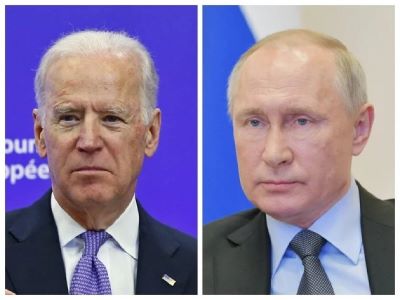
Russian President Vladimir Putin and his U.S. counterpart Joe Biden discussed the Ukrainian crisis, bilateral relations and the Iran nuclear deal as they met via video link on Tuesday.
The leaders mainly focused on the internal crisis in Ukraine during their second talks in six months, the Kremlin said in a statement.
Putin, using specific examples, explained to Biden “the destructive policy” of the Ukrainian authorities and expressed his “serious concern about Kiev’s provocative actions against Donbass.”
According to the Kremlin, Biden emphasized the allegedly “threatening” nature of the movements of Russian troops near the Ukrainian borders and outlined sanctions that the United States and its allies would be ready to apply in the event of a further escalation of the situation.
President Joe Biden “voiced the deep concerns” of the United States and its European allies about “Russias escalation of forces surrounding Ukraine and made clear that the U.S. and our Allies would respond with strong economic and other measures in the event of military escalation,” the White House said.
U.S. President Joe Biden and Russian President Vladimir Putin Tuesday held a video call on a range of bilateral issues as well as the Ukrainian crisis and the Iran nuclear deal.
Biden “voiced the deep concerns” of the United States and its European allies about “Russia’s escalation of forces surrounding Ukraine and made clear that the U.S. and our Allies would respond with strong economic and other measures in the event of military escalation,” the White House said in a readout after the meeting.
Biden “reiterated his support for Ukraine’s sovereignty and territorial integrity and called for de-escalation and a return to diplomacy,” the readout said.
“The two presidents tasked their teams to follow up, and the U.S. will do so in close coordination with allies and partners,” it said.
The presidents also discussed the U.S.-Russia dialogue on Strategic Stability, a separate dialogue on ransomware, as well as joint work on regional issues such as Iran, said the readout.
The leaders mainly focused on the internal crisis in Ukraine during their second talks in six months, the Kremlin said in a statement.
Putin, using specific examples, explained to Biden “the destructive policy” of the Ukrainian authorities and expressed his “serious concern about Kiev’s provocative actions against Donbass.”
Putin stressed that it is the North Atlantic Treaty Organization (NATO) that is making dangerous attempts to “conquer Ukrainian territory” and is building up its military potential near the Russian borders.
Putin asked Biden for the guarantee that NATO will not expand in the eastern direction and not deploy offensive weapons near Russia.
To create conditions for mending bilateral ties, Putin offered Biden to lift all the accumulated restrictions on the functioning of Russian and U.S. diplomatic missions.
Biden and Putin held their first face-to-face meetings in a summit in Geneva in June and spoke via phone in July.
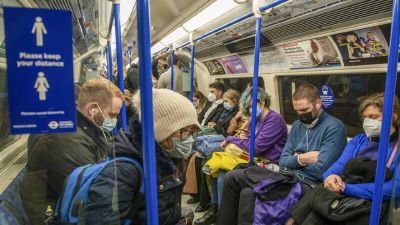
The operation to roll out Covid booster shots to all adults in the U.K. is struggling to pick up speed even as the omicron variant spreads rapidly across the country.
Fewer U.K. adults received a third shot of vaccine on Saturday than they did seven days earlier, on Nov. 27, the day when Prime Minister Boris Johnson called for an increase in the pace of the rollout.
Speaking on Tuesday, Johnson said that the nation’s program was “the fastest in Europe”, and that the U.K. had “done more boosters than any comparable country.” The current six-month wait between second and third shots is set to be slashed in half next week in a bid accelerate the program, Johnson said.
Britons aged between 40 and 49 currently have to wait until six months after their second dose to book a booster shot. Johnson was bullish on the impact of allowing that age group, consisting of 7 million people, to book appointments sooner.
“That will lead to a big uptick in the program,” Johnson told broadcasters.
Johnson on Tuesday told his cabinet that it’s still “too early” to draw conclusions on the new omicron variant, but said that “early indications were that it was more transmissible than Delta,” according to a readout of the meeting from his office.
The U.K.’s Health Security Agency said Tuesday that it had detected 101 extra omicron cases over the past 24 hours, taking the total to 437.
Neil Ferguson, an epidemiologist at Imperial College London who advises the U.K. government, told the Times newspaper that omicron infections may be doubling every three days, or even faster.
Regulators authorized booster shots for 18-39-year-olds last month, when the government said that they would be made available to all adults by the end of January. Those aged between 30 and 39 should be invited before Christmas, and 18-29-year-olds in January, according to a person with knowledge of the situation, who didn’t want to be identified because the timings haven’t been shared publicly.
A spokesperson for the NHS said 99 million doses have been delivered in the vaccination campaign so far, including more than 17 million top-ups in England.
The debate over the speed of the U.K.’s rollout comes as data show it is ahead of many other countries with its booster drive. The U.K. has already delivered 30 booster doses per 100 people, more than double the proportion in the U.S. and the European Union, according to Our World in Data.
Data show that 464,616 boosters were administered on Dec. 4, down from 465,111 the Saturday before. While the weekly figure rose slightly to 2.68 million from 2.56 million, there is still some way to go to meet the U.K. target of 3.5 million shots per week.
Johnson has said the U.K. government will wait for guidance on the omicron strain ahead of a review of pandemic rules next week. Until then, the prime minister has given Britons the green light to go ahead with festive events such as staff Christmas parties.
The U.K. reported 51,459 cases of Covid-19 on Monday, up from 30,305 a month earlier.
The U.S. and European allies are weighing sanctions targeting Russias biggest banks and the countrys ability to convert rubles for dollars and other foreign currencies should President Vladimir Putin invade Ukraine, according to people familiar with the matter.
The sanctions — including against some of Russia’s largest banks and the Russian Direct Investment Fund — are among the options that President Joe Biden may spell out when he speaks with Putin on Tuesday, according to the people. The U.S. could also restrict the ability of investors to buy Russian debt on the secondary market, they said.
The options were described by two people familiar with the matter who asked not to be identified discussing private deliberations. The most drastic option would be to bar Russia’s access to the Swift financial payments system, but that would wreak havoc on ordinary citizens so officials are more inclined to go after Russia’s ability to convert rubles into dollars, euros or British pounds, the people said.
Germany’s new government also hinted for the first time that an escalation of the Ukraine crisis may also affect the fate of Nord Stream 2, a pipeline that is to carry gas from Russia and has been a longtime priority for Putin as well as Berlin.
The Biden-Putin call comes with tensions high over what U.S. intelligence has told allies could be a plan to invade Ukraine with as many as 175,000 troops in the coming year. Russia has denied plans to go to war but has also said U.S. and European nations should scale back their support for Ukraine, establishing de facto “red lines” that include barring the former Soviet republic from joining the NATO alliance.
Russian financial markets showed little reaction to the sanctions threats Tuesday, with investors still seeing the risk that Russia would actually invade Ukraine and trigger them as low.
Kremlin spokesman Dmitry Peskov declined to comment on the reports, saying the “emotional statements” of recent days wouldn’t affect the talks.
“It’s obvious that if the presidents are having this conversation, they intend to discuss the issues and not drive things into a dead end,” Peskov told reporters Tuesday.
It’s not clear how much detail Biden will share with Putin on the possible sanctions that would follow an invasion, and most of the actions would be contingent on agreement from allies.
On Monday, Biden took part in a call with the leaders of France, Germany, the U.K. and Italy in which they “discussed their shared concern about the Russian military build-up on Ukraine’s borders and Russia’s increasingly harsh rhetoric,” the White House said in a statement.
“The leaders underscored their support for Ukraine’s sovereignty and territorial integrity,” according to the statement, which was released on Monday evening.
Incoming German Chancellor Olaf Scholz Tuesday called the situation on the Ukrainian border “serious.” At the same press conference, future Vice Chancellor Robert Habeck said that as part of the ongoing regulatory review process for the Nord Stream 2 pipeline, authorities “will surely also discuss how the political situation in Ukraine and Europe’s ability to deescalate can be brought together.” Habeck’s Green Party has long opposed the pipeline.
Overall, the measures Biden is considering are part of an American effort to claw back some of the leverage Putin has amassed over Ukraine and, more broadly, the U.S. and its European allies. The Russian leader has made clear that he’s willing to invade Ukraine — his forces did so in 2014 — to protect what he sees as vital national security interests, and he has shown a willingness to tamper with energy markets by threatening to cut supplies to Europe.
“The reason Putin has so much leverage is he’s clearly willing to pay the price,” Matthew Rojansky, director of the Kennan Institute at the Wilson Center in Washington, said of past U.S. moves to sanction Russia that had little effect. “But we’ve got loads more ammunition, there’s lots of stuff we could do. It’s just that no one has ever believed we would go to those lengths.”
Biden’s Tuesday call with Putin, which will be the pair’s fourth conversation since the American president took office in January, is also meant to provide a way to defuse tensions that have crested again after an earlier Russian troop buildup in the spring first raised fears of war.
“The goal here is signal lots of action up front so you don’t have to do it, but making sure the threat is credible,” Rojansky said.
A senior Biden administration official, speaking to reporters on Monday, made clear that the U.S. doesn’t want to commit its troops to Ukraine in the event of a Russian invasion. At the same time, the official said the U.S. would help Ukraine and send more forces and capabilities to NATO allies bordering Russia. The official also declined to detail the steps the U.S. would take if there’s a Russian invasion.
The call will help determine whether Biden’s desire for a functioning relationship with Russia is possible or whether the dynamic will just ricochet from crisis to crisis — including cyberattacks, the potential invasion of Ukraine and continuing disputes over Russia’s provision of energy to Europe.
Last week, Biden previewed his interest in taking a tougher approach, saying, “What I am doing is putting together what I believe to be will be the most comprehensive and meaningful set of initiatives to make it very, very difficult for Mr. Putin to go ahead and do what people are worried he may do.”
Ukrainian President Volodymyr Zelenskiy said in a tweet Monday that he had spoken with U.S. Secretary of State Antony Blinken and they “agreed to continue joint & concerted action.”
Blinken tweeted that he assured the Ukrainian president that “U.S. support for Ukraine is unwavering” and “there will be serious consequences for any escalation from Russia.”
From the Biden administration’s view, a more positive turn of events could see the U.S. having a stable relationship with Russia — one where the two nations’ embassies and consulates are fully staffed, and where Russia helps bring Iran around to the idea of rejoining the 2015 deal that put limits on its nuclear program. The U.S. could also play some role in getting Moscow and Kyiv to finally adhere to the 2015 Minsk agreements that were meant to bring the Ukraine conflict to an end.
“None of us seeks a confrontation or a crisis,” Under Secretary of State Victoria Nuland will tell the Senate Foreign Relations Committee on Tuesday, according to a copy of her prepared remarks. “Diplomacy remains the best route to settle the conflict in the Donbas and address other grievances.”
She was referring to Ukraine’s eastern Donbas region, where separatists supported by Moscow have been carrying out an insurgency that has killed more than 13,000 people.
For Putin, the goal is partly the exchange with Biden itself: He gains legitimacy and international sway the more he interacts with the U.S. leader, demonstrating Russia’s continued prowess on the global stage. It’s a strategy that has worked for him, evidenced by the four conversations he’s had with Biden since January, more than most world leaders.
Russia has played up the significance of the encounter, with Kremlin spokesman Peskov saying it will be the equivalent of an in-person meeting and more substantial than a simple telephone call. State television Tuesday showed a countdown clock to the session.
But Putin’s main demand — binding guarantees from the U.S. and its allies that NATO won’t expand further east and won’t deploy weapons there that Russia considers a threat — isn’t likely to get very far with Biden. The U.S. president over the weekend rejected the Kremlin’s “red lines” over Ukraine as out of hand.
Still, with tensions along the Ukraine-Russia border soaring, any high-level talks are helpful, said Rachel Ellehuus, a senior fellow at the Center for Strategic and International Studies in Washington.
“Biden will have to offer Putin some sort of an off-ramp to deescalate the situation,” Ellehuus said. On the decision to engage, she said, “It keeps people talking and avoids the worse consequence which is military confrontation.”
The deliberations underscore just how intertwined Russia’s role as an energy supplier to Europe is with its security posture toward Ukraine, which has transit agreements for Russian gas. Energy is also a potential source of leverage: Continued Russian aggression could reshape the fate of the completed but not yet operational Nord Stream 2 pipeline, which the Biden administration hasn’t tried to stop even though it opposes the project.
“I think Nord Stream 2 is very much on the table,” said Steven Pifer, a research fellow at Stanford University’s Center for International Security and Cooperation. Biden still has options to impose broader sanctions, he said. “There are things that you can do to greatly ratchet up the pain.”
One crucial result of the call will be a better understanding of what exactly Putin wants. While U.S. officials say the intelligence suggests Putin is planning for a major ground invasion of Ukraine, they say the administration doesn’t know with confidence what the Russian leader is planning — and don’t believe he’s made any final decision.
That uncertainty is a tactic Putin has used for a long time.
A key challenge for Biden is one of force posture — he will have to persuade Putin that stepped up economic pressure would bring the sort of pain that previous sanctions regimes haven’t, while essentially conceding that the use of U.S. forces isn’t really on the table.
“It’s Russian roulette, Putin-style — who will blink first?” said Oksana Antonenko, director at Control Risks in London.
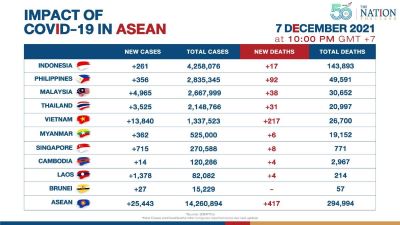
The number of Covid-19 cases crossed 14.26 million across Southeast Asia, with 25,443 new cases reported on Tuesday (December 7). New deaths are at 417, bringing accumulated Covid-19 deaths in Asean to 294,994.
International and local travellers for the Vaccinated Travel Lane (VTL) by air and land, Langkawi International Travel Bubble (LITB) and One Stop Centre (OSC) for short-term business visitors will have to undergo Covid-19 test for six days after arriving in Malaysia.
Health Minister Khairy Jamaluddin said the requirement would take effect on Thursday and was a move to strengthen the existing precautionary and control measures to prevent the transmission and spread of the Omicron variant in the country.
Meanwhile, Vietnam’s Ho Chi Minh City plans to provide third vaccine shots to 6.3 million people who have been fully vaccinated in an effort to boost their immunity against Covid-19 beginning on December 10.
As of December 5, more than 7.92 million people aged 18 and over in the city had received the first vaccine dose. Of the number, nearly 6.82 million people have received the second dose.
The United Arab Emirates announced Tuesday it would move its weekends to Saturday and Sunday at the start of the new year, in an effort to align with much of the rest of the world. The Gulf state has long observed a Friday to Saturday weekend.
The UAE is also implementing a 4½-day workweek, as the weekend will officially start on Friday afternoon, when many Muslims gather for Friday prayers.
The change will affect the public sector. Private companies can choose their work schedules.
“From an economic perspective, the new working week will better align the UAE with global markets, reflecting the country’s strategic status on the global economic map,” read the announcement published Tuesday by state news agency WAM. “It will ensure smooth financial, trade and economic transactions with countries that follow a Saturday/Sunday weekend, facilitating stronger international business links and opportunities for thousands of UAE-based and multinational companies.”
In a tweet, the government also said it will offer flexible work-from-home options on Fridays, and that Friday prayers and sermons will be held after 1:15 p.m. all year.
The purpose of longer weekends is to “boost productivity and improve work-life balance,” the government said.
The move comes as the oil-rich country looks to strengthen its tourist appeal and attract international business while keeping up with mounting competition from neighboring Saudi Arabia.
The UAE is not alone in considering a shorter workweek, an idea that has gained traction during the coronavirus pandemic. Japan and Spain have embarked on four-day-workweek experiments, and a study in Iceland found that a compressed workweek was an “overwhelming success” for productivity and employee satisfaction.
Chiles congress on Tuesday voted to legalize same-sex marriage, joining the growing wave of Latin American countries recognizing the right in a historically Catholic region.
Both chambers of the congress voted by wide margins to approve the legislation, a victory for gay rights activists who had spent more than a decade working to transform the country’s laws. President Sebastián Piñera has said he will sign it.
“We have been working for years for a profound cultural change,” said Rolando Jiménez, a spokesman for the advocacy group Movilh. “I celebrate marriage equality as a fundamental milestone in our history,”
The move comes less than two weeks before Chileans vote in the country’s most polarized presidential election in decades, with a conservative populist running against a leftist former student activist, amid an ongoing effort to redraft the country’s constitution.
The legislation, which had stalled for four years, received a surprise endorsement in June from Piñera, a center-right politician who previously opposed recognizing same-sex marriage. Angering conservative allies, the president vowed to give “urgency” to the legislation.
“The time has come for marriage equality in our country,” he said at the time. “Today, I think we need to reflect on the value of freedom, including the freedom to love and build a family with a loved one.”
Chile legalized same-sex civil unions in 2015. But it did not recognize adoption rights for gay partners, despite a ruling from the Inter-American Court of Human Rights that required it to uphold the parental rights of same-sex couples.
In 2017, then-President Michelle Bachelet proposed a bill to legalize same-sex marriage and recognize the rights of same-sex parents. Lawmakers on Tuesday passed an amended version of that bill. Erika Montecinos, founder and coordinator of the Chilean group Lesbian Association Breaking the Silence, called it a “historic step” for same-sex families and their children.
“Years ago we saw that same-sex couples, especially women, have opted for motherhood,” Montecinos said. “The woman who gave birth was recognized, but not her partner. . . .
“Now they will be able to request that their sons and daughters be recognized without even having to sign a marriage registry.”
Leonidas Romero, a conservative lawmaker who voted against the bill, called it a “very sad day for our country and for the Christian world.”
“The concept of marriage is clearly established for a man and a woman,” he told The Washington Post. “Children need a father and a mother, not two adults of the same sex who want to have children and who will never naturally succeed.”
But he added: “I doubt we can do anything. Unfortunately, this is here to stay.”
Chile is part of a growing group of Latin American countries advancing gay rights. Argentina, Brazil, Colombia, Costa Rica, Ecuador and Uruguay have legalized same-sex marriage, and Mexico’s Supreme Court has declared bans on same-sex marriage unconstitutional.
As Chileans rewrite their constitution, Jiménez said, leaders should enshrine protections “not only for sexual discrimination but for all types of discrimination.”
But with the runoff vote in the presidential election looming, gay rights activists feared their progress could come to a screeching halt. On Dec. 19, Chileans will choose between Gabriel Boric, a millennial leftist who has campaigned on a platform promoting decentralization, feminism and action against climate change, and José Antonio Kast, a right-wing populist and devout Catholic who opposes abortion and same-sex marriage.
“For us, marriage is between a man and a woman,” he said Tuesday. “Parliament has taken a majority decision. That is not going to make us change our convictions.” He said earlier that if the congress approved same-sex marriage, there would be little he could do about it.
But Montecinos said a Katz presidency could threaten “the little progress we have made.”
Austria will end a nationwide lockdown this weekend for people whove been inoculated against Covid-19 or have recovered from the virus, while continuing to limit participation in public life for those who refuse to be vaccinated.
The government will meet regional leaders on Wednesday to assess the measures needed to keep the pandemic contained and turn a “tendency of falling cases into a trend,” Chancellor Karl Nehammer told reporters in Vienna.
The measures have helped halve the number of 7-day infections per 100,000 inhabitants from as high as 1,110 at the start of the lockdown, even as occupancy of intensive-care units remains near a record.
The re-opening of places like retail shops and hairdressers is in line with plans announced before the lockdown began on Nov. 22. The policy was imposed to not only stem infections but also raise Austrian vaccination rates, which remain stuck in the lower half of countries tracked by the European Centre for Disease Prevention and Control.
Austria’s Chancellor, who was sworn in on Monday, said some restrictions may remain for hotels and restaurants, and regional leaders have the option to impose stricter local measures.
“If you are ready to accept scientific results, get a vaccination and protect others, then you will regain your freedom,” Nehammer said.
Austria is one of few European nations to return to strict restrictions in the latest wave of the pandemic. It also plans to impose mandatory vaccinations from February and fine dissenters.
Facebook failed to quickly stop the spread of hate speech and misinformation against the Rohingya people, in turn contributing to the persecution and alleged genocide of the minority community in Myanmar, according to a lawsuit filed Monday in a California court that asks for more than $150 billion in compensation.
The class-action suit against Meta, Facebook’s parent company, was brought by a Rohingya woman in Illinois on behalf of the 10,000-plus Rohingya refugees who have resettled in the United States since 2012. It alleges that Facebook’s algorithm amplified hate speech and that it neglected to remove inflammatory content despite repeated warnings that such posts could foment ethnic violence.
A similar complaint against the tech giant is expected to be filed in a British court next year, the BBC reported. Facebook declined to comment Tuesday on the lawsuits.
Lawyers representing the plaintiff in the California case argued in their complaint that Facebook’s entrance into Myanmar a decade ago marked “a key inflection point” for the Rohingya people, who have long been discriminated against in the Buddhist-majority Southeast Asian country.
Myanmar’s military launched a “scorched-earth campaign” in 2017 to push Rohingya residents, who are mostly Muslim, out of Rakhine state. Some 750,000 Muslim men, women and children were driven out in a campaign of rape, murder and razed villages that a top United Nations official called a “textbook example of ethnic cleansing.” That year, Doctors Without Borders estimated that at least 6,700 Rohingya people had been killed as a result of the attacks.
Around the same time, influential figures such as nationalist monks and top government officials posted or recirculated slurs against the Rohingya, while spreading falsehoods and doctored images that suggested some Rohingya burned their own villages and then blamed it on Myanmar security forces.
Myanmar has denied the genocide accusations and has justified some actions on counterterrorism grounds.
After a searing U.N. report connected Facebook to the atrocities against the Rohingya people, the region became a priority for the company, which began flooding it with resources in 2018, two former employees told The Washington Post.
Facebook in August 2018 began deleting and banning accounts of key individuals and organizations in Myanmar, acknowledging that its platform was used to “foment division and incite offline violence” that the U.N. mission found colossal in scale. The platform said that in the third quarter of 2018, it removed some 64,000 pieces of content in Myanmar that violated its policies against hate speech.
“Not until 2018-after the damage had been done-did Facebook executives . . . meekly admit that Facebook should and could have done more,” the lawsuit alleges. “Facebook is like a robot programed with a singular mission: to grow. And the undeniable reality is that Facebook’s growth, fueled by hate, division, and misinformation, has left hundreds of thousands of devastated Rohingya lives in its wake.”
Even after pledging more resources to regulate the platform, Facebook found in a 2020 internal audit that its algorithm still could not sift for covid-related posts when they are written in local Myanmar languages, which could weaken the company’s attempts to weed out false information on the platform.
The legal actions in the United States and Britain are part of a growing number of moves to hold responsible alleged perpetrators of genocide. The tiny African nation of Gambia filed a lawsuit against Myanmar at the International Court of Justice in 2019. It requested that the court issue an injunction to stop the Myanmar government from committing “atrocities and genocide against its own Rohingya people.”
Backed by the Organization of Islamic Cooperation, Gambia asked a U.S. court to force Facebook to turn over data related to accounts it deleted in 2018 that fueled atrocities in Myanmar. After some legal wrangling, a federal judge in Washington eventually shot down the request this week.

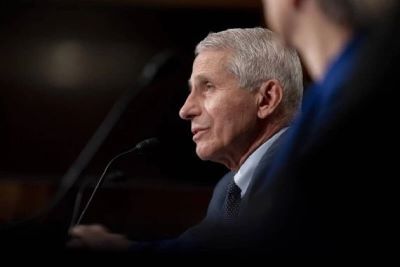
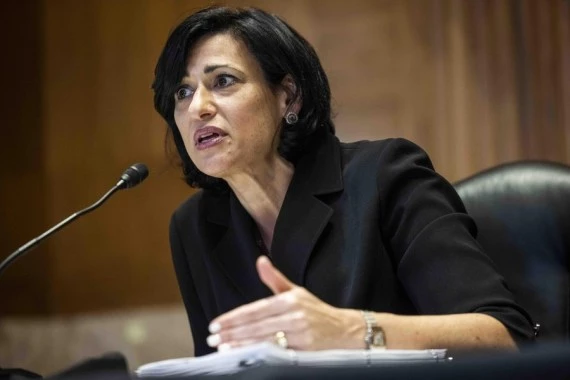 Photo taken on May 19, 2021 shows Rochelle Walensky, director of the U.S. Centers for Disease Control and Prevention (CDC), testifying during a Senate Appropriations subcommittee hearing on Review of the FY 2022 Budget Blueprint for the CDC in Washington, D.C., the United States. (Jim Lo Scalzo/Pool via Xinhua)

 SootinClaimon.Com