No US official will attend Beijing Winter Olympics, White House announces

#SootinClaimon.Com : ขอบคุณแหล่งข้อมูล : หนังสือพิมพ์ The Nation.

https://www.nationthailand.com/life/40009683


The United States will not send President Joe Biden or any U.S. government official to the Beijing Winter Olympics in February in a signal of displeasure over Chinas human rights abuses, the White House announced Monday.
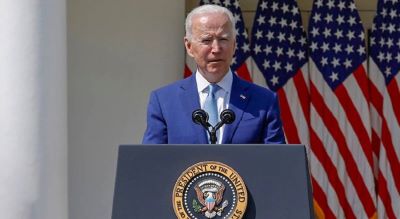
The diplomatic boycott allows American athletes to participate in the Games, but is a significant political snub to Washington’s greatest military and economic competitor.

Pressure to mount such a boycott has been building for months, with lawmakers from both parties and human rights advocates calling on the Biden administration to not attend in response to Beijing’s repressive policies against democracy activists in Hong Kong and Uyghur Muslims in the Xinjiang region. The administration in March declared China’s treatment of Uyghur Muslims a genocide.

“The Biden administration will not send any diplomatic or official representation to the Beijing 2022 Olympic and Paralympic games given the PRC’s ongoing genocide and crimes against humanity in Xinjiang and other human rights abuses,” said White House press secretary Jen Psaki. “The athletes on team USA have our full support. We will be behind them 100 percent as we cheer them on from home. We will not be contributing to the fanfare of the games.”

Biden told reporters last month that he was weighing a diplomatic boycott.

The decision stands in contrast to 1980, when President Jimmy Carter kept U.S. officials and athletes out of the Summer Games in Moscow in response to the Soviet invasion of Afghanistan.

Though more than 60 countries joined the boycott in 1980, hundreds of American athletes were deprived of their chance at Olympic glory.

The U.S. government cannot unilaterally bar athletes from the Olympics or declare a boycott. The U.S. Olympic and Paralympic Committee, an independent nonprofit organization, has sole authority to make the final call.

“I want to stress that the Winter Olympic Games is not a stage for political posturing and manipulation,” said Zhao Lijian, Chinese Foreign Ministry spokesman, on Monday, responding to reports that a boycott announcement was imminent. “U.S. politicians keep hyping a ‘diplomatic boycott’ without even being invited to the Games. This wishful thinking and pure grandstanding is aimed at political manipulation. It is a grave travesty of the spirit of the Olympic Charter, a blatant political provocation and a serious affront to the 1.4 billion Chinese people.”

The Olympics host committee, Beijing 2022, said in a statement last month that it “has been upholding its commitment to hosting the Games in an open manner, and has been welcoming people from all walks of life and from all countries . . . to participate in the Games in their own ways.”

Russian President Vladimir Putin will be attending the event, according to Russian media reports in September. He accepted an invitation from Beijing to attend despite Russian athletes being barred from competing under the Russian flag and anthem until December 2022 as a result of a long-running, state-sponsored doping program.

An International Olympic Committee spokesman did not immediately return a message seeking comment Monday.

For months, U.S. Olympic officials have voiced opposition to any sort of athlete protest, urging government leaders to pursue other avenues to voice displeasure with China and its policies.

“We greatly appreciate the unwavering support of the President and his administration and we know they will be cheering us on from home this winter,” Sarah Hirshland, chief executive of the USOPC, said in a statement Monday. “Competing on behalf of the United States is an honor and a privilege, and Team USA is excited and ready to make the nation proud.”

With less than two months to go before the Beijing Opening Ceremonies, the announced diplomatic boycott is just the latest mark against a Winter Games that has been controversial since the day China was awarded hosting rights in 2015.

The country most recently has come under fire for its response to Chinese tennis star Peng Shuai’s public accusations that she was sexually assaulted by Zhang Gaoli, a former vice premier who played a key role in securing the Beijing Winter Games.

Peng was not heard from for nearly three weeks, sparking concern across the sports world. She finally participated in a video call with IOC officials on Nov. 21, but Olympic leaders have faced heavy criticism for their handling of the matter, which the IOC has described as a “quiet diplomacy approach.”

A diplomatic boycott is largely symbolic in nature and isn’t likely to impact the competition or the related pageantry. Government leaders and other dignitaries are typically invited to the Summer and Winter Games at the behest of the organizers. They generally sit in private sections removed from the others in attendance. On some occasions, delegations include presidents or heads of state, but countries are often represented by ambassadors, presidential family members and other elected leaders.

The Tokyo Summer Olympics were closed to spectators but diplomatic representatives and dignitaries were allowed in the venues. The scaled-back U.S. contingent was led by Jill Biden, the first lady; Linda Thomas-Greenfield, the U.S. ambassador to the United Nations; and Raymond Greene, the chargé d’affaires ad interim at the U.S. Embassy in Tokyo.

President Donald Trump stayed home during the 2018 PyeongChang Olympics but sent a delegation that included Vice President Mike Pence and Ivanka Trump. Several U.S. presidents have also attended the Summer and Winter Olympics. President Barack Obama traveled to the 2012 Games in London and President George W. Bush attended the 2006 Games in Torino.

Published : December 07, 2021

By : The Washington Post

Intel jumps on plans to take its Mobileye car business public

#SootinClaimon.Com : ขอบคุณแหล่งข้อมูล : หนังสือพิมพ์ The Nation.

https://www.nationthailand.com/business/40009733


Intel Corp. plans to list shares of its Mobileye self-driving car business by the middle of next year, letting the chipmaker capitalize on its investment in a burgeoning industry.

Intel will remain the majority owner after the transaction, which involves an initial public offering of newly issued Mobileye stock, the company said in a statement Monday. Mobileye’s executive team, led by Amnon Shashua, also will stay on board.

News of the IPO sent shares of Intel up as much as 7.9% on Tuesday, their biggest intraday gain since January. The stock had previously increased just 2.3% this year, trailing the performance of Intel’s chip peers and broader indexes.

The move could generate billions for Intel at a time when it’s tying to revitalize its main business. Mobileye’s valuation and the total amount to be raised in the IPO will be determined nearer the event, Intel Chief Executive Officer Pat Gelsinger said Tuesday on a conference call. The majority of the proceeds will be retained by Intel, but Mobileye will be given a balance sheet that allows it to fuel its expansion plans, he said.

Analysts at Morgan Stanley said the news was a “significant positive,” noting that Intel can generate some value from the business, as it will remain the majority owner, and the move will free up additional capital.

Gelsinger has been shaking up Intel since taking the helm in February, looking to revive the fortunes of the world’s largest chipmaker. Intel, long the dominant maker of computer processors, has ceded market share to rivals such as Advanced Micro Devices Inc. and lost its technological edge in key markets.

Against that backdrop, Mobileye has been a particular bright spot. The business, acquired by Intel in 2017 for about $15 billion, has consistently grown faster than its parent — and it serves a still-nascent industry. Intel has projected that the market for automotive silicon will reach $115 billion by the end of the decade.

Gelsinger stressed that Intel doesn’t need the IPO money to fund its push into new businesses. But Mobileye was undervalued by investors because it’s part of a much larger company, he said. A greater degree of independence will also help the profile of the business in the automotive industry and with attracting customers, he added.

The auto industry’s shift to electric vehicles and more autonomous cars is creating a huge appetite for electronics. Mobileye makes chips and software that work with sensors to let vehicles handle more driving functions, with the ultimate goal of replacing humans in the role altogether.

The company recently shipped its 100 millionth EyeQ chip system and unveiled a six-passenger vehicle that will be used for driverless ride-hailing services in Tel Aviv and Munich next year. It has won contracts with more than 30 top automakers globally, Intel said Monday.

Mobileye has about 80% of the global market for advanced driver-assistance vision systems, according to researcher Guidehouse Insights.

The unit, based in Israel, has tested its technology in robo-taxi fleets in Tokyo, Paris, Shanghai and Detroit. It posted revenue of $326 million last quarter, up 39% from a year earlier. Operating income climbed to $105 million, double the year-earlier total. Overall, Intel posted a 5% revenue increase in its third quarter.

Mobileye expects revenue to rise 40% for all of 2021. The transaction won’t affect Intel’s 2021 financial targets, the company said.

Intel has made other recent moves to push deeper into transportation technology. In 2020, it acquired Israeli startup Moovit for about $900 million. The purchase gave it access to data from public-transport mapping, which could be integrated into a ride-hailing service.

That division, along with Intel staff working on lidar and radar development, will be part of Mobileye, the company said Monday.

Intel’s broader comeback effort has been slower going. The stock slid after the company’s last earnings report in October, when management warned that the turnaround would hurt profitability over the next few years. Investors are waiting to see if Gelsinger can improve Intel’s products quickly enough to keep more customers from switching to competitors or, in some cases, designing the chips themselves.

Published : December 08, 2021

By : Bloomberg

Baht up a tad as foreigners resume investment in Thai assets

#SootinClaimon.Com : ขอบคุณแหล่งข้อมูล : หนังสือพิมพ์ The Nation.

https://www.nationthailand.com/business/40009745


The baht opened at 33.66 to the US dollar on Wednesday, strengthening from Tuesday’s closing rate of 33.70.

The Thai currency is likely to move between 33.50 and 33.70 to the greenback during the day, Krungthai Bank market strategist Poon Panichpibool predicted.

Poon said that the market is in a risk-on state which causes foreign investors to invest in Thai assets. The baht will strengthen slightly if investors are investing in Thai assets. 

The baht will not strengthen much until foreign investors are buying a large number of short term bonds.

Meanwhile, the resistance level of baht would be from 33.50 to 33.60 to the dollar, from importers buying the dollar.

Poon said that the currency market will be highly volatile in this period. Business operators should be cautious and use hedging tools to manage the risk.

Related News

Baht strengths as dollar responds to Feds moves on quantitative easing

Baht unchanged as investors hope new variant Omicron is not worse than Delta

Baht weakens as investors offload stocks, short term bonds

Published : December 08, 2021

By : THE NATION

SET gains 1.33 per cent on good news of Omicron Covid-19 variant, rising oil price

#SootinClaimon.Com : ขอบคุณแหล่งข้อมูล : หนังสือพิมพ์ The Nation.

https://www.nationthailand.com/business/40009719


The Stock Exchange of Thailand (SET) Index closed at 1,609.28 on Tuesday, up 21.09 points or 1.33 per cent. Transactions totalled 74.92 billion baht with an index high of 1,611.58 and a low of 1,595.14.

The index rose after falling by 3.65 points or 0.23 per cent on Friday, thanks to the good news of Omicron Covid-19 variant and rising oil price.

The SET Index on Monday was closed for Substitution for HM King Bhumibol Adulyadej The Great’s Birthday.

The 10 stocks with the highest trade value today were KBANK, SCB, CPALL, PTT, AOT, MINT, BBL, EA, ADVANC and KTB.

Other Asian indices were up with one exception:

  • Japan’s Nikkei Index closed at 28,455.60, up 528.23 points or 1.89 per cent.
  • China’s Shanghai SE Composite closed at 3,595.09, up 5.78 points or 0.16 per cent, while the Shenzhen SE Component closed at 14,697.17, down 55.79 points or 0.38 per cent.
  • Hong Kong’s Hang Seng Index closed at 23,983.66, up 634.28 points or 2.72 per cent.
  • South Korea’s KOSPI Index closed at 2,991.72, up 18.47 points or 0.62 per cent.
  • Taiwan’s TAIEX Index closed at 17,796.92, up 108.71 points or 0.61 per cent.

Related stories:

Published : December 07, 2021

By : THE NATION

Baht strengths as dollar responds to Feds moves on quantitative easing

#SootinClaimon.Com : ขอบคุณแหล่งข้อมูล : หนังสือพิมพ์ The Nation.

https://www.nationthailand.com/business/40009701


The baht opened at 33.85 to the US dollar on Tuesday, strengthening from the previous closing of 33.89.

The Thai currency is likely to move between 33.75 and 33.95 during the day and between 33.60 and 34 during the week, Krungthai Bank market strategist Poon Panichpibool predicted.

Poon said that the baht might continue to weaken due to the Omicron variant of Covid-19 which caused investors to sell Thai assets. 

The key resistance level for the baht would be at 34 to the dollar, which is the level at which exporters might sell the US currency and the Bank of Thailand might slow down the volatility.

If the baht weakens past the key resistance level, the baht might weaken to 34.15 and 34.40 to the dollar.

Poon said that the dollar might move sideways after the US Federal Reserve is speeding up to decrease quantitive easing which might increase the level of inflation. Meanwhile, the demand for safe-haven assets during the Omicron variant crisis especially the US 10-Year Bond that went down recently.

Related News

Baht unchanged as investors hope new variant Omicron is not worse than Delta

Baht weakens as investors offload stocks, short term bonds

Baht up, but worries over Omicron, gold price might see currency skid


Recently, investors are choosing to hold government bonds, Japanese Yen, and Swiss Franc more than the US dollar.

Published : December 07, 2021

By : THE NATION

Gold price stands still

#SootinClaimon.Com : ขอบคุณแหล่งข้อมูล : หนังสือพิมพ์ The Nation.

https://www.nationthailand.com/business/40009700


The price of gold in Thailand on Tuesday morning was unchanged from Mondays close.

AGold Traders Association report at 9.27am said the buying price of a gold bar was THB28,500 per baht weight and selling price THB28,600, while the buying and selling price of gold ornaments is THB27,985.36 and THB29,100, respectively.

Related news:

Published : December 07, 2021

By : THE NATION

SET expected to rise on good news of Omicron Covid-19 variant, rising oil price

#SootinClaimon.Com : ขอบคุณแหล่งข้อมูล : หนังสือพิมพ์ The Nation.

https://www.nationthailand.com/business/40009698


Krungsri Securities forecast the Stock Exchange of Thailand (SET) Index on Tuesday (December 7) would rise to between 1,595-1,600 points.

It said the index gained positive sentiment from the good news that Omicron patients in Africa have developed mild symptoms. It added that rising oil price would also help boost the index.

However, Krungsri Securities predicted that uncertainty over US Federal Reserve would end its quantitative easing programme and raise interest rate in response to higher inflation would pressure the index.

It also recommended buying of the following companies’ shares as an investment strategy:
▪︎ RCL, LEO, III, WICE, SONIC and JWD, which benefit from rising freight rate.
▪︎ HANA, KCE, TU, ASIAN, EPG and XO, which benefit from the weakening baht.
▪︎ BBL, TTB, KTB and KBANK, which benefit from news of interest rate hike.

Published : December 07, 2021

By : THE NATION

Gold edges lower as investors weigh virus risks to global growth

#SootinClaimon.Com : ขอบคุณแหล่งข้อมูล : หนังสือพิมพ์ The Nation.

https://www.nationthailand.com/business/40009691


Gold edged lower as investors weighed mixed labor data from the U.S., the Federal Reserves hawkish tilt and the threat of the omicron variant to global growth.

Data Friday showed U.S. job growth registered its smallest increase this year while the unemployment rate fell by more than forecast to 4.2%, offering a mixed picture that may nevertheless push the Fed to quicken the wind-down of pandemic stimulus. It came after Chair Jerome Powell signaled faster tapering of asset purchases amid elevated inflation.

Meanwhile, Goldman Sachs economists cut their forecasts for the U.S. economy this year and next after deciding that the spread of the omicron strain of the coronavirus would exert a “modest downside” drag on growth. Moderna President Stephen Hoge said there’s a “real risk” that existing Covid-19 vaccines will be less effective against omicron, while U.S. medical adviser Anthony Fauci said the variant’s severity may be limited.

Bullion climbed Friday, paring a third straight weekly loss, the longest stretch since September, amid the prospects of less accommodative monetary policy and omicron risks. U.S. consumer prices due this Friday are projected to show the largest annual advance in decades, keeping pressure on the Fed to deliver swifter tightening.

“Gold is still struggling to break above the $1,800 level and we are yet to see any significant safe-haven flows from the recent omicron development,” said John Feeney, business development manager at Sydney-based bullion dealer Guardian Gold Australia. “Gold investors will be paying very close attention to the U.S. inflation numbers out this Friday, so we might see a reaction if we get another beat to the upside.”

Spot gold was 0.2% lower at $1,780.43 an ounce by 10:19 a.m. in London after rising 0.8% Friday. The Bloomberg Dollar Spot Index was steady. Silver, platinum and palladium fell.

Published : December 07, 2021

By : Bloomberg

Senate revs up work on $2 trillion spending proposal

#SootinClaimon.Com : ขอบคุณแหล่งข้อมูล : หนังสือพิมพ์ The Nation.

https://www.nationthailand.com/business/40009690


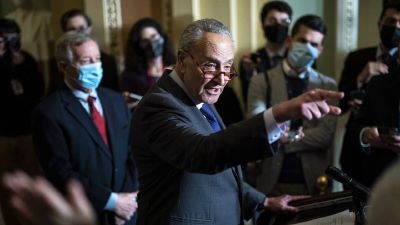
WASHINGTON – Senate Democrats are aiming to vote and approve a roughly $2 trillion package to overhaul the nations health care, education, climate, immigration and tax laws before Christmas, hoping to muscle through a jam-packed schedule to deliver the remaining piece of President Bidens economic agenda.

Writing to lawmakers on Monday, Senate Majority Leader Chuck Schumer, D-N.Y., affirmed the aggressive timeline, warning that there are “more long days and nights” on the horizon as the chamber races to resolve a wide array of fiscal and economic issues before the end of the year.

“This is arduous work. It takes time, precision and a lot of pieces moving together,” he later said on the Senate floor.

Yet the path to passage for Democrats’ signature spending plan appears especially precarious, as party lawmakers continue to contend with political dissent among their own ranks. A pivotal swing vote, Sen. Joe Manchin, D-W.Va., has yet to offer his endorsement of the legislation, even after months of wrangling with the White House.

On Monday, Manchin signaled again that he harbors “concerns” with the size and scope of the bill. And he affirmed his trepidations about advancing so much new spending at a time when inflation continues to raise the price of goods, which Manchin said reflected an economy that is “vulnerable” to other disruptions.

“We’re talking about major changes in our tax code, we’re talking about [a] major overhaul of our social [programs], and we’re talking about a tremendous overhaul of our climate positions that we have,” the senator said.

The $2 trillion proposal, known as the Build Back Better Act, aims to expand Medicare coverage, invest new sums to combat climate change, authorize universal prekindergarten and provide new aid to low-income families, all financed through tax hikes targeting rich Americans and corporations. House Democrats adopted the bill in November, teeing it up for the Senate, where party lawmakers at times have been divided over its size and scope.

From here, the Senate still must rejigger critical parts of the bill to ensure it is compatible with the process known as reconciliation. The legislative maneuver allows Democrats to approve the legislation with 51 votes, rather than the usual 60, sidestepping a guaranteed Republican filibuster in the narrowly divided chamber.

But reconciliation carries its own set of potential headaches, as Democrats must ensure every element of their sprawling tax-and-spending proposal directly implicates the federal budget – or else it is at risk of being stripped out of the measure entirely. Anticipating those issues, lawmakers have been meeting behind the scenes with the chamber’s parliamentarian, a customary process that Schumer said is expected to continue “this week and next.”

In the meantime, Democrats have not settled on some of the finer details of the bill itself. Manchin continues to battle with lawmakers over the inclusion of a program to provide paid family and medical leave to millions of Americans. And other party lawmakers are locked in a still-unresolved dispute over a state-and-local tax proposal that some liberals see as too generous to the wealthy.

The wrangling over the bill only reflects the vast work ahead of Congress just 25 days before the end of the year. Democrats and Republicans still have to approve a bill that would authorize nearly $778 billion in defense spending, for example, which has been mired in bitter disputes around U.S. policy toward China and Russia.

Some lawmakers also have discussed using the annual Pentagon measure to address the unrelated yet critical issue of the debt ceiling, which permits the country to borrow to pay its bills. Congress has nine days until the U.S. government may begin to face difficulty issuing new debt, according to the Treasury Department, though other analyses have said Washington has more time until it crosses that dire fiscal threshold.

Speaking to reporters Monday, House Majority Leader Steny Hoyer, D-Md., said he hopes the chamber can address the debt limit as soon as this week. But he cautioned that the issue is “up in the air,” as Democrats and Republicans work out a potential deal in the Senate. Lawmakers from both parties in recent weeks have labored to avert another political showdown, after GOP lawmakers initially refused to supply votes in the narrowly divided chamber as part of a broader opposition to Biden’s spending priorities.

Schumer, for his part, said Monday that Democrats plan to address the issue soon – declining to offer additional details. But he praised Senate Minority Leader Mitch McConnell, R-Ky., for engaging in productive talks, raising the prospect that Congress could come to a resolution on the debt ceiling well before the debate can wreak any political and economic havoc.

In setting a Christmas deadline for the Build Back Better Act, meanwhile, Schumer sought to continue a strategy of keeping pressure on the Senate, a chamber that isn’t exactly known for swift action. The timing is significant, since the proposal extends a key aid program – expanded, monthly child tax credit – that is set to expire at the end of the year. Unless Congress takes action, millions of Americans will receive their final payments this month, a possibility that prompted some lawmakers on Monday to call on the Senate to make haste.

“American families cannot afford to lose this critical middle-class tax cut, which has cut child poverty in half and helped millions of families afford child care, pay their bills, and put food on the table,” said Rep. Suzan DelBene, D-Wash., the chair of the centrist-leaning New Democrat Coalition, which has pushed for the provision.

Biden himself sounded an eager yet patient note Monday. Asked whether lawmakers can accomplish Schumer’s goal, adopting the spending bill before holiday, he briefly told reporters: “As early as we can get it. We want to get it done no matter how long it takes.”

Published : December 07, 2021

By : The Washington Post

Powells fast-taper signal presages agile Fed on 2022 rates

#SootinClaimon.Com : ขอบคุณแหล่งข้อมูล : หนังสือพิมพ์ The Nation.

https://www.nationthailand.com/business/40009682


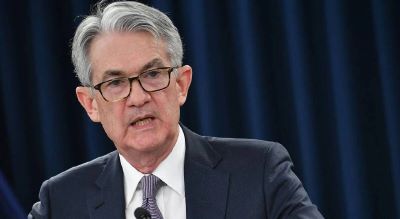
Jerome Powells pivot toward a quicker withdrawal of stimulus paves the way for a more agile Federal Reserve in 2022, one thats willing to raise interest rates faster than expected if inflation lingers or hold back if the pandemic worsens.

Powell, recently picked for another four years as chair, is responding to hot readings on the economy that caught officials by surprise, including signs that inflation is spreading and labor supply is still limited despite falling unemployment.

Investors can expect stepped-up Fed communication of an evolving outlook for employment and inflation that stresses flexibility amid uncertainty over the pandemic and new virus strains. The ultra-gradual normalization that marked the Fed’s retreat from stimulus after the 2008-2009 financial crisis is not a template for this Fed, which is facing something policy makers haven’t had to confront in decades: booming growth and soaring prices.

“They are shifting,” said Anna Wong, chief U.S. economist at Bloomberg Economics and a former Fed Board staffer. “What we are seeing is more weight being put on the discretionary part of policy-making, given the large forecast errors on inflation.”

Powell told U.S. lawmakers last week it was time to “retire” the Fed’s description of high inflation as “transitory,” a stance it held fast to for most of 2021 and which left it doling out stimulus even as some called for it to pull back on as inflation accelerated.

During hearings in which he heard bipartisan complaints about the harm of high prices, he also said officials meeting Dec. 14-15 would consider ending their asset purchase program a few months earlier than initially planned in mid-2022. They will also release fresh rate forecasts, which in September saw them evenly split over raising rates next year.

The broadly-signaled policy pivot, coming shortly before the meeting, already has some analysts boosting their outlook for interest rates next year.

“We are moving to a three-hike baseline for 2022 with 25 basis-point rate increases in June, September and December,” Evercore’s Krishna Guha and Peter Williams wrote in a note Friday.

Such a path may depend on the impact of the new omicron variant of the coronavirus. In a weekend report, Goldman Sachs economists cut their forecasts for the U.S. economy this year and next after deciding the strain’s spread would exert a “modest downside” drag on growth.

Powell’s signal, just weeks after the Nov. 2-3 Fed meeting at which the taper was announced, responds to an economic recovery that has surprised officials at every turn. That intensified in the days leading up to and shortly after the decision.

Employment costs rose at a record pace, according to data just days before officials gathered. A week later, a government report showed consumer prices rose in October by the fastest pace in three decades. That month’s jobs report also came in strong. But the labor market continued to see fewer workers re-entering than anticipated, despite the wide availability of coronavirus vaccines and the reopening of schools. And underlying demand is solid — retail sales rose in October by the most in 7 months — with estimates of fourth-quarter growth remaining strong.

Other Fed officials began suggesting the need to remove policy support faster soon after the taper was announced.

Fed Vice Chair Richard Clarida, Governor Chris Waller, Cleveland Fed President Loretta Mester and Atlanta Fed President Raphael Bostic have all said they were open to a faster removal of policy support, as did San Francisco Fed President Mary Daly, who is usually a policy dove. James Bullard of St. Louis, who’s been pushing to speed up the taper for a while, said Friday he favored wrapping up in March.

“When inflation is a problem, there are no doves,” said Laurence Meyer, a former Fed governor, who was struck by how fast officials began publicly questioning their own policy decision. “Can you ever think of a time when they announced a decision, and before they actually start it, are changing it? I can’t.”

Notably silent throughout this period were two prominent U.S. central bankers: Powell himself, and Governor Lael Brainard, who were both being considered for the chairmanship.

President Joe Biden announced Nov. 22 that Powell would be renominated while Brainard would be elevated to vice chair to replace Clarida, whose term as a governor expires in January.

Eight days later, Powell added his voice to the discussion, telling senators that it was time to discuss whether the Fed should “wrap up” asset purchases more quickly.

He also told the Senate Banking Committee that, given the wedges in the labor market now with the virus still out there, it would take more time to get workers back. That’s why getting inflation under control now was critical to his labor market goal, he explained.

“We’re going to need a long expansion; to get that we’re going to need price stability,” Powell said. “And in a sense, the risk of persistently high inflation is also a major risk to getting back to such a labor market.”

In part because the Fed made much of its maximum employment goal being “broad-based and inclusive” when it updated its policy framework last year, progressives are likely to hold Powell accountable to those terms as the central bank approaches tightening in 2022.

In the near term, though, both Democrats and Republicans want Powell to do something about inflation. That’s a big political gift for the Fed, since historically lawmakers tend to pressure the central bank to keep borrowing costs low.

“We’ve got to get control of inflation; it’s ravaging our people,” Louisiana Republican Senator John Kennedy told Powell during the hearing.

Published : December 07, 2021

By : Bloomberg