
Makes sense to live with Omicron and treat it as no different from other Covid-19 variants: Experts

#SootinClaimon.Com : ขอบคุณแหล่งข้อมูล : หนังสือพิมพ์ The Nation.

https://www.nationthailand.com/blogs/international/40010544


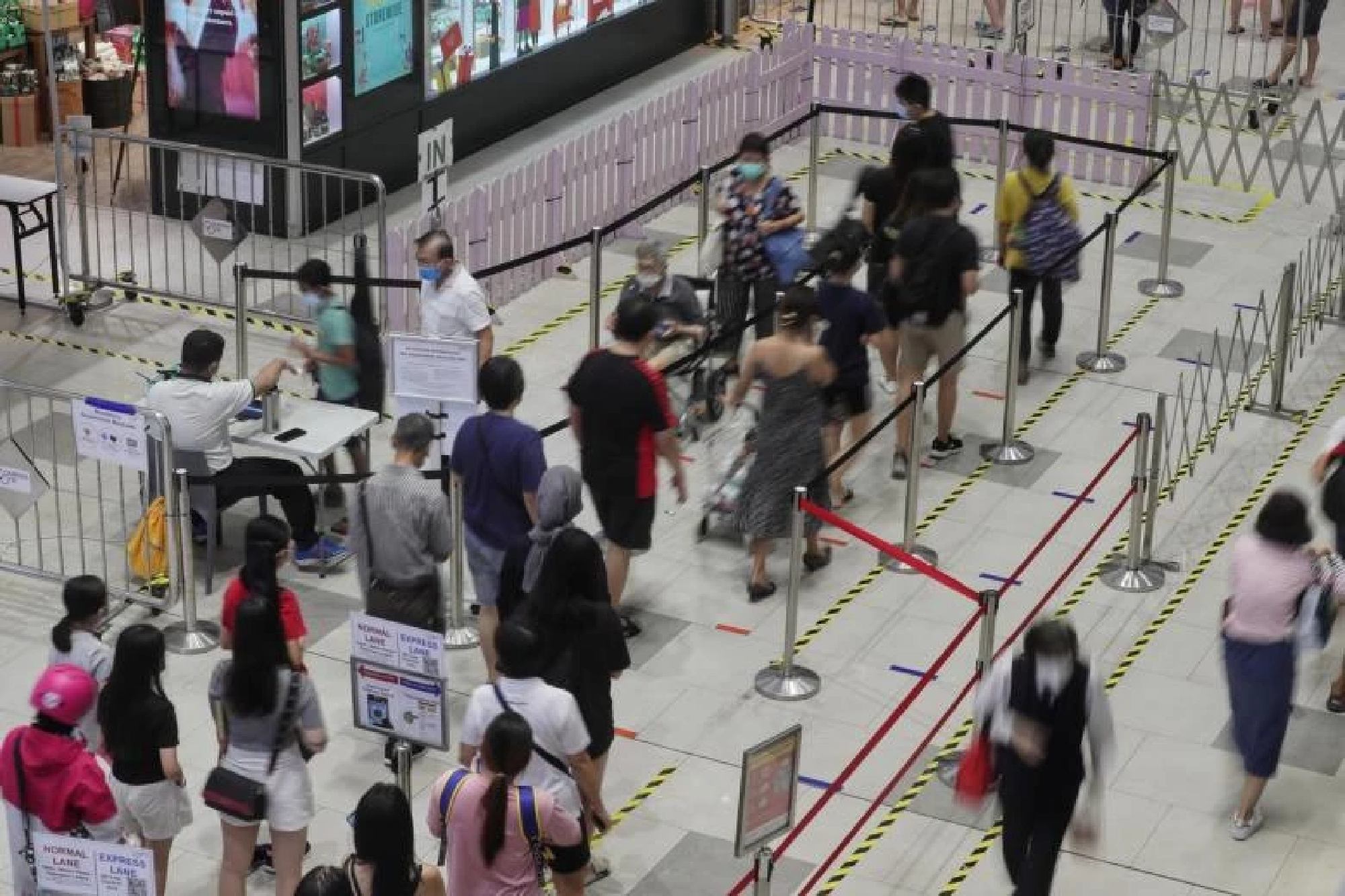
SINGAPORE – It makes sense to treat the Omicron variant as no different from other existing and past Covid-19 variants, said experts, since evidence has shown that the new strain is likely to be more transmissible but less severe than the Delta variant.
Makes sense to live with Omicron and treat it as no different from other Covid-19 variants: Experts

Since Monday (Dec 27), those infected with the Omicron variant were allowed to recover from home or in community care facilities, after about a month of strict measures to reduce and slow down the spread of Omicron in Singapore.

Over the past month, those infected with Omicron were either isolated at the National Centre for Infectious Diseases or at dedicated facilities.

Close contacts were quarantined for 10 days at designated facilities, and full contact tracing was carried out.

“If Singapore still continued to treat the Omicron variant differently, (such as) hospitalise infected patients, then we will be at risk of scoring an ‘own goal’ in terms of filling up our healthcare facilities with relatively well patients,” said Associate Professor Hsu Li Yang, an infectious diseases expert at the National University of Singapore’s (NUS) Saw Swee Hock School of Public Health.

The school’s vice-dean of research, Associate Professor Alex Cook, said: “I don’t think we could maintain strict contact tracing and isolation for long for Omicron anyway, and we would want to avoid revisiting the situation a few months ago when we had to repeatedly revise the eligibility criteria for home isolation.”

The Ministry of Health (MOH) said on Sunday that Singapore’s Omicron cases so far had not been severe, with none requiring intensive care (ICU) or oxygen supplementation.

But the ministry noted that this may be partially due to most cases being fully vaccinated and from younger age groups.

Professor Paul Tambyah, president of the Asia Pacific Society of Clinical Microbiology and Infection, said: “Now that we know that the Omicron variant is probably a lot less virulent than the previous dominant strains, we can move closer back to treating Covid-19 like other potentially deadly contagious respiratory infections such as tuberculosis or influenza.”

But it was prudent and crucial to have strictly ring-fenced the Omicron cases over the past month, as it allowed the country to buy time and let the science catch up with the concerns about the new strain, said Professor Dale Fisher, senior consultant at the National University Hospital’s Division of Infectious Diseases.

“Once a variant is identified, it will take some weeks to understand the outcomes. This was about slowing the entry and spread of Omicron until we knew the disease was not escaping the vaccine’s protection and was not more severe,” he added.

Professor Teo Yik Ying, dean of NUS’ Saw Swee Hock School of Public Health, said the past month of containing Omicron allowed the country to roll out the boosters to more people and plan on expanding its ICU capacity.

It was announced on Dec 14 that Singapore is making plans to increase its ICU capacity to 500 beds, up from 280, to brace itself for an Omicron wave.

Prof Fisher observed that Singapore is one of the earliest countries to accept that Omicron is not threatening nationally, because a large proportion of the population is vaccinated.

“Some countries are seeing overwhelmed hospitals again because Omicron is more transmissible and the baseline immunity of the population is still low.

“Singapore is realising the strategy of Covid-19 resilience, such that as new variants arise, they can be dealt with quite easily.”

But having to deal with Omicron after a long and hard battle with Delta is damaging to people’s mental and physical well being, the experts said.

Prof Teo said: “The costs are definitely economic, and the overall mental well-being of our people, since we saw a suspension of our VTLs (vaccinated travel lanes) as well as a constant shadow cast over the economy by Omicron.” 

MOH had last Wednesday announced the suspension of all VTL ticket sales for entry into Singapore between Dec 23 and Jan 20.

Finance Minister Lawrence Wong said in a Facebook post on Monday that the Republic must expect a new wave of Covid-19 cases in the coming days and weeks due to Omicron.

As at Saturday, there were 546 confirmed Omicron cases here, of which 443 were imported and 103 were local cases.

With Omicron’s higher transmissibility, it is likely that the Omicron wave would lead to more infections compared with the Delta wave over the past few months, said experts.

But if severe disease, hospitalisations and ICU admissions do not escalate, transmissions of mild disease of any variant does not matter so much, said Prof Fisher.

“We shouldn’t panic just because we see more cases. I do expect this to occur with Omicron and indeed with future variants and even seasonal fluctuations.”

Prof Cook said that the country should take stricter action to arrest the growth of Omicron only if the number of severe cases rises.

Prof Hsu’s main concern is about children below 12 who may be unvaccinated during the wave, given that the vaccination drive for upper primary students just started.

“School is due to start next week and the majority may not complete their vaccination by the time our own Omicron wave peaks. We may see more hospitalisations among this group, even though the variant is not as deadly as Delta,” he added.

By Shabana Begum

Published : December 29, 2021

By : The Straits Times
China aims to be hub of global robotics industry

#SootinClaimon.Com : ขอบคุณแหล่งข้อมูล : หนังสือพิมพ์ The Nation.

https://www.nationthailand.com/international/40010543


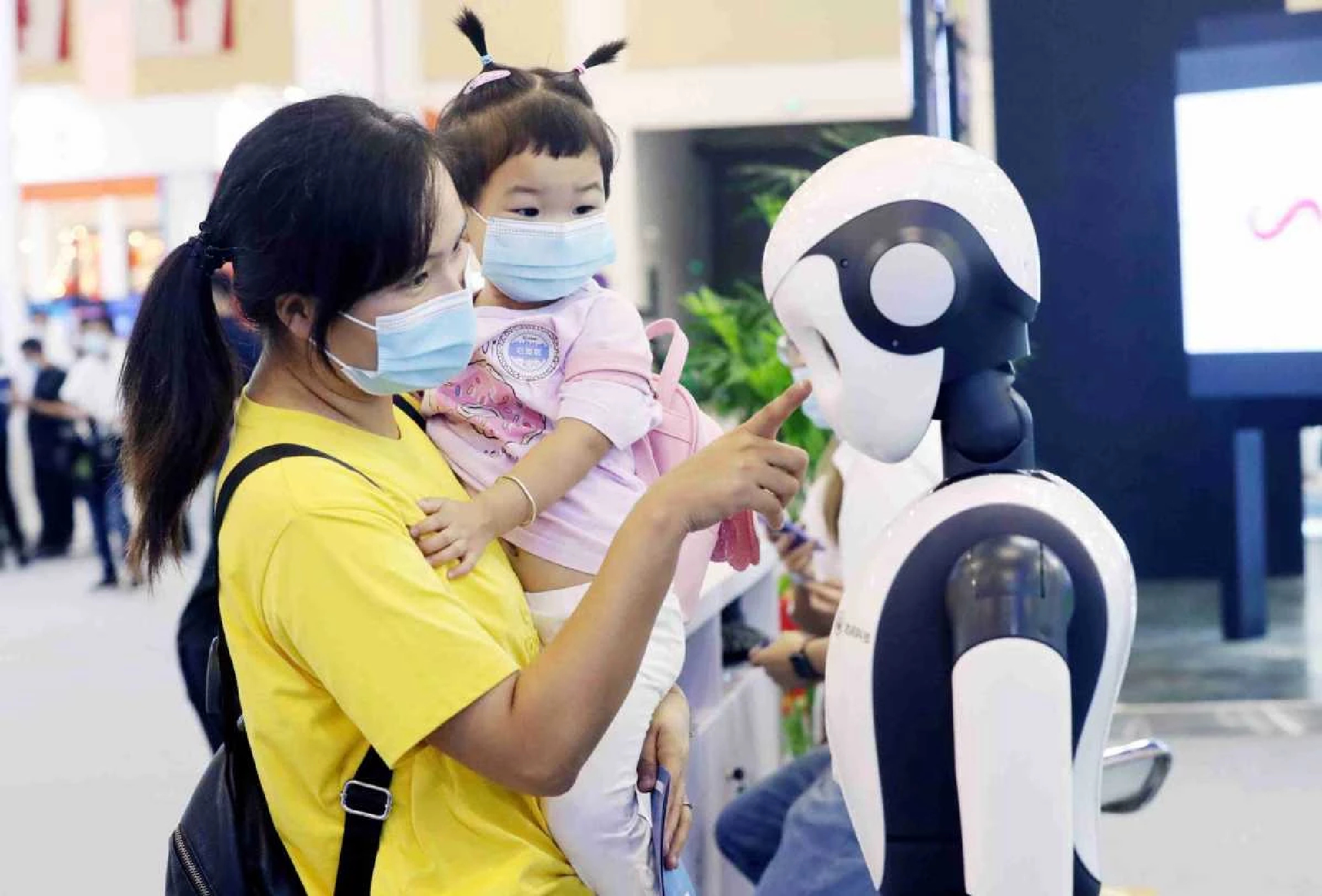
China is aiming to become an innovation hub for the global robotics industry by 2025, as it works to achieve breakthroughs in robotics components and widen the application of smart machines in more sectors.

China aims to be hub of global robotics industry

The move is part of the nation’s broader push to cope with a graying population and leverage cutting-edge technologies to advance industrial upgrades, experts said.

The Ministry of Industry and Information Technology said in a five-year plan released on Tuesday that the operating income of China’s robotics industry is expected to grow at an average annual rate of 20 percent from 2021 to 2025.

China has been the world’s largest market for industrial robots for eight consecutive years. In 2020, the manufacturing robot density, a metric used to measure a country’s level of automation, reached 246 units per 10,000 people in China, nearly twice the global average.

Wang Weiming, an official with the ministry, said China aims to double its manufacturing robot density by 2025. High-end, advanced robots are expected to be used in more sectors such as the automobile, aerospace, railway transportation, logistics and mining industries.

More efforts will also be made to achieve breakthroughs in core robot components, such as speed reducers, servomotors and control panels, which are recognized as the three basic building blocks of sophisticated automated machines, Wang said.

“The goal is that by 2025, the performance and reliability of these homegrown key components can reach the level of advanced foreign products,” Wang said.

From 2016 to 2020, China’s robotics industry grew rapidly, with an average annual growth rate of about 15 percent. In 2020, the operating income of China’s robotics sector exceeded 100 billion yuan ($15.7 billion) for the first time, data from the ministry show.

In the first 11 months of 2021, the cumulative output of industrial robots in China exceeded 330,000 units, marking year-on-year growth of 49 percent, according to the National Bureau of Statistics.

Song Xiaogang, executive director and secretary-general of the China Robot Industry Alliance, said robots are important carriers of emerging technologies. As key equipment for modern industries, robots can lead an industry’s digital development and upgrades of intelligent systems.

Meanwhile, service robots can also serve as assistants to an aging population and improve people’s quality of life.

Thanks to technologies such as 5G and artificial intelligence, service robots can play a bigger role in elderly healthcare, Song said.

The International Federation of Robotics predicted that globally industrial robot installations are expected to rebound strongly and grow by 13 percent year-on-year to 435,000 units in 2021, despite the COVID-19 pandemic, exceeding the record achieved in 2018.

Milton Guerry, president of the federation, said that industrial robot installations in Asia are expected to exceed 300,000 units this year, a 15 percent year-on-year increase.

The trend has been fueled by the positive market developments in China, the federation said.

Deng Xiaobai, co-founder and CEO of Dorabot, a Chinese AI-powered robotic solutions provider for logistics and other industries, said he is excited by the five-year plan.

“The COVID-19 pandemic has driven changes in the logistics industry, which includes the acceleration of innovation, automation and digitalization in the workplace,” Deng said. “We are optimistic about future development.”

By MA SI

Published : December 29, 2021

By : China Daily

U.S. daily COVID-19 cases hit record high of over 510,000

#SootinClaimon.Com : ขอบคุณแหล่งข้อมูล : หนังสือพิมพ์ The Nation.

https://www.nationthailand.com/international/40010565


A total of 512,553 new cases and 1,762 new deaths were reported across the United States on Monday. The single-day increase of cases has set a new record since the onset of the pandemic in the country.

U.S. daily COVID-19 cases hit record high of over 510,000

The United States registered a record high of over 510,000 daily COVID-19 cases on Monday, according to latest data of Johns Hopkins University.

A total of 512,553 new cases and 1,762 new deaths were reported across the nation on Monday. The single-day increase of cases has set a new record since the onset of the pandemic in the country.

Over the past week, nearly 1,660,000 new cases and over 10,000 new deaths were added to the tally, according to Johns Hopkins University.

The 7-day average daily increase of cases reached more than 206,000 on Sunday, according to latest data of the U.S. Centers for Disease Control and Prevention. This is also the highest figure since Jan. 18.

The United States has recorded more than 52.9 million COVID-19 cases with over 819,000 related deaths as of Tuesday afternoon, according to the real-time count kept by Johns Hopkins University.

Published : December 29, 2021

By : Xinhua

COVID-19 upsets status quo in Europe, hope and challenges ahead

#SootinClaimon.Com : ขอบคุณแหล่งข้อมูล : หนังสือพิมพ์ The Nation.

https://www.nationthailand.com/international/40010564


A brief recovery in the summer turned out to be more fragile than it looked, while the emergence of the more transmissible Omicron variant has made people realize that the pandemic may be far from over.

COVID-19 upsets status quo in Europe, hope and challenges ahead

In 2021, COVID-19 has continued to ravage Europe, causing fear, stress and even despair across the board.

A brief recovery in the summer turned out to be more fragile than it looked, while the emergence of the more transmissible Omicron variant has made people realize that the pandemic may be far from over.

Despite rising infections and inequity in vaccine access, however, people across the continent hope that more stringent measures, new drugs and vaccines would eventually rein in the raging pandemic, which has threatened to stifle an early economic recovery.

Photo taken on Dec. 20, 2021 shows signs of a storePhoto taken on Dec. 20, 2021 shows signs of a store

Relsted Stories

PANDEMIC ROLLER COASTER

Following a surge in coronavirus cases and deaths in spring 2021, Europe enjoyed a summertime lull, which made people wonder if they were indeed seeing the light at the end of the tunnel. Longing for a “return to normalcy,” people welcomed the easing of social distancing and travel restrictions.

And then the pandemic was back with a vengeance.

In the first week of November alone, Europe reported almost 2 million new infections, the largest weekly case count in the region since the start of the pandemic. According to a World Health Organization (WHO) report, the week also saw nearly 27,000 COVID-19-related fatalities, more than half of all deaths reported globally.

“Europe is back at the epicenter of the pandemic, where we were one year ago,” said Hans Kluge, the WHO Regional Director for Europe.

In preparation for the fast-approaching year-end holidays and determined to curb virus cases, the authorities across the continent have been scrambling to re-impose restrictions. The government of the Netherlands, for instance, was the first in Europe to impose — or re-impose rather — a partial lockdown on Nov. 12, and Austria followed suit with a nationwide lockdown implemented on Nov. 22.

Most of these plans and measures predated the identification in southern Africa of Omicron, the coronavirus variant that is more transmissible than the previously dreaded Delta strain. Omicron is also understood to reduce vaccine efficacy but cause less severe symptoms, according to early data.

“World leaders, by continuing to ignore the warnings and focusing only on their national populations, are playing with fire and putting our hard-won progress at risk,” Jeremy Farrar, director of the charitable foundation Wellcome Trust, wrote in an opinion article in The Guardian.

“We are not yet in control of this pandemic — Omicron or an even worse variant could arise at any time,” said Farrar, also a former member of the British government’s Scientific Advisory Group for Emergencies.

A woman wearing a face mask walks on the Champs Elysees Avenue in Paris, France, Dec. 23, 2021. (Xinhua/Gao Jing)A woman wearing a face mask walks on the Champs Elysees Avenue in Paris, France, Dec. 23, 2021. (Xinhua/Gao Jing)

HARD BALANCE

The pandemic has so far caused over 5.3 million deaths globally. Its recurring waves and the emerging virus variants have placed an enormous burden on healthcare systems and put unprecedented pressure on governments to resort to restrictions. However, these in turn stifled the economies, all but wiped out several industries and increased unemployment.

Pre-pandemic levels of European travel will not be achieved until 2024, the Brussels-based European Travel Commission has estimated. Despite a strong summer rebound, it said international tourist arrivals to Europe are forecast to be 60 percent below 2019 by the end of 2021.

Across the European Union (EU), the unemployment rate was 6.7 percent in October 2021, down from 7.5 percent in October 2020. The jobless rate was the highest in Spain at 14.5 percent, followed by Greece at 12.9 percent.

The EU economy had rebounded from the pandemic recession faster than expected. As vaccination campaigns progressed and restrictions started to be lifted, growth resumed in spring and continued unabated through summer, underpinned by the re-opening of the economy. But the emergence of the Omicron variant and rapid infections it has driven may have dashed hope of a quick economic recovery.

Paolo Gentiloni, European Commissioner for Economy, pointed out in November three key threats to the current expansion of the European economy: “a marked increase in COVID cases, most acute in areas where vaccinations are relatively low; rising inflation, driven largely by a spike in energy prices; and supply-chain disruptions that are weighing on numerous sectors.”

Meanwhile, adding insult to injury have been the mushrooming demonstrations in many European countries against COVID-19 rules and lockdowns, some of which even intensified into riots.

People visit the Mont des Arts in Brussels, Belgium, on Dec. 27, 2021.  (Xinhua/Zheng Huansong)People visit the Mont des Arts in Brussels, Belgium, on Dec. 27, 2021. (Xinhua/Zheng Huansong)

HOPE FOR FUTURE

The currently available vaccines have largely been able to protect against more severe cases or deaths. However, the stark vaccine divide between the eastern and western parts of Europe remains a serious concern, especially in light of the simultaneous threats of waning immunity and ever more transmissible virus variants.

Nevertheless, there are grounds for hope, with rich experiences built upon repeated waves and perplexing decisions. New drugs and more effective vaccines are also expected to come.

In its latest risk assessment, the European Center for Disease Prevention and Control (ECDC) reiterated the need for a “multi-layered approach” to delay the spread of Omicron in Europe.

This includes speeding up the vaccination and booster shot drives as well as encouraging or even enforcing mask wearing, social distancing, contact tracing, efficient ventilation, increased hand hygiene and working from home wherever possible. It also requires more efficient coordination of the national approaches and an exchange of good practices and practical experiences.

“No country should believe they are safe, purely because they’ve vaccinated their own populations,” Farrar said. “We will only bring this pandemic to an end by working together globally and sharing access to all the vital public health tools needed to reduce transmission everywhere and save lives.”

People take part in a demonstration in Vienna, Austria, on Nov. 20, 2021. The demonstration against the COVID-19 measures took place in Vienna on Saturday. (Xinhua/Guo Chen)People take part in a demonstration in Vienna, Austria, on Nov. 20, 2021. The demonstration against the COVID-19 measures took place in Vienna on Saturday. (Xinhua/Guo Chen)


Published : December 29, 2021

By : Xinhua

Mummy of Egyptian pharaoh Amenhotep I digitally unwrapped

#SootinClaimon.Com : ขอบคุณแหล่งข้อมูล : หนังสือพิมพ์ The Nation.

https://www.nationthailand.com/international/40010560


Egyptian researchers have “digitally unwrapped” the mummy of King Amenhotep I for the first time, revealing many secrets about the pharaoh who ruled Egypt from 1525 to 1504 BC, a renowned Egyptologist said on Tuesday.

Mummy of Egyptian pharaoh Amenhotep I digitally unwrapped

Researchers used advanced x-ray technology, computed tomography (CT) scanning and advanced computer software programs to digitally remove the wrappings on the mummy of King Amenhotep I in a safe, non-invasive method without touching the mummy, Zahi Hawass, also the former Egyptian minister of state for antiquities affairs, said in a statement.

The research team, which included Sahar Saleem, professor of radiology at Faculty of Medicine of Cairo University and experts in antiquities radiology, revealed for the first time “the face of King Amenhotep I, his age, health condition, as well as many secrets about the mummy’s unique mummification and reburial,” Hawass said.

Digital analysis showed Amenhotep I’s face resembles his father Ahmose I. The king was believed to be in good health when he died at the age of 35, since no disease or injury to the mummy appeared to indicate the cause of his death.

A CT scan shows the skull of Egyptian Pharaoh Amenhotep I and its outer face mask. Egyptian researchers have "digitally unwrapped" the mummy of King Amenhotep I for the first time, revealing many secrets about the pharaoh who ruled Egypt from 1525 to 1504 BC. (Egyptian Ministry of Tourism and Antiquities/Handout via Xinhua)A CT scan shows the skull of Egyptian Pharaoh Amenhotep I and its outer face mask. Egyptian researchers have “digitally unwrapped” the mummy of King Amenhotep I for the first time, revealing many secrets about the pharaoh who ruled Egypt from 1525 to 1504 BC. (Egyptian Ministry of Tourism and Antiquities/Handout via Xinhua)

Related Stories

Unlike most of the rulers of the modern kingdoms, such as Tutankhamun and Ramses II whose brains were removed and embalming materials and resins were deposited inside the skull, the brain of King Amenhotep I was not removed during the mummification process, the statement added.

The mummy of Amenhotep I was found in 1881 in the Royal cache at Deir-el Bahri in Luxor, where the priests of the 21st dynasty reburied and hid the mummies of many previous kings and queens to protect them from the recurrent tomb theft.

It is the only royal mummy that has not been unwrapped in the modern era in order to preserve the unique beauty of it, which was covered with a funerary mask and garlands of colorful flowers.

King Amenhotep I was the son of King Ahmose I, who was conqueror of the Hyksos and founder of the New Kingdom of Ancient Egyptian Civilization.  

Published : December 29, 2021

By : Xinhua

U.S. reports over 7.5 mln child COVID-19 cases

#SootinClaimon.Com : ขอบคุณแหล่งข้อมูล : หนังสือพิมพ์ The Nation.

https://www.nationthailand.com/international/40010558


For the week ending Dec. 23, almost 199,000 child COVID-19 cases were reported, a 50 percent increase over the weekly new cases in the beginning of December.

U.S. reports over 7.5 mln child COVID-19 cases

 Over 7.5 million children have tested positive for COVID-19 since the onset of the pandemic in the United States, representing 1 in 10 American children, according to the latest report of the American Academy of Pediatrics (AAP) and the Children’s Hospital Association.

A total of 7,565,416 child COVID-19 cases had been reported across the country as of Dec. 23, and children represented 17.4 percent of all confirmed cases, according to the report published on Monday.

The overall rate was 10,052 cases per 100,000 children in the population.

COVID-19 cases among U.S. children are “extremely high and increasing,” according to the report.

Kindergarten children play toys in a classroom at Montrara Ave. Elementary School in Los Angeles, California, the United States, on Aug. 16, 2021. (Xinhua)Kindergarten children play toys in a classroom at Montrara Ave. Elementary School in Los Angeles, California, the United States, on Aug. 16, 2021. (Xinhua)

Related Stories

For the week ending Dec. 23, almost 199,000 child COVID-19 cases were reported, a 50 percent increase over the weekly new cases the beginning of December. This marked the 20th consecutive week child COVID-19 cases are above 100,000.

Since the first week of September, there have been over 2.5 million additional child cases, according to the AAP.

Children accounted for 1.8 percent to 4.1 percent of total reported hospitalizations, and 0 to 0.27 percent of all COVID-19 deaths, said the report.

“At this time, it appears that severe illness due to COVID-19 is uncommon among children. However, there is an urgent need to collect more data to assess the severity of illness related to new variants as well as the longer-term impacts of the pandemic on children, including ways the virus may harm the long-term physical health of infected children, as well as its emotional and mental health effects,” the AAP said in the report.  

Published : December 29, 2021

By : Xinhua

Mach 5 missiles spur new arms race as U.S. seeks to match China

#SootinClaimon.Com : ขอบคุณแหล่งข้อมูล : หนังสือพิมพ์ The Nation.

https://www.nationthailand.com/international/40010541


Top U.S. defense contractors are competing for billions of dollars of work tied to the next big technology focus in national-security circles: hypersonic weapons.

Mach 5 missiles spur new arms race as U.S. seeks to match China

The military’s renewed interest in ultra-high-speed missiles — spurred by concern that the U.S. is lagging behind Russia and China — opens the door to lucrative contracts that could last decades. That may provide a much-needed boon for manufacturers seeking to capitalize on growth segments as the Biden administration keeps overall defense outlays in check.

The industry is developing an array of the super-high speed armaments for the U.S. Army, Navy and Air Force, with the aim of being able to launch them from planes, submarines and trucks. Lockheed Martin Corp. has the leading position in key programs that aim to deliver prototypes the soonest — with flight tests on a new missile slated for the first half of next year. Raytheon Technologies Corp. and Northrop Grumman Corp. are also seeking to get a toehold in the market for missiles that fly at more than five times the speed of sound.

“It’s all about making sure that we have more and more capability and classes of capability in hypersonic weapons,” said Jay Pitman, the vice president of air dominance and strike weapons at Lockheed’s missiles and fire control division. “That will enhance the strategic deterrence that we are able to provide.”

Pentagon officials recently estimated that Army and Navy programs that share a common missile may alone add a combined $28.5 billion to the services’ budgets over the coming years.

Critics question the price tag, technical feasibility and battlefield utility of the new class of military hardware. The Union of Concerned Scientists has cast doubt on claims that the weapons offer better performance than existing ballistic missiles and has warned of a destabilizing global arms race.

The pursuit of the weapons by strategic rivals in some ways evokes the tensions of the Cold War, when fears abounded that a conflict between the U.S. and Soviet Union could bring about global annihilation via nuclear missiles. It also was a lucrative epoch for defense contractors.

But just how much hypersonic weapons will alter the global balance of power remains a matter of debate. Some observers see a risk that the weapons’ high speed and unpredictable flight paths could lead to miscalculations that may escalate conflicts, according to the nonpartisan Congressional Research Service. Others argue that hypersonic weapons do little to alter the dynamic between the U.S., Russia and China, because the countries already have enough nuclear missiles to overwhelm an enemy’s defenses, the group said.

Flying at speeds topping 3,800 miles (6,100 kilometers) per hour is nothing new — ballistic missiles exceed that level when they re-enter the Earth’s atmosphere from space. But these next-generation weapons are designed be highly maneuverable at those velocities within the Earth’s atmosphere, helping them evade traditional defenses better than ballistic missiles that travel along a predictable arc.

The U.S. has been studying hypersonic weapons for decades, but spending has jumped in recent years as interest in the technology soared. The topic came into focus when General Mark Milley, chairman of the Joint Chiefs of Staff, said in an October interview on Bloomberg TV that a recent hypersonic test by China was close to a “Sputnik moment” for the U.S.

U.S. military officials have confirmed the Asian nation recently tested a hypersonic weapon that traveled around the world and hit a target back in China.

President Vladimir Putin has boasted about Russia’s hypersonic capabilities after showing them off in 2018, though the U.S. has been more vocal about concerns over China’s program.

Until the technology progresses, it’s unclear precisely how big a boon it will be for top U.S. defense contractors. Beyond near-term plans to deliver hypersonic weapons through a handful of development programs, Pentagon officials have made few decisions about how many and what type of weapons they plan to pursue longer term.

“We’re still waiting on the Department of Defense to define where this fits in their portfolio,” said Wesley Kremer, president of Raytheon Missiles & Defense.

Lockheed Martin is the prime contractor for a hypersonic boost-glide missile for the U.S. Army and Navy, which also are sharing flight test plans to help speed development.

Lockheed’s Eric Scherff, vice president of the space systems division overseeing the program, said the company plans an initial flight test in the first half of 2022 and its first hypersonic missiles are on track to be delivered to the Army by the end of the government’s 2023 fiscal year. The Bethesda, Maryland-based defense giant is working on six hypersonic programs for the U.S. that could enter production between 2023 and 2026, Chief Executive Officer Jim Taiclet said told analysts in October.

Annual revenue tied to hypersonic weapons should rise to $3 billion by 2026 from $1.5 billion today, assuming key programs reach production, acting Chief Financial Officer John Mollard said during the same conference call.

Northrop Grumman supplies the missile’s rocket motors while Leidos Holdings Inc.’s Dynetics subsidiary is making the hypersonic glide body. Dynetics has a $342 million contract to produce 14 gliders, which could lead to a deal to produce 124 worth some $1 billion in revenue, according to the company.

After launch, the missile deploys a wedge-shaped glider when it’s above the atmosphere that enables it to zoom toward a target at ultra-high speeds.

Raytheon and Northrop Grumman successfully test fired an air-breathing concept weapon in September, part of a $200 million contract. The test “went a long way to demonstrating how far and how fast we’ve been able to mature that technology,” said Raytheon’s Kremer.

The aircraft-launched hypersonic weapon uses a rocket booster to accelerate beyond the sound barrier before a supersonic ramjet — or scramjet — engine kicks in to propel the weapon past Mach 5. This type of missile could be purchased in larger quantities than boost-glide systems and at a lower unit cost, Kremer said.

The Pentagon’s rapid development effort has also seen some stumbles. Lockheed’s air-launched hypersonic weapon under development for the Air Force has failed three tests since April, most recently on Dec. 15.

As high-tech as this new generation of hardware sounds, it may be just a prelude to what contractors’ secretive research-and-development operations hint they could pursue next: a jump to light speed.

“Hypersonic technology is the natural evolution on the path to where we’ll eventually go, which is to speed-of-light weapons,” Kremer said.

Published : December 29, 2021

By : Bloomberg

Covid With Omicron Isnt Same Disease, Oxford Scientist Says

#SootinClaimon.Com : ขอบคุณแหล่งข้อมูล : หนังสือพิมพ์ The Nation.

https://www.nationthailand.com/international/40010540


The omicron variant thats taking the world by storm is not “the same disease we were seeing a year ago,” a University of Oxford immunologist said, reinforcing reports about the strains milder nature.

Covid With Omicron Isnt Same Disease, Oxford Scientist Says

The strain first discovered at the end of November appears to be less severe and even patients who do end up in the hospital spend less time there, John Bell, regius professor of medicine at Oxford, said on BBC Radio 4’s Today program.

“The horrific scenes that we saw a year ago — intensive care units being full, lots of people dying prematurely — that is now history in my view, and I think we should be reassured that that’s likely to continue,” Bell said.

Bell’s comments came after the U.K. government said it wouldn’t introduce stricter Covid-19 restrictions in England before the end of the year.

Infections have jumped by more than a quarter of a million in the past week, heaping pressure on Prime Minister Boris Johnson to respond. Health Secretary Sajid Javid late Monday said he’s monitoring the latest data and urged people to be careful, particularly at New Year celebrations.

Published : December 29, 2021

By : Bloomberg

Germany buys Pfizers Covid pill amid surging omicron cases

#SootinClaimon.Com : ขอบคุณแหล่งข้อมูล : หนังสือพิมพ์ The Nation.

https://www.nationthailand.com/international/40010539


Germany is buying 1 million packs of Pfizer Inc.s newly approved pill to treat Covid-19, securing supplies as infections from the fast-spreading omicron variant rise rapidly.

Germany buys Pfizers Covid pill amid surging omicron cases

The Paxlovid drug is “extremely promising” because it can help people who risk falling seriously ill, Health Minister Karl Lauterbach told German news agency DPA. The country’s health authorities reported a total of 10,443 omicron cases as of Tuesday, a 43% jump from the previous day.

Doctors will be looking for the Pfizer pill to fill a gap for high-risk patients, who until now have been treated with monoclonal antibody therapies. Germany expects first deliveries of the medication in January, according to DPA.

So far omicron hasn’t shown signs of making an overall impact on Germany’s outbreak, as contagion rates continue to recede from record levels in late November.

On Tuesday, the country reported 215.6 cases per 100,000 people over the past seven days, the lowest level since Nov. 9. Germany, which is discussing making shots compulsory, aims to fully inoculate 80% of the population by the end of January, compared with 71% currently.

Thousands of people across Germany gathered on Monday evening to protest the government’s Covid rules and the prospect of a vaccine mandate. Stricter limits on private gatherings took effect on Tuesday, with as many as 10 vaccinated and recovered people allowed to meet. If unvaccinated people are involved, only two people from another household are allowed.

Published : December 29, 2021

By : Bloomberg

Hong Kong to make air cargo crew do 3-day hotel quarantine

#SootinClaimon.Com : ขอบคุณแหล่งข้อมูล : หนังสือพิมพ์ The Nation.

https://www.nationthailand.com/international/40010538


Hong Kong will mandate three-day hotel quarantines for air cargo crew, as the Asian city steps up efforts to prevent any local transmission of the contagious omicron Covid-19 variant.

Hong Kong to make air cargo crew do 3-day hotel quarantine

“We have to balance between the risk of infectious disease outbreaks and the cargo operation,” Edwin Tsui, controller of the Center for Health Protection, said at a press briefing on Tuesday in Hong Kong. He didn’t provide a start date for the new rules.

He added that the three-day quarantine should “intercept” cases on arrival, noting that the government was mulling similar measures for regular air crew.

The move comes as Hong Kong imposes increasingly stringent border control measures as the highly mutated and wildly transmissible omicron variant is spurring record case counts globally. The city is one of the only places to have avoided a delta outbreak, with no local virus spread occurring since early June.

Earlier Tuesday, local broadcaster Cable TV reported the Hong Kong government planned to extend its vaccine mandate to schools and workplaces, citing unidentified people. That move would build on inoculation requirements that already apply to bars, clubs, bathhouses, karaoke parlors and some restaurants.

The Education Bureau said in a Tuesday letter published online that it would “keep in view” the announcement of the government’s “vaccine bubble” at indoor premises, and make a “timely announcement” to schools and kindergartens about related arrangements as appropriate.

“Vaccination is a vital step in the fight against the virus and the epidemic. We encourage teachers and school staff, students and parents to continue to get vaccinated pro-actively,” it added.

Hong Kong said last week it would require government employees to present their Covid-19 vaccination records when they enter government buildings and offices for work-related purposes from mid-February. About 62% of the city’s population is fully vaccinated, according to Bloomberg’s vaccine tracker.

Teachers who have not received their first vaccination dose will be required to test every three days, rather than weekly, as of Jan. 10, the EDB wrote. Exceptions will be made for those with medical certificates proving they cannot receive a vaccination, the EDB added.

Hong Kong has maintained a zero-tolerance approach toward Covid throughout the pandemic to align with policies in China. Hong Kong Chief Executive Carrie Lam and other officials have defended it as necessary to reopen the border with the mainland, which is their priority.

Published : December 29, 2021

By : Bloomberg