LG Display on Monday unveiled four new concepts using its transparent panel solutions to be premiered at its hybrid CES 2022 exhibitions in January.
The new concepts feature screens that look like normal transparent glass windows, allowing users to see objects on the other side. But the screens can display images or deliver information while remaining transparent at the same time. These concepts aim to achieve spatial innovation at home, the office and commercial facilities including department stores, the company said.
The “Show Window” concept comprises four 55-inch transparent screens with self-emitting nature, so that a layer of various visual content can be added with products like garments lined up behind the display panels. Another concept, “Shopping Managing Showcase,” features a single screen that fits inside a wooden frame before the goods on display.
LG Display said in a statement these solutions maximize the advertising potential of window displays, allowing offline shoppers to look at products and information on the screen at the same time.
Another new solution suggested by LG Display is “OLED Shelf,” with two vertically attached screens that can display TV shows or paintings while running in “always on display” mode to deliver essential information. For an office solution, “Smart Window” constitutes a large panel for videoconferencing and presentations that at the same time provides openness in the workspace.
“With our industry-leading transparent OLED technology, we will continue to introduce innovative high-end solutions that allow our customers to enjoy unprecedented experiences,” said Lee Hyeon-woo, senior vice president and head of Life Display Business Group at LG Display.
LG Display is the only company to have commercialized large OLED screens that are semitransparent. Its 55-inch OLED displays with 40 percent transparency were first introduced in 2019, and have since been applied in shopping malls, museums and subways.
LG has forecast the transparent OLED display market to grow 116 percent on average each year in the next decade, with the market size estimated at 12 trillion won ($10.1 billion) by 2030, from 100 billion won in 2022, citing data from consulting firm the Boston Consulting Group.
SINGAPORE – Around 52,000 employees in Singapore have not taken any Covid-19 vaccine, the Ministry of Manpower (MOM) said on Monday (Dec 27).
Around 6,700 are aged 60 and above, and are at a very high risk of severe illness or death from Covid-19 infection, it added.
It noted that only a small proportion of these workers are medically ineligible for vaccination, while 98 per cent of the workforce – excluding self-employed persons – have been inoculated.
As at Dec 19, 80 per cent of firms have attained full vaccine coverage for their workforce.
This is considerable progress, MOM said, as it marks a drop from the 75,000 employees who were not vaccinated as at Dec 5.
These updates come in the wake of the Ministry of Health’s announcement on Sunday that unvaccinated employees will not be allowed to return to the workplace from Jan 15 next year.
This rule stands even if they test negative for Covid-19 24 hours beforehand.
Those certified to be medically ineligible or have recovered from Covid-19 within 180 days can return.
Those who are partially inoculated can go to the workplace, but with a negative pre-event testing result up to Jan 31.
After Jan 31, they must be fully vaccinated.
From Jan 1, 50 per cent of employees who can work from home will be allowed to return to the office, MOH said on Dec 14.
Working from home has been the default since September, when Singapore began logging another rise in Covid-19 cases.
MOM said on Monday: “We have seen the emergence of the more transmissible Omicron variant, which with the Delta variant, significantly raises the chance of contracting Covid-19 compared to a year ago.
“Unvaccinated employees, especially those who are older, will put immense strain on our healthcare capacity in the coming months, if they contract Covid-19.”
There is a grace period from Jan 1 to Jan 14 when unvaccinated staff can go to the workplace if they have a negative pre-event testing result.
But they must pay for the cost of the test and show the result to their employers when reporting for work.
MOM said: “A fully vaccinated workforce will be able to operate more safely and at much lower risk to employees’ lives.
“We must also be prepared to take stronger steps to protect those who, due to medical reasons, cannot receive any vaccine.”
For employees who remain unvaccinated, MOM said employers may allow them to work from home if such arrangements can sufficiently meet their operational or business needs.
“However, as the vast majority of vaccinated employees eventually return to the workplace more frequently, the prolonged absence of the unvaccinated employees… may affect their individual performance as well as negatively impact team or organisational performance,” MOM said.
From Jan 15, workers who have to be on site but are unvaccinated can be redeployed to suitable roles that can be done from home, it added.
They can also be placed on no-pay leave based on mutually agreed terms.
As a last resort, their employment can be terminated with notice according to their contract.
Such termination is not considered as wrongful dismissal since it is due to the employees’ inability to be at the workplace to do their contracted duties.
“By not coming to the workplace, unvaccinated employees are protected from being exposed to the threat of the virus,” MOM added.
For those who are medically ineligible for vaccines, it said employers should consider measures to protect them, even though they are allowed to work on-site.
These include allowing them to work from home if they can or redeploying them to suitable roles that can be done remotely.
MOM said: “The tripartite partners urge the remaining 20 per cent of employers to make a concerted push to get their unvaccinated employees to be vaccinated as soon as possible.”
It added that firms should support this by granting paid time-off to staff for their vaccination and additional paid sick leave if the worker experiences a related adverse reaction.
“The tripartite partners would also like to urge the remaining 2 per cent of unvaccinated employees to go for vaccination as soon as possible to protect their well-being and avoid any impact to their jobs and livelihoods.”
Singapore Manufacturing Federation (SMF) president Douglas Foo said that in some industries like manufacturing, workers are required physically on the shop floor, but SMF’s sense is that most workers are vaccinated.
“If it is because of medical reasons (that workers are not vaccinated), firms will then have to consider how best to re-train these employees to allow them to work remotely,” he added.
“On the other hand, if it is not for medical reasons, then employers should speak to the employee, understand the reason and then support and encourage them to go for vaccination as soon as possible.”
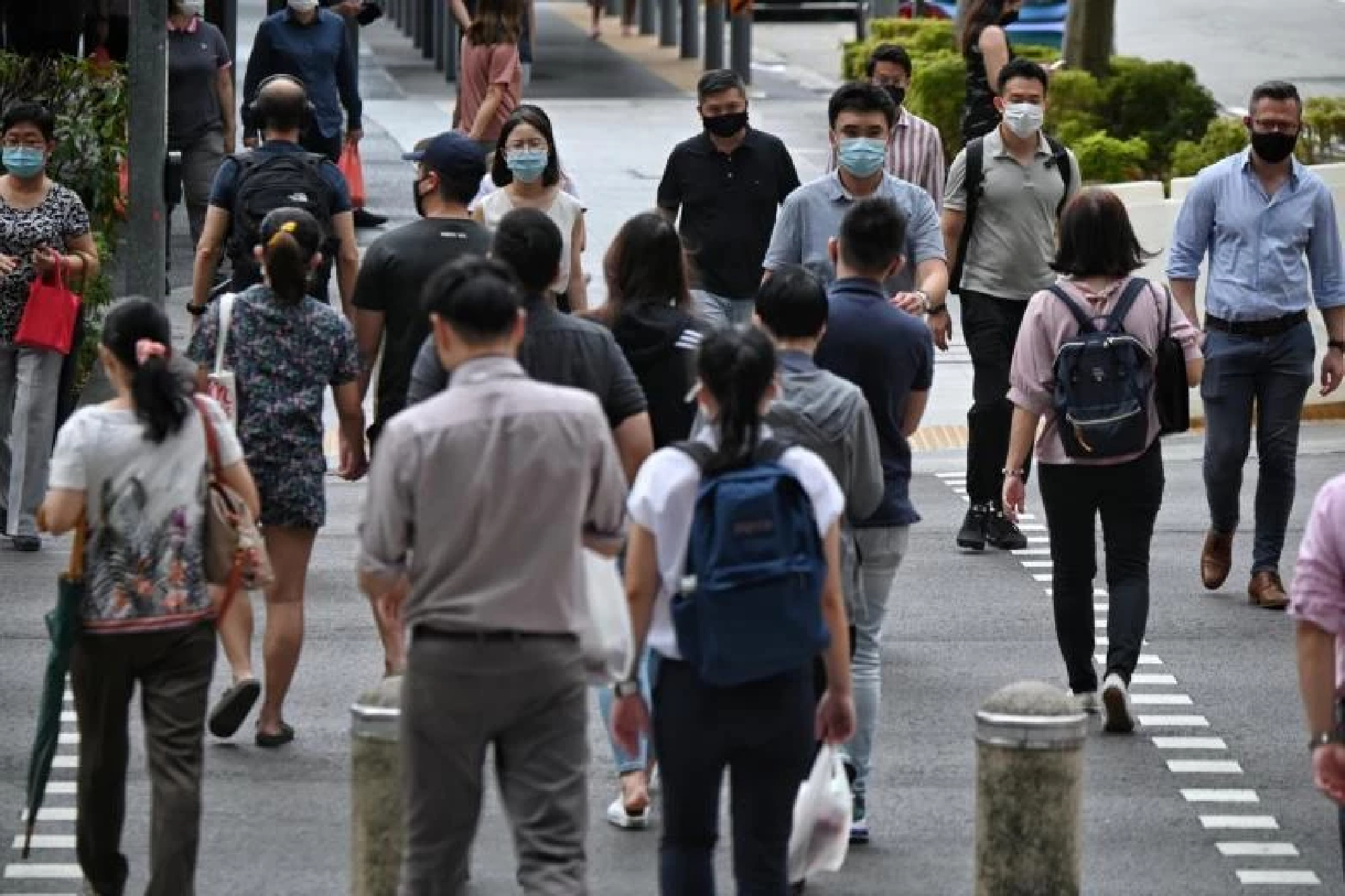
HÀ NỘI — Prime Minister Phạm Minh Chính has called on the nation to do everything necessary to protect the most vulnerable against COVID-19 and reduce the number of deaths related to the virus.
The PM signed Official Dispatch 1815/CD-TTg dated December 26, 2021 on the management and protection of people at high risk of contracting COVID-19; reducing severe cases and deaths due to COVID-19.
The PM asked ministries and localities to follow a number of requests to ensure effective management and monitoring of public health, early detection of COVID-19 cases and reduce the number of severe cases and COVID-19 related deaths.
Cases nationwide have increased, along with the number of severely ill patients and deaths in particularly in high-risk groups like people over 50 years of age, pregnant women, those with underlying health conditions and the unvaccinated.
The Prime Minister has called on localities to implement strict management of these high-risk groups by collecting data and analysing their need for support.
He also urged medical teams to go door-to-door to identify those who have not been vaccinated and arrange inoculations, especially for those people with mobility difficulties.
Localities should also organise care and treatment for people with COVID-19 in high-risk groups and carry out isolation and monitoring at home or at a treatment facility according to their conditions.
Regarding the Ministry of Health, the PM asked for quick and adequate distribution of vaccines to localities.
The ministry must also drastically and urgently guide and create favourable conditions for units, localities and enterprises to import, transfer technology, and manufacture drugs to treat COVID-19 sufferers.
It should also reduce and simplify administrative procedures, ensuring the principle of speed, science and efficiency; and at the same time take measures to strictly control quality, price and combat all manifestations and acts of abuse for corruption, group interests.
The ministry is asked to promptly update and guide treatment regimens in accordance with the disease developments and the actual conditions.
The Ministry of Industry and Trade shall closely coordinate with the Ministry of Health and city and provincial people’s committees to come up with drastic, reasonable, scientific, effective and specific solutions so that no shortage of medical oxygen supply in hospitals and medical facilities occurs.
The MoIT is also responsible for directing associations, manufacturing and distribution enterprises to increase production and supply of medical oxygen for timely and effective COVID-19 disease prevention and control. — VNS
PHNOM PENH, Dec. 27 (Xinhua) — A total of 114,183 Cambodian candidates are taking a national high school graduation exam on Monday after the situation of COVID-19 pandemic had been brought under control.
The annual exam is a prerequisite for Grade 12 students to pursue their studies at university levels.
Over the course of two days, the candidates will sit for the test in the subjects of earth and environment, geography, history, biology, foreign language, Khmer literature, mathematics, chemistry, physics, and morality-civics, according to an Education Ministry’s statement.
Speaking to reporters while visiting an exam center at the Preah Sisowath High School in capital Phnom Penh, Education Minister Hang Chuon Naron said there are 204 exam centers with 4,616 rooms across the southeast Asian nation.
“All educators and exam-takers are required to strictly follow health and safety measures, including wearing face masks, washing hands, having temperature checked, and maintaining physical distancing, in order to prevent the spread of COVID-19,” he said.
The minister said two students, who tested positive for COVID-19 after returning to the country from Kazakhstan, where they participated in the 2021 Asian Senior Karate Championships, were also allowed to take their exam at a COVID-19 treatment center in the capital.
Last year, due to the pandemic, the government allowed all Grade 12 students to pass their exit exam automatically without sitting for it.
Naron said the exam was held this year after the kingdom had achieved high COVID-19 vaccination rates as well as a significant drop in new COVID-19 cases in recent months.
Cambodia has so far administered at least one dose of the COVID-19 vaccines to 14.24 million people, or 89 percent of its 16-million population, according to the Ministry of Health (MoH).
Of them, 13.62 million, or 85.1 percent, are fully vaccinated with two required shots, and 3.39 million, or 21.2 percent, have taken a booster shot, the MoH added.
Most of the vaccines used in the country’s inoculation campaign are China’s Sinovac and Sinopharm.
Respected Bangladeshi journalist Mahfuz Anam, who is the editor and publisher of Bangladeshs largest selling English daily – The Daily Star – has been elected Asia News Networks (ANN) next Chairman.
The 72-year-old journalist takes over from outgoing Chairman Warren Fernandez, on January 1, 2022, for a two-year term. This will be Mr Anam’s second stint as Chairman of the alliance. Mr Anam was first appointed ANN Chairman in 2007.
Mr Anam was nominated by Mr Fernandez, the editor-in-chief of The Straits Times and the English/Malay/Tamil Media Group of Singapore Press Holdings (SPH) Media, and unanimously elected by the ANN Board. The regional alliance is a grouping of 23 leading Asian news titles, which was founded in 1999.
Mr Anam started his journalism career in 1972 and brings with him several decades of experience as a media and communication specialist to lead the regional alliance. After working in the United Nations for 14 years, he co-founded The Daily Star newspaper in 1991, as Bangladesh was transitioning to a democracy. His editorial direction and commentaries on the country’s socio-political issues saw the paper fast rising to be the most-read English daily in the country. A pro-democracy advocate, Mr Anam, found himself being sued in court for his criticism of the country’s two largest parties. But he dismisses the charges as attacks on press freedom.
ANN aims to establish a global footprint as Asia’s most authoritative media voice and work to bring Asia closer through editorial collaboration. It was set up to promote Asian journalism and share the story of an Asian century from an Asian perspective.
Said Mr Anam: “ANN aims to tell the world how Asia is forging ahead in this complex and ever-changing world and share knowledge and experience to build a better future.”
Said Mr Fernandez: “It has taken us some time, but now that we have established the ANN on a proper legal and financial footing, it is time to pass on the chairmanship, in the interest of good governance. In Mahfuz, we have a wise and respected media veteran, a founding member of the ANN Board. There are few who have both his breadth of experience, and sense of strong commitment to regional collaboration, to take on the challenge of leading ANN, and bringing it forward, at this critical time.”
Members of the alliance are: • Bangladesh’s The Daily Star • Bhutan’s Kuensel • Brunei’s Borneo Bulletin • Cambodia’s The Phnom Penh Post and Ramsei Kampuchea • China Daily in China and Hong Kong • Taiwan’s The China Post • India’s The Statesman • Indonesia’s The Jakarta Post • Japan’s The Japan News • Laos’ Vientiane Times • Malaysia’s The Star and Sin Chew Daily • Mongolia’s Gogo Mongolia • Myanmar’s Eleven Media Group • Nepal’s The Kathmandu Post • Pakistan’s Dawn • The Philippines’ Philippine Daily Inquirer • Singapore’s The Straits Times • South Korea’s The Korea Herald • Sri Lanka’s The Island • Thailand’s The Nation • Vietnam’s Vietnam News
The change is motivated by science demonstrating that the majority of SARS-CoV-2 transmission occurs early in the course of illness, generally in the one to two days prior to onset of symptoms and the two to three days after, according to the CDC.
The U.S. Centers for Disease Control and Prevention (CDC) on Monday shortened the isolation time for Americans infected with COVID-19 from 10 to five days.
“Given what we currently know about COVID-19 and the Omicron variant, CDC is shortening the recommended time for isolation from 10 days for people with COVID-19 to 5 days, if asymptomatic, followed by 5 days of wearing a mask when around others,” said the agency in a statement.
The change is motivated by science demonstrating that the majority of SARS-CoV-2 transmission occurs early in the course of illness, generally in the one to two days prior to onset of symptoms and the two to three days after, according to the CDC.
“Therefore, people who test positive should isolate for 5 days and, if asymptomatic at that time, they may leave isolation if they can continue to mask for 5 days to minimize the risk of infecting others,” said the CDC.
The CDC has also updated its recommendation of quarantine period for those exposed to COVID-19. For people who are unvaccinated or are more than six months out from their second mRNA dose or more than 2 months after the Johnson & Johnson vaccine, and not yet boosted, CDC recommends quarantine for five days followed by strict mask use for an additional five days.
Individuals who have received their booster shot do not need to quarantine following an exposure, but should wear a mask for 10 days after the exposure, said the CDC.
“The Omicron variant is spreading quickly and has the potential to impact all facets of our society. CDC’s updated recommendations for isolation and quarantine balance what we know about the spread of the virus and the protection provided by vaccination and booster doses,” said CDC Director Rochelle Walensky.
At least 389 people died with 64 more missing in the Philippines from Typhoon Rai, the 15th and most powerful to have hit the country this year.
The death toll from Typhoon Rai in the Philippines has surged to 389, with 64 more missing, a government disaster agency said on Monday.
The National Disaster Risk Reduction and Management Council (NDRRMC) said that the typhoon, which made landfall in the Philippines on Dec. 16, also injured 1,146.
The agency said the the typhoon has affected more than 4.2 million people in 11 regions in central and southern parts of the Philippines, as well as parts of the main Luzon Island.
The typhoon, the 15th and most powerful to have hit the country this year, forced villagers to spend their holiday season days in evacuation centers because of damaged houses.
Photo shows a fishing community damaged by Typhoon Rai along a shoreline in Leyte Province, the Philippines, Dec. 22, 2021. (Xinhua)
According to the agency, nearly 315,000 of more than 570,000 displaced people are temporarily housed in 1,179 evacuation centers. More than 500,000 houses were destroyed.
Typhoon damage to agriculture and infrastructure has reached over 22 billion pesos (about 440 million U.S. dollars).
Health Undersecretary Maria Rosario Vergeire told an online briefing that the typhoon damaged 141 health facilities, including hospitals, in five areas hit hard by the storm.
Photo shows a fishing community damaged by Typhoon Rai along a shoreline in Leyte Province, the Philippines, Dec. 22, 2021. (Xinhua)
The Philippines’ Department of Health (DOH) has monitored food and water-borne diseases like diarrhea and acute gastroenteritis in typhoon-hit areas. Some patients were taken to hospitals.
Vergeire urged the evacuees to follow ways to avoid infections amid the COVID-19 pandemic, adding that it is imperative to watch for evacuees with coronavirus symptoms, and make separate rooms for the vulnerable such as the elderly.
She said that the typhoon has also affected 62 testing laboratories for COVID-19 and wasted thousands of doses of vaccines due to power outages.
The government continues to bring aid to the affected areas, including food, drinking water, while restoring damaged roads, telecommunications and houses.
China has offered urgent assistance including food packages, donated rice, and cash to support relief and recovery efforts of the Philippine government and to help victims of the typhoon disaster in the Southeast Asian country.
Both Democrats and Republicans are rapidly losing faith in the integrity of U.S. elections amid growing intensity and polarization of the countrys political life, U.S. magazine Newsweek has reported.
Democrats are worried that voter suppression and election interference from Republican state officials will deny millions of Americans their say at the polling stations, while Republicans claim that Democrats have already manipulated vote counts through fraud to steal a presidential election, the magazine reported on Dec. 20.
Under the circumstances, whichever party wins the 2024 presidential election would very much likely bring tens of millions of protesters and counter-protesters into the street, throwing the country into chaos, it said.
TOKUSHIMA, Japan — A dual-mode vehicle capable of running on both railway tracks and roads has started services on the Asa Coast Railway Line, a railroad linking Tokushima and Kochi prefectures, marking the worlds first full-scale operation of such a vehicle.
The DMV is an adapted minibus with a capacity of about 20 passengers. It runs along the coast of the two prefectures. After a ceremony to celebrate the start of the service on Saturday, the first DMV carrying railroad fans and others departed at about 12:30 p.m.
In a test-drive on Dec. 10, a DMV carrying local residents departed from the Awa Kainan Bunkamura cultural facility and ran on the road. At Awa-Kainan Station in Kaiyo, Tokushima Prefecture, the metal wheels stored on the vehicle’s underside were lowered to switch from bus mode to train mode. When the driver pressed the accelerator, the vehicle started to glide along the railroad tracks.
“It’s more comfortable than a train because it shakes less,” said a 59-year-old civil servant from Anan, Tokushima Prefecture, who was riding the DMV.
The vehicle is 8 meters long and 2 meters wide, and was adapted from a Toyota Motor Corp. minibus. In addition to railroad wheels, the vehicle is equipped with a location notification system and brakes equivalent to an automatic train stop system.
The main route is about 15 kilometers long — of which about 10 kilometers are railway tracks — and mainly runs along the border of the two prefectures. On weekdays, the DMV makes 26 inbound and outbound runs, and 30 on weekends and holidays. On weekends and holidays, the vehicle also makes one round trip from the Awa Kainan cultural facility to Cape Muroto — a distance of about 50 kilometers each way.
The Asa Coast Railway Line stopped operating a year ago. Two stations were renovated, with platforms lowered to accommodate the DMVs. The DMV system cost 1.6 billion yen ($13.9 million U.S.), including three vehicles.
“We’re finally at the starting line,” said Toyoki Ihara, an executive director of Asa Coast Railway Co.
Asa Coast Railway began considering the DMV project around 2009. In the days of the now-defunct Japanese National Railways, consideration was given to extending the line from Tokushima to Muroto. However, passenger numbers continued to decrease due to depopulation, and the expansion was deemed unrealistic. The idea of the DMV system emerged, which JR Hokkaido had been considering since 2002, but suspended.
Because the extended section runs on public roads, there was no need to build new tracks, crossings and other essential railroad infrastructure. Maintenance costs can be kept low.
However, a technical problem existed. There were concerns within JR Hokkaido that since the DMV is lighter than an ordinary train car, the vehicle could derail if it were to run on snowy tracks.
The government’s technical evaluation committee noted that the long-term durability of the parts supporting the wheels of the DMV “needs to be continued to be verified.”
For the time being, inspections will be conducted every year, instead of once every four years as originally planned.
President Joe Biden acknowledged that Covid-19 test availability hasnt kept up with heavy demand, saying his administration is seeking to expand pop-up sites and the availability of at-home test kits.
“Seeing how tough it was for some folks to get a test this weekend shows that we have more work to do and we’re doing it,” Biden said Monday from the White House in a conference call with governors.
He said the Federal Emergency Management Agency has already set up some temporary testing sites, including in New York City, and that more are coming. He said that there aren’t enough at-home tests and that his administration will continue to use the wartime Defense Production Act to produce “as many tests as possible.”
“We have to do more,” Biden said. “We have to do better. And we will.”
Americans have overwhelmed testing sites as they prepare for trips during the holiday season amid the rapid spread of the omicron variant.
Infections have surged in the U.S., with the 7-day average of new virus cases moving above the peak seen in the delta variant-fueled wave during the summer. More than 185,000 new infections were reported on Sunday, though reporting was depressed by the Christmas holiday.
The omicron variant accounted for roughly three quarters of new cases as of last week, according to the Centers for Disease Control and Prevention, and its prevalence is expected to increase.




![[Vietnam] Mobile COVID-19 vaccinations must be conducted for people in high-risk groups: PM](https://media.nationthailand.com/uploads/images/md/2021/12/pqJOUCgNkLvqn1NGvquW.webp?x-image-process=style/lg)
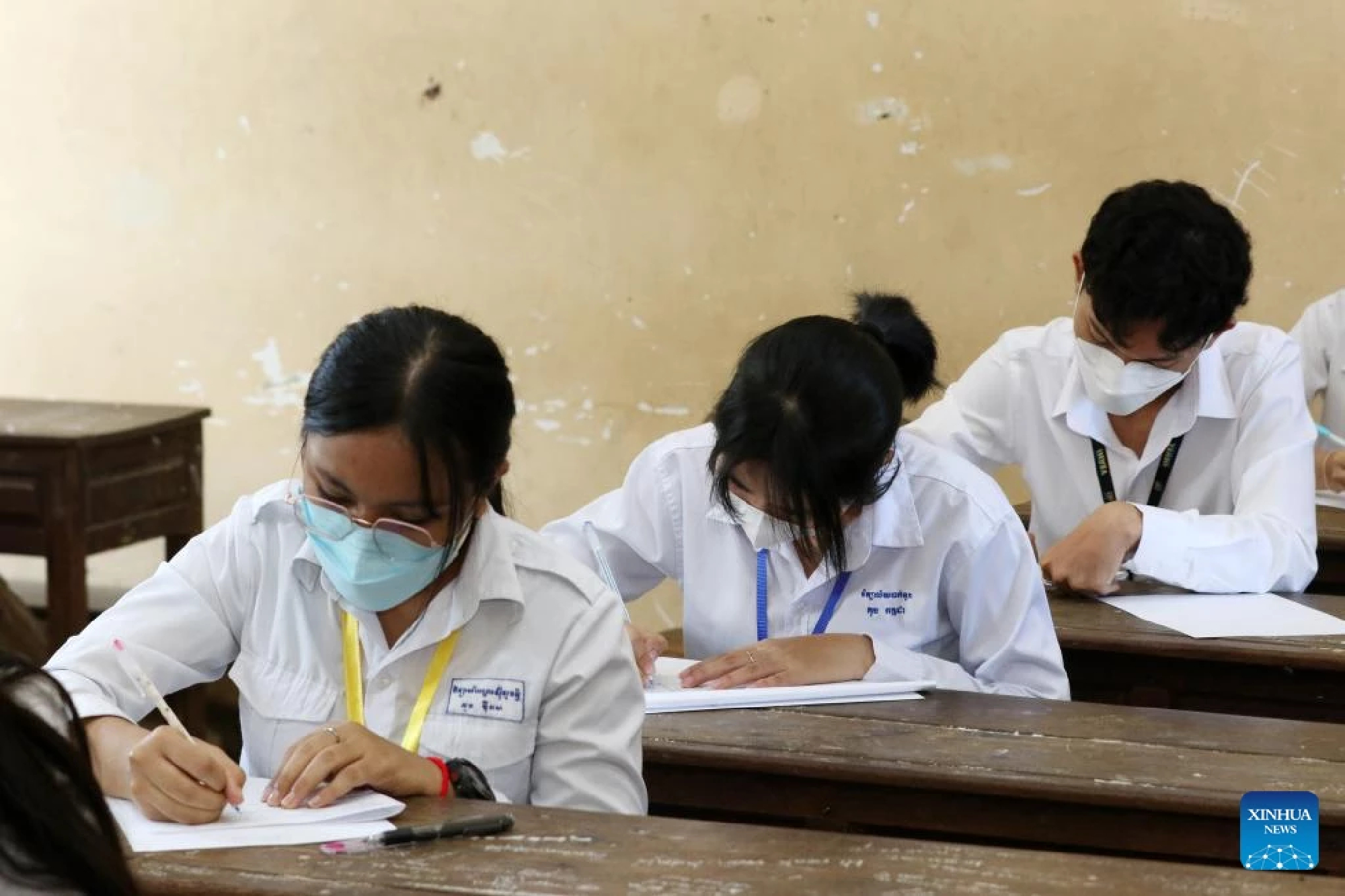


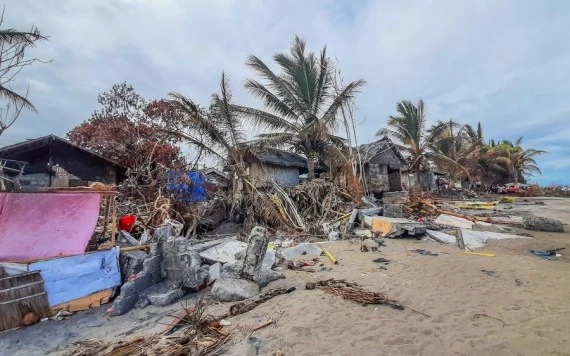 Photo shows a fishing community damaged by Typhoon Rai along a shoreline in Leyte Province, the Philippines, Dec. 22, 2021. (Xinhua)
 Photo shows a fishing community damaged by Typhoon Rai along a shoreline in Leyte Province, the Philippines, Dec. 22, 2021. (Xinhua)


 SootinClaimon.Com