Chinese car maker BYD announced that it would enter the Thailand car market, planning to work with local new energy vehicle dealer RÊVER Automotive, the carmaker said on its Weibo account on Tuesday.
The company plans to participate in this year’s international auto expo in Thailand to display more vehicle models, BYD said.
BYD said that it had sold over 2.3 million new energy vehicles to more than 70 countries and regions as of Aug 9.
In July, the sales of new cars reached 162,530 units, an 183.2 per cent increase year-on-year, and the new energy vehicles sold 162,214 units, jumping 184.7 per cent year-on-year, BYD said.
Thailand’s electric vehicle market has seen explosive growth in recent years, with nearly 30 global automobile makers entering the country’s market, and 100,000 people have found employment in the industry.
By 2030, the output of electric vehicles will account for around 30 per cent of Thailand’s total car production, which will promote the country to become an important new energy vehicle market centre in Southeast Asia, the business news website Caijing said.
Zhang Jie
China Daily
Asia News Network
Asia News Network: The Nation (Thailand), The Korea Herald, The Straits Times (Singapore), China Daily, Jakarta Post, The Star and Sin Chew Daily (Malaysia), The Statesman (India), Philippine Daily Inquirer, Yomiuri Shimbun and The Japan News, Gogo Mongolia, Dawn (Pakistan), The Island (Sri Lanka), Kuensel (Bhutan), Kathmandu Post (Nepal), Daily Star (Bangladesh), Eleven Media (Myanmar), The Phnom Penh Post and Rasmei Kampuchea (Cambodia), The Borneo Bulletin (Brunei), Vietnam News, and Vientiane Times (Laos).
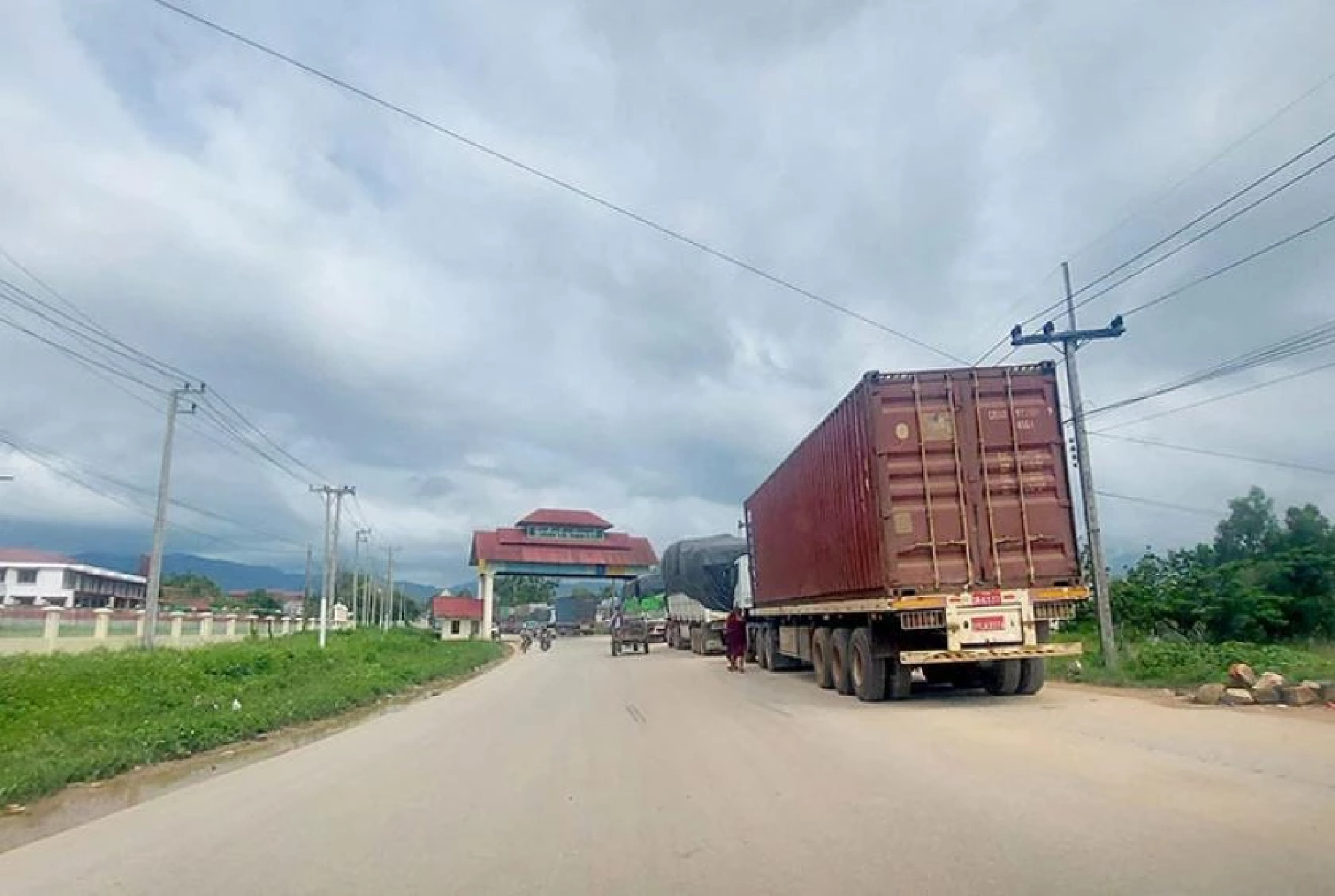
Border trade in Myawady, Kaying State, is being impacted greatly by the weakening Myanmar currency against the US dollar and Thai baht, forcing some border trade activities to stop, according to local merchants.
Amerchant said he was making losses from importing Thai goods due to a difference between the dollar exchange rate set by the Central Bank of Myanmar and the actual market price, and the increasing baht value against the Myanmar kyat.
An entrepreneur engaging in border trade said: “Our company has stopped doing business. We had to buy and deposit dollars into the Myanmar bank for the value of goods exported to Thailand. But the bank paid back in Myanmar currency so we made losses. Most of businesses have stopped their operation. Some companies that could not deposit dollars also faced closures. Trade has been declining gradually in both export and import activities.”
Both Myanmar kyat and Thai baht are used in trade activities in the border town of Myawady. When goods are purchased from Thailand, Myanmar kyats can be paid but that must be the same value as baht. Now, 1,400 baht is equivalent to about 100,000 kyats. Last month, 100,000 kyats had to be paid for an item of goods worth 17,000 baht. But this month, it was Ks121,500.
Myanmar has been allowed to export maize to Thailand without a tariff from February 1 to August 31 this year. Some businesspeople have reportedly stopped exporting maize. In the process, the exporters had to sell their products to Thailand for baht, deposit dollars to the Myanmar bank and withdraw Myanmar kyats.
A local merchant said a friend of his made a loss of over Ks100 million from exporting 20 truckloads of maize.
According to the data from the Ministry of Commerce, border trade at the Myawady border trade zone had declined from April to July this fiscal although it used to have trade most with Thailand compared to other border trade zones on the border.
Myawady border trade zone exported agricultural products worth US$319.403 million from April 1 to July 29, with a decline of US$71.067 million compared to the same period of last fiscal.
Eleven Media
Asia News Network
Asia News Network: The Nation (Thailand), The Korea Herald, The Straits Times (Singapore), China Daily, Jakarta Post, The Star and Sin Chew Daily (Malaysia), The Statesman (India), Philippine Daily Inquirer, Yomiuri Shimbun and The Japan News, Gogo Mongolia, Dawn (Pakistan), The Island (Sri Lanka), Kuensel (Bhutan), Kathmandu Post (Nepal), Daily Star (Bangladesh), Eleven Media (Myanmar), The Phnom Penh Post and Rasmei Kampuchea (Cambodia), The Borneo Bulletin (Brunei), Vietnam News, and Vientiane Times (Laos).
The search for people missing after Monday’s record-breaking downpour in Seoul and its surrounding areas continues, with seven people still unaccounted for as of 6am on Wednesday. Nine have been confirmed dead, and hundreds remain displaced.
Abrother and sister are reported to have been swept into a manhole, when the lid suddenly opened due to a countercurrent.
One missing person disappeared after being swept away by rapid currents while checking on his vehicle in an underground parking lot. A witness reported the incident immediately, and the fire department began searching at 11pm on Monday, but he is yet to be found. Another man went missing in a similar way near another underground parking lot.
Three people are reported missing from Gyeonggi province.
In Gwangju, two people were swept away by a flooded river, and in Namyangju, a teenager disappeared on her way home, swept away by a rapid stream.
Nine people in Seoul and surrounding areas died from house flooding, electrocutions, landslides, and a bus station collapse.
Four victims drowned in two semi-basement homes in Seoul, including a family of three in one and a middle-aged woman in another.
The authorities said that fatalities from the downpour could rise as the clean-up of affected areas continue.
In addition, 570 people from 398 households were forced to leave their homes due to flooding, while 1,253 people from 724 households were temporarily evacuated.
Heavy rain warnings in Seoul and the metropolitan area were lifted Wednesday morning, with rain clouds moving southward toward North and South Chungcheong provinces, southern Gangwon province and North Gyeongsang province.
Asia News Network: The Nation (Thailand), The Korea Herald, The Straits Times (Singapore), China Daily, The Jakarta Post, The Star and Sin Chew Daily (Malaysia), The Statesman (India), Philippine Daily Inquirer, Yomiuri Shimbun and The Japan News, Gogo Mongolia, Dawn (Pakistan), The Island (Sri Lanka), Kuensel (Bhutan), Kathmandu Post (Nepal), Daily Star (Bangladesh), Eleven Media (Myanmar), The Phnom Penh Post and Rasmei Kampuchea (Cambodia), The Borneo Bulletin (Brunei), Vietnam News, and Vientiane Times (Laos).
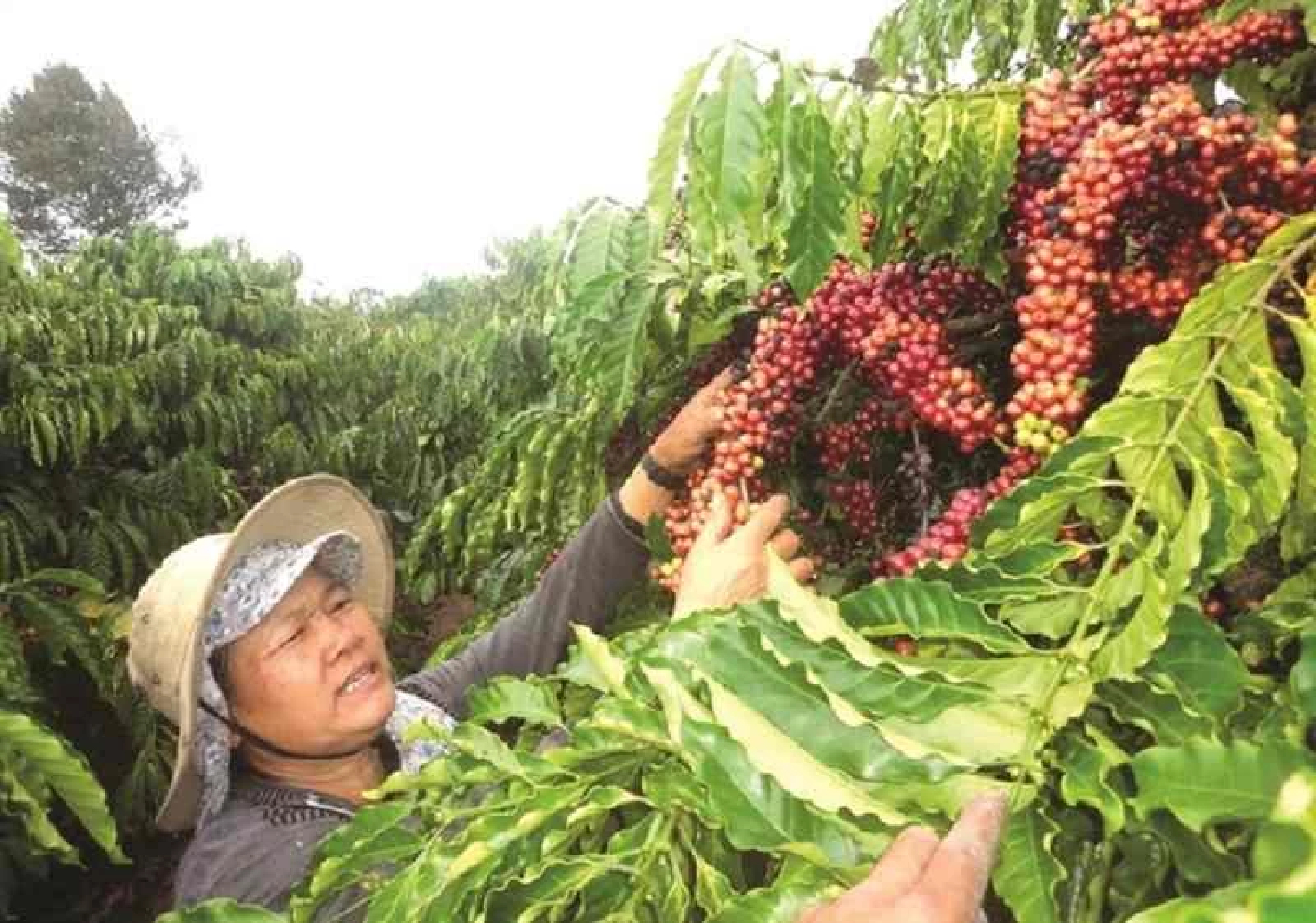
Now, coffee is one of Vietnam’s major export commodities worth more than $3 billion a year, alongside other high-value products such as wood, seafood, cashew nuts, rice, vegetables, and rubber.
The first coffee beans were imported into Vietnam in the 19th century by French colonialists, who realized that the climate of the central highlands was perfect for growing the popular drink.
Arabica was the first variety produced before the high-yielding robusta was introduced in 1908 as well.
In 1986, following the reunification of Vietnam, the Doi Moi (Renewal) economic reforms led to a rise in the privatization of land and commodities. The Government saw potential in coffee as a cash crop for exports and internal usage, so it established state-funded farms and encouraged Central Highlands landowners to cultivate coffee.
In 2021, despite the COVID-19 pandemic, Vietnam’s coffee exports still brought in over $3 billion, contributing to the overall growth of the country’s commodity exports.
During the first five months of this year, Vietnam shipped 889,000 tons of coffee worth over $2 billion abroad, representing a year-on-year rise of 24.2% in volume and 54% in value, according to the Ministry of Industry and Trade.
According to industry insiders, global coffee prices are projected to continue rising in the future, creating a wealth of opportunities for Vietnamese coffee exporters to boost their exports.
Viet Nam News
Asia News Network
Asia News Network: The Nation (Thailand), The Korea Herald, The Straits Times (Singapore), China Daily, Jakarta Post, The Star and Sin Chew Daily (Malaysia), The Statesman (India), Philippine Daily Inquirer, Yomiuri Shimbun and The Japan News, Gogo Mongolia, Dawn (Pakistan), The Island (Sri Lanka), Kuensel (Bhutan), Kathmandu Post (Nepal), Daily Star (Bangladesh), Eleven Media (Myanmar), The Phnom Penh Post and Rasmei Kampuchea (Cambodia), The Borneo Bulletin (Brunei), Vietnam News, and Vientiane Times (Laos).
South Korea will push for fast inbound entry for foreign workers and expand the quota for businesses to hire foreigners to resolve workforce shortages in the industrial sector, economic policymakers said Monday.
The government plans to seek fast entry of 42,000 foreign workers, whose immigration process has been delayed during the period between 2020 and the first half of 2022. In addition, immigration checks for 20,000 expatriates, who are destined to visit Korea on work visas in the second half of 2022, will be streamlined, according to the Finance Ministry.
“As for industries, which have additional demands for manpower despite fast entry, the government will expand the quota for foreign workers in August, and determine the quota for 2023 as soon as possible,” said Deputy Prime Minister and Finance Minister Choo Kyung-ho at a ministerial meeting held to map out measures to vitalize the economy.
The minister expressed worries over the shipbuilding sector, saying that its workforce shortage has aggravated as the number of overseas orders has been increasing.
For only the shipbuilding sector, policymakers are moving to launch an extraordinary quota for “skilled” expatriate workers. Currently, the tally for foreign workers in expertise in the sector remains at about 2,000.
“Despite businesses’ commitment to hiring (more), the number of vacant jobs came to 234,000 as of June, which marked the highest (in more than four years) since February 2018,” he said.
“Some 224,000 of the 234,000 vacant jobs were held by small and medium-sized enterprises with fewer than 300 staff.”
The government will also sell off some state-owned assets that remain idle, the finance minister said.
“The government will sell unused and idle assets worth 16 trillion won ($12.2 billion) or more over the next five years,” he said.
According to the Finance Ministry, the collective value of state-owned land and buildings exceeded 700 trillion won as of 2021, and up to 5 per cent of the assets could be listed for sale to the private sector.
Officials said the planned sale is projected to improve the nation’s fiscal soundness by offsetting massive state spending on pandemic relief.
Critics have been holding the new administration‘s policy drive to slash corporate taxes and income taxes for the wealthy bracket responsible for worsening fiscal status. The fiscal ministry, however, has been downplaying such concern.
At the ministerial meeting, Minister Choo said the government plans to unveil measures to tackle a possible spike in consumer prices ahead of the Chuseok holiday later this week.
He added that the real estate policy on the supply of more homes will also be publicized this week.
The Korea Herald
Asia News Network
Asia News Network: The Nation (Thailand), The Korea Herald, The Straits Times (Singapore), China Daily, Jakarta Post, The Star and Sin Chew Daily (Malaysia), The Statesman (India), Philippine Daily Inquirer, Yomiuri Shimbun and The Japan News, Gogo Mongolia, Dawn (Pakistan), The Island (Sri Lanka), Kuensel (Bhutan), Kathmandu Post (Nepal), Daily Star (Bangladesh), Eleven Media (Myanmar), The Phnom Penh Post and Rasmei Kampuchea (Cambodia), The Borneo Bulletin (Brunei), Vietnam News, and Vientiane Times (Laos).
Baidu Inc announced on Monday that it has secured China’s first permits to offer driverless robotaxi services to the public, thus marking a significant milestone for the autonomous ride-hailing industry that is expected to accelerate large-scale commercial use of self-driving technology.
They said China has taken the lead in the research and development as well as application of self-driving technologies and it is the first country to allow fully driverless paid robotaxi operations.
Apollo Go, Baidu’s autonomous ride-hailing service, is authorized to charge fares for robotaxi services-completely without human drivers in the car-in Chongqing and Wuhan, the capital of Hubei province.
The new permits, which were granted by authorities in Wuhan and Yongchuan district, Chongqing, will allow Baidu to provide paid services for fully driverless robotaxis in designated areas in Wuhan from 9 am to 5 pm, and in Chongqing from 9:30 am to 4:30 pm, with five self-driving vehicles operating in each city.
The service areas cover 13 square kilometres in the Wuhan Economic & Technological Development Zone, and 30 square kilometres in Chongqing’s Yongchuan.
“This is a tremendous qualitative change,” said Wei Dong, vice-president and chief safety operation officer of Baidu’s Intelligent Driving Group, adding that fully driverless cars providing rides on open roads to paying customers mean they have finally come to the moment the industry has been longing for.
To receive the permits, Baidu’s robotaxis have undergone multiple steps of testing and licensing, starting from tests carried out with a safety operator in the drivers’ seat to a safety operator in the passenger seat, before finally receiving authorization to operate autonomous vehicles with no human drivers or operators in the vehicle, the company said.
Zhang Xiang, a researcher at the Automobile Industry Innovation Research Center at the North China University of Technology in Beijing, said approval to operate fully driverless robotaxis in Wuhan and Chongqing is a critical milestone in the transition from Level 3 to Level 4 autonomous driving capability, which means the vehicle can drive by itself under most circumstances without a human backup driver.
“The move is of great significance to dramatically reduce labour costs and lays a solid foundation for bolstering large-scale commercialization of autonomous driving technology in China,” Zhang said.
The manufacturing costs of driverless vehicles’ components, such as lidar sensor systems, have declined along with advances in self-driving technology and the maturity of related industrial chains, he added.
China has caught up with the United States in autonomous driving development, with Wuhan and Chongqing allowing driverless vehicles to carry passengers and charge for such services, said Lyu Jinghong, an intelligent mobility analyst at research firm BloombergNEF.
Lyu said more Chinese cities are expected to follow the two pioneering urban centres by gradually allowing for robotaxi pilots and commercialization, which will help autonomous driving developers improve their technologies and explore business models.
Experts have also warned that firms should proceed cautiously, especially when it comes to public safety.
Fan Fei Fei
China Daily
Asia News Network: The Nation (Thailand), The Korea Herald, The Straits Times (Singapore), China Daily, Jakarta Post, The Star and Sin Chew Daily (Malaysia), The Statesman (India), Philippine Daily Inquirer, Yomiuri Shimbun and The Japan News, Gogo Mongolia, Dawn (Pakistan), The Island (Sri Lanka), Kuensel (Bhutan), Kathmandu Post (Nepal), Daily Star (Bangladesh), Eleven Media (Myanmar), The Phnom Penh Post and Rasmei Kampuchea (Cambodia), The Borneo Bulletin (Brunei), Vietnam News, and Vientiane Times (Laos).
Minister of Environment Say Samal praised a Cambodian enterprise that makes straws from rice and vegetable matter rather than plastic, which he said is overused around the world.
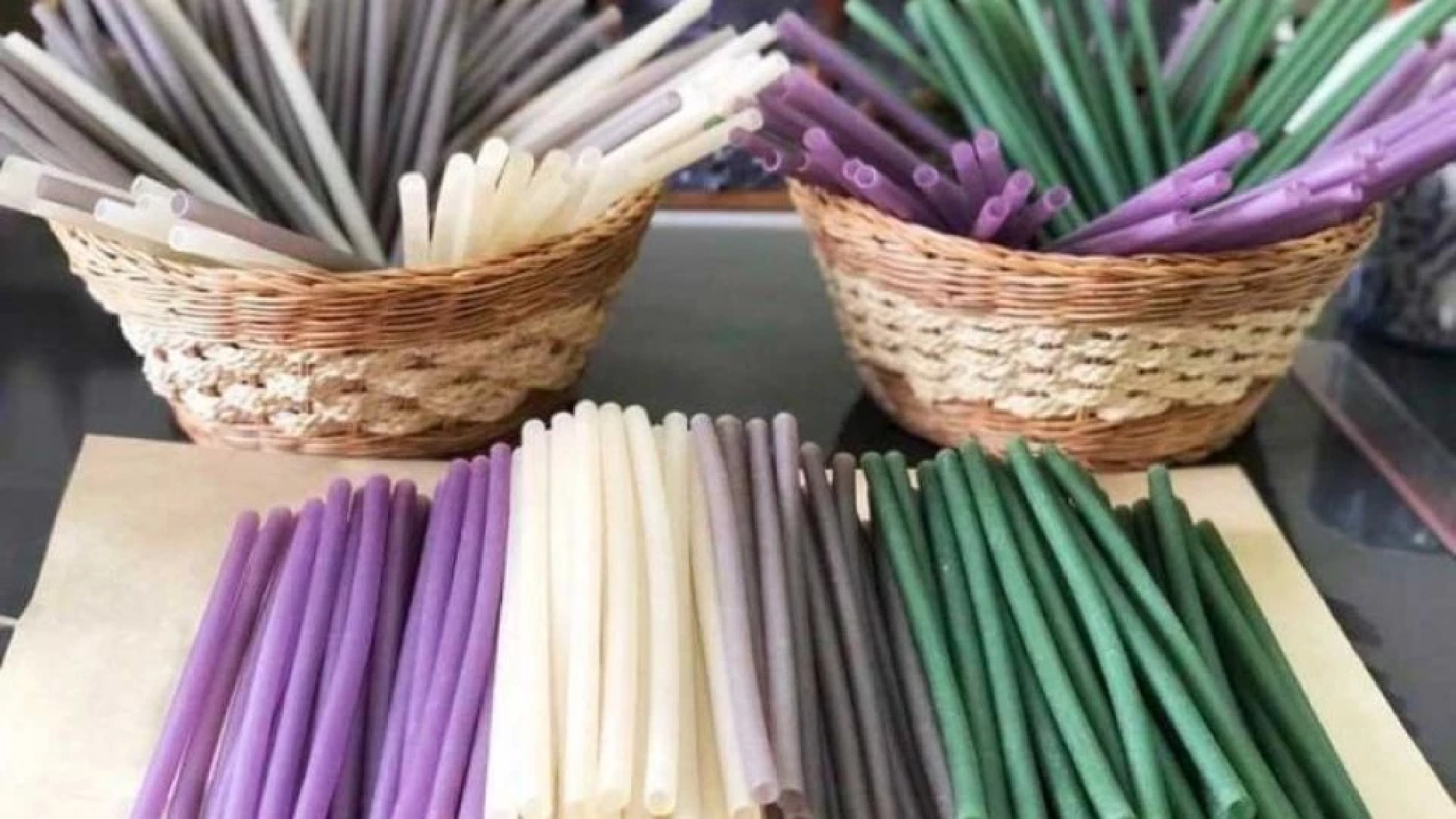
“We did it! We made water straws from rice flour. We can stop using plastic straws now,” he said in a recent social media post, along with some photos of the colourful straws.
The straws are available in many different colours and are made from natural substances such as rice, corn, potatoes and pandan leaves, according to Tith Sokhom, the owner of the enterprise, TK&D Manufacturing.
Sokhom, 40, told The Post: “I began to think about the production of straws from cereals to help reduce the amount of plastic used in Cambodia, and to create employment for young people.”
The enterprise was inaugurated last September and is the first of its kind in the Kingdom.
After seeing environmentally friendly products being produced in other countries, the entrepreneur began to wonder if Cambodia could do something to reduce its use of plastic. After thinking about it for some time, she and her husband launched their business.
TK & D produces straws made from rice flour, which is mixed with other products using imported machinery.
“We produce a wide variety of products, and each has a slightly different taste, depending on the source material,” said Sokhom
As a supporter of the products, Chien Sotheara tries to use them as often as possible.
“They are very efficient and last for long enough to drink a large drink,” Sotheara, who works for the General Department of Taxation, told The Post.
“It both reduces the use of plastics and promotes the use of local raw materials, which are both admirable goals,” he said.
Sotheara said that after drinking water with the straw, he usually ate it. They are as crisp as a wafer cake and taste delicious.
Although the straws are made from rice flour, you can use them without worrying that they will dissolve.
“With cold drinks, they last a long time. After an hour, they become soft, like pasta. They last nearly as long with hot drinks,” said Sokhom.
She said that after finishing your drink you can eat the straw. If you don’t want to do that, you can throw it away and it will break down into dust very quickly.
She explained that rice flour is the main ingredient in the manufacture of straws. It is blended with other products to obtain different colours. The colours are not achieved with chemicals, but with agricultural products.
“If you want green, the rice flour is mixed with pandan leaves. If you want yellow, it’s mixed with mango powder. All of the ingredients are natural,” she said.
After the paste is mixed, a machine squeezes it into long straws and then cuts them to length.
“Currently, we create many flavours and colours, using corn, pandan leaves, carrots and potatoes. We are in the process of devising new flavours,” said Sokhom.
The owner of the enterprise, which employs more than 100 villagers in Krakor district, Pursat province, said that TK&D can produce more than 100 boxes of straws per day. The company is gradually expanding into new markets, including Makro Supermarkets and Sna Dai Me Market.
“The Ministry of environment would like to commend the companies that produce paper cups and straws made from natural materials. These kinds of “bio-plastic” products are easily soluble and do not harm the environment. The use of these items is a win-win for consumers,” said Neth Pheaktra, spokesman for the ministry.
He said that people are now more aware of the environmental costs of using plastic products and have changed their behaviour. Many people have turned to the use of environmentally friendly bags and baskets and reusable water bottles. Many restaurants have implemented zero-plastic principles, as have some schools.
“We urge people to change their attitudes, reduce their consumption of plastics and choose natural products. For example, disposable products like plastic straws should be replaced by ones made of paper, bamboo or lemongrass,” he said.
Sokhom acknowledged that her business did not yet have a large share of the market, as it only began trading at the beginning of 2022.
These are not the first environmentally friendly straws to be sold in Cambodia, but the others are all imported.
Because the demand for these kinds of products is not yet as high as it should be, the market is not yet large, meaning low supply volumes, which makes finding these products seem difficult.
TK&D rice, potato, corn or carrot straws are priced at just 10,000 riels per box of 50 straws
Sokhon was pleased to have been noticed by the environment minister, saying that it was very encouraging to know he had seen them.
“I was very happy to see the minister helping to promote Cambodian products like that. He even introduced the Japanese ambassador to our non-plastic products,” she said.
Hong Raksmey
The Phnom Penh Post
Asia News Network
Asia News Network: The Nation (Thailand), The Korea Herald, The Straits Times (Singapore), China Daily, Jakarta Post, The Star and Sin Chew Daily (Malaysia), The Statesman (India), Philippine Daily Inquirer, Yomiuri Shimbun and The Japan News, Gogo Mongolia, Dawn (Pakistan), The Island (Sri Lanka), Kuensel (Bhutan), Kathmandu Post (Nepal), Daily Star (Bangladesh), Eleven Media (Myanmar), The Phnom Penh Post and Rasmei Kampuchea (Cambodia), The Borneo Bulletin (Brunei), Vietnam News, and Vientiane Times (Laos).
Thai entrepreneurs are exploring business opportunities offered by the new Vientiane Logistics Park and its Thanaleng Dry Port.
On Saturday, more than 200 Thai businesspeople, mostly young entrepreneurs from Thailand’s Chamber of Commerce, visited the US$727 million project being developed on 382 hectares in the Lao capital.
Open for service since December last year, Laos’ first-ever integrated logistics park and dry port has facilitated the flow of goods between Southeast Asian countries and China.
Extensions of the Laos-China and Laos-Thailand railway enable containers to be transferred for onward shipment at the dry port, which has cemented Laos as a new supply chain for the region and beyond.
Welcoming the guests, Vientiane Logistics Park Co Ltd vice president Tee Chee Seng said China, Thailand, Malaysia and Singapore are regularly shipping goods through the dry port.
In the first five months this year, 13,000 containers passed through the dry port.
The linked railways and the dry port offer opportunities for Thai entrepreneurs, thanks to the improved interconnection, Tee Chee Seng said.
Transport service providers in Thailand are shipping locally grown farm produce to the Chinese market of more than 1.3 billion consumers via Loas railways.
Panya Paputsaro, president of Thailand’s Kaocharoen Train Transport Co Ltd, said the dry port has cut transport times and costs for exports to China considerably.
The railways and the China-Europe rail network have lowered the cost of exporting goods from Thailand to Europe by as much as 40 per cent compared to transport by sea.
So far, the logistics park and dry port provide only transport and logistics services, but the developer plans investment zones where investors will be encouraged to set up businesses.
The plans include an export processing zone that will offer a more competitive business environment and eventually become a manufacturing export hub for Southeast Asian countries and the global consumer market.
Investors in these zones will benefit from incentives including tax breaks, as well as trade privileges that major economies like the United States and Europe have extended to least developed countries like Laos.
Products manufactured here will be eligible to name Laos as the country of origin, enabling them to enjoy these trade privileges, Tee Chee Seng said.
In addition, the free trade zone will house the main business activities, including the Halal hub and agriculture production park, technology park, office zone, SME area, and commercial zone.
The Lao developer also plans to build Shenzhen-like and Hong Kong-like shopping hubs in these zones to provide people in the region with new and exciting shopping experiences.
Tee Chee Seng said his company is preparing everything necessary for efficient business operation, including infrastructure and legal aspects and procedures, meaning that businesses need to invest only capital and know-how.
The whole project is expected to be fully complete within five to seven years, he added.
The Lao developer said the dry port and logistics park will also link businesses to markets in the Pacific region through the Vung Ang seaport in Vietnam’s central Ha Tinh province, as the logistics park and the seaport are part of the packaged Lao Logistics Link (LLL) project.
A planned railway to connect the seaport to Vientiane and a planned logistics park in Khammuan province are also part of the LLL project, which will provide even more cost-effective transport and logistics services.
Vientiane Times
Asia News Network
Asia News Network: The Nation (Thailand), The Korea Herald, The Straits Times (Singapore), China Daily, The Jakarta Post, The Star and Sin Chew Daily (Malaysia), The Statesman (India), Philippine Daily Inquirer, Yomiuri Shimbun and The Japan News, Gogo Mongolia, Dawn (Pakistan), The Island (Sri Lanka), Kuensel (Bhutan), Kathmandu Post (Nepal), Daily Star (Bangladesh), Eleven Media (Myanmar), The Phnom Penh Post and Rasmei Kampuchea (Cambodia), The Borneo Bulletin (Brunei), Vietnam News, and Vientiane Times (Laos).
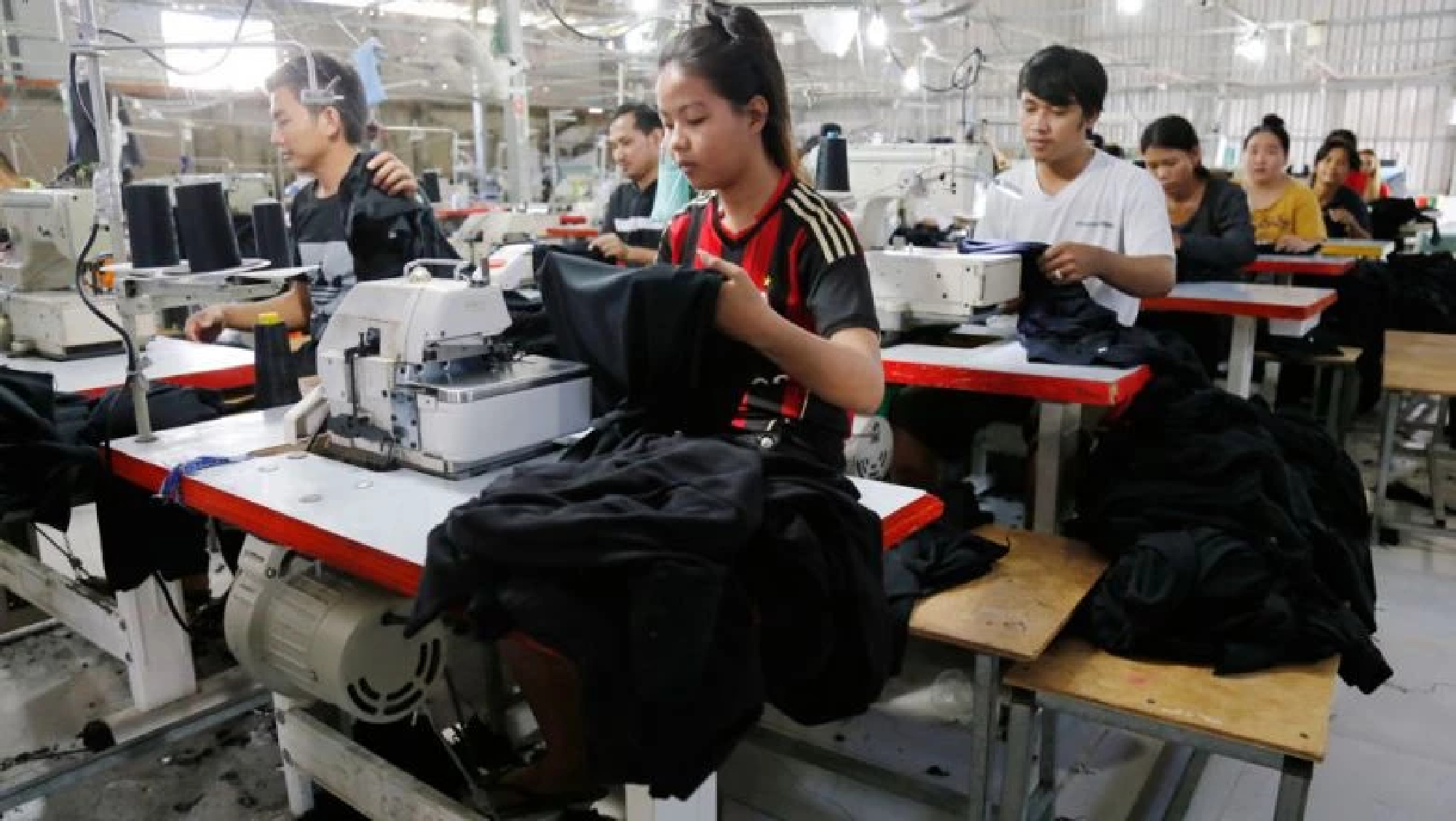
The Cambodian government has expressed concern over a drop in orders from the West after members of the country’s main garment association reported reductions and revisions in contracts.
Garment Manufacturers Association in Cambodia (GMAC) secretary-general Ken Loo said the unstable global environment and increasing likelihood of an economic downturn in western nations, which constitute some of the biggest buyers of Cambodian garments, have sparked “serious concern over the export situation for the second half”.
He said some of the “many” GMAC members that reported reductions and revisions in orders have gone so far as to seek advice from the association’s legal team on the procedures for a partial suspension of production.
Loo affirmed that GMAC is conducting an “extensive survey among all members” to more accurately gauge the situation surrounding the purchase orders.
He pointed out that employers are now “going through a huge jump in labour-related costs”, with contributions to a new pension scheme for private sector workers set to be carried out from October 1 and the to-be-determined sectoral minimum wage to take effect on January 1.
“This double cost increase is serious enough to be worried, not to mention other issues like higher logistics cost and higher cost of compliance which is increasing [yearly],” he said.
He argued that while export growth is typically regarded as positive, figures can be misleading and don’t account for the net incomes of the businesses involved after all costs are deducted.
“Statistically, the sector profit margin is running very low reflecting from the ratio of value-added versus wage plus other labour-related costs,” Loo said.
For example, only 39 per cent of companies in Cambodia made a profit last year, 43 per cent lost money, while 18 merely broke even, he said, citing a study by the Japan External Trade Organisation (JETRO).
Going forward, Cambodia must take a proactive and cautious approach to issues that could put more cost pressure on companies, he suggested.
He added that the Cambodia Garment, Footwear and Travel Goods Sector Development Strategy 2022-2027 launched in March has to be “followed through in a speedy and forceful manner to help cushion the coming downturn, which is very real”.
Commerce Ministry spokesman Penn Sovicheat said the ministry sympathises with GMAC’s concerns over the Ukraine conflict and other issues affecting the West that could jeopardise the flow of purchase orders for Cambodian textile-related products.
Although acknowledging that a protracted struggle in Ukraine could reduce European purchasing power, Sovicheat remarked that Cambodia has undergone similar experiences during the worst of the Covid-19 crisis.
Offering a solution, he called on exporters to look to destinations closer to home, and partners through free trade agreements (FTA), as Covid, the Ukraine crisis and soaring shipping costs hamper trade with more distant markets.
Hong Vanak, a researcher at the Royal Academy of Cambodia, underscored that the problem of dwindling orders from Europe requires public and private stakeholders to work together and explore new markets and recalibrate trade strategies with existing ones to facilitate the export of manufactured goods, thereby avoiding serious repercussions.
“Reduced spending in western countries may be a factor in the decline in orders from this market. Therefore, stakeholders should also reflect on expenditures, such as transportation costs among other things, and make it easier for producers to pump out more,” he said.
According to the General Department of Customs and Excise, Cambodia exported US$6.6 billion worth of garments, footwear and travel goods in the first half of this year, up by 40 per cent from the $4.72 billion logged in the same period last year. “Travel goods” include suitcases, backpacks, handbags, wallets and similar items.
The Phnom Penh Post
Asia News Network
Asia News Network: The Nation (Thailand), The Korea Herald, The Straits Times (Singapore), China Daily, Jakarta Post, The Star and Sin Chew Daily (Malaysia), The Statesman (India), Philippine Daily Inquirer, Yomiuri Shimbun and The Japan News, Gogo Mongolia, Dawn (Pakistan), The Island (Sri Lanka), Kuensel (Bhutan), Kathmandu Post (Nepal), Daily Star (Bangladesh), Eleven Media (Myanmar), The Phnom Penh Post and Rasmei Kampuchea (Cambodia), The Borneo Bulletin (Brunei), Vietnam News, and Vientiane Times (Laos).
Over 520,000 dogs are being raised for meat in South Korea as of this February, with about 388,000 slaughtered a year, a study revealed Monday.
There are a total of 1,156 dog farms across the country and they each keep an average of 450 animals. The total number of restaurants serving dog meat across the country is 1,666.
These are the findings of a two-month field study conducted by the country’s government-civilian consultative body on dog meat consumption, which was announced Monday.
The panel also revealed the results of its public opinion survey, conducted in May on 1,514 adults here. A total of 55.8 per cent said Korea should stop eating dog meat. Some 28.4 per cent of the respondents said the practice should be preserved.
A slight majority of the people, 52.7 per cent, disagreed with legalizing the dog meat trade, which currently stands in a legal grey area. Close to 40 per cent agreed.
Eighty-eight per cent of the respondents said they don’t eat dog meat.
The dog meat task force, comprised of 21 members, was launched in December to come up with policy recommendations on dog meat consumption in order for the government to take measures to deliver them, including related law revisions.
Its operations, originally set to end in April, have been extended for further discussions on the sensitive issue.
Asia News Network: The Nation (Thailand), The Korea Herald, The Straits Times (Singapore), China Daily, Jakarta Post, The Star and Sin Chew Daily (Malaysia), The Statesman (India), Philippine Daily Inquirer, Yomiuri Shimbun and The Japan News, Gogo Mongolia, Dawn (Pakistan), The Island (Sri Lanka), Kuensel (Bhutan), Kathmandu Post (Nepal), Daily Star (Bangladesh), Eleven Media (Myanmar), The Phnom Penh Post and Rasmei Kampuchea (Cambodia), The Borneo Bulletin (Brunei), Vietnam News, and Vientiane Times (Laos).






 SootinClaimon.Com