PH lawmaker wants ‘political prostitutes’ punished

#SootinClaimon.Com : ขอบคุณแหล่งข้อมูล : หนังสือพิมพ์ The Nation.

https://www.nationthailand.com/international/ann/40018673


A bill penalizing “political prostitutes,” or politicians who frequently switch political parties, has been filed in the House of Representatives where ironically, changing one’s political affiliation has become the norm after every election.

PH lawmaker wants 'political prostitutes' punished

Through his House Bill No. 1536 or the proposed Anti-Political Prostitute Act, Surigao del Rep. Robert Ace Barbers seeks to ban political turncoatism which, according to him, has become a “popular practice in Philippine politics, especially during [the] election period,” thus weakening the party system and undermining democracy.

“Due to a lack of ideological grounds…, [party] members tend to shift to another party when [an] opportunity comes or when there is a need for them to survive. They change political (parties) to continue access to valuable resources of the president. They will drop every ounce of principle in exchange for power,” he said.

Barbers’ bill defines political turncoatism as “the change of political party affiliation during an elective official’s term of office.” It also applies to those who switch parties within a year before or after an election, including independent or party list candidates, regardless of whether or not they won.

Exemptions

Not covered by the bill are politicians who switched parties before it took effect; those whose parties were abolished, merged or involved in a coalition; or those who were expelled provided their acts do not constitute political opportunism.

Political turncoats can be reported by registered voters to the Commission on Elections (Comelec) whose members will act on the complaint.

For elected public officials, the penalty will be forfeiture of office while for independent candidates, or members of a political party or party-list group, it will be a ban from running in the next two succeeding elections.

For winning or losing elective officials, they will be disqualified from appointment to any post in a public or government office for three years after the expiration of their current term or the office they vied for.

Refund with surcharge

If they join a new political party, they will not be allowed to assume any executive or administrative position in addition to being ordered to refund all the money they received from the party, plus 25 per cent surcharge.

Should the proposed bill be passed into law, all political parties must submit to the Comelec a complete list of their members, updated every six months. Failure to comply with the requirement will mean the suspension of their accreditation for one year and eventual cancellation for a succeeding offence.

According to Barbers, his bill will “ensure a genuine party system and promote party loyalty, discipline, and adherence to ideological principles.”

‘Societal change’

“This will also provide us hope that societal change can be achieved for a progressive nation,” he said.

Barbers’ bill, however, may face rough waters under the 19th Congress where the dominant party, Lakas-CMD, has seen its ranks increase with the defection of around 30 lawmakers less than two months after the new administration took over on June 30.

Jeannette I. Andrade 

Philippine Daily Inquirer

Asia News Network

Asia News Network: The Nation (Thailand), The Korea Herald, The Straits Times (Singapore), China Daily,  Jakarta Post, The Star and Sin Chew Daily (Malaysia), The Statesman (India), Philippine Daily Inquirer, Yomiuri Shimbun and The Japan News, Gogo Mongolia,  Dawn (Pakistan),  The Island (Sri Lanka), Kuensel (Bhutan), Kathmandu Post (Nepal), Daily Star (Bangladesh), Eleven Media (Myanmar), The Phnom Penh Post and Rasmei Kampuchea (Cambodia), The Borneo Bulletin (Brunei), Vietnam News, and Vientiane Times (Laos).
 

Published : August 09, 2022

By : Philippine Daily Inquirer

S Koreans look the other way amid likely resurgence of new Covid wave

#SootinClaimon.Com : ขอบคุณแหล่งข้อมูล : หนังสือพิมพ์ The Nation.

https://www.nationthailand.com/international/ann/40018649


South Koreans are not letting rising cases of Covid-19 get in the way of their summer plans, with travel and businesses already freed up by current policies.

S Koreans look the other way amid likely resurgence of new Covid wave

So far in August, an average of 101,290 cases and 31 deaths were reported per day, climbing from the 80,648 cases and 24 deaths seen between July 25-31.

Over two days on Friday and Saturday, 92 patients with Covid-19 died — the highest since mid-May in the aftermath of a deadly Omicron wave that peaked in March.

In recent briefings, the government’s Covid-19 response headquarters has vowed that social distancing won’t be returning, while expanding the eligibility of fourth vaccine doses to people in their 50s.

As the cumulative count of cases here crossed 20 million, which is 38 per cent of the entire South Korean population, Vice Minister of Health and Welfare Lee Ki-il said in an August 3 address that Covid-19-related restrictions such as social distancing would not be reinstated.

“We know enough about the virus now to be able to continue normal lives and still keep things under control,” he said.

Apart from a seven-day isolation requirement for people with a positive test and an indoors face mask mandate, most restrictions in the country have been lifted since April.

South Koreans are “less worried” about Covid-19 now than they had been during the previous stages of the pandemic, according to Yoo Myoung-soon, a public health communications professor at Seoul National University.

Her research team’s July 1-3 survey of 1,028 adults aged 18 and older found that while 49 per cent of the respondents said they believed another resurgence in the coming months was “likely”, but they perceived the disease to be less threatening.

The possible arrival of the next Covid-19 wave is being shrugged off, at least for the time being.

After two consecutive summers of social distancing, partying has returned to parks and beaches.

Music festivals, live concerts and other mass-gathering events are back in action. A number of them, including K-pop star Psy’s “water cannon” concerts, have already led to self-reported cases among attendees.

Some of the summer revellers say they are “revenge partying” to make up for the years lost to the pandemic.

One Seoul resident in his early 30s, who spent the weekend in Incheon for a rock festival, said he was “determined to enjoy the summer while it lasts. It might not be long before we’re back to social distancing,” he said, adding that he was fully vaccinated.

“I made sure I was being responsible over two years, not going out and staying isolated. I don’t think I can take another year of that again,” said a Gimpo resident in her late 20s, who returned from a three-day trip to Jeju in late July. She said she’s gotten three shots before she was infected in April.

Travels across the country have been on the rise with the dawn of the summer holiday season, according to the Ministry of Health and Welfare’s August 3 analysis of smartphone data. The ministry said travel to regions outside Seoul has increased by 11 per cent during the latter half of July compared to the preceding half of the month.

Now that post-arrival quarantines and other travel restrictions are gone, more South Koreans are flying again.

South Korea’s main Incheon Airport closed in July with an estimated 1,738,706 passengers, marking a nearly sixfold rise from the same month last year’s 289,990. At Gimpo Airport, some 258,000 passengers flew domestically over the final weekend of July, comprising a year-on-year rise of 25 per cent.

Contrary to assurances from top officials, however, hospitals fear that some of the nightmares suffered in the past surges of the pandemic could be repeated.

In July, at least four children aged 10 years or younger died from Covid-19 while waiting for an available hospital bed. As of 5pm last Saturday, 37 per cent of all critical care beds have filled up.

Covid-19 response policies are backpedalling despite the worsening signs.

In late January, as the BA.1 subvariant began dominating local cases, South Korea switched to an “Omicron response plan”, which entails offering “focused protection” to at-risk groups while having minimal restrictions for the rest of the population.

Starting this month, however, the Health Ministry announced it was ending remote monitoring of older adults aged 60 and older and others who are clinically vulnerable while they are in home isolation from Covid-19. By default, patients of all ages and risk profiles isolate at home unless they develop serious symptoms.

Over the Omicron phase of the pandemic, South Korea has adopted policies that “cut down on the administrative burden, opting to rely mostly on pharmaceutical interventions”, said Dr Oh Ju-hwan, a public health policy professor at Seoul National University.

But access to oral treatments remains restricted, with only about 290,000 patients having been prescribed Paxlovid between January 14 and July 14 this year. Omicron-adapted vaccines are not anticipated to become available here until much later in the year.

Infectious disease professor Dr Kim Woo-joo of Korea University worried that the summer of freedom is “likely to be short-lived”.

“Unfortunately, reinfections are increasingly becoming a common experience due to the BA.5 subvariant’s rise to dominance and waning immunity, among other factors,” he said.

The Korea Herald

Asia News Network

Published : August 08, 2022

By : The Korea Herald

Japan develops humanoid to tackle tasks too dangerous for humans

#SootinClaimon.Com : ขอบคุณแหล่งข้อมูล : หนังสือพิมพ์ The Nation.

https://www.nationthailand.com/international/ann/40018646


A laboratory in Japan is developing a potentially life-saving industrial robot that allows its operator, via virtual reality, to grasp and lift heavy objects as if using their own hands.

Japan develops humanoid to tackle tasks too dangerous for humans

The robot, which weighs about 450 kilograms, can be attached to a crane to work in high places, including carrying out inspections and maintenance of railway overhead wires. The virtual reality gear worn by the operator provides a robot’s-eye view, in addition to force feedback to give the operator a sense of what is being lifted.

The robot — dubbed “jinki”, or humanoid machine — is being developed by Man-Machine Synergy Effectors Inc in Kusatsu, Shiga Prefecture. Its president, Kanaoka Hakase is a 50-year-old robot researcher and visiting professor at Ritsumeikan University who started his own company in 2007.

The company has no production plant but earns money from patent royalties and other fees, by collaborating with companies and other entities that want to use its robots.

Kanaoka said that after seeing many industrial robots in Japan, he began to wonder why the technology was not being used to save lives in the aftermath of the 2011 Great East Japan Earthquake.

The new robot’s development began after West Japan Railway Co consulted Kanaoka about using a robot to prevent workplace accidents such as workers falling from overhead wires or being electrocuted during maintenance.

“We want to eliminate physical hard work through robotics,” Kanaoka said.

The company is currently conducting demonstrations of the new robot, with the aim of putting it into practical use in the spring of 2024.

The company is also developing a larger robot that walks on two legs, aiming to expand its functions to inspections of tunnels and bridges.

The company’s robots, including the walking robot with a height of 4 to 5 metres, are scheduled to be displayed at the 2025 Osaka-Kansai Expo.

The Japan News

Asia News Network

Asia News Network: The Nation (Thailand), The Korea Herald, The Straits Times (Singapore), China Daily, The Jakarta Post, The Star and Sin Chew Daily (Malaysia), The Statesman (India), Philippine Daily Inquirer, Yomiuri Shimbun and The Japan News, Gogo Mongolia,  Dawn (Pakistan),  The Island (Sri Lanka), Kuensel (Bhutan), Kathmandu Post (Nepal), Daily Star (Bangladesh), Eleven Media (Myanmar), The Phnom Penh Post and Rasmei Kampuchea (Cambodia), The Borneo Bulletin (Brunei), Vietnam News, and Vientiane Times (Laos).

Published : August 08, 2022

By : The Japan News

Deportation for man with monkeypox, three-year ban

#SootinClaimon.Com : ขอบคุณแหล่งข้อมูล : หนังสือพิมพ์ The Nation.

https://www.nationthailand.com/international/ann/40018641


The Ministry of Interior’s General Department of Immigration (GDI) has elected to expel the Nigerian monkeypox patient who fled Thailand after testing positive and will ban him from entering Cambodia for three years.

Deportation for man with monkeypox, three-year ban

The man, Osmond Chihazirim Nzerem, was officially declared recovered from the disease on August 5 and dispatched by the Ministry of Health into the custody of the GDI the following day.

Nzerem fled to Cambodia from Thailand last month, prompting an all-out manhunt to prevent the contagious disease from spreading. Police found and detained him on July 23 near Doeum Thkov Market in the capital’s Chamkarmon district and were admitted to the Khmer-Soviet Friendship Hospital.

GDI director-general Kirth Chantharith said on August 7 that the 27-year-old man would certainly be deported for entering the country illegally, though could not yet confirm a specific date.

“We are preparing the procedure to expel him from Cambodia. Under the appropriate sub-decree, he will be barred from entering the Kingdom for three years. He is currently arranging finances for his flights home and is being held in detention, pending his departure,” he said.

According to health ministry spokeswoman Or Vandine, Nzerem was discharged on August 6 after recovering and testing negative. She called on the public to maintain protective health measures.

“I want all members of the public to join us in taking all reasonable measures to prevent the spread of monkeypox,” she said.

Phnom Penh municipal deputy governor Keut Chhe said on August 7 that none of the five people who had been in contact with the man had developed any symptoms. Although they had tested negative for monkeypox, they were all instructed to self-isolate for 21 days.

“We have been following up on the health of these five. I will update the public when their quarantine has been completed and when we allow them to go free,” he said.

The ministry advised that symptoms of monkeypox may include a fever of over 38.5 degrees

Celsius, headaches, muscle aches, swollen lymph nodes, chills and exhaustion. Also among the symptoms is a rash that can look like pimples or blisters that appears on the face, inside the mouth and on other parts of the body like the hands, feet, chest or genitals.

To prevent transmission, it is advised against close, skin-to-skin contact with people who have developed a rash, touching the rash or scabs of a person with monkeypox or sharing eating utensils or cups.

If in doubt, members of the public should contact the ministry’s 115 hotline immediately.

The Phnom Penh Post

Asia News Network

Asia News Network: The Nation (Thailand), The Korea Herald, The Straits Times (Singapore), China Daily,  Jakarta Post, The Star and Sin Chew Daily (Malaysia), The Statesman (India), Philippine Daily Inquirer, Yomiuri Shimbun and The Japan News, Gogo Mongolia,  Dawn (Pakistan),  The Island (Sri Lanka), Kuensel (Bhutan), Kathmandu Post (Nepal), Daily Star (Bangladesh), Eleven Media (Myanmar), The Phnom Penh Post and Rasmei Kampuchea (Cambodia), The Borneo Bulletin (Brunei), Vietnam News, and Vientiane Times (Laos).

Published : August 08, 2022

By : Reuters

Hong Kong makes it mandatory for students to complete national education courses

#SootinClaimon.Com : ขอบคุณแหล่งข้อมูล : หนังสือพิมพ์ The Nation.

https://www.nationthailand.com/international/40018638


Hong Kong college students are expected to have a better understanding of national development as completing national education courses has become a requirement for graduation.

Hong Kong makes it mandatory for students to complete national education courses

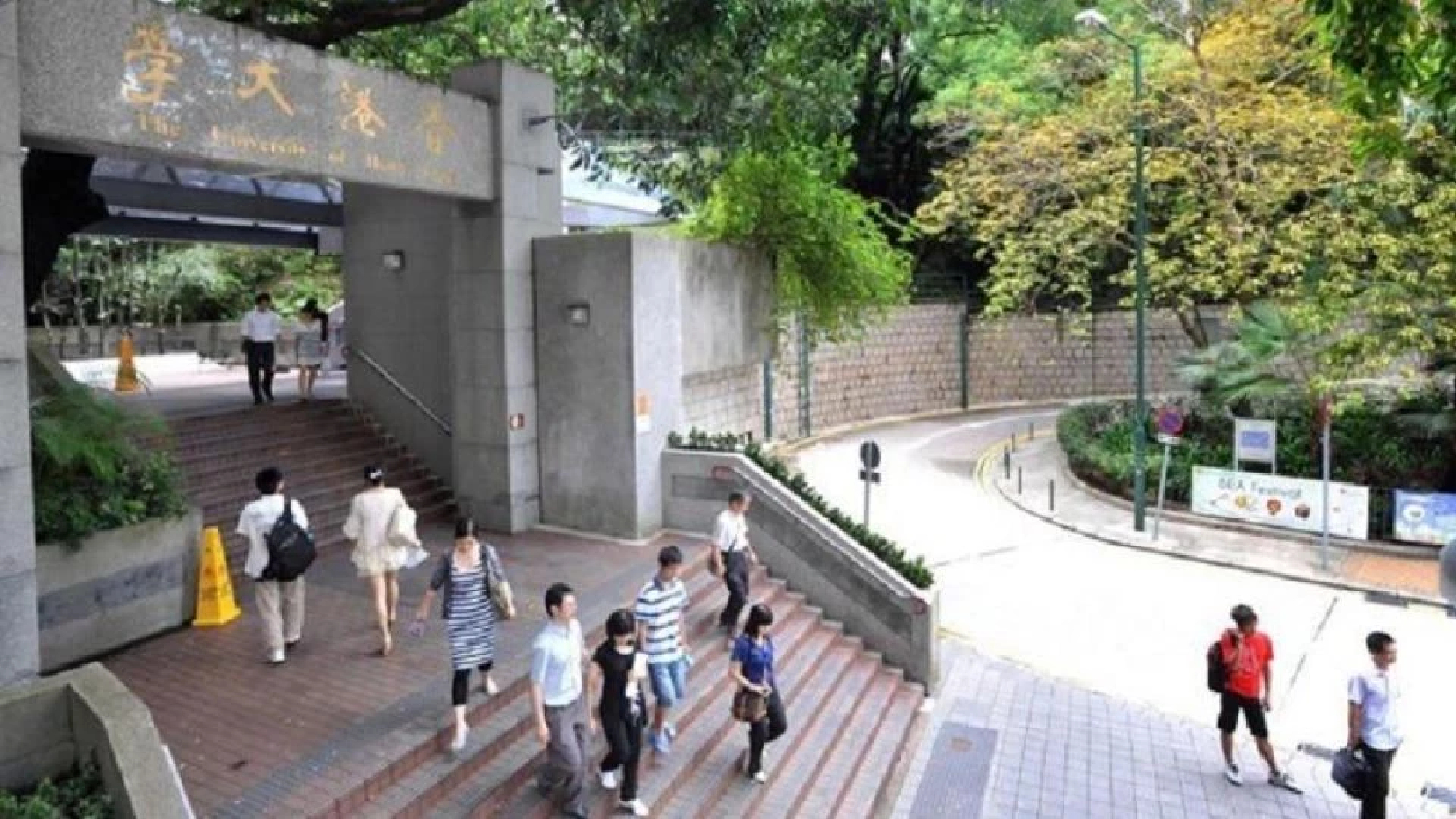
The eight public universities in Hong Kong have launched national education courses one after another to inform students on the Basic Law, the National Security Law for Hong Kong, and other elements including the city’s legal systems and the development of the Guangdong-Hong Kong-Macao Greater Bay Area.

The curriculum upgrade came three years after the city was rocked by incessant violence and street vandalism in 2019 and two years after the National Security Law for Hong Kong was introduced on June 30, 2020.

The eight public universities in Hong Kong have launched national education courses one after another, two years after the National Security Law for Hong Kong was introduced on June 30, 2020

On July 25, the University of Hong Kong announced in its email to students that all students will be required to complete a non-credit online course-Introduction to the Constitution, the Basic Law and the National Security Law-in the academic year 2022/23.

Students can take this course in any semester. Those who will graduate in 2022/23 and thereafter will need to pass the course to graduate.

Similarly, Hong Kong Polytechnic University has adopted the national education curriculum-a of law-abiding leadership education featuring modern Chinese history, national security, and the Hong Kong National Security Law for all four-year undergraduate students starting the 2021/22 academic year.

In a reply to China Daily, PolyU said it will extend the national education curriculum to all senior year students in top-up degree courses and postgraduate students in different forms in the upcoming 2022/23 academic year.

Around 92 per cent to 95 per cent of the PolyU students surveyed in the two semesters agreed that they would strive to serve as socially responsible leaders. They also agreed the course equipped them with knowledge about law-abiding behaviour and national security

The school said student feedback on the National Education has been positive and encouraging, citing a post-lecture evaluation, which surveyed students taking the law-abiding leadership course in the 2021/22 academic year. Around 92 per cent to 95 per cent of the students surveyed in the two semesters agreed that they would strive to serve as socially responsible leaders. They also agreed the course equipped them with knowledge about law-abiding behaviour and national security.

The Chinese University of Hong Kong is also planning to launch two mandatory courses, with one focusing on knowing the country and the other centring on the national constitutional order and its relation with Hong Kong in the next academic year for all undergraduate students.

Meanwhile, Hong Kong University of Science and Technology will roll out a new compulsory self-learning noncredit online course covering the Constitution, the Basic Law, the National Security Law for Hong Kong and the Hong Kong legal system. Students will need to pass the tests.

In addition, starting from the 2023/24 academic year, students of the Education University of Hong Kong will be required to take an inter-faculty course in the Greater Bay Area. The university will also arrange for all undergraduate students to visit the Greater Bay Area in stages at the same time.

Welcoming the initiatives, lawmaker Tang Fei said he is happy to see that all public universities in Hong Kong have voluntarily rolled out national education courses.

As higher education institutions, the universities are expected to offer more in-depth information and thus help raise young people’s awareness of the importance of national security more effectively, Tang added.

China Daily

Asia News Network

Asia News Network: The Nation (Thailand), The Korea Herald, The Straits Times (Singapore), China Daily,  Jakarta Post, The Star and Sin Chew Daily (Malaysia), The Statesman (India), Philippine Daily Inquirer, Yomiuri Shimbun and The Japan News, Gogo Mongolia,  Dawn (Pakistan),  The Island (Sri Lanka), Kuensel (Bhutan), Kathmandu Post (Nepal), Daily Star (Bangladesh), Eleven Media (Myanmar), The Phnom Penh Post and Rasmei Kampuchea (Cambodia), The Borneo Bulletin (Brunei), Vietnam News, and Vientiane Times (Laos).
 

Published : August 08, 2022

By : China Daily

Escaped Nigerian patient recovers from monkeypox, faces legal action

#SootinClaimon.Com : ขอบคุณแหล่งข้อมูล : หนังสือพิมพ์ The Nation.

https://www.nationthailand.com/international/40018607


The Nigerian monkeypox patient who fled from Thailand to Cambodia has recovered and was discharged from hospital on Saturday, the Cambodian Health Ministry’s spokesperson Or Vandine said.

Escaped Nigerian patient recovers from monkeypox, faces legal action

The patient was detained in Phnom Penh on July 23, one day after lab results in Thailand confirmed he had monkeypox.

Vandine said the Khmer-Soviet Hospital discharged the man when his negative test result was confirmed at the Pasteur Institute Laboratory on Friday.

“This person has been handed over to the authorities, who may continue with any legal procedures deemed necessary,” she said.

“The public is urged to be careful and to continue implementing preventive measures to protect themselves from the spread of monkeypox.”

The Phnom Penh Post

Asia News Network

Asia News Network: The Nation (Thailand), The Korea Herald, The Straits Times (Singapore), China Daily, The Jakarta Post, The Star and Sin Chew Daily (Malaysia), The Statesman (India), Philippine Daily Inquirer, Yomiuri Shimbun and The Japan News, Gogo Mongolia,  Dawn (Pakistan),  The Island (Sri Lanka), Kuensel (Bhutan), Kathmandu Post (Nepal), Daily Star (Bangladesh), Eleven Media (Myanmar), The Phnom Penh Post and Rasmei Kampuchea (Cambodia), The Borneo Bulletin (Brunei), Vietnam News, and Vientiane Times (Laos).

Published : August 07, 2022

By : The Phnom Penh Post

55 Thai tourists go missing on South Korea’s Jeju Island

#SootinClaimon.Com : ขอบคุณแหล่งข้อมูล : หนังสือพิมพ์ The Nation.

https://www.nationthailand.com/international/40018606


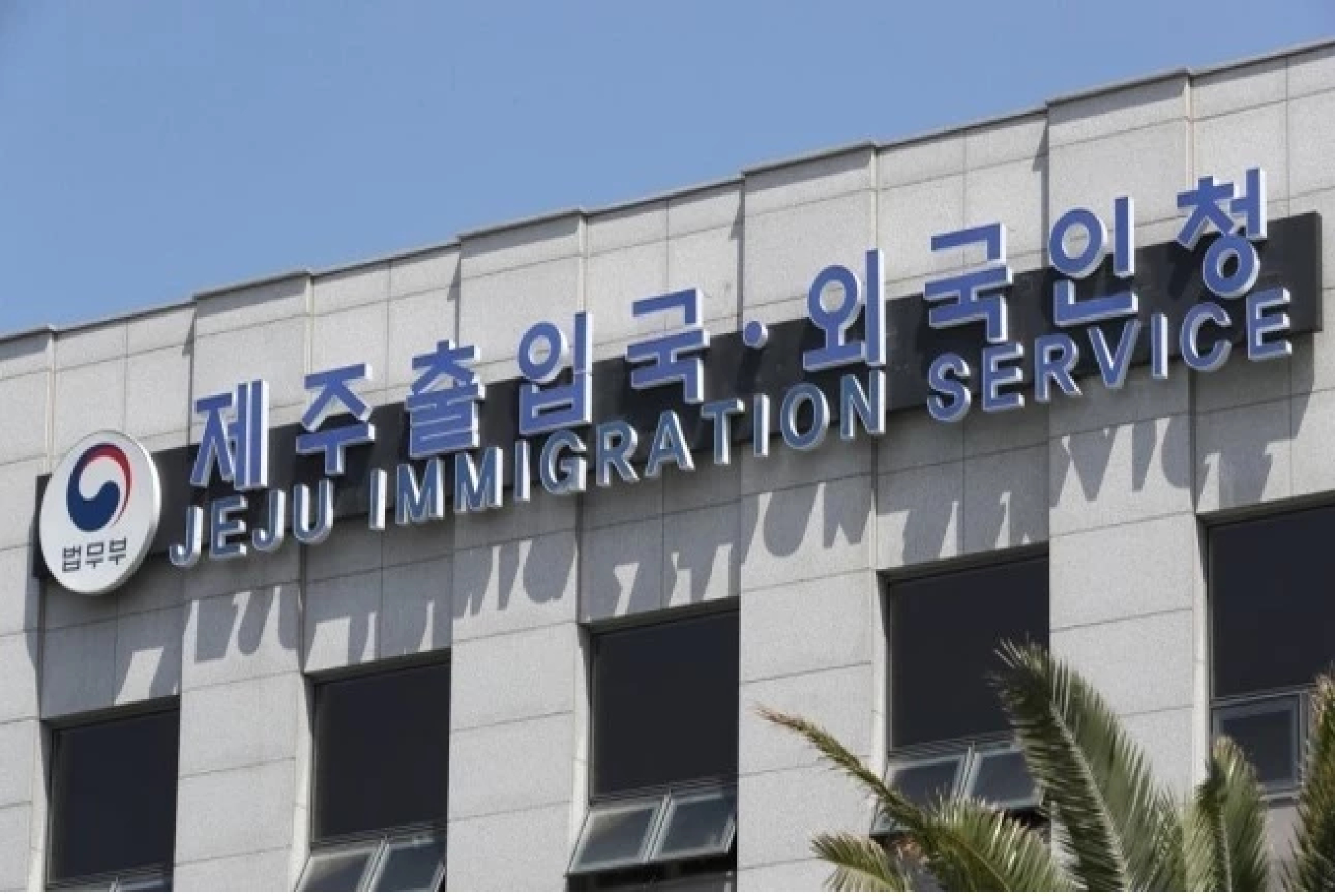
South Korean immigration officials said on Sunday that they are unable to track 55 of the 280 Thai tourists who entered the country via Jeju Island earlier this week.

55 Thai tourists go missing on South Korea’s Jeju Island

Of the 697 Thai nationals who had taken a direct Jeju Airlines flight to the island between Tuesday and Friday, 417 had been denied entry and flown home, the Jeju Immigration Service said.

Of the 280 Thais who entered the country on a three-day tourism package, 55 have disappeared, officials said, adding that the immigration office is trying to figure out where they went.

The authorities said that 367 of the 697 Thai tourists had previously been denied entry under the Korea electronic travel authorisation (K-ETA) scheme. They said Thai visitors prefer entering South Korea via Jeju as they can enter without undergoing the K-ETA procedure.

Under the K-ETA scheme, citizens from 112 visa-waiver countries, including Thailand, are required to obtain an ETA online before travelling.

However, the Seoul government has exempted foreign arrivals at Jeju International Airport from producing K-ETA documents because Jeju is a popular tourism spot.

The South Korean Justice Ministry said recently that it is pushing for the K-ETA system to be applied to Jeju Island as well.

The country has a long-standing problem with illegal migrant workers, especially Thais. They usually enter South Korea as tourists but pick up illegal jobs as labourers, which can earn them as much as 60,000 baht a month.

The Korea Herald

Asia News Network

Asia News Network: The Nation (Thailand), The Korea Herald, The Straits Times (Singapore), China Daily, The Jakarta Post, The Star and Sin Chew Daily (Malaysia), The Statesman (India), Philippine Daily Inquirer, Yomiuri Shimbun and The Japan News, Gogo Mongolia,  Dawn (Pakistan),  The Island (Sri Lanka), Kuensel (Bhutan), Kathmandu Post (Nepal), Daily Star (Bangladesh), Eleven Media (Myanmar), The Phnom Penh Post and Rasmei Kampuchea (Cambodia), The Borneo Bulletin (Brunei), Vietnam News, and Vientiane Times (Laos).

Published : August 07, 2022

By : The Korea Herald

Exquisite miniature books prove small is beautiful

#SootinClaimon.Com : ขอบคุณแหล่งข้อมูล : หนังสือพิมพ์ The Nation.

https://www.nationthailand.com/international/40018603


In the past, miniature books were produced for convenience because they could easily be carried in a waistcoat pocket or a woman’s purse. Gradually considered as handcrafted works, mini books are not only a source of knowledge but are also exhibits, collectables, and treasured possessions.

Exquisite miniature books prove small is beautiful

According to Nguyen Thuy Duong, the founder and CEO of Phuc Minh Books, creating miniature books requires a high level of virtuosity and extreme precision that only perfectionists and passionate people have.

“Miniature books are often the crystallisation of the love of literature and the art of printing because artisans have to spend a lot of time and labour to create a masterpiece. Despite its small size, a micro-volume book fully demonstrates the techniques of binding, content presentation, printing and processing, and almost no error is allowed,” Duong said.

In the last two years, Phuc Minh Books has released two sets of these little books: The Body and Soul by Maxence van der Meersch, comprising three books, sized 5.5cm by 7.6cm, and The Little Women by Louisa May Alcott, which consists of five books, sized 6cm by 7.8cm.

These books are produced with techniques first applied in Vietnam. The book’s cover is covered with silk with a highly smooth surface, woven with a delicate technique so that the silk fibres are immensely tight so that even light cannot penetrate.

In a vast old weaving workshop, wiping the sweat from her cheeks, Le Thi Kim Thu, an artisan in Vạn Phuc silk village, said: “To weave using a traditional loom, we select the most durable yarns and use delicate techniques to ensure the smoothness and tightness of the warp and weft. As a result, when pressing the silk sheet to the cover, the silk does not shrink, wrinkle or get glued out, ensuring durability and adhesion.”

“To cut silk into tiny pieces that would fit in a mini book, we drew out the warp and weft to the required size, then cut along the drawn threads so that the silk was cut beautifully by the right size,” Thu said.

Creating a mini book requires special skills in each stage of the production process, from book cover making, page layout, and illustration to printing and binding.

“Although the book is tiny, I had to choose the right font size so the letters still can be readable. Then when laying out the page, I have to pay attention to the ratio, so the reader’s hand will not cover the words when they are reading. With most of the drawings, I will put them on the right-hand side so that they can attract the reader’s attention easily,” book designer Nguyen Thi Hong said.

The illustrations for these books are also exquisite. Tran Minh Tam, an artist who illustrated the books, told Vietnam News: “When drawing in a large version, I can show many techniques and use many different strokes. But with the miniature books, the illustrations shrink to a tiny size, only about one-eighth of the size of the normal book, so I have to pay attention properly. If the stroke is too small, it will be clear, and if it is too thick, it will be rough. I have to do many printing tests to see how effective the illustration is and then continue to perfect it.”

To complete a set of books, the maker has to minimise everything from the pages and cover to the box and accompanying gifts. This requires the designers to be very patient, meticulous and skillful. In the binding stage, the stitches must have a certain distance, and the thickness of the spine must be equivalent to the book’s belly.

It requires the worker to be skilled and choose the right sewing needle and thread. Cutting books is also not as simple as with regular-sized books. The book is small but very thick, making it easy to slip when compressing pages together, requiring the cutting blade to be almost absolute. Therefore, the designer must have an almost absolute precision cropping technique.

“In Vietnam, it is difficult to find a workshop or individual to process these miniature books properly. The products require skilled techniques and to be extremely accurate, but the productivity is very low, so their cost is high. Even so, there are still people willing to secure these products,” Duong said.

“Up to now, Phuc Minh is still the first publishing house to make miniature books, with a minimal number of copies, and they only produce one set of miniature books each year. Therefore, even if the book is a bit expensive, I still can afford it because to me, they are exceptional and rare works,” book collector Tu Xuan Minh said.

Viet Nam News

Asia News Network

Asia News Network: The Nation (Thailand), The Korea Herald, The Straits Times (Singapore), China Daily, The Jakarta Post, The Star and Sin Chew Daily (Malaysia), The Statesman (India), Philippine Daily Inquirer, Yomiuri Shimbun and The Japan News, Gogo Mongolia,  Dawn (Pakistan),  The Island (Sri Lanka), Kuensel (Bhutan), Kathmandu Post (Nepal), Daily Star (Bangladesh), Eleven Media (Myanmar), The Phnom Penh Post and Rasmei Kampuchea (Cambodia), The Borneo Bulletin (Brunei), Vietnam News, and Vientiane Times (Laos).

Published : August 07, 2022

By : Vietnam News

Beach-goers in Japan warned of biting dolphin

#SootinClaimon.Com : ขอบคุณแหล่งข้อมูล : หนังสือพิมพ์ The Nation.

https://www.nationthailand.com/international/40018599


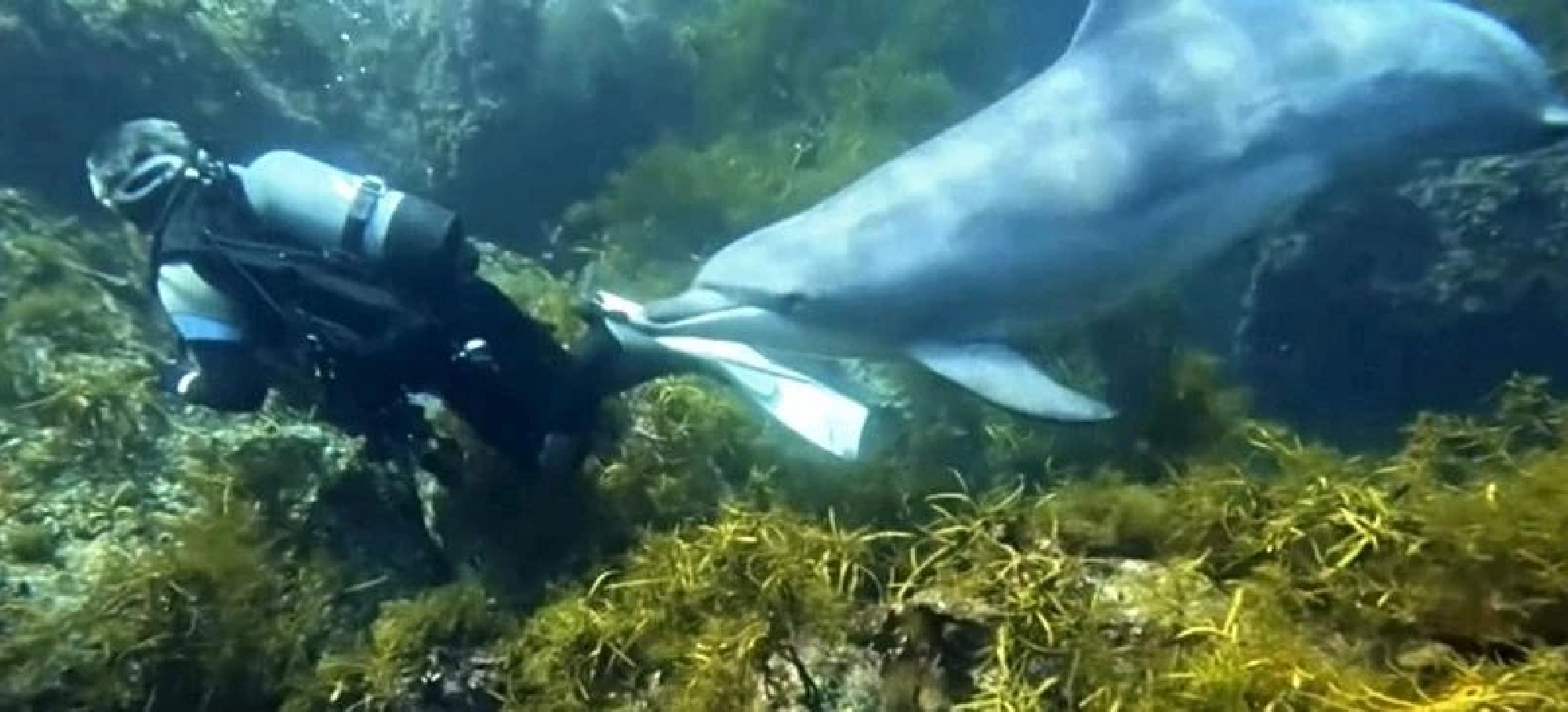
Swimmers have been warned to stay away from dolphins in Fukui Prefecture in the wake of attacks on people by what is possibly a single male Indo-Pacific bottlenose dolphin, a species that usually lives in warm waters.

Beach-goers in Japan warned of biting dolphin

Having installed ultrasonic transmitters on buoys off the coast to repel dolphins, beach officials warned visitors not to approach dolphins even if they look cute.

On July 26, a beach house operator was seen urging people to watch out for dolphins at Koshino beach, located about 20 kilometres west of the Fukui City centre. The shallow waters of the beach are popular with families. The 71-year-old man was telling swimmers to come out of the sea immediately if they saw a dolphin.

According to the man, the dolphin began to be spotted around June and has frequently come into the shallow waters where many people bathe since the opening of the beach on July 9.

On July 24, the city received two reports of injuries involving a dolphin, including one in which a swimmer’s hand was bitten and the individual was taken to a hospital by ambulance.

“I’ve been doing my business here for more than 40 years, but there was never a case where a dolphin came so close to people,” he said.

In April, a dolphin began to be spotted at a fishing port more than 10 kilometres north of Koshino beach. A dolphin also showed up at nearby Takasu beach in the city around June.

Injuries began to be reported in early July when the beach season started. After two men had their hands bitten by a dolphin and incurred wounds at Takasu beach on July 29, swimming at the beach was temporarily banned.

According to the Fukui municipal government, there have been at least 10 cases of dolphin biting or ramming swimmers at the two beaches. Ultrasonic transmitters were installed in the sea at both beaches to repel dolphins. A sign was also put up at Koshino beach, warning people not to touch the animals.

Witness reports suggest there is an Indo-Pacific bottlenose dolphin that is usually found in warm seas around southern islands of Japan such as Amami Oshima island and the Izu Islands. These dolphins, which also live around Australia, are highly curious, and their teeth are sharp to catch fish and keep them from escaping.

Courtesy of a Yomiuri Shimbun reader A dolphin is spotted at Takasu beach in Fukui City on July 29.Courtesy of a Yomiuri Shimbun reader A dolphin is spotted at Takasu beach in Fukui City on July 29.
According to Ryoichi Matsubara, deputy director of Echizen Matsushima Aquarium in Sakai, Fukui Prefecture, the dolphin sightings in the prefecture are all of the same male dolphins.

“In the unlikely event of a life-threatening situation, it could lead to culling the dolphin or the closure of beaches. I hope that people will try to coexist with the animal by coming out of the sea as soon as they see him,” Matsubara said.

Yusuke Sato and Kensuke Arata

The Japan News

Asia News Network

Asia News Network: The Nation (Thailand), The Korea Herald, The Straits Times (Singapore), China Daily, The Jakarta Post, The Star and Sin Chew Daily (Malaysia), The Statesman (India), Philippine Daily Inquirer, Yomiuri Shimbun and The Japan News, Gogo Mongolia,  Dawn (Pakistan),  The Island (Sri Lanka), Kuensel (Bhutan), Kathmandu Post (Nepal), Daily Star (Bangladesh), Eleven Media (Myanmar), The Phnom Penh Post and Rasmei Kampuchea (Cambodia), The Borneo Bulletin (Brunei), Vietnam News, and Vientiane Times (Laos).

Published : August 07, 2022

By : The Japan News

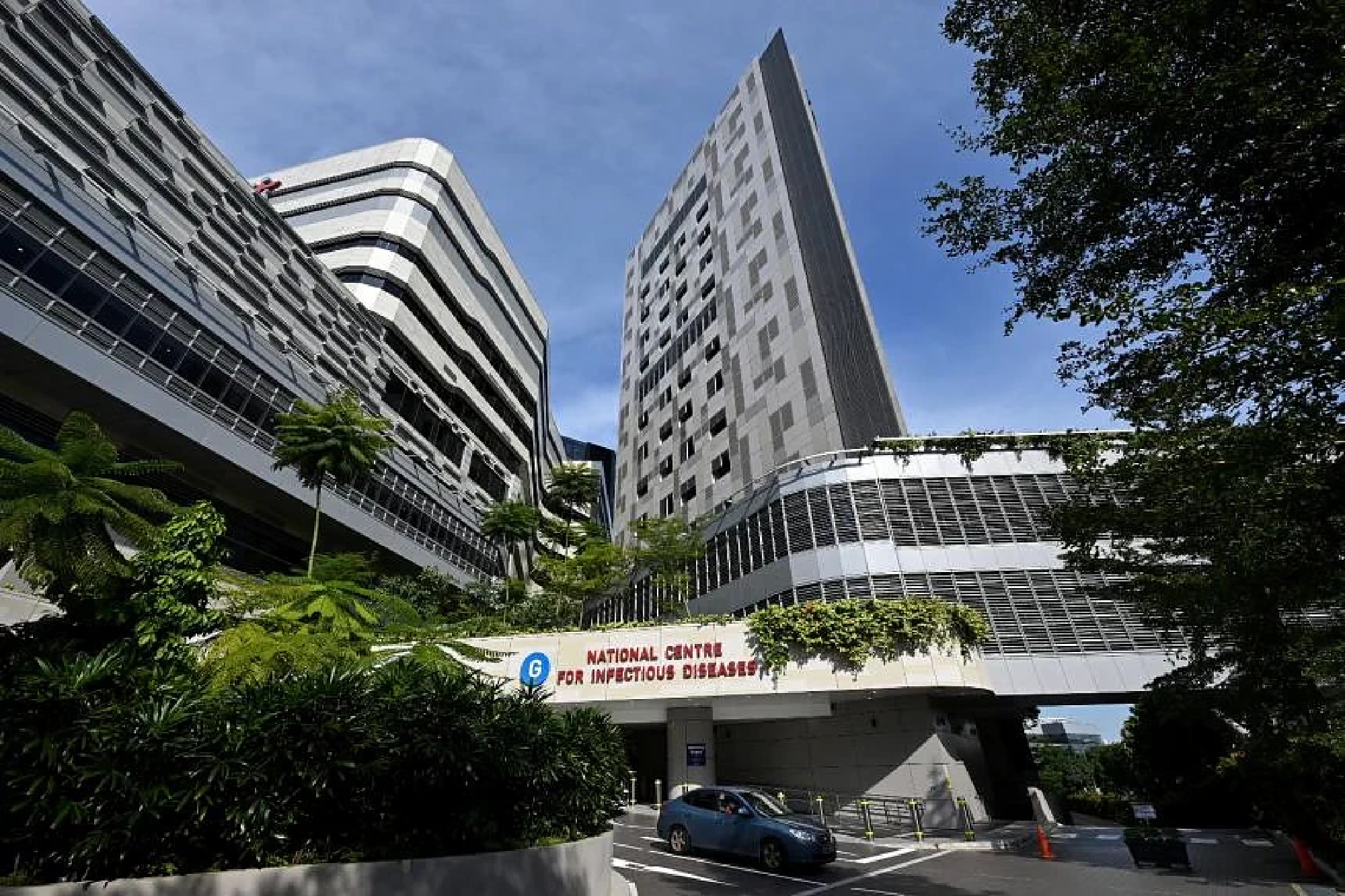
Two new cases of monkeypox confirmed in S’pore, including first local linked case

#SootinClaimon.Com : ขอบคุณแหล่งข้อมูล : หนังสือพิมพ์ The Nation.

https://www.nationthailand.com/international/40018569


SINGAPORE – Two new local cases of monkeypox were confirmed on Friday (Aug 5), including the first local linked case.

Two new cases of monkeypox confirmed in S'pore, including first local linked case

The linked case is a 54-year-old man, who is a contact of Case 13, a 33-year-old man whose diagnosis was confirmed on Aug 2, according to an update on the Ministry of Health website.

The other new case on Friday is a 25-year-old male, and unlinked to other cases. He is the youngest reported case here. 

In total, there are 15 confirmed cases of monkeypox here, with 10 of them local ones. The remaining five are imported cases with recent travel history to Australia, Canada, Britain, the United States and Germany. 

All of them are male.

The ministry had announced on Monday that all monkeypox patients who are deemed clinically stable from that day would be transferred to a dedicated isolation facility.

The quarantine period for close contacts will now be cut to 14 days, followed by seven days of monitoring for symptoms through phone calls. Previously, the quarantine period was up to 21 days.

The current outbreak of the viral disease emerged in May and has infected more than 18,000 people in 78 countries, said the World Health Organisation on July 27. 

It declared the outbreak a global health emergency on July 23.

Some of the symptoms linked to the monkeypox virus include fever, headache, muscle pain, swollen lymph nodes, chills, lethargy and skin rash.

Asia News Network: The Nation (Thailand), The Korea Herald, The Straits Times (Singapore), China Daily,  Jakarta Post, The Star and Sin Chew Daily (Malaysia), The Statesman (India), Philippine Daily Inquirer, Yomiuri Shimbun and The Japan News, Gogo Mongolia,  Dawn (Pakistan),  The Island (Sri Lanka), Kuensel (Bhutan), Kathmandu Post (Nepal), Daily Star (Bangladesh), Eleven Media (Myanmar), the Phnom Penh Post and Rasmei Kampuchea (Cambodia), The Borneo Bulletin (Brunei), Vietnam News, and Vientiane Times (Laos).

Published : August 06, 2022

By : The Straits Times