A test run of tuk-tuks — three-wheel motor vehicles widely used in Southeast Asia — is being conducted in Oarai, Iabaraki Prefecture, in the hopes of vehicle boosting tourism.
The trial service will be conducted on four routes until Aug. 11. The local tourism promotion association, formed by the town and others, plans the full introduction of the service from September after identifying issues that need to be addressed in the test run.
Asia News Network
The Japan News
Asia News Network: The Nation (Thailand), The Korea Herald, The Straits Times (Singapore), China Daily, Jakarta Post, The Star and Sin Chew Daily (Malaysia), The Statesman (India), Philippine Daily Inquirer, Yomiuri Shimbun and The Japan News, Gogo Mongolia, Dawn (Pakistan), The Island (Sri Lanka), Kuensel (Bhutan), Kathmandu Post (Nepal), Daily Star (Bangladesh), Eleven Media (Myanmar), The Phnom Penh Post and Rasmei Kampuchea (Cambodia), The Borneo Bulletin (Brunei), Vietnam News, and Vientiane Times (Laos).
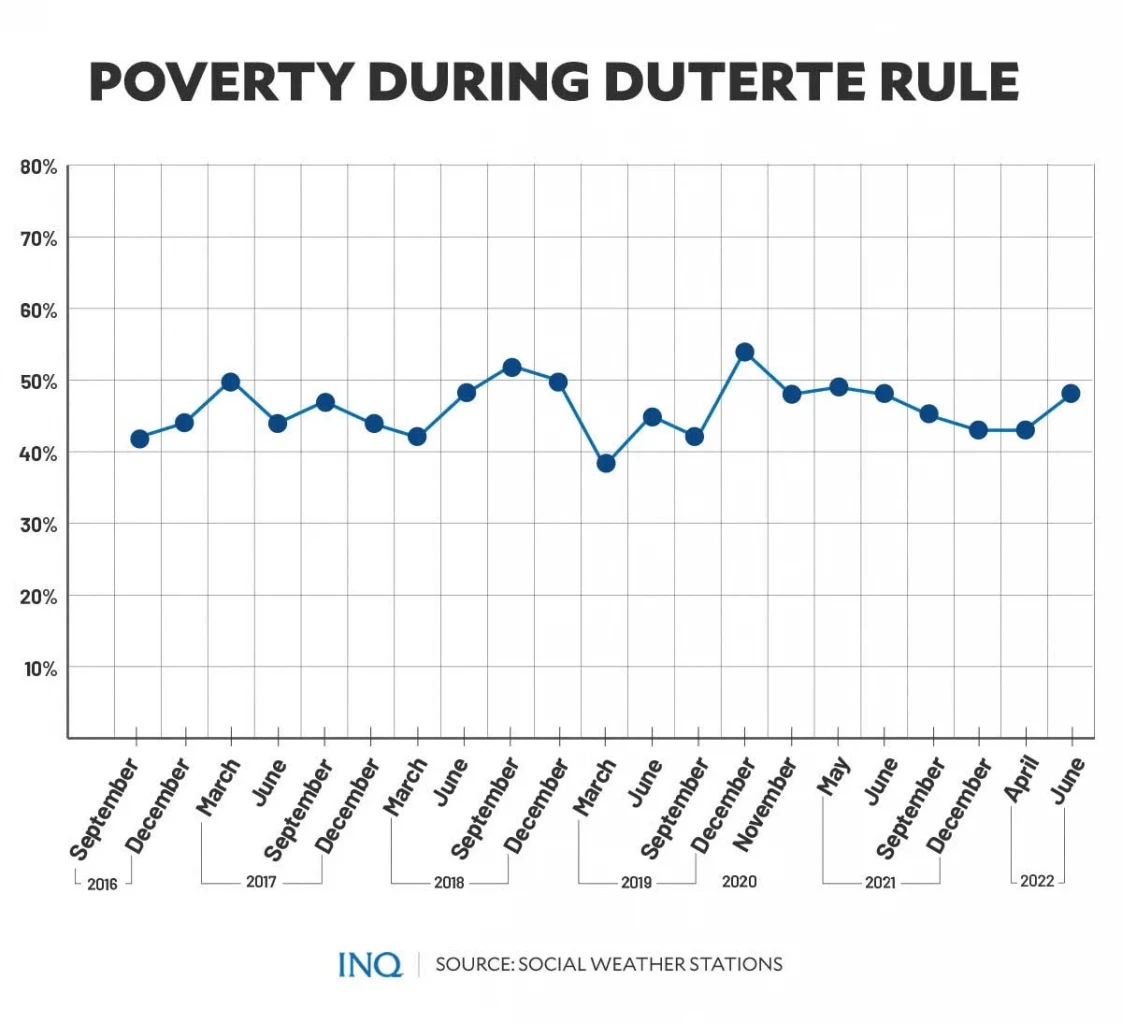
As Rodrigo Duterte, who once promised a comfortable life for all Filipinos, ended his six-year presidency last June 30, 48 per cent of Filipino households felt “poor” in the second quarter of 2022.
He said in 2018 that with all the programs being implemented by the government, the life of all Filipinos would get better in the third year of his presidency: “Konting tiis na lang (A little more patience).”
Then in 2019, Malacañang stressed that with the signing of new laws, like the Magna Carta of the Poor, the government was working to significantly reduce poverty rates and make poor Filipinos’ lives better.
The Social Weather Stations (SWS), however, said the percentage of Filipino families, who rated themselves poor, hit 54 per cent, or 13.1 million households, in December 2019, the highest in five years.
This, even if Duterte had asked Congress in his 2019 State of the Nation Address to help the government lift six million Filipinos out of poverty by the end of his six-year presidency.
Last April 27, the National Economic Development Authority (Neda) said the programs of the government had contributed to reducing poverty, stressing that six million Filipinos were lifted out of poverty in 2018.
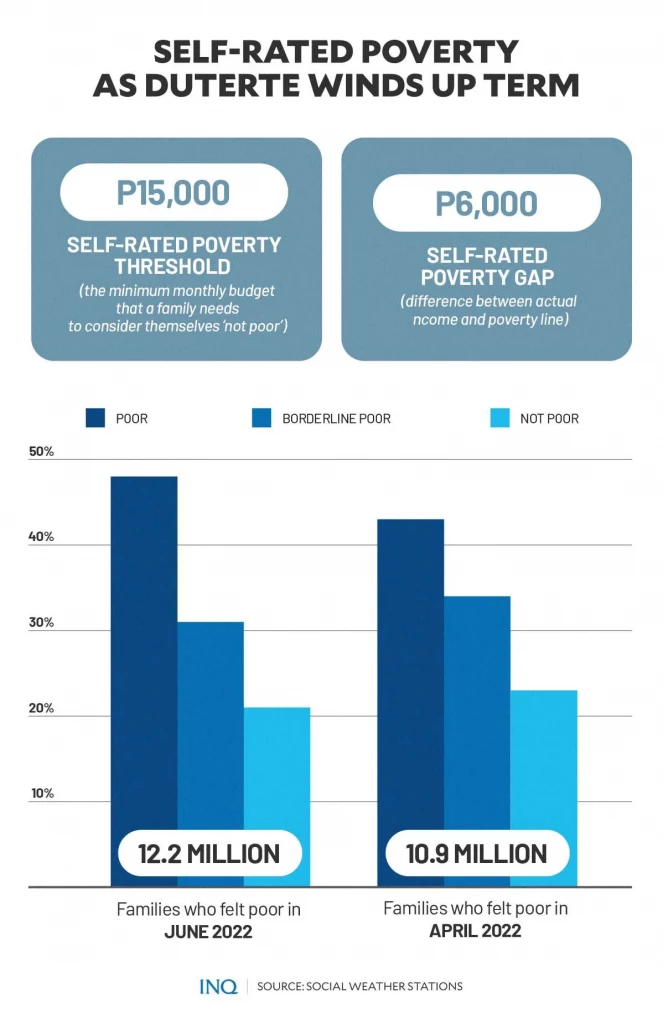
However, as Duterte left Malacañang, a survey by the SWS showed that 12.2 million families considered themselves poor, higher than 43 per cent, or 10.9 million in April 2022.
Out of a respondent base of 1,500 Filipinos 18 years and older who were polled last June 26 to 29, 31 per cent were “borderline poor,” while only 21 per cent were “not poor.” Compared to April 2022, the numbers fell from 34 per cent and 23 per cent.
Neda said the government, back in 2016, had pursued the zero-to-ten point socioeconomic agenda to achieve the Ambisyon Natin 2040, a vision that reflects the “collective aspiration to end extreme poverty by 2040.”
While then Socioeconomic Planning Secretary Karl Chua said six million Filipinos had already been lifted out of poverty in 2018, “the COVID-19 pandemic temporarily halted our progress.”
He said last year: “In 2020, people’s income and jobs were significantly affected by stringent quarantines. As we began to cope with the virus starting the fourth quarter of 2020, we gradually relaxed restrictions and managed risks better.”
The Philippine Statistics Authority (PSA) said poverty incidence fell from 27.6 per cent in 2015’s first half to 21.1 per cent in 2018’s first half, however, in 2021’s first half, poverty incidence rose to 23.7 per cent, or 3.9 million more Filipinos living in poverty.
SWS has been conducting self-rated poverty surveys since 1992, except in the first nine months of 2020, when face-to-face interviews were not possible because of COVID-19 restrictions.
When it resumed its surveys in November 2020, 48 per cent of Filipino families considered themselves poor; May 2021 (49 per cent); June 2021 (48 per cent); September 2021 (45 per cent); and December 2021 (43 per cent).
Hits misses The government said that based on PSA data, poverty incidence fell to 16.6 per cent from 23.3 per cent in 2015, with the Neda saying that with a yearly poverty reduction rate of 2.23 per cent, “we are on track” to end extreme poverty.
However, the think tank Ibon Foundation stressed that the way the government counts the poor “grossly underestimates Philippine poverty,” saying that many poor Filipinos are not counted.
The Social Reform and Poverty Alleviation Act defines “poor” as individuals and families whose incomes fall below the poverty threshold as defined by the Neda or cannot afford in a sustained manner to meet their minimum basic needs.
Because of this, the number of poor is counted as the number of Filipinos whose incomes fall below the poverty threshold or the minimum amount needed to meet basic food and non-food needs, Ibon Foundation said.
It first computes the subsistence threshold or the minimum amount a family needs to meet basic food needs. This is then assumed to be 70 per cent of the poverty threshold where the balance of 30 per cent is assumed enough to meet basic non-food needs.
However, poverty estimates based on this methodology are low and unrealistic: “The monthly poverty threshold is just P10,727 for a family of five. This is just around P71 per person per day at P50 for food needs and P21 for non-food needs.”
Ibon Foundation said the “low standards” was the reason for the decrease in poverty incidence in 2018: “Persistently low poverty thresholds and illusory reductions in poverty will only result in persistent neglect of the needs of the many.”
Making do with what they have The SWS said the rise in self-rated poverty was because of the increases in the Visayas and Metro Manila, combined with slight increases in Mindanao and Balance Luzon, or Luzon outside Metro Manila.
Compared to April 2022, self-rated poverty rose in the Visayas from 48 per cent to 64 per cent, and in Metro Manila from 32 per cent to 41 per cent. It rose slightly in Mindanao from 60 per cent to 62 per cent, and in Balance Luzon from 35 per cent to 36 per cent.
Out of the estimated 12.2 million poor Filipino families, 2.2 million were newly poor, 1.6 million were usually poor, and 8.4 million were always poor. Back in April, 1.5 million were newly poor, 1.1 million were usually poor, and 8.2 million were always poor.
The median self-rated poverty threshold—the minimum monthly budget that a family needs to stay out of poverty—stayed at P15,000, while the median self-rated poverty gap (difference between actual income and poverty line) stayed at P6,000.
This, as the threshold in Metro Manila, fell from P20,000 to P15,000, while the gap fell from 10,000 to P5,000. In Balance Luzon, the threshold stayed at P15,000, while the gap rose from P5,000 to P7,000.
The threshold in the Visayas rose from P15,000 to a new record-high P20,000, while the gap rose from P7,000 to P9,000. In Mindanao, the threshold fell from P12,000 to P10,000, while the gap stayed at P5,000.
SWS said the self-rated poverty threshold has remained “sluggish” for several years despite considerable inflation: “This indicates that poor families have been lowering their living standards, i.e., belt-tightening.”
It stressed that the self-rated poverty gap in the past has generally been half of the median self-rated poverty threshold, saying that “this means that average poor families lack about half of what they need to not consider themselves as poor.”
The Philippines’ headline inflation rate in June 2022 hit 6.1 per cent, a three-year high since November 2018’s 6.1 per cent and October 2018’s 6.9 per cent, because of higher yearly growth rate in the prices of food and non-alcoholic beverages.
According to SWS, based on the type of food eaten by their families, the June 2022 survey found 34 per cent of families rating themselves as food-poor, 40 per cent rating themselves as borderline food-poor, and 26 per cent rating themselves as not food-poor.
Compared to April 2022, the percentage of food-poor families rose from 31 per cent, borderline food-poor families fell from 45 per cent, and not food-poor families rose slightly from 24 per cent.
The estimated numbers of self-rated food-poor families are 8.7 million in June 2022 and 7.9 million in April 2022.
The three-point increase in self-rated food-poor from April 2022 to June 2022 was due to increases in Metro Manila, Balance Luzon, and the Visayas, combined with a slight decrease in Mindanao.
Compared to April 2022, self-rated food poverty rose in Metro Manila from 25 per cent to 31 per cent, in Balance Luzon from 24 per cent to 28 per cent, and in the Visayas from 31 per cent to 37 per cent. It fell in Mindanao from 49 per cent to 45 per cent.
‘Recovery is hollow’ Sonny Africa, executive director of Ibon Foundation, told INQUIRER.net that the rise in self-rated poverty is “very understandable and confirms how the outgoing economic team’s claims of recovery are hollow.”
“Despite the hype about rapid growth, ordinary Filipinos still suffer massive joblessness and high prices. For instance, of the supposed increase in net employment between January 2020 and May 2022, 93 per cent is in just part-time work which grew to 16.7 million.”
By class of worker, 32 per cent of the employed is in unpaid family work—3.8 million—and 56 per cent is in poorly-earning self-employment, Africa said while stressing that the number of families without savings has grown to at least 18.7 million.
The PSA said last July 7 that six per cent—2.93 million Filipinos—were jobless in May, slightly higher than the 5.7 per cent, or 2.76 million jobless Filipinos in April. The employment rate was 94 per cent, or 46.08 million.
However, Ibon Foundation said the latest PSA data indicated that the Philippines has the “worst” unemployment rate in Southeast Asia, saying that six per cent is higher than Indonesia’s 5.8 per cent and Malaysia’s 3.9 per cent.
It said while there were 28.9 million Filipinos who worked for 40 hours and more in May, 16.7 million worked for only less than 40 hours and 500,000 had a job but were not at work.
Breaking down the 46.08 million employed Filipinos, 13.2 million were self-employed without an employee, 939,000 were employed on their own farm or business, 3.8 million were unpaid family workers, and 28.2 million were wage and salary workers.
“The new economic team needs to urgently acknowledge this. Unfortunately, the refusal to give more ayuda in the last months of 2022, the 2023 austerity budget and rising interest rates will just prolong the socioeconomic distress of millions,” he said.
Najib Razak only has assets worth RM4.49mil, he has declared to the High Court after SRC International and its subsidiary Gandingan Mentari obtained a Mareva injunction on March 24 to prevent the Pekan MP from transferring or dissipating any of his assets amounting to RM42mil.
The disclosure was made in an additional affidavit filed in the court as part of the Mareva injunction.
Based on the affidavit, which was sighted by The Star, Najib’s assets stand at RM4,490,774 as of June 30.
His largest asset was RM2,528,849 deposits with Amanah Saham Nasional Bhd (ASB), as of June 13.
His second largest asset stands at RM1,248,938 in a current account in Affin Bank, as of June 30.
Najib also owns seven properties including land in Pekan, Bentong and Kuantan in Pahang, as well as in Semenyih and a condominium unit at Awana Condominium in Genting Highlands.
Three out of the seven properties (lands in Kuantan, Pekan and Bentong) were inherited while the rest were acquired. These properties amounted to RM460,987, according to the affidavit.
Also listed are eight motor vehicles ranging from Mercedes-Benz, Bentley, Honda EX5 and a Kawasaki ZG, amounting to RM252,000.
In a previous affidavit, Najib said four Mercedes-Benz cars and the Bentley were gifts received from his in-laws from Kazakhstan while the Kawasaki ZG was also gifted to him by an entity.
A Mareva injunction is a temporary order which restrains the defendant from disposing of assets until the determination of the case between the plaintiff and the defendant.
The court directed that Najib, 69, must not remove, dispose of, deal with or diminish the value of any assets in and outside of Malaysia up to the value of RM42mil, pending the final determination of the suit.
“I affirm this affidavit to adhere to the court order dated March 24 where I am ordered to disclose to the court and the plaintiffs of my asset details,” Najib said in the affidavit filed on July 20.
“On my instruction, my accountant has prepared the additional asset list, which I confirm to be true and accurate based on the details already available to me.”
According to the court order on the Mareva injunction, Najib, who was SRC’s adviser emeritus, is entitled to draw and expend from a bank account or other sources, a sum not exceeding RM100,000 per month, for ordinary living and legal expenses.
SRC and Gandingan Mentari sued Najib on May 7 last year for alleged criminal breach of trust, abuse of power and misappropriation of SRC’s funds.
The suit is among the 22 civil actions launched by 1MDB and SRC which targeted those who allegedly defrauded the companies and breached fiduciary duties.
Najib’s lawyer Muhammad Farhan Muhammad Shafee told the press yesterday that they had withdrawn an application to postpone the proceedings in the SRC and Gandingan Mentari civil suit.
“The SRC criminal appeal has been fixed for hearing on Aug 15 so there is no issue about the civil case proceeding before the disposal of the criminal case.
“We will be filing our defence (in the civil suit) in two months,” he said.
Another case management has been fixed for Oct 13.
On July 28, 2020, the High Court sentenced Najib to 12 years in prison and a fine of RM210mil after finding him guilty of misappropriating RM42mil in SRC funds.
The Court of Appeal affirmed the High Court’s decision and Najib’s final appeal in the criminal case will be heard at the Federal Court on Aug 15.
The Star
Asia News Network
Asia News Network: The Nation (Thailand), The Korea Herald, The Straits Times (Singapore), China Daily, Jakarta Post, The Star and Sin Chew Daily (Malaysia), The Statesman (India), Philippine Daily Inquirer, Yomiuri Shimbun and The Japan News, Gogo Mongolia, Dawn (Pakistan), The Island (Sri Lanka), Kuensel (Bhutan), Kathmandu Post (Nepal), Daily Star (Bangladesh), Eleven Media (Myanmar), The Phnom Penh Post and Rasmei Kampuchea (Cambodia), The Borneo Bulletin (Brunei), Vietnam News, and Vientiane Times (Laos).
Highlighting India’s robust economic health despite the pandemic and the geo-political situation, India’s Finance Minister Nirmala Sitharaman on Monday said there was no question of India getting into stagflation or recession like other major economies of the world.
In her reply to the debate in the lower house of Parliament on price rise, Sitharaman said, “We have never seen a pandemic of this kind. All of us were trying to make sure that people in our constituencies were given extra help. I recognise that everybody — MPs and state governments have played their role. Otherwise, India would not be where it is compared to the rest of the world.”
“So, I fully credit the people of India for this. Even against adversity, we are able to stand up and be recognised as the fastest-growing economy,” she said.
The Finance Minister emphasised that due to the measures taken by the government, India is in a much better position than most countries.
“India remains the fastest-growing economy in the assessment of global agencies. This House, irrespective of the party, should feel proud of the country and its people. State governments have helped,” she stated in the Lok Sabha.
Referring to a survey, Sitharaman said there is zero possibility of India getting into recession.
Sitharaman said gross domestic product (GDP) of the US fell 0.9 per cent in the second quarter following a 1.6 per cent decline in the first quarter. “They have started calling it an unofficial recession. There is no question of India getting into recession or stagflation,” said the minister.
“The pandemic, the second wave, Omicron, Russia-Ukraine [war], and even today the largest suppliers of components in China are under lockdown, in spite of that, we have held inflation well within 7 per cent or below. That has to be recognised,” she told the lawmakers.
She further said, “Some 4,000 banks in China are reported to be going bankrupt. In India, the gross NPAs [non-performing assets] of scheduled commercial banks is at a five-year low of 5.9 per cent in 2022. So our NPAs are improving. The government’s debt-to-GDP ratio in many countries is in triple digits including Japan, Greece, Bhutan, Singapore, the US, Portugal, Spain, France, Sri Lanka and Canada. But [India’s] the central government very consciously controlled its debt and it is at 56.29 per cent of the GDP at the end of 2021-22 compared to the 59.9 per cent revised estimate that year.”
In July 2022, the minister said the country had garnered the second highest level of revenue of 1.49 lakh crore [149 billion] ever since the introduction of the goods and services tax. “In April 2022, it was 1.67 lakh crore rupees [167 billion rupees, 76 billion baht], which was the highest we had reached. This is the fifth consecutive month that collections have been above 1.4 lakh crores rupees [140 billion],” she said.
Quoting former Reserve Bank of India (RBI) governor Raghuram Rajan, she said, “On Saturday, Raghuram Rajan said that the RBI has done a good job in increasing foreign exchange reserves in India, insulating India from problems being faced by neighbouring countries such as Pakistan and Sri Lanka.
“Differentiating India from its vulnerable neighbours, Raghuram Rajan further added that ‘New Delhi is less indebted’, calling it a good sign, the minister said.
Amid Sitharaman’s reply to the debate on price rise, opposition Congress party members walked out of the house.
The Statesman
Asia News Network
Asia News Network: The Nation (Thailand), The Korea Herald, The Straits Times (Singapore), China Daily, The Jakarta Post, The Star and Sin Chew Daily (Malaysia), The Statesman (India), Philippine Daily Inquirer, Yomiuri Shimbun and The Japan News, Gogo Mongolia, Dawn (Pakistan), The Island (Sri Lanka), Kuensel (Bhutan), Kathmandu Post (Nepal), Daily Star (Bangladesh), Eleven Media (Myanmar), The Phnom Penh Post and Rasmei Kampuchea (Cambodia), The Borneo Bulletin (Brunei), Vietnam News, and Vientiane Times (Laos).
From heads of state to ordinary citizens, people make their thoughts known through social media. Currently, the monitoring of postings remain the responsibility of the platform operators that manage social media. But a battle is raging over transparency and accountability on these platforms.
In February last year, Masato Fujisaki, 38, a part-time university lecturer who writes a column for a magazine, was stunned to receive a notice from Twitter saying that due to an allegation of copyright infringement, his account had been frozen.
He could not open his Twitter account and had no idea what he had done.
But reading between the lines of the notice and Twitter’s regulations, he determined that the image of a brand-new travel bag he had posted a few days earlier had been a DMCA violation.
The DMCA is the Digital Millennium Copyright Act, which took effect in the United States in 2000.
The act exempts social media companies from legal liability as long as they remove postings claimed to be copyright infringements.
Twitter has been freezing the accounts against which the claims were made, without being required to verify the authenticity of the allegations.
There have been many cases in which this situation was exploited, with someone filing a false claim of copyright infringement to purposely get another person’s account frozen. Fujisaki was the victim of such an act.
His account was unfrozen four days later. Presumably, the fake allegation had been withdrawn, but Twitter offered no explanation beyond the initial notice.
“The person making the fake report is the bad guy, but I find it unacceptable that a place for discussion and commentary can be taken away without explanation,” Fujisaki said indignantly. “It is also strange that we are being affected by U.S. law.”
Responsibility for disclosure
In many developed countries including Japan, the removal and monitoring of harmful information are left up to the discretion of platforms such as Twitter and Facebook.
This is because some harmful information is not necessarily illegal, and legal restrictions could infringe on freedom of speech.
Twitter freezes 1.5 million accounts a year worldwide, and Facebook deleted 95.5 million posts last year for slander and hate speech alone. That said, neither company has ever disclosed how they monitor information and other regulatory factors.
This stance is facing criticism in Japan as well. In February of this year, the Internal Affairs and Communications Ministry’s council examining platform services held an online meeting with employees of platform operators.
Pressed by council members to disclose the number of staff members tasked with monitoring postings in Japan, “We cannot say because of safety issues with our staff” was a common response.
Twitter and Google refused to even disclose the number of users in Japan. That drew a strong rebuke from Ryoji Mori, a lawyer on the council, who said, “As long as they do business in Japan, they have a responsibility to disclose information.”
Facebook’s ‘Supreme Court’
In the face of snowballing criticism, Facebook has finally begun to move toward greater transparency.
The company established an Oversight Board to review appeals from users, and in May last year announced 20 experts from Europe, the United States and Asia would serve on it.
It has been dubbed a “Supreme Court” because it has the power to overturn Facebook’s decisions.
In January, the board announced the results of its first review, in which it invalidated four of five cases of deletion.
It ruled that criticism of France’s measures against the novel coronavirus and images of women’s breasts to raise awareness of breast cancer were not violations of the rules.
Kuniko Ogawa, director of the division in charge of consumer policy at the ministry, keeps a close eye on the moves of platform operators.
“If they continue to be reluctant to disclose information, the movement to force accountability through laws will grow around the world,” Ogawa said. “We are at a crossroads right now.”
The Japan News
Asia News Network
Asia News Network: The Nation (Thailand), The Korea Herald, The Straits Times (Singapore), China Daily, Jakarta Post, The Star and Sin Chew Daily (Malaysia), The Statesman (India), Philippine Daily Inquirer, Yomiuri Shimbun and The Japan News, Gogo Mongolia, Dawn (Pakistan), The Island (Sri Lanka), Kuensel (Bhutan), Kathmandu Post (Nepal), Daily Star (Bangladesh), Eleven Media (Myanmar), The Phnom Penh Post and Rasmei Kampuchea (Cambodia), The Borneo Bulletin (Brunei), Vietnam News, and Vientiane Times (Laos).
Opposition from the education community and parents against the Ministry of Education’s elementary school entry age reorganization plan is intensifying.
On Friday, at the meeting with President Yoon Suk-yeol, Education Minister Park Soon-ae reported the plan to gradually lower the enrollment age at elementary schools to 5 years old starting as early as 2025. The plan was never mentioned in Yoon’s campaign pledges or in state affairs announced at the presidential transition committee stage.
Educators and parents have criticized the abrupt announcement, calling it an “amateur way to handle the administration.”
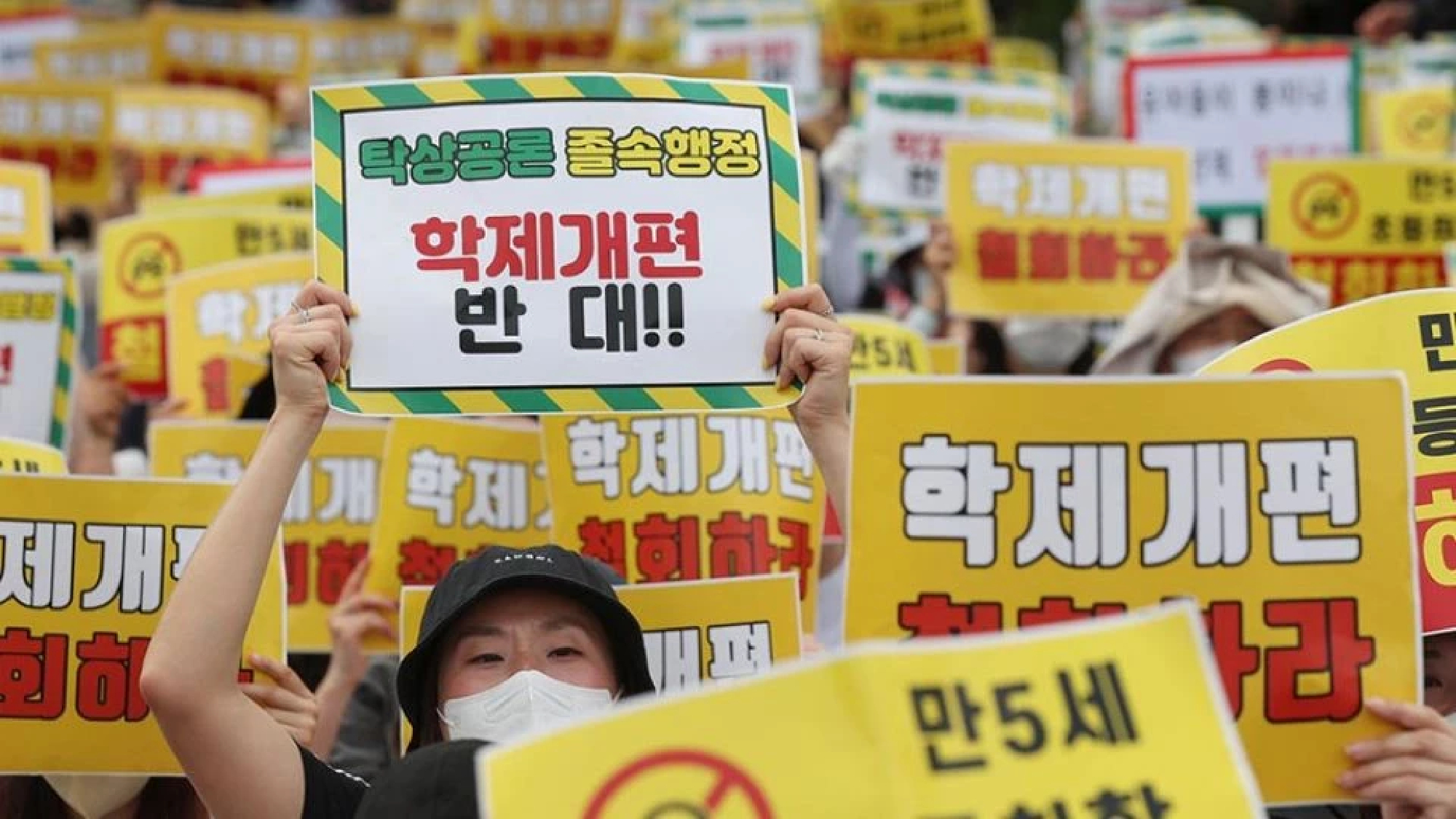
Around 40 civic groups representing kindergartens, school teachers and parents launched a united association, held a rally in front of the presidential office in Yongsan-gu, central Seoul, to demand the withdrawal of the plan on Monday. Rally organizers anticipated that 450 people would attend the event, but more people than expected showed up despite the intense heat, according to police. “Early entry in school at the age of 5 is inappropriate considering the children’s cognitive and emotional development stage,” an official from the association said.
The group also said that economic needs were being prioritized over the well-being of children. “It is not an educational decision to have a 5-year-old child to sit and study just to provide more manpower 20 years later. It is a policy without any concerns about a child’s happiness, right to play, right to learn and the right to grow,” the official said at the rally.
Rally organizers said that the protest will continue until the Education Ministry withdraws the reform plan.
The group began gathering signatures online on Saturday, and it had drawn 105,290 participants as of Monday morning. Various mother-exclusive online communities are also encouraging members to sign the petition.
Two major teachers’ unions — Korean Federation of Teachers’ Associations and the Korean Teachers and Education Workers Union — also voiced objection over the weekend. The Gyeonggi branch of the KTU issued a statement in opposition Monday, claiming that it is state-run child abuse to make a 5-year-old sit at a school desk for 40 minutes straight.
Minister Park appeared on a radio show Monday morning to respond to some of the concerns raised by educators and parents.
She firmly denied that lowering the admission age was a policy to resolve low birth rates and so that people could enter the workforce earlier. ”It is only to ensure fair opportunities for children from the start,” she said.
She underlined that kindergarten and elementary school systems vary depending on the country and that 5-7 years old is a transition period with children of differing levels of proficiency.
“We are considering alternatives such as flexible class hours for the smooth introduction of classes for 5-year-olds. There are plans to guarantee care service until 8 p.m. for the first and second graders of elementary school,” she added.
Park Da-som, chairman of the National and Public Kindergarten Teachers’ Union, who also appeared on the radio Monday morning, hit back at the minister’s explanation. “How can early school entrance be a bridge to resolving the educational gap?”
“If that is really the purpose of this absurd plan, it would be better to make the early childhood education system mandatory,” Park added.
Lee Jung-Youn
The Korea Herald
Asia News Network
Asia News Network: The Nation (Thailand), The Korea Herald, The Straits Times (Singapore), China Daily, Jakarta Post, The Star and Sin Chew Daily (Malaysia), The Statesman (India), Philippine Daily Inquirer, Yomiuri Shimbun and The Japan News, Gogo Mongolia, Dawn (Pakistan), The Island (Sri Lanka), Kuensel (Bhutan), Kathmandu Post (Nepal), Daily Star (Bangladesh), Eleven Media (Myanmar), The Phnom Penh Post and Rasmei Kampuchea (Cambodia), The Borneo Bulletin (Brunei), Vietnam News, and Vientiane Times (Laos).
The world’s population has grown at a fast pace during the past two centuries. The global population was only 1 billion in the early 19th century but it increased to 6.14 billion at the turn of this century and is inching towards 8 billion today.
According to World Population Prospects 2022, which the United Nations released on July 11, the global population is projected to reach 8 billion on November 15.
The UN report said that it took around 37 years for the global population to double, from 2.50 billion in 1950 to 5 billion in 1987. But it will take 72 years for the global population to double from 5 billion in 1987 to 10 billion by 2059.
The authorities should also reform the labour market and expedite the transition of the economy from high-speed growth to high-quality development.
The global population is projected to peak at about 10.4 billion in 2100 and remain steady or decline after that. However, China’s population will decline faster than many other countries. China’s population crossed 1 billion in the 1980s, while its total fertility rate dropped from 6.0 before the 1970s to 1.3 in 2020 despite the introduction of the two-child policy in 2015.
Also, since India’s total fertility rate is 2.0 (in 2021) and it has a population as large as China’s, it will overtake China as the most populous country in 2023, according to a UN report.
Such demographic changes can influence the underlying growth rate of an economy. Although the overall wealth inequality between developed and developing countries remains high, most countries are achieving or have achieved modernisation.
So demography will, once again, play a decisive role in the size of economies, not least because population growth contributes to overall growth of the labour force; a large population allows a country to build more infrastructure facilities, which can reduce the costs of manufacturing, transportation and research; and a populous country has a bigger domestic market which is conducive to its further development.
Also, demography directly affects a country’s politics, overall national strength and soft power. As such, China’s total low fertility rate and ageing population will create some new challenges for its economic development.
The average life expectancy in China has increased from 40 in 1950 to 78.2 in 2021-while the total fertility rate has been falling. China started to become an ageing society in 2000 when Chinese people aged 65 or above exceeded 7 per cent of the total population. The number rose to 13 per cent in 2021-and by 2050, older adults will account for more than one-third of the total population.
Besides, China’s strict family-planning policy, introduced after the launch of reforms and opening-up, played a role in accelerating population ageing and peaking of its population earlier than expected. While most developed countries got rich before they became ageing societies, China’s population is ageing before getting rich, prompting the leadership to address the problems associated with a rapidly ageing population at the critical moment of the country’s development.
Population ageing will cause labour shortage, making China lose its demographic dividends, with the retirement of the 1960s “baby boomers”, posing a daunting challenge to the pension system, as meeting their needs could greatly raise debt.
China’s falling birth rate and rapidly ageing population can also be attributed to improved living standards. Unlike the period prior to 1979 when the government introduced its strict family-planning policy, Chinese people today are less willing to have children, leading to declining total fertility rate. China’s demographic trend is similar to that in other East Asian countries, which have not adopted any family-planning policies.
The declining number of women of childbearing age and the unwillingness of most couples to have more than one child because of the high costs of raising kids have further aggravated the situation. To address the problem of an ageing population, the government needs to further reform its family-planning policy, build a family-friendly society and encourage people to have more children by reducing the high costs of raising a child rather than simply giving subsidies.
The authorities should also reform the labour market and expedite the transition of the economy from high-speed growth to high-quality development. In the long run, the government needs to accelerate industrial upgrading, transition from labour-intensive to technology-intensive manufacturing, and take pre-emptive measures to prevent economic downturn due to shortage of labour.
And to facilitate the economy’s transition, the leadership needs to increase investment in education and human resources, improve the quality of the labour force to increase productivity, as well as take advantage of the country’s massive domestic market to propel healthy development of the economy amid the changing global landscape.
China Daily
Asia News Network
Asia News Network: The Nation (Thailand), The Korea Herald, The Straits Times (Singapore), China Daily, Jakarta Post, The Star and Sin Chew Daily (Malaysia), The Statesman (India), Philippine Daily Inquirer, Yomiuri Shimbun and The Japan News, Gogo Mongolia, Dawn (Pakistan), The Island (Sri Lanka), Kuensel (Bhutan), Kathmandu Post (Nepal), Daily Star (Bangladesh), Eleven Media (Myanmar), The Phnom Penh Post and Rasmei Kampuchea (Cambodia), The Borneo Bulletin (Brunei), Vietnam News, and Vientiane Times (Laos).
Located a stone’s throw from a subway station in central Seoul, the new apartment complex Lumini boasts stylish communal spaces, trendy retail outlets and a view of the iconic Seoul Tower. Its minimalist units come furnished with electronics, including a top-range Bespoke refrigerator.
An ideal home like this would typically come with a high price tag, but the Seoul city government is providing huge subsidies to help low-income youth rent such units at a fraction of the market price, as part of its public housing policy.
Soaring property prices have been a huge issue in recent elections, driving voters to vote against ineffective housing policies of the past.
Seoul mayor Oh Se-hoon, who won a by-election last year as an opposition candidate, acknowledged that many young people are unable to buy a home due to high property prices and unaffordable bank loans.
“This is perhaps the biggest grievance of young people in Korea,” he told the Straits Times in Seoul before leaving for Singapore to attend the World Cities Summit. His five-day visit ends on Tuesday.
“So many people in their 20s and 30s are complaining that the system is not fair. They have become discouraged because their hard work is not being rewarded… That’s why we are developing and implementing policies that support young people.”
The top priority, he said, is to increase the supply of low-cost public rental housing for this group.
Oh, who has pledged to make Seoul a “city of hope” for young people, announced in March a five-year plan to invest 6.3 trillion won (175 billion baht/US$4.86 billion) in 50 youth support projects, in areas such as employment and housing.
Young people aged 19 to 39 account for 30 per cent of the city’s 9.5 million population.
About 471,000 of them live in public housing, from studio apartments to two-bedroom units.
Nearly 36,000 units of public housing were built in 2020 and 2021, and the city plans to supply 55,000 more such units by 2025.
The city is also focused on improving the image and quality of public housing, said Oh, who was re-elected in June during municipal elections.
Instead of building cheap and small units for extremely poor people, the city now plans to build bigger ones using quality materials suitable for the middle class, as they expand the range of applicants to young people and newlyweds.
The projects are also outsourced to private developers, such as the construction arms of conglomerates Lotte and Hyosung.
“We aim to significantly improve the quality of public housing units and build premium units that newlyweds would be proud of,” Oh added.
To qualify, applicants must earn less than the city’s average income of 3.21 million won (88,650 baht) a month.
The rent they pay is 60-80 per cent of market price, according to the city government.
For a unit smaller than 39sqm, the monthly rent for a two-year contract is 255,396 won, with a deposit of about 59 million won paid by the city government.
Straits Times visited Lumini by Lotte and Harrington by Hyosung, both mixed-use developments with residential units for public and private rental, and also retail space.
Lumini has 287 units for public use and 465 units for private rental, while Harrington has 162 for public, and 751 for private.
The developers can convert the whole complex for private sale after eight years of running the public housing system.
Hur Sung-moo, an asset management manager from Lotte Engineering and Construction, said that the company expects demand for rental homes to increase in future. It has two more such projects in the pipeline.
“The government also allows more floor spaces to be built and that is very advantageous to us when we convert the complex to private later,” he added.
Most of the 27 residents of Harrington who responded to a Straits Times survey said they chose to live there due to affordable rent, good amenities, and location – near Hapjeong station in western Seoul.
Start-up founder Park Sang-jun likes the amenities such as the library and gym. But he hopes there can be more tailored services for single households, such as disinfection of home.
“I also hope that rental residents can get benefits to buy the house in the future [when it goes private],” he added.
Chang May Choon
The Straits Times
Asia News Network
Asia News Network: The Nation (Thailand), The Korea Herald, The Straits Times (Singapore), China Daily, Jakarta Post, The Star and Sin Chew Daily (Malaysia), The Statesman (India), Philippine Daily Inquirer, Yomiuri Shimbun and The Japan News, Gogo Mongolia, Dawn (Pakistan), The Island (Sri Lanka), Kuensel (Bhutan), Kathmandu Post (Nepal), Daily Star (Bangladesh), Eleven Media (Myanmar), The Phnom Penh Post and Rasmei Kampuchea (Cambodia), The Borneo Bulletin (Brunei), Vietnam News, and Vientiane Times (Laos).
Former President Fidel Valdez Ramos passed away at the age of 94 on Sunday. The Ramos family confirmed the passing of the former president on Sunday night but gave no further details.
“The Ramos family is profoundly saddened to announce the passing of former President Fidel Valdez Ramos,” the family said in an official statement.
“We thank you all for respecting our privacy, as the family takes some time to grieve together,” the family added.
According to the Ramos family, wake and funeral arrangements for the former president will later be announced.
Meanwhile, Senator Bong Revilla also issued a statement confirming the death of Ramos, whom he said was the one who convinced him to get involved in public service through the Lakas–Christian Muslim Democrats, or Lakas–CMD, which he now serves as a co-chairperson.
Lakas–CMD is the political party founded by Ramos, together with Raul Manglapus.
“Hindi matatawaran ang naging pamana ni FVR sa bansa. Sa pamamagitan ng kanyang pamumuno ay umahon ang Pilipinas mula sa mga krisis na bumabalot sa bawat pilipino ng mga panahong iyon,” said Revilla.
(FVR’s legacy to the country cannot be underestimated. Through his leadership, the Philippines emerged from the crises that enveloped every Filipino at that time)
According to Revilla, Ramos’ legacy is the “foundation upon which later administrations have built upon,” transforming the country from being “the sick man of Asia to the Tiger of the Region.”
“While the passing of our Chairman Emeritus is a great loss to our Party, it does not compare to the loss of our country. He was one of the best!” he added.
Ramos, who was known as “FVR” served as the 12th president of the Philippines from 1992 to 1998.
‘Matter of destiny’
Writing the foreword for the book “Behind the Red Pen” penned by his close aide, Jojo Terencio that was published in 2021, Ramos said he considered the presidency as both an honour and a privilege that served as a feather to his cap, which started with a career in the military.
Ramos, in the book’s foreword, added that the presidency is a “matter of destiny.”
“I totally agree. A person can plan or aspire to become one all his or her life, but ultimately, the confluence of many things — people, the current political milieu, events, chance, and the candidate’s personality — will bring the presidency to the Anointed One. Destiny,” Ramos wrote in the foreword.
Ramos, in the foreword, also recalled that when he joined the 1992 presidential race, he was fully aware of his duty to give the people a “better quality of life by building on the grains of democracy.”
“So many things have happened since then but I have strong faith in the Filipino people, our leaders and the country’s future. We continue to aspire for a better life for all, and we will continue to work together to make it happen,” he said.
Ramos ended the foreword with his famous inspirational quip: “Kaya ba natin ito? Kayang-kaya basta tayo ay sama-sama!” (Can we do this? We can! If we just work together!)
Zacarian Sarao
Philippine Daily Inquirer
Asia News Network
Asia News Network: The Nation (Thailand), The Korea Herald, The Straits Times (Singapore), China Daily, Jakarta Post, The Star and Sin Chew Daily (Malaysia), The Statesman (India), Philippine Daily Inquirer, Yomiuri Shimbun and The Japan News, Gogo Mongolia, Dawn (Pakistan), The Island (Sri Lanka), Kuensel (Bhutan), Kathmandu Post (Nepal), Daily Star (Bangladesh), Eleven Media (Myanmar), The Phnom Penh Post and Rasmei Kampuchea (Cambodia), The Borneo Bulletin (Brunei), Vietnam News, and Vientiane Times (Laos).
The success of The Cleaning Lady – an American TV series which stars Cambodian-French Hollywood actress Elodie Yung – sheds some light on Asian immigrants to the US, yet a significant representation gap of Asian Americans and Pacific Islanders (AAPI) exists both on screen and behind the scenes.
To drive change, Television Academy Foundation in partnership with the Coalition of Asian Pacifics in Entertainment (CAPE) will present The Power of TV: Advancing AAPI Representation, a free, open-to-the-public virtual event on July 27.
The online forum will gather current AAPI industry leaders and panellists including actor Cooper Andrews (The Walking Dead); The Cleaning Lady creator and executive producer Miranda Kwok; and Kenny Tsai, senior vice president of current programming at Universal Content Productions.
With the aim of promoting diversity in television, panellists will examine media representation for the fastest-growing racial group in the US. They will discuss their individual career paths to success and the challenges they faced when advocating for inclusivity. It is hoped their stories will pave the way for developing potential strategies to achieve equity within the industry for the AAPI communities.
Michelle K Sugihara, an executive director of CAPE, a nonprofit organisation which has worked for over 30 years to create opportunities for AAPI success in Hollywood through storytelling to create a better world, will moderate the discussion.
“Conversations like this are important to humanise the discussion around representation and the harmful effects of stereotypical narratives,” said Sugihara.
“We’re grateful to the Television Academy Foundation for recognising the importance of all voices, both behind and in front of the camera,” he added.
Established in 1959 as the charitable arm of the Television Academy, the foundation is dedicated to preserving the legacy of television while educating and inspiring those who will shape the industry’s future of diversity.
Cris Abrego, chair of the Television Academy Foundation, believes it is ever more important for the television community to commit to full, authentic, and equal representation for AAPI talent in the wake of increasing discrimination and violence against the AAPI communities.
Portrayals of the AAPI communities in a broad and inclusive manner continue to fall short in the entertainment industry. According to a 2021 USC Annenberg Inclusion Initiative report, most portrayals fall into the categories of silenced, stereotyped, tokenised, isolated, or as sidekicks or villains.
The Cleaning Lady is one breakthrough series that cast an Asian woman as the sole lead of the action drama. Creator and executive producer Miranda Kwok in April 2022 told deadline.com that she initially thought that the series would land in the cable rather than streaming.
“Warner Bros. said, ‘Let’s try network first because there’s a greater appetite for diverse stories. Fox was actually the first network we pitched. They scooped it up immediately and, again, embraced that it was a Southeast Asian character,” she explained.
Yung, whose Cambodian father fled to France to escape the Khmer Rouge regime, returns in season 2 of the series in 2022-23. She revealed that it is her first time that she felt completely seen as a person and as an actress.
“We had a lot of conversations to make it authentic,” said the actress, who is also an energetic patron of the Cambodia International Film Festival (CIFF).
“To have – for the first time on broadcast TV – a lead character that is Cambodian, really it felt like I’m seen fully. It’s part of my roots. I’m also French but I feel like I have a little banner and I’m proud of that,” she added.
According to a 2021 Pew Research Centre report, the Asian population in the US is projected to surpass 46 million by 2060.
The Cambodian population in the US reached 339,000 in 2019. A Pew Research Centre fact sheet showed that just 13 per cent of Cambodian-Americans and 10 per cent of the Asian-American population were living in poverty in 2019.
Fifty-eight per cent of adult Cambodians and 72 per cent of all Asians are English proficient, making the language barrier one disadvantage for some Asian immigrants to the US.
It was certainly the case for his parents, said the son of Cambodian genocide refugees, Kevin Ung, a Television Academy fellow and a film director.
“It wasn’t easy for them because they came here with nothing and were unfamiliar with the language and culture. But they were resilient and were able to build a life here,” he told The Post.
He remembers his father telling him that people like them can’t work in Hollywood because of the way they look, but Kevin was tenacious and became a director.
“There is a problem of representation in American media that I hope to change. Asians are still portrayed using harmful and stereotypical representations,” he added.
Documentary filmmaker David Siev returned from New York to his rural hometown in Michigan, where his family owns a restaurant. His mother is Mexican-American, and his father was a Cambodian refugee in the 1970s.
His documentary Bad Axe was conceived and centred around his family’s struggle to keep the business going amid Covid-19 shutdowns and restrictions, growing violence toward Asian-Americans, and the Black Lives Matter protests.
Bad Axe was one of 65 films from nine countries that recently screened at the 22nd DC Asian Pacific American Film Festival.
“You really get to see what it takes as a family to build the American dream. And then what it takes to keep that same dream alive in the face of one of the most uncertain times in recent history,” he explained.
Despite the struggles he faced as an Asian following his dream of becoming a prominent film director, Ung considered himself lucky to belong to a beautiful, rich culture and is happy to embrace it as something that makes him unique.
“My culture innately shapes how I approach things and being Cambodian, I am aware that I have the opportunity and privilege of featuring more Cambodians in Hollywood,” he told The Post.
Pan Simala
The Phnom Penh Post
Asia News Network
Asia News Network: The Nation (Thailand), The Korea Herald, The Straits Times (Singapore), China Daily, Jakarta Post, The Star and Sin Chew Daily (Malaysia), The Statesman (India), Philippine Daily Inquirer, Yomiuri Shimbun and The Japan News, Gogo Mongolia, Dawn (Pakistan), The Island (Sri Lanka), Kuensel (Bhutan), Kathmandu Post (Nepal), Daily Star (Bangladesh), Eleven Media (Myanmar), The Phnom Penh Post and Rasmei Kampuchea (Cambodia), The Borneo Bulletin (Brunei), Vietnam News, and Vientiane Times (Laos).











 SootinClaimon.Com