China takes measures to respond to global food security risks

#SootinClaimon.Com : ขอบคุณแหล่งข้อมูล : หนังสือพิมพ์ The Nation.

https://www.nationthailand.com/international/40017998


China has taken effective measures to respond to global food security risks caused by the Covid-19 pandemic and geopolitical conflicts, officials with the Ministry of Agriculture and Rural Affairs said on Wednesday.

China takes measures to respond to global food security risks

Zeng Yande, head of the ministry’s development and planning department, said the pandemic and geopolitical conflicts have affected global agricultural production and supply and created prominent structural problems in the trading system.

“Some countries have adopted measures to restrict the export of grain and agricultural products, affecting regional and global food security,” Zeng said at a news conference focusing on the agricultural and rural economy in the first half of this year.

A joint statement led by the World Bank was issued recently to call for urgent action to address the global food security crisis.

China has been increasing food production capacity to ensure food supply through building high-quality farmland and accelerating breeding innovation.

“The per capita grain availability reached 483 kilograms last year, much higher than the global standard of food security. Based on domestic resources, China has solved the food problem of one-fifth of the world’s population, greatly contributing to global food security,” Zeng said.

Meanwhile, China is helping developing countries that are more vulnerable to the food crisis increase grain production and food security through projects including the China-FAO South-South Cooperation Programme. China is the biggest contributor in terms of donations and number of supportive experts, Zeng said.

China and the United States, both major countries in the agriculture sector, will seek technological cooperation and talent communication in the future to bring about more certainties to the global food system and the market of agricultural products, he added.

Liu Han, an official with the ministry’s department of market and informatization, said rising soybean and edible oil prices due to the tight supply of soybeans and limited export of sunflower oil made in Ukraine have resulted in high global oil prices.

As a result, domestic prices are also rising. Last month, the after-tax price of imported soybeans in Shandong province rose to 5.5 yuan (81 cents) per kilogram, a year-on-year increase of 14.7 per cent. Bean oil and rapeseed oil prices also increased by 30 per cent, Liu said.

“However, the domestic edible oil supply is ensured and has seen a smaller price rise than in the global market thanks to the country’s abundant oil storage and increasing rapeseed production,” she said.

Zeng said there has been a remarkable expansion of soybean and oil-producing crops, with this year’s rapeseed yield hitting a record high, and total production volumes undergoing the biggest increase in six years.

Meanwhile, there are now more than 1 million hectares of combined corn and soybean crops, and soybean cultivation is expected to increase greatly.

The summer grain harvest came in at 147.4 million metric tons, a rise of 1.4 million tons from last year, with wheat production at 135.7 million tons, up 1 per cent year-on-year.

The ministry expects the area of early rice crops to increase steadily, and more than 60 per cent has already been harvested, Zeng said.

Liu Lihua, deputy director of the ministry’s plantation management department, said China can also expect a bumper harvest of autumn grain, which accounts for about 75 per cent of the annual grain output.

The planting area is expected to increase and the growth in Northeast China, which produces one-third of the nation’s autumn grain, is better than normal years because of plentiful rainfall and good soil moisture, Liu said.

However, rural and agricultural economic development still faces challenges, such as the increasing threat of natural disasters, Zeng said.

Farmers are encountering greater pressure when it comes to increasing employment and incomes, and the growth rate of agricultural and rural investment is slowing.

Published : July 21, 2022

By : Reuters
IMF hopes to complete Sri Lanka aid talks ‘as quickly as possible’

#SootinClaimon.Com : ขอบคุณแหล่งข้อมูล : หนังสือพิมพ์ The Nation.

https://www.nationthailand.com/international/40017996


The International Monetary Fund (IMF) intends to complete talks with Sri Lanka “as quickly as possible,” Managing Director Kristalina Georgieva said on Wednesday, hours before the Parliament voted Acting President Ranil Wickremesinghe as the President.

IMF hopes to complete Sri Lanka aid talks ‘as quickly as possible’

Speaking with Nikkei Asia in Tokyo, Georgieva said the fund was “very deeply concerned about the well-being of the people in Sri Lanka,” which has been gripped by severe shortages of fuel, food and other essentials after its foreign reserves dried up.

Frustrated citizens have turned their anger on the government, clouding the outlook for debt restructuring and driving once-powerful President Gotabaya Rajapaksa to go into exile and resign last week. On Wednesday, the Sri Lankan parliament elected Ranil Wickremesinghe as his replacement.

Georgieva vowed that “the moment there is a government that we can continue our discussions with, our team will be there.” She added that she was “very hopeful that based on the good technical work we have already done, and the fact that this technical team of Sri Lanka is there, we can complete program negotiations as quickly as possible.”

Wickremesinghe is no stranger to the IMF, as a finance minister and six-time prime minister who has had a hand in negotiations. But he is deeply unpopular with the public.

Georgieva said that the IMF would work with any Sri Lankan administration “as long as the next leader enjoys support and has the longevity to lead the country.”

Sri Lanka is not the only South Asian country facing serious economic pressure. Others include Pakistan, with which the IMF recently reached a staff-level agreement to extend about $1.2 billion in aid, and the Maldives, whose debt-to-gross domestic product ratio stood 123.4% last year according to the IMF’s estimate.

“It is very important for all countries that have had that burden to stare it in the face and not pretend that somehow the problem can go away,” Georgieva warned. “Because it won’t.”

The managing director, who was stopping in the Japanese capital after attending the Group of 20 finance ministers meeting in Indonesia last week, went on to say: “Countries that are faced with severe problems of bad management need to understand that, in this context, markets are jittery. Sentiment is such that there is more anxiety. So if you need to be prudent in good times, you have to be even more prudent in bad times where we are today.”

In the case of Sri Lanka, which “pre-emptively” defaulted on its foreign debt for the first time earlier this year after COVID-19 devastated its core tourism sector, the government was due to submit a debt restructuring plan to the IMF by next month.

“What we would need for the program is financial assurances that will be sustainable, not immediately, but that we have a credible plan to get to that point,” Georgieva said. She added that the incoming government has “a very important role to play, reaching out to both bilateral creditors and private-sector creditors.”

Sri Lanka’s large creditors include Japan, China and India. Georgieva said that she has discussed the situation with the countries during her Asia trip, and was encouraged because “there is an understanding that protracted negotiations are simply not viable, that there has to be decisive action as early as the weeks after a [new] government is in place.”

More broadly, on the global economy, Georgieva said that the IMF will further lower its projection for global GDP growth when it releases its latest World Economic Outlook on July 26. This will mark the third downgrade this year alone. In April, the IMF lowered the outlook for 2022 to 3.6% from 4.4% in January.

She said that the new growth projections would remain in positive territory both for 2022 and 2023. But the downside risks, such as the Ukraine war and inflation, “remain very present.”

“The risk of recession has gone up,” she said.

Georgieva said there will be a “quite significant downgrade” for China, from its 4.4% growth forecast in the IMF’s April projections due to the impact of COVID-19 lockdowns and real estate problems.

She noted that Beijing has started to use monetary as well as fiscal policy levers, but said the question is “how quickly they can produce results.”

When asked about the weakening Japanese yen and the Bank of Japan’s monetary policy, she pointed out that Japan is an export-oriented economy. Hence, the exchange rate is helping Japanese exporters.

“The economy is not yet achieving its inflation target [of 2%] in a sustained manner,” she said. “And therefore, monetary policy accommodation remains the right choice.”

The Island

Asia News Network

IMF hopes to complete Sri Lanka aid talks ‘as quickly as possible’

Published : July 21, 2022

By : Reuters
Japan to hold state funeral for Abe on Sept 27 in Tokyo

#SootinClaimon.Com : ขอบคุณแหล่งข้อมูล : หนังสือพิมพ์ The Nation.

https://www.nationthailand.com/international/40017966


The government is in the final stage of coordinating the state funeral for former prime minister Shinzo Abe at the Nippon Budokan arena in Tokyo on September 27, government sources revealed on Wednesday.

Japan to hold state funeral for Abe on Sept 27 in Tokyo

The Cabinet will make an official decision regarding the state funeral on Friday at the earliest.

Although September 27 is a Tuesday, the government does not intend to make the day a holiday for schools and government offices.

The last time a state funeral was held for a former prime minister was in 1967, for Shigeru Yoshida. It will be only the second state funeral since the end of World War II.

The cost of the state funeral will be covered by government funds.

At a press conference on July 14, Prime Minister Fumio Kishida announced that a state funeral would be held in the autumn in recognition of Abe’s achievements both in domestic politics and diplomacy. Abe was Japan’s longest-serving prime minister.

The government took into account various considerations in deciding on holding the state funeral by the end of September.

Many dignitaries from abroad are expected to attend the event, including government heads.

“Based on lessons learned from [the shooting of Abe], I shall re-examine and further enhance security,” Kishida said at an executive members’ meeting of the Liberal Democratic Party on Tuesday.

“I want to firmly make preparations as it is expected that various diplomatic activities will coincide with the condolence visits.”

The Japan News

Asia News Network

Asia News Network: The Nation (Thailand), The Korea Herald, The Straits Times (Singapore), China Daily,  Jakarta Post, The Star and Sin Chew Daily (Malaysia), The Statesman (India), Philippine Daily Inquirer, Yomiuri Shimbun and The Japan News, Gogo Mongolia,  Dawn (Pakistan),  The Island (Sri Lanka), Kuensel (Bhutan), Kathmandu Post (Nepal), Daily Star (Bangladesh), Eleven Media (Myanmar), The Phnom Penh Post and Rasmei Kampuchea (Cambodia), The Borneo Bulletin (Brunei), Vietnam News, and Vientiane Times (Laos).

Published : July 20, 2022

By : The Japan News

RSF condemns jail sentence on woman journalist in Myanmar

#SootinClaimon.Com : ขอบคุณแหล่งข้อมูล : หนังสือพิมพ์ The Nation.

https://www.nationthailand.com/international/40017962


Reporters without Borders (RSF) has condemned the three-year jail sentence on Nyein Nyein Aye and called on United Nations officials to step up efforts to stop the increasing imprisonment of journalists in Myanmar.

RSF condemns jail sentence on woman journalist in Myanmar

Nyein Nyein Aye, a freelance journalist who is also known by the pseudonym “Mabel”, was sentenced by a military court within Insein prison on July 14 to three years in prison with hard labour under Section 505 (a) of the penal code on charges of “causing fear, spreading fake news and agitating crimes against a government employee.”

She was detained on January 15 and worked for various media outlets, including Mizzima News. She previously worked for Standard Time newspaper and Kumundra Weekly prior to the 2021 military takeover.

“After the big wave of arrests of journalists following the February 2021 coup, we are now seeing a surge of sentences passed behind closed doors by military courts acting almost like a factory production line,” said Daniel Bastard, the head of RSF’s Asia-Pacific desk.

“In view of these shocking violations of basic rights, we urge Tom Andrews, the UN special rapporteur on Myanmar, to focus on the persecution of journalists and to take action to end these alarming abuses.”

According to the RSF’s press freedom index, Nyein Nyein Aye is the 24th journalist to receive a prison sentence. There are 67 media workers currently detained in Myanmar’s prisons.

Eleven Media

Asia News Network

Asia News Network: The Nation (Thailand), The Korea Herald, The Straits Times (Singapore), China Daily,  Jakarta Post, The Star and Sin Chew Daily (Malaysia), The Statesman (India), Philippine Daily Inquirer, Yomiuri Shimbun and The Japan News, Gogo Mongolia,  Dawn (Pakistan),  The Island (Sri Lanka), Kuensel (Bhutan), Kathmandu Post (Nepal), Daily Star (Bangladesh), Eleven Media (Myanmar), The Phnom Penh Post and Rasmei Kampuchea (Cambodia), The Borneo Bulletin (Brunei), Vietnam News, and Vientiane Times (Laos).

Published : July 20, 2022

By : Reuters

S.Korea’s first homegrown KF-21 fighter jet takes first flight

#SootinClaimon.Com : ขอบคุณแหล่งข้อมูล : หนังสือพิมพ์ The Nation.

https://www.nationthailand.com/international/40017959


The first KF-21 fighter jet built in South Korea successfully completed its inaugural test flight on Tuesday afternoon, the country’s arms procurement agency announced.

S.Korea’s first homegrown KF-21 fighter jet takes first flight

AKF-21 Boramae fighter prototype took off for its maiden flight at 3.40pm at the base of South Korea’s Air Force 3rd Training Wing in the city of Sacheon, South Gyeongsang province, the Defence Acquisition Programme Administration said.

The jet flew for 33 minutes and landed at 4.13pm.

Major Ahn Jun-hyun of South Korea’s Air Force piloted the KF-21 prototype No. 1 featuring the national flags of South Korea and Indonesia.

The maiden flight was aimed at examining KF-21’s basic flight performance such as takeoff and landing. It was also intended to examine the jet’s structural integrity before kicking off the thousands of test flights to follow. Ground tests including low, medium and high-speed taxi testing and engine ignition testing took place before the first flight.

The prototype of the KF-21 fighter jet was equipped with full-scale mock-ups of four Meteors, which are beyond visual range air-to-air missiles, and an infrared search and track system, the South Korean military confirmed to The Korea Herald. The KF-21 flew at a speed of around 400 kilometres per hour.

With the successful first test flight as momentum, South Korea’s Air Force and Korea Aerospace Industries will begin conducting ⁶yaround 2,200 test flights from this month until 2026 with six KF-21 fighter prototypes.

“The project of developing South Korea’s indigenous fighter jets has now entered the stage of test flights and the flight area will be expanded throughout at around 2,000 test flights,” the DAPA said on the implications of the first flight.

“The system’s development will be completed in 2026 after verifying various performances and its suitability for air-to-air combat.”

The final, full-scale assessment of the operational effectiveness and suitability of KF-21s will be carried out in 2026. But tge DAPA has set plans to pass an interim test of KF-21 fighter prototypes in 2023 to concurrently push forward the development and production of KF-21 fighter aircraft.

The successful test flight came less than seven years after Korea Aerospace Industries started developing systems for KF-21 fighter jets in December 2015. But the achievement was made 21 years after the late President Kim Dae-jung first proposed the vision to independently develop warplanes in 2001.

The KF-21 programme, dubbed KF-X, is the largest-ever defence project led by the South Korean government.

The development of 4.5-generation fighter jets costs 8.8 trillion won ($6.7 trillion), of which Indonesia will contribute 20 per cent.

The KF-X project consists of two stages over 13 years, from 2015 to 2028.

The first stage focuses on developing aircraft and integrated logistics systems between 2015 and 2026. The second phase aims to develop aircraft capabilities to carry out air-to-surface missions between 2026 and 2028.

The KF-X project aims to replace F-4s and F-5s, obsolete fighter jets which have been operated by South Korea’s Air Force for more than 30 years and to independently develop next-generation fighter jets with capabilities required for the future battlefield environment.

The KF-21 programme has also paved the way for South Korea to locally develop and produce fifth-and sixth-generation fighter aircraft with stealth and other advanced capabilities.

Should South Korea successfully complete ground and flight tests by 2026, it will be the eighth country in the world that has independently developed advanced supersonic fighter jets.

The Korea Herald

Asia News Network

Asia News Network: The Nation (Thailand), The Korea Herald, The Straits Times (Singapore), China Daily,  Jakarta Post, The Star and Sin Chew Daily (Malaysia), The Statesman (India), Philippine Daily Inquirer, Yomiuri Shimbun and The Japan News, Gogo Mongolia,  Dawn (Pakistan),  The Island (Sri Lanka), Kuensel (Bhutan), Kathmandu Post (Nepal), Daily Star (Bangladesh), Eleven Media (Myanmar), The Phnom Penh Post and Rasmei Kampuchea (Cambodia), The Borneo Bulletin (Brunei), Vietnam News, and Vientiane Times (Laos).

Published : July 20, 2022

By : The Korea Herald

Cryptocurrencies should be prohibited: Indian finance Minister

#SootinClaimon.Com : ขอบคุณแหล่งข้อมูล : หนังสือพิมพ์ The Nation.

https://www.nationthailand.com/international/40017954


Speaking in the Lok Sabha on Monday, Finance Minister Nirmala Sitharaman said that the Reserve Bank of India (RBI) has once again suggested making a framework to regulate cryptocurrencies.

Cryptocurrencies should be prohibited: Indian finance Minister

The Indian government is also looking for an international collaboration if such a ban or regulation has to be put into effect, said Sitharaman.

“In view of the concerns expressed by RBI on the destabilising effect of cryptocurrencies on the monetary and fiscal stability of a country, RBI has recommended framing of legislation on this sector. RBI is of the view that cryptocurrencies should be prohibited,” said the Finance minister.

Members of lower houses said that the cryptocurrencies are considered borderless and that is why international collaboration will become mandatory at some point in time to prevent regulatory arbitrage. . “Therefore any legislation for regulation or banning can be effective only after significant international collaboration on evaluation of the risks and benefits and evolution of common taxonomy and standards,” she said.

While replying to a question, about whether the RBI has issued instructions, circulars, directions, warnings, etc., regarding restricting the issuance, buying, selling, holding, and circulation of Cryptocurrency in India during the last ten years, Sitharaman said, “RBI has been cautioning users, holders and traders of Virtual Currencies (VCs) vide public notices on December 24, 2013, February 01, 2017, and December 05, 2017, that dealing in VCs is associated with potential economic, financial, operational, legal, customer protection and security related risks. RBI had also issued a circular on April 6, 2018, prohibiting its regulated entities to deal in virtual currencies (VCs) or provide services for facilitating any person or entity in dealing with or settling VCs.”

She further said that the RBI, with its circular dated May 31, 2021, has also advised its regulated entities to continue to carry out customer due diligence processes for transactions in VCs, in line with regulations governing standards for Know Your Customer (KYC), Anti-Money Laundering (AML), Combating of Financing of Terrorism (CFT), obligations under Prevention of Money Laundering Act (PMLA), 2002, etc., in addition to ensuring compliance with relevant provisions under Foreign Exchange Management Act (FEMA) for overseas remittances.

 “RBI mentioned that cryptocurrencies are not a currency because every modern currency needs to be issued by the Central Bank / Government. Further, the value of fiat currencies is anchored by monetary policy and their status as legal tender, however, the value of cryptocurrencies rests solely on the speculations and expectations of high returns that are not well anchored, so it will have a destabilizing effect on the monetary and fiscal stability of a country,” she added.

The Statesman

Asia News Network

Asia News Network: The Nation (Thailand), The Korea Herald, The Straits Times (Singapore), China Daily,  Jakarta Post, The Star and Sin Chew Daily (Malaysia), The Statesman (India), Philippine Daily Inquirer, Yomiuri Shimbun and The Japan News, Gogo Mongolia,  Dawn (Pakistan),  The Island (Sri Lanka), Kuensel (Bhutan), Kathmandu Post (Nepal), Daily Star (Bangladesh), Eleven Media (Myanmar), The Phnom Penh Post and Rasmei Kampuchea (Cambodia), The Borneo Bulletin (Brunei), Vietnam News, and Vientiane Times (Laos).

Published : July 20, 2022

By : The Statesman

Thai woman wanted by Interpol for alleged public fraud in Singapore

#SootinClaimon.Com : ขอบคุณแหล่งข้อมูล : หนังสือพิมพ์ The Nation.

https://www.nationthailand.com/international/40017947


At least 180 reports have been lodged since June against a couple who allegedly failed to deliver luxury goods to customers, said the police on Tuesday.

Thai woman wanted by Interpol for alleged public fraud in Singapore

The Straits Times understands the undelivered items, which are mostly watches, are worth at least $32m.

In response to ST’s queries, a police spokesman said the reports were made against two companies, Tradenation and Tradeluxury.

He added: “The complainants alleged that they made advance payments for luxury watches or luxury bags to the companies, which failed to deliver them.”

The police arrested a 26-year-old Singaporean man on June 27 for his suspected involvement in cheating offences.

His passport was impounded and he was released on bail the next day, pending the completion of investigations, said the police.

His wife, 27, was also assisting the police with investigations and surrendered her passport to the police on June 30. The couple subsequently became uncontactable.

ST understands the woman is a Thai national.

The police said they arrested a 40-year-old Malaysian man last Wednesday who had allegedly helped the couple in leaving Singapore on July 4.

The man was charged last Friday with abetting another person to depart Singapore illegally.

The police spokesman added: “The police are working closely with foreign law enforcement counterparts to trace the couple and the criminal proceeds.

“Warrants of arrest and Interpol red notices have been issued against the couple.”

Those convicted of cheating can be jailed for up to 10 years.

The Ministry of Law had told ST on Tuesday morning that Tradenation was registered as a precious stones and precious metals dealer on April 2.

“Registered dealers are regulated by the Registrar of Regulated Dealers only for anti-money laundering and countering the financing of terrorism purposes,” said the ministry spokesman.

Tradenation submitted its registration application to MinLaw as it was conducting regulated dealing and at the point of registration, there were no grounds to refuse the registration, said MinLaw.

The spokesman added: “MinLaw has suspended Tradenation’s registration due to the ongoing police investigations. As police investigations are ongoing, we are unable to comment further.”

Nadine Chua

Asia News Network

Asia News Network: The Nation (Thailand), The Korea Herald, The Straits Times (Singapore), China Daily,  Jakarta Post, The Star and Sin Chew Daily (Malaysia), The Statesman (India), Philippine Daily Inquirer, Yomiuri Shimbun and The Japan News, Gogo Mongolia,  Dawn (Pakistan),  The Island (Sri Lanka), Kuensel (Bhutan), Kathmandu Post (Nepal), Daily Star (Bangladesh), Eleven Media (Myanmar), The Phnom Penh Post and Rasmei Kampuchea (Cambodia), The Borneo Bulletin (Brunei), Vietnam News, and Vientiane Times (Laos).

Published : July 20, 2022

By : The Straits Times

Chinese investment in Laos tops US$16 billion

#SootinClaimon.Com : ขอบคุณแหล่งข้อมูล : หนังสือพิมพ์ The Nation.

https://www.nationthailand.com/international/40017919


China continues to be the largest foreign investor in Laos, pumping about US$16.4 billion into 833 projects, according to Planning and Investment Minister Khamjane Vongphosy.

Chinese investment in Laos tops US$16 billion

Areas of Chinese investment are diverse, with the country ploughing money into small, medium and large enterprises, state-owned enterprises and private companies.

A large chunk of investment money has funded the Laos-China railway, the Vientiane-Vangvieng expressway, the Saysettha Development Zone, the Boten-Bohan Special Economic Zone, power transmission lines and hydropower plants, which have delivered significant benefits to both Laos and China, Khamjane said.

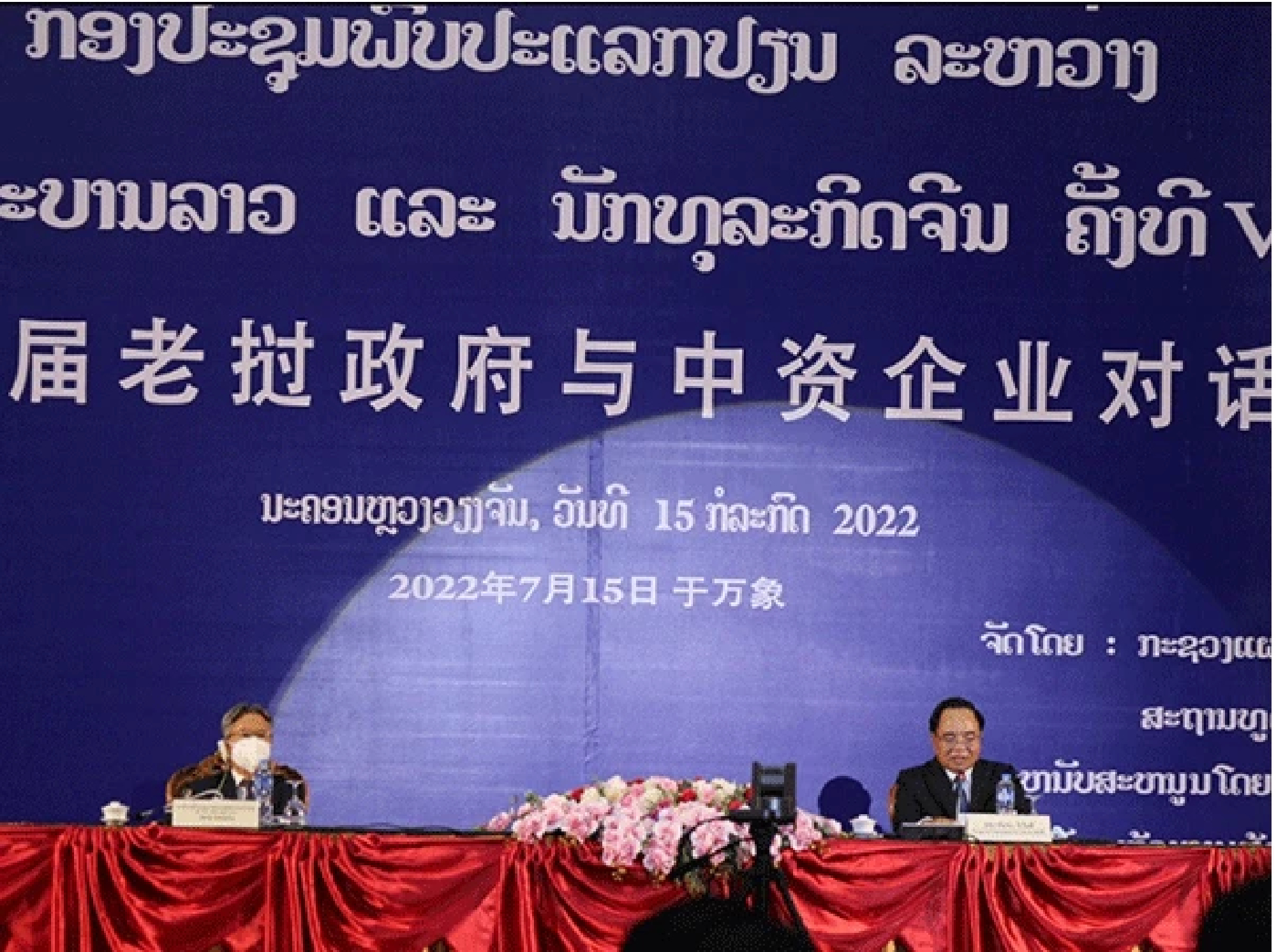
Speaking at a meeting of Lao and Chinese government officials and business operators, he said, “On this occasion, I would like to discuss ways to promote and manage private sector investment in Laos and abroad in the future.”

“There is considerable interest in investment in the mining sector, so in the process of project consideration and approval, it is important to focus on the terms and conditions set by investors.”

On energy generation, it was also important to continue to monitor the implementation of Memorandums of Understanding and Project Development Agreements, Khamjane said.

The government plans to expand the electricity market in neighbouring countries to create openings for projects that have potential but lack market opportunities, he added. Agriculture also has a great deal of potential and has received a lot of attention from Chinese investors, he said, adding that the government would encourage increased production to take advantage of new market opportunities for fruit and vegetables in China.

Meanwhile, the service sector and infrastructure development were growing rapidly, with the building of new roads, districts and ports, which require large amounts of land.

This meant that both central and local governments must quickly determine the boundaries of concession areas so that investors can design and develop projects in a short space of time, he said.

Friday’s meeting broached China’s business and investment operations in Laos, and aimed to tighten relations between the Lao government and Chinese investors.

At the same time, China is building a platform for broader understanding between the Lao government and investors and creating mechanisms to enable government officials to understand the difficulties faced by Chinese businesses in Laos.

Vientiane Times

Asia News Network

Asia News Network: The Nation (Thailand), The Korea Herald, The Straits Times (Singapore), China Daily,  Jakarta Post, The Star and Sin Chew Daily (Malaysia), The Statesman (India), Philippine Daily Inquirer, Yomiuri Shimbun and The Japan News, Gogo Mongolia,  Dawn (Pakistan),  The Island (Sri Lanka), Kuensel (Bhutan), Kathmandu Post (Nepal), Daily Star (Bangladesh), Eleven Media (Myanmar), The Phnom Penh Post and Rasmei Kampuchea (Cambodia), The Borneo Bulletin (Brunei), Vietnam News, and Vientiane Times (Laos).

Published : July 19, 2022

By : Vientiane Times

Singapore companies among most targeted by ransomware

#SootinClaimon.Com : ขอบคุณแหล่งข้อมูล : หนังสือพิมพ์ The Nation.

https://www.nationthailand.com/international/40017918


Ransomware attacks are on the rise, and organisations in Singapore are among the most targeted in the world, a recent study shows.

Singapore companies among most targeted by ransomware

Despite this, businesses in the island nation tend to prioritise recovery rather than prevention, says a report published last month by cyber-security technology firm Cybereason.

Ransomware is a type of malware that typically infiltrates a computer system and encrypts the data inside. Criminals then demand a ransom, threatening to leave it locked up and inaccessible.

Criminals are also increasingly using a “double extortion” tactic, where they not only encrypt the data but also steal it and threaten to leak or sell it online.

Cybereason said Singaporean businesses were witnessing the greatest number of such attacks among the countries polled, with 80 per cent of respondents in Singapore saying their organisations had been hit by a ransomware attack in the past 24 months. Globally, the average figure was 72 per cent.

The percentage of Singapore organisations that reported at least one attack in the past year also rose from 60 per cent last year to 80 per cent this year.

Cybereason’s field chief security officer for the Asia-Pacific region CK Chim said the recent ransomware “gold rush” among cybercriminals is due to the fact that it is becoming easier for criminals to carry out such attacks, while many organisations are also now more reliant on digital infrastructure than before.

Many ransomware gangs now operate like legitimate companies with complex yet efficient business models, Chim said.

“Ransomware is an extremely lucrative model with little to no risk involved for the threat actors, as they often operate in countries with no extradition treaty… This allows them to operate with near impunity,” he said.

The developers of malware are increasingly opting to share their tools with “affiliates”, such as those who specialise in gaining unauthorised access to networks, in exchange for a fee or a cut of the ransom.

Two prominent and commonly used types of ransomware, called LockBit 2.0 and Conti, operate under a “ransomware-as-a-service” model.

Chim said factors like lack of cyber hygiene as well as lack of visibility and detection of cyber criminals are overwhelming many companies’ security operations, including but not limited to those in Singapore.

According to the study, Singapore respondents had the lowest confidence in their organisations’ ability to manage a ransomware attack. About 64 per cent said they were confident in their organisations’ people, while 61 per cent were confident in their policies.

Respondents from Britain had the highest level of confidence in their organisations’ people and policies, at 94 per cent and 77 per cent respectively.

“Basic cyber hygiene is lacking among employees, which is obvious when they open phishing e-mails or select insecure passwords,” Chim said.

“Preventing this may not necessarily require more budget, technology, or manpower. Instead, it requires a better understanding of how ransomware occurs and the implementation of measures that drastically reduce the ability of cyber criminals to snatch valuable data.”

Following an attack, Singapore organisations increased their security budgets by an average of 12 per cent, which was below the global average of 19 per cent.

They were also among the least likely to apportion additional security budget to hiring talent to bolster their defences, with just 41 per cent of Singapore respondents saying their companies would do so, compared with the global average of 51 per cent.

A third of the respondents said their organisations had set up cryptocurrency wallets in anticipation of paying off future ransomware attacks, as the criminals often demand to be paid in Bitcoin.

The survey, conducted in April, polled early 1,500 cyber-security professionals from organisations with at least 700 employees in the United States, Britain, Germany, France, Japan, Italy, South Africa, the United Arab Emirates and Singapore. Those in Singapore made up about 7 per cent of the sample or just over 100 respondents.

The study also found that giving in to the criminals and paying the ransom did not guarantee the safe return of stolen data.

Among organisations that chose to pay the ransom to regain access to their systems, about 54 per cent found that issues persisted after recovery, or that at least some of their data was corrupted after decryption. This figure is also on the rise, increasing from the 46 per cent who said the same in 2021.

The most common types of stolen data were sensitive customer data, personally identifiable information, intellectual property and protected health information.

Successfully targeted organisations were also vulnerable to repeat attacks. Among the organisations that paid the first ransom, nearly 80 per cent were hit with another attack soon after. Of this group, 68 per cent said the second attack took place within a month of the first and came with a higher ransom amount, while about half said they were hit again by the same attackers.

Despite this, organisations may be motivated to pay the ransom in cases like life-or-death situations or national emergencies, Chim noted.

According to the study, about 28 per cent of all the respondents, including those in the healthcare sector, said they paid up to avoid potential injury or loss of life that could result from critical systems being blocked.

“Companies might also feel that paying gives them the fastest possible route to return operations to normal,” Chim added.

More than half of the respondents whose organisations were hit by a ransomware attack were forced to suspend their business operations temporarily or permanently.

Some organisations that paid up said they did so to avoid loss of business revenue and expedite the recovery process. Others said they did so because they were unprepared for such an attack and did not back up their data or did not have the staff needed to adequately respond to the attack.

The Cyber Security Agency of Singapore (CSA) said it does not recommend victims pay the attackers, as this encourages them to continue their criminal activities and target more people.

Organisations that pay up may also be seen as soft targets that can be attacked again in future, the agency added.

“We are seeing the ransomware threat becoming more common and disruptive because it is profitable and lucrative for the cybercriminals behind these attacks,” said a CSA spokesman.

“Disrupting their business model and curbing the profits made will go a long way in tackling the problem.”

CSA said a vast majority of cyberattacks can be prevented by taking proper precautions.

“We encourage business owners to view cyber security as an investment for the future, and put in place robust cyber-security measures to ensure that their systems are protected and resilient.”

The Straits Times

Asia News Network

Asia News Network: The Nation (Thailand), The Korea Herald, The Straits Times (Singapore), China Daily,  Jakarta Post, The Star and Sin Chew Daily (Malaysia), The Statesman (India), Philippine Daily Inquirer, Yomiuri Shimbun and The Japan News, Gogo Mongolia,  Dawn (Pakistan),  The Island (Sri Lanka), Kuensel (Bhutan), Kathmandu Post (Nepal), Daily Star (Bangladesh), Eleven Media (Myanmar), The Phnom Penh Post and Rasmei Kampuchea (Cambodia), The Borneo Bulletin (Brunei), Vietnam News, and Vientiane Times (Laos).

Published : July 19, 2022

By : The Straits Times

Cambodia’s Preah Vihear durians grab slice of China market

#SootinClaimon.Com : ขอบคุณแหล่งข้อมูล : หนังสือพิมพ์ The Nation.

https://www.nationthailand.com/international/40017916


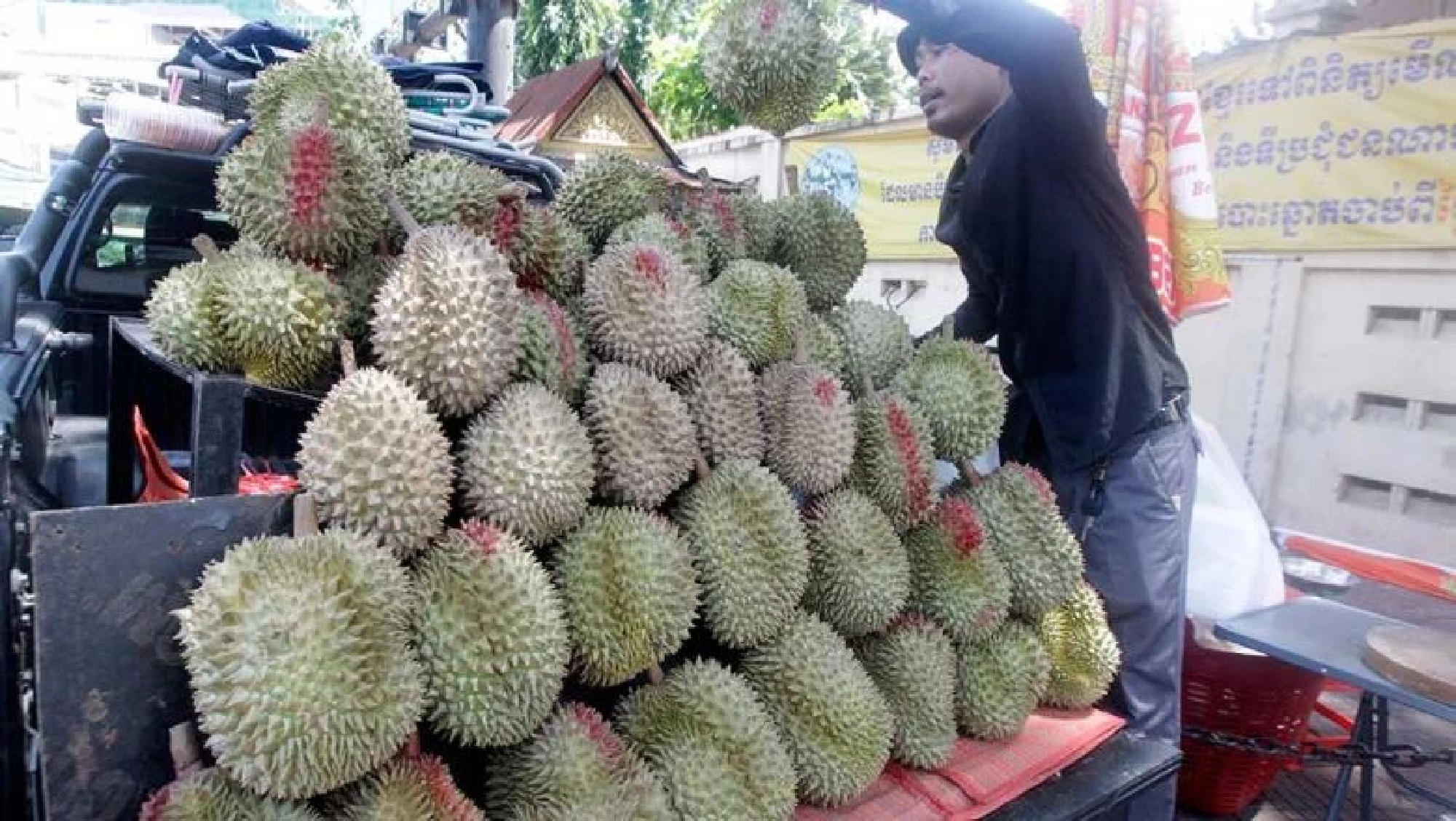
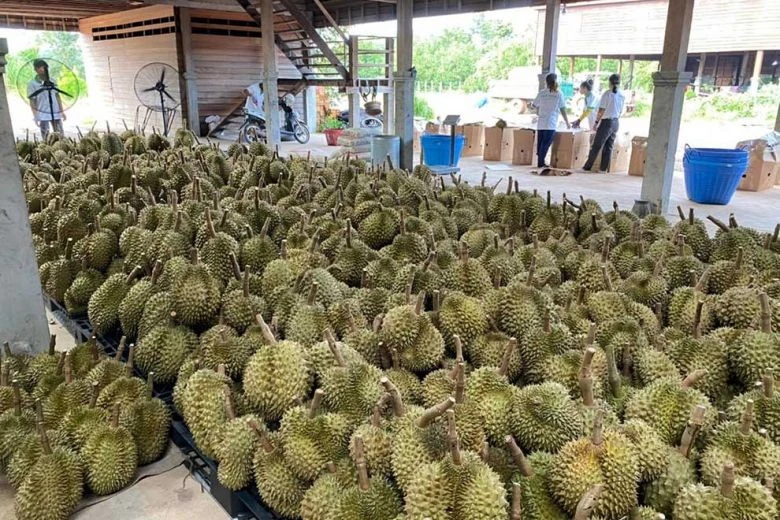
TKY Farm, a Monthong durian grower in Preah Vihear province, has shipped over 120 tonnes of durian to China in a first for Cambodia.

Cambodia’s Preah Vihear durians grab slice of China market

The country is seeking a slice of the lucrative durian market in China, which last year imported US$4.2 billion (153 billion baht) of durian – mainly from Thailand.

TKY Farm CEO Yi Sinath said the company has been growing durians for eight years, with more than 16,000 trees yielding over 300 tonnes of fruit this year, making it one of the largest producers in Preah Vihear province.

Eyeing China’s huge appetite for durian, TKY Farm decided to export frozen durians via Thailand to Chinese shores for the first time.

“Of course, we want to export directly to China because going through other countries is not easy. Next year, we will find an easier way to export,” Sinath said.

TKY Farm aims to have its durians registered as a GI (geographical indication) product, thanks to taste and quality which are unique to Preah Vihear, and recognised in Cambodia and internationally.

Preah Vihear provincial Department of Agriculture, Fishery and Forestry director Peung Tryda said durians have high economic potential, which has recently encouraged farmers in the province to grow more of the spiky, pungent fruit.

“This year, we have more area under durian cultivation than last year. Although our durians have yet to be exported directly [to China], TKY Farm’s exports bear positive signs for our local growers,” he said.

Agriculture, Forestry and Fisheries Minister Veng Sakhon lamented recently that Cambodian durians have not yet found a foreign market, like China.

A limited supply of fruit plus a lack of phytosanitary protocols make talks on exporting the fruit from Cambodia difficult.

Cambodia’s Preah Vihear durians grab slice of China market

Also, other Cambodian agricultural products are waiting for review by Chinese trade authorities. Meanwhile, China only considers imports of a single product per country at a time, to allow stringent processes including phytosanitary and other inspections.

The Phnom Penh Post

Asia News Network

Asia News Network: The Nation (Thailand), The Korea Herald, The Straits Times (Singapore), China Daily,  Jakarta Post, The Star and Sin Chew Daily (Malaysia), The Statesman (India), Philippine Daily Inquirer, Yomiuri Shimbun and The Japan News, Gogo Mongolia,  Dawn (Pakistan),  The Island (Sri Lanka), Kuensel (Bhutan), Kathmandu Post (Nepal), Daily Star (Bangladesh), Eleven Media (Myanmar), The Phnom Penh Post and Rasmei Kampuchea (Cambodia), The Borneo Bulletin (Brunei), Vietnam News, and Vientiane Times (Laos).

Published : July 19, 2022

By : The Phnom Penh Post