CO2 reconversion into fuel, building materials under development in Japan

#SootinClaimon.Com : ขอบคุณแหล่งข้อมูล : หนังสือพิมพ์ The Nation.

https://www.nationthailand.com/international/40017907


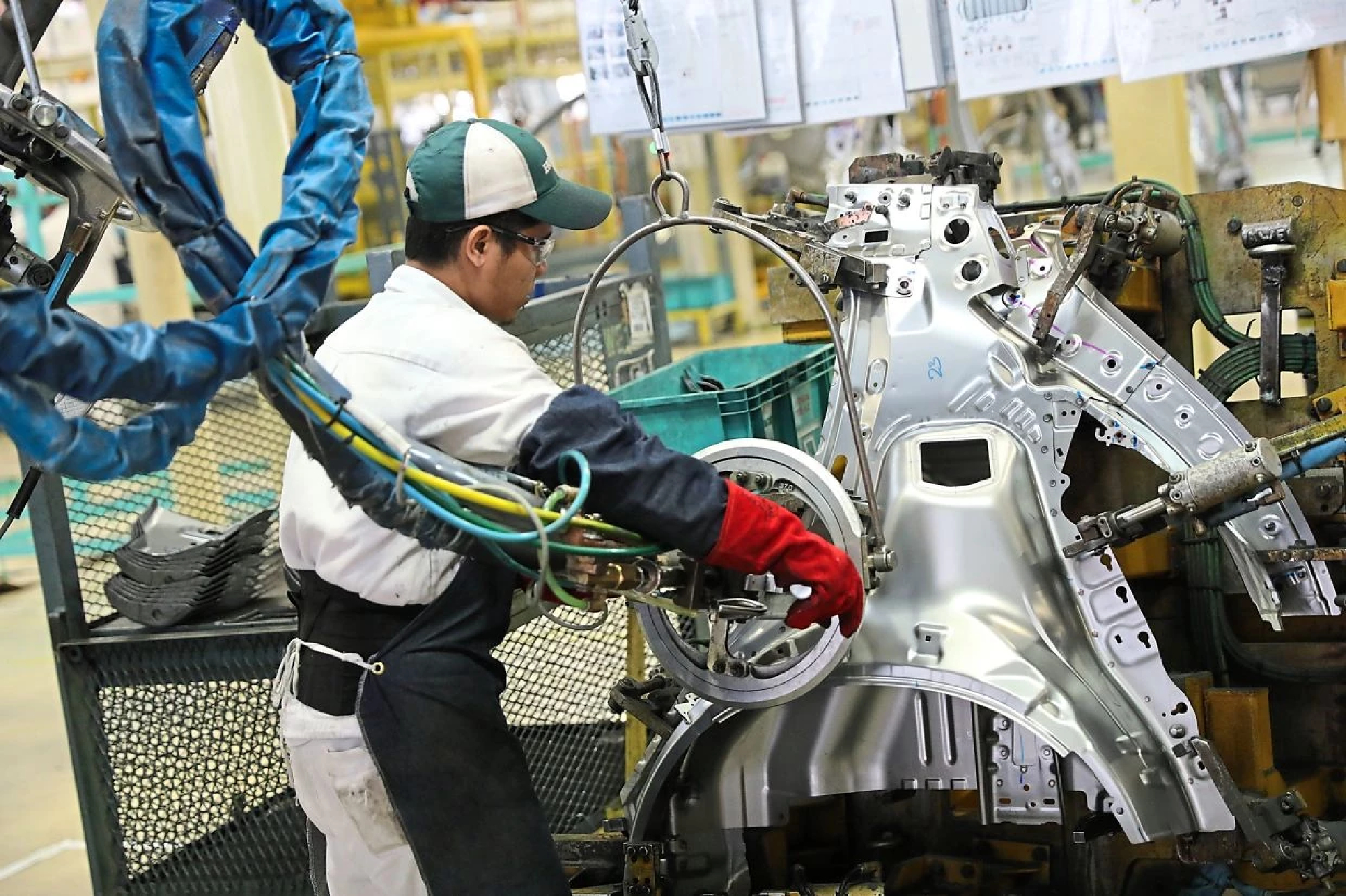
Energy giants and other companies are stepping up the development of technologies to recycle carbon dioxide to produce city gas, construction materials, chemicals and other products.
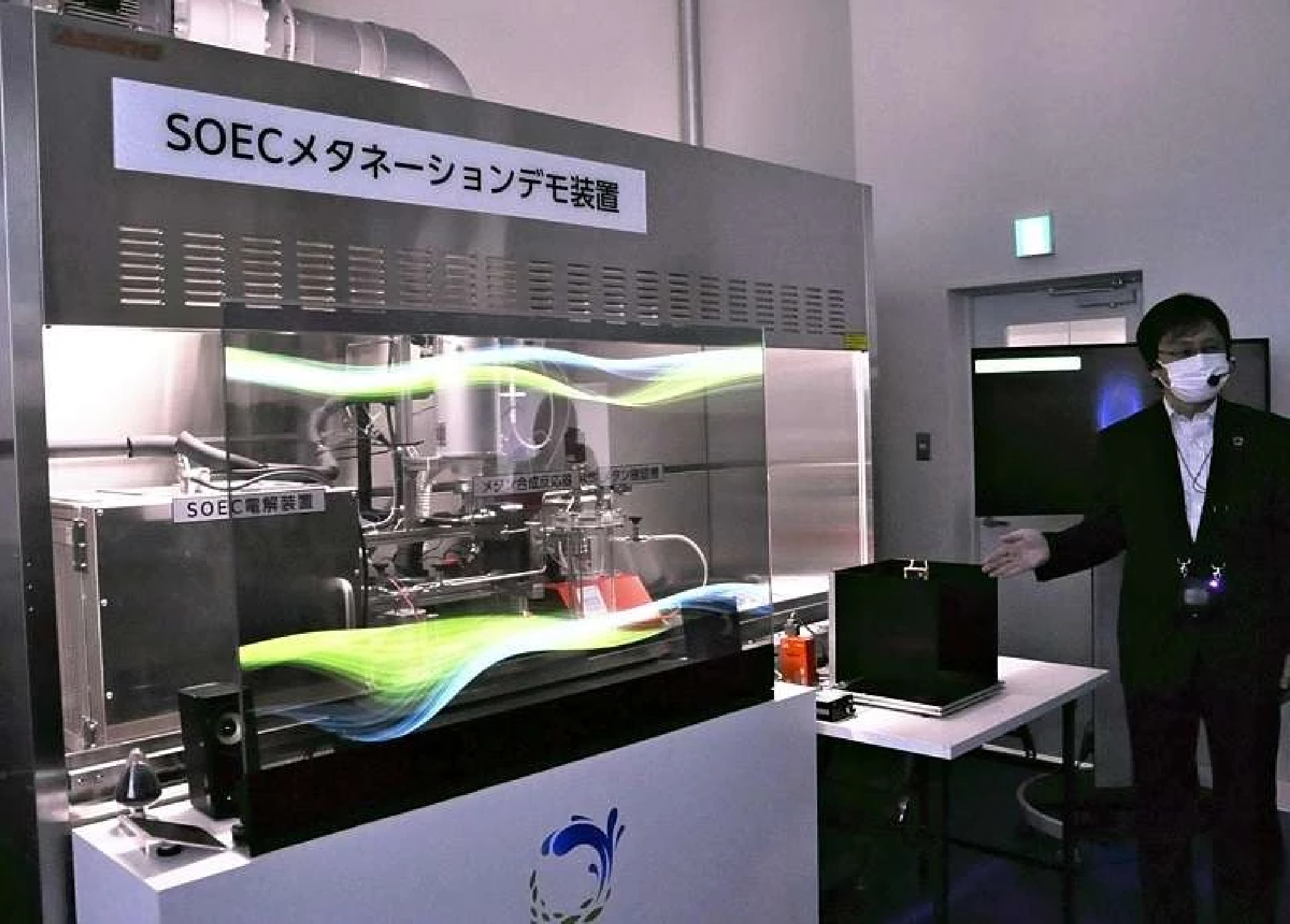
CO2 reconversion into fuel, building materials under development in Japan

If the companies can put to practical use the recycling of CO2 — a gas emitted in large quantities in power generation and other industrial activities — their business chances will increase. Thus, competition is intensifying to lower costs and realize mass applications of such processes.

Seeing CO2 as a resource

Osaka Gas Co. has been developing a technology called methanation that synthesizes CO2 and hydrogen to produce methane, the main component of city gas. CO2 will indeed be generated when city gas is burning, but that CO2 will be reused to produce city gas again, so CO2 emissions will be effectively zero, the company said.

The company has been running TV ads since April in which a narrator reads, “Everyone wants to reduce CO2, but it looked like a resource to us.”

Although there are no examples of putting CO2 recycling into practical use yet, the basic technology has been established. Osaka Gas is developing its own technology to reduce the electricity needed for methanation production and plans to replace 1% of its city gas supply with recycled gas by 2030 and 90% by 2050.

“It must lead to significant greenhouse gas reductions in the future,” said Hisao Onishi at the Osaka Gas Energy Technology Laboratories.

Heavy machinery manufacturer Hitachi Zosen Corp. is strong in catalyst technologies — essential for the reaction of CO2 and hydrogen — and has been developing methanation technology since 1995. The company also sells methanation equipment for tests. It recently delivered methanation equipment to Tokyo Gas Co.

In May, Hitachi Zosen began test operations of methanation equipment at a waste incineration plant in Odawara, Kanagawa Prefecture. The equipment captures the CO2 emitted during incineration for the purpose of methanation — the first such use of methanation equipment at a waste incineration facility.

Competition may intensify

The government has set a goal of net-zero emissions of greenhouse gases including CO2 by 2050. As one of the technologies to achieve this goal, it will push for the capture and conversion of CO2 into a resource, called carbon recycling.

The Economy, Trade and Industry Ministry said that the technology to produce various materials from CO2, including plastics, jet fuel, minerals and concrete, will be commercially available by around 2030.

Electric power giants are also focusing on developing the reuse of CO2, as they emit large amounts of it.

Chugoku Electric Power Co. is trying to produce sand with good drainage properties using CO2. The sand is produced by exposing the mixture — CO2, concrete pieces from crushed unused utility poles and coal ash from thermal power generation — to microwaves. The sand is intended for use on playgrounds and other places.

Kansai Electric Power Co. has begun research on microalgae that produce a special substance from CO2. The substance has an ingredient applicable to therapeutic agents for arteriosclerosis.

Among major chemical companies, Asahi Kasei Corp. and Mitsubishi Chemical Corp. are developing technologies to mass-produce raw materials for urethane resins and plastics from CO2.

Research firm Fuji Keizai Co. estimates that the market for CO2 separation and carbon recycling will grow 17.2% from ¥4.857 trillion in 2019 to ¥5.693 trillion by 2030.

The Japan News

Asia News Network

Asia News Network: The Nation (Thailand), The Korea Herald, The Straits Times (Singapore), China Daily,  Jakarta Post, The Star and Sin Chew Daily (Malaysia), The Statesman (India), Philippine Daily Inquirer, Yomiuri Shimbun and The Japan News, Gogo Mongolia,  Dawn (Pakistan),  The Island (Sri Lanka), Kuensel (Bhutan), Kathmandu Post (Nepal), Daily Star (Bangladesh), Eleven Media (Myanmar), The Phnom Penh Post and Rasmei Kampuchea (Cambodia), The Borneo Bulletin (Brunei), Vietnam News, and Vientiane Times (Laos).
 

Published : July 19, 2022

By : The Japan News

Malaysian customs seizes six tonnes of raw ivory, biggest bust so far in its history

#SootinClaimon.Com : ขอบคุณแหล่งข้อมูล : หนังสือพิมพ์ The Nation.

https://www.nationthailand.com/international/40017903


Six tonnes of raw ivory has been seized, the largest such seizure so far in the history of the Customs Department. The raw ivory was part of a seized shipment also containing endangered animal horns and bones estimated to be worth at least RM80mil ( 658 million baht ) .

Malaysian customs seizes six tonnes of raw ivory, biggest bust so far in its history

Customs director-general Datuk Zazuli Johan said the ivory was seized together with pangolin scales, rhinoceros horns, tiger fangs and other animal bones and skulls earlier this month.

“On July 10, an enforcement team detected three suspicious containers believed to have come from Africa.

“The containers were scanned and one of them was detected carrying the illegal items,” he told reporters at the Selangor Customs Office at North Port on Monday.

He said checks revealed the container was loaded with wood in front of the container door to dupe authorities.

“In total, we seized six tonnes of ivory, 29kg of rhinoceros horns, 100kg of pangolin scales, 14kg of assorted animal horns and 300kg of assorted animal bones and skulls.

“Based on our investigations, the containers were headed to the Pasir Gudang Port from the United Arab Emirates but was intercepted when the ship reached Port Klang,” he said, adding that investigations were ongoing to identify the importer and shipping agent.

He said the seizure was the largest in the department’s history.

“In 2012, we seized 500kg of ivory worth RM2.4mil while in 2014, we seized over RM40mil worth of pangolin scales.

“We have classified the case under Section 135(1)(a) of the Customs Act for attempted importing of prohibited items,” he said.

The Star

Asia News Network

Malaysian customs seizes six tonnes of raw ivory, biggest bust so far in its history

Published : July 19, 2022

By : The Star

Malaysian workforce needs attention to retain competitive edge: HSBC exec

#SootinClaimon.Com : ขอบคุณแหล่งข้อมูล : หนังสือพิมพ์ The Nation.

https://www.nationthailand.com/international/40017884


Malaysia needs to reinvent its workforce or risk losing its competitive edge, according to HSBC Asia-Pacific general manager and head of human resources David Thomas.

Malaysian workforce needs attention to retain competitive edge: HSBC exec

In order to meet the needs of a rapidly changing world with major developments in technology and to achieve its goal of becoming a high-income economy, he said it is crucial for the country to reinvent its workforce or risk losing out to more progressive countries.

This includes incorporating greater flexibility within organisations, as employees expect more choice over how, when and where they work, he told StarBiz in response to e-mail queries.

Thomas said it also includes supporting the country’s workforce to develop skills for the jobs of today and tomorrow.

“The onset of the Covid-19 pandemic has accelerated trends like digitisation and challenged other notions like the ability to work from home.

“These advances have opened great opportunities globally. Simultaneously, it has forced organisations to rethink how they manage their workforce,” he added.

Thomas said organisations in the Asia-Pacific are also recognising the need to move away from a singular focus of one or two strands to cover all strands of diversity such as generational, age, disability and cognitive diversity.

“We need to look to integrate all the strands, the intersectionality of diversity and move away from the targets that focus on only one or two areas.

“At the same time, it is vital to look at how we achieve inclusion and get the diversity mix to work to achieve the maximum benefit for all employees,” he noted.

Furthermore, he said talent is industry agnostic as they have transferable skills which are highly sought after, particularly in technology.

Malaysian workforce needs attention to retain competitive edge: HSBC exec

Thomas said Malaysia is a hotbed of diverse talent. The country’s large demographic, comprising young talent with a strong grasp of the English language and a wide variety of skills, is the foundation of the country’s economic growth.

Supported by the government’s continued investment in human resource development, he said the quality of the nation’s workforce is superior.

Moreover, he said its unique location within the Asean region, robust infrastructure capabilities and competitive business landscape have been key reasons for attracting global talent to the country.

“For HSBC, these factors are critical for us as in addition to our financial services business in Malaysia, we also have one of our global shared service centres based in the country.

“This centre serves the operations of 39 different countries and is enabled by a diverse breed of talents to meet the varying needs of our global operations.

“The impact of the pandemic, and the rapid rise of digitalisation, has transformed how the labour force works today and the skills companies require,” he said.

Thomas said the government, the education sector and companies in Malaysia must work together to address this challenge and prevent an increase in the skills gap which creates greater inequality.

He added that corporations need to help their employees develop key skills in transferable areas like creativity and connectivity, as they underpin agile ways of working.

Other high-tech skills like data analytics, cloud computing and blockchain would continue to increase in demand, he said, noting that those who have expertise in these areas, in combination with strong transferable skills, would be even more employable.

To develop, attract and retain talent globally, Thomas said HSBC is building an inclusive organisation that prioritises well-being, invests in learning and careers and prepares colleagues for the future of work.

“We’ve introduced a hybrid working model, wherever appropriate, which allows us to strike the right balance between office-based work and home-based work.

“By implementing this model, HSBC aims to promote better health and well-being among its people while facilitating improved productivity as engagement between teams and customers becomes more purposeful.

“In Malaysia, HSBC’s move to Menara IQ at TRX is a reflection of the bank’s commitment to the future of work model, enabled by a hybrid work arrangement,” Thomas added.

He said that in the bank’s recent staff engagement survey for Malaysia, its employees reported an improvement when asked about whether the organisation cares for their well-being.

Various initiatives have been implemented in support of it, he noted.

Last year, HSBC invested nearly 13 million ringgit (107.5 million baht) in Malaysia in training opportunities aimed at building the capabilities of its employees.

The Star

Asia News Network

Asia News Network: The Nation (Thailand), The Korea Herald, The Straits Times (Singapore), China Daily,  Jakarta Post, The Star and Sin Chew Daily (Malaysia), The Statesman (India), Philippine Daily Inquirer, Yomiuri Shimbun and The Japan News, Gogo Mongolia,  Dawn (Pakistan),  The Island (Sri Lanka), Kuensel (Bhutan), Kathmandu Post (Nepal), Daily Star (Bangladesh), Eleven Media (Myanmar), the Phnom Penh Post and Rasmei Kampuchea (Cambodia), The Borneo Bulletin (Brunei), Vietnam News, and Vientiane Times (Laos).
 

Published : July 18, 2022

By : The Star

Solar pioneer Singapore faces growing mountain of panel waste

#SootinClaimon.Com : ขอบคุณแหล่งข้อมูล : หนังสือพิมพ์ The Nation.

https://www.nationthailand.com/international/40017871


As Singapore ramps up solar energy deployment to meet its growing clean energy needs, the issue of how to deal with solar panel waste is proving to be a challenge.

Solar pioneer Singapore faces growing mountain of panel waste

Stanley Wang, co-founder and chief executive of solar tech firm EtaVolt, estimates that up to 5,000 tonnes of photovoltaic waste could be generated within the next two years, assuming that these solar panels are not recycled properly.

EtaVolt, a spin-off from Singapore’s Nanyang Technological University (NTU), works with firms to sustainably recycle their used solar panels and helps them determine when to upgrade to more efficient ones.

Photovoltaic waste could increase exponentially in a few years time, said Wang.

The country currently has a solar capacity of more than 630 megawatt-peak. It is aiming to ramp up solar energy deployment to at least two gigawatt-peak by 2030 as part of the Singapore Green Plan.

Countries around the world have also been rapidly increasing their solar energy deployments amid a push for renewable energy, but this has led to solar panel waste.

The latest report by the International Renewable Energy Agency (Irena) published in 2016 estimated that the world could face up to 78 million tonnes of photovoltaic waste by 2050.

Professor Subodh Mhaisalkar, the executive director of the Energy Research Institute @ Nanyang Technological University (ERI@N), said cities like Singapore primarily deploy solar panels on rooftops.

As newer technologies become available, it makes sense for customers to upgrade their solar panels to higher-efficiency ones, said Prof Subodh.

Wang said that while high-quality solar panels could have a lifespan of around 20 to 25 years, they are generally about 10 per cent to 15 per cent less efficient beyond the 10-year mark.

Thus, those deploying solar panels now would be looking to have them replaced in seven to 10 years, said Prof Subodh.

Wang said the lifespan of solar panels could also be shortened if they are damaged during transportation and installation, and in lightning strikes.

“Given that Singapore’s solar panel deployment started to pick up over the past five years, we expect significant solar panel replacement or recycling to increase significantly by 2025,” said Prof Subodh.

But solar panel recycling is not without problems.

They are made of materials such as aluminium, glass and silicon, which can be potentially recycled, but are often difficult to separate, said Associate Professor Nripan Mathews, who is the cluster director of renewables and low-carbon generation (solar) at ERI@N.

This makes recycling costly, said Prof Subodh.

He said that while Singapore could develop new recycling technologies for a pilot plant here, it could be more cost-effective to have a large-scale recycling plant in the region, collating solar panel waste from countries in Southeast Asia.

This is because Singapore does not have as much solar panel waste, compared with other countries.

A spokesman for solar panel firm EDPR Sunseap told the Straits Times that only about 300 of its solar panels have been recycled thus far, as most of its panels have yet to reach the end of their life cycle.

Some were damaged during installation, while others had manufacturing defects, lowering their efficiency.

“One of the challenges to solar panel recycling is the cost, and there are only a handful of recycling plants or vendors who are capable of recycling solar panels here,” the spokesman added.

Under the National Environment Agency’s (NEA) Resource Sustainability Act, companies that import solar panels and sell or install them here must provide free take-back services for their customers when the solar panels reach their “end of life”.

These companies can then engage NEA-licensed waste collectors or e-waste recyclers to dispose of or recycle these solar panels.

NEA said it is currently funding two projects under its Closing the Waste Loop initiative, and they involve recovering valuable materials through solar panel recycling.

The Straits Times

Asia News Network

Asia News Network: The Nation (Thailand), The Korea Herald, The Straits Times (Singapore), China Daily,  Jakarta Post, The Star and Sin Chew Daily (Malaysia), The Statesman (India), Philippine Daily Inquirer, Yomiuri Shimbun and The Japan News, Gogo Mongolia,  Dawn (Pakistan),  The Island (Sri Lanka), Kuensel (Bhutan), Kathmandu Post (Nepal), Daily Star (Bangladesh), Eleven Media (Myanmar), the Phnom Penh Post and Rasmei Kampuchea (Cambodia), The Borneo Bulletin (Brunei), Vietnam News, and Vientiane Times (Laos).

Published : July 18, 2022

By : The Straits Times

Asia’s first professional cargo hub opens in central China

#SootinClaimon.Com : ขอบคุณแหล่งข้อมูล : หนังสือพิมพ์ The Nation.

https://www.nationthailand.com/international/40017870


A Boeing 767-300 cargo plane took off from the Ezhou Huahu Airport in central China’s Hubei province on Sunday morning, marking the official start of operations at the mainland’s first professional cargo hub airport.

Asia’s first professional cargo hub opens in central China

Located in Ezhou, it is also the first professional cargo hub airport in Asia and the fourth of its kind in the world.

The new airport, equipped with a cargo terminal of 23,000 square metres, a freight transit centre of nearly 700,000sqm, 124 parking stands and two runways, is expected to improve the transport efficiency of air freight and further promote the country’s opening up.

The operation of Ezhou Huahu Airport conforms to the needs of China’s development, said Su Xiaoyan, senior director of the airport’s planning and development department.

The number of parcels handled by China’s courier companies hit a record high of over 108 billion last year and is expected to maintain stable growth in 2022, according to the State Post Bureau.

China Daily

Asia News Network

Asia News Network: The Nation (Thailand), The Korea Herald, The Straits Times (Singapore), China Daily,  Jakarta Post, The Star and Sin Chew Daily (Malaysia), The Statesman (India), Philippine Daily Inquirer, Yomiuri Shimbun and The Japan News, Gogo Mongolia,  Dawn (Pakistan),  The Island (Sri Lanka), Kuensel (Bhutan), Kathmandu Post (Nepal), Daily Star (Bangladesh), Eleven Media (Myanmar), the Phnom Penh Post and Rasmei Kampuchea (Cambodia), The Borneo Bulletin (Brunei), Vietnam News, and Vientiane Times (Laos).

Published : July 18, 2022

By : China Daily

Steps initiated for declaration of Indus River as Unesco World Heritage

#SootinClaimon.Com : ขอบคุณแหล่งข้อมูล : หนังสือพิมพ์ The Nation.

https://www.nationthailand.com/international/40017857


The Administration of Union Territory of Ladakh and the National Monuments Authority (NMA) has initiated steps to seek a declaration of the “Indus River” as an Unesco World Heritage. A conference was recently organised in Leh for this purpose.

Steps initiated for declaration of Indus River as Unesco World Heritage

Secretary, Tourism and Culture Department, Ladakh, Kacho Mehboob Ali Khan spoke about the significance of the river Indus as it signifies a living monument for human civilization and a natural heritage for Ladakh to be proud of.

He also added that the efforts being made for the declaration of the “Indus River” as Unesco World Heritage is a great initiative of the Chairman, NMA, Tarun Vijay as river banks in Ladakh are the source of livelihood and habitation.

Lieutenant Governor, Radha Krishna Mathur (in his video message) spoke about the importance of the Indus river and termed it the “Lifeline of Ladakh”. He said that the Culture Department, Ladakh also plans to publish a Coffee Table Book on the river Indus so as to bring to light history and to generate awareness about the mighty “Indus”.

Addressing the gathering, Chairman, LAHDC Leh, Tashi Gyalson stated, “Indus river is the lifeline of the people of Ladakh in all walks. Declaring it a world heritage site would be a welcoming step but that should not lead to restricting the habitats from performing their routine way of life. We need people-friendly policies and decisions which would help in preserving the actual essence of nature as well as the fragile ecological system of Ladakh.”

He mentioned that Ladakh has huge potential in the agriculture and horticulture sectors along the banks of the Indus. While speaking about the consequences due to global warming, he stressed keeping the rivers clean and free from pollution.

While speaking about the history of the Sindh River, MP Ladakh, Jamyang Tsering Namgyal, stated that Sindh is the basis for Hind and Hindustan. He highlighted the need to consider the usage of water and developmental activities along and around the river in case the river Indus is declared as Unesco World heritage.

“Ladakh defines India,” said Tarun Vijay, Chairman, National Monuments Authority of India. He extended his gratitude to the Lieutenant Governor, UT Ladakh, Radha Krishna Mathur for his support. He underlined that people need to realize the impact rivers have on the living world and to save our rivers from water and river pollution.

Other scholars present during the conference also spoke about the known history of the Indus River, its present scenario, Ladakh’s sacred relationship with the river, etc. They highlighted that everything should be kept in balance with nature else it will result in irreparable loss. Ladakhi people depend on the Indus River for their way of life and their livelihood. Therefore, they commit to restoring natural river flows and cleaning up polluted water for people and nature to thrive.

The Statesman

Asia News Network

Asia News Network: The Nation (Thailand), The Korea Herald, The Straits Times (Singapore), China Daily,  Jakarta Post, The Star and Sin Chew Daily (Malaysia), The Statesman (India), Philippine Daily Inquirer, Yomiuri Shimbun and The Japan News, Gogo Mongolia,  Dawn (Pakistan),  The Island (Sri Lanka), Kuensel (Bhutan), Kathmandu Post (Nepal), Daily Star (Bangladesh), Eleven Media (Myanmar), the Phnom Penh Post and Rasmei Kampuchea (Cambodia), The Borneo Bulletin (Brunei), Vietnam News, and Vientiane Times (Laos).

Published : July 18, 2022

By : The Statesman

Cambodia, Thailand up cross-border KHQR code transactions

#SootinClaimon.Com : ขอบคุณแหล่งข้อมูล : หนังสือพิมพ์ The Nation.

https://www.nationthailand.com/international/40017855


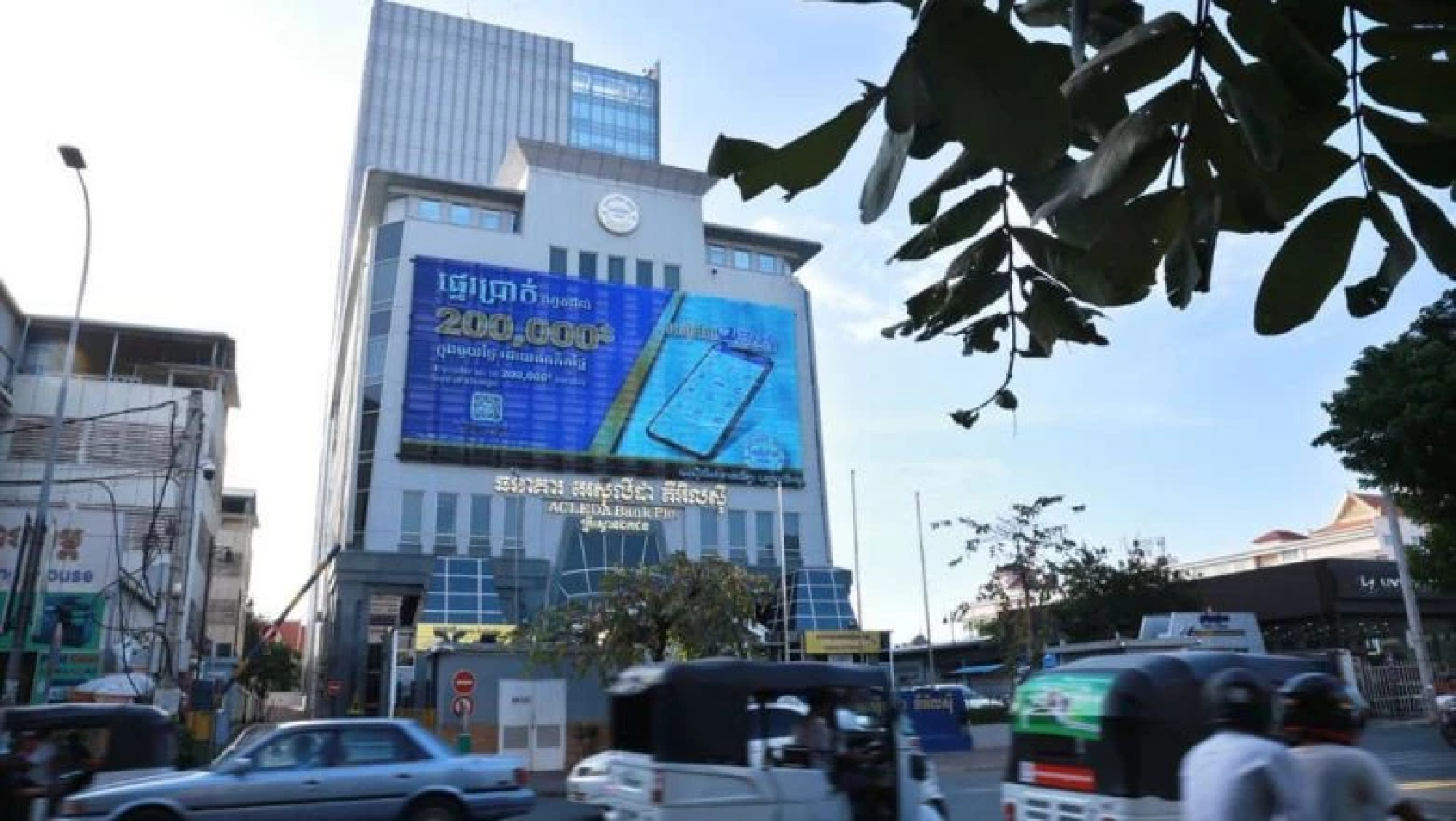
The National Bank of Cambodia (NBC) is working with Thai authorities to promote the use of KHQR more broadly between the two countries, a move that would encourage cross-border cashless payment.

Cambodia, Thailand up cross-border KHQR code transactions

KHQR is a universal quick response (QR) code system created for retail payments in the Kingdom and cross-border payments within the ASEAN bloc, according to the central bank.

NBC assistant governor and director-general Chea Serey told The Post on July 17 that both central banks launched the cross-border QR payment in February 2020. However, as an unintended consequence of Covid-19 border restrictions, the volume of KHQR code-based transactions has remained limited, she said.

Presently, transactions can only be done between ACLEDA Bank Plc and Siam Commercial Bank (SCB) clients, she added.

“It is not universal yet. But, currently, we are in discussion to allow all KHQR users to use their mobile app to pay with SCB merchants as well.

“In Thailand, not all merchants can accept KHQR. Only SCB merchants can. We hope that with Thailand QR standardisation adoption, we will be able to allow our KHQR users to pay at all Thai-QR merchants regardless of their issuing banks,” Serey said.

In addition, transactions are outbound only, meaning that Cambodians can pay in Thailand but Thai tourists cannot pay in Cambodia as of yet, she said, adding that the inbound service is currently in progress.

“Most importantly, we want to encourage the use of KHR. So, only if the users have a KHR account can they use this cross-border method of payment.

“Therefore, I encourage everyone to open a KHR account if they want to benefit from this experience.

“Non-KHR users may complain and find it inconvenient but it is exactly the intention to provide more incentive and convenience to KHR users,” she added.

Promoting investment in the agri-food sector

The ambassador noted that Australia is a big supporter of the agricultural industry, which he referred to as the backbone of the Cambodian economy.

Noting that the annual growth rate of foreign direct investment (FDI) in Cambodia’s agricultural sector has remained low at about four per cent, Kang hailed AFID as an exemplification of Australia’s contributions to the Kingdom’s efforts to attract and maintain investment in agriculture, agribusiness and agri-food.

Meanwhile, Minister of Agriculture, Forestry and Fisheries Veng Sakhon underlined that the agricultural sector has been growing, and producing food in excess of domestic demand.

Progress in the sector is “encouraging and inspiring” the private sector and development partners to invest in processing industries to enable the sustainable use of domestic raw materials, increase value-added, improve quality, hygiene and safety standards, and increase competitiveness, he said.

“The launch of AFID reflects our efforts to facilitate and resolve issues related to the facilitation of agri-food investment, as well as help the agro-industrial sector,” the minister said.

He added that AFID would “help in our work from now on” and support the implementation of “The Strategic Framework and Programmes for Economic Recovery in the Context of Living with Covid-19 in a New Normal 2021-2023”, a comprehensive roadmap to safely guide the economy as the novel coronavirus becomes endemic.

Having said that, Sakhon noted that “only two to 10 per cent” of agricultural products are processed, highlighting that the private sector still faces a host of challenges that need to be jointly addressed, such as power supply and logistics instabilities, and a lack of warehousing and cold storage facilities as well as drying silos.

“They do not meet the actual demand. This must be addressed in a timely and effective manner,” he said.

At the launch of AFID, Hun Lak, CEO of Rich Farm Asia Ltd, reiterated that Cambodia has problems with high production costs and a shortage of skilled labour, which require the government’s consideration.

“In order to woo local and foreign investors to invest in this sector, it is necessary to have better local infrastructure and training for skilled workers,” he said.

Between its inception in 1994 and June 30, CDC approved about 400 investment projects in agriculture, agro-industry and food processing with a total value of $10.33 billion.

The Phnom Penh Post

Asia News Network: The Nation (Thailand), The Korea Herald, The Straits Times (Singapore), China Daily,  Jakarta Post, The Star and Sin Chew Daily (Malaysia), The Statesman (India), Philippine Daily Inquirer, Yomiuri Shimbun and The Japan News, Gogo Mongolia,  Dawn (Pakistan),  The Island (Sri Lanka), Kuensel (Bhutan), Kathmandu Post (Nepal), Daily Star (Bangladesh), Eleven Media (Myanmar), The Phnom Penh Post and Rasmei Kampuchea (Cambodia), The Borneo Bulletin (Brunei), Vietnam News, and Vientiane Times (Laos).

Published : July 18, 2022

By : The Phnom Penh Post

Robot baristas roll into South Korea’s largest airport

#SootinClaimon.Com : ขอบคุณแหล่งข้อมูล : หนังสือพิมพ์ The Nation.

https://www.nationthailand.com/international/40017845


Travellers with no time for long queues can now pick up coffee and a sandwich from delivery service robots at South Korea’s largest airport.

Robot baristas roll into South Korea’s largest airport

Local food delivery app Baemin launched the robot barista at cafes in Incheon International Airport’s Terminal 1 on Friday.

Air-dilly, a service robot made by LG Electronics, is delivering food and beverages from Baskin Robins, Paris Baguette and two Dunkin’ Donut branches in the airport.

To order, customers scan a QR code located on the back of airport seating with the Baemin app. Or they can use the company’s English website and pay with a credit card.

The robot, which has two cabinets, can carry up to 17 kilos and deliver to customers at the terminal’s farthest gate – 250 metres away from the cafes and bakeries.

In case of accidents, the robot has KC certification and insurance worth much as 100 million won ($75,500).

The service is available from 9am to 5pm.

Baemin plans to add more robots to deliver from other airport cafes and bakeries.

“The company will expand the delivery robot service to other places, catering to customers who seek more convenient delivery options,” said Kim Yo-sup, head of the Robot Delivery Service department at Baemin.

The Korea Herald

Asia News Network

Asia News Network: The Nation (Thailand), The Korea Herald, The Straits Times (Singapore), China Daily,  Jakarta Post, The Star and Sin Chew Daily (Malaysia), The Statesman (India), Philippine Daily Inquirer, Yomiuri Shimbun and The Japan News, Gogo Mongolia,  Dawn (Pakistan),  The Island (Sri Lanka), Kuensel (Bhutan), Kathmandu Post (Nepal), Daily Star (Bangladesh), Eleven Media (Myanmar), the Phnom Penh Post and Rasmei Kampuchea (Cambodia), The Borneo Bulletin (Brunei), Vietnam News, and Vientiane Times (Laos).

Published : July 17, 2022

By : The Korea Herald

Security force of 21,000 to guard Marcos’s State of Nation address

#SootinClaimon.Com : ขอบคุณแหล่งข้อมูล : หนังสือพิมพ์ The Nation.

https://www.nationthailand.com/international/40017844


More than 21,000 security personnel will be deployed to ensure peace and order during President Ferdinand “Bongbong” Marcos Jr’s first State of the Nation Address (Sona) at the Batasang National Assembly on July 25.

Security force of 21,000 to guard Marcos’s State of Nation address

The National Capital Region Police Office (NCRPO) on Friday announced that 21,853 security staff will guard the event in Quezon, Metro Manila – a significant increase from the 15,174 personnel initially promised.

The ramped-up security plan was concluded during the first inter-agency meeting, led by NCRPO regional director Major General Felipe Natividad, in Camp Bagong Diwa, Taguig City on Friday.

The police have announced that a Metro Manila gun ban will be enforced from July 22 to 27 to further secure the event.

Police checkpoints will be deployed on roads leading to the National Assembly to enforce the firearms ban.

Police also reiterated their plea for protesters to hold their mass demonstrations in designated freedom parks during the Sona.

In Quezon City, the only place where groups can conduct their protests without the need to secure a permit is the Quezon City Memorial Circle.

Philippine Daily Inquirer

Asia News Network

Asia News Network: The Nation (Thailand), The Korea Herald, The Straits Times (Singapore), China Daily,  Jakarta Post, The Star and Sin Chew Daily (Malaysia), The Statesman (India), Philippine Daily Inquirer, Yomiuri Shimbun and The Japan News, Gogo Mongolia,  Dawn (Pakistan),  The Island (Sri Lanka), Kuensel (Bhutan), Kathmandu Post (Nepal), Daily Star (Bangladesh), Eleven Media (Myanmar), the Phnom Penh Post and Rasmei Kampuchea (Cambodia), The Borneo Bulletin (Brunei), Vietnam News, and Vientiane Times (Laos).

Published : July 17, 2022

By : Philippine Daily Inquirer

Singapore protest against Rajapaksa wins an audience of one

#SootinClaimon.Com : ขอบคุณแหล่งข้อมูล : หนังสือพิมพ์ The Nation.

https://www.nationthailand.com/international/40017838


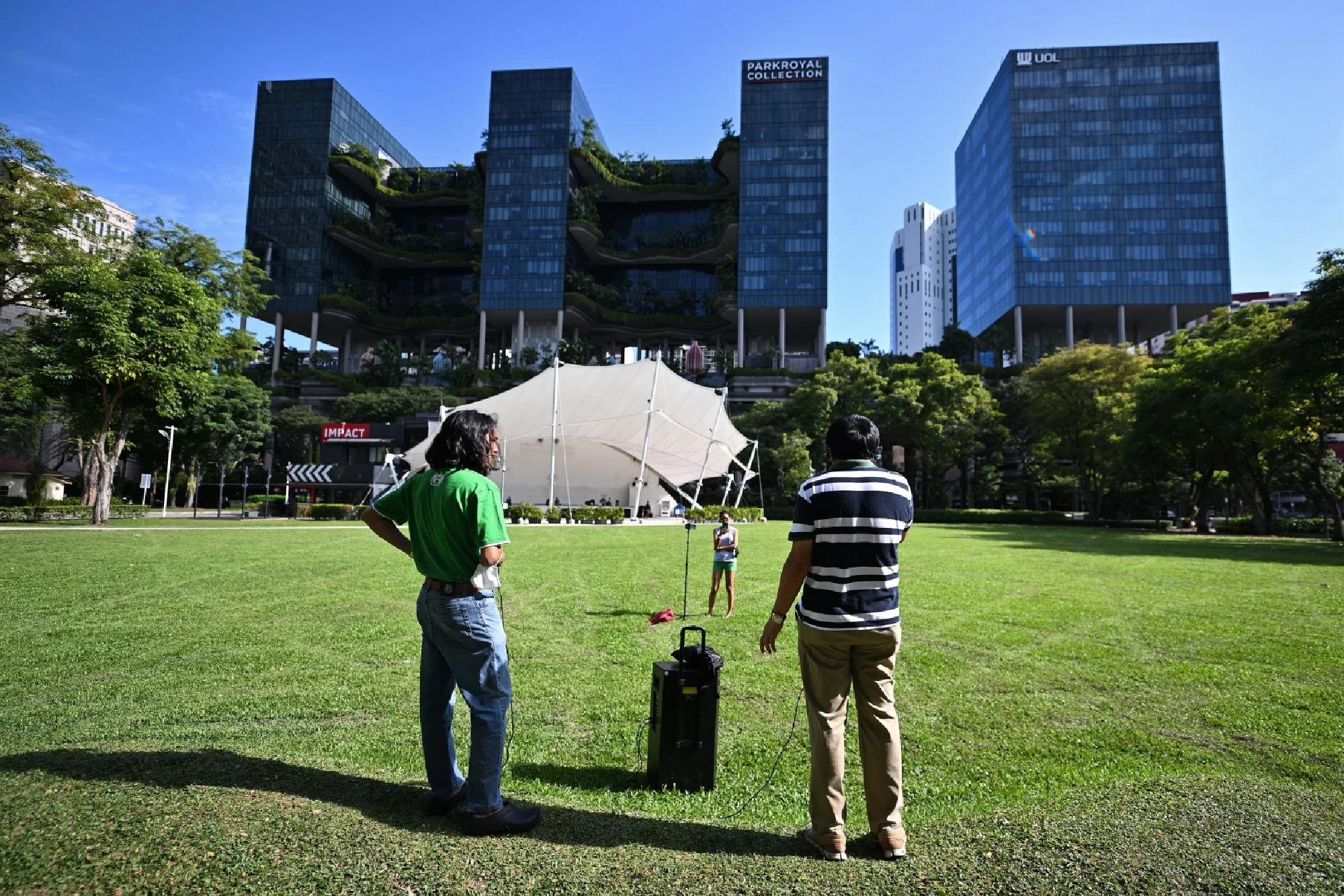
A last-minute protest at the Speakers’ Corner in Hong Lim Park on Saturday against Singapore’s decision to let ousted Sri Lankan president Gotabaya Rajapaksa into the country drew an audience of one.

Singapore protest against Rajapaksa wins an audience of one

Organiser Prabu Ramachandran, 34, a former candidate for Peoples Voice (PV) at the 2020 General Election, said: “Hardly anyone is speaking about this.

I thought that someone ought to speak about this, about the message that we are sending to the rest of the world and the international community by having Gotabaya Rajapaksa stay here.

“He is unwanted. He is a politically exposed person. Unlike what has been said, he is not just another Sri Lankan with a passport. Why are we taking him in?”

Prabu, who works in finance, said in a Facebook post announcing the protest titled “Deport Former Sri Lankan President Gotabaya Rajapaksa” on Friday.

Slated to initially last from 4pm to 6pm, he ended it early at 4.48pm because of the low turnout.

He also live-streamed the protest on Facebook, and about 20 people watched it live.

The only other speaker at the protest was blogger Leong Sze Hian, 68, also a former PV candidate.

He questioned why Rajapaksa chose to resign after landing in Singapore. He and Prabu also asked for details of Rajapaksa’s bank accounts in Singapore to be made public.

Speakers’ Corner is the only place in Singapore where protests can be held legally without a permit.

Developments in Sri Lanka have seen protests against Rajapaksa sprout globally.

Shortly after he arrived in Singapore on Thursday, the police reminded any would-be demonstrators about the consequences of breaking the law.

“Police ask that the public, Singaporeans, residents, work pass holders and social visitors alike, abide by our local laws,” they said. “Action will be taken against anyone participating in a public assembly that is illegal.”

Observers noted that Rajapaksa was still president of Sri Lanka at the time he entered Singapore and was issued a social visit pass for a private visit.

Singapore protest against Rajapaksa wins an audience of one

The Straits Times approached about 20 Sri Lankan citizens in Singapore and Singaporeans of Sri Lankan descent or with close links to the country for their views on the island nation’s decision to allow him entry, and most declined to comment.

However, some felt that letting Rajapaksa stay in Singapore contradicted the country’s strong stance against corruption and racism.

They pointed to how, in addition to his gross mismanagement of Sri Lanka’s economy, Rajapaksa oversaw the killing of tens of thousands of Tamils at the end of the Sri Lankan civil war in 2009 while he was defence secretary.

He also leaves behind a legacy of a heavily militarised northern and eastern Sri Lanka, which is home to many Tamil and Muslim communities.

A Singaporean lawyer of South Asian descent, who requested anonymity, said he was “shocked and hurt” at the Singapore government’s decision to allow Rajapaksa to visit the country.

“Isn’t the Parliament in Sri Lanka meeting about where all the money has gone? The very person who is responsible for an economic disaster and has run away – why should Singapore be the country that’s a stopover for him?”

The lawyer added: “Any Sri Lankan, whether they are Tamil or not, will feel a sting that he is here around us in Singapore.”

An 81-year-old retired criminal law professor, a Singaporean of Tamil origin, said: “Lee Kuan Yew always maintained that Sri Lanka is a good example of how we should not treat minorities. The divisive policy is dangerous. So for [Rajapaksa] to now be let into the country is a disgrace.”

In a Change.org petition created on Thursday, the day Rajapaksa landed in Singapore, blockchain businessman Raymond Ng wrote that he had filed a police report in Singapore against Rajapaksa for money laundering, compelled by his “loyalty to the Republic of Singapore”.

As of Saturday, more than 2,000 people had signed the petition, although it is not known how many of these were unique or from Singapore.

On Twitter, dozens of Sri Lankans have also been tagging the Singapore government’s account to express their anger at the Republic’s decision.

These tags – which show up when users search for who has interacted with the government’s Twitter account – were swiftly removed.

But there were also some who thought Singapore was well within its rights to allow Rajapaksa entry. They noted that when he arrived at Changi Airport on Thursday, he was still the president of Sri Lanka.

Dr Lahiru Wijedasa, a conservation biologist who is a Singaporean of Sri Lankan origin, said Rajapaksa was “a free man” with no criminal convictions and had “legitimately left” Sri Lanka.

“So I don’t think we [in Singapore] are giving him shelter. Merely extending the on-arrival visa facilities open to all Sri Lankans,” Dr Wijedasa said.

On Instagram, Yashora Samaradivakara, a Sri Lankan in Singapore, called for more sensitivity from all who are talking about the Sri Lanka crisis, where food, gas and electricity are in short supply.

“To you, it’s a funny piece of news on your feed; to them, it’s their lives/reality. The people of Sri Lanka do not deserve this,” she wrote.

The Straits Times

Asia News Network

Asia News Network: The Nation (Thailand), The Korea Herald, The Straits Times (Singapore), China Daily,  Jakarta Post, The Star and Sin Chew Daily (Malaysia), The Statesman (India), Philippine Daily Inquirer, Yomiuri Shimbun and The Japan News, Gogo Mongolia,  Dawn (Pakistan),  The Island (Sri Lanka), Kuensel (Bhutan), Kathmandu Post (Nepal), Daily Star (Bangladesh), Eleven Media (Myanmar), the Phnom Penh Post and Rasmei Kampuchea (Cambodia), The Borneo Bulletin (Brunei), Vietnam News, and Vientiane Times (Laos).

Published : July 17, 2022

By : The Straits Times