Korea’s push to reopen is already backfiring #SootinClaimon.Com

#SootinClaimon.Com : ขอบคุณแหล่งข้อมูล : หนังสือพิมพ์ The Nation.

https://www.nationthailand.com/international/40002833

Korea’s push to reopen is already backfiring


Top health officials flip-flop on COVID-19 delta variant in matter of days
Korean plans for a more normal summer appear to be dashed by a likely resurgence — as delta, the latest alarming variant of COVID-19, gains traction globally. Seoul and nearby cities were excluded from the nationwide reopening Thursday, despite health officials vouching less than a week ago that the country was ready for it.

Ahead of the weekend, Prime Minister Kim Bu-gyeom, alongside the Korea Disease Control and Prevention Agency’s Commissioner Jeong Eun-kyeong, issued a special address calling on Koreans to continue to abide by safety precautions as the delta variant tightens its grip in the capital.

“Our fight against COVID-19 is facing a grave crisis just as life was slowly returning to normal,” the prime minister said Friday, when the number of daily new infections rose past 800 for the first time since early January. “The trends in and around Seoul are especially troubling, with 90 percent of the highly transmissible delta variant cases found there.”

The theme of government COVID-19 briefings shifted from a return to normal to pleas for caution in just a matter of days.

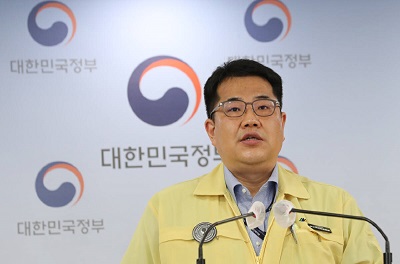
On June 24, a week prior to the scheduled reopening, the Ministry of Health and Welfare’s spokesperson Son Young-rae told reporters the delta variant “doesn’t constitute a concern in Korea,” and the COVID-19 situation here “is stable and under control.”

“Postponing the July 1 reopening on account of the delta variant would not be necessary,” he said.

But a few days later on June 28, Son said in a closed-door briefing the plan to reopen “may need to be adjusted” as growing caseloads and new variant-driven outbreaks trouble the most populous Seoul and its satellite cities. In a sudden change of course, the ministry said in Wednesday’s emergency briefing that the lifting of social distancing rules in the Seoul area would be put off a week.

Asked if he stood by his previous statement, Son said in the same briefing the delta variant was “on a steady rise” and as such “being closely monitored.” He went on, “However, no variant has yet to become the dominant strain in Korea. The delta strain still accounts for a small fraction of all variant cases.”

But Korea is not doing enough surveillance to grasp how widely variants may have spread, according to Dr. Paik Soon-young, a virologist at Catholic University of Korea.

“Korea is sequencing only 15 percent of all patient samples a week, which is not enough to catch up with the spread of the variant,” he said.

The delta strain is said to have a “doubling time” — referring to how long it takes to double its prevalence — of about two weeks, according to health officials in the US, where the variant is rapidly spreading. Japan predicted the delta variant could make up 68 percent of its cases by the time the Tokyo Olympics kick off on July 23.

And it could be “only a matter of time” before the new variant “moves toward dominance here as well,” Paik said

He added that the Health Ministry was “wrong to push ahead of reopening, and downplay the potential of the variant to threaten COVID-19 response.”

Korea’s COVID-19 recovery policies were being based on one-dose vaccination rates, which may not mean much in face of the delta variant, according to infectious disease professor Dr. Kim Woo-joo of Korea University.

“One dose is only marginally effective against delta at 33 percent. It’s after two doses that we can expect sufficient protection against the variant,” he said. Four months into its rollout, Korea has vaccinated 29 percent of its approximately 51 million people with at least one dose of a two-dose regimen vaccine, while just 10 percent have been fully vaccinated.

“The UK and the US, which are among the most well-vaccinated countries, are all ramping up efforts to vaccinate the younger populations, while Korea is still vaccinating people in their 60s,” he pointed out. As vaccinations proceed in the order of age, people in their late 50s will become eligible in the final week of July, and anyone younger from August on.

Kim proposed shortening the wait until the second dose for first-dose recipients of the AstraZeneca vaccine, which is administered 11 to 12 weeks apart, to give them maximum protection faster.

Dr. Jung Ki-suck, a former Korea Centers for Disease Control and Prevention Agency director, said he agreed with easing social distancing as more people get vaccinated, but added that “the bulk of the rules were being lifted at once, and too soon.”

“The summer reopening has been promoted by health officials for so long now that it’s going to be harder for them to make a U-turn.”

Korea logged 743 additional cases out of 45,207 tests conducted over the last 24 hours ending Saturday at midnight — the highest to be recorded on a weekend since mid-December. Cases are usually lower on weekends when fewer tests take place compared to weekdays.

Published : July 05, 2021

By : Kim Arin/The Korea Herald/ANN
[Philippines] 42 military men, 3 civilians dead in C-130 plane crash in Sulu #SootinClaimon.Com
#SootinClaimon.Com : ขอบคุณแหล่งข้อมูล : หนังสือพิมพ์ The Nation.

https://www.nationthailand.com/international/40002832

[Philippines] 42 military men, 3 civilians dead in C-130 plane crash in Sulu

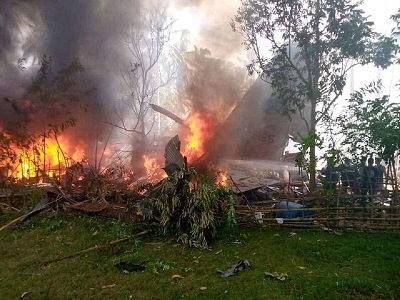
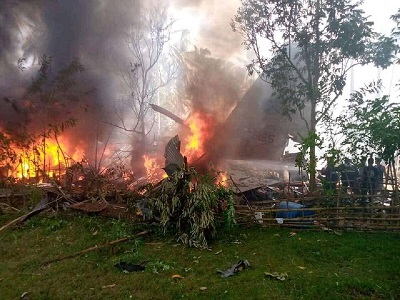
A military cargo plane carrying soldiers crashed in Patikul, Sulu province, on Sunday morning, killing 42 military personnel on board and three civilians on the ground.

Forty-nine military personnel on board the C-130 Hercules plane and four civilians on the ground were wounded and rescued. Five other passengers remained missing, military officials said.

All 96 onboard were military personnel, officials said.

The transport plane was bound for Jolo, Sulu’s capital, from Lumbia Airport (also known as Cagayan de Oro Airport), according to the Philippine Air Force (PAF).

It went down for still unknown reasons at 11:30 a.m. in Sitio Amman in Patikul’s Barangay Bangkal.

“It’s a very unfortunate incident, the saddest day for us,” the Armed Forces of the Philippines chief of staff, Gen. Cirilito Sobejana, told reporters on Sunday. It was “transporting our troops from Cagayan de Oro,” he said.

Black smoke trailing

With black smoke trailing, the plane was seen hovering and circling above Sitio Amman before it plunged near a garbage area that villagers called “taas landing,” or higher ground.

“We ran for safety,” Abdel Taradji, a store owner, said in Tausug. “We thought it would fall on us. Fortunately, it fell quite far from our place.”

Another resident, a mobile phone load vendor, said neighbors told him that two houses were hit and that some children were injured.

Videos circulating on social media showed thick billows of dark smoke rising from among the trees in the village and people and soldiers rushing to the burning wreckage.

The Lockheed C-130 Hercules was one of two newly acquired transport aircraft that arrived in the country on Jan. 29, procured by the PAF for P2.5 billion with funding aid from the US government.

2nd crash in 2 weeks

It was the second Air Force asset to crash in two weeks. On June 23, a Sikorsky S-70i Black Hawk helicopter went down on a routine night flight in Tarlac province, killing all six Air Force personnel on board.

Defense Secretary Delfin Lorenzana said the entire fleet of C-130 transport aircraft had been automatically grounded pending results of the Sulu crash investigation.

The Western Mindanao Command (Westmincom) said the passengers of the plane, an American-built turboprop used globally to transport troops and supplies, included 84 Army soldiers, three PAF pilots, five crew members, and two flight medical personnel from Cagayan de Oro when it went down at 11:20 a.m.

Lt. Col. Maynard Mariano, PAF public affairs officer, said the C-130 plane departed from Villamor Air Base in Metro Manila on Sunday morning for Cagayan de Oro to transport personnel. At past 9 a.m., it took off from Lumbia Airport and landed in Laguindingan Airport before flying to Jolo.

“The plane was about to land when it crashed,” Mariano said. A military source from the 11th Infantry Division said the crash site “is on the tip of [the] landing strip of Jolo airport, bordering Patikul” and about 700 meters away from their camp.

[Philippines] 42 military men, 3 civilians dead in C-130 plane crash in Sulu[Philippines] 42 military men, 3 civilians dead in C-130 plane crash in Sulu
As of 5:30 p.m. on Sunday, the Joint Task Force Sulu said at least 29 bodies had been recovered from the wreckage and at least 49 people were rescued and treated for injuries at the 11th Infantry Division hospital in Barangay Busbus, Jolo.

A military source at the Westmincom said at least 43 soldiers were rescued and treated for injuries at Kuta Teodulfo Bautista trauma hospital in Busbus.

4 civilians injured

The source confirmed that four civilians were injured onsite and were currently undergoing medical treatment, while seven soldiers were airlifted to Zamboanga City due to trauma and burns.

“We are doing our best effort to put out the fire and rescue the passengers safely,” Sobejana said. Patikul Mayor Kabir Hayudini said he had received reports that many survivors were rescued. “I just don’t have any idea if there are civilians affected, I have yet to get updates from my people on the ground.”

A majority of the passengers were soldiers who had just completed their training at Camp Osito Bahian in Malaybalay City, Bukidnon province, under the 4th Infantry Division.

Brig. Gen. Ferdinand Barandon, commander of the 403rd Brigade, said the soldiers were on their way to reinforce the manpower of the 11th Infantry Division. Most of them were from Midsalip, Zamboanga del Sur province.

A military source, who refused to be named for lack of authority, told the Inquirer that they were mostly noncommissioned officers and privates bound for deployment from Joint Task Force Diamond to the 11th Infantry Division.

“This could be a special mission to bring troops to augment units in Jolo. If I remember it right, this will be the third C-130 incident that crashed in the history of the Armed Forces of the Philippines. The first one was in [the] 1990s, the second one was in 2008 in Davao City,” a retired Army general, who also requested anonymity, told the Inquirer.

Sikorsky deal

On June 23, a Sikorsky S-70i Black Hawk helicopter crashed, killing all six PAF personnel on board, near Col. Ernesto Ravina Airbase, or Crow Valley Gunnery Range, in Capas, Tarlac province. The aircraft was part of the first batch of five helicopters delivered in November last year for the PAF.

A second batch of six arrived early last month with the last batch of five expected to be in the country this November.

Sixteen Sikorsky S70-i helicopters were acquired for a contract price of $241.5 million by the Department of National Defense from Polish company Polskie Zaklady Lotnicze Sp.z.o.o, under license from Sikorsky United States, through a government-to-government transaction with Poland.

—WITH REPORTS FROM JEOFFREY MAITEM, RICHEL UMEL AND INQUIRER RESEARCH

Published : July 05, 2021

By : Jeannette I. Andrade, Joselle Badilla, Julie Alipala/Philippine Daily Inquirer/ANN

Malaysia must be cautious as it heads to recovery, say experts #SootinClaimon.Com

#SootinClaimon.Com : ขอบคุณแหล่งข้อมูล : หนังสือพิมพ์ The Nation.

https://www.nationthailand.com/international/40002831

Malaysia must be cautious as it heads to recovery, say experts


PETALING JAYA: With five states moving into Phase Two of the National Recovery Plan (NRP) today, health experts advised that the risk of reopening certain economic sectors must be managed.

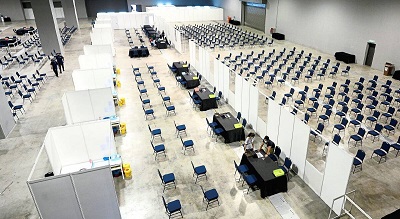
Volunteers making final preparation the vaccine centre for PIKAS vaccine programme which will start from tomorrow at MITEC. pls contact MITEC CEO Mala +60 17-220 6783 for further detail (July 4,2021) — AZHAR MAHFOF/The Star

Even though Malaysia was poised to accelerate vaccination in July, the health experts said the country must be cautious as it heads to recovery.

International Islamic University Malaysia epidemiologist Prof Dr Jamalludin Ab Rahman said companies must have self-control and a disciplined mindset, even if they were allowed to operate.

“When more industries are allowed to operate, there will be increased mobility. There will be increased movement between districts and states because of the logistics of delivering goods.

“If the company does not understand how important it is to prevent transmission while doing these activities, cases will increase and will start among them.

“If employers and employees, and of course their customers, follow the SOP, we can still limit transmission. So awareness and attitude to prevent infections are important – it shouldn’t be taken lightly,” he said.

Dr Jamalludin said Malaysia was likely to have at least 40% of its population get at least one dose of vaccine by September if supply remains steady.

“Based on the number of PPV (vaccination centres) being planned by the Covid-19 Immunisation Task Force, I believe we can vaccinate at least 15% of the population per month with at least one dose. Though we may go higher.

“By September, I would say we may reach beyond 40% of the population to have at least one dose of the vaccine,” he said.

According to the Special Committee on Covid-19 Vaccine Supply (JKJAV), about 19.2% of Malaysia’s population have received at least one dose of the vaccine as of July 3.

The JKJAV said 7.8% of the total population – which is 10.8% of the adult population – had received double doses.

Universiti Malaya professor of occupational and public health Dr Victor Hoe said there would always have to be a balance between risks and benefits of reopening certain economic sectors.

“Where more business sectors reopen, there will be a risk of transmission. The data shows that around 65% to 80% of our cases are sporadic and that 80% of our patients do not show any symptoms. “We can minimise the risk by ensuring that we follow the SOP when we are in public areas or workplaces.

“Businesses should also ensure ventilation in their workplace is adequate to minimise transmission,” he added.

Universiti Malaya professor of epidemiology and public health Dr Sanjay Rampal said balancing the benefits and cost of national interventions was challenging.

“The major issue we face now is whether we have the economic resilience to weather Covid-19 in the coming years.

“We have to balance the benefits with the cost of our interventions, and we may not be able to afford many of the SOP moving forward,” he said.

“Besides the three indicators the government looks at on whether a state can move into the next phase of the NRP, there are other factors to consider.

“The SOP should ideally be calibrated based on a combination of factors, including the proportion of community transmission, reproductive number, total positivity ratio and case fatality rates, among others,” he said.

He added that vaccines might have a short-term impact of drastically reducing transmission due to new variants, but he stressed that vaccines were still essential in that they reduce the severity of cases.

Published : July 05, 2021

By : CLARISSA CHUNG/The Star/ANN

CPC boosting political ties around world #SootinClaimon.Com

#SootinClaimon.Com : ขอบคุณแหล่งข้อมูล : หนังสือพิมพ์ The Nation.

https://www.nationthailand.com/international/40002830

CPC boosting political ties around world


Close dialogue is paving way for finding solutions to shared challenges, tasks

The Communist Party of China and political parties around the world are increasing their interactions, paving the way for dialogue to better tackle common challenges and tasks such as fighting the COVID-19 pandemic, the global economic recovery and co-building the Belt and Road.

Leaders, officials and experts said foreign parties are closely tracking why and how the CPC and China have achieved a number of successes, while Beijing has also kept an open mind on learning from the outside world.

The CPC maintains regular contact with more than 560 political parties and organizations in over 160 countries.

Since last year, promoting global cooperation in the fight against COVID-19 and fast-tracking economic recovery have been two major subjects of the CPC’s dialogues with foreign counterparts and yielded positive feedback from the international community, officials and experts said.

Technology, such as video conferencing, has allowed Party representatives to hold meetings with counterparts spanning the globe, from South Africa to Turkey to the Pacific region.

“The Party cares about the future of humanity, and wishes to move forward in tandem with all progressive forces around the world,” Xi Jinping, general secretary of the CPC Central Committee, Chinese president and chairman of the Central Military Commission, said in a speech marking the CPC’s centenary on Thursday.

Song Tao, head of the CPC Central Committee’s International Department, has on multiple occasions expressed the readiness of the Party and the country to embark on greater exchanges with the rest of the world, including countries along the routes of the Belt and Road Initiative, for mutual learning.

At a meeting last month with diplomats from Arab countries, Song noted that China-Arab relations have seen robust growth despite headwinds over the past two years. Both sides share a strong desire to embark on exchanges, learn from each other, and support one another in key areas, setting an example of South-South cooperation, Song said.

Luiz Inacio Lula da Silva, former Brazilian president and founder of Brazil’s Workers’ Party, said, “China has evolved in an extraordinary way, and I hope that other countries will follow the example of China.

“China over the last 30 years has achieved extraordinary economic growth. Economic growth is felt not by international reserves, but by the quality of life that the people of that country are achieving,” he said in a video recorded for Chinese media.

Juha-Pekka Vaisanen, chairman of the Communist Party of Finland, said leadership, planning and a lot of motivation had been behind China’s rapid economic growth and eradication of absolute poverty.

Political party leaders from Pacific island countries told the CPC during a video dialogue in May that they are ready to maintain close contacts, further exchange experiences on governance, give full play to interparty diplomacy and boost cooperation in areas such as the COVID-19 fight, trade and infrastructure.

Sam Nujoma, the first president of Namibia, said interparty exchanges are an effective way to promote peace and development and improve global governance.

Beijing’s vision of building a community with a shared future for mankind and fostering a new type of international relations “has broadened and deepened the concept and practice of multilateralism in the new era, and gained high acclaim and wide support from the international community”, Xinhua News Agency quoted Nujoma as saying.

Guo Yezhou, deputy head of the International Department of the CPC Central Committee, said that the Party will work further to institutionalize platforms such as the high-level dialogue between the CPC and the world’s political parties.

Chea Munyrith, planning and project director of the Civil Society Alliance Forum in Cambodia, said the CPC attaches great importance to exchanges with other political parties, and cooperates with its counterparts in developing countries on an equal footing.

The CPC is leading the cooperation, and the progress of the international community and China’s cooperation with many countries in different fields has been reinforced constantly while interparty cooperation has been carried out smoothly, he told People’s Daily in a recent interview.

Major boost

Experts said that in recent years, interparty diplomacy and dialogue have given a major boost to China’s international communications and public relations campaigns on topics such as economic development, co-building the Belt and Road and championing sovereign rights and national interests.

Kou Liyan, a researcher at the World Political Party Institute of the International Department of the CPC Central Committee, said, “The CPC makes friends in the world …by seeking common ground while shelving differences; it pursues exchanging ideas, respecting each other, boosting bonding, learning from each other and making progress together.”

Exchanges of ideas also help build and maintain a strategic communications network and dialogue channels for the country, which optimizes the environment for further development of relations between China and the world, Kou wrote in a recent article.

“This network is led by the institutional, signature high-level dialogues with the world’s political parties,” Kou noted, adding that inter-party dialogues also include those with ruling parties and those on specific themes, such as poverty alleviation.

Published : July 05, 2021

By : Zhang Yunbi/China Daily/ANN

Vietnam’s cases nears 20,000 mark, with HCM City becoming largest hot spot #SootinClaimon.Com

#SootinClaimon.Com : ขอบคุณแหล่งข้อมูล : หนังสือพิมพ์ The Nation.

https://www.nationthailand.com/international/40002829

Vietnam’s cases nears 20,000 mark, with HCM City becoming largest hot spot


HÀ NỘI — Việt Nam’s national COVID-19 caseload reached nearly 20,000 today, with increases driven by a major jump in HCM City and the presence of highly transmissible Delta coronavirus variant.

Health authorities confirmed 887 cases on Sunday, including 14 imported cases in Kiên Giang (6), Thái Bình (4), and Quảng Trị (4) provinces.

The remaining 873 cases are community infections with 824 found in quarantine facilities or locked down areas.

Of the new cases, most are in HCM City with 599 infections, followed by Bình Dương and Long An with 87 and 72 infections, respectively.

The new cases pushed the total number of infections in the two southern provinces to 635 and 189.

Phú Yên and Tiền Giang provinces recorded 32 and 29 new infections each.

Other provinces and cities with single-digit increase include Khánh Hoà (9), Quảng Ngãi (8 ), Đồng Tháp (6), An Giang (6), Bình Định (4), Bắc Giang (3), Nghệ An (3), Bà Rịa-Vũng Tàu (2), Vĩnh Long (2), Hải Phòng (2), Tây Ninh (2), Hà Tĩnh (2), Ninh Thuận (1), Trà Vinh (1), Huế (1), Bến Tre (1), and Đà Nẵng (1).

The number of infections in the fourth wave surpassed 16,000 on Sunday, currently at 16,505, with the total recoveries at 5,045.

More than 3,41 million COVID-19 tests have been conducted since April 29 to screen/test for COVID-19 on almost nine million people.

Since the beginning of the pandemic, there have been 19,993 COVID-19 patients nationwide, with 18,075 local cases and 1,858 imported.

HCM City boosting testing

With 6,034 COVID-19 cases logged since late May and sprawling outbreaks in the community, HCM City on Sunday has become the biggest hotspot in the country’s severe fourth wave of infections, according to reports from the health ministry.

The southern economic hub, which has been under heightened social distancing since May 31 with non-essential services and traditional markets shuttered and people urged not to go outside unless for emergency cases or essential trips.

It is conducting mass screening for COVID-19 and triple-digit daily increases have been recorded in recent days, and contributed the largest portion in Việt Nam’s record daily hike of 914 local transmissions on Saturday.

HCM City on Sunday overtook Bắc Giang, which was suffering from severe outbreaks related to industrial zones and factories, with 5,630 cases since late April but the number of daily new cases has dropped to single-digits in recent days.

Along with HCM City, several other south-eastern localities are also witnessing a fast rise in community cases especially in high-risk areas such as manufacturing plants and markets, while the northern region’s outbreaks have been for the most part controlled like Hà Nội, Bắc Giang, Bắc Ninh.

To speed-up finding virus carriers in the community and facilitate contact tracing in order to suppress outbreaks as soon as possible, HCM City’s health department on Sunday asked to deploy more rapid tests along with standard laboratory RT-PCR which takes more time.

Group testing for entire households or a company’s staff, depending on the epidemiological risks, would be continued.

The city aims to process up to 200,000 rapid antigen tests a day, and municipal districts should report to the HCM City Centre for Disease Control (CDC) on their estimated test demands.

The move came after a Government meeting with eight southern localities, chaired by Prime Minister Phạm Minh Chính, in which health minister Nguyễn Thanh Long urged increasing the use of rapid tests.

While known for being less accurate than RT-PCR tests, its use is especially effective in this outbreak given the high viral load in the patients infected with the Delta coronavirus variant, according to the minister.

The city’s authorities are also gearing up social resources and equipment along with medical supplies to prepare for scenarios of up to 15,000 infections. — VNS

Published : July 05, 2021

By : Viet Nam News/ANN

At least 17 killed in Jolo military plane crash #SootinClaimon.Com

#SootinClaimon.Com : ขอบคุณแหล่งข้อมูล : หนังสือพิมพ์ The Nation.

https://www.nationthailand.com/international/40002821

At least 17 killed in Jolo military plane crash


At least 17 people were killed when a Philippines Air Force plane carrying troops crashed on landing in the south of the country and broke up in flames on Sunday.

The Lockheed C-130 transport aircraft crashed at Patikul in Sulu province, in the far south of the archipelago nation where the army has been fighting a long war against Islamist militants from the Abu Sayyaf and other factions.

“So far 40 wounded and injured were rescued and 17 bodies recovered. Rescue and recovery is ongoing,” Defense Secretary Delfin Lorenzana said in a statement, adding that 92 people had been on board.

Military chief Cirilito Sobejana said the plane had “missed the runway trying to regain power.” He also reported earlier that the number of people on board was 85.

A military spokesman, Colonel Edgard Arevalo, said there was no indication of any attack on the plane, but that a crash investigation had not begun and efforts were focussed on rescue and treatment.

Pictures from the scene showed flames and smoke pouring from wreckage strewn among trees as men in combat uniform milled around. A large column of black smoke rose into the blue sky.

Sobejana said in a message to Reuters that the plane had crashed a few kilometers (miles) from Jolo airport at 11:30 a.m. (0330 GMT) and had been carrying troops.

“We are currently attending to the survivors who were immediately brought to the 11th Infantry Division station hospital in Busbus, Jolo, Sulu,” he said.

Published : July 04, 2021

By : inquirer

Central banks up reserves of RMB to a high #SootinClaimon.Com

#SootinClaimon.Com : ขอบคุณแหล่งข้อมูล : หนังสือพิมพ์ The Nation.

https://www.nationthailand.com/international/40002810

Central banks up reserves of RMB to a high


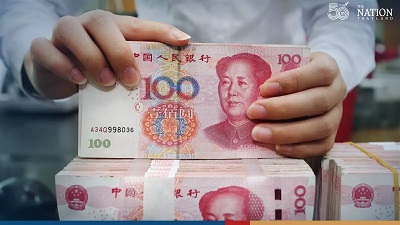
Central banks around the world are holding record levels of reserves in Chinese yuan, according to IMF data.

Analysts said the current five-year high marks another step forward for the Chinese currency’s internationalization, a process that began a few years back.

In the first quarter this year, various central banks held US$287.46 billion worth of Chinese RMB in official foreign exchange reserves, the highest level since the fourth quarter of 2016 and representing 2.45 percent of the total, the International Monetary Fund reported on Wednesday.

Typically, central banks hold foreign exchange reserves in leading currencies such as the US dollar, the pound sterling, the euro and the Japanese yen.

It was in 2016 that the IMF included the RMB in its Special Drawing Rights or SDR basket for the first time. The volume of RMB in the IMF’s Currency Composition of Official Foreign Exchange Reserves, or COFER, has increased for nine consecutive quarters, the IMF said.

Analysts said that reflects improvement in the RMB’s status as an international currency, which is playing a more important role in the global economy.

A substantial increase in the volume of yuan-denominated claims in the IMF’s COFER database has shown the widespread adoption of the Chinese RMB as a global reserve currency, according to a research note from Fitch Ratings.

The US dollar had the largest 59.54 percent share of global foreign exchange reserves in the first quarter, followed by the euro (20.57 percent) and the Japanese yen (5.89 percent), IMF data showed.

“If China’s economy can sustain medium- to high-speed growth, and the financial market’s liquidity and resilience could be strengthened, without any systemic financial crisis, then, the RMB may become the third-largest international currency by 2035,” said Zhang Ming, deputy head of the Institute of Finance and Banking at the Chinese Academy of Social Sciences, or CASS.

Zhang predicted that the RMB, used for payments, trading and reserves, will surpass the British pound sterling and the Japanese yen in another decade, ranking third after the US dollar and the euro.

The major factor that can influence the currency composition of central banks’ reserve portfolios is exchange rate fluctuations, said Serkan Arslanalp, deputy division chief in the Balance of Payments Division of the IMF’s Statistics Department.

Other factors include changes in the relative values of different government securities.

The RMB appreciated by more than 1.2 percent against the US dollar in the first half of this year, amid US dollar weakness against major currencies.

The Chinese yuan’s appreciation against the US dollar was partly due to higher foreign portfolio inflows, Fitch said.

Economists predicted that in coming months, China’s goods exports may weaken, as reopening of developed market economies will likely shift their consumption back to services.

That could lead to a narrowing of the current account surplus and slower appreciation, or even depreciation, of the RMB.

“Beijing is expected to implement measures, if necessary, to limit RMB appreciation,” said Lu Ting, chief economist in China for Nomura Securities.

The US dollar’s share of global reserves in the first three months slightly rebounded to 59.54 percent from 58.94 percent-its lowest level in 25 years-in the fourth quarter of 2020, IMF data showed. But it still remains the dominant international reserve currency.

Significant fluctuations in the interim, as well as active buying and selling decisions of central banks to support their own currencies, may have led to short-term variance of the US dollar’s share in global reserves in the past, said Arslanalp of the IMF.

However, taking an even longer-term view of the past, the decline of the US dollar’s share in global reserves is unmistakable, and indicates that central banks have indeed been shifting gradually away from the greenback, Arslanalp added.

Some analysts said as central banks in emerging markets and developing economies seek to further diversify the currency composition of their reserves, the US dollar’s share will continue to fall.

Published : July 04, 2021

By : China Daily / ANN

Empty beaches, eager hotel staff: First Phuket Sandbox tourists roam resort island #SootinClaimon.Com

#SootinClaimon.Com : ขอบคุณแหล่งข้อมูล : หนังสือพิมพ์ The Nation.

https://www.nationthailand.com/international/40002809

Empty beaches, eager hotel staff: First Phuket Sandbox tourists roam resort island


BANGKOK – The result slip of their Covid-19 test was slid under the door of their Phuket hotel room on Friday morning (July 2).

With that, British couple Stuart and Angela Lucy Smith left their room for breakfast and lounged by the pool at Wyndham Grand hotel, just one day after landing in the Thai resort island.

Hotel employees lavished their attention on the Smiths, who are among the inaugural batch of vaccinated foreign tourists allowed to roam the island province without undergoing quarantine as part of its “sandbox” scheme.

It marks Thailand’s latest attempt to reboot its battered tourism industry even as the country battles a surging third coronavirus wave centred on Bangkok.

“I think nearly every member of staff has come over and welcomed us and thanked us for making the effort to come,” Mrs Smith, 47, told The Straits Times on Friday night.

The couple, who are educators based in Qatar, had to brave an array of rule changes by the Thai government. But they were determined to restart their annual summer holidays in Thailand – something they missed last year as global travel ground to a halt amid the pandemic.

They received their final approval for the trip just one day before their flight.

On their first day out and about in Phuket, they had the whole hotel swimming pool to themselves until late in the afternoon. They ate satay and spring rolls as the bartender plied them with cocktails.

“We spent most of the day at the pool bar relaxing with the staff here, who spent a lot of time making different cocktails for us, and telling us the bar is new and looking for new ideas and things,” she said.

It was only in the evening on Friday when they ventured out of their hotel around Nai Harn beach did they see up close how the pandemic had devastated Phuket.

Before the pandemic, tourism accounted for a fifth of Thailand’s economy and more than 90 per cent of Phuket’s.

ADVERTISEMENT

“(In the past) we would spend most of our time going to restaurants where there were local food and… older ladies doing the cooking. We love that,” Mrs Smith said. “But this evening we didn’t see many of those open, which was quite sad. It was more of the Western restaurants and bars.”

Where the roads used to buzz with scooters, they saw at most a dozen pass by the entire evening. “I have never seen it like this really,” Mrs Smith said.

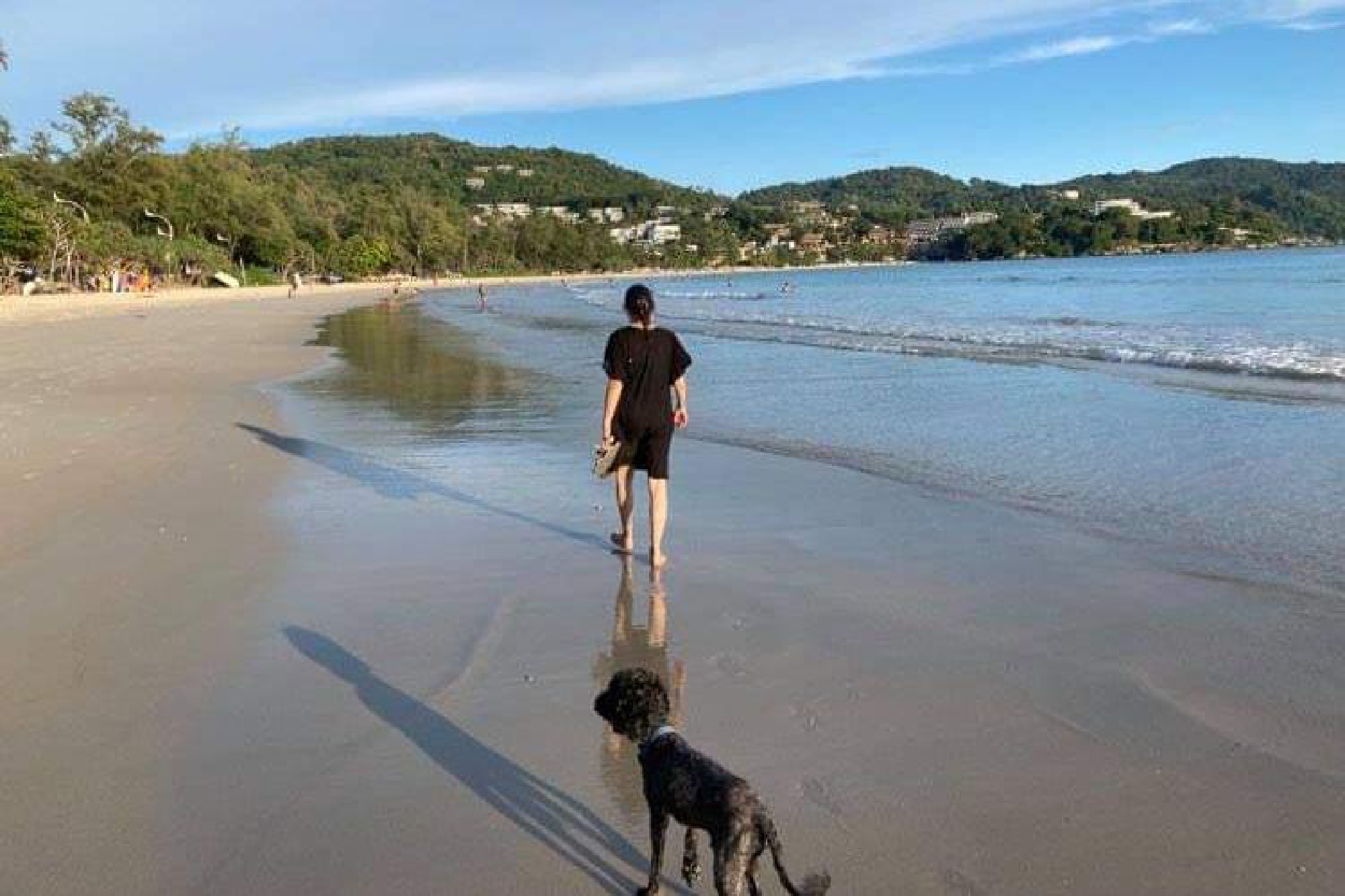
First-time visitor Jeremy Ansell, 51, who heads a technology start-up in Israel, has never seen Phuket when it was bustling. Yet, after roaming Kata beach on Friday where his family were the only tourists, he told ST: “It’s a bit strange that it’s so empty.”

He wished he had visited Phuket before the pandemic. “Those who have been here before might know it for being crowded with all the bars and clubs,” he said. “But now it’s quiet, it’s fantastic. Like being on your own private island.”

Mr Jeremy Ansell said he wished he had visited Phuket before the pandemic. PHOTO: COURTESY OF JEREMY ANSELLMr Jeremy Ansell said he wished he had visited Phuket before the pandemic. PHOTO: COURTESY OF JEREMY ANSELL

ADVERTISEMENT

About 1,000 tourists were given the green light to enter Phuket via the “sandbox” scheme from Thursday to Saturday. The programme, to be expanded to other tourist destinations like Samui and Krabi, allows vaccinated tourists to roam selected areas where sufficient numbers of residents have been inoculated and strict health protocols implemented.

These tourists, from lower-risk countries, are free to travel to other parts of Thailand after 14 days – the length of time that arrivals via other channels would have to quarantine themselves.

Thailand welcomed some 35,000 international visitors from January to May this year, compared with almost 40 million in 2019 before the pandemic struck.

Last month, Prime Minister Prayut Chan-o-cha vowed to reopen the country to international tourists in 120 days.

It is unclear if this deadline can be achieved, with just 2.9 million of Thailand’s  more than 66 million population fully vaccinated as at Saturday, and the daily rise in infections at 6,230, with 41 deaths.

Physicians based outside Bangkok have been redeployed to the capital as field hospitals fill up. The Bank of Thailand recently cut its full-year economic growth projection from 3 per cent to 1.8 per cent.

Mr Peter Webster, regional general manager for Singapore, Thailand, Myanmar, Laos and Cambodia at Hilton, which has two resorts in Phuket, said they have welcomed guests from Abu Dhabi, Germany and Israel, and have upcoming reservations from the United States and Europe.

“This (Phuket sandbox) is a significant move to elevate international confidence in Thailand as a travel destination,” he told ST. “We will have to wait for a few more weeks to assess the prospects of this scheme, but the fact that a first step was taken means a lot for the Thai tourism community.”

British couple Stuart and Angela Lucy Smith lounging by the pool at Wyndham Grand hotel in Phuket, on July 2, 2021. PHOTO: COURTESY OF ANGELA LUCY SMITHBritish couple Stuart and Angela Lucy Smith lounging by the pool at Wyndham Grand hotel in Phuket, on July 2, 2021. PHOTO: COURTESY OF ANGELA LUCY SMITH

Smaller-scale tourism players like Mr Adul Minyong, who was forced by the pandemic to stop driving his taxi and instead do construction work, hope the benefits will trickle down to them.

“The sandbox is a good policy. It keeps customers safe, and it keeps us safe, if we all stick to the rules,” he said.

Mrs Smith is aware of Thailand’s continuing struggle with Covid-19 but is confident that her mask-wearing, safe distancing and sanitising practices will reduce her risk.

“The numbers are going to go up and they are going to go down. And I think this unfortunate pandemic is not really finished,” she said. “And I am so aware that Thailand really needs to get some people in to spend some money. Tourism is such a big business for them.”

Published : July 04, 2021

By : The Straits Times / ANN

Protesters mark Myanmar coup leader’s birthday with mock funerals #SootinClaimon.Com

#SootinClaimon.Com : ขอบคุณแหล่งข้อมูล : หนังสือพิมพ์ The Nation.

https://www.nationthailand.com/international/40002808

Protesters mark Myanmar coup leader’s birthday with mock funerals


BANGKOK (AFP) – Protesters in coup-hit Myanmar marked the birthday of junta leader Min Aung Hlaing yesterday by burning his portrait and staging mock funerals.

The nation has experienced mass protests and a brutal military response since the February 1 coup which ousted civilian leader Aung San Suu Kyi.

Almost 890 civilians have died in a crackdown by the State Administration Council – as the junta calls itself – and almost 6,500 have been arrested, according to a local monitoring group.

Yesterday, anti-coup demonstrators posted pictures on social media of a traditional noodle soup dish called mohinga, which is often served at funerals in Myanmar.

“I made (mohinga) on his birthday because I want him to die soon,” one Yangon resident told AFP.

“Many innocent people lost their lives because of him. So, if he died, the whole country would be happy.”

In Mandalay, the country’s second-largest city, some activists burnt pictures of the junta leader and set fire to fake coffins at mock funerals.

“Because of this man, our Myanmar has many problems,” a Mandalay resident told AFP.

“He actually should not have been born. Therefore, we hold his funeral as we want to say he should be dead.”

Min Aung Hlaing turns 65 yesterday – the age he would have been subject to mandatory retirement while he headed up the armed forces, as stipulated by the country’s 2008 constitution.

Some analysts believe that was a factor in his power-grab because he had not been able to see a path to higher office with the help of the military-backed political party, which was routed in an election last year.

Before the coup, Min Aung Hlaing was considered an international pariah, condemned for presiding over the brutal 2017 crackdown on the country’s stateless Rohingya population.

He has been banned from Facebook for stoking hate speech against the persecuted minority, and United Nations (UN) investigators have called on him and other top army leaders to be prosecuted for genocide.

But for years, he has steadfastly denied nearly all allegations of human rights abuses and says the military operations, which drove around 750,000 Rohingya refugees into Bangladesh, were justified to root out insurgents.

He was tapped to lead Myanmar’s armed forces in 2011, just as a previous generation of military leaders was transitioning the country to a parliamentary system after decades of junta rule.

Min Aung Hlaing’s regime has faced international condemnation and sanctions since the putsch, with concerns over mounting violence, political prisoners, Internet shutdowns and a clawing back of press freedom.

His State Administration Council yesterday insisted it was working on achieving “enduring peace for the entire nation”, according to a state-run newspaper.

Published : July 04, 2021

By : Borneo Bulletin / ANN

Covaxin’s overall efficacy found 78% against Covid-19, 65% against Delta variant #SootinClaimon.Com

#SootinClaimon.Com : ขอบคุณแหล่งข้อมูล : หนังสือพิมพ์ The Nation.

https://www.nationthailand.com/international/40002806

Covaxin’s overall efficacy found 78% against Covid-19, 65% against Delta variant


Efficacy determined under 18-59 age group was 79.4% in symptomatic Covid-19 situation while it reduced to 67.8% among participants aged 60 and above in similar situation.

The much-awaited analysis from the phase 3 clinical trial of Bharat Biotech’s Covid-19 vaccine candidate Covaxin has been released which depicts the vaccine overall 77.8 per cent effective against Covid-19.

The data, however, is yet to be peer-reviewed.

The study stated that while the vaccine offers 77.8 per cent efficacy against symptomatic Covid-19 disease, the effectiveness was found achieving a high of 93.4 per cent against the severe symptomatic conditions in the Covid-19 illness.

Young population to exhibit higher efficacy

The study also shows that the efficacy rate is better among young and healthy respondents.

Efficacy determined under 18-59 age group was 79.4% in symptomatic Covid-19 situation while it reduced to 67.8% among participants aged 60 and above in similar situation.

However, the vaccine may show less effectiveness among individuals with pre-existing medical conditions. As per the study, the efficacy found further reduced to 66.2% against symptomatic Covid-19 among participants having comorbidities.

The lowest efficacy was determined in asymptomatic cases with a rate of 63.6%.

Effective against Covid variants with “marginal reductions”

The researchers have found that the vaccine to be effective against emerging Variants of Concern (VOC) but with marginal reductions.

“BBV152-induced antibodies showed no significant decrease in neutralisation activity against the Alpha (B.1.1.7) variant, but demonstrated marginal reductions in neutralisation activity, by 2-, 2-, 3-, and 2.7-fold, respectively, of the B.1.1.28, B.1.617.1, B.1.351 (Gamma), and B.1.617.2 (Delta) variants,” the study read.

As per the study, Covaxin provides 65.2 per cent protection against the rapidly emerging Delta variant. However, its efficacy against the Kappa (B.1.617.1) variant was recorded at 90·1 per cent.

Covaxin is a whole virus inactivated vaccine against SARS-CoV2, developed by Bharat Biotech in partnership with ICMR and NIV Pune.

The Phase 3 clinical trial was an event-driven analysis of 130 symptomatic COVID-19 cases, reported at least two weeks after the 2nd dose, conducted at 25 sites across India.

It was conducted on 130 symptomatic Covid patients between 18-98 years of age at 25 sites across India. Twelve per cent of the subjects experienced commonly known side effects and less than 0.5 per cent of subjects reported serious adverse events.

Covaxin has received emergency use authorizations in 16 countries including, Brazil, India, the Philippines, Iran, Mexico. The company is in discussions with WHO to obtain an emergency use listing for Covaxin.

Published : July 04, 2021

By : The Statesman / ANN