The Malaysian ghost hunter who live streams paranormal activities online

#SootinClaimon.Com : ขอบคุณแหล่งข้อมูล : หนังสือพิมพ์ The Nation.

https://www.nationthailand.com/international/40017833


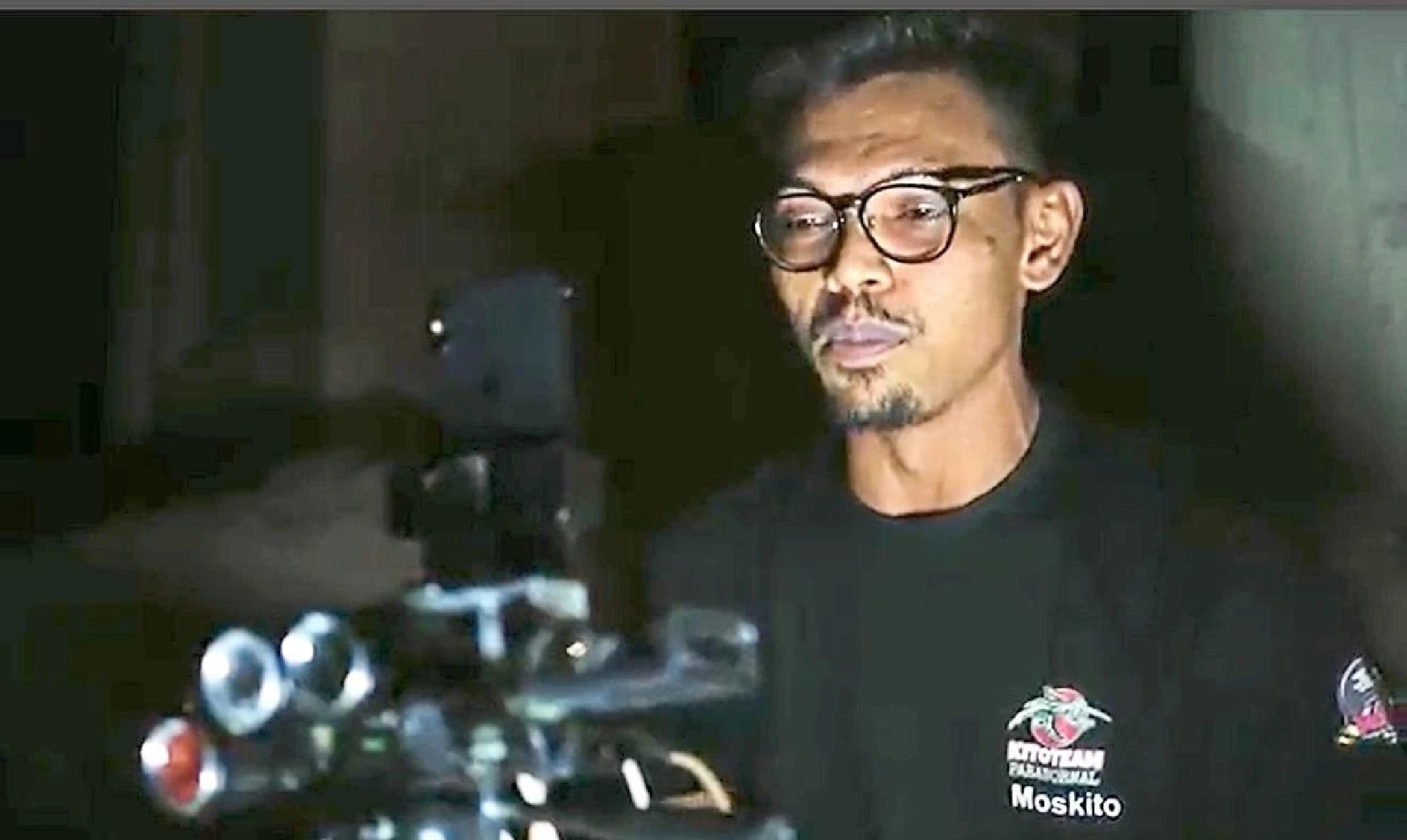
Mohd Shafiz Azizi Mohd Noor, 38, has been disturbed by evil spirits before, and he’s felt the presence of ghosts in haunted spots. Even scarier is he’s been pushed by an unknown force from the third floor of a building. Thankfully, he survived.
The Malaysian ghost hunter who live streams paranormal activities online

Despite all that, the Kedah-born paranormal investigator isn’t one bit shaken. Rather, he is fuelled with passion for pursuing ghostly adventures.

Each day (from midnight until 4am), he shares his paranormal experiences on Bigo Live, a free live streaming app.

“I am a person who loves new challenges, and I have been involved with paranormal activities for four years. I have travelled to many spine-chilling places, including Farah Bungalow in Kuala Lumpur’s Bukit Tunku, (where a girl was apparently murdered by her aunt), spooky Gunung Jerai in Kedah, and other locations across the country.

“My purpose in streaming paranormal activities is to educate viewers about spirits,” said Mohd Shafiz in an email interview from Kuala Lumpur.

Ghost hunters are individuals who investigate spooky locations believed to be inhibited by unknown forces. While these paranormal investigators have existed for years, their work has gained more attention in the last few decades due to Hollywood movies like Poltergeist, Ghostbusters and The Conjuring.

In addition, TV series like Ghost Hunters and Ghost Adventures further propelled the popularity of paranormal activity shows to a larger audience.

Ghost hunters rely on ‘ghost detectors’ like digital thermometers, night vision goggles, and digital audio recorders to hunt down spirits. Mohd Shafiz is equipped with an electromagnetic field (EMF) detector and infrared lights during each hunt.

“Both of these devices are like my best friends, especially during explorations. I also experiment with modifications on other devices to detect abnormal movements on camera,” said Mohd Shafiz, who turns to the Internet to research haunted spots. Occasionally, his fans on Bigo Live also reach out to him to explore haunted places in different areas.

Mohd Shafiz’s interest in paranormal activities first started when he visited Pulau Pangkor, Perak on vacation in 2018. While scouting for accommodation, he stumbled across an old resort where he instantly developed an eerie feeling. The incident piqued his interest, and he decided to explore the place at night.

“I got to the resort alone around 11pm and only brought along one lamp to explore the premises. I felt an adrenaline rush, and that got me hooked on exploring paranormal activities,” said Mohd Shafiz, who worked as a stuntman before deciding to become a full-time paranormal broadcaster.

The Malaysian ghost hunter who live streams paranormal activities online

In the last two years, he has travelled across the country with his crew members called Team Kito (Keep Intelligent Team Organization). He admits to being picky about his teammates, preferring to work with people who are prepared to encounter supernatural forces without the heebie-jeebies.

Sometime back, Team Kito members experienced unfortunate disturbances while filming in a haunted location.

“Sometimes, people can be ‘lemah semangat’ (weak in spirit), and they tend to be more likely to endure hysterical episodes. Since that day, I’ve limited my crew members to a minimum.

“I want to avoid any disruptions that could endanger their lives. They must be trained and know how to act in emergencies.”

So do they bring along holy water or incense, just in case?

“With the grace of Allah, to date, we have not brought any form of protection for a paranormal expedition. We believe that if our faith is strong, God will protect us, and we will walk out of each paranormal encounter unharmed.

The Malaysian ghost hunter who live streams paranormal activities online

“Allah has created us, humans, as strong beings and we have the power to face these aggressive spirits. Believing that, I face these spirits with courage,” said Mohd Shafiq, who hails from Bukit Selambau.

Live streaming daily is undoubtedly challenging, but Mohd Shafiz finds no difficulties in keeping his audience absorbed.

“As an entertainer, there are instances where we need to keep the audience engaged, even with minimal content. I enjoy interacting and chatting with my viewers, as it gives them a chance to feel like they are a part of my paranormal journey, albeit virtually. Therefore, I try to make the experience as immersive as possible.”

In future, he plans to explore other places in the world that are notoriously haunted.

“Hopefully, I will have a chance to visit our neighbouring countries. Not only will I be able to expand my content, but I will also be able to learn how different cultures and countries manage paranormal activities.

“I may even get the chance to collaborate with local paranormal investigators and pick up a few skills from them,” he said.

The Star

Asia News Network

The Malaysian ghost hunter who live streams paranormal activities online

Published : July 17, 2022

By : The Star
Vacant houses in Toyama town free for the taking

#SootinClaimon.Com : ขอบคุณแหล่งข้อมูล : หนังสือพิมพ์ The Nation.

https://www.nationthailand.com/international/40017830


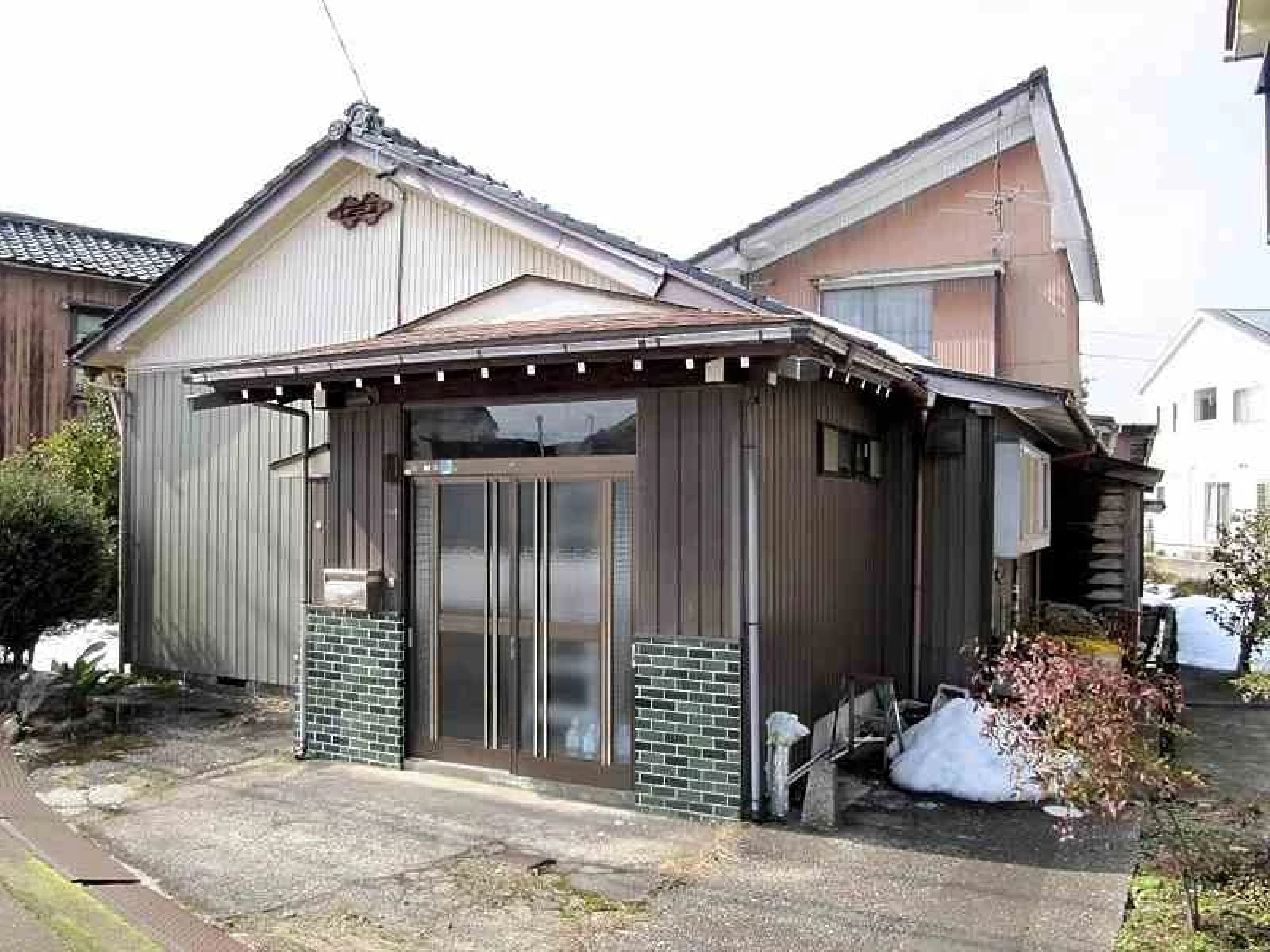
Amid a decline in population and an increase in vacant houses in the town of Kamiichi in Toyama Prefecture, the local government launched a system this fiscal year to allow vacant houses to be transferred to new residents free of charge.

Vacant houses in Toyama town free for the taking

The local government set up a matching site for sellers and would-be buyers and pays both former and new owners a subsidy for necessary expenses once a deal is made. It is seen as a win-win project for both those concerned and the municipality, which is trying to increase the population and prevent old houses from collapsing.

“I received an inquiry three days after listing my property on the website and was able to transfer it within a month,” said Toshio Nakahashi, who became the first person to transfer a property under the project on April 30.

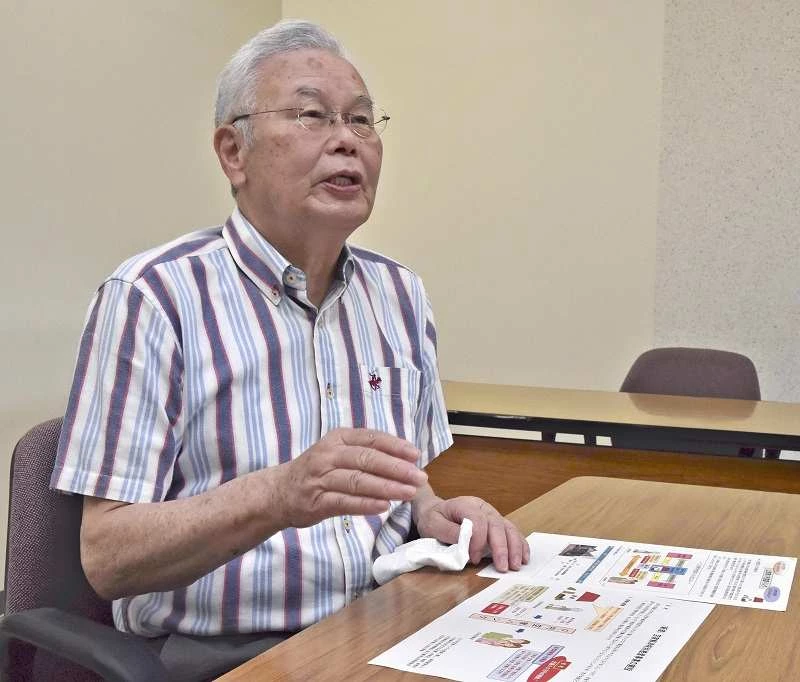
Nakahashi, 78, handed over his family’s two-story wooden Kamiichi home, which had been vacant for more than 10 years since his mother, who had been living alone, moved to a nursing home.

“I wanted to give away my house. It’s fine that I didn’t get anything for it,” he recalled.

Nakahashi could not afford the millions of yen that demolition would have cost, so he posted the property on the municipality’s website on April 1.

“I thought it would take a year or two. I’m relieved,” he said.

Kamiichi’s population as of July 1 was 19,429, 70% of its peak in 1955. According to the town, as of March, there were 330 vacant houses, and the government has been receiving an increasing number of inquiries from its citizens about how to handle them.

Meanwhile, the town, a mere 30-minute drive from Toyama City, has been receiving a flurry of inquiries, since even before the COVID-19 outbreak, from people in and outside the prefecture seeking to incorporate farming into their lifestyle. Kamiichi has created a website to link the two sides and named it the “Zero-yen vacant house bank.”

Residents wishing to give away their house consult with the town, which then posts on the website photos of the property and information such as the house’s structural type and year of construction. Those who browse the site and take an interest make an inquiry. Negotiations up to the transfer will then be conducted directly between the two parties, according to the Kamiichi town government.

Once the transfer is completed, the town will subsidize the costs, granting the conveyor up to ¥50,000 to cover the disposal of unwanted items and the cost of inheritance procedures if the registered owner is dead, and the acquirer up to ¥500,000 on condition of at least two years of residency. The municipality will also help repair the building and strengthen its earthquake resistance.

According to the 2018 Housing and Land Survey, there are about 8.49 million vacant houses nationwide, and the vacancy rate hit a record 13.6% that year. Similar measures to those taken by Kamiichi have been implemented nationwide. A real estate company in Asahikawa, Hokkaido, has set up a website where it acts as a mediator, and the town of Okutama, Tokyo, has set up a bank similar to that of Kamiichi’s.

After Nakahashi’s, a second vacant house was put up for sale on the website on June 7, and a man from Toyama Prefecture signed a provisional contract for it on June 8.

“Houses won’t collapse as long as people live in them and manage them,” a Kamiichi town official in the construction department said. “Some houses come with farmland, and residents can expect income from agriculture. If young people moved in, it would lead to the town’s revitalization.”

Toshio NakahashiToshio NakahashiBy Tsukino Ueda

The Japan News

Asia News Network

Asia News Network: The Nation (Thailand), The Korea Herald, The Straits Times (Singapore), China Daily,  Jakarta Post, The Star and Sin Chew Daily (Malaysia), The Statesman (India), Philippine Daily Inquirer, Yomiuri Shimbun and The Japan News, Gogo Mongolia,  Dawn (Pakistan),  The Island (Sri Lanka), Kuensel (Bhutan), Kathmandu Post (Nepal), Daily Star (Bangladesh), Eleven Media (Myanmar), the Phnom Penh Post and Rasmei Kampuchea (Cambodia), The Borneo Bulletin (Brunei), Vietnam News, and Vientiane Times (Laos).

Published : July 17, 2022

By : Reuters

ESG: Inspiration, aspiration or perspiration?

#SootinClaimon.Com : ขอบคุณแหล่งข้อมูล : หนังสือพิมพ์ The Nation.

https://www.nationthailand.com/international/40017821


It’s fashionable to talk about ESG investing. Will it make a difference to your money and your life? The Environment, Social and Governance (ESG) initiative evolved out of the United Nations Sustainable Goals (SDG) that are supposed to be implemented by 2030.

ESG: Inspiration, aspiration or perspiration?

The ESG approach is a fundamental shift out of the corporate “shareholder value” maxim that dominated the free market mindset to deliver profits without explicitly considering a firm’s responsibility to society or the planet.

ESG caught global headlines when the Glasgow Financial Alliance for Net Zero (GFANZ), led by UN special envoy for climate action and finance Mark Carney, corralled 450 members representing US$130 trillion in assets to unite “net-zero financial sector-specific alliances from across the globe into one industry-wide strategic alliance”.

According to Carney: “GFANZ is accelerating the best practice tools and methodologies that are essential for ensuring that the climate is at the heart of every financial decision.”

As a vision, ESG looks impeccable, except one needs to ask – whose vision?

As an aspiration, will ESG deliver Net Zero?

As to perspiration, who will work hardest to deliver?

What’s the catch?

My immediate reaction when GFANZ was announced was: how did 450 institutions, mostly in advanced markets, with assets amounting to 1.3 times world GDP, have so much power? If they had really cared about Net Zero and ESG, how come it took so long to shift out of short-term greed to long-term value? If GFANZ will not lend or invest in companies that do not meet ESG standards, isn’t that more a stick, rather than a carrot?

$130 trillion sounds like a lot of money, but how come their governments couldn’t even agree on $100 billion in actual aid to emerging and developing economies (EMDE) to help achieve Net Zero? After all, a lot of that $130 trillion is also EMDE money that is being recycled in New York, London, Frankfurt and Tokyo.

Furthermore, I cringe whenever someone talks about best standards and practices, because the best standards for the financial sector may not be the same for the real sector borrowers or companies. Note that those who practised best standards got more into the 2008 Global Financial Crisis than those low-standard EMDEs who suffered spill-overs. The medicine for complex and advanced economies and financial systems is not the same for EMDEs which have less sophisticated systems. Cancer medicine does not cure malaria.

After 40 years working in financial sector regulation to push the best standards designed by the West, my experience is that the Rest of the World would have preferred the “best fit”, meaning the best should never be the enemy of the good. Whenever multilateral banks and agencies insist on “best standards and practices”, their loan conditionalities became so complex and stringent that many EMDEs can neither meet them nor access the funds in a timely manner for their real needs.

3-pronged problem

Actually, ESG is a trilemma where you have to trade-off between three factors. Harvard Professor Dani Rodrik brought out the Democracy, Sovereignty and Globalisation trilemma, where “nation-state system, democratic politics, and full economic integration are mutually incompatible”. Think about Globalisation as being the environmental side because we all live on one planet and are entangled with each other through financial, supply, media and cultural networks. How we consume and act affects not just other people but also the planet. The Social side is about inclusivity and social injustices, which is a matter of democracy, which ideally is the greatest good for the greatest number. But Governance is really a sovereignty matter. And Governance is critical, because, without good governance (or discipline) at the individual, family, firm, city or state levels, there will be no order, little social justice and bad consequences for the planet.

In short, ESG matters, but if we can’t get our domestic and global governance acts together, we will live the consequences of bad outcomes for People, Profit and Planet.

Profit does not always pay

ESG basically happened when businesses realised that the total drive for profits had terrible consequences for people and the planet in terms of inequality and environmental damage. Thus social responsibility and trusted governance that care about people and the planet moved from expense to profit opportunity.

Of course, consumers and employees know all about “green-washing”, getting the PR guys to white-wash corporate misdeeds and poor behaviour.

This is the part of ESG that worries me, when asset managers are pushing out ESG products as if they are mother’s pies that will deliver better results than non-ESG companies. The facts show that currently oil and gas companies, as well as arms producers are reaping super-profits, and no one can say with hand to heart that these are fully ESG compliant. Cynically put, ESG standards for companies so far are all about disclosure, but not really about compliance in both spirit and letter of ESG aspirations.

As inventor Thomas Edison said, “invention is 1 per cent inspiration and 99 per cent perspiration”. Truly delivering Net Zero and avoiding social injustice and damaging biodiversity is mostly perspiration and hard work, which means that real people and companies have to deliver, whereas financial wizards can just claim that they are doing their fair share of policing ESG.

In other words, I will believe GFANZ when all their members first disclose how they themselves meet Net Zero carbon standards, and treat their customers and employees fairly, rather than demanding that their borrowers or companies they invest in deliver Net Zero via ESG. Doctors, heal thyself first.

For EMDEs, the real ESG’s hard work is to make sure that they have the governance capacity to deliver on real social inclusivity and regeneration of the natural habitat. ESG is not just a private sector project, but a partnership between companies, governments and communities that recognises huge barriers to change at every level.

ESG requires real mindset change but perspiration will only begin when the top leaders show that they are sweating and walking like everyone else, rather than just talking about it.

Andrew Sheng

Asia News Network

Published : July 16, 2022

By : THE NATION

Kishida holds back on activity restrictions — for now

#SootinClaimon.Com : ขอบคุณแหล่งข้อมูล : หนังสือพิมพ์ The Nation.

https://www.nationthailand.com/international/40017799


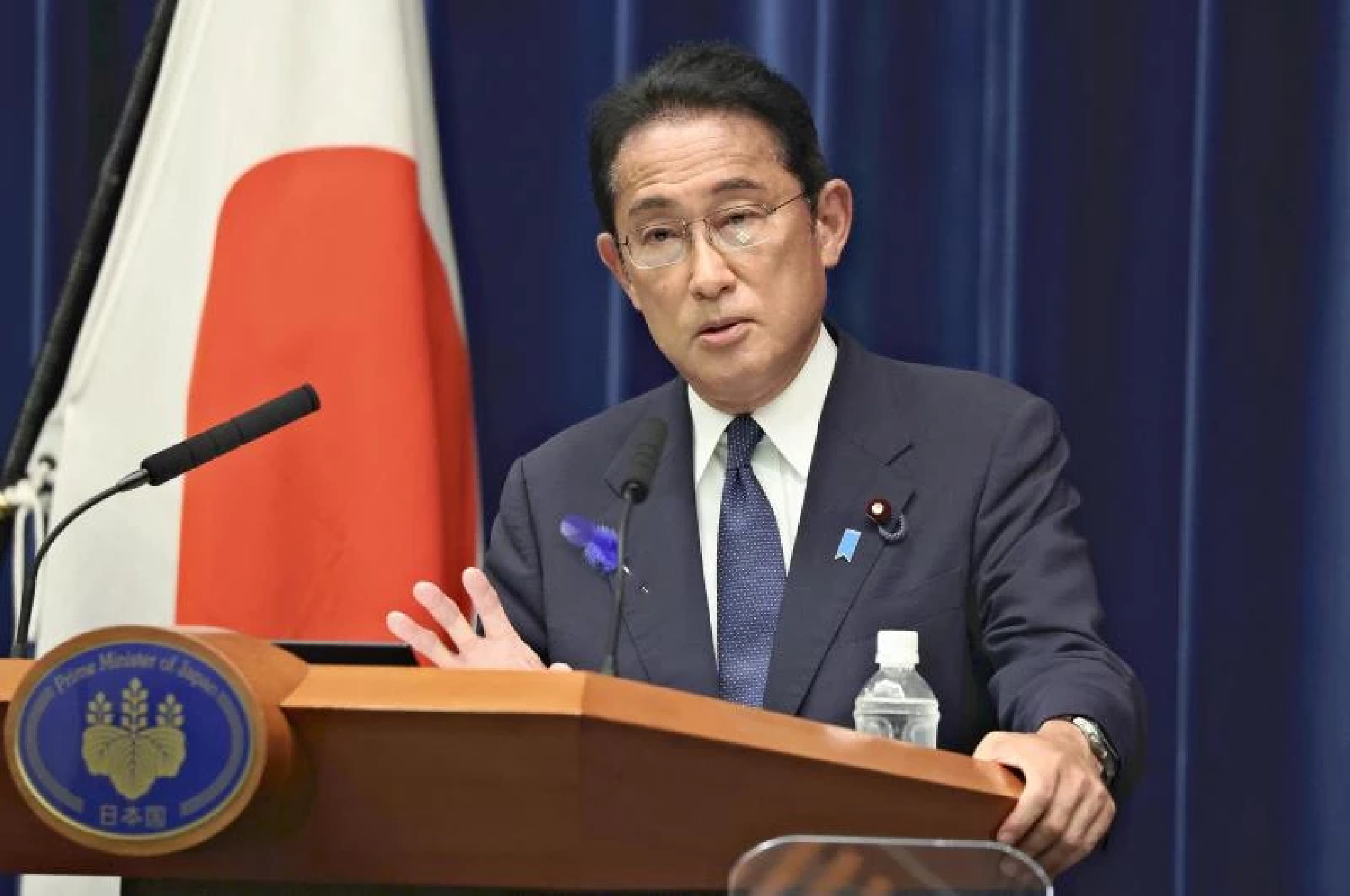
The government will not call for restrictions on social activities despite the recent surge in coronavirus cases, as hospital bed occupancy rates are under control, Prime Minister Fumio Kishida said at a press conference on Thursday.

Kishida holds back on activity restrictions — for now

The decision to forego tough restrictions is believed to have been based on uncertainty over the effectiveness of such measures to contain the pandemic, considering the magnitude of their impact on the economy and people’s lives.

“We will take firm action, paying attention to striking a balance between infection prevention and maintaining social and economic activities,” Kishida said, stressing his intention to try to reduce cases, while also minimizing the impact on the economy and people’s lives.

Kishida also said the booster campaign would be expanded to enable medical and nursing care workers under 60 to get a fourth shot. Currently, only people 60 and older and adults with underlying medical conditions are eligible for a fourth dose.

When cases surged in the previous infection waves, the government declared states of emergency and applied quasi-emergency measures repeatedly to mitigate the spread of the virus.

Businesses were asked to reduce their operating hours and people were urged to refrain from traveling across prefectural borders, among other requests. But it is not clear how effective these restrictions were in containing the pandemic.

On Thursday, the government’s COVID-19 subcommittee compiled urgent proposals in preparation for the seventh wave of infections. The panel urged the government to implement five measures, including increasing vaccinations and issuing ventilation advice. It stopped short of proposing activity restrictions.

“Restricting activities, which would have a significant impact on economic activities, is a last resort for when the medical system is under strain,” a member of the subcommittee said.

Scant scientific data

Some experts have been cautious about measures involving activity restrictions because there is a lack of scientific data that clearly demonstrates the effectiveness of such restrictions.

“Even with restrictions on restaurants, young people get infected in a wide variety of settings,” said Reo Takaku, an associate professor at Hitotsubashi University who specializes in health economics.

“It would be more effective if people were asked to test before engaging in activities with a high risk of infection, with those who test positive urged to refrain from such activities.”

The low risk of serious symptoms associated with the omicron variant also likely influenced the government’s decision to forego activity restrictions.

According to Health, Labor and Welfare Ministry data, 2.49% of omicron patients aged 60 or older became seriously ill, more than triple the figure for seasonal flu. However, the figure was only 0.03% for people aged 59 or younger, on par with that for influenza.

In light of this, the government hopes to ride out the seventh wave by implementing basic measures, such as vaccinations, thorough testing and highlighting the importance of indoor ventilation.

The Tokyo metropolitan government has also been cautious about restrictions, such as requesting eateries to reduce their operating hours. Even though infection cases have increased rapidly, the number of seriously ill COVID-19 patients stood at 15 in Tokyo as of Thursday.

“We are at the stage of trying to control the spread of infections without stopping economic activities,” said a senior metropolitan government official.

Tokyo Gov. Yuriko Koike said Thursday, “We will proceed with measures while clarifying our strategy on how to prevent [COVID-19] deaths.”

The situation is similar in the United States, where infections have been rising. On Tuesday, the U.S. government announced measures against the BA.5 omicron subvariant, but the measures focused on strengthening existing efforts and tools such as vaccinations, and did not involve activity restrictions.

“We’re encouraged that serious illness, hospitalizations and deaths have remained relatively low based on the level of infections,” Ashish Jha, the White House COVID-19 response coordinator, said during a press briefing Tuesday. “It’s in large part due to our successful vaccination program, our efforts to get people boosted and our incredibly focused effort on making sure that treatments and testing are widely available.”

By Chie Morifuji and Yusuke Tomiyama / Yomiuri Shimbun Staff Writers

Asia News Network: The Nation (Thailand), The Korea Herald, The Straits Times (Singapore), China Daily,  Jakarta Post, The Star and Sin Chew Daily (Malaysia), The Statesman (India), Philippine Daily Inquirer, Yomiuri Shimbun and The Japan News, Gogo Mongolia,  Dawn (Pakistan),  The Island (Sri Lanka), Kuensel (Bhutan), Kathmandu Post (Nepal), Daily Star (Bangladesh), Eleven Media (Myanmar), the Phnom Penh Post and Rasmei Kampuchea (Cambodia), The Borneo Bulletin (Brunei), Vietnam News, and Vientiane Times (Laos).

Published : July 16, 2022

By : The Japan News

Vietnam ranks first in Southeast Asia for online purchases

#SootinClaimon.Com : ขอบคุณแหล่งข้อมูล : หนังสือพิมพ์ The Nation.

https://www.nationthailand.com/international/40017798


Việt Nam is the leading country for online purchases in Southeast Asia, with an average of 104 orders per year, per person.

Vietnam ranks first in Southeast Asia for online purchases

HÀ NỘI — Việt Nam is the leading country for online purchases in Southeast Asia, with an average of 104 orders per year, per person, according to a new report.

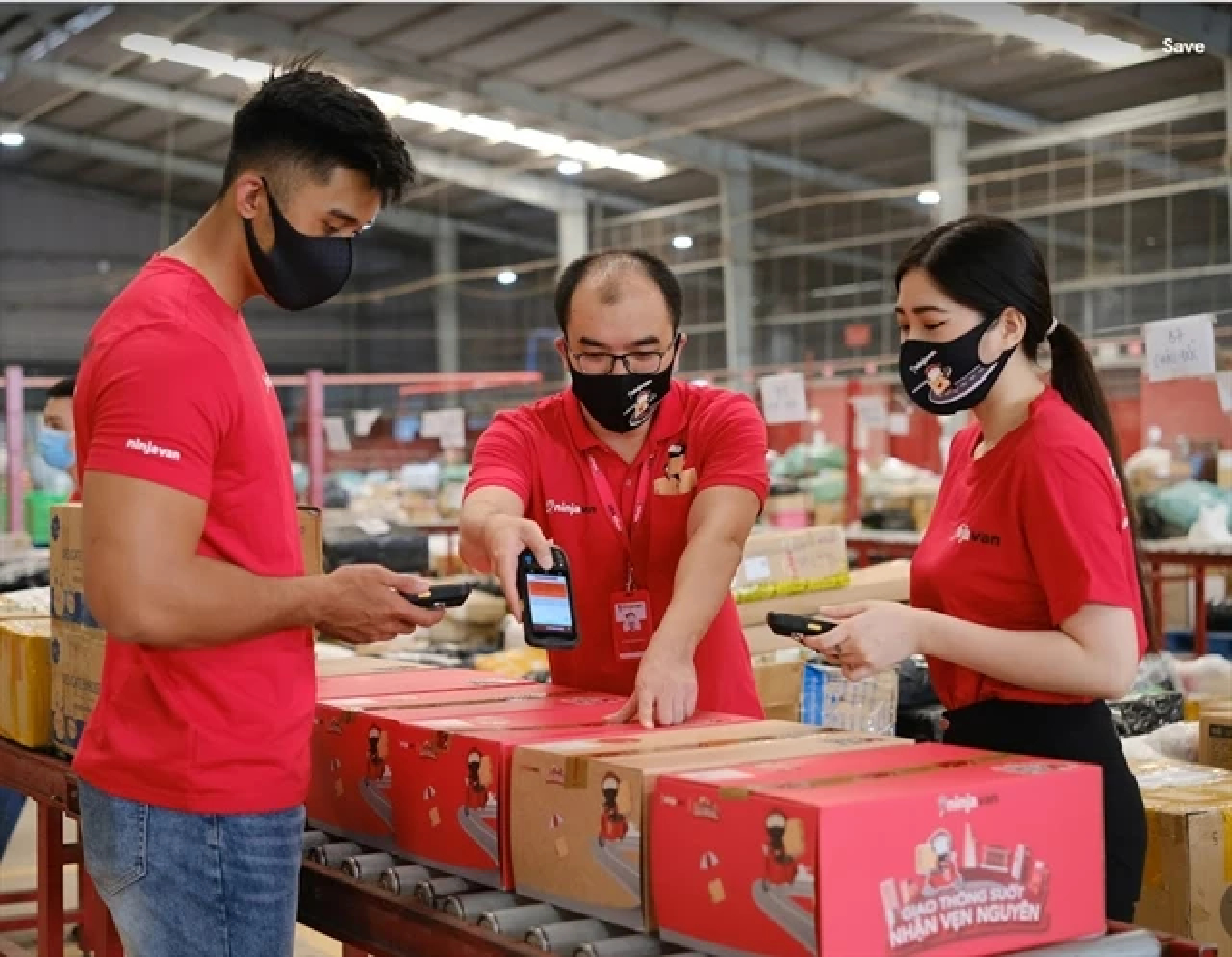
Ninja Van Group, an e-logistics company, operating in Southeast Asian countries, including Việt Nam, published the report on, ‘e-commerce beyond borders.’

Seventy-three per cent of survey respondents said they regularly shop on e-commerce shopping platforms, and 59 per cent said they have ordered or shopped on international websites many times.

Việt Nam currently accounts for 15 per cent of Southeast Asia’s online shopping market, after Thailand with 16 per cent, and on par with the Philippines.

The report shows that Vietnamese people love online shopping and lead the region in many indicators.

“With strategic research demonstrating the development of the e-commerce and e-postal industries in Southeast Asia, we believe that the Vietnamese market is one of the countries with the most potential thanks to the sustainable and clear growth in recent years,” said Phan Xuân Dũng, sales director of Ninja Van Việt Nam. — VNS

Asia News Network: The Nation (Thailand), The Korea Herald, The Straits Times (Singapore), China Daily,  Jakarta Post, The Star and Sin Chew Daily (Malaysia), The Statesman (India), Philippine Daily Inquirer, Yomiuri Shimbun and The Japan News, Gogo Mongolia,  Dawn (Pakistan),  The Island (Sri Lanka), Kuensel (Bhutan), Kathmandu Post (Nepal), Daily Star (Bangladesh), Eleven Media (Myanmar), the Phnom Penh Post and Rasmei Kampuchea (Cambodia), The Borneo Bulletin (Brunei), Vietnam News, and Vientiane Times (Laos).

Published : July 16, 2022

By : Vietnam News

Japan overlooks technological treasures right under its feet

#SootinClaimon.Com : ขอบคุณแหล่งข้อมูล : หนังสือพิมพ์ The Nation.

https://www.nationthailand.com/international/40017797


There is growing concern about Japan’s science and technology. Although Japan has been putting a lot of effort into becoming a “science and technology-oriented country,” its international standing has actually declined in recent years.

Japan overlooks technological treasures right under its feet

According to a report released last year by the Education, Culture, Sports, Science and Technology Ministry, Japan has been surpassed by India in the number of high-quality papers cited by researchers in natural science research, falling from ninth place in the world to 10th. Meanwhile, China, which continues to invest heavily in R&D, has overtaken the United States to claim the No. 1 spot. Many experts point out that one of the main reasons for Japan’s regression is its research budget. In fact, while many major developed countries are increasing their research budgets, the total research budgets of universities in Japan remained roughly the same over the past 20 years. While the U.S. and China are investing heavily — especially in artificial intelligence and quantum technologies, which are strongly related to the economy and security — Japan is lagging far behind in these fields.

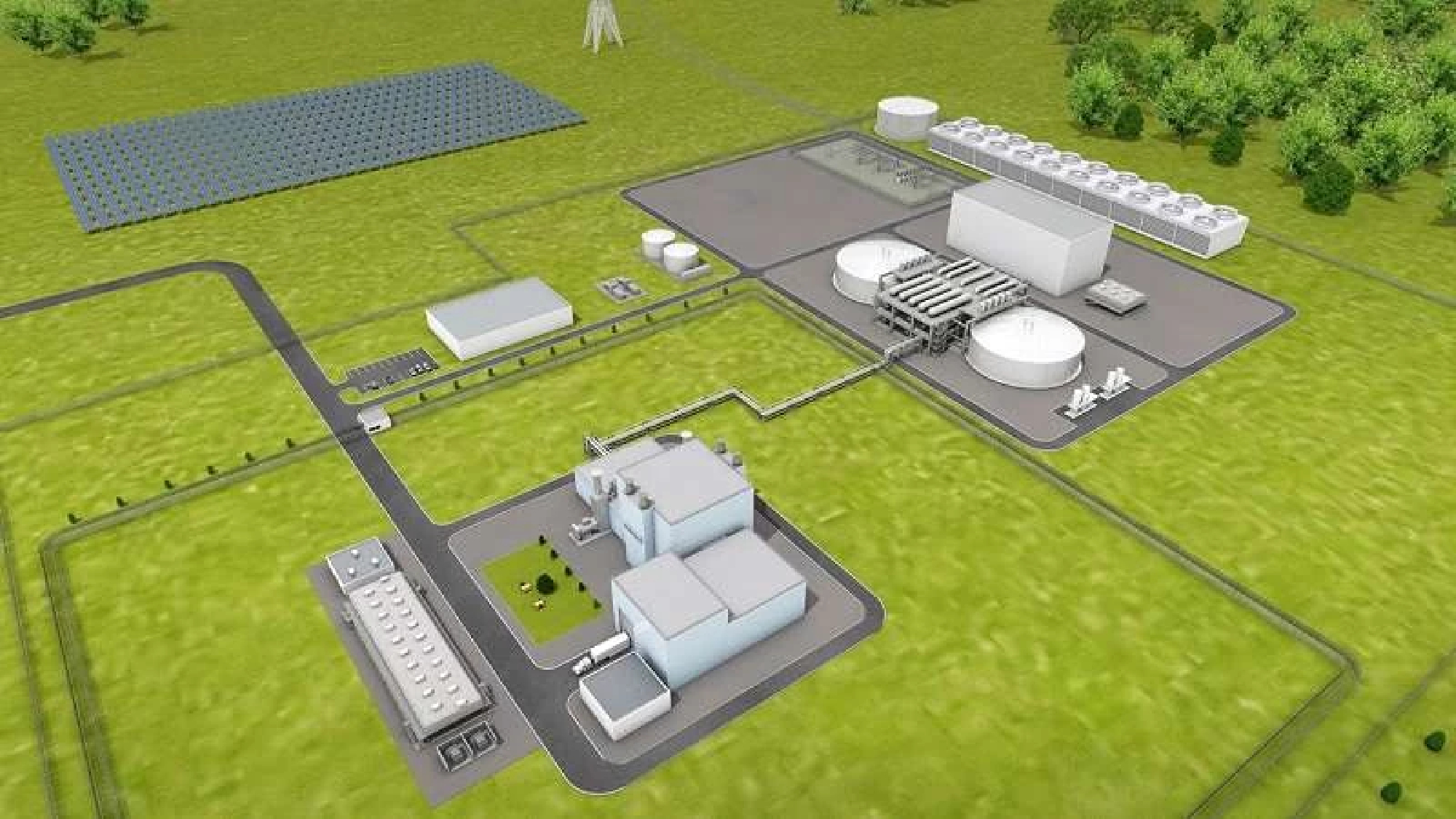
However, there has been some big news in Japan. In January of this year, TerraPower, a U.S. nuclear power company led by Microsoft cofounder Bill Gates, agreed to collaborate with the Japan Atomic Energy Agency and Mitsubishi Heavy Industries Ltd. on the development of a next-generation fast reactor. They are expected to sign a formal contract this summer. According to TerraPower’s plan, construction of the fast reactor is going to begin in 2024 in the U.S. state of Wyoming, and they will start its operation in 2028. If the plan is successful, it could develop into a major industry and it might spur the development of new fast reactors in Japan as well.

The development and the construction of fast reactors by TerraPower is a project that the U.S. government is keenly interested in. The administration of former President Donald Trump had focused on reviving the nuclear power industry because it felt threatened by the rise of China, which is building new nuclear power plants at a rapid pace and exporting them to emerging and developing countries. The administration of President Joe Biden, placing importance on decarbonization, also emphasizes nuclear energy, which emits no carbon dioxide. The U.S. Department of Energy just decided to give $2 billion to TerraPower for the development of fast reactors.

In the struggle for supremacy in the nuclear power industry with China, the U.S. chose Japan as a trusted partner. Japan has a long history of fast reactor development, including the research-oriented prototype Monju fast reactor in Fukui Prefecture. TerraPower CEO Chris Levesque was invited to the annual conference of the Japan Atomic Industry Forum, Inc. as an online speaker on April 12. He stated in a speech for the event that Japan had “some of the best nuclear engineers in the world” and “the technology and experience we need.”

Japan’s fast reactor technology will be a key to the development collaboration between Japan and the United States, but Japan has not always been proud of this technology. Japan had fallen behind in fast reactor development when repeated problems led to the decision to decommission Monju in 2016. The number of engineers was decreasing and there was no way to build any commercial fast reactors in Japan. If TerraPower had not paid attention to Japan’s technology, it is highly likely that the technology would have remained buried and left to wither away.

There is a famous Japanese proverb, “Todai moto kurashi,” meaning it is often difficult to see things clearly when they are very close to you. As this proverb suggests, there are some cases in which Japan is unaware of the great research outcomes and technologies that Japan itself possesses. Researchers at the NEC Corp. in Japan created an important element of quantum computers in 1999 for the first time, but it is American companies including Google that have led the commercialization of quantum computers in the world.

In 2020, the Nobel Prize in Chemistry was awarded to two researchers from the U.S. and France who developed the useful gene-editing technology called CRISPR-Cas9, more than 30 years after a researcher at Osaka University made the discovery that marked the starting point on the road to that breakthrough.

The joint development of fast reactors by Japan and the U.S. has taught us the importance of having our own great technologies. Now the Japanese government is trying to increase its research budget and expand its ranks of research personnel in order to make a comeback in science and technology, but it is difficult to do that overnight. It is necessary for us to find the technologies already buried beneath our feet and bring them into the light.

By Sho Funakoshi / Yomiuri Shimbun Staff Writer

Asia News Network: The Nation (Thailand), The Korea Herald, The Straits Times (Singapore), China Daily,  Jakarta Post, The Star and Sin Chew Daily (Malaysia), The Statesman (India), Philippine Daily Inquirer, Yomiuri Shimbun and The Japan News, Gogo Mongolia,  Dawn (Pakistan),  The Island (Sri Lanka), Kuensel (Bhutan), Kathmandu Post (Nepal), Daily Star (Bangladesh), Eleven Media (Myanmar), the Phnom Penh Post and Rasmei Kampuchea (Cambodia), The Borneo Bulletin (Brunei), Vietnam News, and Vientiane Times (Laos).

Published : July 16, 2022

By : The Japan News

S. Korea’s new COVID-19 cases more than double in week to near 40,000

#SootinClaimon.Com : ขอบคุณแหล่งข้อมูล : หนังสือพิมพ์ The Nation.

https://www.nationthailand.com/international/40017796


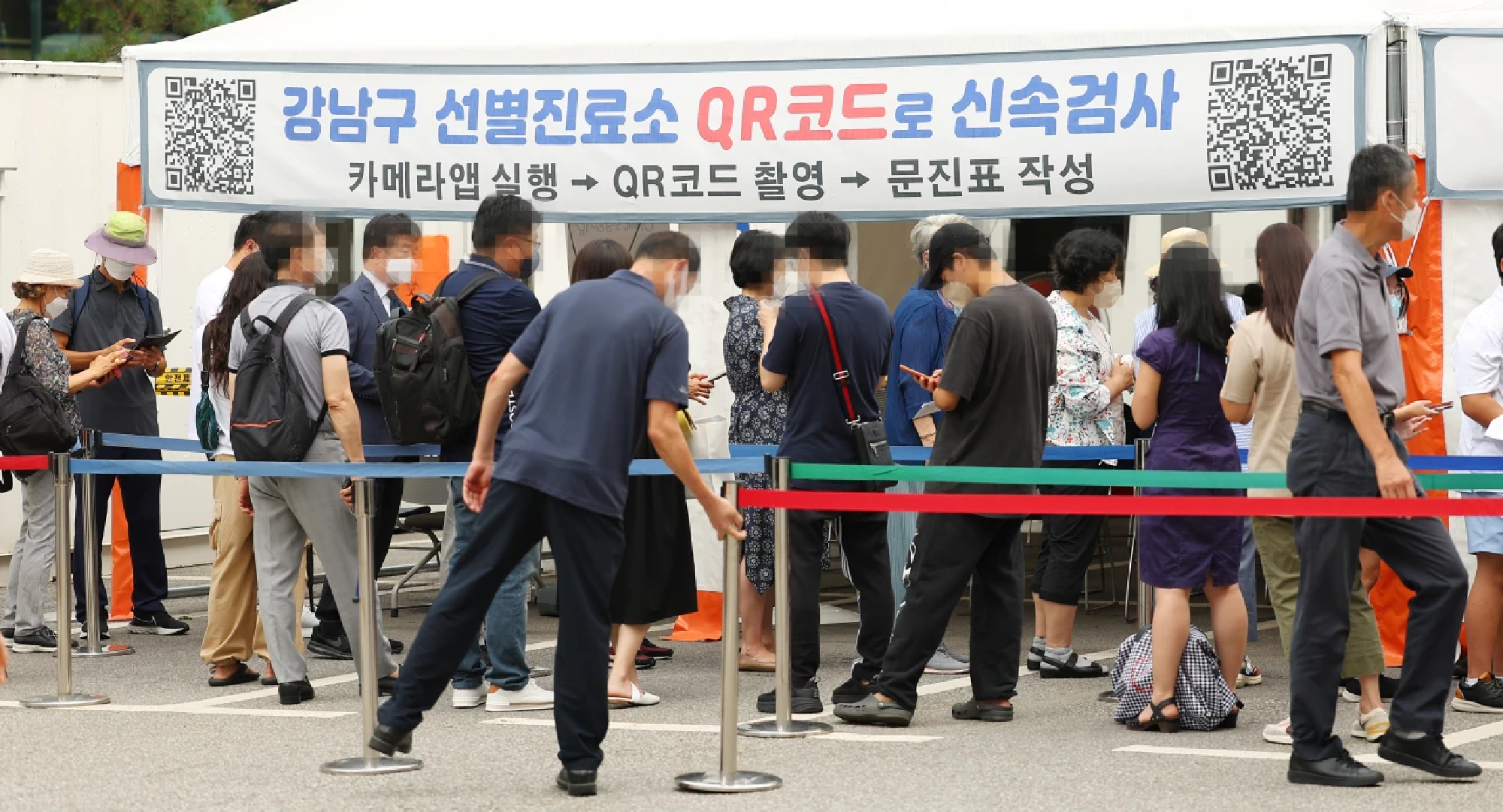
South Korea’s new coronavirus cases more than doubled in a week to near 40,000 on Thursday, as the country has experienced a resurgence of infections amid the fast spread of a highly contagious new omicron subvariant.

S. Korea's new COVID-19 cases more than double in week to near 40,000

The country added 39,196 new COVID-19 infections, including 338 from overseas, bringing the total caseload to 18,641,278, the Korea Disease Control and Prevention Agency (KDCA) said.

Thursday’s figure also more than doubled from 18,511 cases logged a week earlier, as the country has seen an upturn in infections from end-June due to the highly contagious omicron subvariant BA.5.

The daily count hit over 10,000 on June 29 for the first time in about three weeks, and rose to over 20,000 on Saturday and further to 40,000 on Wednesday.

The KDCA reported 16 deaths from the virus Thursday, putting the death toll at 24,696. The fatality rate stood at 0.13 percent.

The number of critically ill patients came to 69, up from the previous day’s 67. Despite the surge in new infections, the figure has stayed below 100 since last month.

The KDCA has said the country entered a new virus wave, ending a downward trend from the peak of more than 620,000 in mid-March, and that the daily infections could surge to as high as 200,000 next month.

The BA.5 subvariant is expected to become a dominant variant in South Korea soon, as its proportion out of total infections has grown to reach 35 percent last week from 28.2 percent a week earlier, according to the KDCA. (Yonhap)

The BA.5 is known to be more contagious and better able to escape immunity compared with earlier versions.

In response to the resurgence, the government decided to expand eligibility for the fourth COVID-19 vaccine shot to people aged 50 and older, as well as people aged 18 and older who have underlying health conditions.

Currently, the fourth dose is reserved for those in their 60s and older, and those with an immune disorder.

The government also decided to maintain seven-day mandatory isolation for people who are infected with the virus and to keep in place the indoor mask-wearing mandate.

It also vowed to designate a total of 10,000 “one-stop” COVID-19 treatment centers, where people can take virus tests, get in-person medical care services and receive antiviral drugs, compared with the current 6,338 such facilities, and to secure more hospital beds for COVID-19 patients.

Despite the new wave, the government said it will not reimpose strict social distancing rules, stressing “autonomy and responsibilities” by individuals.

“We seek to focus on managing high-risk groups and serious cases, rather than preventing overall infections,” KDCA Commissioner Peck Kyong-ran told a press briefing Wednesday.

“Rather than a universal scheme, we advise individuals and communities to voluntarily implement social distancing rules,” she added.

Asia News Network: The Nation (Thailand), The Korea Herald, The Straits Times (Singapore), China Daily,  Jakarta Post, The Star and Sin Chew Daily (Malaysia), The Statesman (India), Philippine Daily Inquirer, Yomiuri Shimbun and The Japan News, Gogo Mongolia,  Dawn (Pakistan),  The Island (Sri Lanka), Kuensel (Bhutan), Kathmandu Post (Nepal), Daily Star (Bangladesh), Eleven Media (Myanmar), the Phnom Penh Post and Rasmei Kampuchea (Cambodia), The Borneo Bulletin (Brunei), Vietnam News, and Vientiane Times (Laos).

Published : July 16, 2022

By : The Korea Herald

China’s GDP rises 2.5% year-on-year in H1

#SootinClaimon.Com : ขอบคุณแหล่งข้อมูล : หนังสือพิมพ์ The Nation.

https://www.nationthailand.com/international/40017795


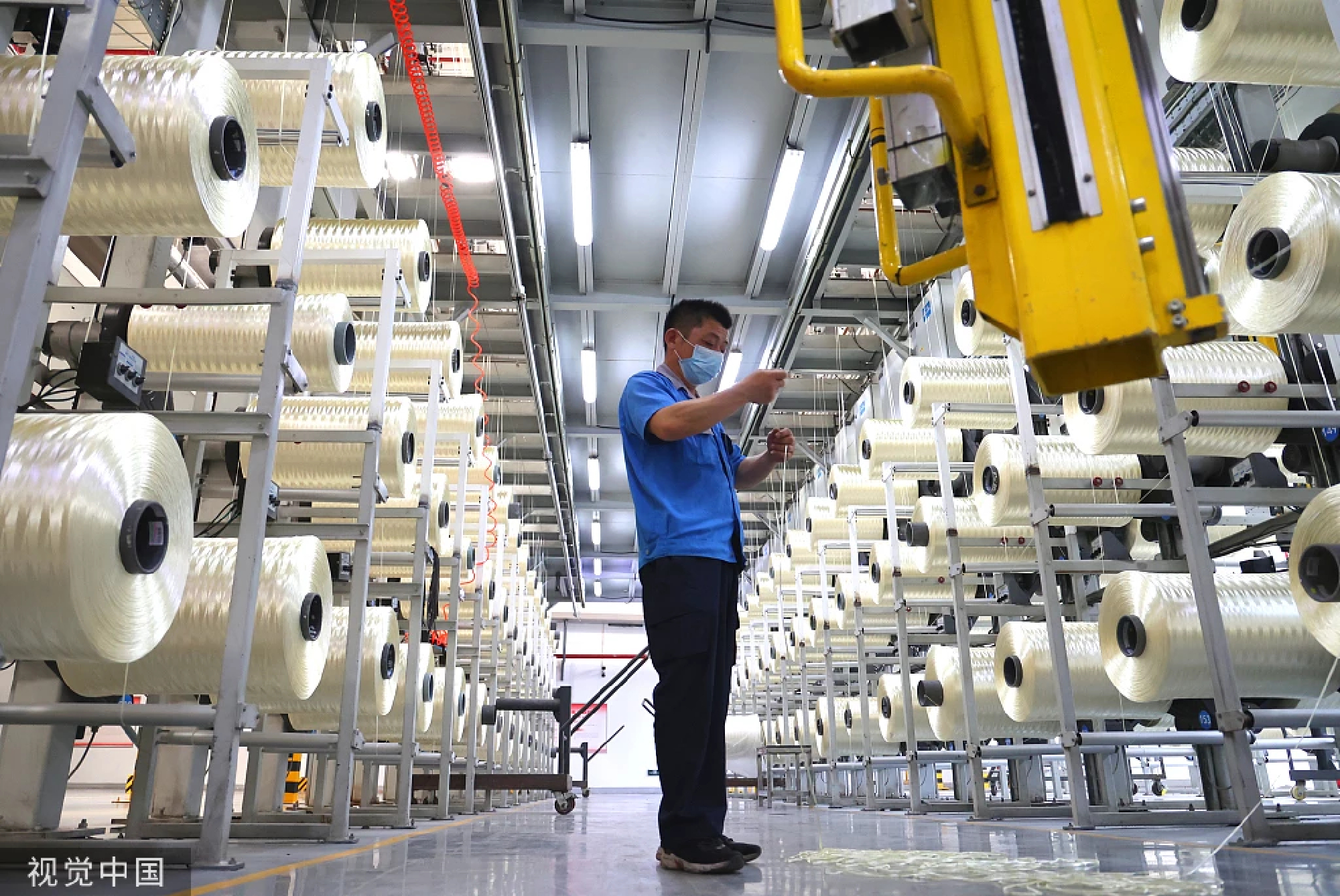
China’s economy grew by 0.4 percent in the second quarter of 2022 compared with a year earlier to post a 2.5 percent growth in the first half of the year, the National Bureau of Statistics said on Friday.

China's GDP rises 2.5% year-on-year in H1

Figures released by the NBS showed value-added industrial output, a gauge of activity in the manufacturing, mining and utilities sectors, grew by 3.9 percent in June from a year earlier after a 0.7 percent rise in May.

In the first half of the year, value-added industrial output grew by 3.4 percent compared to the same period last year, while in the second quarter, it rose by 0.7 percent from a year earlier.

Retail sales, a key measurement of consumer spending, grew by 3.1 percent year-on-year in June, from the 6.7 percent decline in May.

In the first half of the year, retail sales fell by 0.7 percent compared to the same period last year, while in the second quarter, they declined 4.6 percent from a year earlier.

Fixed-asset investment – a gauge of expenditures on items including infrastructure, property, machinery and equipment – rose by 5.6 percent in June, up from 4.6 percent in May.

In the January-June period, fixed-asset investment grew by 6.1 percent compared with a year earlier, while in the second quarter, it jumped 4.2 percent year-on-year.

The surveyed urban jobless rate came in at 5.5 percent in June from 5.9 percent in May, according to the NBS.

The NBS said China’s economy is gradually recovering from recent shocks as a series of policies on stabilizing the economy took effect.

More efforts will be made to implement a package of stimulus policy measures and keep the economic operation within a reasonable range.

By Ouyang Shijia

Asia News Network: The Nation (Thailand), The Korea Herald, The Straits Times (Singapore), China Daily,  Jakarta Post, The Star and Sin Chew Daily (Malaysia), The Statesman (India), Philippine Daily Inquirer, Yomiuri Shimbun and The Japan News, Gogo Mongolia,  Dawn (Pakistan),  The Island (Sri Lanka), Kuensel (Bhutan), Kathmandu Post (Nepal), Daily Star (Bangladesh), Eleven Media (Myanmar), the Phnom Penh Post and Rasmei Kampuchea (Cambodia), The Borneo Bulletin (Brunei), Vietnam News, and Vientiane Times (Laos).

Published : July 16, 2022

By : China Daily

South Korean, US F-35 stealth fighters stage first aerial drills

#SootinClaimon.Com : ขอบคุณแหล่งข้อมูล : หนังสือพิมพ์ The Nation.

https://www.nationthailand.com/international/40017776


F-35 stealth fighters from the South Korean and the US air forces teamed up for the first time for four days of combined aerial drills, as the allies move to enhance interoperability and combined defence posture against North Korea’s escalating threats.

South Korean, US F-35 stealth fighters stage first aerial drills

South Korea and the US conducted combined military exercises involving fifth-generation F-35A fighter jets in South Korean airspace from Monday to Thursday, South Korea’s Air Force announced on Thursday.

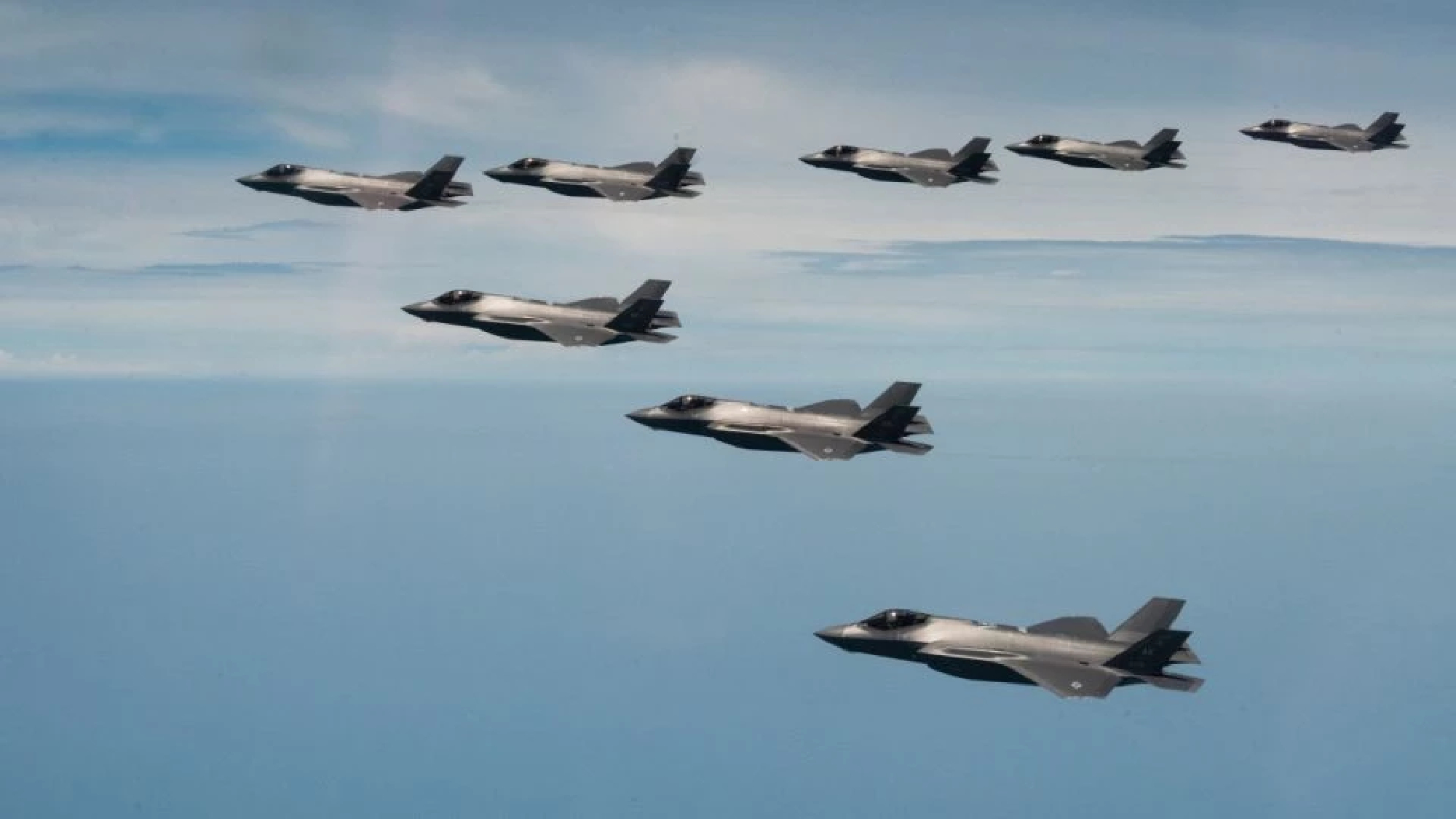
Around 30 aircraft, including South Korea’s F-35A, F-15K, KF-16 and FA-50 fighters and the US’ F-16 Fighting Falcons and six F-35A stealth fighters, joined the aerial exercises.

The occasion marks the first time that F-35A stealth fighter jets from the two countries participated together in combined drills since the delivery of 40 F-35As was completed in January. The F-35A is widely considered the world’s most advanced fighter jet.

During the air-combat training, the South Korean and US air forces conducted major combined air operations and missions, including airborne alert interdiction and defensive counter-air while forming a virtual friendly force and enemy.

The strike package comprising various South Korean and US fighter jets also carried out offensive air operations in a realistic training environment.

“South Korea and the United States plan the exercises to enhance our combined operational capability by conducting actual combat training and increase the interoperability of the fifth-generation F-35A fighter jets that the two countries have operated,” South Korea’s Air Force said in a press statement.

The actual combat aerial training also aims to strengthen the alliance’s capability to integrate the fourth- and fifth-generation fighters of South Korea and the US and “maintain firm South Korea-US combined defence posture”.

“This is the crucial training that represents the ironclad South Korea-US alliance and combined defence posture,” said Major Kwon Hae-bin, an F-35A pilot from South Korea’s 17 Fighter Wing at the 151 Fighter Squadron. “Through the training, Air Force pilots from the two countries were able to exchange tactics and operational knowhow concerning fifth-generation fighters.”

A total of six F-35A stealth fighter jets flew from Eielson Air Force Base in Alaska on July 5 for their scheduled 10-day training mission.

The United States Air Force has dispatched its six F-35 stealth fighters to the Korean Peninsula for combined military exercises for the first time since December 2017. At that time, the allies staged a now-suspended large-scale Vigilant Ace air exercise while tensions heightened on the Korean Peninsula in the aftermath of North Korea’s sixth nuclear test in September 2017.

South Korea’s Defence Ministry said on Thursday that the deployment of the US stealth fighters is the follow-up measure to an agreement forged by South Korean President Yoon Suk-yeol and US President Joe Biden during their May 21 summit.

The two leaders reaffirmed the US’ commitment to deploying US strategic assets “in a timely and coordinated manner as necessary” and agreed to step up combined military exercises in response to North Korea’s evolving threats.

Biden also affirmed the US extended deterrence commitment to South Korea “using the full range of US defence capabilities, including nuclear, conventional and missile defence capabilities.”

The rare deployment of the US F-35 fighter jets comes as South Korea and the US have reinforced security cooperation at a juncture when North Korea has conducted record-breaking ballistic missile launches and is believed to complete preparations ahead of a seventh nuclear test.

The F-35A multirole fighters – which have precision strike capabilities capable of evading radar detection – play a pivotal role in South Korea’s Kill Chain pre-emptive strike platform.

North Korea has repeatedly levelled blistering criticism of South Korea’s purchase of the F-35, as its military does not have surveillance and reconnaissance capabilities to detect radar-evading fighter jets.

North Korea’s Foreign Ministry lambasted the US for deploying F-35 fighters and reconnaissance aircraft to the Korean Peninsula in a statement issued on Tuesday on its official website, claiming that the basic mission of the F-35s is to “destroy core targets of North Korea”.

The ministry underscored that the US move clearly shows the “US ambition to stifle North Korea by force”, warning of the consequences of deploying the US military assets.

“The US’ racket of reckless military provocations has created an extremely dangerous situation on the Korean Peninsula where war can break out at any time,” the statement said.

The Korea Herald

Asia News Network

Asia News Network: The Nation (Thailand), The Korea Herald, The Straits Times (Singapore), China Daily,  Jakarta Post, The Star and Sin Chew Daily (Malaysia), The Statesman (India), Philippine Daily Inquirer, Yomiuri Shimbun and The Japan News, Gogo Mongolia,  Dawn (Pakistan),  The Island (Sri Lanka), Kuensel (Bhutan), Kathmandu Post (Nepal), Daily Star (Bangladesh), Eleven Media (Myanmar), the Phnom Penh Post and Rasmei Kampuchea (Cambodia), The Borneo Bulletin (Brunei), Vietnam News, and Vientiane Times (Laos).

Published : July 15, 2022

By : The Korea Herald

Asean Online Sale Day to offer tourism, fashion deals from Aug 8-10

#SootinClaimon.Com : ขอบคุณแหล่งข้อมูล : หนังสือพิมพ์ The Nation.

https://www.nationthailand.com/international/40017774


E-commerce businesses across the region will join the annual Asean Online Sale Day from August 8-10, offering discounted products and services ranging from tourism to fashion.

Asean Online Sale Day to offer tourism, fashion deals from Aug 8-10

This year’s programme will be co-chaired by Cambodia – the chair of Asean in 2022 – as well as Singapore and Vietnam.

The Asean Online Sale Day is the first region-wide online shopping event and has been held annually since 2020. It gives businesses the chance to tap Asean’s huge market of over 600 million consumers.

The event comprises two tiers for domestic and cross-border transactions.

E-commerce businesses and platforms in the 10 Asean countries will launch a series of special discount shopping programmes for consumers in that country.

Enterprises and platforms will also coordinate to implement a cross-border online shopping programme throughout the region.

Asean Online Sale Day 2022 will take advantage of regional free trade agreements, and be an important step to post-pandemic economic recovery, potential for e-commerce, access to favourable policies, and improving the value of products and services of regional businesses.

Viet Nam News

Asia News Network

Asia News Network: The Nation (Thailand), The Korea Herald, The Straits Times (Singapore), China Daily,  Jakarta Post, The Star and Sin Chew Daily (Malaysia), The Statesman (India), Philippine Daily Inquirer, Yomiuri Shimbun and The Japan News, Gogo Mongolia,  Dawn (Pakistan),  The Island (Sri Lanka), Kuensel (Bhutan), Kathmandu Post (Nepal), Daily Star (Bangladesh), Eleven Media (Myanmar), the Phnom Penh Post and Rasmei Kampuchea (Cambodia), The Borneo Bulletin (Brunei), Vietnam News, and Vientiane Times (Laos).

Published : July 15, 2022

By : Vietnam News