Vietnamese President Phúc asks Biden for COVID-19 vaccine support
HÀ NỘI — President Nguyễn Xuân Phúc on Sunday sent a letter to US President Joe Biden, asking for COVID-19 vaccine support for Việt Nam as the country is facing a devastating fourth wave of infections.
In the letter, the Vietnamese President thanked the US for having committed US$4 billion to the global COVID-19 vaccine sharing initiative COVAX and notified his counterpart that Việt Nam has received two shipments of 2.5 million doses of AstraZeneca from the initiative so far.
“COVAX is truly a valuable and timely support that helps Việt Nam and many developing countries in the fight against the pandemic amid the global vaccine shortage,” President Phúc wrote.
The Vietnamese President welcomed the US’ decision to send 80 million surplus vaccine doses to assist global efforts, especially as the COVID-19 situation in Southeast Asia and Việt Nam is seeing complex developments.
President Phúc said he hoped the US would continue to support Việt Nam and other countries in vaccine supplies, and proposed the two sides step up co-operation in research, production and technology transfer for COVID-19 vaccines.
The Vietnamese President said Việt Nam always attaches great importance to the comprehensive partnership with the US and believes that in the spirit of friendship, the two sides will continue to foster bilateral ties and bring further benefits to the peoples of the two nations.
Previously, in talks with leaders of many countries including Russia, China, and Japan, Vietnamese leaders have requested they provide support for Việt Nam to access COVID-19 vaccines and strengthen ties in researching, producing, and transferring technology for COVID-19 vaccine production.
Việt Nam is undergoing a serious COVID-19 outbreak, with more than 4,000 infections since April 27.
Other than 2.5 million doses from COVAX, Việt Nam with a population of 97 million has to date received only 400,000 doses from the order of 30 million it has secured with AstraZeneca.
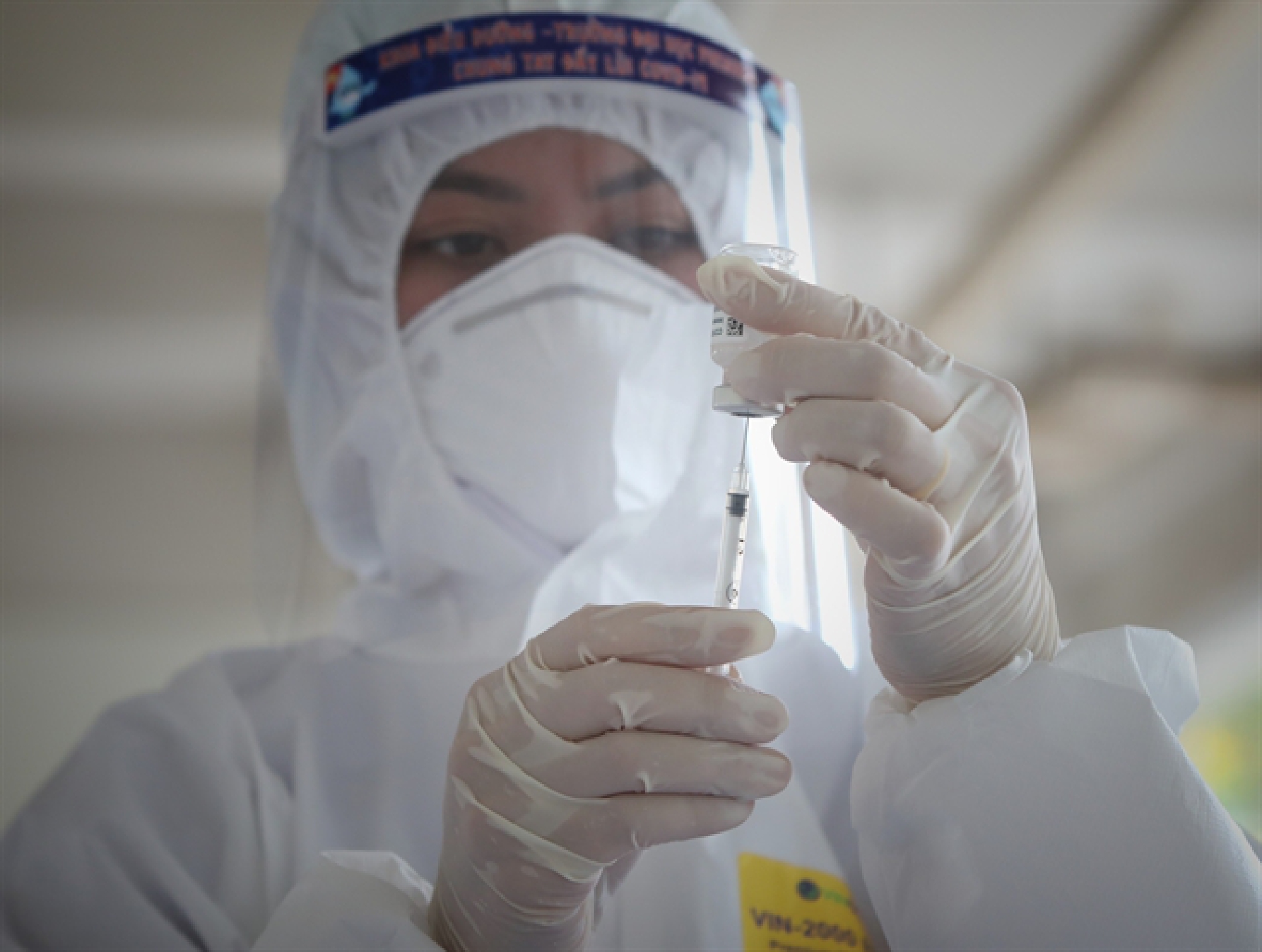
More than 1 million jabs have been administered, and some 28,000 people have been given the full two doses. — VNS
PM Lee Hsien Loong to address nation on Singapores plans to keep Covid-19 under control on Monday, 4pm
SINGAPORE – Prime Minister Lee Hsien Loong will address Singaporeans on the countrys approach to tackling Covid-19 in a broadcast on Monday (May 31) at 4pm.
Mr Lee announced his address in a Facebook post on Sunday.
“The number of new community cases has stabilised over the last two weeks. Our tightened measures to keep Singaporeans safe are working. Thank you for staying home and complying with the guidelines,” he said.
“Tomorrow, I intend to share with you how we plan to keep Covid-19 under control, while progressively opening up again. The solution: testing, contact tracing, and vaccinating, all faster, and more. Also: What will the new normal be like?”
Watch his speech live on The Straits Times’ website, Facebook page and YouTube page. It will also be available on Mr Lee’s Facebook page or on Mediacorp channels.
Mr Lee’s post comes amid a spike in the number of coronavirus cases in recent weeks, which has since stabilised.
The rise in cases saw Singapore impose its strictest curbs on social gatherings and public activities since last year’s circuit breaker period.
Dining in at restaurants and hawker centres is no longer allowed and gatherings have to be limited to two people, among other measures in place under the current phase two (heightened alert).
Employers are also required to make working from home a default arrangement.
The restrictions, in place since May 16, will be in force until at least June 13.
This period of heightened alert was sparked by a growing peak of infections that have been fuelled partly by more contagious variants of the coronavirus.
Before the recent spike, Singapore recorded few to no locally transmitted Covid-19 infections for months.
But cases started to rise in late April, with rapidly growing clusters emerging in places such as Tan Tock Seng Hospital and Changi Airport, underlining how easily the virus can resurge.
On Sunday, the Health Ministry reported 25 new Covid-19 cases, comprising 19 which were locally transmitted and six which were imported. Of the local community cases, six are currently not linked to previous cases.
This takes Singapore’s all-time total Covid-19 tally to 62,028.
The worsening of the Covid-19 situation came as Singapore was gearing up to open up its economy even more and host events such as the yearly Shangri-La Dialogue defence and security summit in June and the World Economic Forum in August. Both events have since been cancelled.
Singapore has also withdrawn as host of two AFC Cup group football games, and a travel bubble with Hong Kong has been postponed.
Last Friday, the Government announced an $800 million package of support measures to help companies and individuals tide over this period, including enhanced wage subsidies under the Jobs Support Scheme and rental relief.
Finance Minister Lawrence Wong, who is co-chair of the multi-ministry task force on Covid-19, said, in announcing the support measures, that the recent restrictions have had an effect in controlling the spread of the virus, and that he did not expect new restrictions to be introduced.
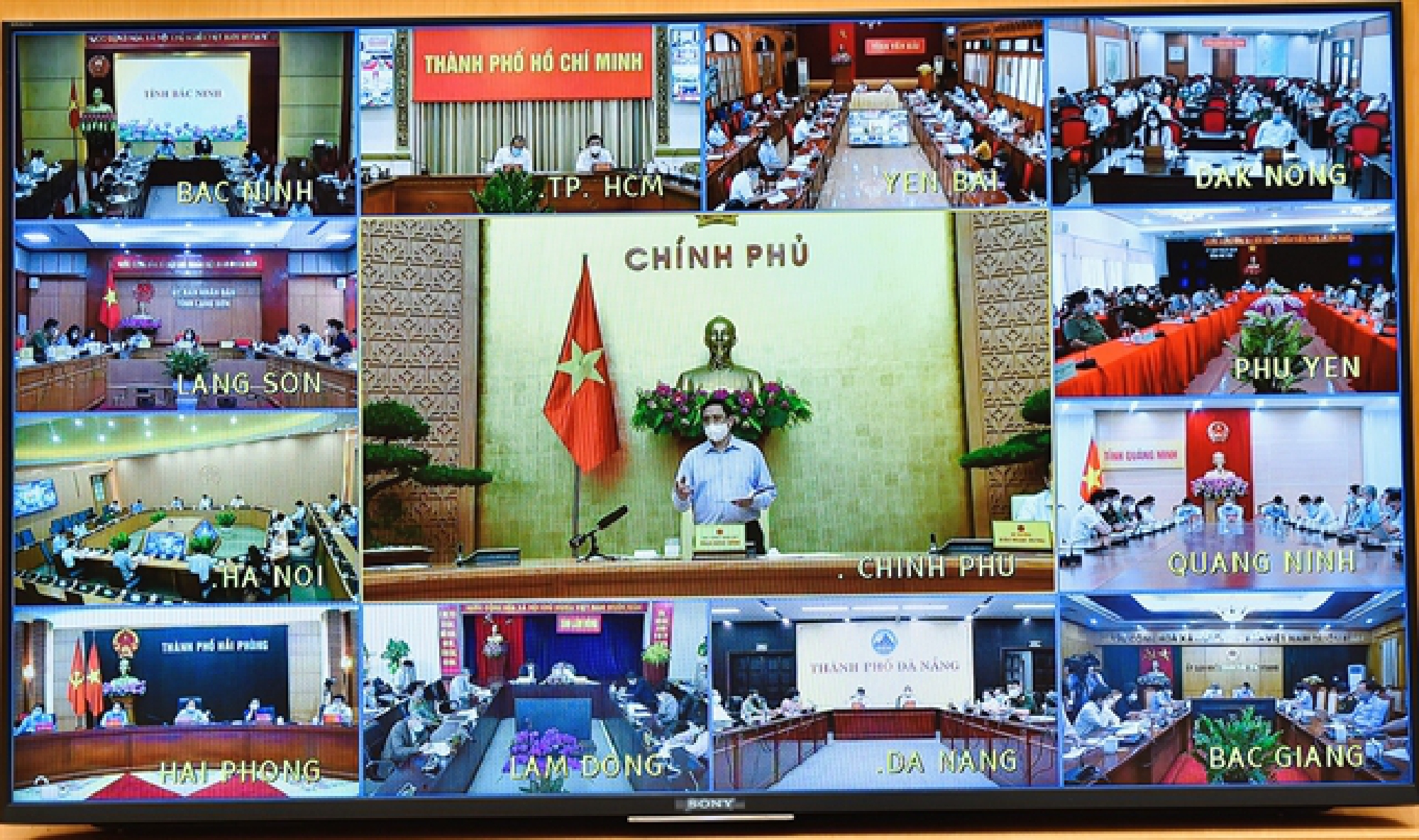
HÀ NỘI — Prime Minister Phạm Minh Chính on Saturday morning presided over a national online conference on the COVID-19 situation and urgent response measures amid the complicated developments of the pandemic with an increasing number of infections recorded in industrial parks and major provinces and cities.
Attending the event were Government leaders, representatives of relevant ministries and agencies, leaders of the provinces and centrally-run cities and those in districts/towns which are home to industrial, economic and processing zones across the country.
A new coronavirus variant with characteristics from the existing Indian and UK variants had been detected in Việt Nam for the first time, the Ministry of Health Nguyễn Thành Long said at the online meeting.
Long said genetic sequencing on several COVID-19 patients in Việt Nam revealed the presence of two common coronavirus variants from the UK and India.
The UK variant is believed to be more transmissible than ordinary strains, while the Indian variant is both more transmissible and potentially less susceptible to neutralising antibodies of the immune system.
However, the new coronavirus variant which has recently been detected in Việt Nam has characteristics from both the UK and the Indian variants. It is an Indian variant with mutations that originally belong to the UK variant, according to Long.
Việt Nam detected seven coronavirus variants including B.1.222, B.1.619, D614G and B.1.1.7 UK variant and B.1.351, A.23.1 and B.1.617.2 Indian variant.
Fourth wave
Reporting at the meeting, Minister of Health Nguyễn Thanh Long said that the fourth wave of COVID-19 in Việt Nam included infections in industrial zones, multiple sources of infections and the presence of various coronavirus variants.
The virus spread very fast, particularly in closed spaces without ventilation systems.
Many COVID-19 patients suffered from more and more serious symptoms, thus required more intensive medical care than those in previous waves.
Long said that Bắc Giang could not control COVID-19 in a short time as its industrial parks had high density of workers, in confined factories, sharing toilets and canteens, travelling on the same coaches and usually renting houses in the same residential areas.
“Bắc Giang and Bắc Ninh will continue reporting new cases as pathogens have been circulating widely and for a long time,” Long said, adding that the two provinces were gradually bringing the outbreaks under control.
Bắc Giang Province prepared plans to deal with up to 5,000 cases while Bắc Ninh Province prepared to deal with up to 3,000 cases.
Other localities, particularly major cities of Hà Nội and HCM City, would continue seeing new cases from clusters but they have done a good job in controlling the disease.
Long said it was crucial to protect industrial parks from COVID-19 to secure production.
“We identified that the highest risks remain at industrial parks and once outbreaks occurred there, it will spread very fast and it will be very difficult to control,” Long said, adding that the ministry developed scenarios responding to the outbreaks at industrial zones.
Every factory and industrial park was required to have response plans including adjusting production, managing workers when they leave factories and travel to their accommodations.
Employers and business owners must pay more attention to disease prevention and control as well as vaccine access for workers in industrial zones.
Long said that social distancing was an important measure for disease prevention and control.
Localities were proactive in locking down high-risk areas but minimising affected areas to avoid negative impacts on production and people’s daily life.
Secretary of Bắc Giang Province Party Committee Dương Văn Thái said that the province conducted 750,000 tests, arranged 282 quarantined areas which could deal with 24,000 people.
Until now, 174 quarantined areas were in use, while 108 were available for 9,000 people. The province planned to open another quarantine area with 6,000 beds.
Local authorities instructed enterprises to meet safety and disease prevention and control requirements when they resumed production, Thái said.
On May 27, the province received 30,000 vaccine doses which would be for those working on the front line and workers, particularly whose factories were set to re-open, he said.
The province was ramping up testing in residential areas, he said, adding that they were determined to curb infections and would assist enterprises to resume operation as soon as possible.
Secretary of Bắc Ninh Province Party’s Committee Đào Hồng Lan said that the province prepared quarantines areas for about 20,000 people and five field hospitals with a capacity of 300-500 beds each.
It also increased testing capacity, using pooled sample testing to deal with from 30,000 samples a day to 40,000-50,000 a day.
Quick tests would be offered to people who visit medical units, markets and residential areas, Lan said.
“Bắc Ninh would maintain production along with disease prevention and control,” she said.
Comparing the pandemic to an enemy, Prime Minister Phạm Minh Chính called on the Government, ministries, agencies, localities and people to take drastic and comprehensive measures to better respond to the development of the disease.
He asked relevant agencies to make joint efforts to secure more COVID-19 vaccines for Việt Nam. Besides domestically-made vaccines, Chính asked ministries of Foreign Affairs, Public Security and Defence to search for and buy vaccine production technologies.
Relevant agencies would launch communication campaigns about vaccinations for prioritised groups, localities and people.
“Ministries and agencies must support localities to solve difficulties in disease prevention and control so that no locality faces shortages of funding, human resources, medical materials and equipment for disease prevention and control activities,” he said.
Prime Minister Chính asked the labour ministry to provide support for enterprises, workers and people in disease-hit areas.
“I call on people, enterprises, agencies and organisations to join the fight against COVID-19 with ideas, funding, consultations and even networking to help us access COVID-19 vaccine supply and technological transfer for vaccine production,” Chính said.
Vaccinations
Health Minister Long said that Việt Nam was expected to achieve herd immunity this year.
The country is speeding up the development and production of local COVID-19 vaccines, one of which is in the 3rd phase of trials.
Meanwhile, Việt Nam is also actively negotiating with and searching for COVID-19 vaccine suppliers around the world, Long said, adding that the health ministry signed contracts and got commitments for more than 100 million vaccine doses which can cover 70 per cent of Việt Nam’s population aged over 18.
The ministry was also making efforts to buy an additional 40 million does.
As soon as shipments of vaccines arrive in Việt Nam, people in the two biggest hot spots – Bắc Ninh and Bắc Giang – would be given priority to get vaccinated.
Updated numbers
On Saturday morning, the Health Ministry confirmed 87 new locally-transmitted COVID-19 cases, of them, 57 were reported in Bắc Giang, 27 in Bắc Ninh, one in Bạc Liêu, one in Gia Lai, and one in Hà Nội’s Cancer Hospital K.
At noon, the ministry confirmed 56 new cases including seven imported and 49 locally transmitted cases.
Of the new community cases, 46 are in quarantined or locked down areas in Bắc Giang Province and linked to SARS-CoV-2 positive workers of local industrial parks.
Tây Ninh Province in the south, Điện Biên province in the northern and Đông Anh branch of National Hospital of Tropical Disease each reported one new case at noon. Particularly, the case in Tây Ninh is a 2-year-old boy who had close contact with a confirmed COVID-19 case relating to the Christian church cluster in HCM City. The latest case in Điện Biên is a 6-year-old girl in Nậm Pồ District.
By Saturday noon, Việt Nam has reported 5,213 locally-transmitted cases and 1,500 imported ones. The number of cases reported from April 27 was 3,643, of which, 1,927 cases were reported in Bắc Giang Province and 736 cases in Bắc Ninh Province. VNS
Human Trafficking to India: Young female TikTok users targeted
Saima [not her real name], 15, led a regular teenage life of this generation, making videos on popular mobile app TikTok, before she was trafficked to India with the promise of a better job.
She was one of the victims of Rifatul Islam Ridoy, 26, popularly known as Ridoy Babo on TikTok, who lured her to the South Indian city Bengaluru promising her a well-paid job two months ago, along with four other girls, through Sathkhira border.
Saima, who used to work at a shopping mall in Bangladesh, thought that she would get a better job in India.
After going there, however, she found that they were trafficked to India for sex work.
As they refused to be a part of the trade, the gang members tortured them and forced them into sex work.
After a month and half, three of them were able to flee the Indian state and return home recently.
After a video clip of a 22-year-old woman being tortured and sexually assaulted went viral on social media, Indian police on Thursday arrested Ridoy Babo, along with five other Bangladeshis from Bengaluru.
Bangladesh police then began investigation and found a transnational racket, involving some Bangladeshis, trafficking some young girls using TikTok and forcing them into sex work in India.
Tejgaon police has interrogated a few India-returned victims. Yesterday, their families came to Hatirjheel Police Station to meet the girls, but failed despite several attempts.
A relative of Saima, wishing not to be named, told The Daily Star that Saima and the four girls were kept at a rented house in Bengaluru. A man controlled the trade over phone and sent the girls to clients.
“Before going to India in March, Saima had been missing for five days. We could not trace her. Then she called us from India and told us that Ridoy took her there… A few days later, she called again and said she was being tortured and wanted to come home at any cost.”
Two of the girls who went along with her, fled the house first and waited for her near the border. After two days, Saima was also able to flee Bengaluru.
“We sent Tk 50,000 to the girls, who managed people for help at the border and then returned to Dhaka with Saima,” said the relative of the girl.
He said a law enforcement agency picked up Saima from her Hatirjheel home on Thursday night, interrogated her and released her the next day.
On Friday night, Hatirjheel police took her into custody.
‘RACKET TARGETS FEMALE TIKTOKERS’
A transnational gang, involving some Bangladeshis, has been trafficking young girls using Tiktok and forcing them into sex work in India, Md Shahidullah, deputy commissioner of Dhaka Metropolitan Police (Tejgaon Division), said at a press briefing at his office yesterday.
“School and college students, and sometimes young housewives are their targets.”
Police found a Facebook group administered by this racket.
When young girls and boys make videos on TikTok, they get acquainted to each other and join the Facebook group. An admin of the Facebook group was the main patroniser of the trafficking racket, police said.
“Around 700-800 TikTok users took part in a pool party last year at a resort in the suburbs of Dhaka city, organised by Ridoy Babo,” the official said.
This correspondent also found a promotional video of the pool party where at least 10 young female TikTok users invited other users to join the party in mid-September last year.
Police said the gang members then targeted some female TikTok users and later trafficked them to India in the name of providing well-paid jobs there at shopping malls and beauty parlours.
Police said Ridoy Babo coordinates the international trafficking ring.
Ridoy has more than 71,000 followers on his TikTok account, in which he uploaded 696 videos.
Members of the gang, all aged between 20 and 25, had trafficked several other women earlier.
Police said there are more people involved in the racket and that they are trying to arrest the main perpetrators.
Meanwhile, police brought in four of Ridoy’s “associates” into custody for questioning.
“Some criminals from the south-western region of Bangladesh and several Indian states are involved in the gang. Its network is stretched out to Dubai, UAE and some other countries in the Middle East,” the DC said at the briefing.
“This racket takes girls to India through illegal means. The main place of this racket is in Bengaluru’s Anandapura. During their stay in India, the victims are tortured, sexually assaulted and then photographed and recorded by the culprits. They are later forced into sex work.”
The gang members blackmail the victims, threatening to send the photos and videos to their families or leak those on social media, in case the victims try to escape.
Police are investigating those involved in the crime and trying to bring back those arrested in India. All the Bangladeshi arrestees went to India illegally, the Tejgaon DC said.
Three men with weapons and ammunition caught: military information team
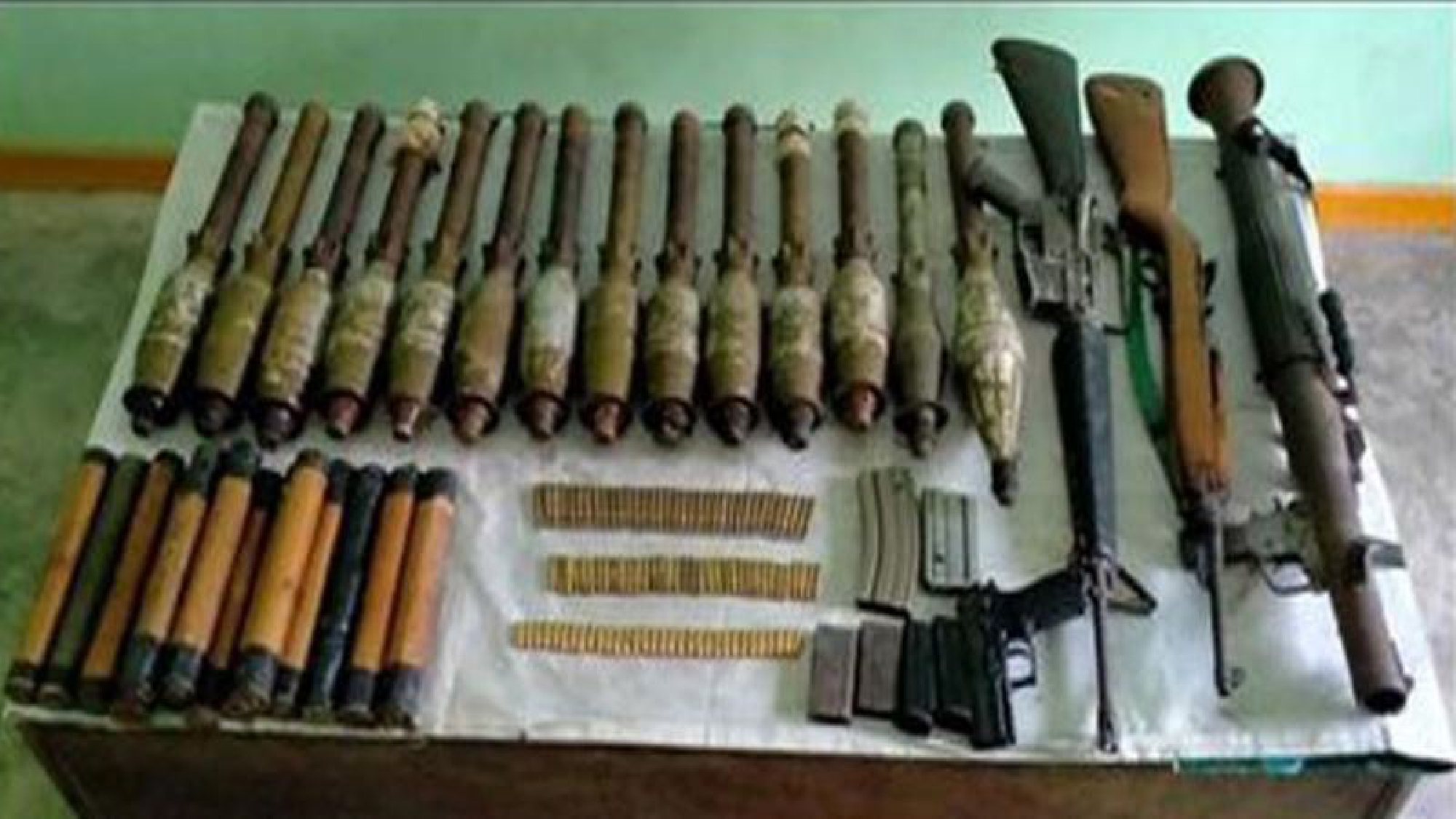
The Tatmadaws True News Information team announced on May 28 that security forces Mayanchaung Gate caught three men together with an RPG and several warheads as well as other weapons and ammunition on May 27.
The anouncement says that Aung Phyo Min aka Nyi Nyi drove a Forland cargo truck, together with Chan Myae Win and Thant Zin Aung, from Belin Township towards Theinphyu Zayat when it was stopped for a search.
They were allegedly attempting to smuggle an M-16 rifle, a P-30 Carbine, an RPG, a Glock pistol, 2 M-16 bullet cartridges, 1 Carbine cartridge, 1 Glock pistol cartridge, 14 RPG payloads and 14 warheads and 35 other bullets.
The announcement says that they will be taken action against according to the law.
Drop call for Myanmar arms embargo, say 9 Asean members
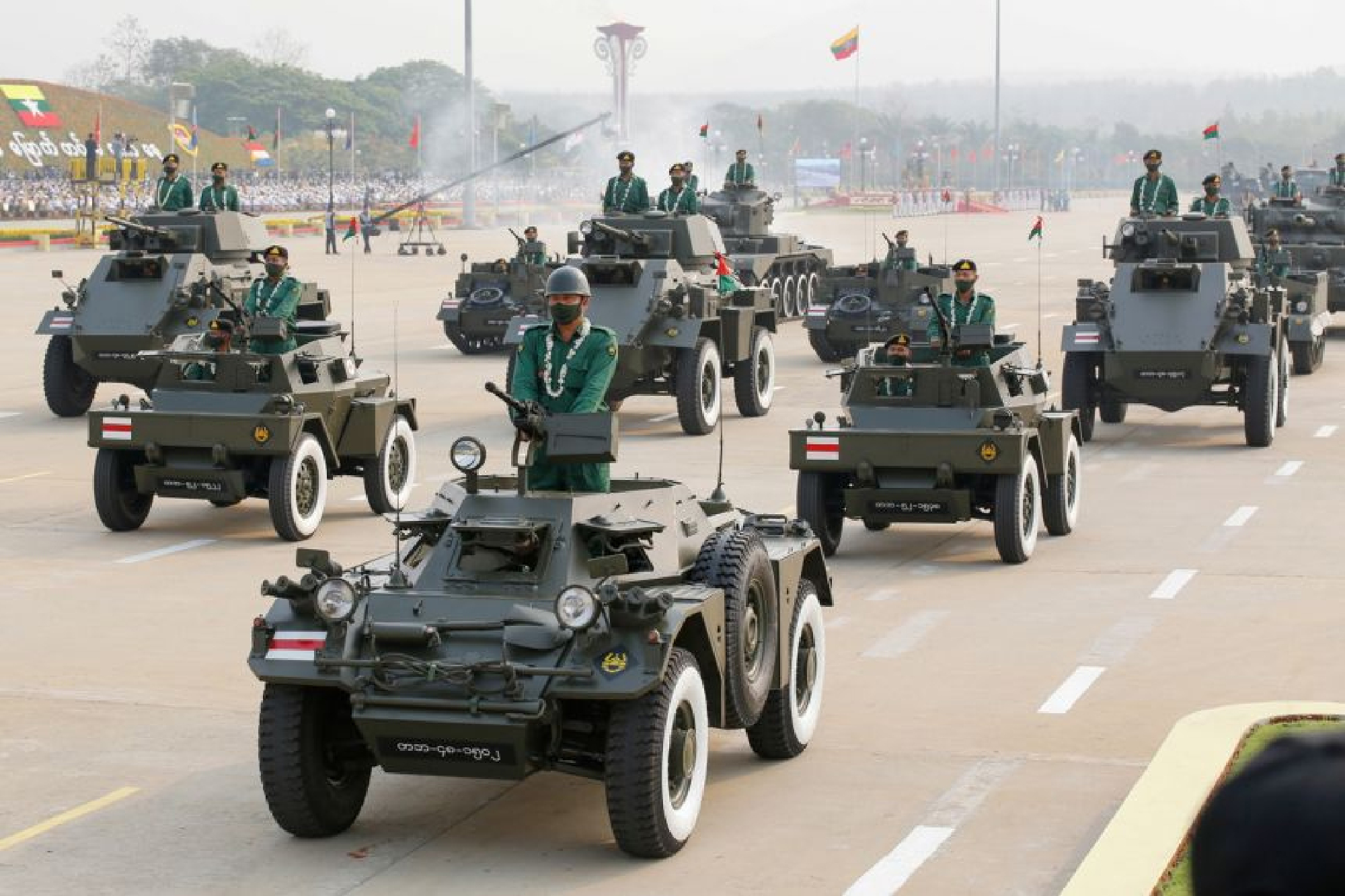
WASHINGTON – Nine out of the 10 members of Asean want a draft UN resolution to drop a call for an embargo on arms supplies to the Myanmar military in the wake of its Feb 1 coup detat and the ensuing brutal crackdown.
Akey reason for this is Asean’s need to keep open channels for dialogue with the military.
In a letter in response to a resolution drafted by Liechtenstein, reportedly with the support of close to 50 other countries, nine members of Asean, excluding Myanmar, asked for the removal of a sentence calling for “an immediate suspension” of sales or transfers of weapons and munitions to Myanmar.
Reuters reported that the letter, which was dated May 19, said the draft resolution “cannot command the widest possible support in its current form, especially from all countries directly affected in the region”.
Further negotiations are needed “to make the text acceptable, especially to the countries most directly affected and who are now engaged in efforts to resolve the situation”, it said.
“It is also our firm conviction that if a General Assembly resolution on the situation in Myanmar is to be helpful to countries in Asean, then it needs to be adopted by consensus,” the letter said.
The military’s crackdown on protests against its seizure of power has, according to multiple reports, left more than 800 civilian protesters dead – a figure disputed by the coup leader, Senior General Min Aung Hlaing. According to him, the figure is about 300, including 47 police officers.
Many hundreds more, including journalists, have been thrown in jail.
Fighting with ethnic armed organisations in border areas has also escalated. Fresh waves of people fleeing violence have crossed into Thailand and India. Several thousand civilians have reportedly been displaced by fighting in recent days in Chin State in north-eastern Myanmar, and are living in the jungle.
The economy is on the brink of collapse, raising grave concern over a potential humanitarian catastrophe.
The international community is in a quandary over Myanmar, especially as China and Russia back the Tatmadaw – the military – in international forums.
In an April 8 article, former Australian foreign minister Gareth Evans said: “The larger problem with which all of us have to wrestle is that almost any conceivable form of external pressure or intervention, short of unachievable military intervention, seems unlikely to have any really decisive impact.”
A special Asean meeting on April 24 came to a five-point agreement with Myanmar, including a cessation of violence. It also proposed a special envoy for Myanmar.
The regime, however, later said it saw the five points as “suggestions” and said the time was not right yet to receive an envoy from Asean.
There is good reason, however, for the nine Asean members to resist the call for an arms embargo, said Mr Bilahari Kausikan, a former senior Singapore diplomat.
“First, United Nations General Assembly resolutions are not legally binding,” Mr Kausikan told The Straits Times. “At best, they can be considered recommendations.”
Secondly, Myanmar’s major arms suppliers are China and Russia, which will not stop supplying weapons, so in effect the resolution would be futile, he said.
“Third, (current Asean chair) Brunei is trying to get dates from the Tatmadaw to visit with the Asean Secretary-General and needs the Tatmadaw’s cooperation not just for dates but more generally, for any sort of solution,” he added.
“This is a resolution that will be ignored substantively, but politically may make the Tatmadaw dig in its heels.”
GENEVA – The World Health Organization (WHO) on Friday reiterated its call for a “de-politicized environment” for the study on COVID-19 virus origins, as the whole process of the study is being “poisoned by politics.”
Speaking at a WHO press briefing on Friday, Mike Ryan, executive director of the WHO Health Emergencies Program, called on “everyone out there to separate, if they can, the politics of this issue (COVID-19 origin study) from the science.”
“If you expect scientists to do their work, if you expect scientists to collaborate and actually get the answers that you want, actually seek in a non-blaming environment to find the origin of the virus so we may all learn how to prevent this happening in the future, we would ask that this be done in a de-politicized environment where science and health is the objective of this and not blame on politics,” he said.
His comments came after US President Joe Biden on Wednesday ordered aides to find answers to the virus’ origin, saying US intelligence agencies were pursuing rival theories to those in a WHO report released in March.
A WHO-led team spent four weeks in and around Wuhan with Chinese researchers and said in a report in March that the virus had probably been transmitted from bats to humans through another animal.
It said that “introduction through a laboratory incident was considered to be an extremely unlikely pathway”.
The United States on Thursday called on the WHO to carry out a second probe.
Ryan said it’s “quite disturbing” to see over the past few days “more and more and more discourse in the media with terribly little actual news or evidence or new material” concerning the possible origins of the SARS-CoV-2 virus, the culprit behind the current COVID-19 pandemic.
While calling on governments to work together and create the space for the virus origin study to be done successfully, Ryan said the current politicization of this issue has put WHO in a “very unfair” position to “deliver the answers that the world wants.”
“So we would ask that we separate the science from the politics, and let us get on with finding the answers that we need in a proper positive atmosphere, where we can find the science to drive the solutions through a process that’s driven by solidarity,” he said.
Maria Van Kerkhove, COVID-19 technical lead for WHO, suggested that everyone read in detail the virus origin study report publicized by the WHO team of international experts, which covers a wealth of knowledge and clearly outlines the technical approach concerning further virus origin study.
Finding the virus’ origins requires many studies and multiple missions, in which collaboration, openness and time are needed, she noted.
‘Bullying’
Meanwhile, a recent article in British scientific journal Nature read that unfounded allegations by some US politicians that the COVID-19 virus escaped from a Chinese lab are making it harder for nations to collaborate on ending the pandemic, and fueling online bullying. “Even without strong supporting evidence,” calls to investigate Chinese laboratories have reached a fever pitch in the United States, according to the article, adding that for many researchers, the tone of the growing demands is unsettling, which could thwart efforts to study the virus’s origins.
While some US politicians groundlessly allege that the coronavirus causing the pandemic was leaked from a Chinese lab, scientists argue that the hypothesis requires a thorough, independent inquiry, according to the article.
Citing some scientists, the article read, “the rhetoric around an alleged lab leak has grown so toxic that it’s fueling online bullying of scientists and anti-Asian harassment in the United States, as well as offending researchers and authorities in China whose cooperation is needed.”
Nature funding must triple to $464b by 2030 to protect land, wildlife and climate: UN report
KUALA LUMPUR (THOMSON REUTERS FOUNDATION) – Global annual spending to protect and restore nature needs to triple this decade to about US$350 billion (S$464.3 billion) by 2030 and rise to US$536 billion by 2050, a UN report said on Thursday (May 27), urging a shift in mindset among financiers, businesses and governments.
The inaugural State of Finance for Nature report looked at how to tackle the planet’s climate, biodiversity and land degradation crises, estimating about US$8 trillion in investment would be needed by mid-century to safeguard natural systems.
Ms Inger Andersen, executive director of the United Nations Environment Programme (Unep), told the report launch the amounts required may sound large but “it’s peanuts when we are frankly talking about securing the planet and our very own future”.
“Our health, the quality of our lives, our jobs, temperature regulation, the housing we build and of course the food we eat, the water we drink” all depend on well-functioning natural systems, she said.
Report co-author Ivo Mulder, who heads Unep’s climate finance unit, said financial flows should work with nature rather than against it.
“It is more an opportunity to see how can you continue to do business, how can governments continue to grow economically – but do so in a way that is more equitable and sustainable. It is not impossible,” he told the Thomson Reuters Foundation.
Annual investment in nature, excluding money pledged but not yet delivered, totalled US$133 billion in 2020, said the report, with public funds making up 86 per cent and private finance the rest.
Government spending was mainly for biodiversity protection, forest and peatland restoration, regenerative agriculture and water conservation, added the report by Unep, the World Economic Forum and the Economics of Land Degradation Initiative.
A failure to ramp up investments in nature would threaten the goals of the Paris Agreement on climate change, Mr Mulder warned, while more animal and plant species would be lost.
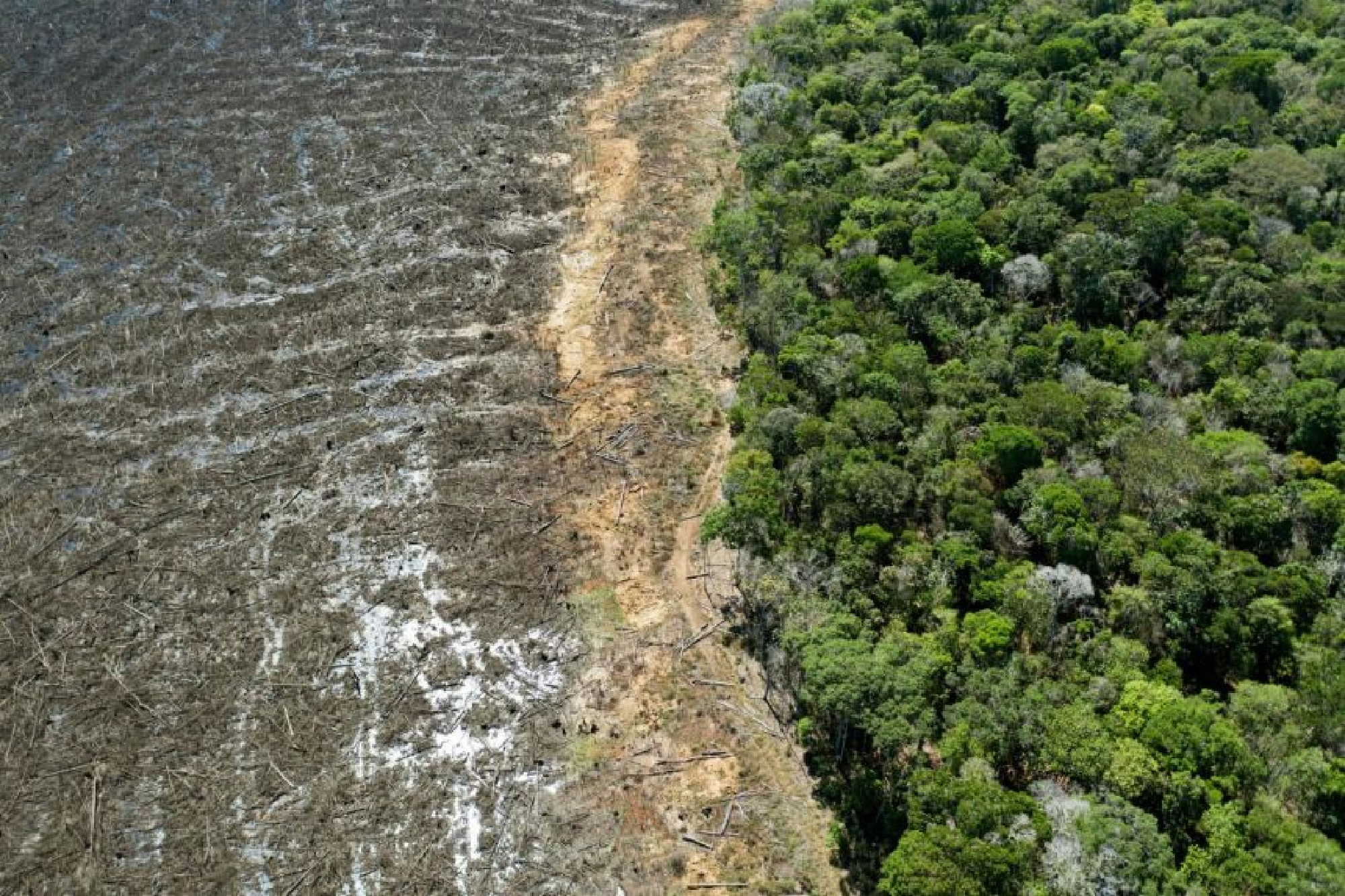
Cutting down forests has major implications for global goals to curb climate change, as trees absorb about a third of the planet-warming carbon emissions produced worldwide.
Forests also provide food and livelihoods, are habitat for wildlife and support tropical rainfall.
Ms Andersen said protecting natural stores of carbon like forests, peatland and the ocean “is not a substitute for decarbonisation” of the global economy but rather “part of a long-term solution” to safeguard the earth and its climate.
Better conservation and management of natural areas, such as parks, forests and wildernesses, is seen as a key tool for nations to protect ecosystems and meet emissions reduction targets.
Build back greener
The report called on governments to include biodiversity and climate measures in their pandemic stimulus packages, noting that nature accounts for just 2.5 per cent of projected Covid-19 economic recovery spending worldwide.
Governments must also ensure development aid contains conditions and targets to help cut climate-heating emissions, protect forests and limit land degradation, Mulder said.
The report recommended reforming taxes and redirecting subsidies for fossil fuels and agricultural chemicals, which amount to hundreds of billions of dollars per year, to encourage greener farming and other activities that nurture nature.
Businesses should invest more in making their supply chains sustainable, while new revenue streams created by forest carbon markets and nature-based projects could help companies meet their net-zero emissions goals, it added.
A separate report released last year estimated between US$722 billion and US$967 billion would be needed annually to halt the global decline in biodiversity by 2030.
Mr Mulder said the estimate in the new UN report was lower as it analysed only land-related funding and did not include oceans. He called it a “starting point” for tracking nature-based investments.
It comes as a coalition of about 60 countries pushes to protect at least 30 per cent of land and oceans by 2030, ahead of a key UN biodiversity summit in Kunming, China, set for October.
Banks will also need to take into account the negative impacts of their lending on nature and the climate, Mr Mulder said.
Firms linked to destruction of nature risk their reputations, and more extreme weather including droughts and floods – often worse in degraded ecosystems – can increase business costs, he added.
Mr Andersen said there was a business case for investing in nature but “we need to make it stronger and clearer”.
Due to rain, these algae flow to the river from fertile lands. After getting adequate nutrients, they start the process of photosynthesis. If the water remains still for long, then only the sun’s rays can go deep, enabling photosynthesis.
It has been a few days since the colour of the Ganga river in Varanasi turned green – and not exactly with envy.
The change in the colour of the water has become a major cause of concern for the local people – more so, because in the same period last year, during the first wave of the pandemic, the Ganga water had become sparking clean, mainly due to less pollution.
According to Dr B.D. Tripathi, the chairman of Malviya Ganga Research Centre at Banaras Hindu University, the greenish appearance of the river could be due to microcystis algae.
“They can be found in flowing water. But it is generally not seen in the Ganga. But wherever the water gets stopped and the condition for nutrients is created, microcystis begin to grow. Its specialty is that it grows only in the waters of ponds and canals,” he said.
According to scientists, the water can turn toxic and needs to be checked if the greenish colour prevails longer.
Environmental pollution scientist Dr Kripa Ram has said that the algae are seen in Ganga due to increased nutrients in the water. He also cited rain as one of the reasons for the change of colour of Ganga water.
“Due to rain, these algae flow to the river from fertile lands. After getting adequate nutrients, they start the process of photosynthesis. If the water remains still for long, then only the sun’s rays can go deep, enabling photosynthesis.
Phosphate, sulphur and nitrate are the nutrients that help the algae grow. The nutrients can also come from agricultural land and sewage,” he explained.
The scientist said that there was no need to worry. It is a natural process and generally happens between March and May. However, since the water turns toxic, bathing in it can cause skin diseases and drinking it can harm the liver.
The local residents, meanwhile, claim that this is the first time that the Ganga has turned ‘so green’.
“Almost the entire river has changed colour and a foul smell is emanating from the water. Samples of water must be thoroughly tested before scientists come to a general conclusion,” said Ajay Shankar, an octogenarian.
Shrimp-breeding in mangroves protects forest cover, offers stable income
TRÀ VINH – The Cửu Long (Mekong) Delta province of Trà Vinh is encouraging farmers to breed shrimp in mangrove forests as the practice offers sustainable incomes and helps to maintain the provinces forest cover.
With a coastline of 65 kilometres, the province has advantages for aquaculture development, but climate change and changes in the aquaculture environment have caused risks of disease.
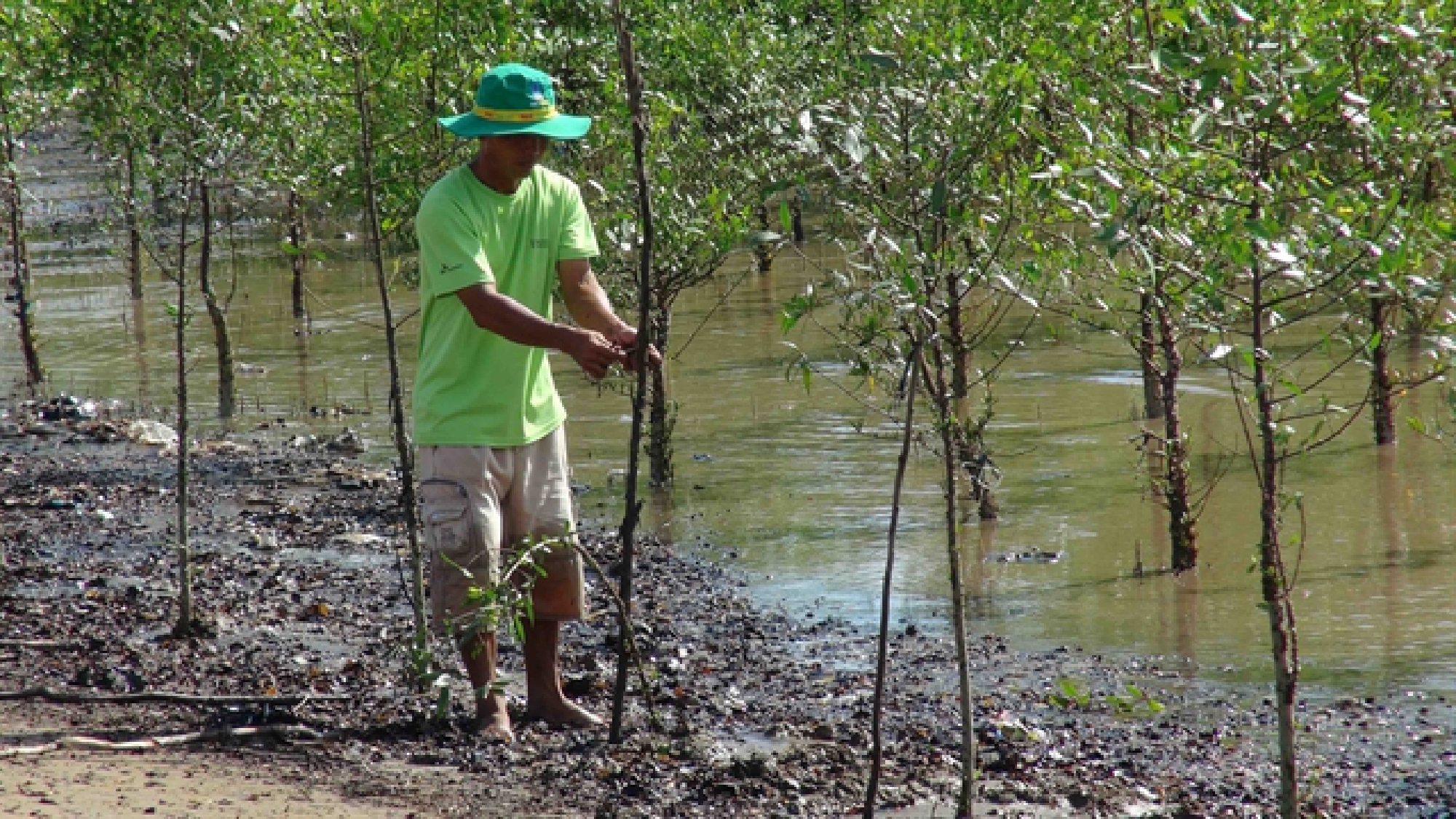
To adapt to climate change, the province has shifted to other methods, including the shrimp – forest farming model, which is mostly implemented in the coastal districts of Cầu Ngang, Châu Thành and Trà Cú, and Duyên Hải Town.
Under the model, shrimp bred under extensive farming methods eat mostly natural food in the mangrove forest. The shrimp is ‘clean’ and is popular with consumers.
The variety that is mostly bred is black tiger shrimp, one of the country’s key shrimp exports.
Farmer Phạm Thái Bình in Duyên Hải District’s Long Vĩnh Commune has bred shrimp in a 3ha mangrove forest for nearly 20 years and earns an average profit of about VNĐ100 million (US$4,300) a year.
The profit is not as high as that from breeding shrimp under industrial farming, but it is stable.
“The shrimp – forest farming model is a sustainable livelihood as it reduces the risk of shrimp disease,” he said.
Bình breeds about 200,000 shrimp a year and staggers the release of shrimp fry into ponds in the forests four times a year in the dry season to avoid an oversupply in the main harvest season. As a result, the shrimp sells at high prices.
In the rainy season when the salinity of water fluctuates and shrimp are easily affected by disease, Bình breeds crabs in the mangrove forest.
Duyên Hải District authorities have encouraged farmers with modest finances who breed shrimp under intensive or super – intensive farming models to switch to shrimp – forest farming.
Duyên Hải has more than 8,500ha of shrimp, according to the district’s Bureau of Agriculture and Rural Development.
The shrimp – forest farming model accounts for nearly 60 per cent of the district’s shrimp farming areas.
Trần Kiến Chúc, chairman of the Đông Hải Commune People’s Committee in Duyên Hải, said that most farmers who breed shrimp in mangrove forests have stable incomes.
The shrimp – forest farming model offers a profit of VNĐ100 – 200 million ($4,300 – 8,600) per hectare a year.
Support
The province’s Agriculture Extension Centre last year supported 22 shrimp breeding households in Duyên Hải’s Đông Vĩnh and Long Vĩnh communes on a total breeding area of 36ha.
The households were provided VNĐ12 million ($520) per hectare for production costs, including 50 per cent of the cost to buy black tiger shrimp fry, 50 per cent of the cost to buy water – quality measuring tools, and a part of the cost to buy food and other material inputs.
They were also trained in advanced farming techniques, which help reduce production costs.
The supported households had an average yield of 700 kilogrammes of black tiger shrimp after breeding for three months and an average profit of VNĐ74 million ($3,200) per hectare.
Huỳnh Hoàng Ân, in Long Vĩnh Commune, said he received support to breed shrimp in a 2.5ha cajuput forest.
The costs to feed the shrimp are not high because they eat mostly natural food. “Shrimp bred under the model grow well and have few diseases,” he said.
Ân has expanded his shrimp – forest farming area to 7ha.
Nguyễn Văn Phùng, deputy director of the centre, said the shrimp – forest farming model has adapted to climate change well.
The province has encouraged farmers to expand as it offers sustainable profits and keeps forests protected.
The province has more than 9,000ha of forests, mostly mangrove forests, with a forest coverage rate of 3.63 per cent.
Of the province’s total forests, more than 4,000ha were planted by local households who breed shrimp in the forests, according to the province’s Department of Agriculture and Rural Development.
The province plans to grow more new forests, aiming to increase its total forest area to 10,000ha by 2025. – VNS