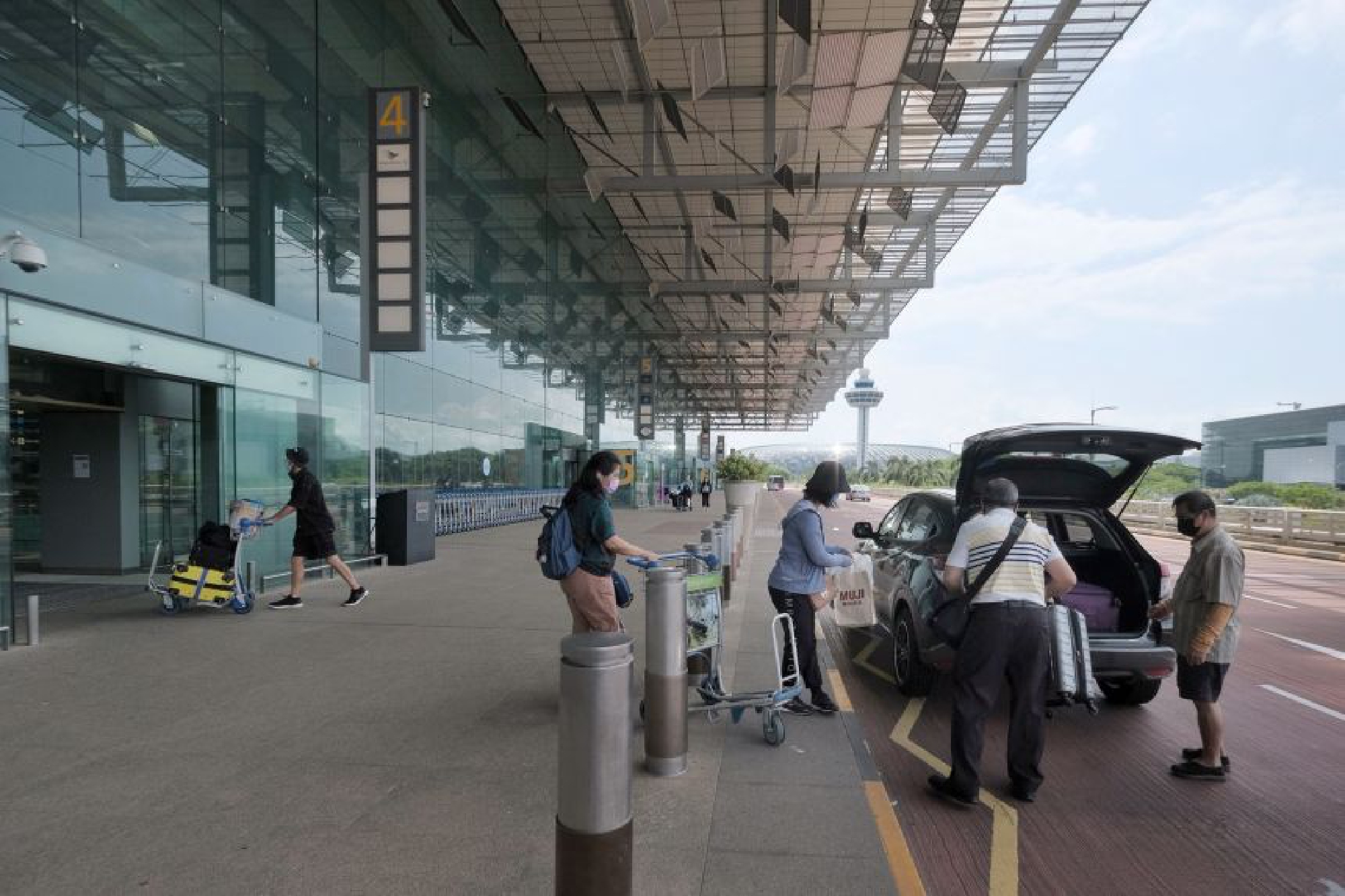
Air travel will bounce back strongly by 2023: Iata
SINGAPORE – Global air travel will bounce back strongly by 2023 as countries roll out Covid-19 vaccines and learn to manage the pandemic, noted the International Air Transport Association (Iata).
It predicted that passenger numbers would recover to 52 per cent of pre-Covid levels by the end of this year, reach 88 per cent next year, and surpass pre-Covid levels by 5 per cent in 2023.
The report from Iata and Tourism Economics said that by 2030, global passenger numbers would have grown to 5.6 billion – that would be 7 per cent below the pre-Covid forecast and an estimated loss of two to three years of growth due to the pandemic.
It cited weaker demographics and a baseline assumption of limited market liberalisation, giving average annual growth of 3.2 per cent between 2019 and 2039. Iata’s pre-Covid travel growth forecast for this period was 3.8 per cent.
But recovery in revenue growth between 2019 and 2039, measured in revenue passenger kilometres, would be slightly lower at 3 per cent due to more domestic travel and short-haul flights.
Mr Willie Walsh, Iata’s new director-general, expressed optimism about aviation, citing more vaccination and testing as the key drivers.
“And when that happens, people are going to want to travel. The immediate challenge is to reopen borders, eliminate quarantine measures and digitally manage vaccination/testing certificates,” he said.
“At the same time, we must assure the world that aviation’s long-term growth prospects are supported with an unwavering commitment to sustainability.
“Both challenges require governments and industry to work in partnership. Aviation is ready. But I don’t see governments moving fast enough.”
Iata believes there will be an instant surge in bookings when borders reopen. It cited the recent example of the 100 percentage point spike in bookings from Britain to Portugal when London announced the “Green List” early this month.
“The economy is strong and can fuel growth in travel,” the report said. “Consumers have accumulated savings in the lockdowns, in some cases exceeding 10 per cent of GDP (gross domestic product).
“Vaccination rates in developed countries (with the notable exception of Japan) should exceed 50 per cent of the population by the third quarter of 2021.”
Mr Walsh urged governments to ready their borders for reopenings: “The travel and tourism sector is a major contributor to GDP. People’s livelihoods are at stake.
“To avoid greater long-term economic and social damage, restart must not be delayed. Governments can facilitate a safe restart with policies that enable restriction-free travel for vaccinated people, and testing alternatives for those unable to be vaccinated.”
He called on governments to develop processes to digitally manage vaccine or test certificates, ensuring that a safe restart is also efficient.
Survey: Only 15% of paramedics in Tokyo, 20 major cities have completed vaccination
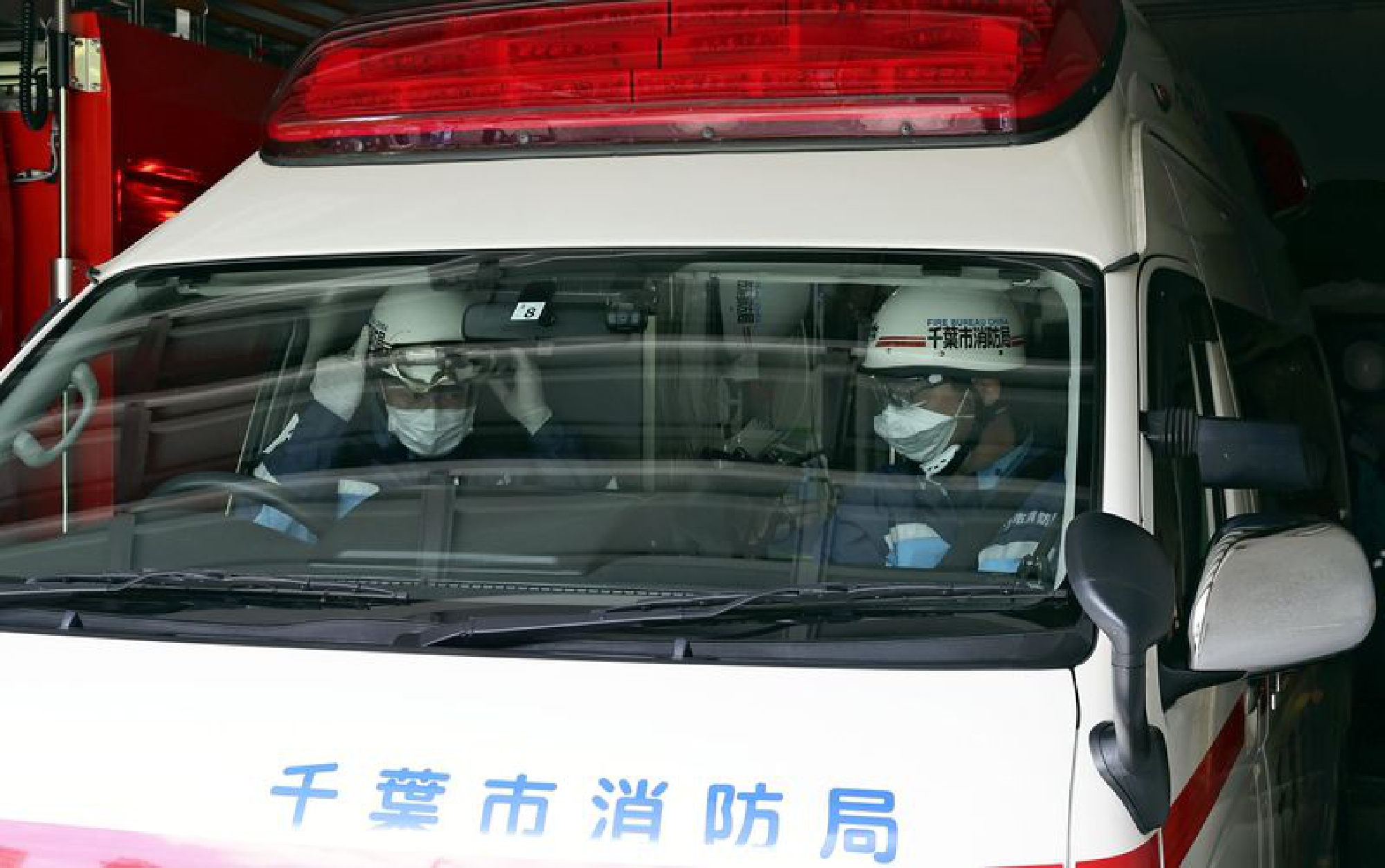
Only 15% of the paramedics and other emergency personnel who transport COVID-19 patients and those with fever symptoms in Tokyo and 20 other major cities have received both doses of the COVID-19 vaccine, a Yomiuri Shimbun survey showed.
The survey of fire departments, which handle emergency and rescue services, in those cities also found that about half of the paramedics have received a first shot, indicating there is a delay in vaccinating front-line health workers.
Paramedics, including firefighters, who transport coronavirus patients are classified as health care professionals — equivalent to doctors — and are eligible for priority vaccinations that started in early March. The government completed the distribution of vaccines for health care professionals the week of May 10. Since mid-May, The Yomiuri Shimbun has been keeping close tabs on the Tokyo Fire Department and the fire departments of 20 major cities regarding vaccination rollouts.
The total number of paramedics eligible to be vaccinated in those cities is 38,339. Excluding Hiroshima and Kitakyushu, which said they have not tallied the figures, those who have received a first shot totaled 19,925, or 51%. Only 5,943, or 15%, have received a second shot, not including Kitakyushu for which figures are unavailable.
All paramedics in Sapporo, Niigata, Kobe and Shizuoka have received a first dose, while 99% of those in Kobe and 90% in Shizuoka have also received a second. Kawasaki had the lowest rate of first shots at 24%, while Tokyo was just over 30%.
Asked when second shots for paramedics are scheduled to be completed, more than half responded “in June.” Yokohama, however, responded that because some personnel will be dispatched to the Tokyo Olympics and must first be immunized with other vaccines, it will not be finished until August.
According to the Internal Affairs and Communications Ministry’s Fire and Disaster Management Agency, about 153,000 emergency workers are eligible for priority vaccinations nationwide, but the agency said it was not aware how far the vaccinations have progressed.
The Inner Mongolia autonomous region released a draft plan on Tuesday to phase out cryptocurrency “mining” activities in the region, which came in the wake of the central financial regulating authorities restrictions on bitcoin mining and trading.
Wang Juan, a member of Blockchain Expert Policy Advisory Board of the Organization for Economic Cooperation and Development said cryptocurrency-related transactions, largely driven by speculation, have already caused roller-coaster price fluctuations in recent months and uncertainty in global financial market.
“Unlike the ways of mining bitcoin and other cryptocurrencies in the early stage, companies now are crazily seeking to consume a super-large amount of industrial power at any cost. This will no doubt cause a massive waste of electricity and huge carbon emissions in China,” she said.
The Inner Mongolia draft outlined eight measures to root out cryptocurrency mining operators and those facilitating the operations. Internet cafes that use idle computers to mine cryptocurrencies are included in the draft.
Any enterprise or individual using cryptocurrency for money laundering or fundraising activities in the region could face a criminal offense, the plan said.
An Guangyong, a financial adviser and member of China Mergers and Acquisitions Association, said cryptocurrency mining doesn’t bring any social value but causes a huge waste of power. “It does not align with many countries’ efforts to reach a green economy. China, for instance, has promised to peak carbon dioxide emissions by 2030 and achieve carbon neutrality by 2060,” he said.
An said a sound digital currency should be: “healthy, supervised and controllable, and should be linked to national credit to avoid illegal activities such as money laundering”.
According to research published by Nature Communications, China accounts for more than 75 percent of bitcoin mining globally. Bitcoin is projected to generate more than 130 million metric tons of carbon emissions in China by 2024, the report said.
On Friday, a meeting of the Financial Stability and Development Committee of the State Council, said that the government was determined to crack down on bitcoin mining and trading, adding individual risks should not be allowed to spread to the whole society.
Last week, three financial industry associations-the National Internet Finance Association of China, the China Banking Association and the Payment and Clearing Association of China-banned financial and payment institutions from involvement in the cryptocurrency business.
Zhang Xiaoyan, deputy director of Tsinghua University’s PBC School of Finance, said: “The regulatory policies for bitcoin and other virtual currencies will also protect small and medium-sized investors through preventing them from speculative transactions. There are a large number of retail investors in China, and many of them lack a deep understanding of virtual currencies.”
Analysts warned of more headwinds from institutional constraints on cryptoasset investment, including the potential for more regulation and concerns over the carbon footprint of data mining, which will create significant uncertainty for investors.
Bitcoin, the world’s largest cryptocurrency, had a roller-coaster ride in trading last week. Its value fell by more than 30 percent to nearly $30,000, the lowest level since late January. However, it recovered to around $39,000 on Wednesday afternoon after Tesla CEO Elon Musk said on Monday he was having active discussions with bitcoin miners regarding the sustainability of the digital coin.
Even with cryptocurrency prices remaining extremely volatile, financial institutions have been launching new cryptoproducts and services, according to a research report from Goldman Sachs.
The volatility of cryptocurrencies, such as bitcoin, is unlikely to end until they have a real economic use independent of price, according to the report.
The research, conducted amid last week’s fluctuations, indicated that trade in bitcoin and ethereum is nearing the historical highs of 2018.
Michael Sonnenshein, CEO of Grayscale Investments, the world’s largest digital asset manager, was quoted by Goldman Sachs as saying that institutional investors now generally appreciate that digital assets are here to stay. Investors are increasingly attracted to the finite quality of assets like bitcoin as a way to hedge against inflation and currency falls as well as to diversify their portfolios.
[Myanmar] People from other states and regions flee from Kayah
People lived in other states and regions are fleeing from Kayah State starting from May 24 due to current situations and they are using white flags for their safety, sources said.
“We lived in Kyaukpadaung before and my sister’s family lived in Yangon. We are living in Kayah for many years now and we made a living by selling things. Now we are worried and cannot sleep at night. We are now going back to our home town and we will be back after the situation is returned to normal,” said a woman.
Although people living in Loikaw are now fleeing from the town, most locals are still living in the town.
“We don’t want to desert our town and we will stay here as much as we can. We are also worried about our safety but we love our town. I want to cry as my town is now deserted,” said a local.
There are many people fleeing from Demawso, Pruhso, Bawlakha and Hpasawng in addition to Loikaw, sources said.
Koreans can ditch masks outdoors after first COVID-19 shot
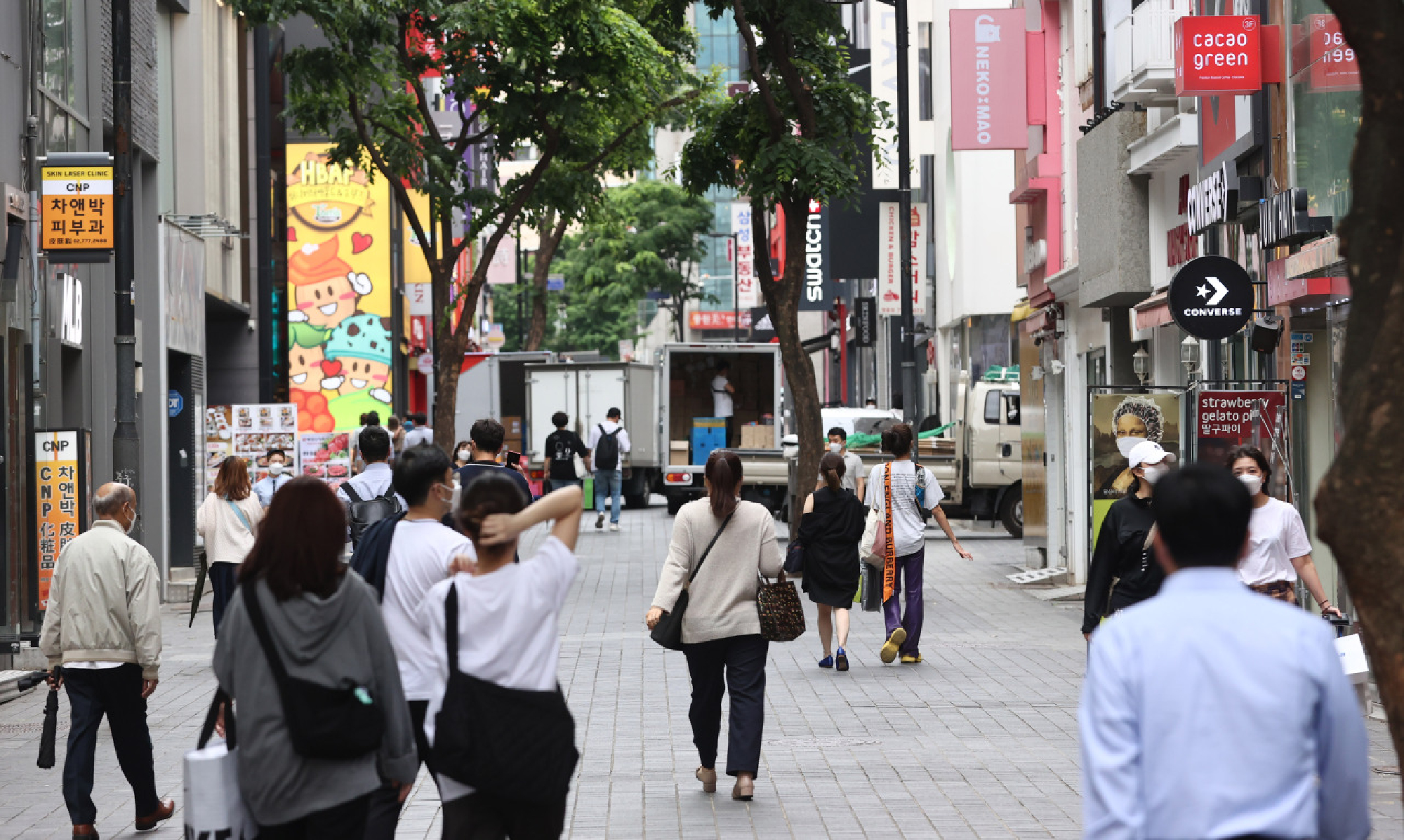
South Koreans who have received at least one COVID-19 shot will get to enjoy some of the perks of vaccinated status this summer.
The Ministry of Health and Welfare said Wednesday that two weeks after receiving a first dose of either one of the vaccines offered in the country — from AstraZeneca or Pfizer — people will be able to relax on social distancing and face mask-wearing. Both AstraZeneca and Pfizer vaccines require two doses for maximum protection.
More specifically, semi-vaccinated people can engage in larger family get-togethers and religious events from June, and go maskless outside from July, the ministry said. They will also be exempt from limits on the number of people that can gather at one time in cafes, restaurants and other public spaces.
Fully vaccinated people, meaning two weeks have elapsed since the second dose, can forgo masks in outdoor settings and socialize without restrictions. They won’t be subject to quarantine after traveling overseas or coming into close contact with an infected individual either, the ministry said.
Kwon Deok-cheol, the health minister, told a press briefing that Korea could ease out of most social distancing regulations come July. The goal is to administer first doses to 13 million people by June 19, and then to 36 million people by September or possibly earlier, he said.
“In summer when about a quarter of Koreans will have had at least one dose, we can move on to less restrictive social distancing rules. Then we can expect ease the restrictions further in fall, when more than 70 percent are vaccinated,” he said.
Experts advise caution against granting exemptions from social distancing and mask mandates before people have received their second doses.
Dr. Eom Joong-sik, an infectious disease specialist at Gachon University Medical Center, said as the vaccination rate is still low, any premature easing could jeopardize disease control.
So far 3.9 million people, or 7 percent of the Korean population, have received at least one dose of either AstraZeneca’s or Pfizer’s vaccine. The number of fully vaccinated people stands at 1.9 million, or 3 percent of the population.
“There’s no way to tell who is vaccinated and who isn’t,” Eom said, adding that non-socially distanced activities should be “strictly limited to fully vaccinated people, and amongst themselves only.”
Dr. Paik Soon-young, a virologist at Catholic University of Korea, pointed out that half-vaccinated people may not be as well protected against variants that are now circulating through communities.
Over a third of patient samples analyzed tested positive for variants last week, the Korea Disease Control and Prevention Agency said Monday. The variant first spotted in the UK, which is more transmissible than the original strain of the virus, is already dominant in southern coastal cities such as Ulsan and Busan.
People in their 60s and early 70s, who are the main targets of the vaccination efforts in June, have to wait until September before they can receive a second AstraZeneca shot, Paik said. Two doses of the AstraZeneca vaccine are administered 12 weeks apart.
“In the meantime, they remain relatively vulnerable to the threats of variants,” he said.
The AstraZeneca vaccine is 33 percent effective against the Indian variant and 50 percent effective against the UK variant three weeks after the first dose, according to a recent Public Health England study. Second doses increased protection against these two variants to 60 percent and 66 percent, respectively.
Park Young-joon, who heads the KDCA’s contact tracing team, admitted that letting partially vaccinated people off some of the safety precautions did not take into account the scenario of the vaccine-evasive variants becoming dominant across the country.
He said in response to The Korea Herald’s question that there needs to be “separate assessments for the possibility variants dominate infections spreading in the country.”
“If different conclusions are reached with variants in the equation, some adjustments might be necessary,” he said.
Paik of the Catholic University of Korea called for “vaccine incentives that do not compromise the safety of half-vaccinated and unvaccinated people until the vaccination campaign can reach the wider public.” The vaccinations haven’t even begun yet for people in the 60 to 74 age group, he said.
“Before we can fully vaccinate at least 70 percent of people 60 and up, it’s too early to loosen public health protocols.”
Greater Bay Area launches first freight train to ASEAN country
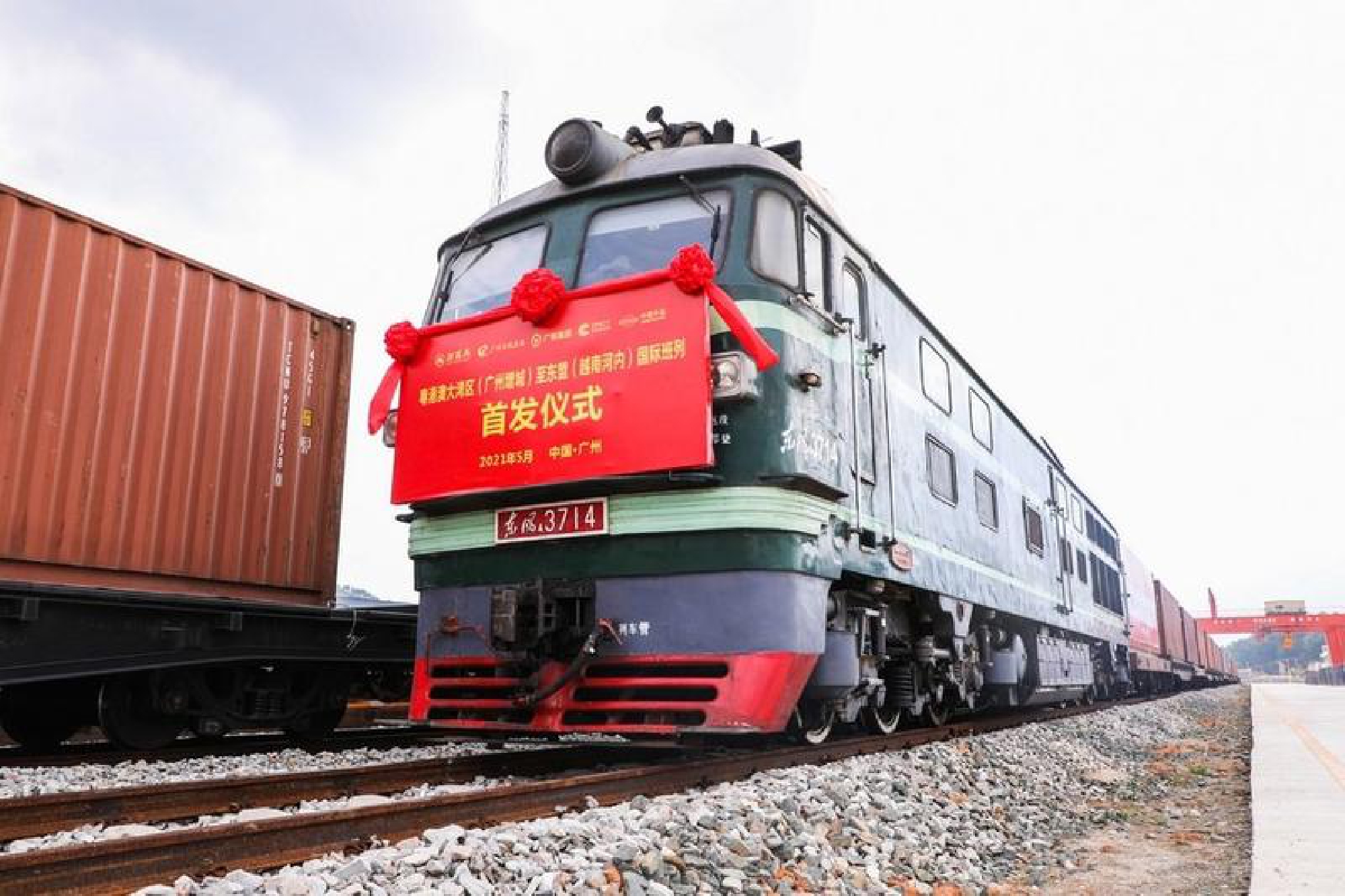
The first freight train from the Guangdong-Hong Kong-Macao Greater Bay Area to an ASEAN country started on Tuesday night with 41 standard containers.
The trip began in Guangzhou, the capital of Guangdong province, and the train will reach its destination in the Vietnamese capital, Hanoi, in four days.
Railway freight has become the first choice for many domestic exporters because rail requires less contact with people and cargo — an important consideration during the brunt of the COVID-19 pandemic. Rail’s advantages of low cost and time-effectiveness compared with road and marine transportation also made it an attractive alternative.
Last year, more than 10 new railways were opened between Europe and the Greater Bay Area. This year, China-to-Europe freight trains from Guangzhou and Dongguan have increased to three times per week since January. After two trains a week were added from Shenzhen, the number of GBA-to-Europe trains reached a record high.
“The ASEAN market favors electrical appliances and daily necessities produced in the Greater Bay Area,” Wei Jingyu, deputy general manager of Guangdong Yuetong Logistics, told a local newspaper.
He said he believes delivering daily supplies through freight trains can effectively reduce the time loss and cargo damage of segmented transportation. Wei estimated it can save about 20 percent of the transportation cost compared with traditional transportation methods.
Shenzhen’s trade volume with ASEAN members surged by 18.2 percent to 160.1 billion yuan (US$25.04 billion) in the first four months, statistics from Shenzhen Customs showed on Monday.
LRT train mishap: Accident due to human error, says Transport Minister
PETALING JAYA: A preliminary investigation has found that the collision of two LRT trains on the Kelana Jaya line is due to negligence, says Transport Minister Datuk Seri Dr Wee Ka Siong.
He said that the investigation found that the accident was due to the negligence of the driver who was manually driving train 40, which had no passengers at the time.
Photo credit: The Star
“It was due to the mistake by the person driving the train in the wrong direction,” he said during a live press conference via Zoom on Tuesday (May 25).
Dr Wee explained that the initial Land Public Transport Agency investigation found that Train 40 was supposed to head on the southbound line towards the Dang Wangi station, but it headed on the northbound line towards the Gombak depot instead.
“This caused Train 40 and Train 81 to collide, ” he added.
Dr Wee said Train 40 was manually driven by a “hostler” (train driver) because the automatic system in the coach was found to be faulty.
“The driver was then ordered to manually drive the coach from the Kampung Baru station towards the Dang Wangi station.
He added that at the same time, Train 81 was operating automatically when it was carrying passengers and was heading southbound towards Kampung Baru at 8.40pm from KLCC after receiving information that Train 40 was heading towards the Dang Wangi station.
“At 8.33pm, the hostler called the command centre and informed that Train 40 had collided with another train and at 8.37pm, the hostler from Train 40 identified Train 81 as the train it crashed into, carrying 213 passengers.”
Dr Wee added that the ambulance, police and fire brigade arrived at about 8.50pm and victims were moved from the train.
He said that Train 81 was then moved to a point between the KLCC LRT station and the Kampung Baru LRT station, adding that all passengers were evacuated by 9.28pm.
On those injured in the accident, Dr Wee said six of the 65 victims who were treated in HKL are in a critical condition, while 15 are in a semi-critical state.
He added that while Prasarana would extend financial assistance of RM1,000 to the victims, Dr Wee said the government’s priority now is to ensure that the victims receive adequate medical treatment.
He also said financial assistance would be extended to those who lost their souces of income due to this accident.
“For the Transport Ministry, we sympathise with those who were injured, ” said Dr Wee.
On the investigation of the accident, Dr Wee said the Transport Ministry has set up a investigating committee to probe the accident and added that it will be headed by Ministry secretary general Datuk Isham Ishak with Normah Osman as his deputy.
He said the committee will consist of nine members, which will include industry experts and leaders from the relevant government agencies.
Dr Wee said site workers were given three days to clear debris in the rail platform, and he assured commuters that efforts are underway to ensure that there won’t be overcrowding at LRT stations as alternate buses will be provided for free.
“We will also mobilise officers to ensure SOP compliance and we will limit commuters at the platforms,” he said. We hope that this can be solved in the coming days,” he added.
On Monday (May 24) night, a train under manual control that was undergoing testing had run into another that was carrying 213 passengers between the underground KLCC and Kampung Baru stations.
The incident left 47 people severely injured and 166 others with light injuries.
They were later sent to Hospital Kuala Lumpur for treatment.
Will South-east Asia be swamped by Covid-19, like in South Asia?
SINGAPORE – Largely spared the brunt of the Covid-19 pandemic for most of 2020, South-east Asia is now in the grip of a new wave of infections that is putting unprecedented pressure on health systems of countries in the region and threatening to bring their economies to the ground.
In Thailand, hospital beds are quickly filling up after infections, first seeded in some exclusive entertainment outlets in Bangkok, resulted in the country’s highest-ever number of daily cases in early April. The number spiked again after Songkran, the Thai new year.
Since then, the caseload has crept upwards and has more than quadrupled to nearly 135,000 as authorities struggled to contain outbreaks in overcrowded prisons, markets and camps housing construction workers.
The youngest victim so far is a two-month old baby with a heart condition. While the government reassured the public that it has enough beds to treat Covid-19 patients, more than half of those beds are located in field or hotel hospitals, according to data from the Department of Medical Services. Up until Jan 1, Thailand had only 7,379 cases.
In neighbouring Malaysia, daily cases have hovered at over 6,000 for the past week. On Tuesday (May 25), 7,289 cases were reported, a day after a record 61 deaths were registered along with 711 admissions to intensive care units.
While Malaysia’s caseload of over 525,000 infections is nowhere near India’s 26 million, its per capita daily confirmed cases on a seven-day rolling average at 194 for every million people have already surpassed India, which stands at 178 per million.
The Ro/Rt – the reproduction rate of the virus – has inched up to 1.21, which means 8,000 daily cases could be seen at the start of June. The Health Ministry has revealed that more than a third of new Covid-19 patients in April required supplemental oxygen, pointing to more virulent coronavirus strains in Malaysia.
In the Philippines, a variants-fuelled surge that began in December has seen hospitals overwhelmed. Cases leapt to more than 15,000 a day, three times last year’s peak number. As hospitals ran out of beds, harrowing tales of Covid-19 patients dying at home and in hospital parking lots and walkways dogged the headlines, forcing the government to fall back to what has proven to be its most potent weapon: a hard lockdown.
Sweeping quarantine restrictions in Metro Manila and four nearby provinces – home to a quarter of the nation’s population and where cases were highest – from March 29 to April 10 brought infections down by half. Still, there are concerns that another surge is not far off. In one region just south of Metro Manila – with a population of some 3 million – 55 per cent of tests are coming back positive.
“We have variants of concern also circulating in this region which are two times more transmissible than the original strain. Also the severity caused by this strain is higher than the one caused by the original Sars-Cov-2,” said Dr Abhishek Rimal, Asia Pacific Emergency Health Coordinator of the International Federation of Red Cross and Red Crescent Societies (IFRC).
“In the Philippines, we are seeing the cases coming down, but not to the extent that we like because all four variants of concern are circulating there.”
The four variants include the B117 which originated in Britain, the B1351 variant first detected in South Africa, and the P1 strain first found in Brazil. The Philippines has also detected another highly transmissible variant, dubbed the “double mutant” B1617 that was first identified in India and which has also been detected in Malaysia, Cambodia, Indonesia, Thailand, Singapore and Vietnam.
While the explosion of cases in Thailand and Malaysia are worrying, experts are more concerned about other countries where the healthcare system is not as well equipped and hence more vulnerable to rising cases, such as Cambodia, Laos and Myanmar.
Cambodia and Laos, which were largely spared last year – thanks to swift and stringent measures and protection from neighbouring countries which have done relatively well in keeping the virus at bay – are seeing an exponential rise in cases.
Both countries have blamed the outbreak on foreigners and returning migrant workers. In Cambodia, the B117 variant which spawned the new wave in the country in February was suspected to have spread to Thailand.
The hospitals are so overwhelmed in Cambodia that Prime Minister Hun Sen on April 7 ordered health officials to prepare to treat Covid-19 patients at home.
“We can’t accept all patients in case that cases increase further,” he told reporters. Three days later, he announced that the number of infections had reached a level beyond hospital capacity. The country’s caseload has jumped 50 times since February to 25,205 as of May 23. As of Feb 1, it had only 466 cases, according to Johns Hopkins University’s Covid-19 tracker.
Bogged down by its own political crisis after the Feb 1 coup, Myanmar has given up on updating its daily Covid-19 figures as rigorously as before.
“If we talk about the absolute number of cases, Thailand and Malaysia come on top. But, at the same time, we have to remember these two countries have a high number of people being tested and these two countries have good and robust health systems,” said Dr Abhishek. “However, if we look at Cambodia, Laos and Myanmar, they don’t have an equally developed health system. So, an increasing number of cases in these countries will be a matter of concern.”
The virus has inflicted a human toll never before seen. All across South-east Asia, millions are suffering in silence with as many as 78,000 people dead so far. But the real death toll is more than likely to be higher for various reasons.
Research has shown that more than 70 per cent of cases are asymptomatic, which means many more would have escaped detection.
During the previous surge in the Philippines, for instance, most of those who died at home or while waiting for hospital beds were not included in the Health Ministry’s daily tally because they were never tested or their results came out after they had already been buried.
Some of the poorer nations are ill-equipped to carry out rigorous testing and tracing of contacts, and isolation of confirmed patients. Many people have also avoided going to the hospital even if they suffered from Covid-19 symptoms because of social stigmas, said Dr Abhisek.
Universiti Malaya’s public health professor Ng Chiu Wan found that Malaysia had 1,412 more deaths in the last quarter of 2019 among those 60 years and older, compared to the 2016-2018 historical mean for that period. This is despite other age groups reporting fewer deaths for that quarter against past averages.
The World Health Organisation said in a report released on Friday (May 21) that up to three times more people may have died due to the pandemic than the officially reported figures.
The Economist predicted the global excess death toll to be up to four times higher at between 7-13 million, most of them found in low- and middle-income countries. The magazine modelled the level of excess mortality using a method which takes the number of people who die from any cause in a given region and period, and then compares it with a historical baseline from recent years. The central estimate of the real death toll is very likely to be 10.2 million, according to the Economist.
“It is natural that in times like this you also struggle in reporting and that’s not intentional. Several countries including China in February 2020 announced catch up reporting. We know excess deaths in many countries is greater than that explained by reported Covid-19 deaths,” Dr Dale Fisher, Senior Consultant at the Division of Infectious Diseases, National University Hospital of Singapore told The Straits Times.
The scenarios that are playing out in South-east Asia are bleakly similar to what we have been seen in India and Nepal. There is a sense of pandemic fatigue in the increasing numbers of people flouting the rules that are meant to keep them safe. In Malaysia, thousands tried to cross state borders during Hari Raya Aidilfitri in May despite the rules banning such travel.
Indonesia, where daily cases have stabilised at under 6,000, is bracing for a sharp jump to up to 8,000 in daily new cases in the middle of June, which could possibly turn out to be the possible peak as 2.6 million people return to major cities after the Hari Raya holidays, Vice-Health Minister Dr Dante Saksono told an online media briefing with foreign journalists on Tuesday (May 25).
“We are boosting our tracing efforts … evaluate people with no symptoms but have had close contacts with confirmed cases,” Dr Dante said, adding that micro-lockdowns – a type of localised lockdown in neighbourhoods where positive cases are detected in five or more households – have been in effect since early February and would continue.
But those who lead a hand-to-mouth existence have hardly any choice. They need to leave their homes for their livelihoods.
In the Philippines, with each RT-PCR test costing over 4,000 pesos (S$110), or eight times the daily minimum wage, many are reluctant to be tested. A positive test result will also lead to a two-week quarantine which, for those earning on a daily basis, will be financially ruinous.
This may account for the uneven, skewed test data in cities like Paranaque, just an hour south of Manila, where more well-off districts are reporting more infections than in poorer, but more densely populated, neighbourhoods.
Stringent lockdowns in Cambodia have sparked an outcry among the economically vulnerable population who were going hungry locked inside their homes with government promised food and aid slow to come.
The Cambodian government has dismissed these concerns as fabricated news and banned journalists from broadcasting live in the capital, Phnom Penh, altogether.
These difficulties highlighted the dilemma of governments everywhere, who are stuck between a rock and a hard place. In countries such as the Philippines and Malaysia, governments are avoiding a full lockdown to prevent their economies from free falling.
“Government always have to swallow this bitter pill when they make a decision between full lockdown and semi-lockdown as they try to make sure people also don’t die of hunger,” says Dr Abhishek.
Among the biggest economies in South-east Asia, only Singapore and Vietnam have expanded. GDP growth in Malaysia and the Philippines contracted by 0.5 per cent and 4.2 per cent in the first quarter. Indonesia and Thailand have also reported negative growth.
Many experts say one way to bring down Covid-19 deaths is through herd immunity. Governments have therefore ramped up vaccination campaigns after a slow start but they are still falling short.
Thailand, which inoculated about 3 million people or slightly more than 4 per cent of its population, was heavily criticised for its original vaccination strategy, which relied largely on locally produced AstraZeneca vaccines which were not due to come on stream until June.
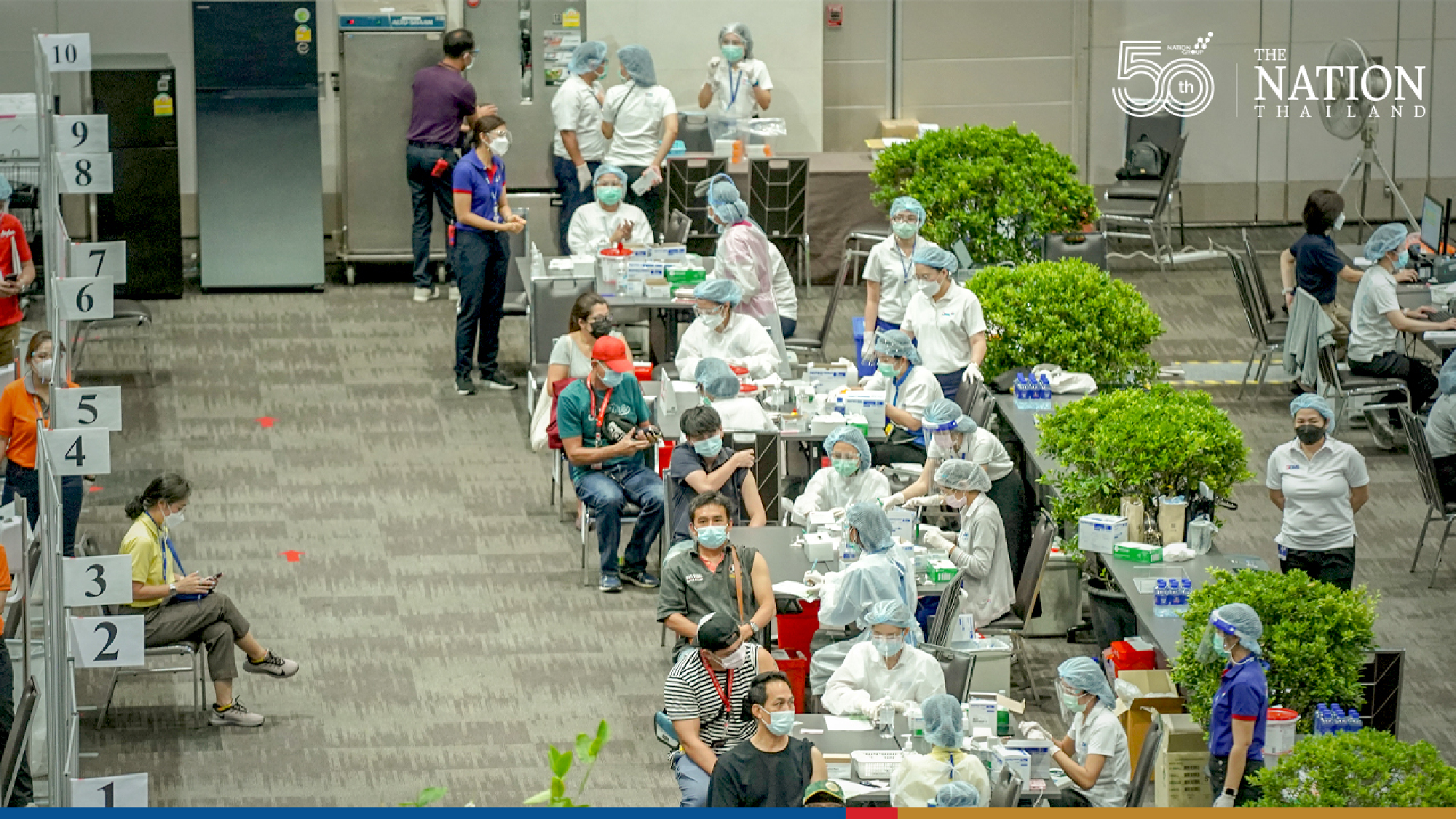
In the interim, it relied on smaller batches of Sinovac and imported AstraZeneca shots. On May 13, the Thai Food and Drug Administration (FDA) granted emergency authorisation for use of the Moderna vaccine, which would pave the way for private hospitals to offer the shots and speed up the pace of inoculation. It is also spacing out the second dose of the AstraZeneca vaccine to give more people the first dose . In an effort to speed up vaccinations, Thailand is allowing on-site registrations from June.
Malaysia has tripled the number of doses administered on a seven-day average compared to just a fortnight ago. Prime Minister Muhyiddin Yassin said on Sunday that 80 per cent of the population could be vaccinated before the end of the year.
Indonesia and the Philippines, which make up more than half of South-east Asia’s 655 million-strong population, have inoculated only about 5 per cent and 2 per cent of their population respectively, according to ourworldindata.org and SDG-Tracker, a joint effort between the University of Oxford and non-profit organisation Global Change Data Lab.
The best bet, for now, is still for wealthy nations to delay vaccinating their young and healthy and donate their unused doses to developing countries.
The European Union has pledged to donate 100 million doses, either bilaterally or through the Covax facility – a UN-backed programme for distributing Covid-19 vaccines to low and middle income countries.
President Joe Biden said last week the United States would donate 20 million Pfizer/BioNTech, Moderna and Johnson & Johnson vaccine doses on top of the 60 million AstraZeneca doses it has already planned to give away.
As inoculation proceeds in earnest, some companies and universities in Vietnam and Thailand have started conducting clinical trials on homegrown vaccines. But they have largely hit a brickwall trying to get a manufacturer who could take their orders against the backdrop of tight production schedules currently.
It will take some time before South-east Asia can achieve herd immunity. An Economist Intelligence Unit forecast released in April showed that countries in the region will not do so until at least the end of 2022.
If anything has been learned from past pandemics, it is that a virus evolves and the second wave tends to be deadlier than the first. South Asia is unfortunately bearing the brunt of the second wave at the moment. Given its porous borders and the high movement of people, South-east Asia may have to brace itself for the same scenario if countries do not get their acts together.
“The first wave was controlled very well across Asia… But what we see now is a huge surge of patients in South Asia – many more patients need hospitalisation and the hospitals are getting full. That should be a stark reminder to South-east Asian countries that we must double our efforts in containing the pandemic right now,” says Dr Abhishek of the IFRC, who has been involved in the distribution of aid and Covid-19 testing across South-east Asia, as well as engagement works in communities to battle the pandemic.
“If we wait too long, we might see a situation like in Nepal or India.”
Singapore maintains 4-6% GDP forecast for 2021 amid increased Covid-19 uncertainties
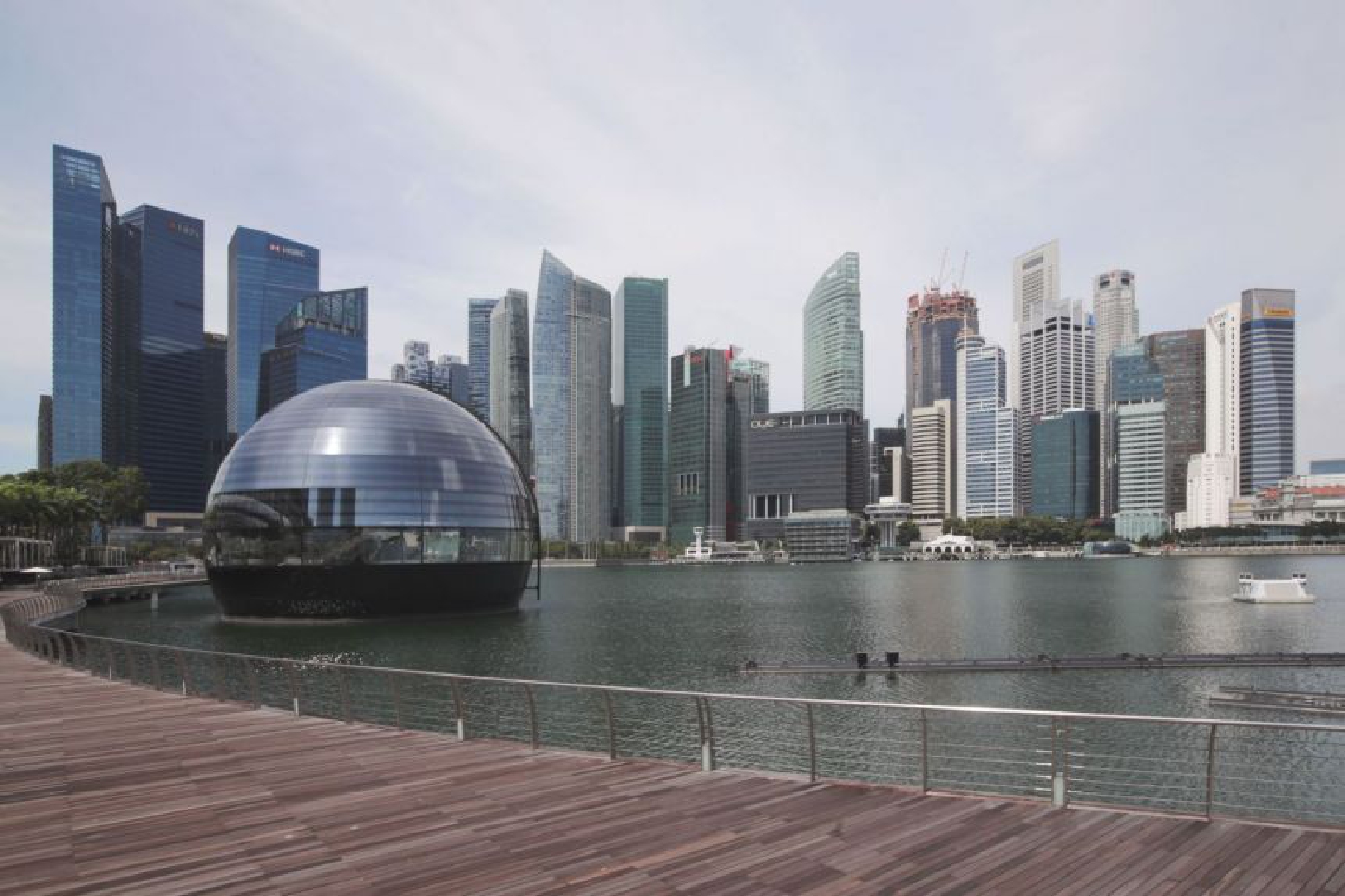
SINGAPORE – Singapore maintained its economic growth forecast range for this year at 4 per cent to 6 per cent, despite increased uncertainty over the economic conditions, the Ministry of Trade and Industry (MTI) said on Tuesday (May 25).
This comes even as the economy performed stronger than expected in the first quarter of this year.
The final estimate for first-quarter growth came at 1.3 per cent on a yearly basis, compared with an earlier estimate of 0.2 per cent and the 2.4 per cent contraction in the previous quarter.
The January-March growth was even higher than the 0.9 per cent growth projected by economists in a Reuters poll.
The full-year forecast will be reviewed again in August, when there is more data and greater clarity over the global and domestic economic situations, MTI said in a statement.
MTI said uncertainties have increased and are characterised by both upside and downside risks, especially arising from the coronavirus pandemic at home and abroad.
Earlier this month, Singapore tightened its safety measures to contain a surprise surge in local community Covid-19 cases. The phase two (heightened alert) restrictions that will remain in effect until mid-June have raised concerns over the full-year growth target.
“Since February, the external economic environment has improved, even though the pandemic continues to disrupt activities in many economies and threatens to undermine any recovery,” it said.
“While the recent tightening of domestic restrictions and border controls represents a setback to segments of the economy, the broader economy should still see a recovery this year in tandem with the global economic rebound and further progress in the domestic vaccination programme.”
On a quarter-on-quarter seasonally adjusted basis, the economy grew by 3.1 per cent, extending the 3.8 per cent expansion in the fourth quarter of last year.
The first quarter growth came on the back of the manufacturing sector’s 10.7 per cent year-on-year expansion, faster than the 10.3 per cent growth recorded in the previous quarter.
MTI said the Jan-March growth was due to output expansions in the electronics, precision engineering and chemicals clusters, which outweighed output declines in transport engineering, general manufacturing and biomedical manufacturing.
The wholesale trade sector expanded by 3.5 per cent year on year, faster than the 1.8 per cent growth registered in the previous quarter, and the retail trade sector grew by 1.4 per cent.
Growth of the information and communications sector accelerated to 6.4 per cent year on year, from the 2.6 per cent achieved in the previous quarter.
However, the construction sector contracted by 22.7 per cent and the transportation and storage sector shrank by 16.5 per cent, compared with the same period last year. The food and beverage service sector contracted by 9.4 per cent year on year.
MTI said that while it is still possible that the Singapore economy will outperform the 4 per cent to 6 per cent growth forecast for this year, there are also significant downside risks, with the most important being the trajectory of the pandemic.
“Countries are experiencing recurring waves of infections, with the emergence of more transmissible strains of the virus, the easing of safe management restrictions and delays in vaccinating populations.”
The ministry said these resurgences, as well as the countries’ public health responses to them, will inevitably affect their economic growth.
SDF-run mass vaccinations start for elderly in Tokyo, Osaka
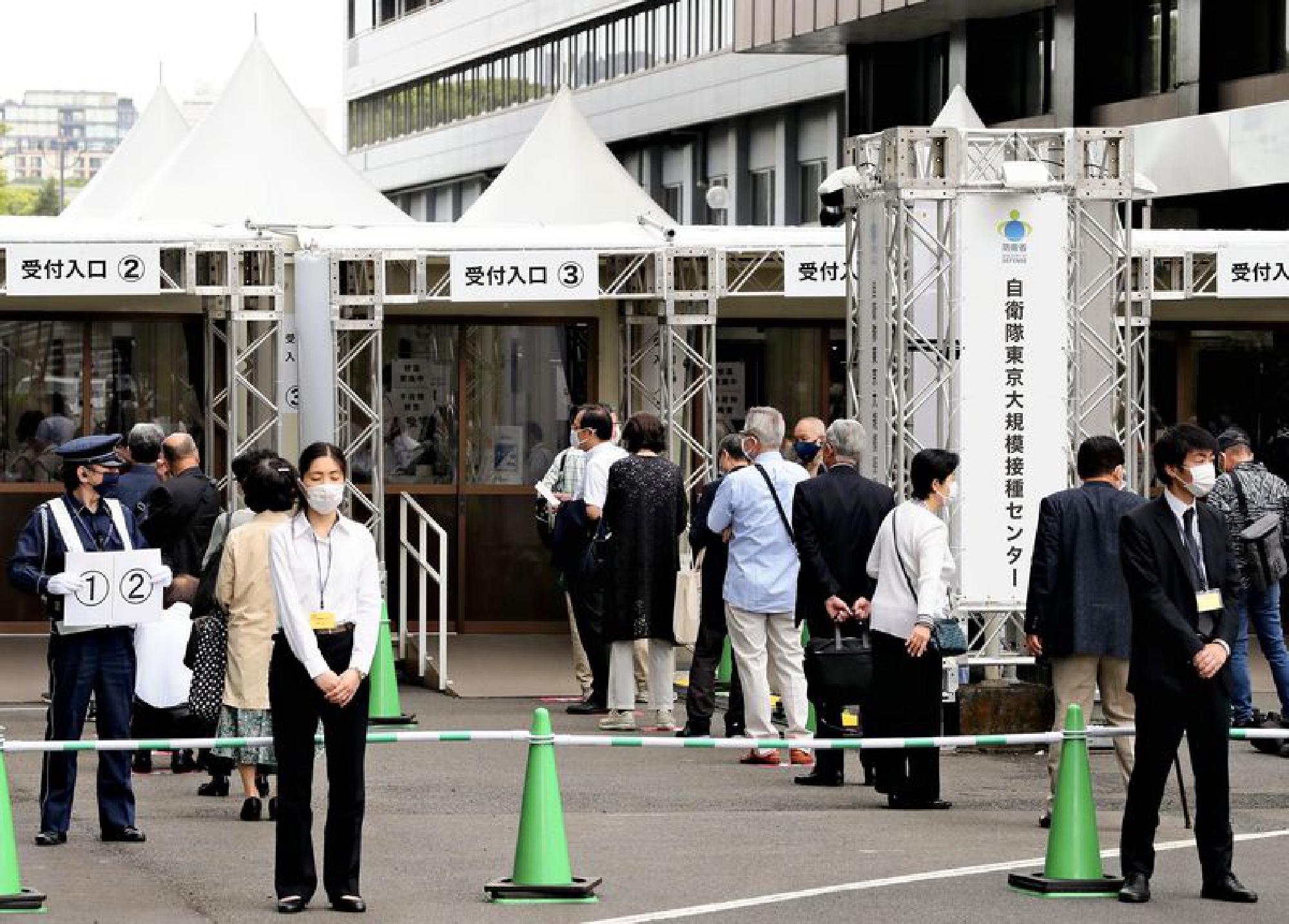
The Self-Defense Forces started operating mass vaccination centers in Tokyo and Osaka on Monday to increase the inoculation of the elderly against COVID-19.
The first batch of people eligible to be vaccinated at the centers are those 65 or older who live in the 23 wards of Tokyo or the city of Osaka. Reservations are required, and a combined 7,500 people were expected to receive the first dose of their vaccination on the first day.
The Defense Ministry is planning to increase the number of vaccination recipients in stages, aiming to vaccinate 15,000 people per day from May 31.
At the Tokyo venue, a government building in the Otemachi district of Chiyoda Ward, people with reservations began gathering from about 6:30 a.m. Monday, an hour before the site opened.
“I was hoping to get a shot as soon as possible,” said a smiling 74-year-old man from Shinagawa Ward. “I feel relieved now.”
The Moderna COVID-19 vaccine is being used by the SDF. People given the first dose at a mass vaccination center will receive the second dose at the same venue.
In Kita Ward, Osaka, about 60 people with reservations lined up in front of the mass vaccination venue at the Osaka International Convention Center before it opened at 7:30 a.m.
The government aims to finish vaccinations for the elderly by the end of July. The SDF has been brought in to speed up the process.
The operation is being carried out by 80 SDF doctors and 200 SDF nurses, supported by about 160 general staff of the SDF. About 200 nurses from the private sector are also taking part.
The venues will be used for vaccinations for three months. Through Sunday, vaccinations are scheduled to be given to 49,000 people at the Tokyo venue and to 24,500 at the Osaka venue. From May 31, the aim will be to vaccinate 10,000 people per day in Tokyo and 5,000 people per day in Osaka.
When reservations can be made by people over 65 who are eligible to receive vaccines at the SDF-run mass vaccination venues depends on where they live.
Through Sunday, reservations are being accepted from people who live in all areas of Tokyo as well as Osaka Prefecture who wish to be vaccinated from May 31 through June 6.
Reservations can be made through a special online site that can be accessed through the Defense Ministry’s official website or through the Line messaging app. QR codes for direct access via smartphones to the special site have been made public as well.
![[Myanmar] People from other states and regions flee from Kayah](https://media.nationthailand.com/uploads/images/md/2021/05/MMuOisjD7r2gSF3ZBmSQ.jpg?x-image-process=style/lg)